

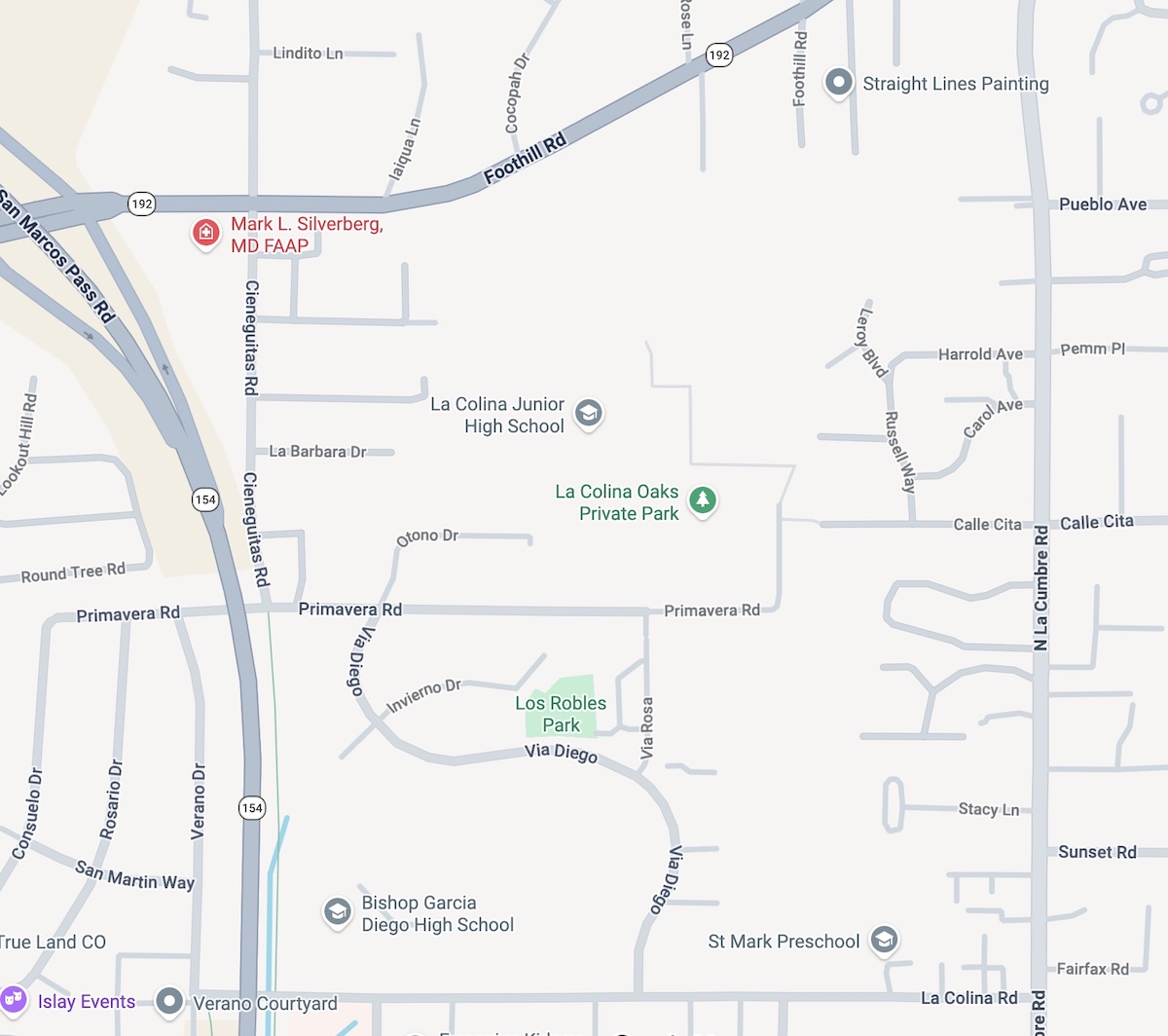
I have no idea why I decided to walk the area around La Colina Junior High School and Bishop Diego High School. It was probably because years ago, after visiting a doctor (not Mark L. Silverberg, MD FAAP) at Sansum Clinic, Google Maps sent me home via Via Diego, and I vaguely recall a large robot or alien in someone’s front yard. Never underestimate the power of that kind of thing, at least on me. (Spoiler: Nothing that exciting happened this time.) The deal got sealed when I looked at Google Maps and saw the pedestrian path connecting Primavera Road and Calle Cita.
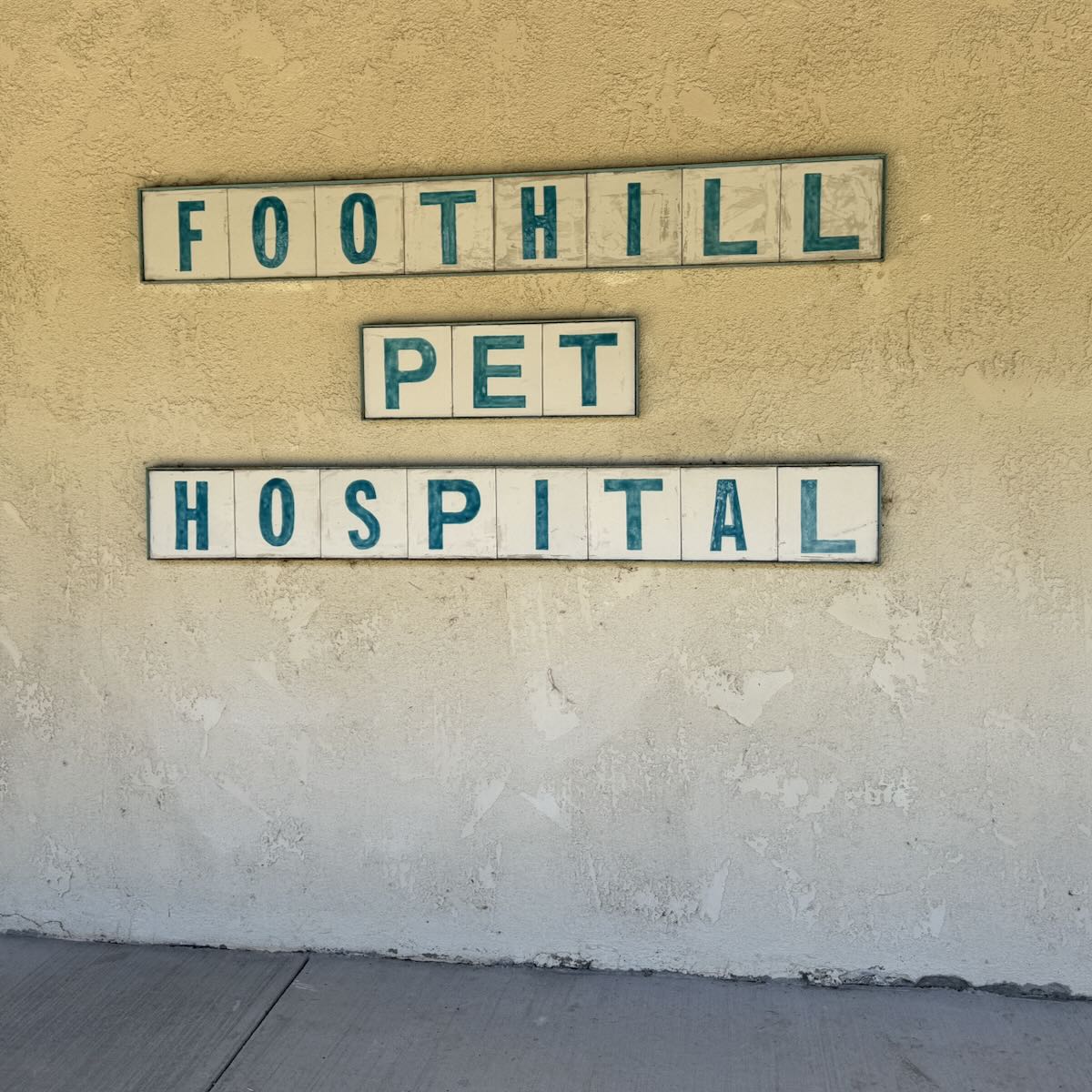
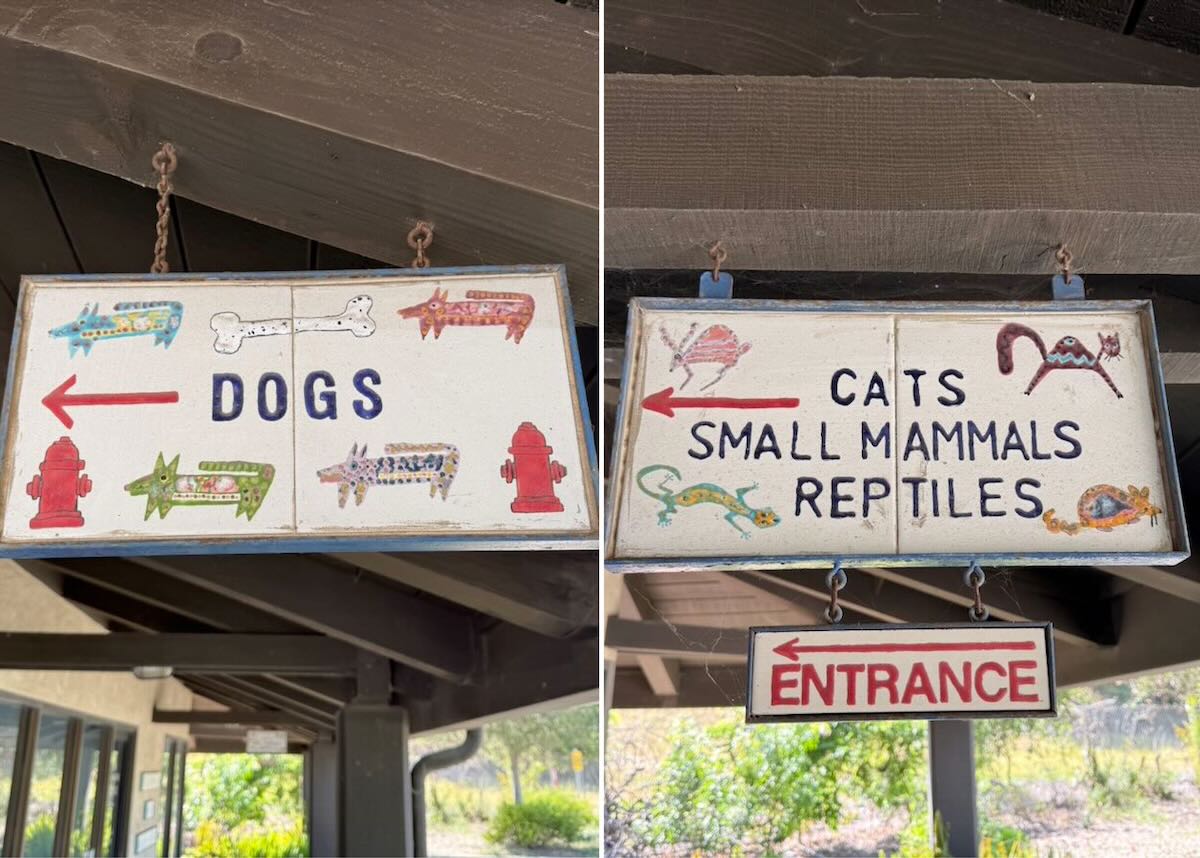
 I parked on Cieneguitas Road, between Sansum’s complex and the Foothill Pet Hospital. (Cienega means swamp in Spanish, so Cieneguitas means “little swamps.”) The pet hospital’s hand-painted tiles are marvelous—even more so because they look like they came from two different sets. My only real experience with this kind of facility was in New York City, where there isn’t enough space for separate waiting rooms for dogs and everyone else.
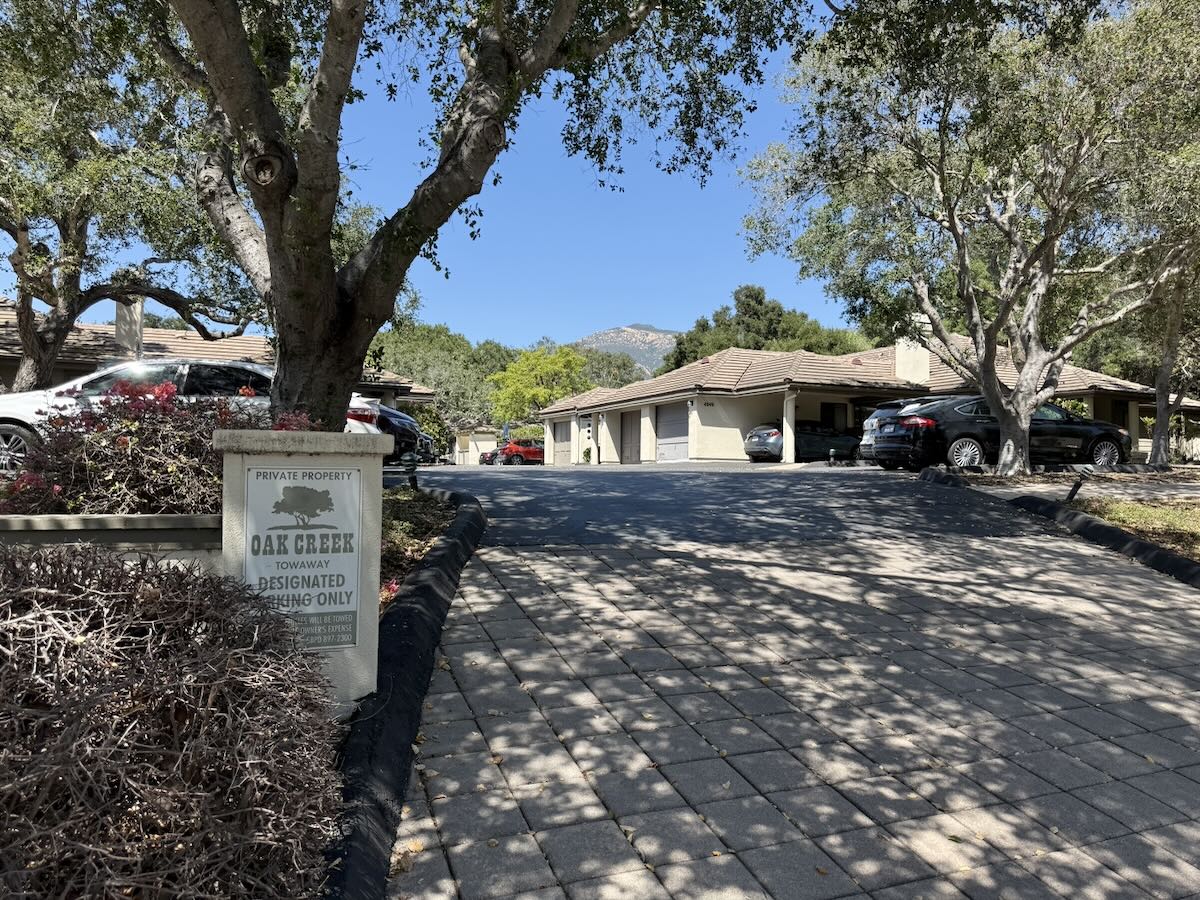
 The culs-de-sac east of Cieneguitas Road are actually driveways and private lanes, and there’s a community called Oak Creek that appears to be single-story apartments.
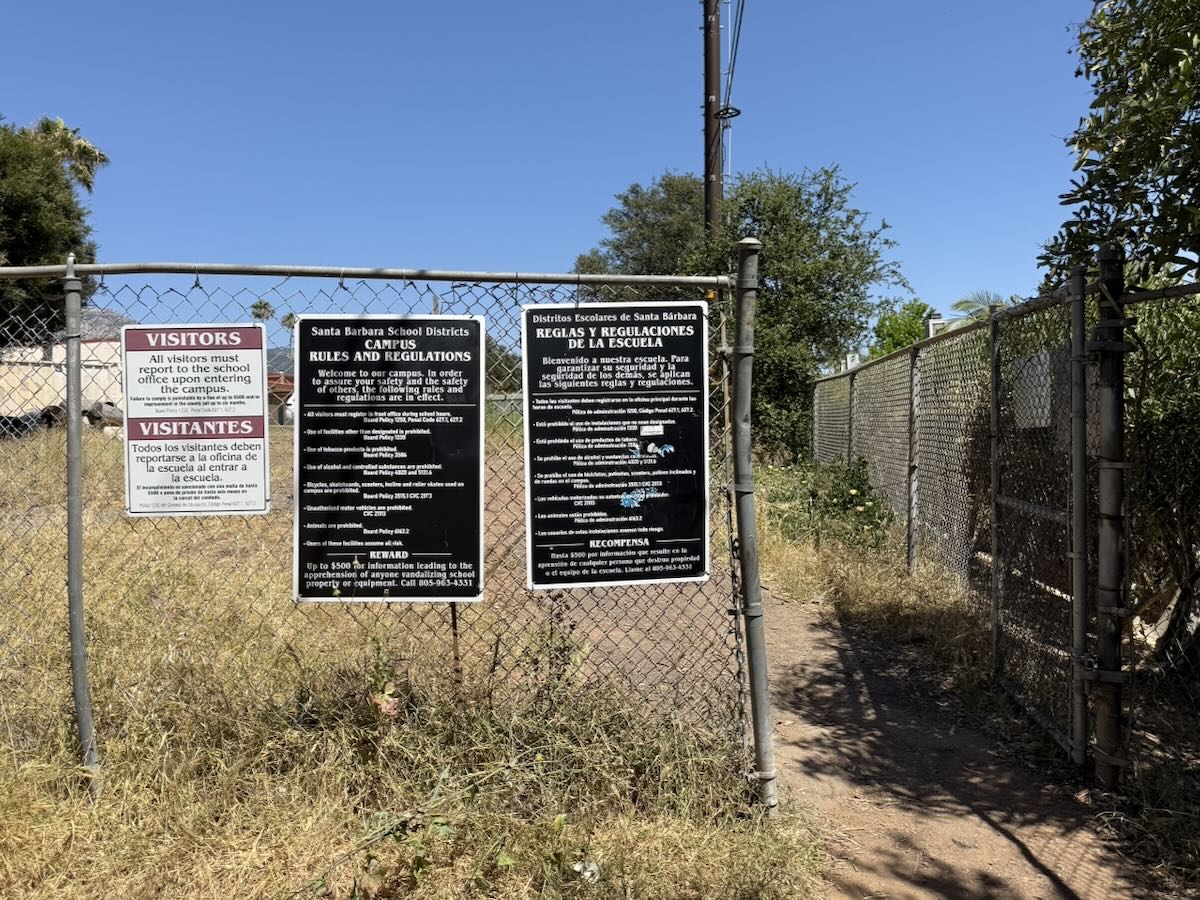
 After turning left onto Primavera Road, I got a surprise: a path running along Otono Drive. (The street signs don’t have a tilde, but the word is surely otoño, autumn in Spanish. And primavera means spring, like the season.) Anyway, the path leads to La Colina Junior High, where I did not linger. Junior high schools are near the top of the list of places I have no interest in exploring, even on a weekend. (As your new Spanish tutor, I should point out that colina means hill.)
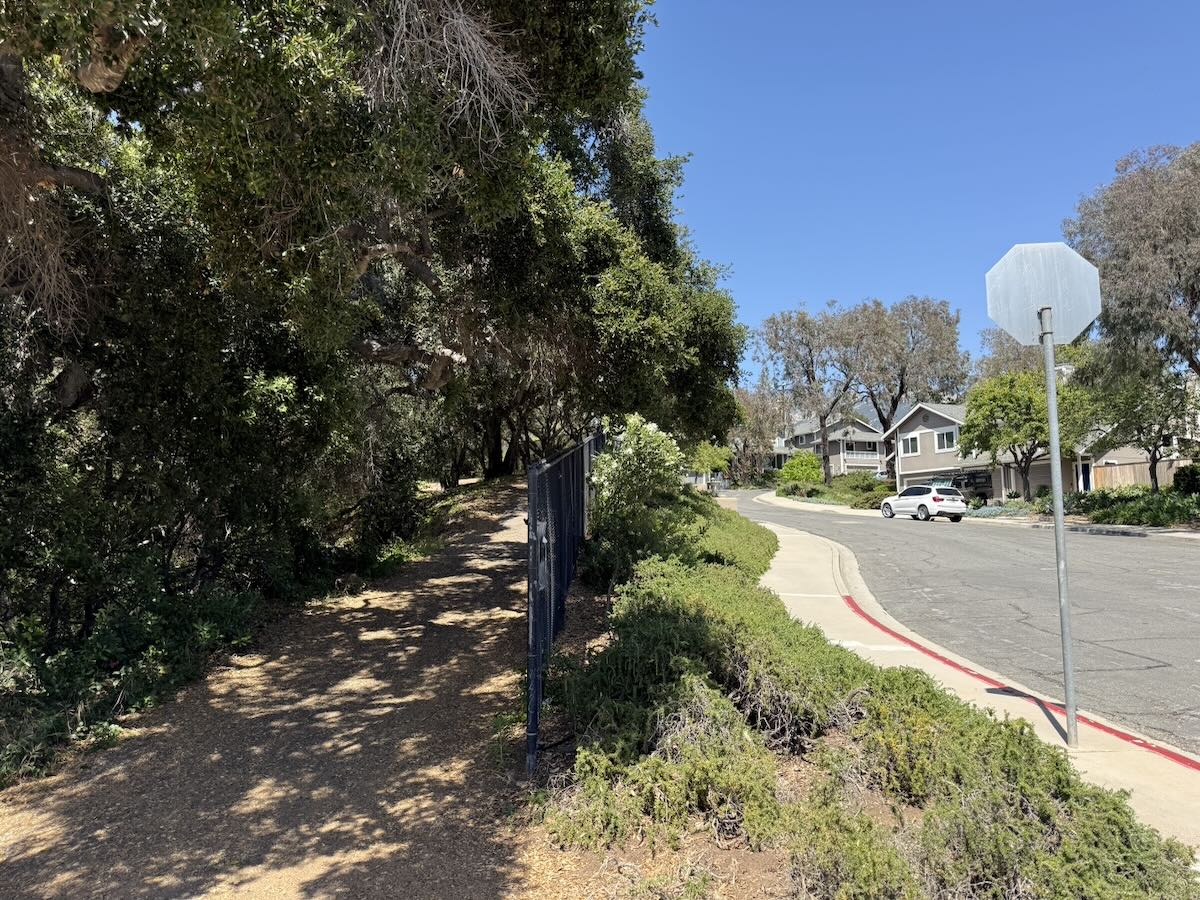
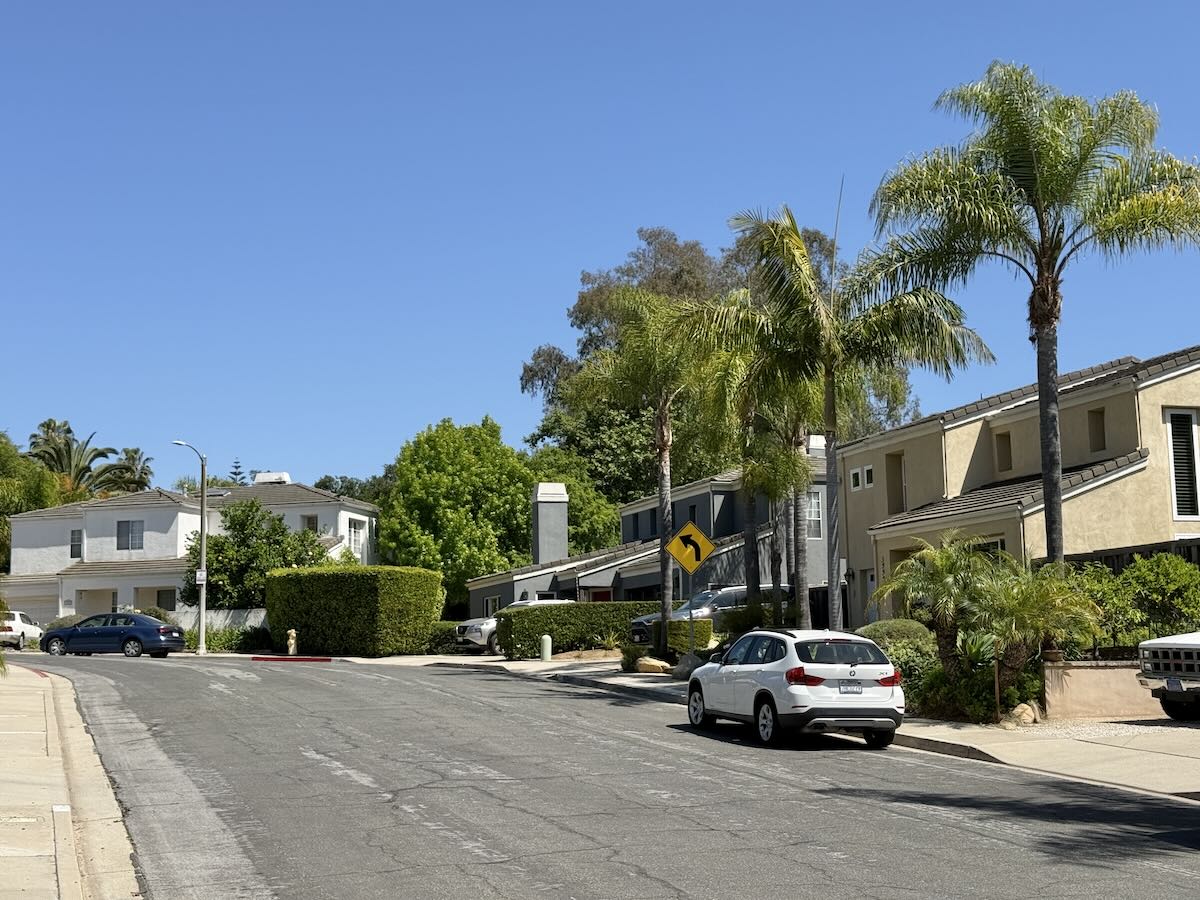
 Otono Drive has an HOA vibe, with all the houses clearly built around the same time and by the same developer, and all with white trim. I liked how someone placed a birdbath in the margin near the start of the street. A rogue move?
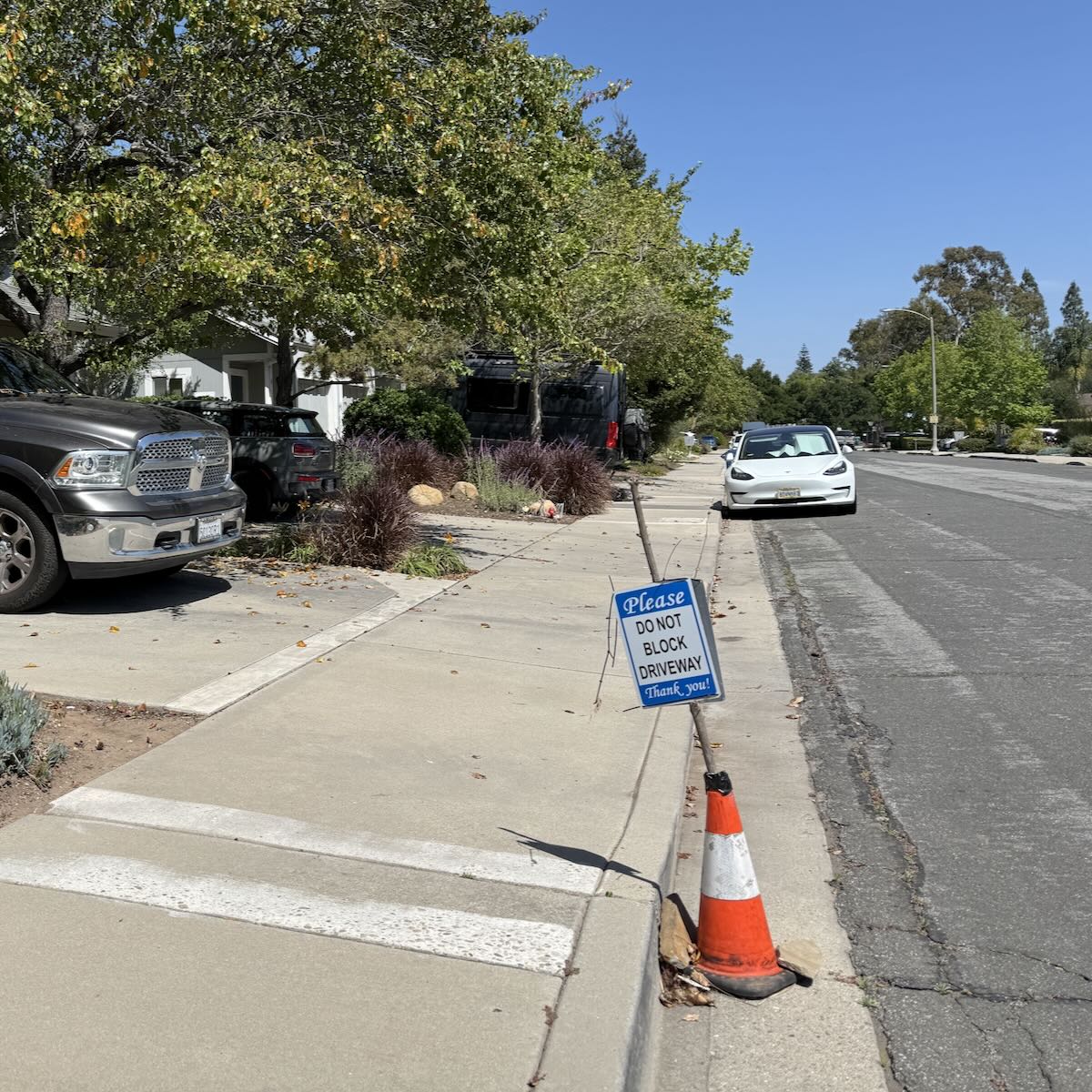
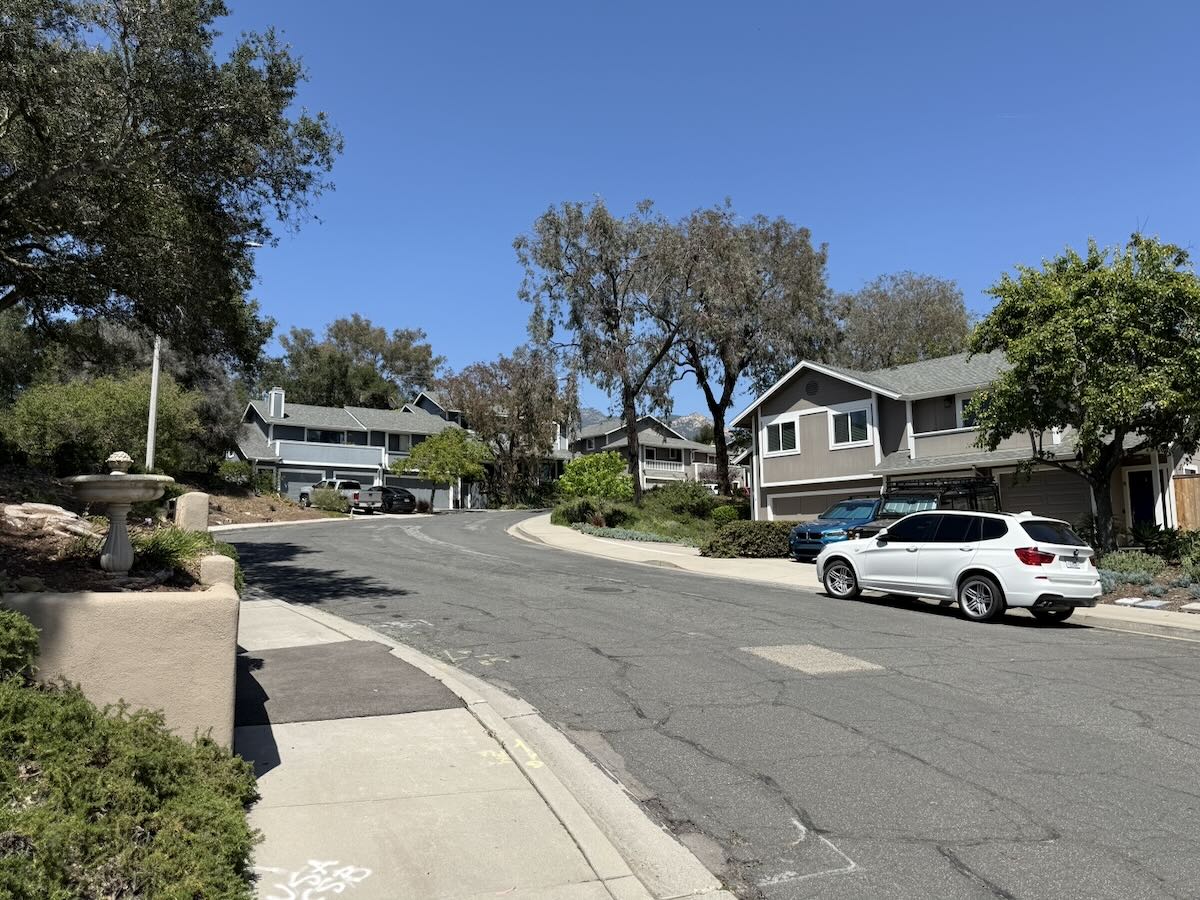 Given the ample street parking, blocking any of the driveways would be a rather aggressive act.
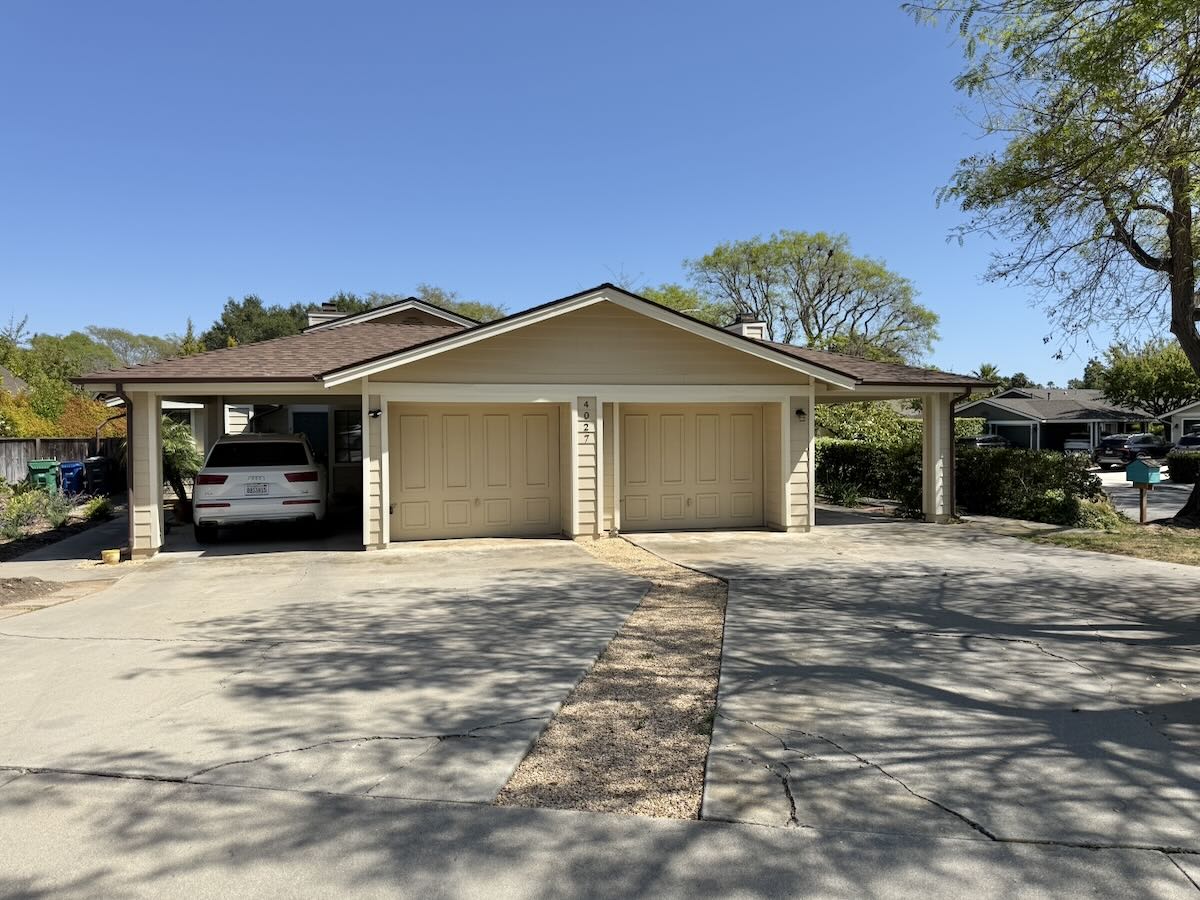
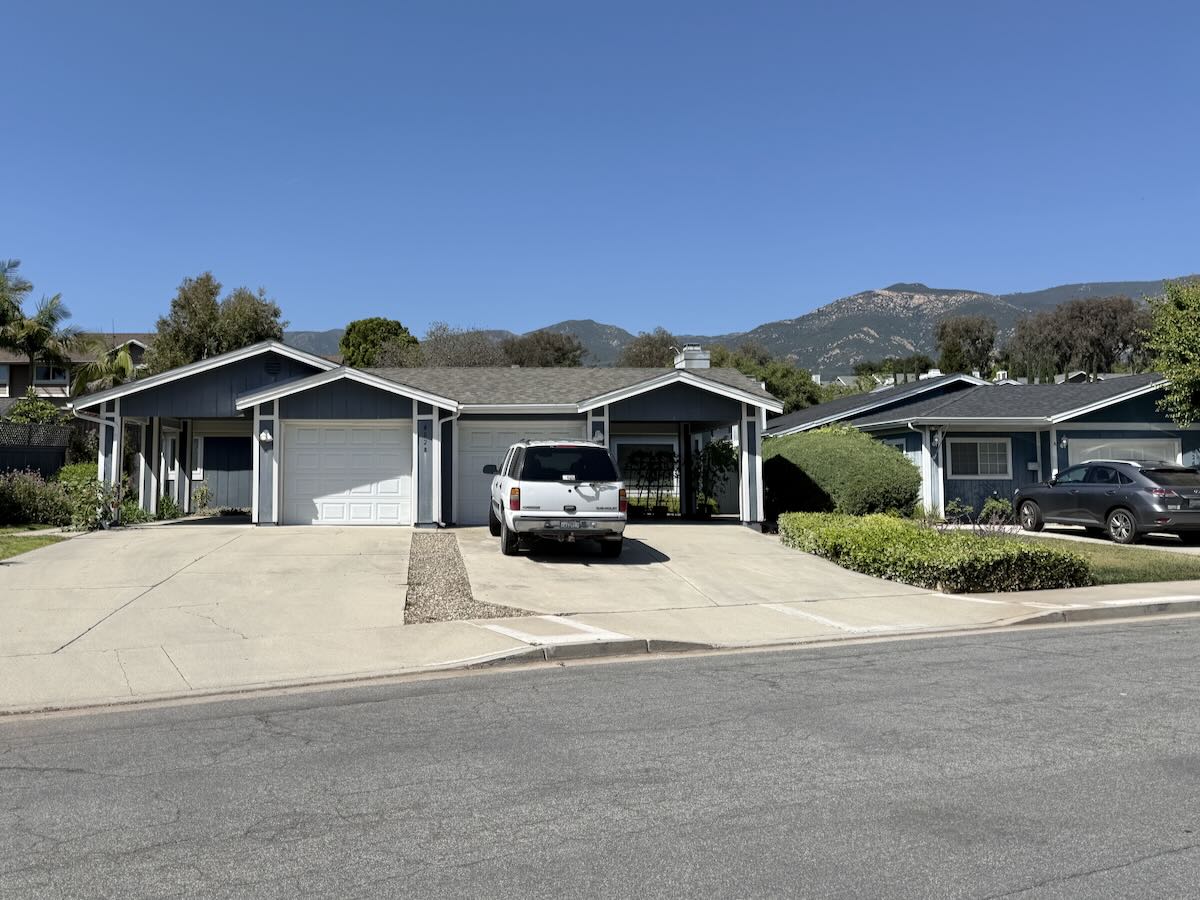
 I couldn’t tell whether Primavera Road—a mix of single-family homes and duplexes (where each unit gets a garage and a carport)—is a different HOA from Otono, but it seems to have similar guidelines on exterior paint.
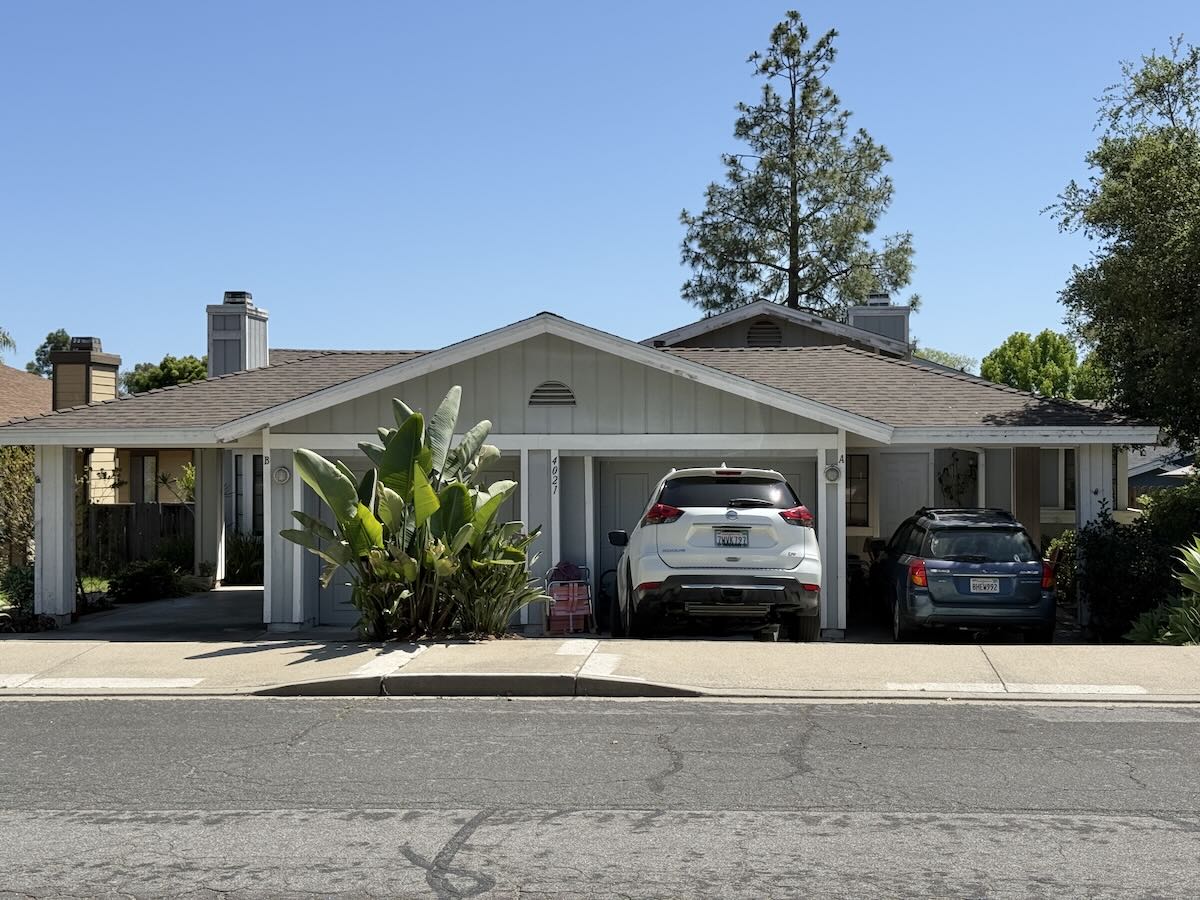
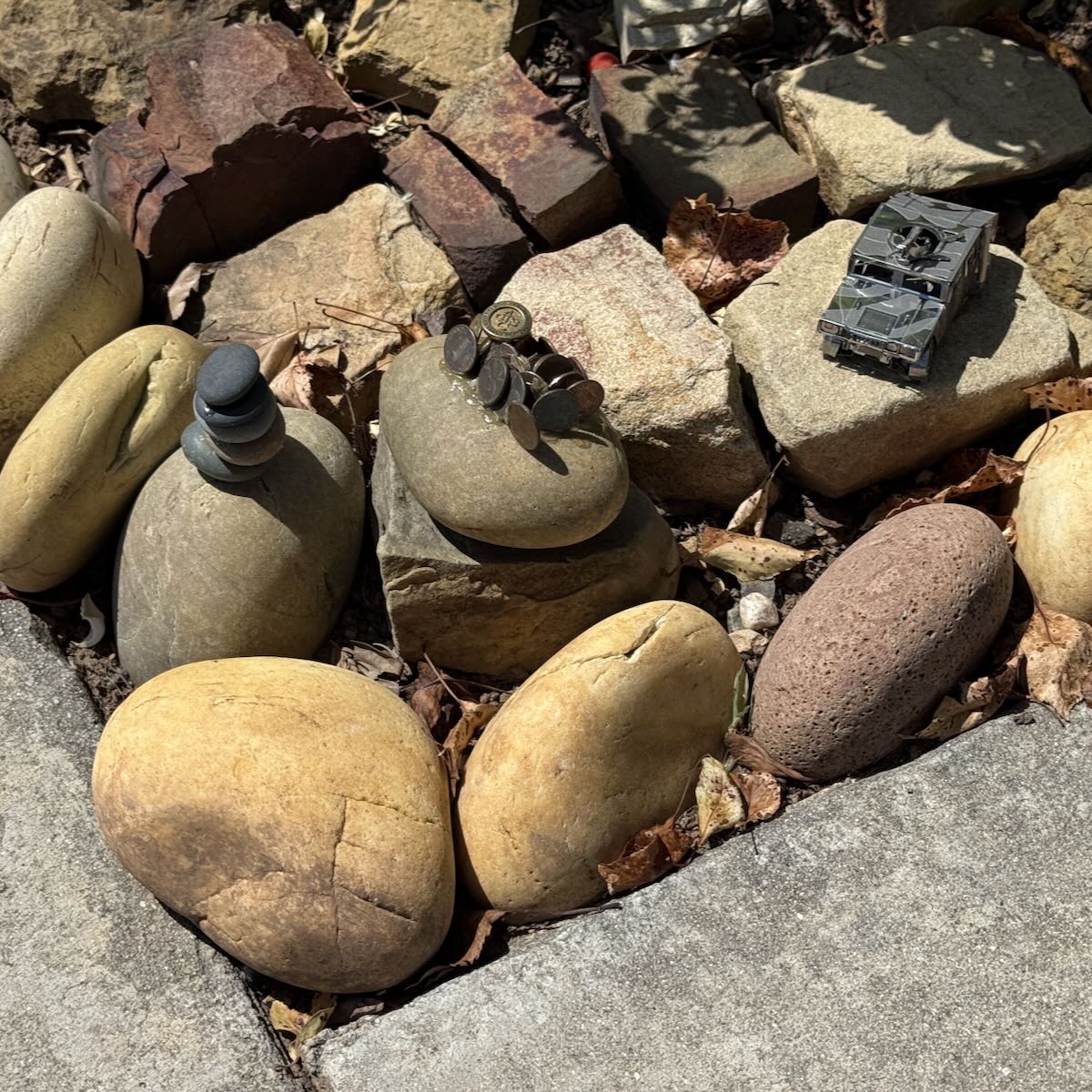
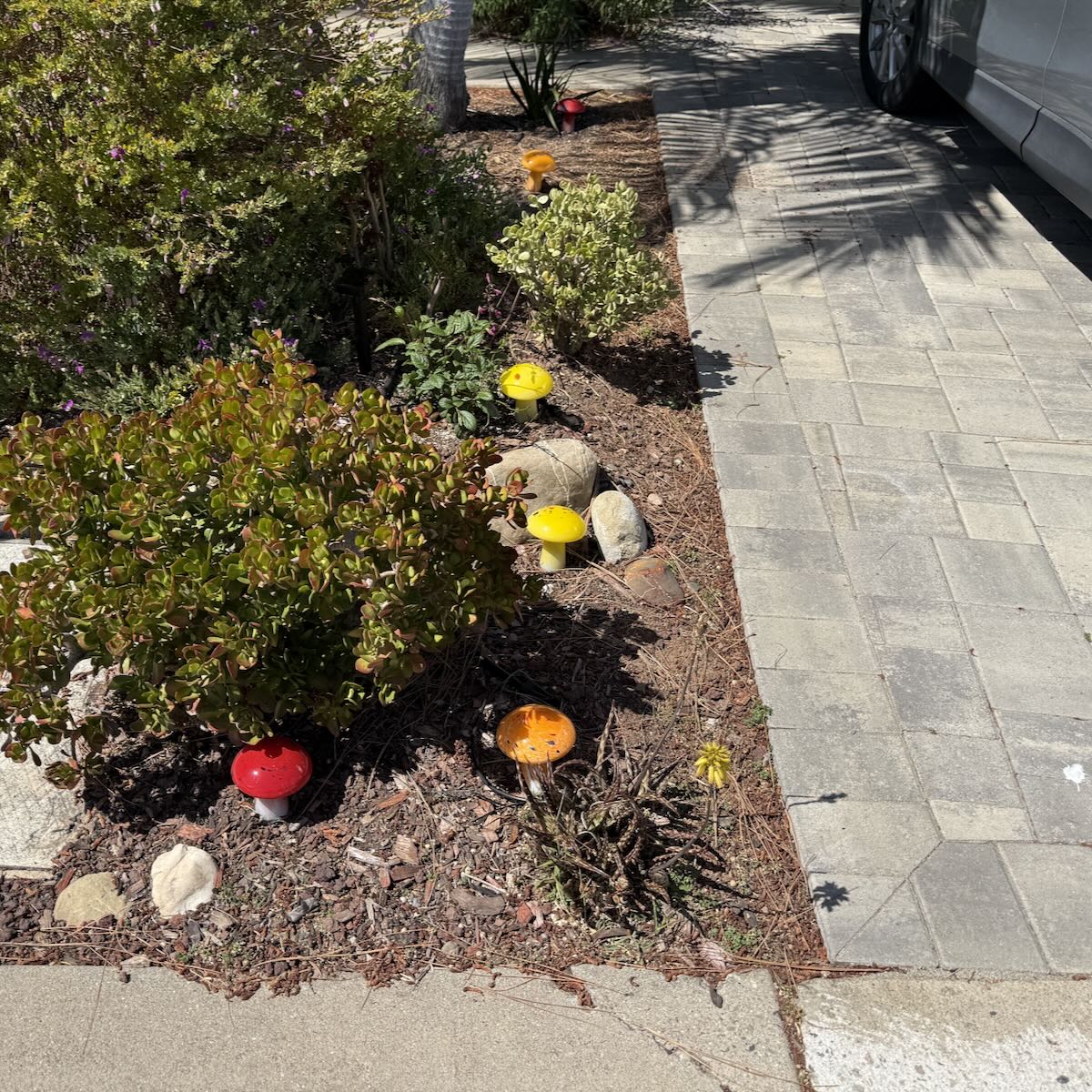
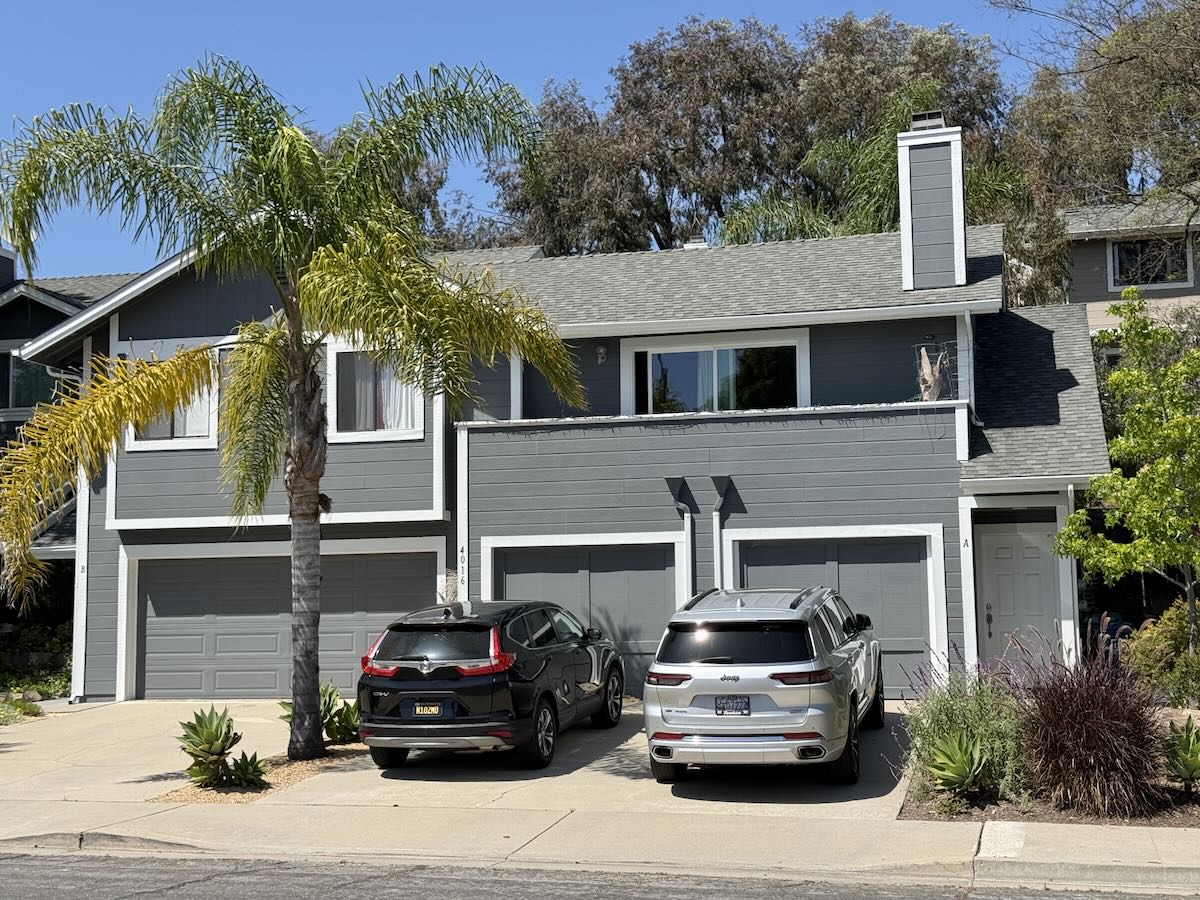 These are some of the smallest yardifacts I’ve ever seen. I swear that I did not etch the E into that stone.
 The pedestrian-only passage on Via Rosa was tempting, but I saved it for later and kept walking down Primavera.
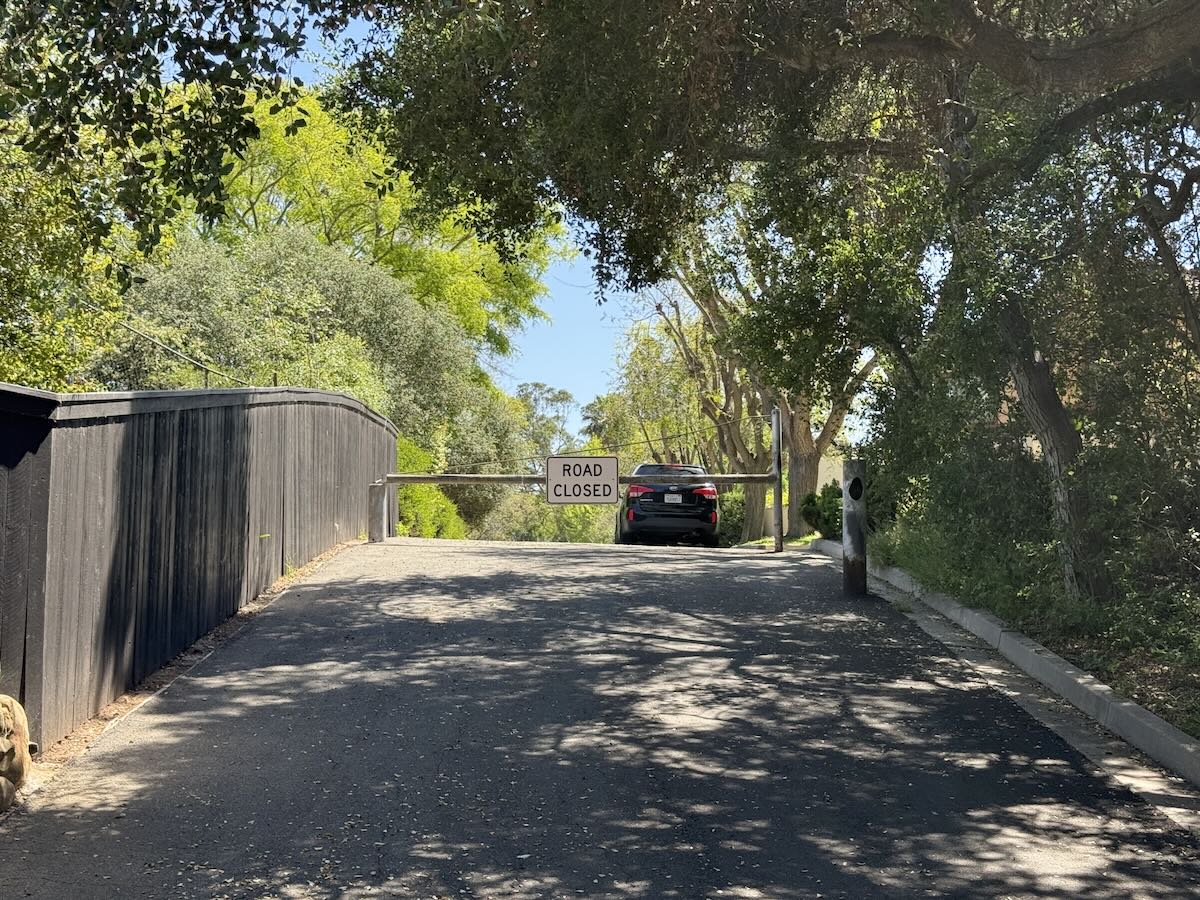 To the casual
 observer flâneur, it wasn’t immediately clear to whom the La Colina Oaks private park belongs: the aforementioned white-trim residences to the west, or the larger, relatively more idiosyncratic houses to the east? I asked around later, and it is indeed the latter. The gated park has a tennis and pickleball court.
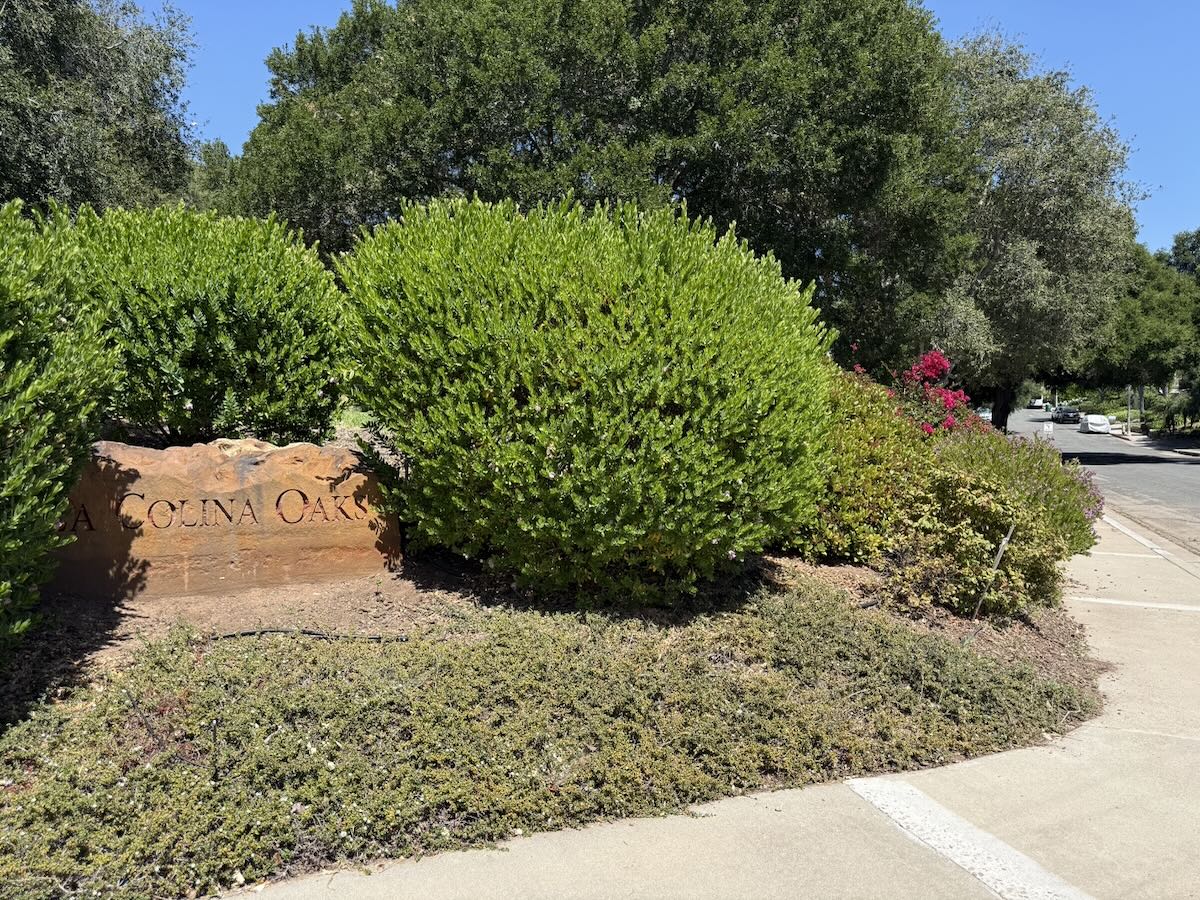
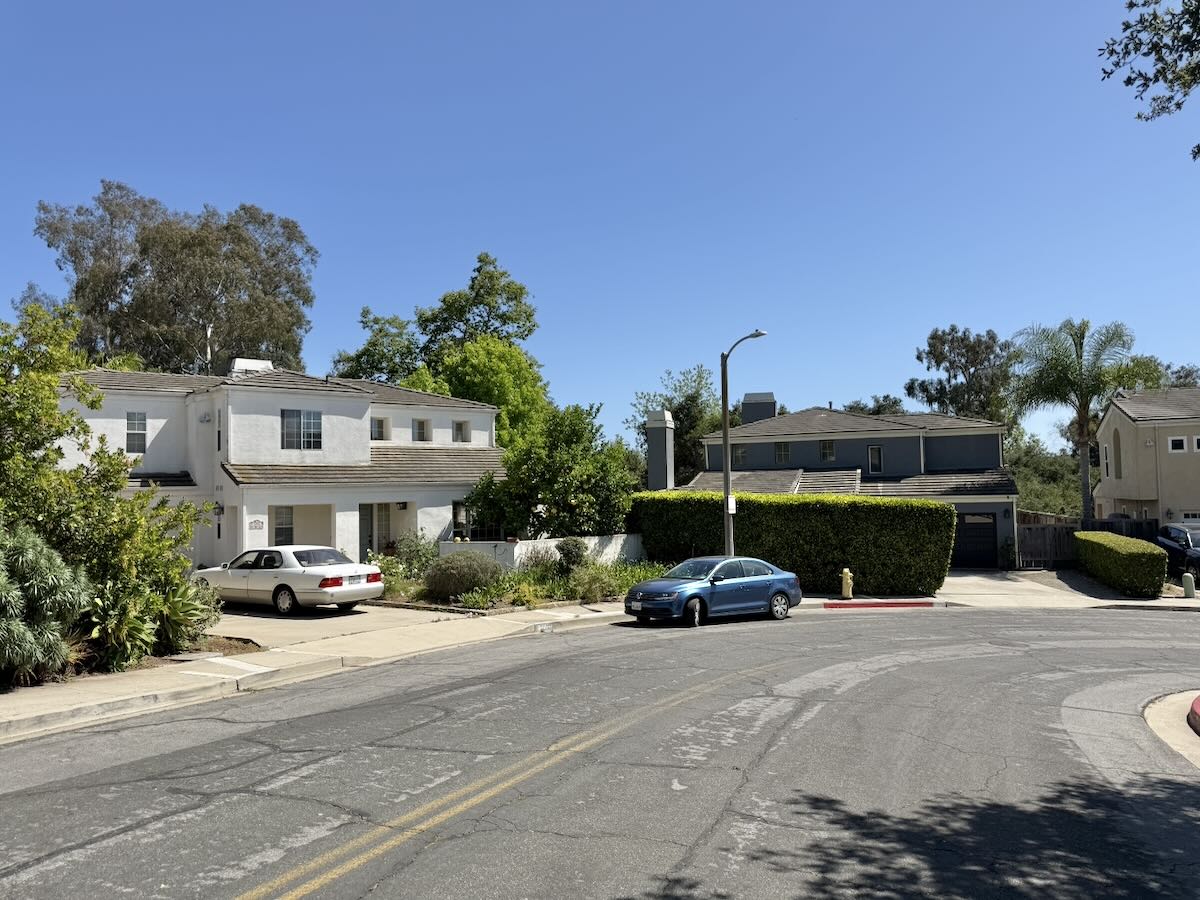
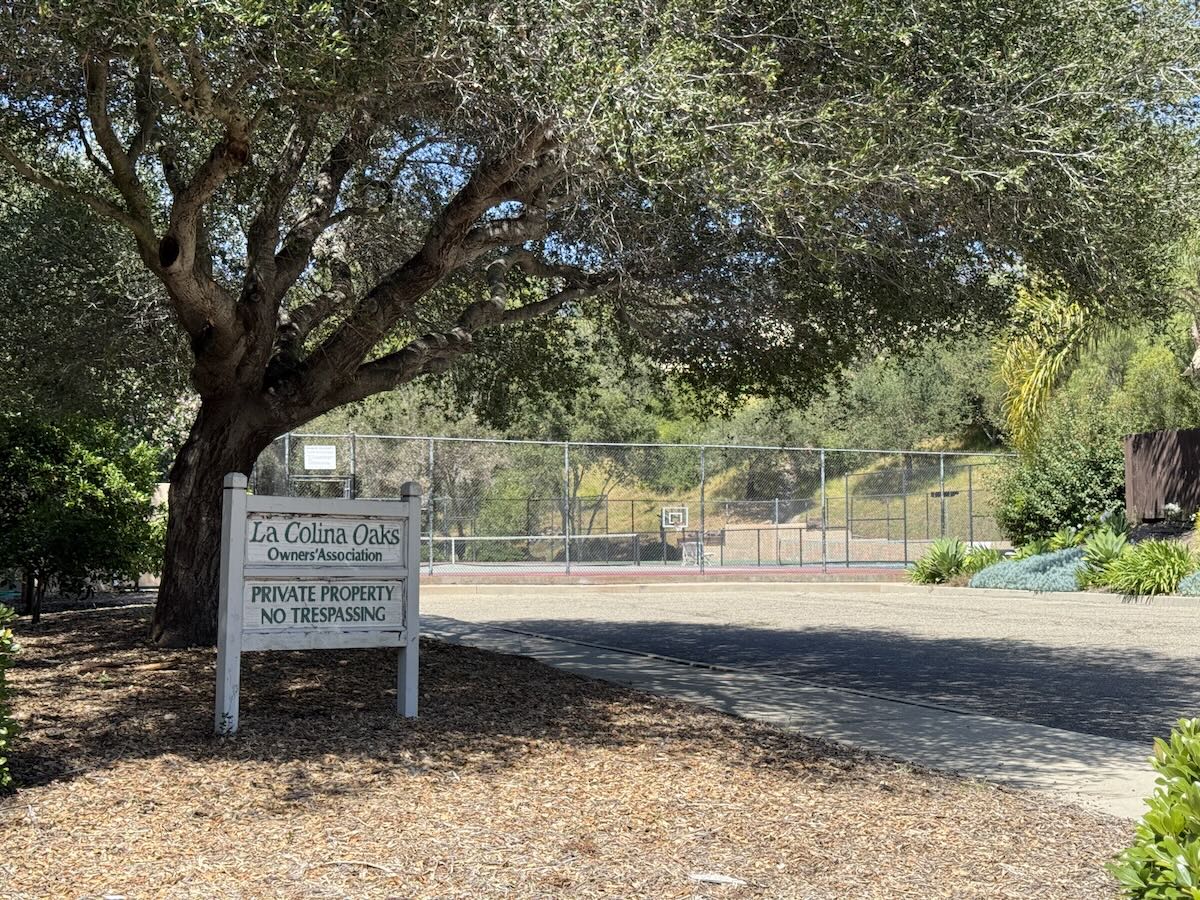 And while the houses at the east end of Primavera aren’t painted in ways that hint at regulations, they seem of a piece—and subsequent research revealed they were all built in 1989. At the end is a cul-de-sac with a sycamore in the island.
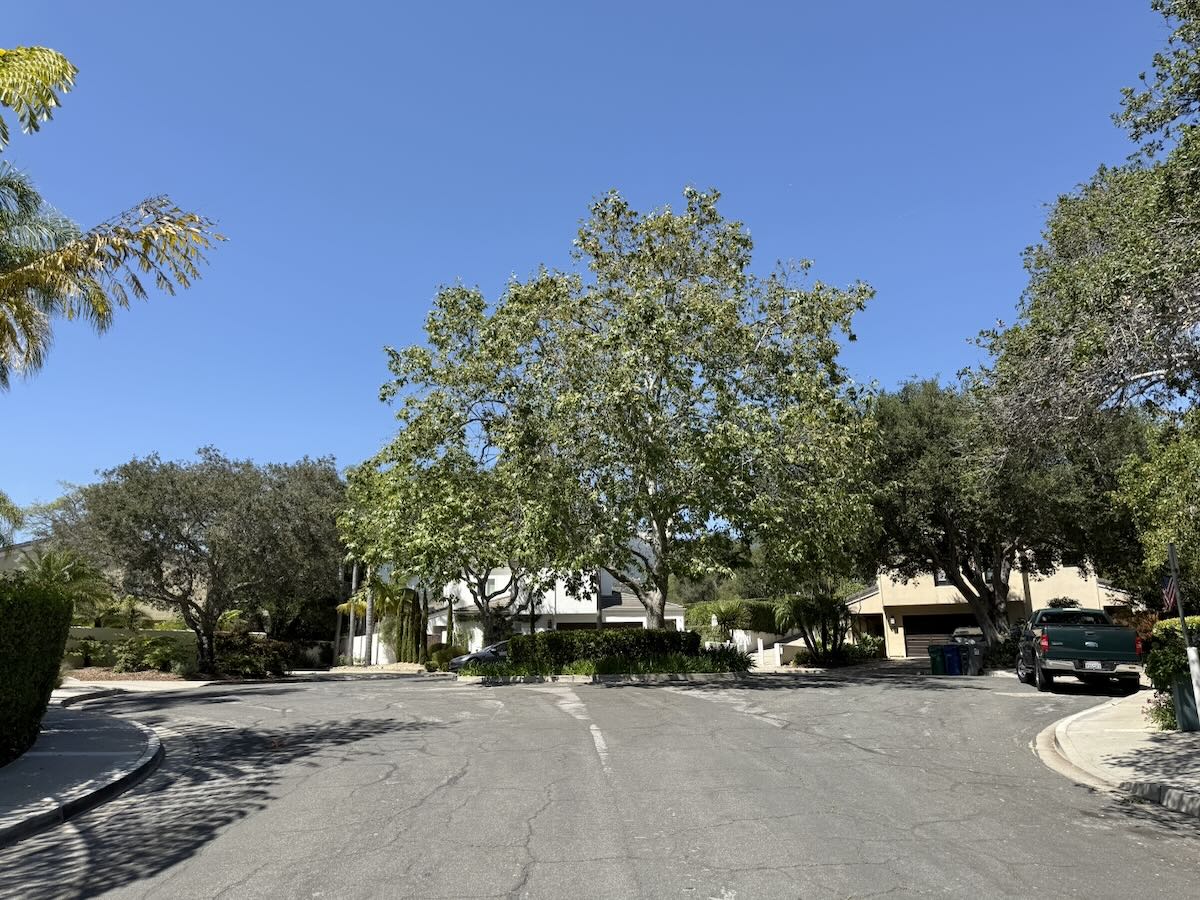 Two paths extend off the circle. The one to the east leads to Calle Cita, which we’ll revisit from the other direction.
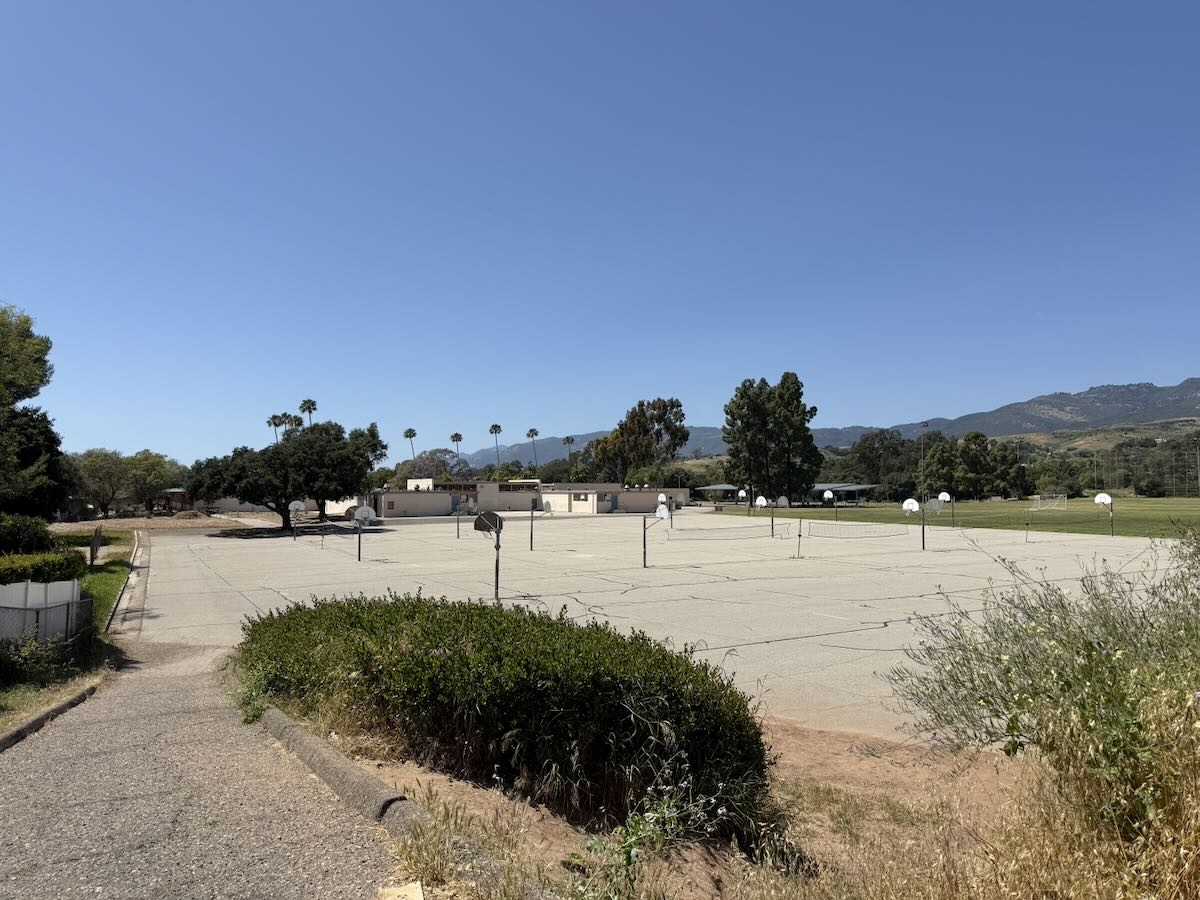
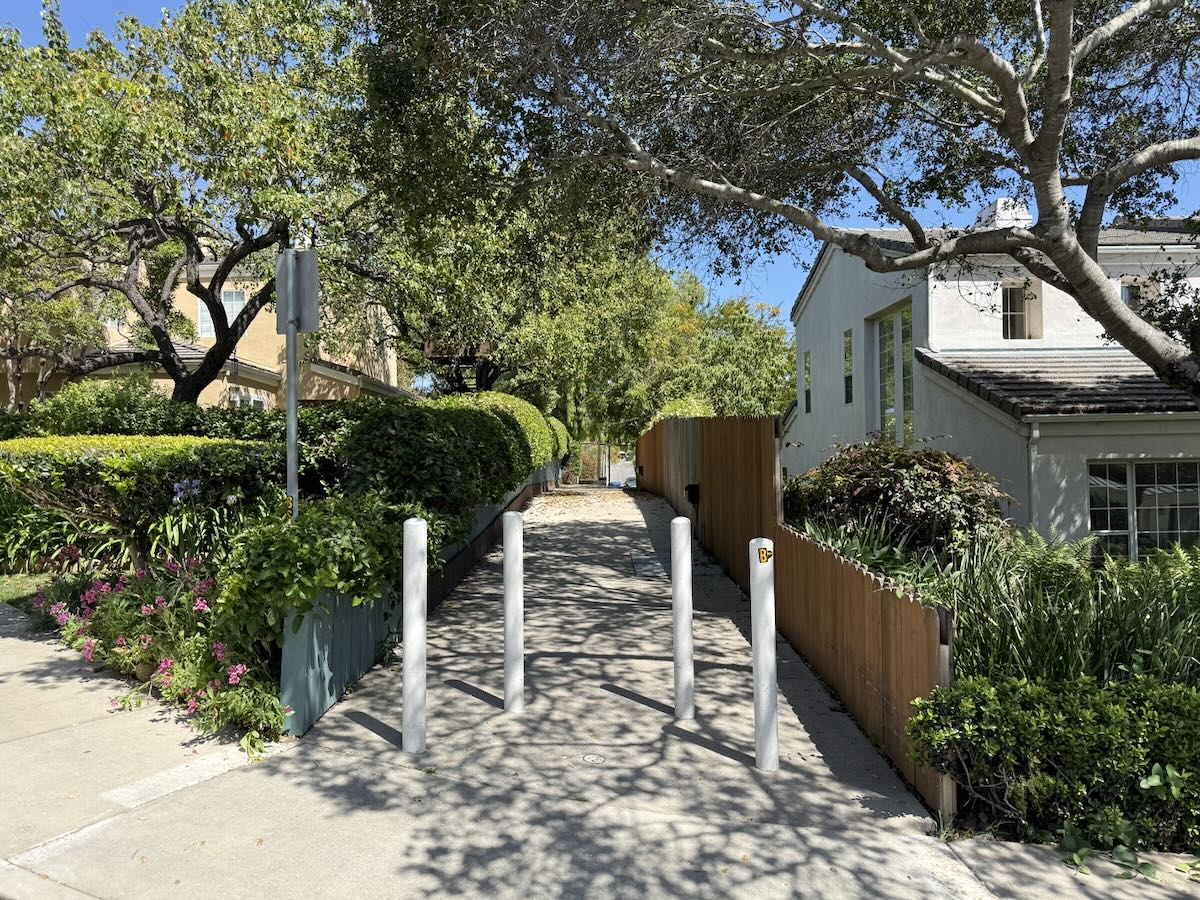 The one to the north goes to La Colina Junior High—my god, that’s a lot of basketball courts—and Carol Avenue.
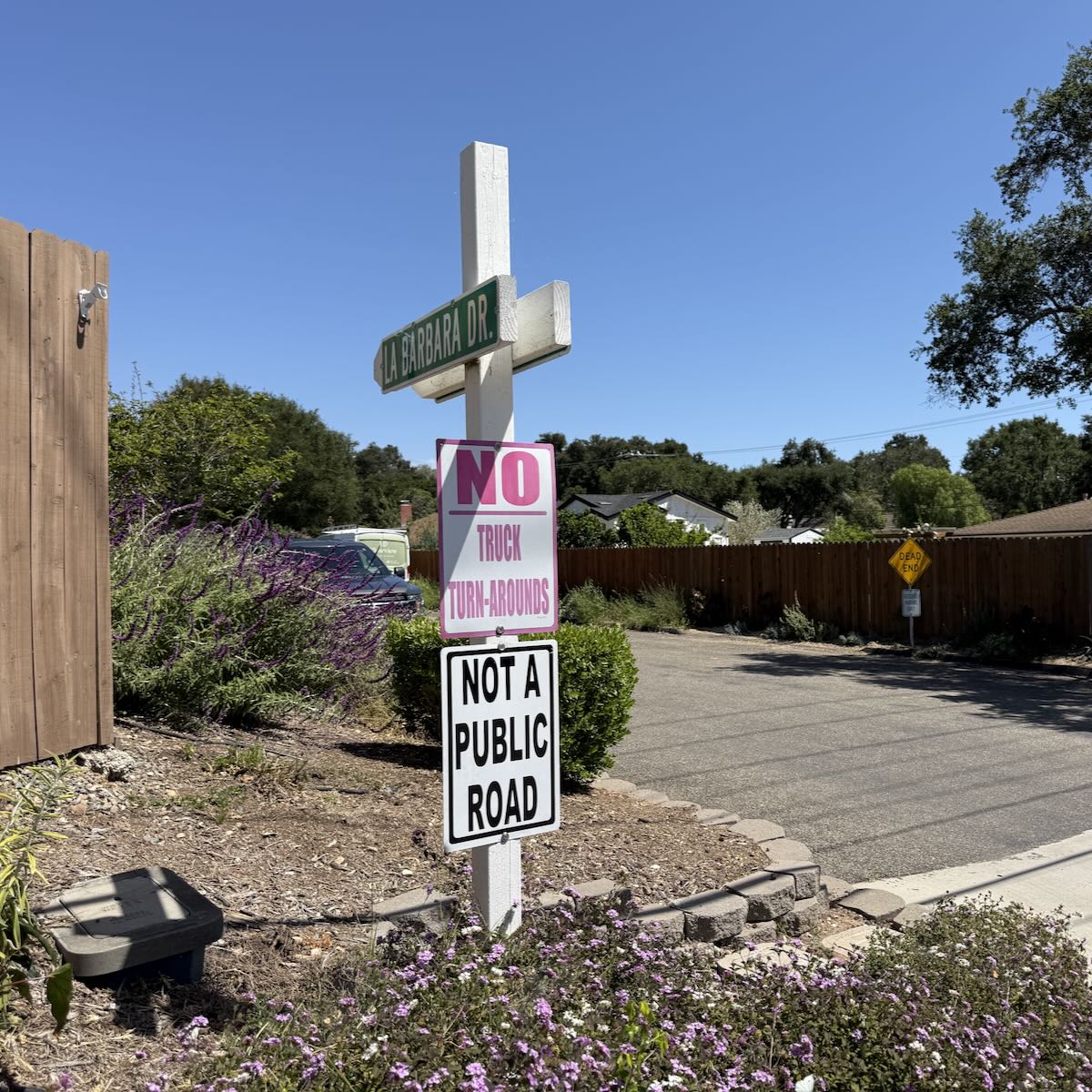
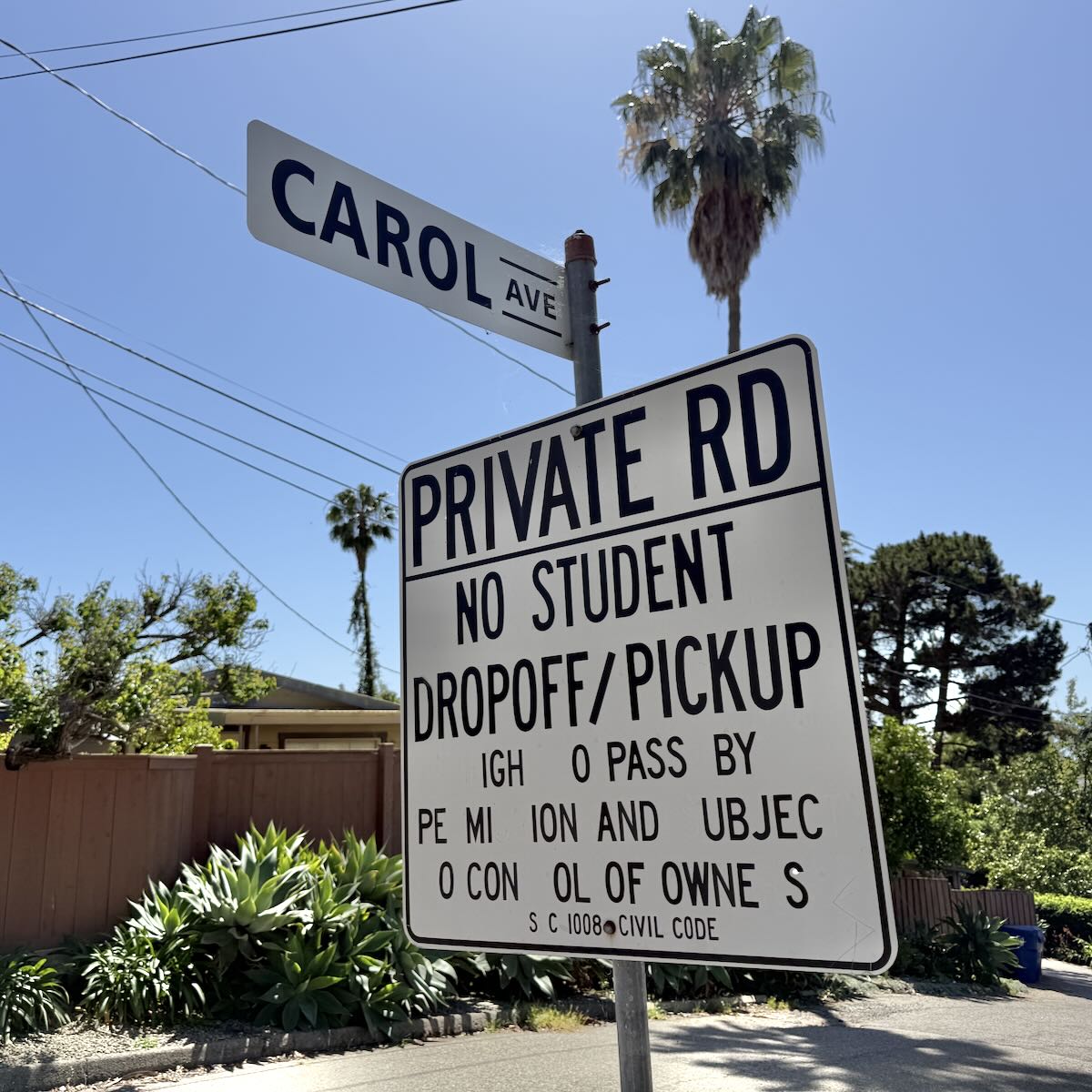
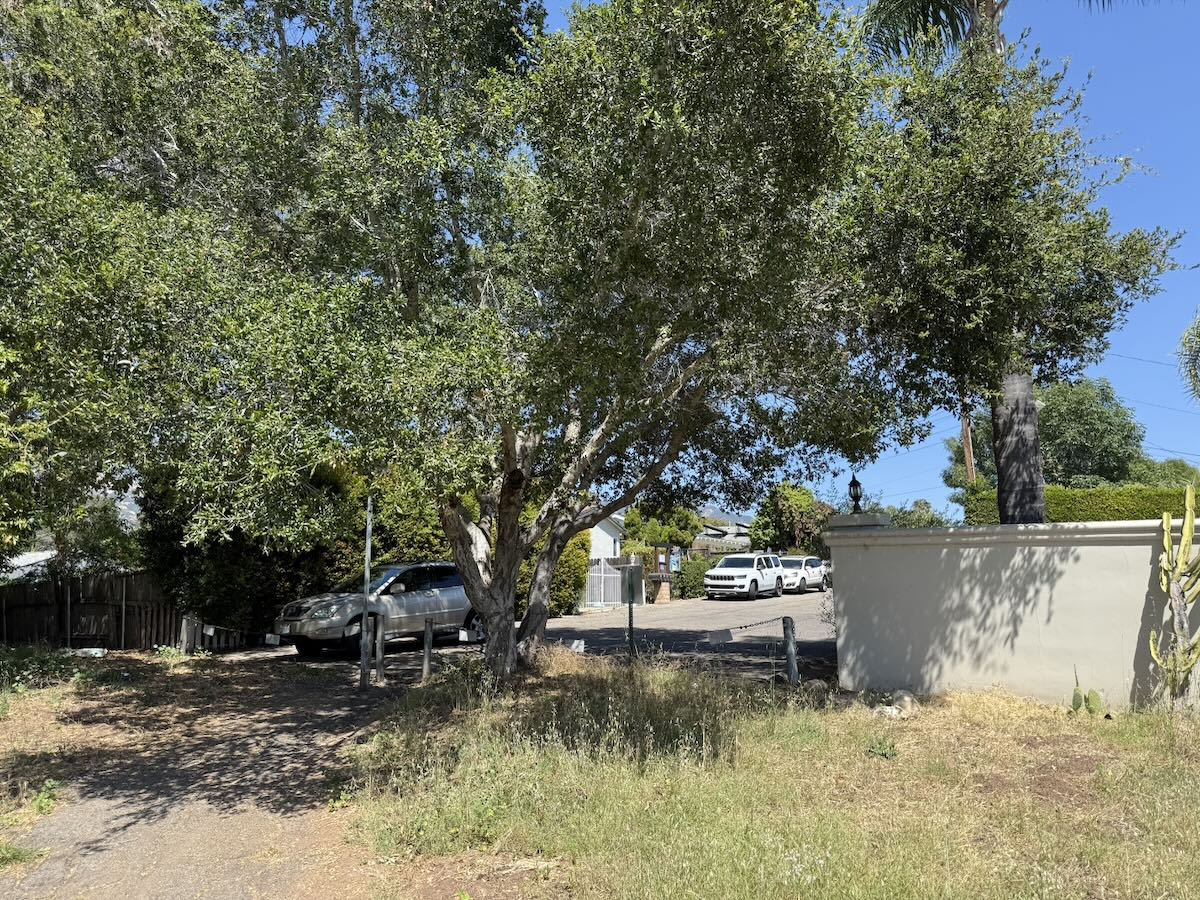 Having been rebuked in the past, I avoid private streets on these walks. But I only realized later that the cluster of first-name streets east of the junior high are not public. (And they’re not part of the city of Santa Barbara. The city border gets glitchy up there, as you can see in this map.) The only “private road” signs I noticed were on N. La Cumbre, clearly aiming to discourage people from dropping students off near these entrances to the school. Anyway, my apologies for going on a photo safari there, but I loved the area! It feels delightfully quirky, especially compared to the HOA vibe of Primavera and Otono. (Swell places to live, I’m sure, but less interesting to walk.)
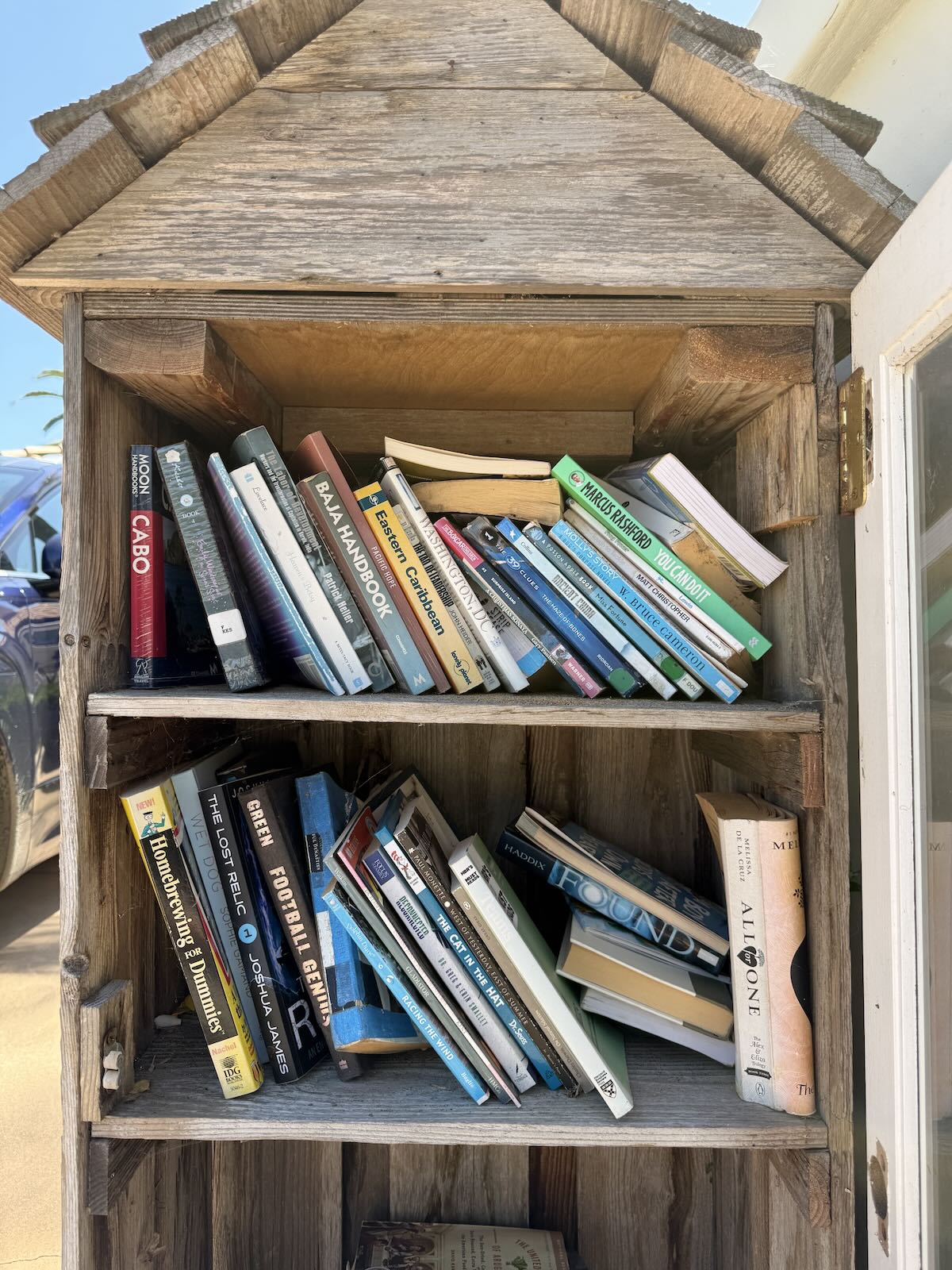
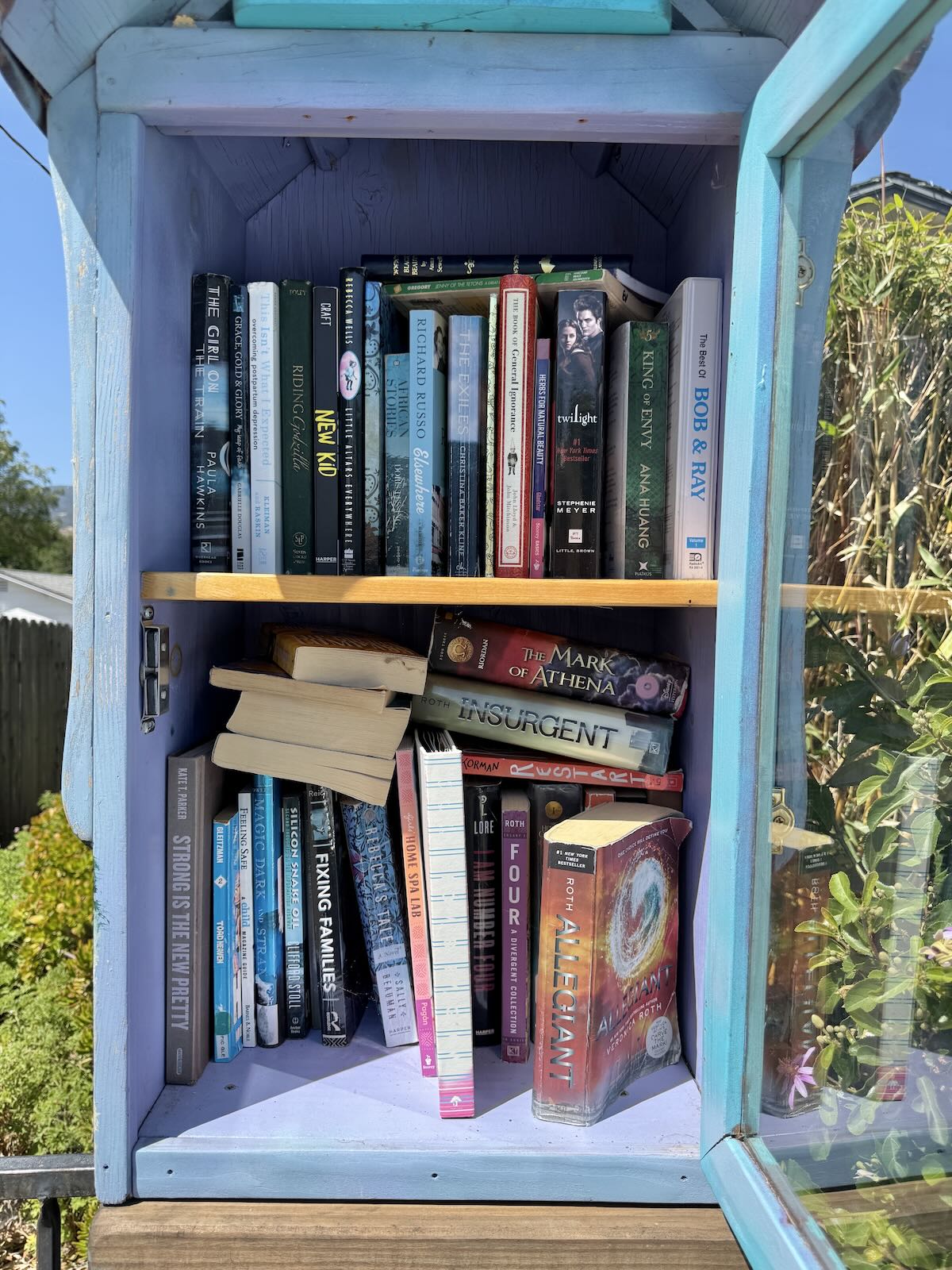
A friend says that the streets were named after the children of the developer. First up: Carol Avenue, where there are mini libraries across the street from one another. I should’ve snapped up Wet Dog by Sophie Gamand.
 And I adored this—but wondered whether it was directed at a neighbor across the way.
 And check out this verdant gate and an adorable little yellow house behind a classic white picket fence. Whoever lives there really ought to bake pies.
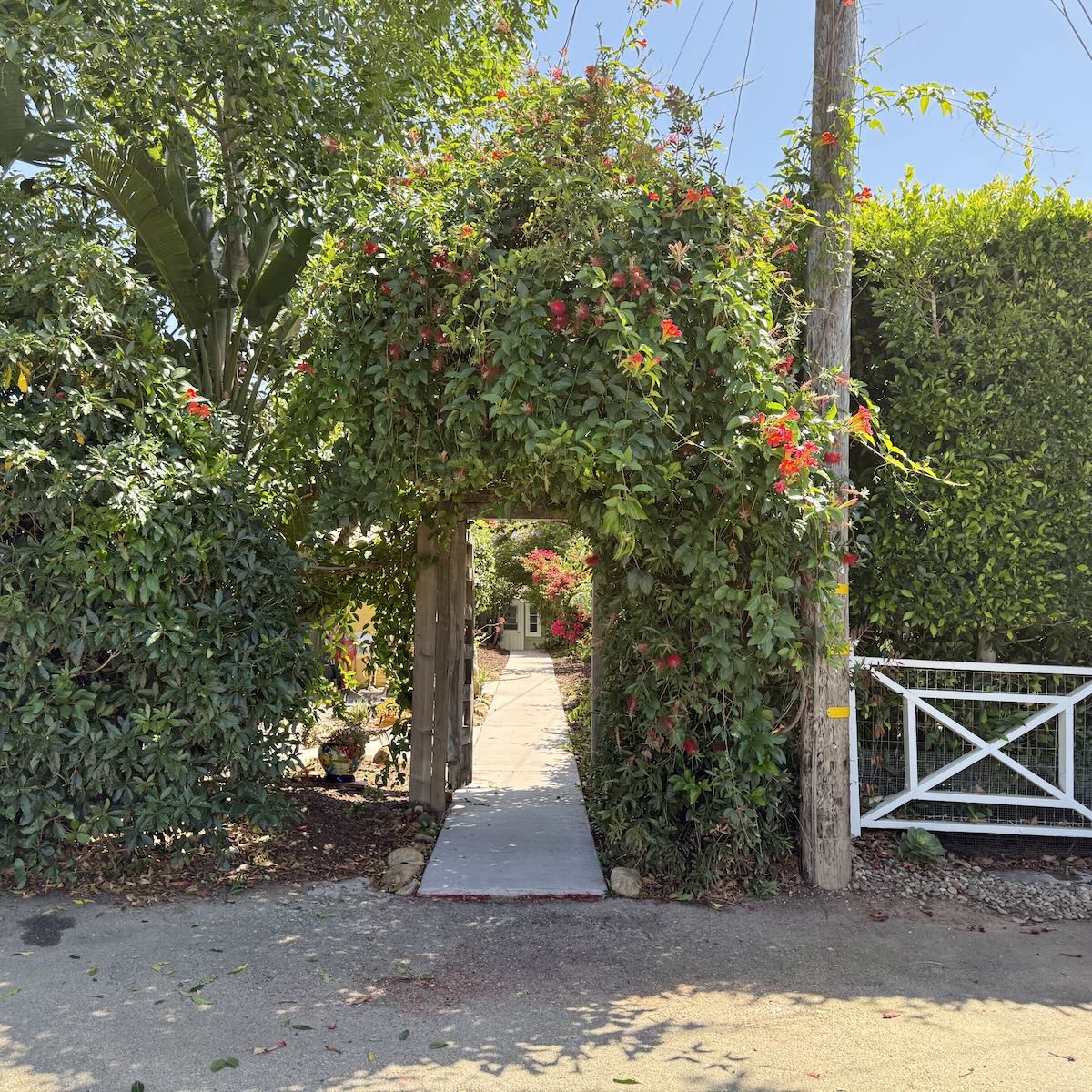
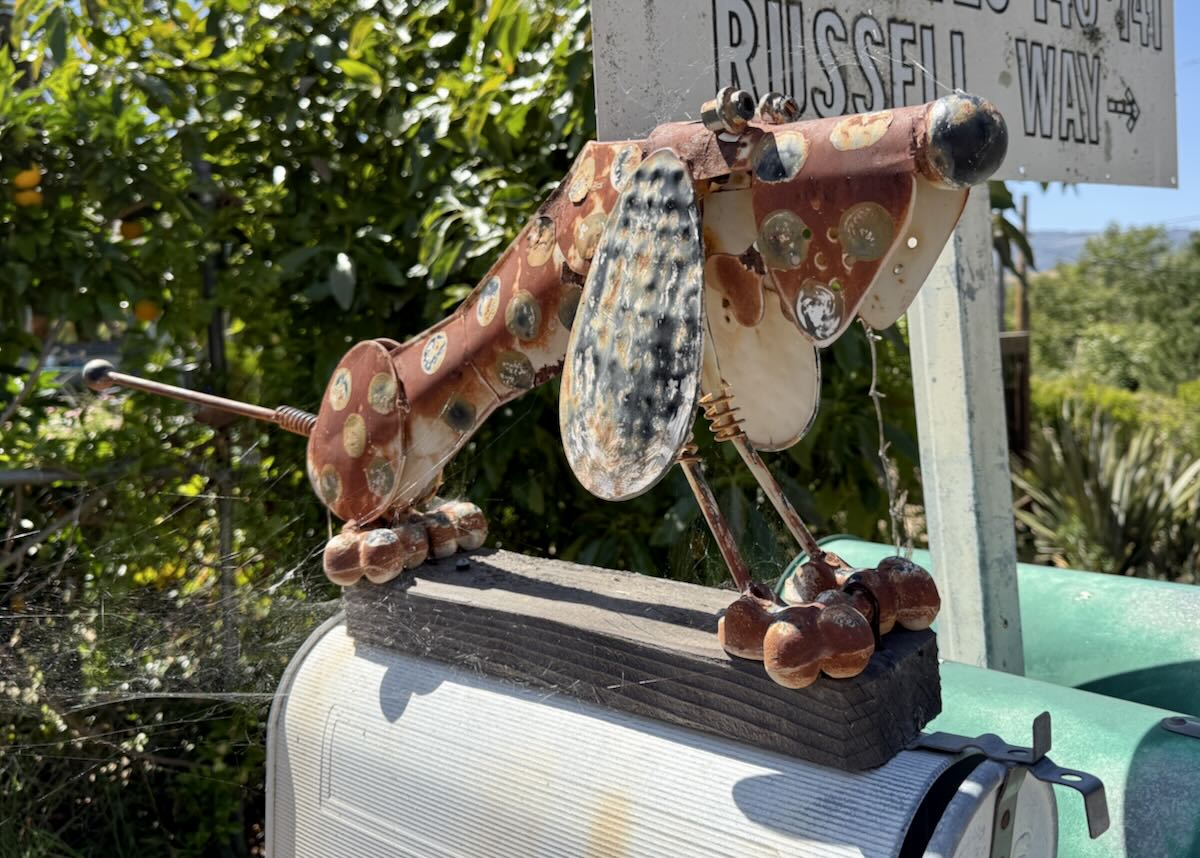
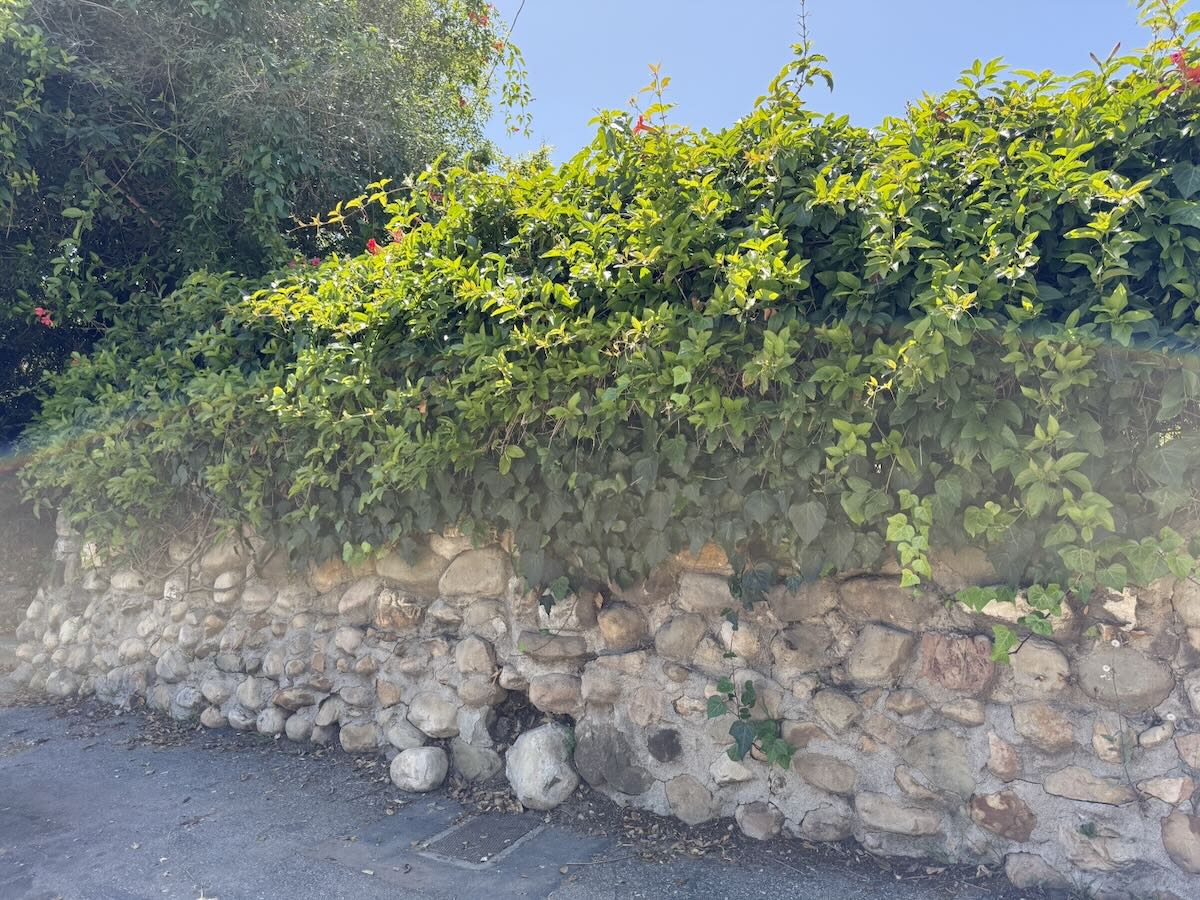
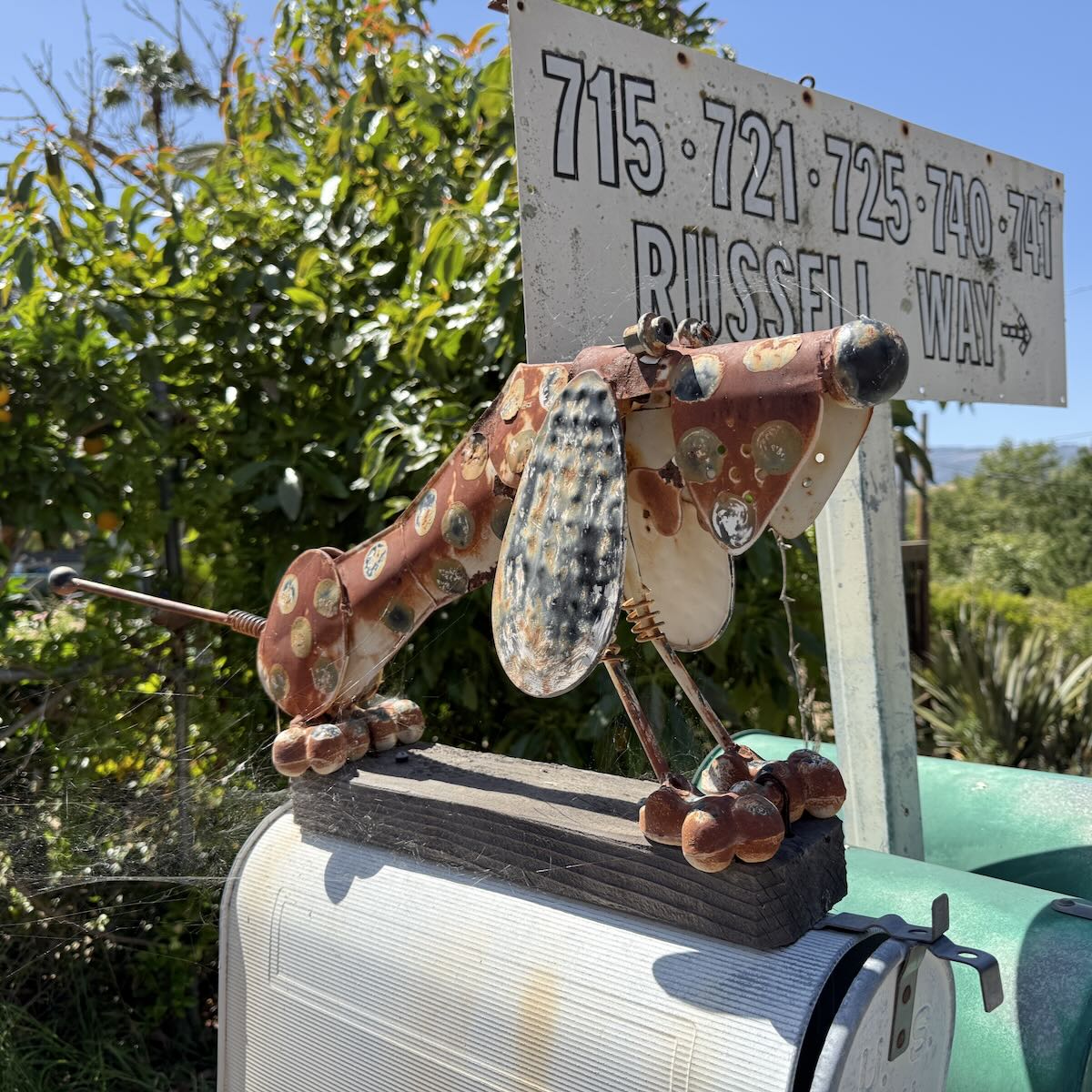
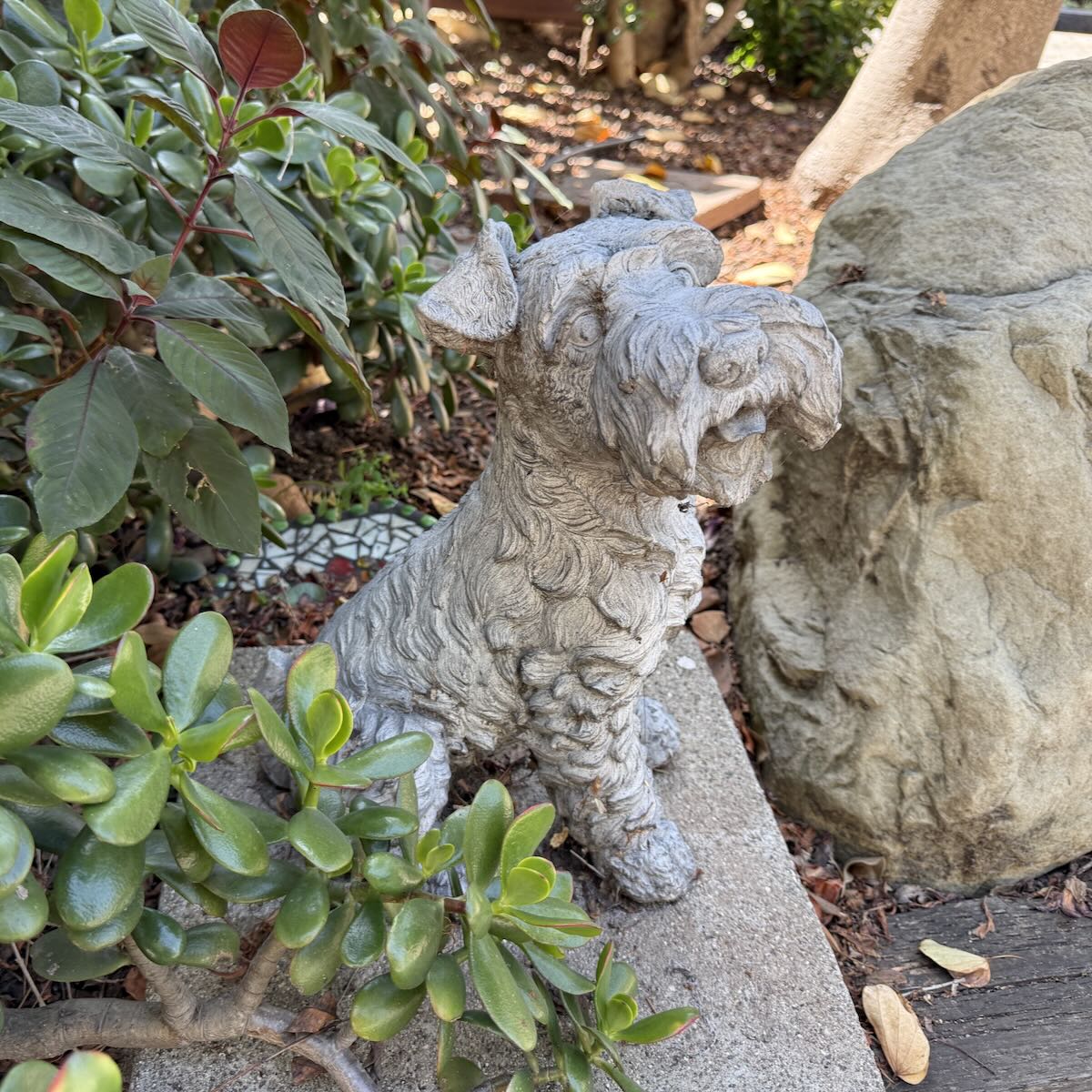
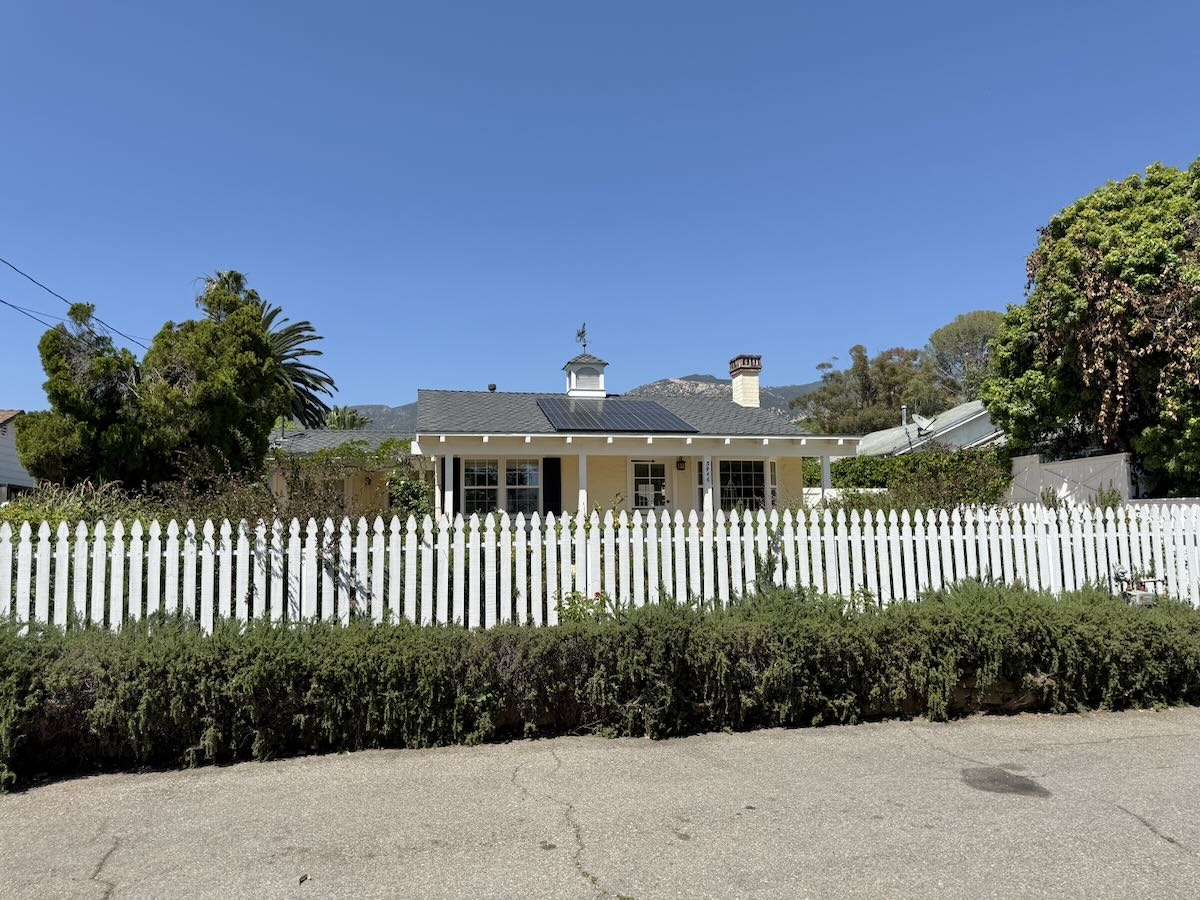 The area is rich with details: on Russell Way, there’s an evocative stone wall and a terrific dog keeping guard over a mailbox.
 Leroy got the shortest street, Leroy Boulevard, a cul-de-sac downhill from Russell. Maybe the grand-sounding “Boulevard” was meant as compensation.
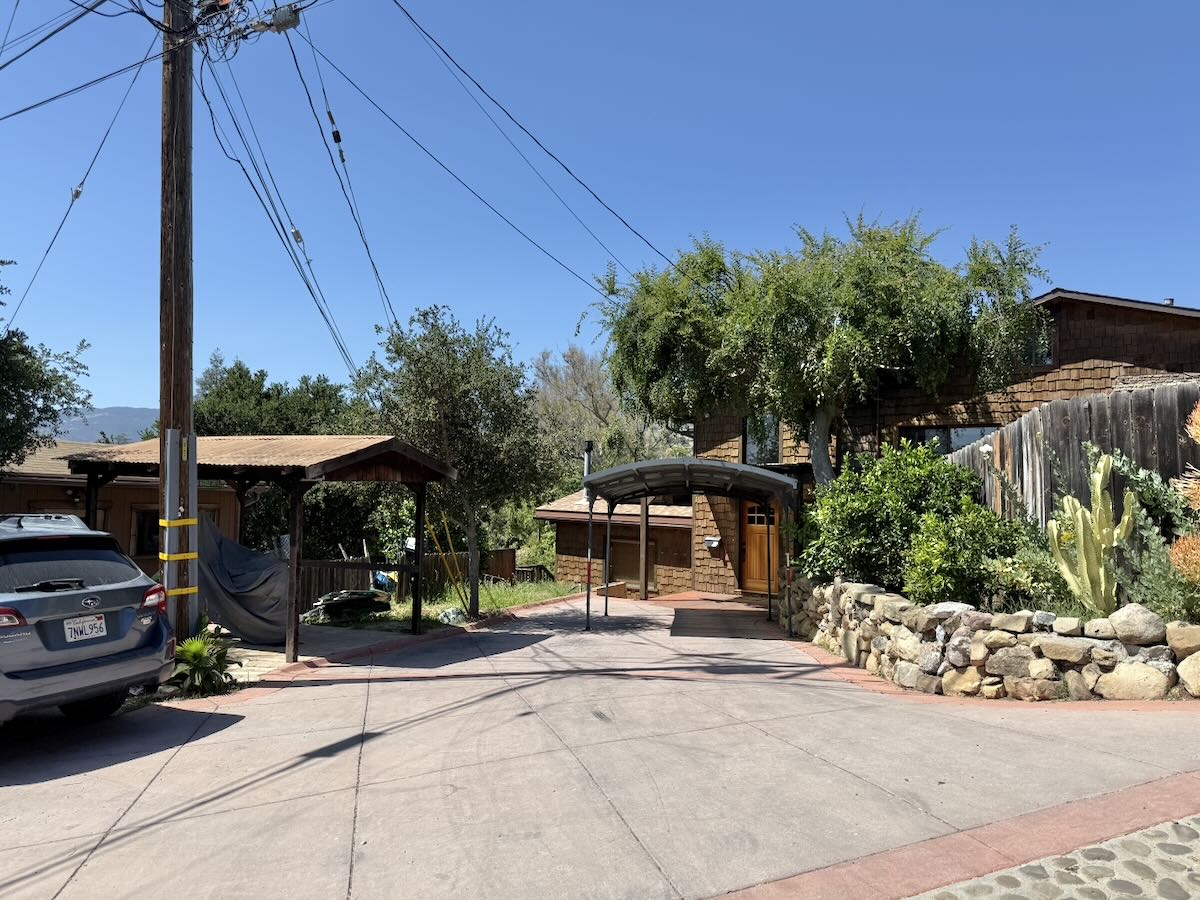
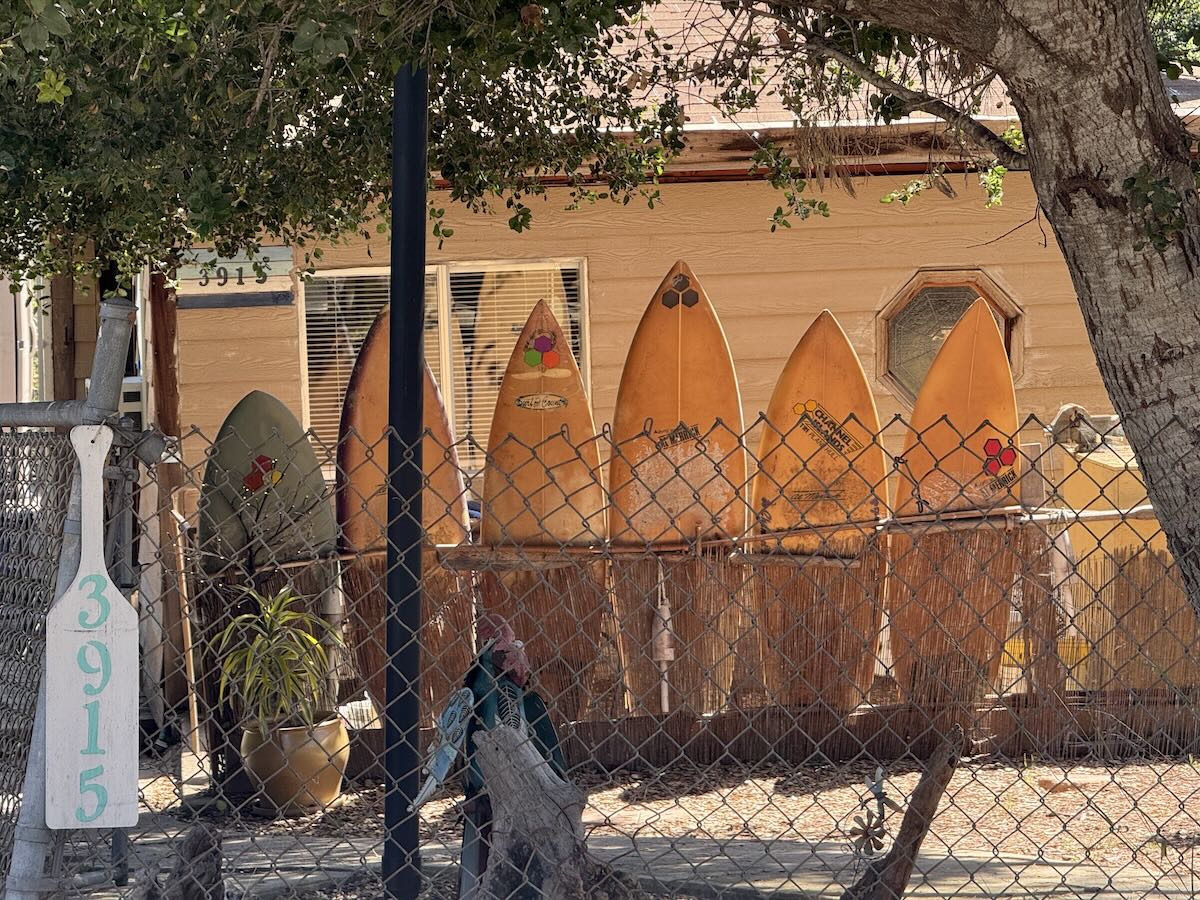
 Next up was Harrold Avenue, where dueling carports and a family of surfboards caught my eye. Is that a repurposed fraternity paddle?
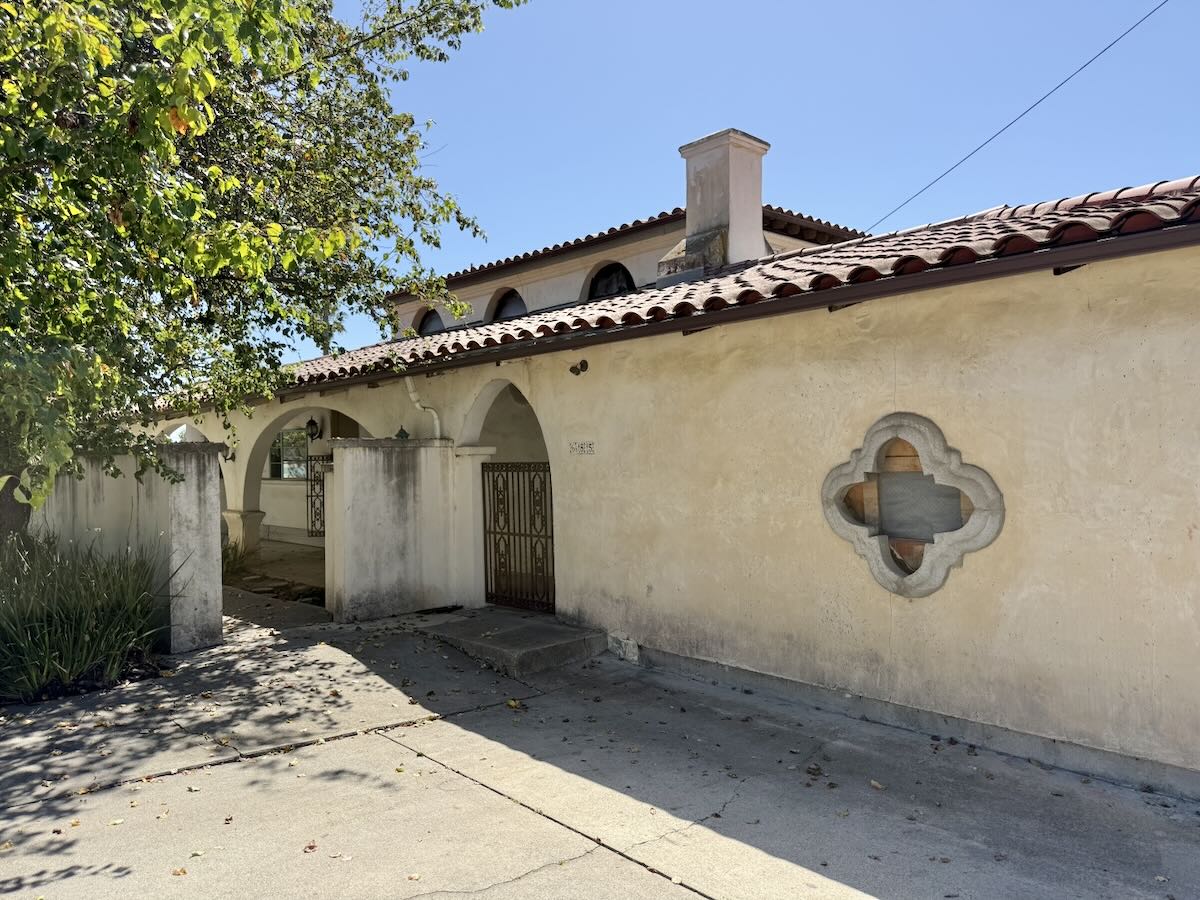
 The first-name loop passes briefly along N. La Cumbre Road, where a 1953 seven-bedroom (!) has tremendous curb appeal.
 Back on Carol Way, here’s one of those signs I mentioned. If we add made-up diacritical marks and the like, the sign could pass for a foreign language: Igh ò pâşs by pë mi iøn añd ubjec ō con ol ōf ownę s.
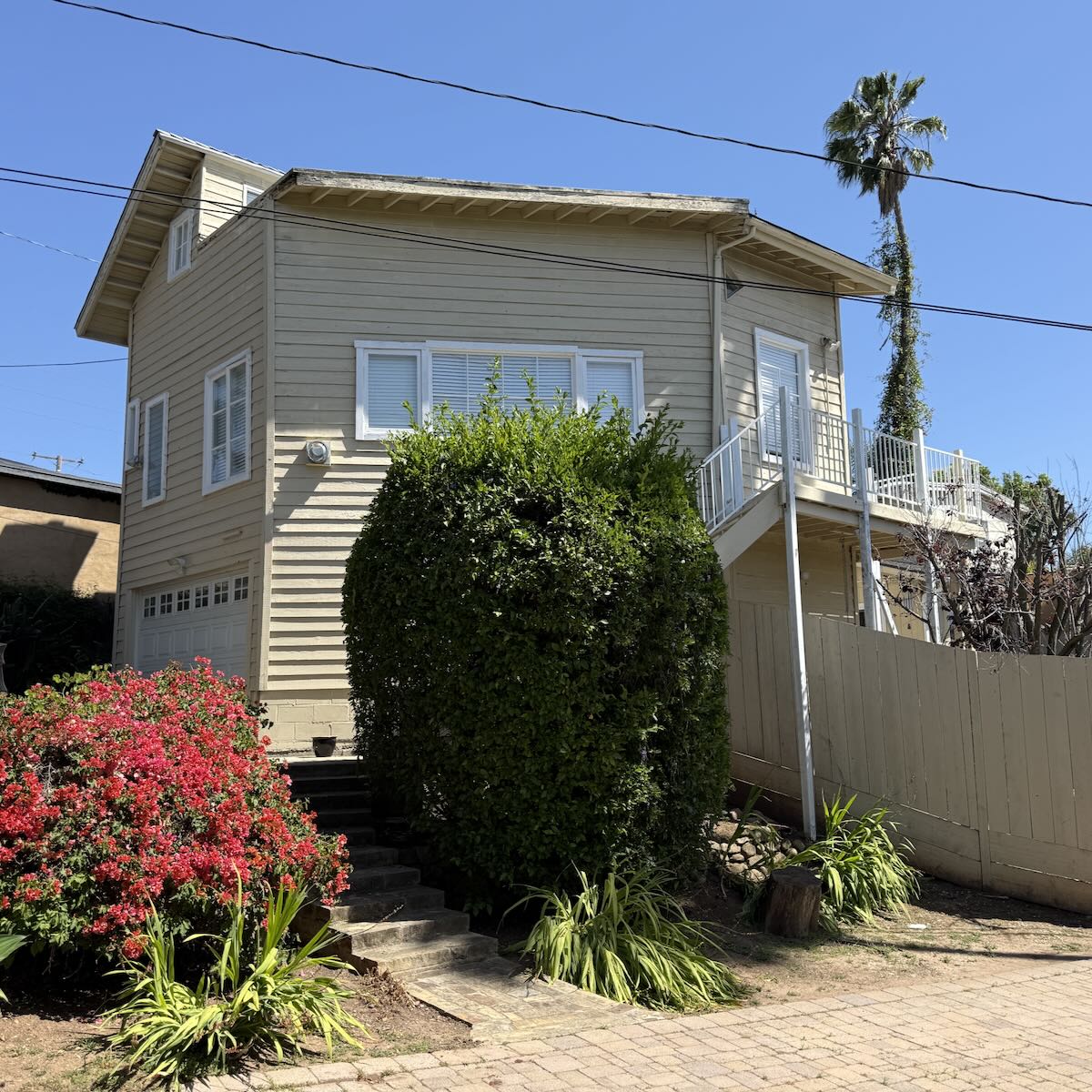
 The house in the first photo has a neat shape, although it was hard to show in a photo. I intended to point out the small triangular window in the upper right, but of course it’s hidden behind the utility lines.
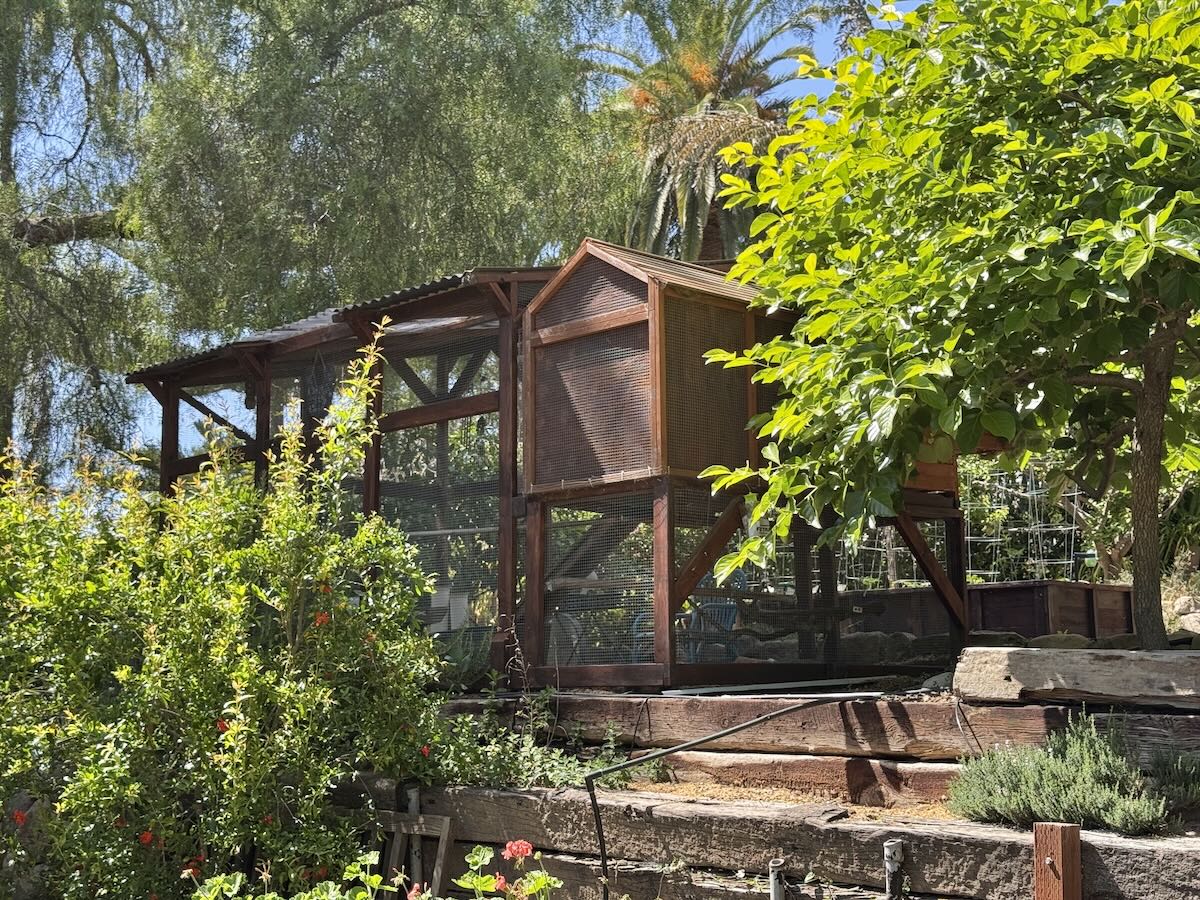
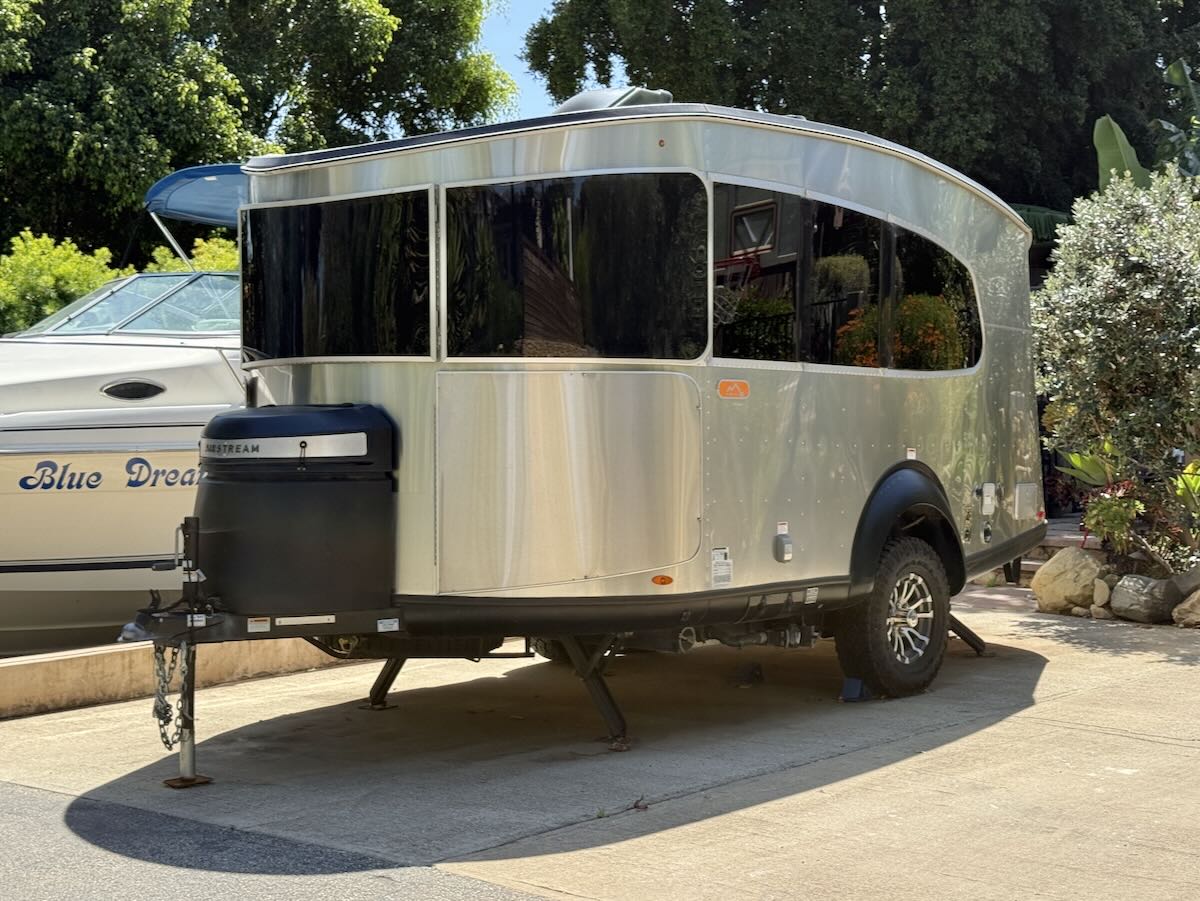
 Back on Russell Way, this gem stood out. I’ve never seen an Airstream like it.
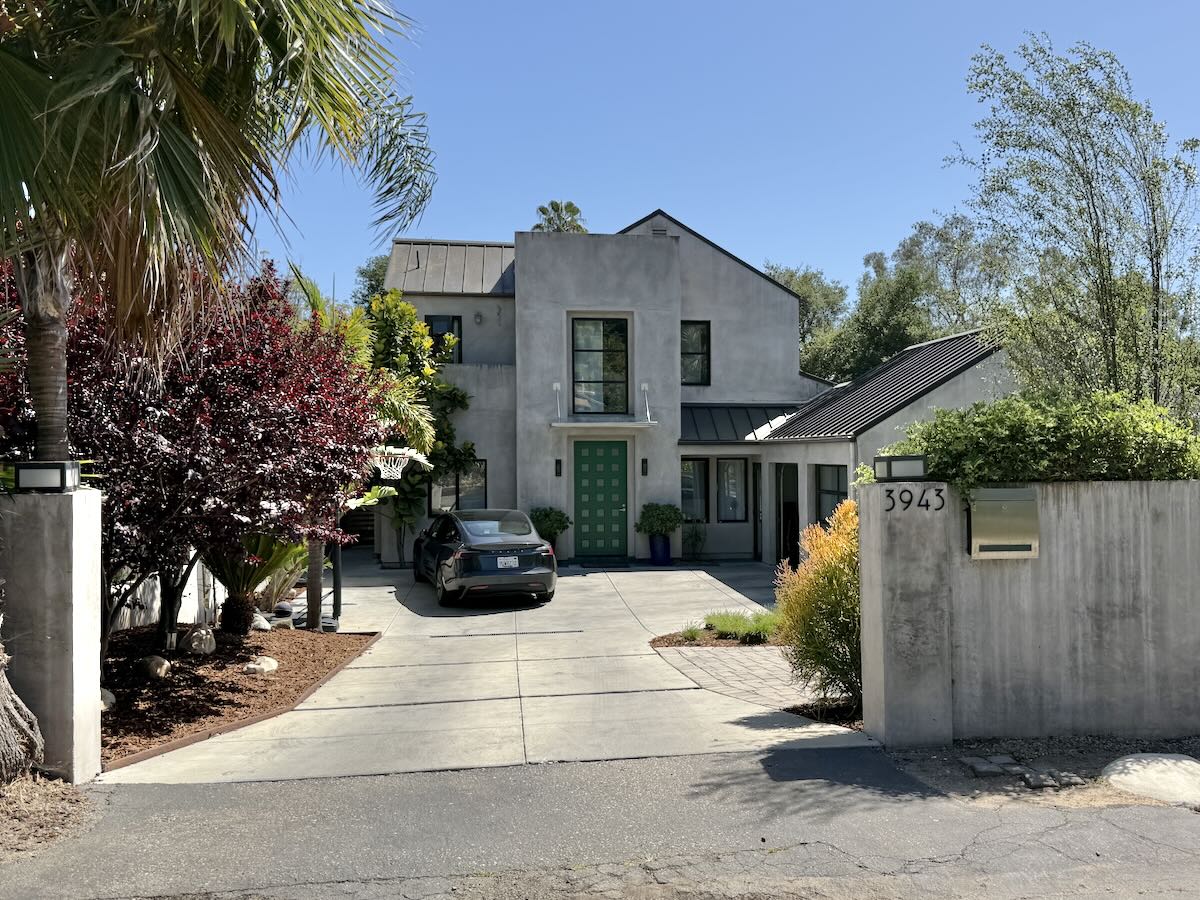
 The tour of the microneighborhood wrapped up at the west end of Calle Cita. The contemporary house cuts a striking figure—I doubt there’s anything like it nearby.
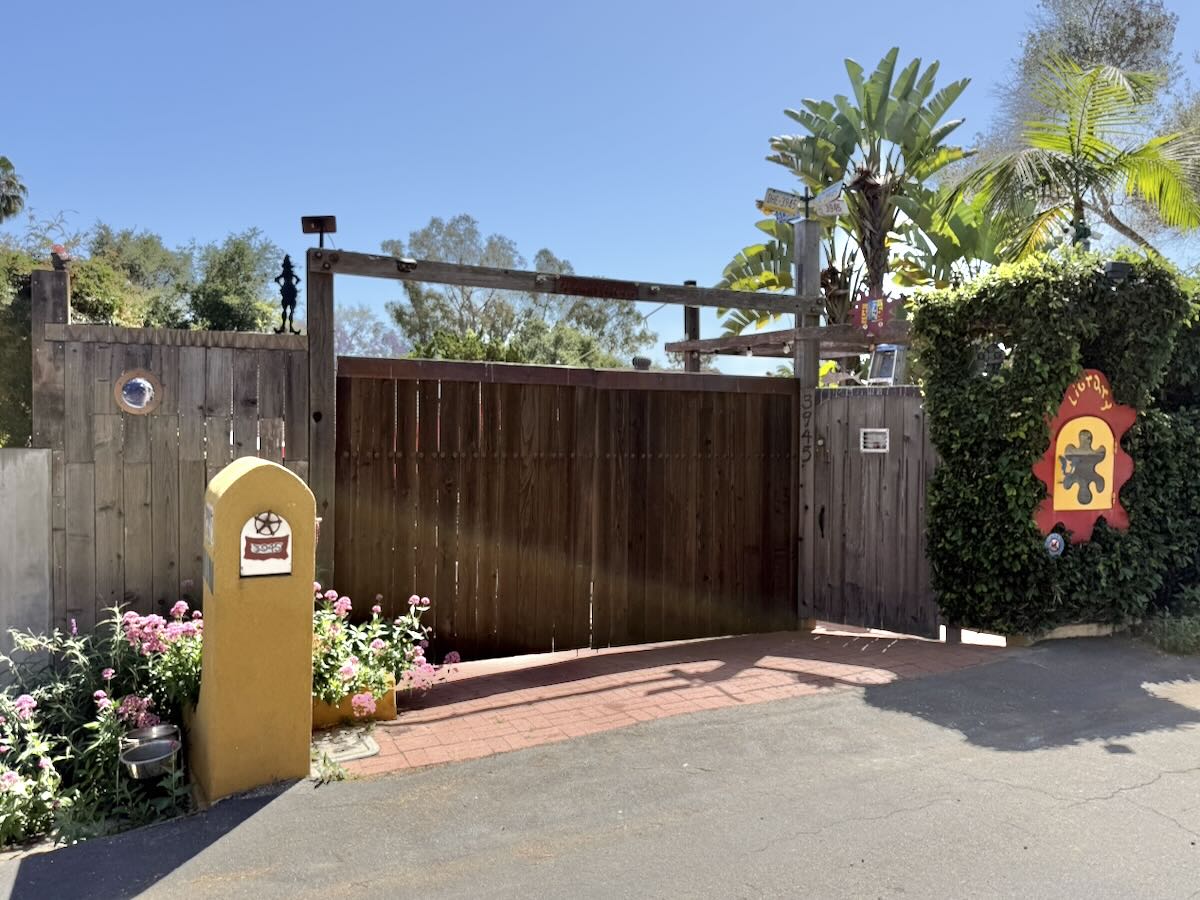
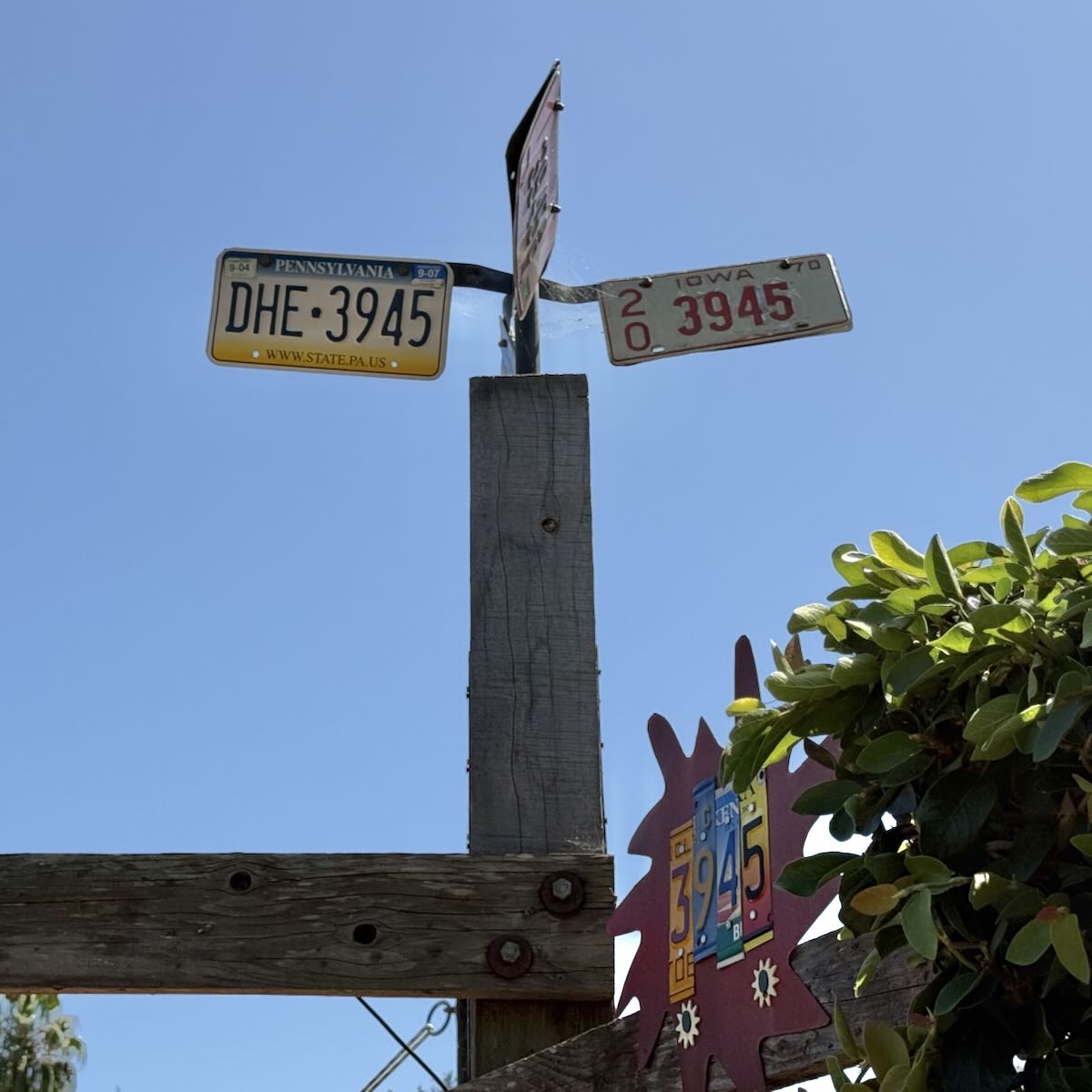
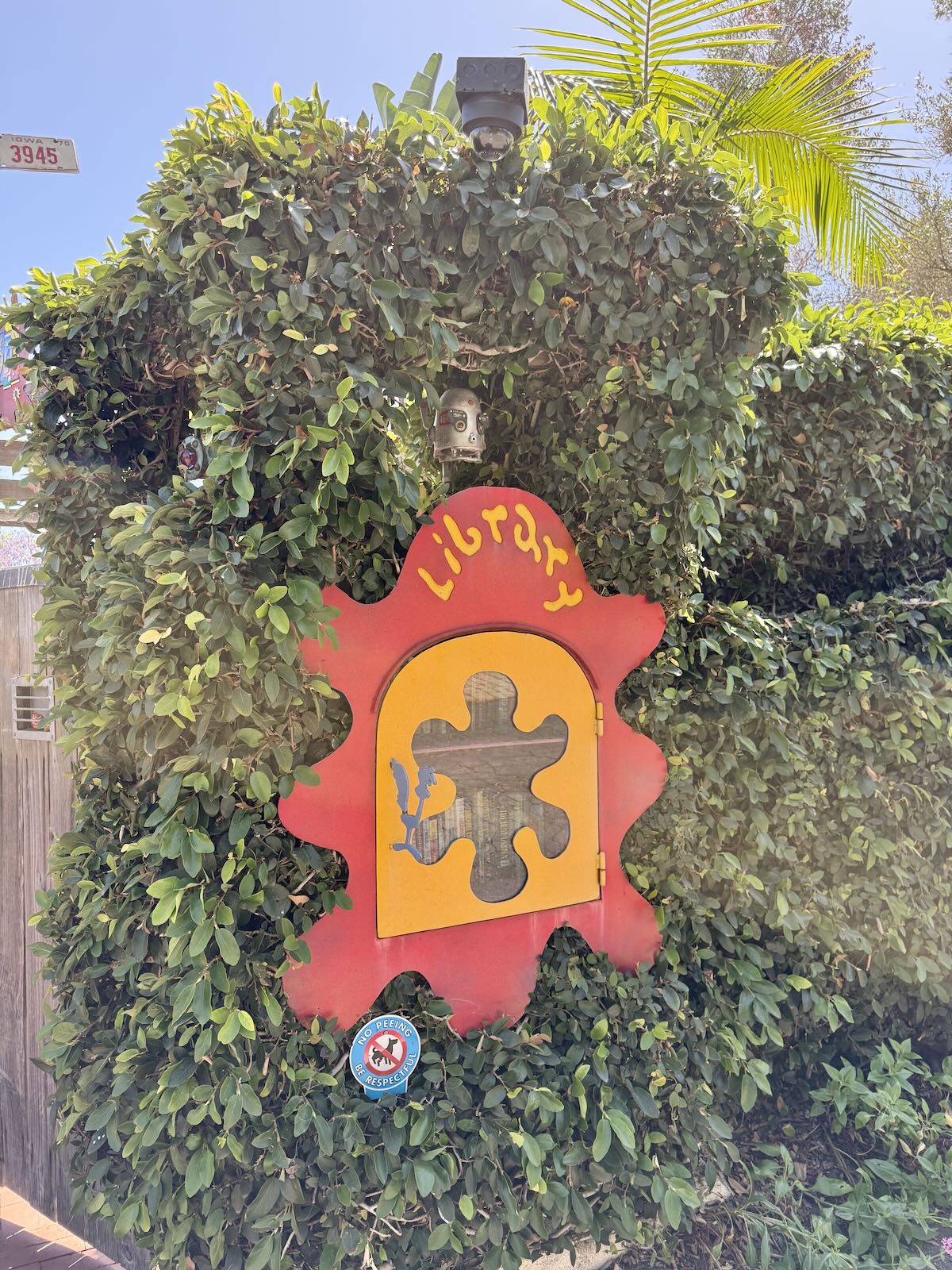
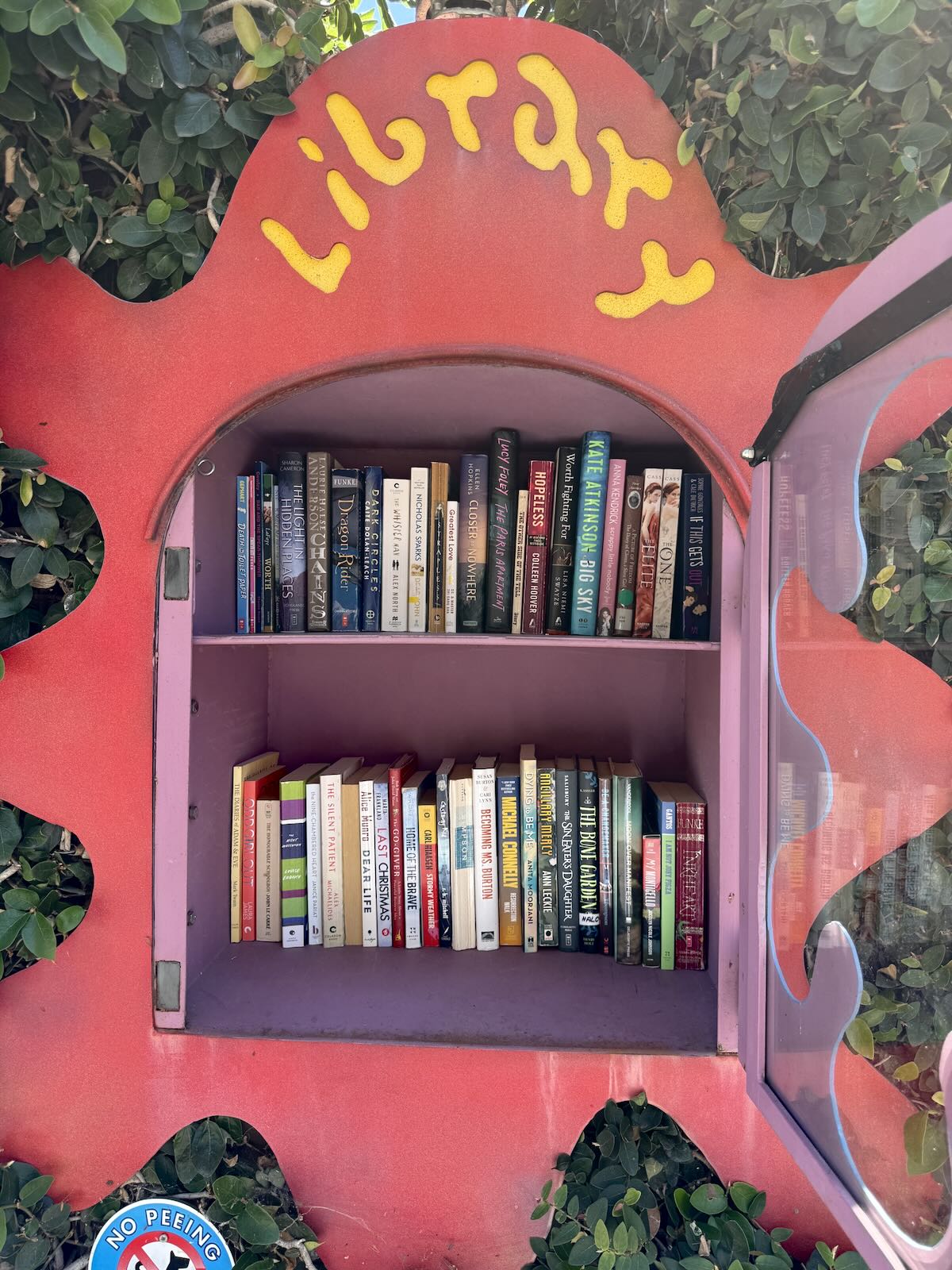
 And it’s next door to a glorious quirkfest that Google Maps identifies as the site of the Talbotics Sculpture Studio. I didn’t do a very good job of capturing the many details (except for the license-plate whirligig). The street library is the best I’ve ever seen—note the Roadrunner handle—and the robot-ish head above it offers a taste of what to expect from Tal Avitzur’s delightful sculptures. While I didn’t covet any of the books, Anna Kendrick’s Scrappy Little Nobody made me think of Jeff Hiller’s recent memoir, Actress of a Certain Age, in which he kicks off each chapter by referencing another actor’s memoir. (Hiller starred in—and won an Emmy for—Somebody Somewhere, which I loved.) I listened to Hiller’s book on a long drive. It’s a lot, and your mileage may very, but there were at least three times when I laughed so hard that I cried, which made driving difficult.
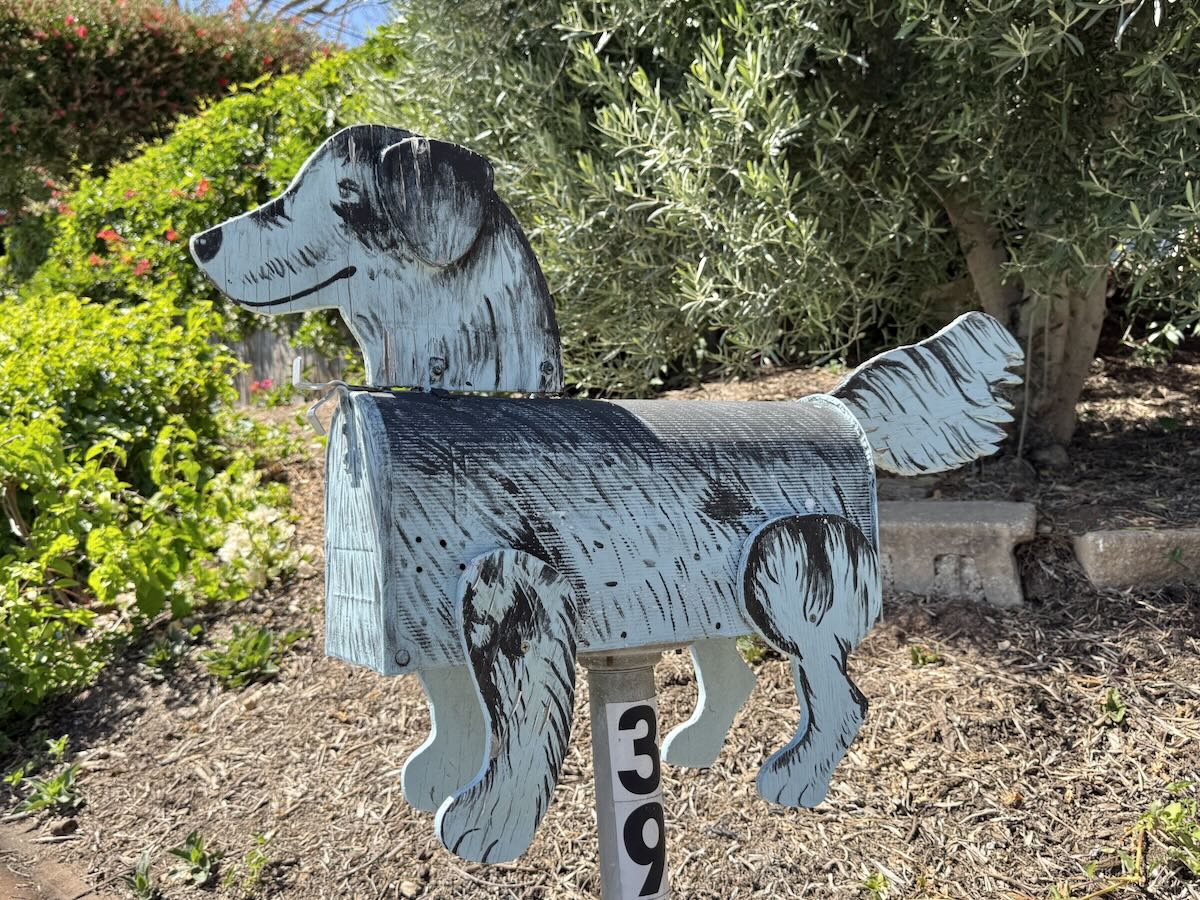
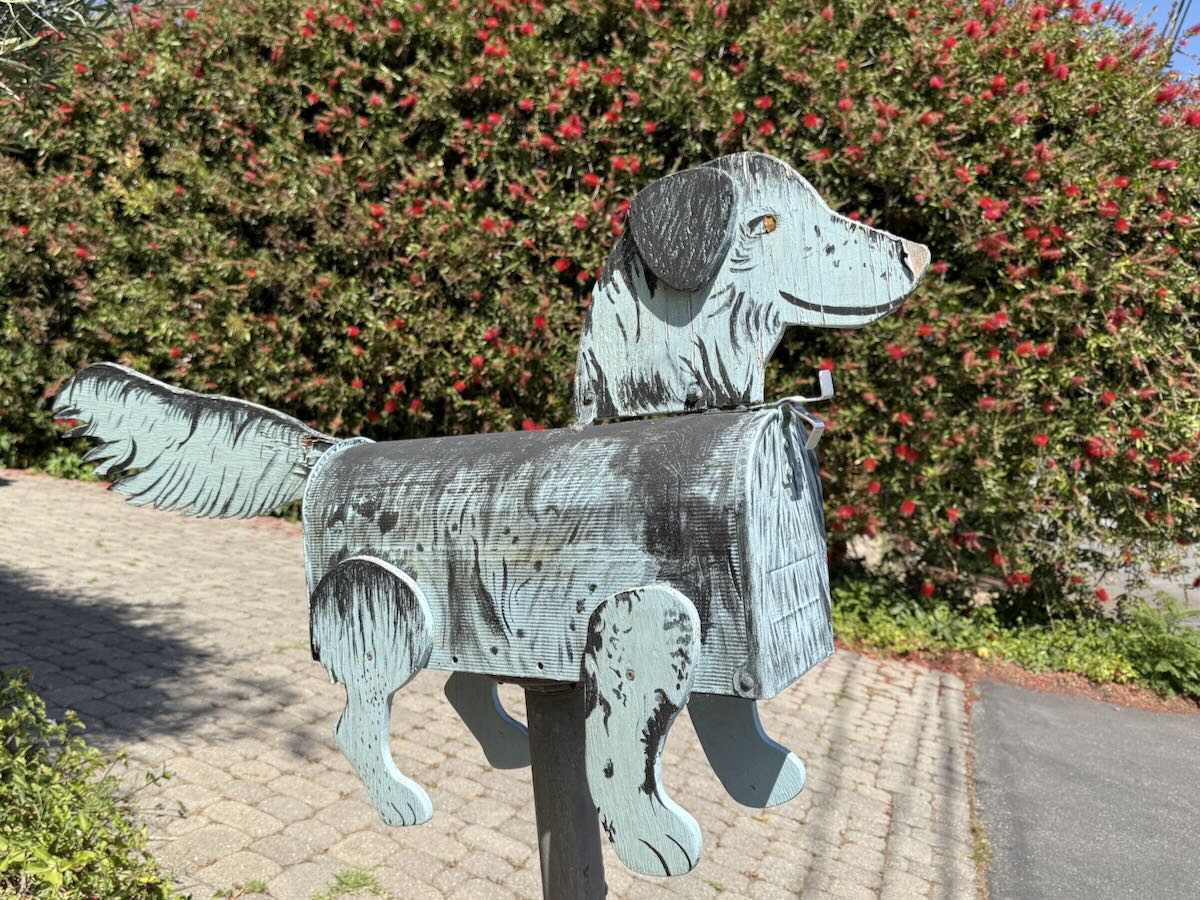
 A nearby dog mailbox was so good I felt the need to photograph both sides.
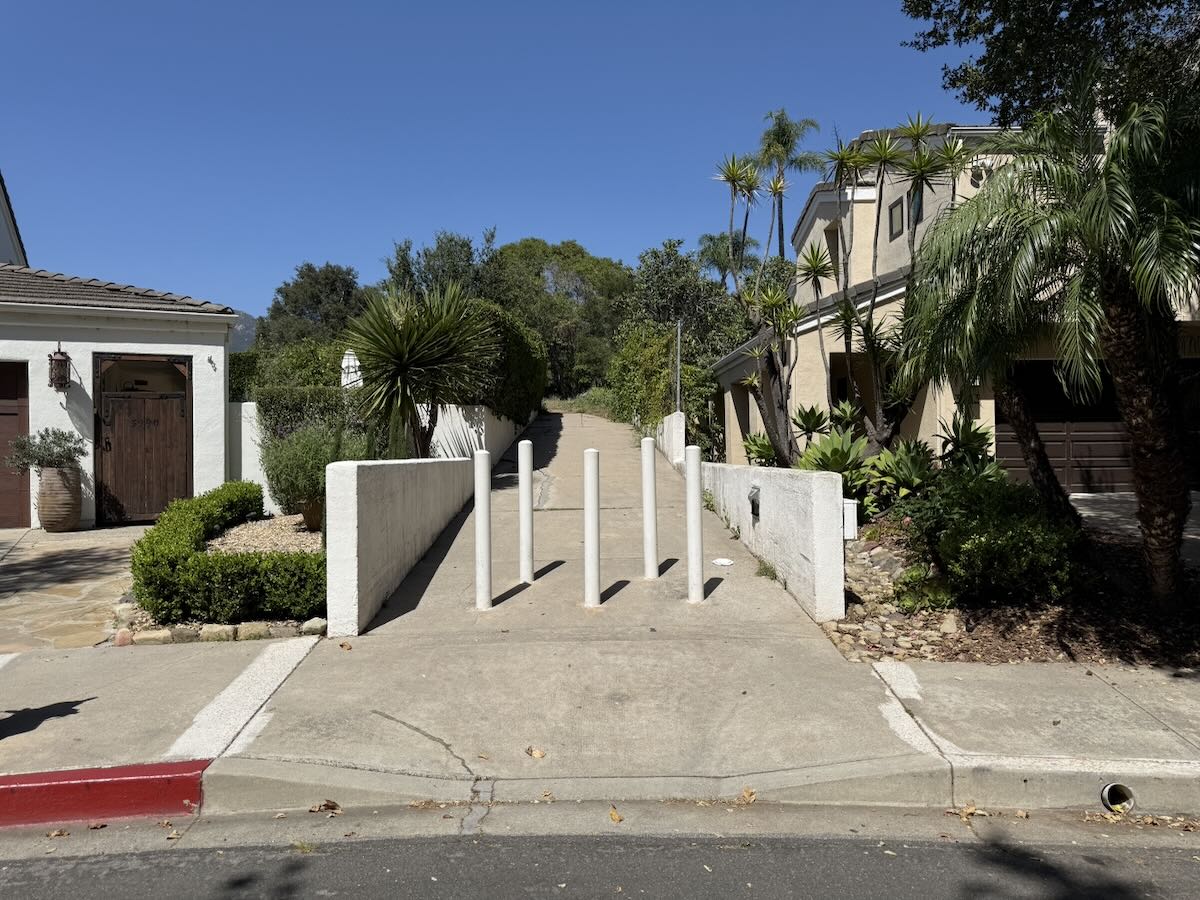
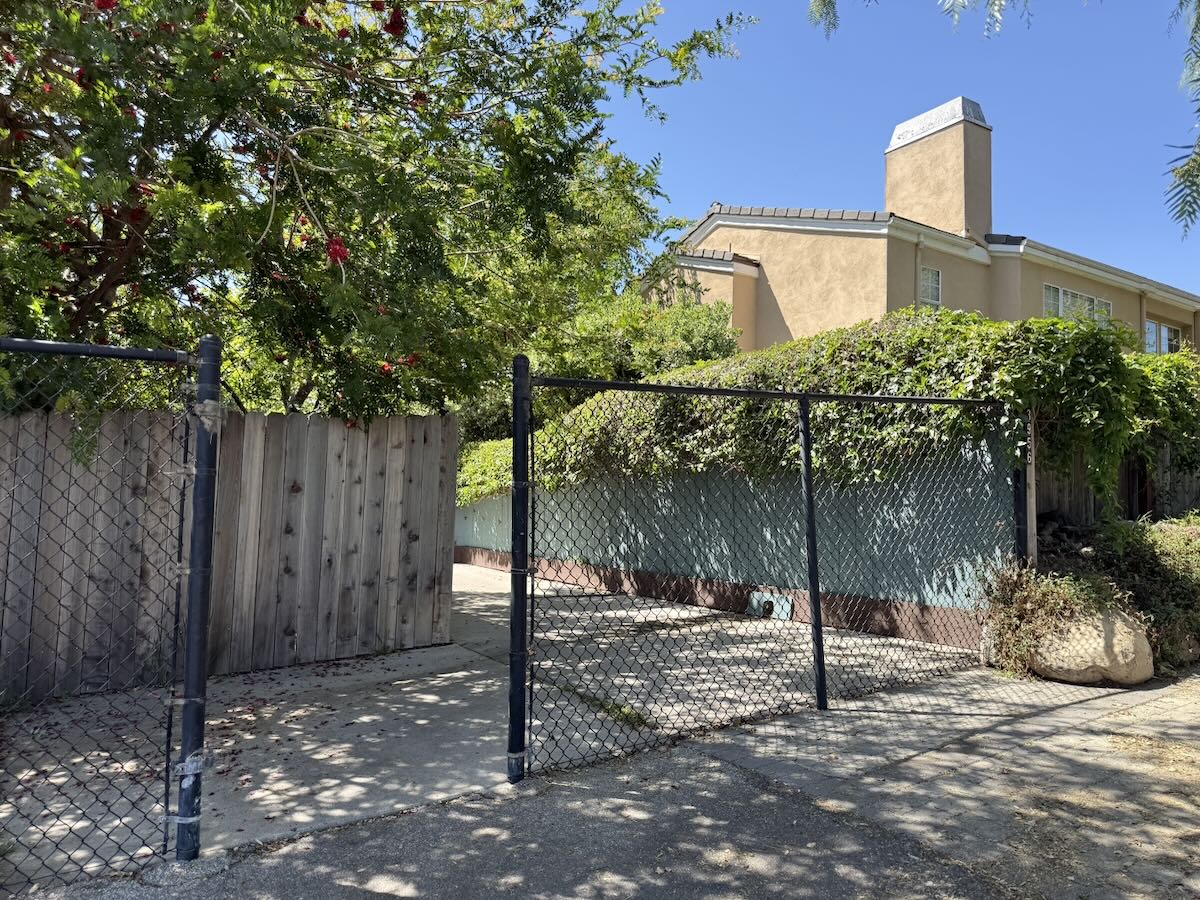
 Remember when I said we’d revisit the path on the east side of the Primavera Road cul-de-sac? Here it is.
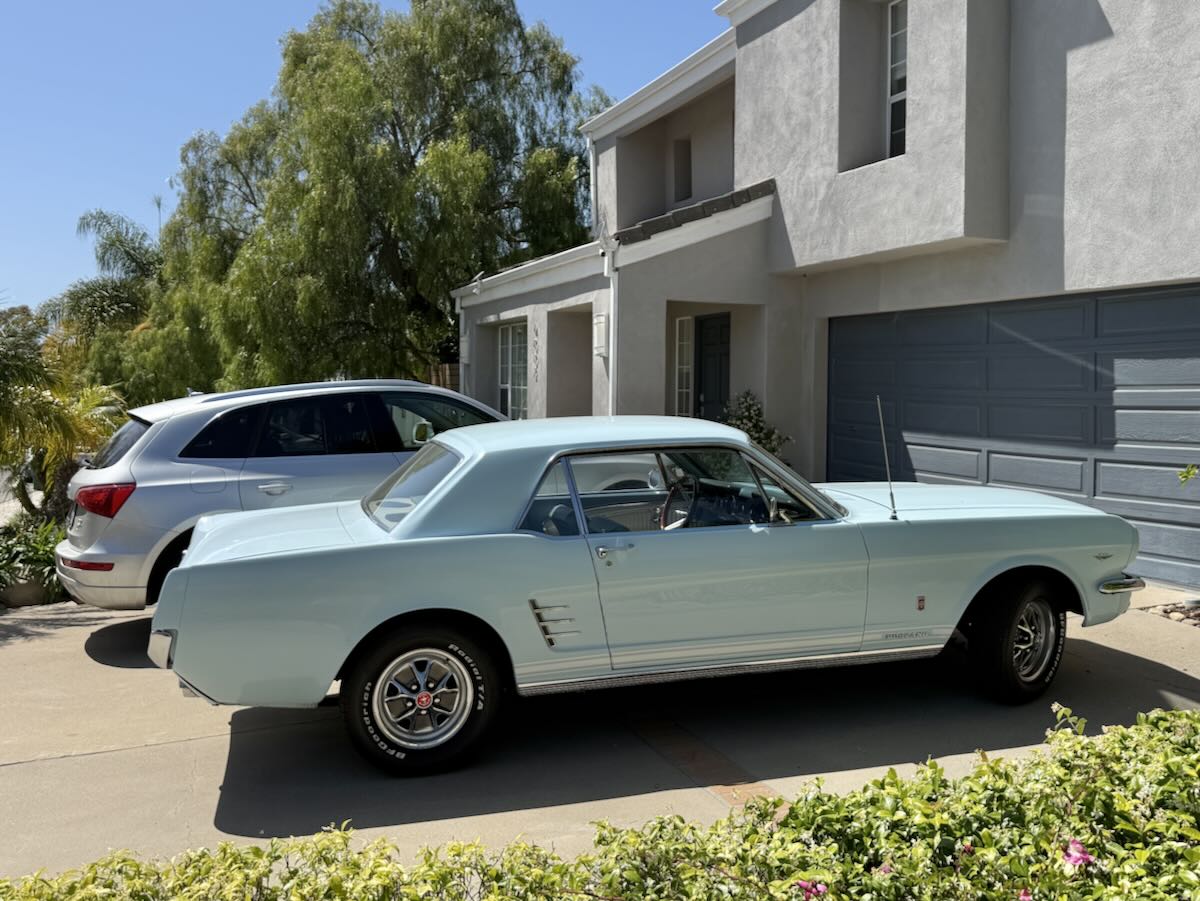
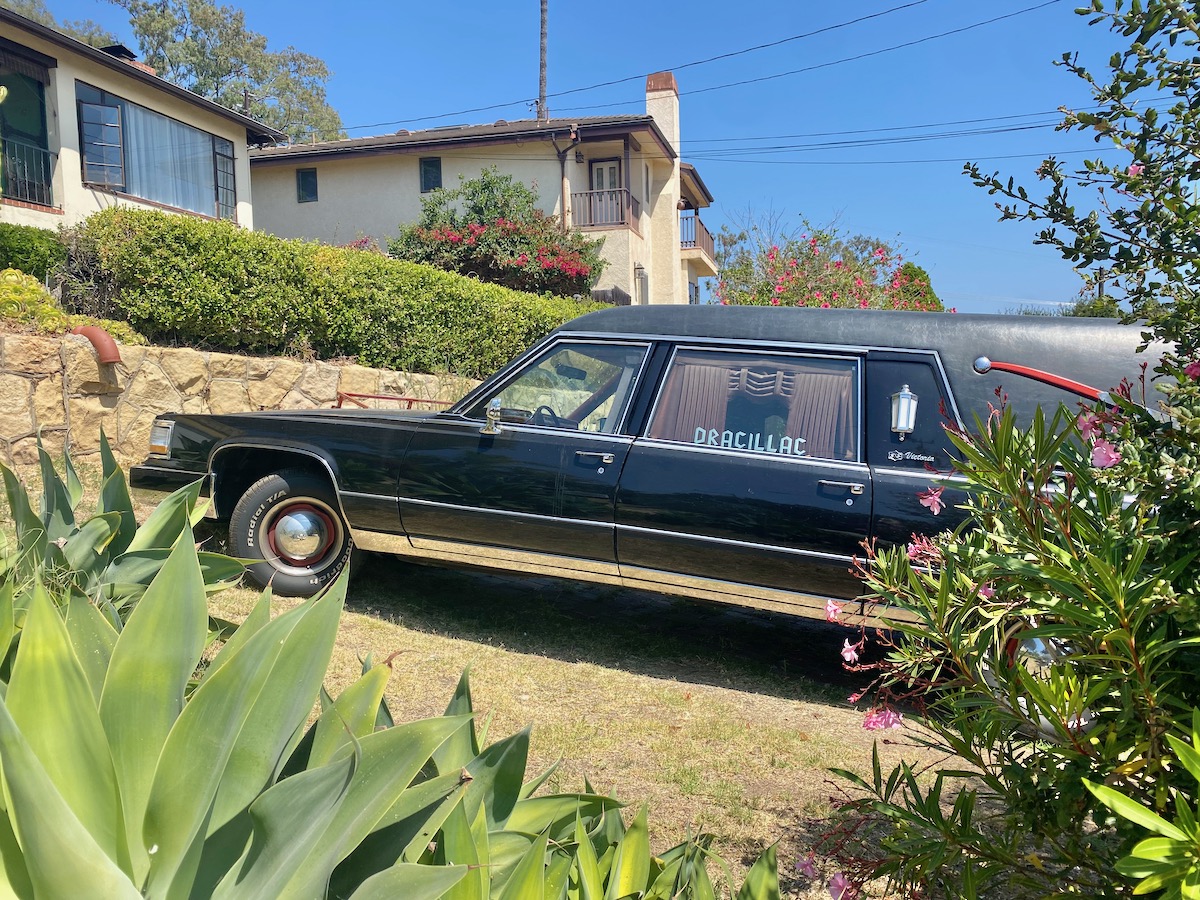
 Returning to Primavera Road is a vibe shift, to say the least. This being Santa Barbara, there had to be a cool vintage car.
 And then it was time to take Via Rosa.
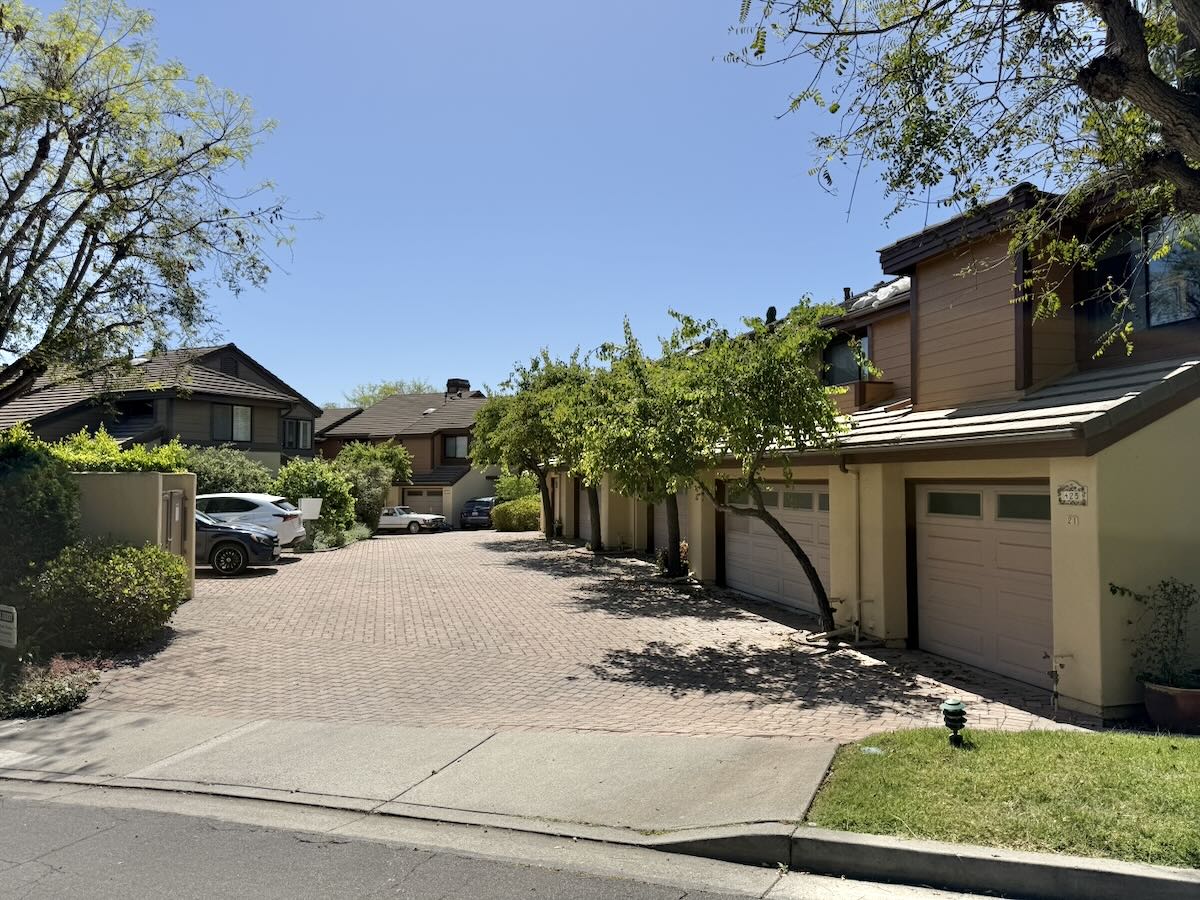
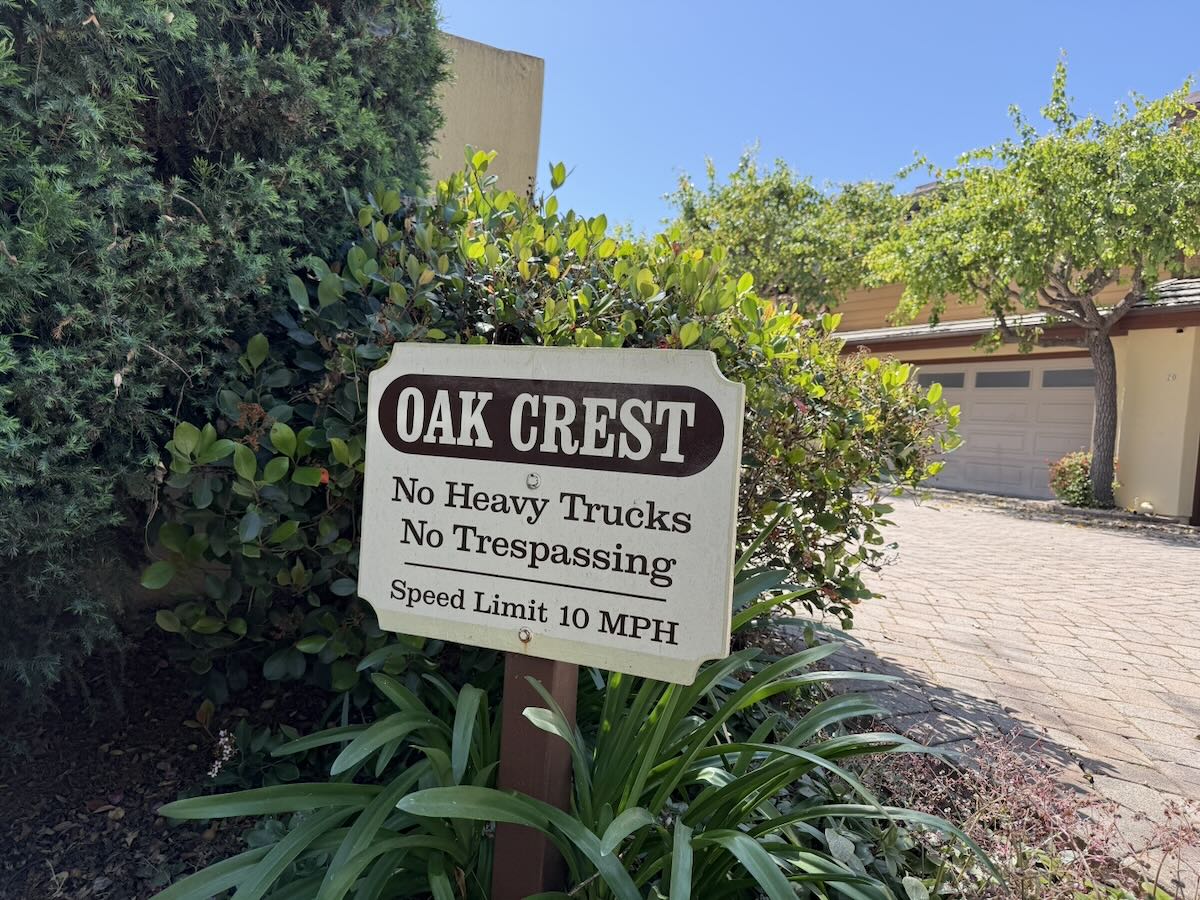
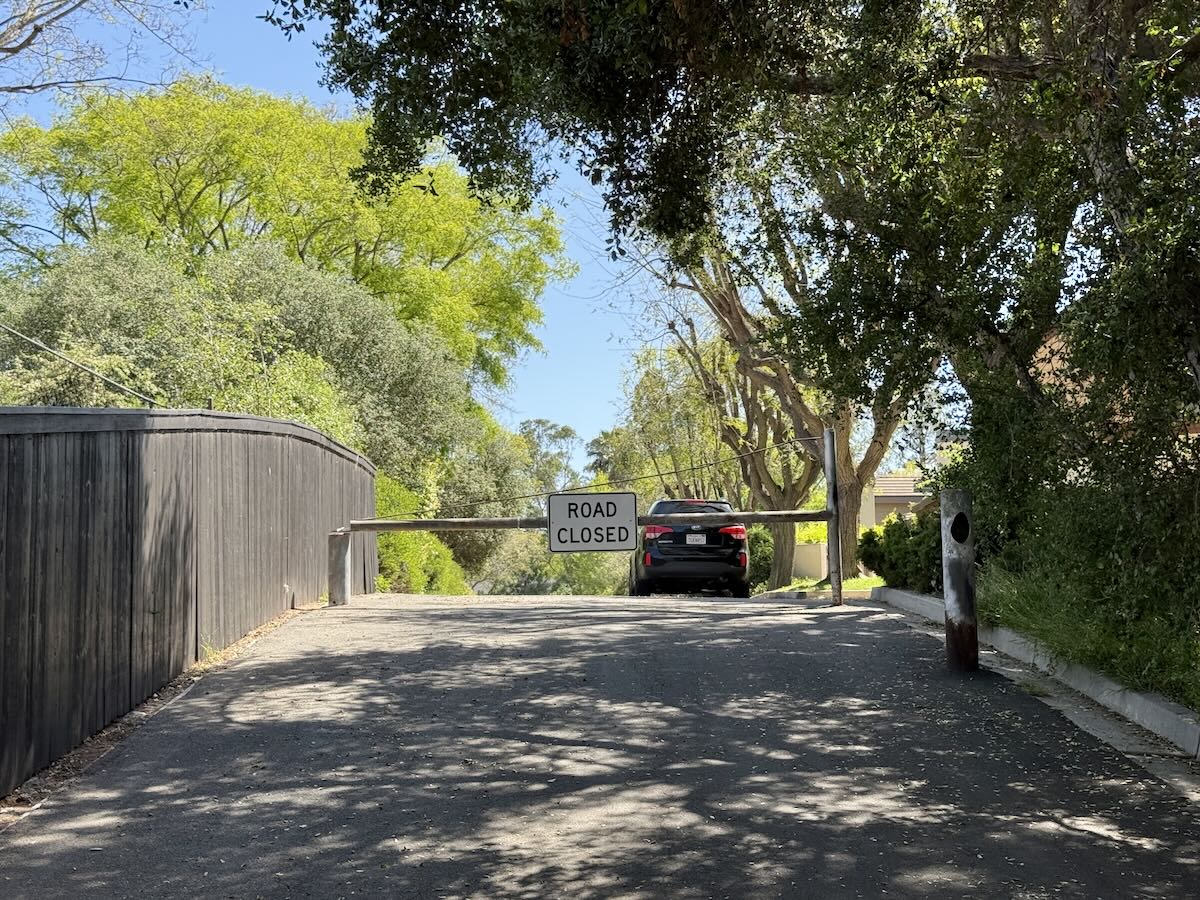 I passed by an HOA called Oak Crest, not to be confused with Oak Creek. The private drive is pretty short; it would be hard to go much faster than 10 mph before you have to stop again.
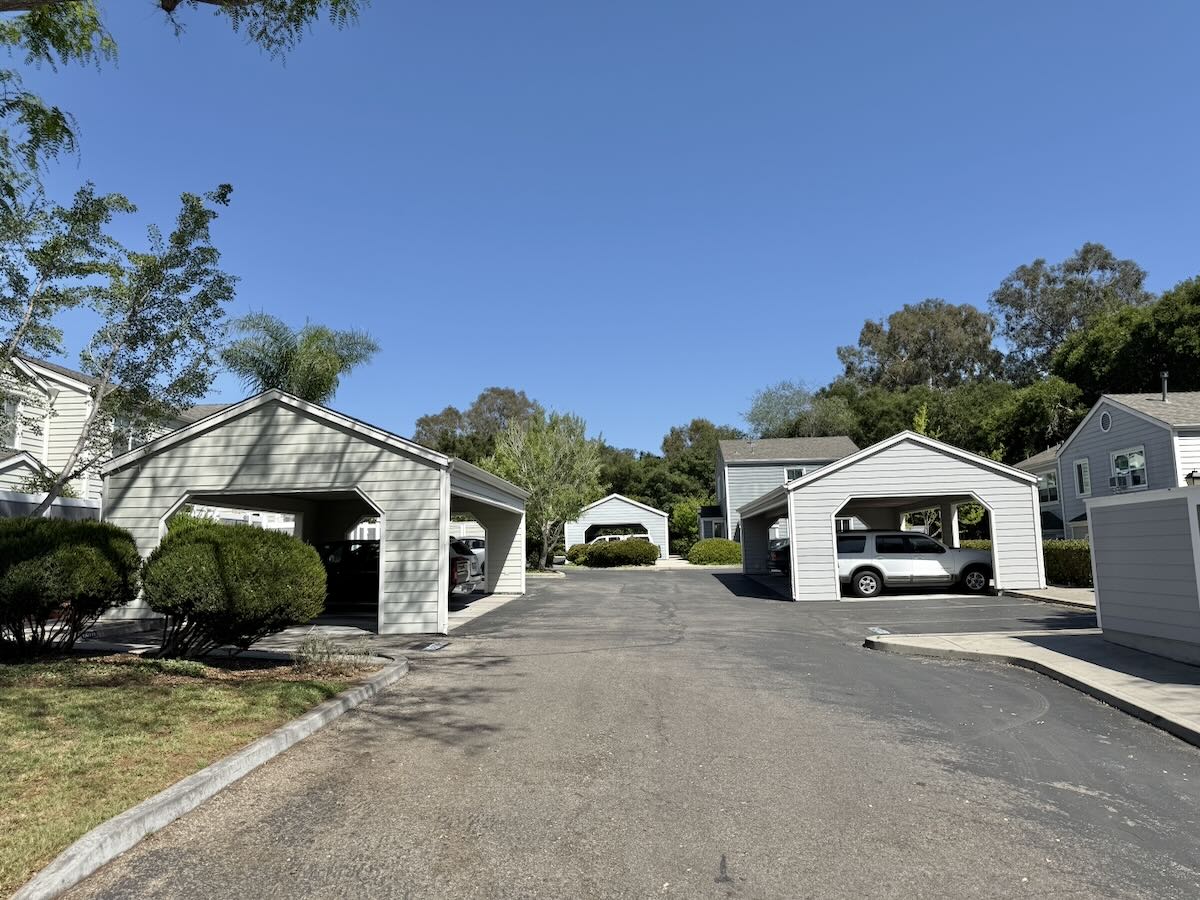
 There’s a different HOA—I didn’t catch its name—across Via Rosa. The carports are certainly distinctive. I think they might’ve been more successful if the cut-outs were parallel to the roofline.
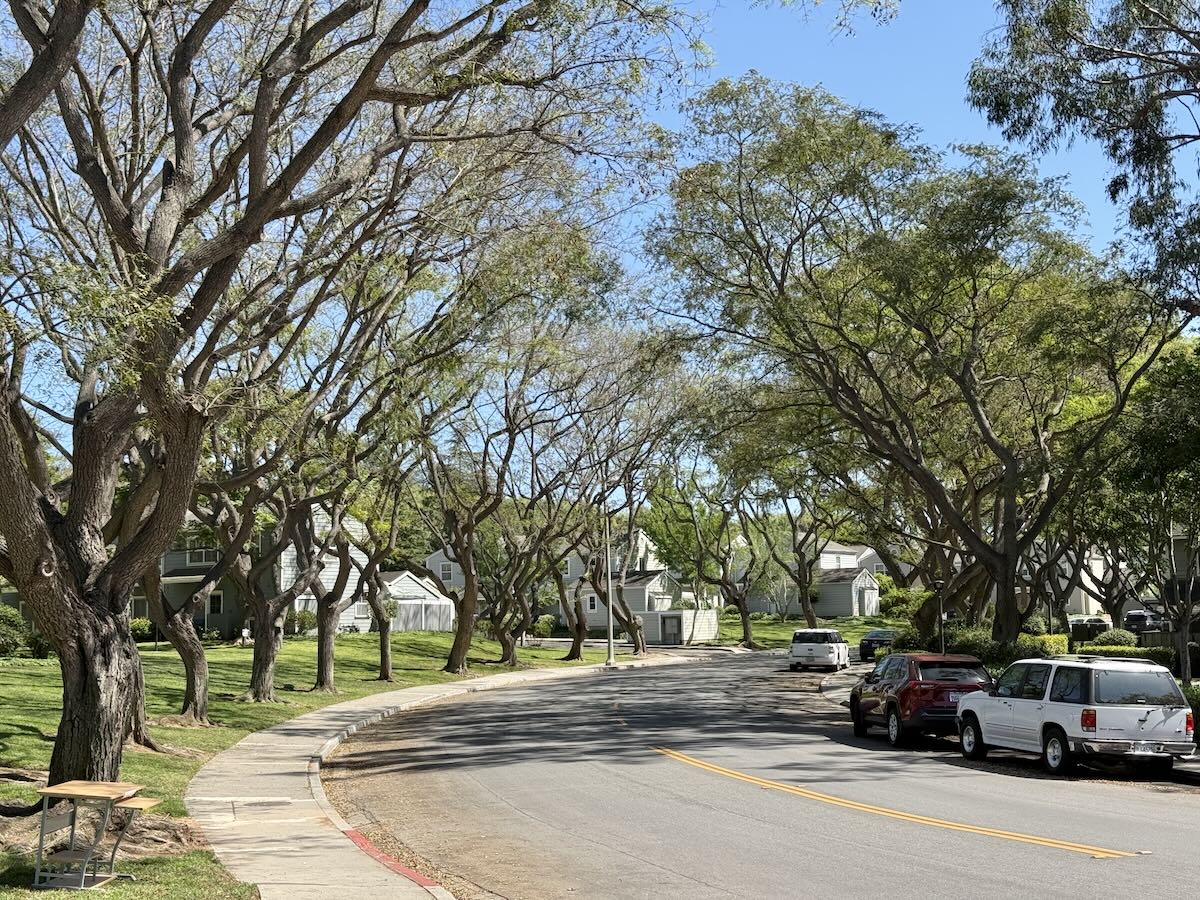
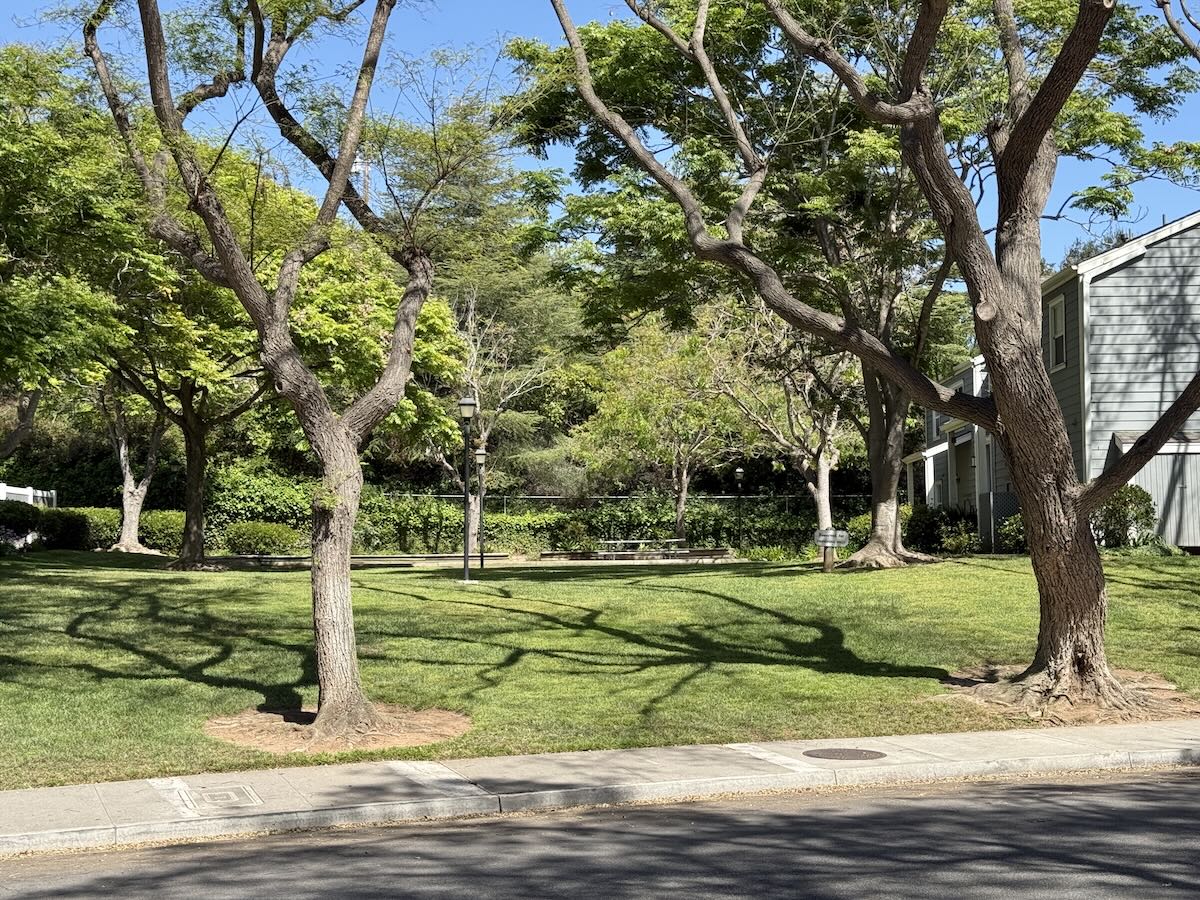
 Via Rosa ends at Via Diego, where I paused to take a photo of the pretty trees to the left before heading to the right, where I soon came upon Los Robles Park. Roble means oak, which is kind of amusing because the park is mainly a big spread of lawn.
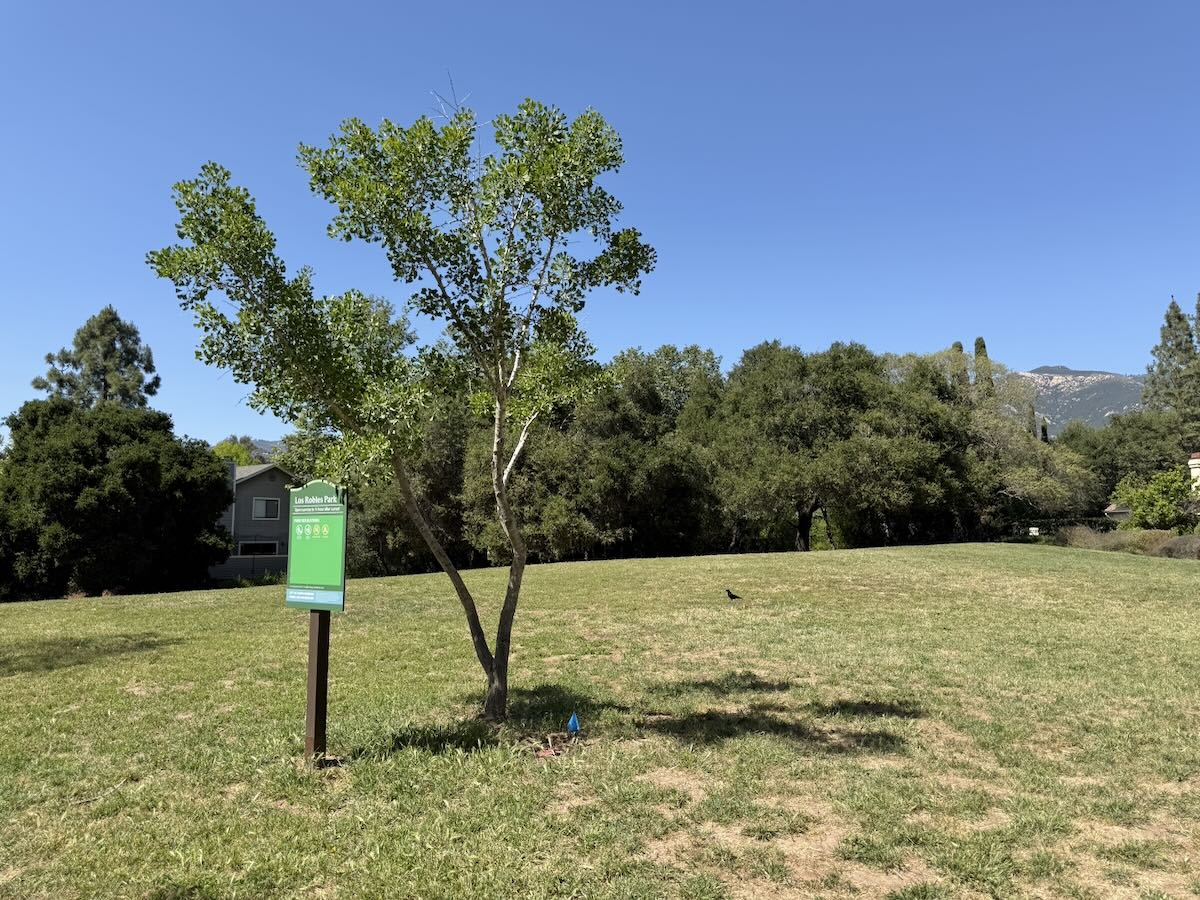 Before I knew it, I was back in the land of white trim, livened up by a lot of yardifacts and another street library. People in this area must love reading—and/or getting rid of stuff.
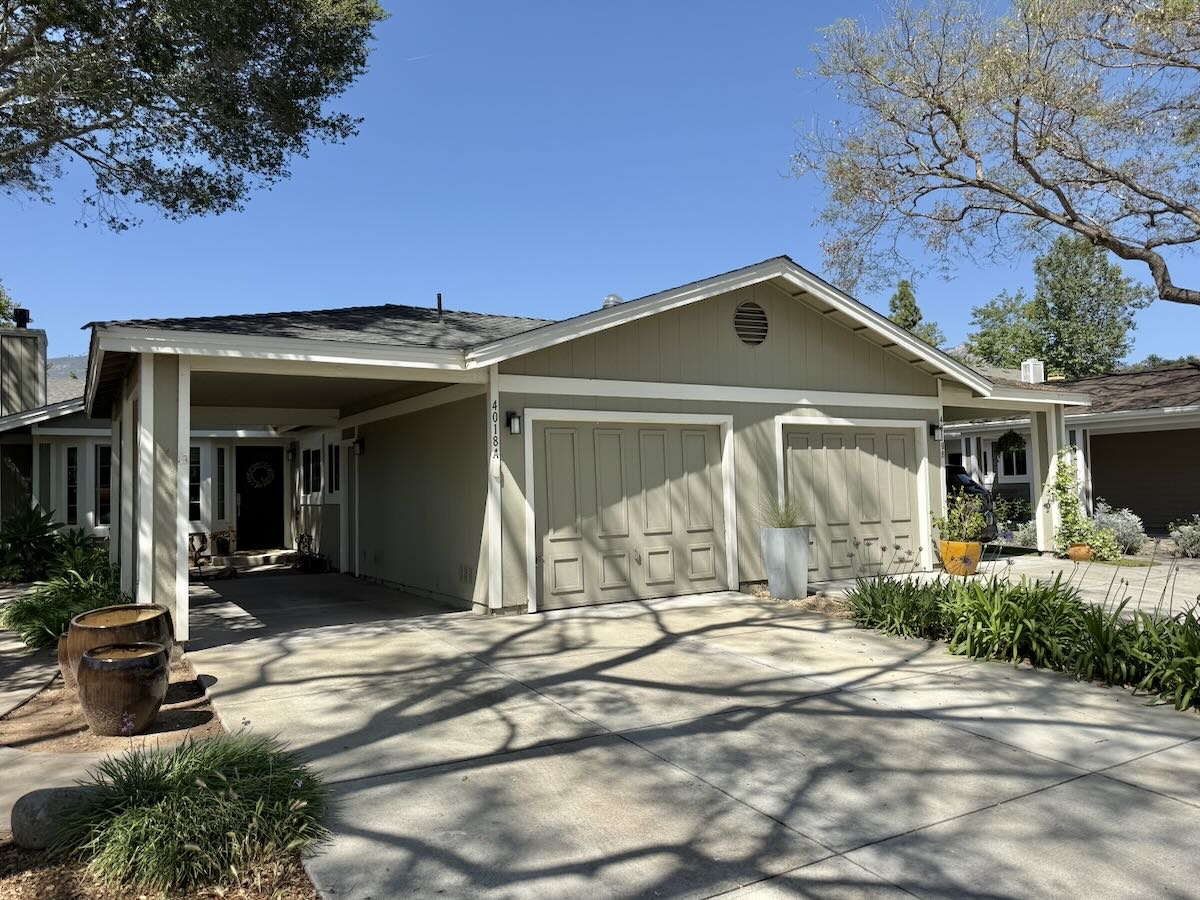
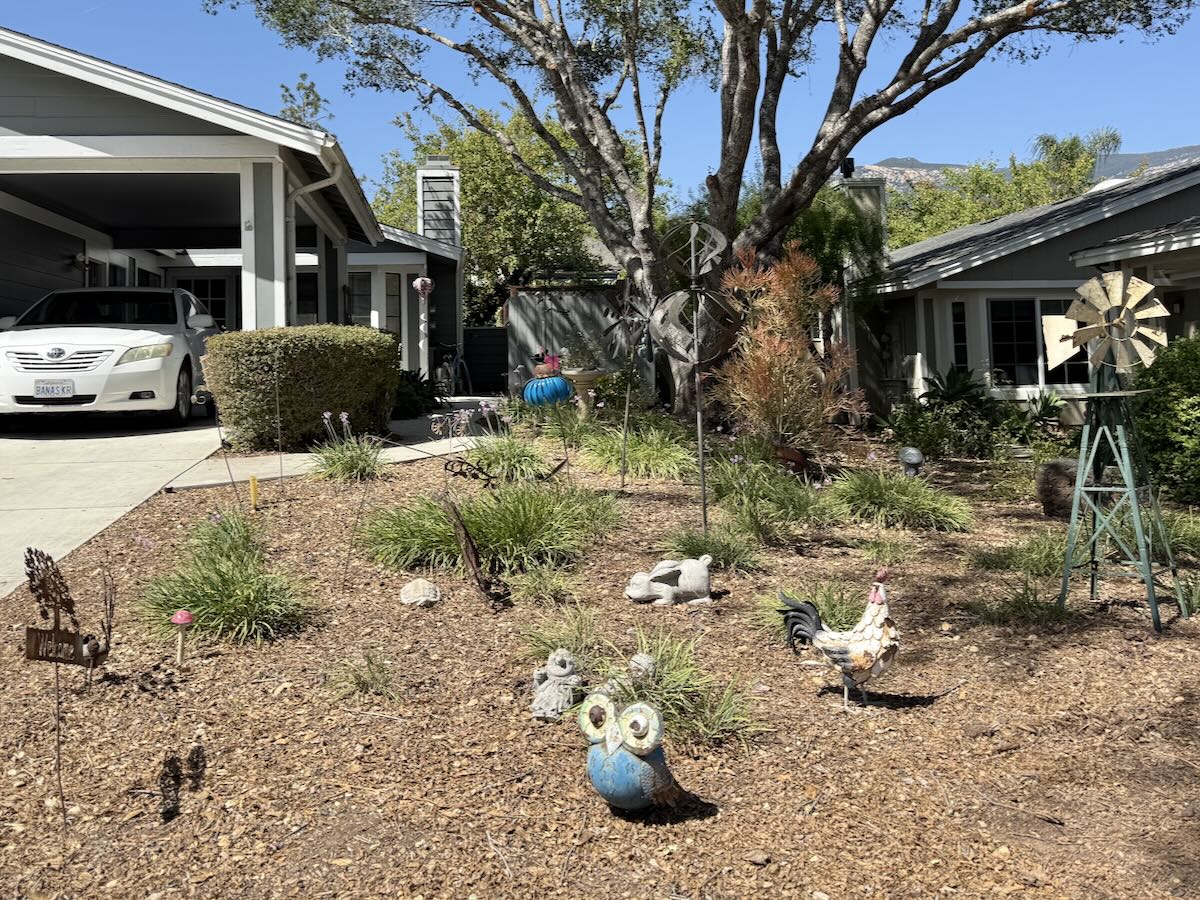
 Invierno Drive runs across Via Diego, and the experience is similar whichever direction you go, with many more garage-carport combos. I chose north. Invierno means winter; the developer chose to name streets after winter, spring, and fall, but not summer. Was it because those are the seasons of the school year? UPDATE: T. points out that there’s a Verano Drive just west of Highway 154.
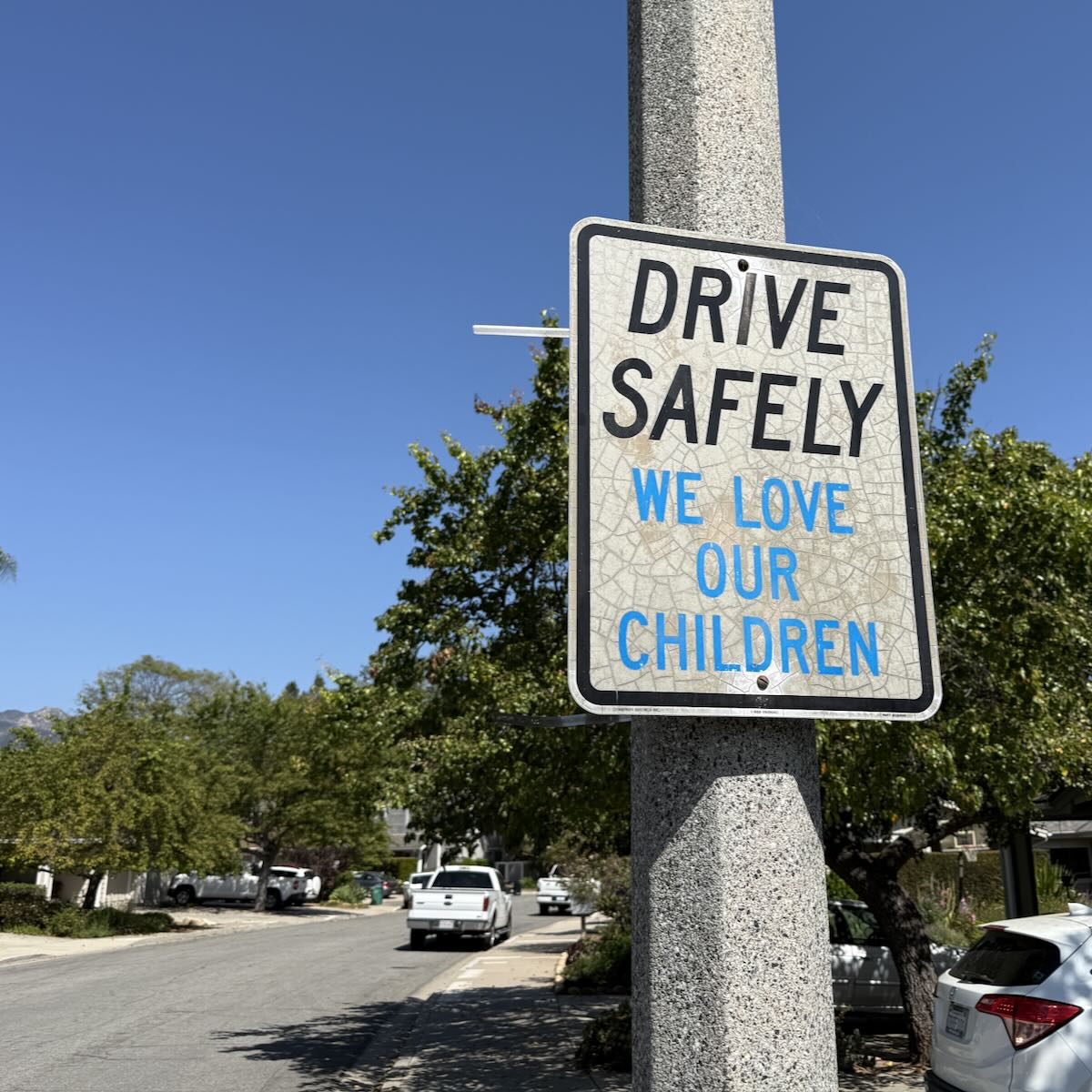
 A new variation of this kind of thing. It takes on different meanings depending on how you say it (e.g., “We love our children” or “We love our children”).
 More yardifacts, including a very rare pink flamingo fountain.
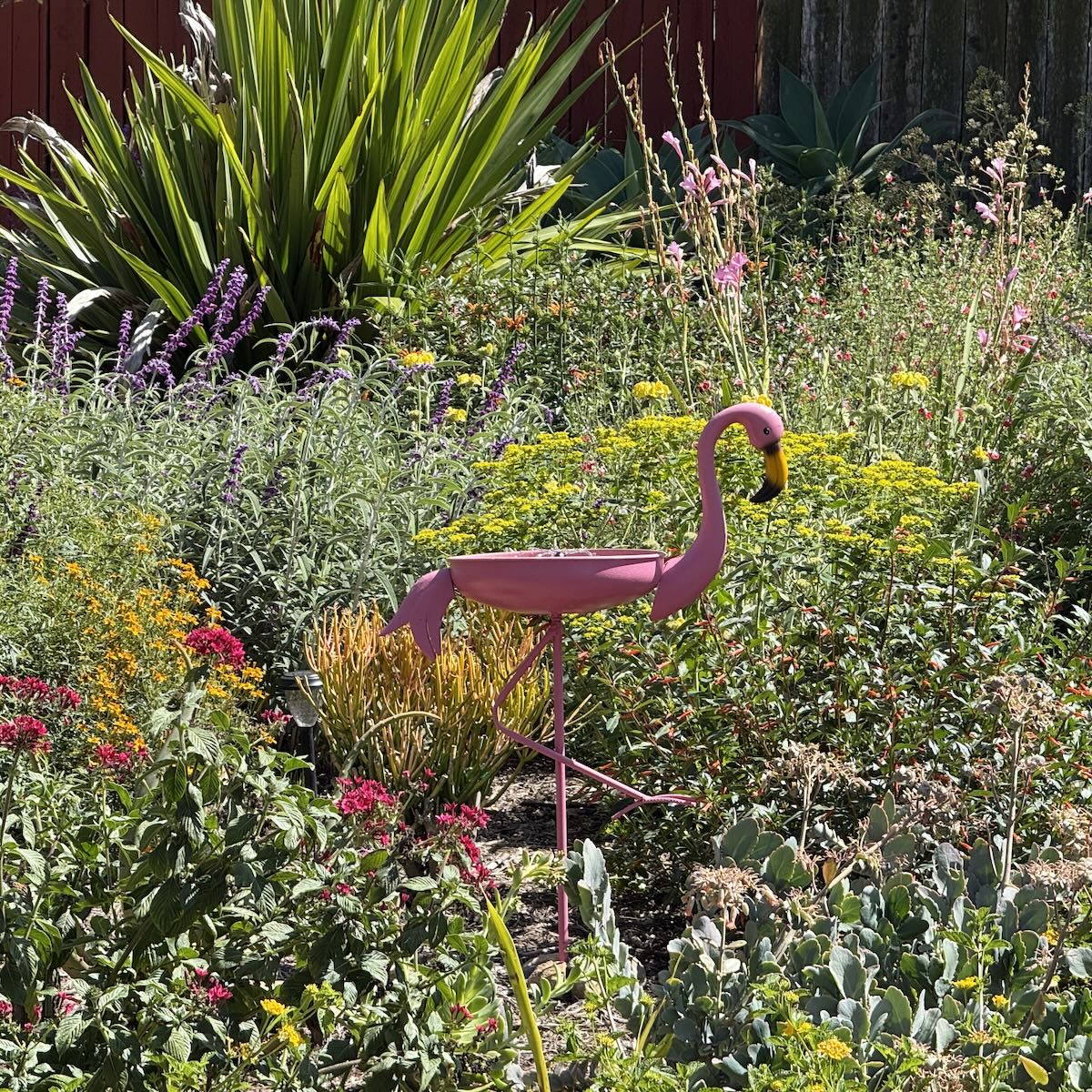 The northern segment of Invierno abuts Los Robles Park, and it’s a shame there’s no path.
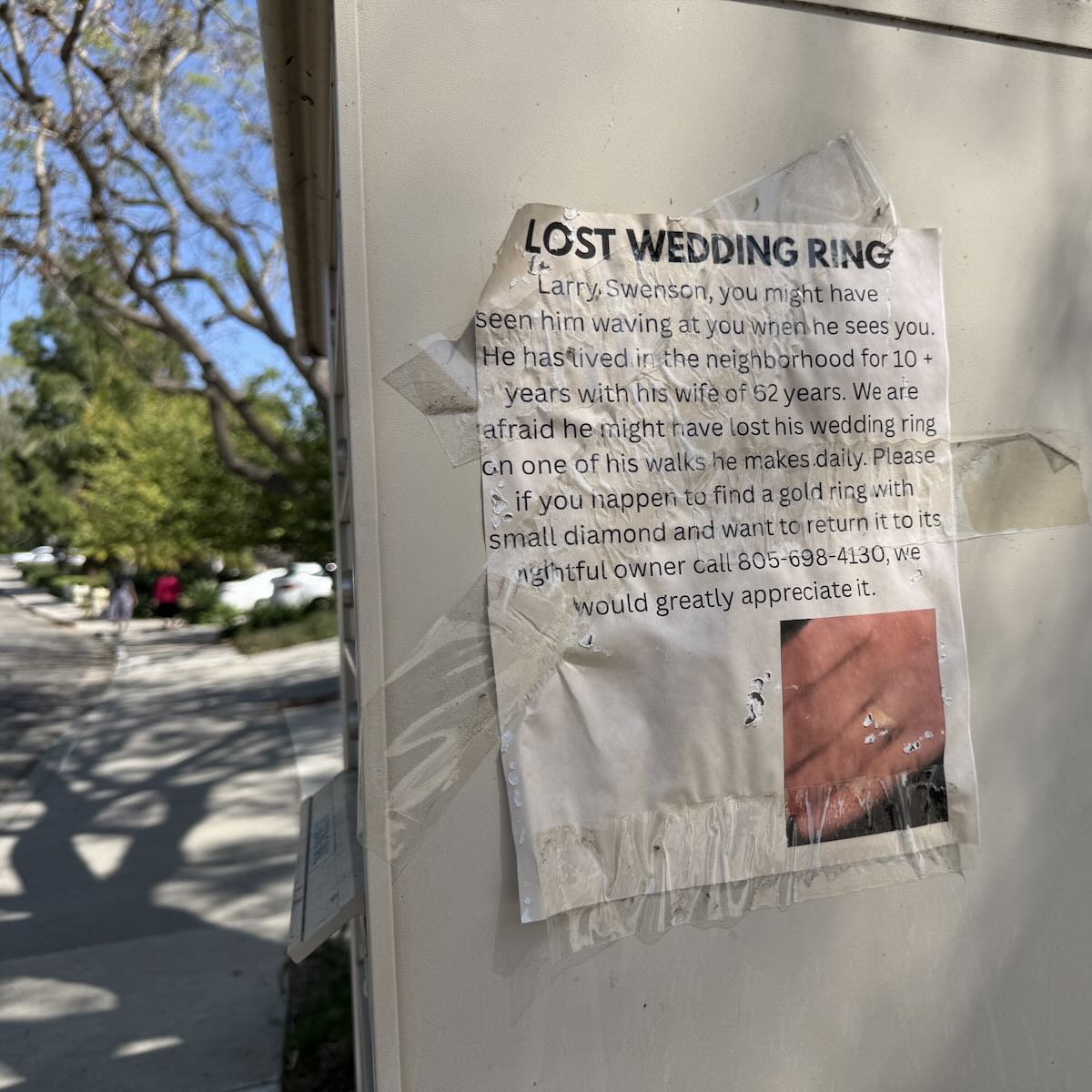
 Back on Via Diego…. Having lost two wedding bands in my life, I feel Larry Swenson’s pain. My current one is stainless steel—it cost all of $12—and it has successfully rebuffed most suitors.
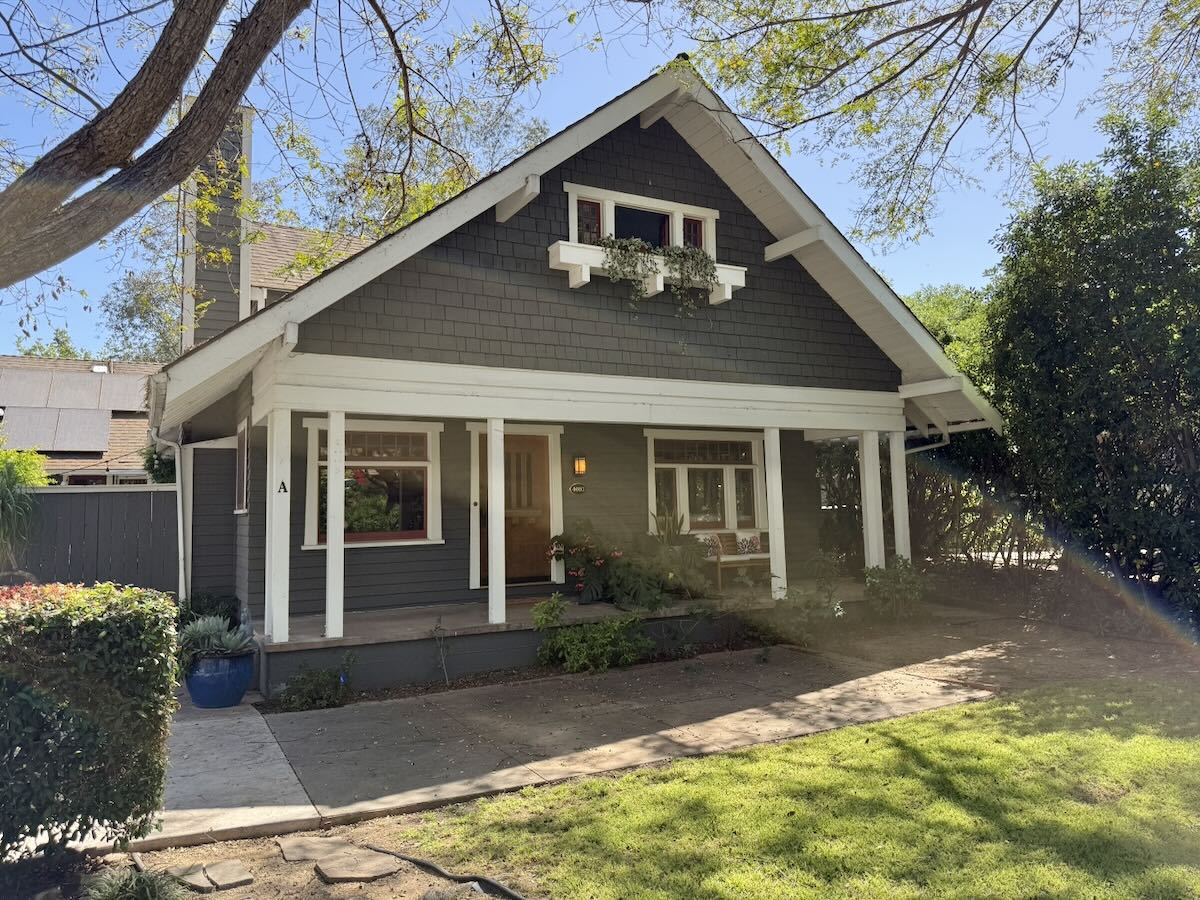
 If the house at 4003 Via Diego feels like it’s from a different era than the houses to the west, it’s because it was built in 1925. It has a funny little neighbor behind a chain-link fence.
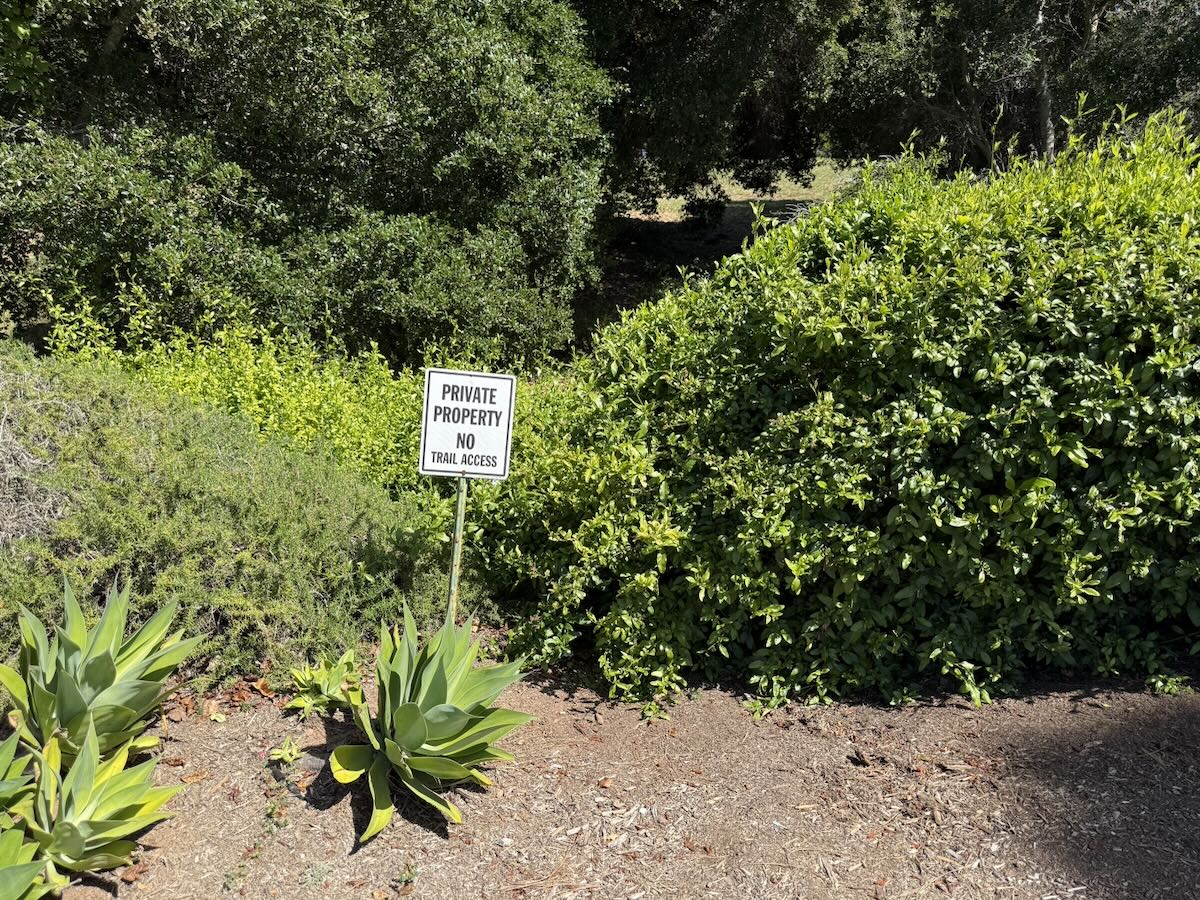
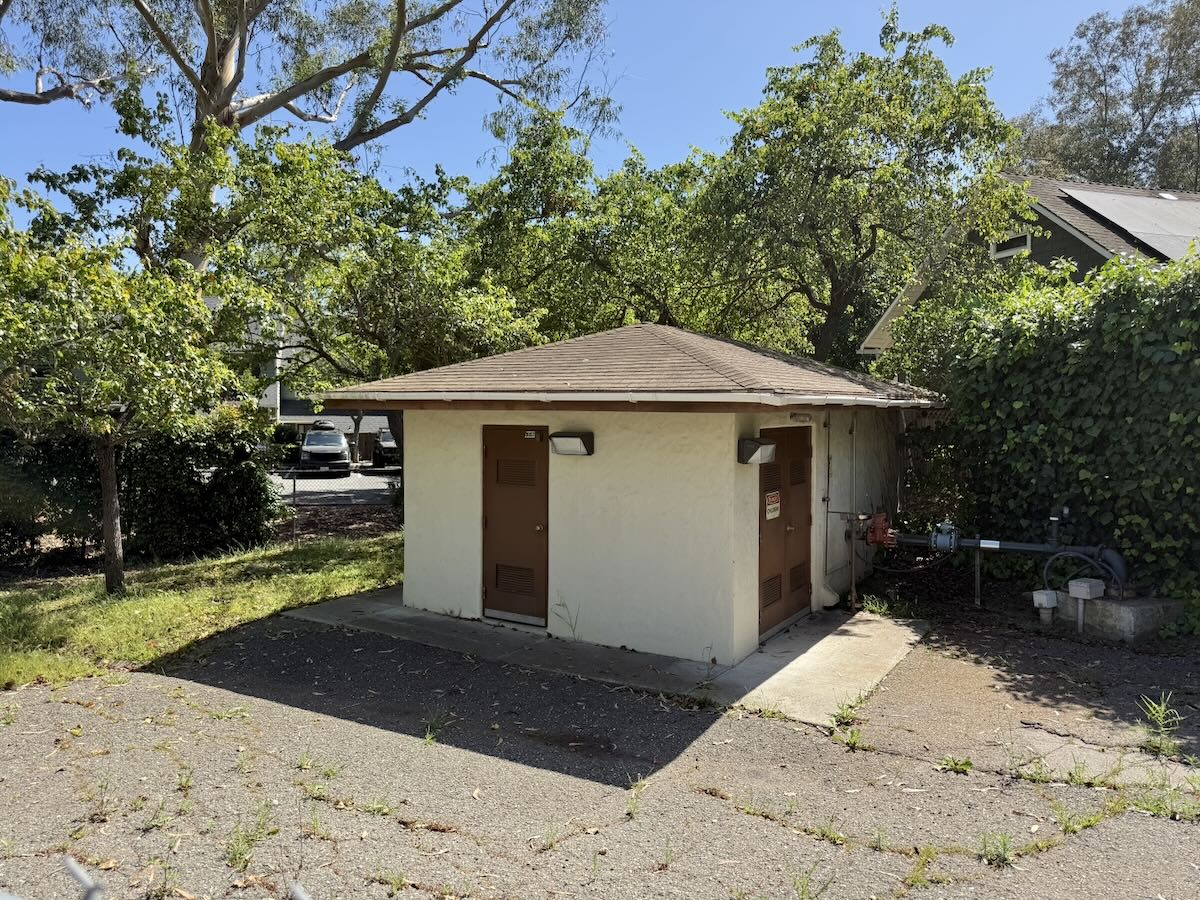 Across the street is another private park (with signs saying as much). This sure is a territorial part of town!
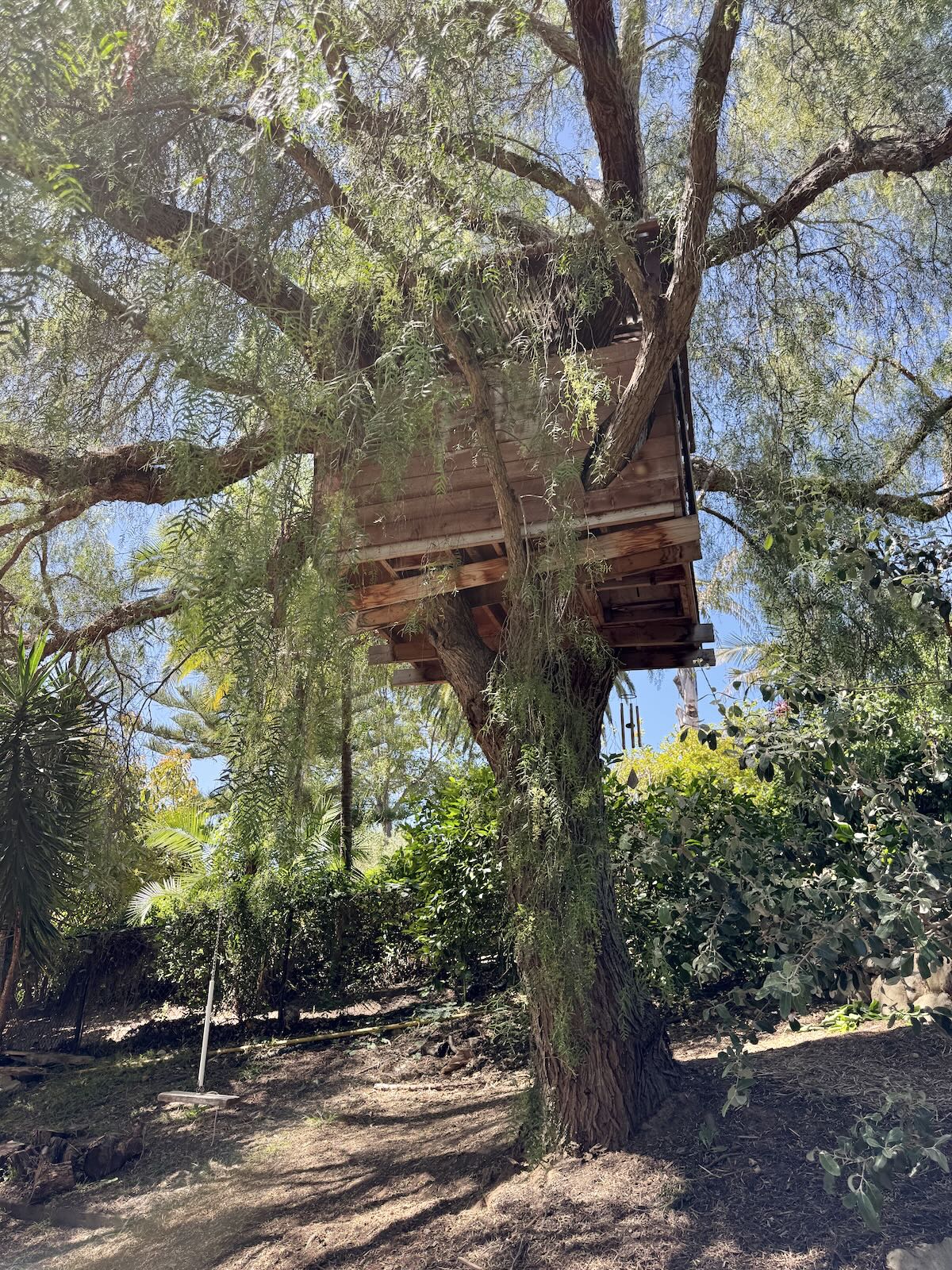
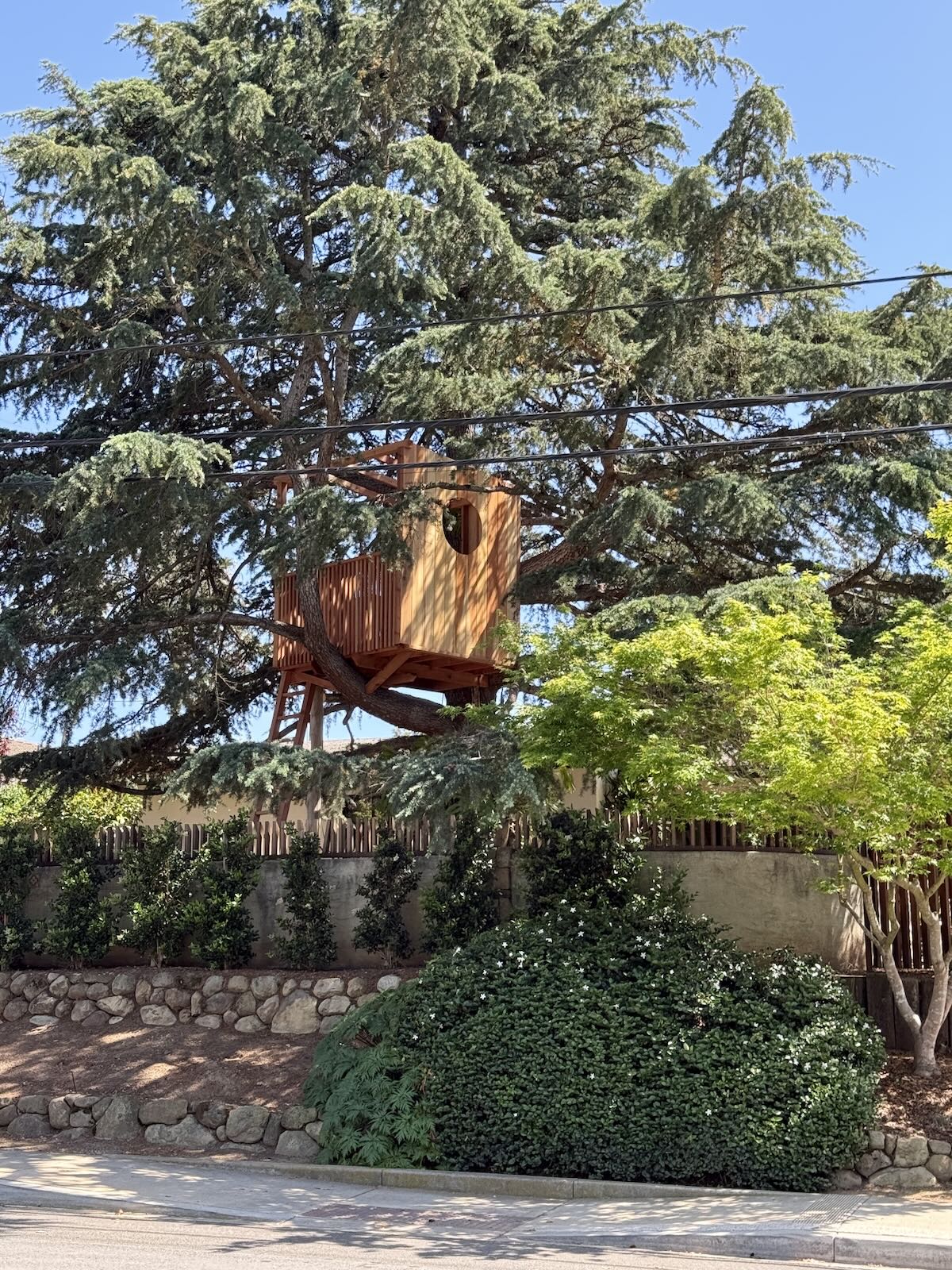
 Via Diego ends at La Colina, site of a treehouse worthy of Dwell magazine.
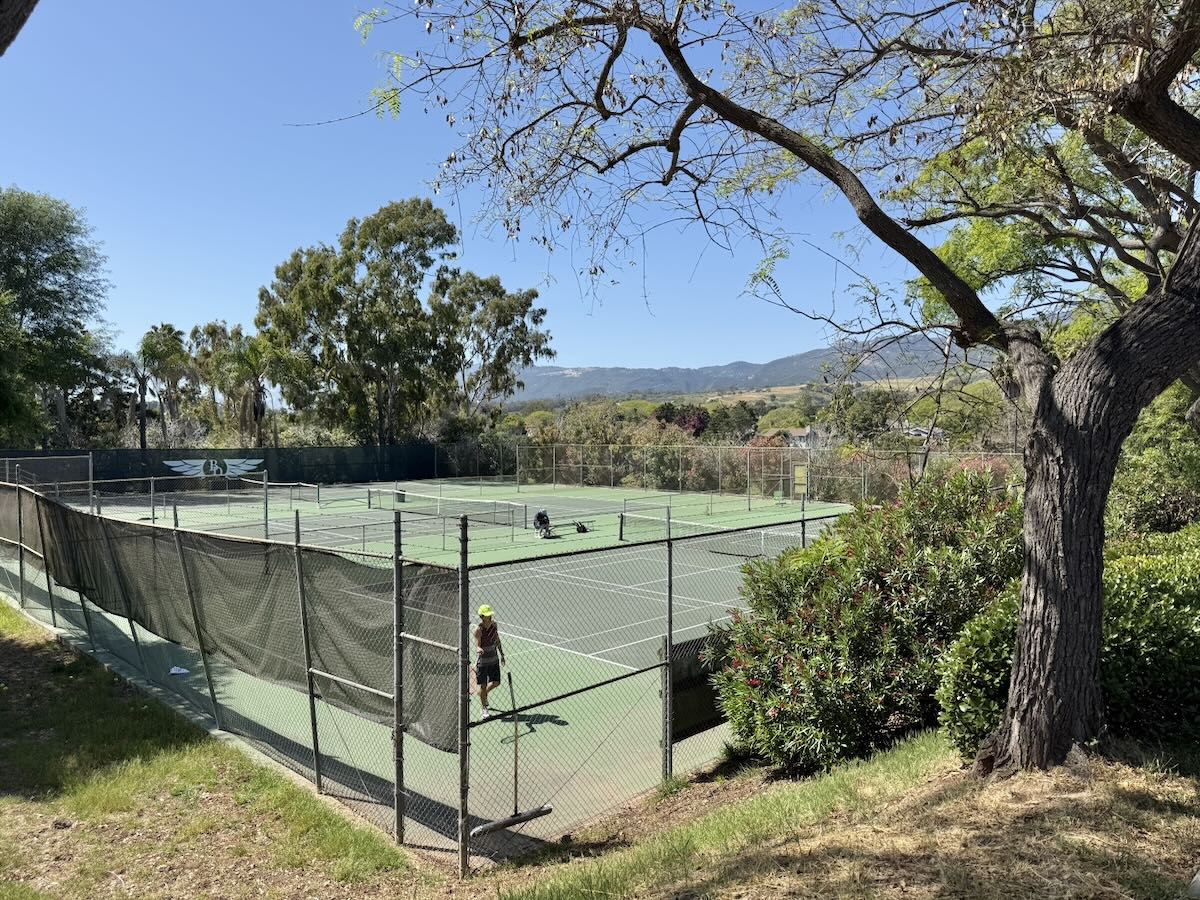
 High schools are also quite high on my list of places to avoid, but Bishop Garcia Diego High School sure has sweet tennis courts, if you don’t mind the prison-yard vibe of the barbed wire. Is it to keep the kids in?
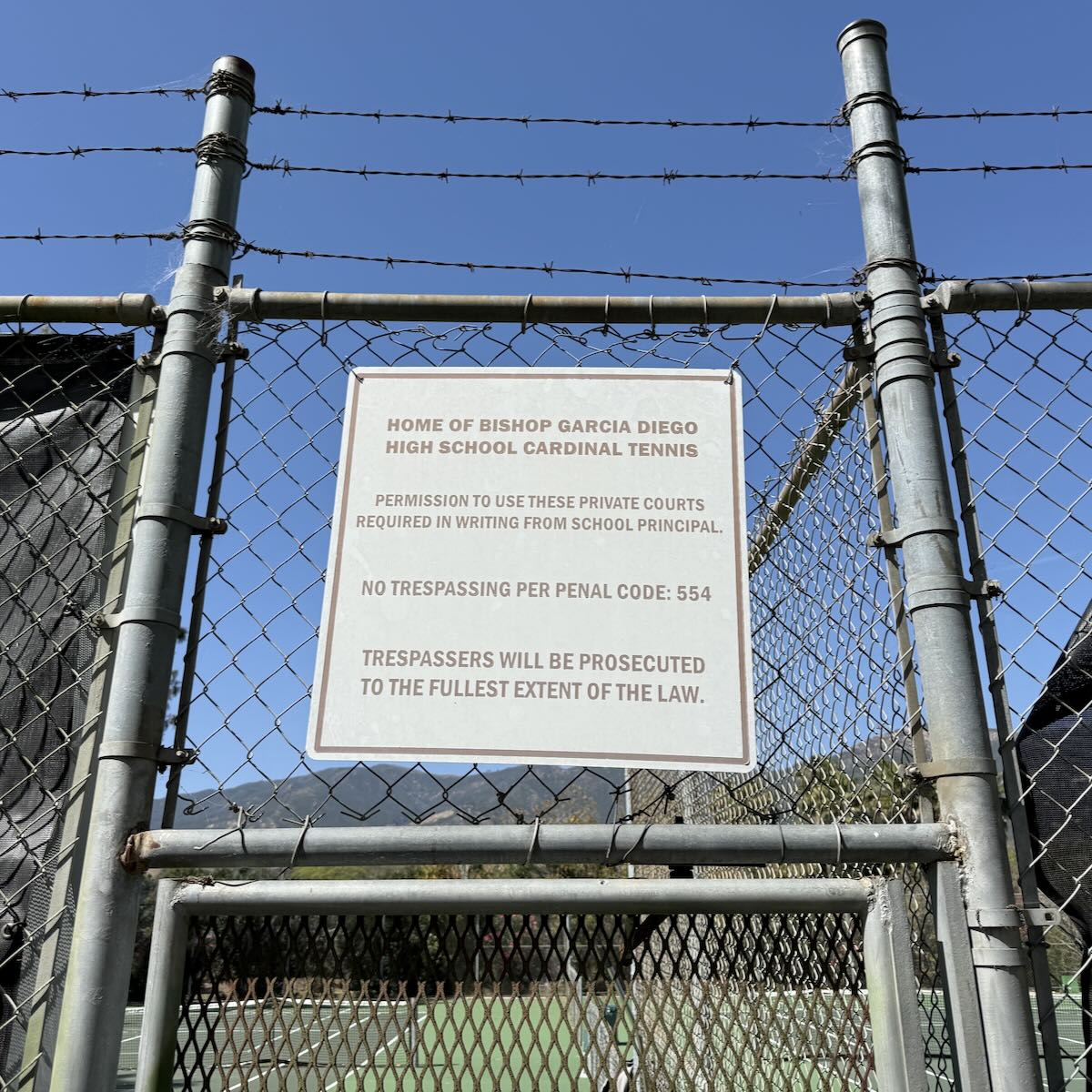 Bishop Diego is a Catholic school, and the mascot is the cardinal. This was the moment I got the pun. (Poking around the school’s website, I came across this: “With 20 teams and a no-cut policy, every Cardinal has the chance to play, compete, and lead.” The world really has changed since I was a kid.)
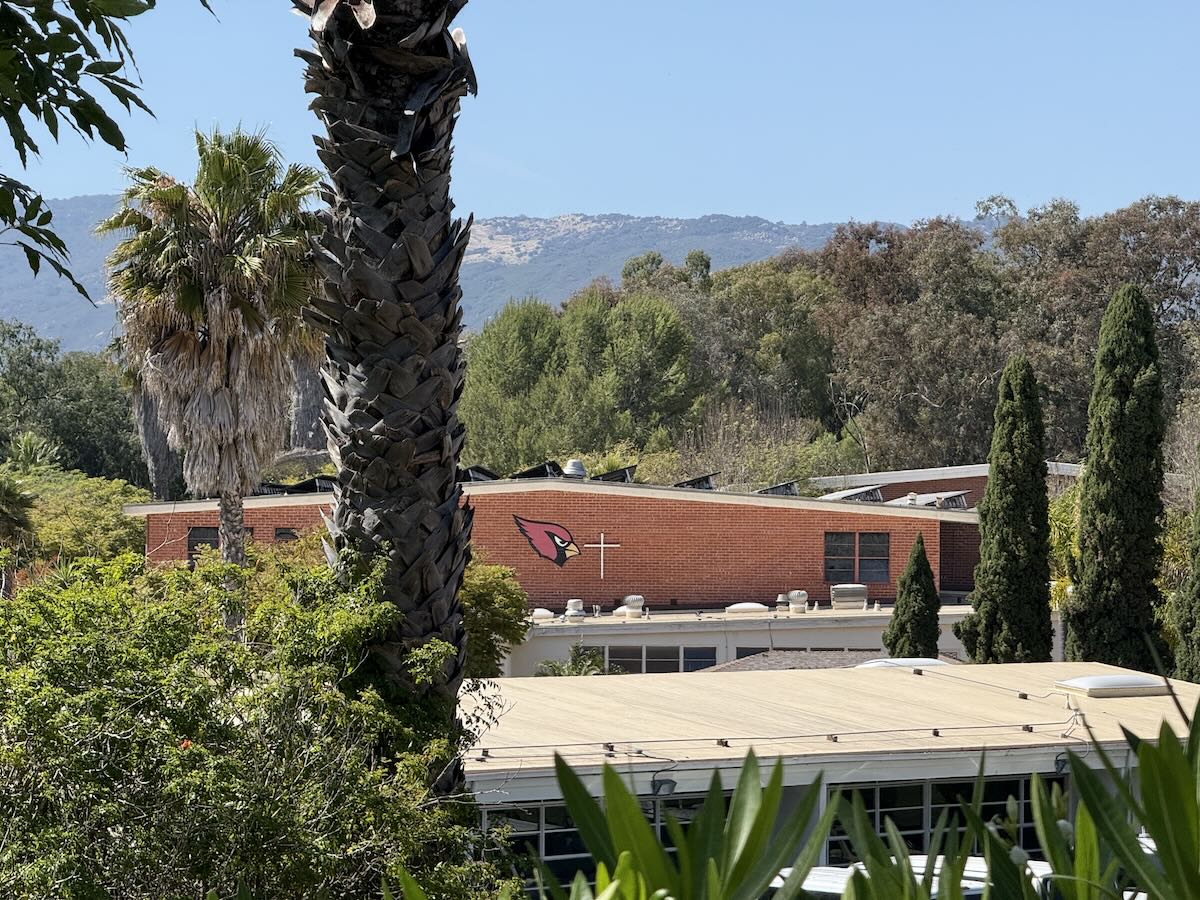 From a distance, the school gives off midcentury Hawaiian energy.
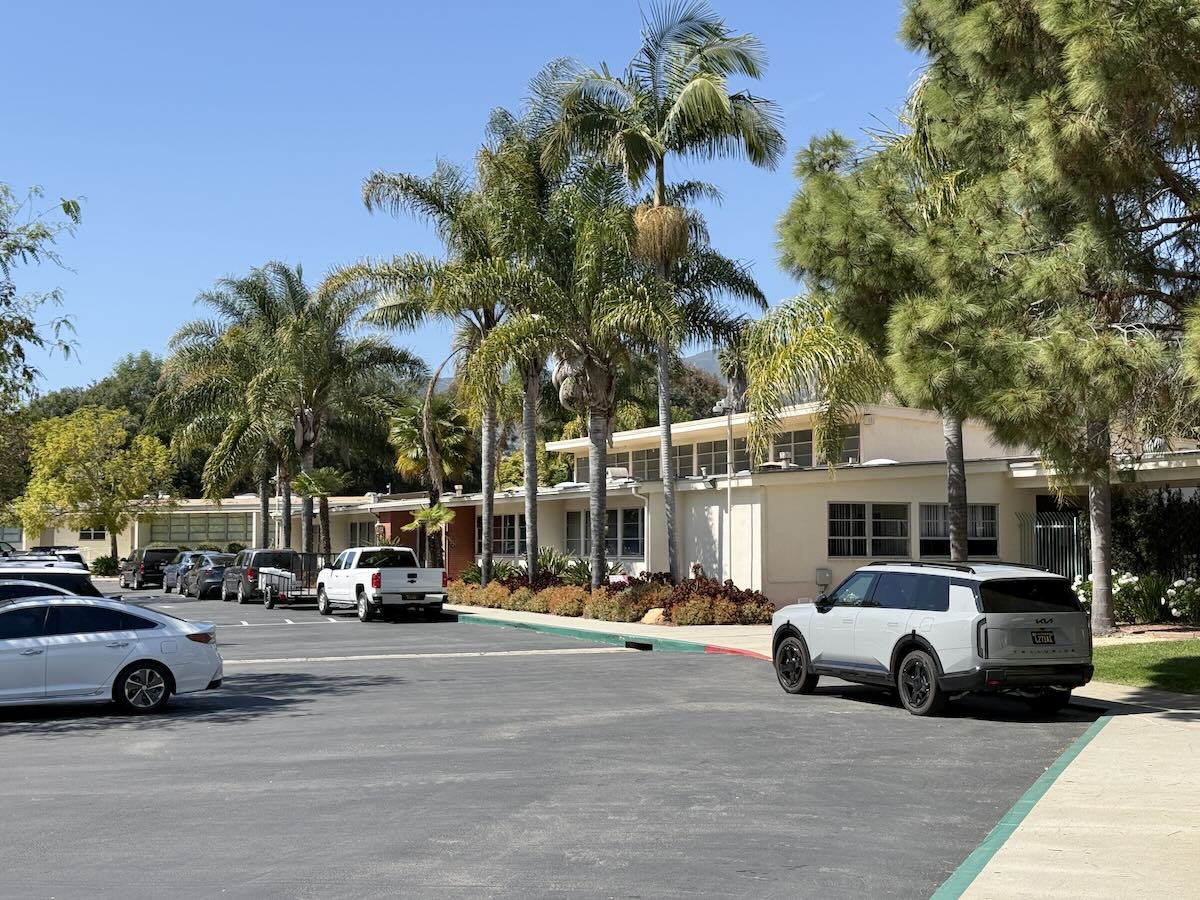
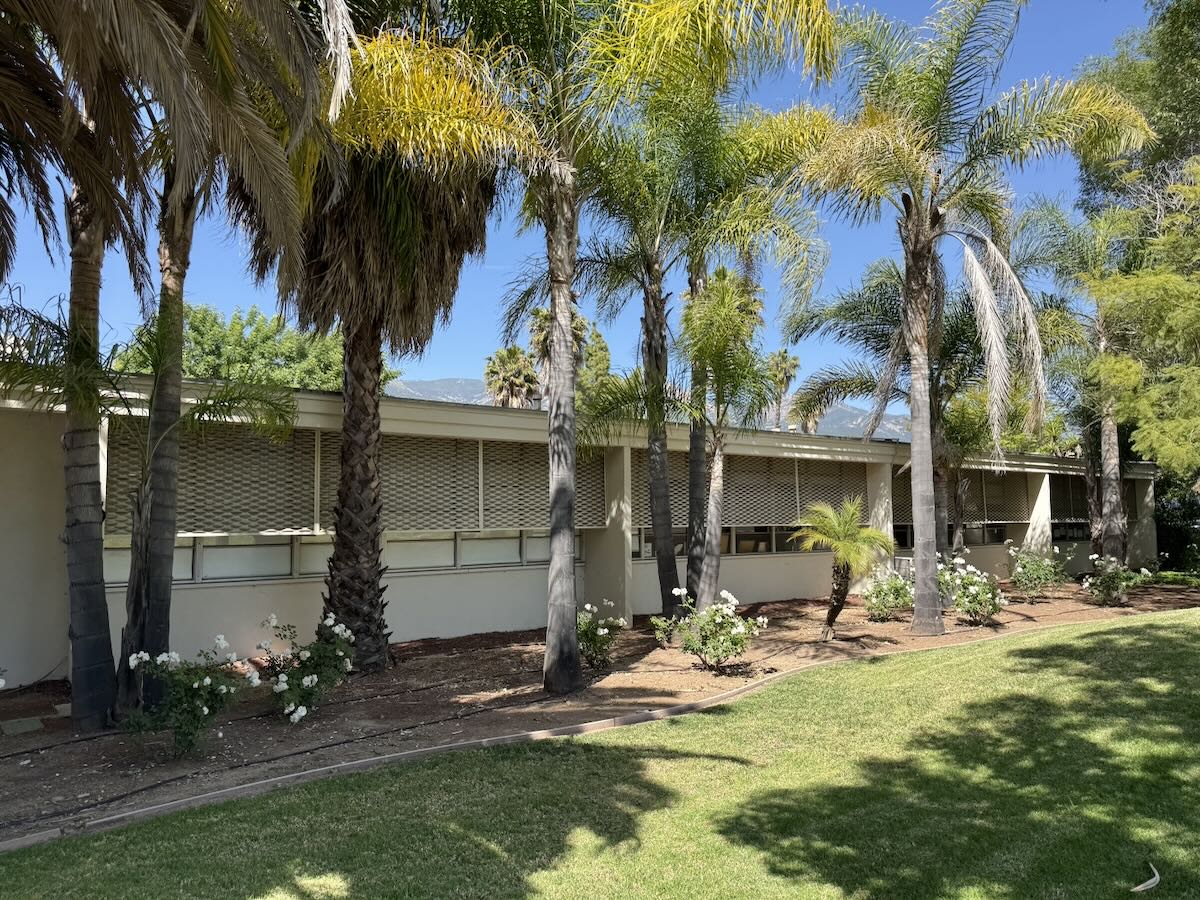 The walk ended with another path, this one on the east side of Highway 154. It’s pleasant enough, although being flanked by chain-link fences gets me thinking about DMZs.
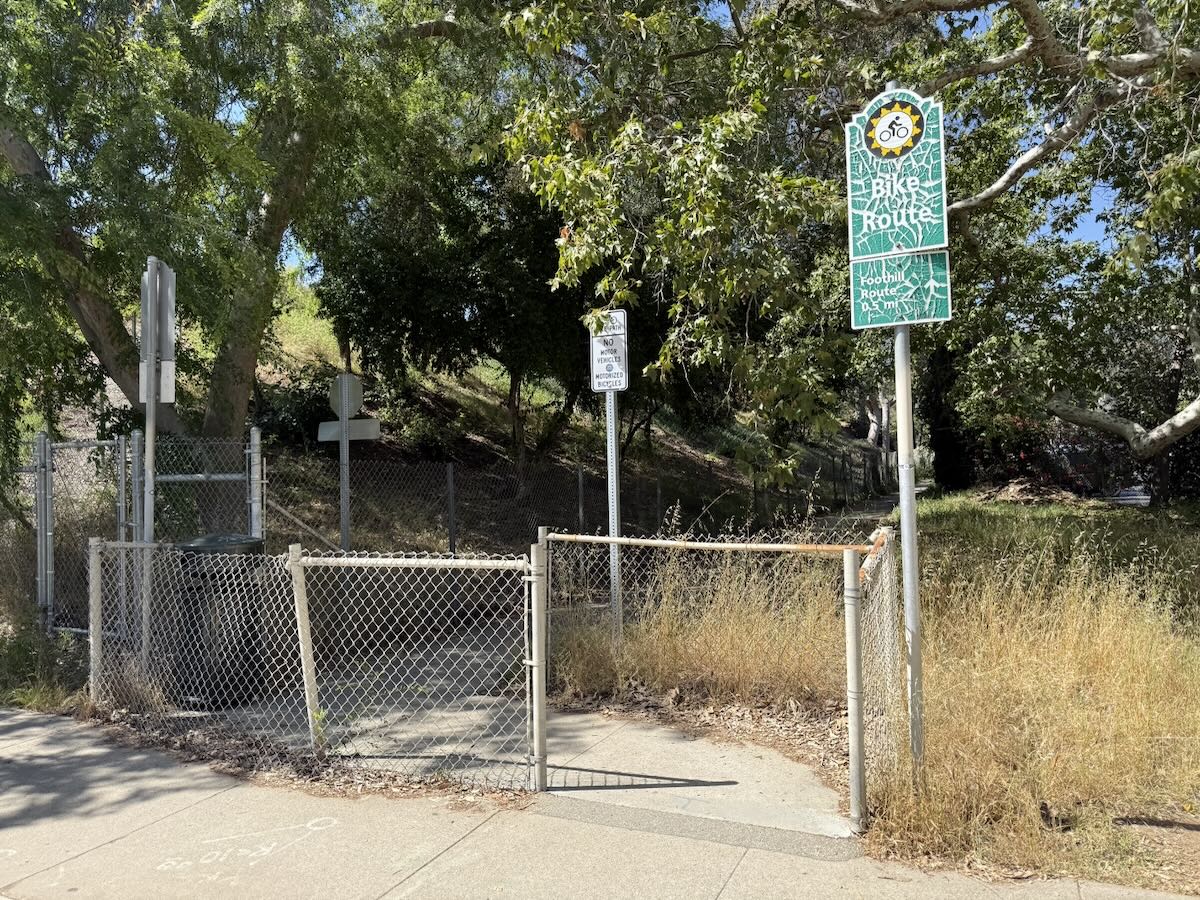
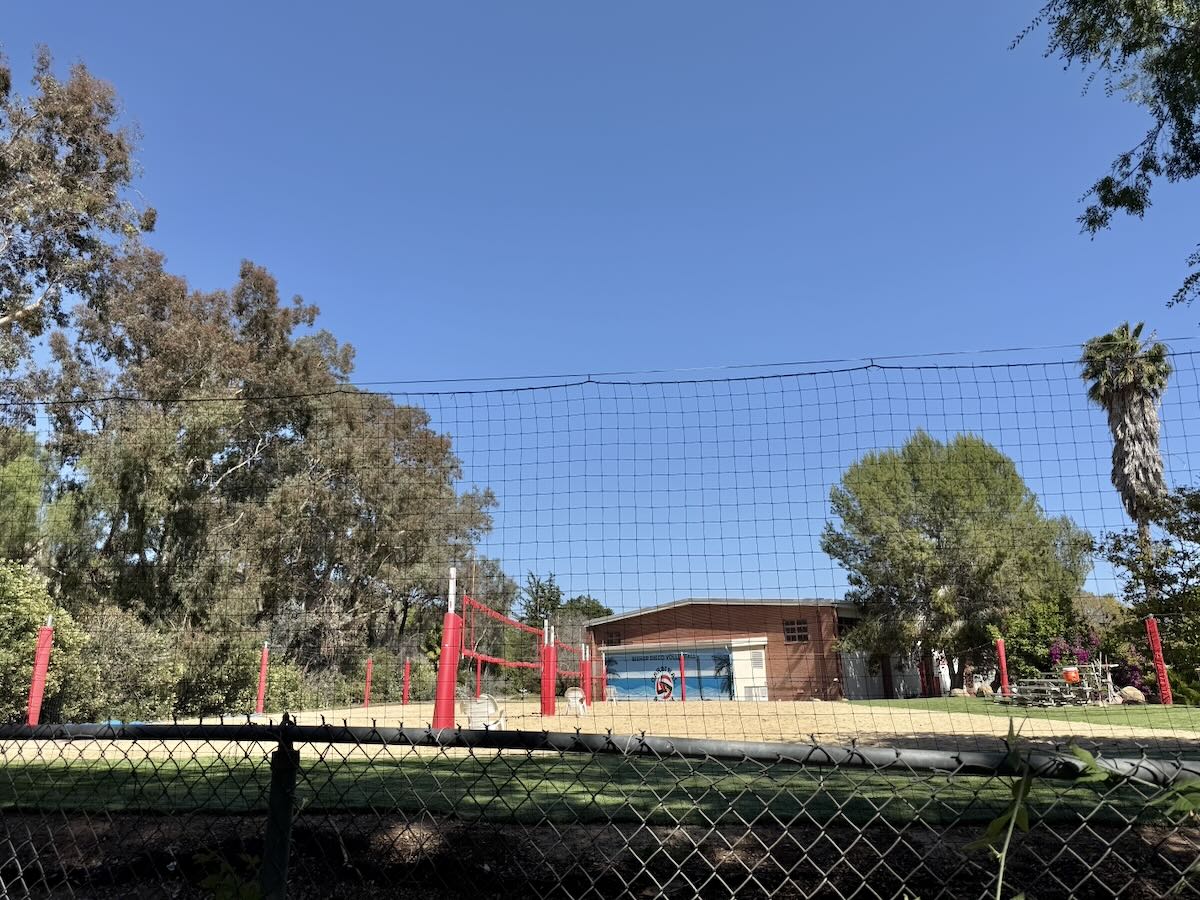
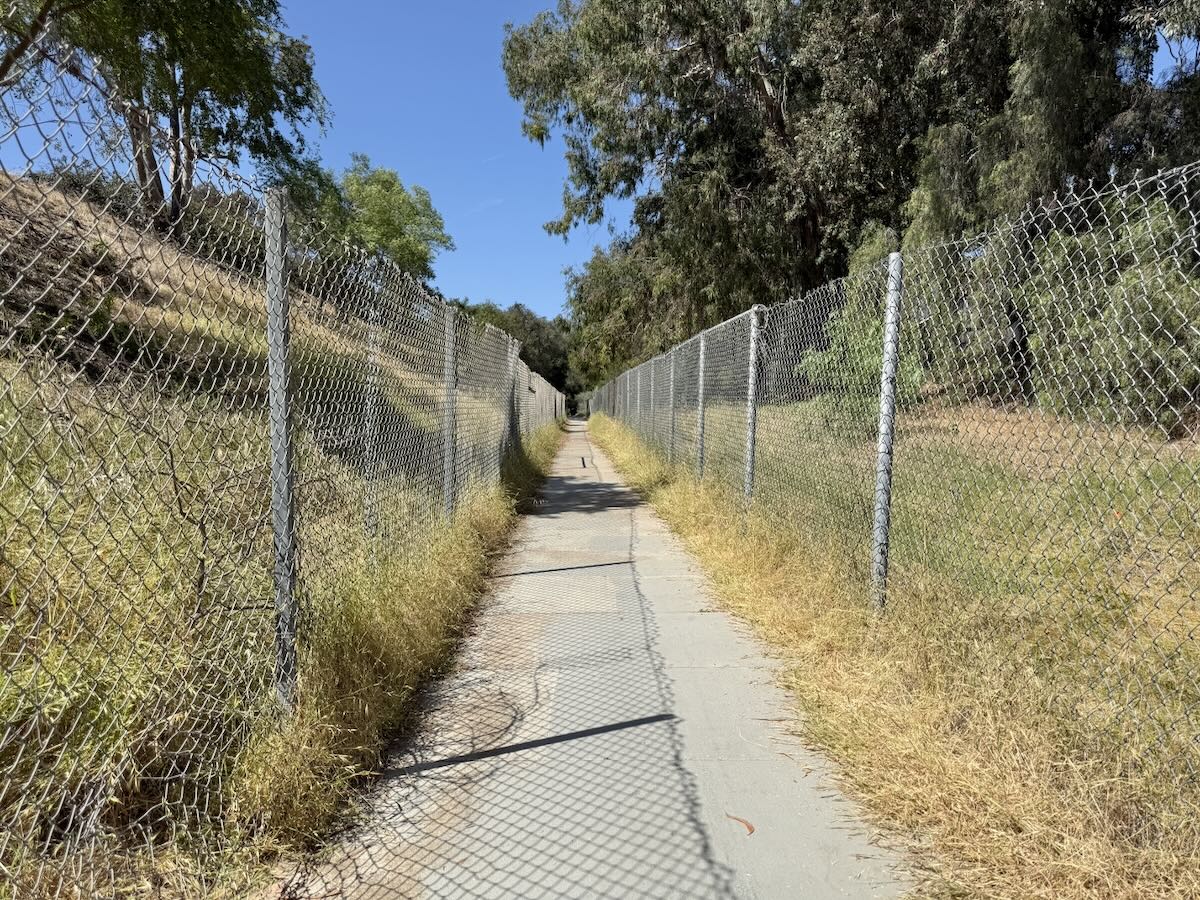 The highlight was Bishop Diego’s new sand volleyball courts, apparently known as Cardinal Beach. This is the kind of thing that absolutely blows my East Coast–raised husband’s mind.
 ················
Walk With Me…
Downtown Santa Barbara
• The Manifold Pleasures of Mid-State
• The Arty Heart of Downtown Santa Barbara
• Downtown and a Little to the Left
• The Gritty Glamour of the Funk Zone
• The Upper Upper East Is Busting Out All Over
• The Presidio: In the Footsteps of Old Santa Barbara
• Brinkerhoff, Bradley, and Beyond
• Mixing Business and Pleasure in East Beach
• It’s Only Milpas Street (But I Like It)
• The Haley Corridor Is Keeping It Real
• The Small Pleasures of Bungalow Haven
• Is There a Better Neighborhood for a Stroll Than West Beach?
• E. Canon Perdido, One of Downtown’s Best Strolling Streets
Eastside
• Where the Eastside Meets the Lower Riviera
Oak Park / Samarkand
• The Side Streets and Alleyways of Upper Oak Park
• The Small-Town Charms of Samarkand
The Riviera
• The Ferrelo-Garcia Loop
• Scaling the Heights of Las Alturas
↓↓↓ High on the Lower Riviera
Eucalyptus Hill
• On the Golden Slope of Eucalyptus Hill
• Climbing the Back of Eucalyptus Hill
San Roque
• Amid the Saints of South San Roque
• Voyage to the Heart of the San Roque Spider Web
TV Hill / The Mesa
• Higher Education on the Mesa
• The Metamorphosis of East Mesa
• The Highs and Lows of Harbor Hills
• Walking in Circles in Alta Mesa
• West Mesa Is Still Funky After All These Years
• A Close-Up Look at TV Hill
Hidden Valley / Yankee Farm / Campanil
• Campanil is a Neighborhood in Flux
• An Aimless Wander Through Hidden Valley
• The Unvarnished Appeal of Yankee Farm
Hope Ranch / Hope Ranch Annex / Etc.
↓↓↓ A Country Stroll on El Sueno Road
Montecito
• The Westmontish Region of Montecito
• East Meets West on Mountain Drive
• A Relatively Modest Montecito Enclave
• Strolling Under a Canopy of Oaks
• Out and Back on Ortega Ridge
• The Heart of Montecito Is in Coast Village
• Quintessential Montecito at Butterfly Beach
• Once Upon a Time in the Hedgerow
• Where Montecito Gets Down to Business
• In the Heart of the Golden Quadrangle
• Up, Down, and All Around Montecito’s Pepper Hill
• Montecito’s Prestigious Picacho Lane
• School House Road and Camphor Place
Summerland / Carpinteria
• On Summerland’s Western Fringe
• A Stroll in the Summerland Countryside
• Admiring the Backsides of Beachfront Houses on Padaro Lane
• Whitney Avenue in Summerland
Goleta / Isla Vista
• In the Shadow of Magnolia Center
• A Tough Nut to Crack in Goleta
• Where the Streets Have Full Names
• The Past Is Still Present in Old Town Goleta
• Social Distancing Made Easy at UCSB
 ················
Sign up for the Siteline email newsletter and you’ll never miss a post.













Thats’s a quirky area. Used to live up there. Monte Vista School is on Hope and Hope school on La Colina.
Tal Avitsar opened his workshop, home gallery, and garden during an open studio tour last month. Stepping behind those gates lies a truly cool, whimsical retreat that feels like a hidden gem.