

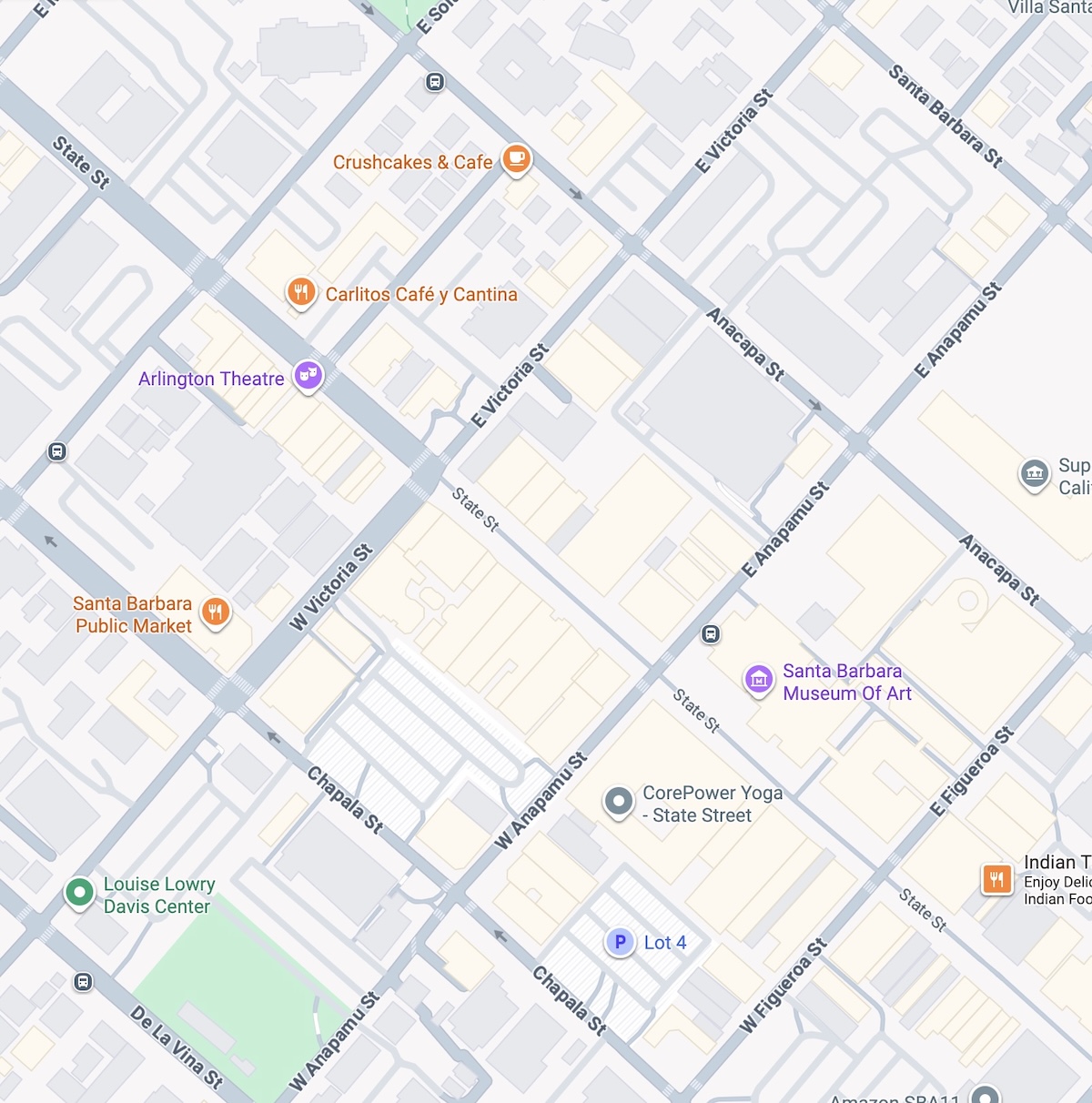
Santa Barbara’s Arts District is bordered by Figueroa, Chapala, Sola, and Anacapa. Just six square blocks—how much could there be to write about?
 Hold my beer.
The Arts District is a marketing construct, but it’s a useful one, distinguishing the more upscale section of State Street from scruffier parts downtown. And while there are certainly many cultural institutions within its boundaries, the point is also to promote shops and restaurants. None of that, however, is going to be the main focus here, so please don’t complain that I didn’t mention your favorite whatever. Instead, this post—and all Walk With Me posts—is about the details that give the area character.
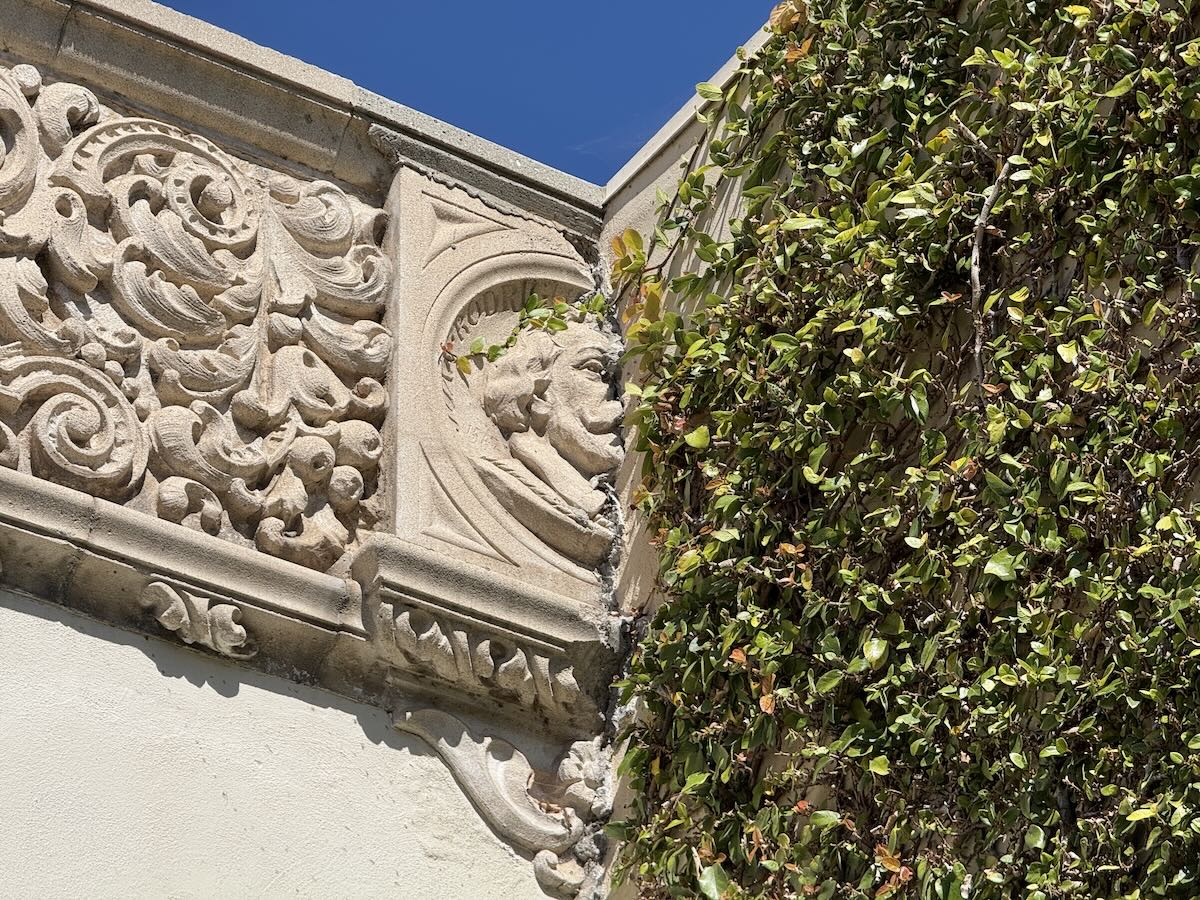
To wit, I kept running into past moments from the weekly Where in Santa Barbara…? game, an ongoing record of all the quirk that will inevitably get sanded away by time and/or bureaucracy.
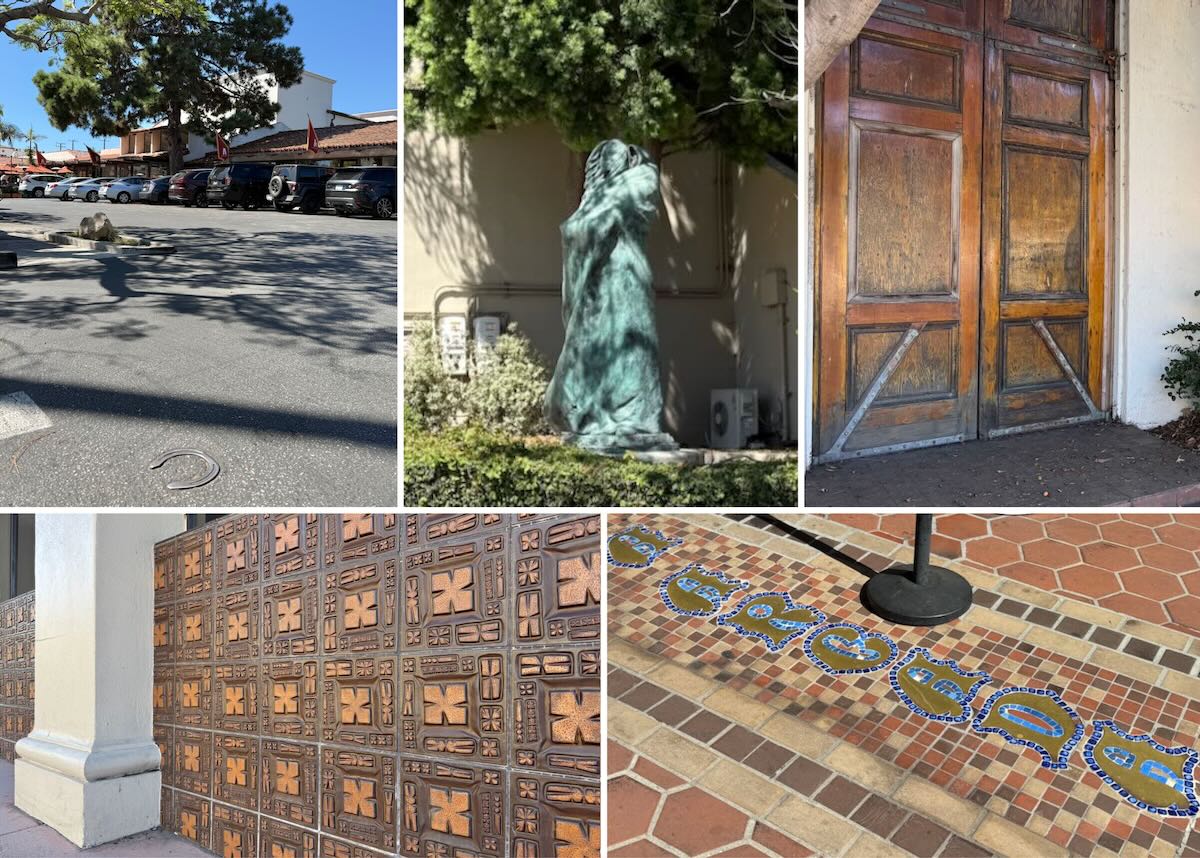 There was at least one familiar face, too.
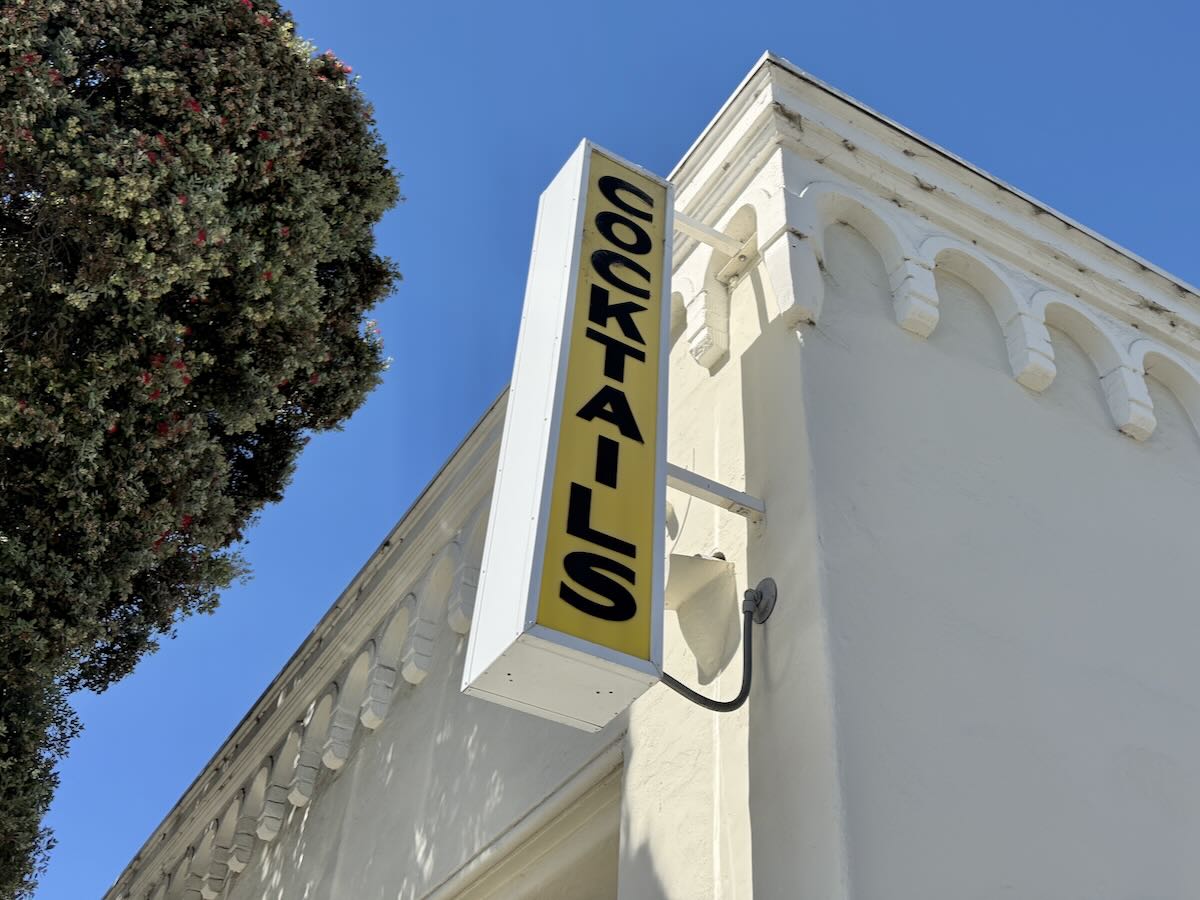
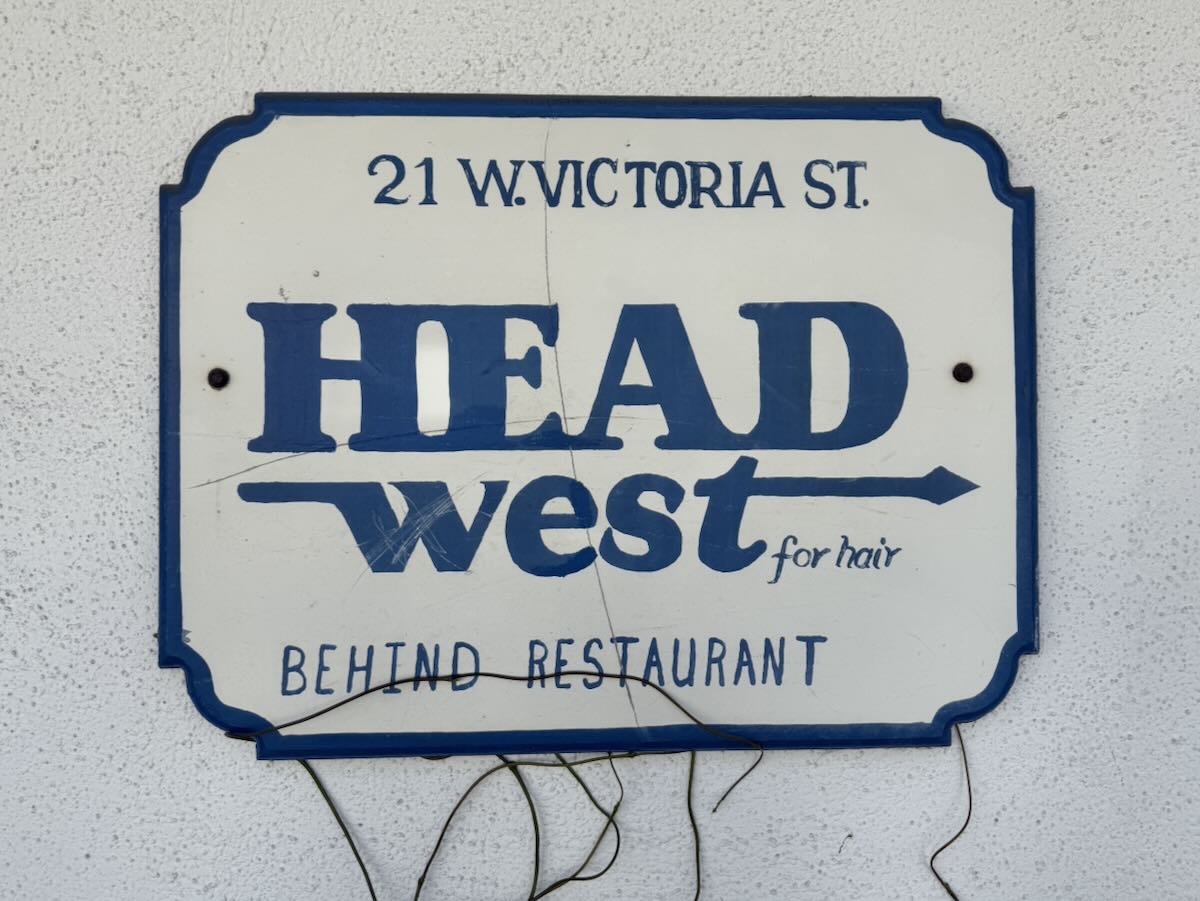
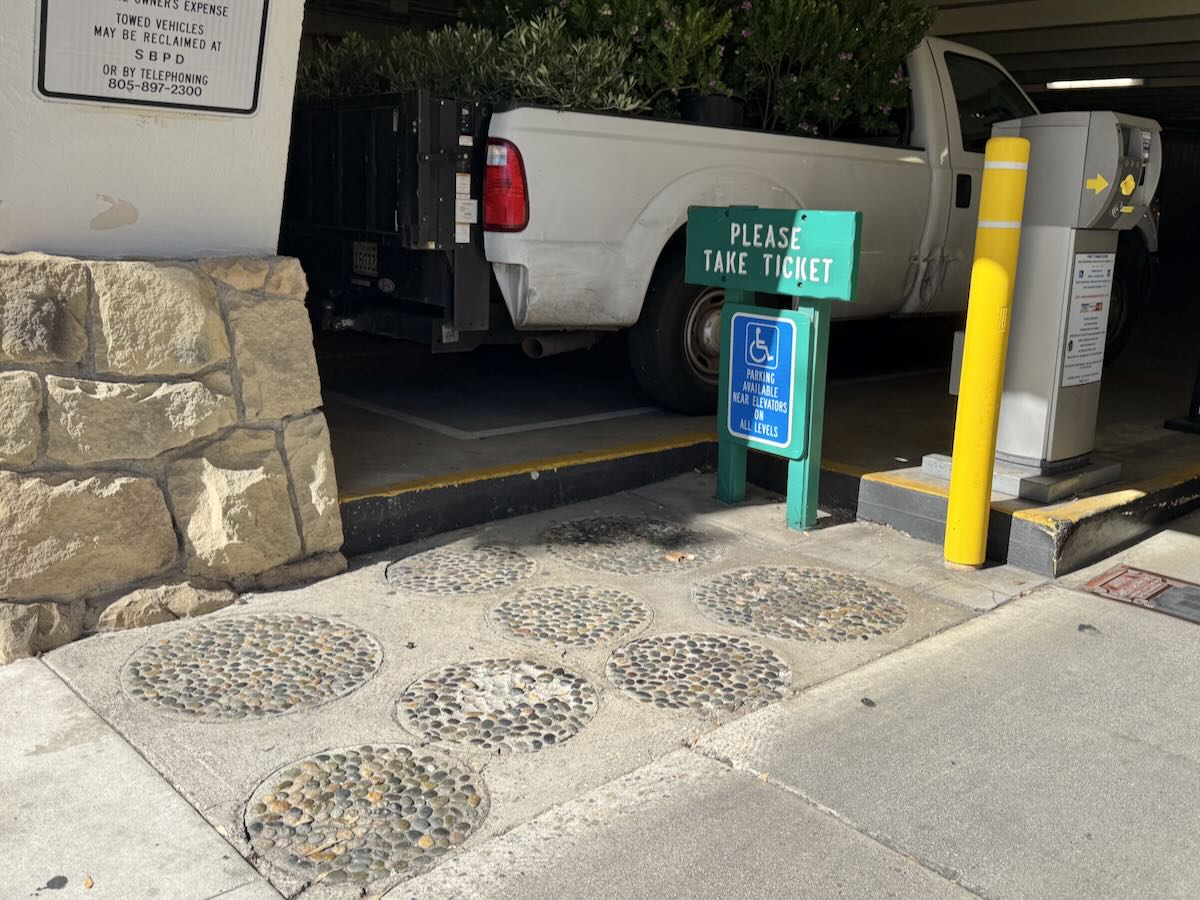
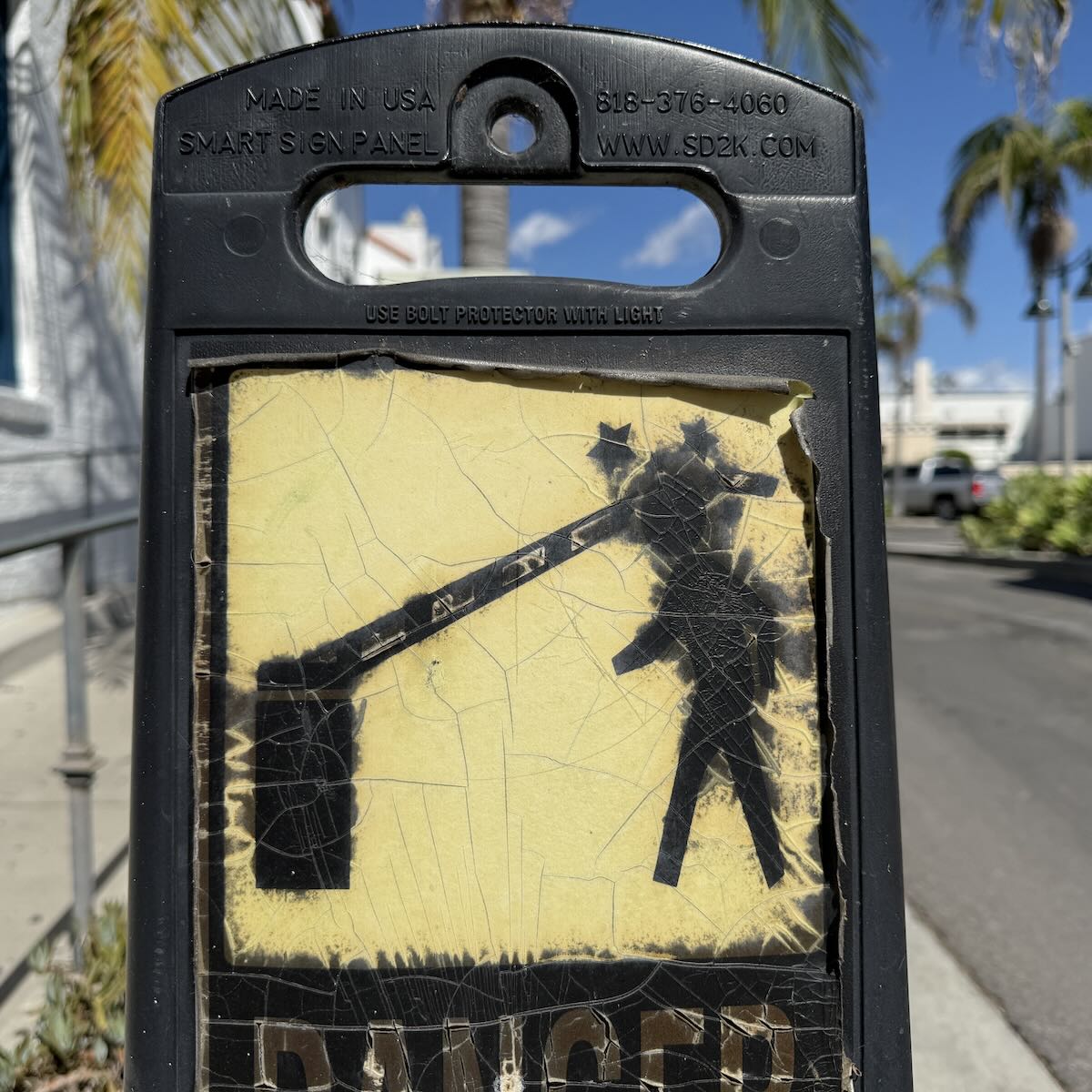
 I often wonder what people make of me photographing what looks like nothing special—Riviera Bar‘s retro “cocktails” sign, Head West’s hand lettering and marvelous “for hair” addendum, or the haphazard deployment of stone circles at City Parking Lot #7.
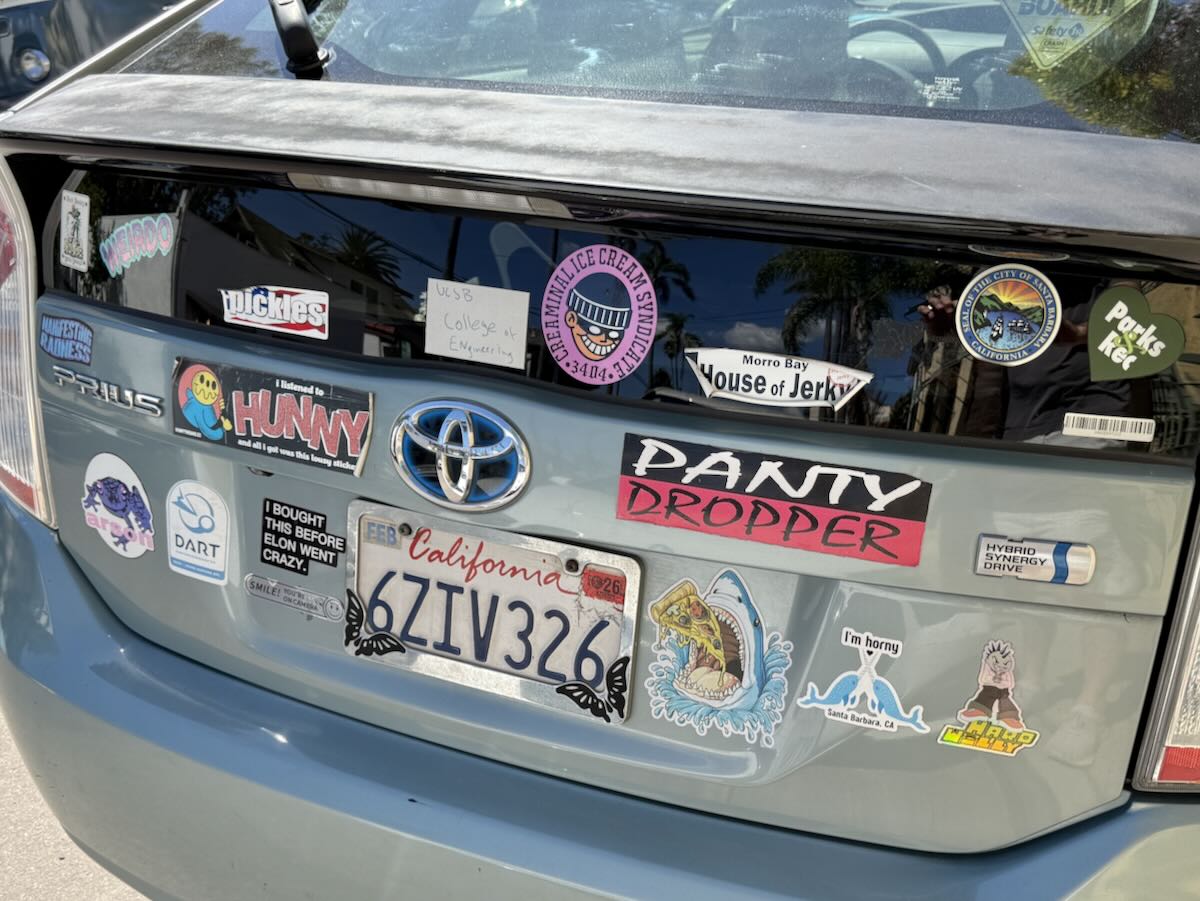
 I also spent a while absorbing all this Prius has to offer. Don’t stop till you get to the DIY decal for UCSB’s College of Engineering. Also, I later Googled “panty dropper,” just to make sure I wasn’t missing something. It was quite the journey.
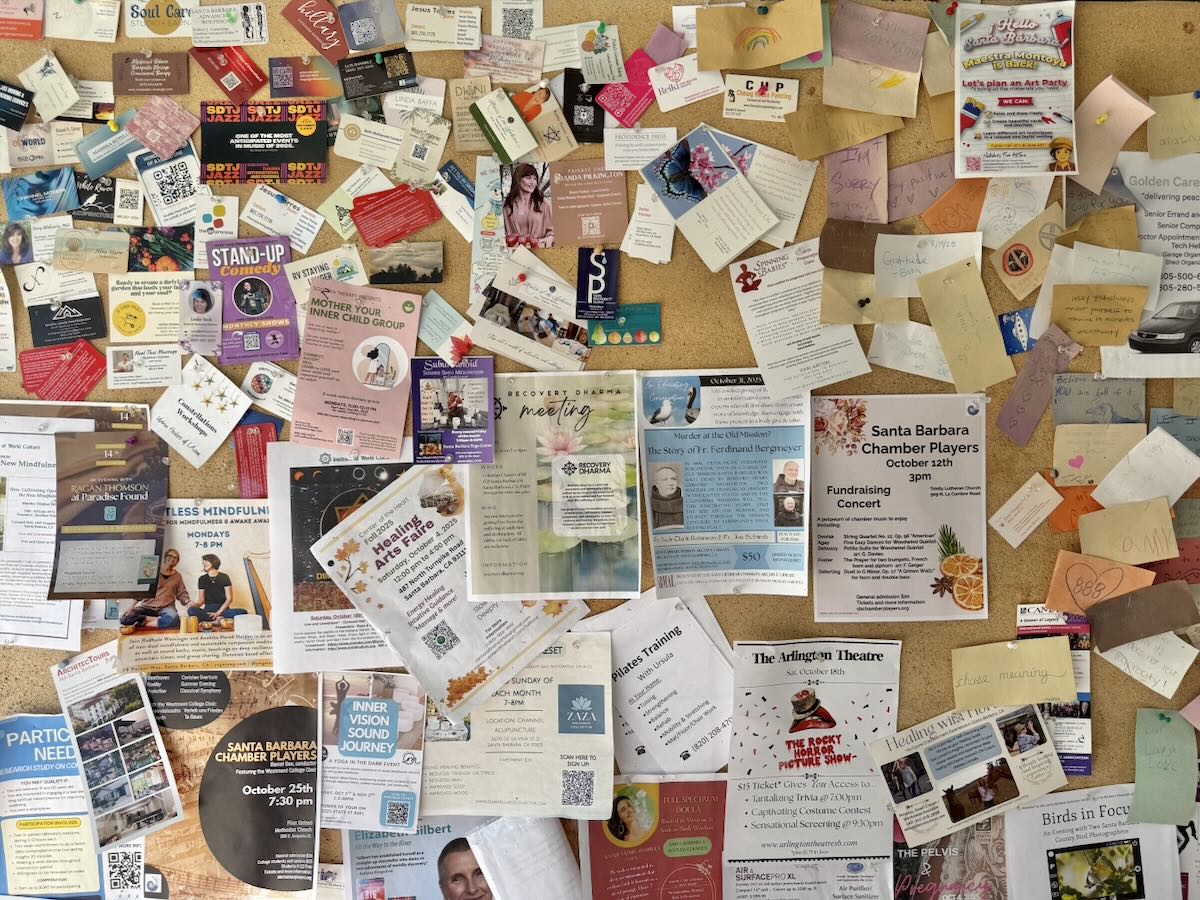
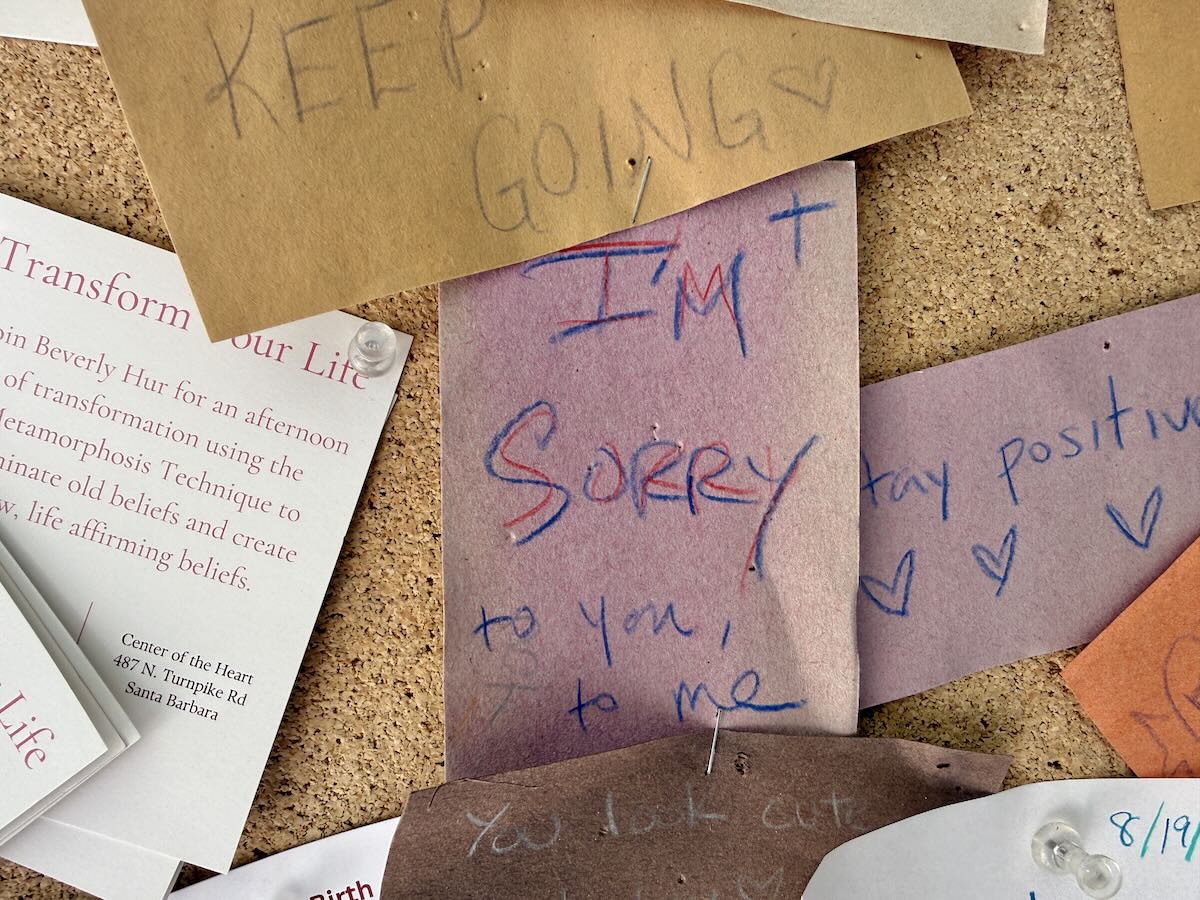
 The bulletin board outside Paradise Found is along the lines of what you’d expect, but the handwritten notes were fun. Am I the only one who hates it when I express sympathy by saying “I’m sorry,” only to be told it’s not my fault?
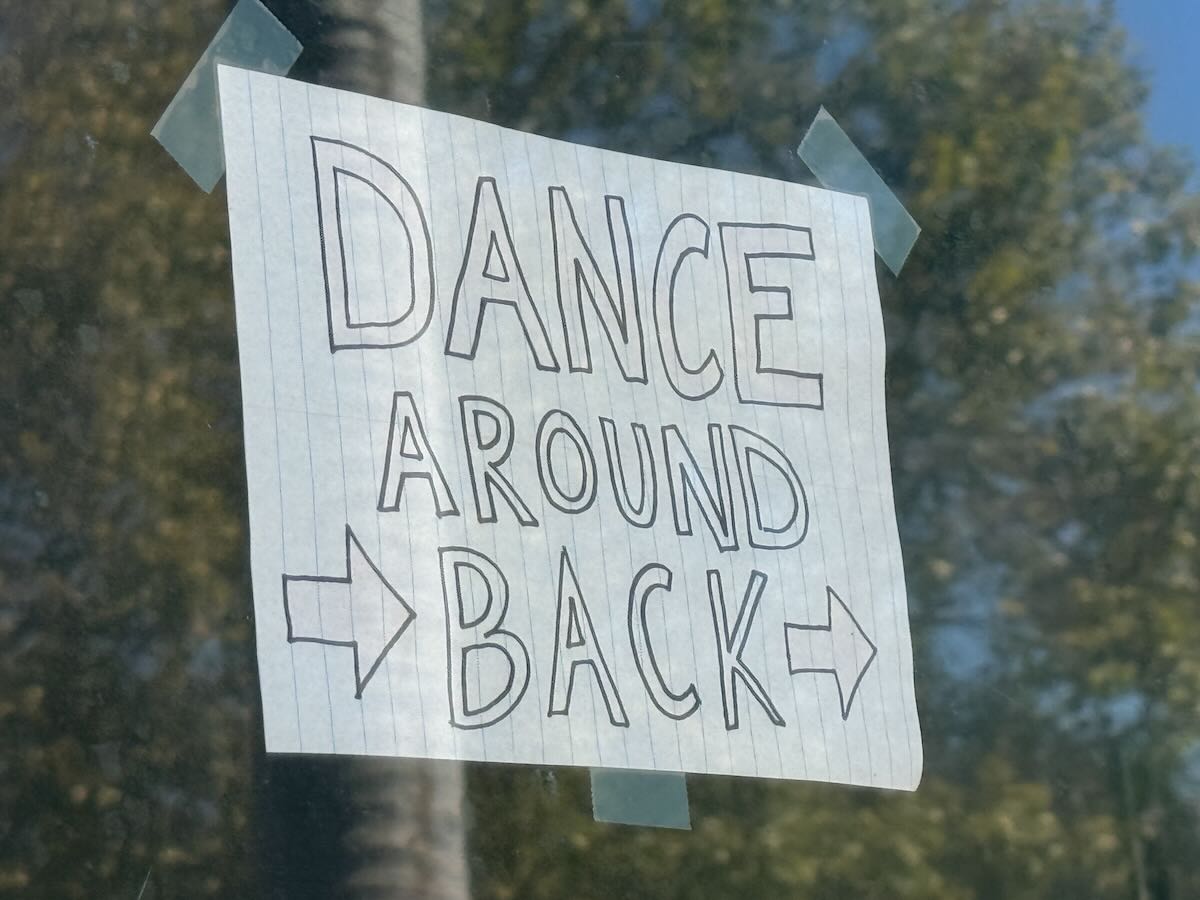
 Elsewhere in the land of handwritten messages, Momentum Dance Company‘s sign on Victoria Street reads like a command to me.
 Any good observer must be willing to peer into windows, even blurry ones. This is the Christ Presbyterian Church’s expansion into Art Essentials’s former store next door on Victoria Street. (When I pressed my phone up against the glass, I got an alert—new to me—telling me to clean the lens.) It would be amazing if the church left the space as a courtyard, but that’s not the plan.
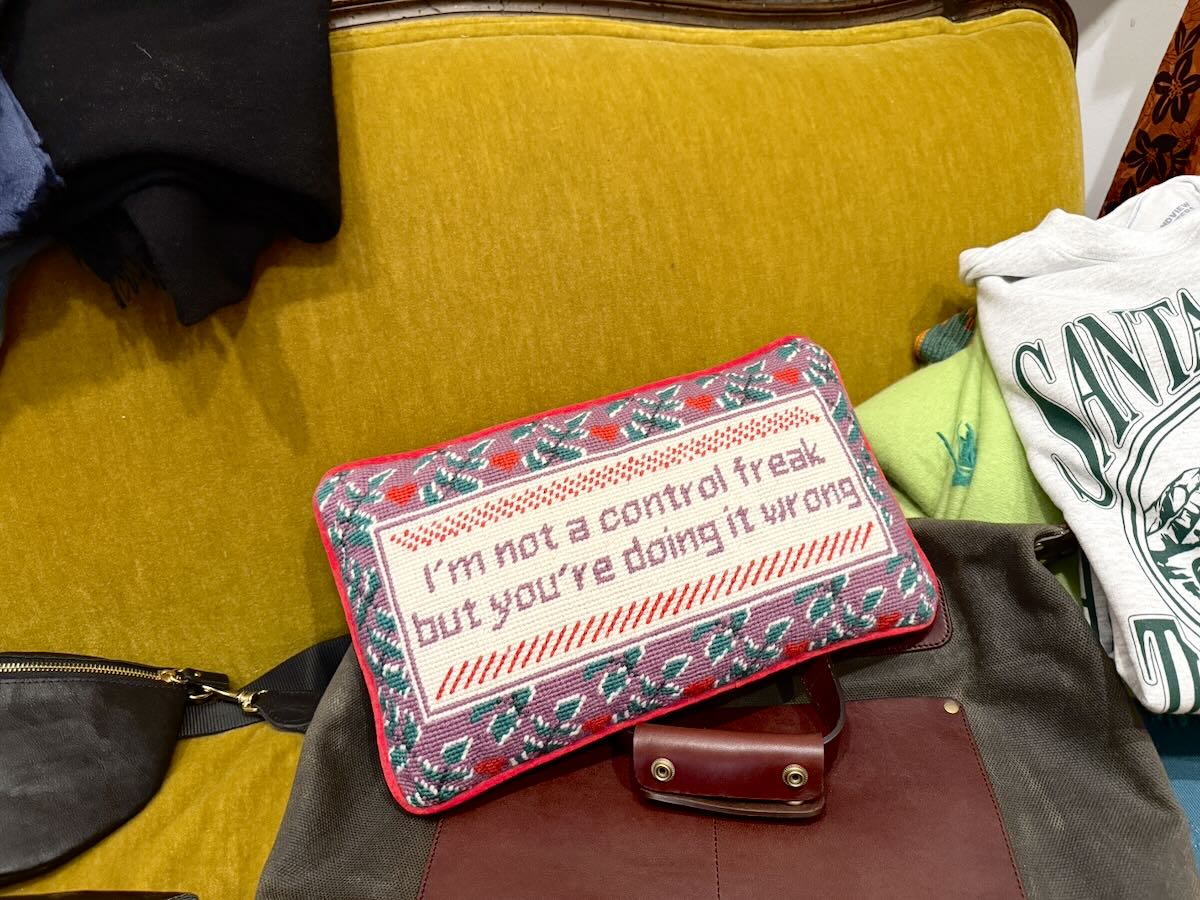
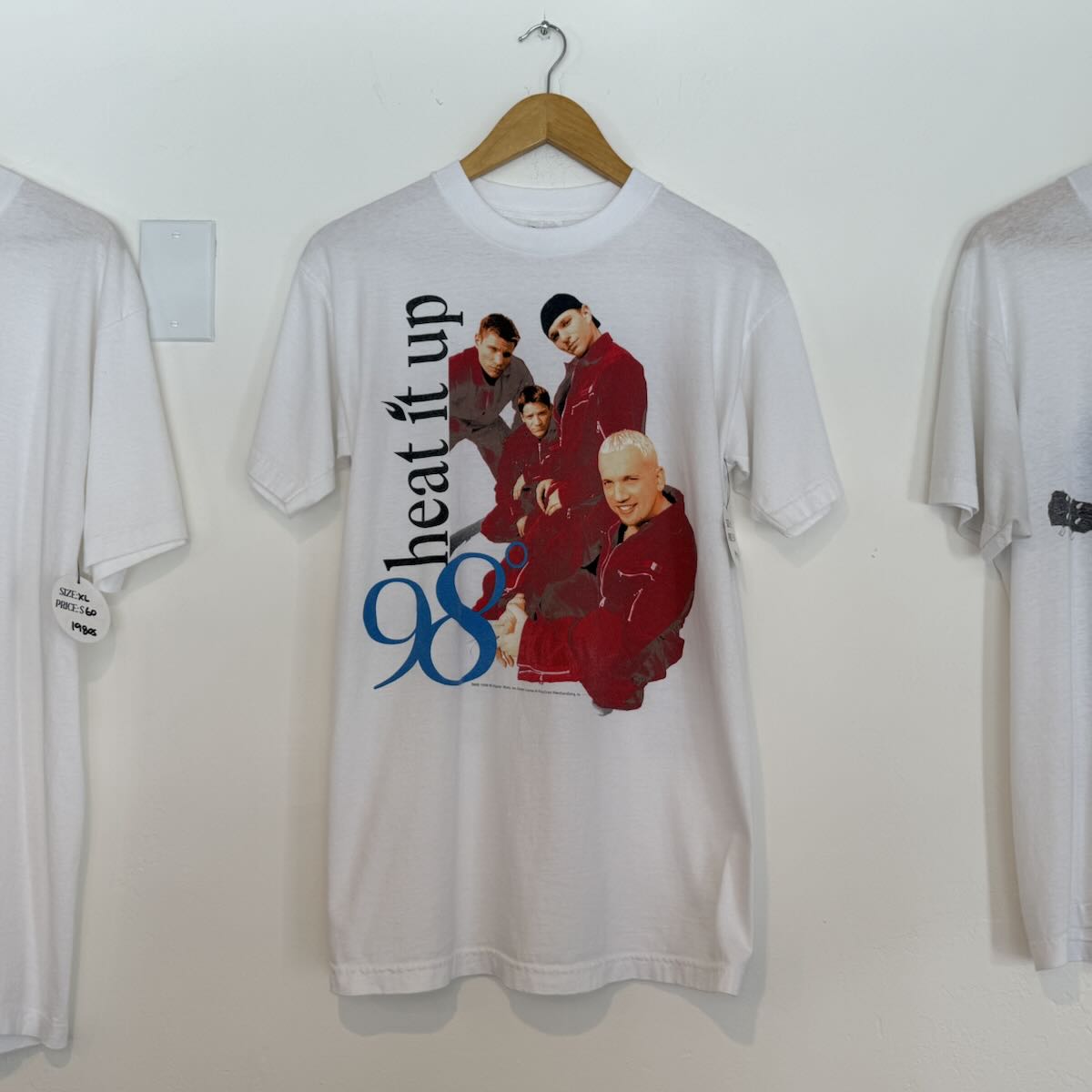
 Generally, I stayed outside, with a few exceptions. I popped into Field Trip at La Arcada Plaza, where the owner, Sarah, said that she thinks of me every time she sees this pillow. (Gee, why?) And I cooled off for a couple of minutes at the Favorites shop at State and Figueroa. It’s always a shock to see what’s considered vintage nowadays.
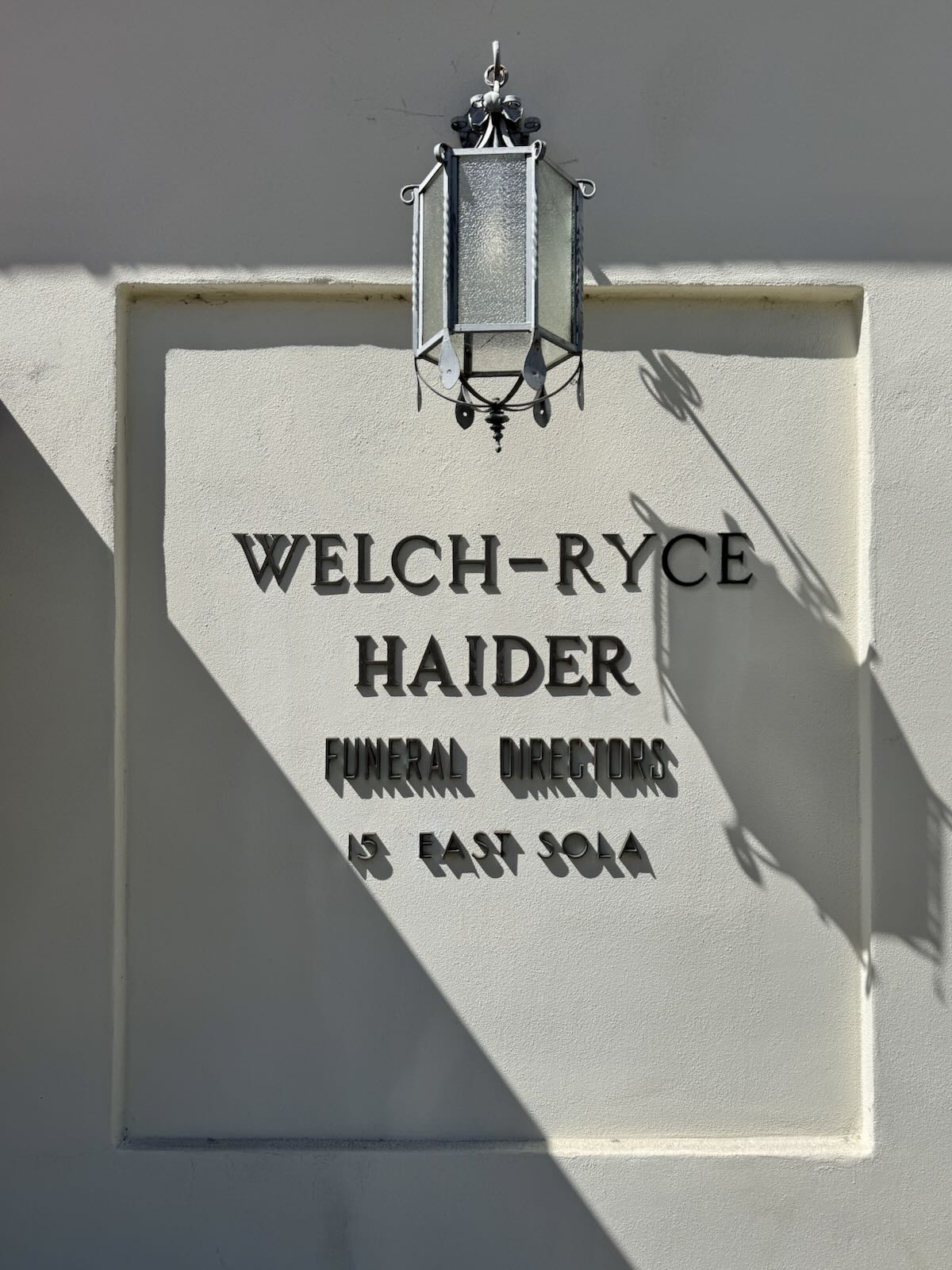
 I love this trio of fonts, but the hyphen confused me. Is Welch-Ryce Haider the name an individual? Is Welch-Ryce one person and Haider another? It turns out that the name is actually Welch-Ryce-Haider, with two hyphens, and they were
 a threesome three people.
On October 23, 1924, Charles T. Holland opened a modest mortuary at 15 E. Sola St. He operated his business until 1935, when Donald B. Welch and Andrew C. Ryce purchased it. The two men operated the business under the new name of Welch and Ryce until 1957, when they formed a partnership to include all of their professional employees who had been with them ten years or more. […] In 1964, a second mortuary located at 450 Ward Drive in Goleta Valley was dedicated. Fifteen years later Welch Ryce Associates and the Haider Mortuary merged to become Welch-Ryce-Haider Funeral Chapels.
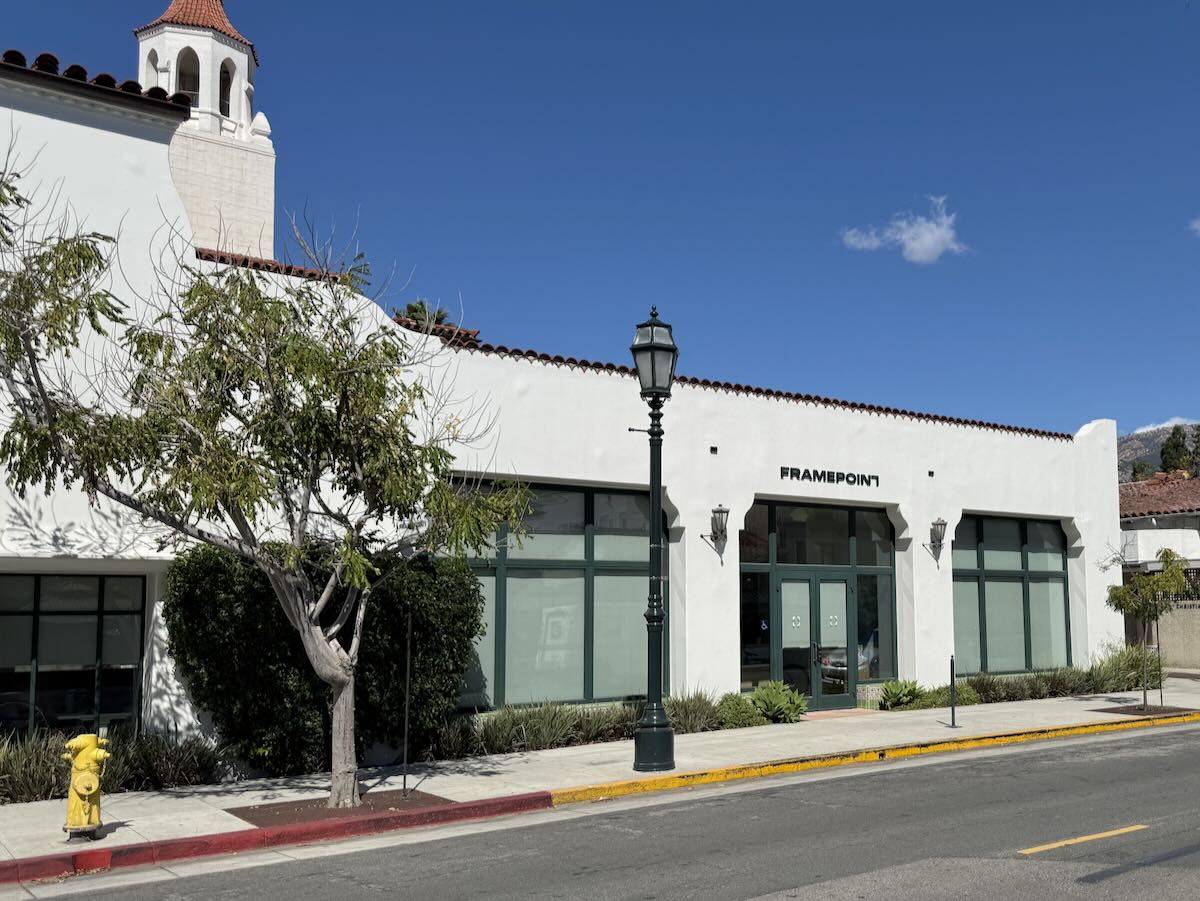
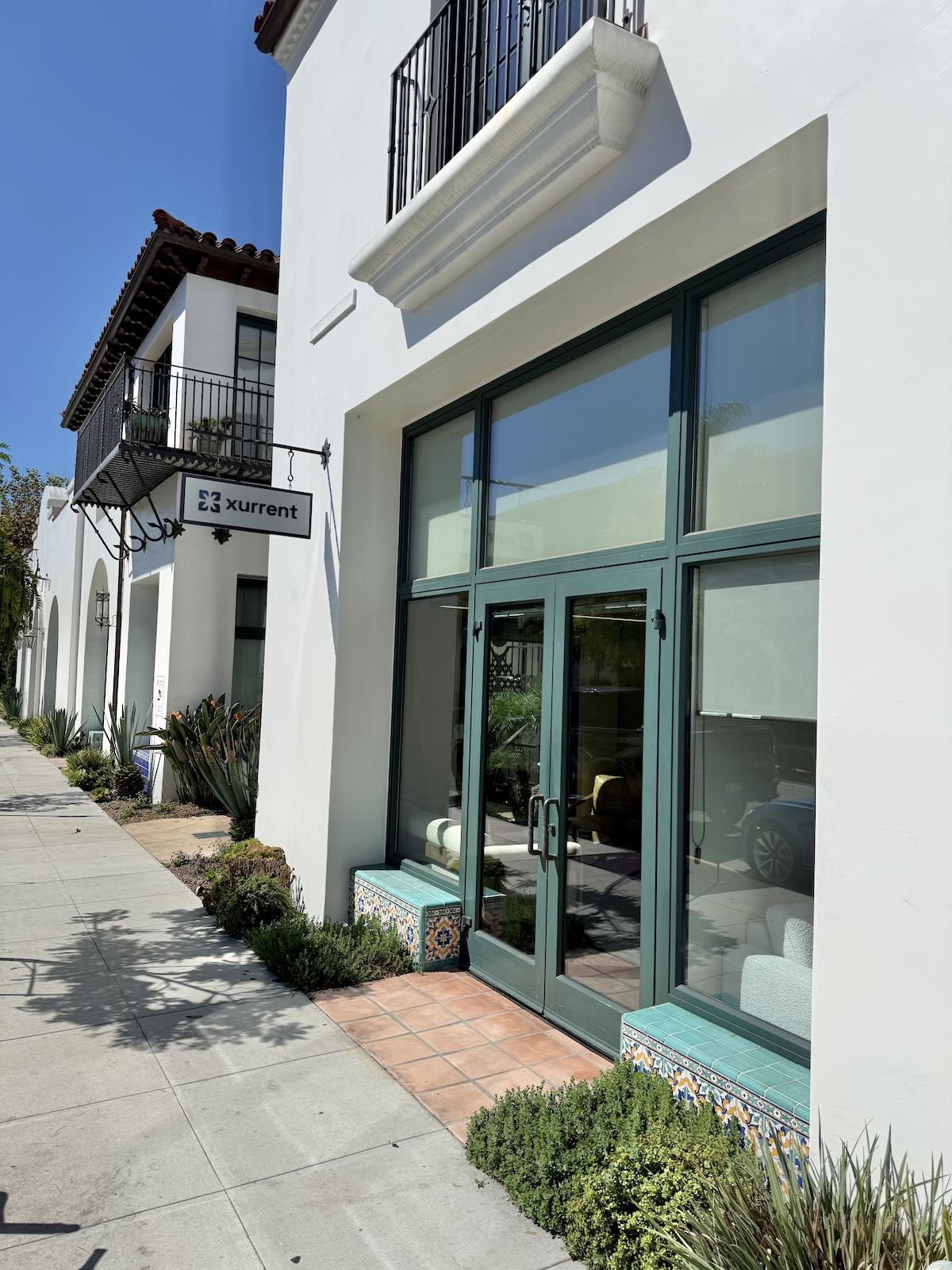
 Two businesses on Victoria Street inspired more research. Framepoint offers wealth management, and Xurrent—how do you say that?—”helps organizations simplify and optimize their IT processes.”
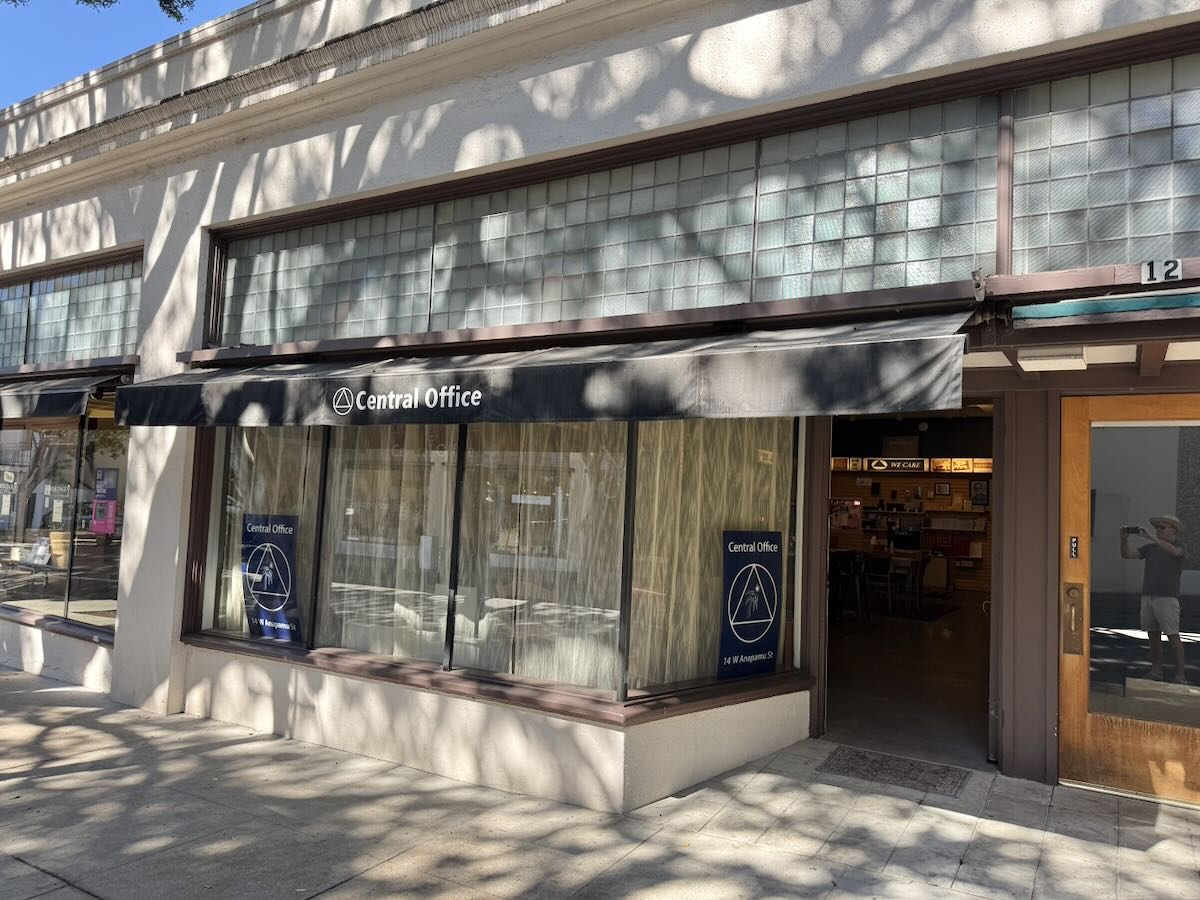
 And Central Office is an outpost of Alcoholics Anonymous.
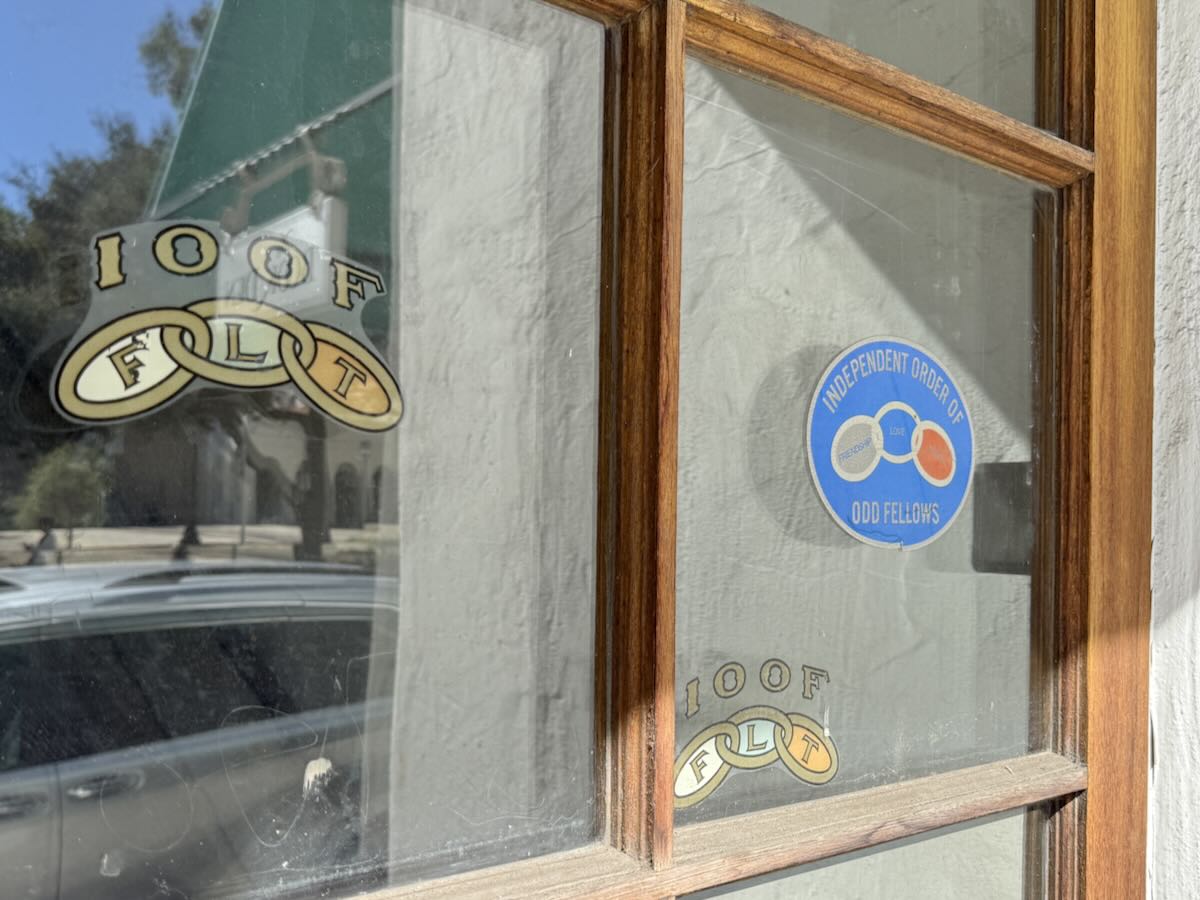
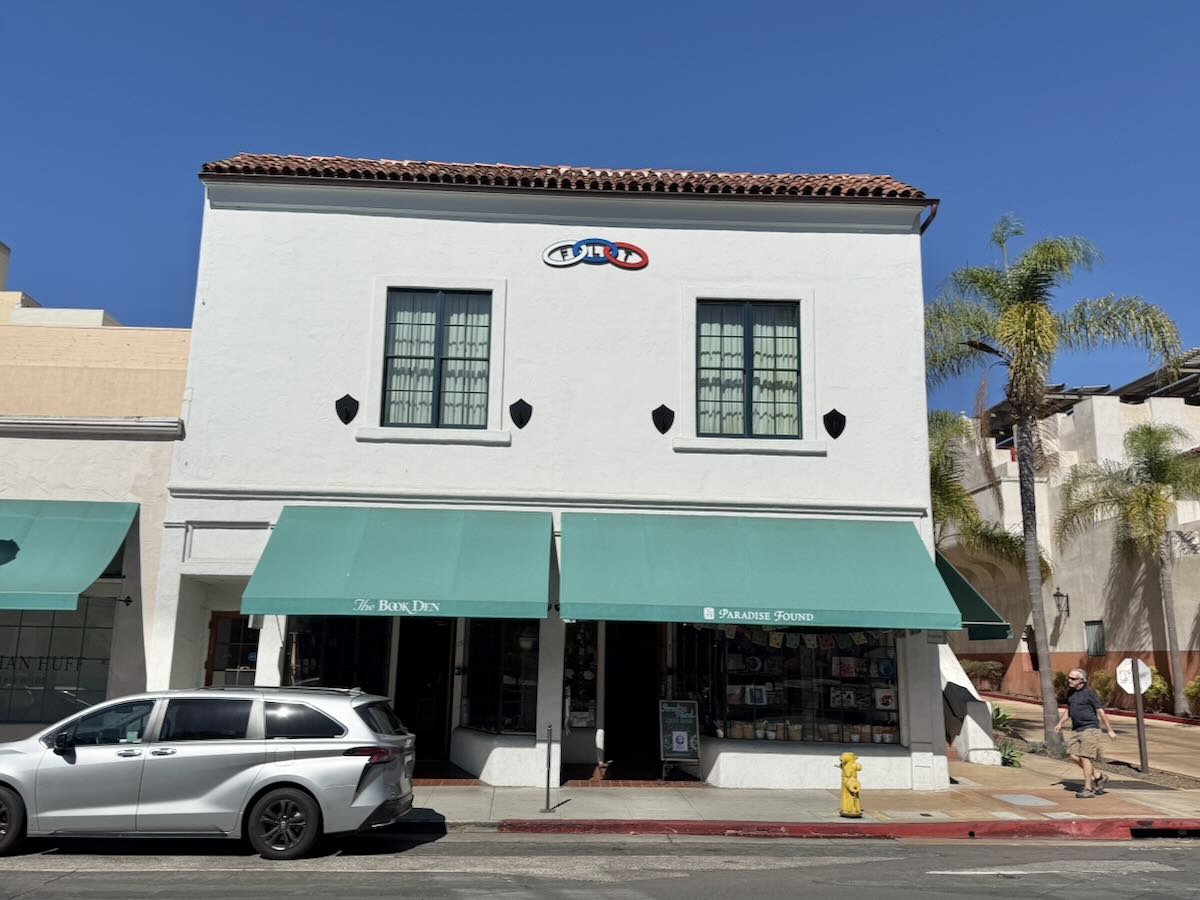
 As for the Independent Order of Odd Fellows on Anapamu—I want a T-shirt!—it was “established in the 18th century and brought to America in 1819 by Thomas Wildey [and] created to provide a sense of solidarity and mutual aid among members, extending help to those in need, regardless of their social status. […] Discussing political, sectarian or any other debate is forbidden in the Lodge, so it breaks down the social walls and labels used to view others and opens hearts and minds to start seeing people as Brothers and Sisters.” The “FLT” on the building stands for “friendship, love, truth,” although there’s a risk it comes off like a Venn diagram positing that friendship and truth do not overlap.
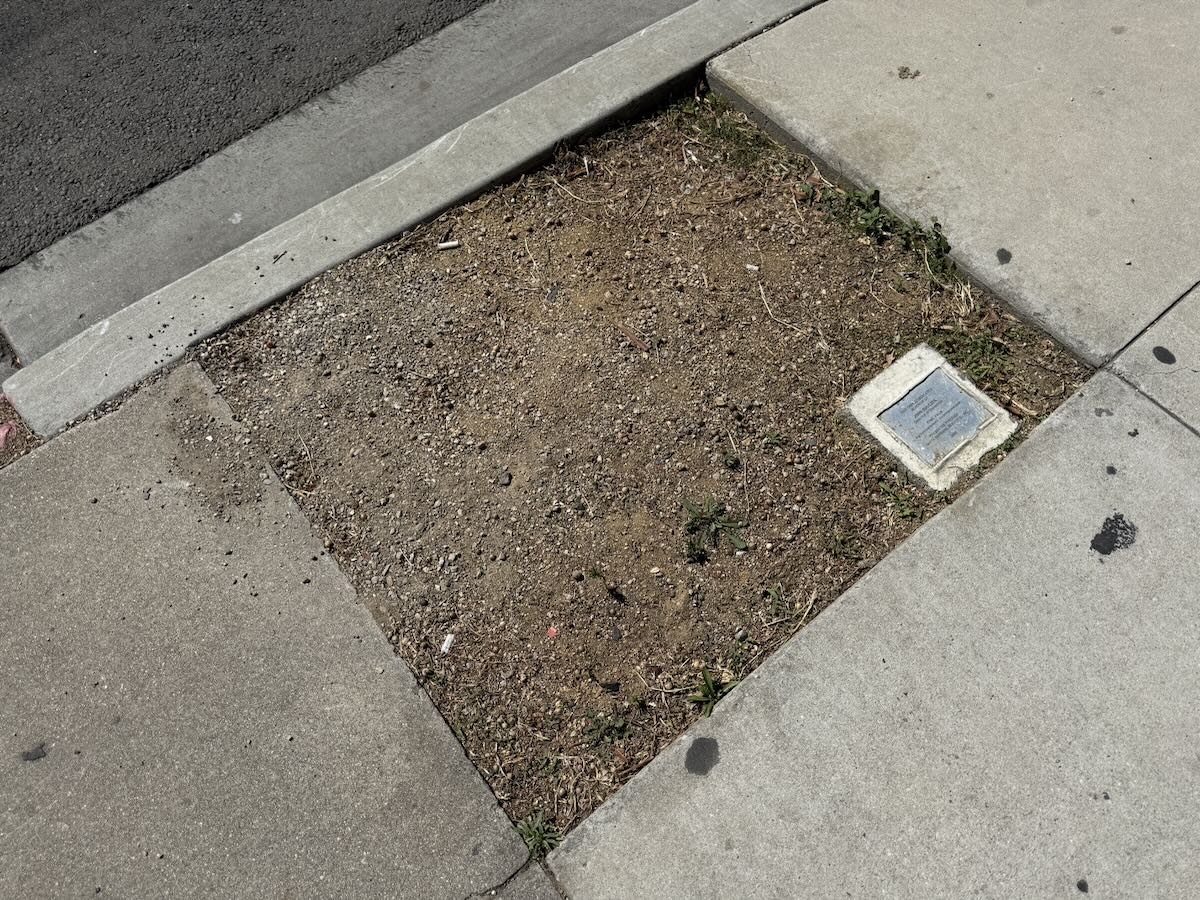
 If you sponsor a city tree for someone, and the tree has to be removed, do you have to pay to get it replaced? Santa Barbara Beautiful says no: you just contact the city’s Parks and Recreation, and a new tree will eventually be planted there.
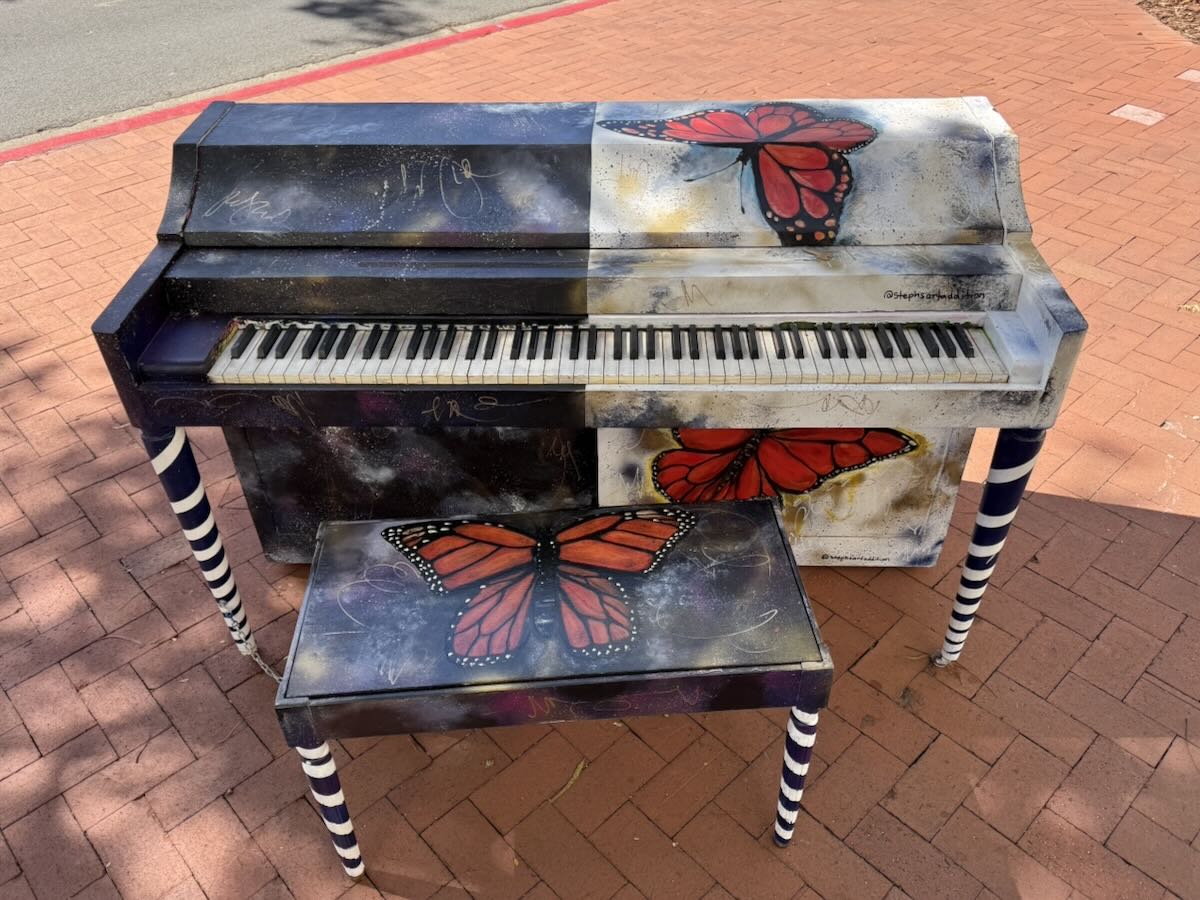
 My walk occurred during Pianos on State, so every now and then I’d encounter a pianist. I didn’t take a photo of the woman pressing one key over and over and over.
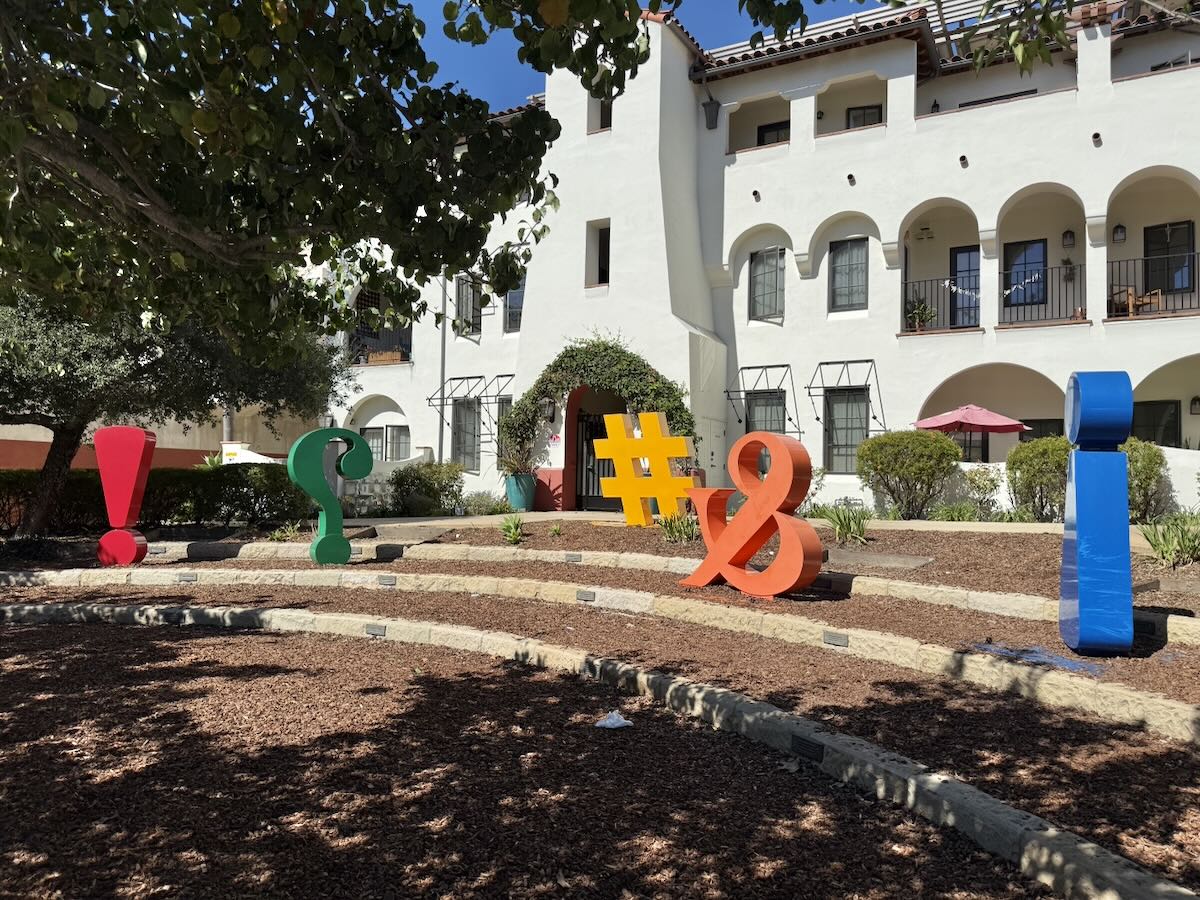
 The punctuation-symbol bookshelves on Anapamu are considered public art; lined up in a row like that, they look like an expletive. (And yes, there are plenty of dirty five-letter words.) The open space is apparently called Jardin de las Granadas, but it’s not much of a garden.
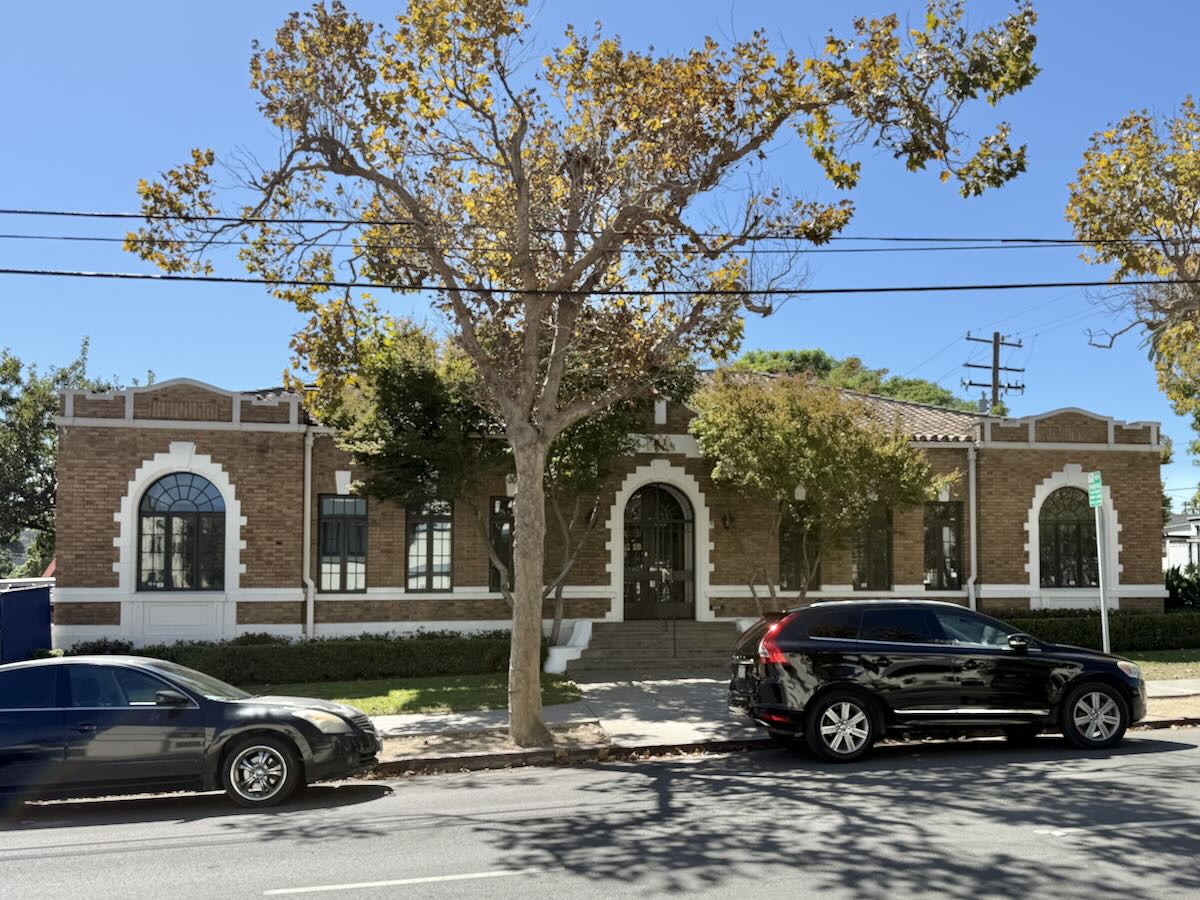
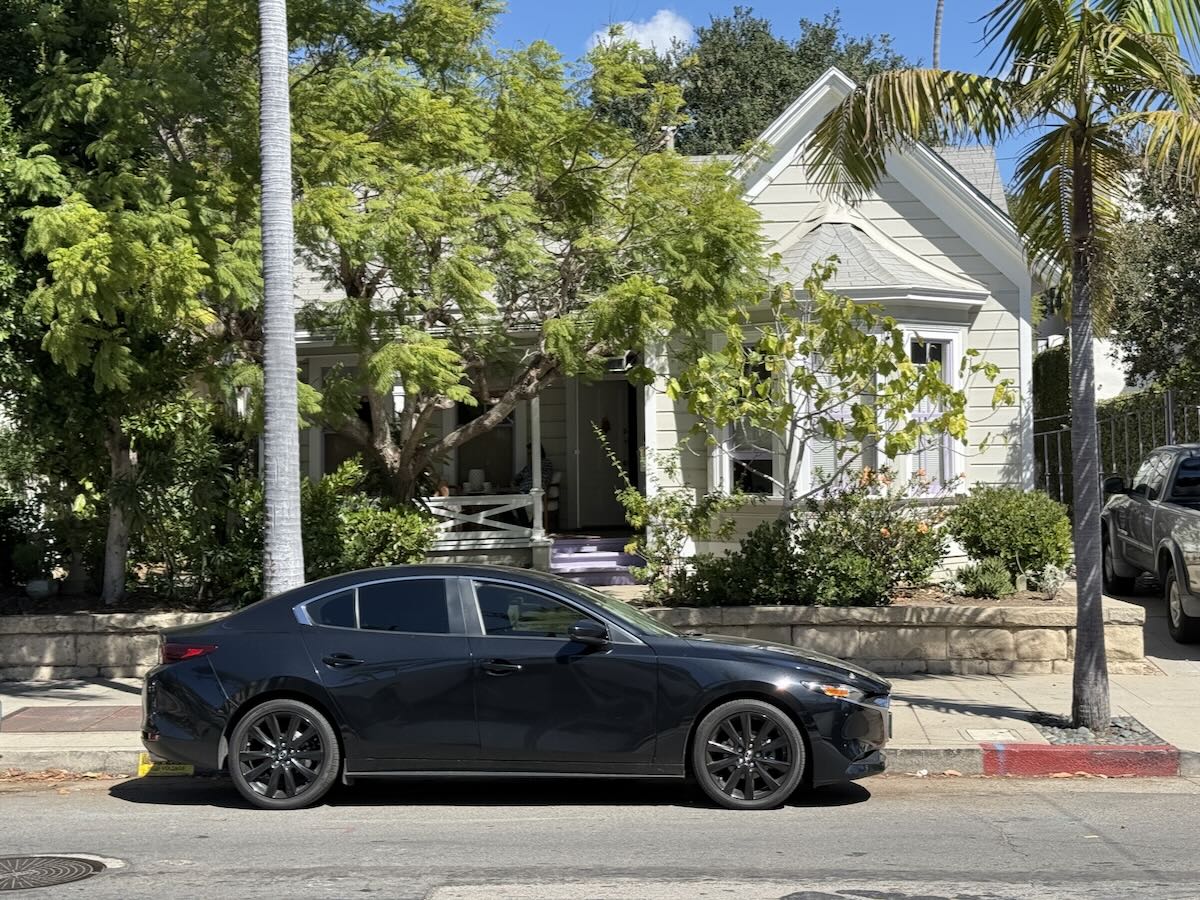
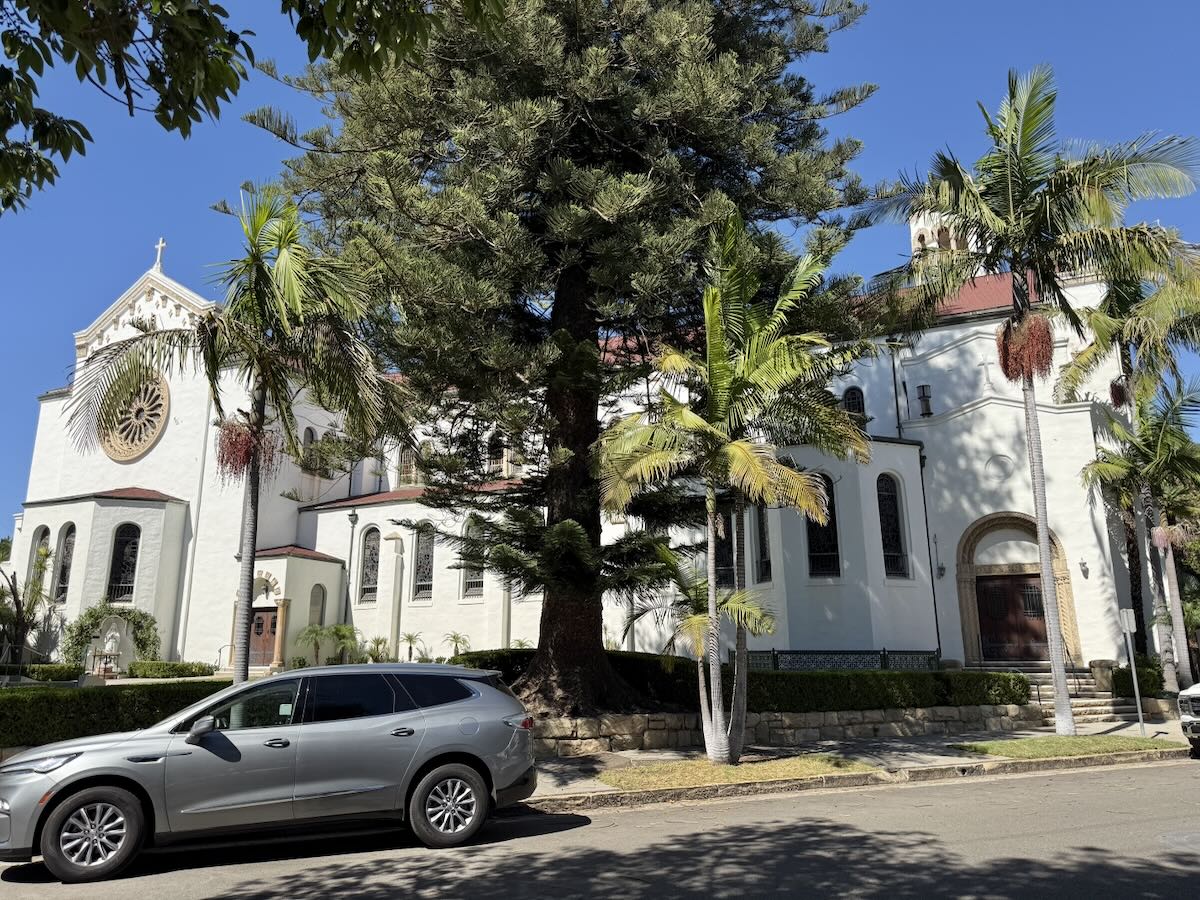
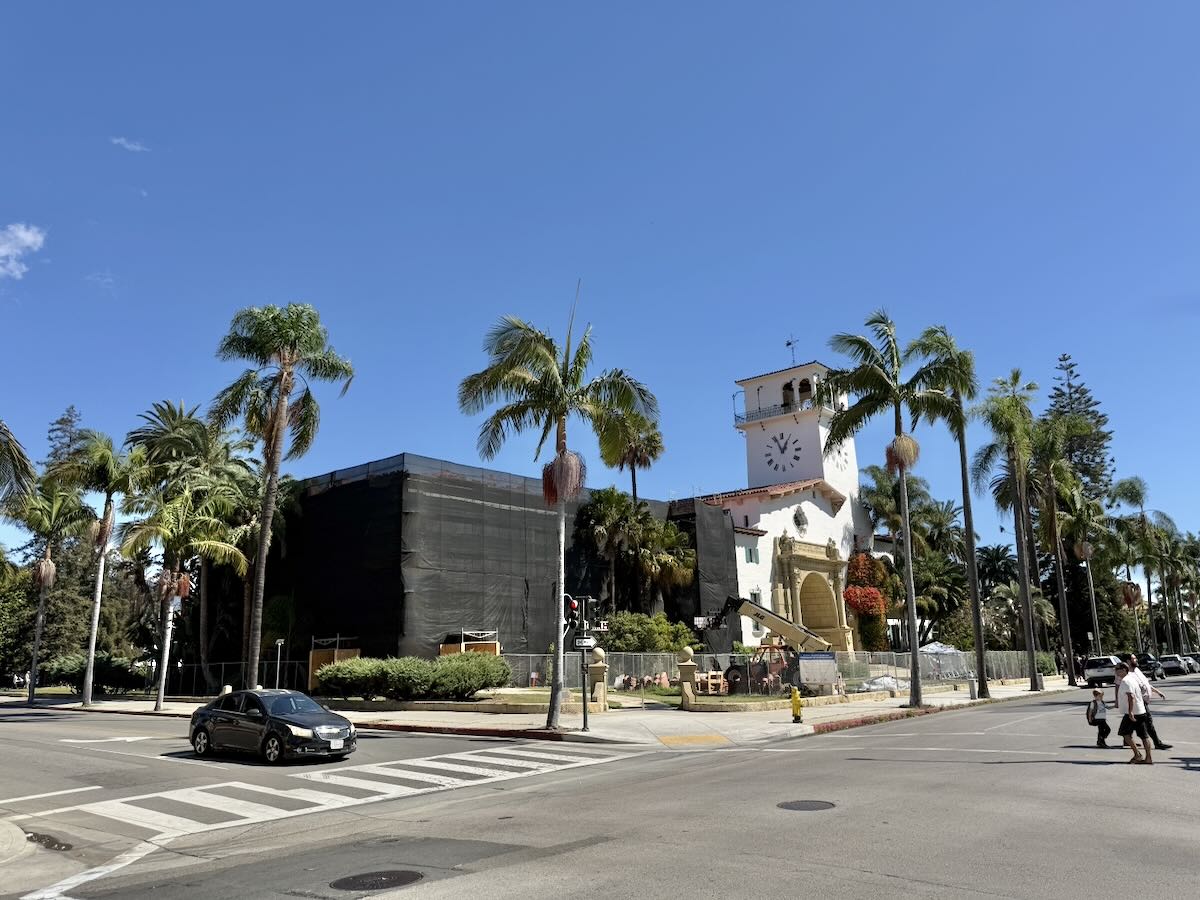
 This post has been all details up to now, but of course there are many wonderful buildings in the Arts District…
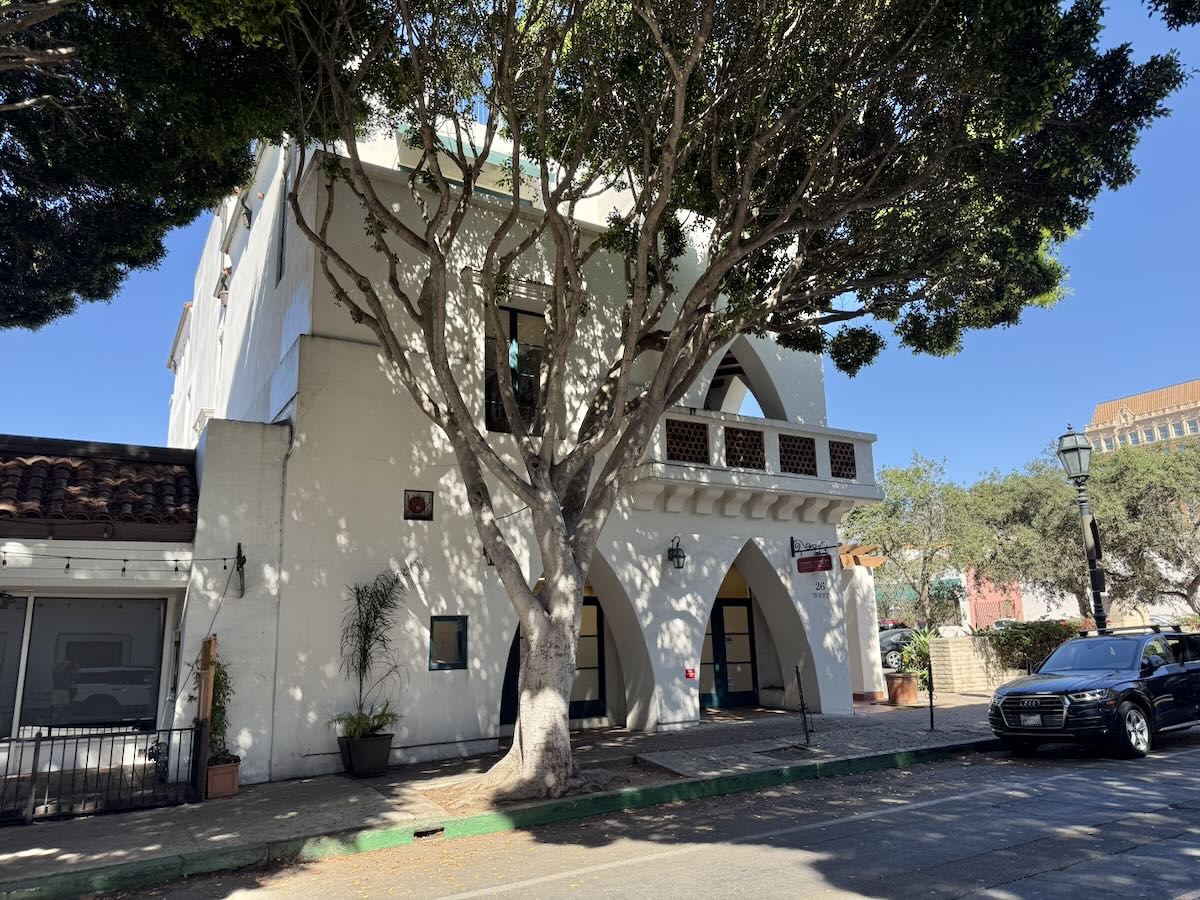
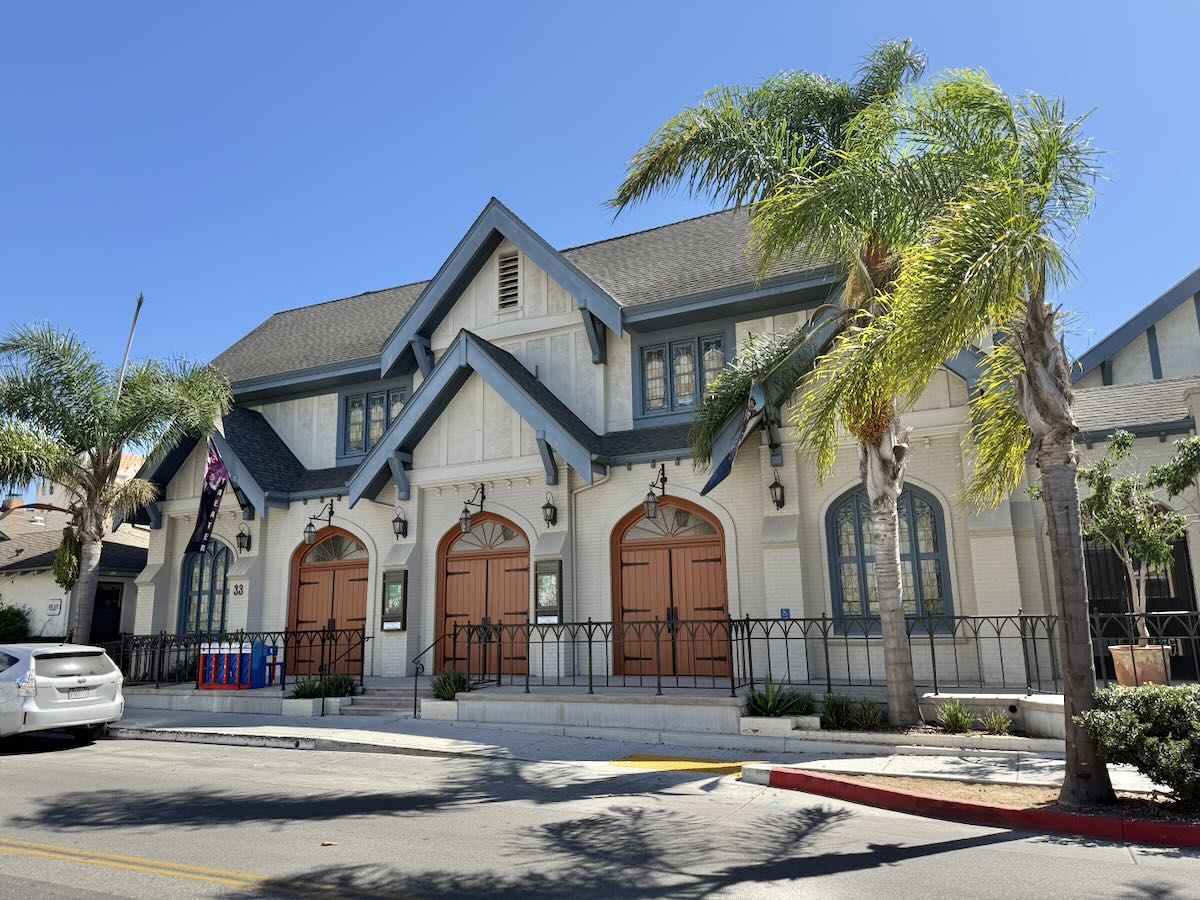
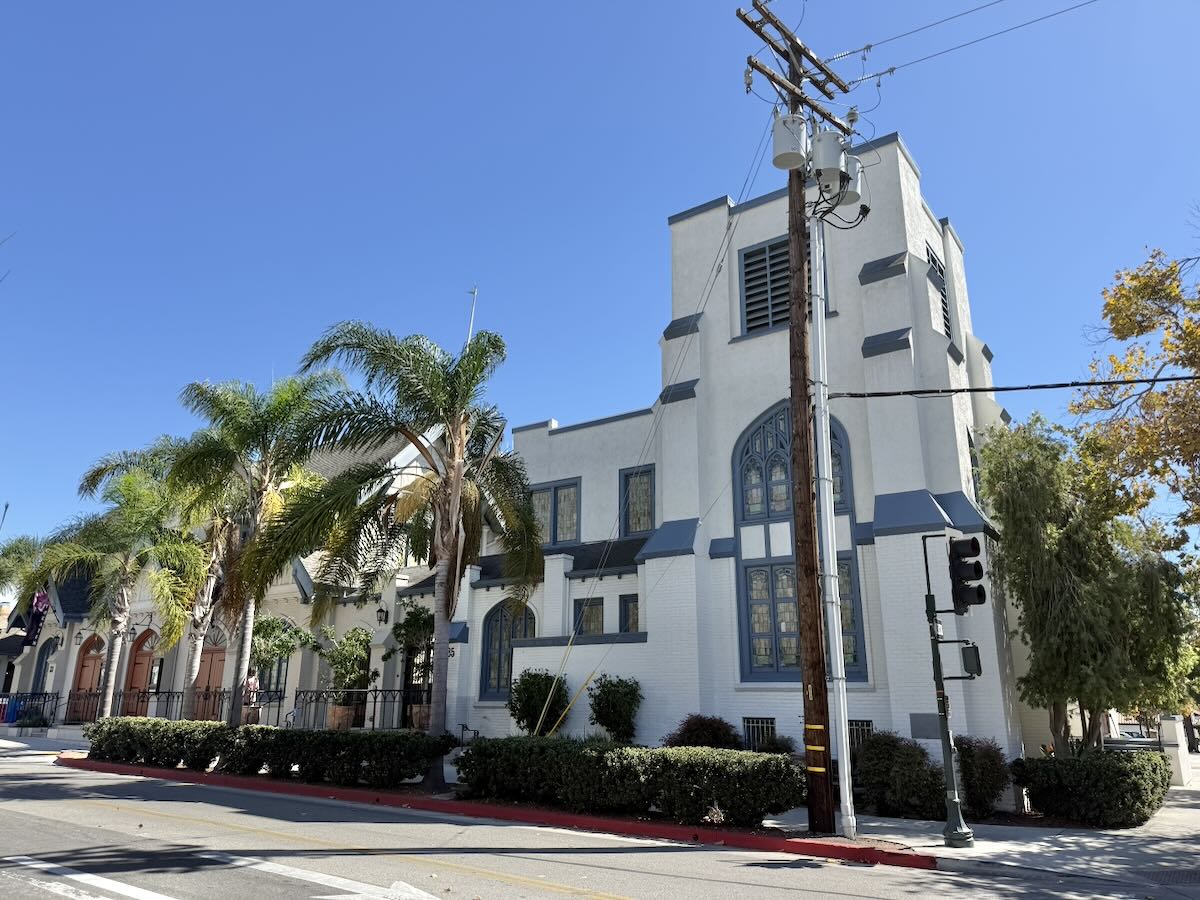
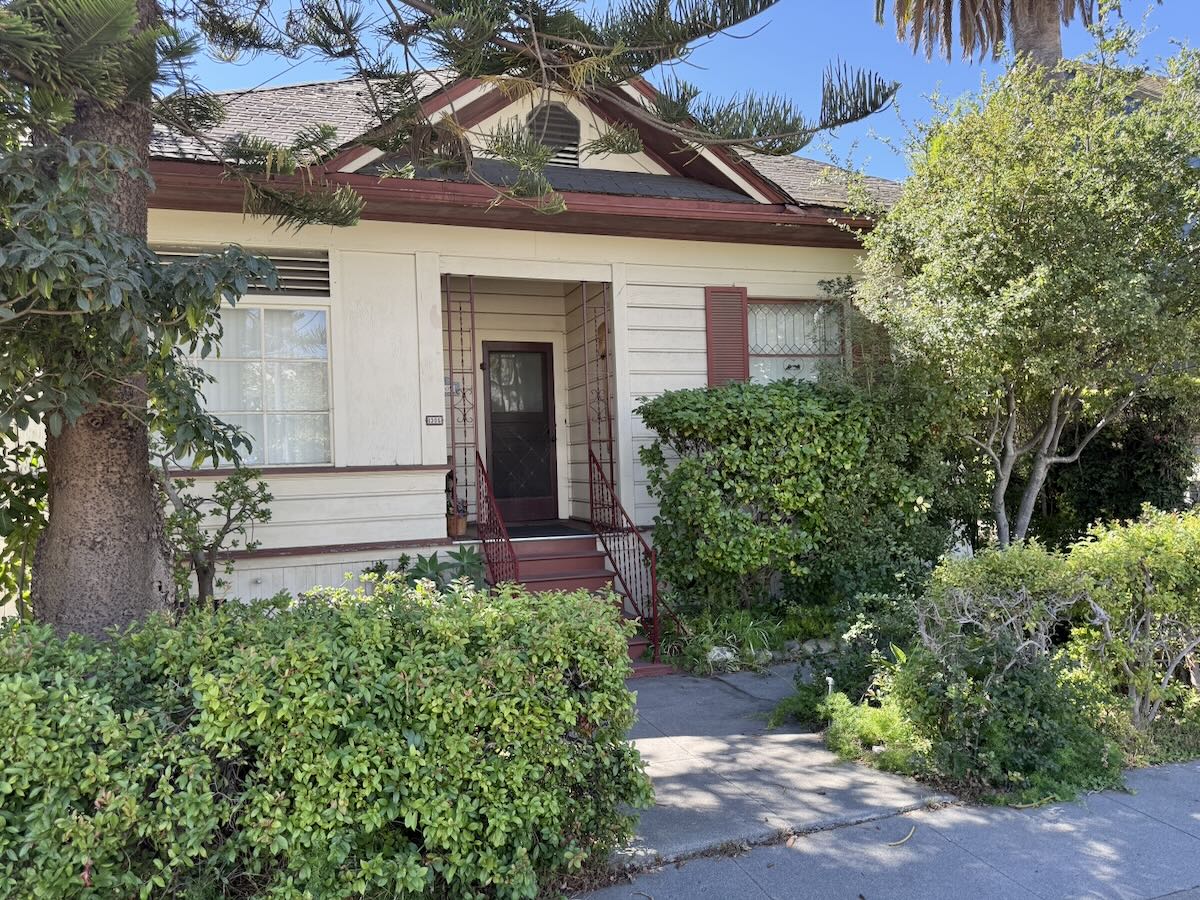
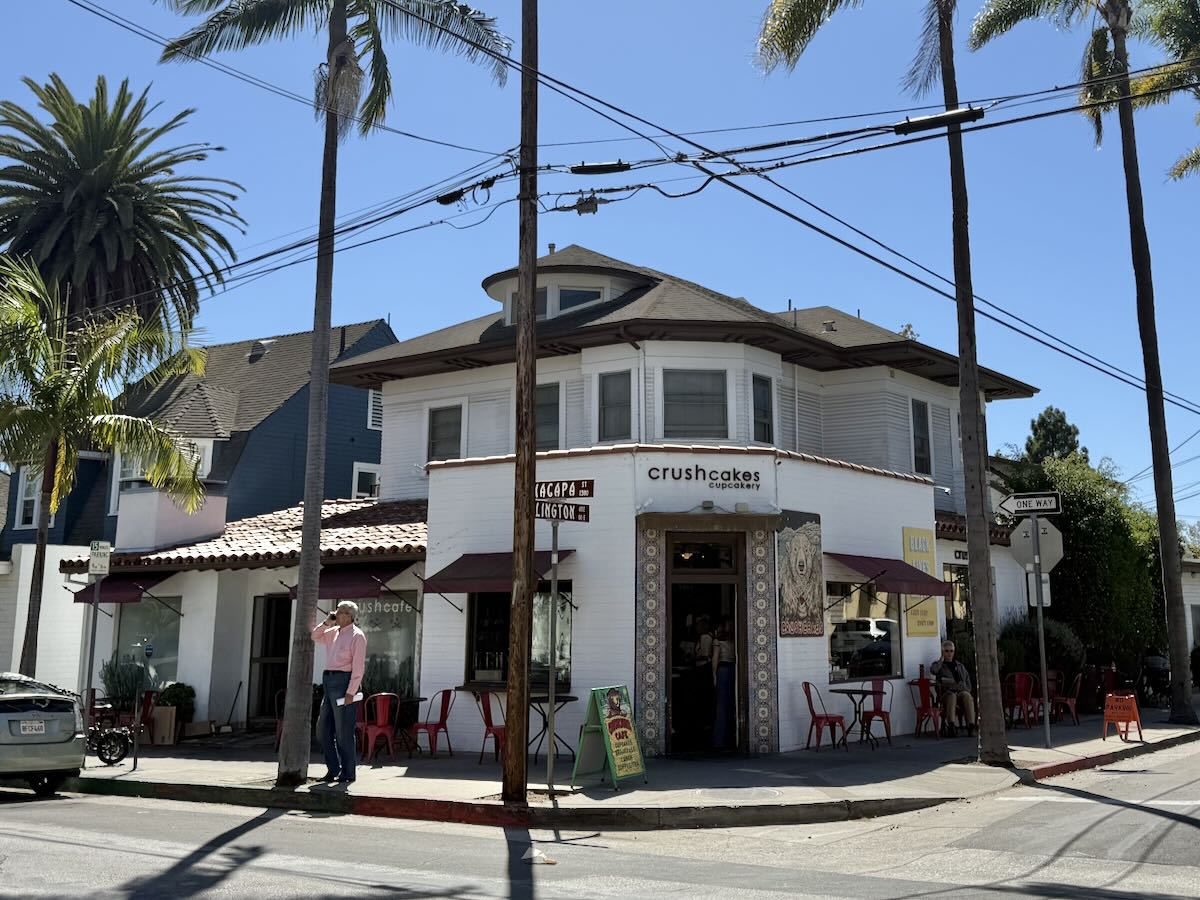
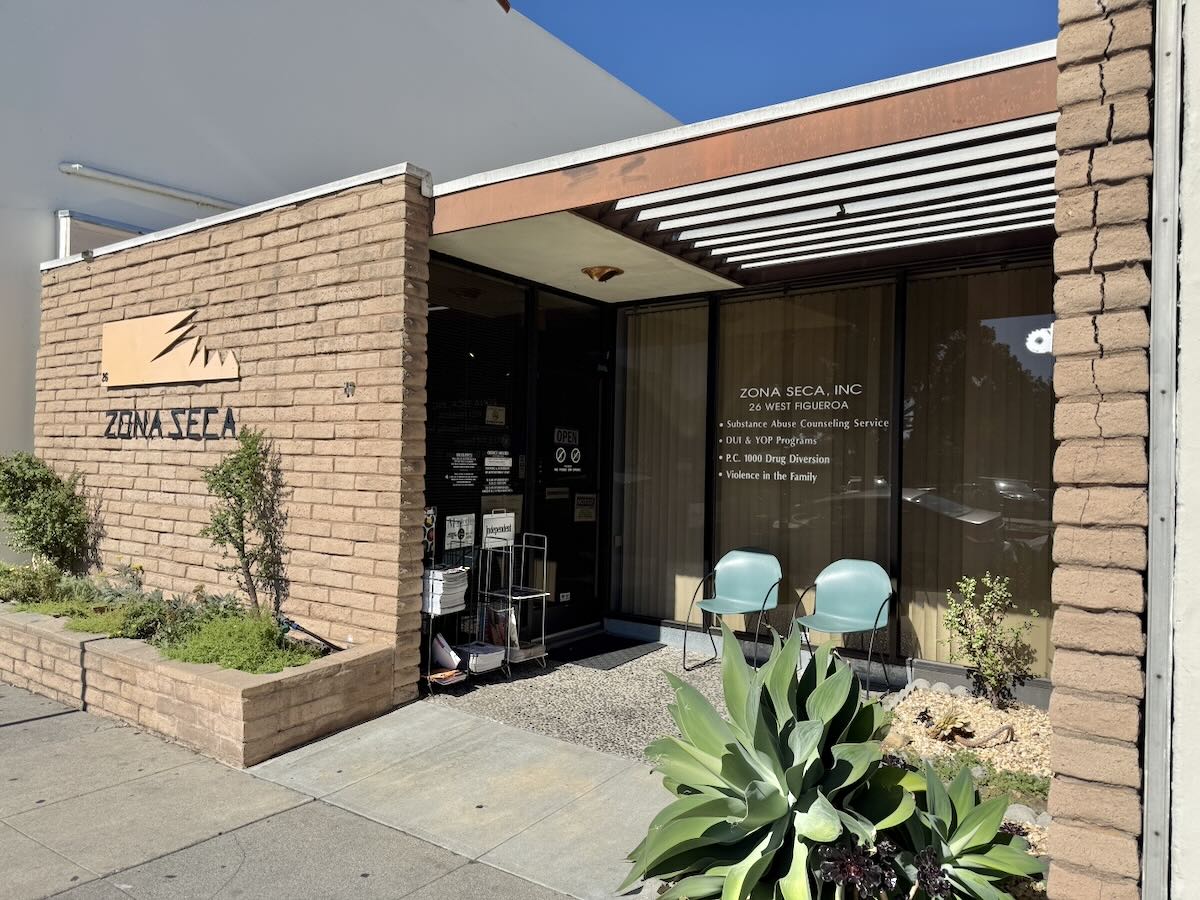
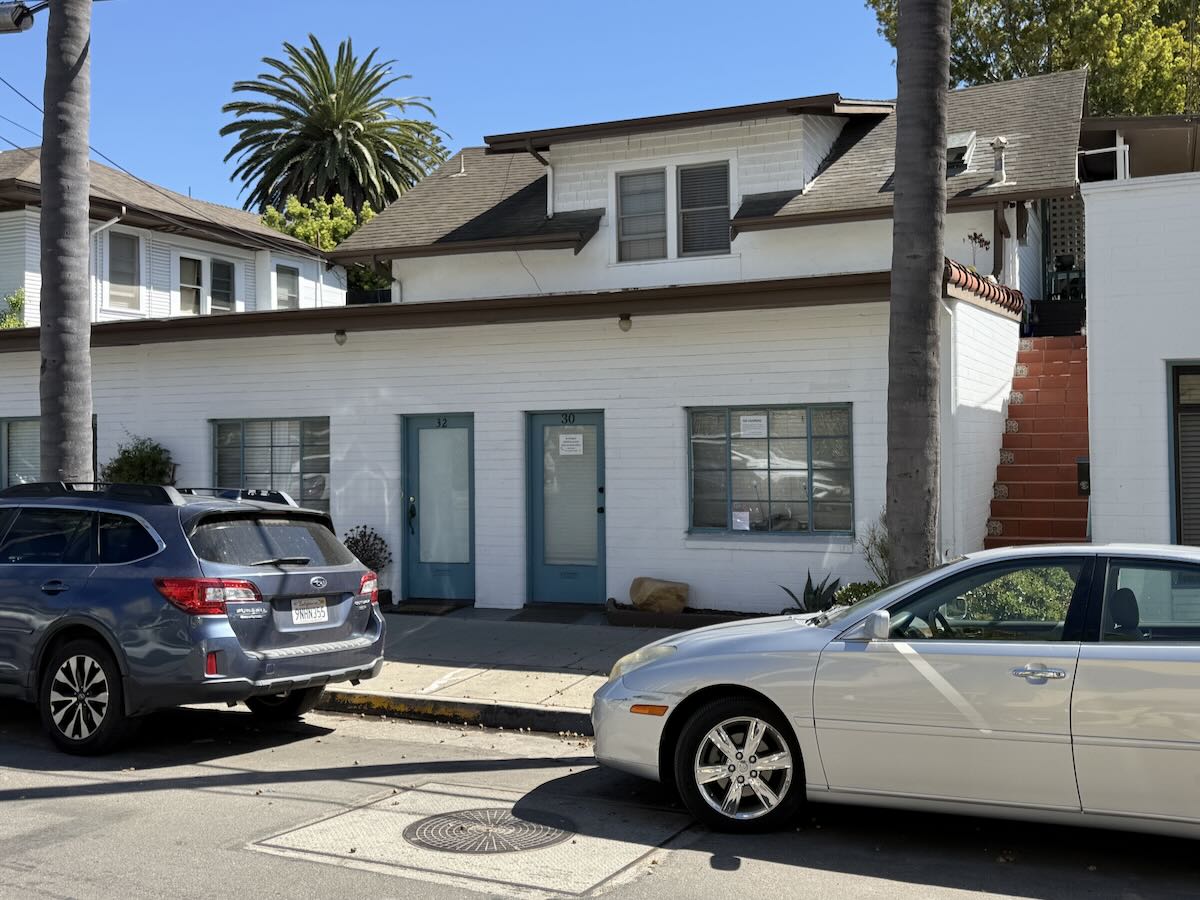 …as well as ones that technically don’t qualify because they’re just across the street.
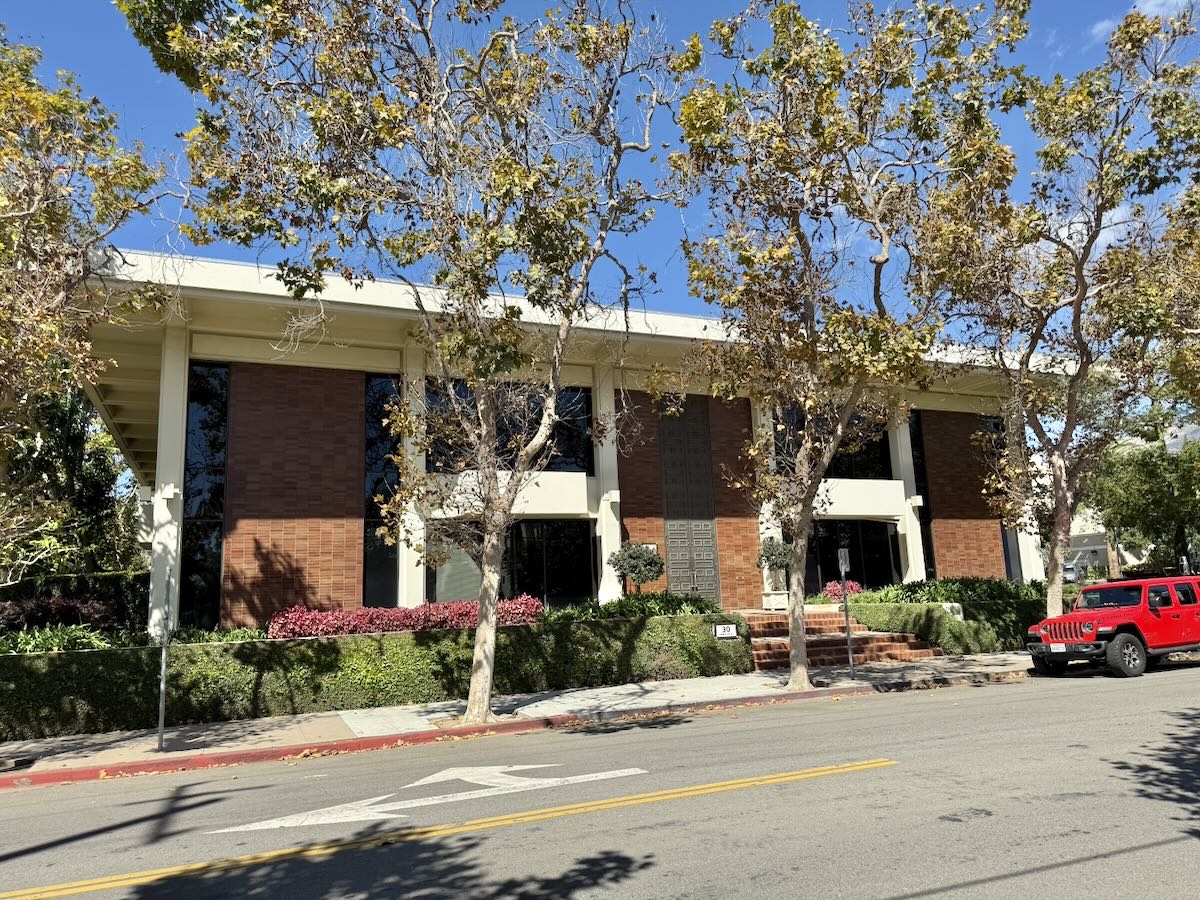
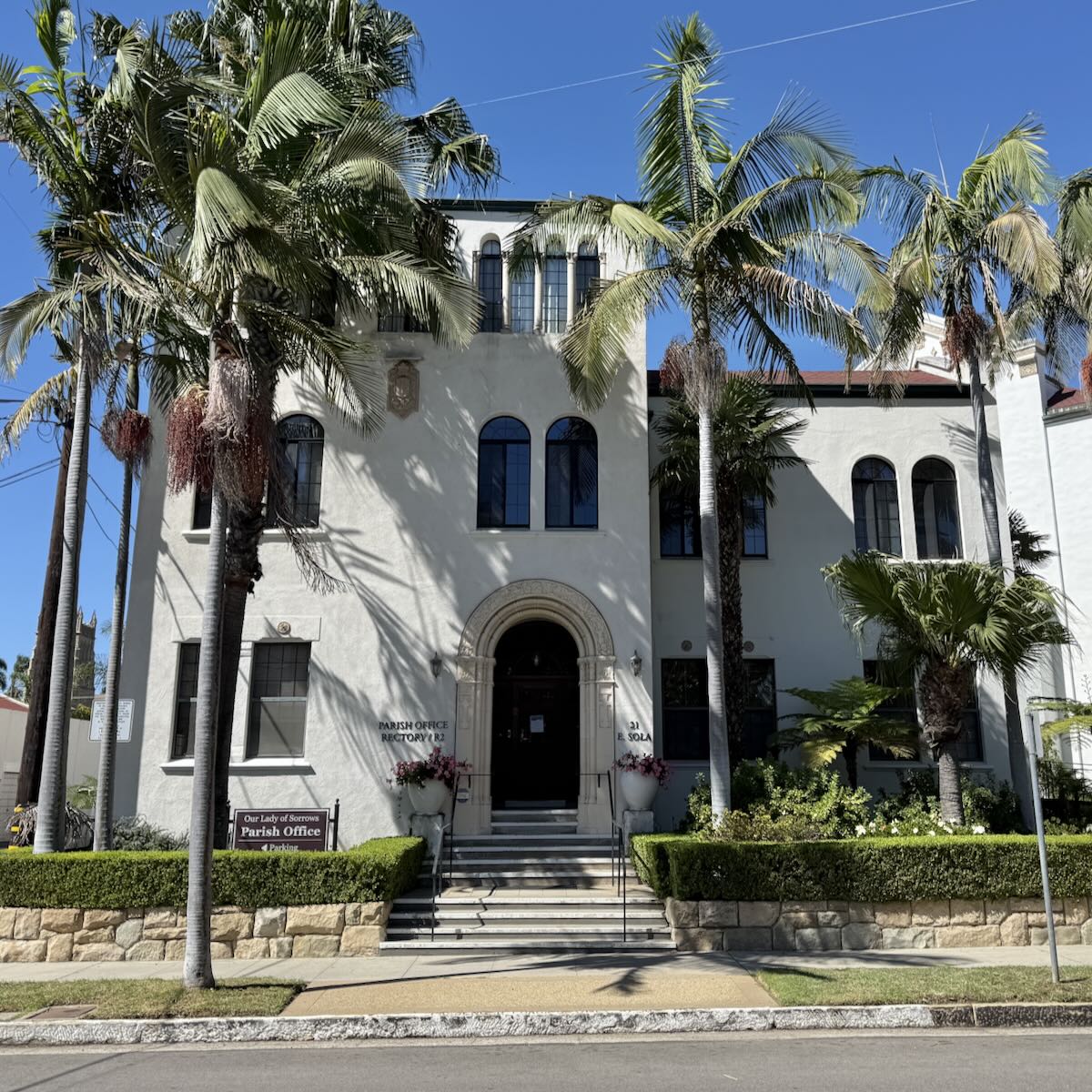
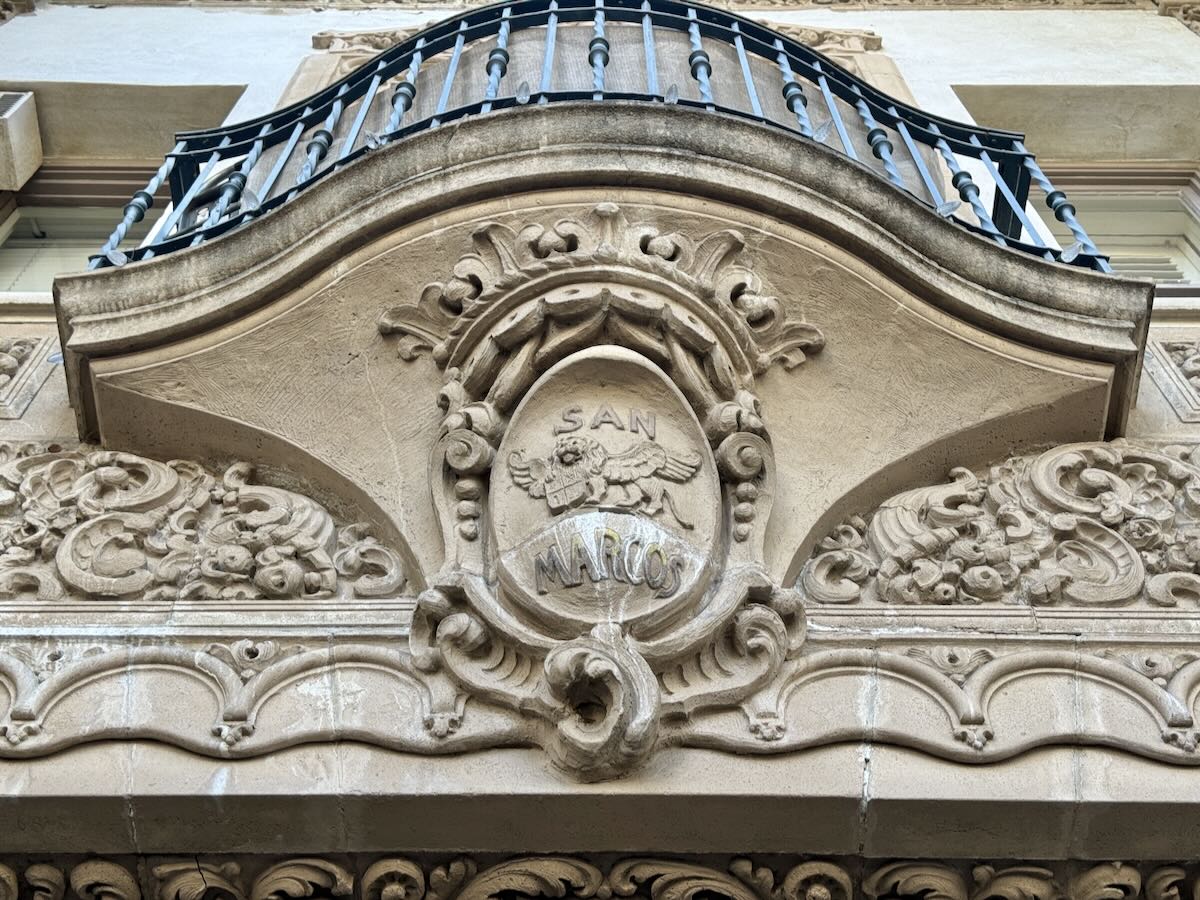
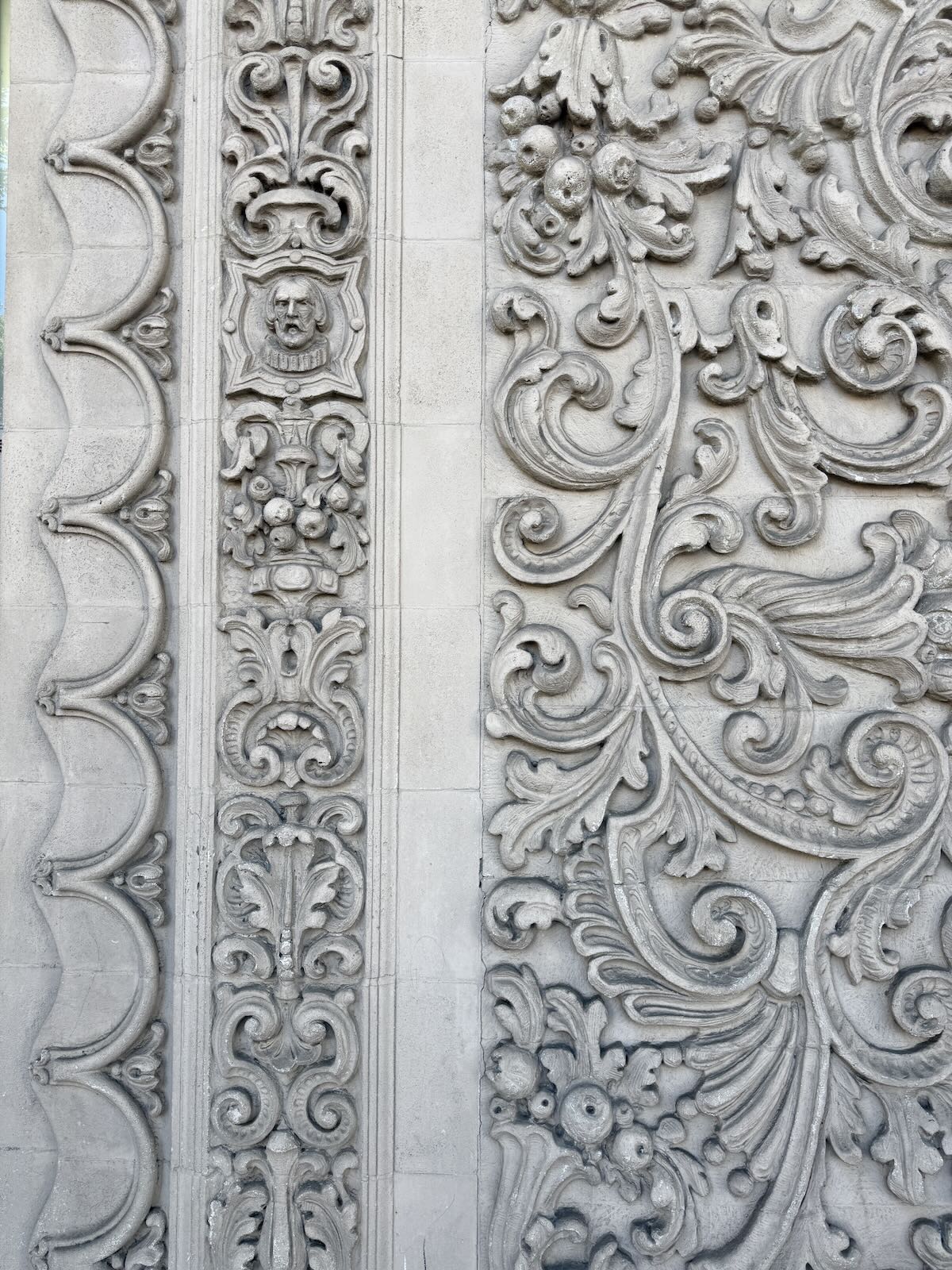
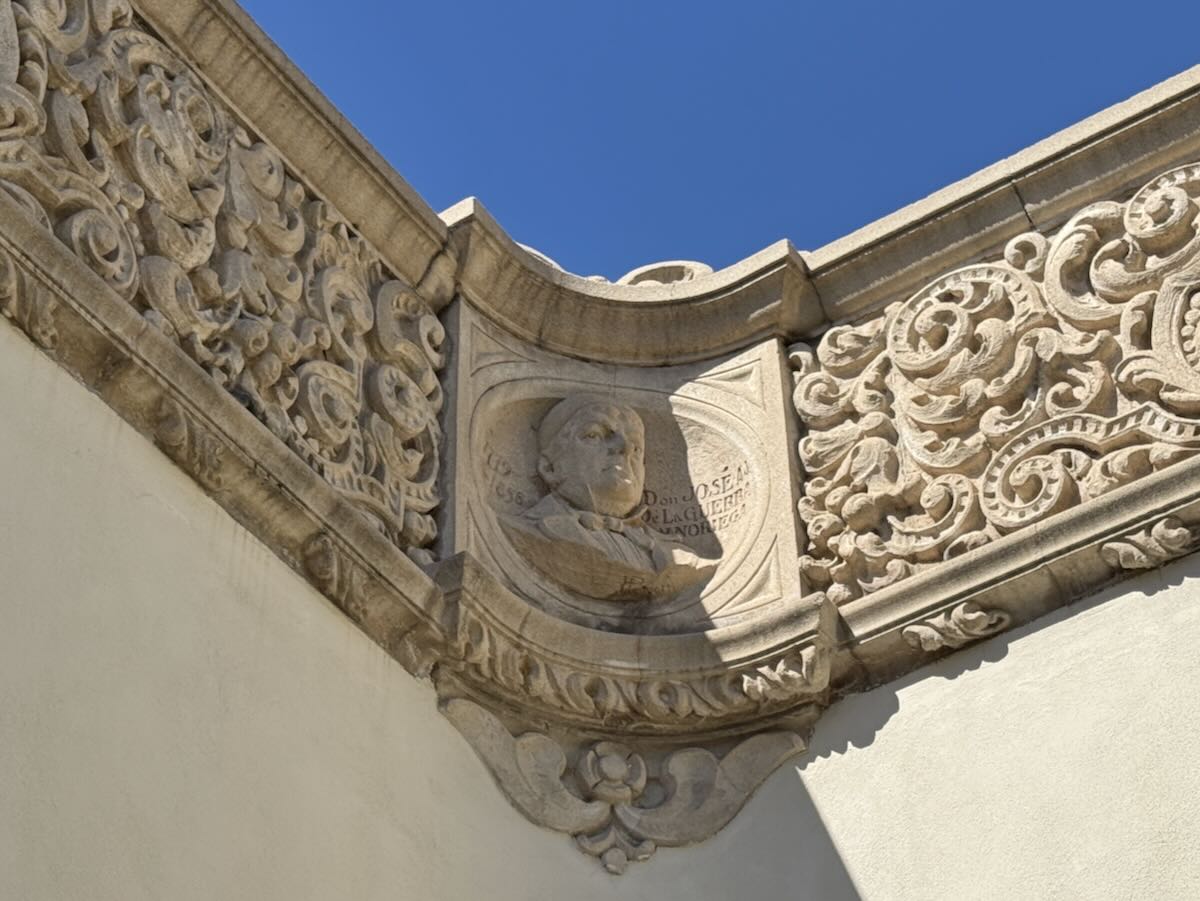
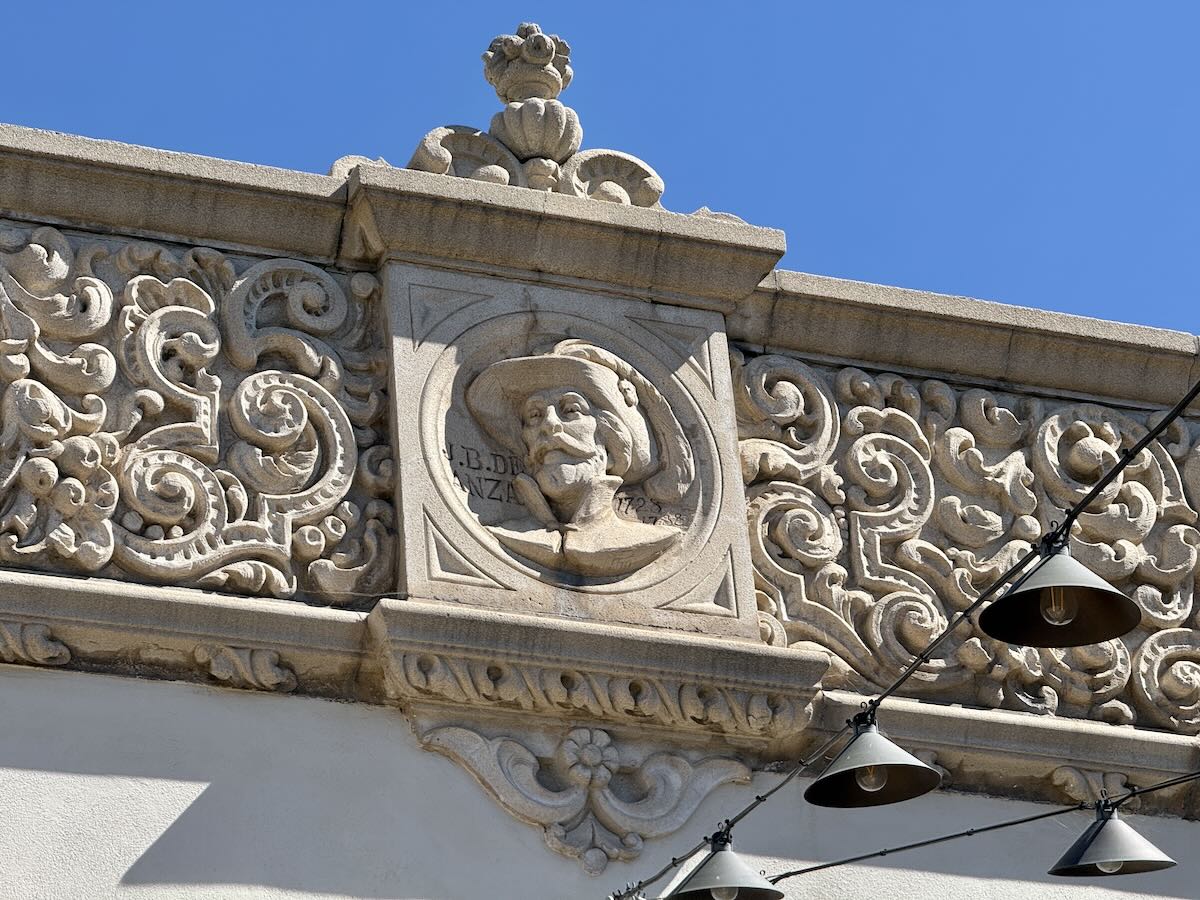
 The Arts District’s most impressive structure, to my eye, is the San Marcos Building at State and Anapamu. It wasn’t born that way, though. From the Pacific Coast Architecture Database:
The Spanish Colonial Revival San Marcos Building was built in three phases: the initial rectangular block erected for local banker John S. Hawley, a second addition on Anapamu Street creating an L-shape, and, following the calamitous Santa Barbara Earthquake of 06/29/1925, the corner portion of the building was damaged badly enough to require demolition and rebuilding. The great revivalist architect, Myron Hunt (1868-1952), and his partner Harold Chambers (1885-1971) designed the new section of the building and its Spanish Baroque—Churrigueresque—ornamentation surrounding the main building entry. Hunt and Chambers also reduced the height of the building from four stories to two to make it less vulnerable to swaying. […] The City of Santa Barbara Historic Landmarks Commission stated: “The rectangular storefronts on Anapamu Street with glass tile transoms remained unchanged from their appearance before the earthquake. Although the San Marcos building was one unified structure, Hunt and Chambers created the illusion of three buildings fronting State Street by designing three separate and unique facades along State Street and the older portion on Anapamu. The older portions were differentiated from the 1926 construction because the roofline was slightly lower and Churrigueresque styling was absent.”
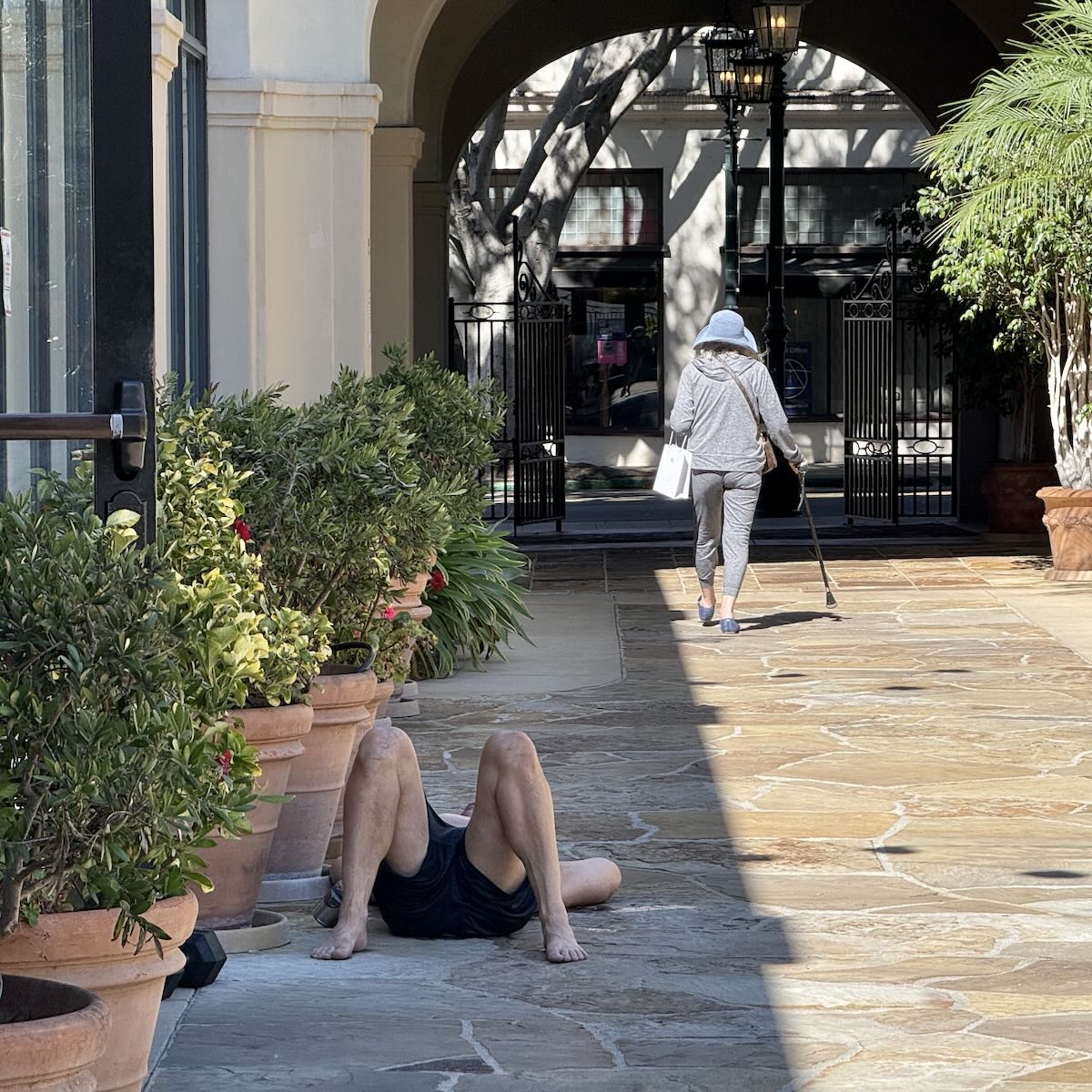
 This guy got unlucky.
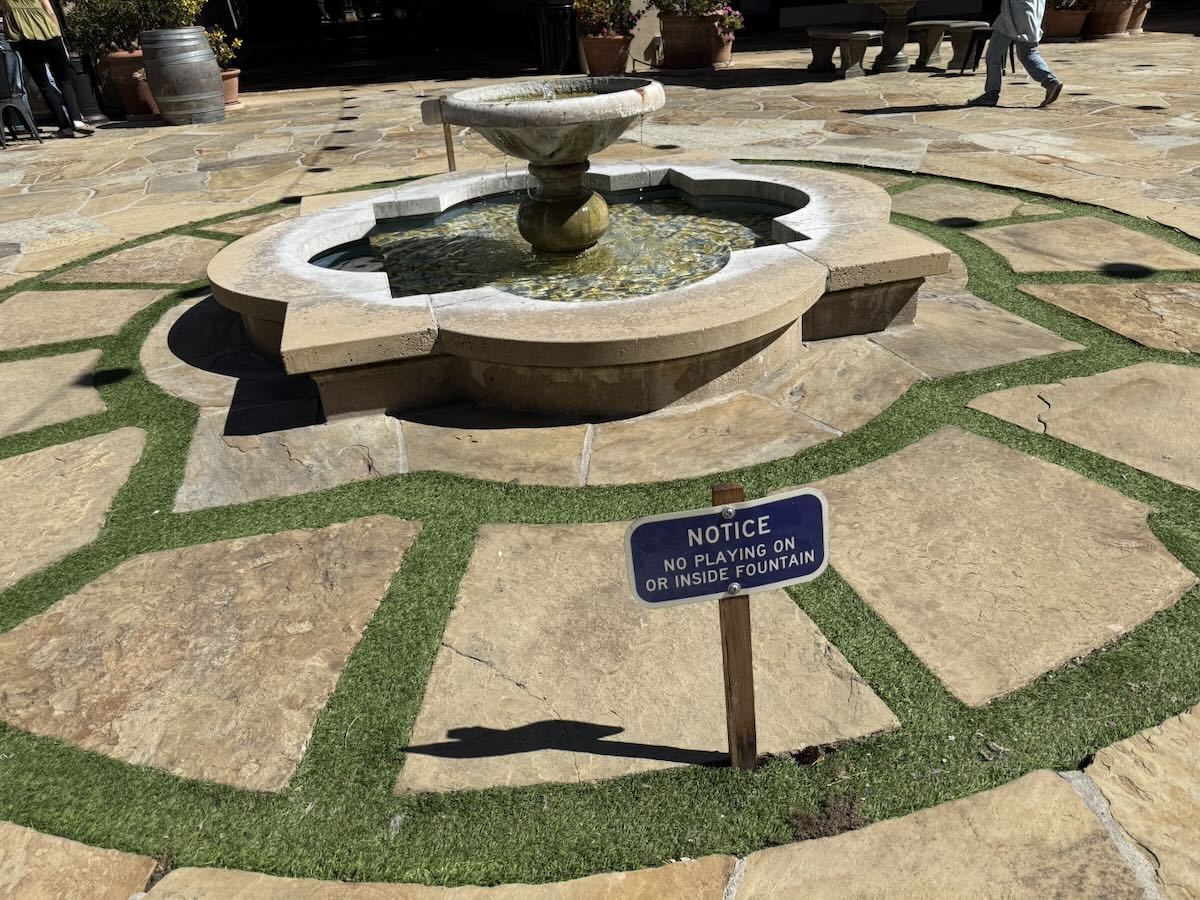
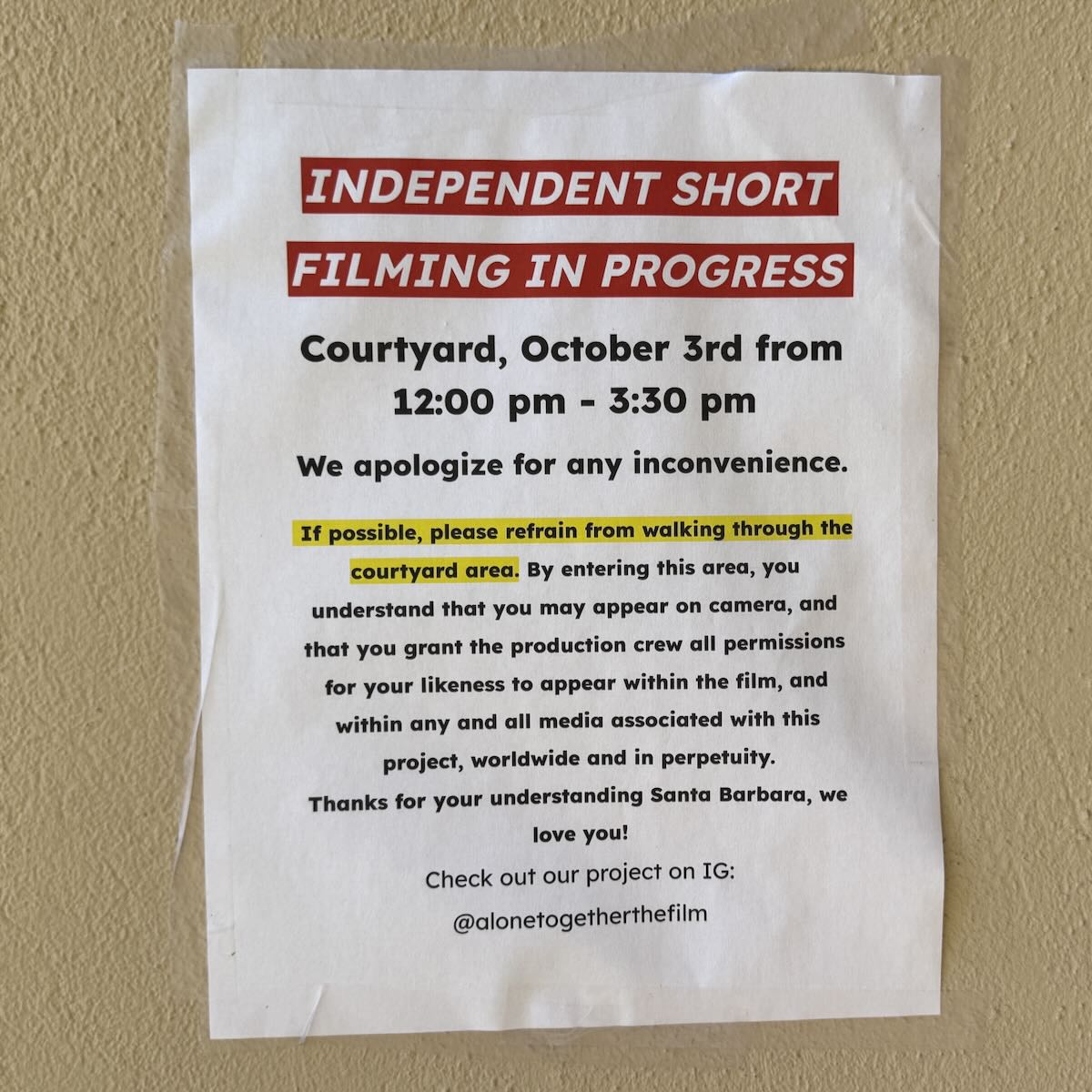
 A victim of hot yoga was recovering in the courtyard. (Don’t even think about cooling off in the fountain, Go-Go’s style.) Here’s hoping he avoided being an inadvertent extra in Alone Together, which “takes place over the course of an everyday group of people’s usual day, unfolding in two universes; one occupied by smartphones the other without.”
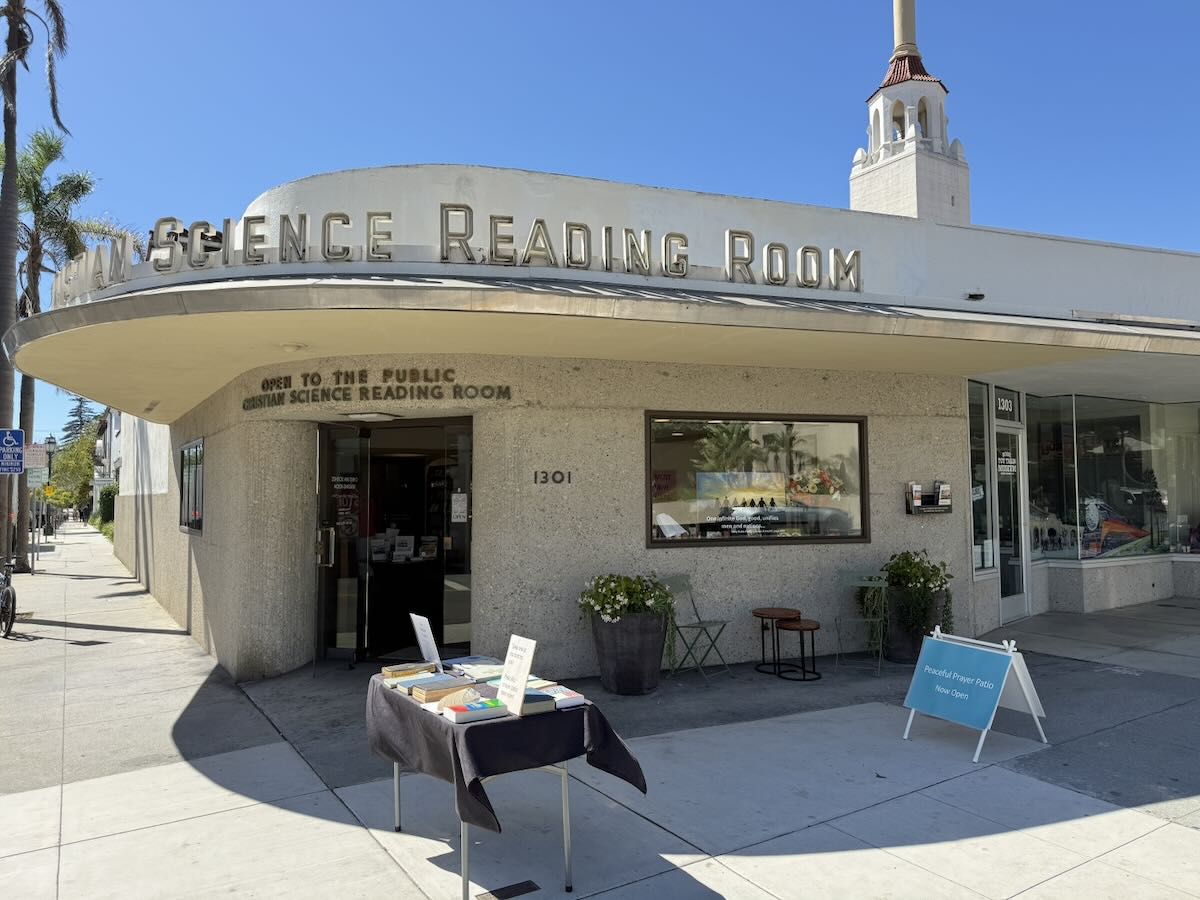
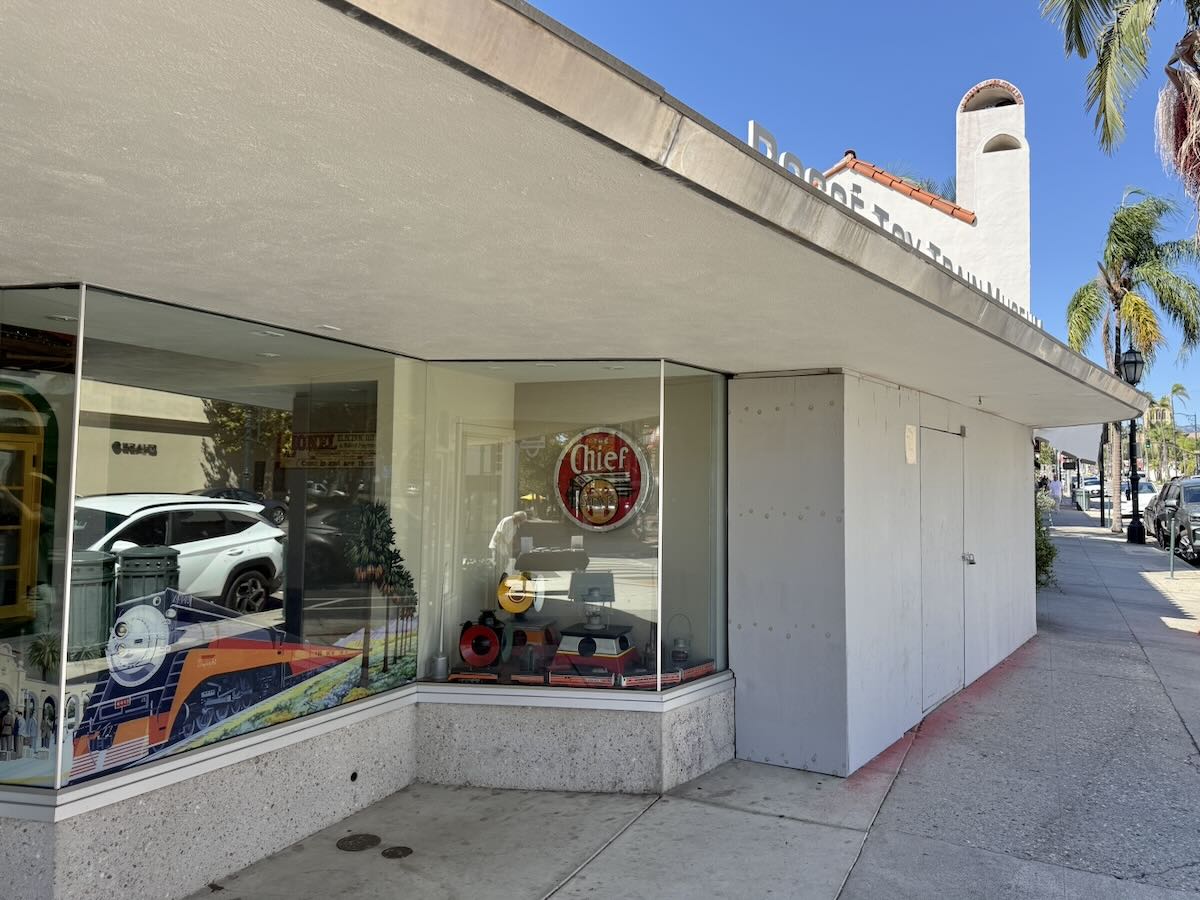
 My favorite building is the Streamline Moderne one at 1301 State Street (at Victoria), designed by Kem Weber and Roy Cheesman and home to the Christian Science Reading Room and Bossé Toy Train Museum. It’s yet another example of how the architecture that defines Santa Barbara extends far beyond Spanish Colonial Revival. I should’ve gone inside, but I just couldn’t make myself do it.
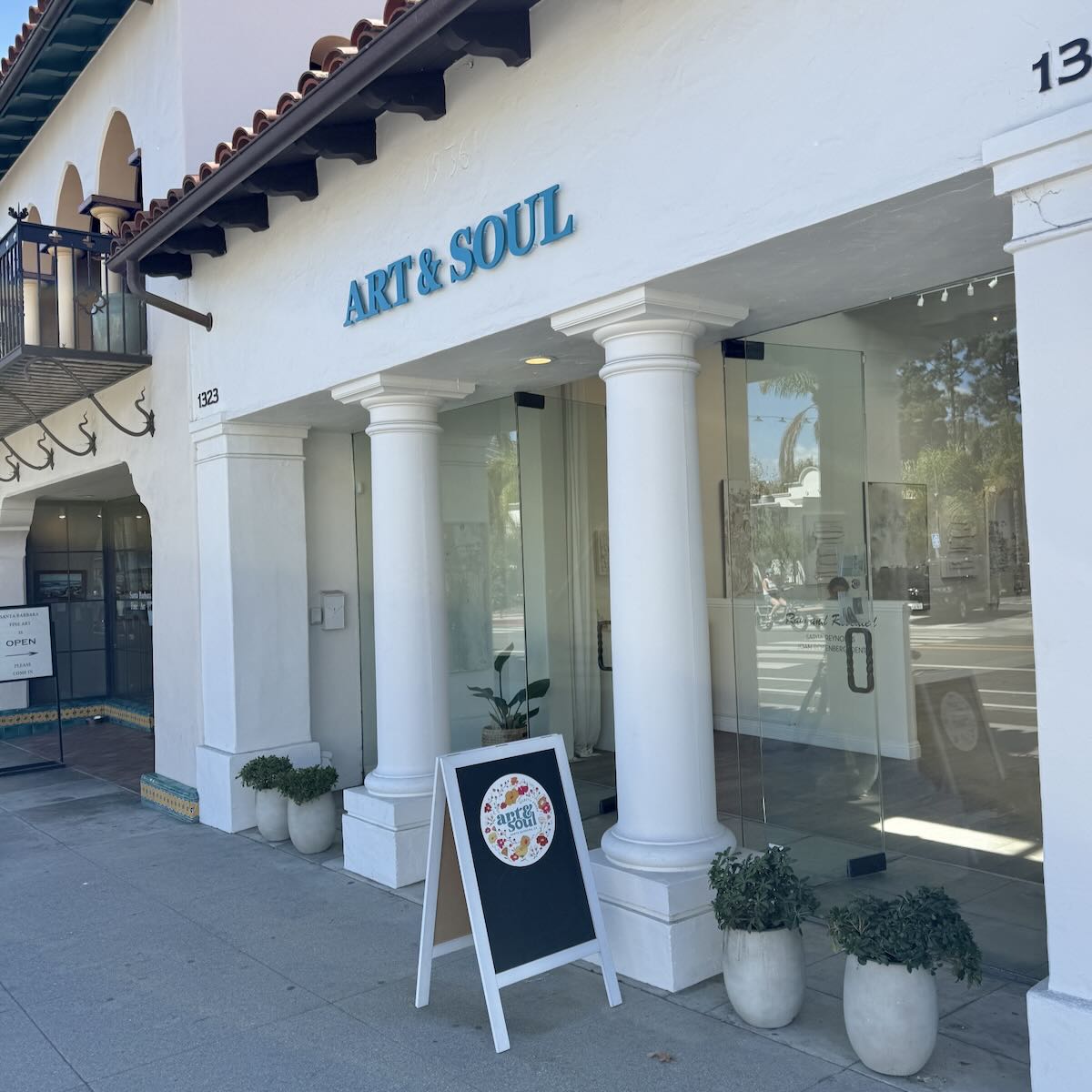
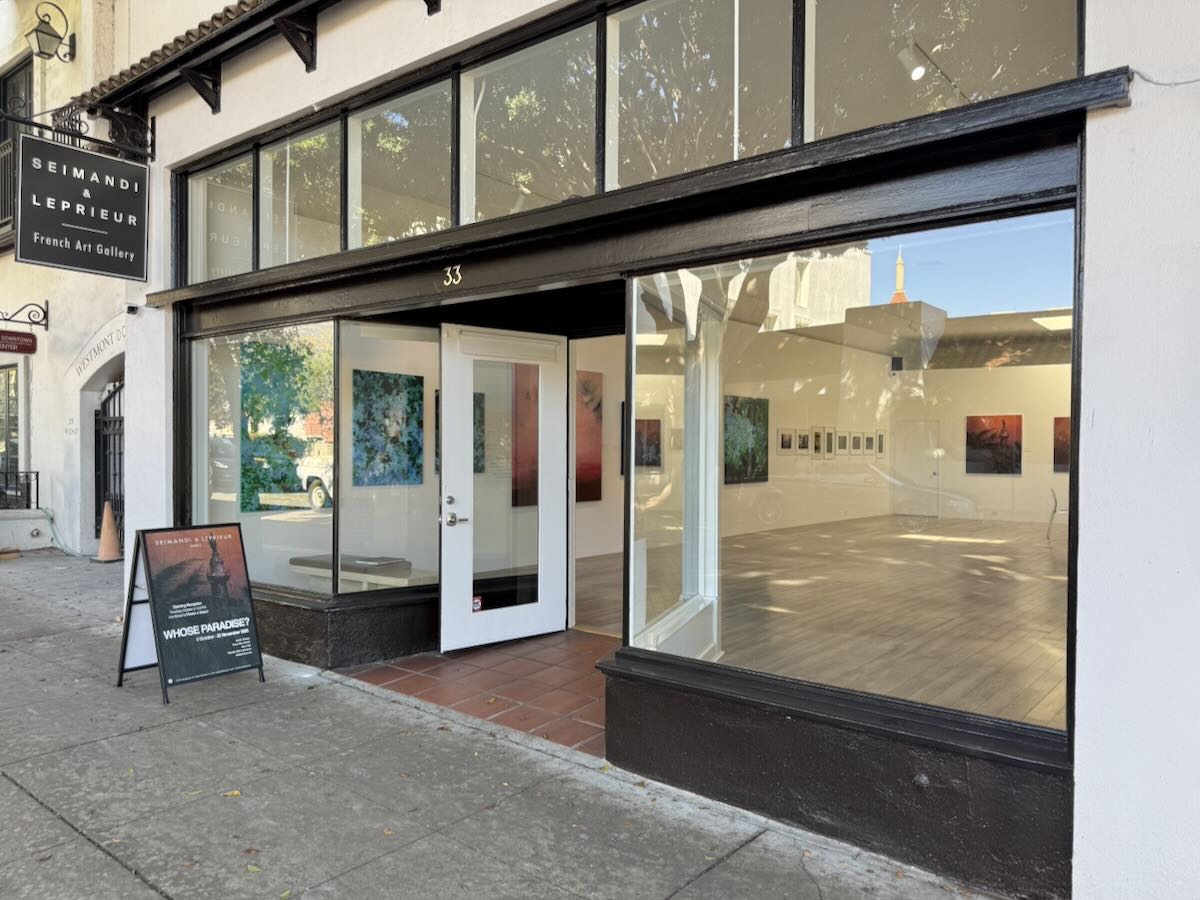
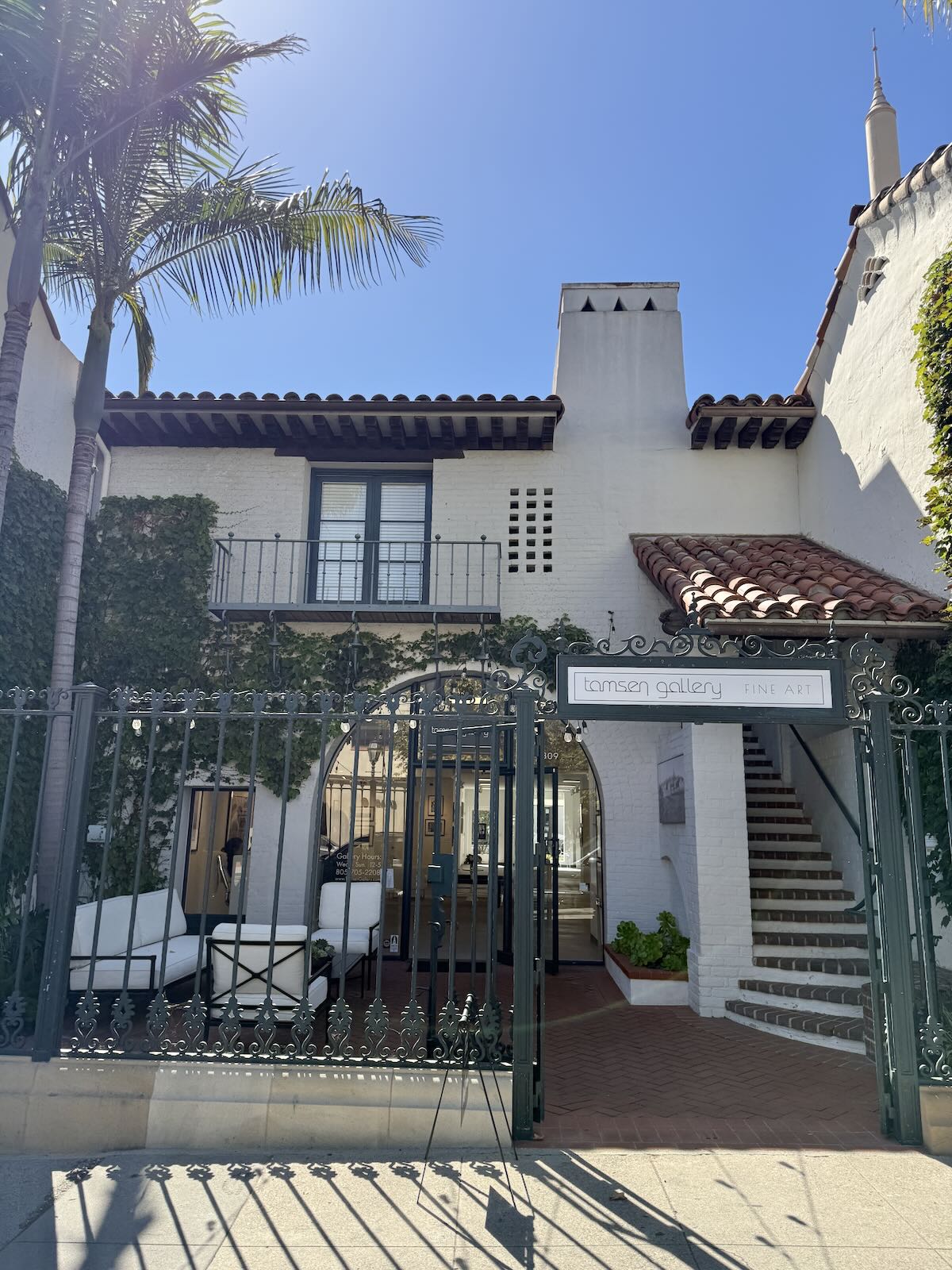
 As you’d expect from the Arts District, there are galleries, including more than are pictured.
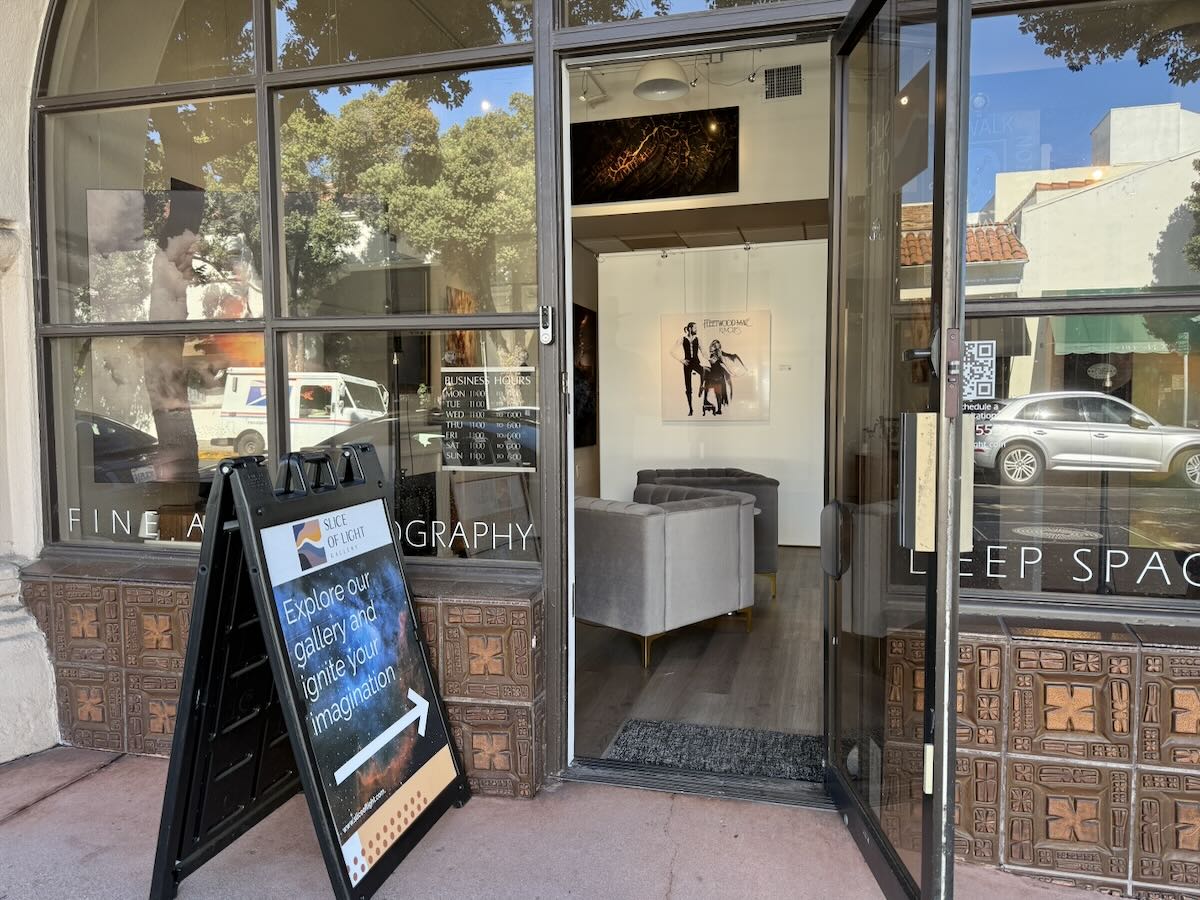
 While living in New York, I’m not sure I ever heard Fleetwood Mac. Here, however, I come upon the band’s music all the time. Even young people play it. Is this just a Santa Barbara thing, or is the band having a moment all over?
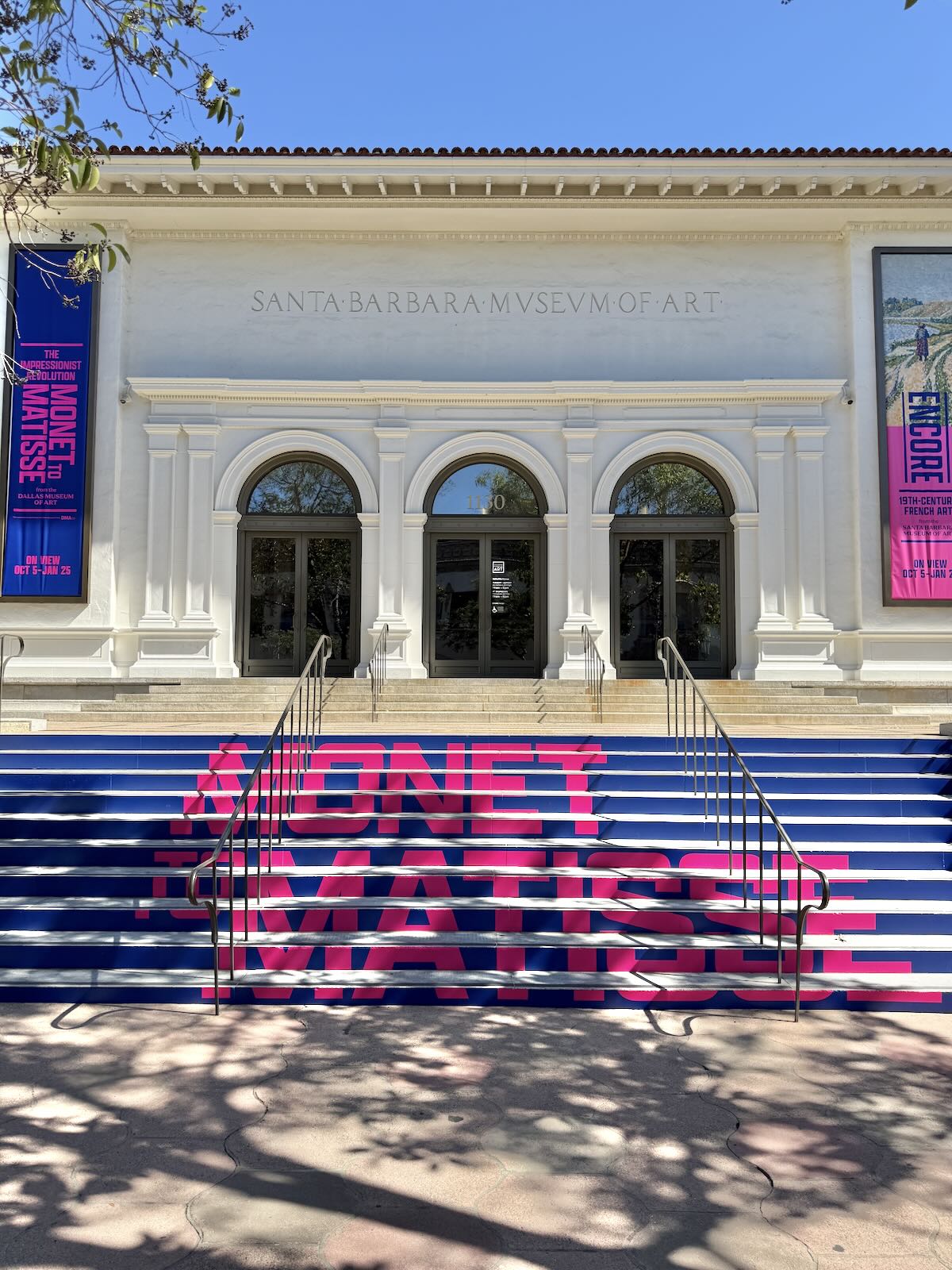
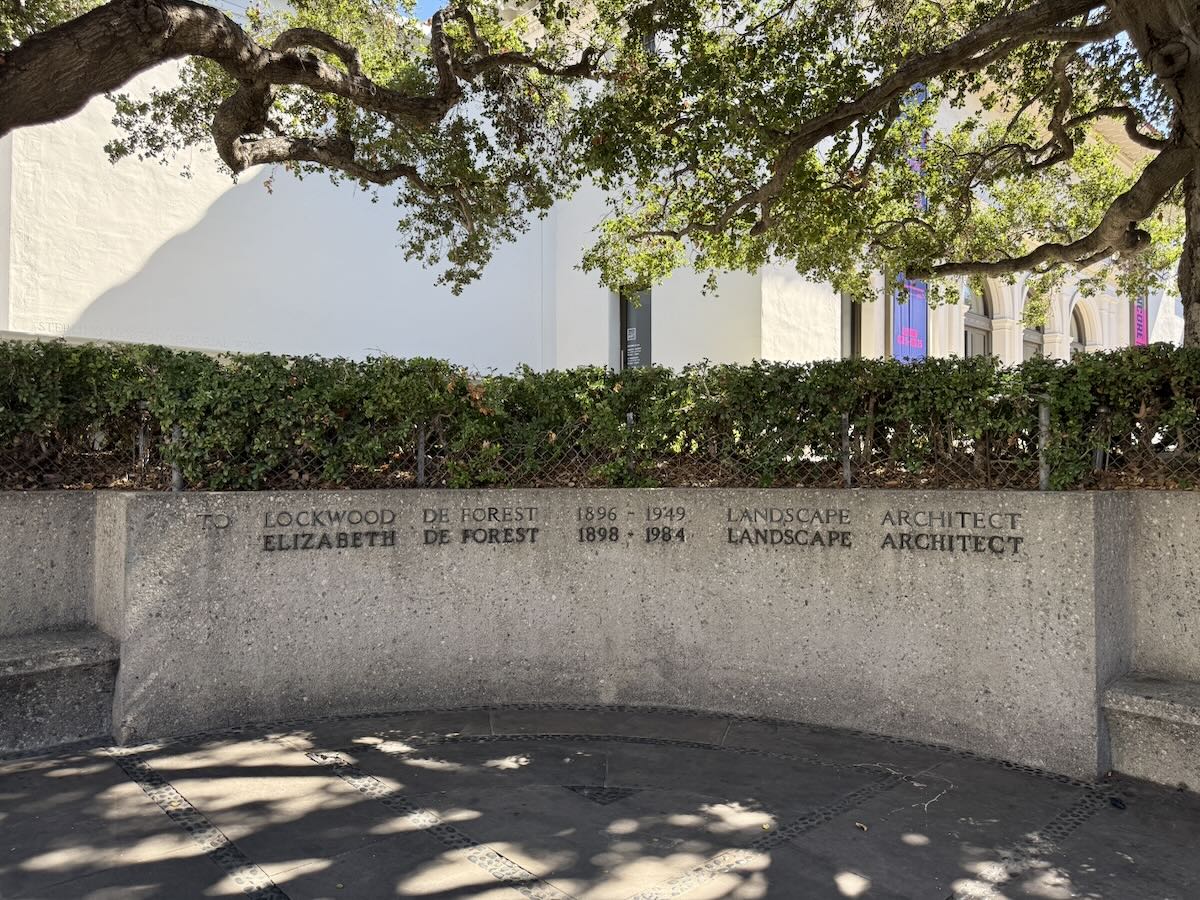
 There are also museums, most notably the Santa Barbara Museum of Art, currently home to a big Impressionist show. I love the juxtaposition of the old-fashioned building and the modernist retaining wall/bench in front. Does the faint “to” in front of the de Forests’ names on the corner mean that corner was dedicated to them?
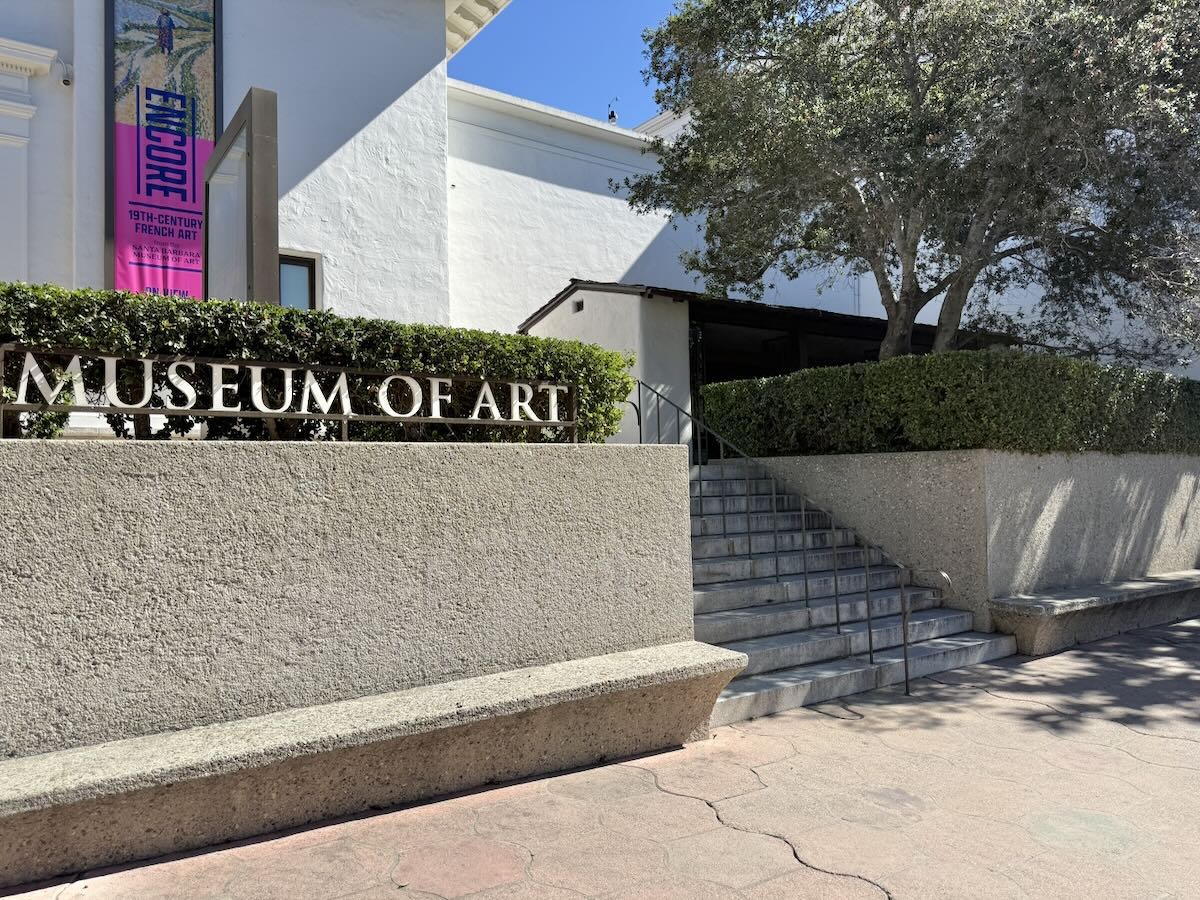
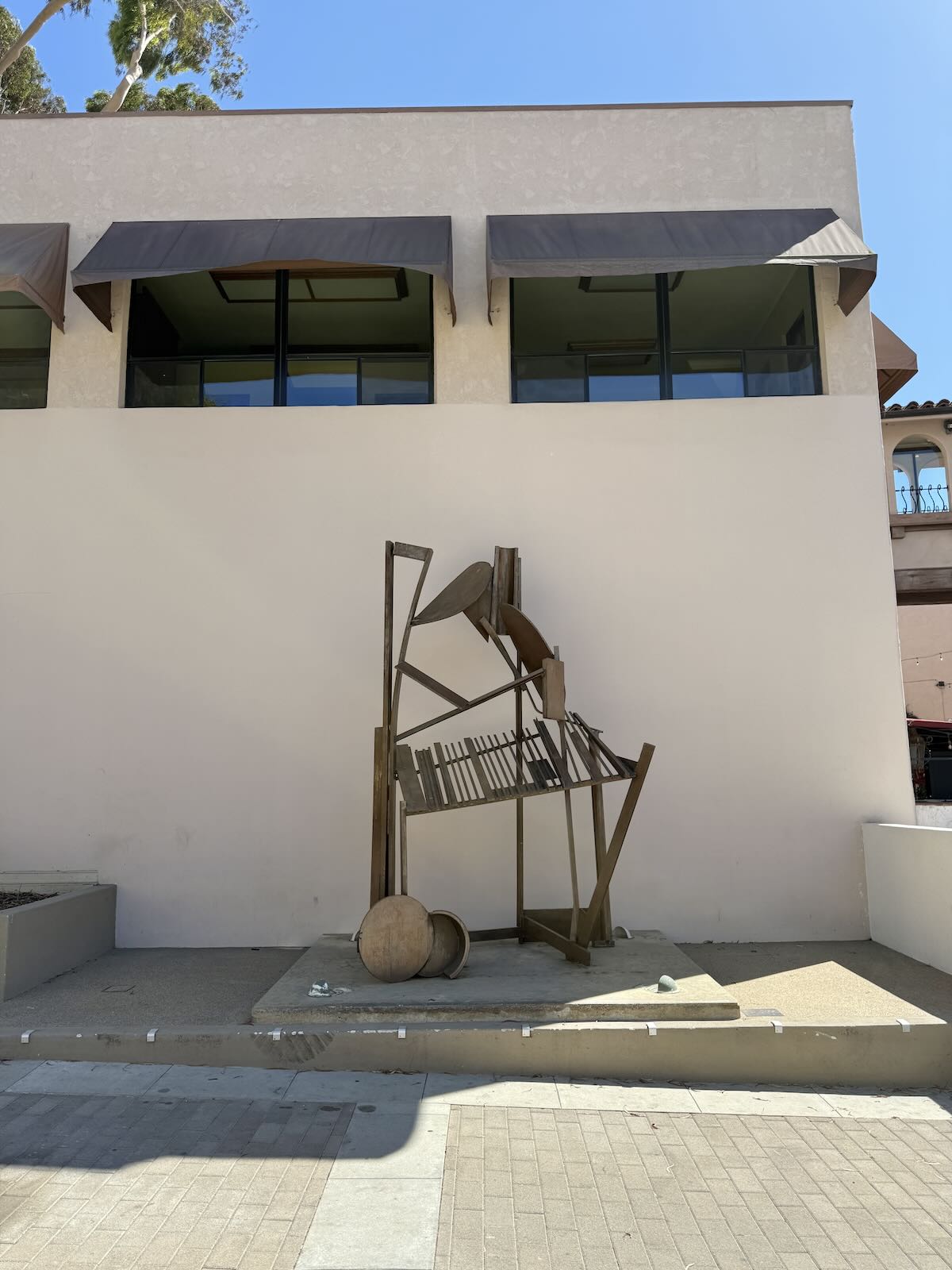
 Anthony Caro’s “Intermezzo” sculpture is around the back, where it risks being mistaken for trash. But then that area is a bit of a mishmash, with La Arcada, the SBMA, and the Santa Barbara Public Library meeting up in higgledy-piggledy fashion.
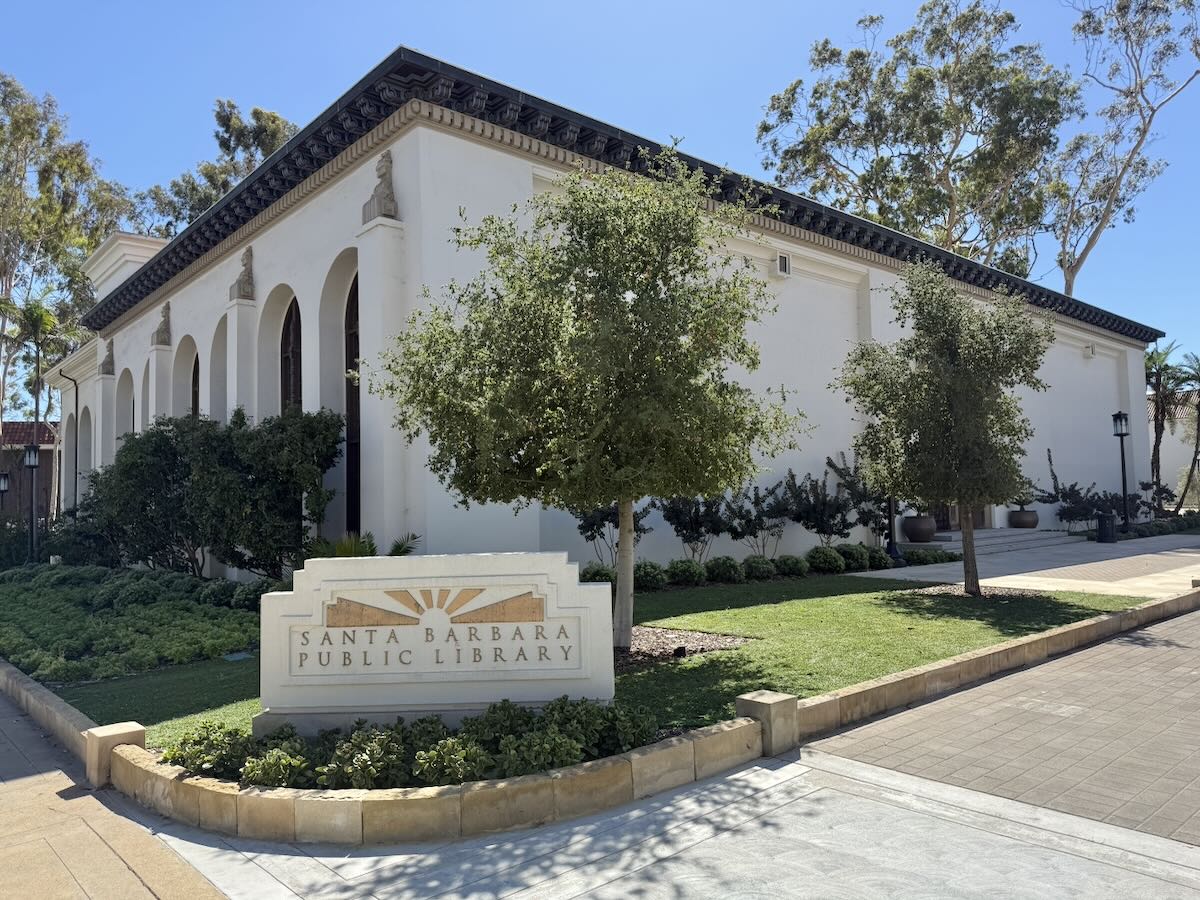
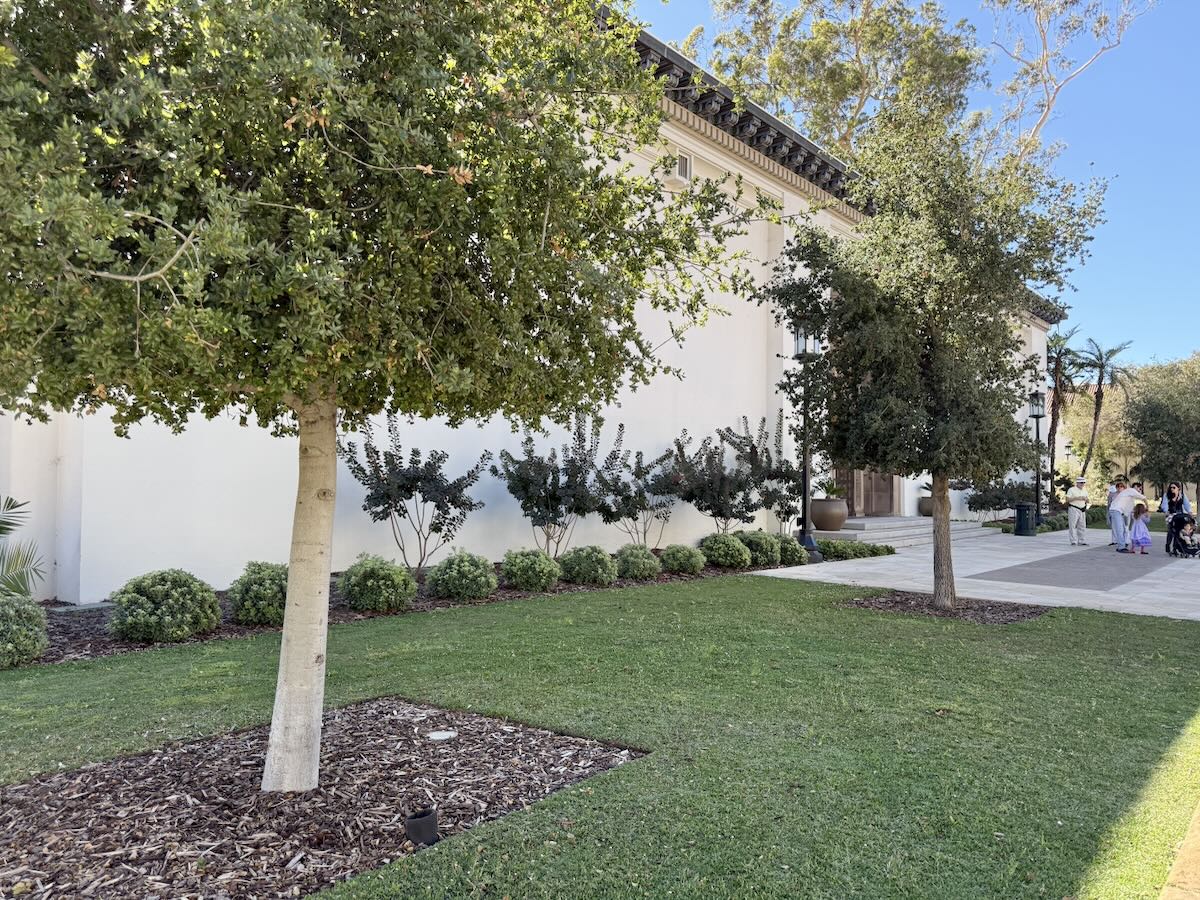
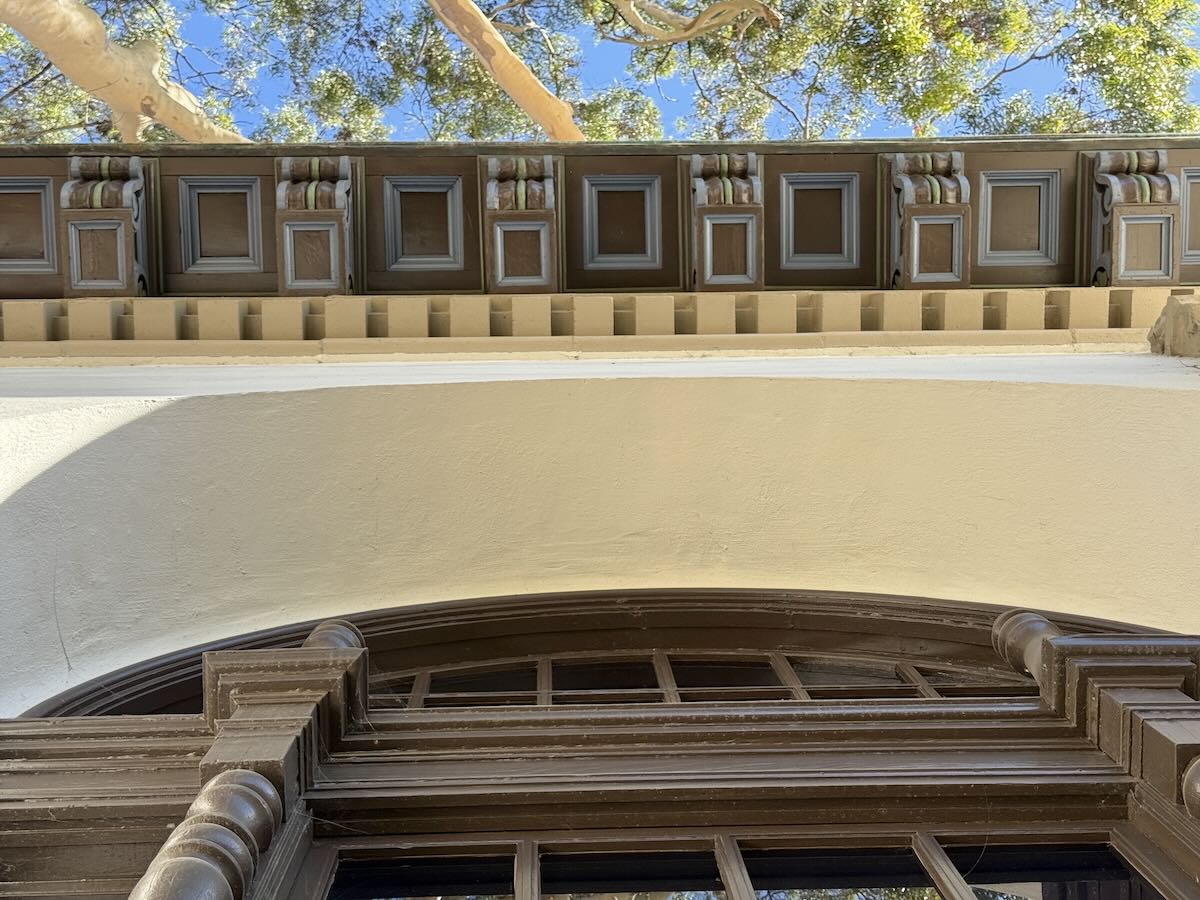
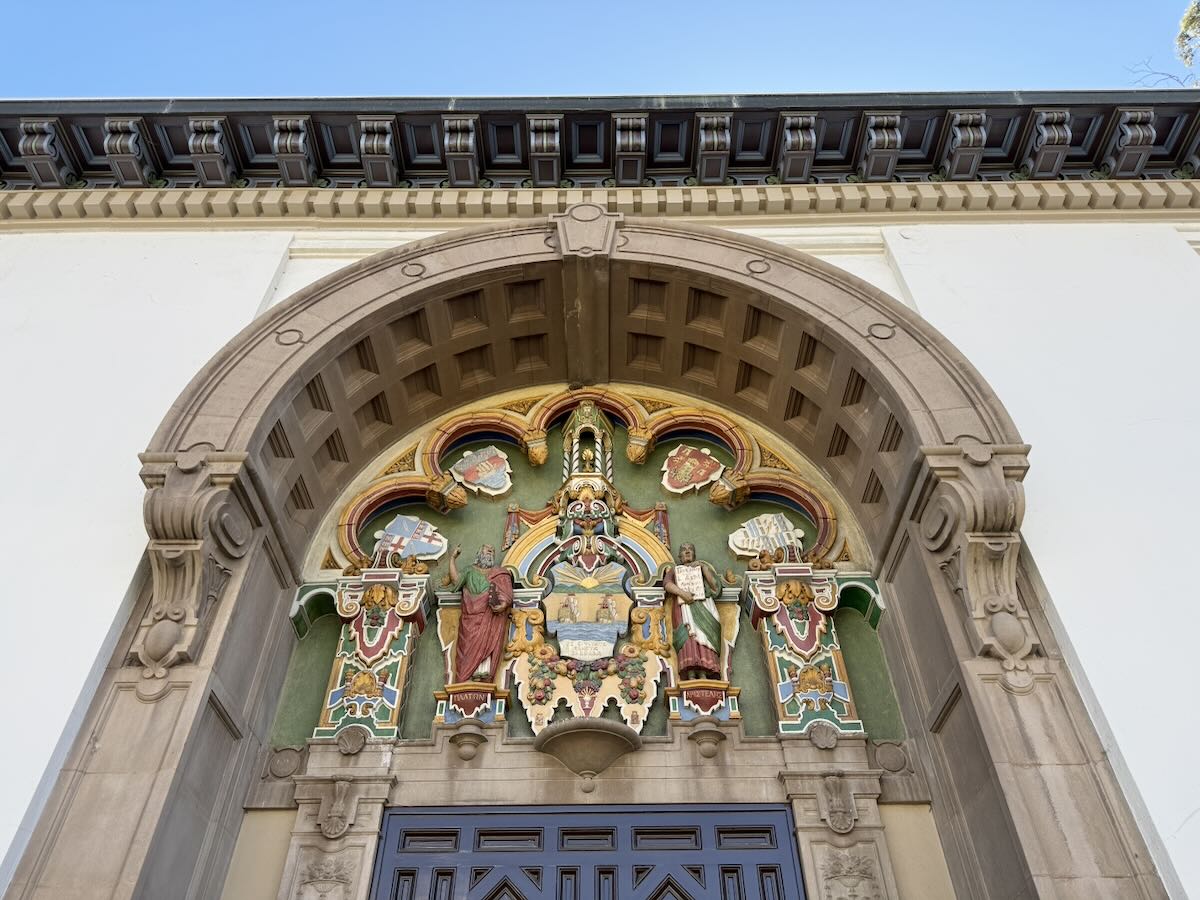
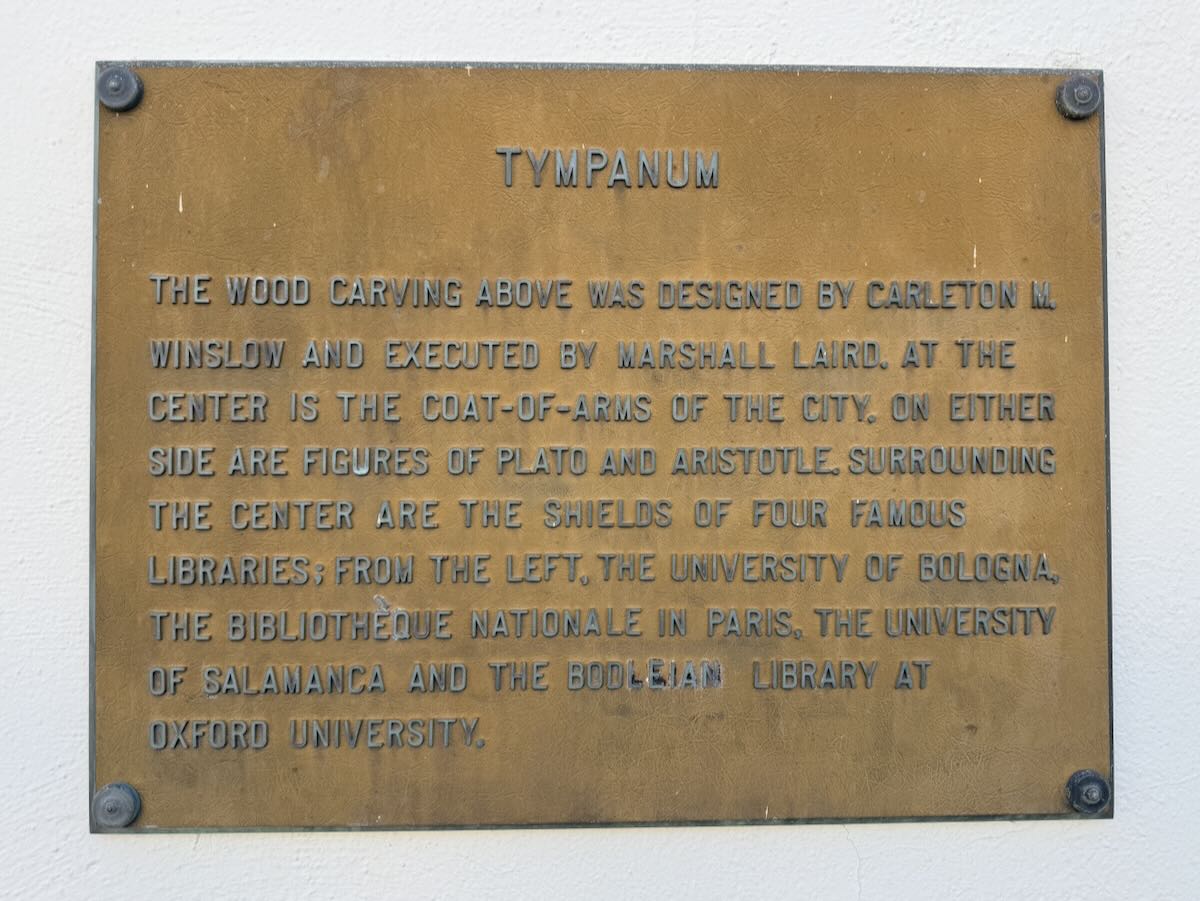
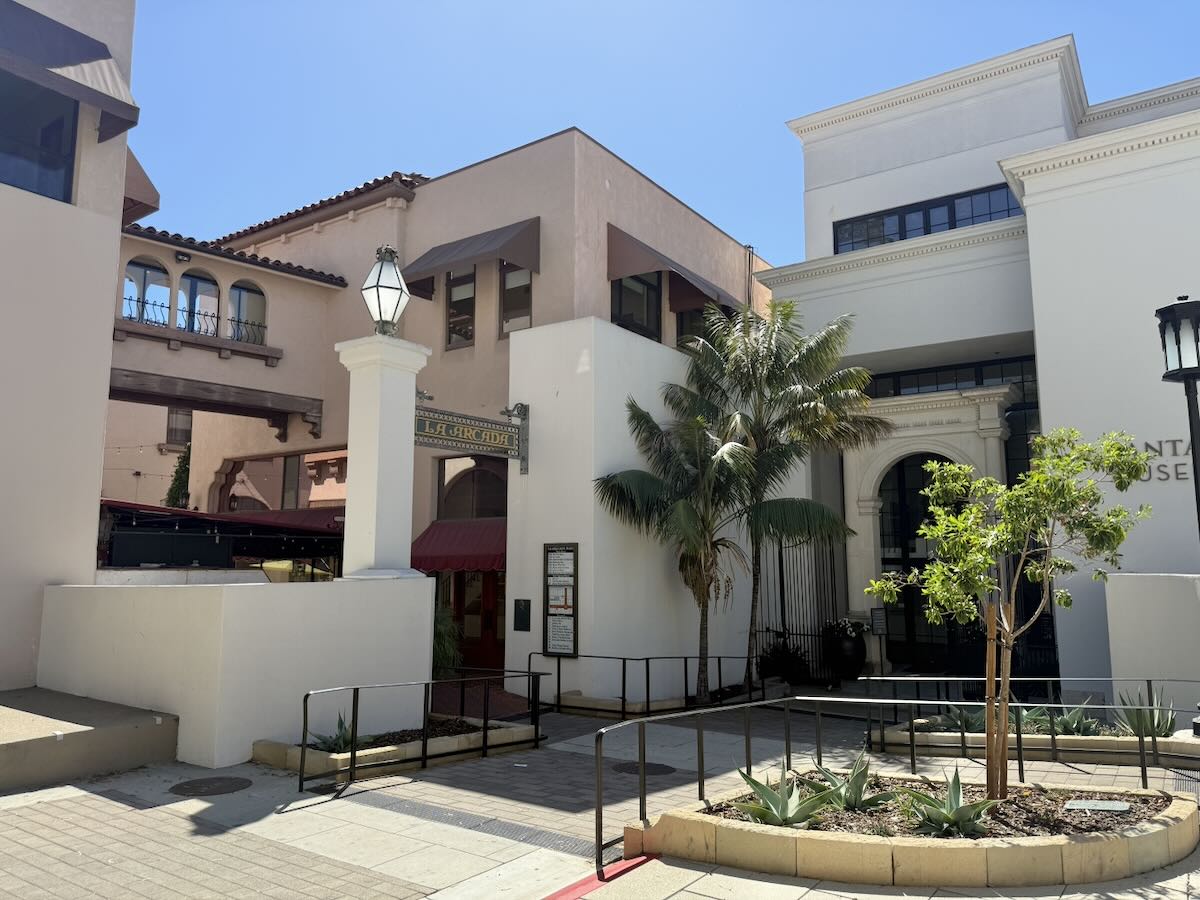 Speaking of the library, it’s a dazzler. The ground cover in front appears to be kurapia, which we have at our house. The other day, while spending too much time weeding, I discovered that Santa Barbara is home to little no-see-ums that bite. I had itchy welts for days.
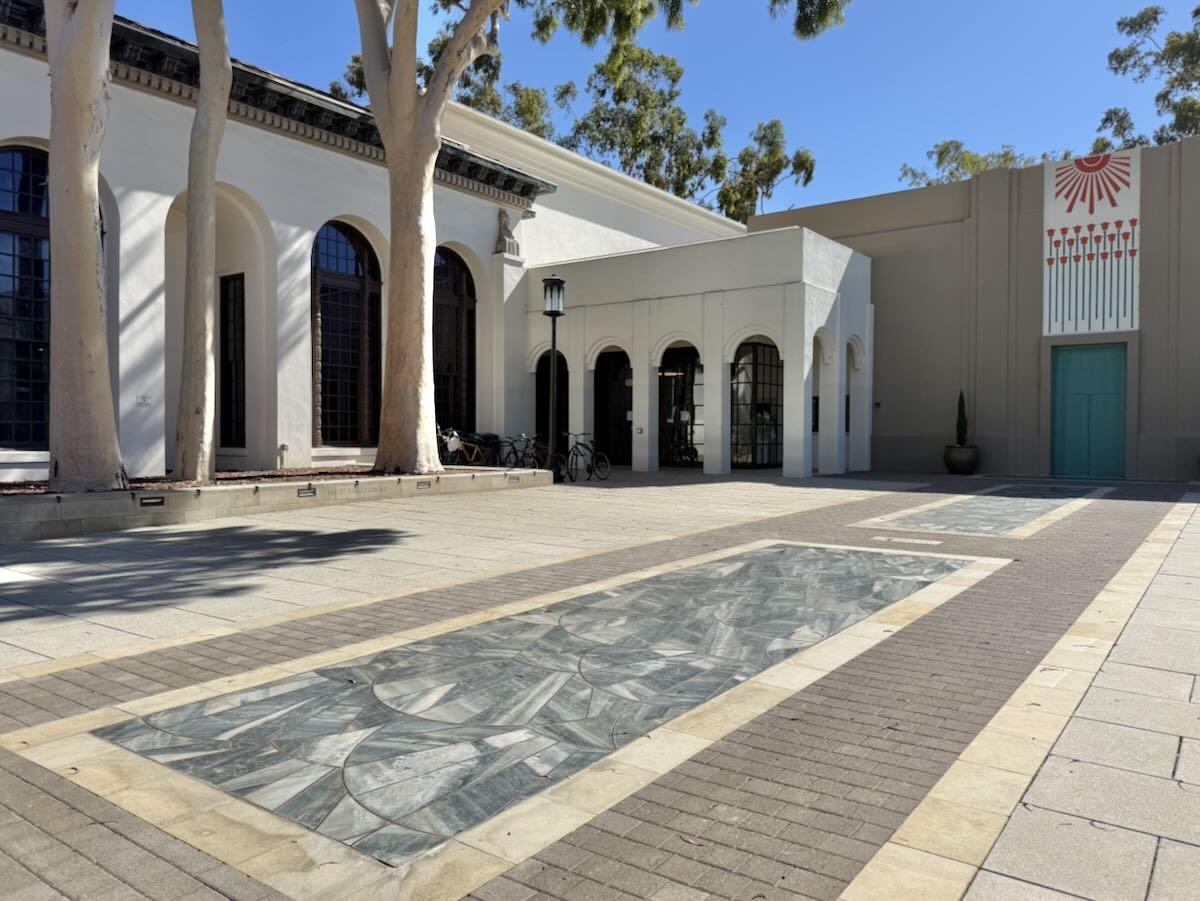
 I had never noticed the travertine mosaics on the new-ish plaza. There were once reflecting ponds in those locations, and I must say, the plaza of yore had real grandeur. All the more reason to consider carefully what kind of furniture, if any, ends up in the plaza.
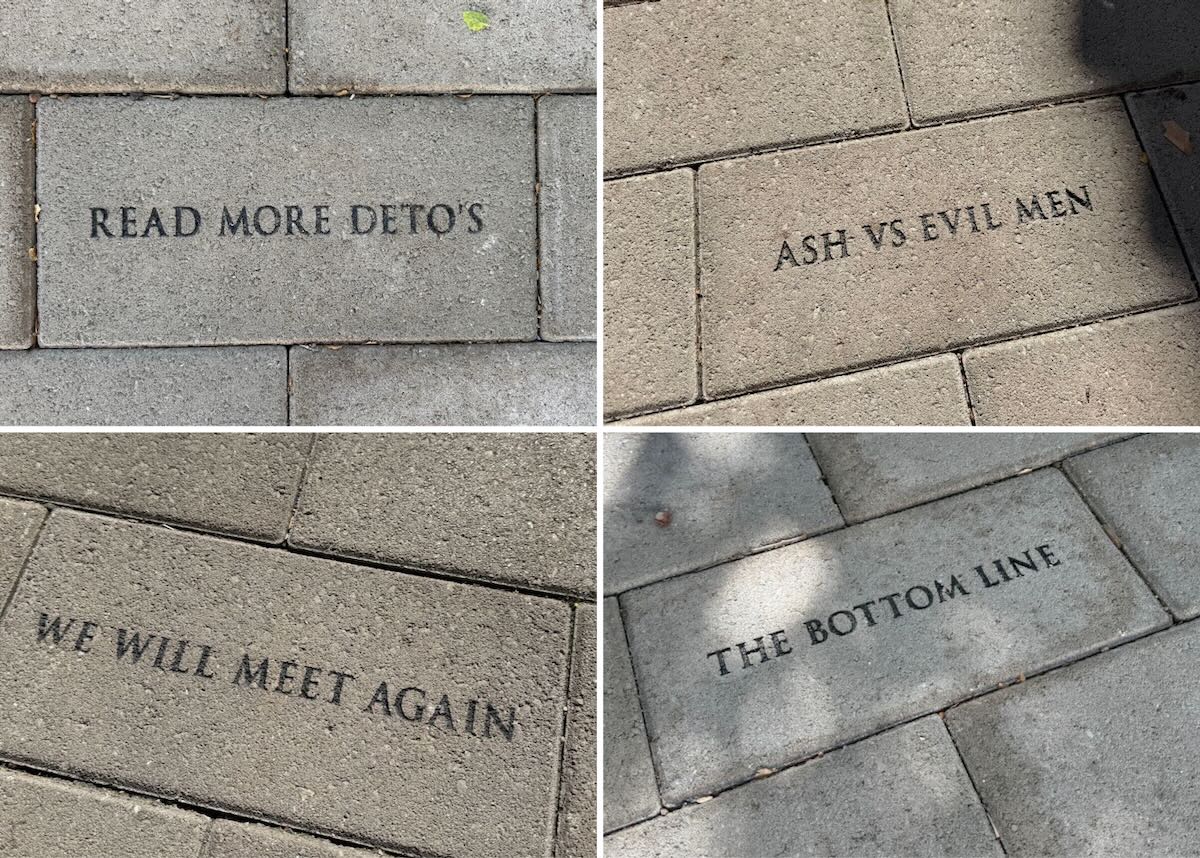
 The mysterious buy-a-brick messages are the best ones.
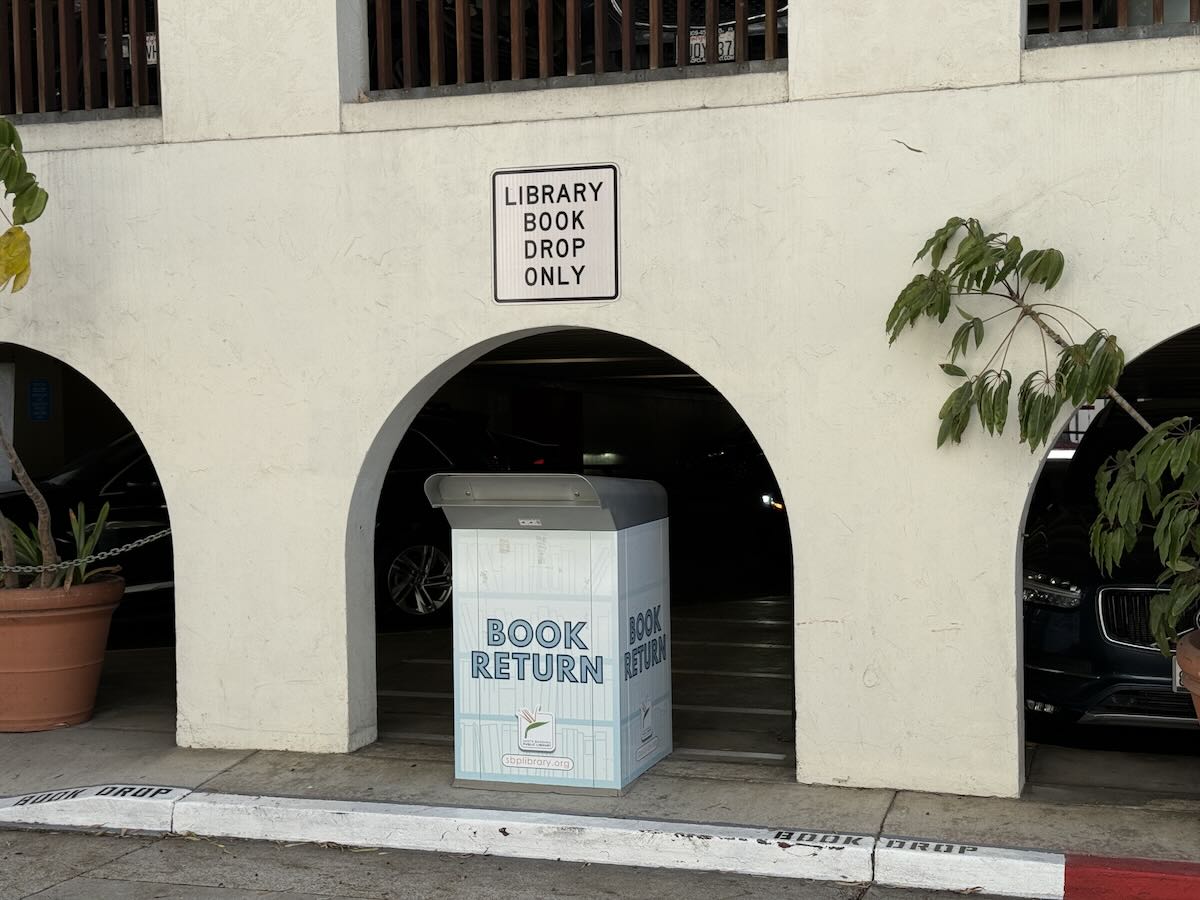
 Pity the staffer who has to open the book return box, because that sign surely gets ignored all the time.
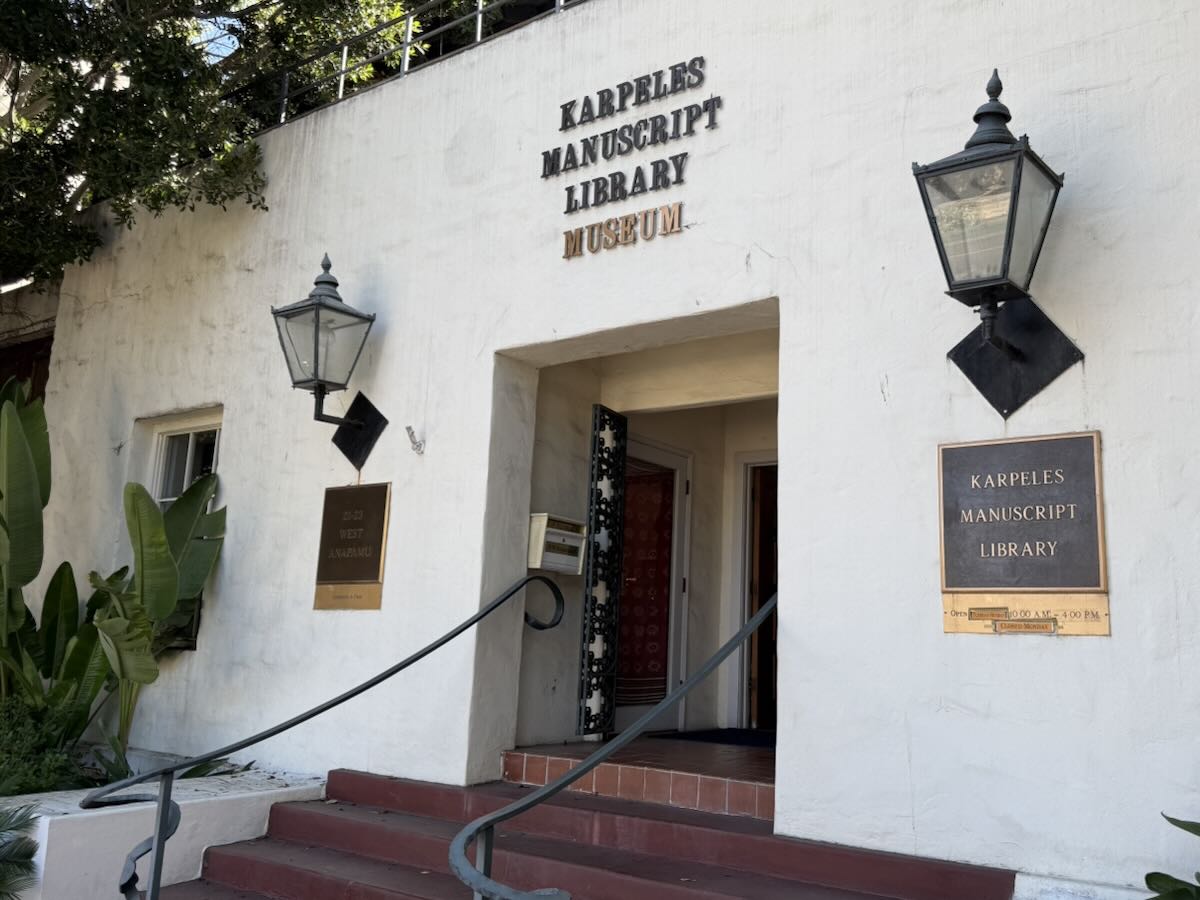
 Not only does the Arts District have a museum and a library, it has a library-museum hybrid.
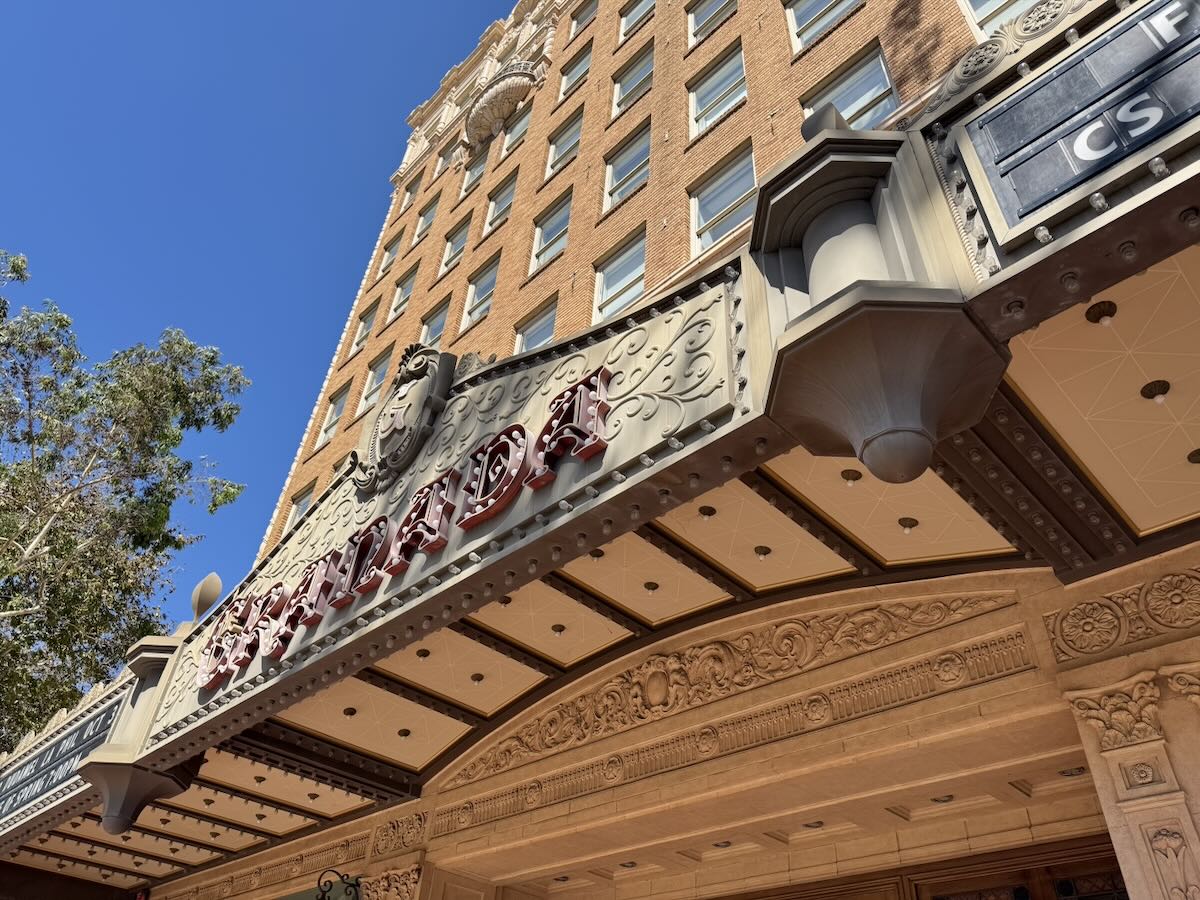
 On to the performing arts! All hail the Granada Theatre.
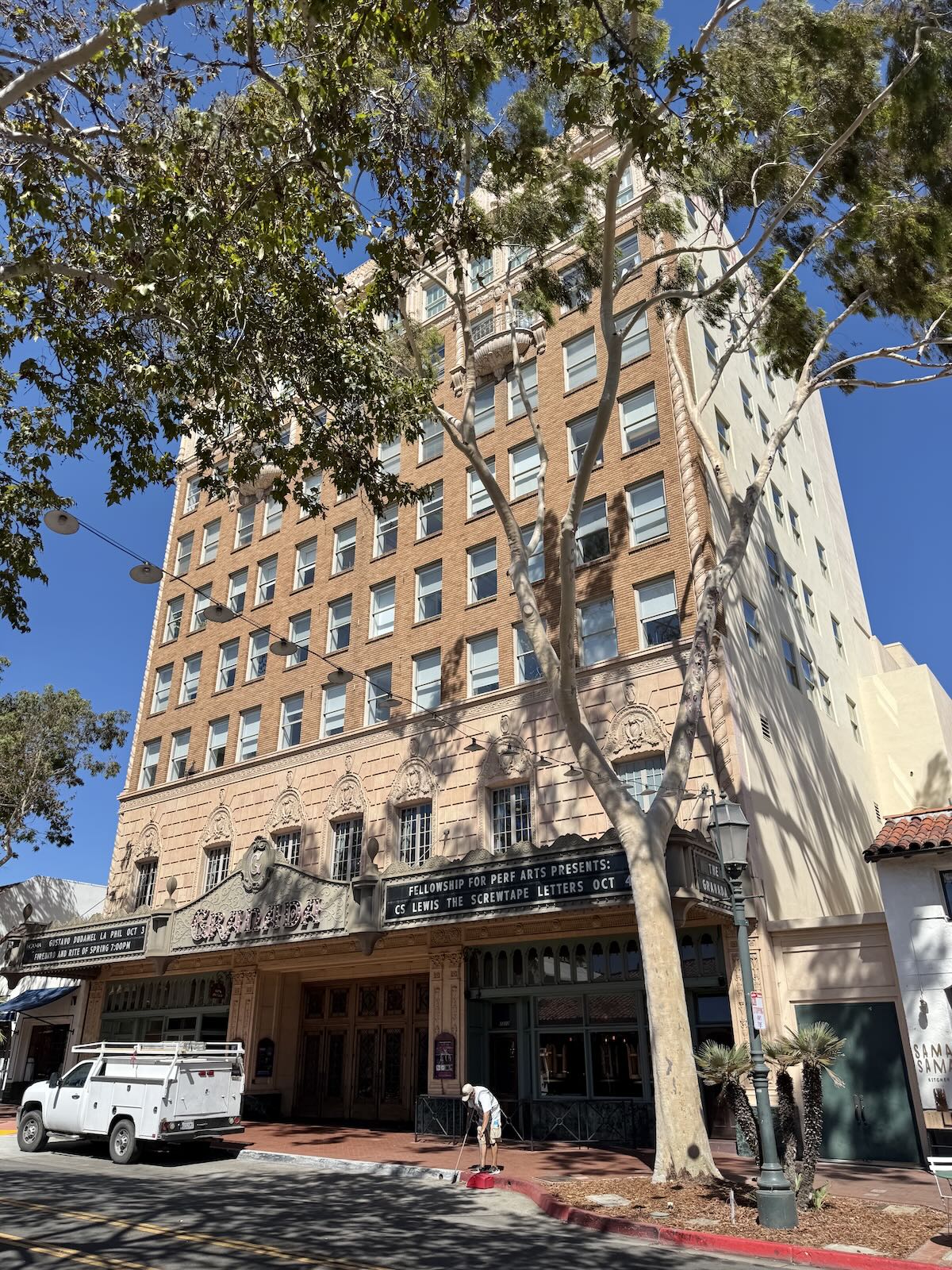
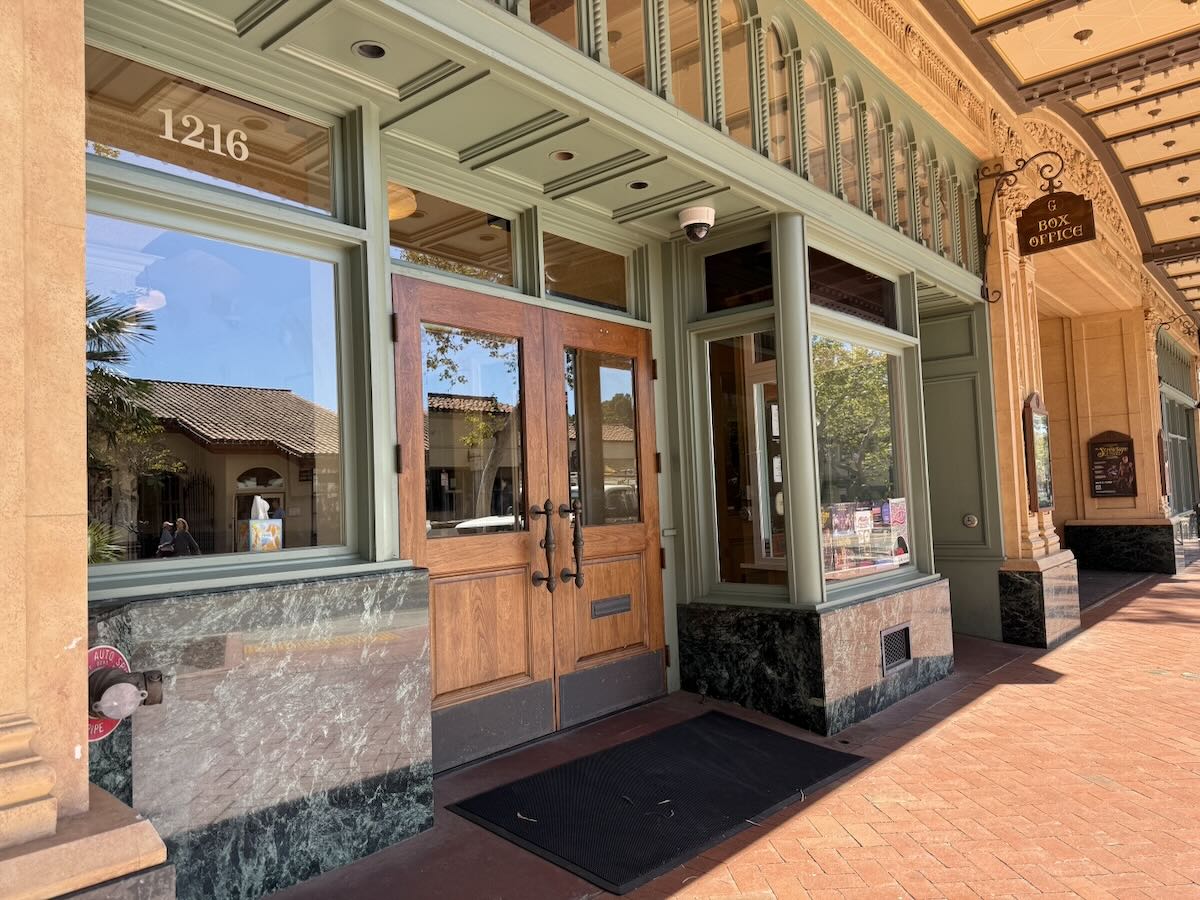 What do you think that second-floor window on the right is for?
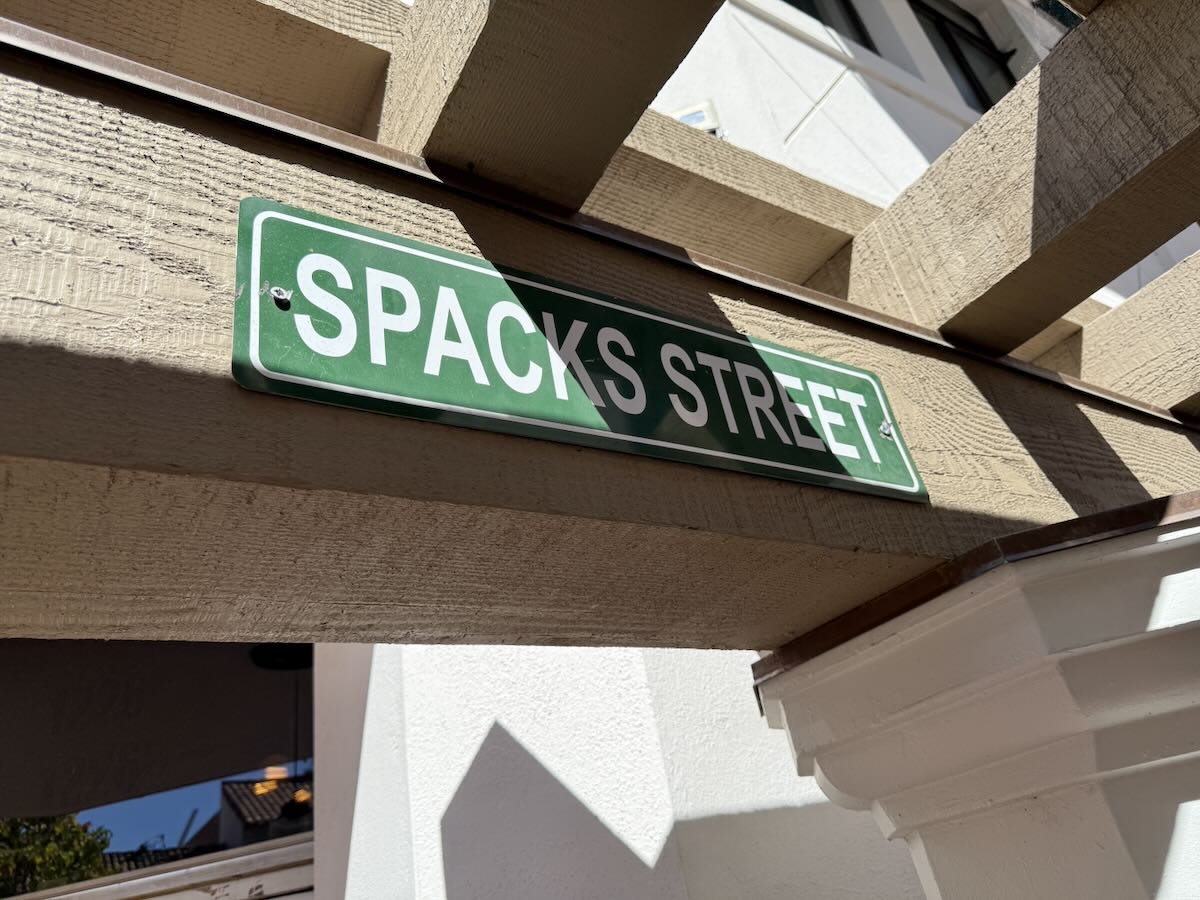
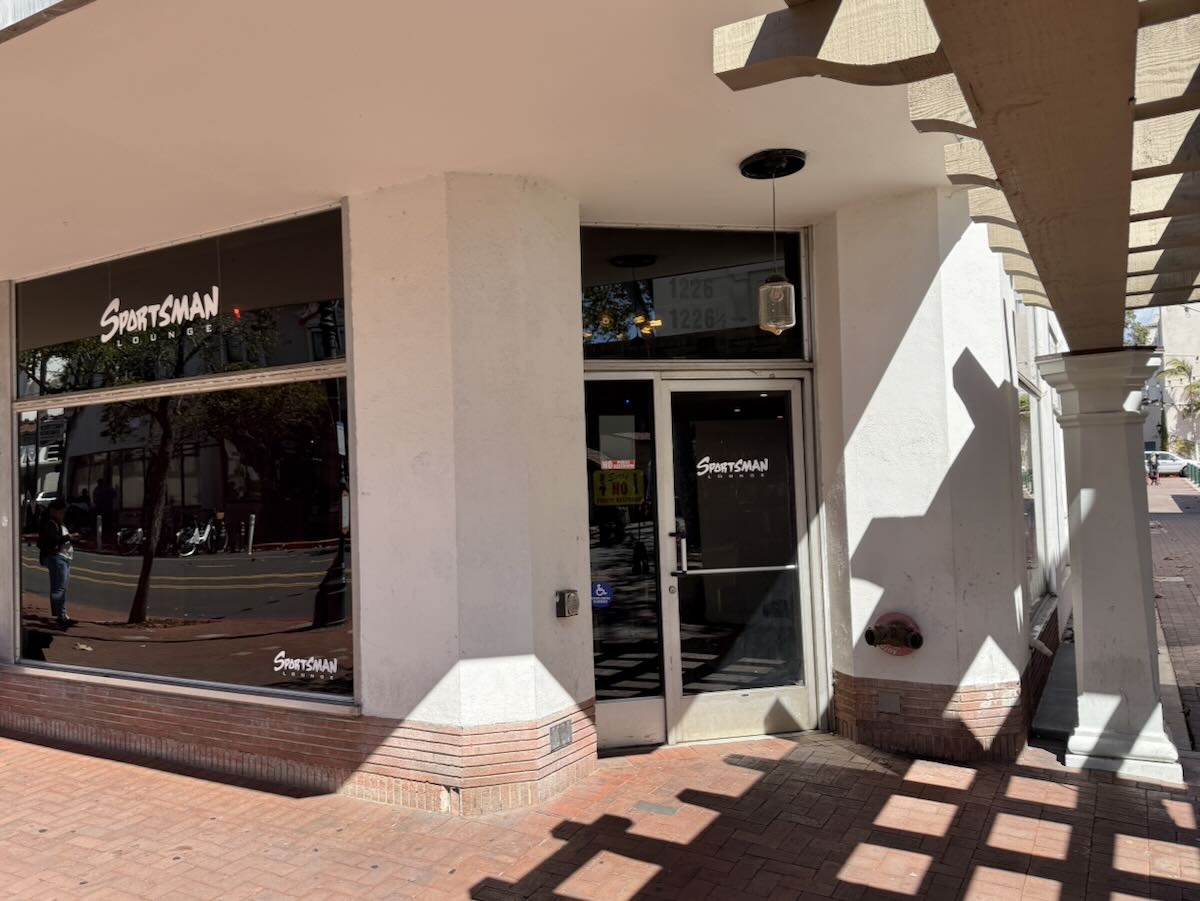
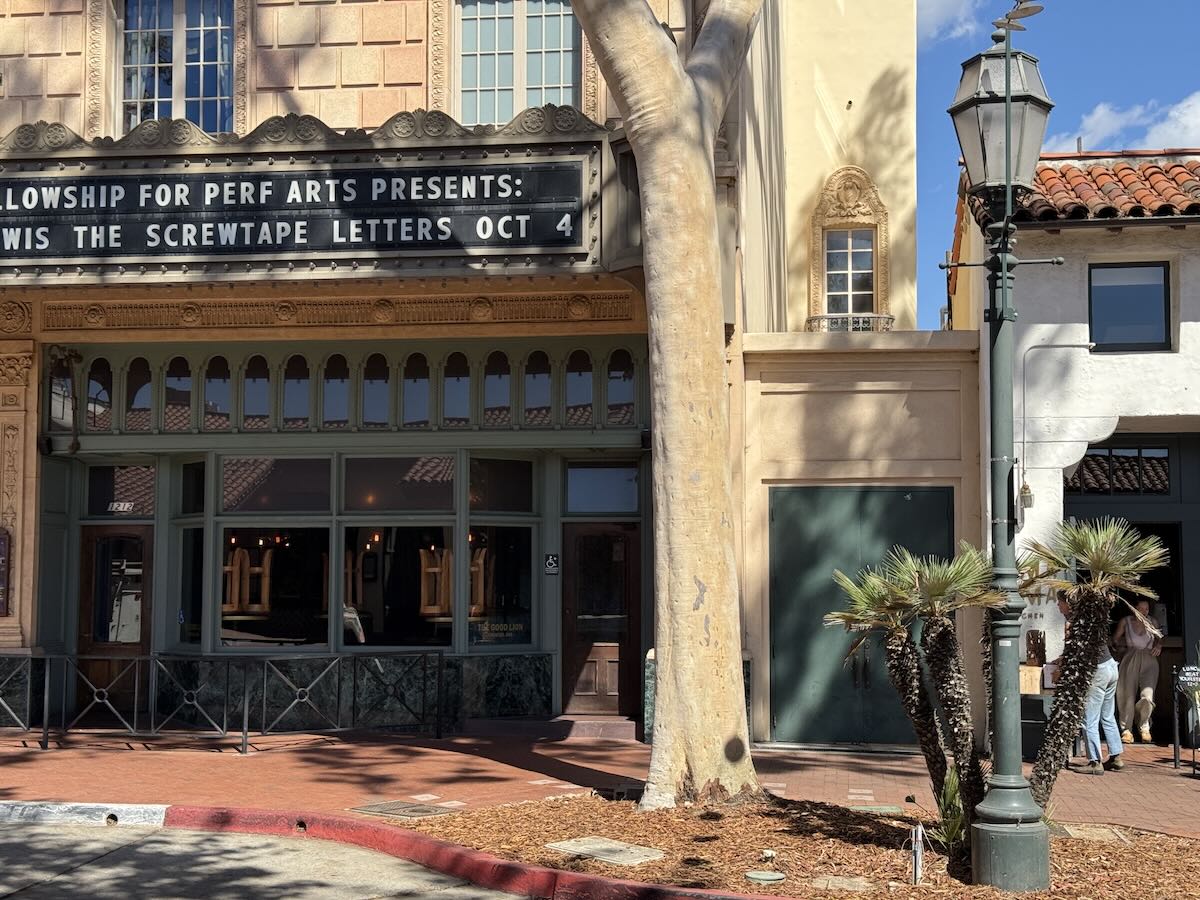 A pedestrian passageway unofficially named Spacks Street (presumably in honor of Barry Spacks, Santa Barbara’s first poet laureate) runs alongside the theater. I’m perpetually amused that the Sportsman Lounge, where the tinted windows make it look like a gay bar, is the neighbor on the other side. The alley—er, paseo—leads to a parking area that feels a little undercooked.
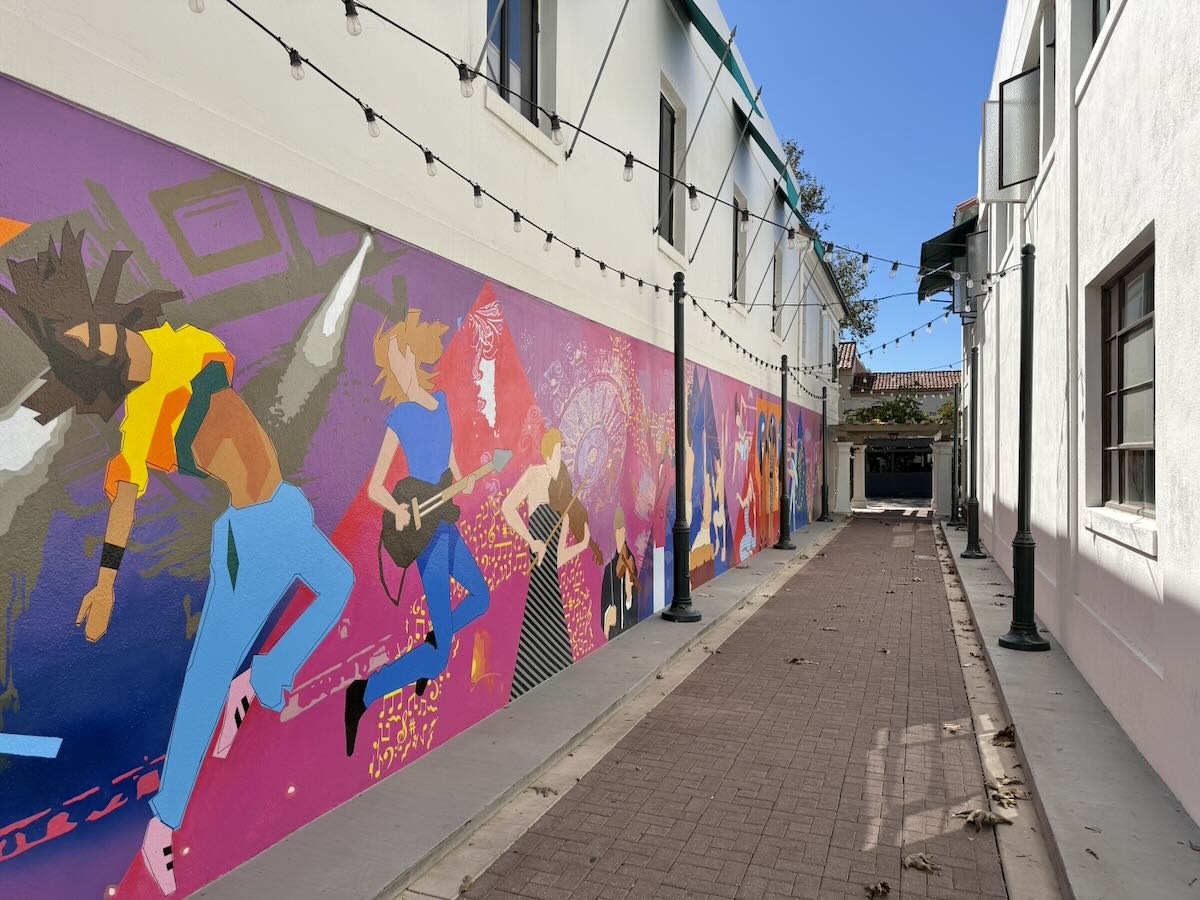
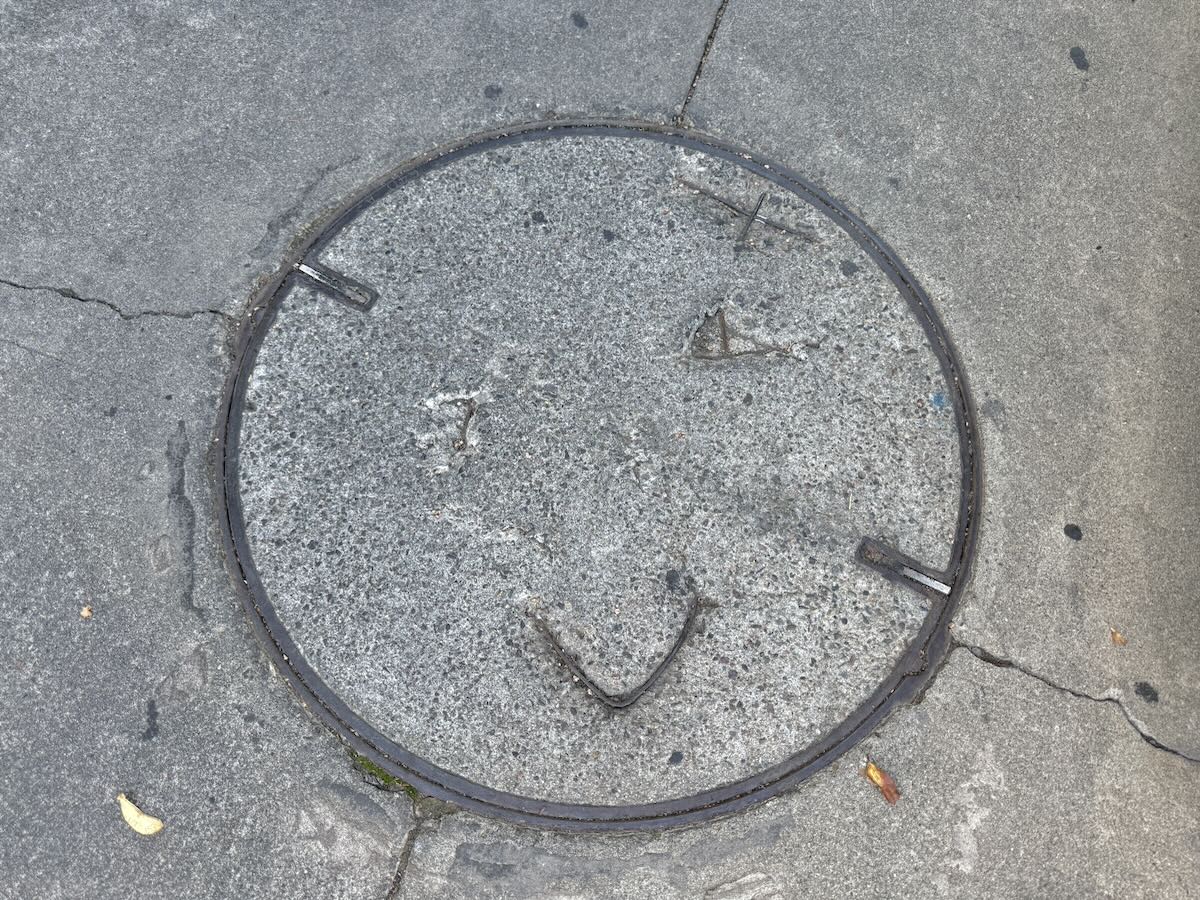
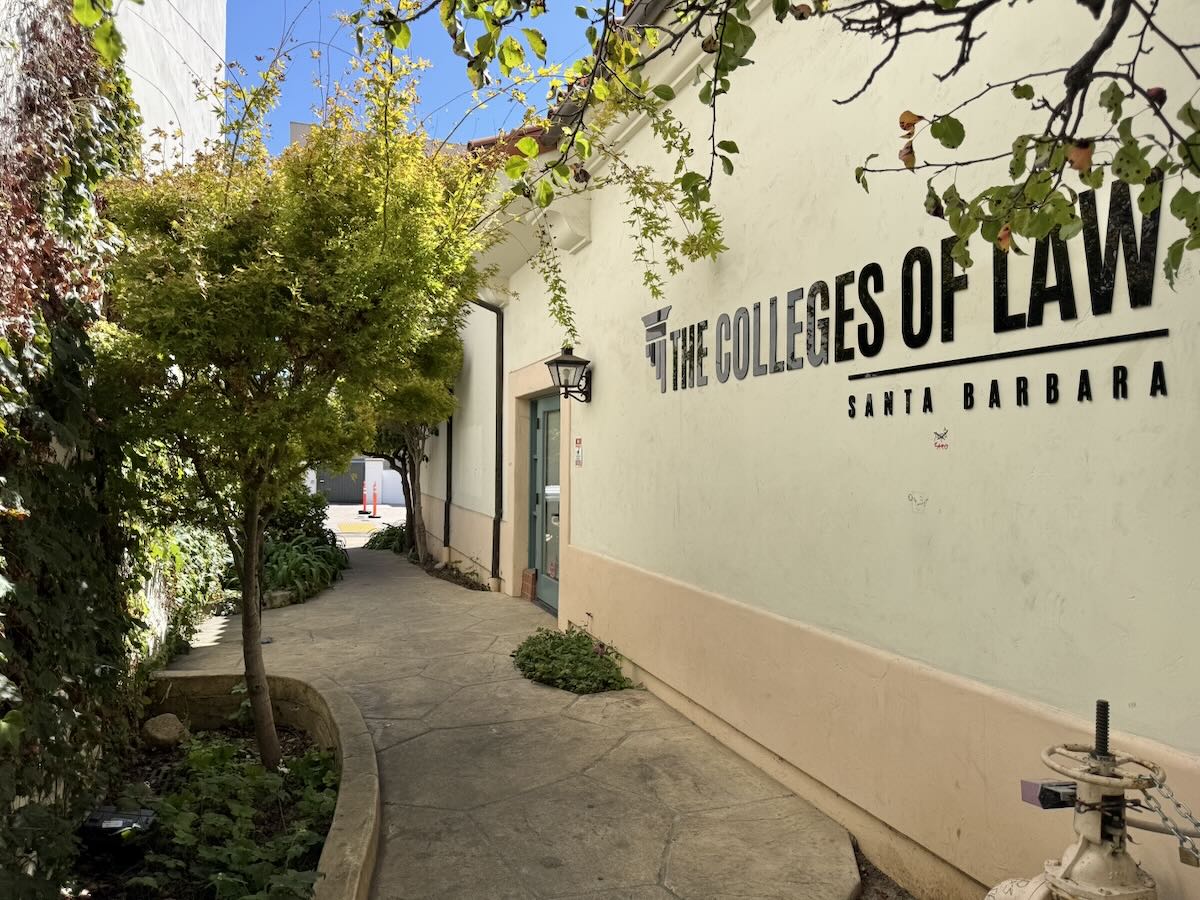
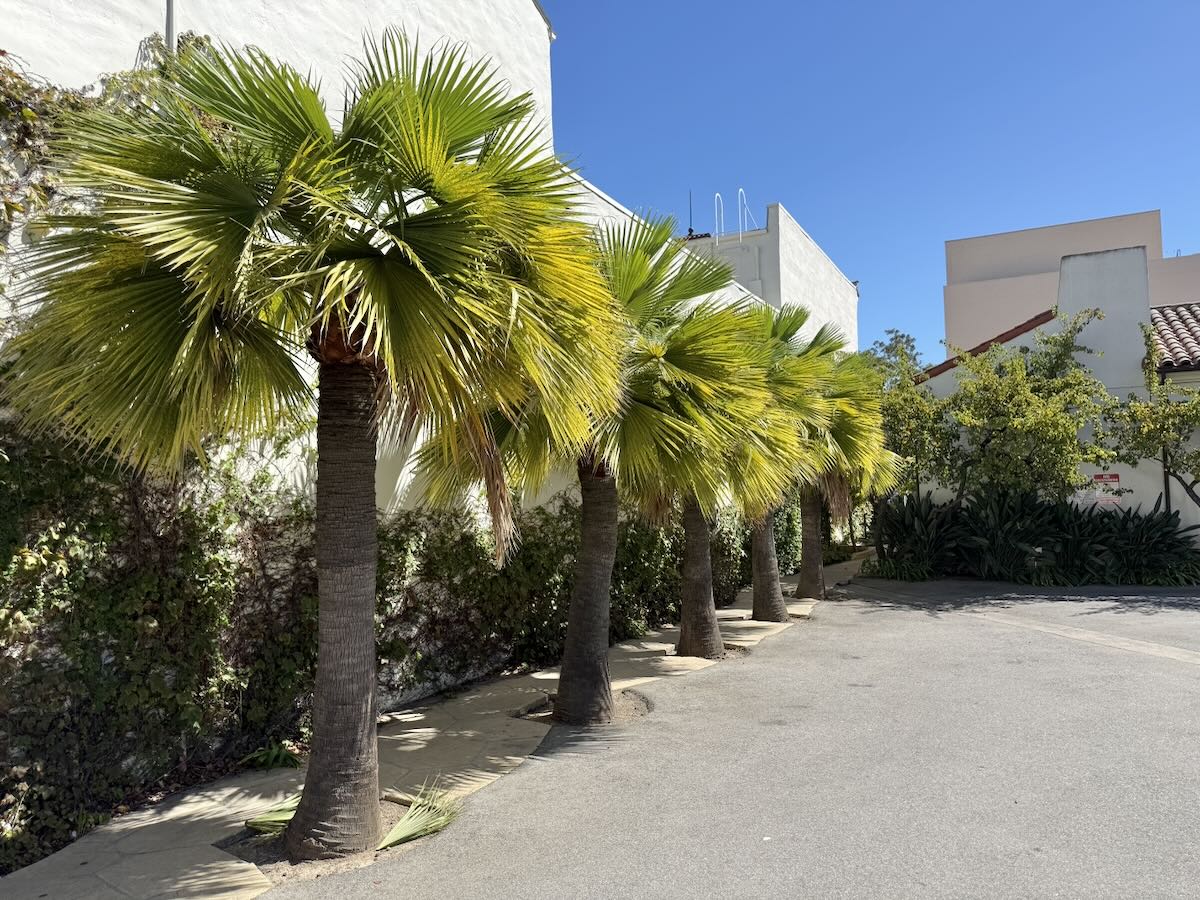
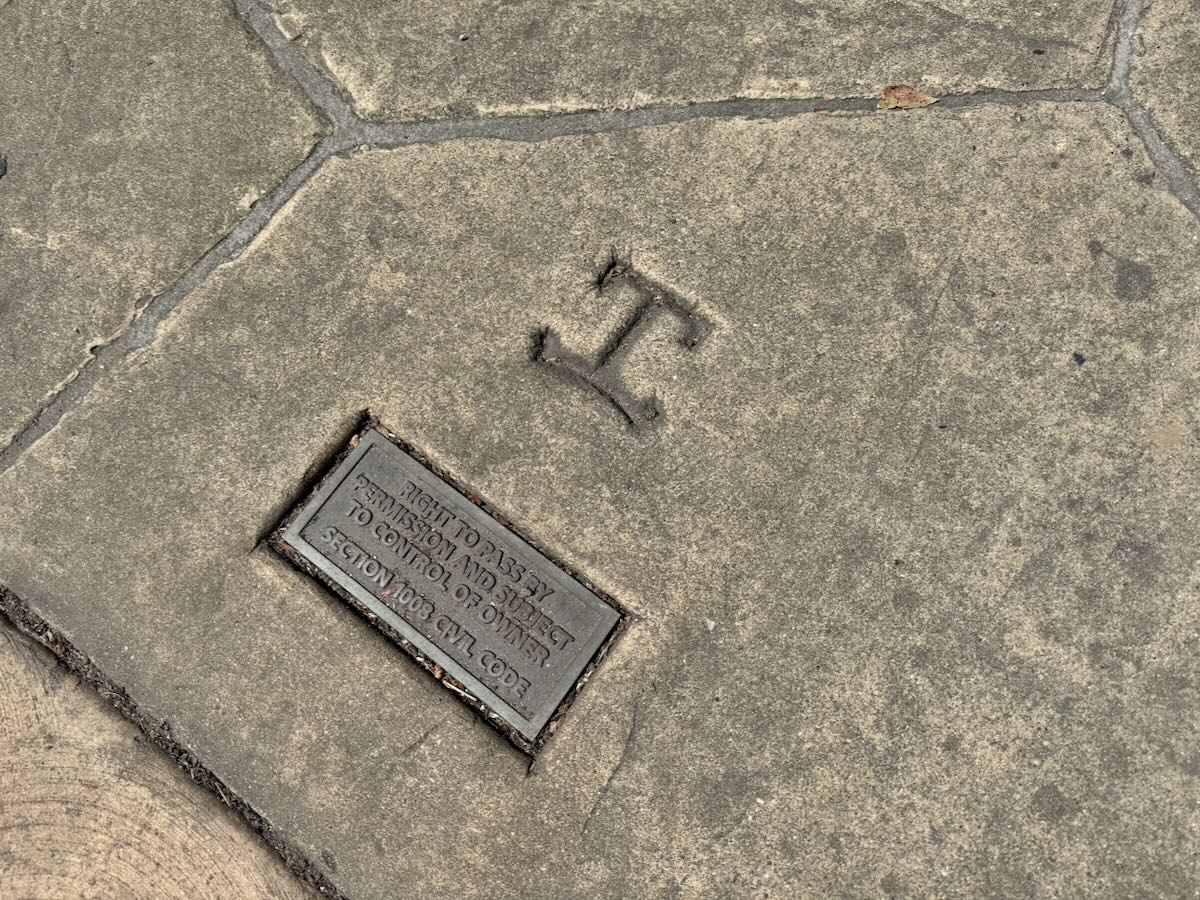
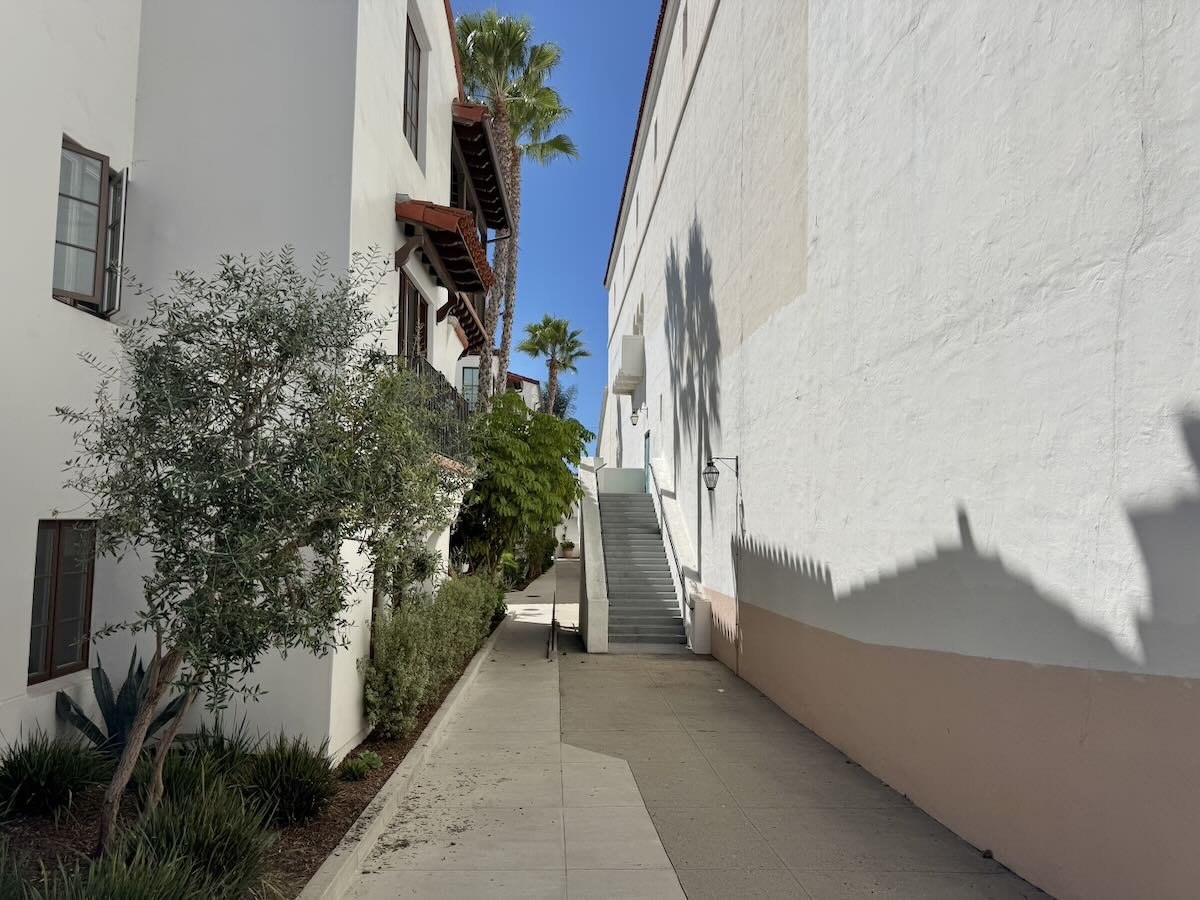
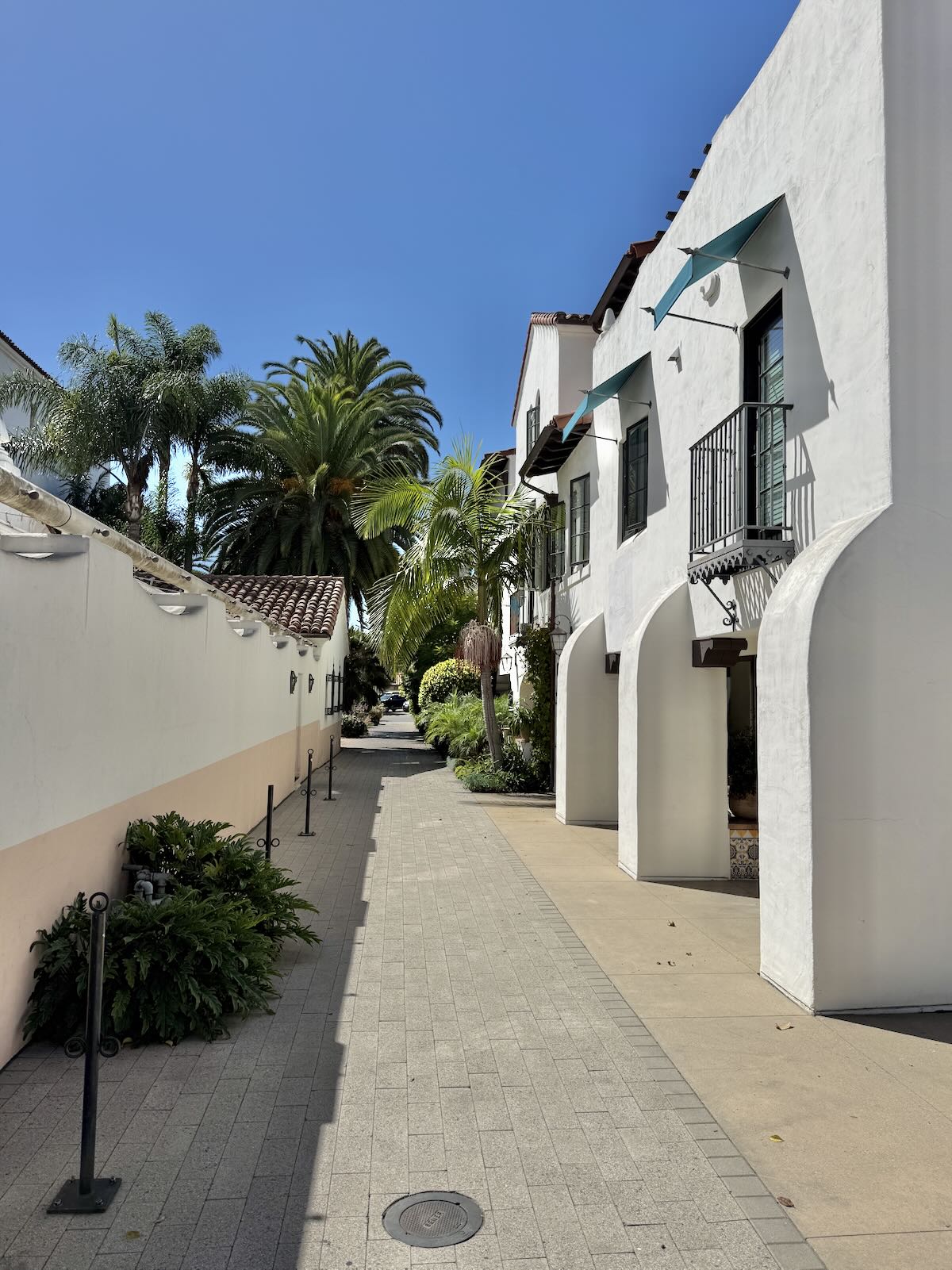
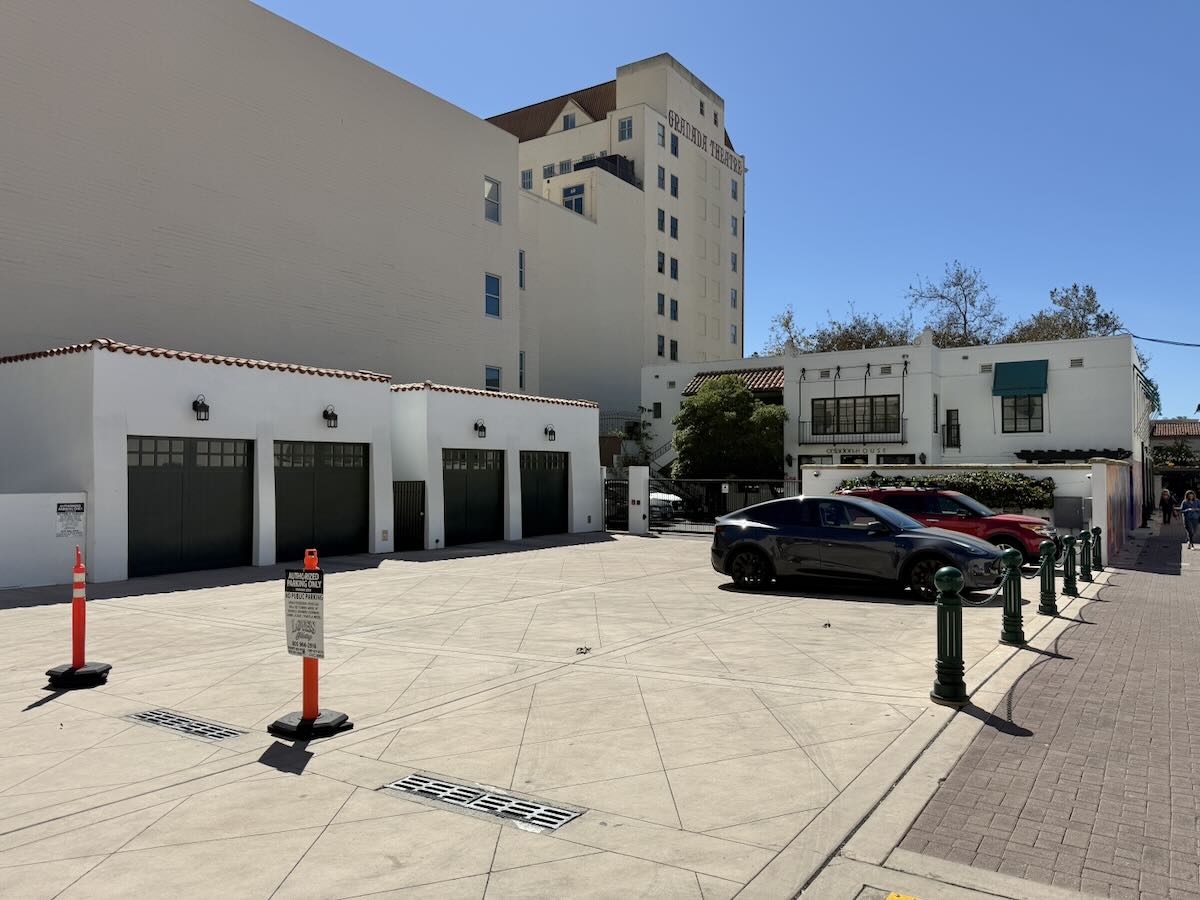 Another paseo extends north, alongside the Colleges of Law. The part by the parking lot has been nicely lined with palms. And along the way, I came across an intriguing impression—a kind of branding, like with cattle—in the walkway.
 Next stop: the Arlington Theatre. Fun fact: it was originally known by a different name.
The resultant Fox theatre was named for—and built on the site of—the Arlington Hotel, which suffered catastrophic damage in a major earthquake (estimated at ~6.5M) on 29th June 1925. While officially called the Fox Arlington Theatre, everyone knew the new movie palace as just “The Fox.”
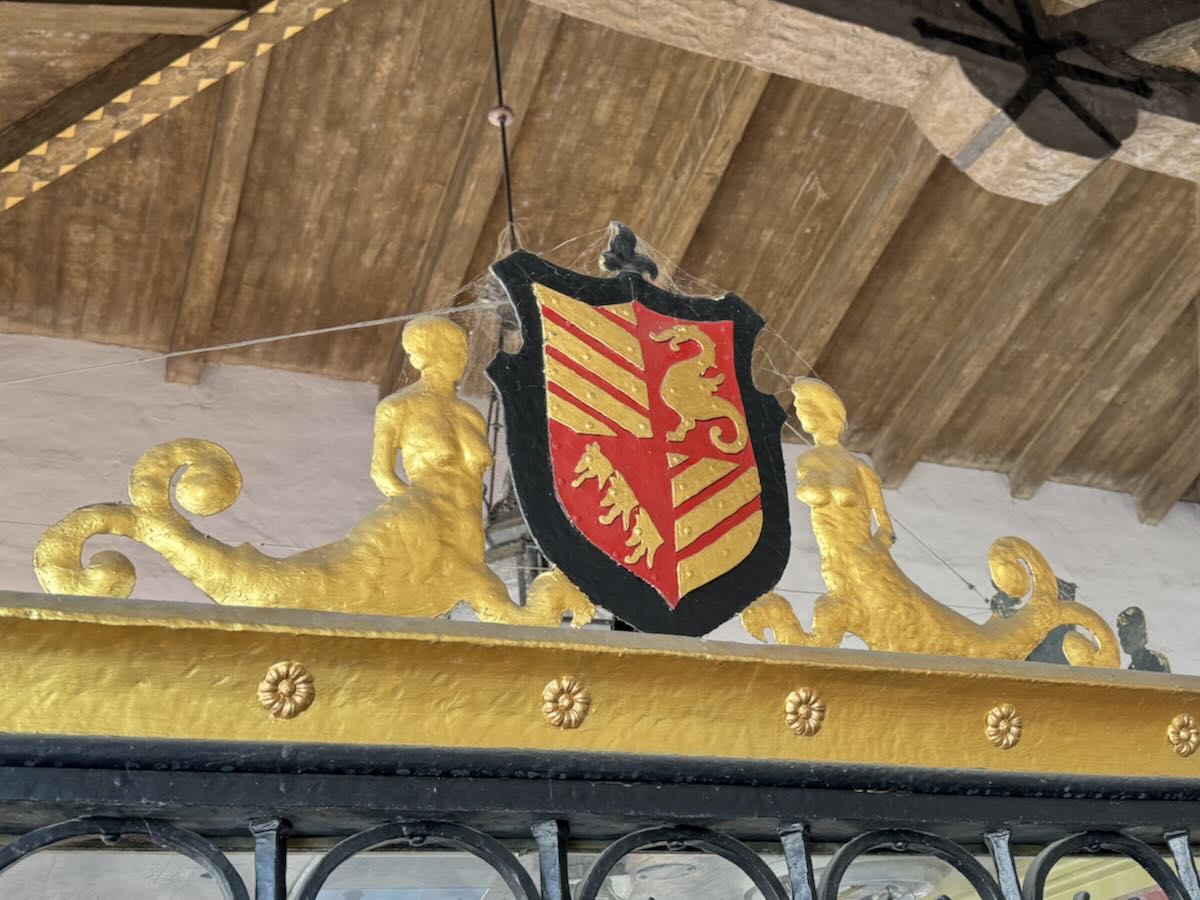
 I have heard the mermaids singing, each to each…. Wait, how do we tell whether those are mermaids or chesty mermen?
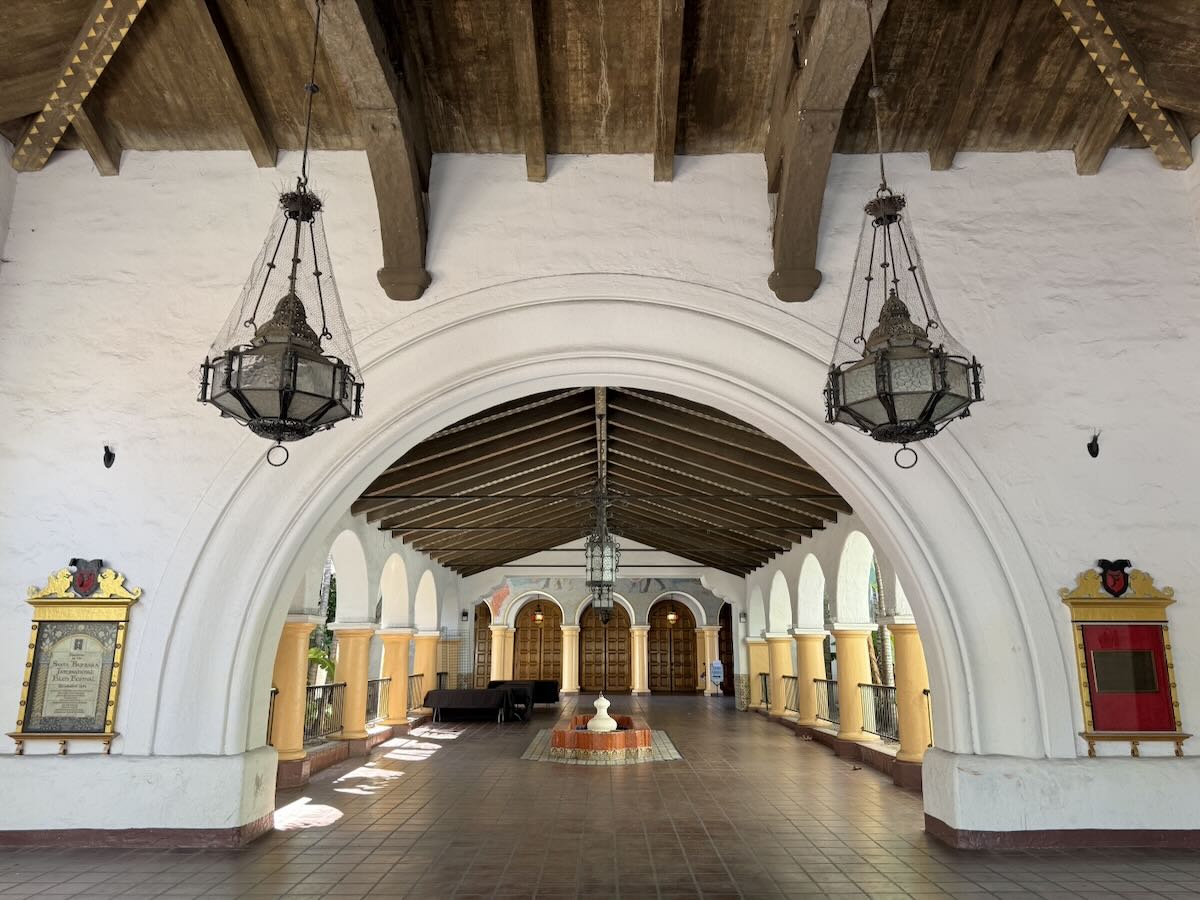
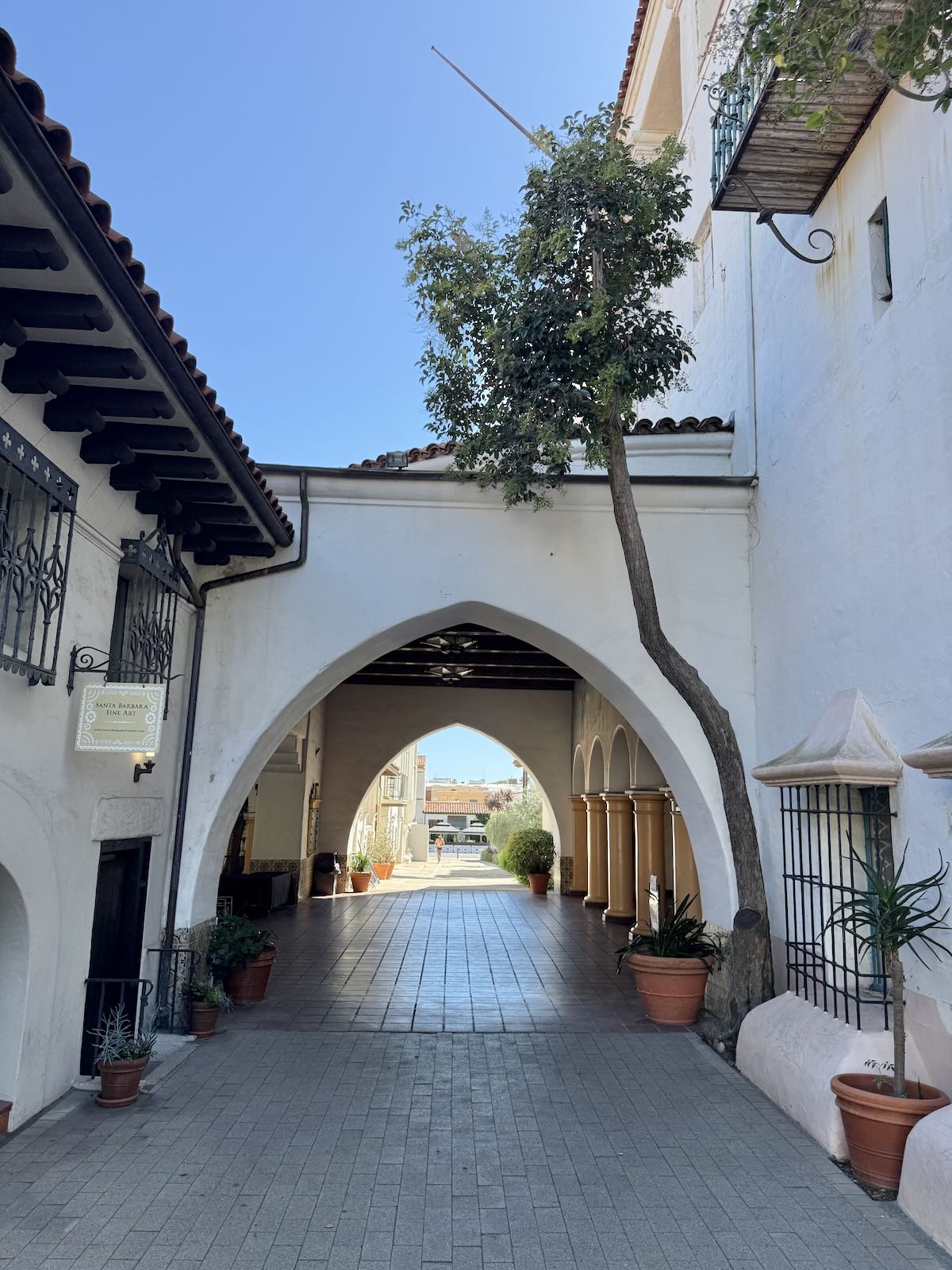
 The paseo that passes through the theater is a classic. Those arches!
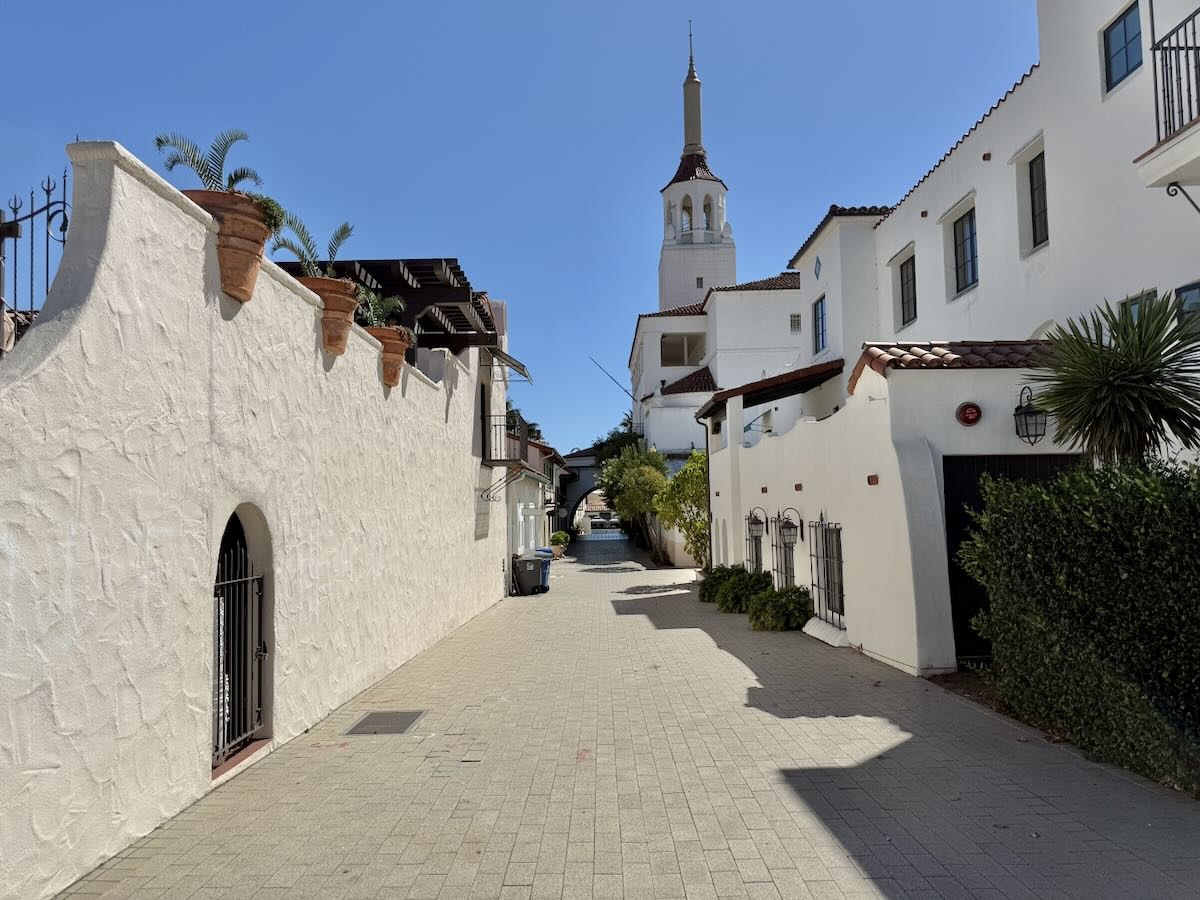
 More paseos run along the theater’s north and south sides. The fountain didn’t have a sign saying I couldn’t swim in it. Nevertheless, I resisted.
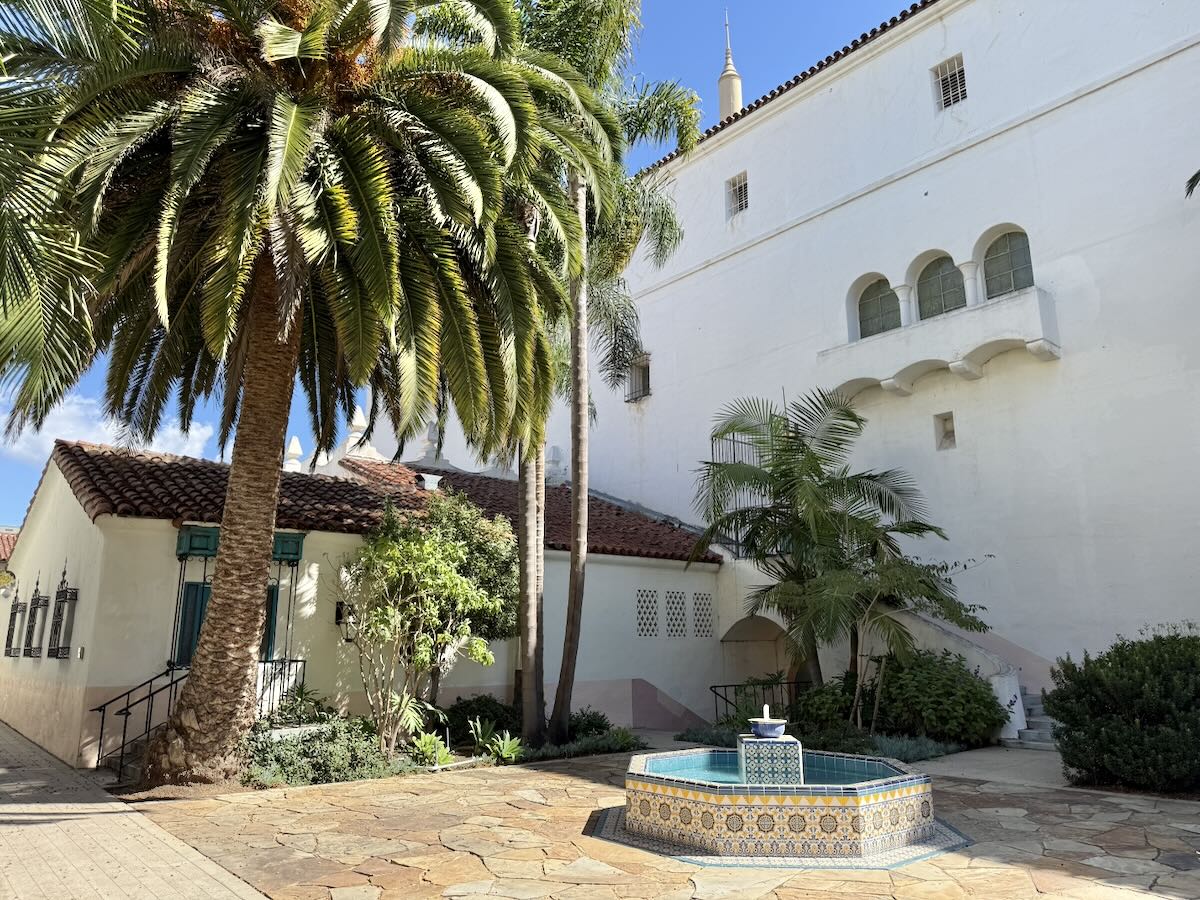
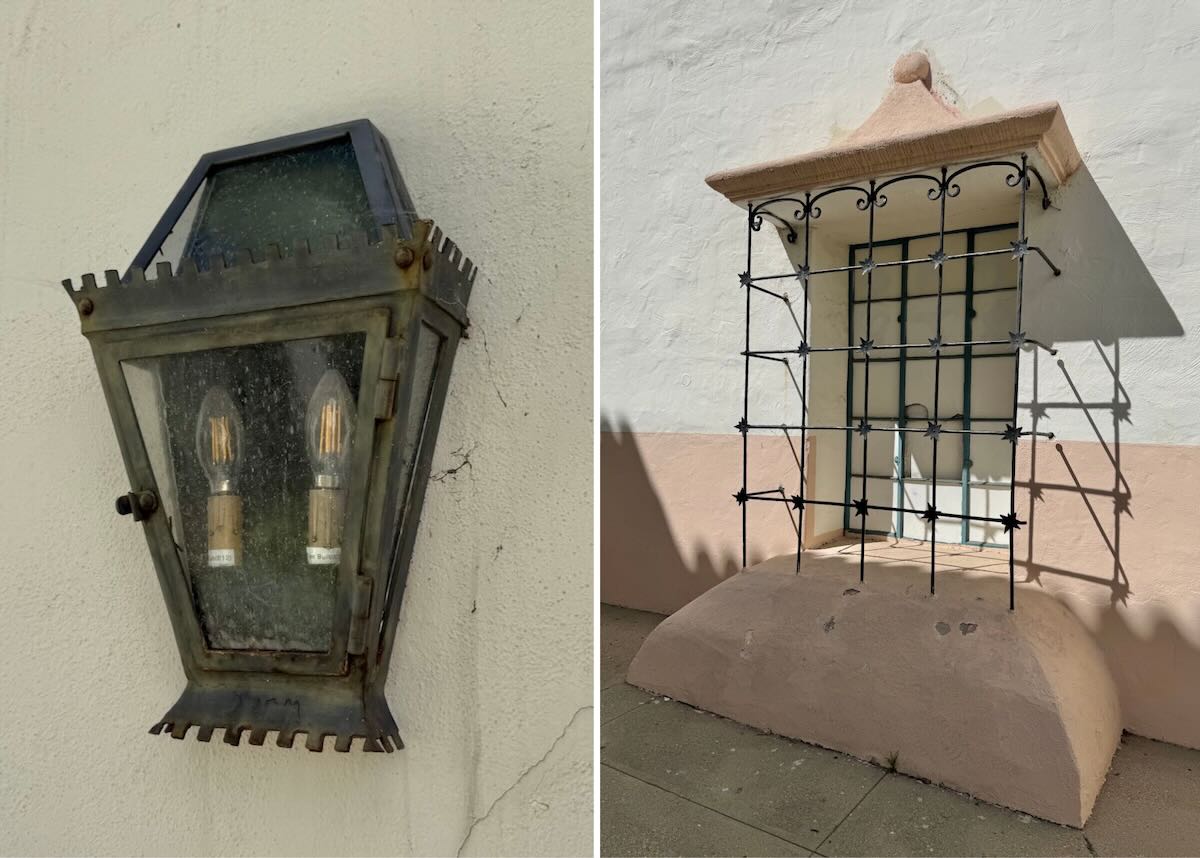
 Two nice details: a flat sconce and a fun window grille.
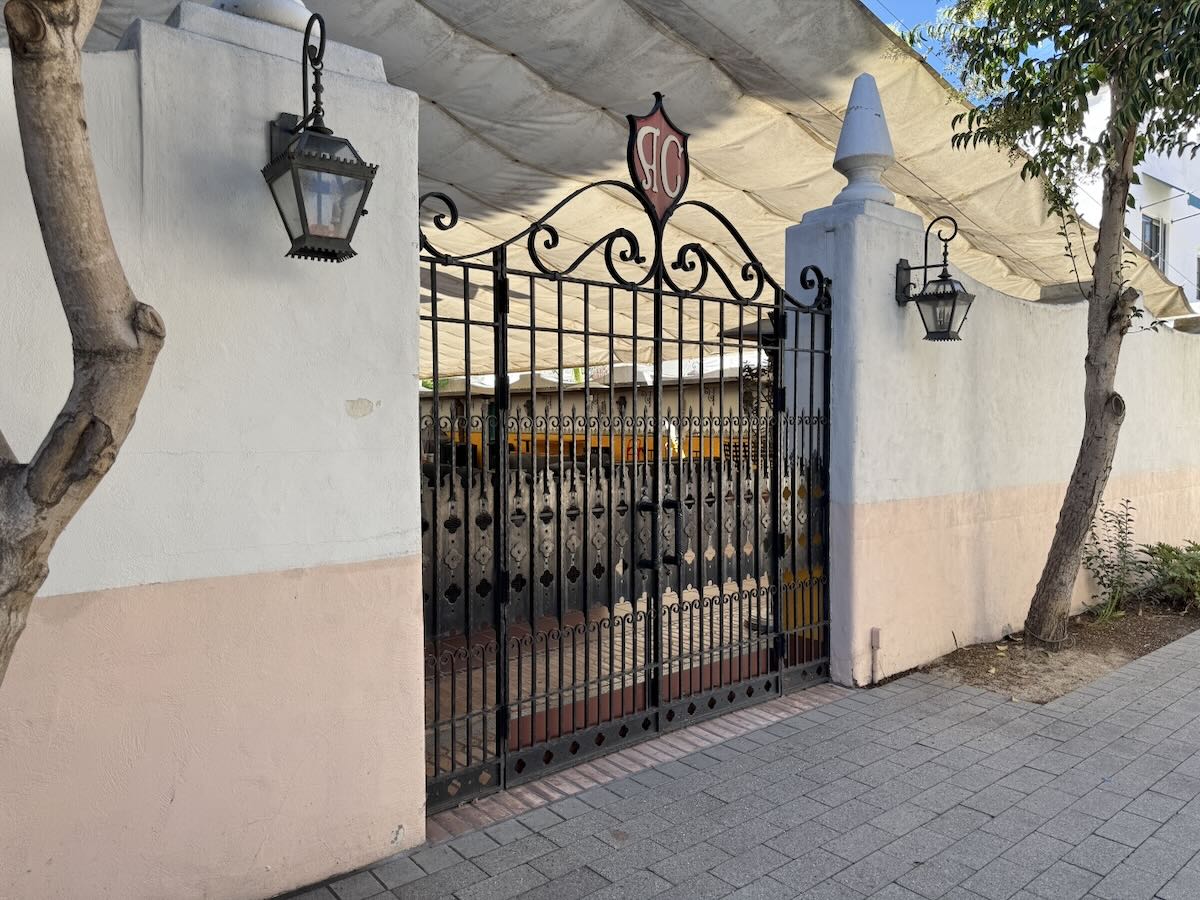
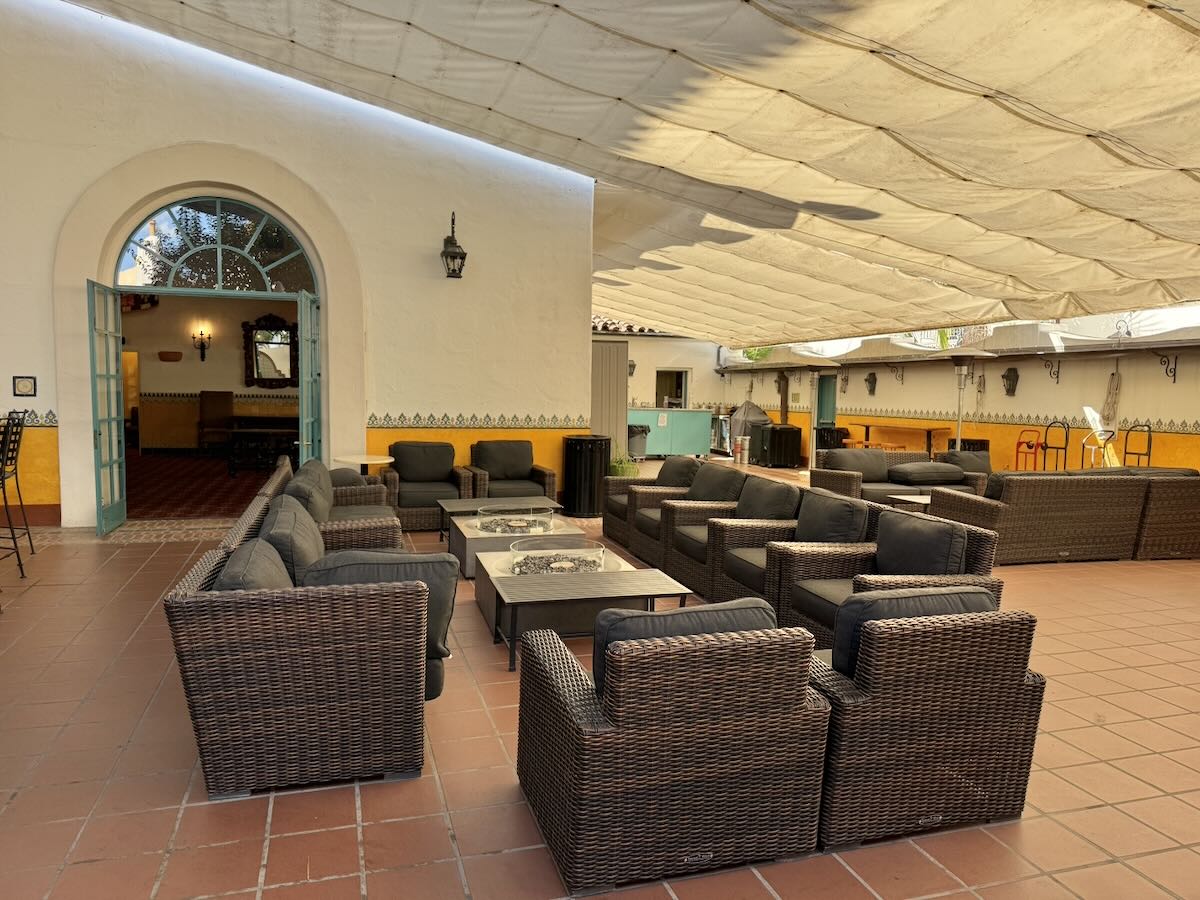
 The “AC” sign on this gate caught my eye—I thought it might stand for Arlington Court or Arlington Club, but a history of the theater makes me think it’s for Arlington Center or perhaps Arlington Corporation. Then again, the space is rentable as the “courtyard patio”….
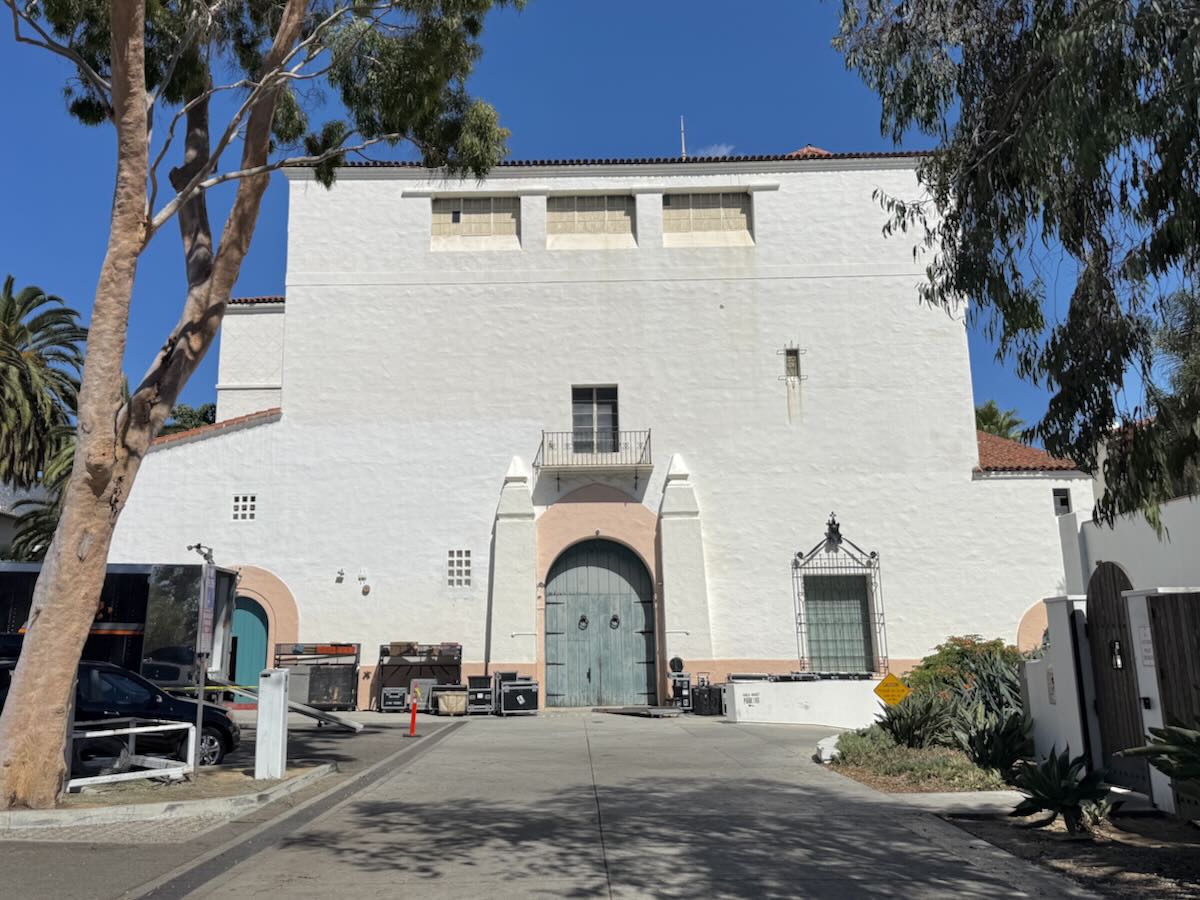
 Like the Granada, the Arlington has its own mysterious window—a beauty mark, if you will, in the middle of the rear facade.
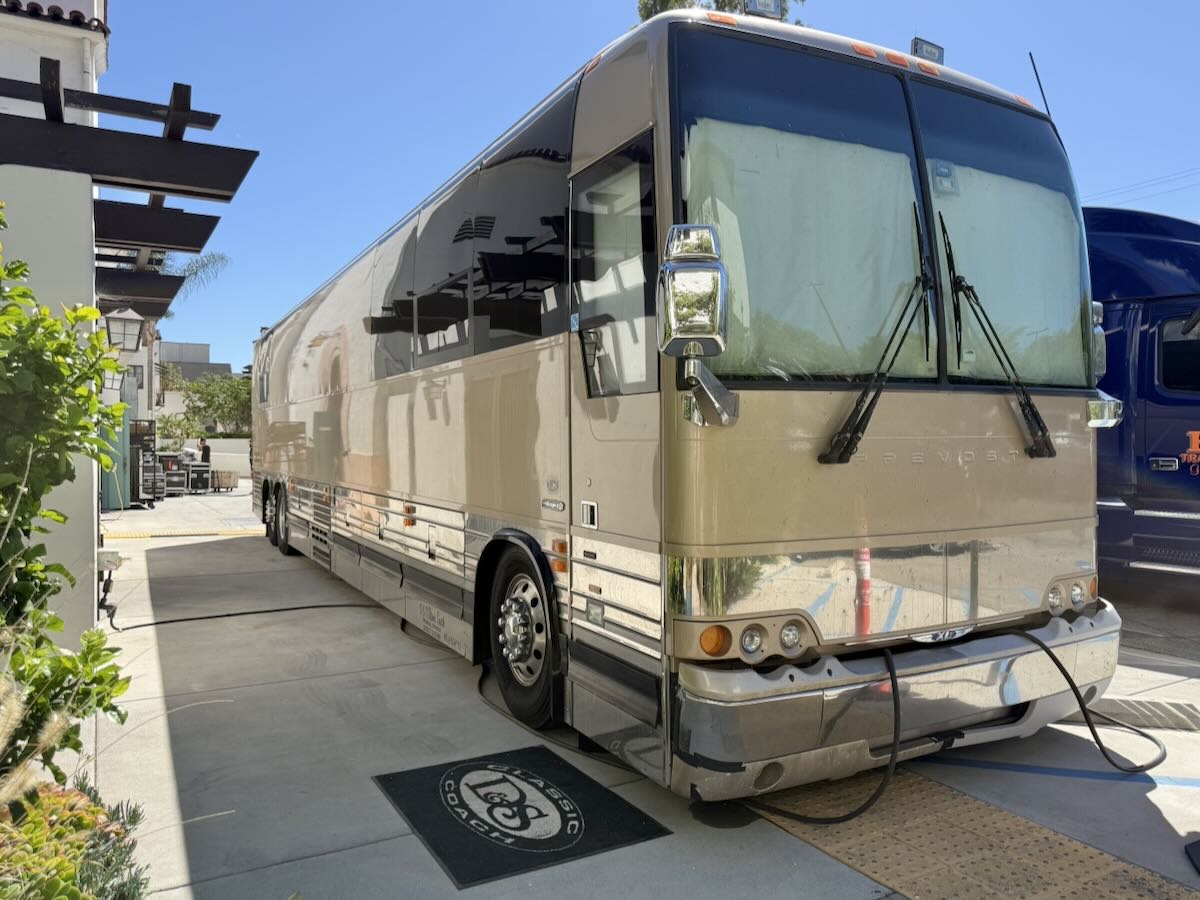
 The welcome mat really enhances the experience.
 Can anyone get me into the tower? I need this.
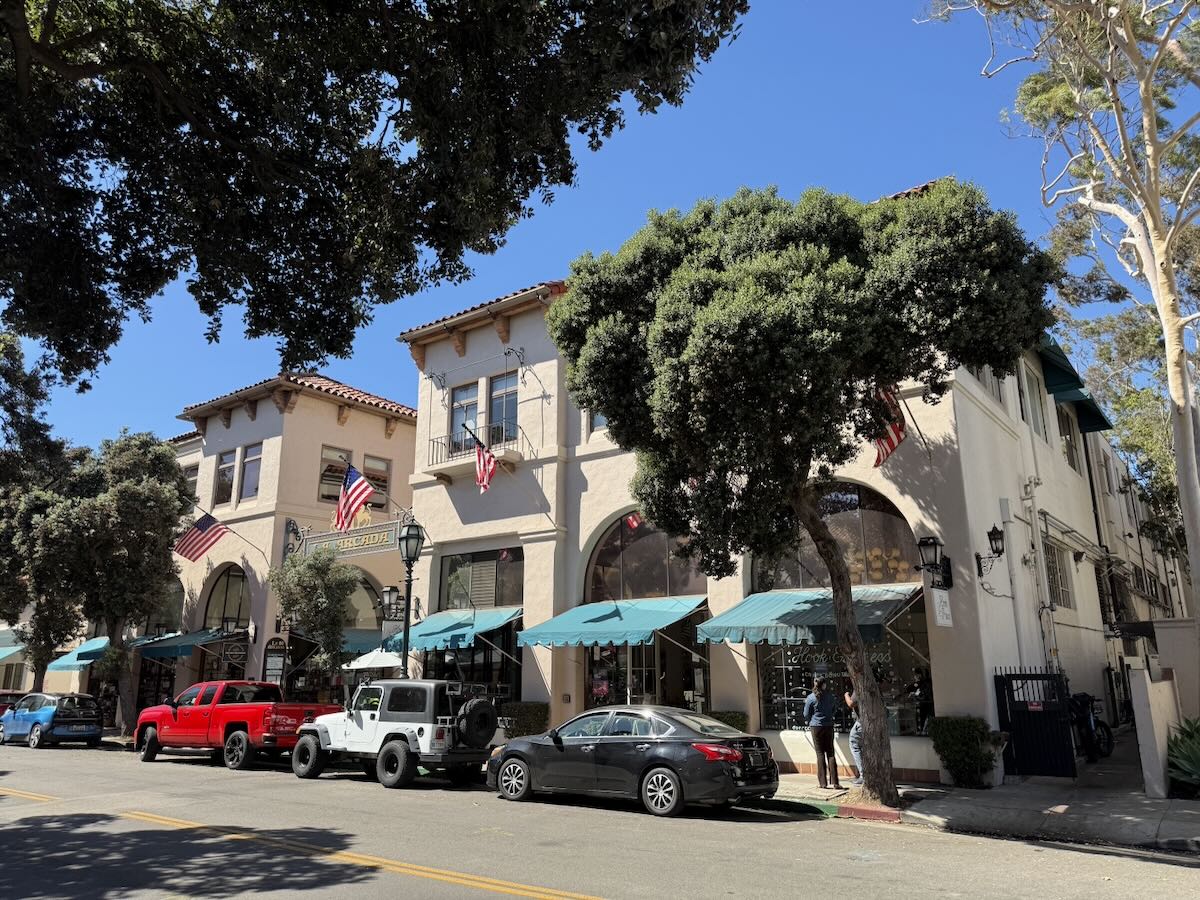
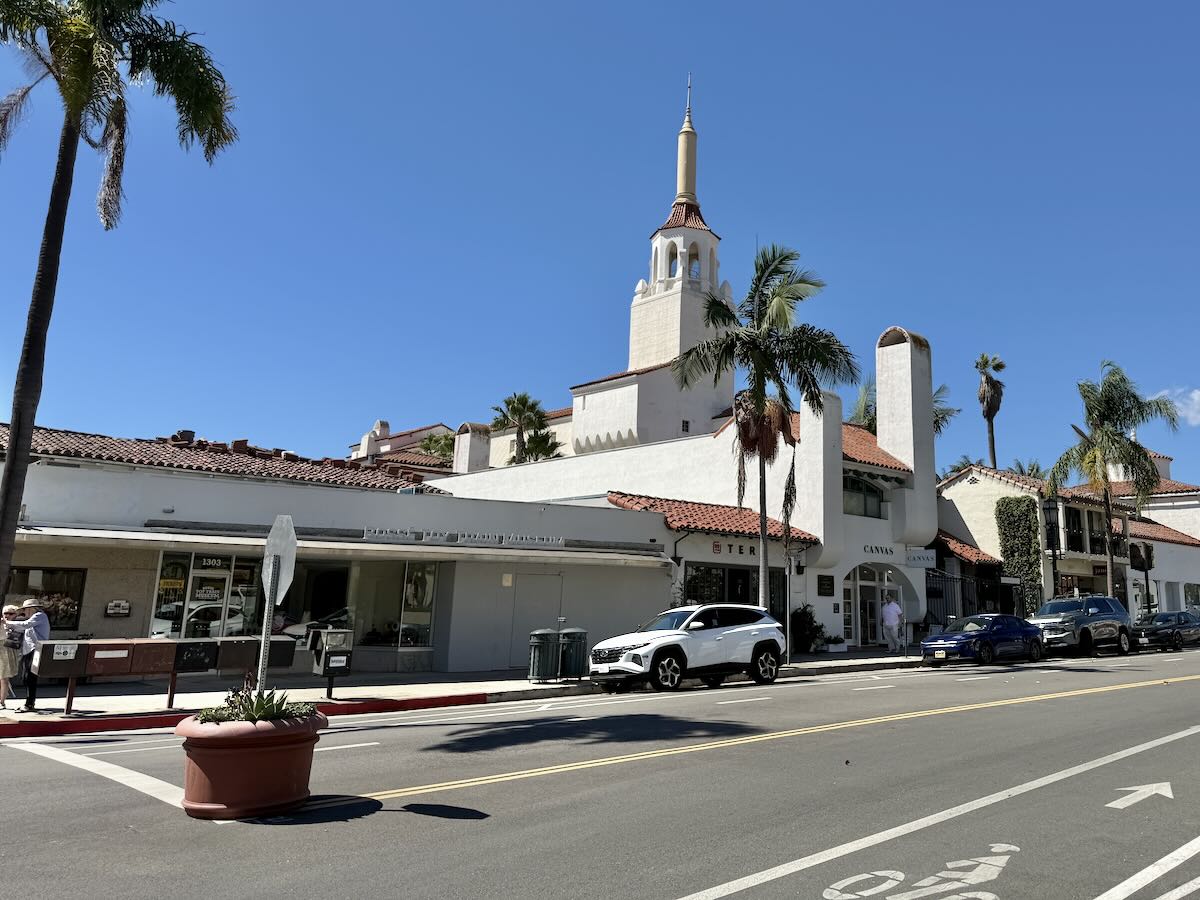 It’s a testament to the richness of the Arts District that we’re not even close to done. I could’ve done a post on La Arcada Plaza alone.
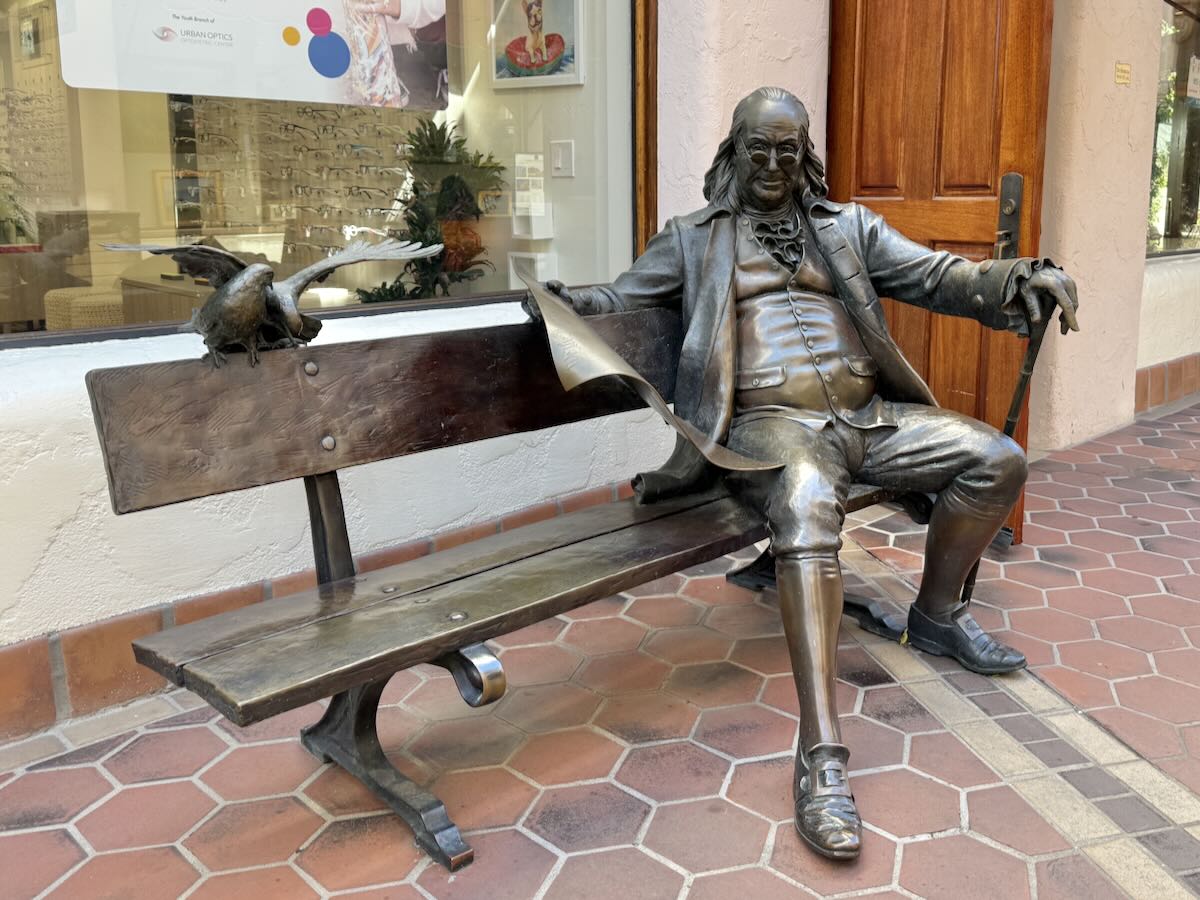
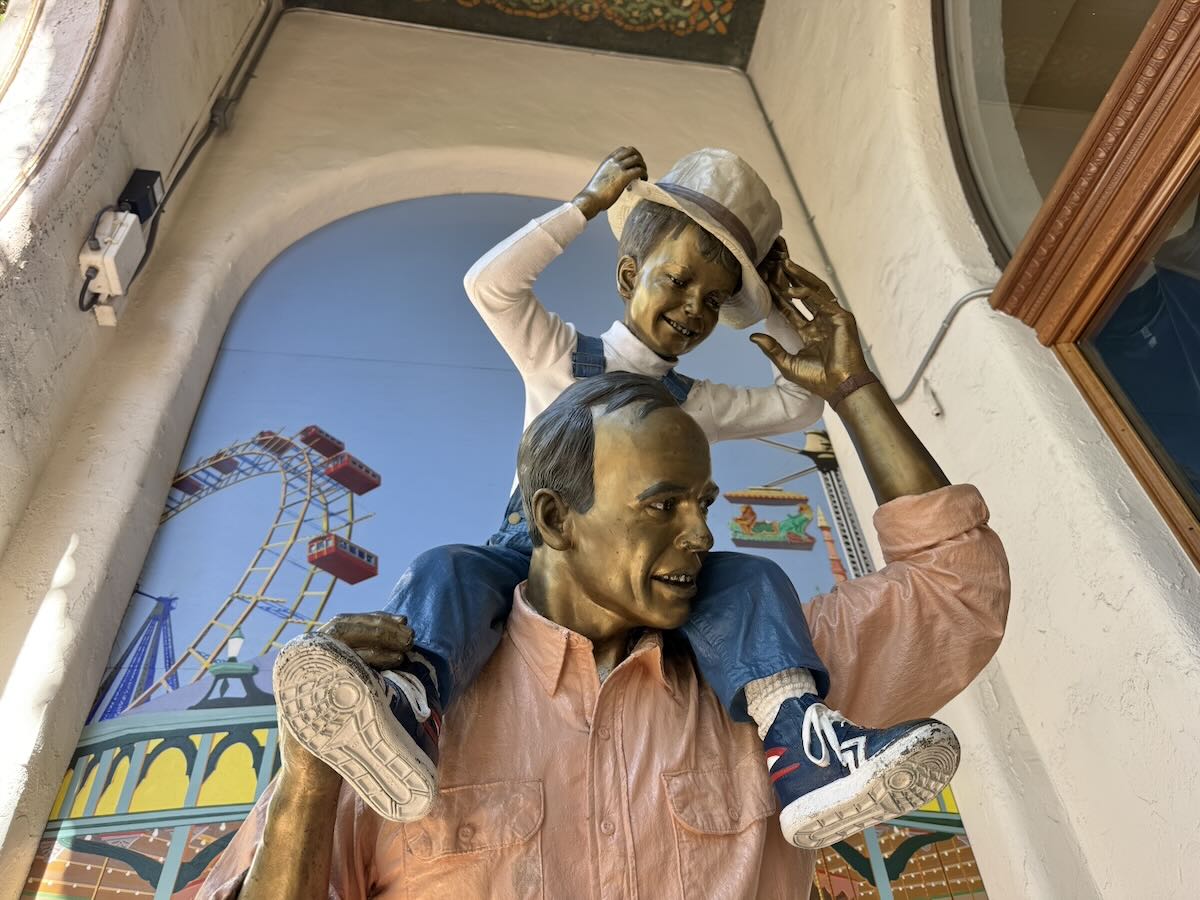
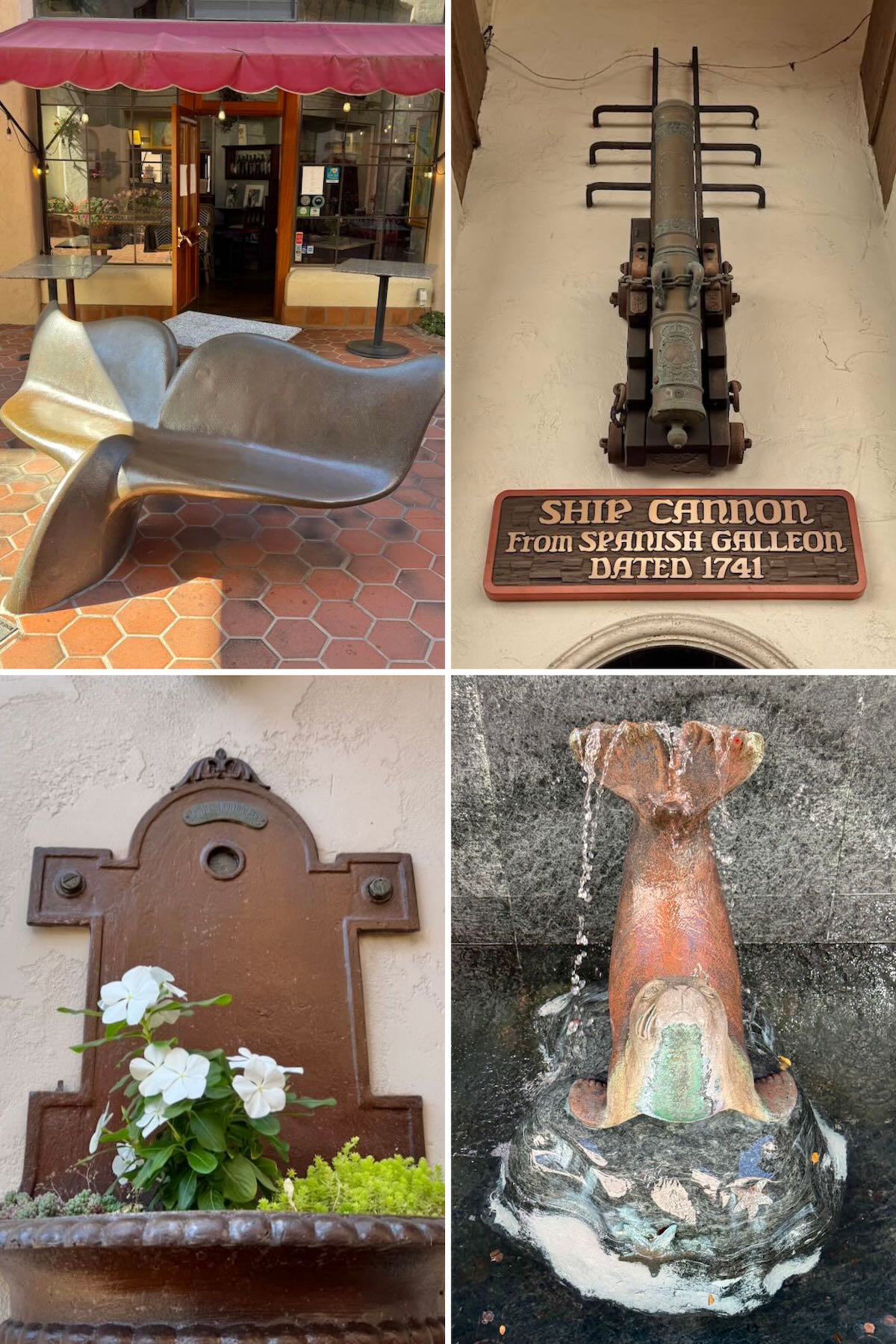 Was Ben Franklin the original manspreader?
 I must admit that I find the trompe l’oeil sculptures of people a little creepy—this one most of all, because when I crouched to get a better photo, I realized the man sort of resembles me.
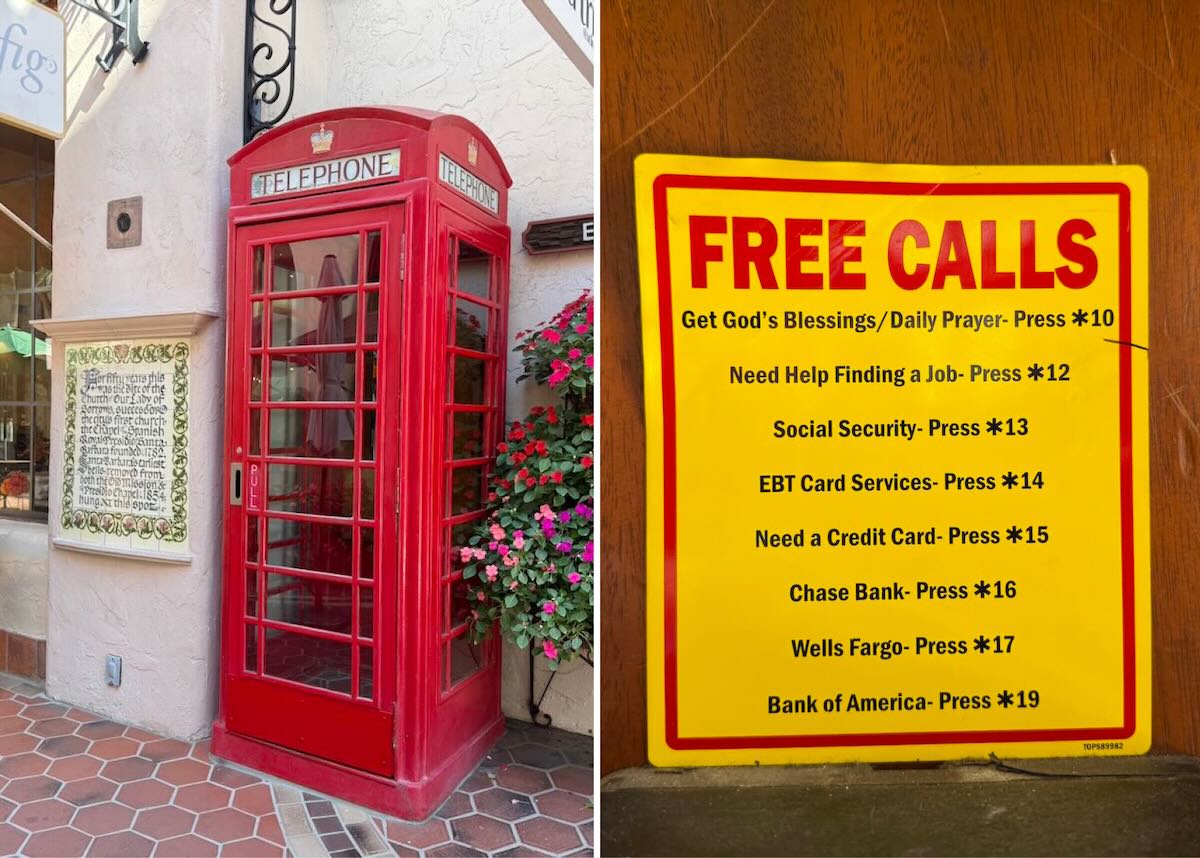
 The British phone booth does indeed have a pay phone inside, although a defibrillator might get more action. I did not check to see whether any of the free calls still work.
 My walk occurred during the period while Hook & Press’s turtle, Leo, was kidnapped, but I did take a moment to say hi to these two cuties sunbathing in the main fountain.
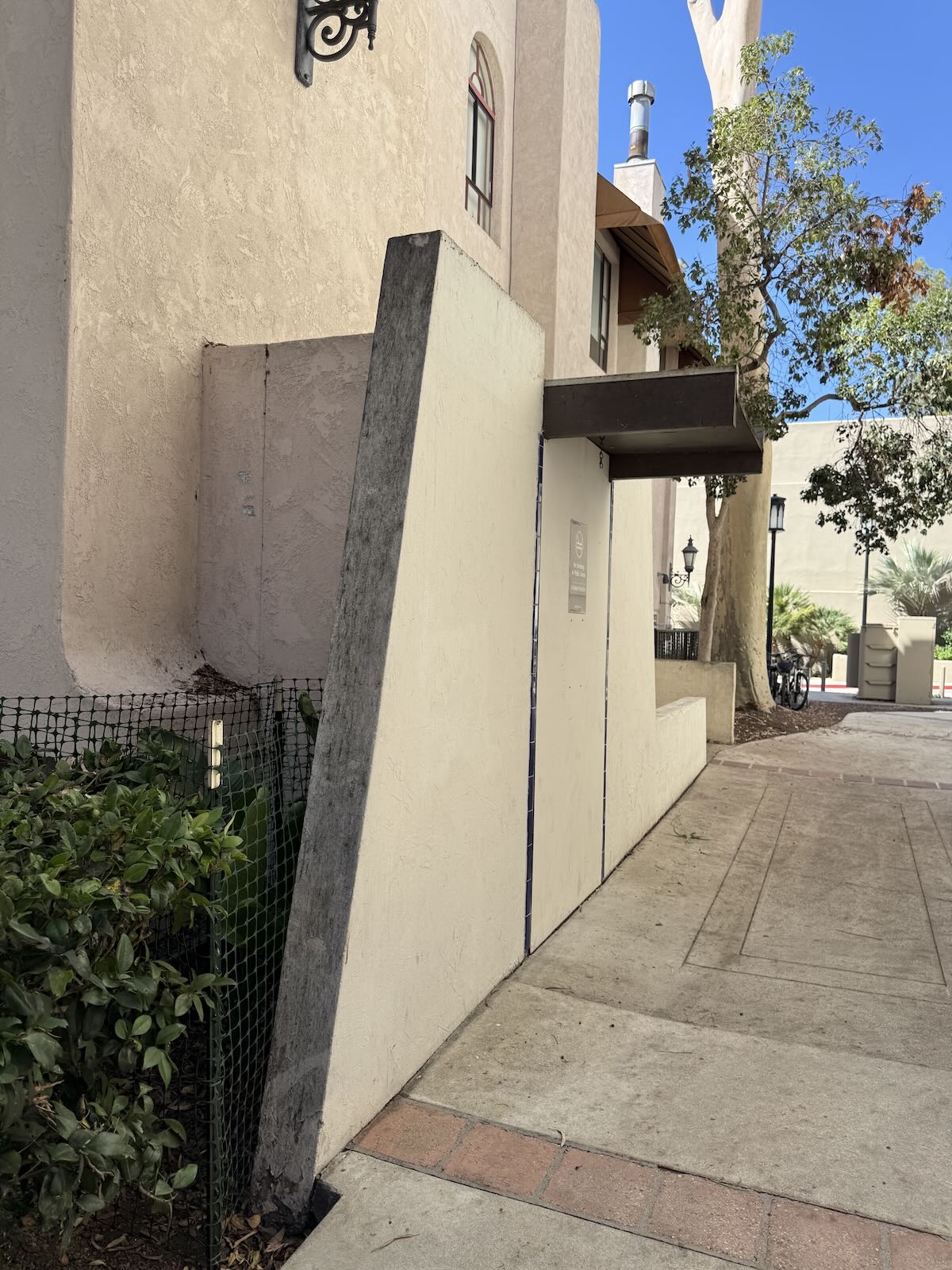
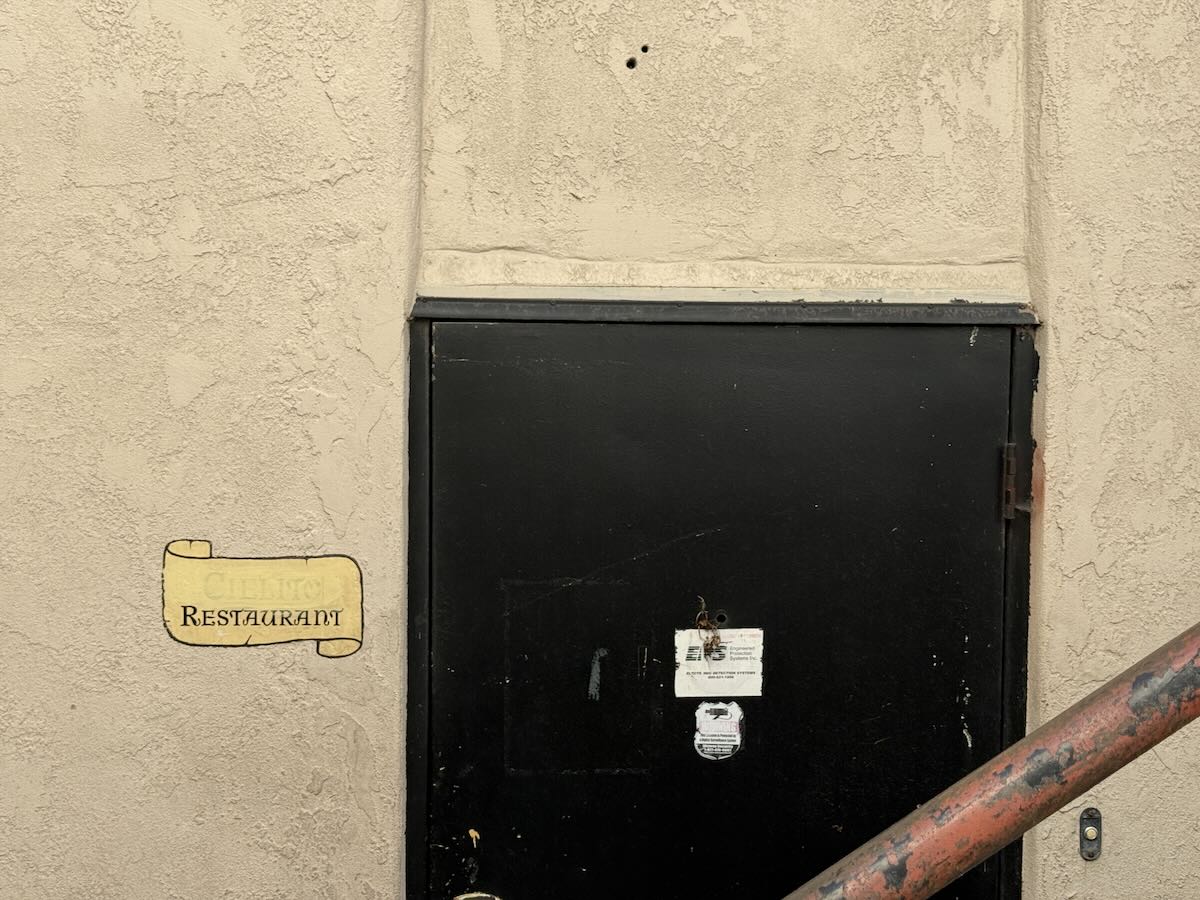
 Two discoveries around the back/north of La Arcada: a weird architectural addendum, and a remnant of when Cielito Restaurant was in the mall. Open from 2012 to 2016, it predates my time here, but the inside was quite something.
 Another restaurant remnant can be found in the La Plazuela paseo that links City Lot #5 and State Street. The pergola is a pleasant touch.
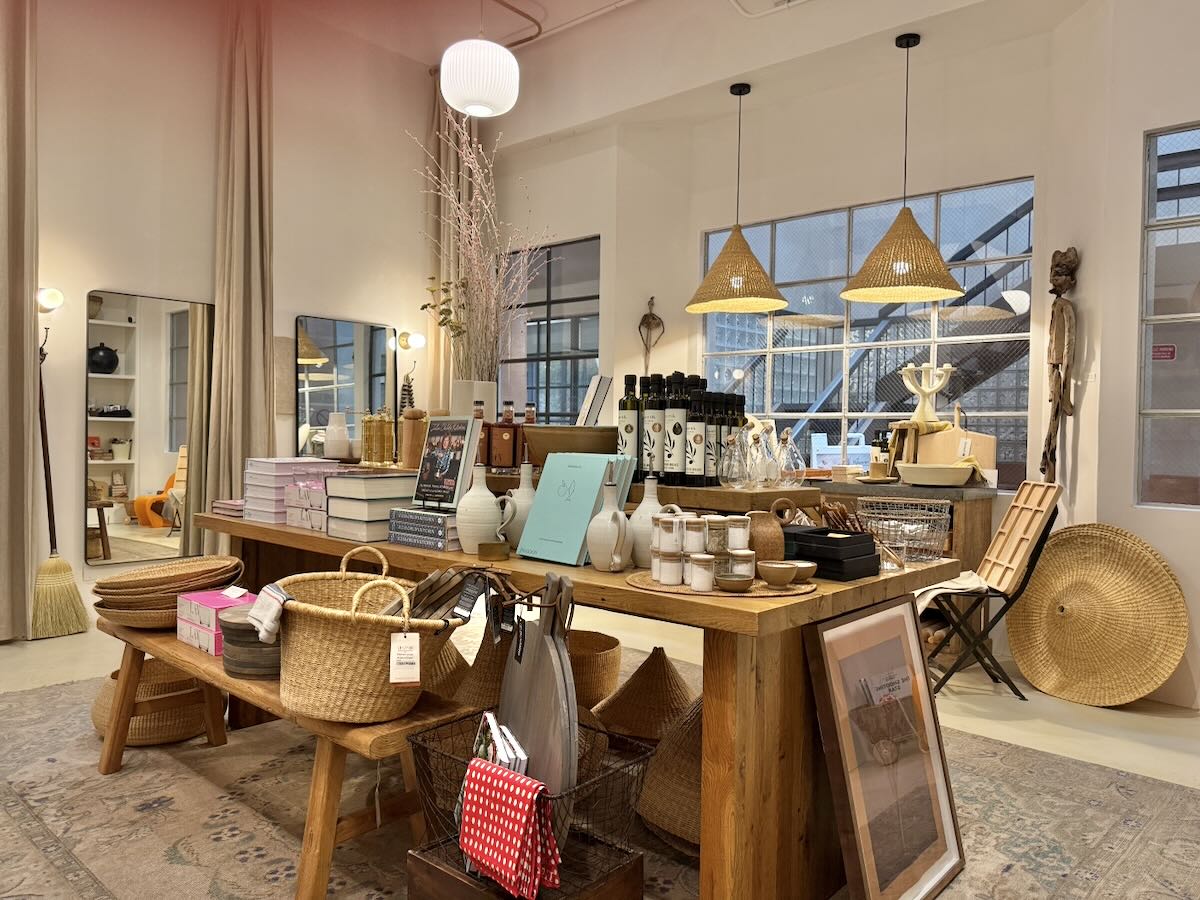
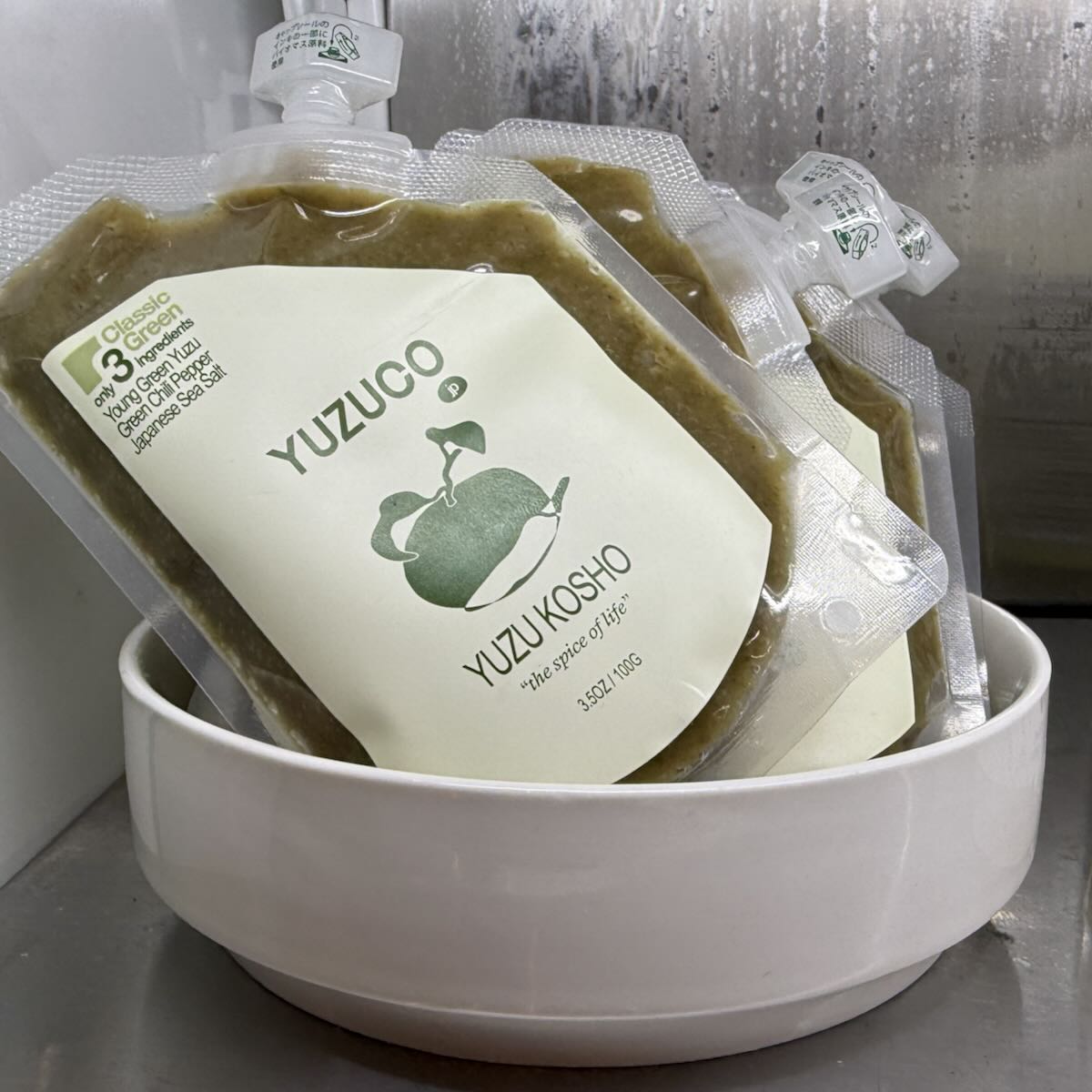
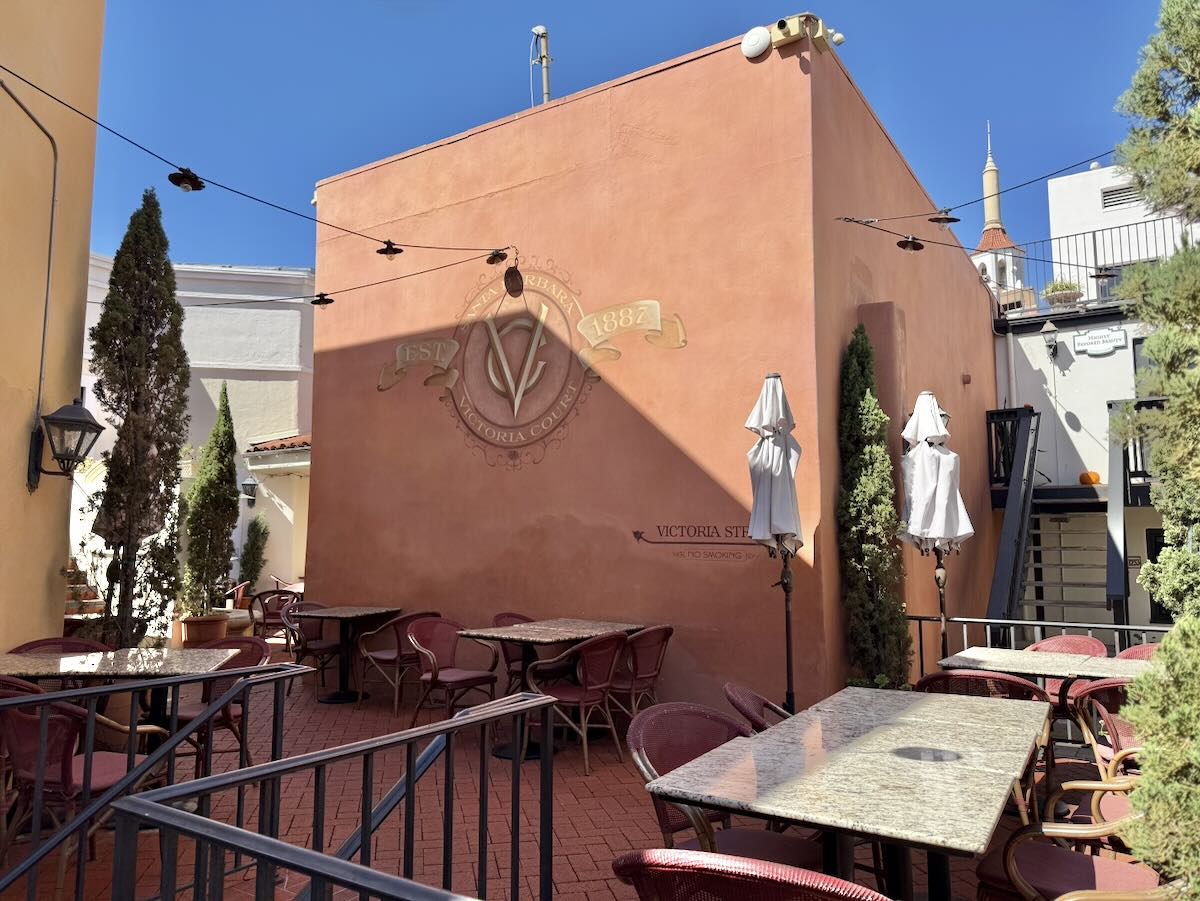
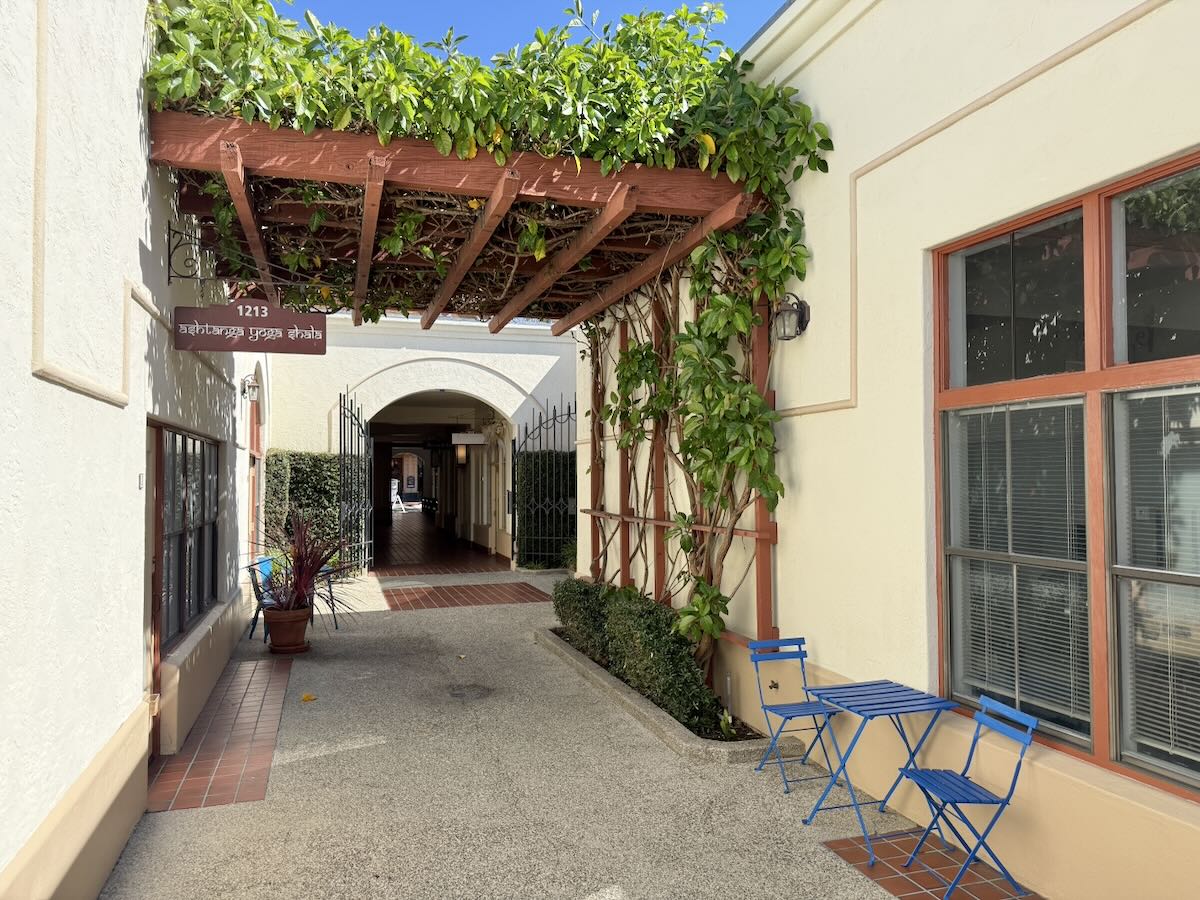 If the Arts District has a heart, I’d place it at Victoria Court, where savvy leasing—particularly the one-two punch of Domecíl and The Daisy—has done a huge amount to give this part of State Street its cachet. (I need to return to The Daisy for some of that yuzu kosho.) Same goes for Arlington Plaza, with the Diani outposts as the tentpoles.
 It has taken me this long to discover that The Standard Men’s Shop, open since 2014, is “the town’s first concierge men’s salon” with a cap of 75 clients who can get “a haircut guaranteed every month.”
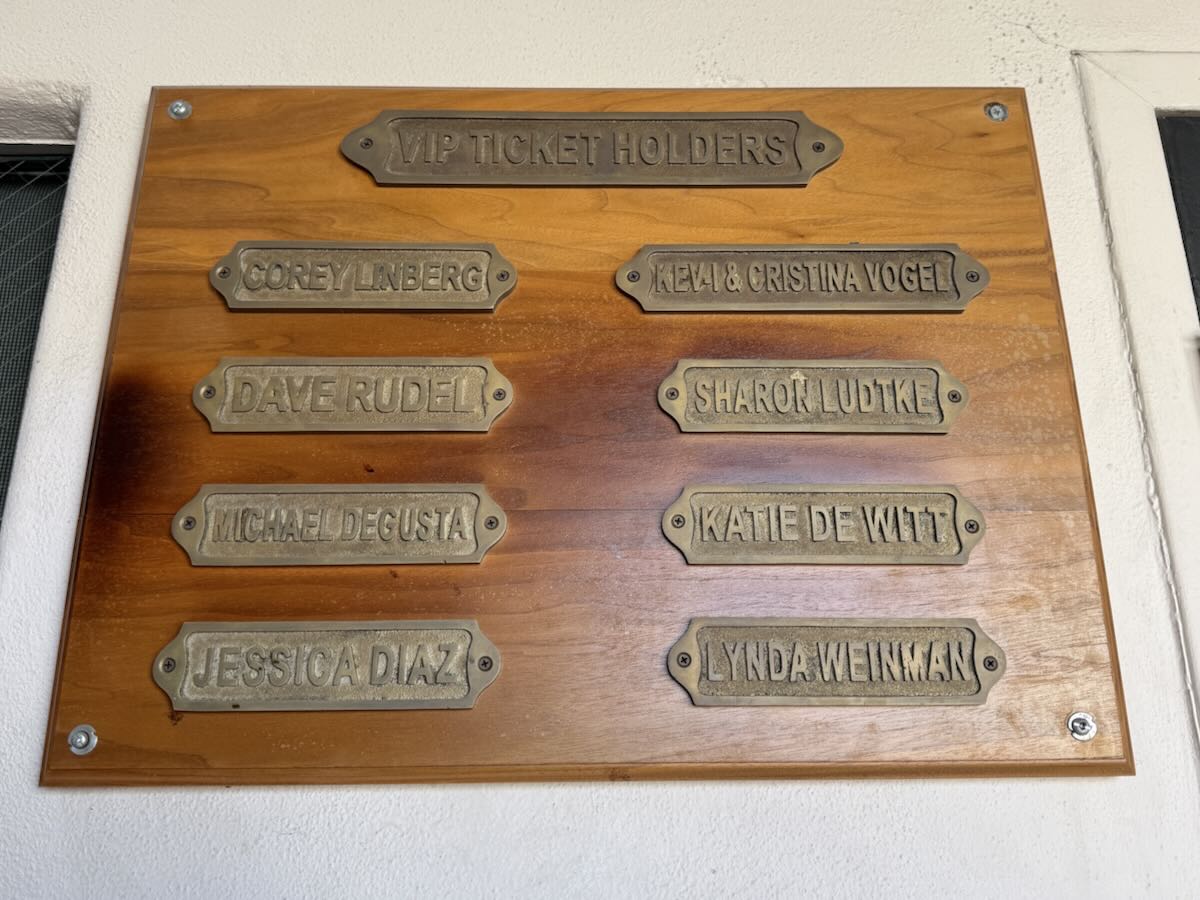
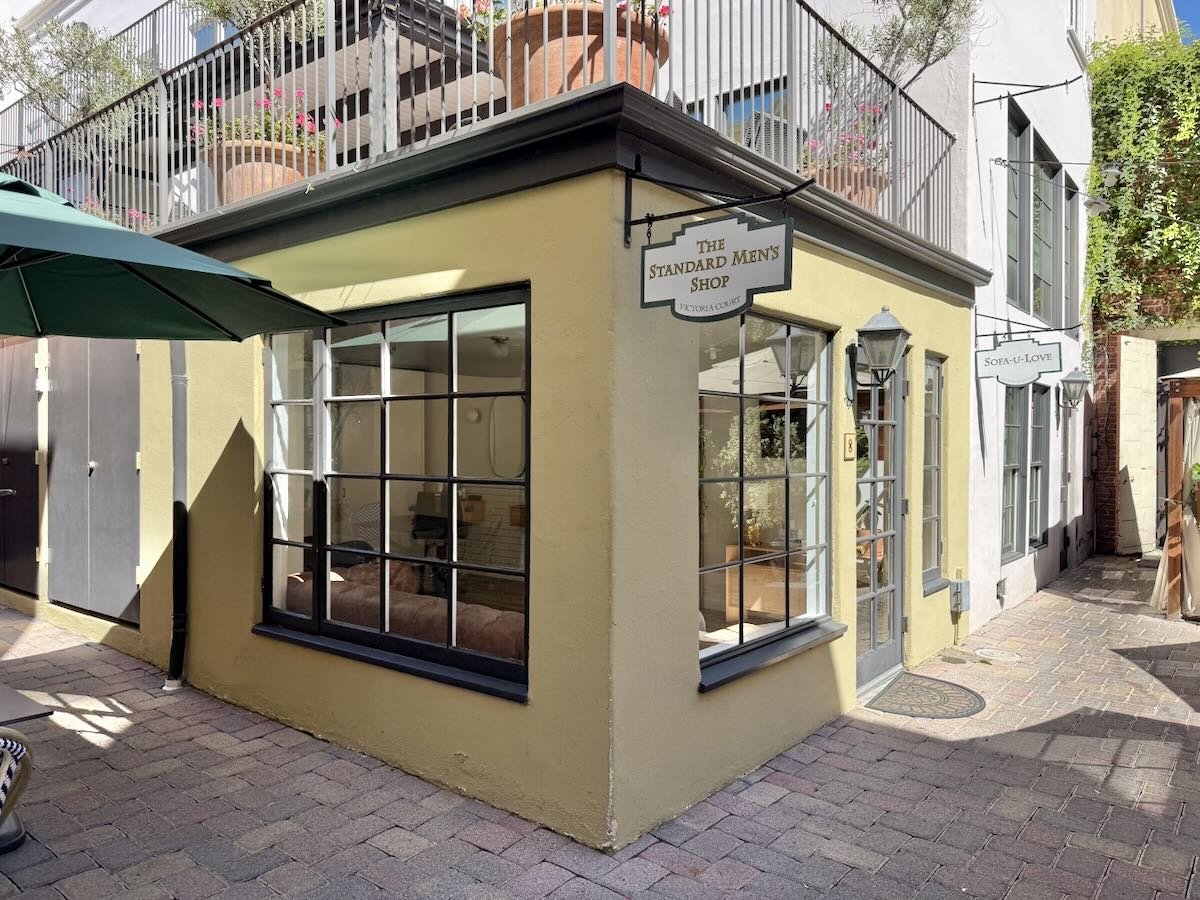 Wandering around Victoria Court always leaves me a little lost. I ventured upstairs for the first time, too. What did Soho‘s VIP ticket holders do to earn that honor?
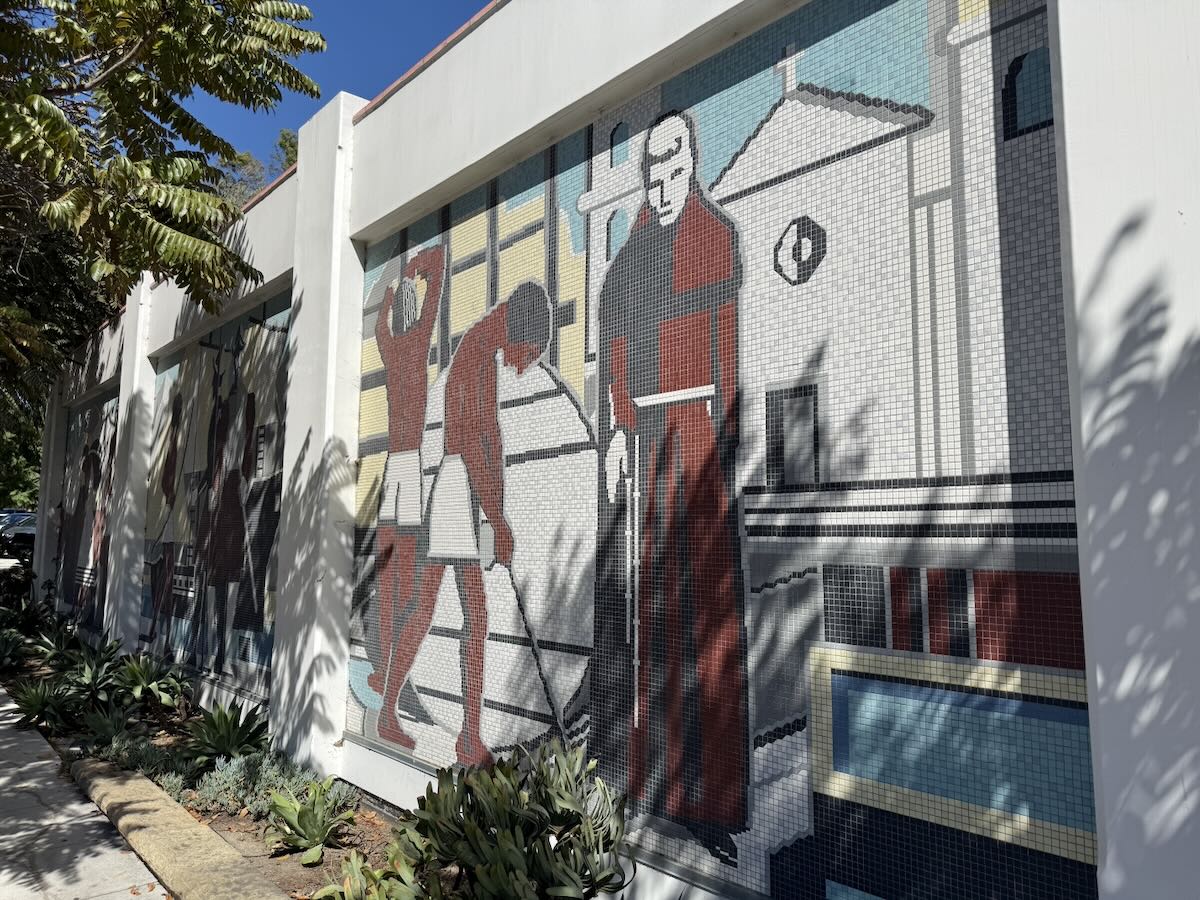
 From Victoria Court, I headed over to the Santa Barbara Public Market. The six mosaic murals by Joseph Knowles date from when the building was constructed as a Safeway market in 1959; they were moved from the Victoria Street facade when the Public Market took over.
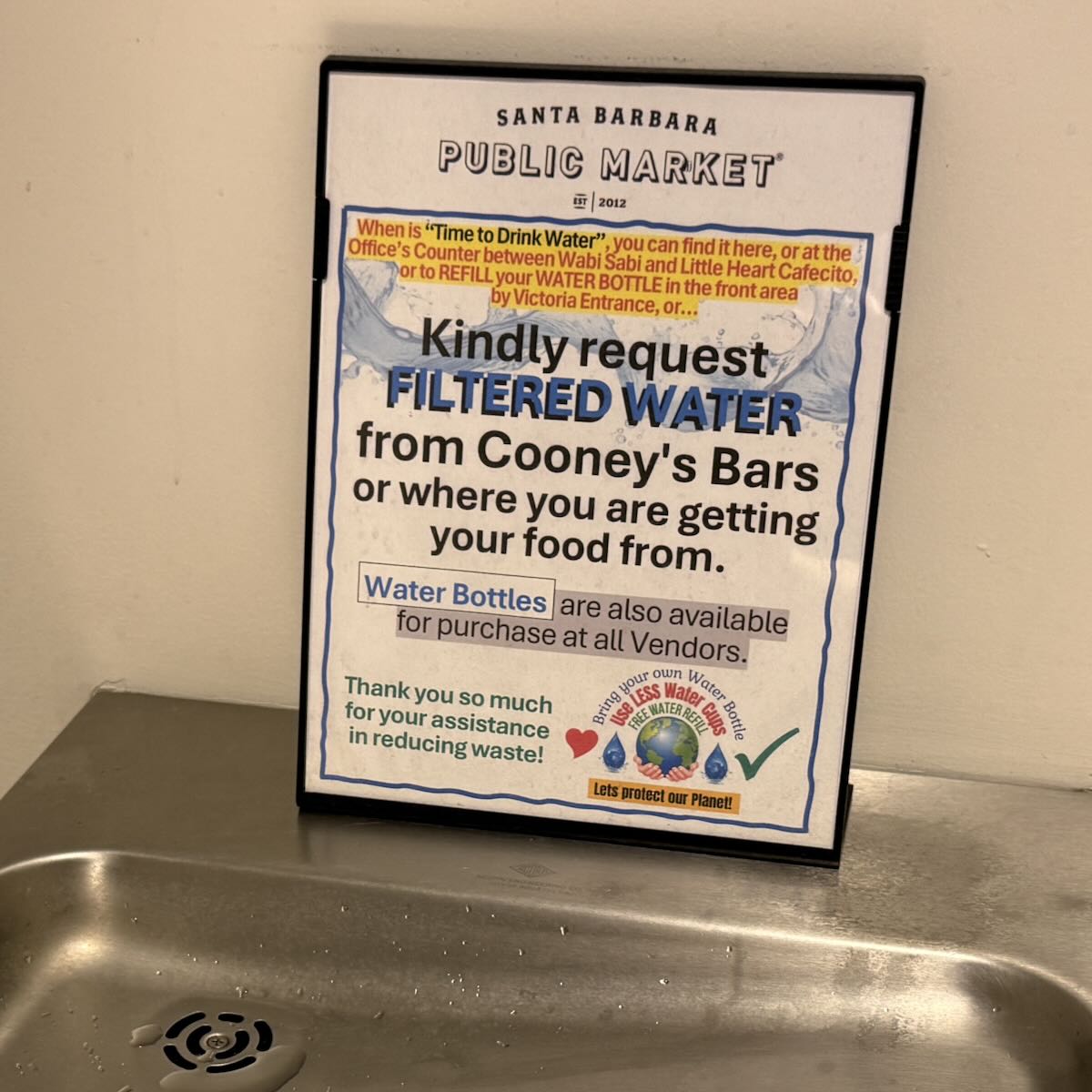
 Getting a drink of water has never been so complicated.
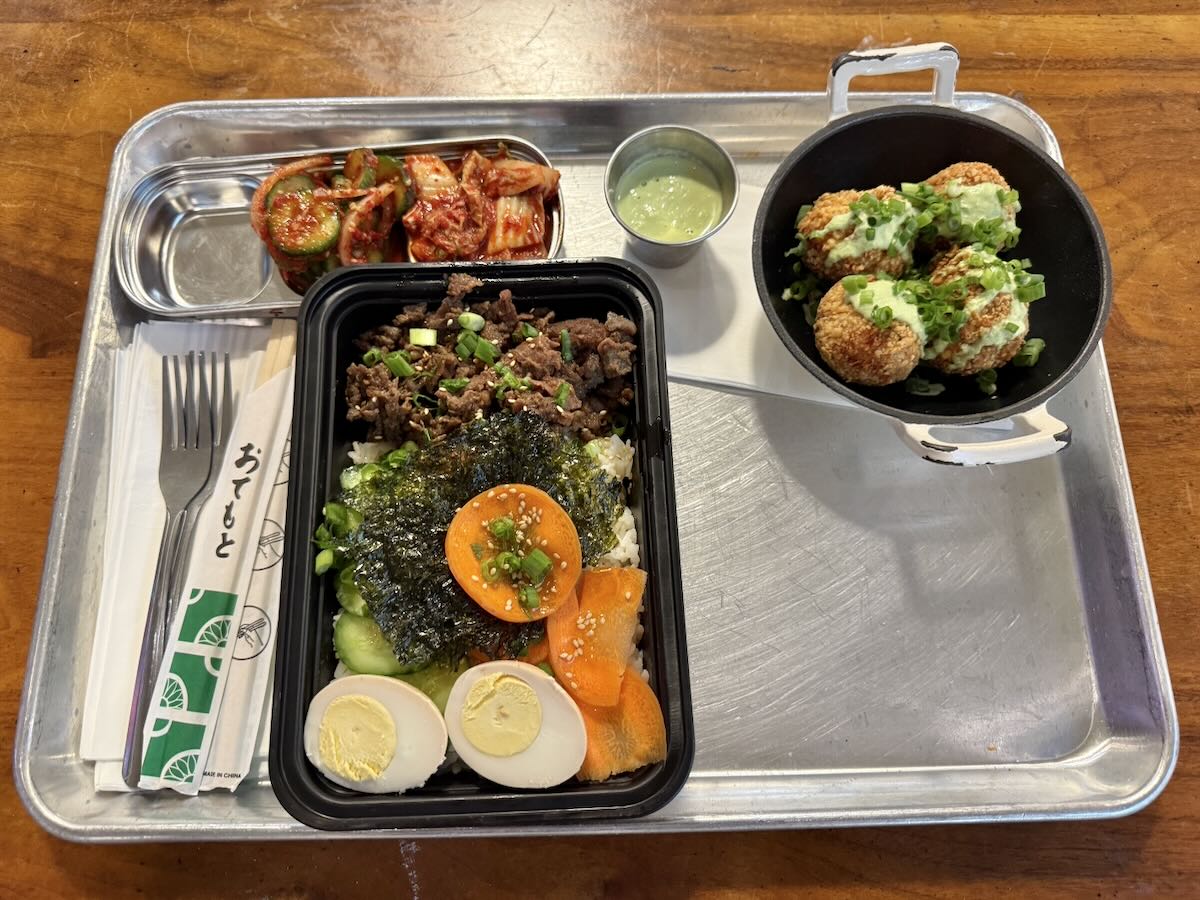
 I stopped for lunch—the bento box with bulgogi and a side of kimchi arancini—at SeoulMate Kitchen. You know you’ve ordered a lot when they give you two forks.
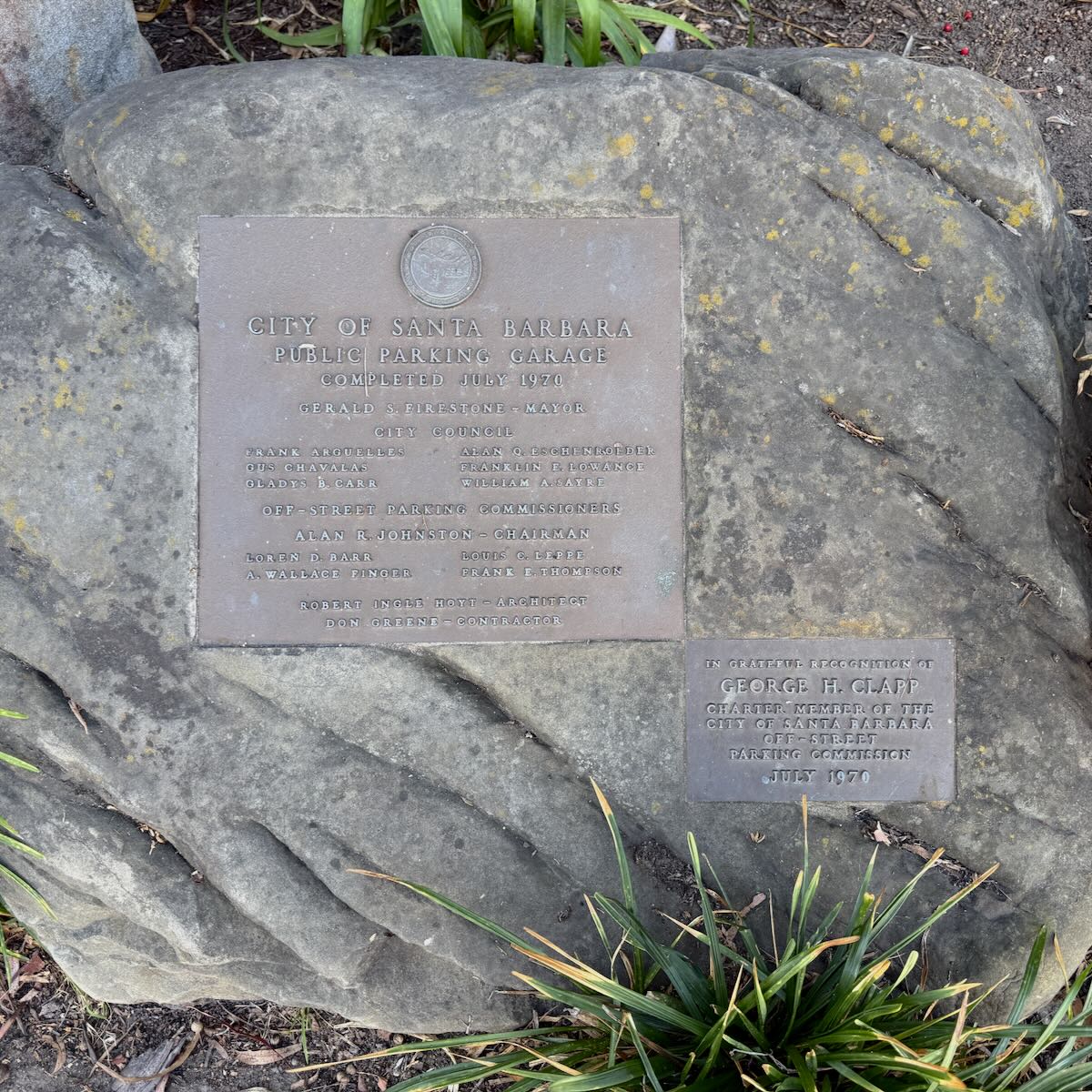
 Believe it or not, I tried to go about exploring the Arts District in a methodical, organized fashion, but the many paseos—delightful as they are!—make it impossible. This is particularly true of the city parking lots and garages, which have many pedestrian entrances/exits for obvious reasons. I don’t care how long I live here, though. I will never learn their numbers. I’d have a much better shot if they had names. The exception is City Lot #7, at Figueroa and Anacapa. It’s fabulous.
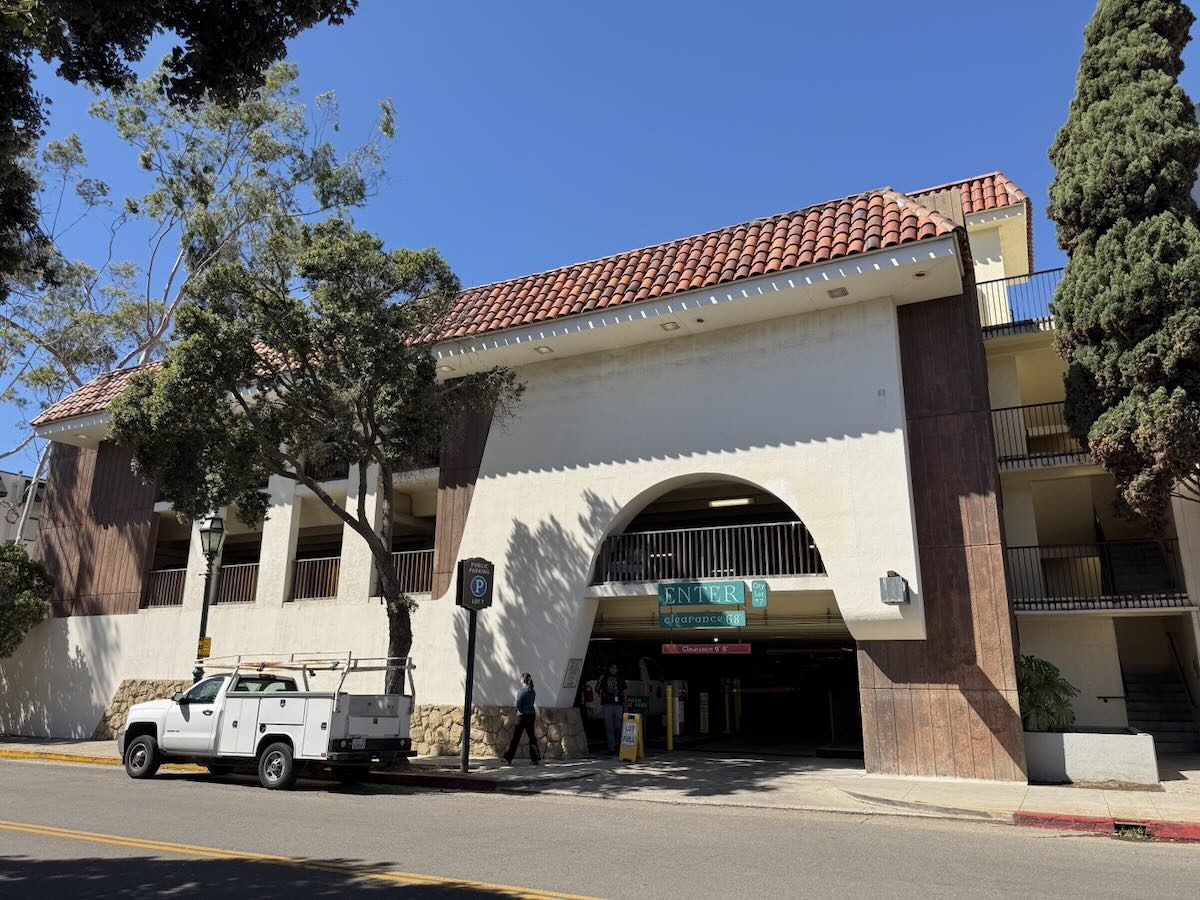
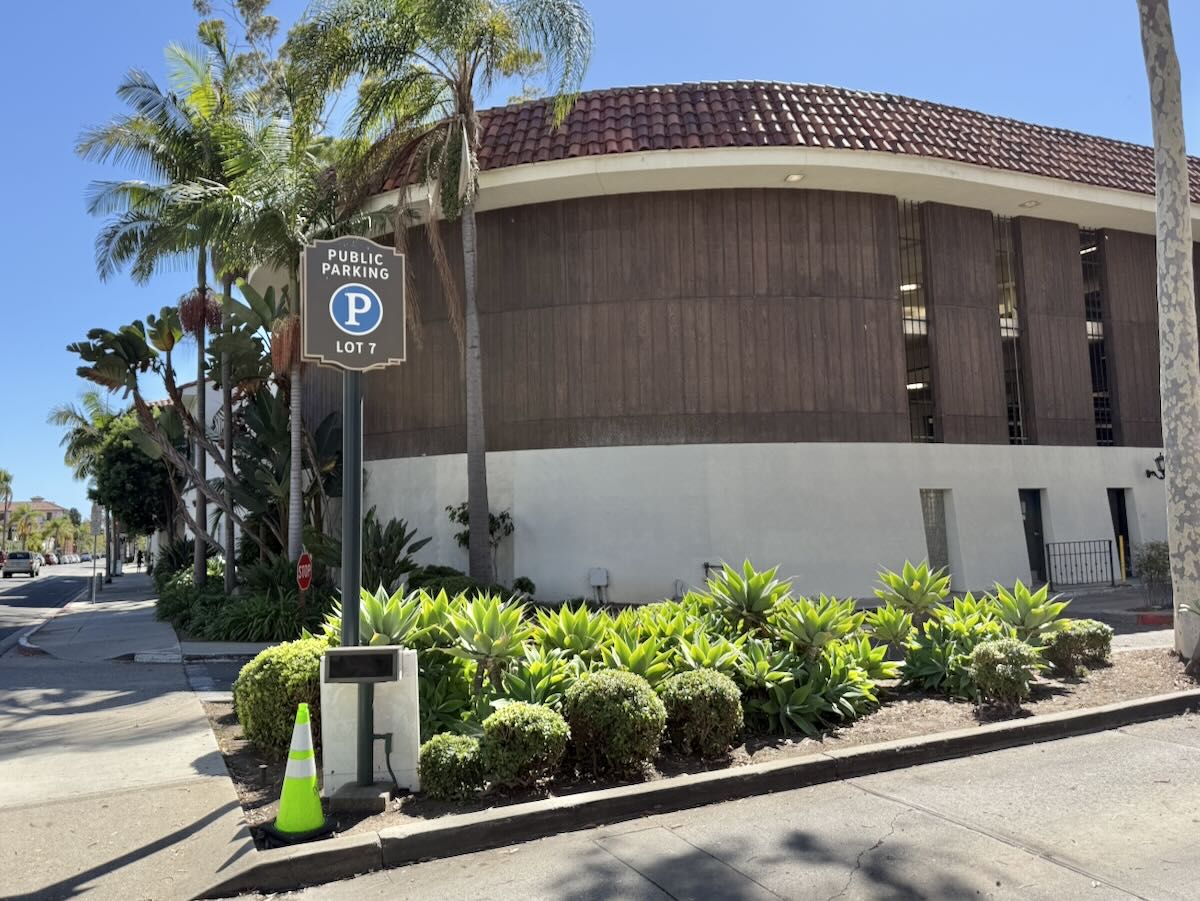
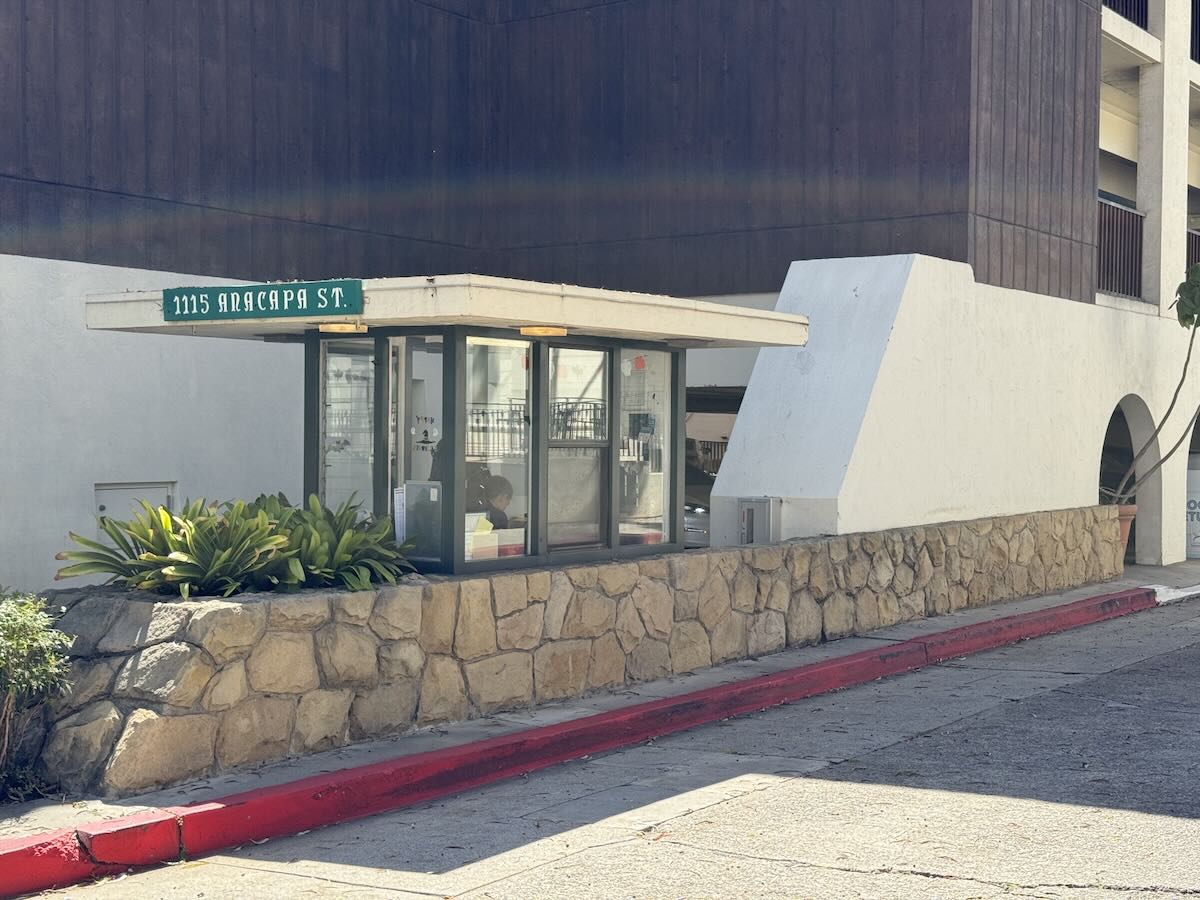
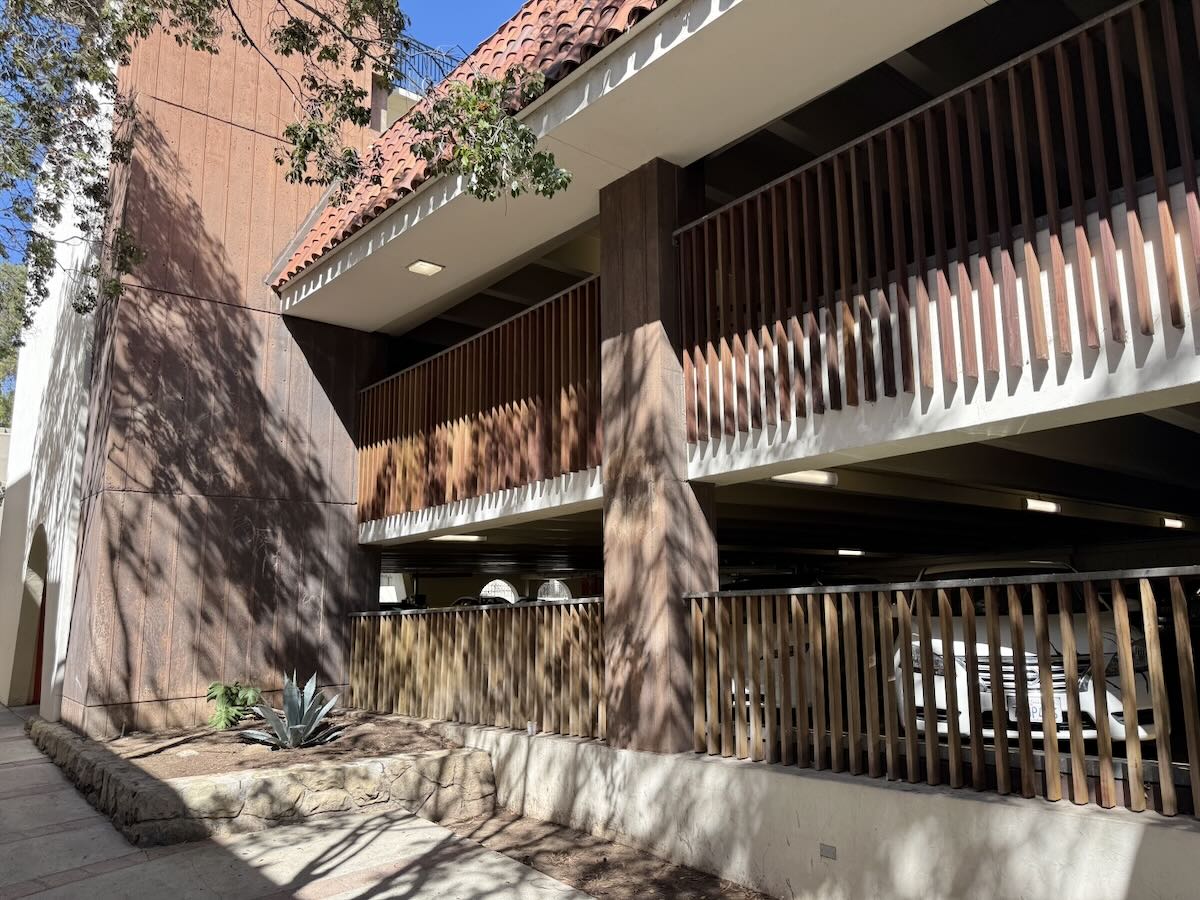
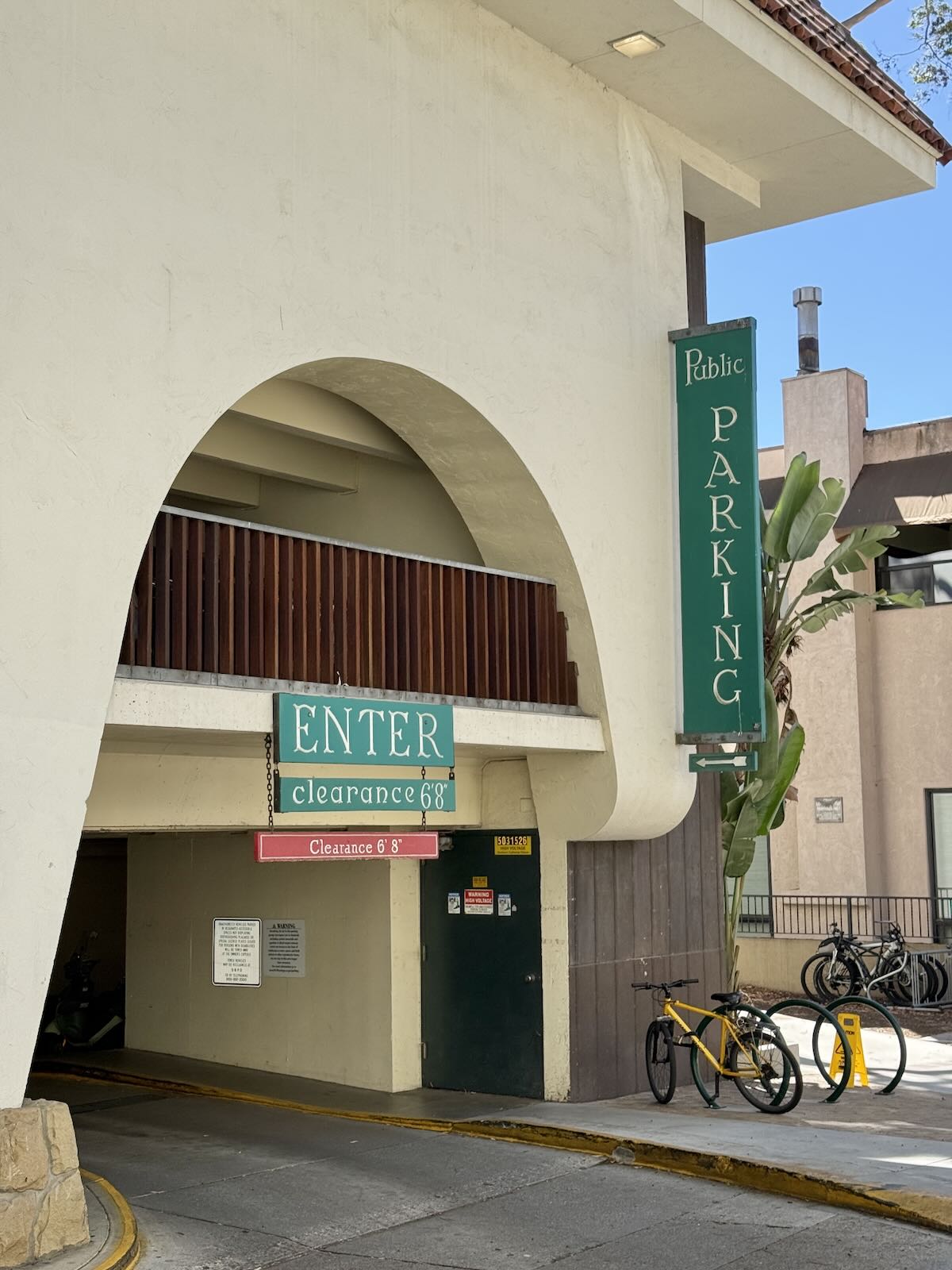
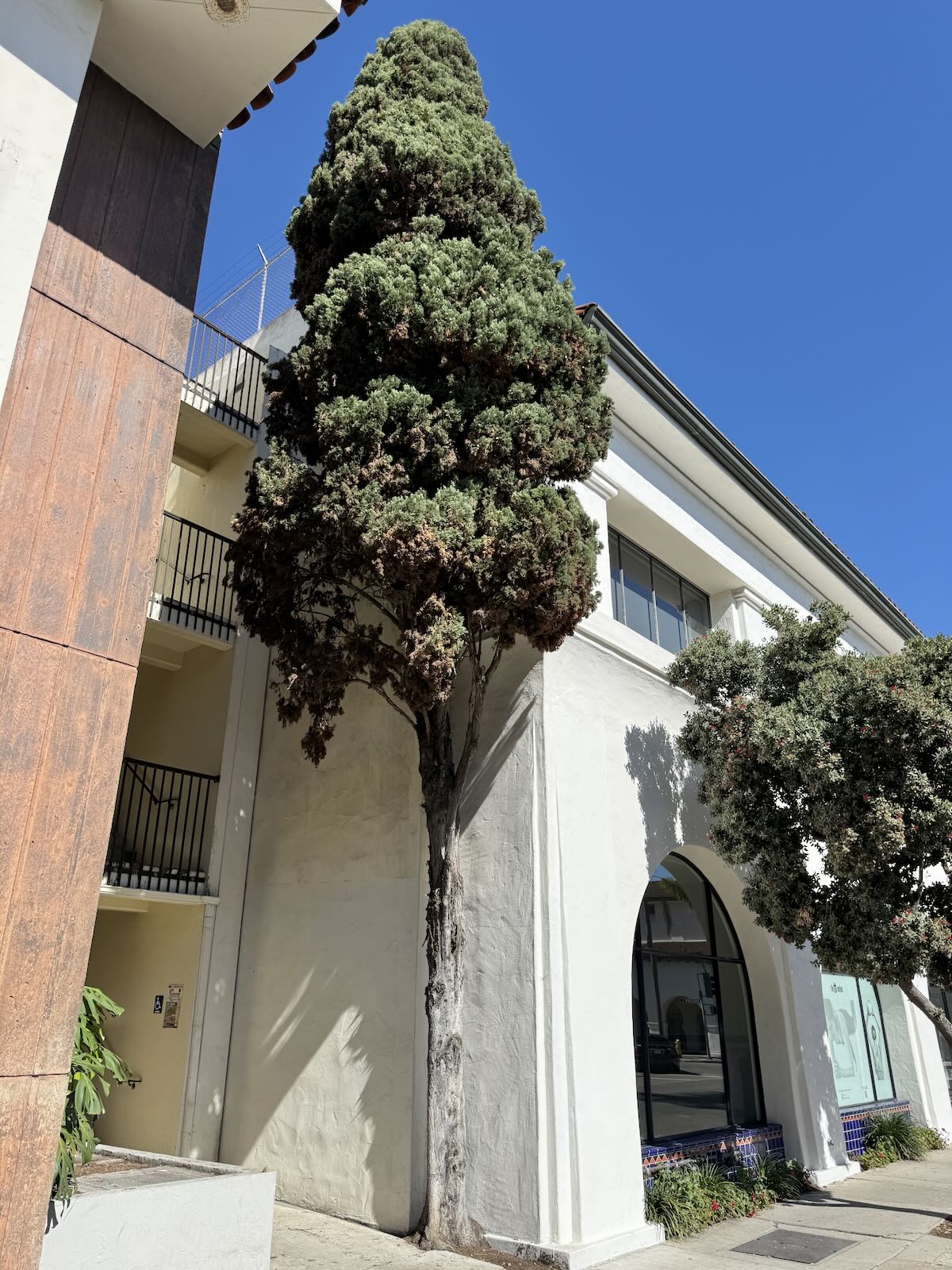 Plaque totally warranted.
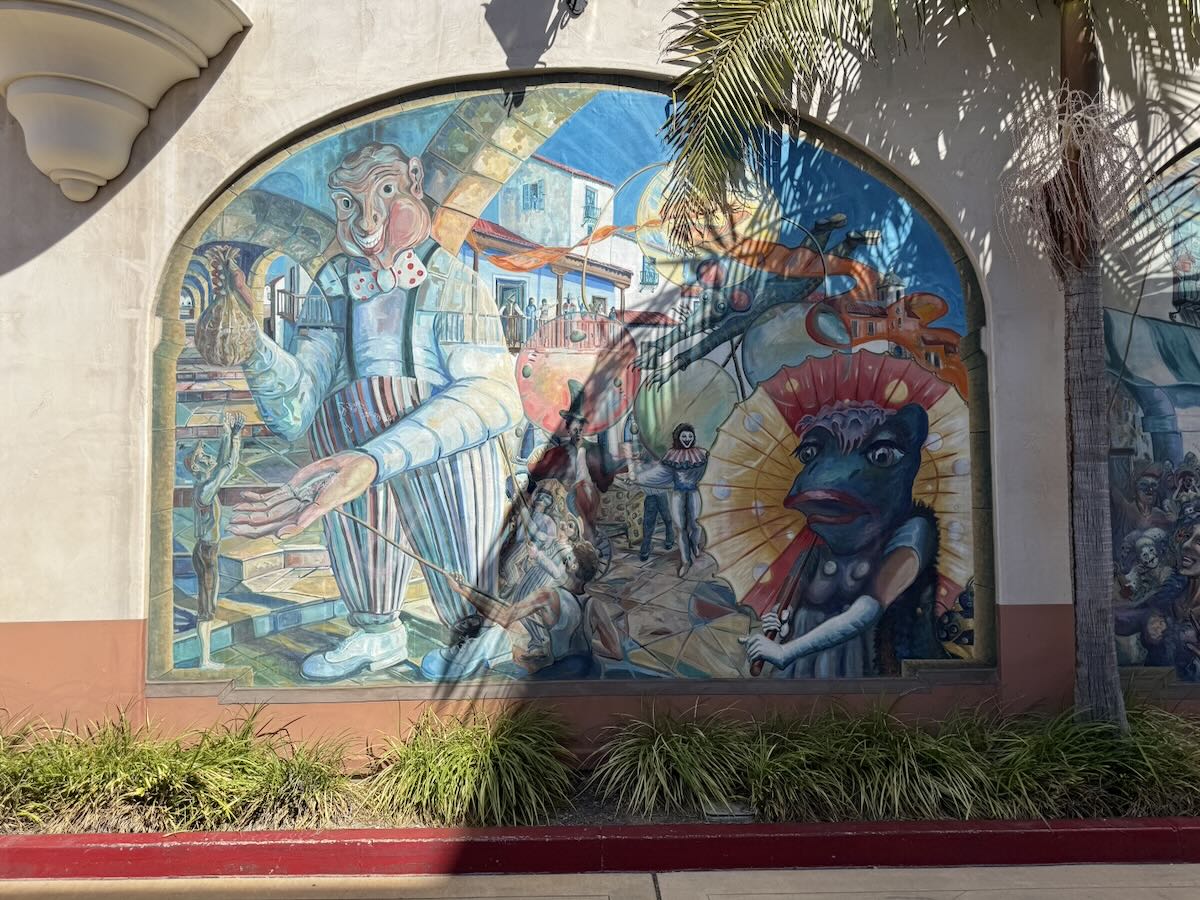
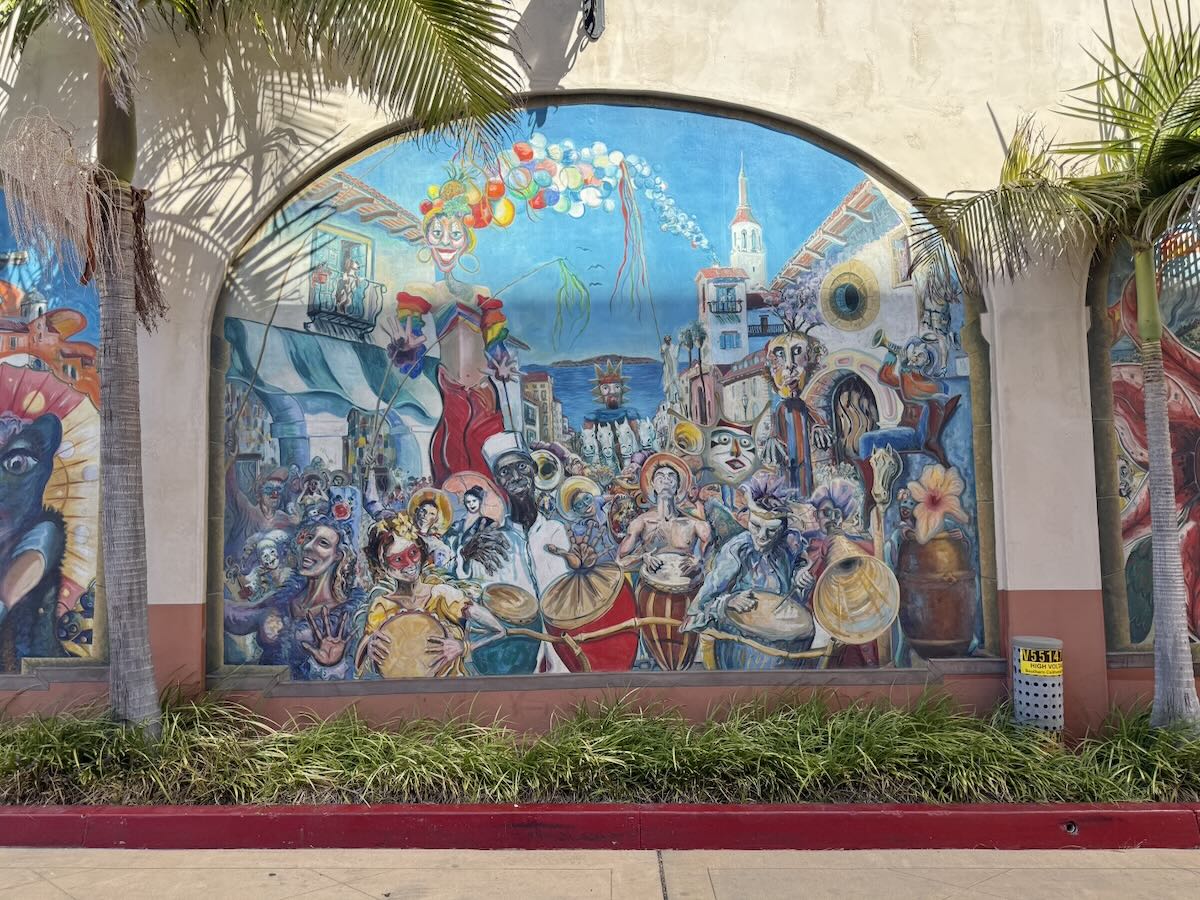
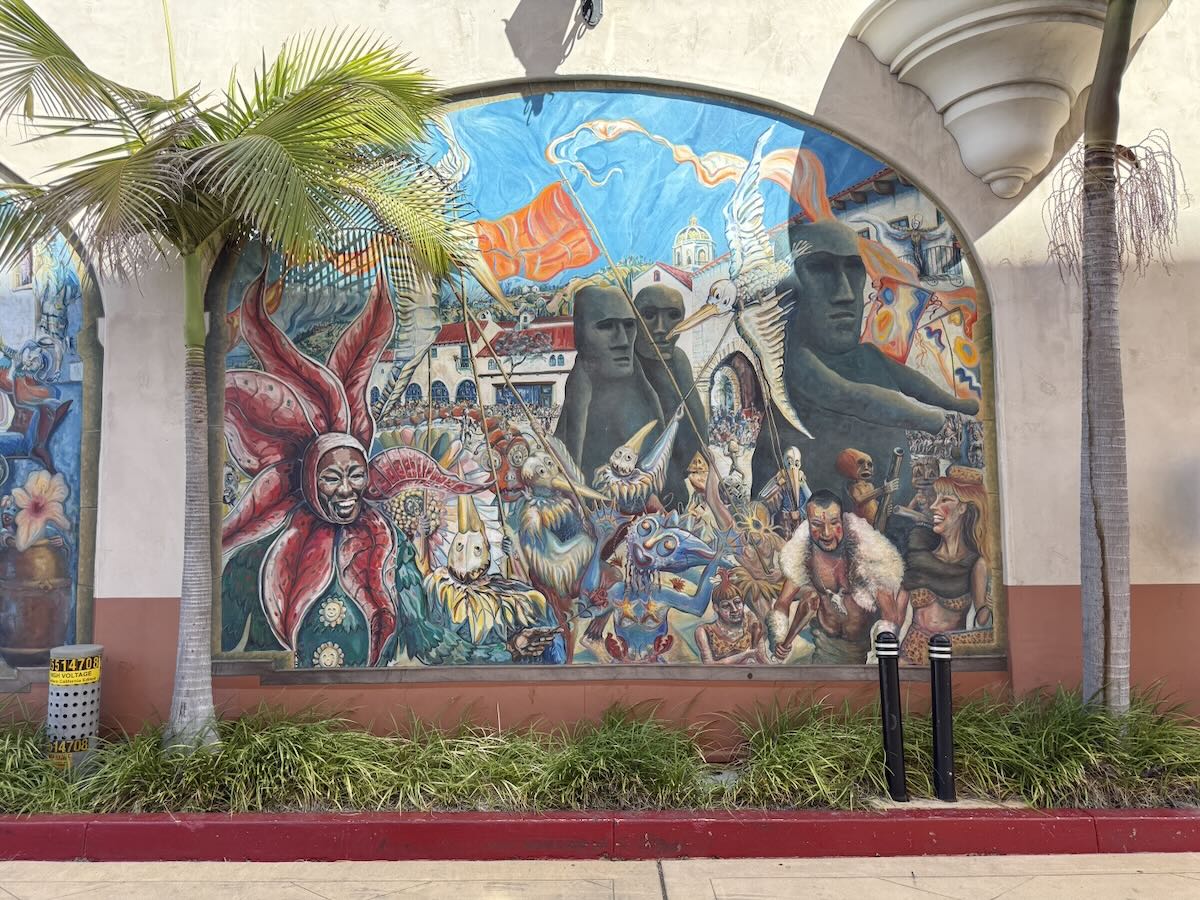
 While I’m not quite as fond of City Lot #6, behind the Granada, it does boast the three phantasmagoric “Summer Solstice Celebration” murals created by Ben Bottoms and Richard McLaughlin in 1995. They, too, were moved from their original location.
 I’m fascinated by the garage’s upper-level turquoise door…. And can this staircase really be to code? One misstep and you could roll down four flights.
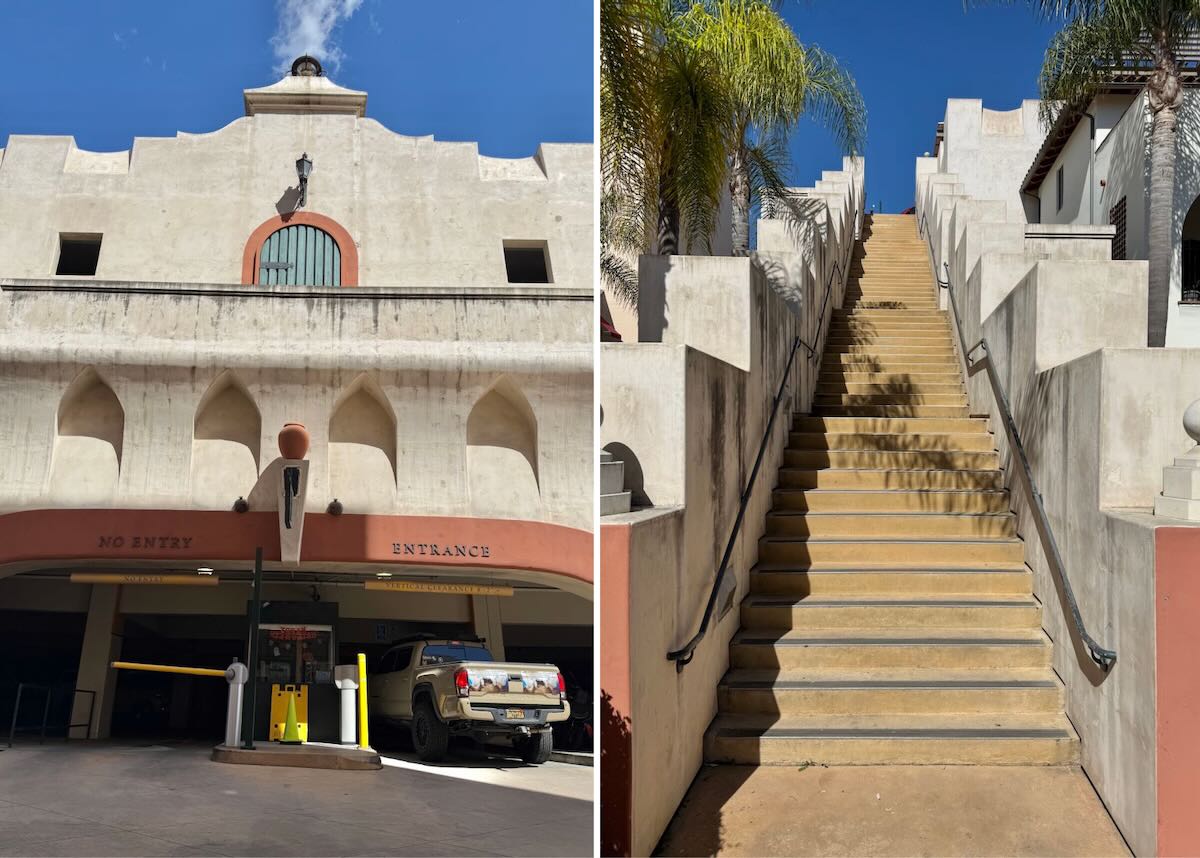 That last point was somewhat academic for me, because I do everything I can to avoid parking in a garage. (How many lame movies do you have to watch—or mediocre books do you have to read—to learn that parking garages are dangerous?) I feel less strongly about parking lots, but I’d still rather park two blocks away and walk. I look at all that asphalt and wonder why the city doesn’t sink the parking underground and build housing on top of it. And, at the risk of getting people all riled up, why not allow some tall buildings along State Street to keep the Granada company?
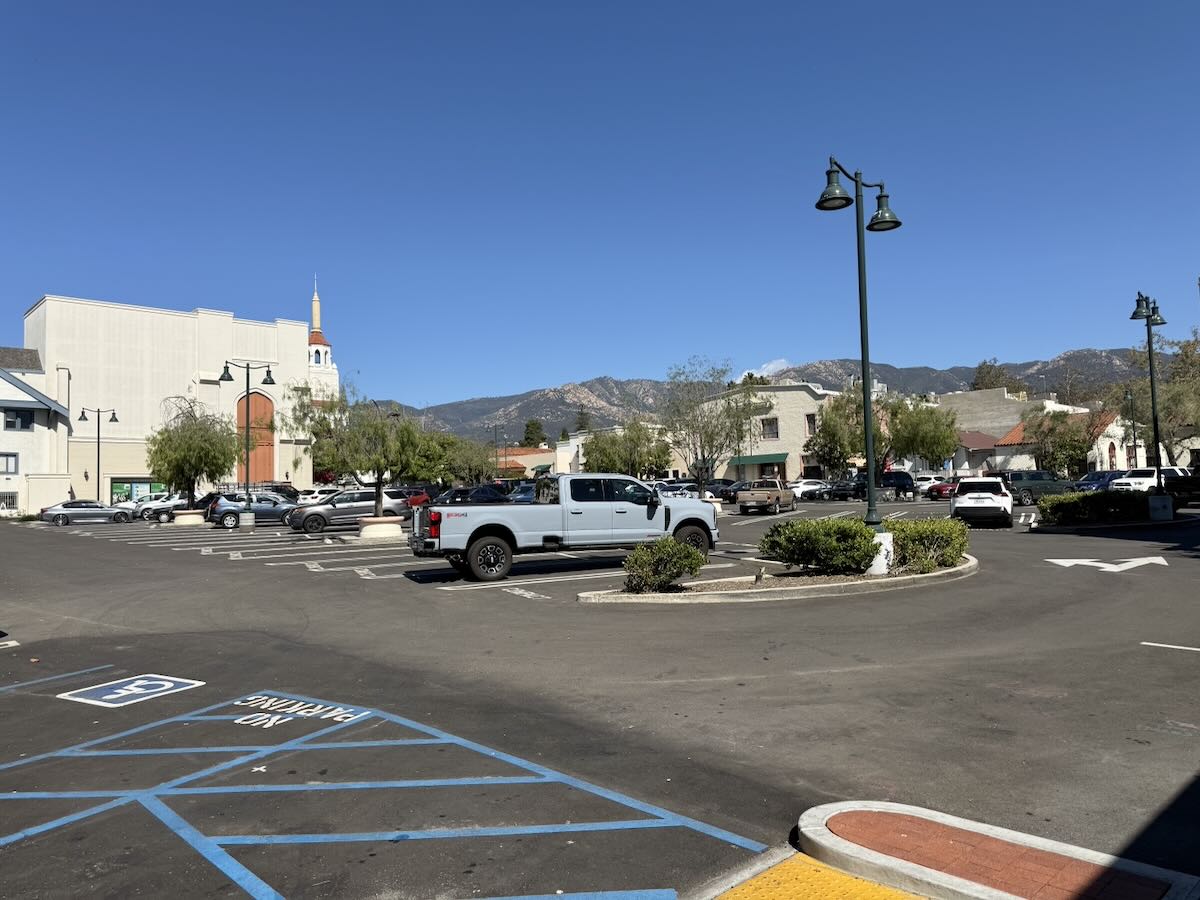
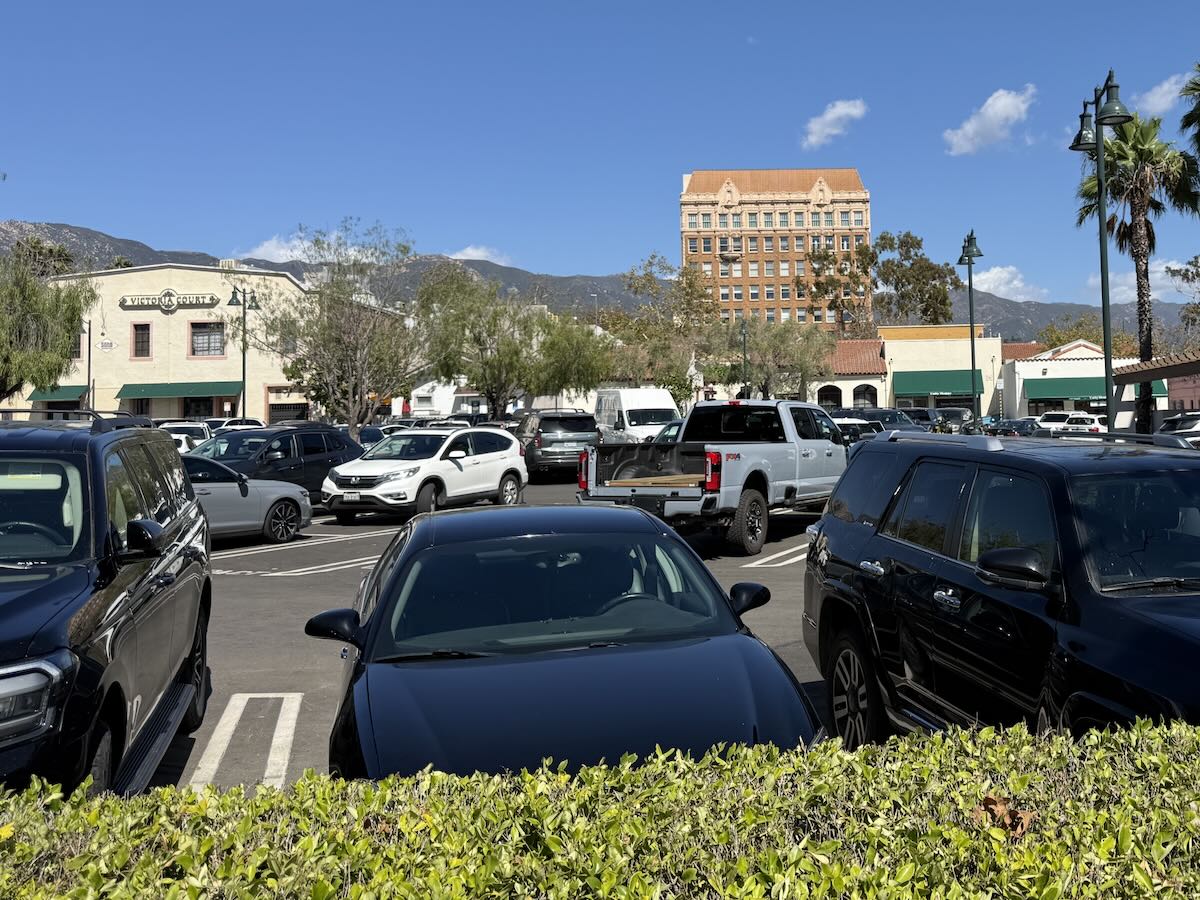 Another question for the city: we’re bending over backwards to accommodate pedestrians and bicyclists, so why no stop signs, limit lines, or crosswalk markings at the entrances to the parking lots?
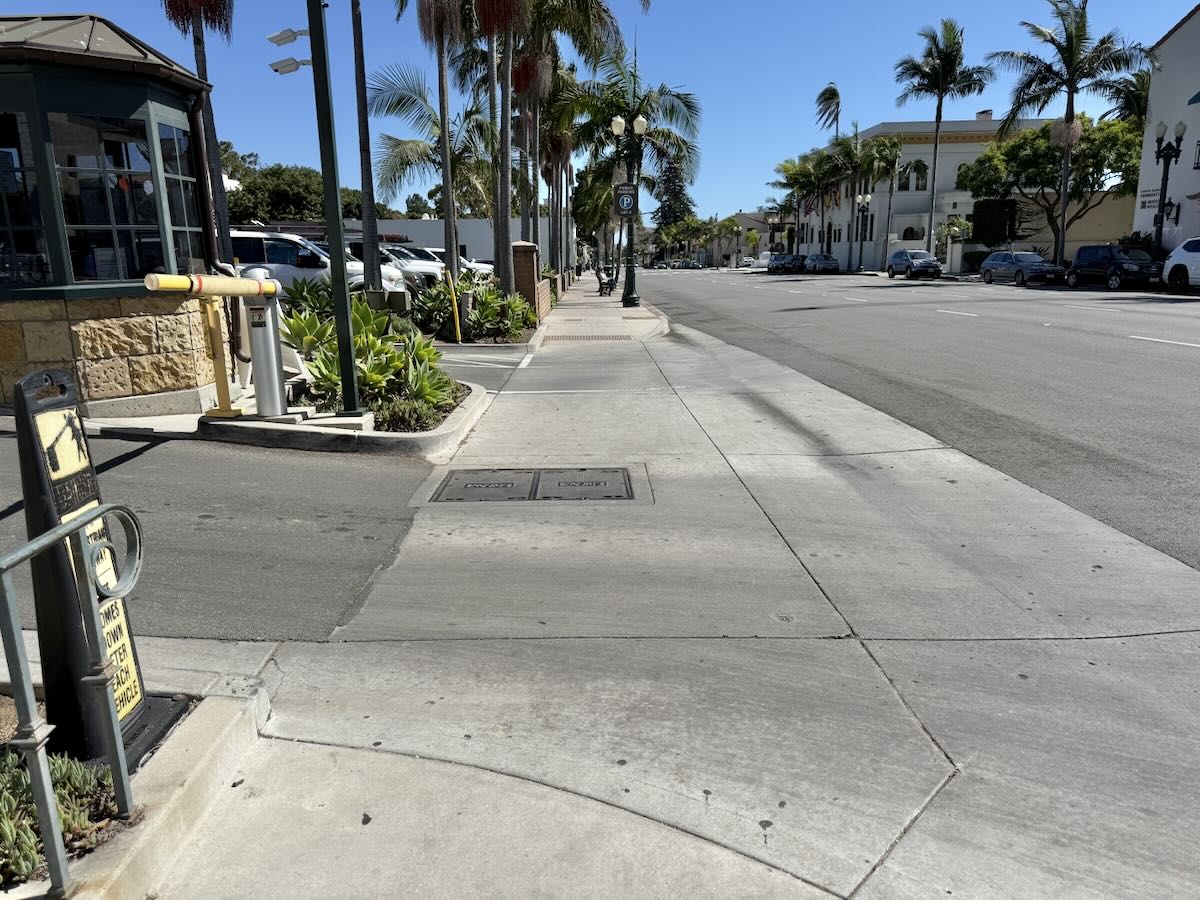
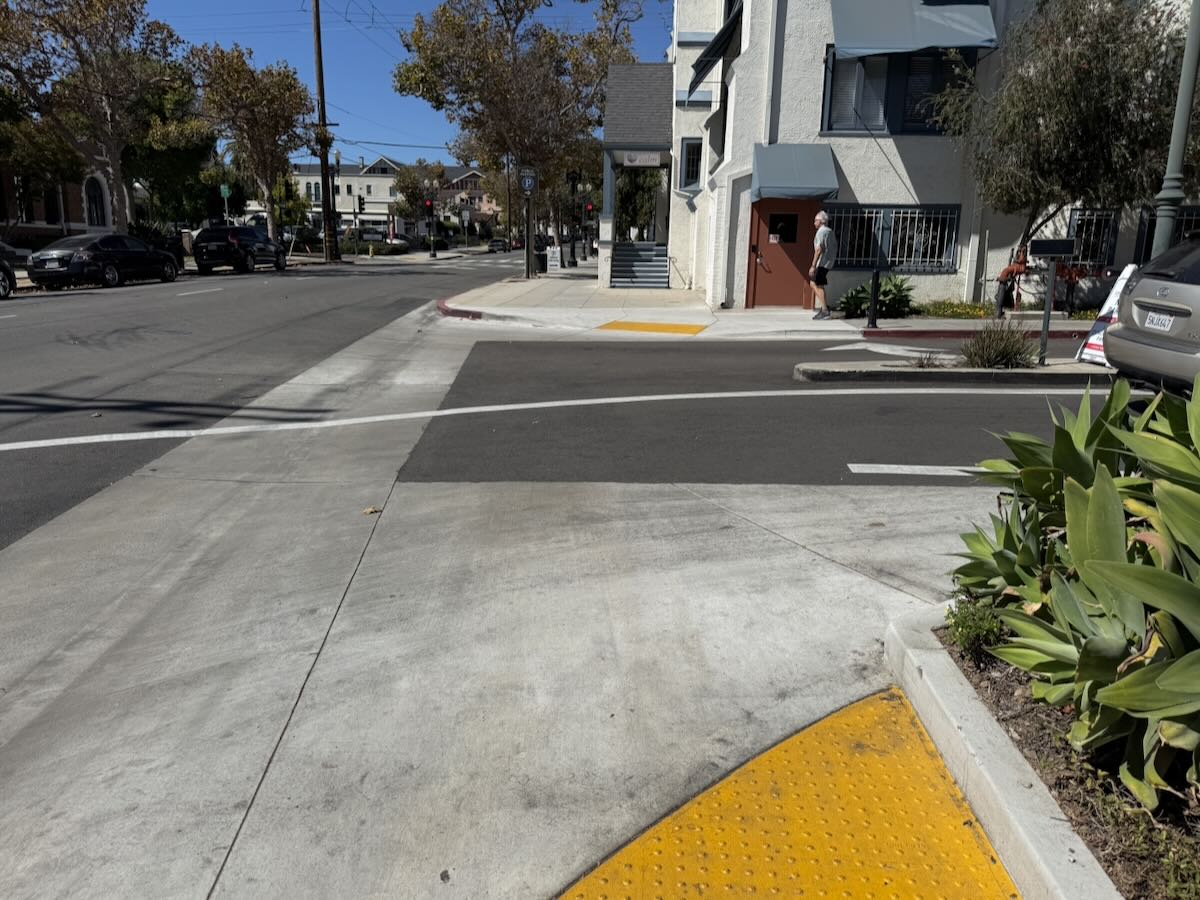 On the other hand, don’t overthink it.
················
Walk With Me…
Downtown Santa Barbara
• Downtown and a Little to the Left
↓↓↓ The Gritty Glamour of the Funk Zone
• The Upper Upper East Is Busting Out All Over
• The Presidio: In the Footsteps of Old Santa Barbara
• Brinkerhoff, Bradley, and Beyond
• Mixing Business and Pleasure in East Beach
• It’s Only Milpas Street (But I Like It)
• The Haley Corridor Is Keeping It Real
• The Small Pleasures of Bungalow Haven
• Is There a Better Neighborhood for a Stroll Than West Beach?
• E. Canon Perdido, One of Downtown’s Best Strolling Streets
Eastside
• Where the Eastside Meets the Lower Riviera
Oak Park / Samarkand
• The Side Streets and Alleyways of Upper Oak Park
• The Small-Town Charms of Samarkand
The Riviera
• The Ferrelo-Garcia Loop
• Scaling the Heights of Las Alturas
• High on the Lower Riviera
Eucalyptus Hill
• On the Golden Slope of Eucalyptus Hill
• Climbing the Back of Eucalyptus Hill
San Roque
• Amid the Saints of South San Roque
• Voyage to the Heart of the San Roque Spider Web
TV Hill / The Mesa
• Higher Education on the Mesa
• The Metamorphosis of East Mesa
• The Highs and Lows of Harbor Hills
• Walking in Circles in Alta Mesa
• West Mesa Is Still Funky After All These Years
• A Close-Up Look at TV Hill
Hidden Valley / Yankee Farm / Campanil
• Campanil is a Neighborhood in Flux
• An Aimless Wander Through Hidden Valley
• The Unvarnished Appeal of Yankee Farm
Hope Ranch / Hope Ranch Annex / Etc.
• A Country Stroll on El Sueno Road
Montecito
• East Meets West on Mountain Drive
• A Relatively Modest Montecito Enclave
• Strolling Under a Canopy of Oaks
• Out and Back on Ortega Ridge
• The Heart of Montecito Is in Coast Village
• Quintessential Montecito at Butterfly Beach
• Once Upon a Time in the Hedgerow
• Where Montecito Gets Down to Business
• In the Heart of the Golden Quadrangle
• Up, Down, and All Around Montecito’s Pepper Hill
• Montecito’s Prestigious Picacho Lane
• School House Road and Camphor Place
Summerland / Carpinteria
• On Summerland’s Western Fringe
• A Stroll in the Summerland Countryside
• Admiring the Backsides of Beachfront Houses on Padaro Lane
• Whitney Avenue in Summerland
Goleta / Isla Vista
• In the Shadow of Magnolia Center
• A Tough Nut to Crack in Goleta
• Where the Streets Have Full Names
• The Past Is Still Present in Old Town Goleta
• Social Distancing Made Easy at UCSB
 ················
Sign up for the Siteline email newsletter and you’ll never miss a post.








I used to wait tables after college on that lovely patio with the fountain many decades ago. 1129 restaurant was the happening spot in SB for a long time and I probably didn’t appreciate the lovely architecture and carved moldings. I do now and that section of state is really the only part we go to these days. Really appreciate the public Market, Bibi Ji’s, Arigato and Sama Sama and many great spots.
This:
I didn’t take a photo of the woman pressing one key over and over and over.
Perfectly describes State Street! My friend just yesterday posted a picture of her son playing one of those pianos on State Street. He was going to town, not a single person walking around- a total ghost town. That’s what your pictures show as well.
The lack of people in these photos is not meaningful. I generally avoid including them because people don’t like being photographed going about their business.
Huh? Public market was packed on Friday night and is always busy. Arigato was bustling 2 weekends ago. Yeah not a lot of retail anymore but that’s an everywhere problem not just a SB problem.
The best thing about being downtown is it’s full of people who actually want to be there rather Nextdoor complainers.
This is such a tired trope – “State Street is a ghost town” – usually uttered by the same people who stubbornly claim to never go to State Street. I walk or bike State Street 4-5 times a week and there are always people out and about.
Well- the video of the kid on Friday afternoon playing piano was pretty clear to me. Last time I walked State st to eat dinner at The Blue Owl – State Street was dead for the 4 blocks down and back to the Granada….
I don’t know who Christine is but she never has a kind word to say. I hope she’s able to put this energy in to good use to find joy or do good work in the community instead of polluting message boards with negativity.
Oh jeez, not another feelings nazi- why don’t you just ask Erik if you can pre-read every post beforehand ?
Did you see me cooking for 60 at the Horse Rescue in SYV recently? ✌️
Christine!, i didn’t, probably because it wasn’t posted anywhere that I see on local media. But more to the point, you are a negative Nelly.
Wait a minute-you have 2 personas here? Yuck
I don’t need to pre-read any messages I just don’t understand why almost every article has your negativity on it. It’s tiresome and just truly feels like you hate living here.
Paul/Dan/potentially Rhoda- nobody is forcing you to read my comments, but thanks for the loyal following✌️
Feel you Paul. They are a hemorrhoid. A stinky and annoying little thing that no one wants or likes yet we are forced to deal with…
Just put the fries in the bag girl, that’s it. Nothing else is wanted or needed. Just put the fries in the bag.
The above was wonderful. I love our Santa Barbara. We came here in 1949. I miss the old days. This post sparked my heart. Thank you!
Love this, Erik. Thank you!
Not especially germaine, but you are the one who brought it up – the business of Fleetwood Mac playing everywhere you go in this town. It’s crazy! Like time travel to 1977? I don’t know – if you go to L.A., you get a lot of hip hop all over the place, and that would be worse for my ears. And, to be fair, this kinda is the Yacht Rock capital of the world, isn’t it?
What is happening to the old IHOP on Calle Real near Turnpike?
As I responded last time you asked, Chick-fil-A has been planning to open a restaurant there for years. I tried asking a few months ago whether it’s still a go, but I got no response.
Erik, this was one of your finest “walk with me”s. So much detail, so many photos and created with such love for Santa Barbara. Bravo!
This is one of the best “walk with me”. Well done. FYI I was told that the first woman’s boarding school in Santa Barbara was at 1129 State, The San Marcos Building. And regarding the stairs at the Granada Parking Lot, they are very scary, I’m surprised no one has fallen (or been pushed) down them. Thank you so much.