

If someone asks for advice about where to walk in Montecito, my first response is always the Hedgerow—and in particular, the area I walked in 2021 (inset below). But you can’t go wrong with the rest of the neighborhood, either, which is why I felt compelled to return.
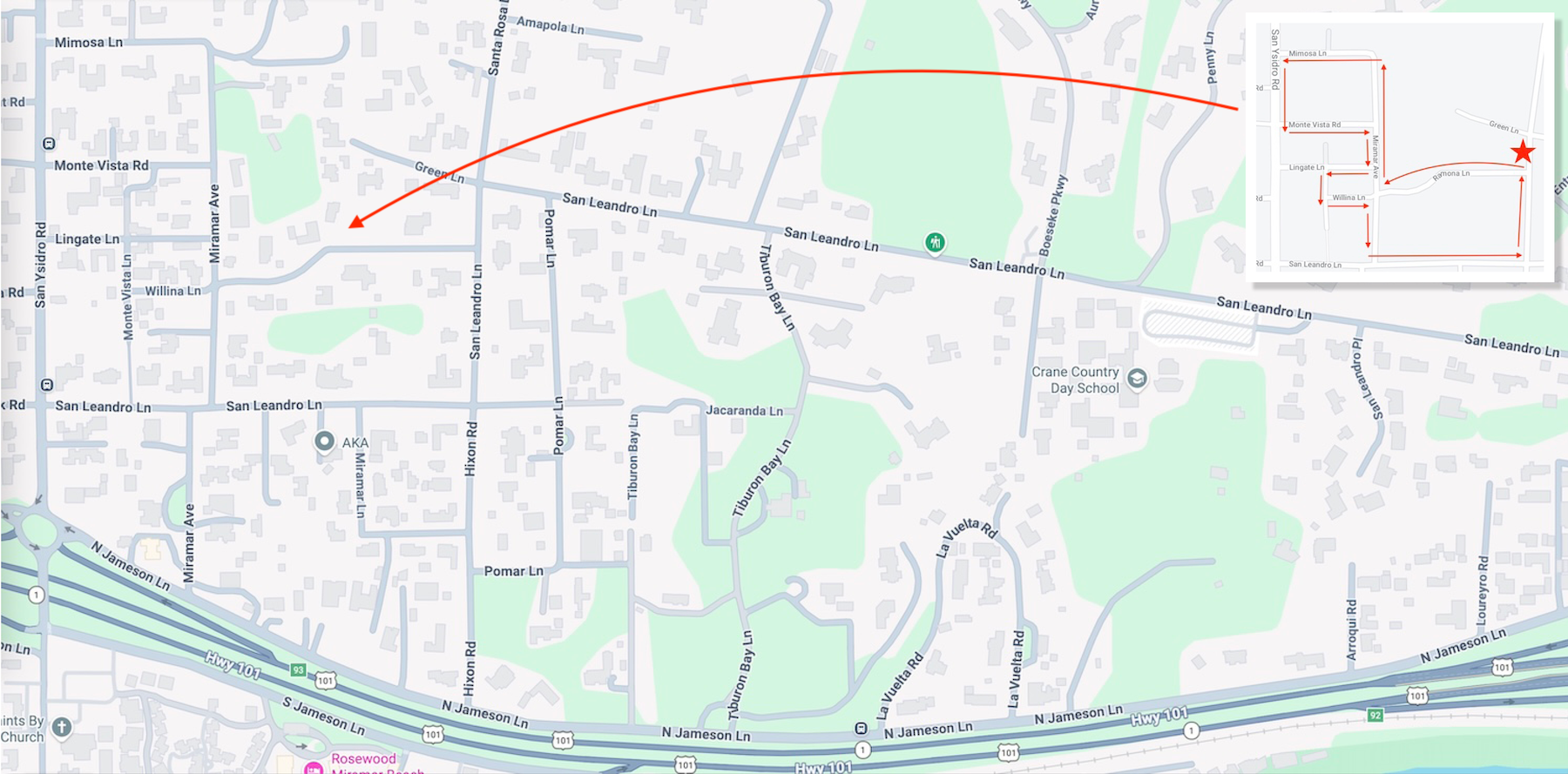 The western and southern boundaries of the Hedgerow are obviously San Ysidro Road and N. Jameson Lane, but the northern and eastern sides are less clear. For this post, I walked San Leandro Lane all the way to Sheffield Drive, and the farther east you go, the less it feels like the classic Hedgerow. The houses get newer and, consequently, less charming (but still swell places to live, no doubt).
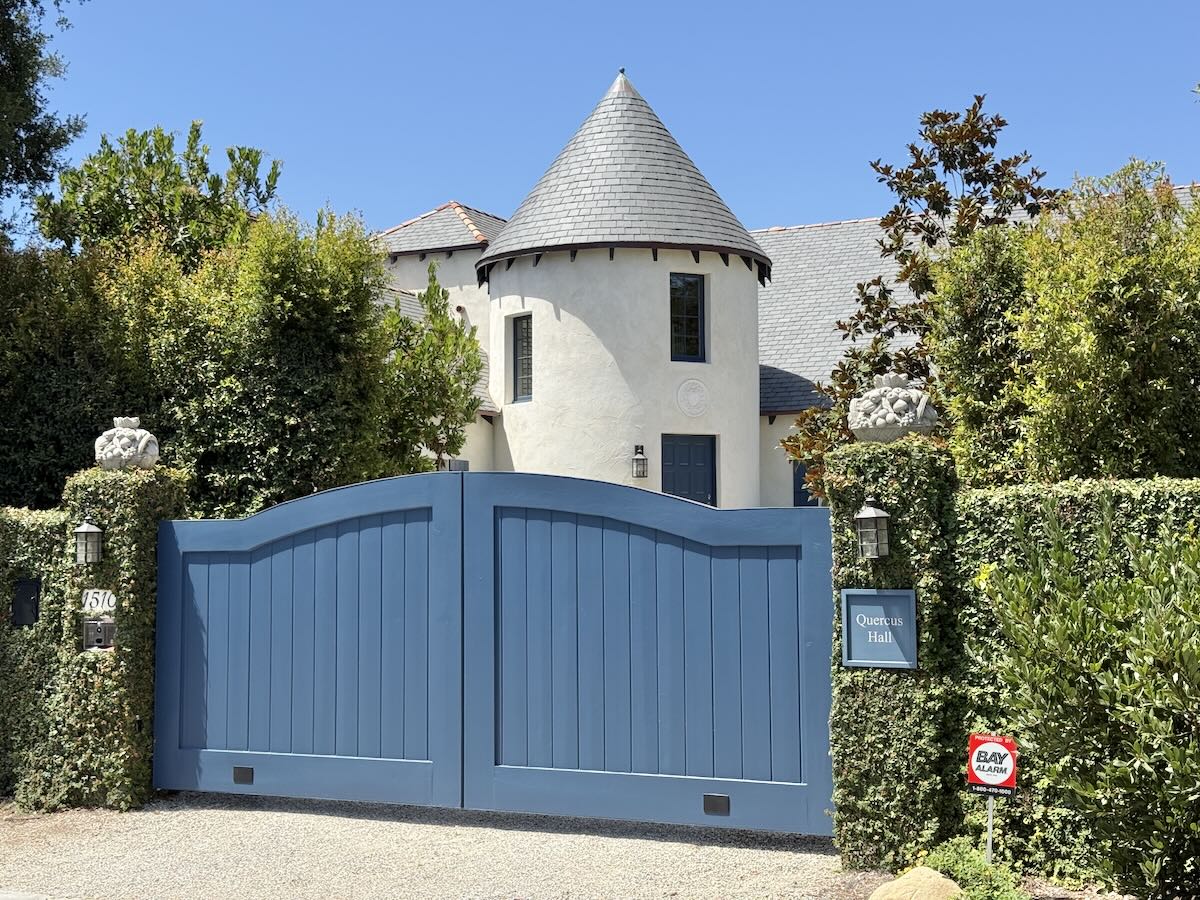
Things start out smashingly at the corner of San Ysidro Road with the European-inspired Quercus Hall. Quercus is “oak” in Latin. Something I just learned: a turret with a conical roof is also known as a pepperpot turret. And note the marvelous finials on the gateposts.
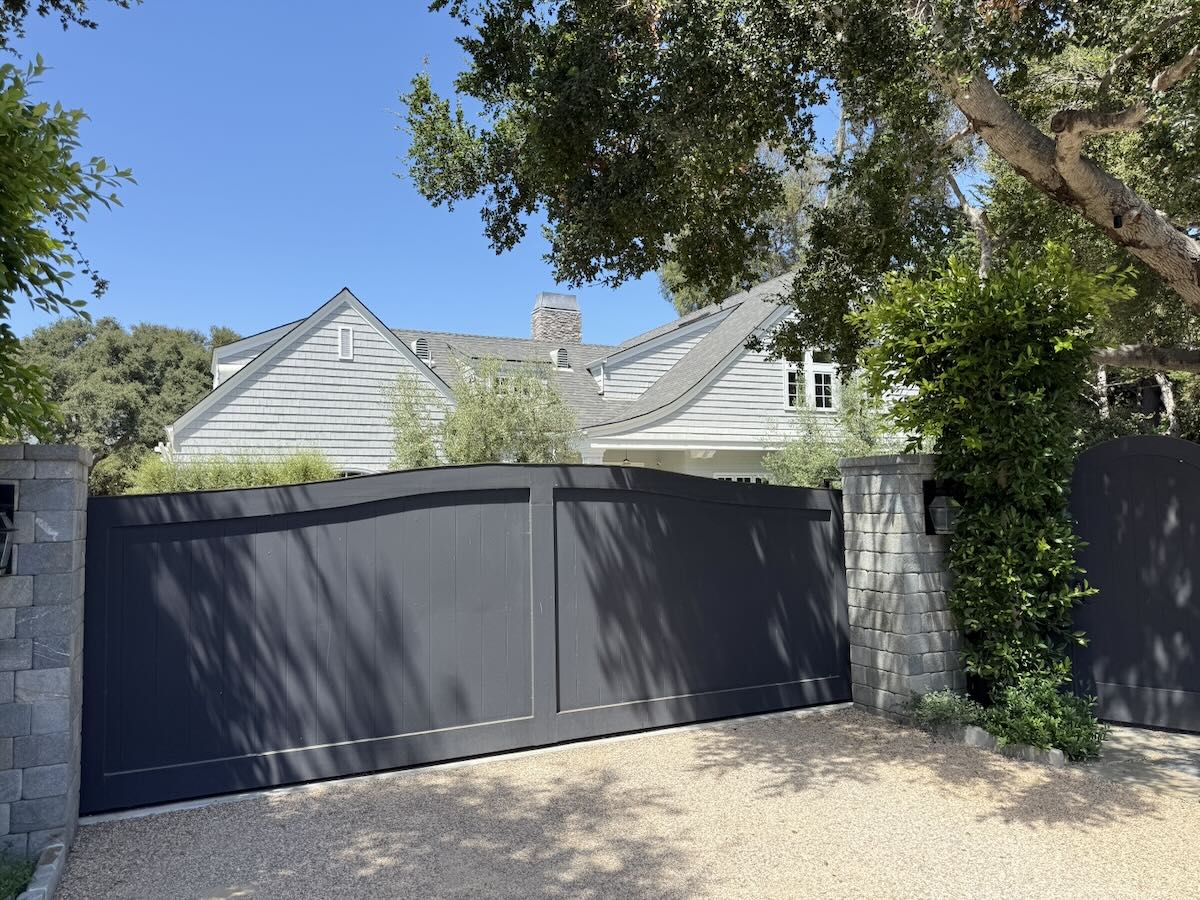
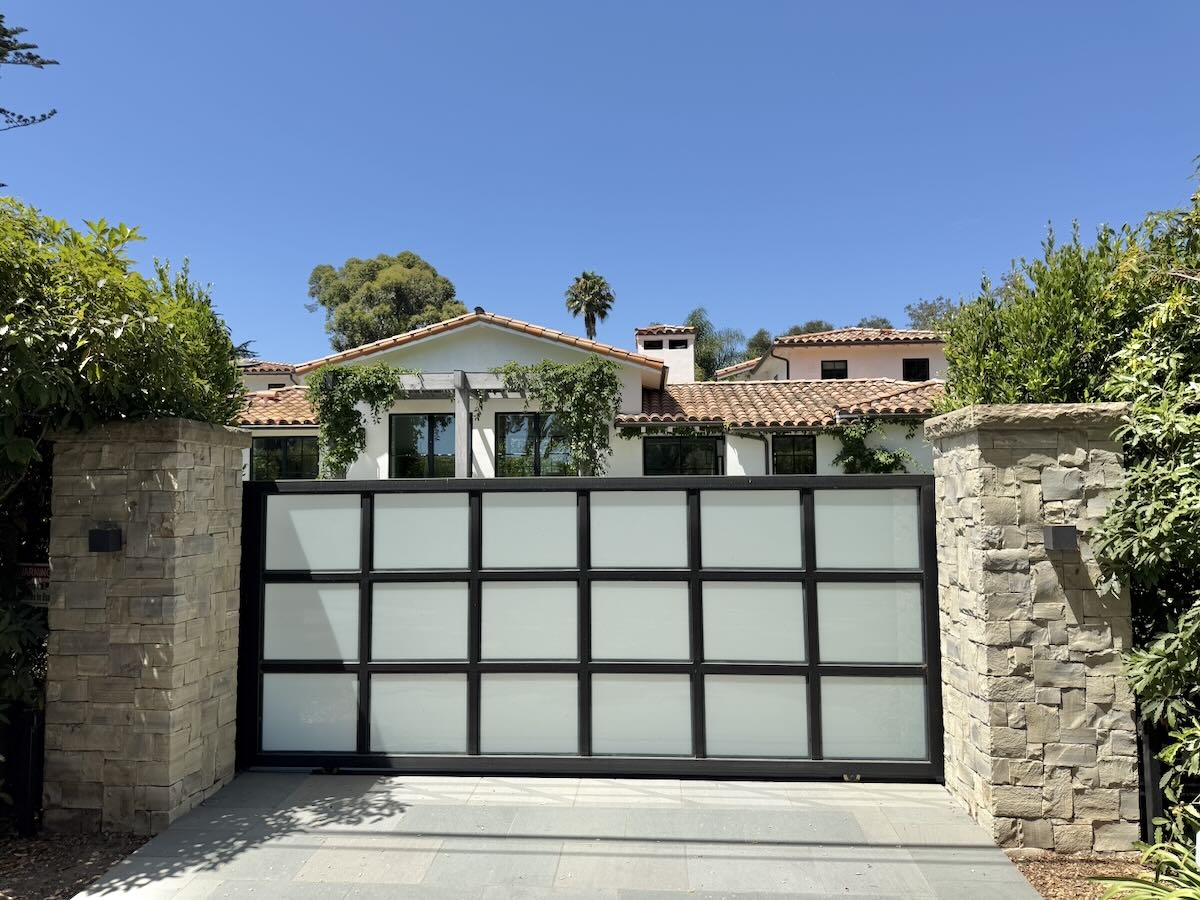
 It has lovely neighbors of various styles. I’m especially drawn to the house in the second photo.
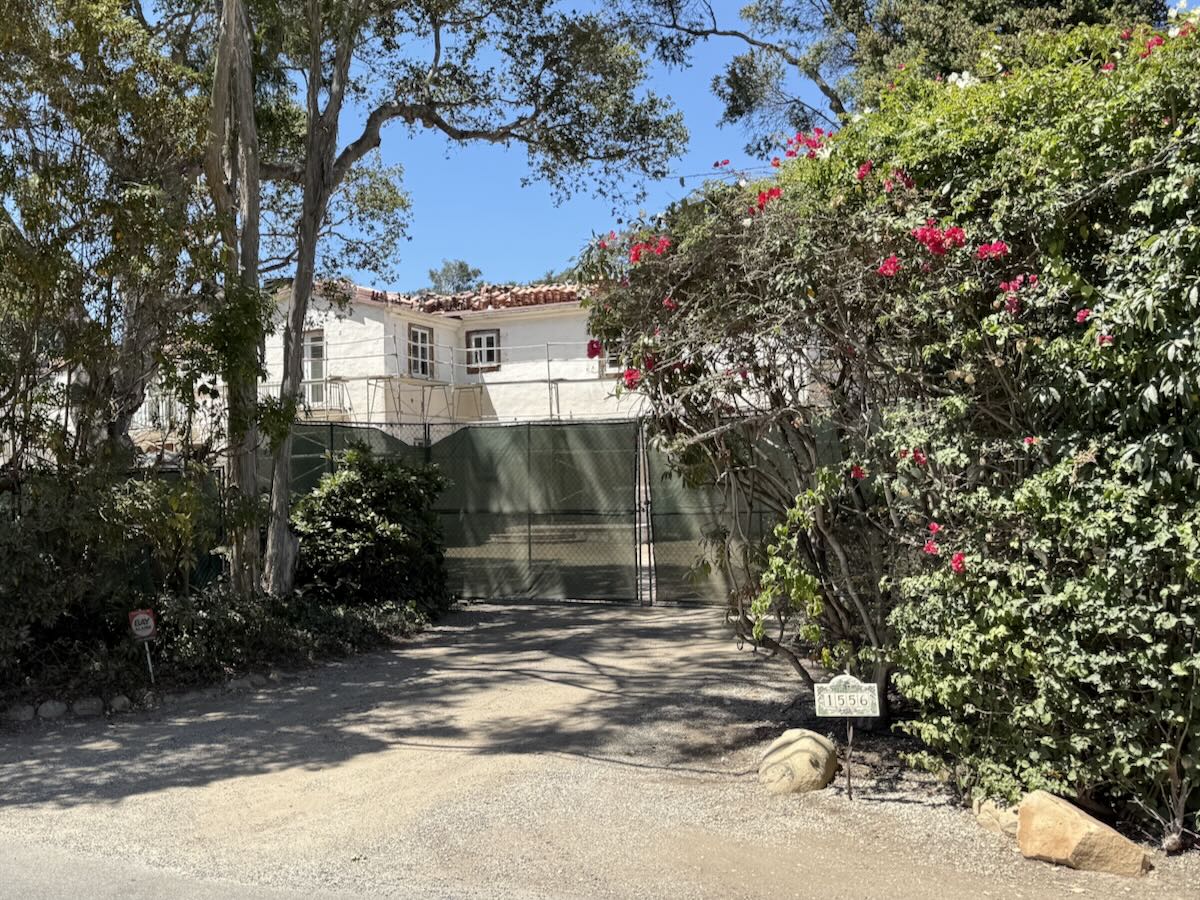
 1556 San Leandro Lane is getting the work it needed when it sold for $8.25 million in early 2025.
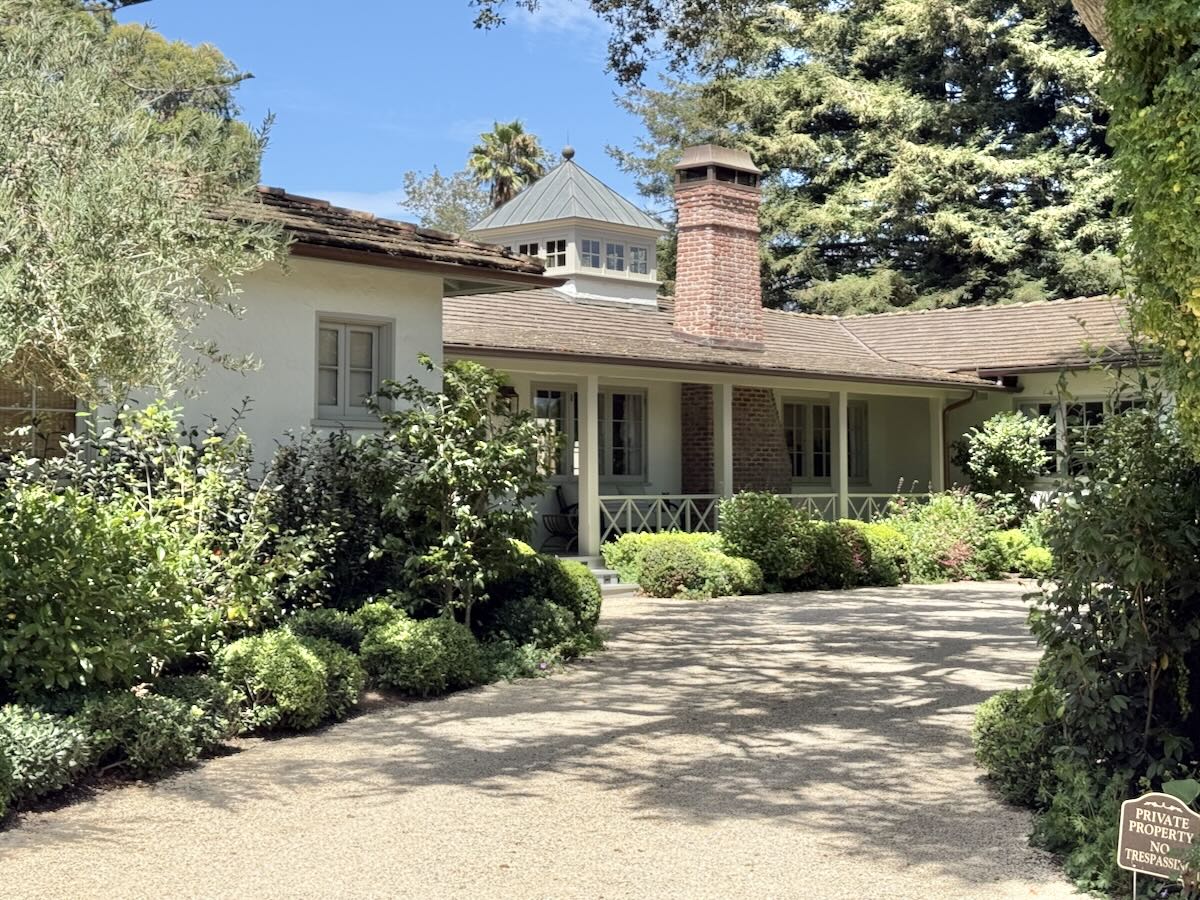
 These two are to be commended for their use of brick. At the first one, you have to love the little pullout for visitors.
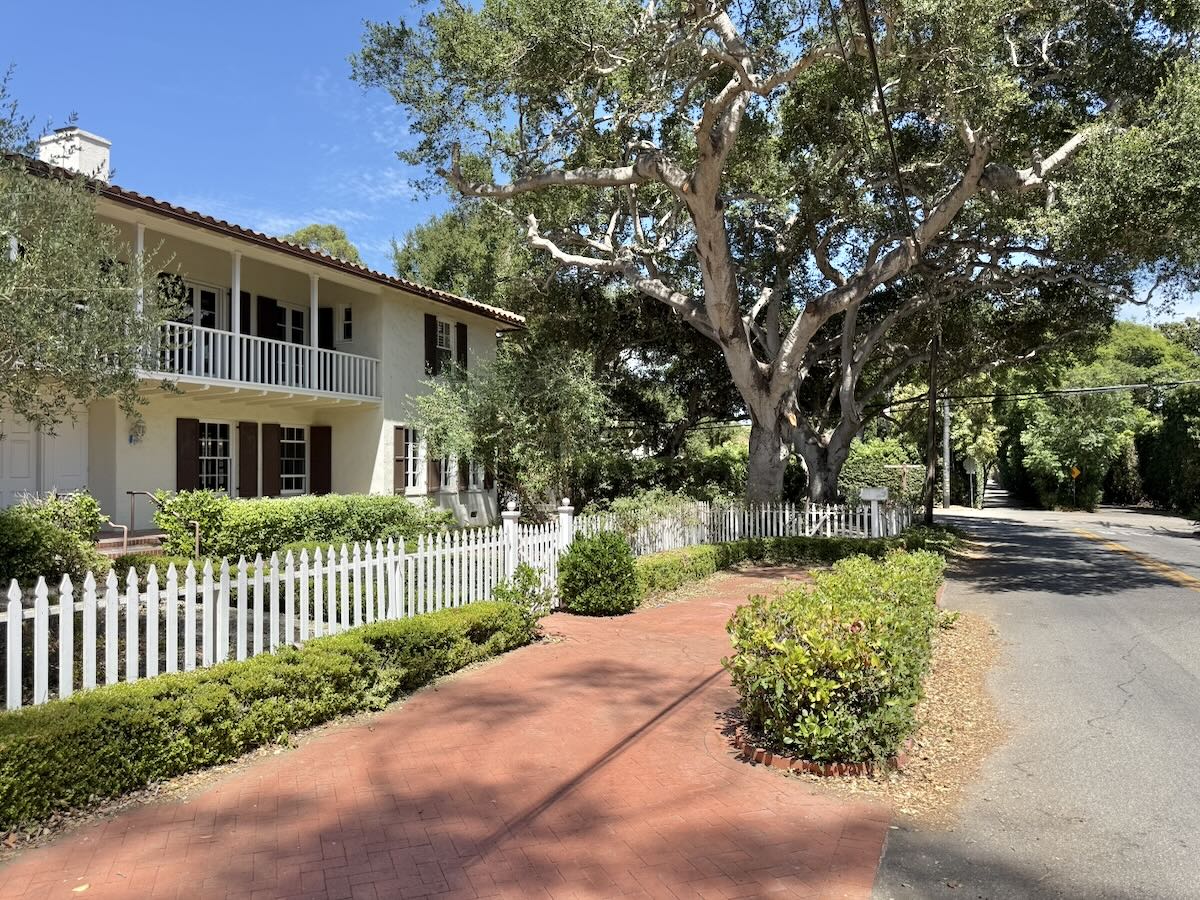
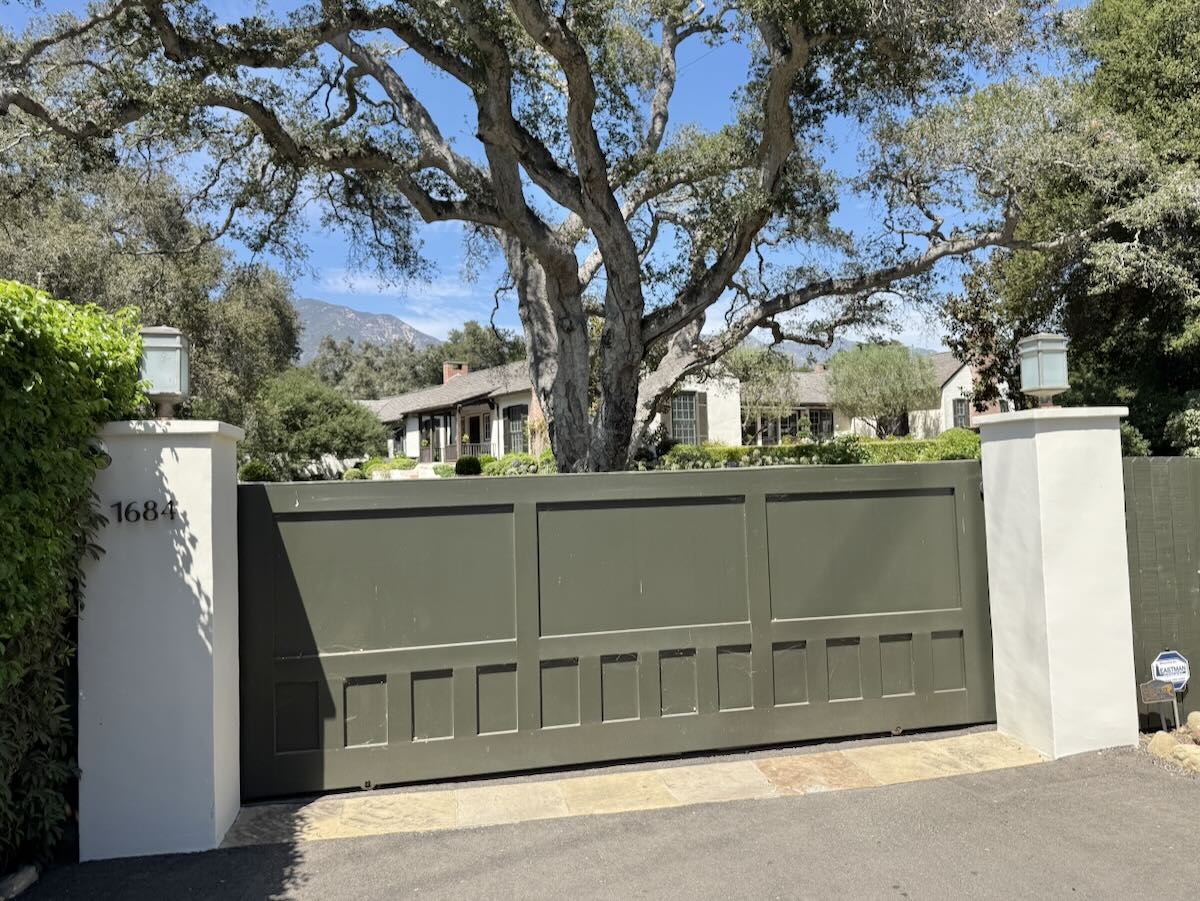
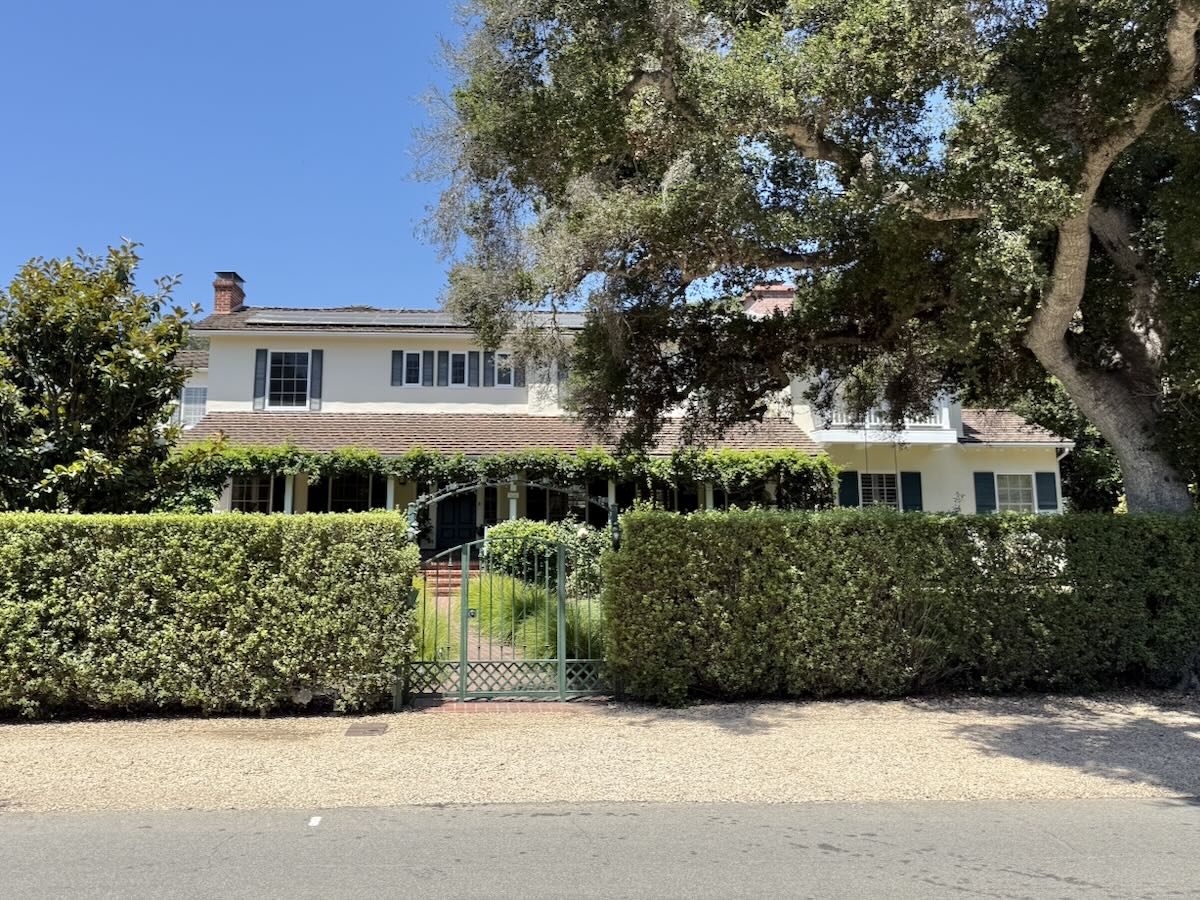
 The naming of the streets in the Hedgerow is a mess. At one point, San Leandro Lane makes a 90-degree left turn (onto what is Hixon Lane to the south and Santa Rosa Lane to the north), followed by a 90-degree right turn (onto what is Green Lane to the west). The upper stretch of San Leandro has some excellent houses. 1684 San Leandro Lane, in the first photo below, is a 1920 dreamboat designed by Reginald Davis Johnson; it sold for just $7.5 million in September 2020.
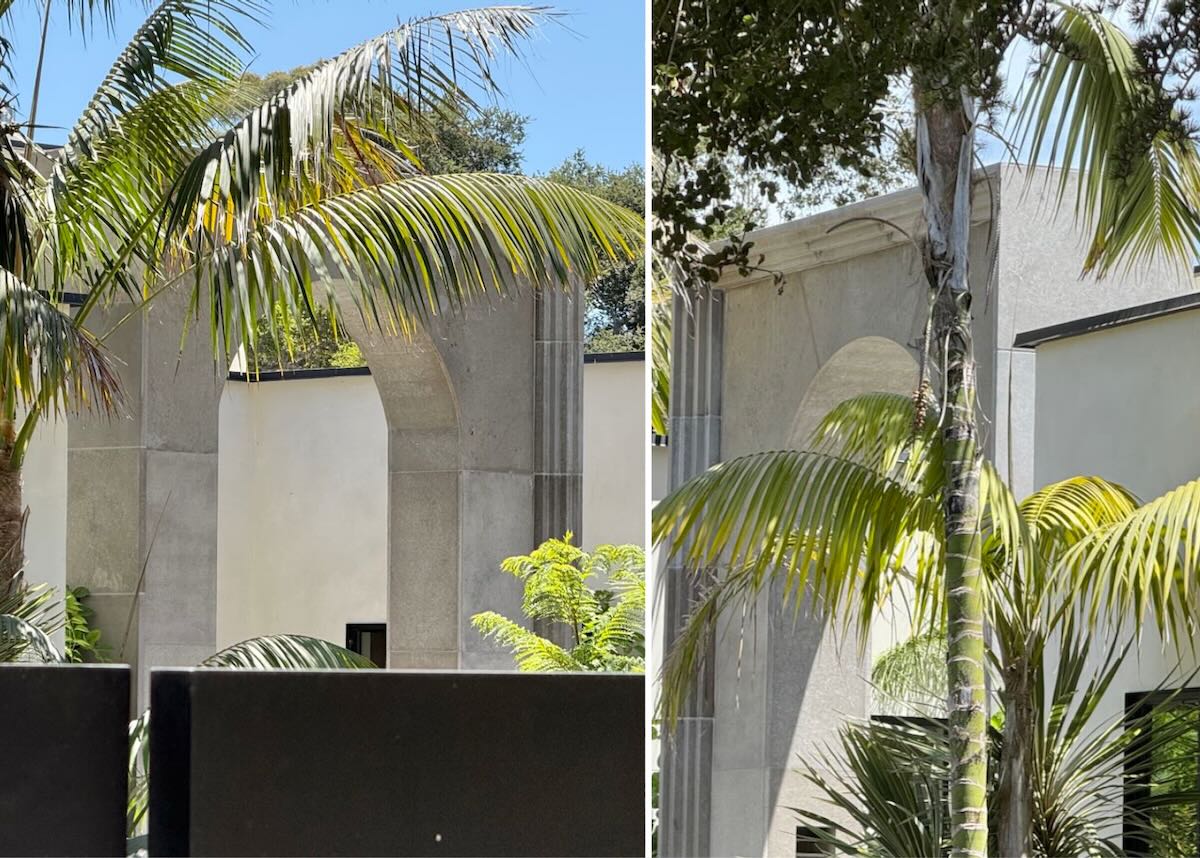
 At the corner of Pomar is a house with a concrete arch—an architectural fascinator?—embellishing the entrance.
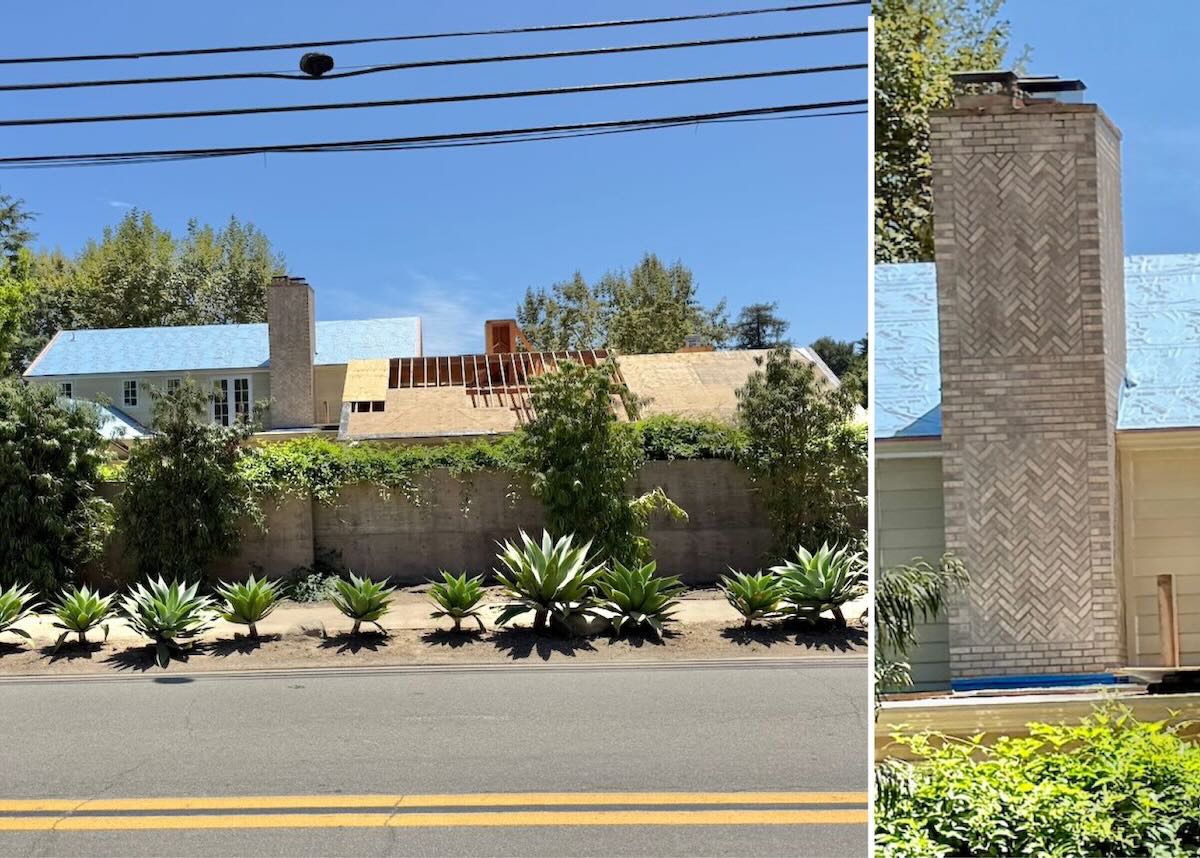
 On the south side of San Leandro is one under construction. The chimney’s sexy herringbone insets warrant a close-up.
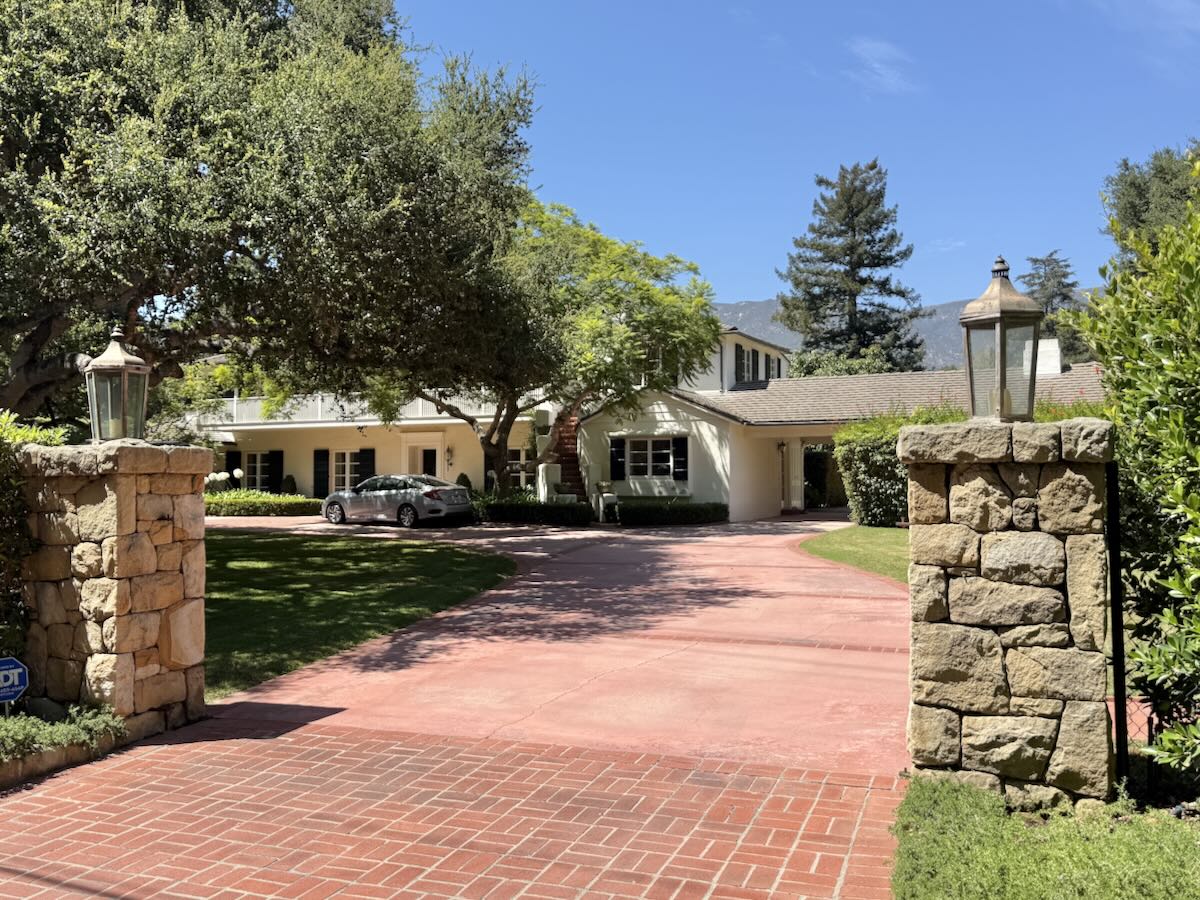
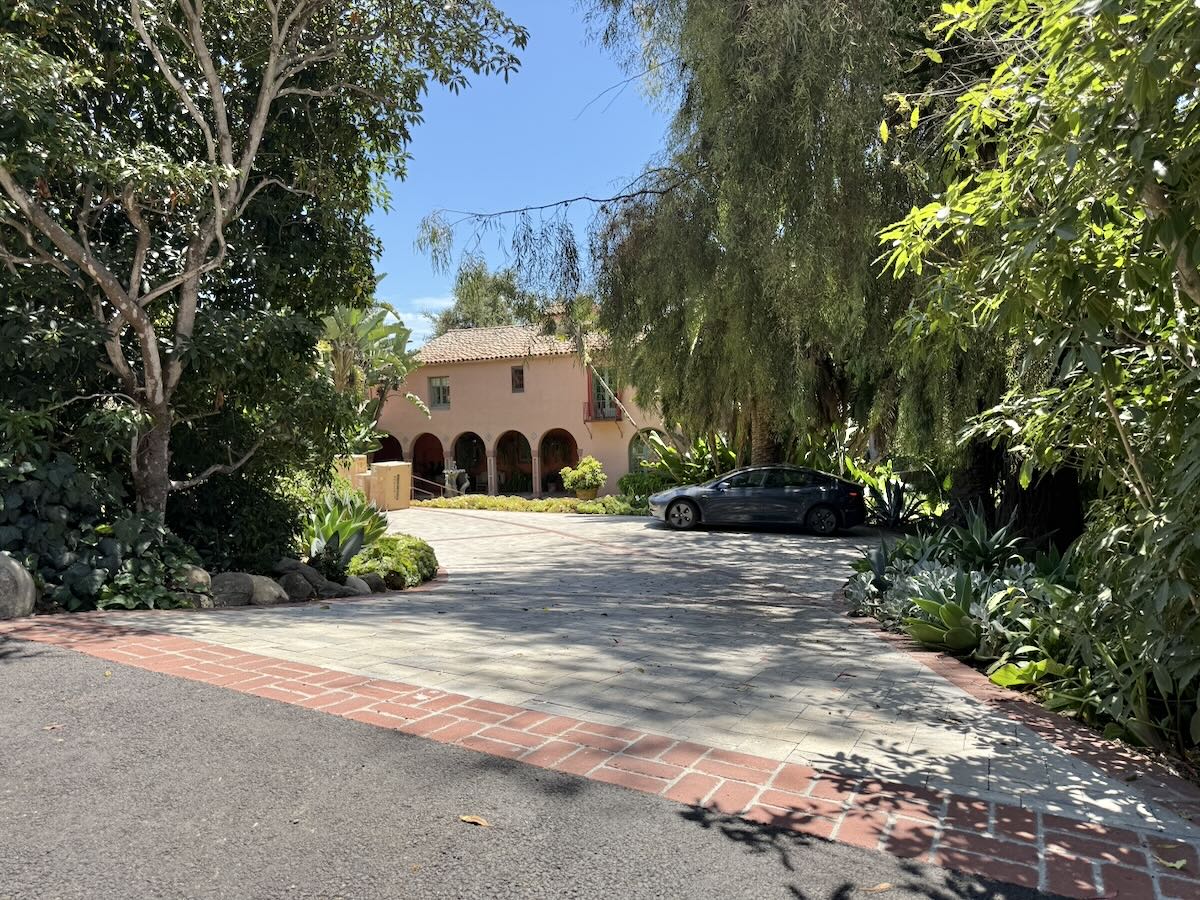
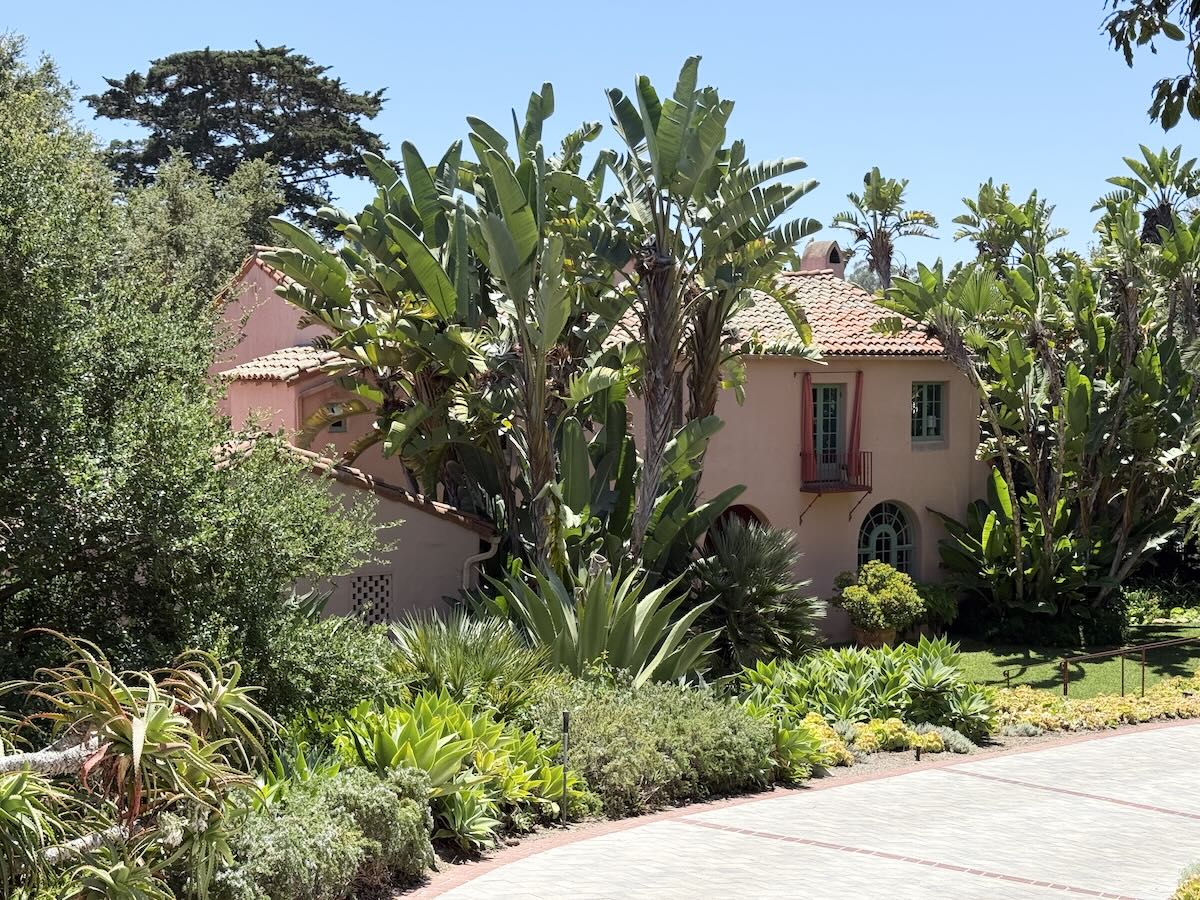
 The U-shaped driveway at 1855 San Leandro Lane allows for two glimpses of the 1923 house, a beauty. Here are the photos from when it was on the market in November 2022 (selling for $5.5 million).
 And then the architecture grows less distinctive. At first I thought the roof tiles might be spelling out a message.
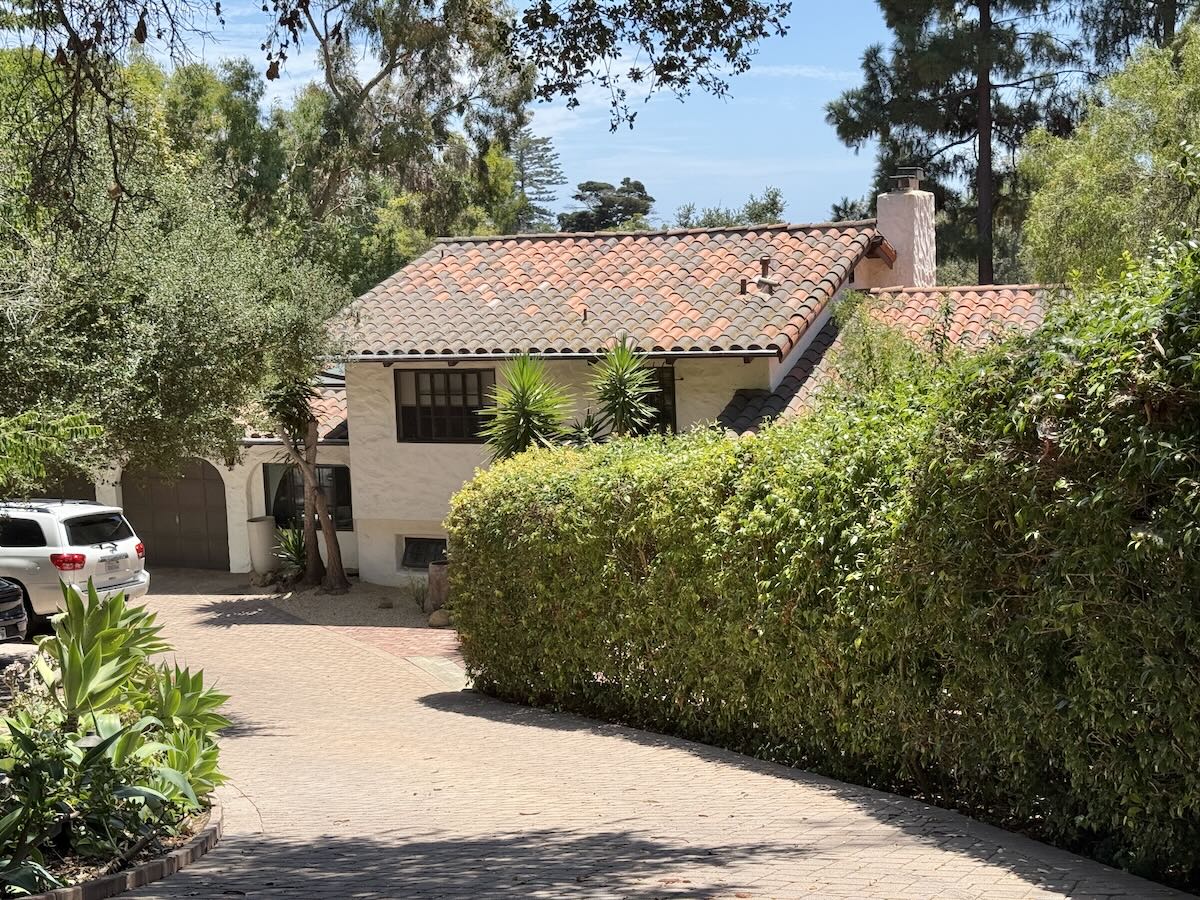 1910 San Leandro Lane intrigues me because it looks like it should be part of the Ennisbrook community, but it’s only accessible via San Leandro Lane.
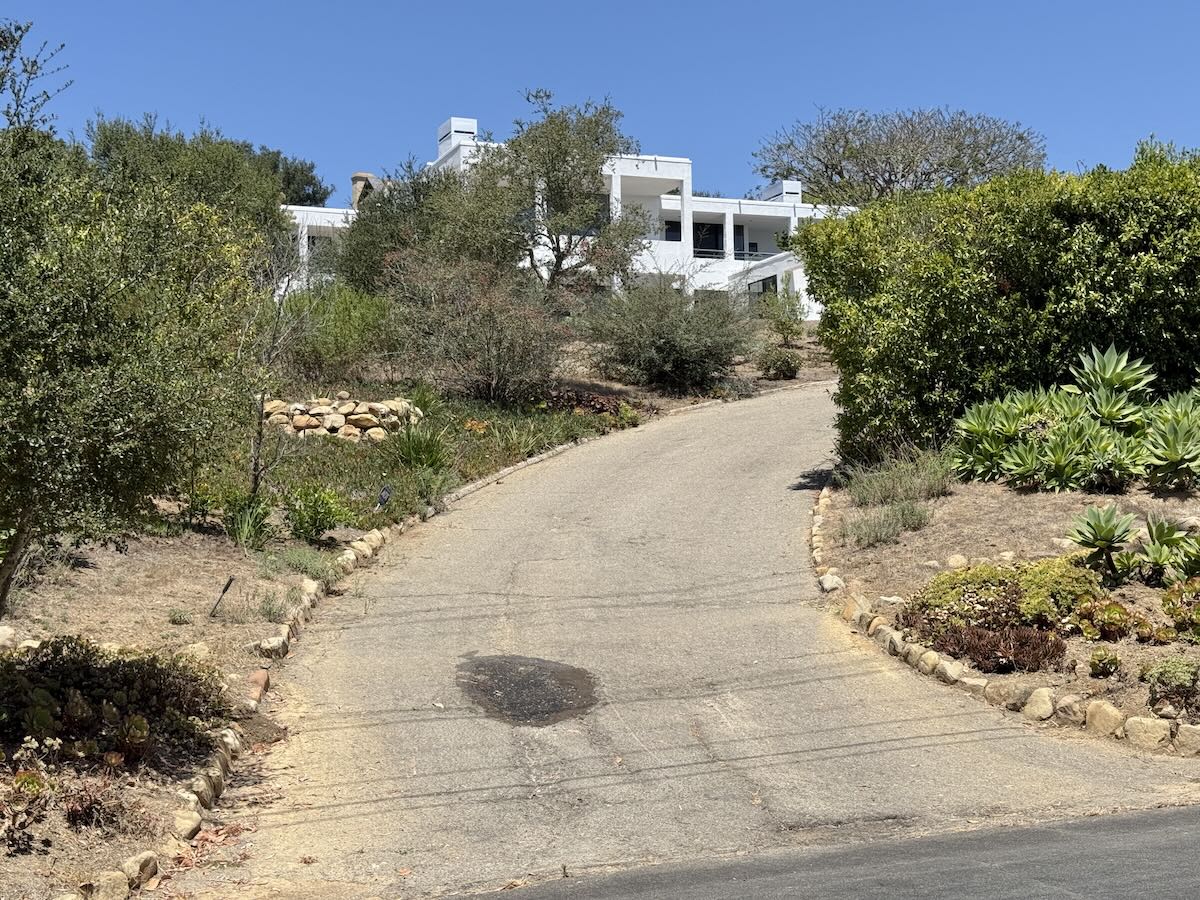
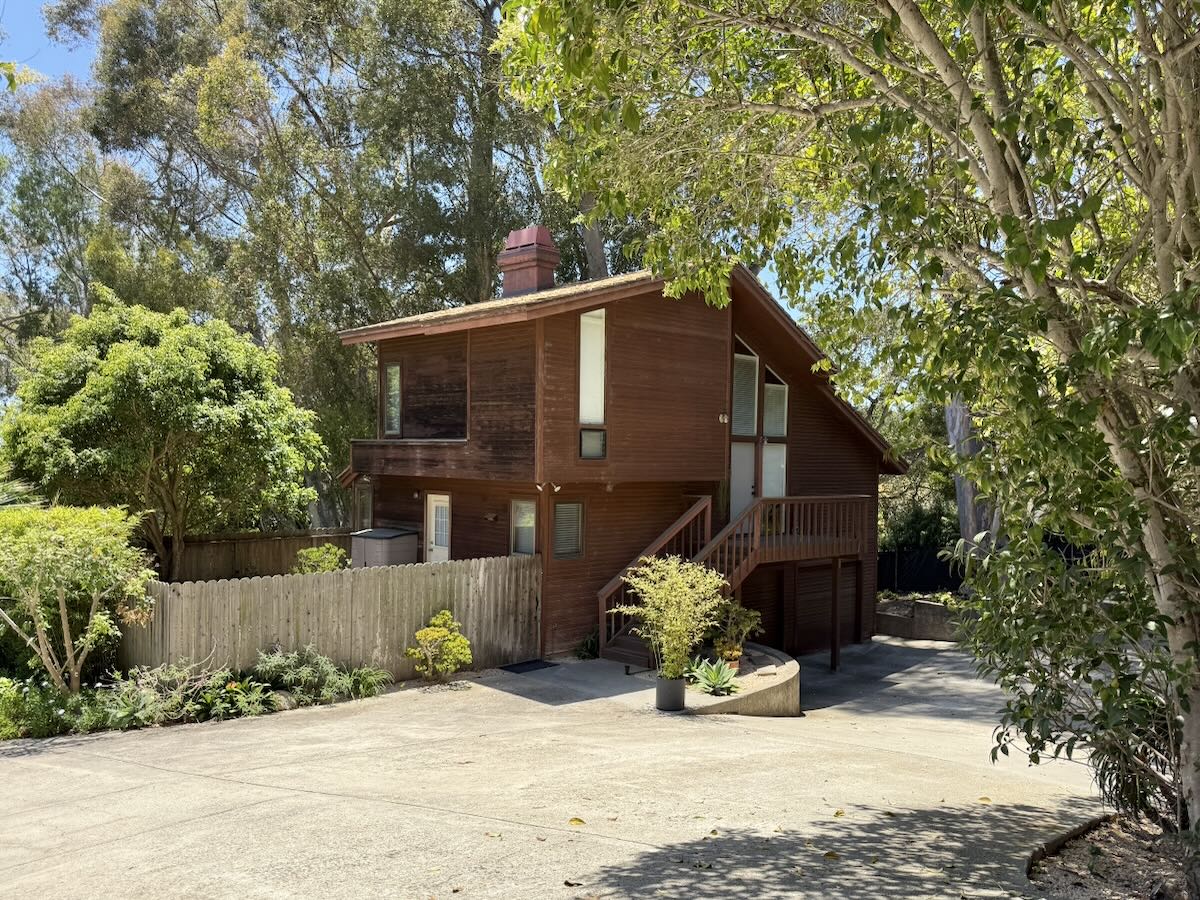
 Here’s one you can see all the way through, and another giving chalet vibes.
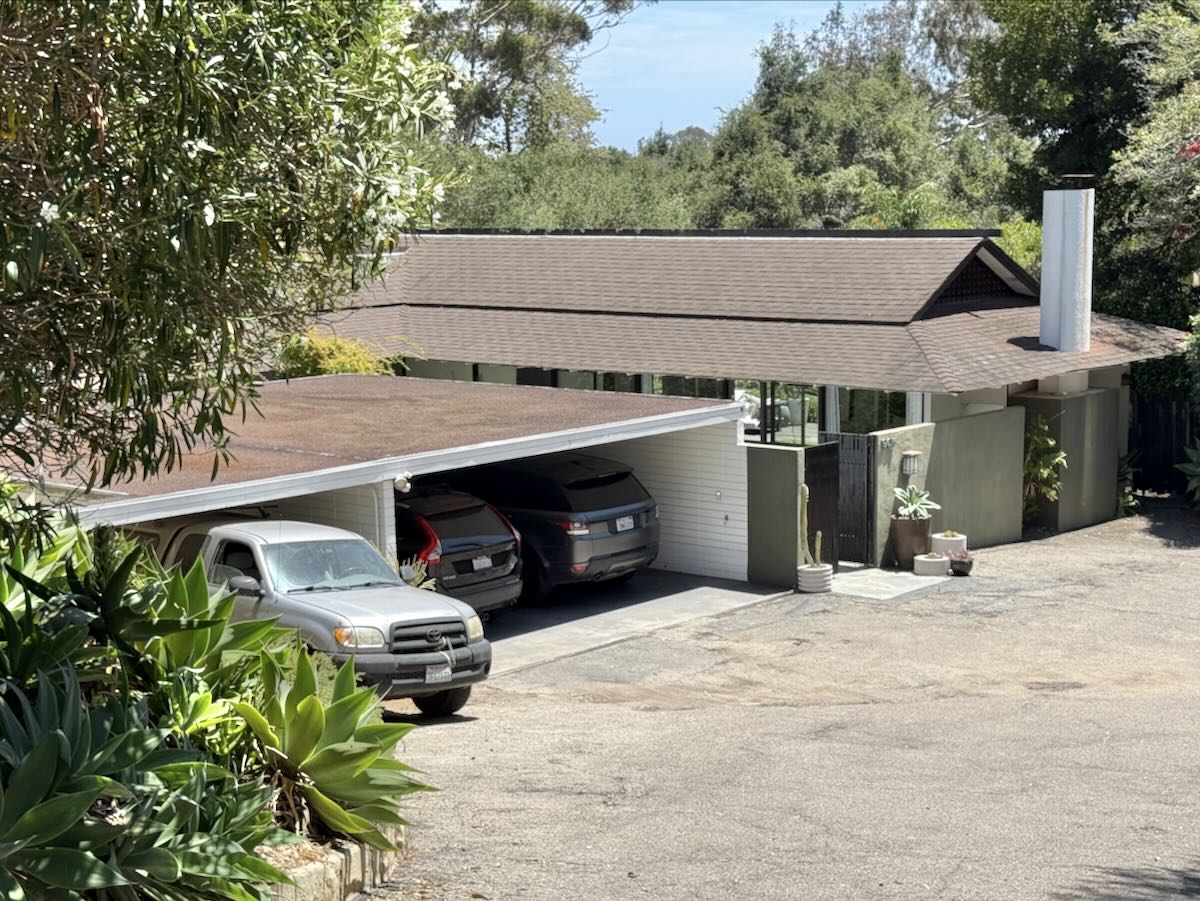
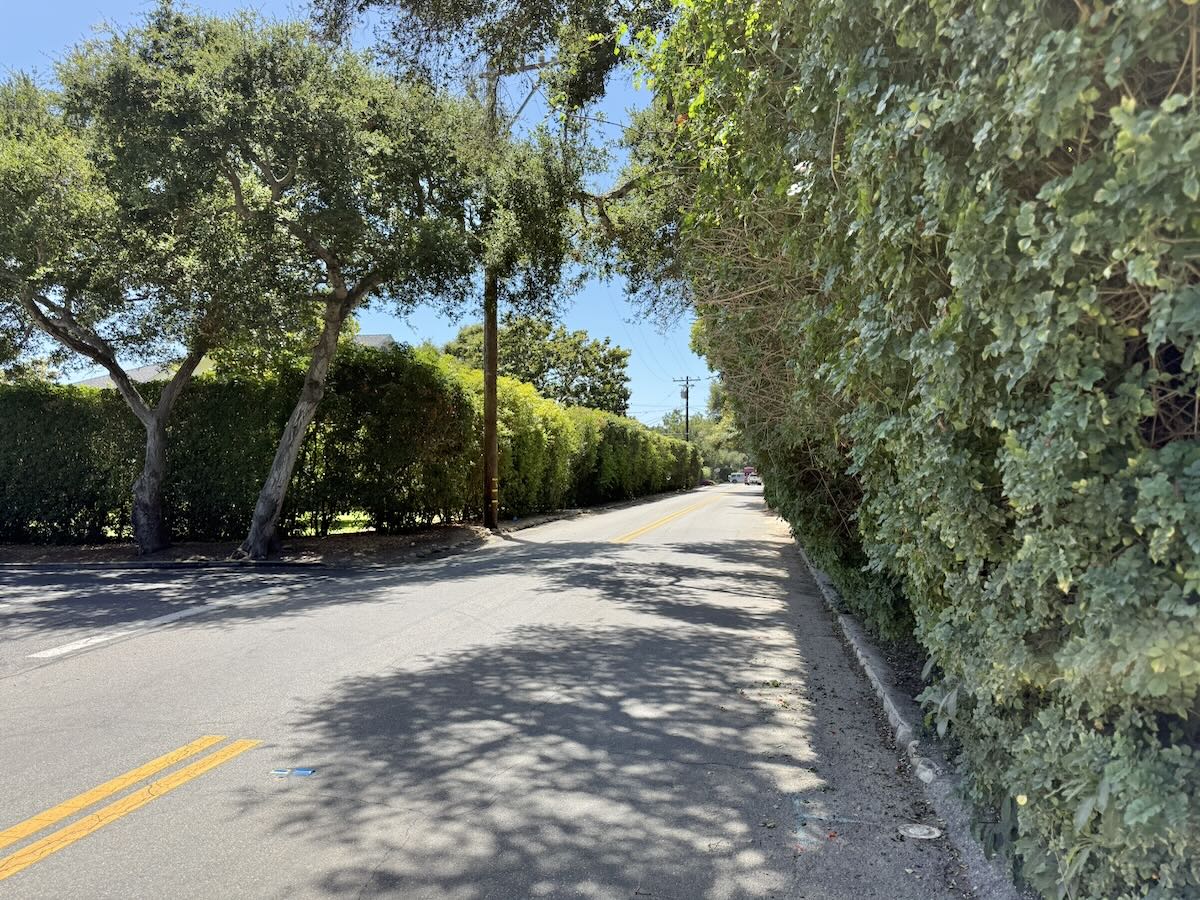
 San Leandro Lane is not the easiest street to walk on, due to the fair amount of traffic (possibly more so during the Great Highway 101 Expansion Nightmare), and the way the hedges force pedestrians well into the street.
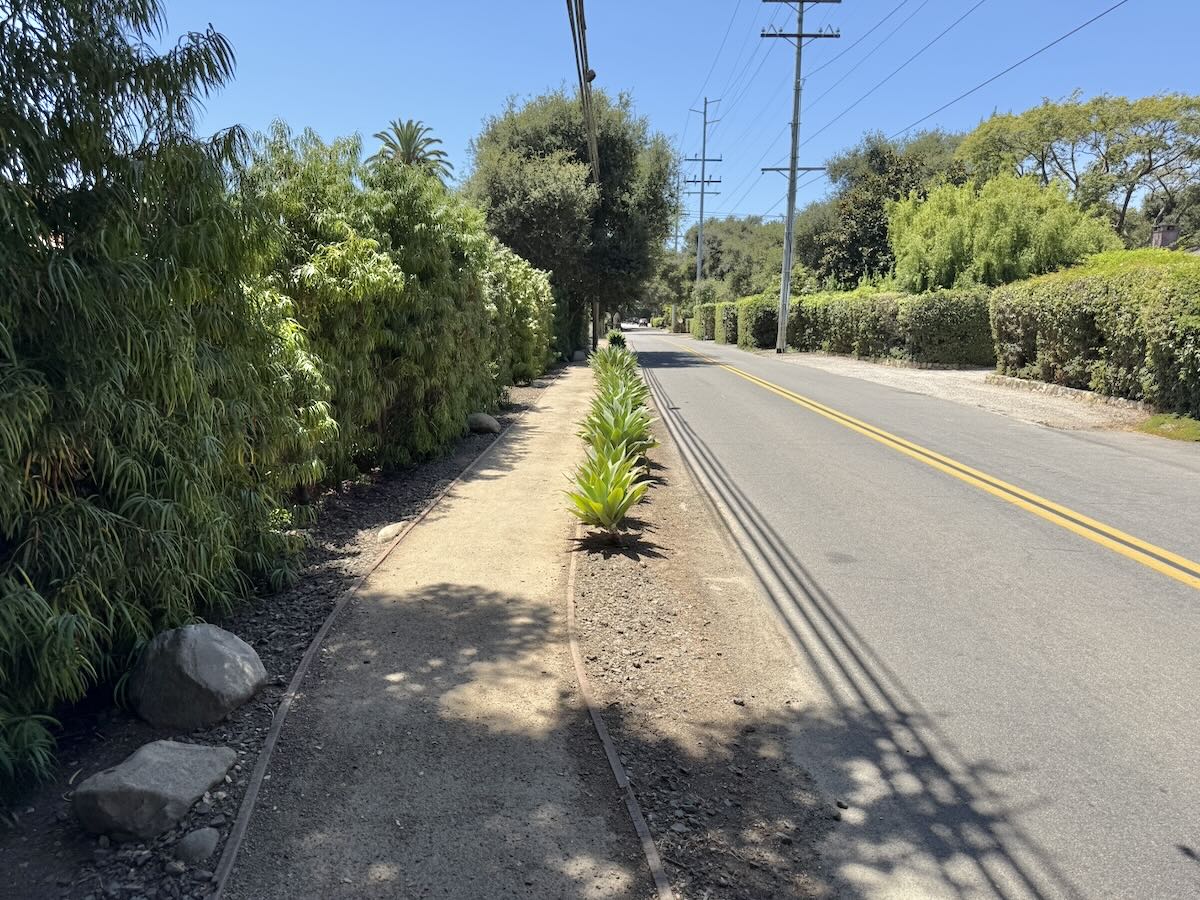
 In parts, there is a trail/sidewalk you can use.
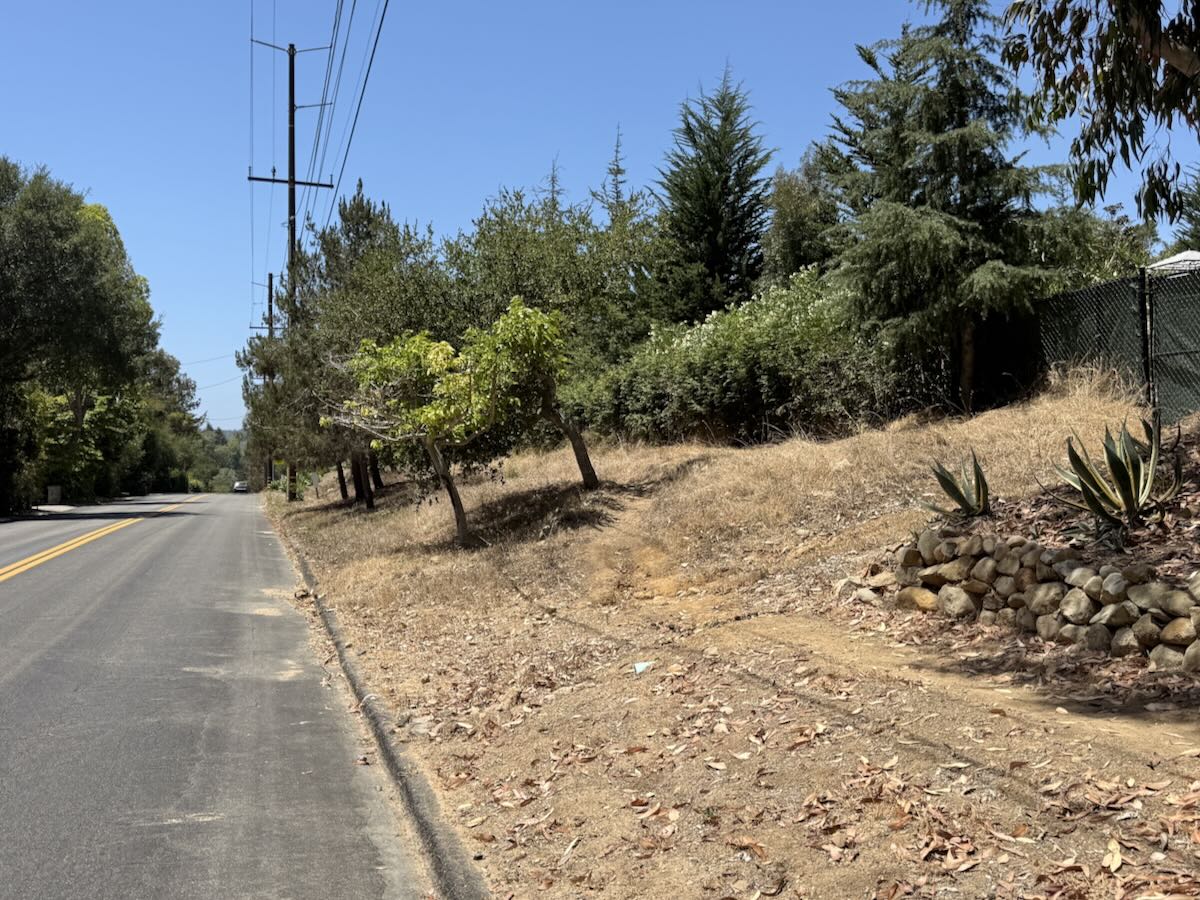
 Despite my concerns for pedestrian safety, this crosswalk strikes me as daft. It must be new, because it doesn’t appear in Google Maps street-view imagery from 2025. I’m not sure what exactly it’s linking, and crossing the street isn’t all that difficult when you can see 100 yards in both directions. Also, the machines emit a constant beep—for the visually impaired?
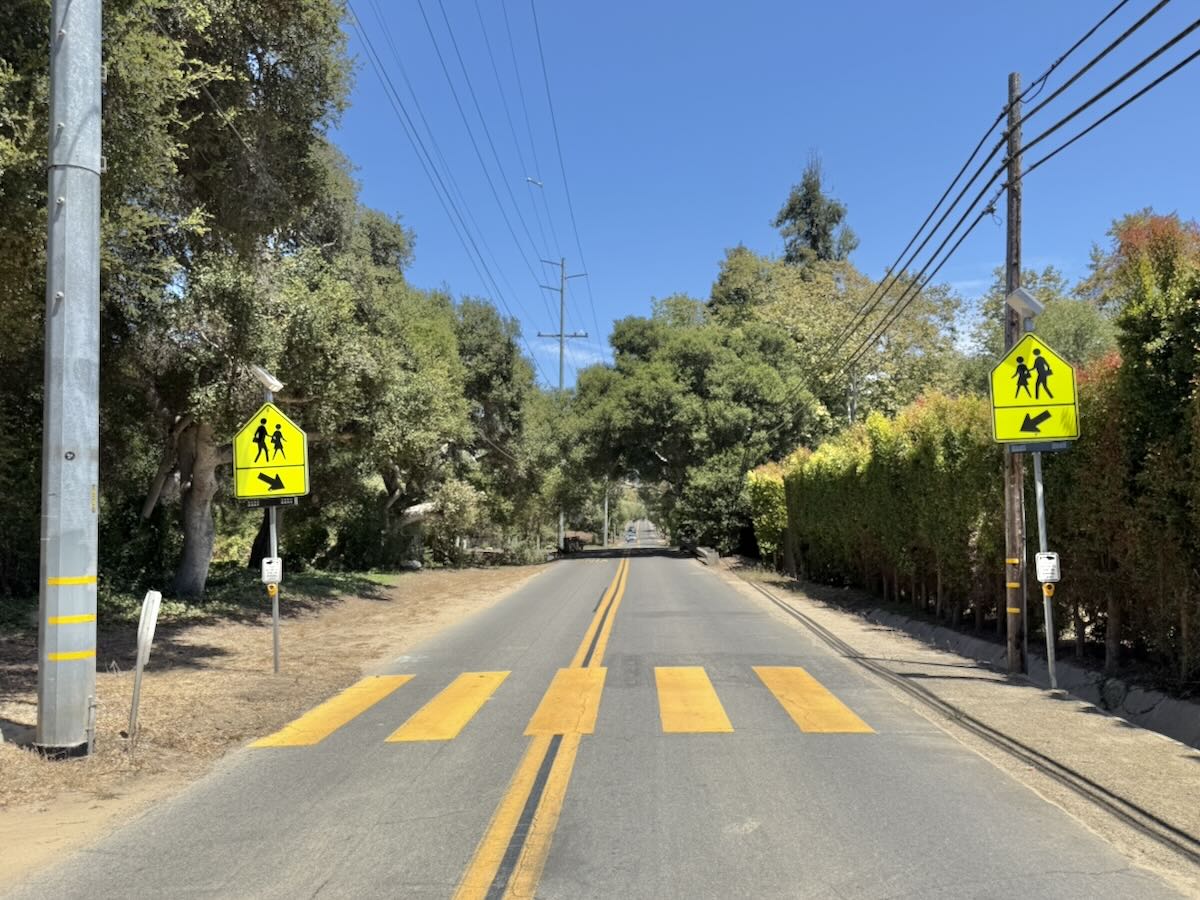 I’m guessing the crosswalk has something to do with Ennisbrook Open Space and/or Crane Country Day School. The latter has such a nice white picket fence; I wish the gate could have matched it.
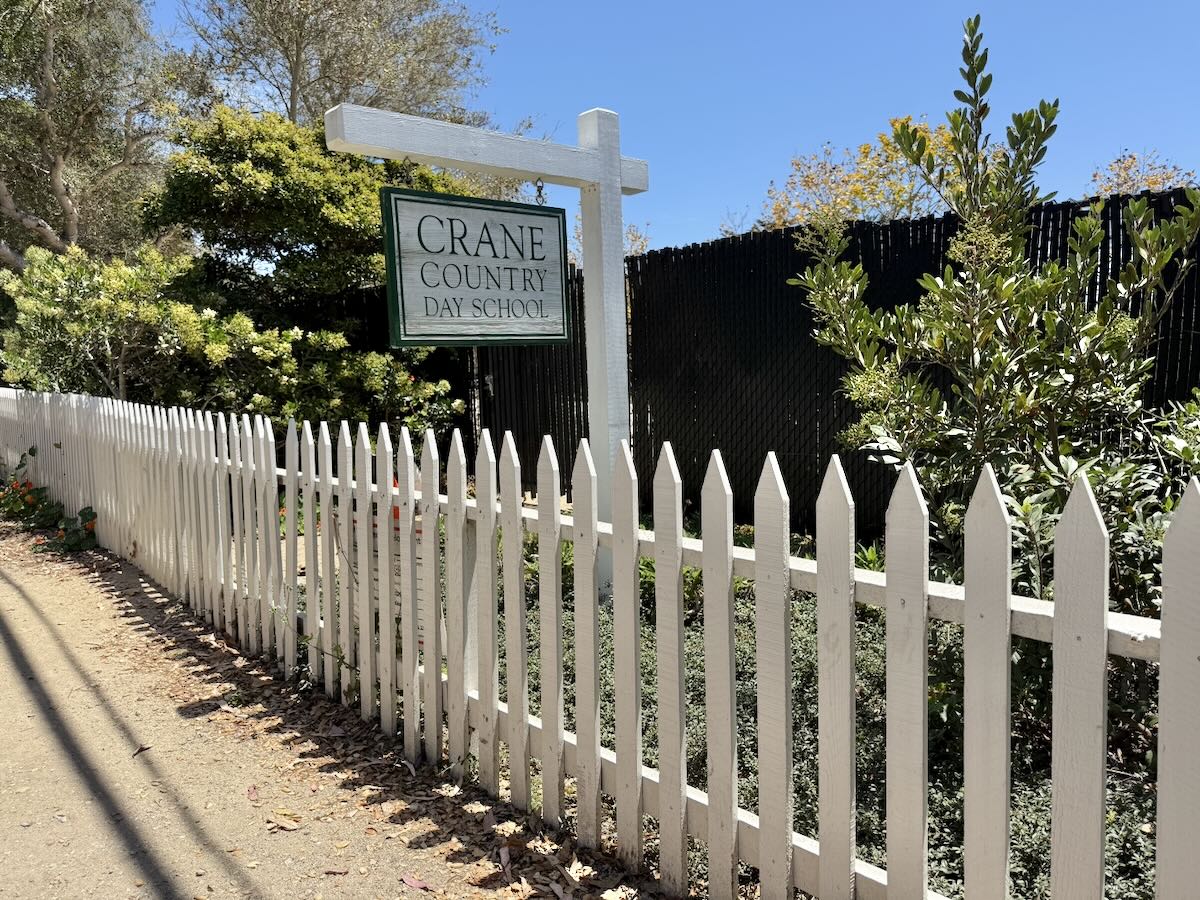
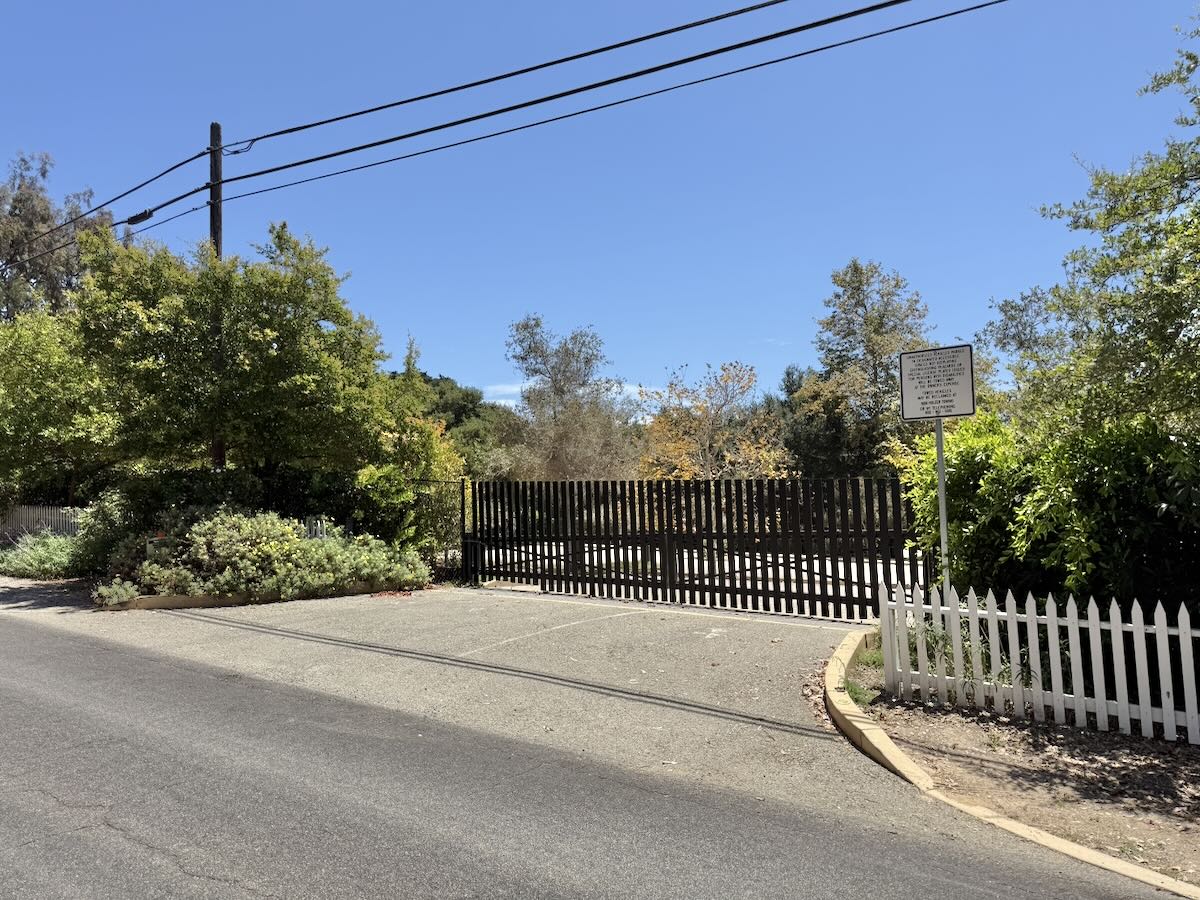 As for the Ennisbrook Open Space, I parked there—it’s handy that way—but didn’t explore it this time. (Been there, done that.) Created as a condition of the development of Ennisbrook’s 63 homes on what was once Rancho San Leandro, the 44-acre preserve is a pleasant space for a walk, but stay on the trail or risk a run-in with poison oak. The green building is part of the Montecito Water District.
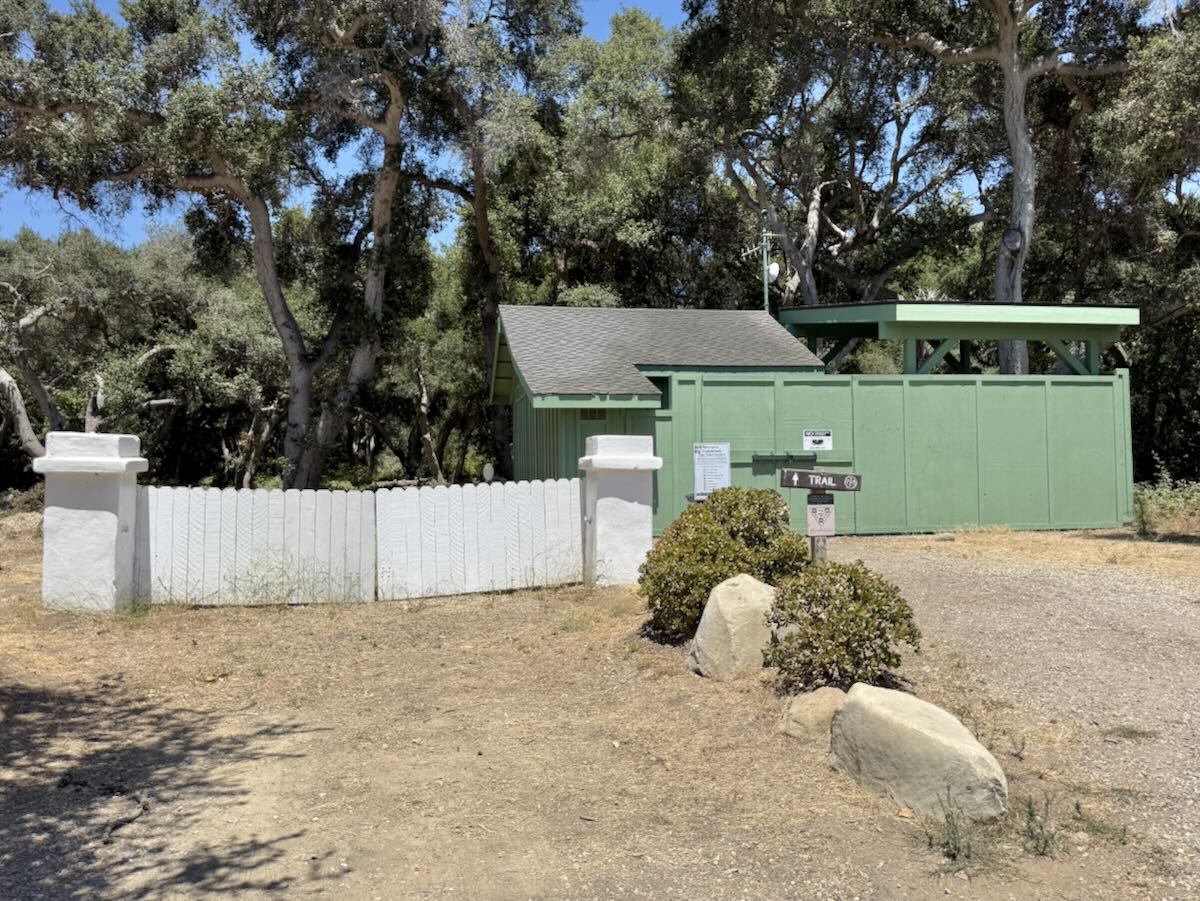 The Ennisbrook gates at Boeske Parkway can only be used by residents. And the problem with a carved-wood sign is that fixing a misspelling is hard.
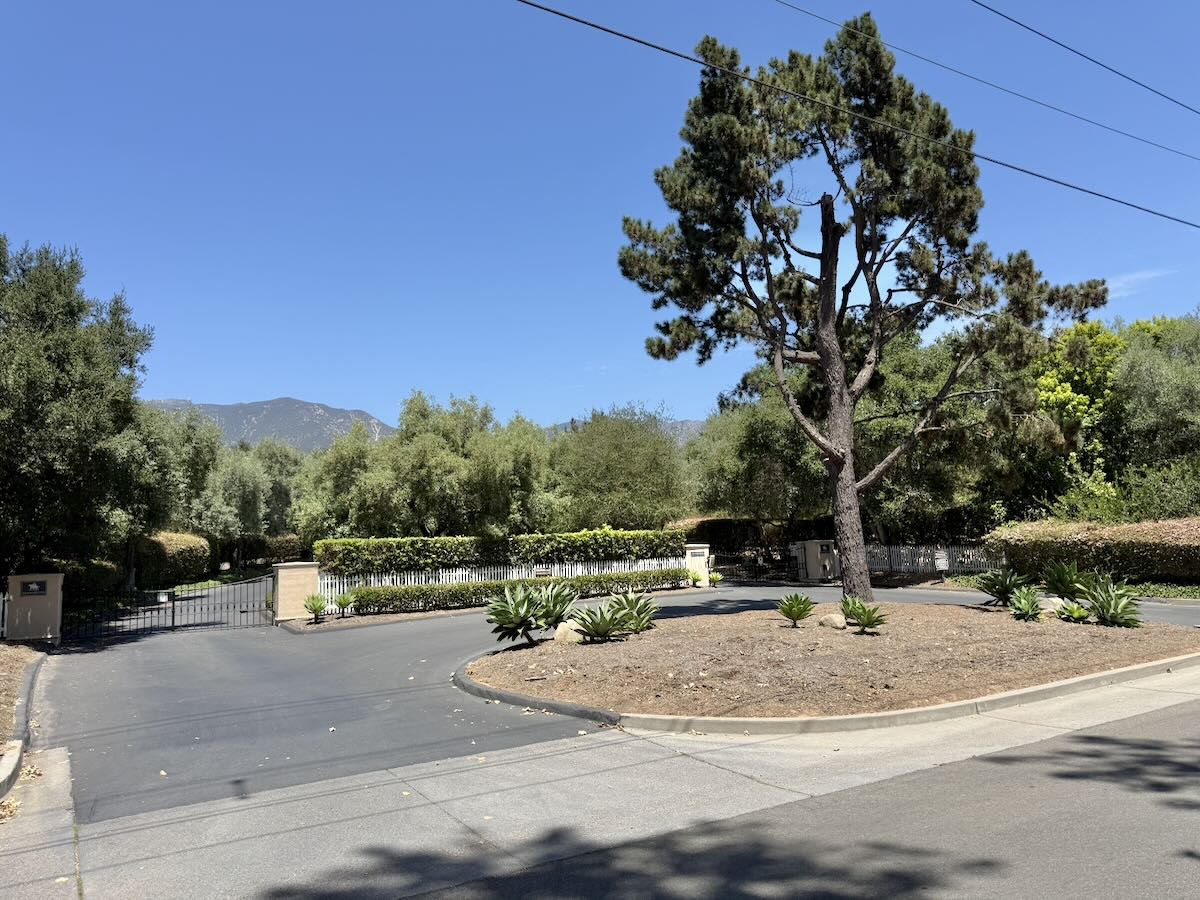
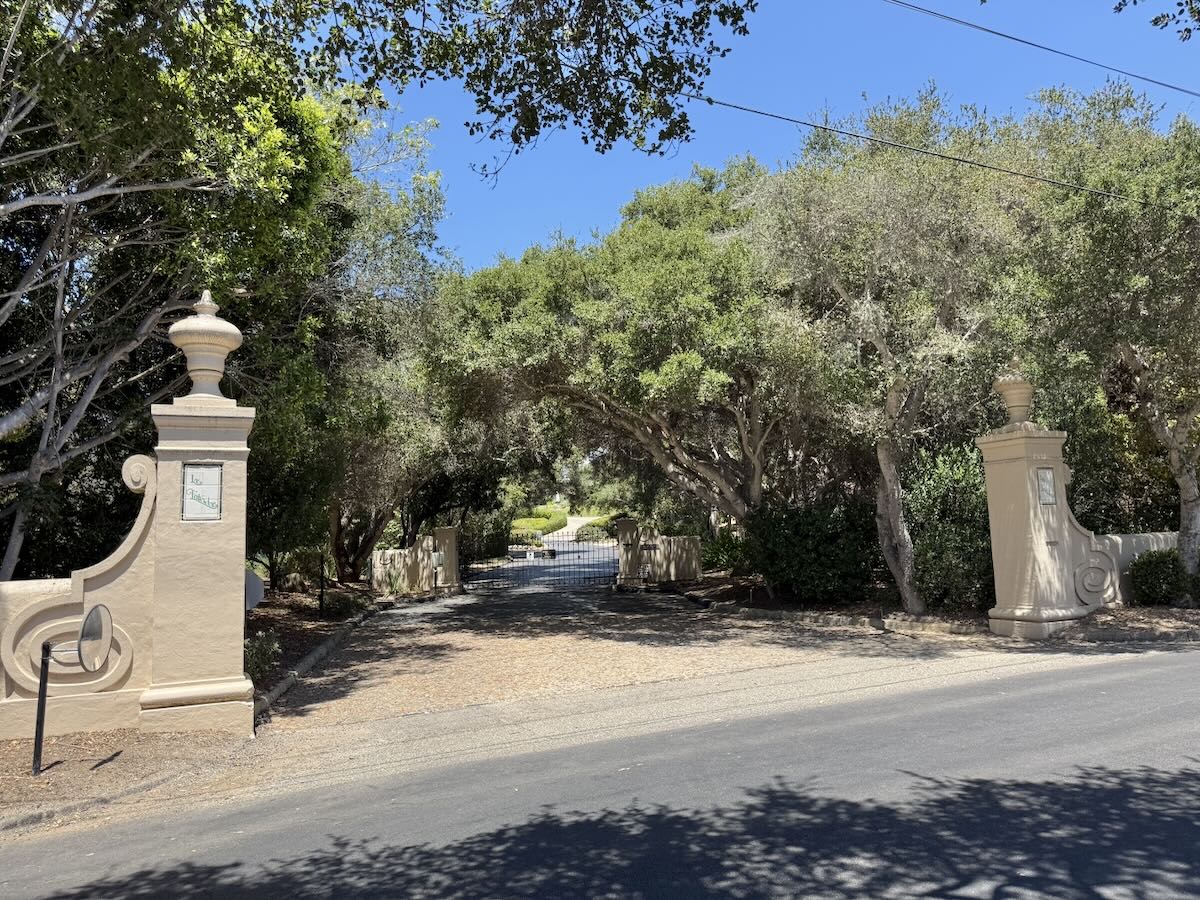
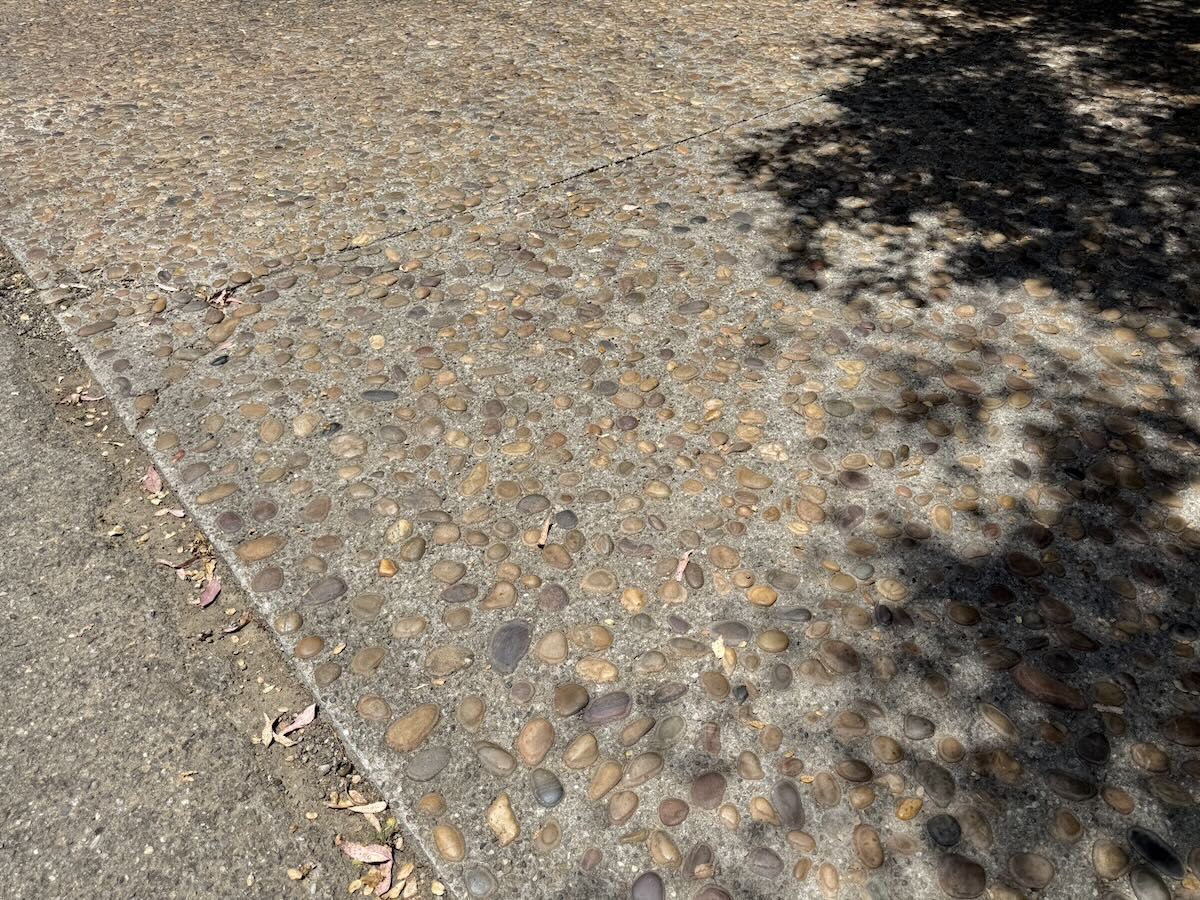
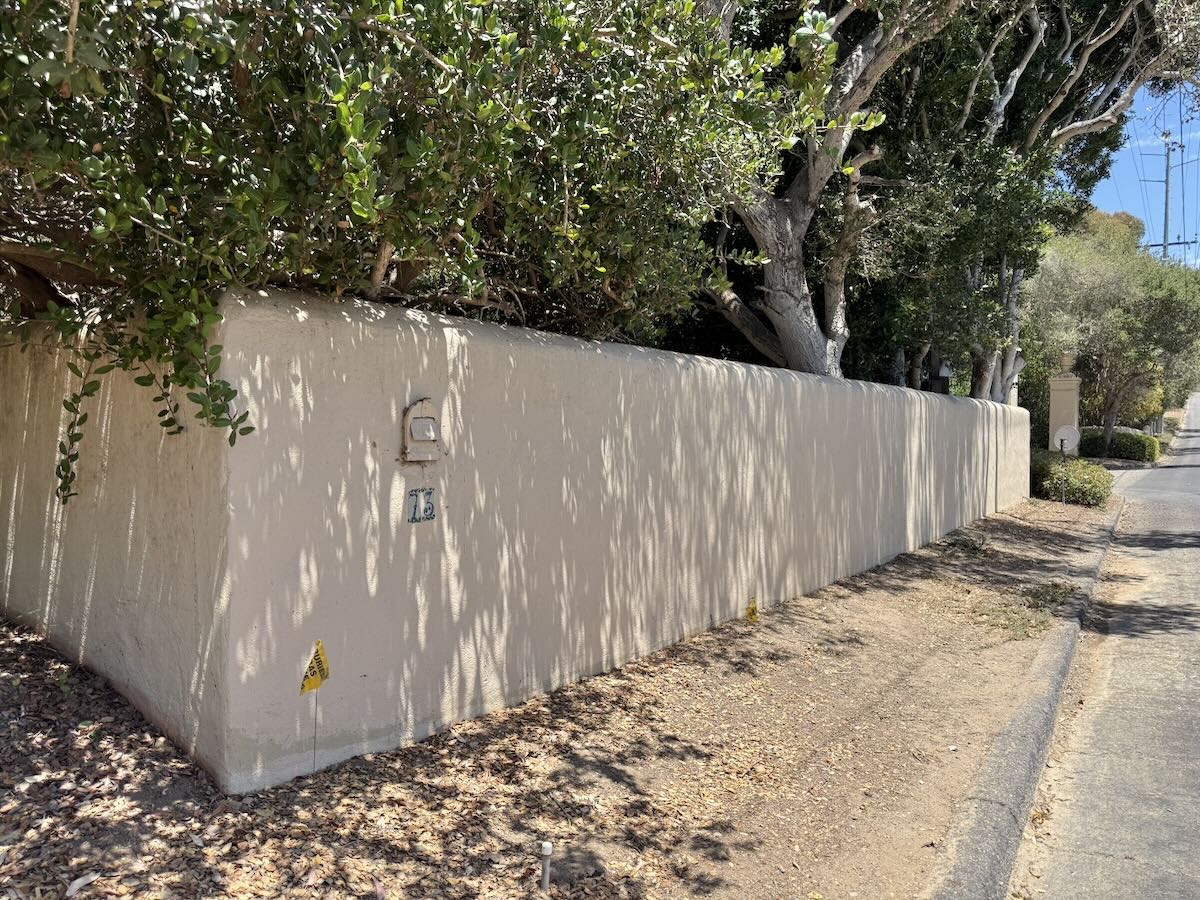
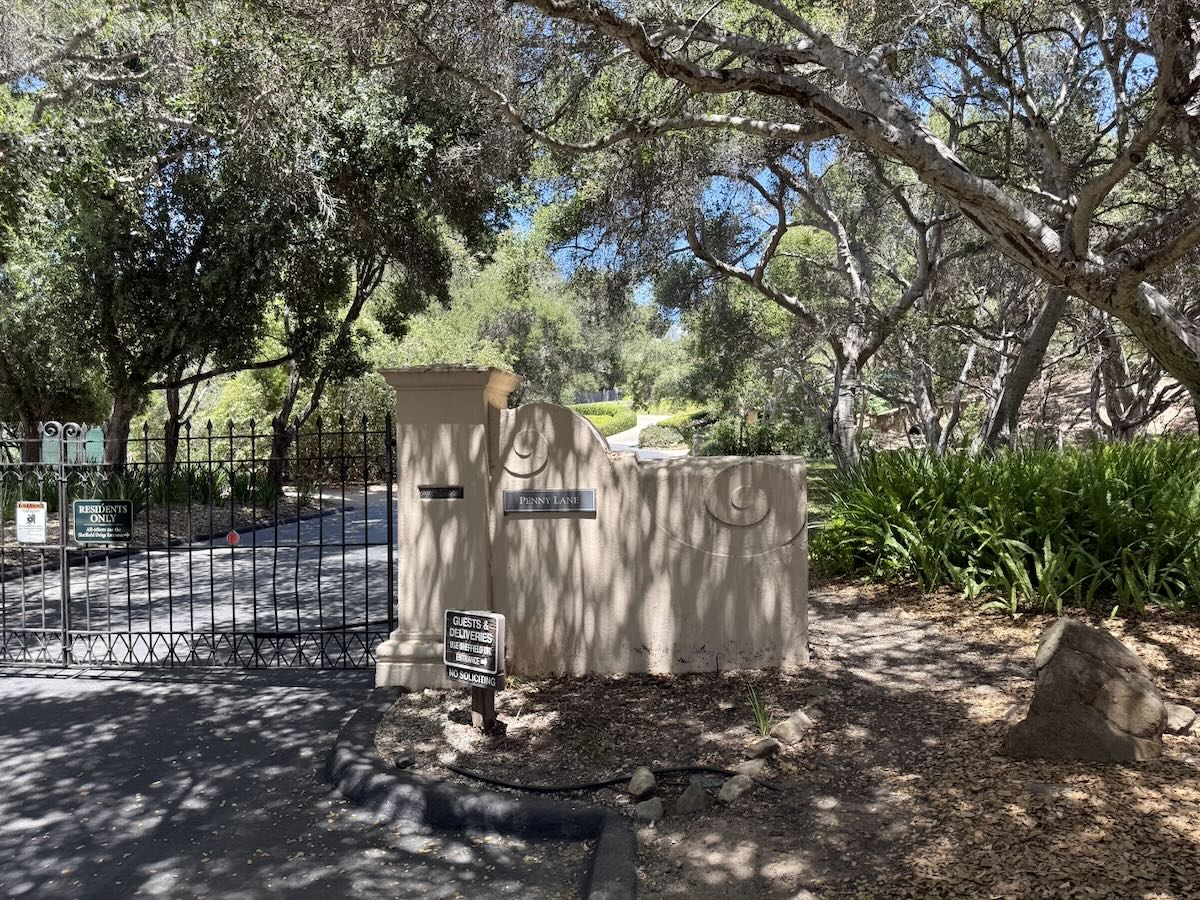
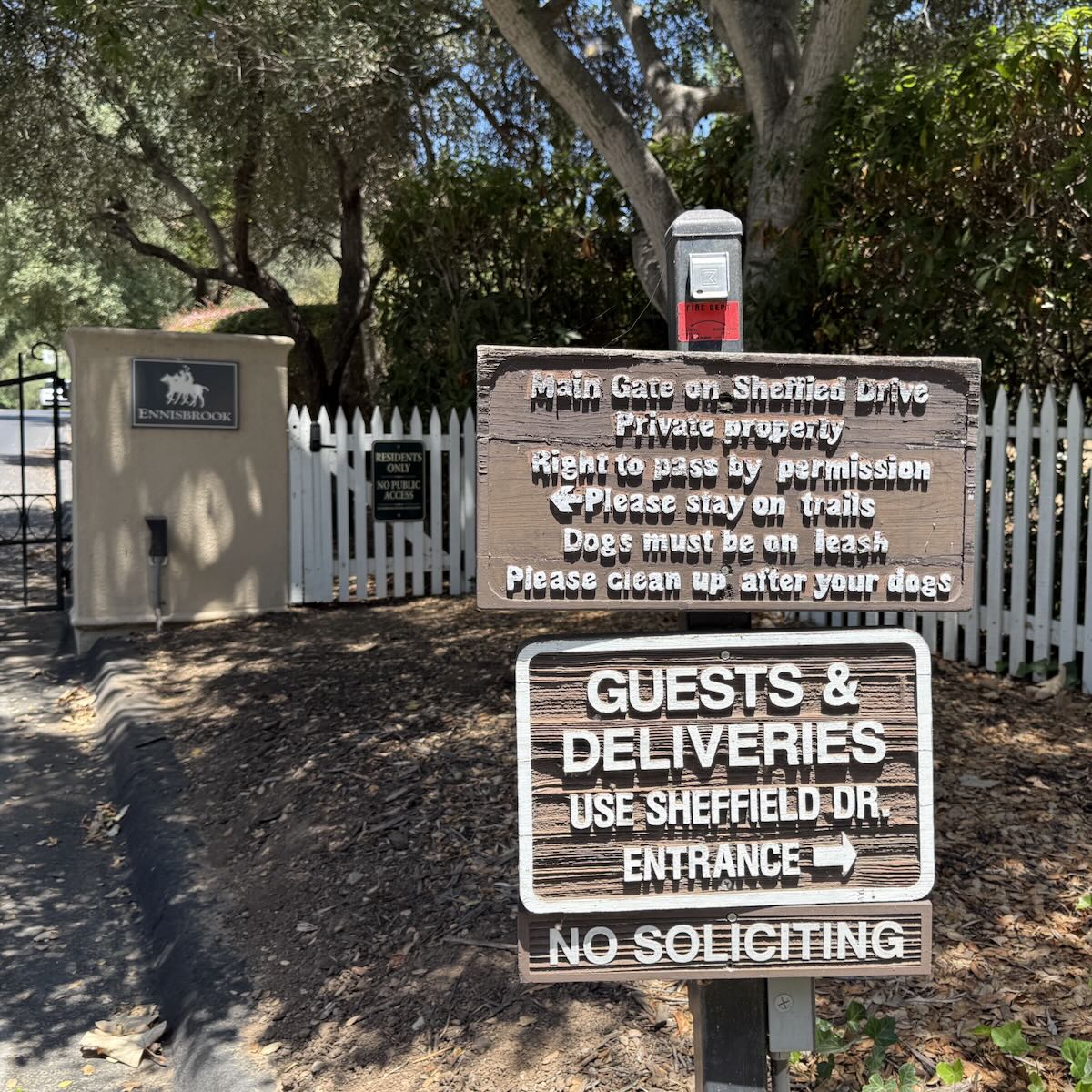 Ennisbrook’s gate at Penny Lane has much more drama, and I stopped to admire the stones embedded in the pavement, the vestigial mailbox, and a stately vintage font.
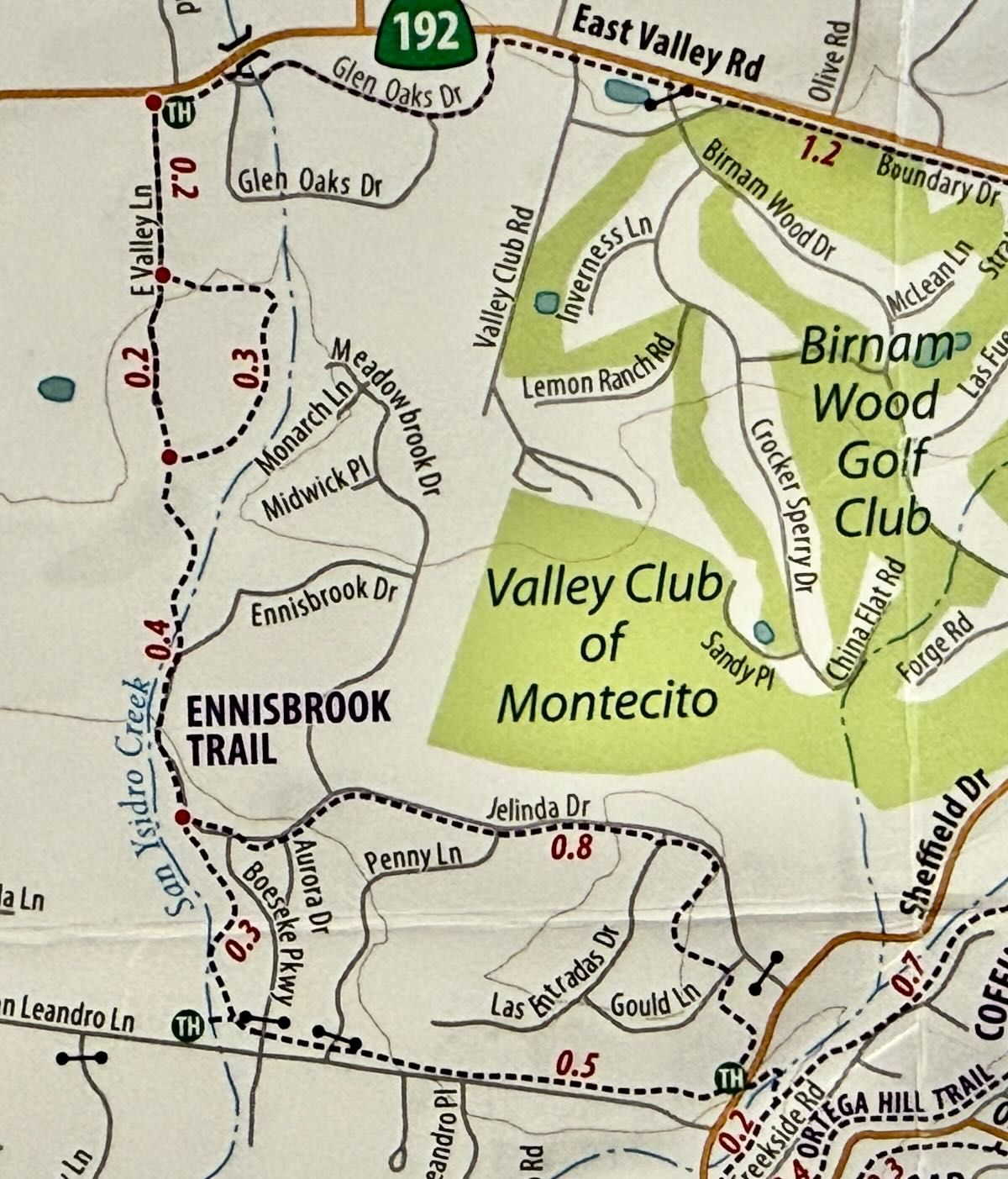
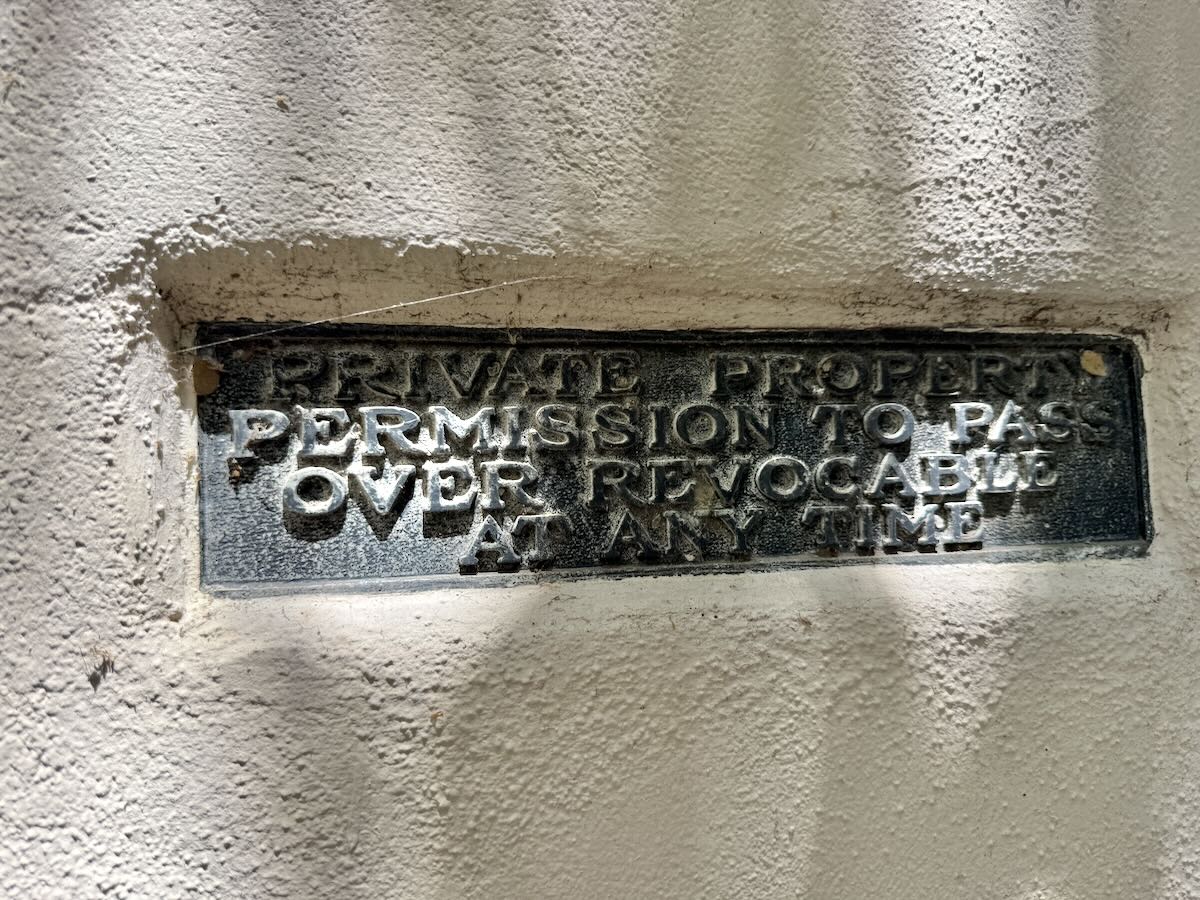 The development of Ennisbrook also required a public trail easement along Jelinda Drive, and while the gate at Penny Lane is possible to circumvent, access is actually via the Ennisbrook Open Space to the west or the trailhead on Sheffield Drive, just below Ennisbrook’s main entrance (look for the Montecito Trails Foundation sign).
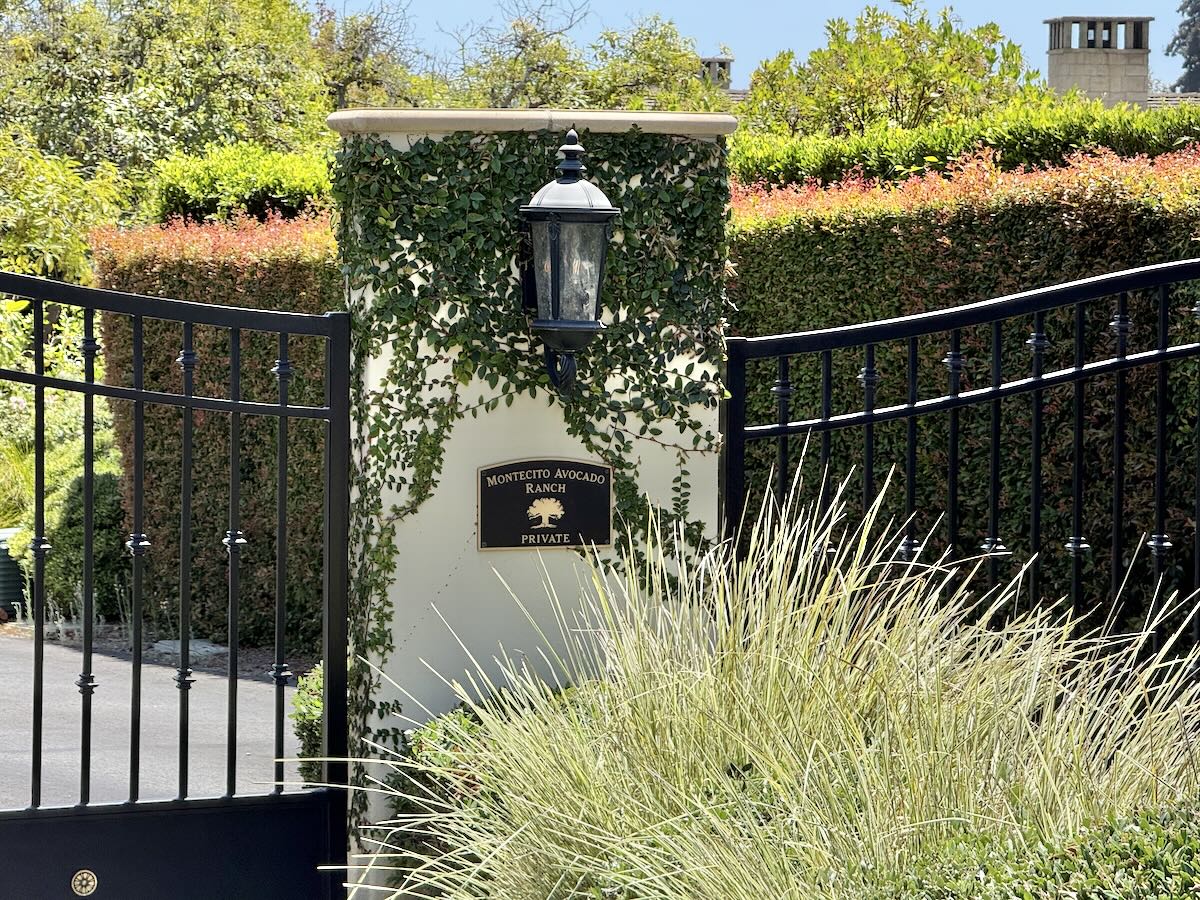
 South of San Leandro Lane is another gated community, the prosaically named Montecito Avocado Ranch. I vote that we shorten it to Monavora—or, if there are still avocado trees, switch it to Rancho Las Paltas.
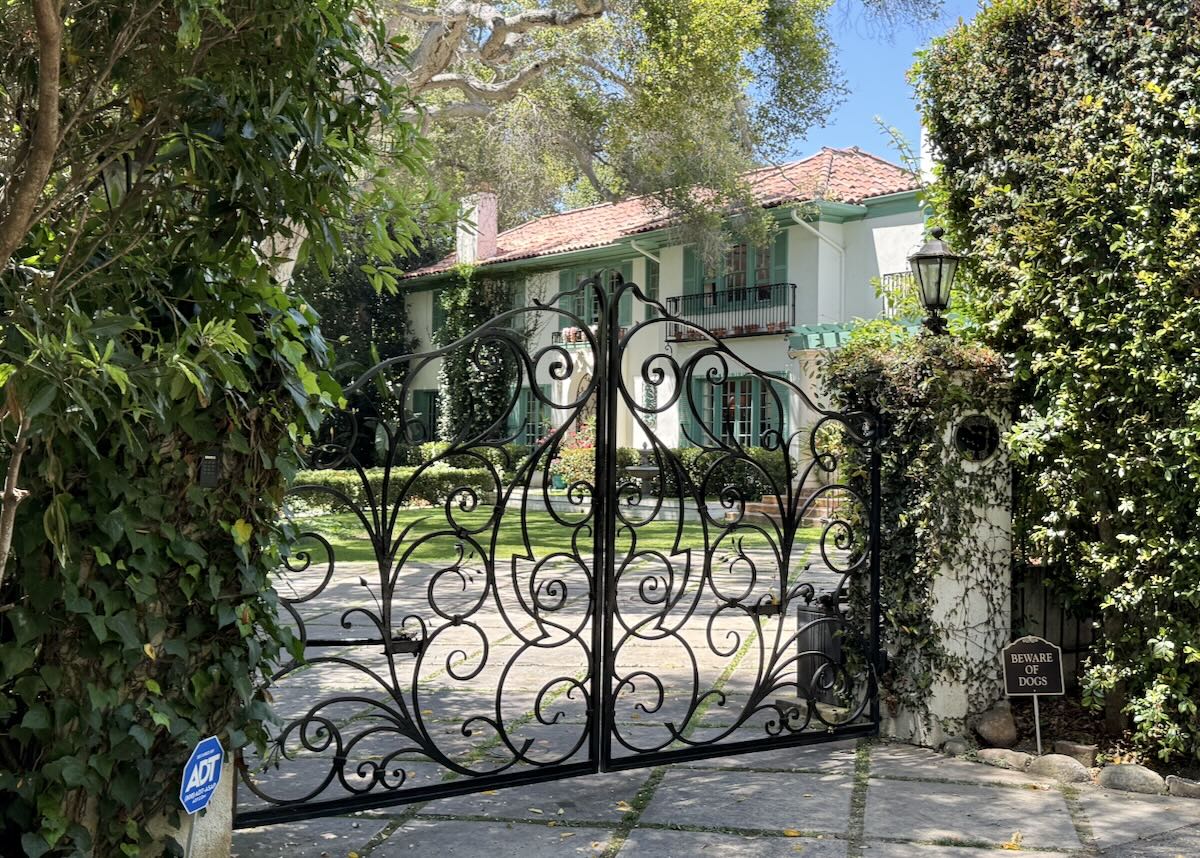
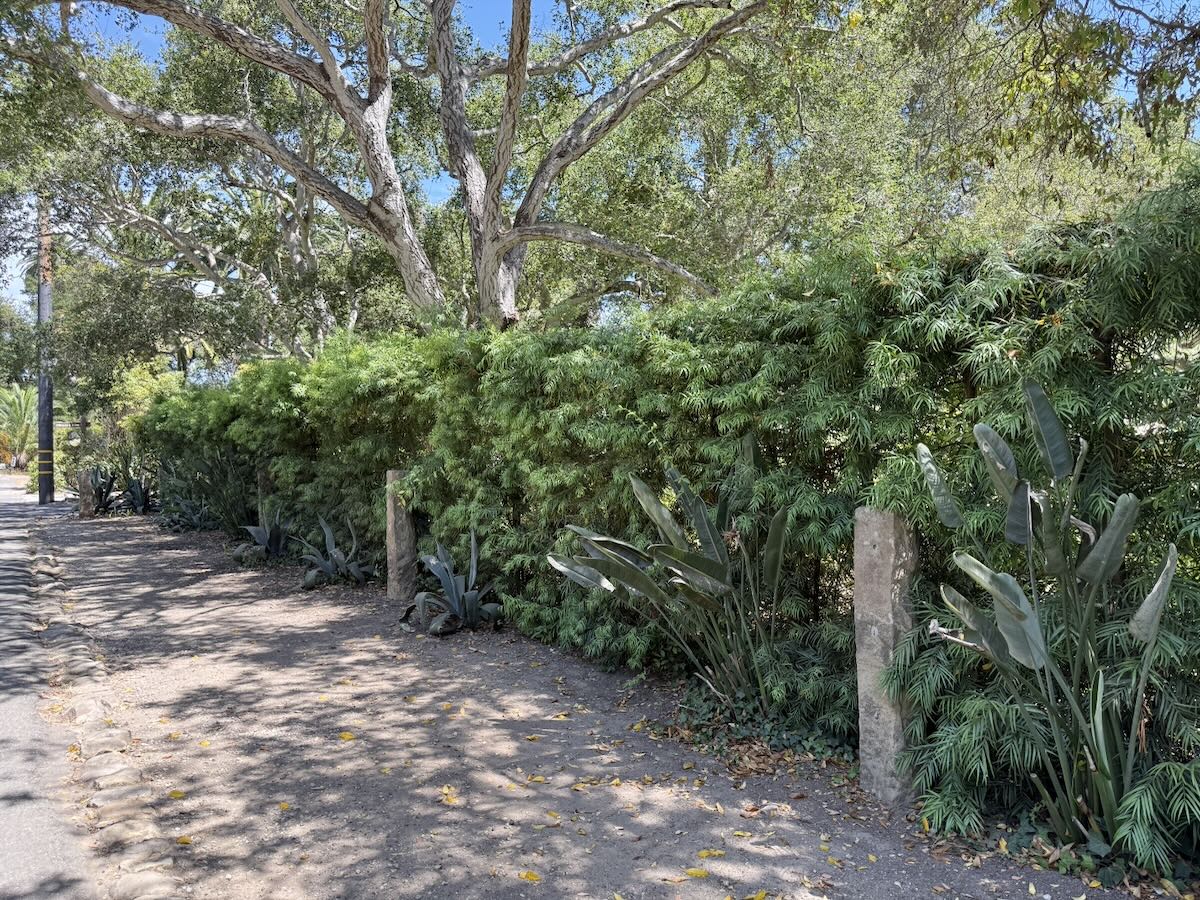
 Like I said, the area is rich with interesting stuff—so much so that I could’ve done a post solely on San Leandro Lane. As elsewhere in the Hedgerow, the street has lots of neat hedge gates (although we’ll see better ones in a bit).
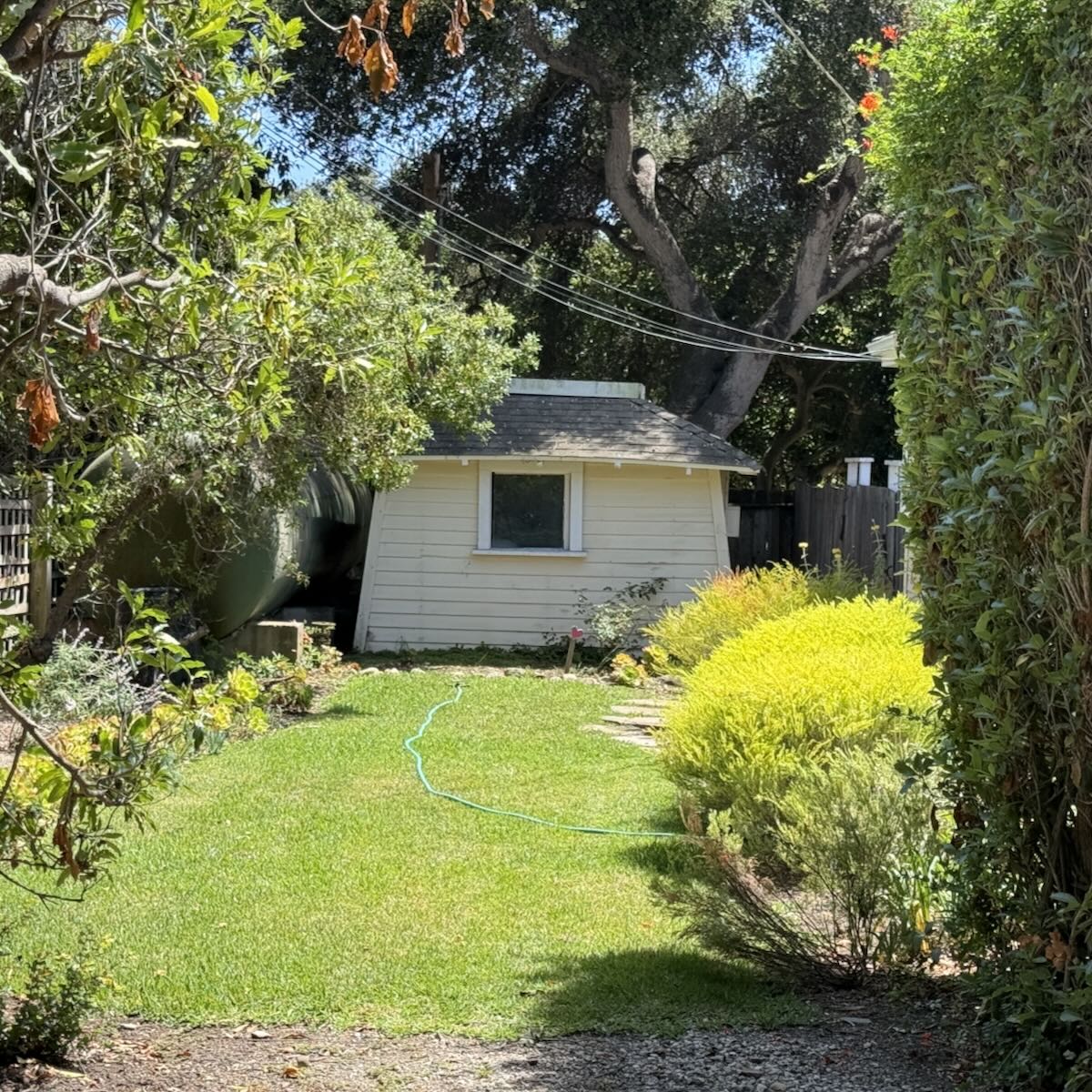
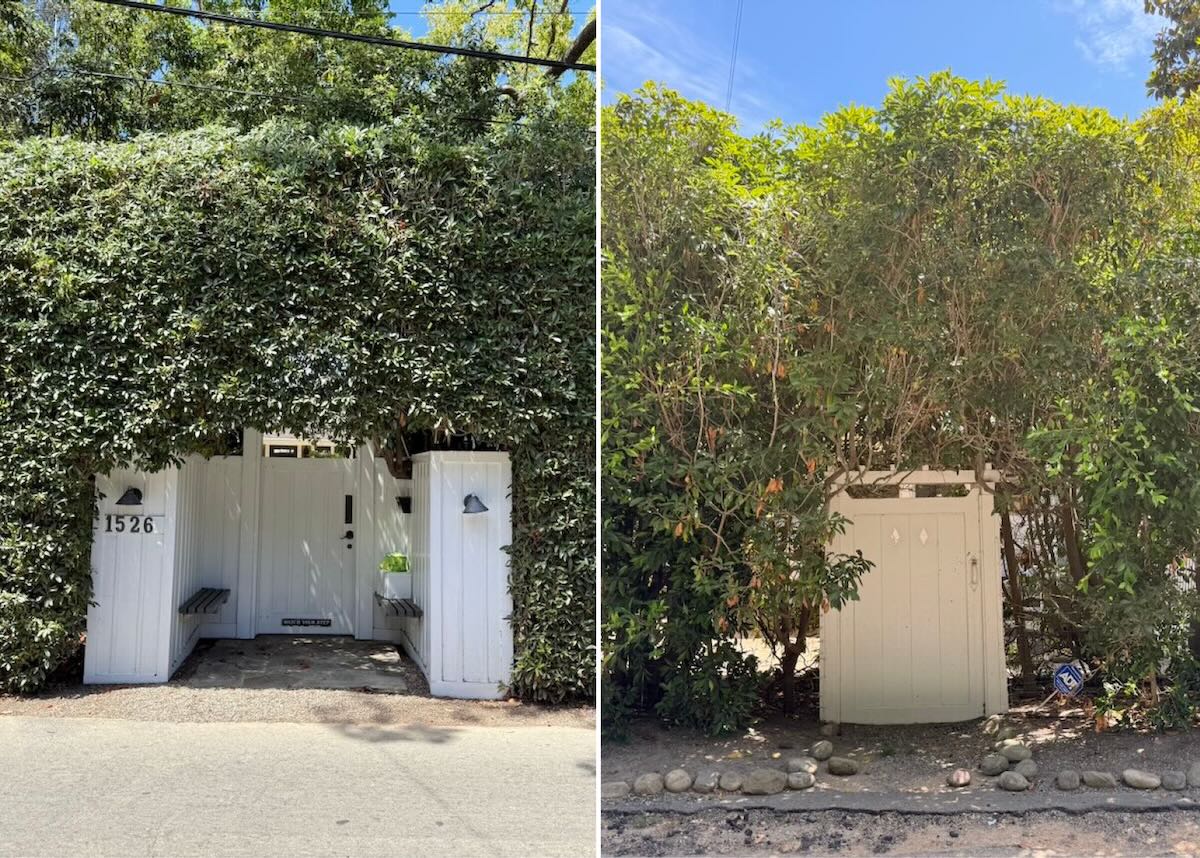 And there’s a building in the shape of a three-dimensional trapezoid, which a response on Quora says is known as a “trapezoidal prism, trapezohedron, hexahedron, truncated pyramid, a frustum, or (an old crystallographer’s label) a trapezoidagon.”
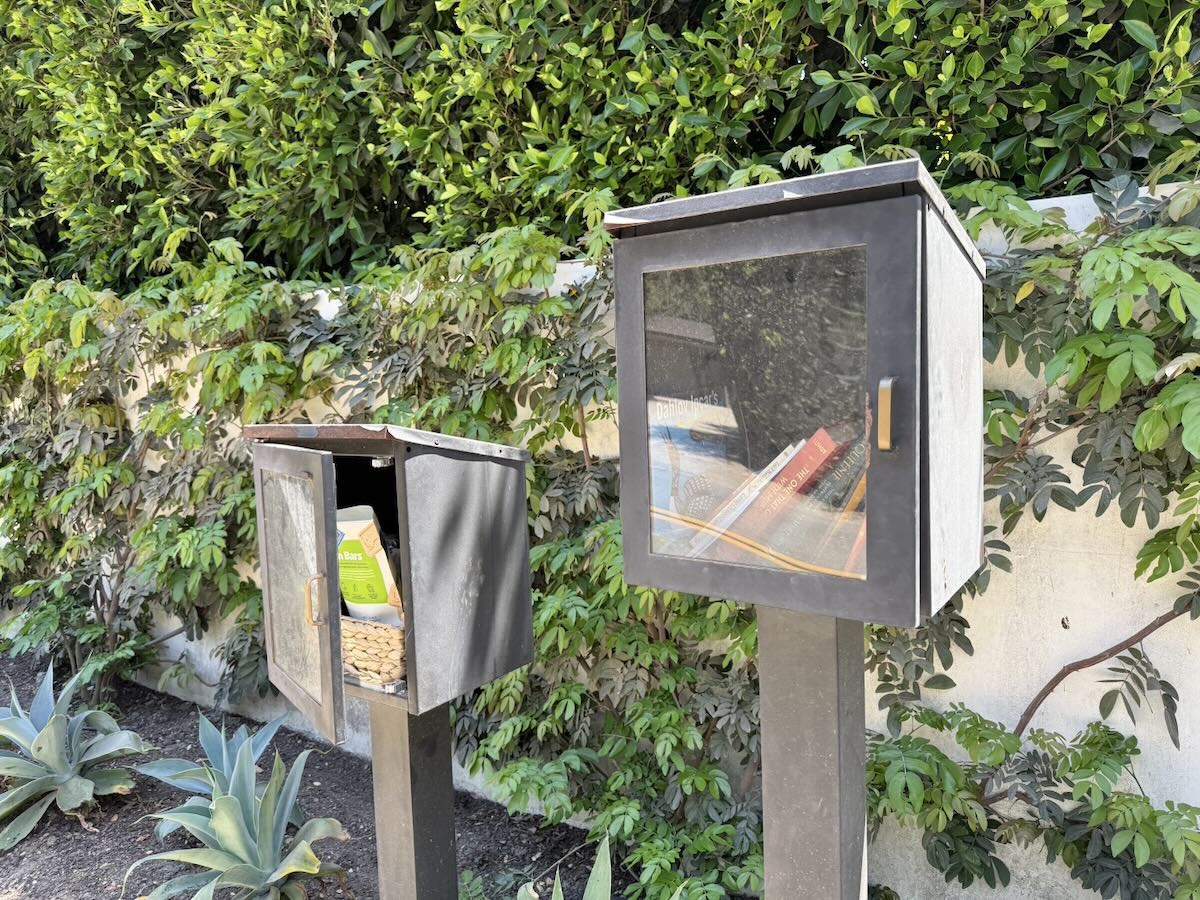
 I spotted just one Little Free Library—well, one pair—on the entire walk, surprisingly enough. Those are dog treats.
 As much as I liked the log cabin–style mailbox…
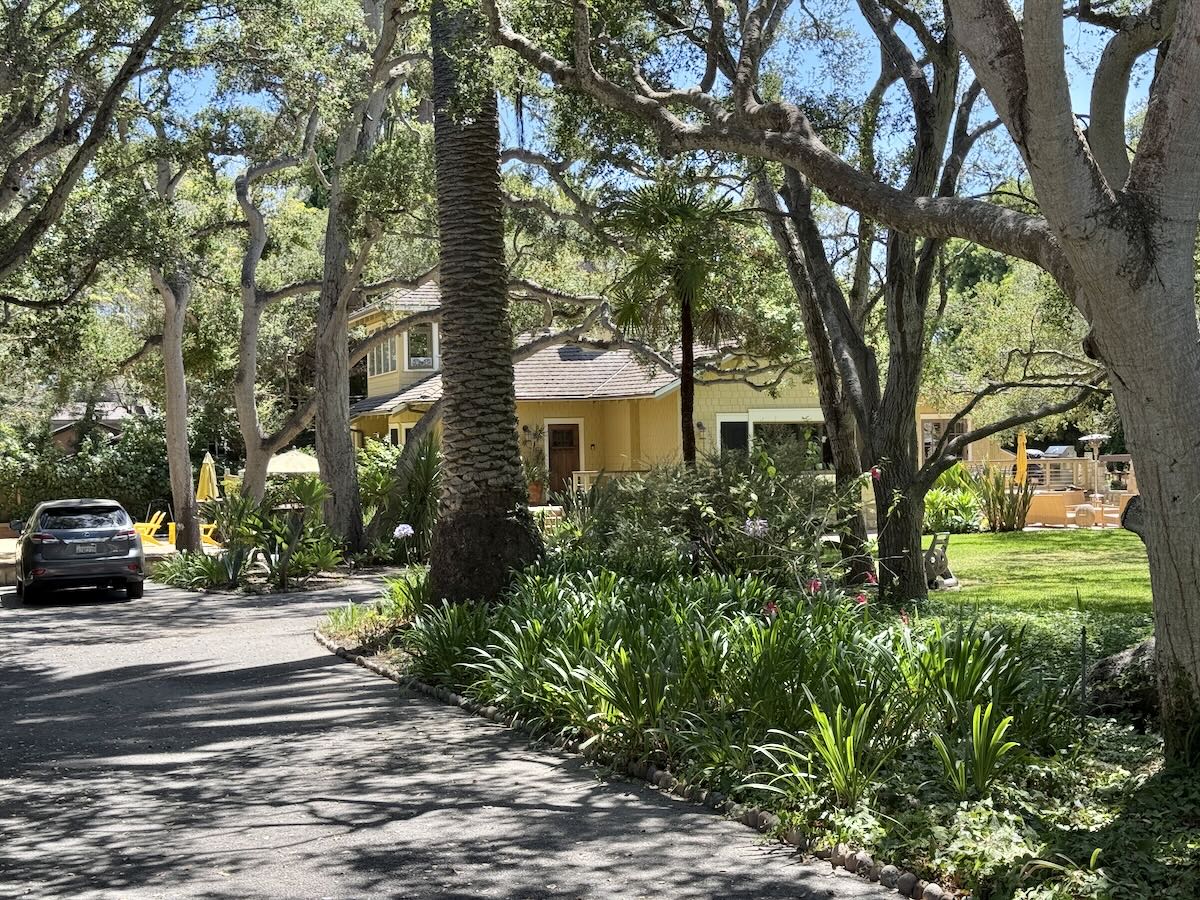
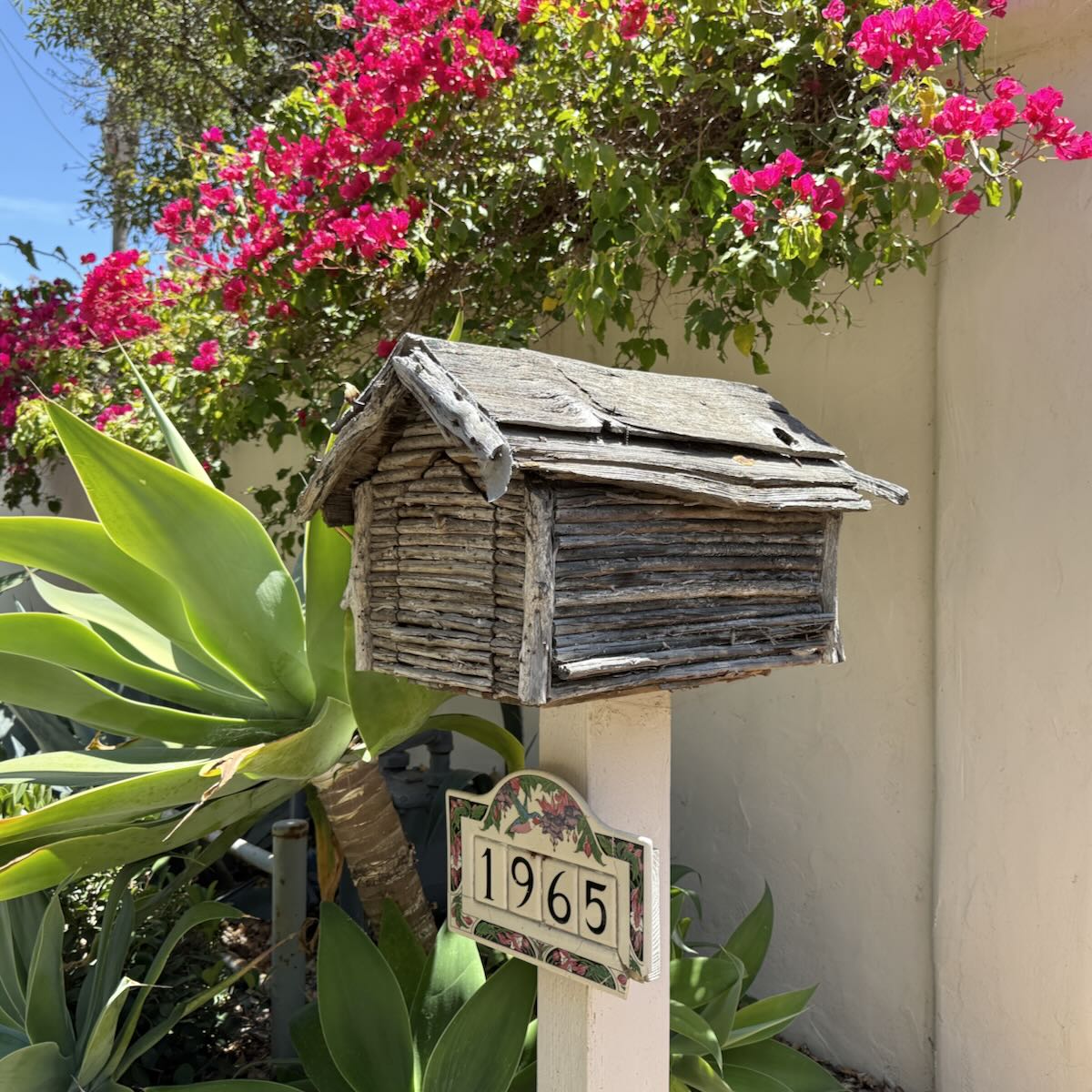 …none can compete with the mailbox at 1569 San Leandro Lane, with a history of the property written on the side. Naturally, I have copy-editing suggestions.
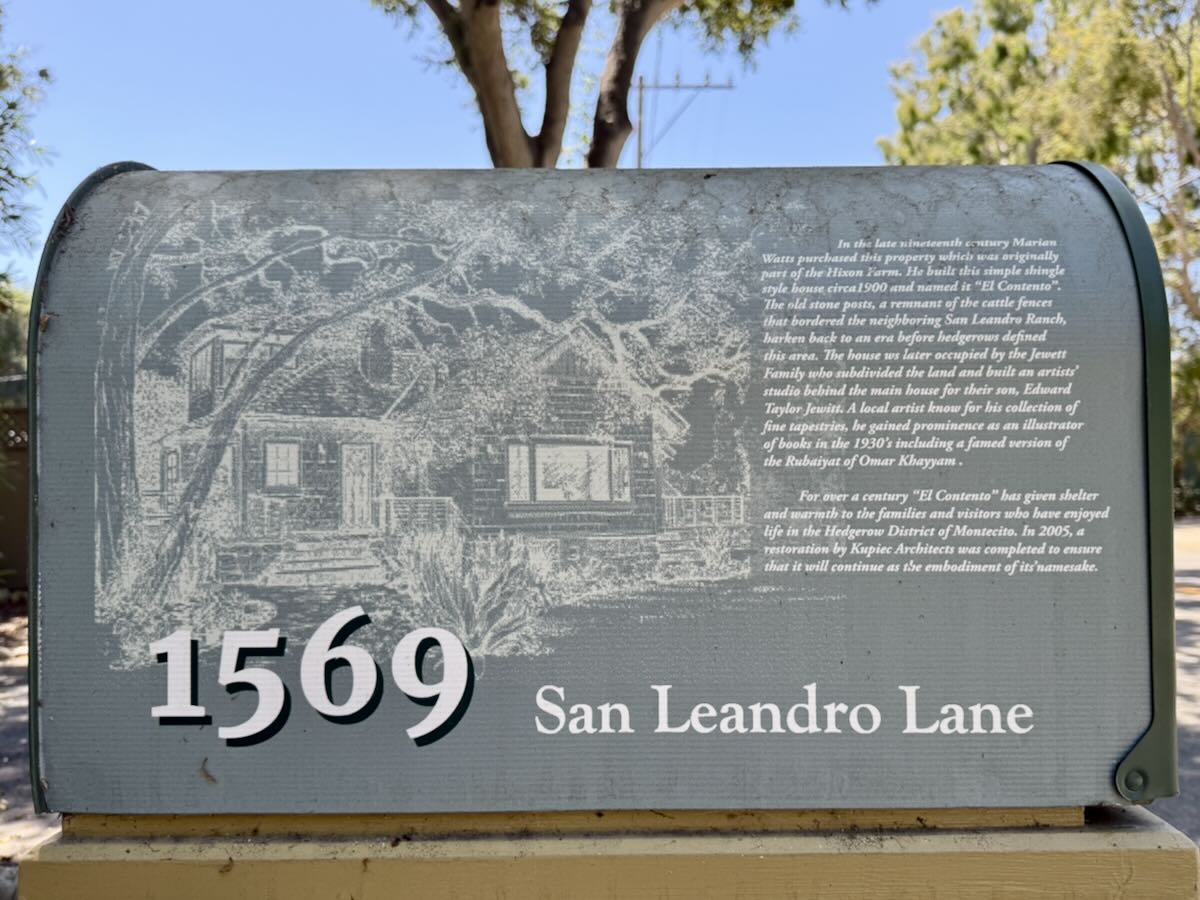
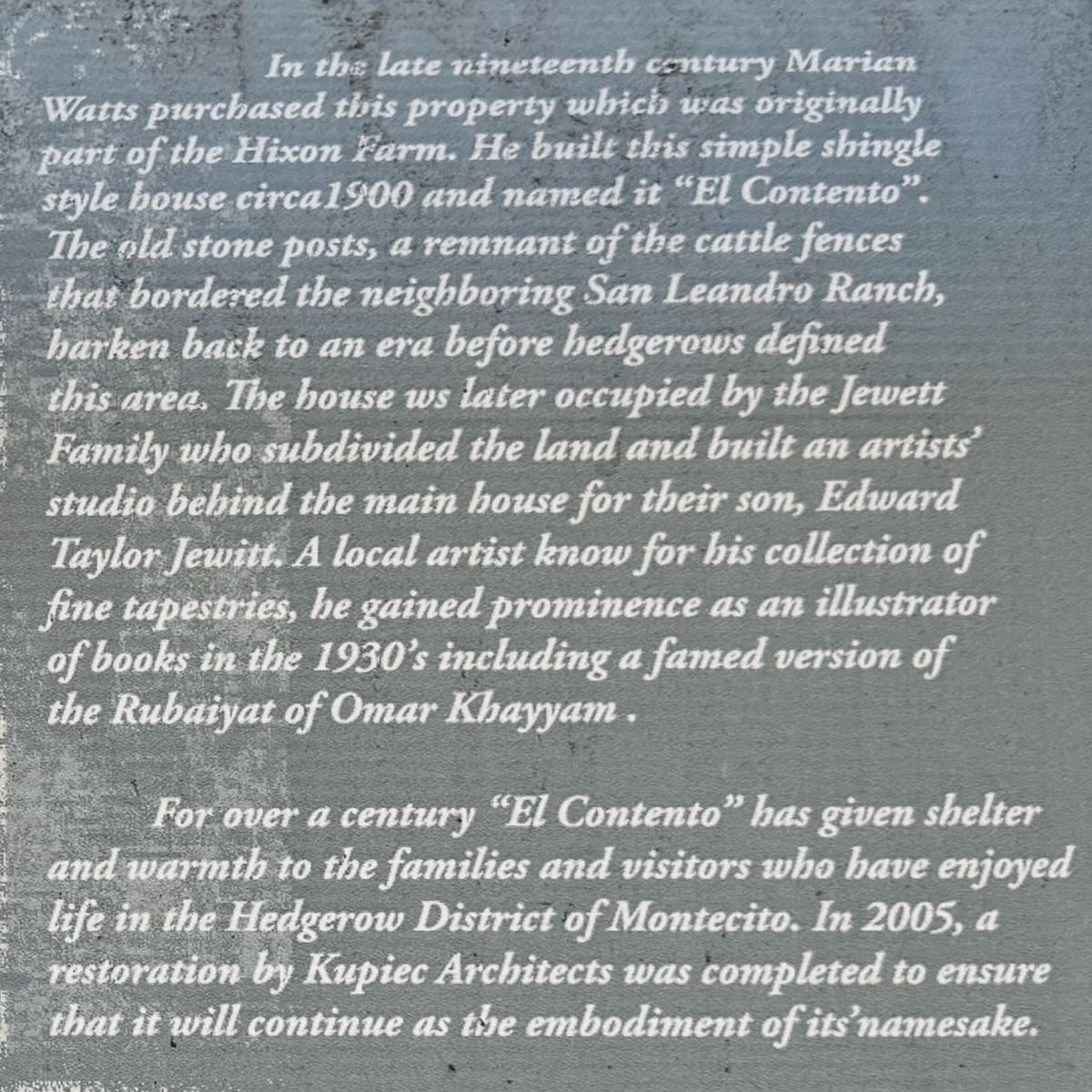
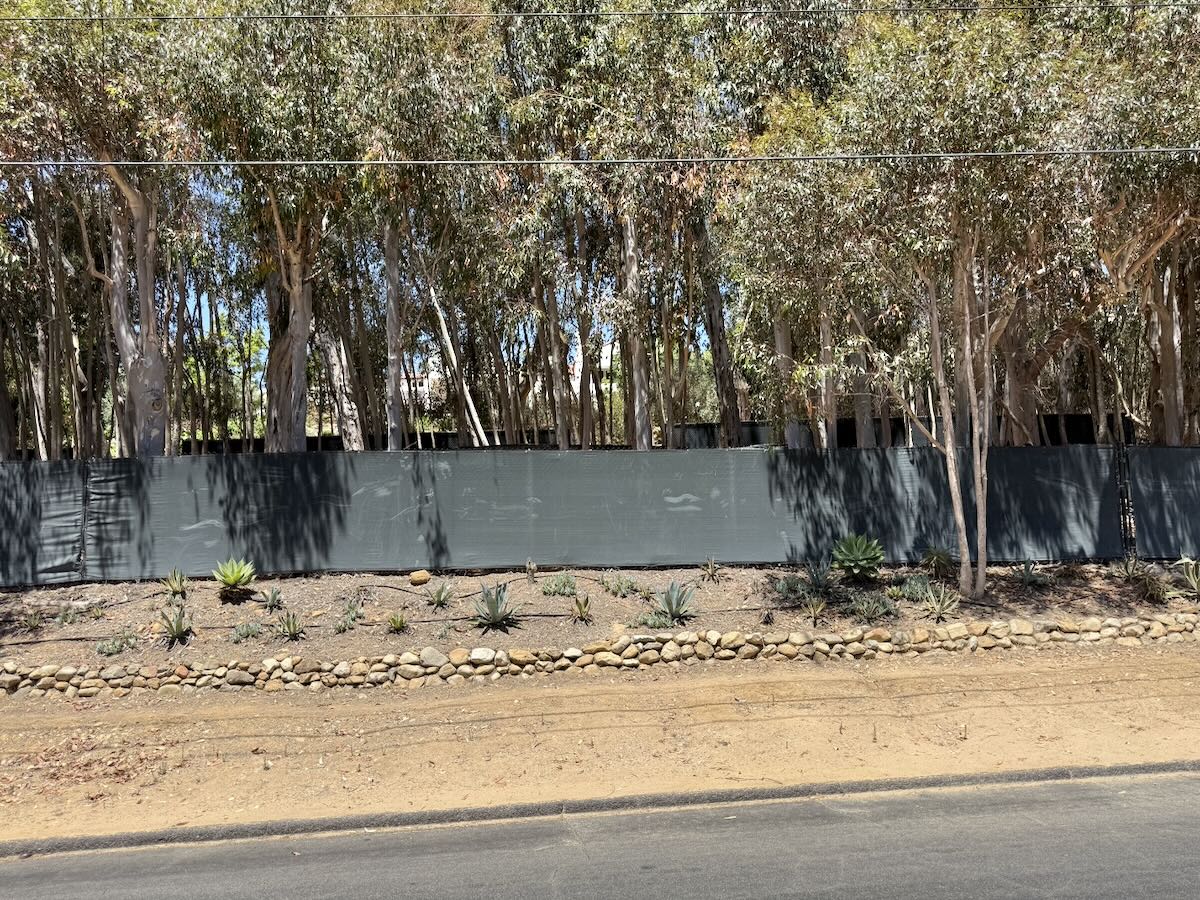
 I wouldn’t mind a sign explaining why this eucalyptus grove has been fenced in.
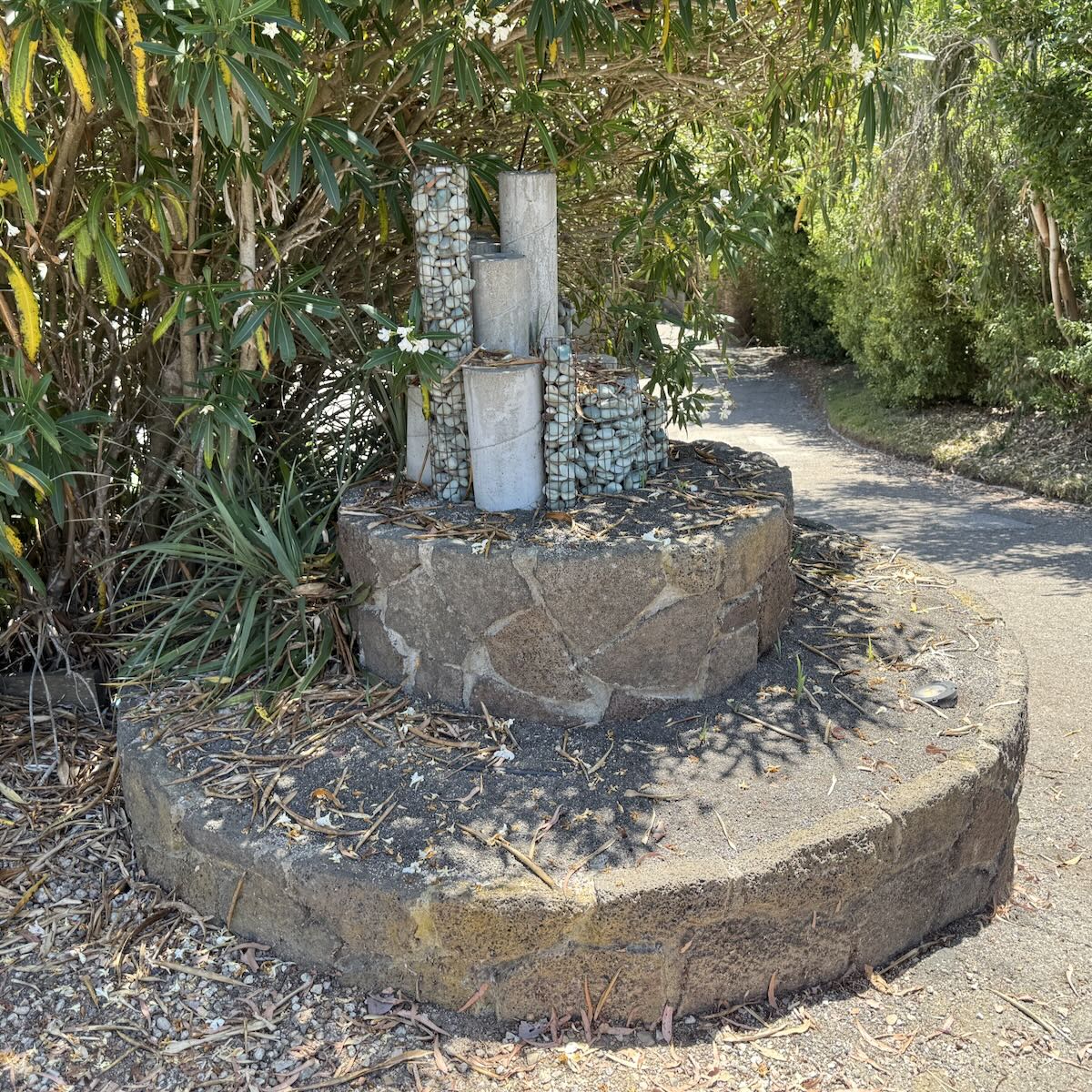
 Or what this artwork (?) incorporating gabions is shooting for.
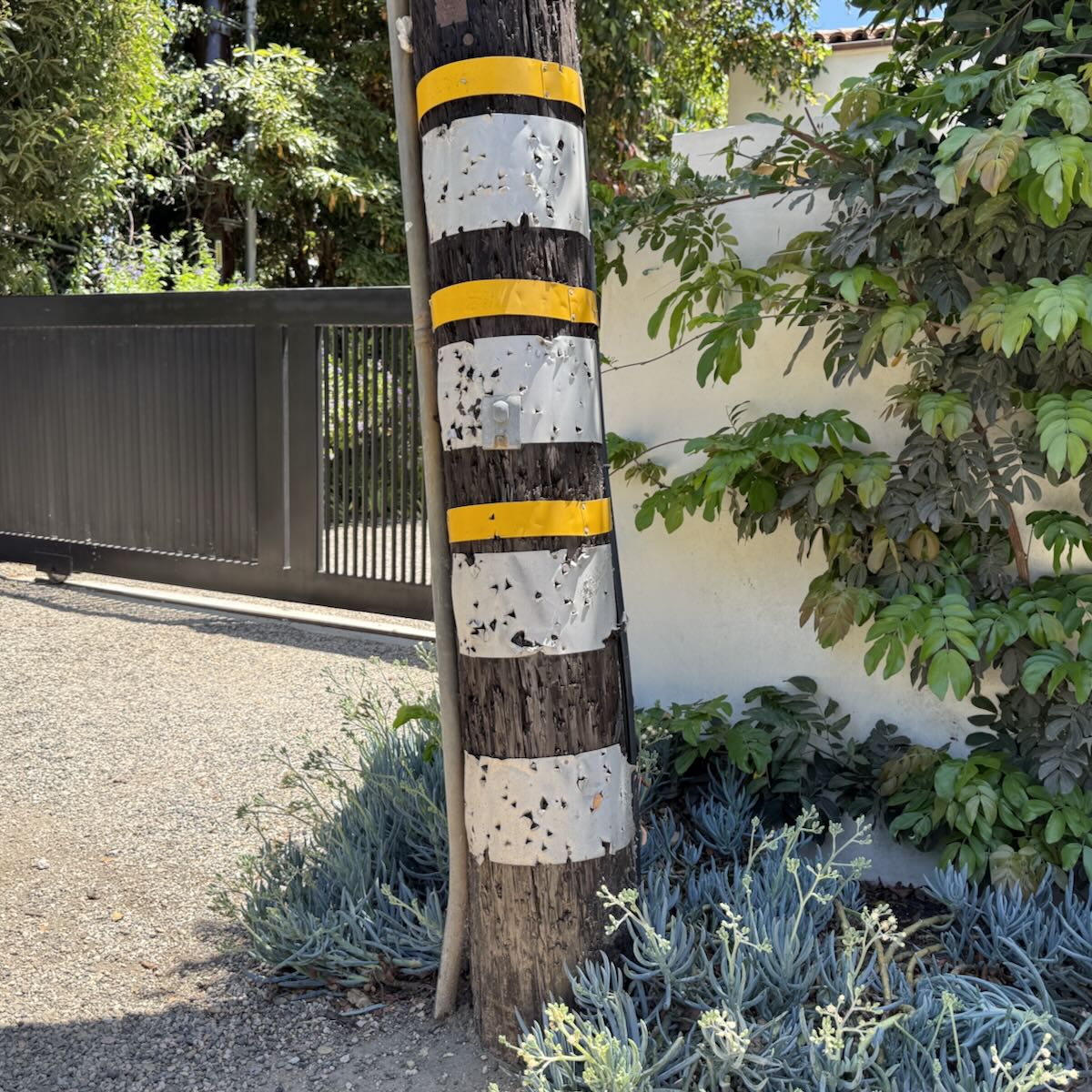
 Or what on earth is being done to this utility pole. Woodpeckers?
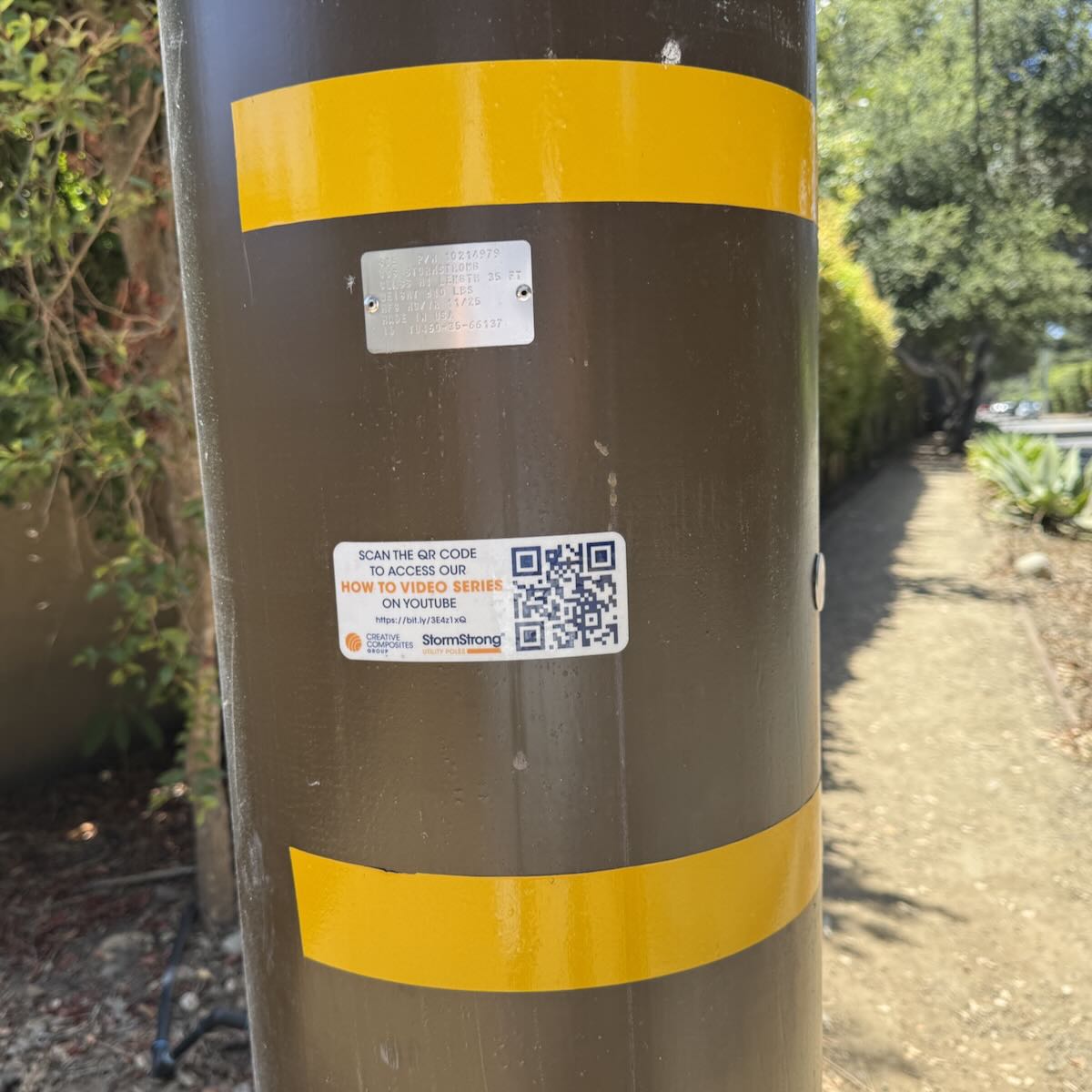
 I scanned the QR code on a different pole nearby—probably the first person ever to bother—which led to a YouTube playlist about how to install and maintain utility poles. I stopped watching when things got suggestive.
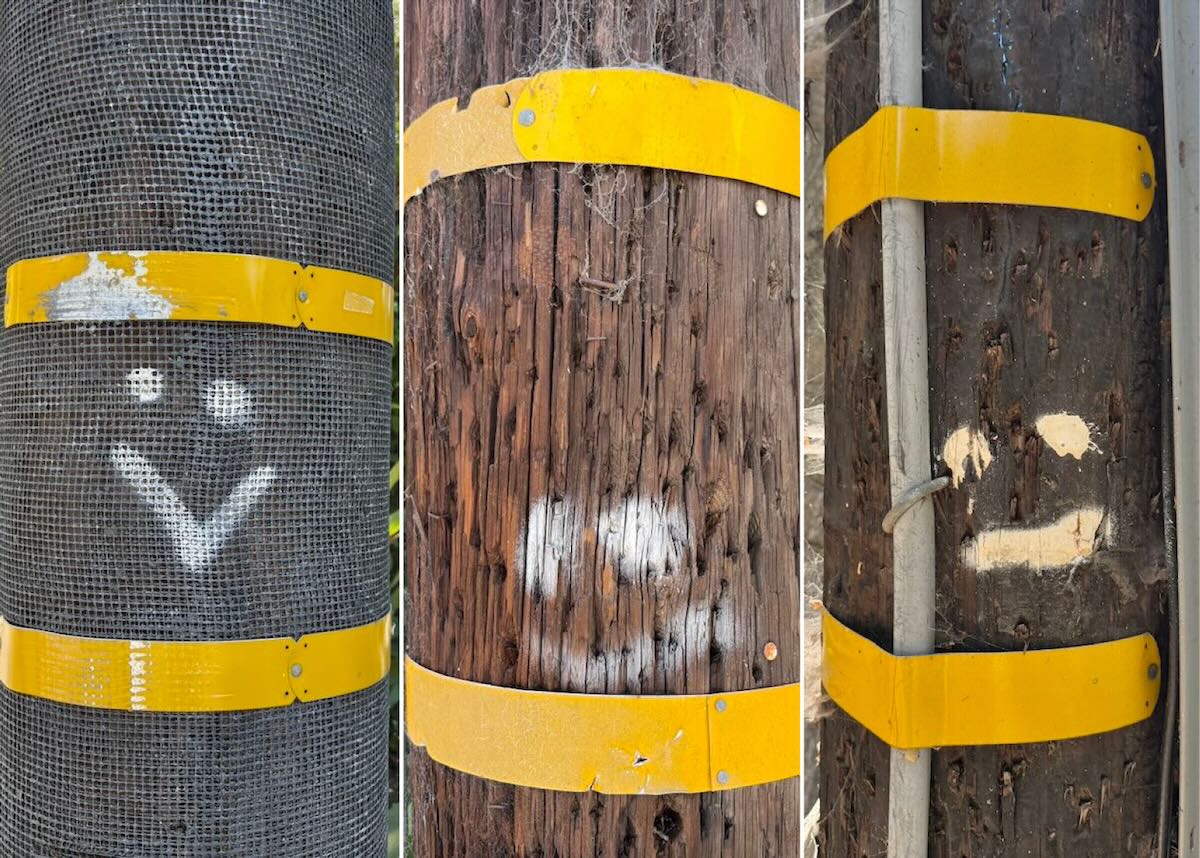
Elsewhere in utility-pole observations, are these emoticons graffiti? Or some notation for workers?
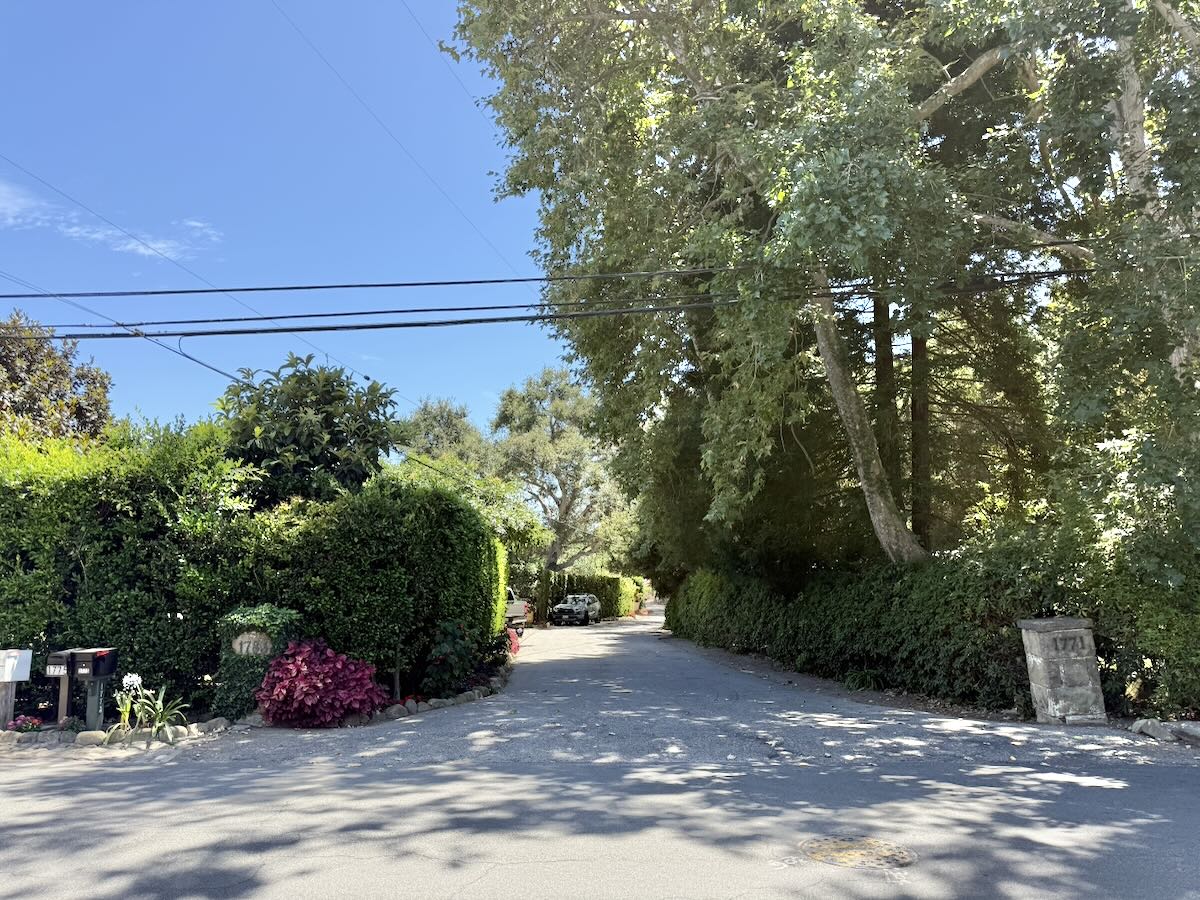
 I didn’t walk this private lane extending south from San Leandro Lane, but Google Maps has driven it.
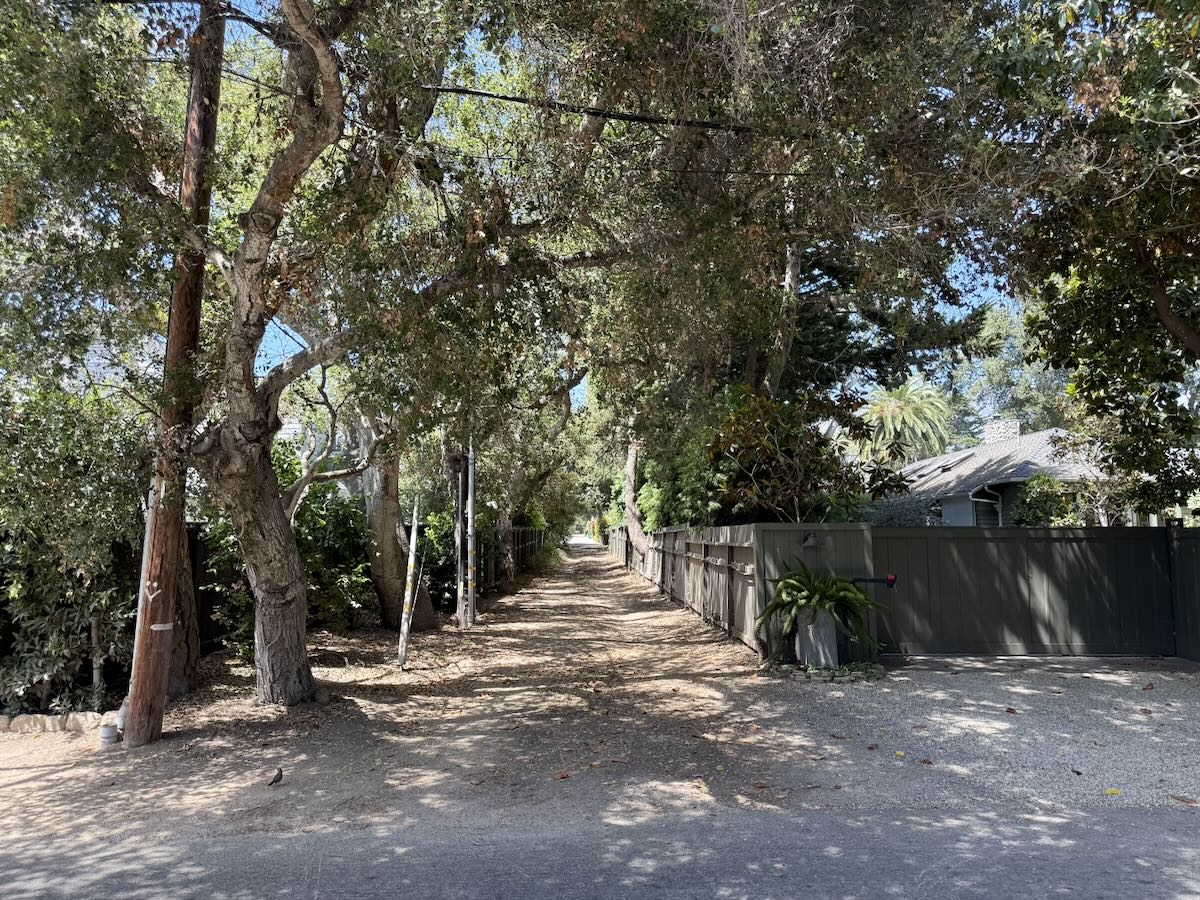
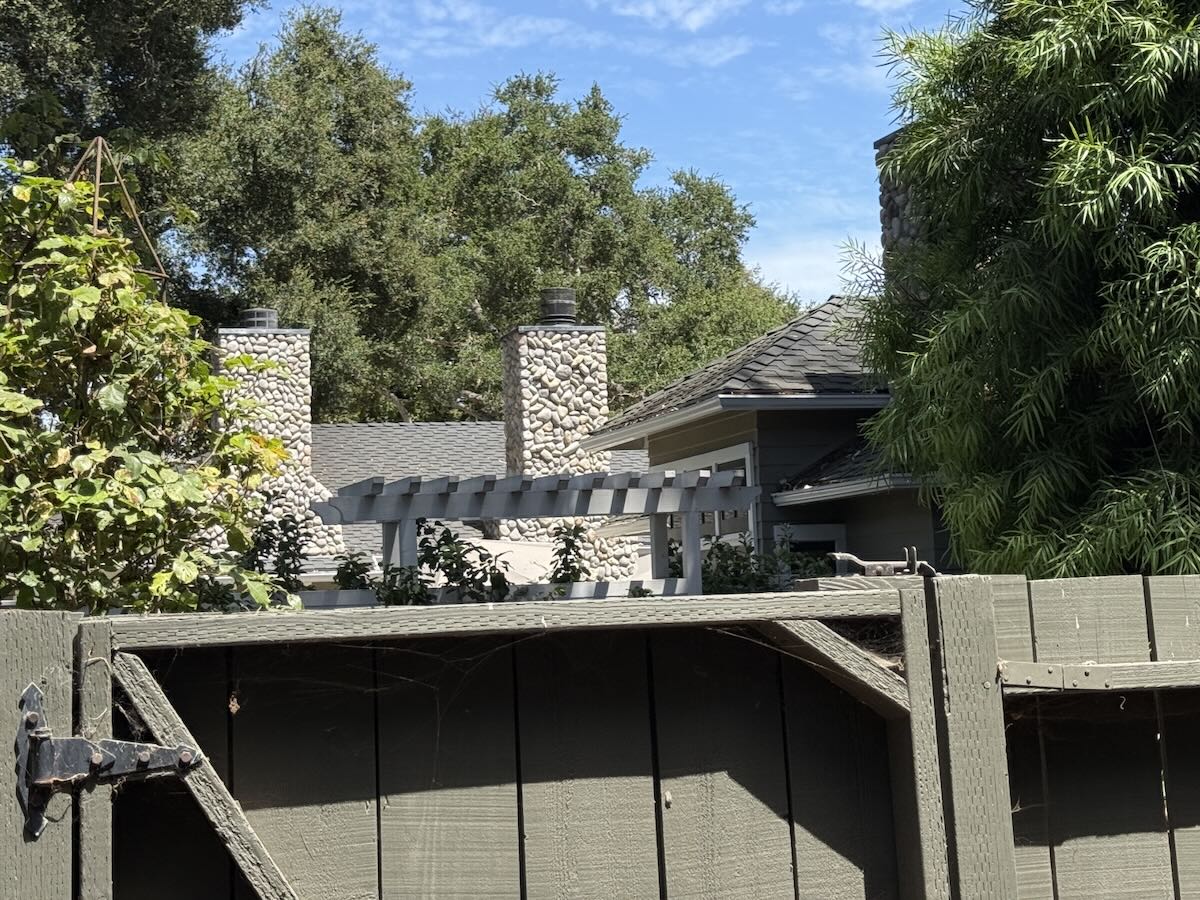
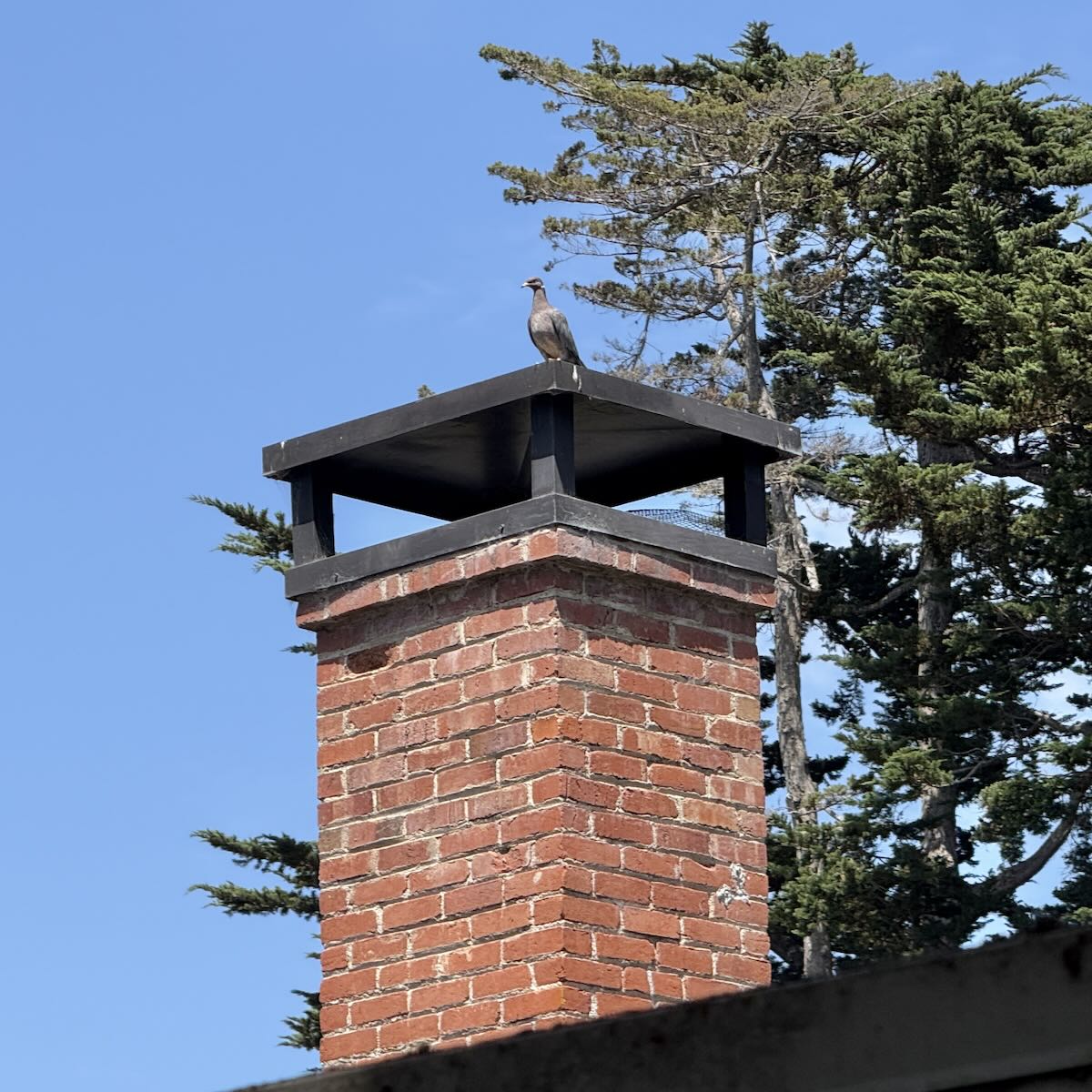
 I did, however, explore the dirt-road portion of Monte Vista Lane north of San Leandro. It’s so adorable, with cute stone chimneys and cut-outs for trees, that for a second, I thought the dove might be decor.
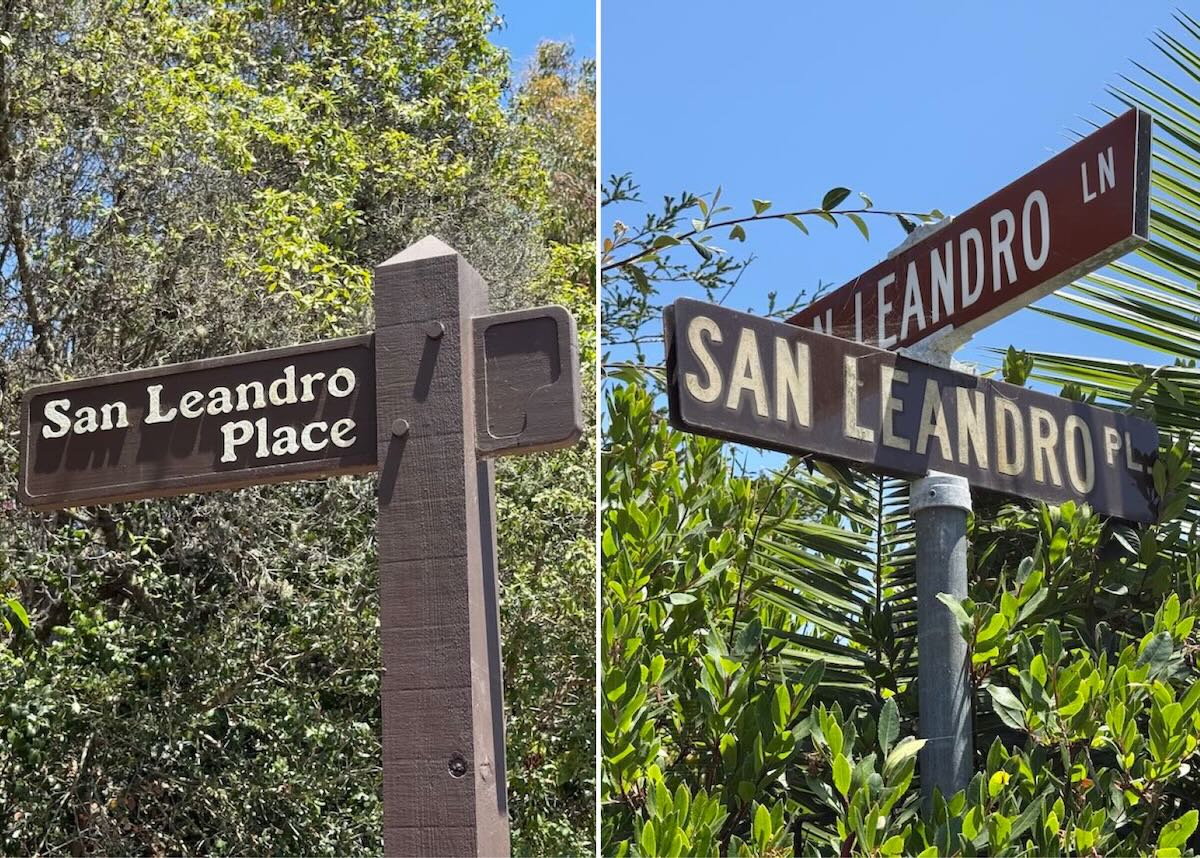
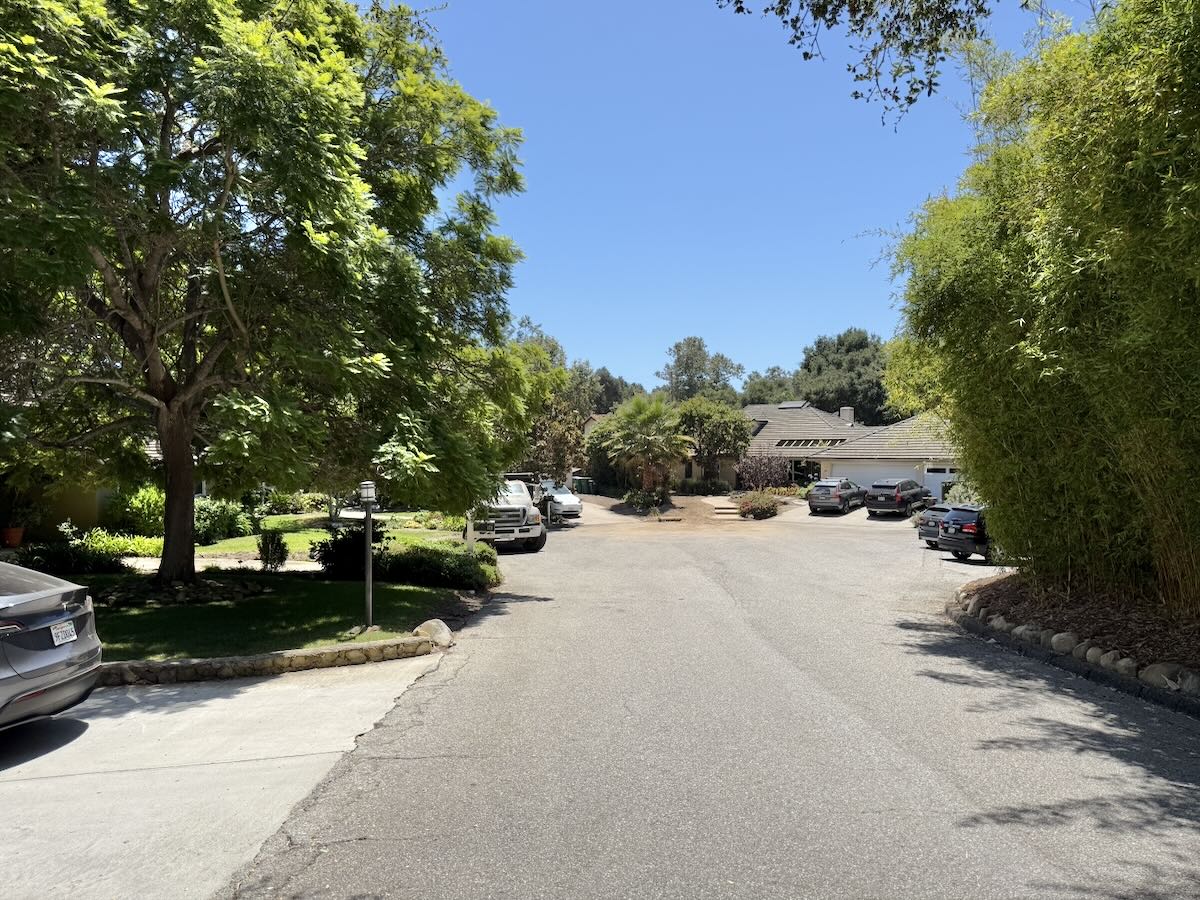
 And that concludes the San Leandro Lane portion of this post. San Leandro Place is a legit different street, a cul-de-sac extending south near the eastern end of San Leandro Lane. It has a slightly more suburban feel, clearly developed all at once with the houses cheek-to-cheek, no gates, and even a non-Montecito street sign (as well as a wooden one).
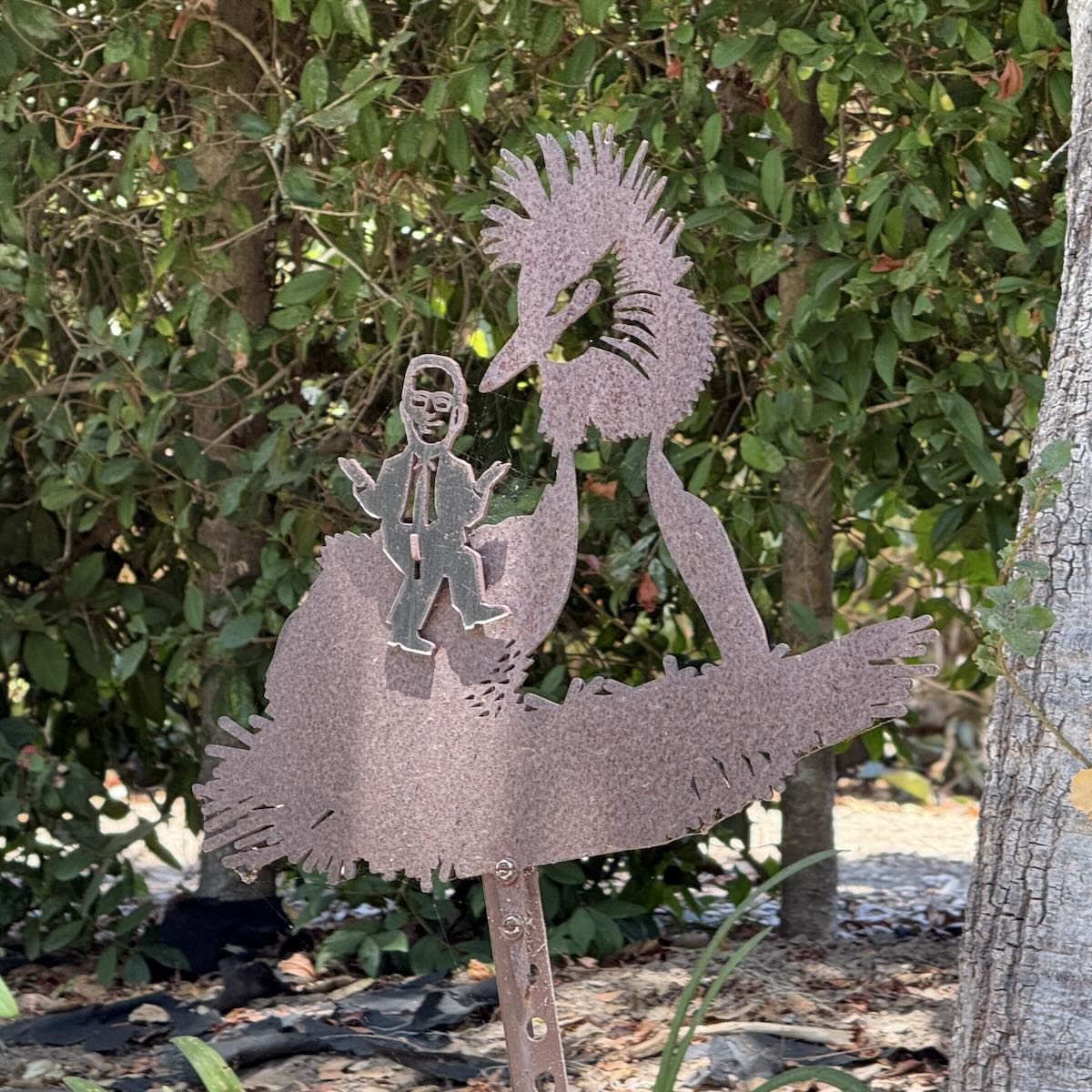
 The little man in the yardifact reminds me of something—an advertising mascot?—but I can’t recall what. UPDATE: “It’s John Oliver and the pūteketeke (Australasian crested grebe),” says Tal.
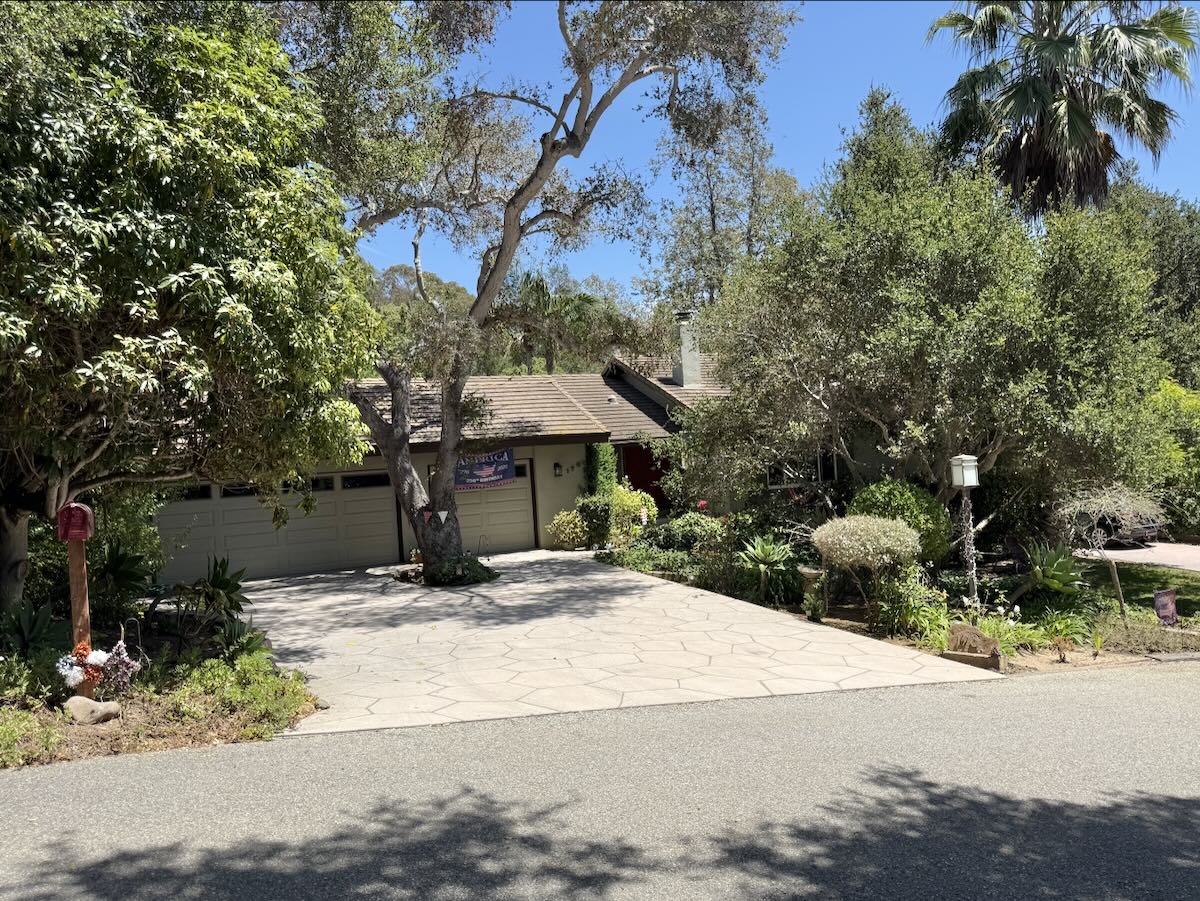
 This house had at least four instances of patriotic decor, along with more on a vehicle, presumably left over from July 4. It’s a sad state of things for our country when that makes me fear I might not agree with the homeowner about politics.
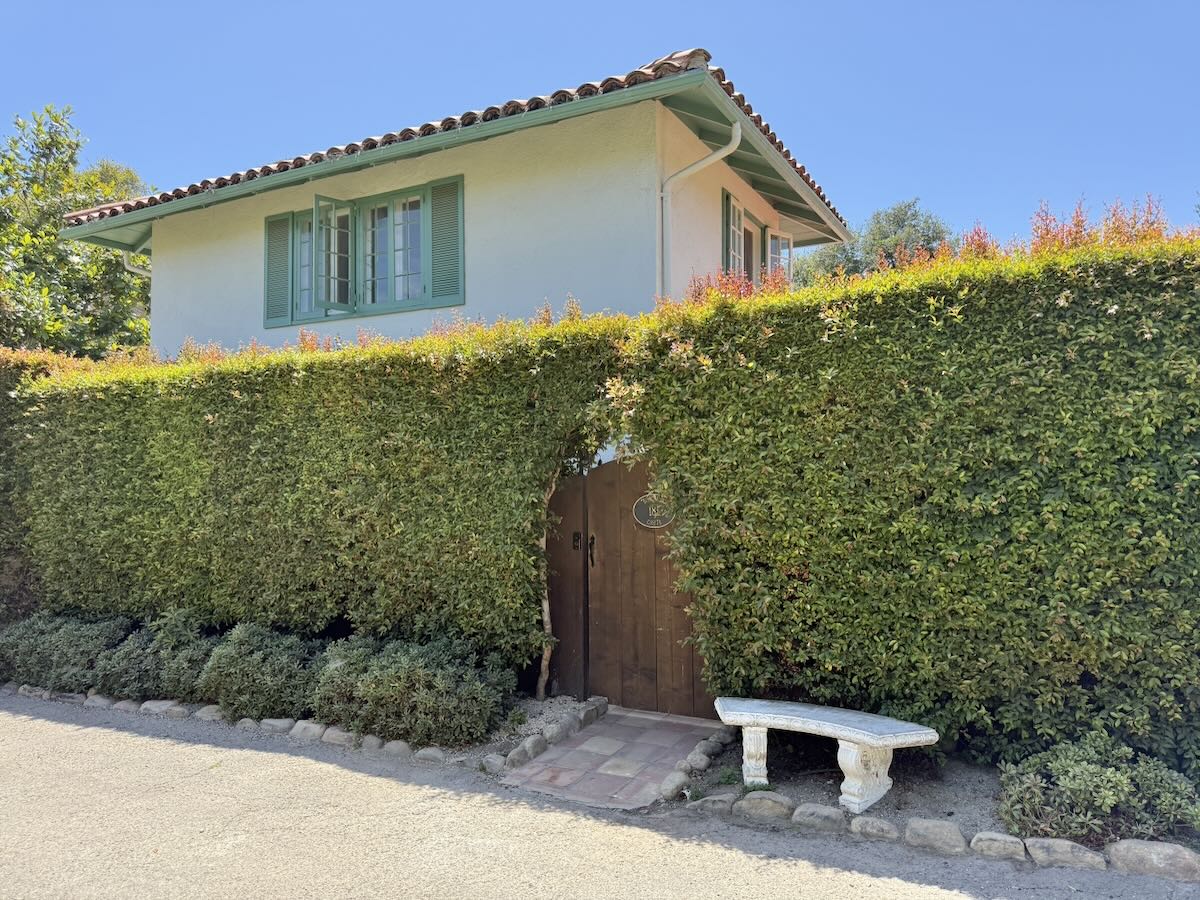
 Moving on to Pomar Lane, one of my very favorite streets. The houses are wonderful, even when all you get is a glimpse.
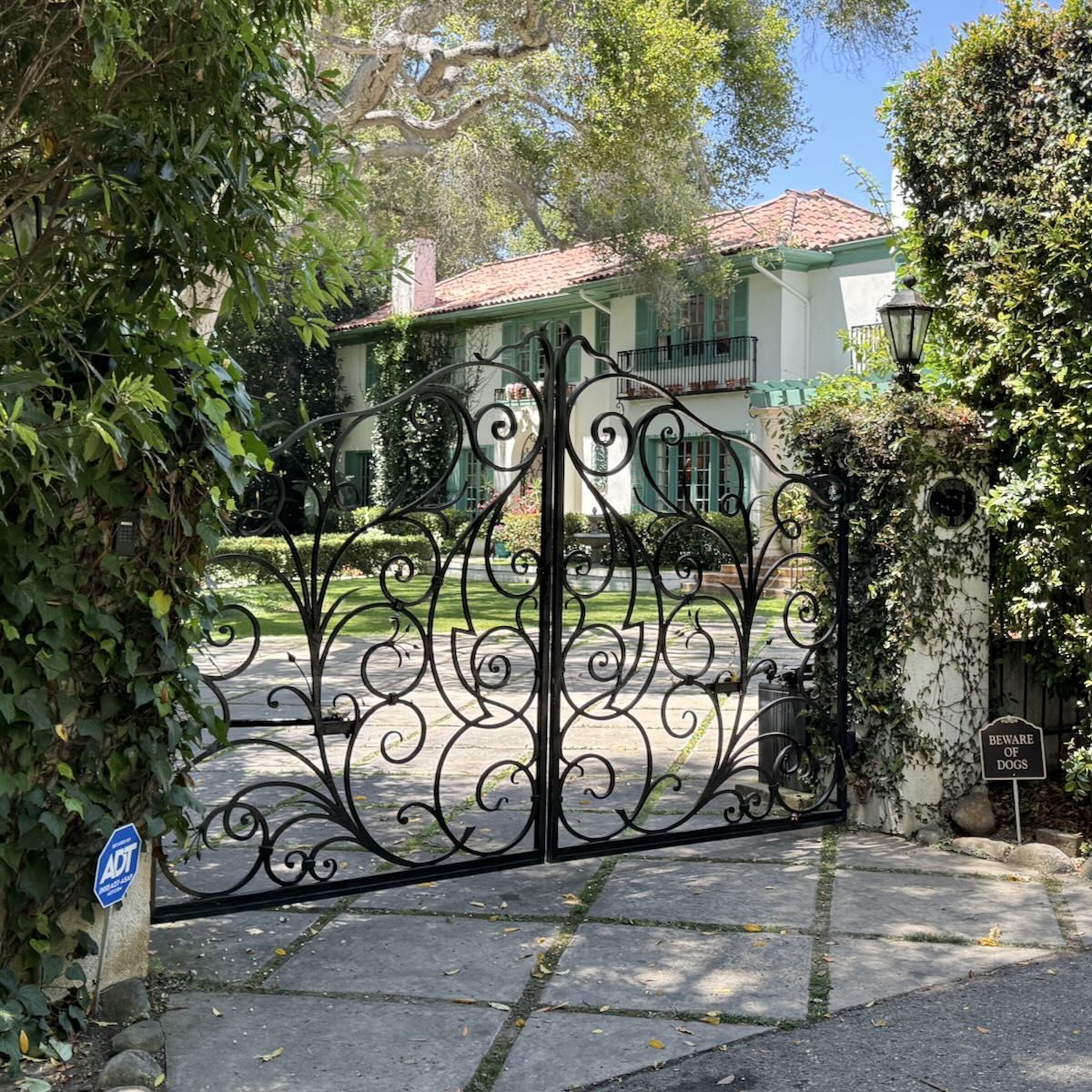
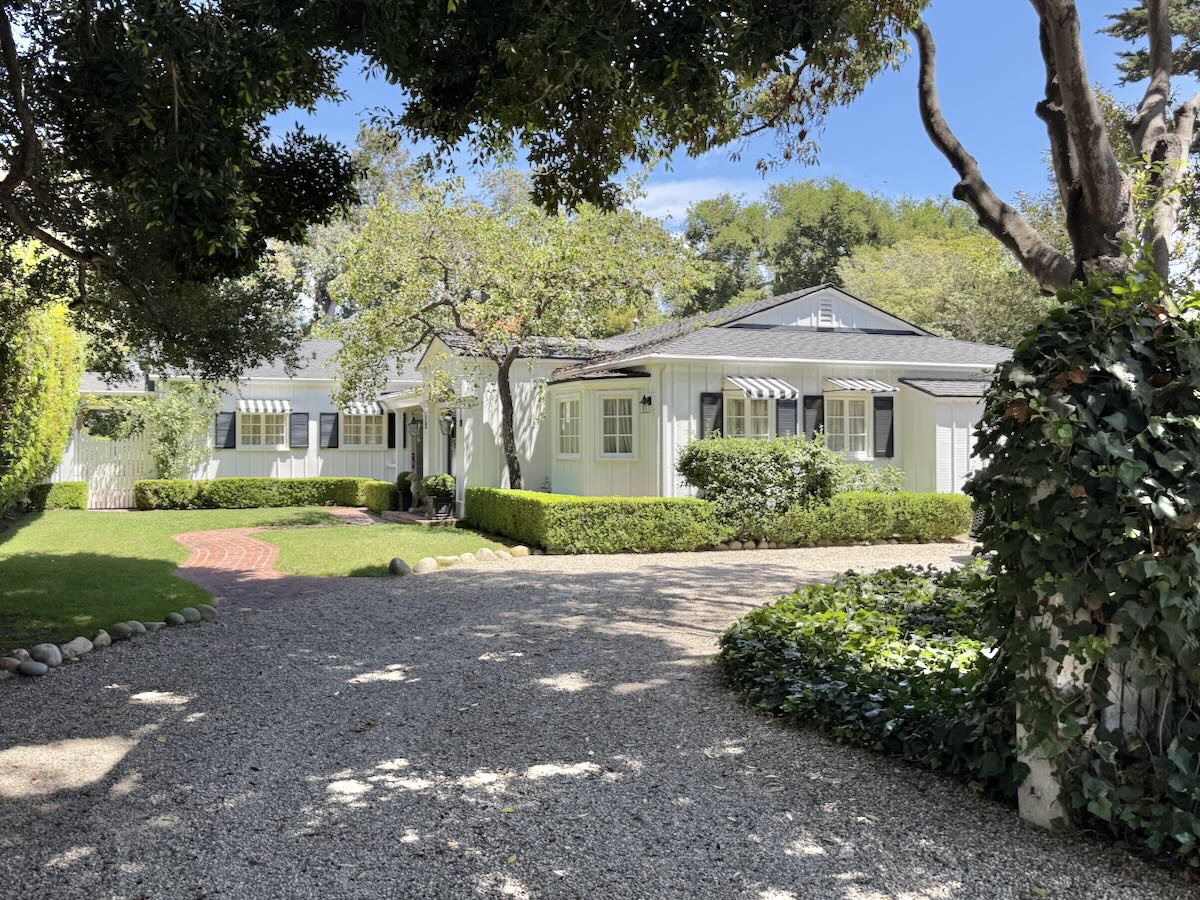
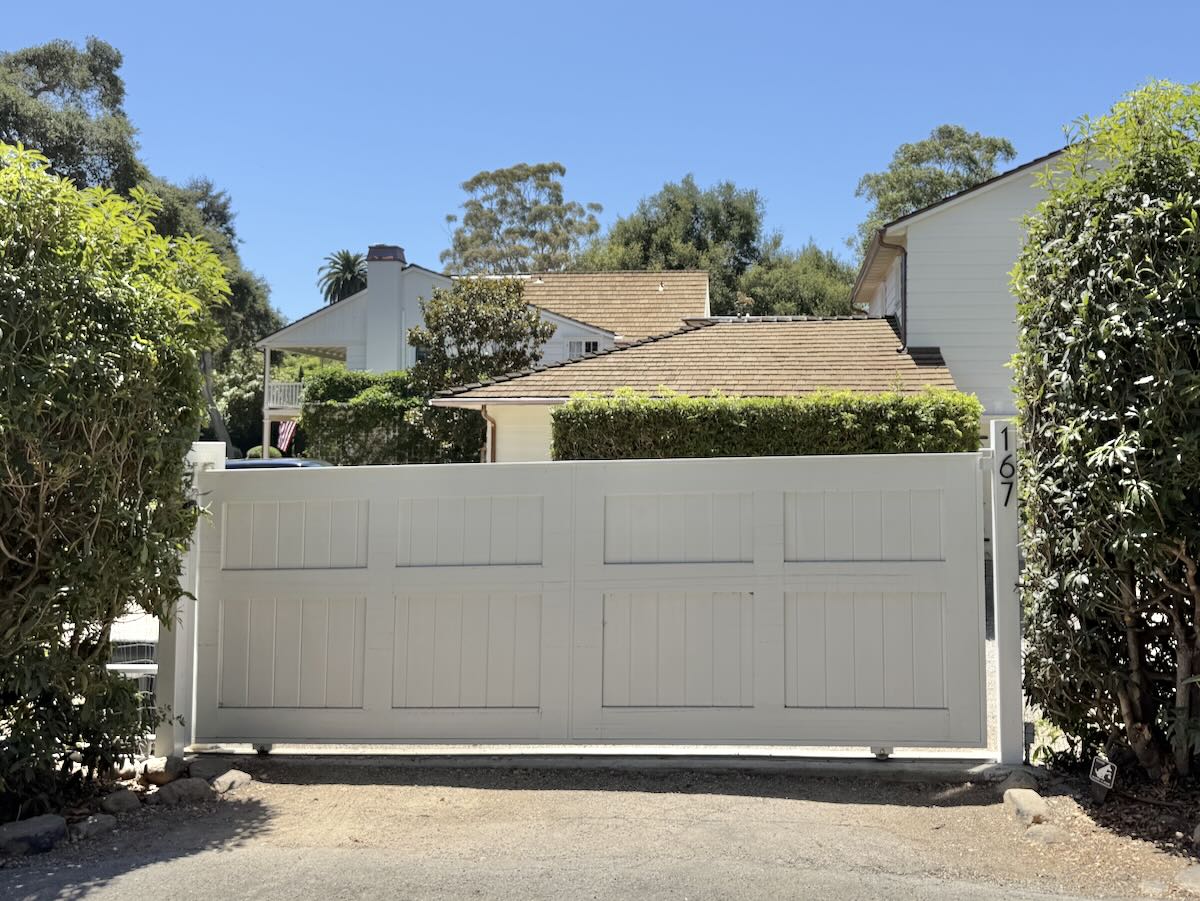
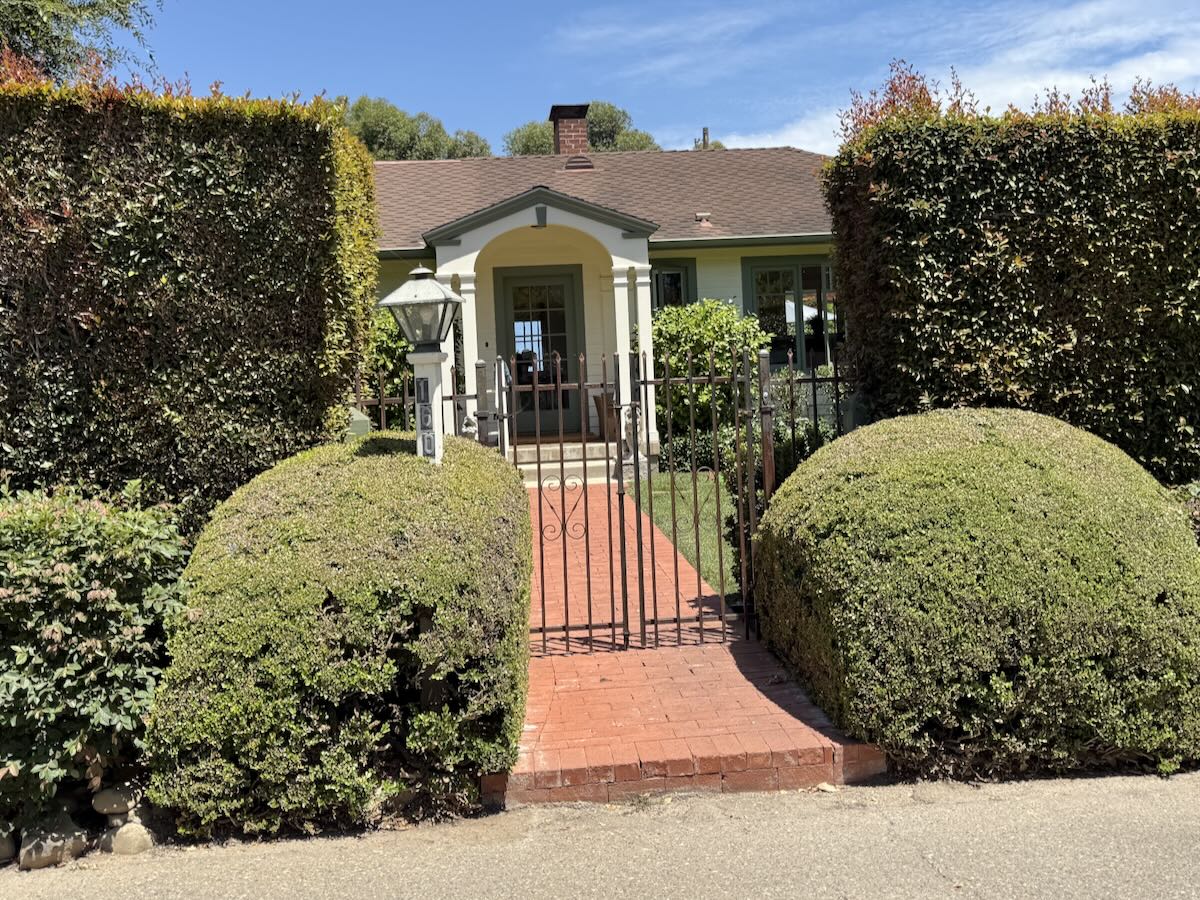
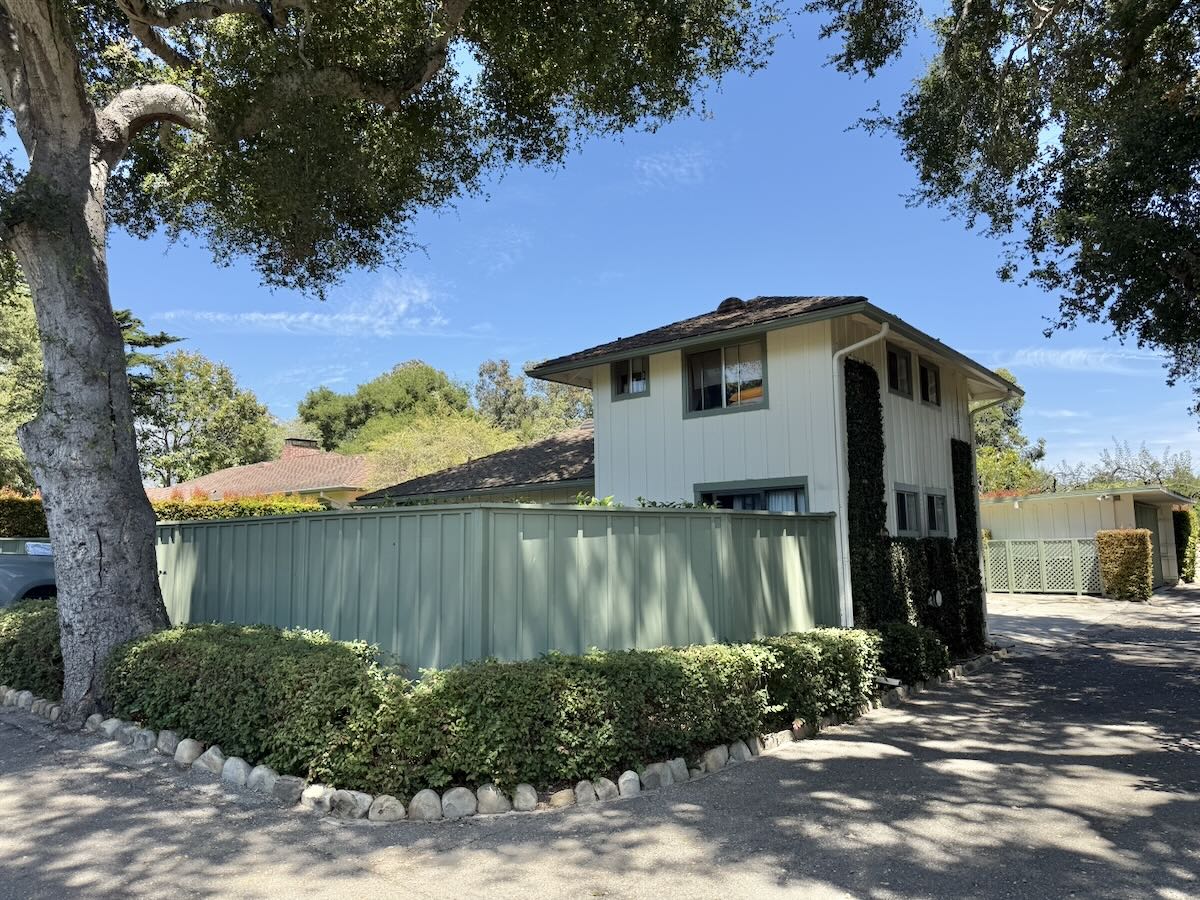
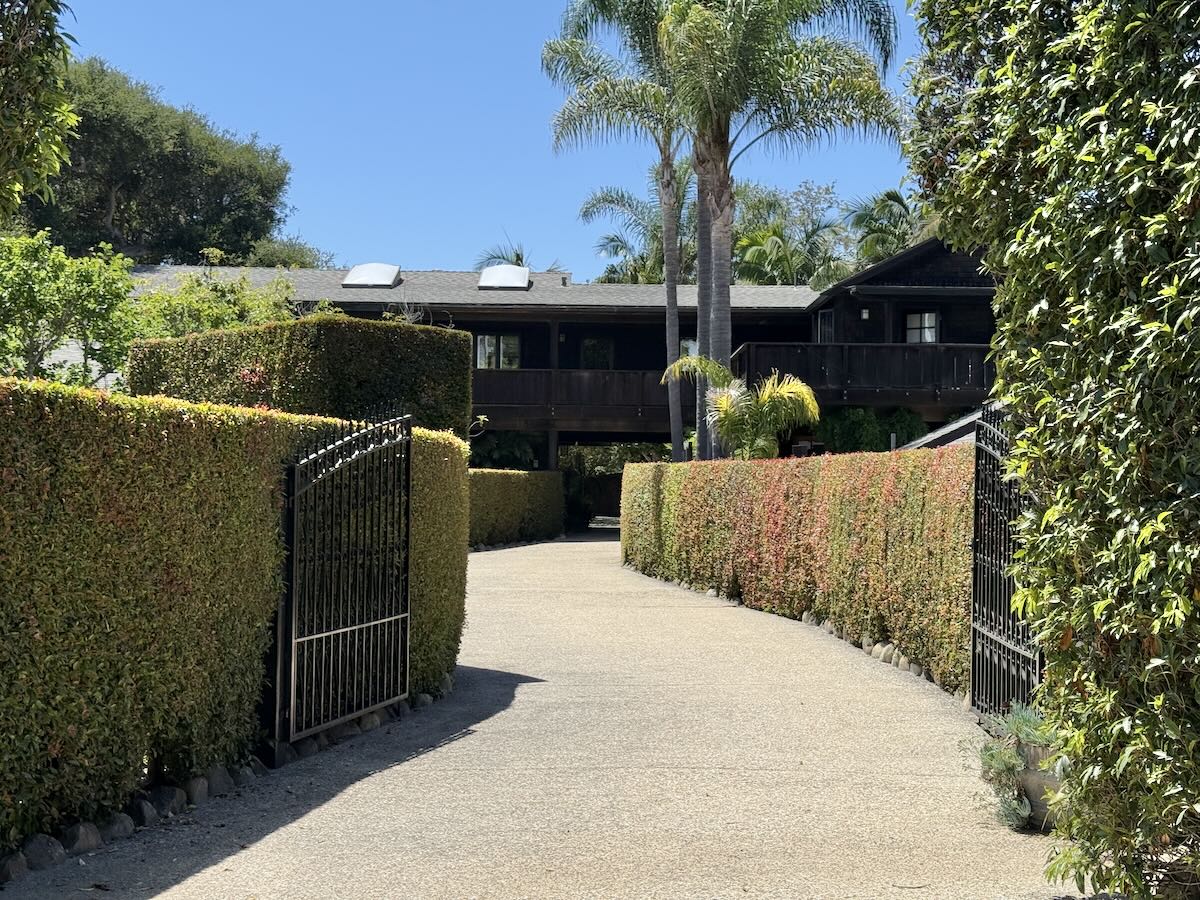
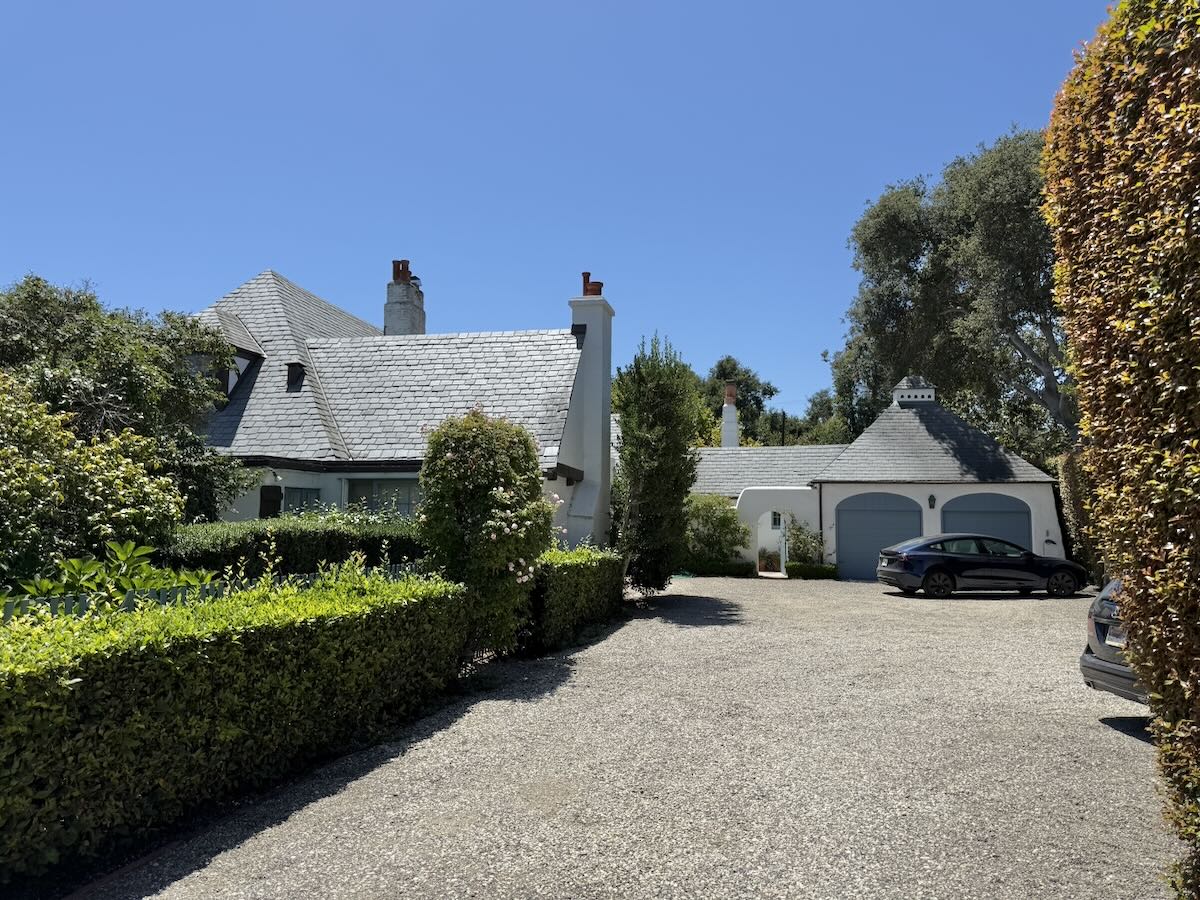
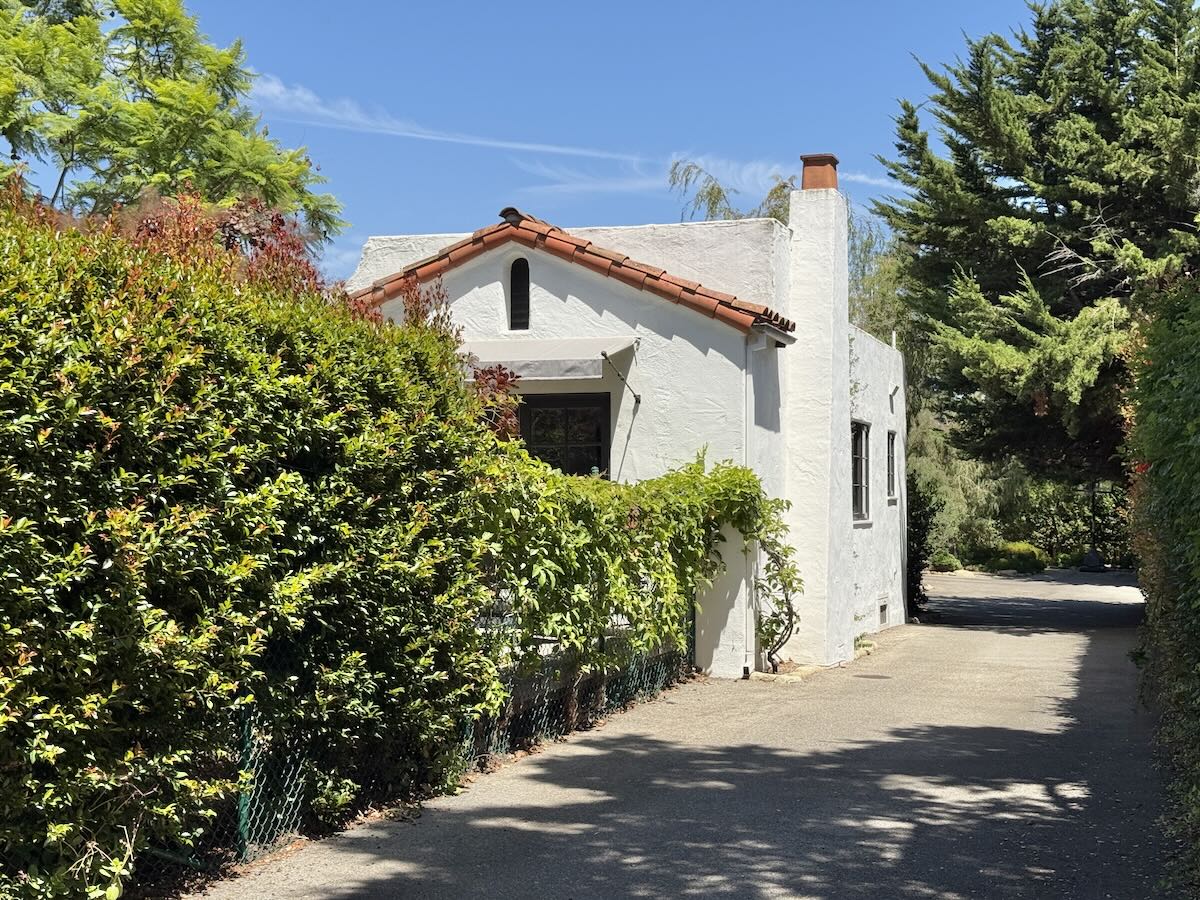
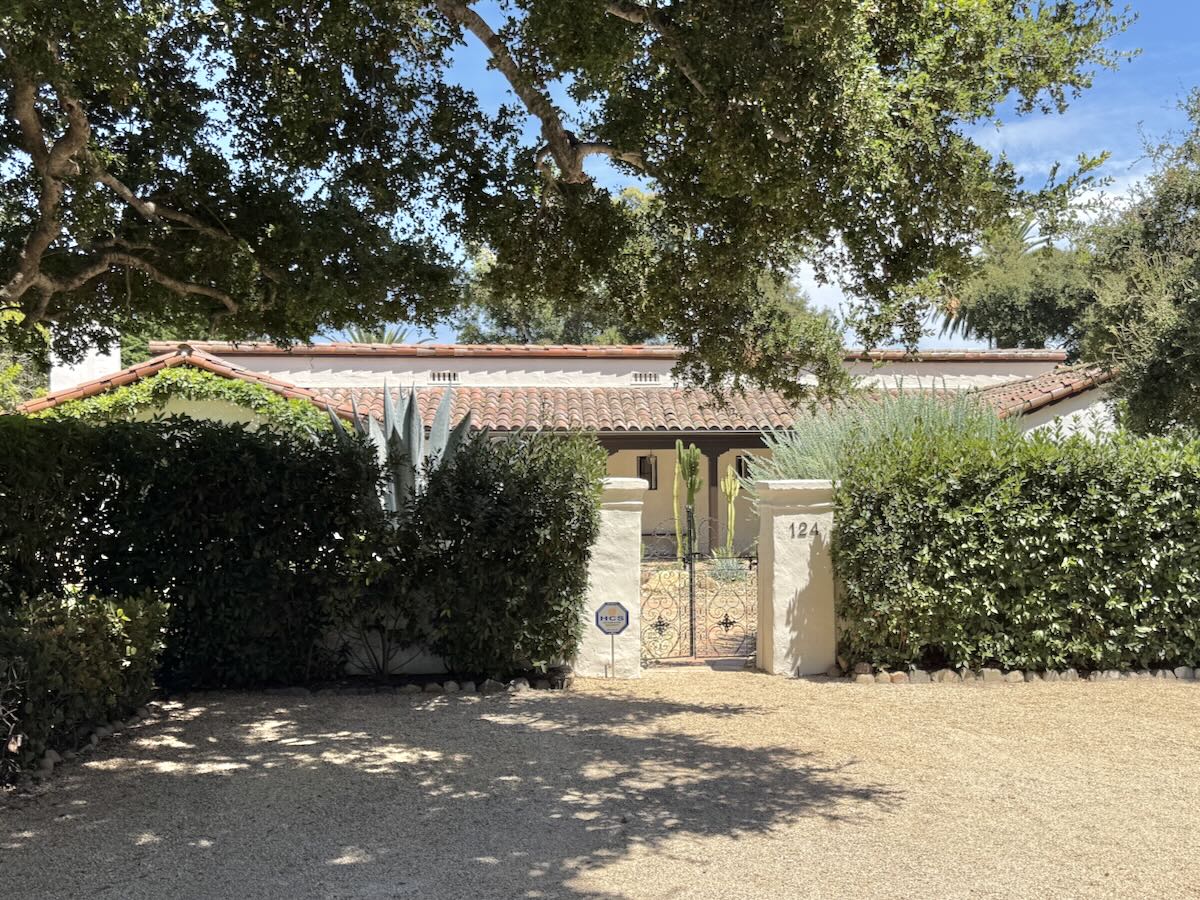
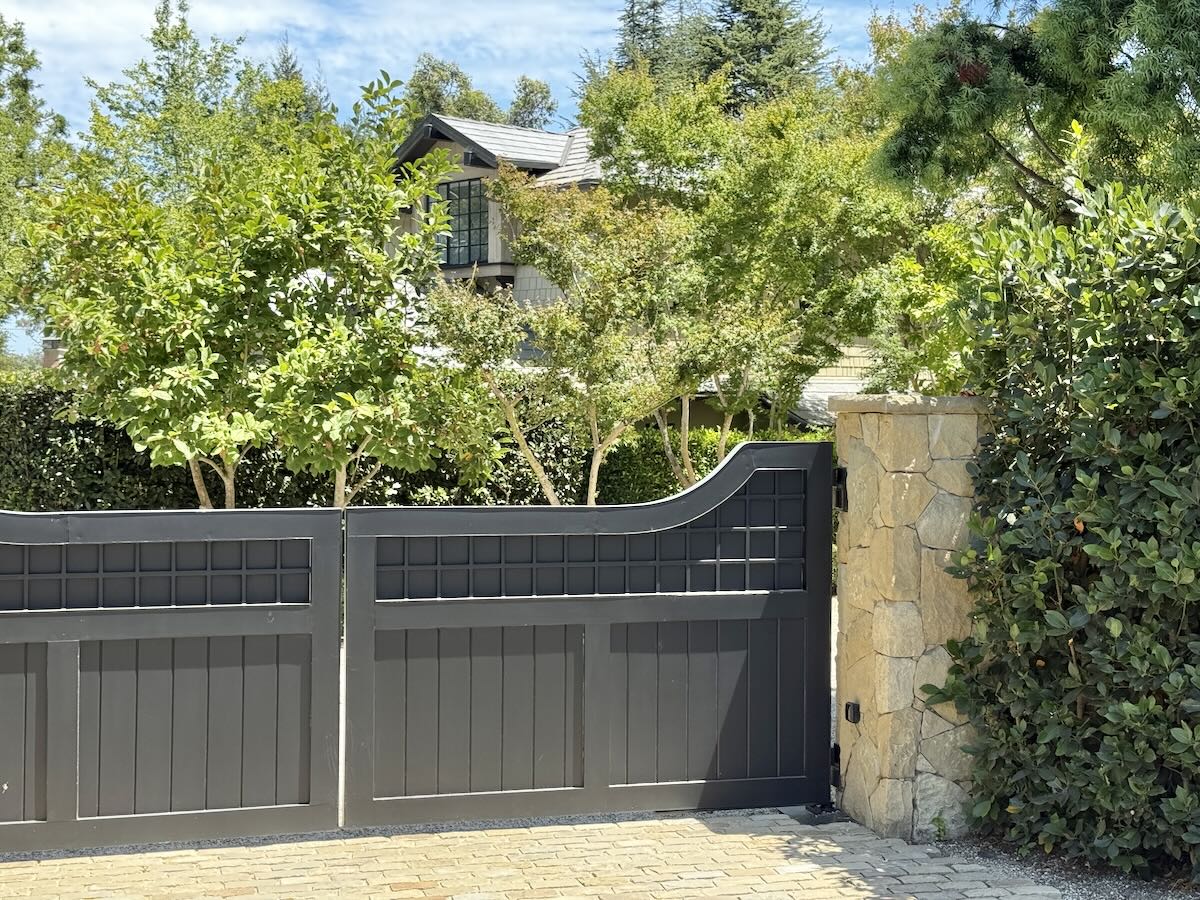
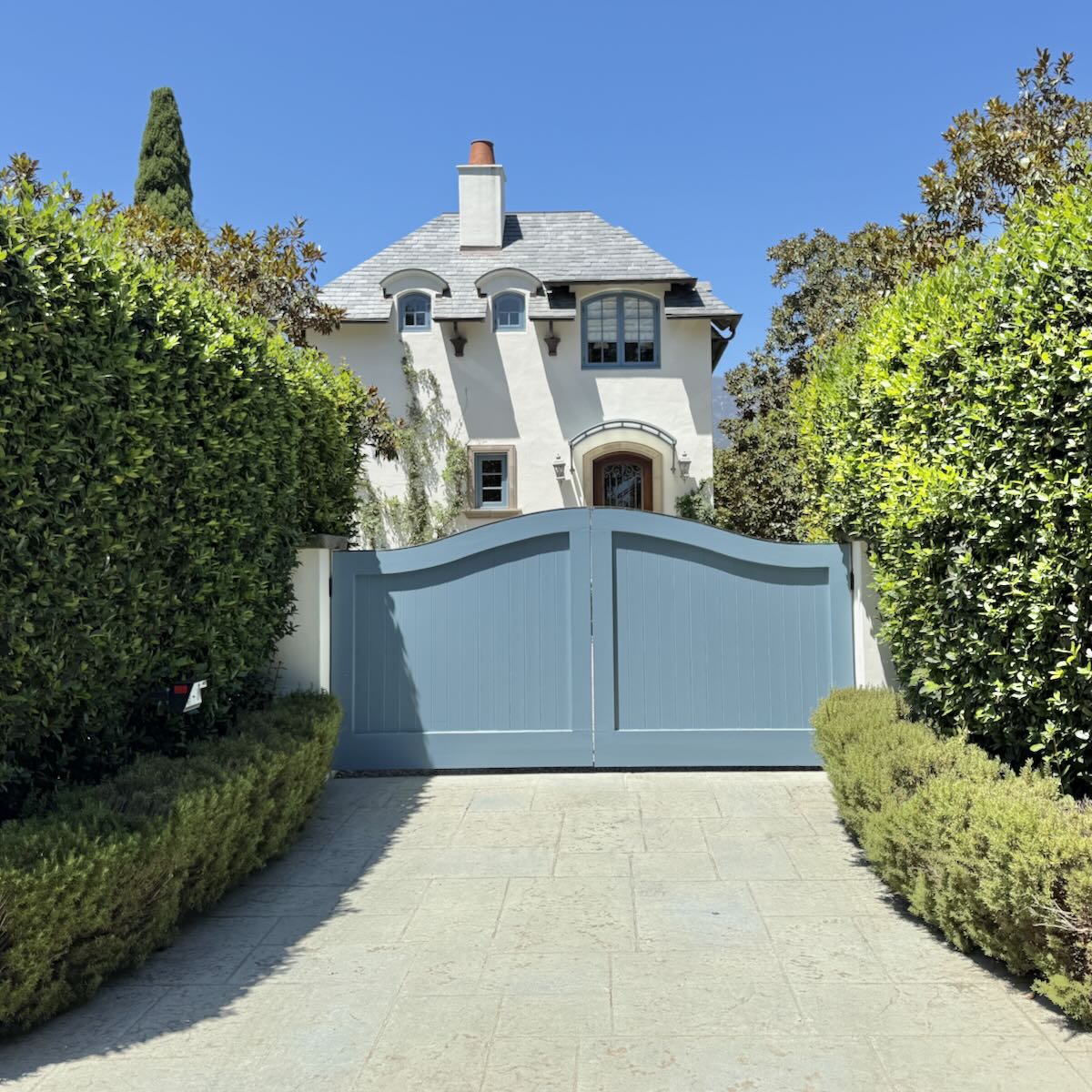 I don’t believe I’ve ever noticed this sexy beast before. It looks like it’s being overtaken by vegetation, and the vintage Benz makes a perfect pairing.
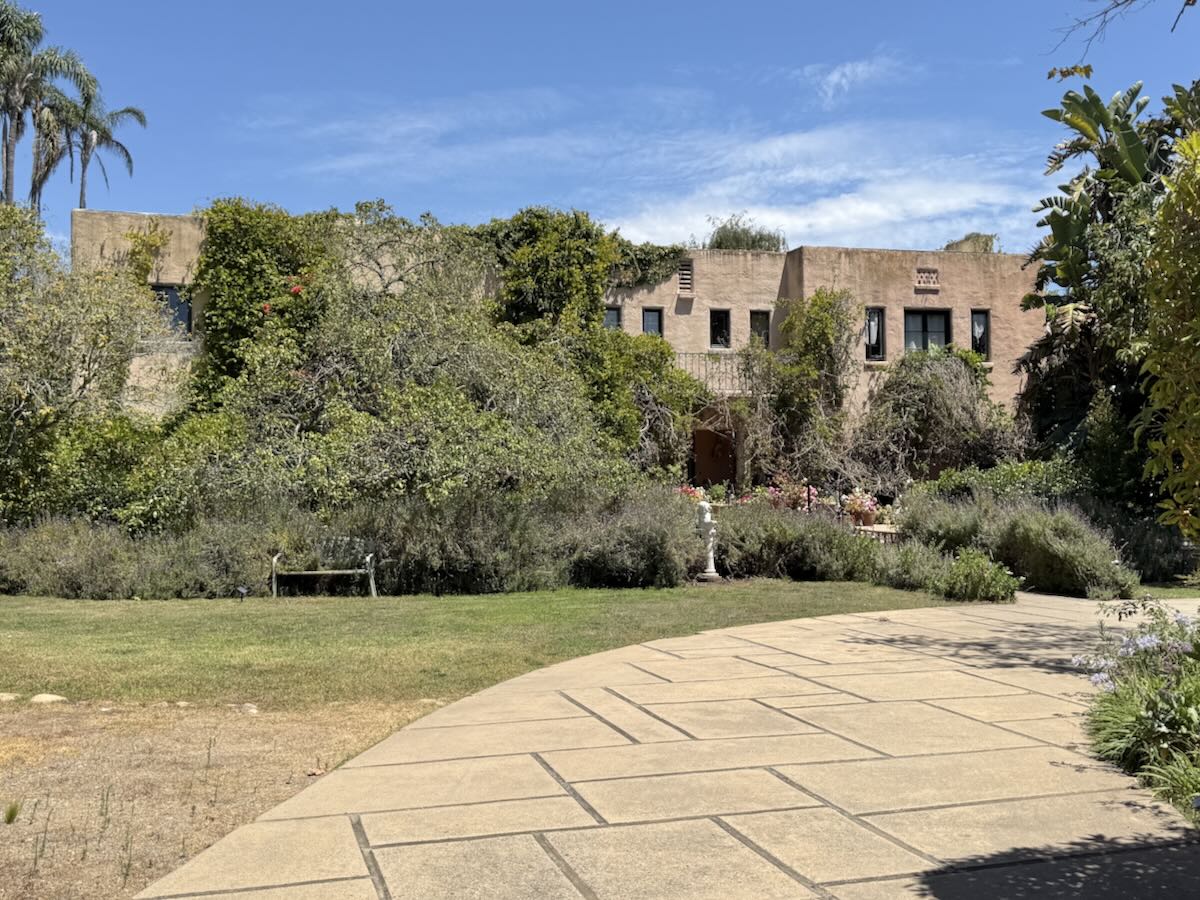
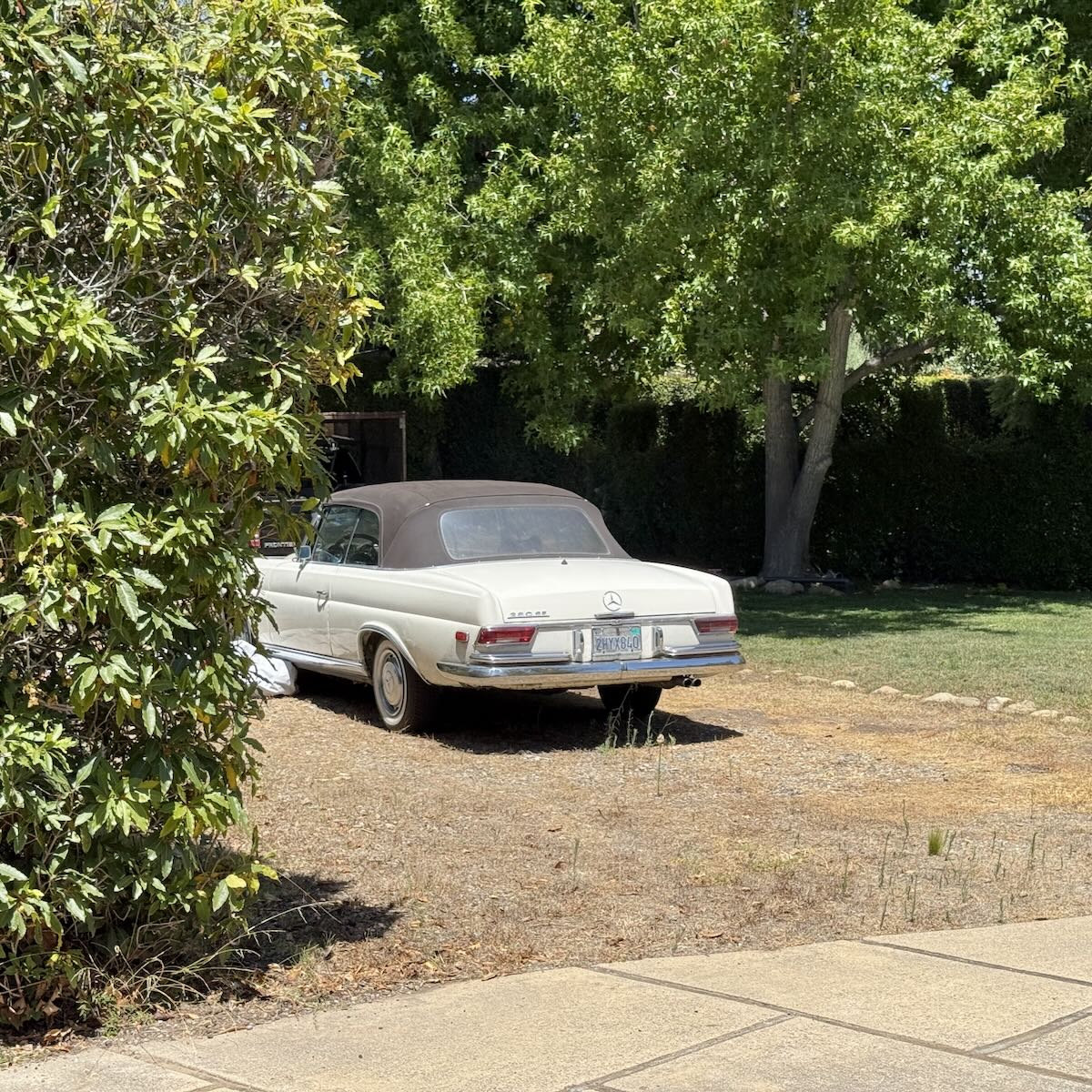 Magical details abound on Pomar Lane.
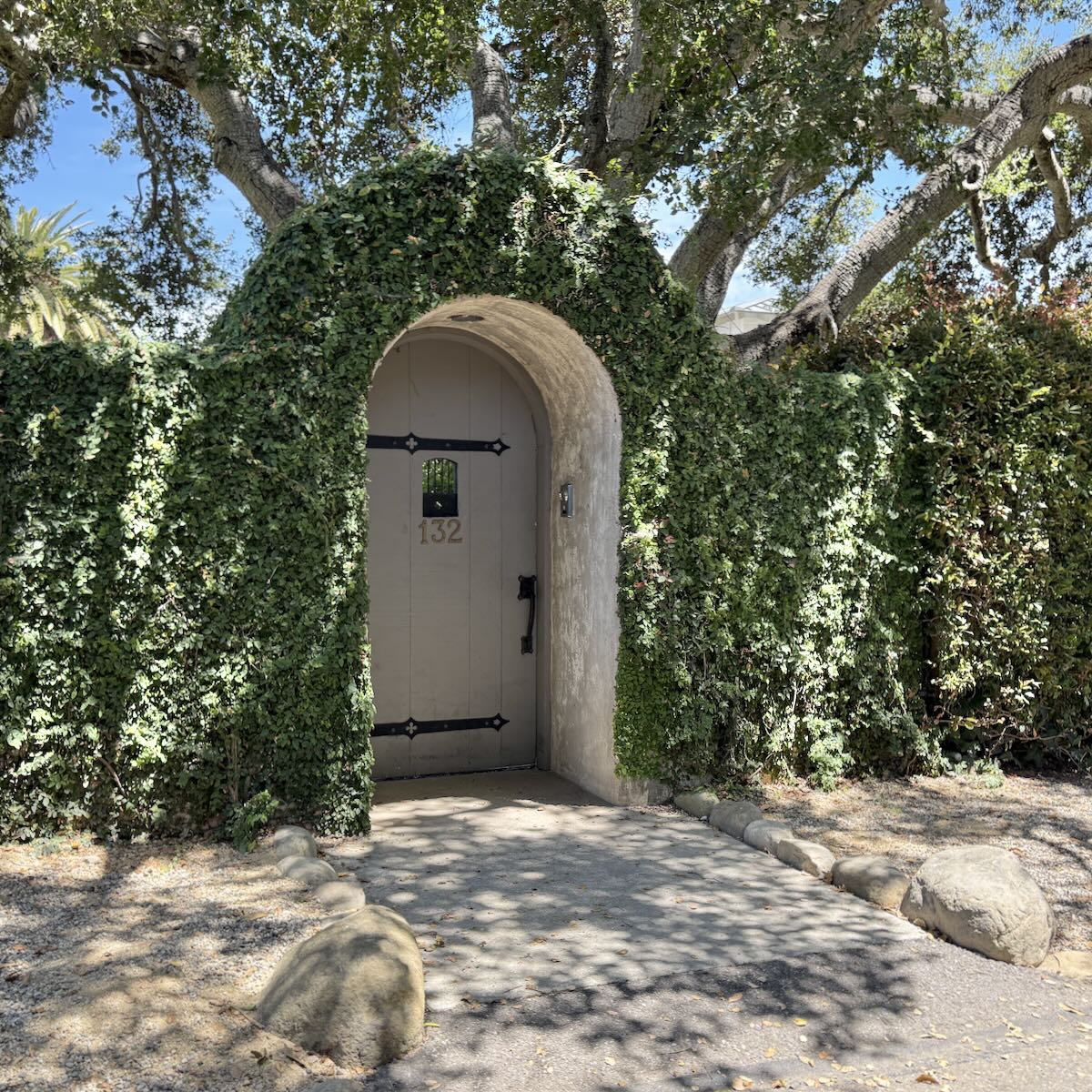
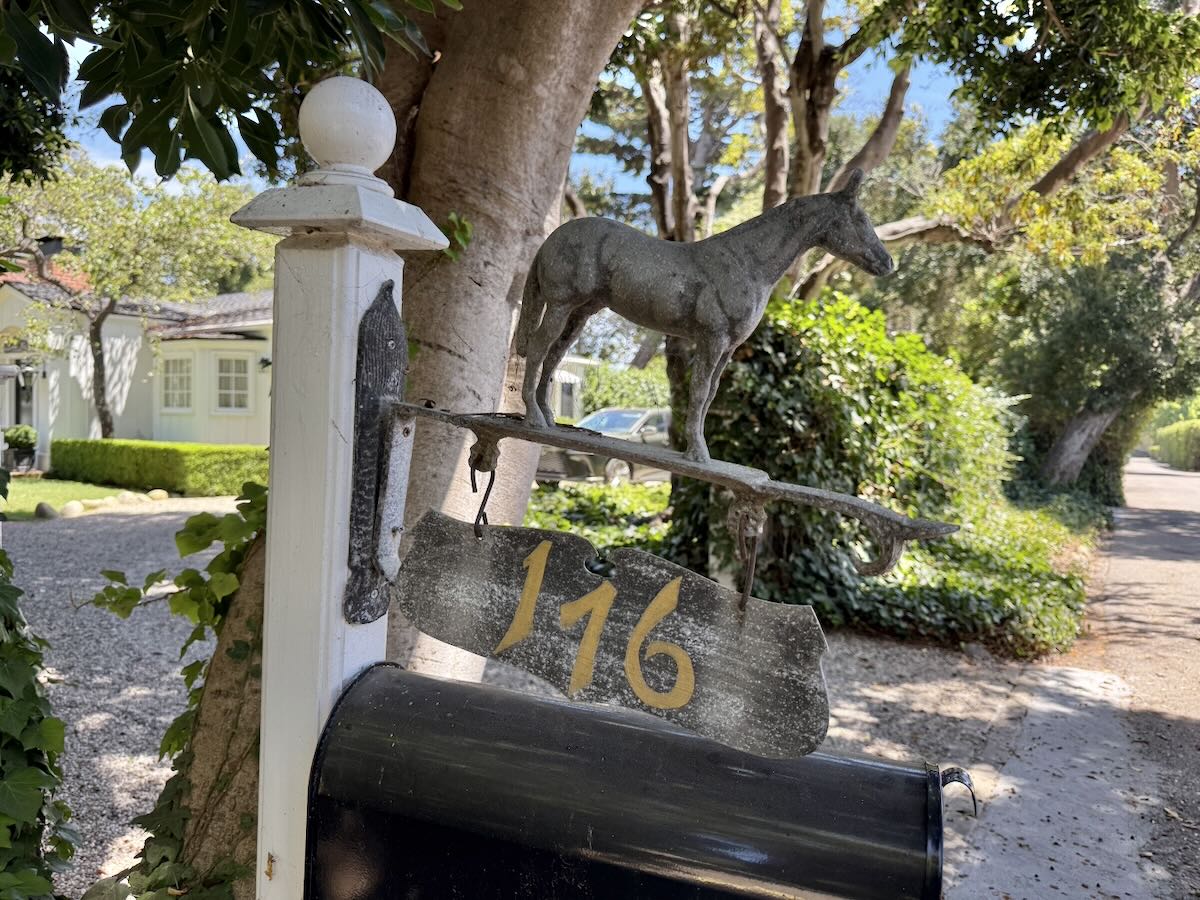
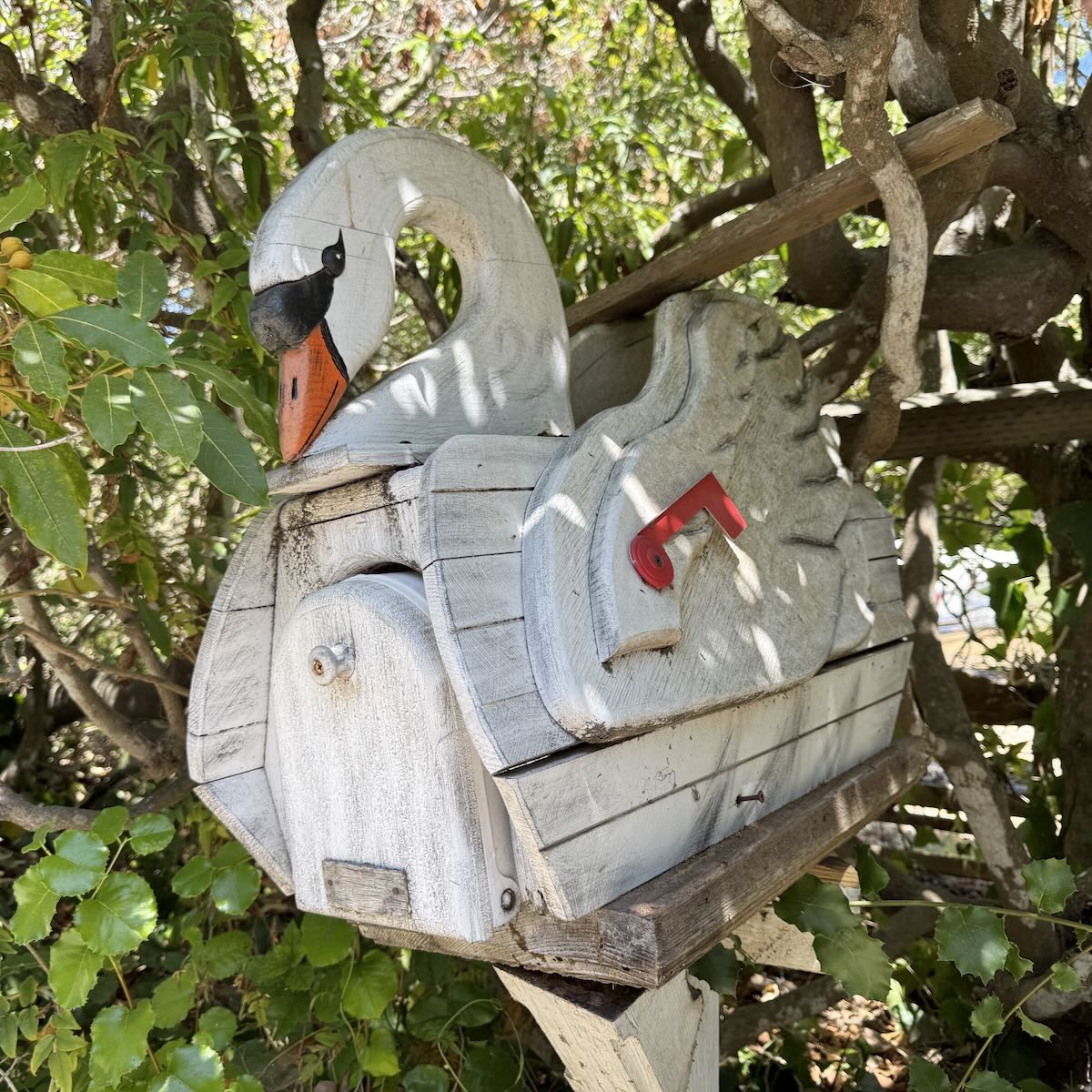 I had to make extra effort to get a look at this statue’s face—and then I was a little spooked when we made eye contact. There’s another statue on the other side of the gate, hidden behind a tree.
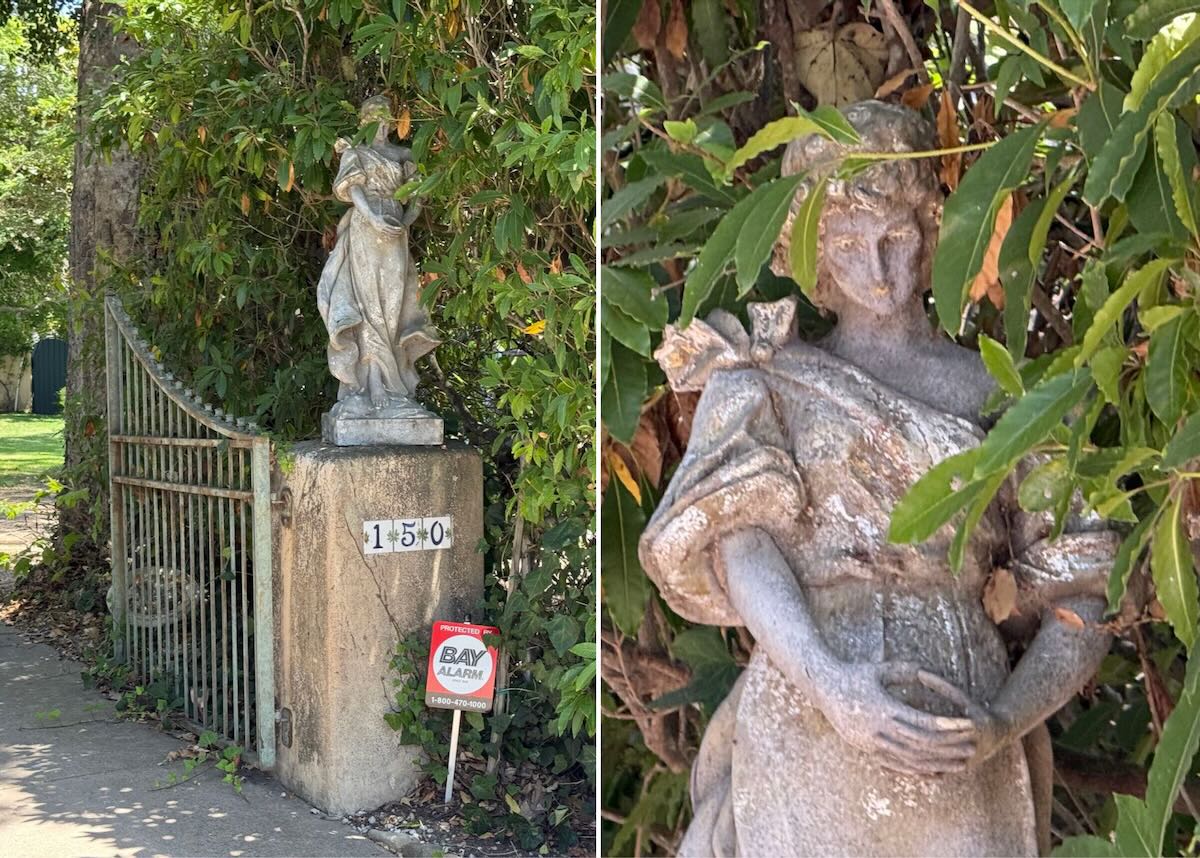
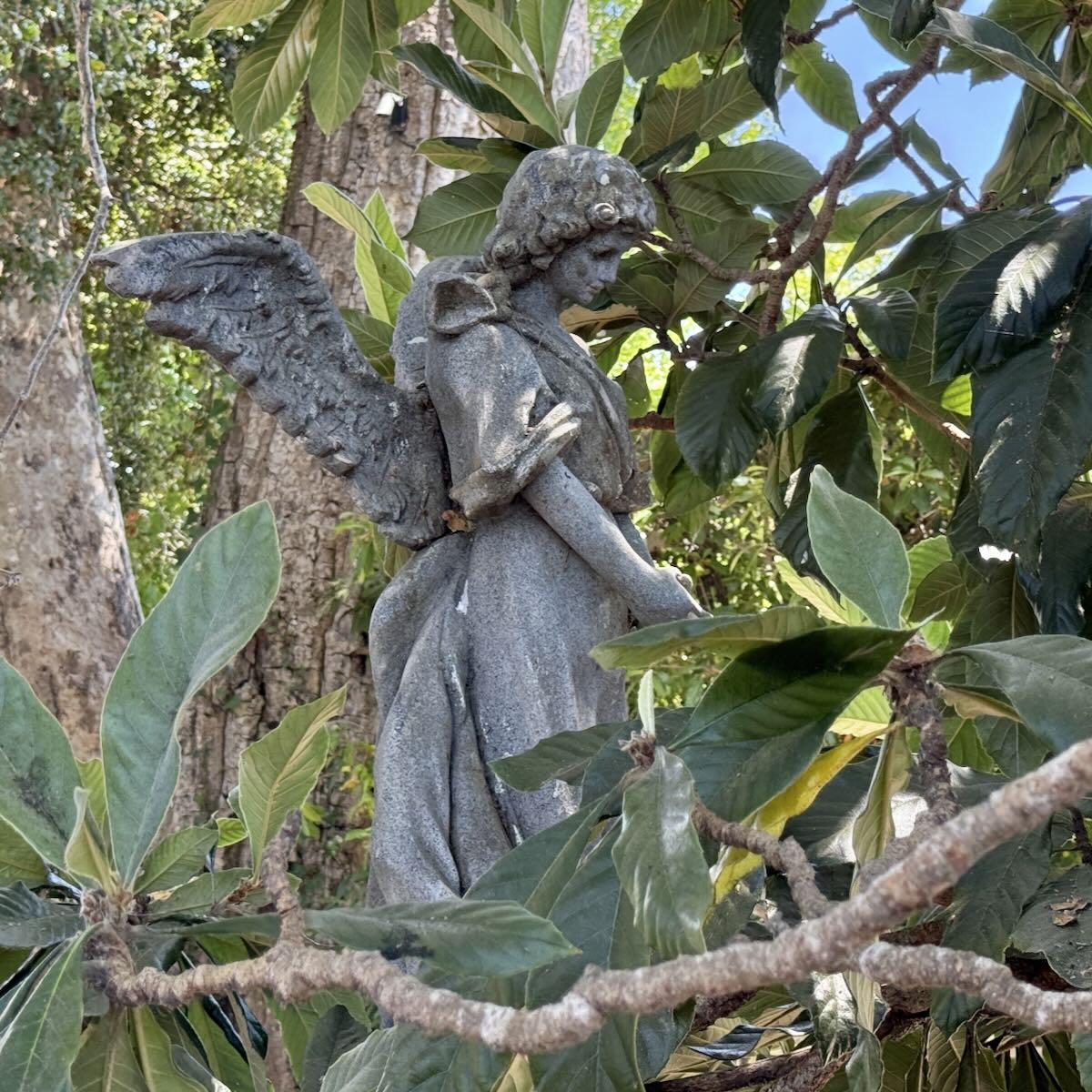 I love Pomar so much that I am going to pretend this does not exist.
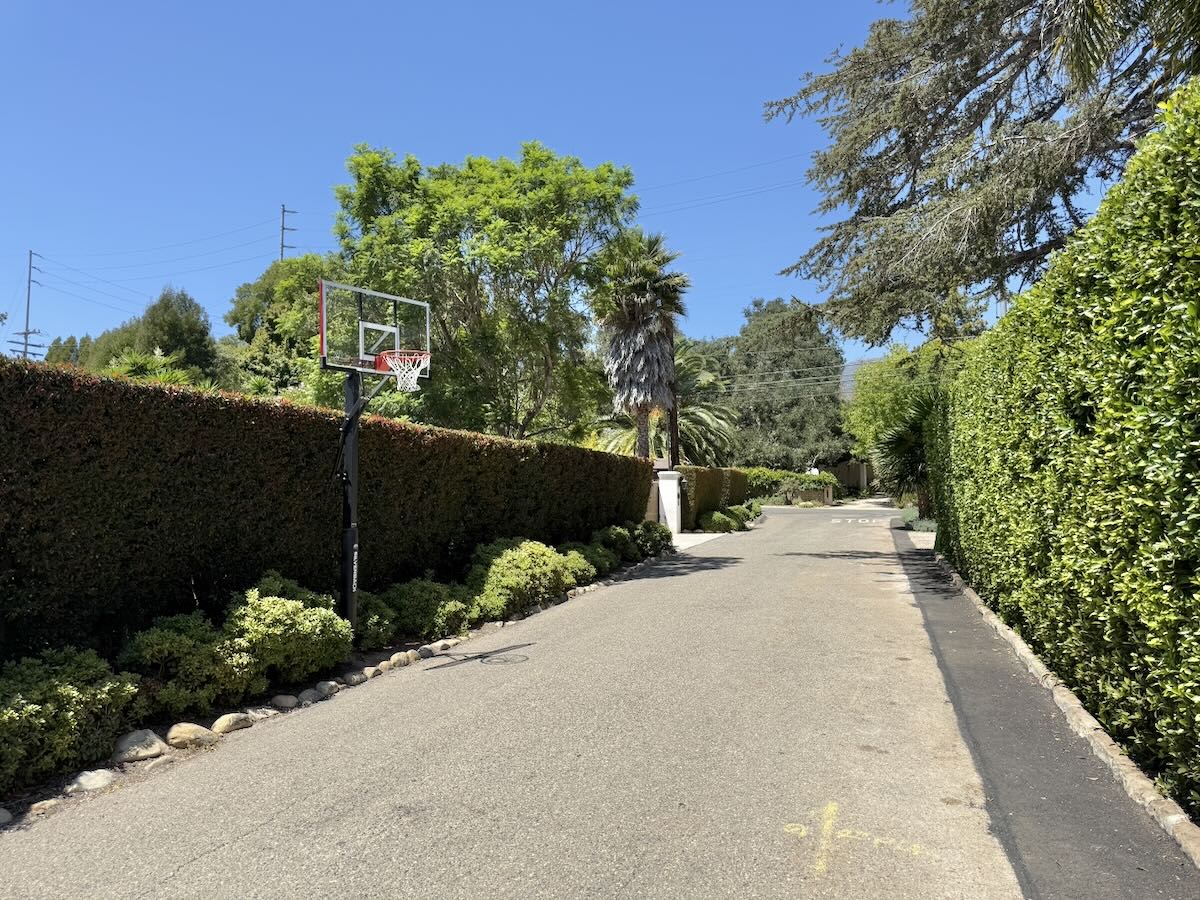 Best known, at least to me, for the island at the southern end, Hixon Road also has some remarkable houses.
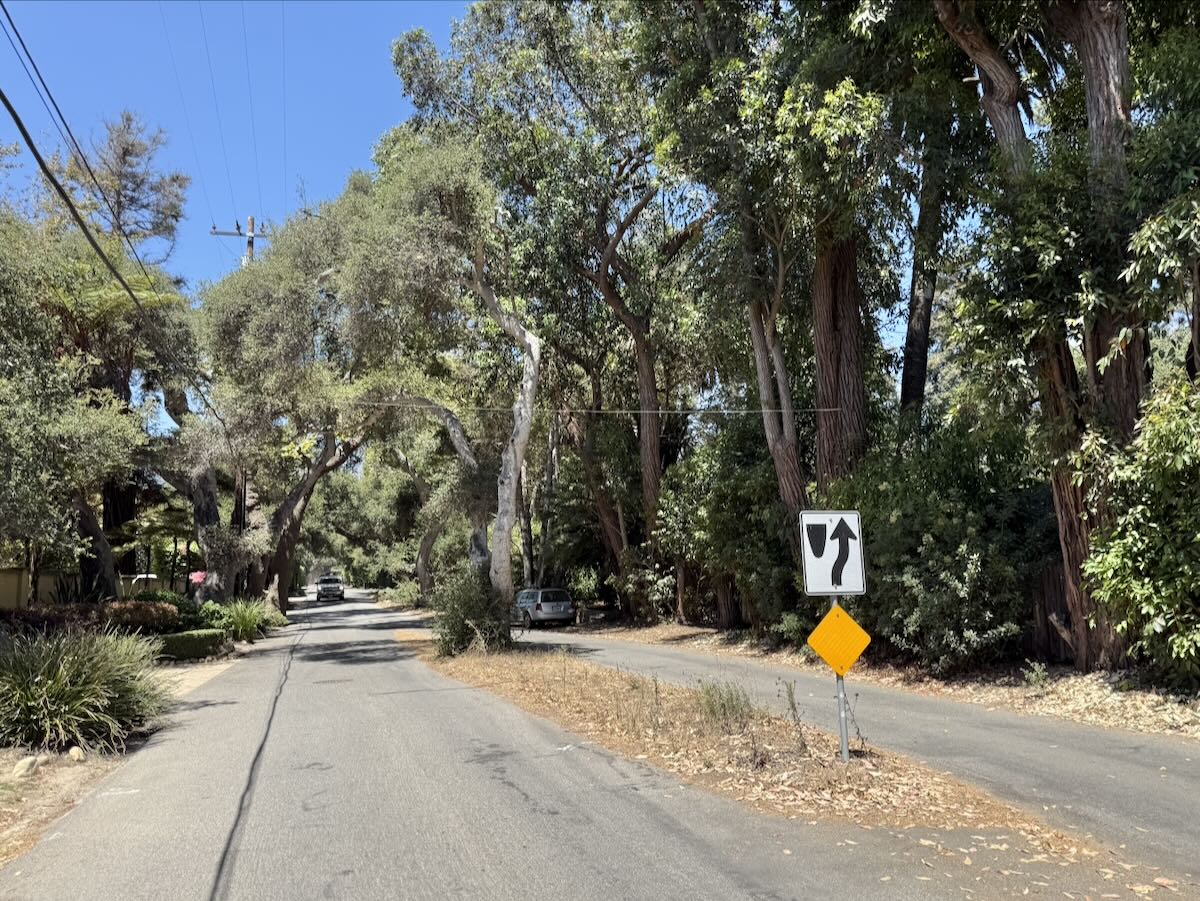
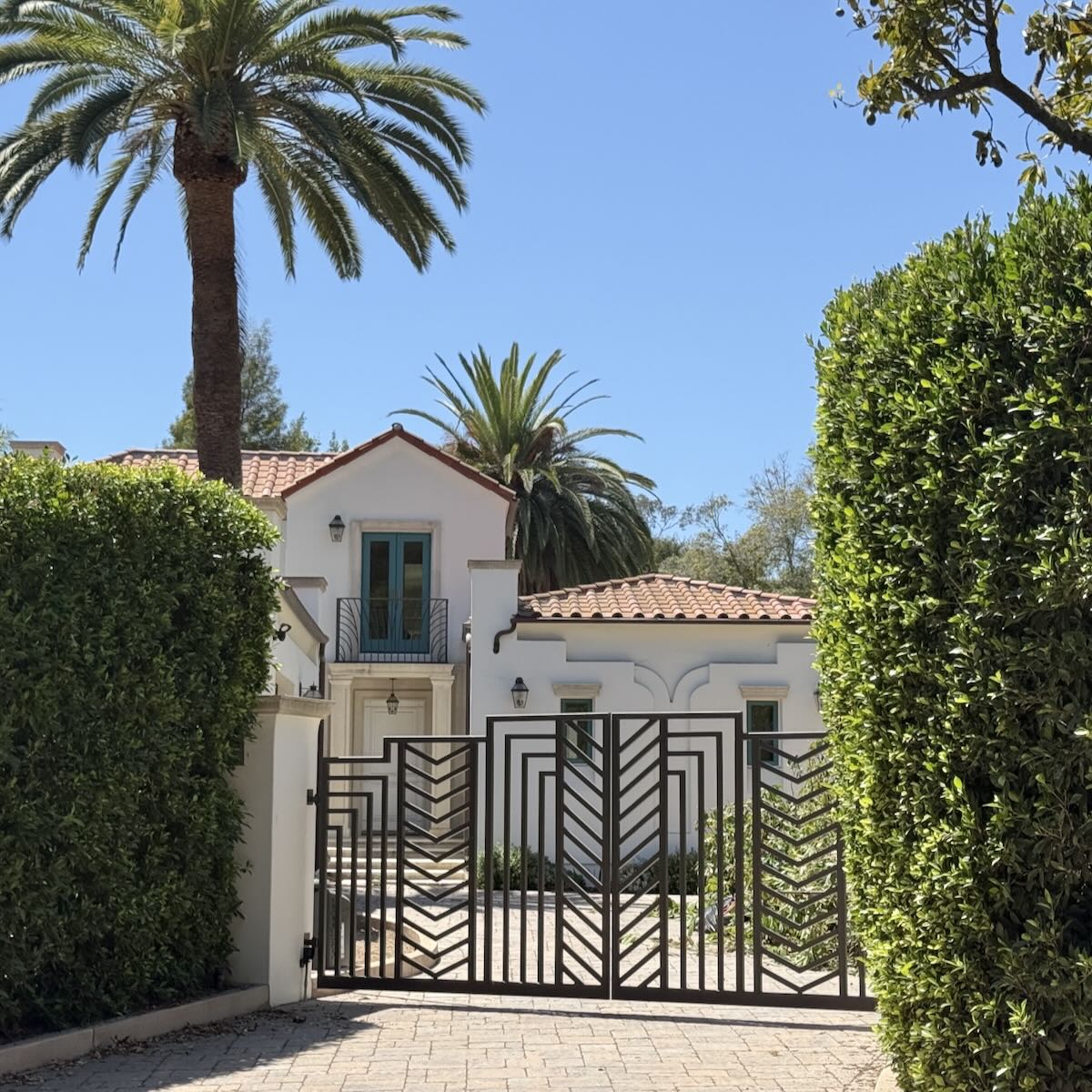
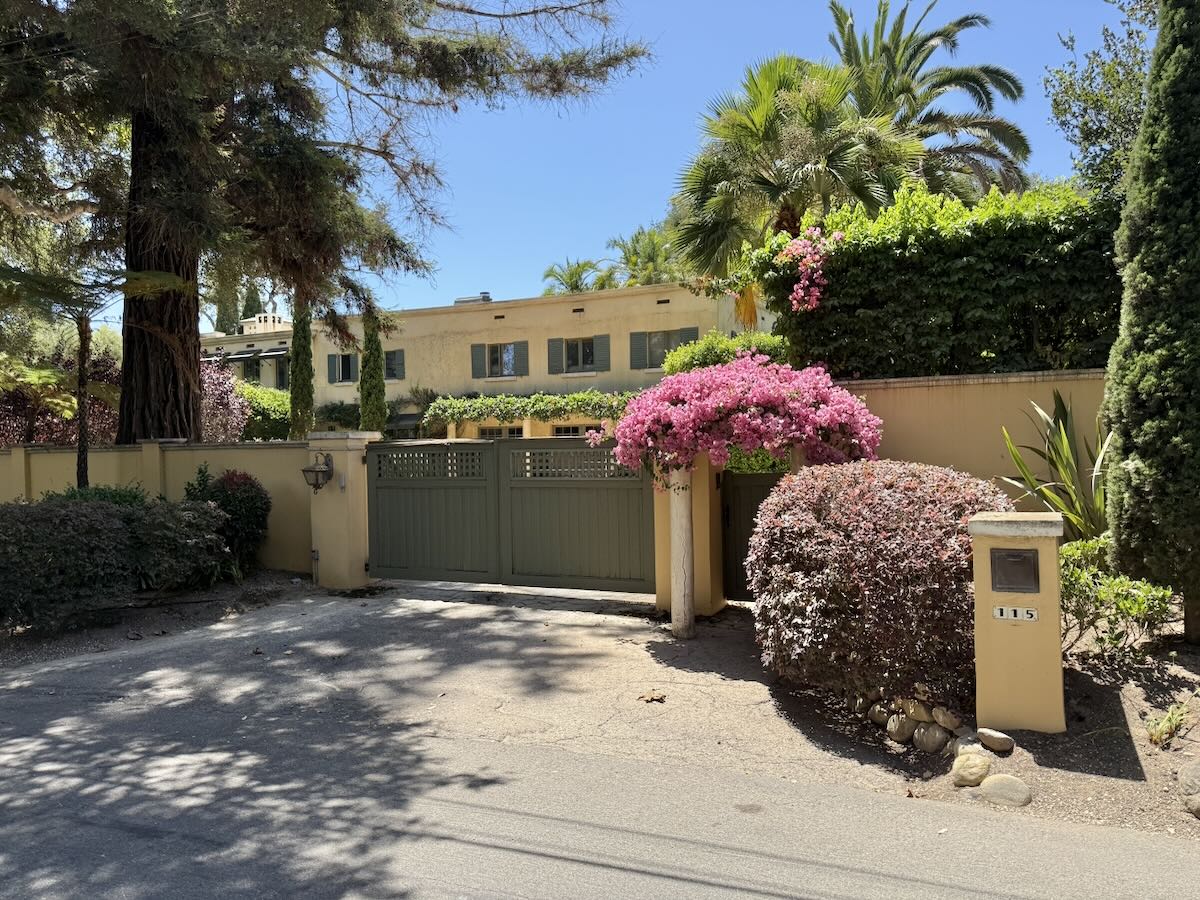
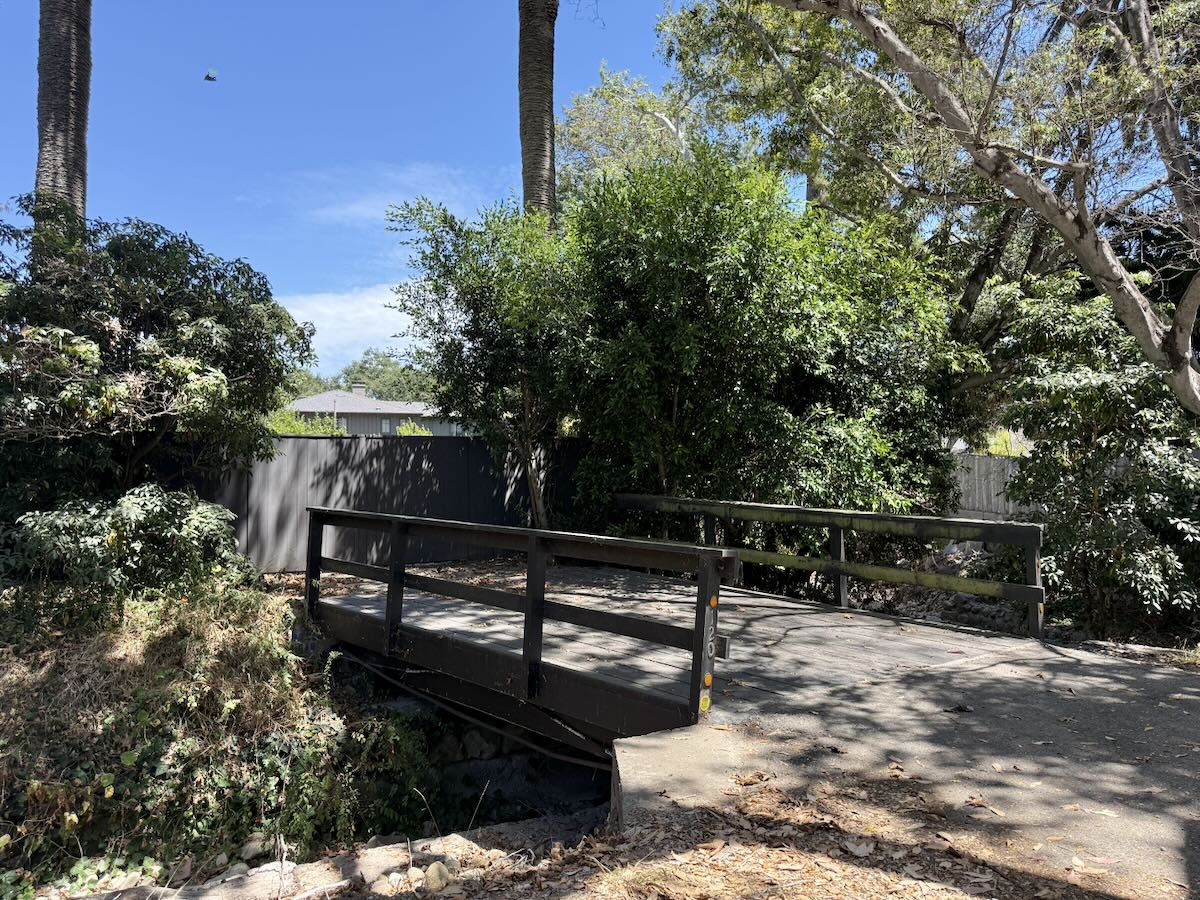
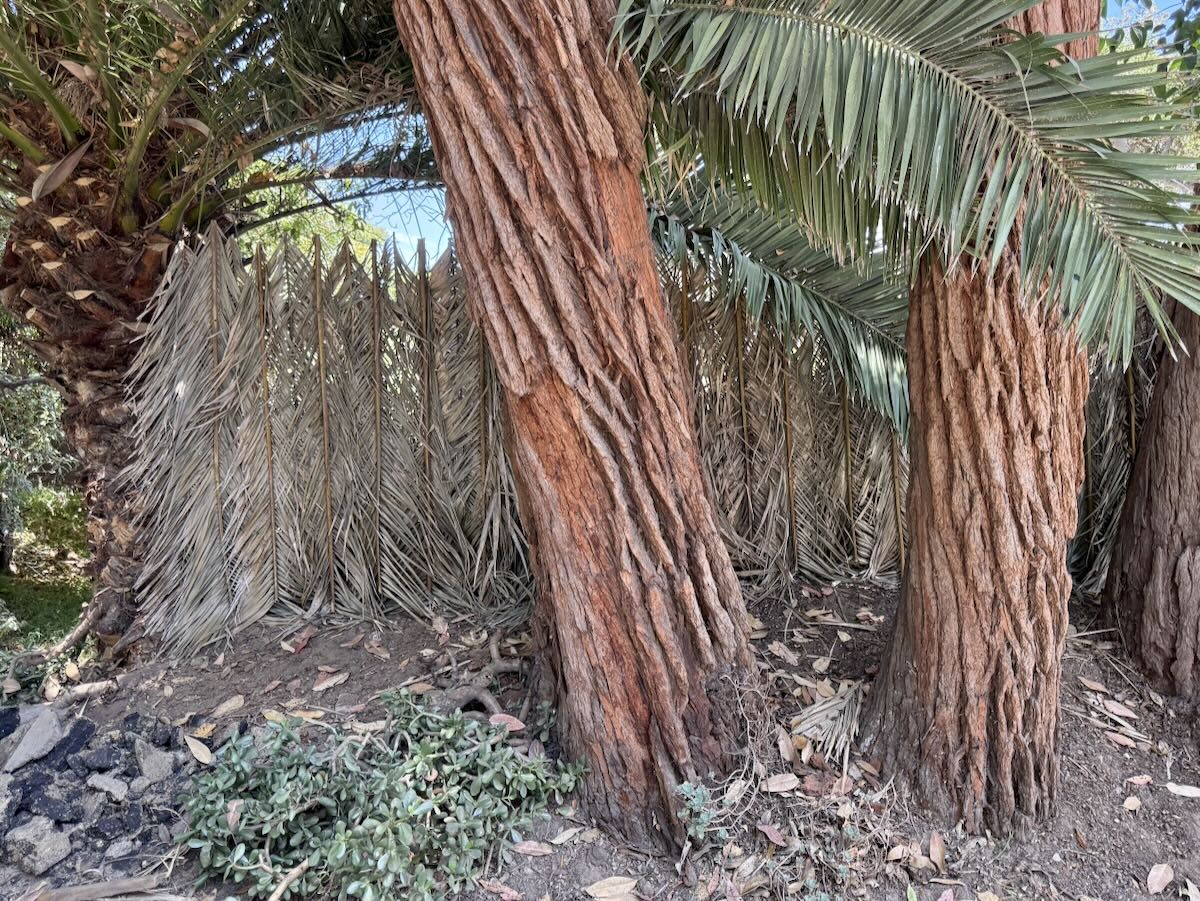
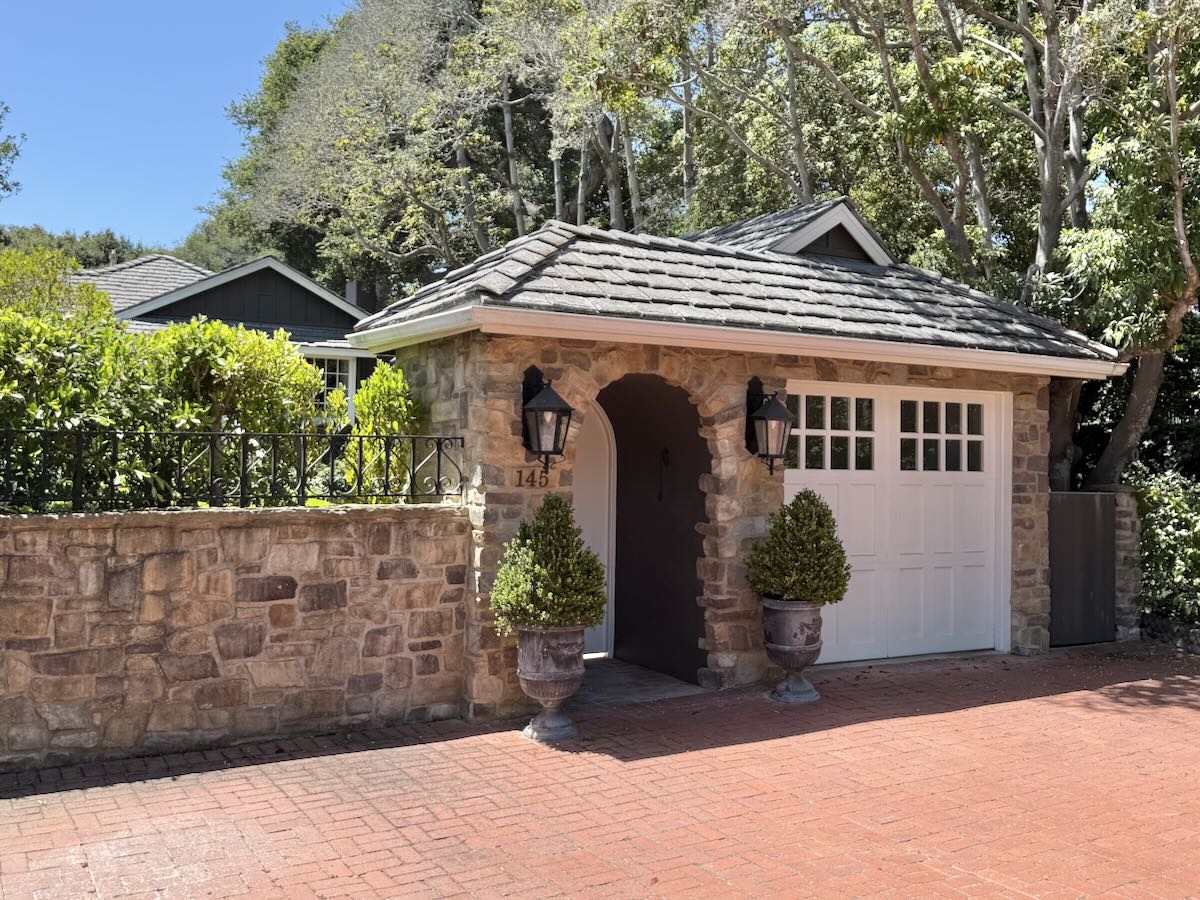 And plenty of other stuff to notice, including a driveway bridge and, rare for Montecito, a palm-frond fence.
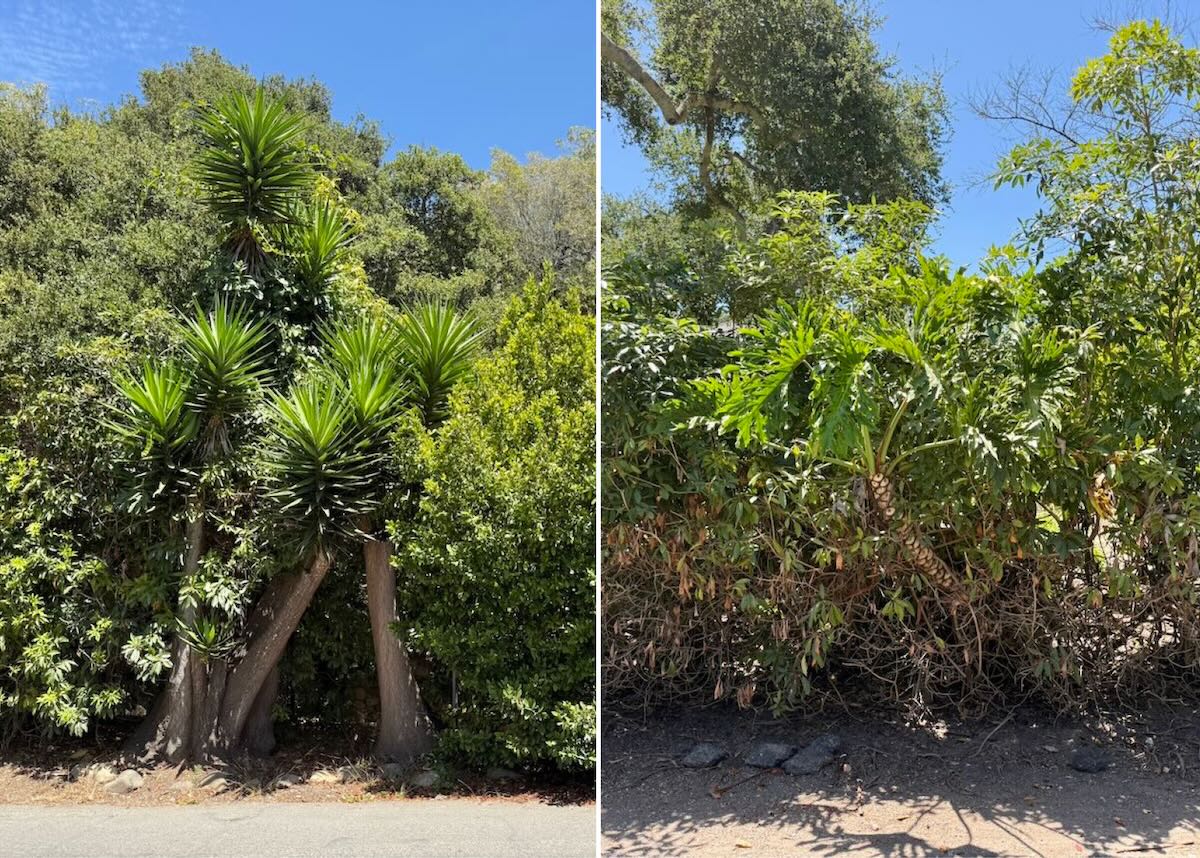
 It turns out you can use just about any plant in a hedge.
 The M naturally made me think of Madonna. While I can’t say I love her new record, “Danceteria” is a banger. SHA-FRA-ZI!
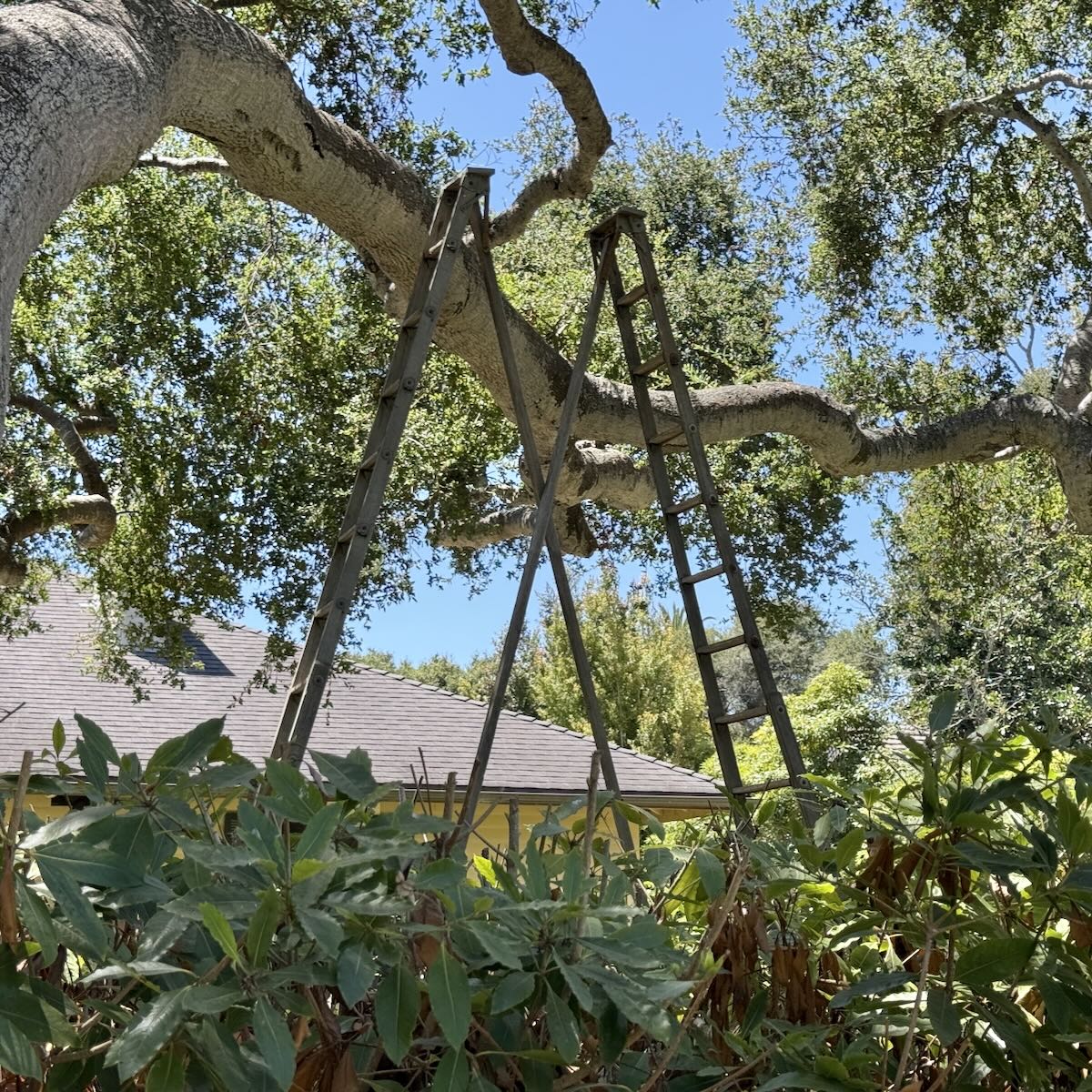 I would advise against it.
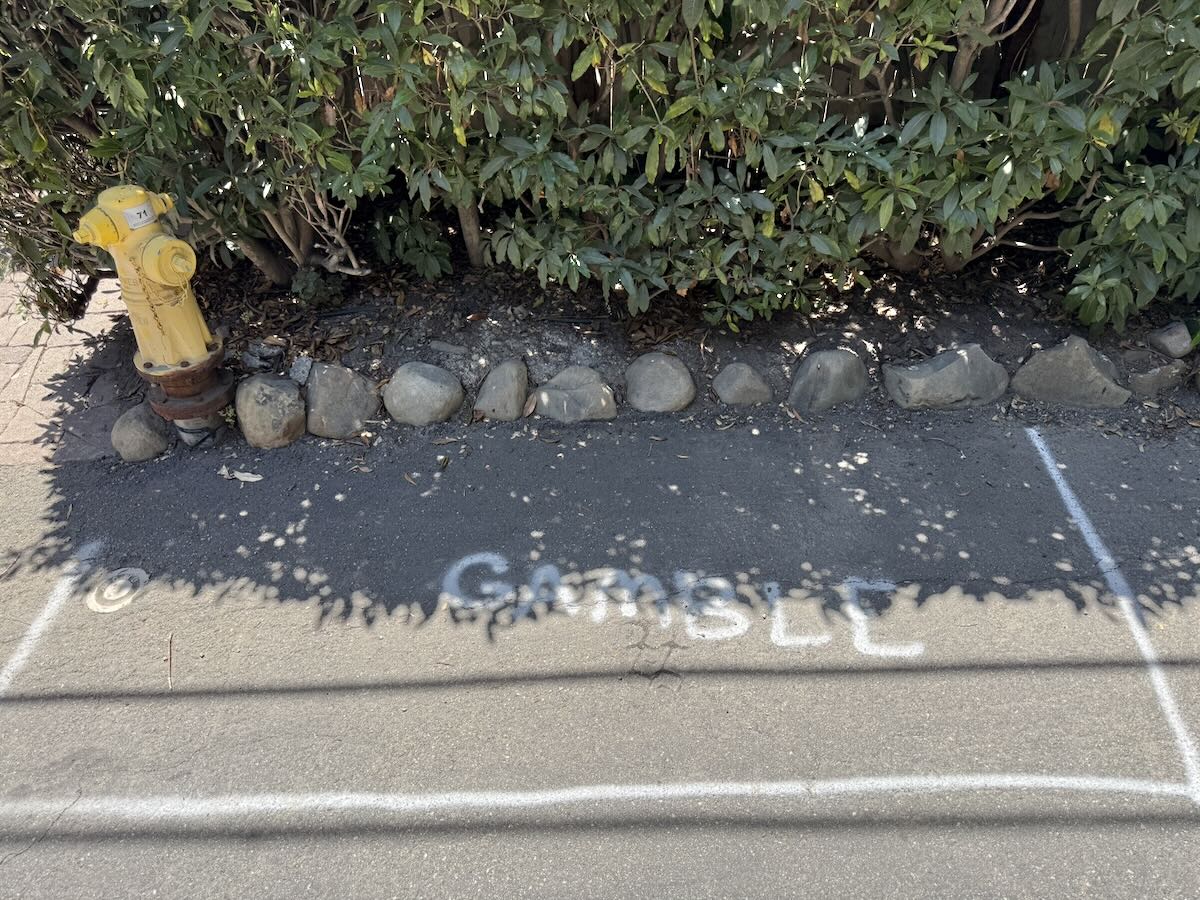 L-shaped Miramar Lane runs between Hixon and San Leandro Lane. The pavement is in rough shape, but I’m not throwing stones—you should see the state of the lane I live on. (No HOA or CCRs means everyone has to agree to chip in for repaving, and good luck with that.) There are some cute houses on Miramar Lane, but it feels more modest than Pomar and Hixon.
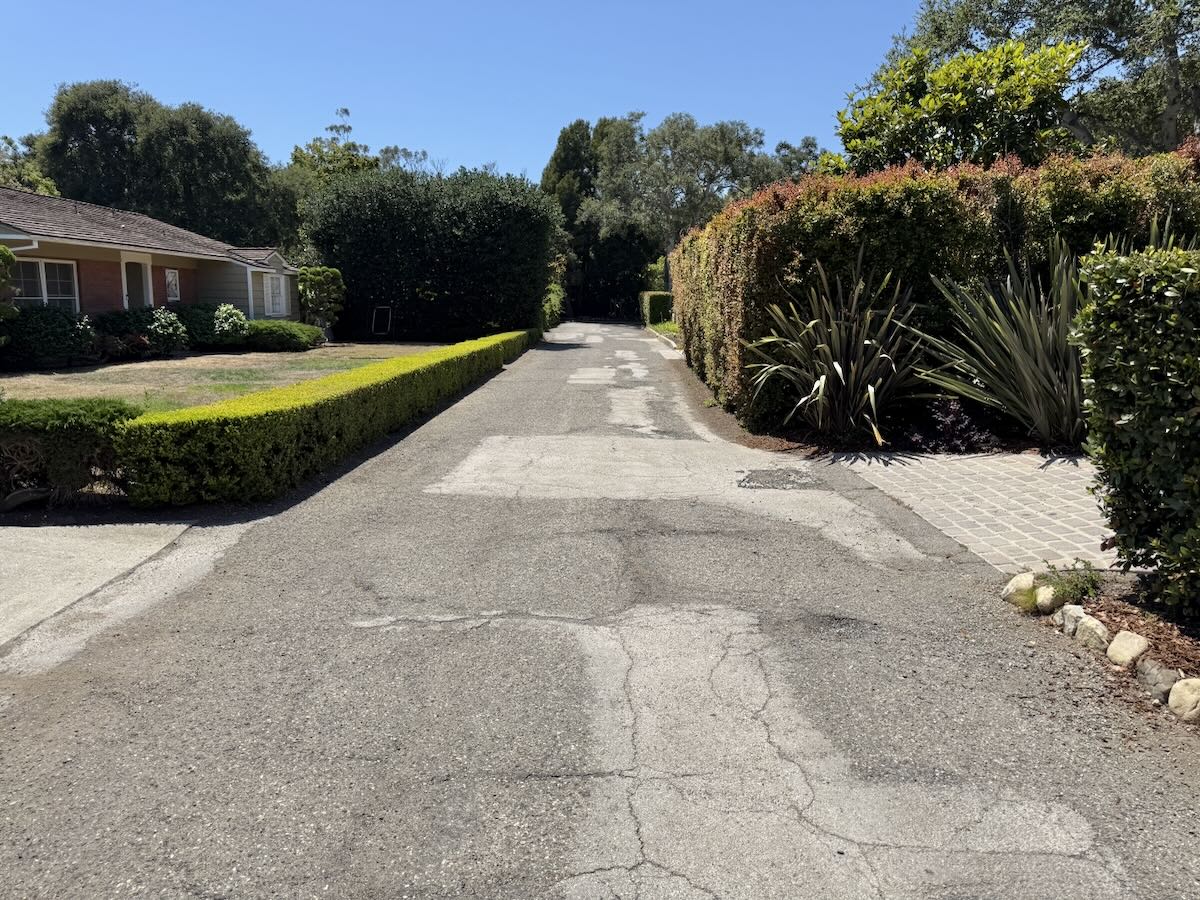
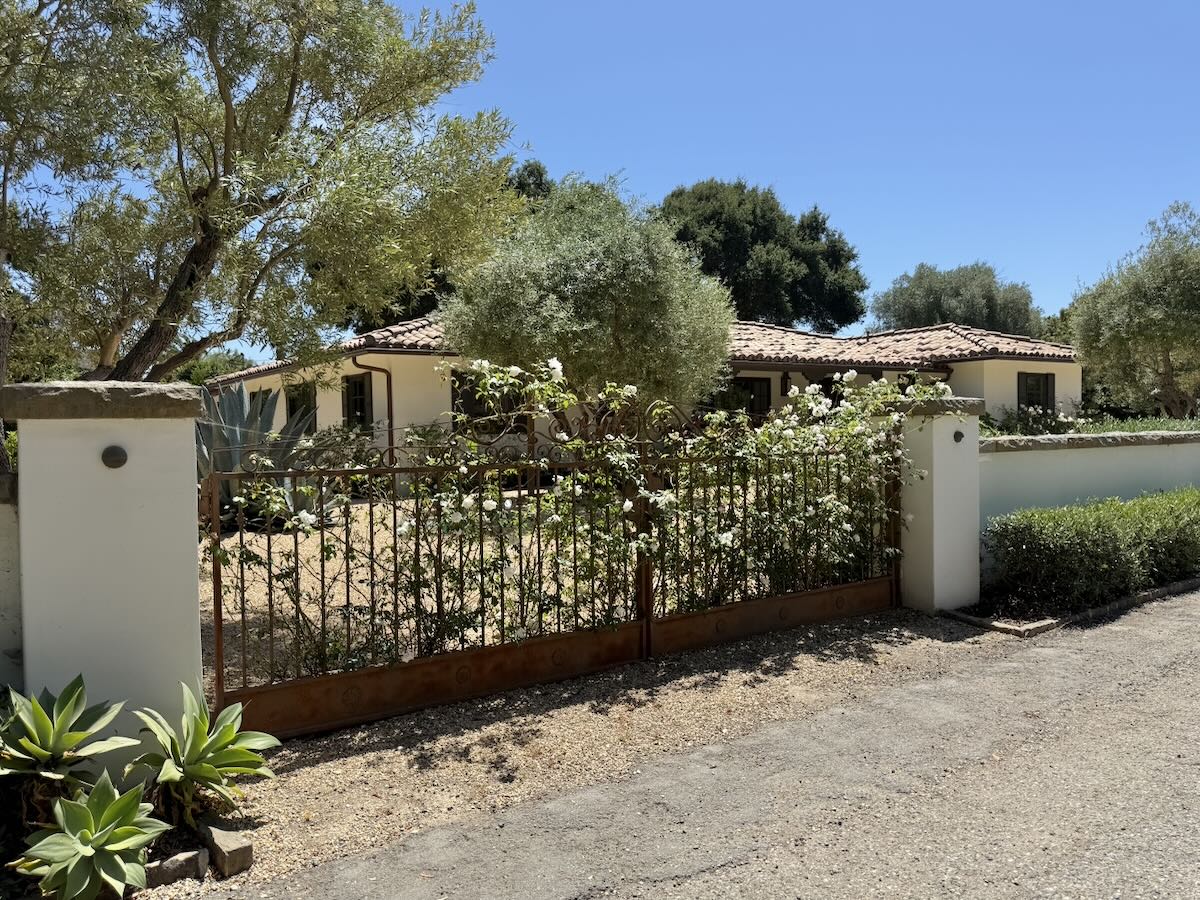
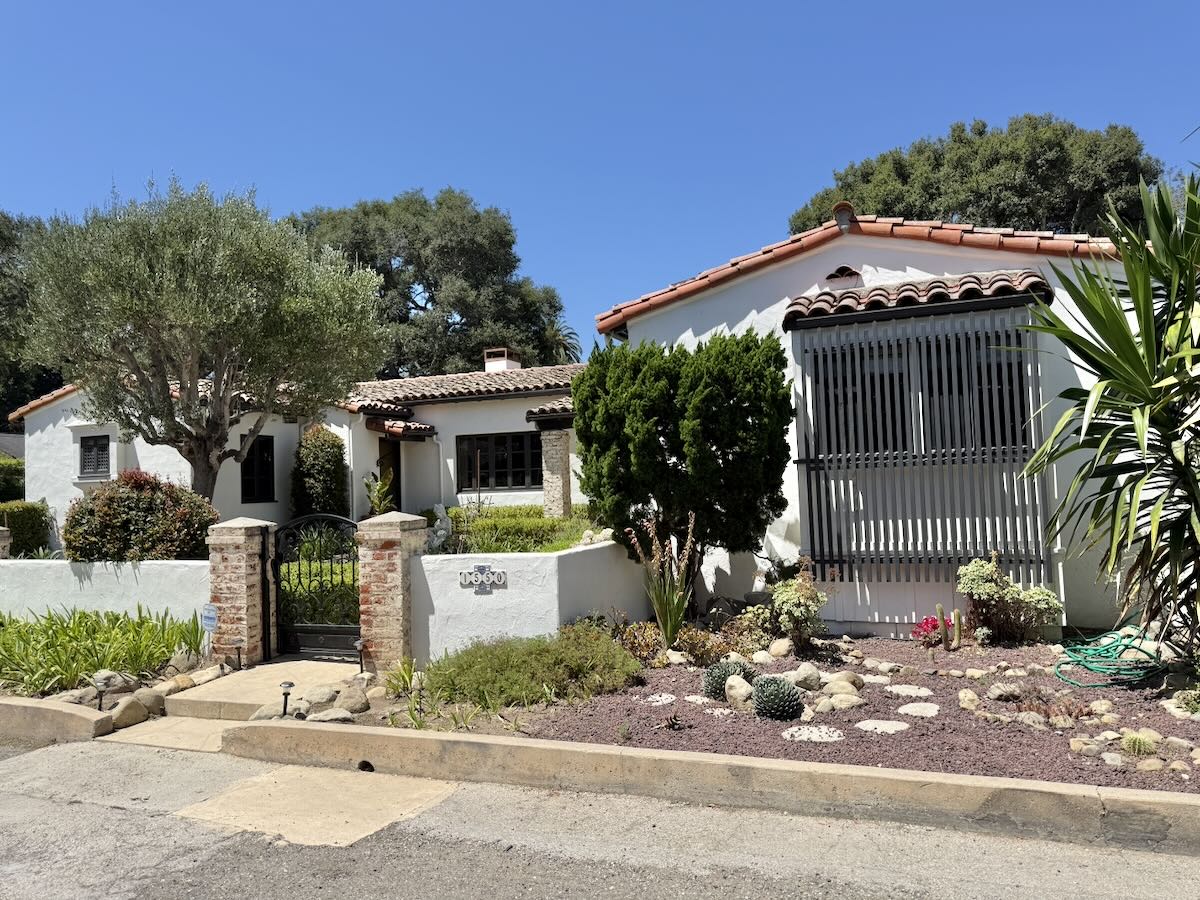 I’d like to know what lurks at the end of this private lane.
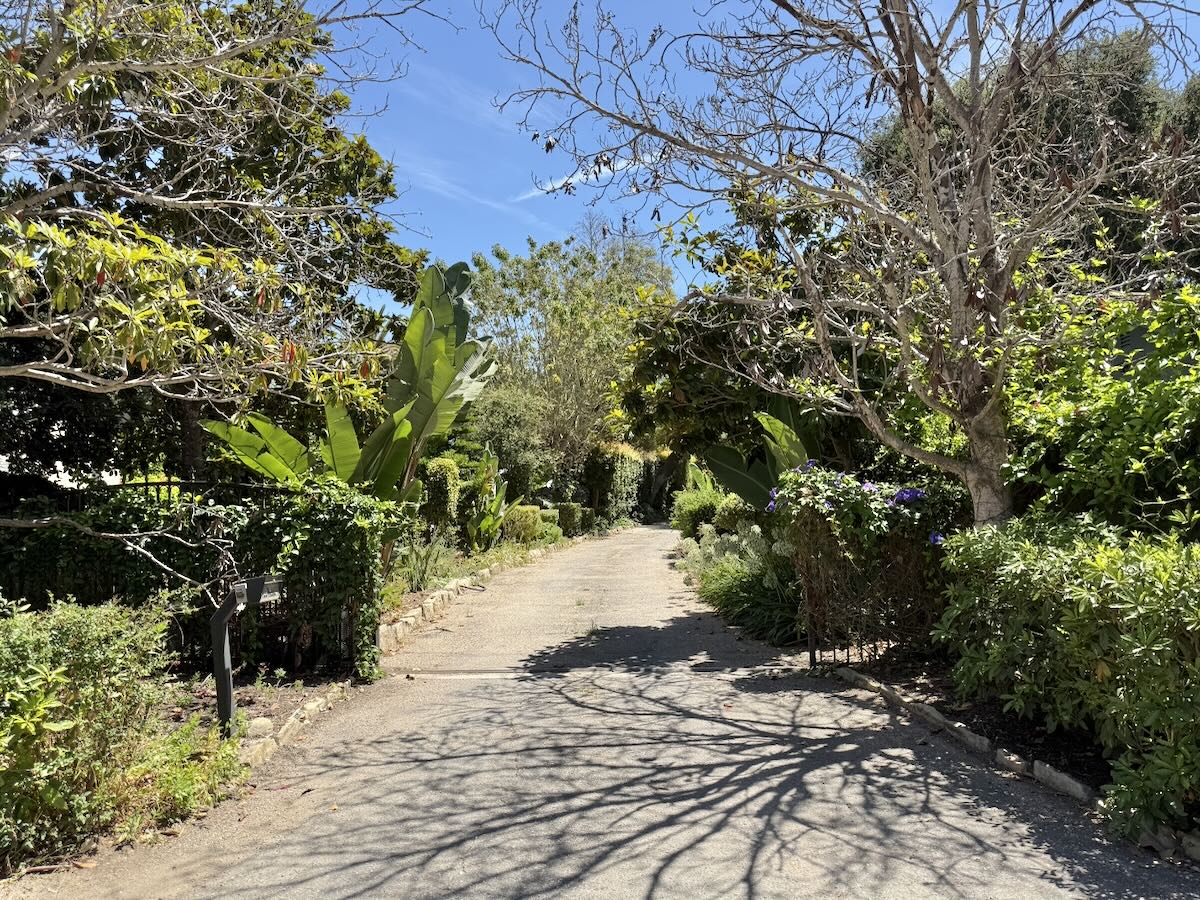 Sweet gates on Miramar Lane, too.
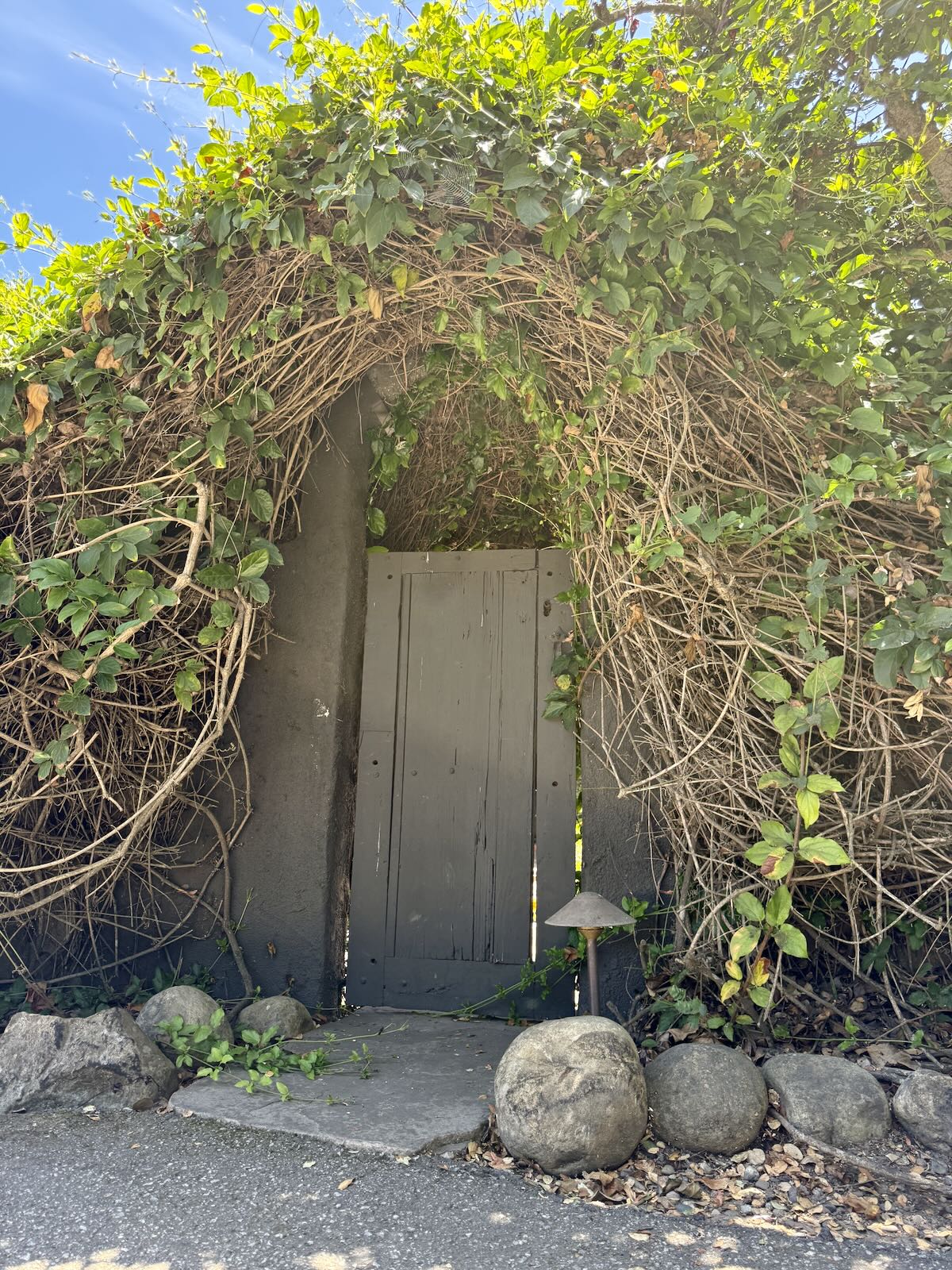
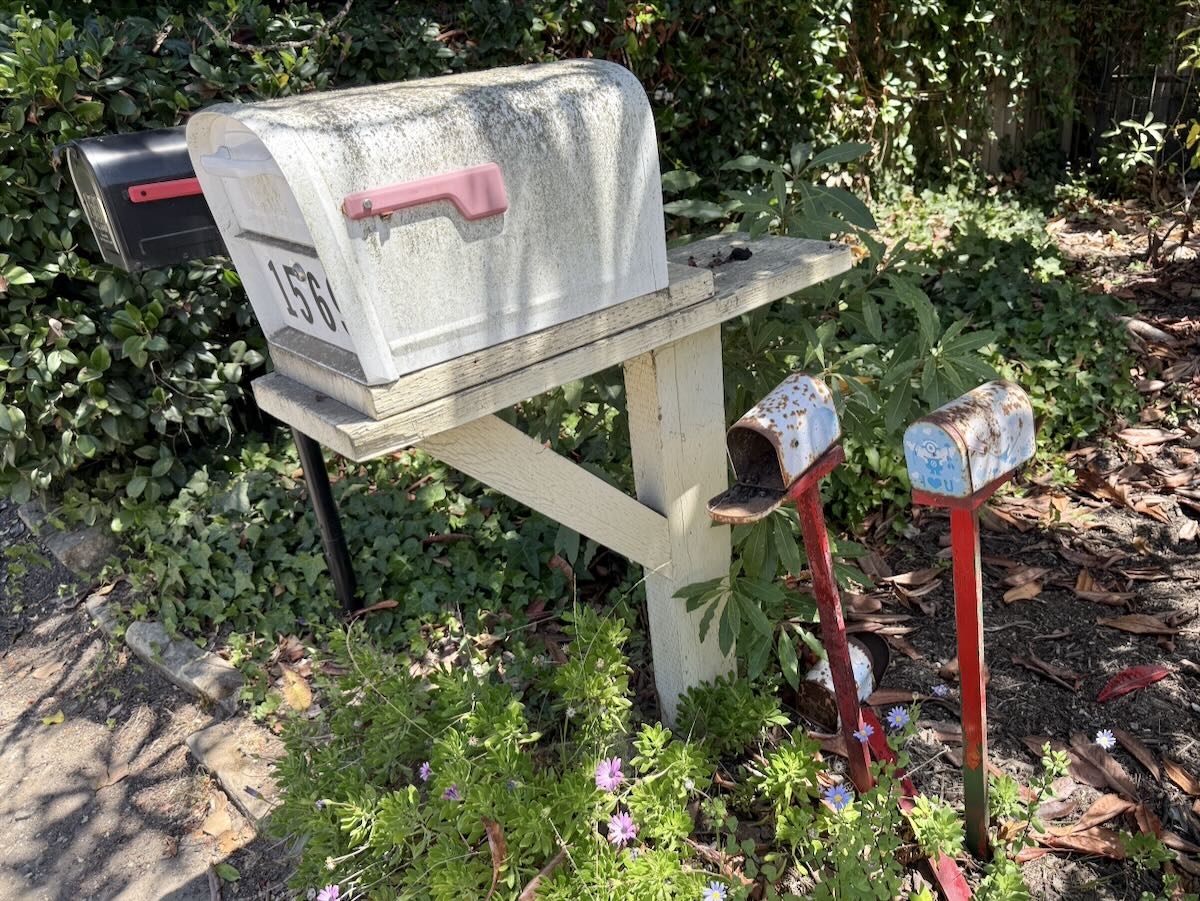
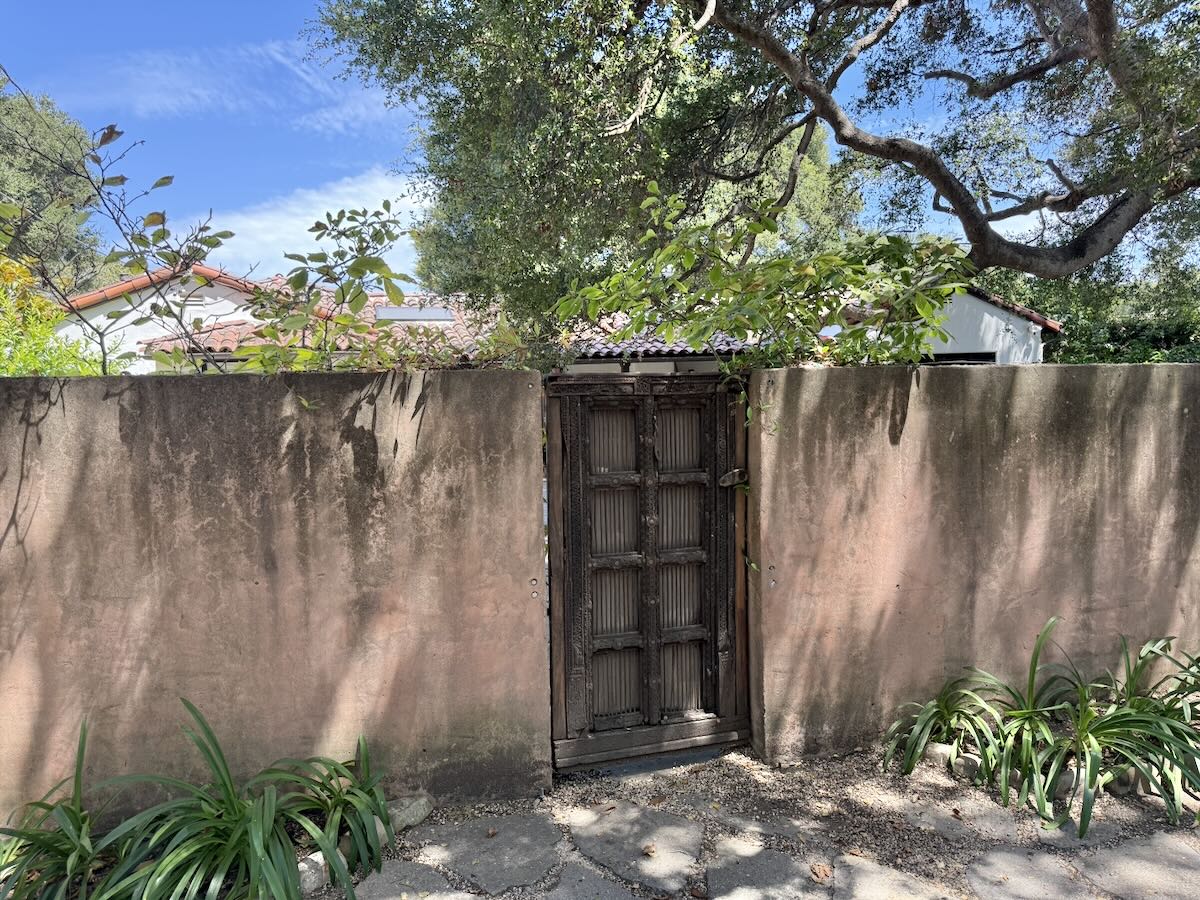 And the cutest
 pair trio of miniature mailboxes.
 The lower third of Miramar Avenue wasn’t included in the first Hedgerow walk, and I’m not sure I have ever even driven it. The road is surprisingly wide for the Hedgerow.
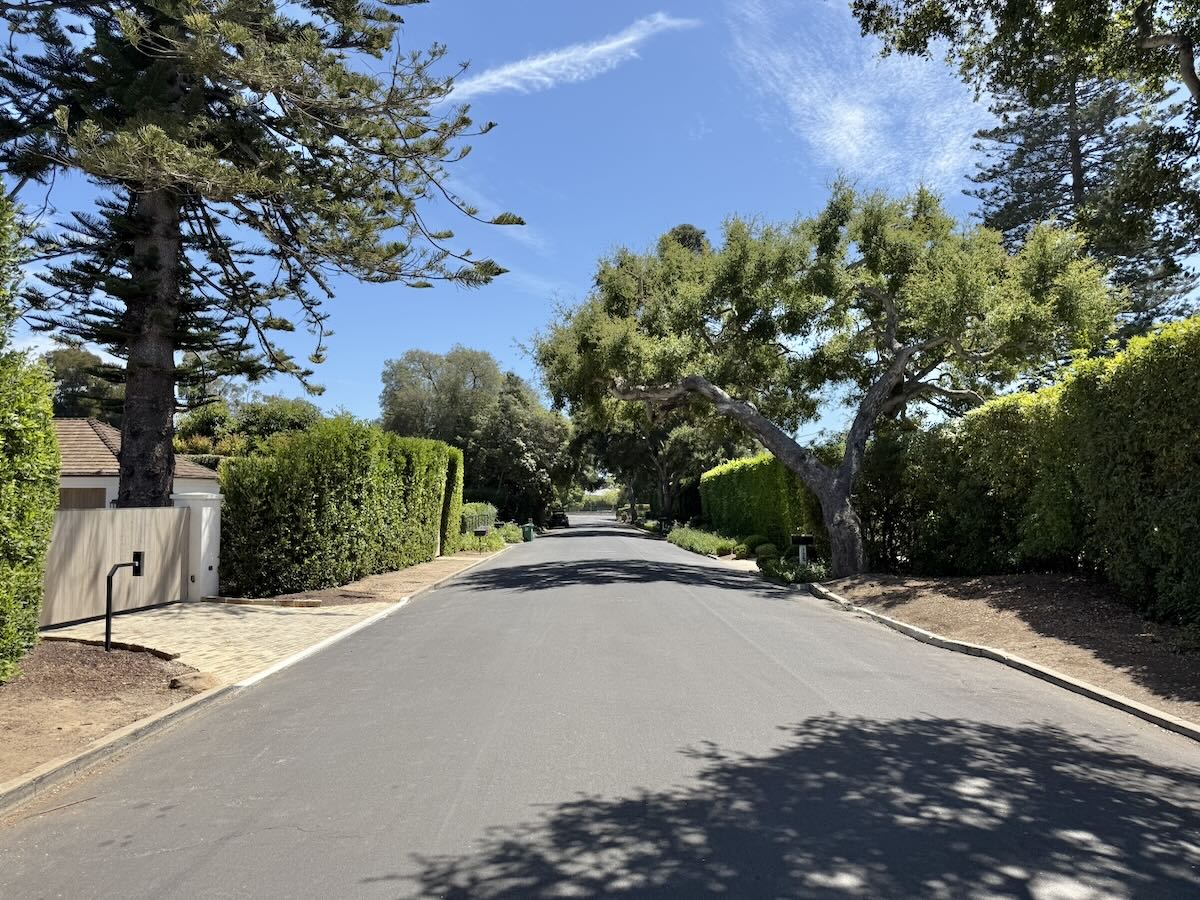 It’s more of the same—houses! hedge gates!—which is not a complaint.
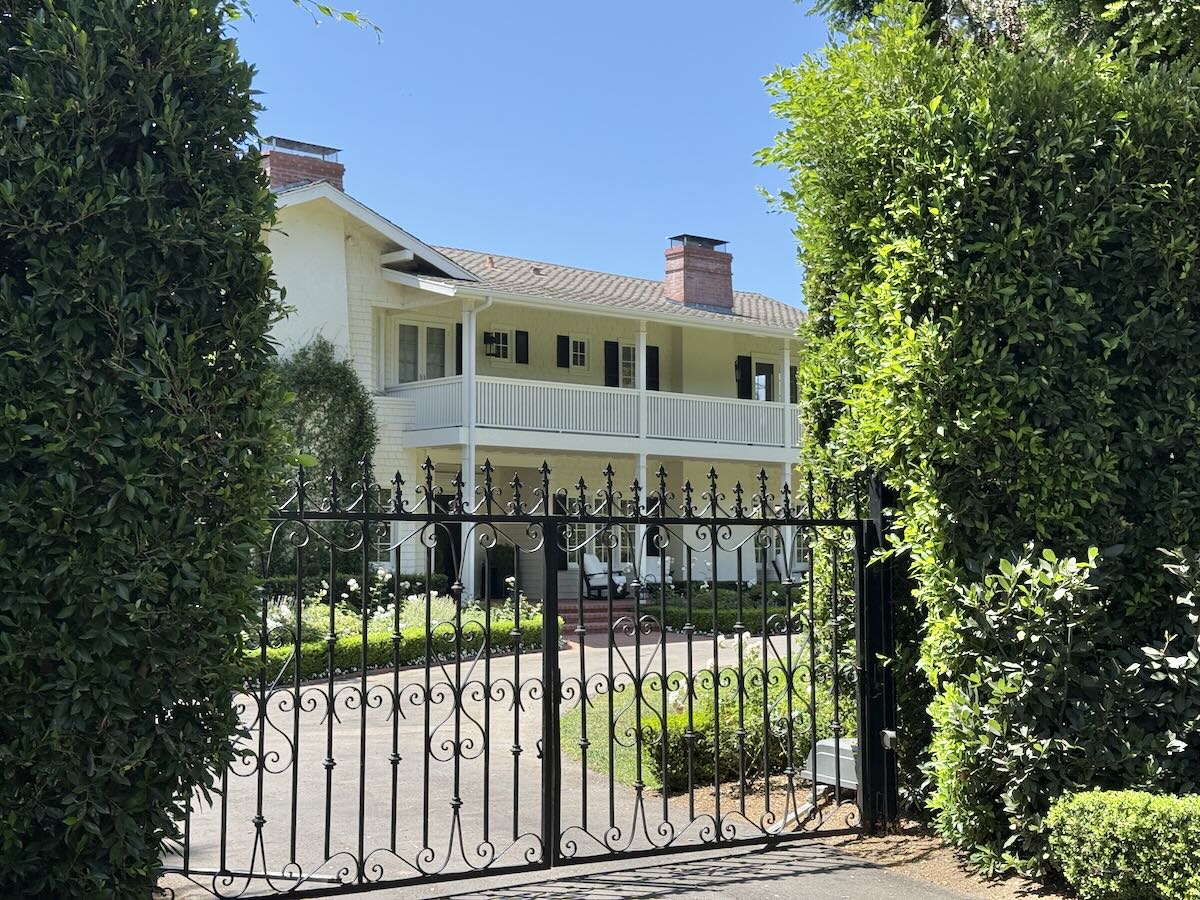
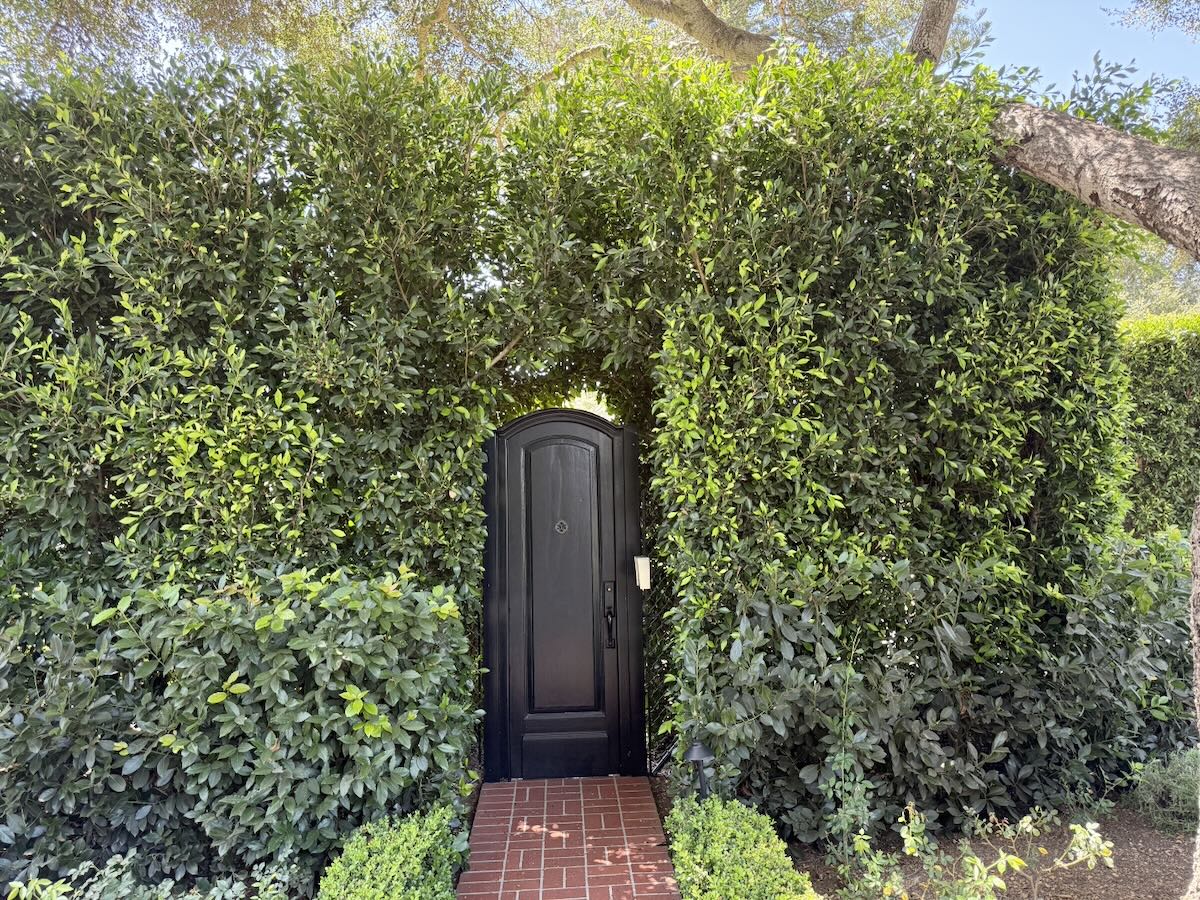 I experienced some envy about the prospect of driving home via a driveway like this.
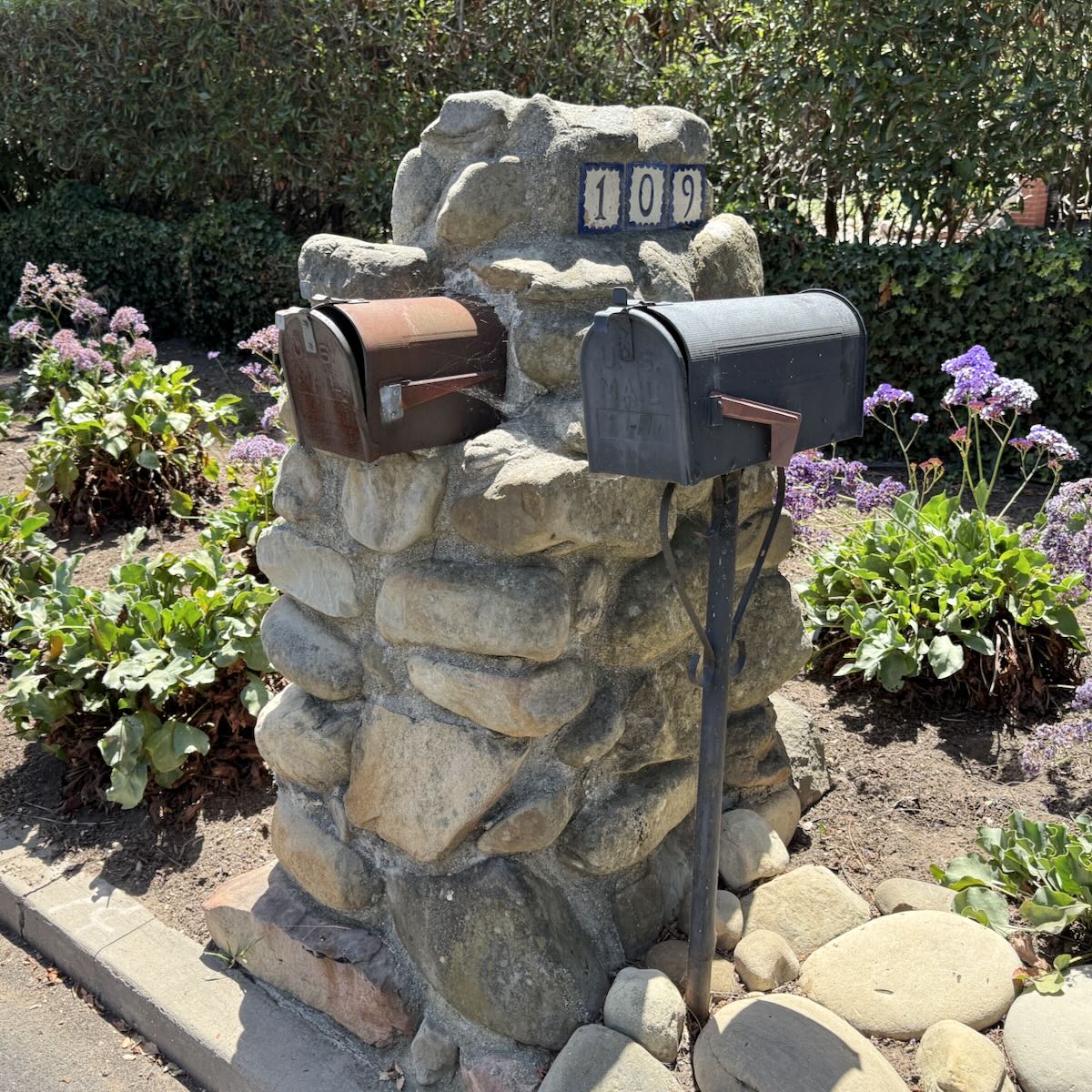
 This mailbox looks, um, half-extruded. Brown is such a tricky color.
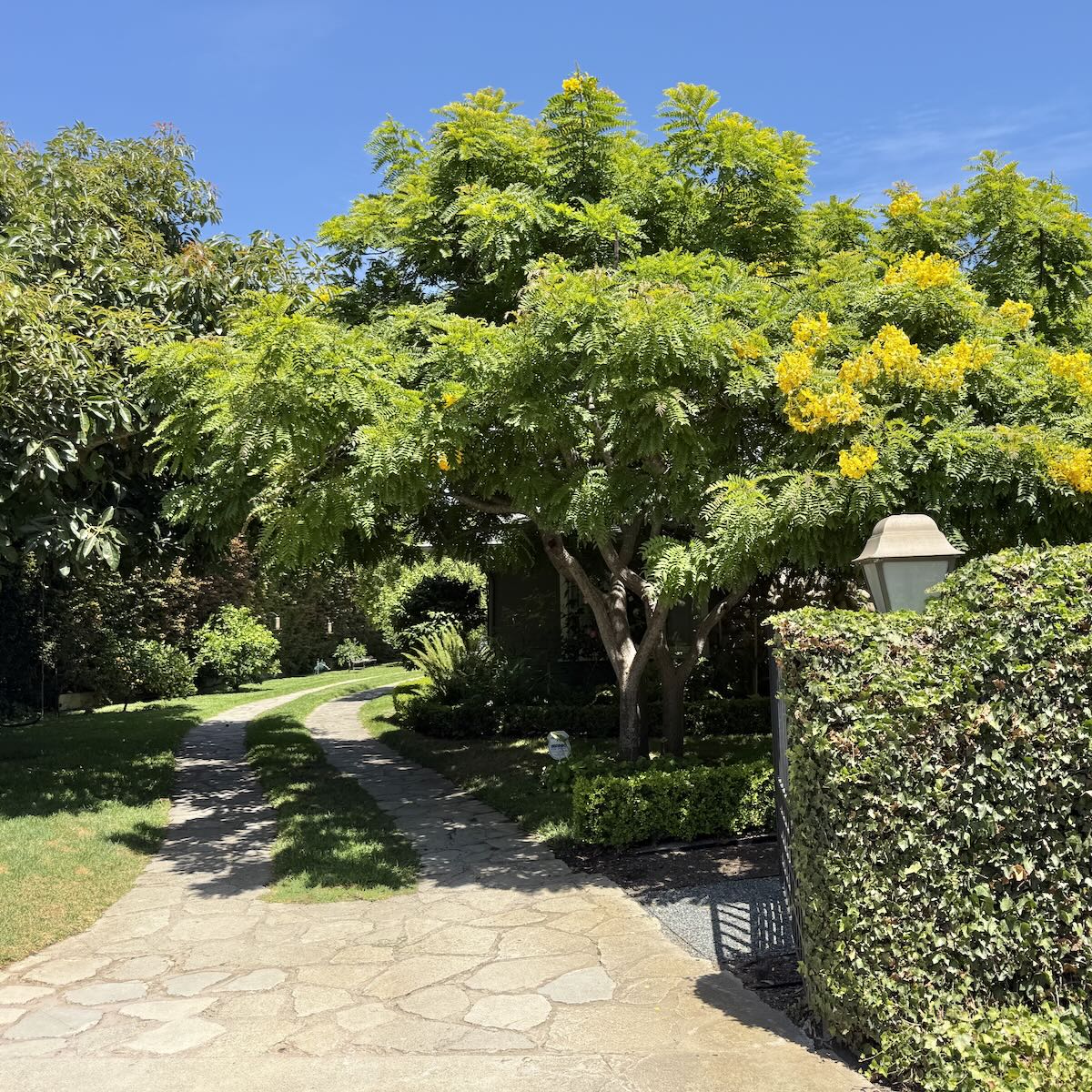
 Where the street really shines: its many magnificent specimen trees.
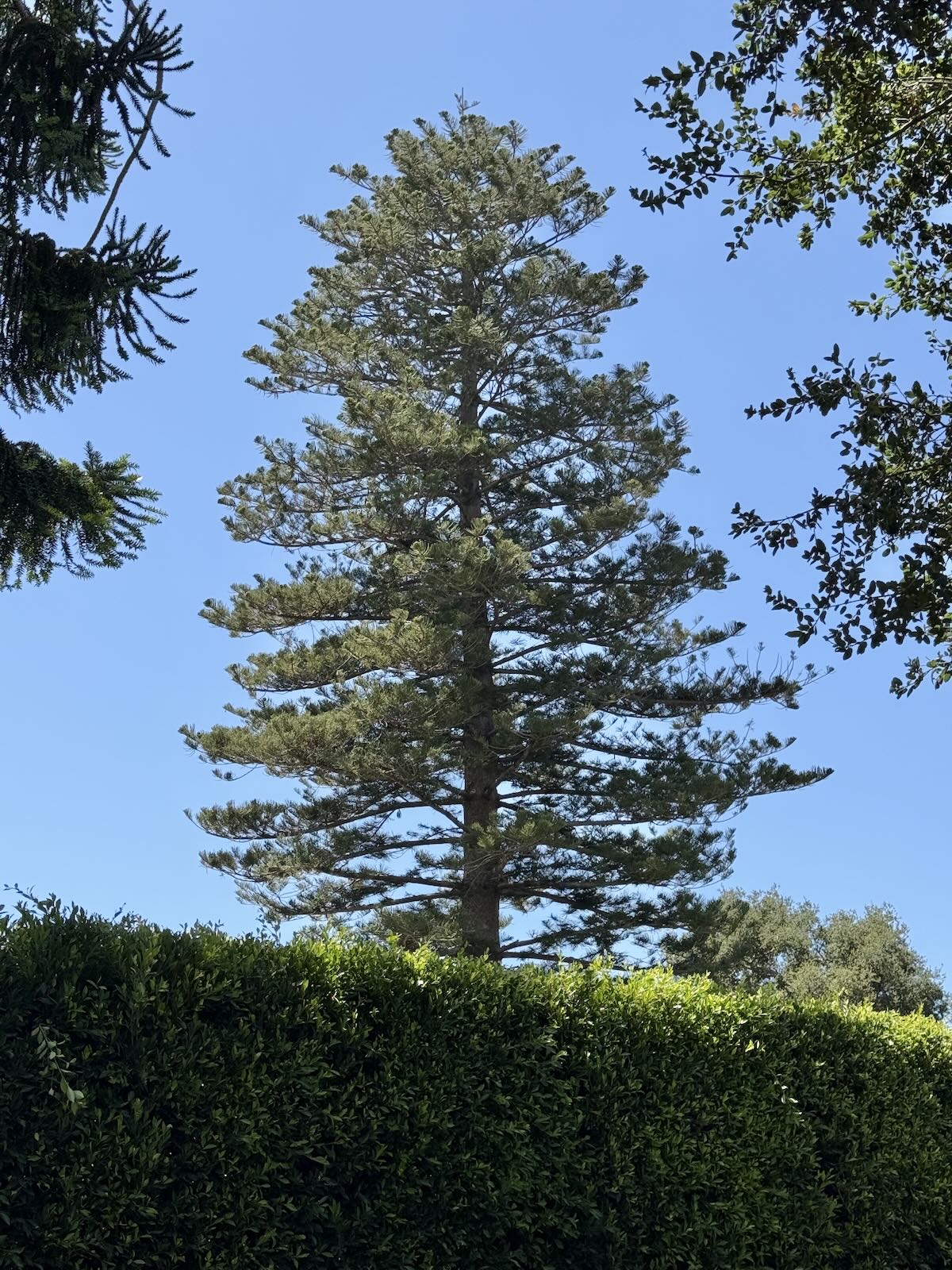
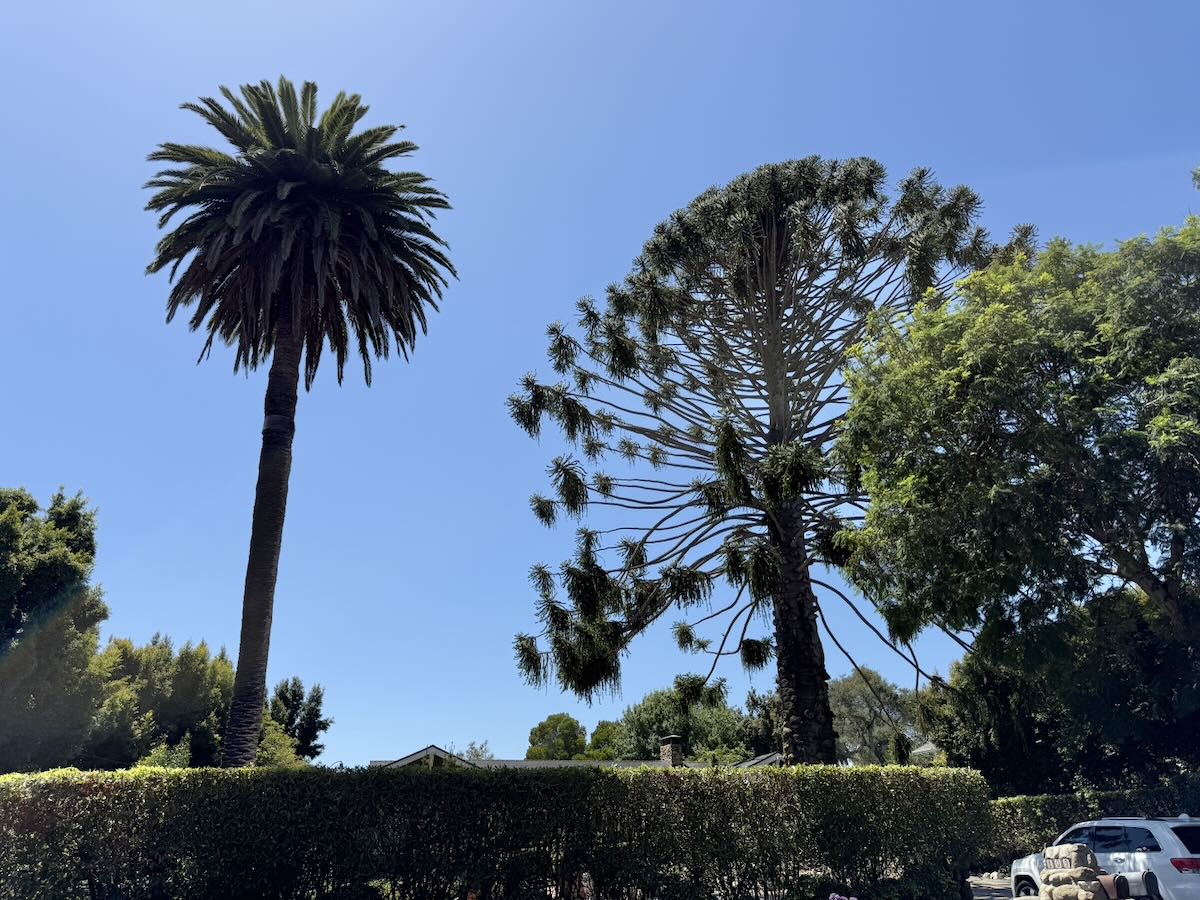
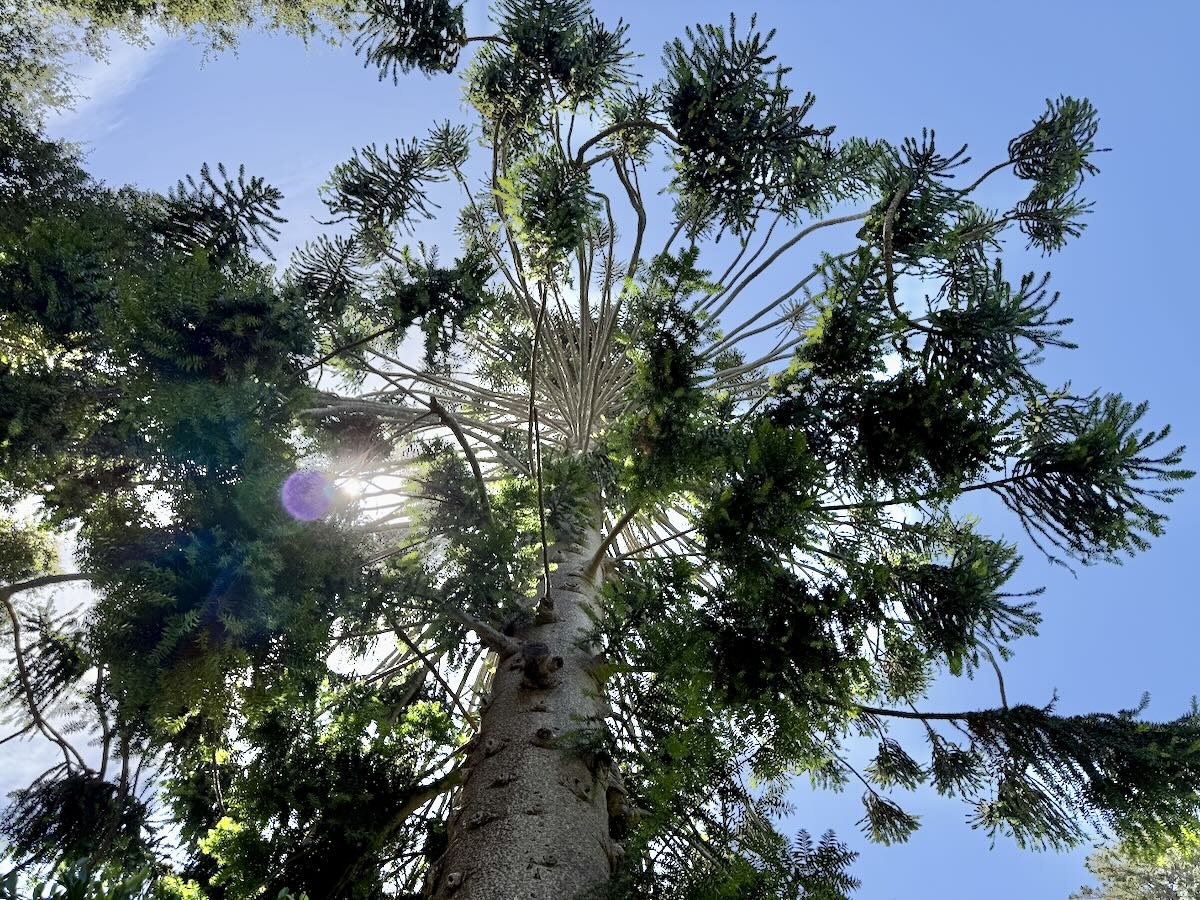
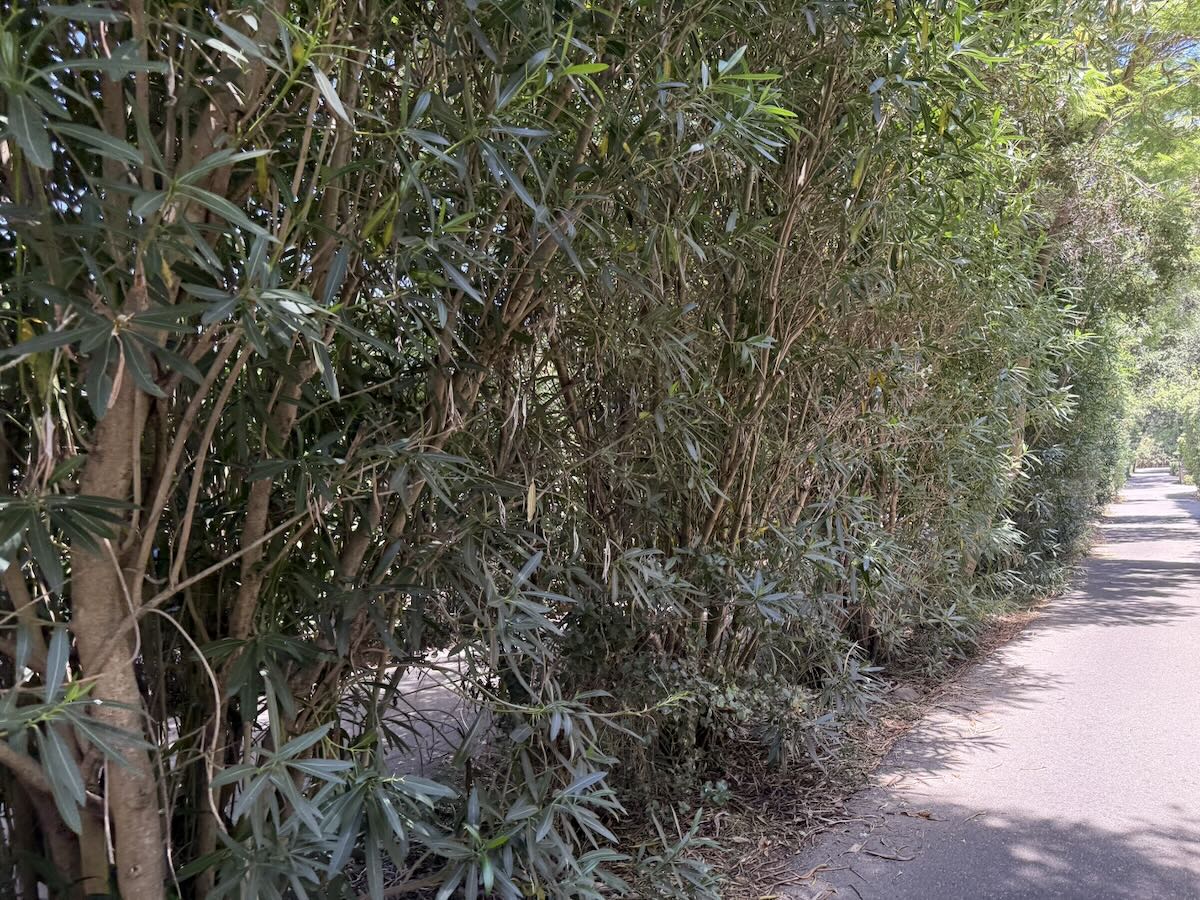
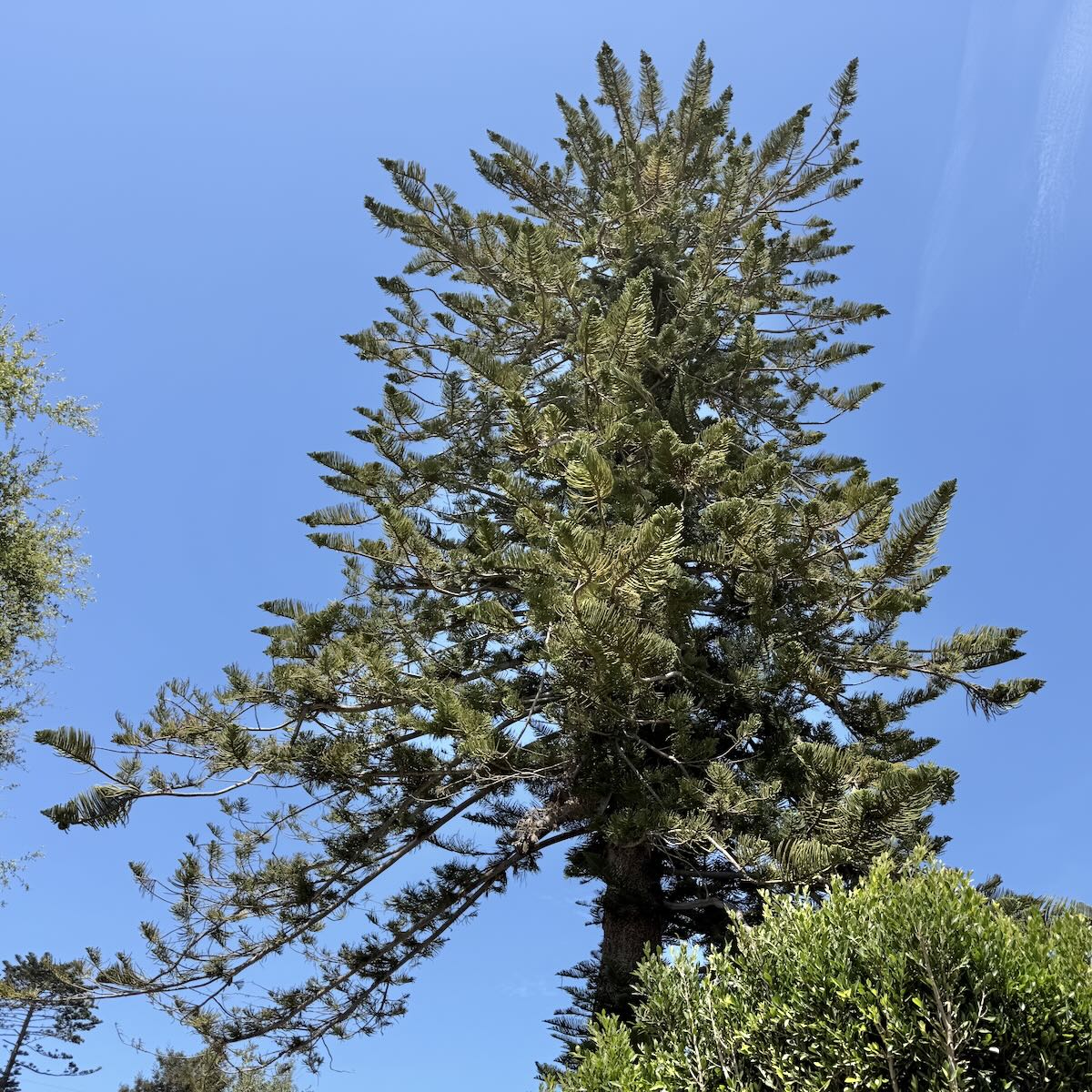 Just two streets left! And one is Jacaranda Lane, notable for a) not being San Leandro Lane, as one might expect from looking at a map, and b) the thick median, which does feature jacarandas but also rather a lot of oleander.
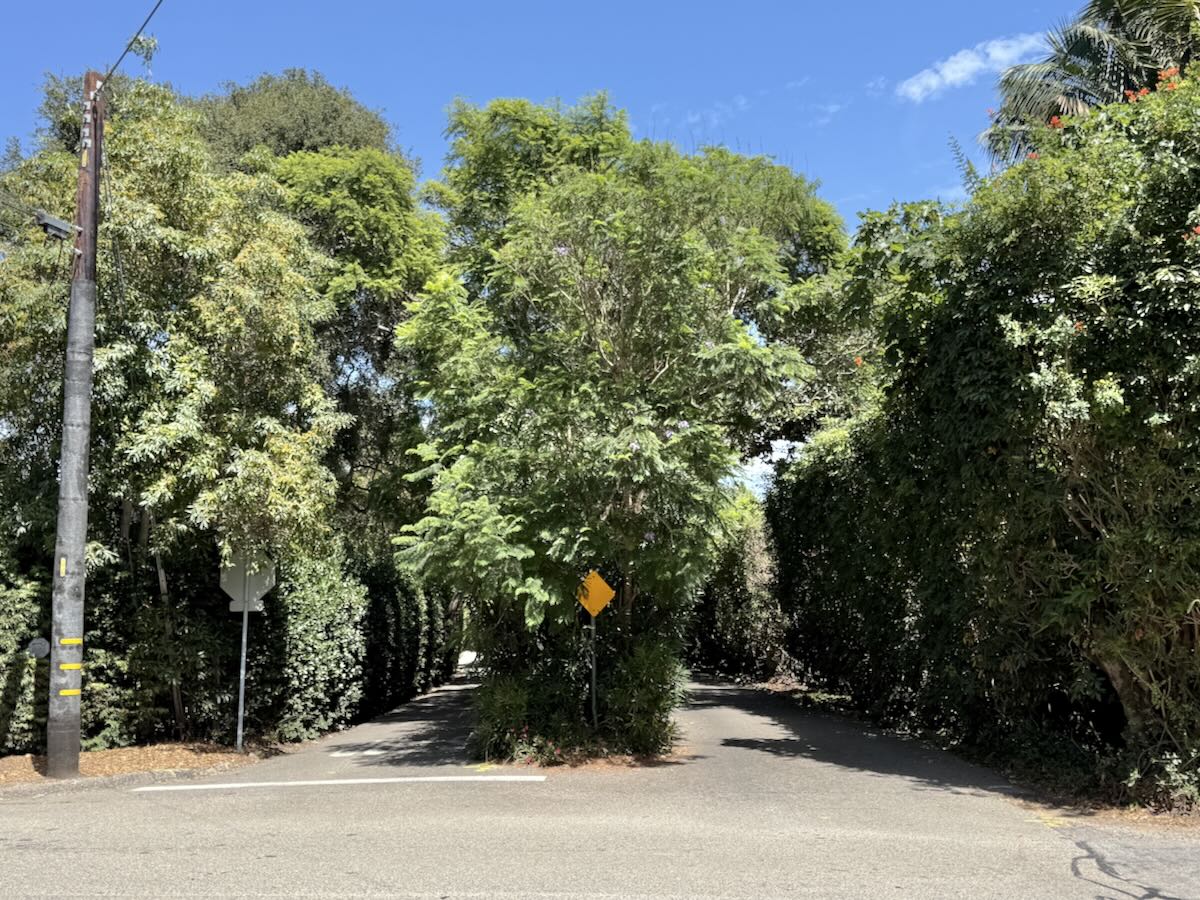
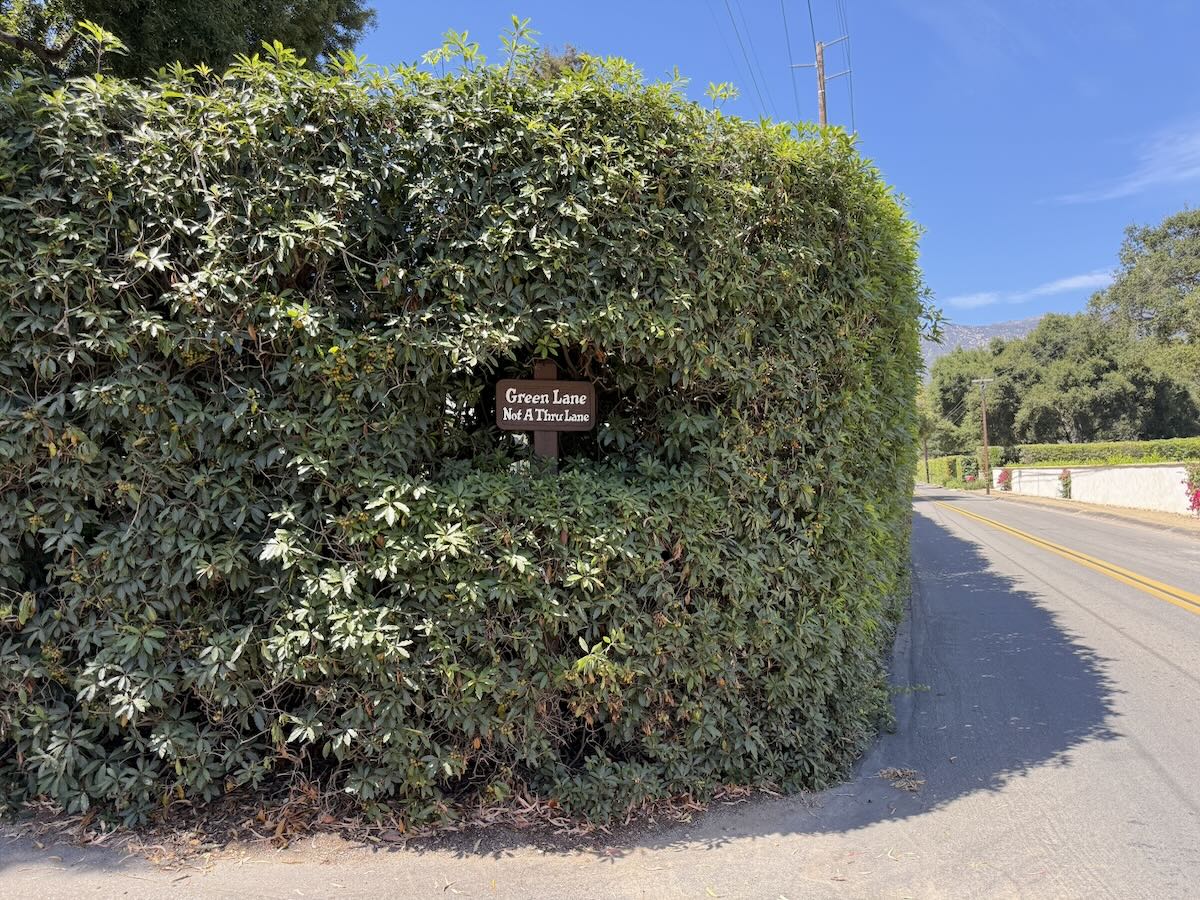
 Last but not least is Green Lane, a cul-de-sac to the north. The sign embedded in the hedge is adorable.
 More delicious houses…
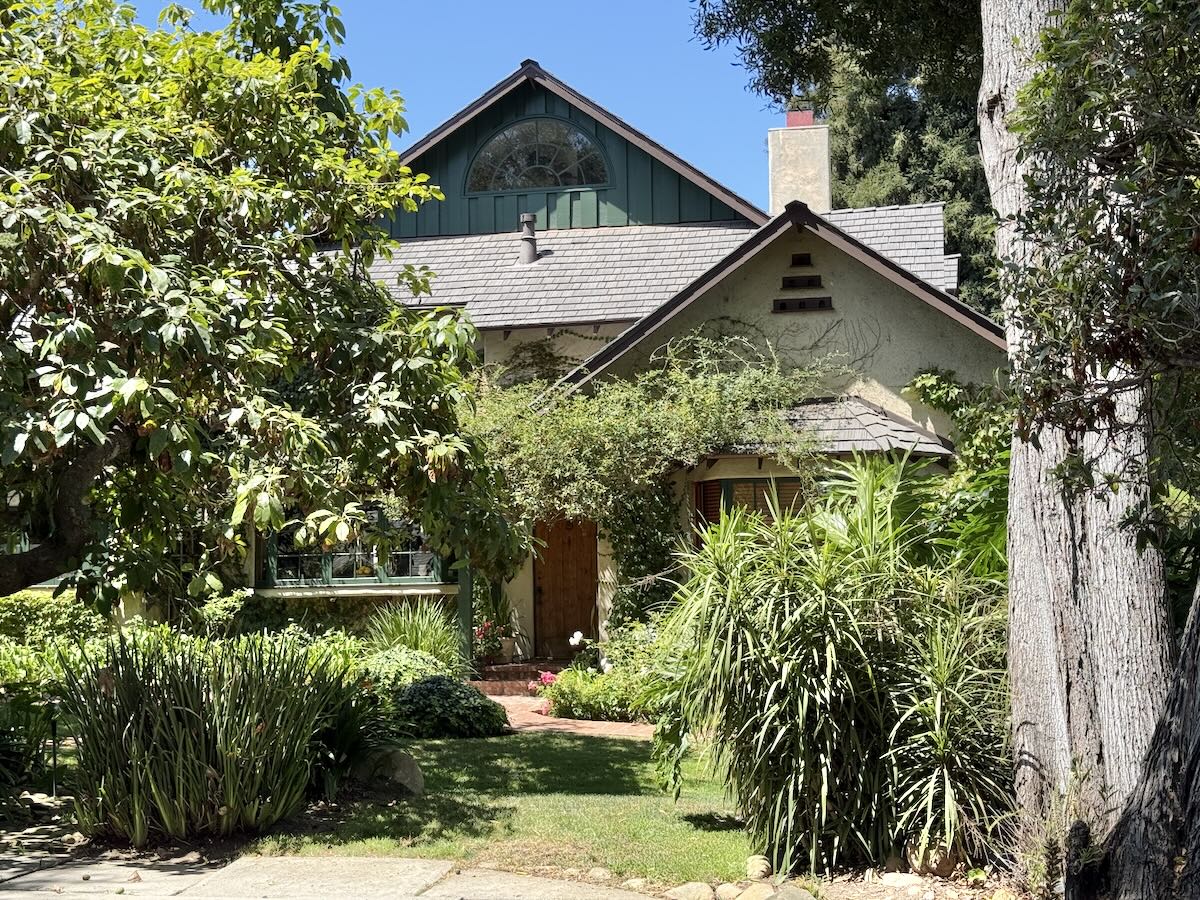
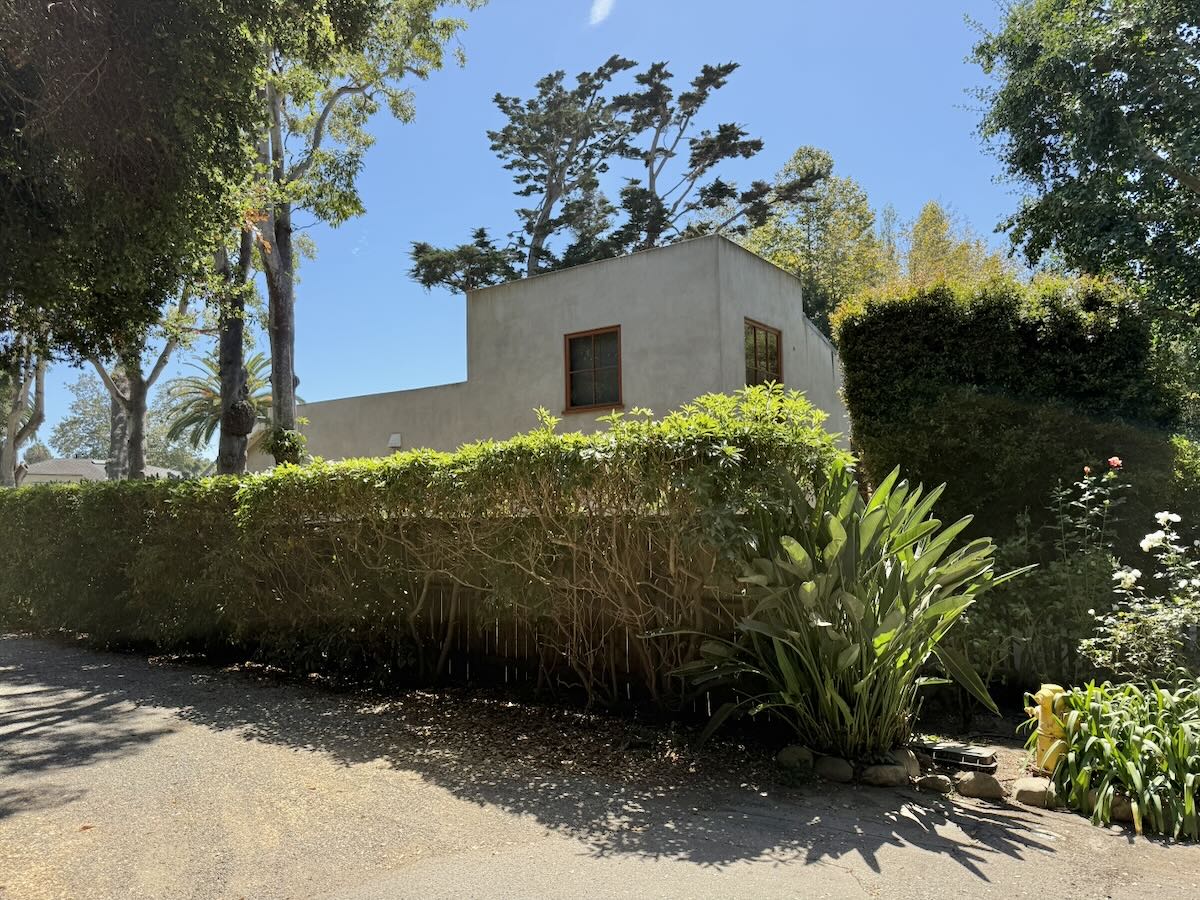
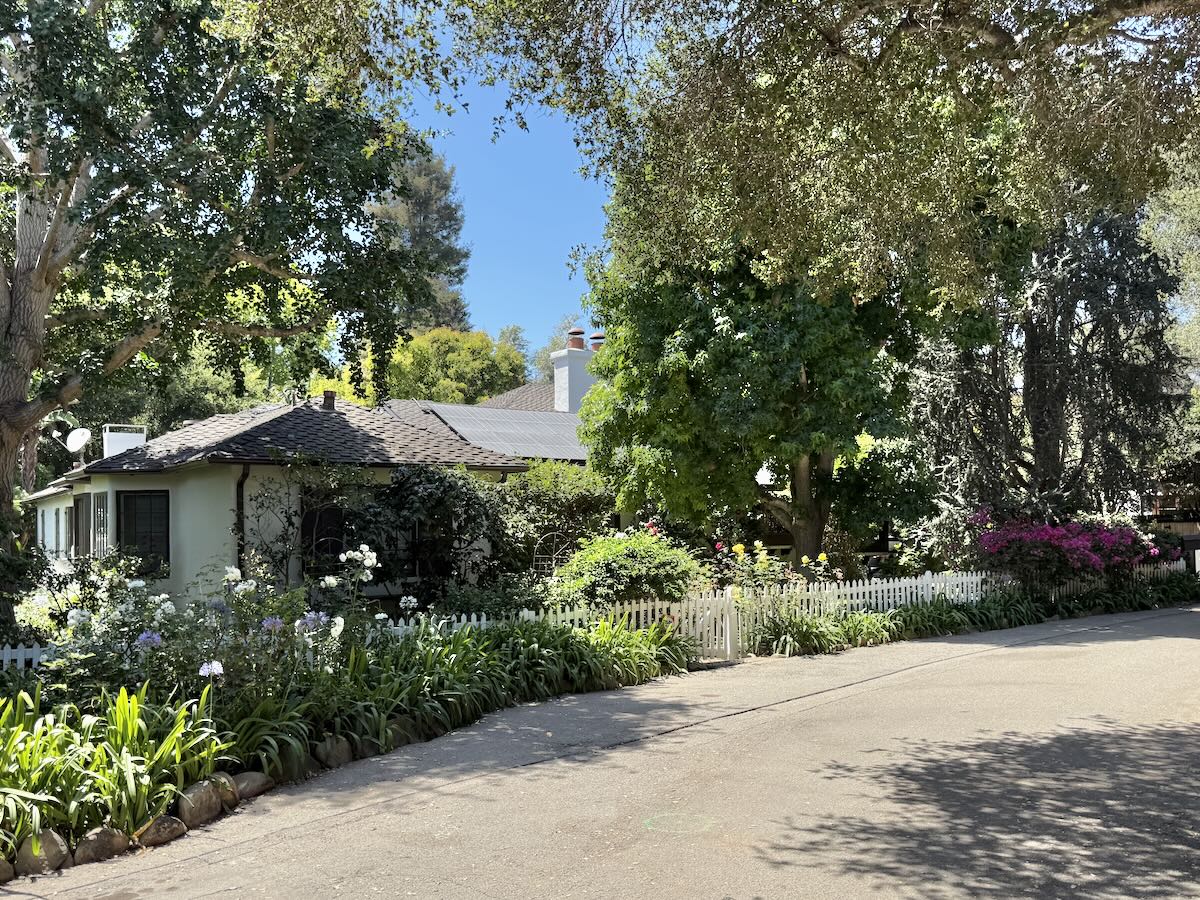
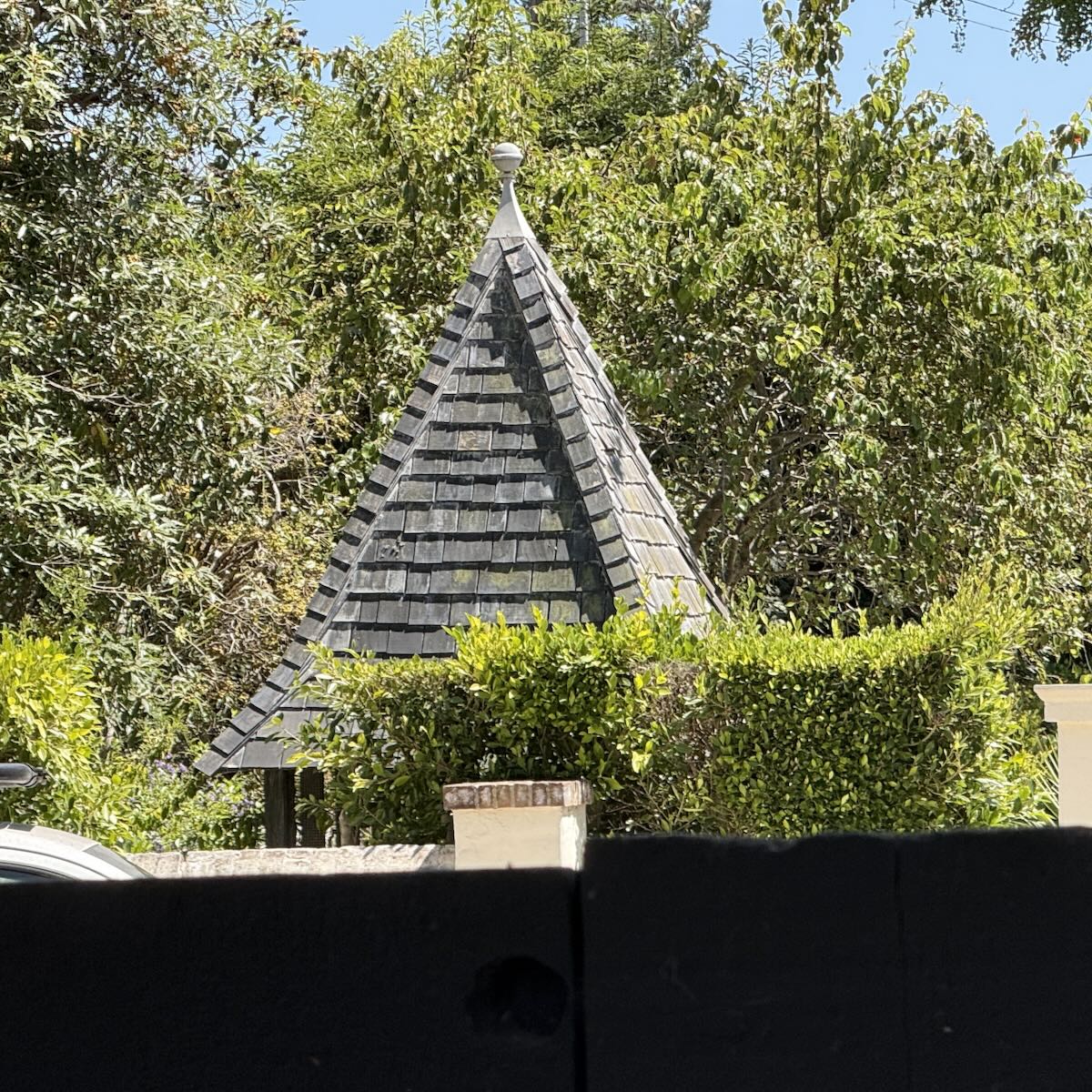
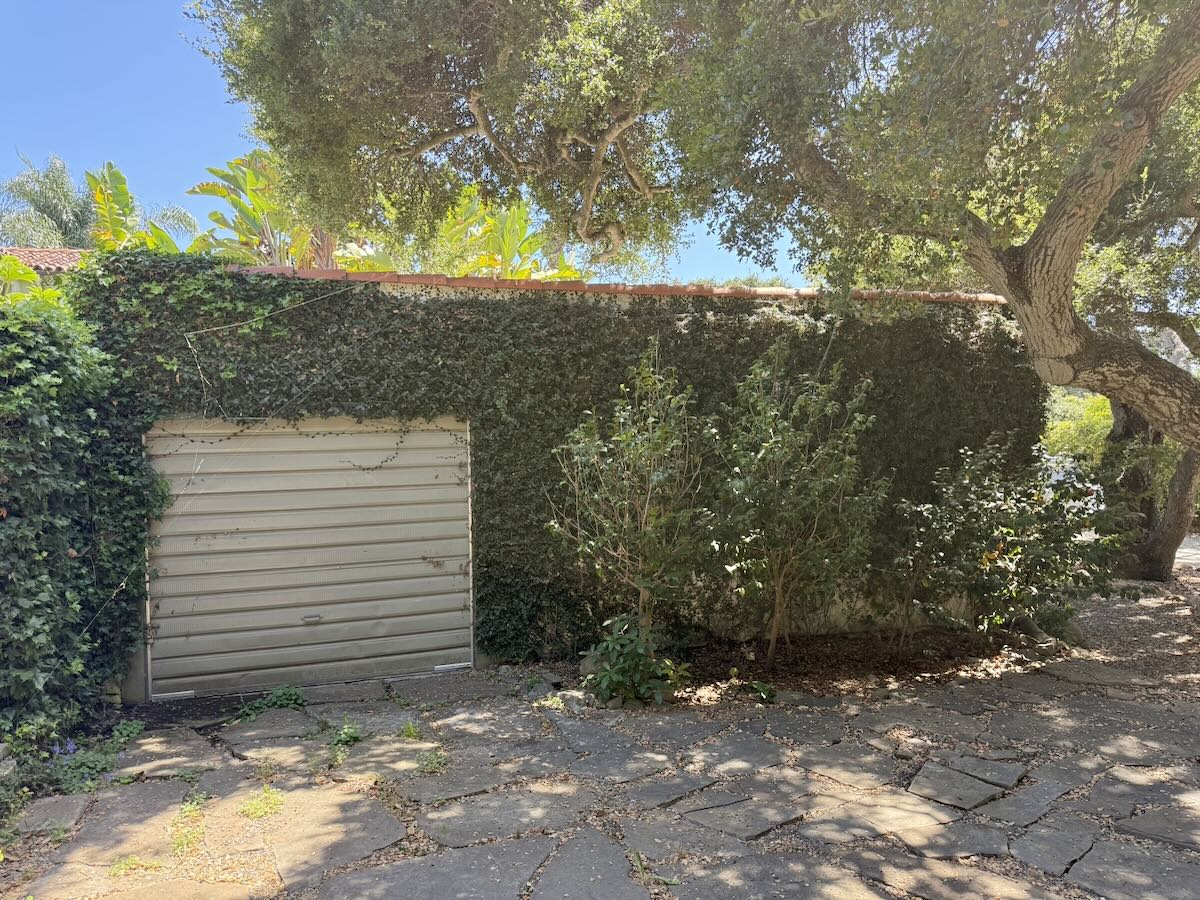
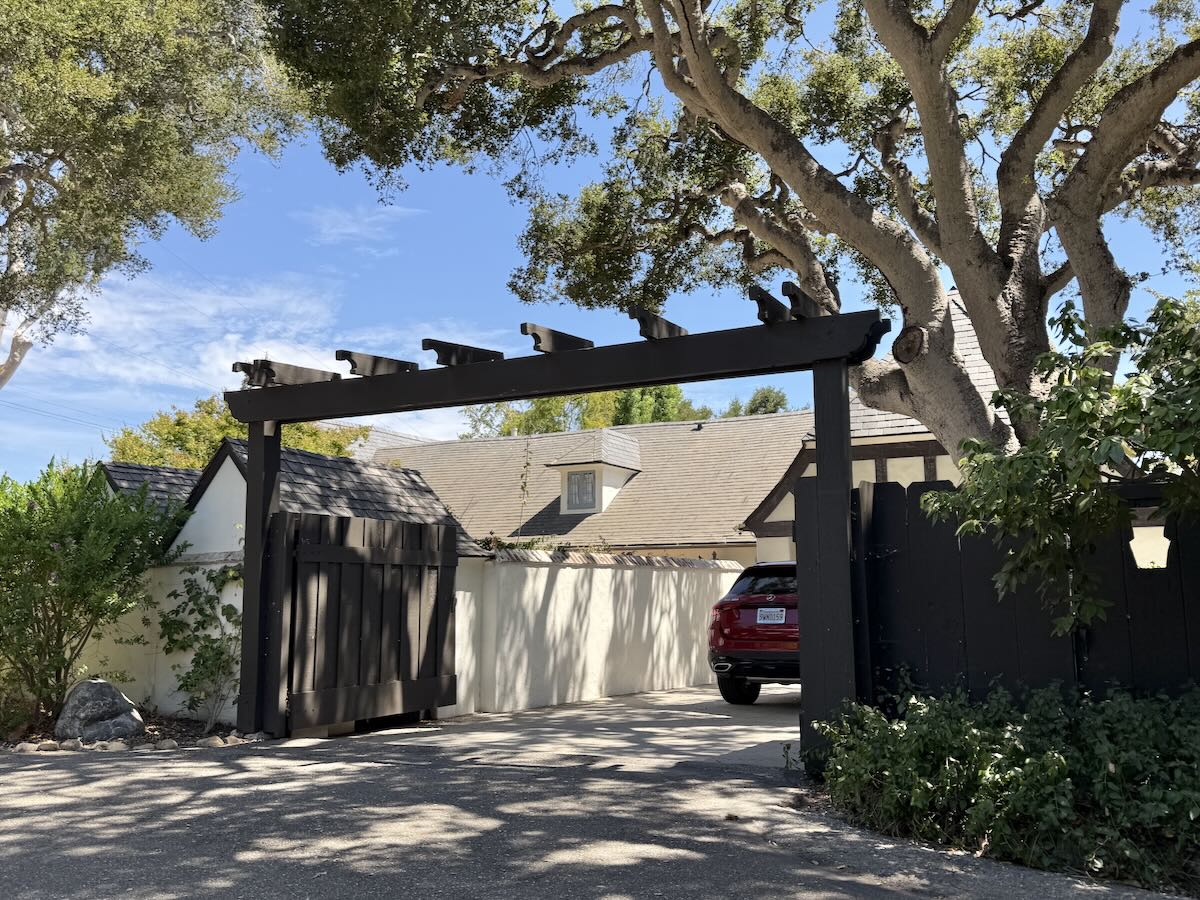 …and the cutest outbuilding ever.
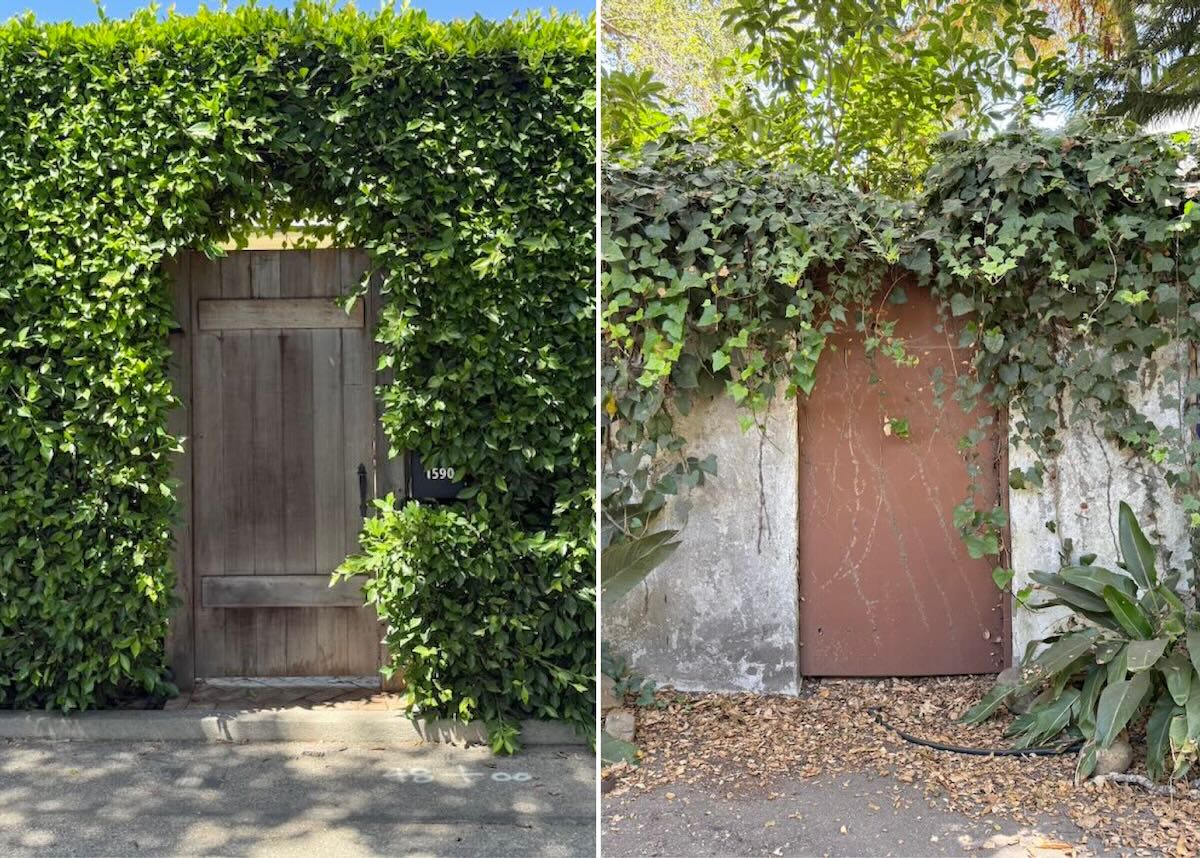
 And naturally, there are more worthwhile gates and doors, along with an industrial-style one that’s like a poke in the eye.
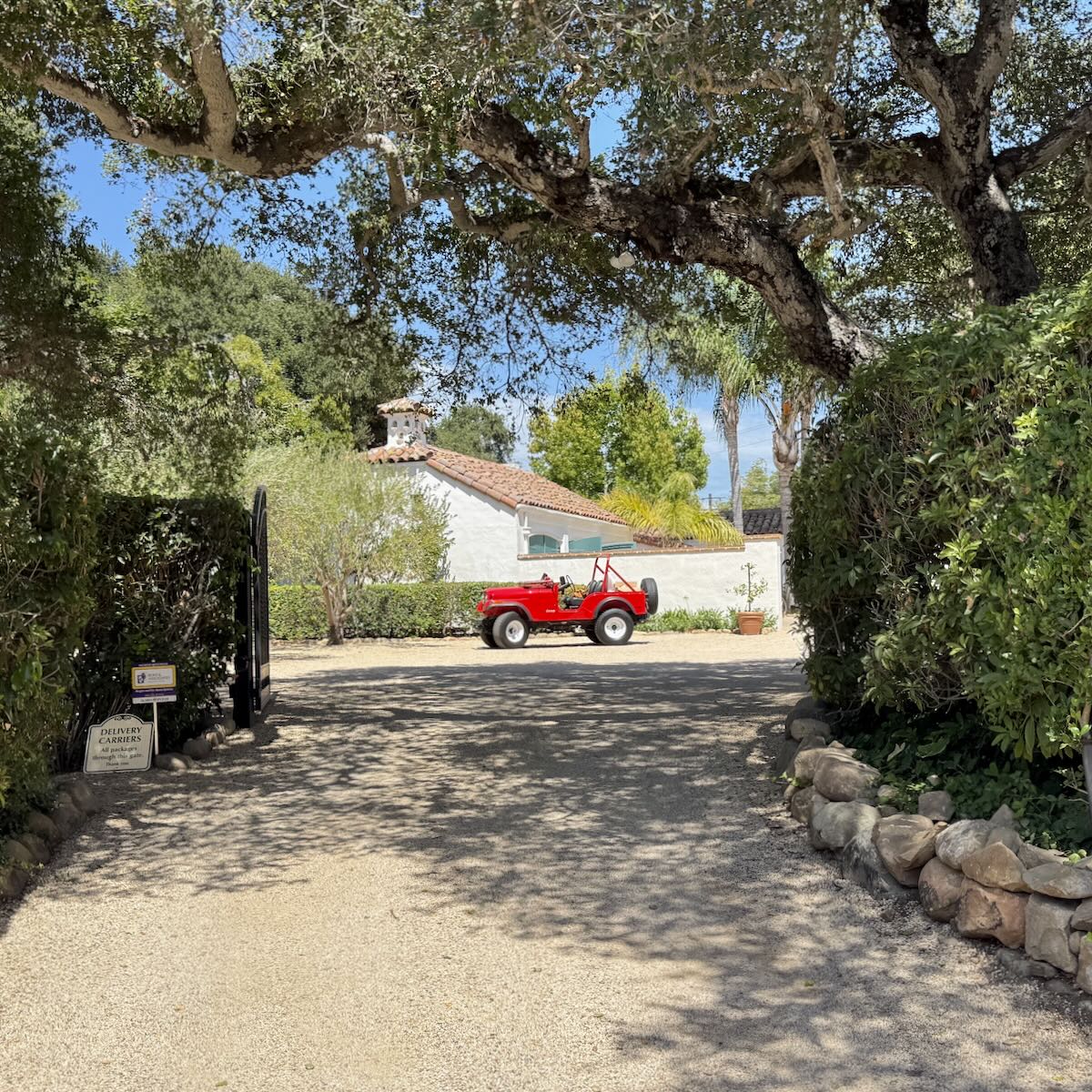
 At the end of the street, and this post, is 1574 Green Lane, a swell 1926 Mary Craig house that recently sold for $11.45 million. The new owner sure knows a thing or two about how to position a Jeep.
················
Walk With Me…
Downtown Santa Barbara
• The Manifold Pleasures of Mid-State
• The Arty Heart of Downtown Santa Barbara
• Downtown and a Little to the Left
• The Gritty Glamour of the Funk Zone
• The Upper Upper East Is Busting Out All Over
• The Presidio: In the Footsteps of Old Santa Barbara
• Brinkerhoff, Bradley, and Beyond
• Mixing Business and Pleasure in East Beach
• It’s Only Milpas Street (But I Like It)
• The Haley Corridor Is Keeping It Real
• The Small Pleasures of Bungalow Haven
• Is There a Better Neighborhood for a Stroll Than West Beach?
• E. Canon Perdido, One of Downtown’s Best Strolling Streets
Eastside
• Old Coast Highway Revisited
• Where the Eastside Meets the Lower Riviera
Oak Park / Samarkand
• The Side Streets and Alleyways of Upper Oak Park
↓↓↓ The Small-Town Charms of Samarkand
The Riviera
• The Ferrelo-Garcia Loop
• Scaling the Heights of Las Alturas
• High on the Lower Riviera
Eucalyptus Hill
• On the Golden Slope of Eucalyptus Hill
• Climbing the Back of Eucalyptus Hill
San Roque / Hope
• Where One School Leads to Another
• Amid the Saints of South San Roque
• Voyage to the Heart of the San Roque Spider Web
TV Hill / The Mesa
• Higher Education on the Mesa
• The Metamorphosis of East Mesa
• The Highs and Lows of Harbor Hills
• Walking in Circles in Alta Mesa
• West Mesa Is Still Funky After All These Years
• A Close-Up Look at TV Hill
Hidden Valley / Yankee Farm / Campanil
• Campanil is a Neighborhood in Flux
• An Aimless Wander Through Hidden Valley
• The Unvarnished Appeal of Yankee Farm
Hope Ranch / Hope Ranch Annex / Etc.
• A Country Stroll on El Sueno Road
Cielito / Mission Canyon
• A Walk in the Clouds in Cielito
Montecito
• The Westmontish Region of Montecito
• East Meets West on Mountain Drive
• A Relatively Modest Montecito Enclave
• Strolling Under a Canopy of Oaks
• Out and Back on Ortega Ridge
• The Heart of Montecito Is in Coast Village
• Quintessential Montecito at Butterfly Beach
• Once Upon a Time in the Hedgerow
• Where Montecito Gets Down to Business
• In the Heart of the Golden Quadrangle
• Up, Down, and All Around Montecito’s Pepper Hill
• Montecito’s Prestigious Picacho Lane
• School House Road and Camphor Place
Summerland / Carpinteria
• On Summerland’s Western Fringe
• A Stroll in the Summerland Countryside
• Admiring the Backsides of Beachfront Houses on Padaro Lane
• Whitney Avenue in Summerland
Goleta / Isla Vista
• In the Shadow of Magnolia Center
• A Tough Nut to Crack in Goleta
• Where the Streets Have Full Names
• The Past Is Still Present in Old Town Goleta
• Social Distancing Made Easy at UCSB
 ················
Sign up for the Siteline email newsletter and you’ll never miss a post.











Posting so many photos of private residences and property is crazy. Stick to the street signs and historical maps.
What is crazy about it? What is the concern?
Privacy.
Who’s privacy? Nobody is in the photos.
Are you this bothered every time a car drives by?
Drives by, takes photos, and posts them online…yes. I am bothered. And yes, a photo of my house appears above.
If you were so concerned about privacy you would not have mentioned that one of those houses is yours.
In California, you have the right to be free from “intrusion upon seclusion” and “unwarranted and undesired publicity.”
This generally means that people may not take photos or videos of you in a “private” place without your consent. Whether a particular location is “private” or “public” depends on whether or not you have a “reasonable expectation of privacy” in that location. Note that the legal definition of reasonable expectation of privacy may not match your own! Generally the inside of a home is considered private and possibly everything else is public. https://cal.lawsoup.org/legal-guides/privacy/
To whoever feels it is necessary to walk through neighborhoods, photograph private homes and family property, and then publish personal commentary about them on Sightline: this feels invasive and inappropriate.
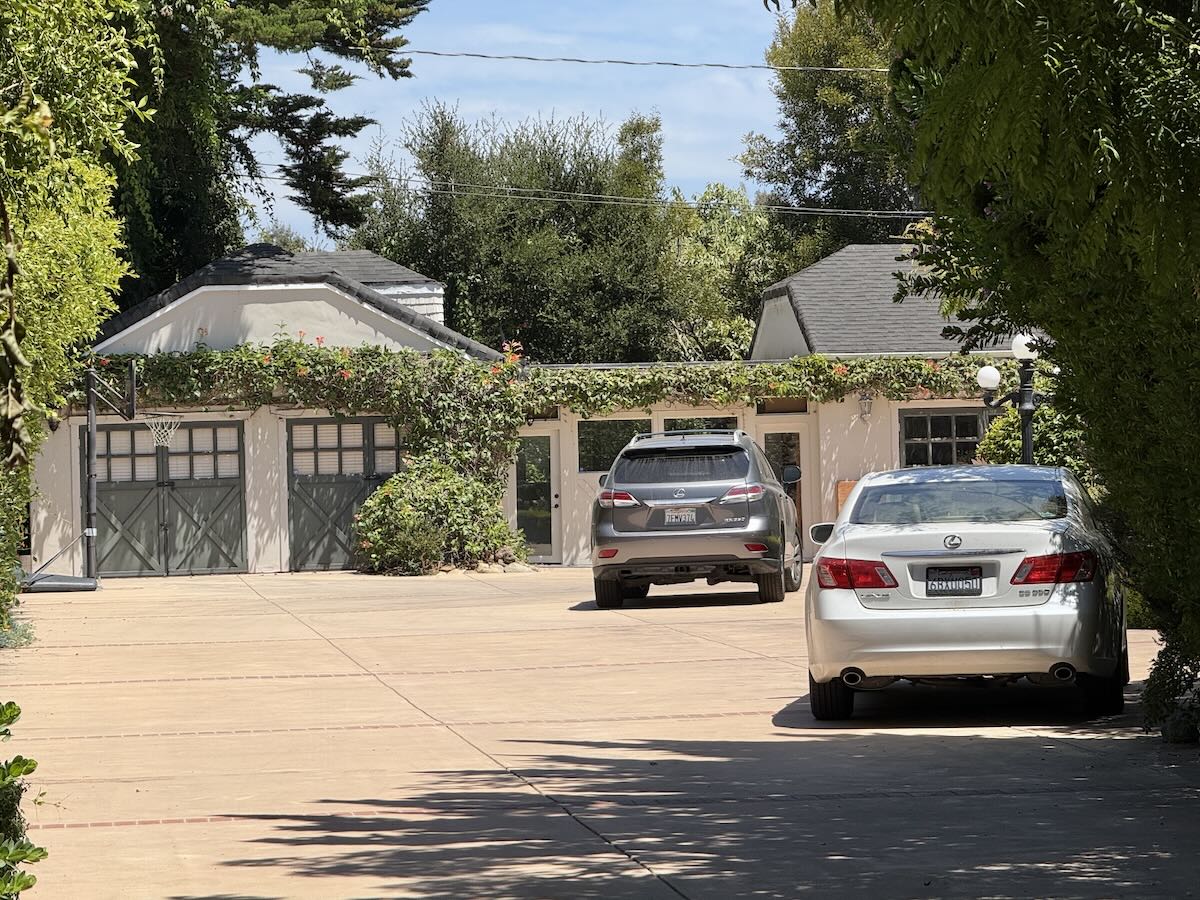
Yes, this is a special area within a beautiful and historically significant neighborhood. But the people who live here are not exhibits, and their homes, belongings, and everyday lives should not be treated as content for public consumption. The basketball hoop you chose to photograph and criticize belongs to a family that lives there. I happen to live in the area and have gotten to know the family that lives there. They are a well-respected family within the community, with strong morals and values, raising young children who bring life and joy to the neighborhood.
When I walk by, I admire seeing and speaking with their children. It is refreshing to hear young kids laughing, playing basketball, and enjoying the neighborhood with friends who live on the same street or nearby. Their presence amongst other young families have brought life back into the Hedgerow community—and that is something that should be appreciated, not publicly criticized.
Whether you approve of how residents use their homes and neighborhood—or whether something fits your personal vision of the area—is entirely subjective. Sightline can be a valuable community resource, but posts like this cross a line. They expose residential areas, invite unnecessary attention and traffic, and encourage strangers to scrutinize the homes and choices of the families who actually live there.
As a fifth-generation Santa Barbarian, I appreciate that our city is increasingly recognized and admired. However, that attention also comes at a cost when people begin wandering through residential neighborhoods, photographing private property, and broadcasting their opinions online.
You are entitled to your perspective on the Hedgerow, but you are not entitled to turn the people who live there—or their property—into subjects for public judgment. Share your observations with friends and family if you wish, but there is no compelling public interest in photographing a family’s basketball hoop and posting commentary about it online.
From the perspective of someone who lives in this area and has gotten to know this family amongst several other young families this post was unnecessary and intrusive. Please show greater respect for the privacy of the families who call this neighborhood home.
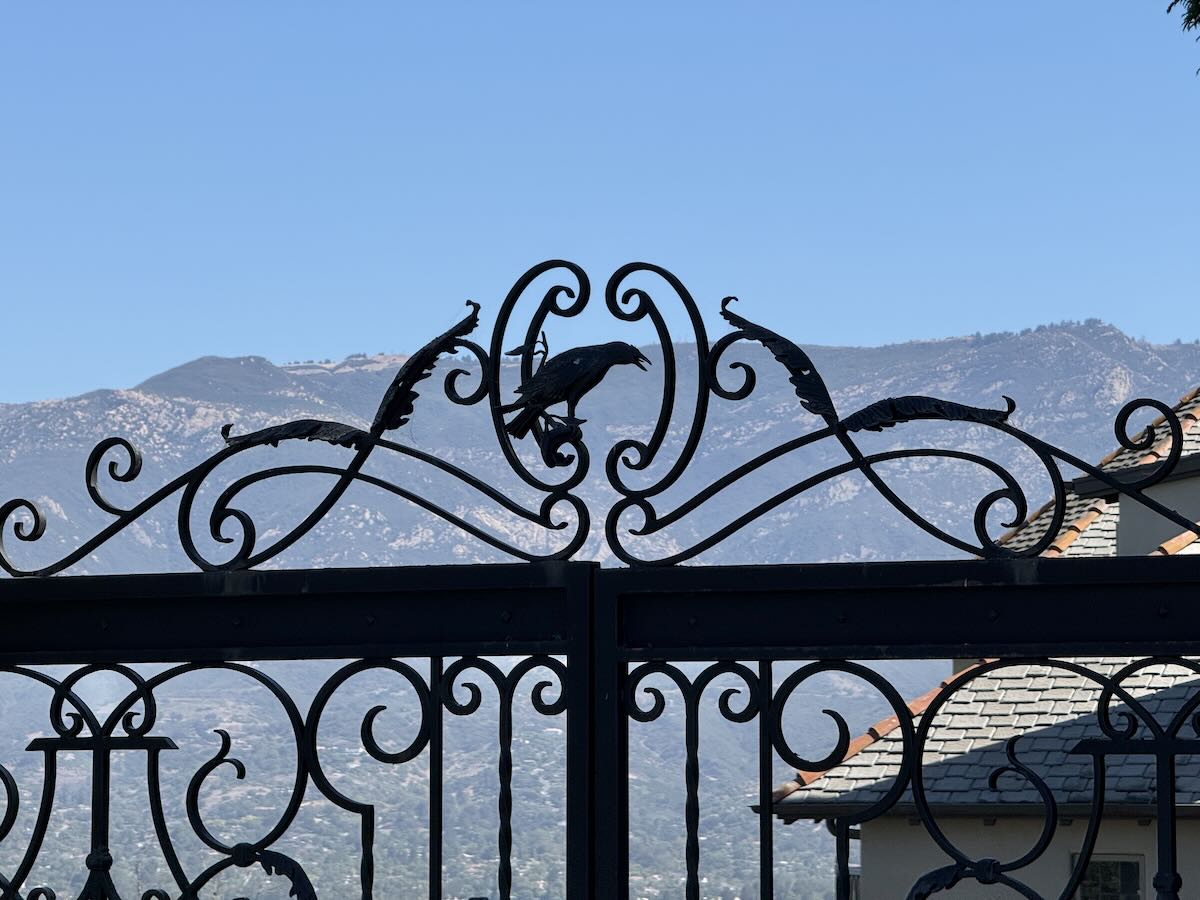
Well done for standing up for the privacy rights of the bird on a post, the only living thing actually captured in any of the photos.
Karen, I mean “your friendly neighbor” – Anybody can just as easily type the address of any property above and see not only the exterior but beyond the gates and into the interior of these homes on Zillow.
When the hordes arrive wandering the neighborhood taking pictures and commenting online get your pitchforks. Cant have this in such a “special neighborhood”.
wish someone would examine and post pics of all the beautiful yards and driveways on hot springs rd area.
taking photos from a public street and posting comments online. Allowed in America. Deal with it
Do you people realize that your houses are already online? That almost every single one of these streets is on Google Maps street view and Apple Maps.
BUt hE wRoTE an article!!!!!!
FFS, get it together. If you’re going to be mad, at least be mad at the correct surveillance operation. These days that’s Flock. Not the dozens of other entities gathering your private data and selling it to whomever. It’s Flock, silly.
That is just not right …
I‘m just jealous that I don’t have a home where people would come and want to make pictures of….
The only reason our home would be online, would be in the police report…
Oh. c’mon. Would everyone, please, relax. Or get a job. Or find (some other) way to occupy your time (rather than logging on to Siteline). Which (I remind you), you do so voluntarily. Siteline is news and entertainment. And it’s harmless. And if you’re offended, or truly scared for your safety, or your precious privacy, you shouldn’t be made. because at your age, you should be aware that no one really cares all that much. Give the rest of us a break.
Used to walk those streets with my dog a couple times a month. We live in the hills and she and I loved the flat streets full of interesting architecture and not very many cars.
Unfortunately high number of gates, fences and hedges. What are people afraid of?
Eric….. keep on walking, clicking and sharing. Some of us can’t/don’t walk the “hoods” like you – it’s fun to see what we are missing.