

To be honest, I have no recollection of exactly why my husband, Adam, and I decided to go to Scotland. We had been talking with friends about a hiking-centric trip somewhere, and since the three of them are smart, capable individuals with good taste and strong opinions, I chose to get out of the way and let them do the work planning. (I did lightly push for Mallorca, which sounds like I lost, but don’t underestimate me.) I told them I’d go just about anywhere—including, it turns out, Munich. Lufthansa flights from LAX were cheaper than British Airways via Heathrow, which meant I spent eleven hours staring at this fellow.
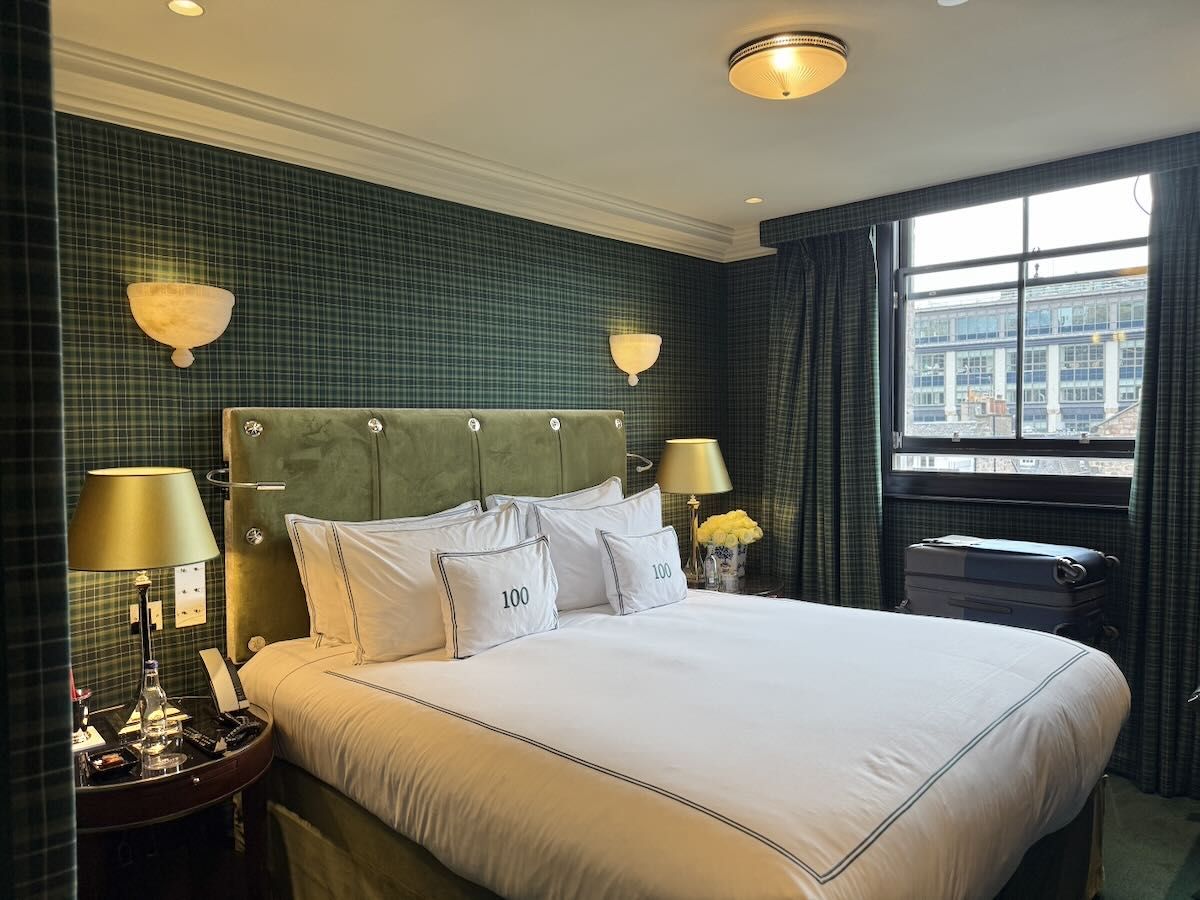
 We stayed one night in Edinburgh on the front end and two nights at the back. The initial visit overlapped with the famous Fringe Festival—which seems to have become as much about partying as performances—so we had little choice but to overpay for a hotel. I liked the plush, clubby style of 100 Princes Street, but our tight room would’ve gone over much better had it cost a few hundred pounds less.
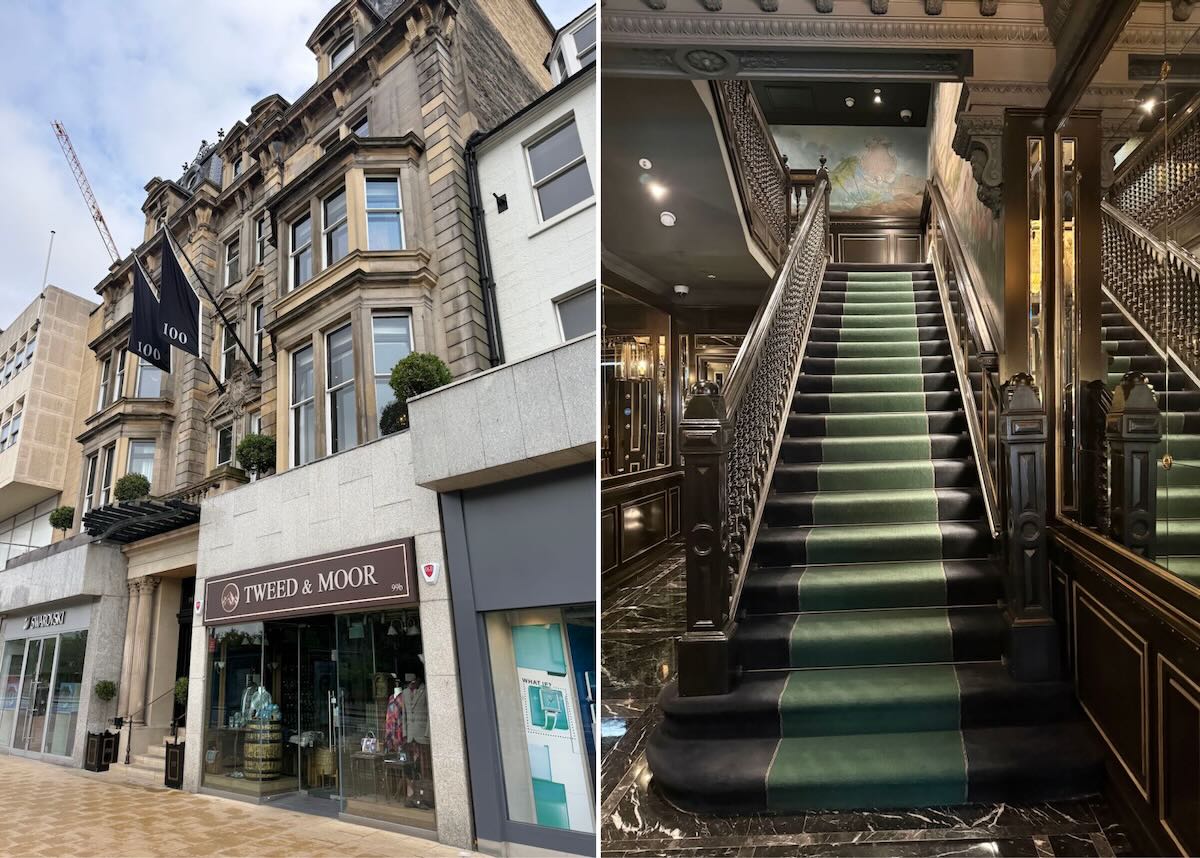
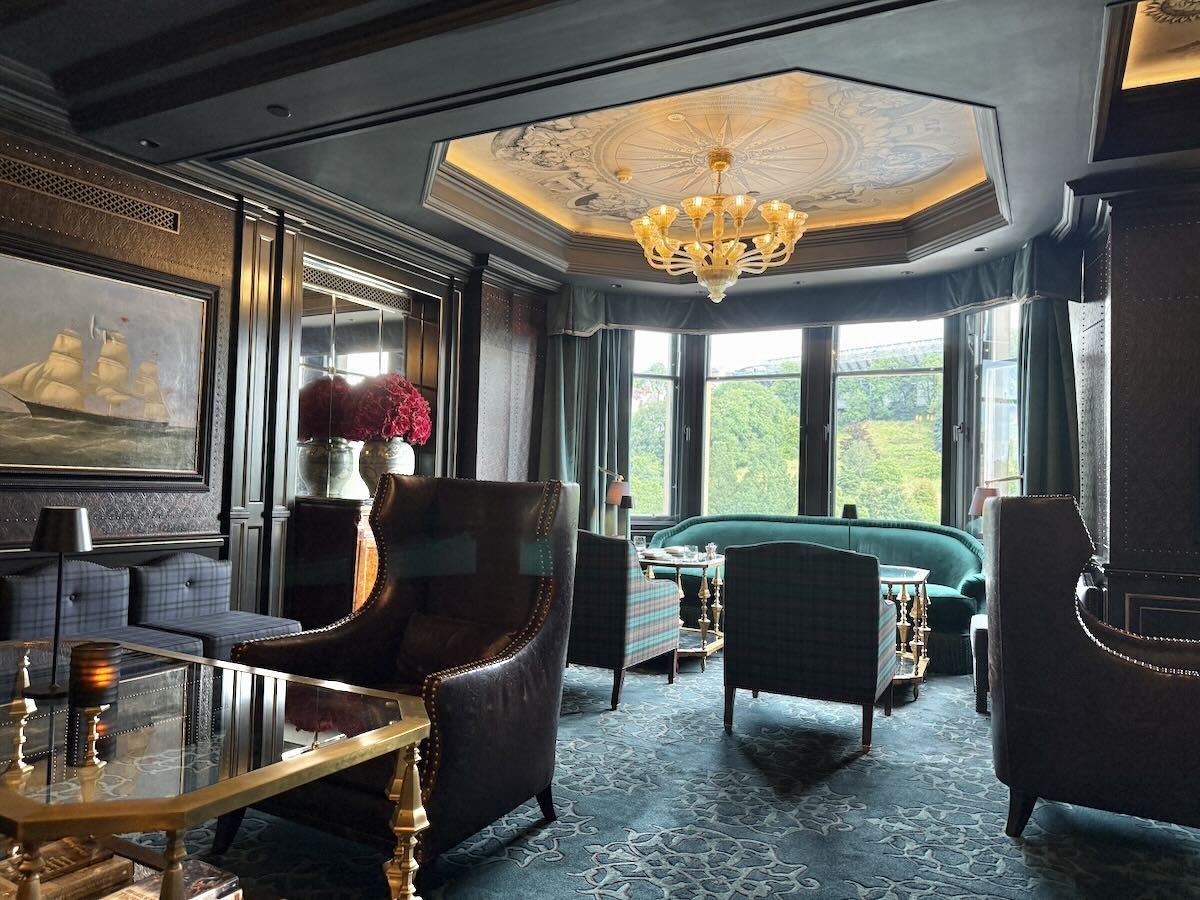
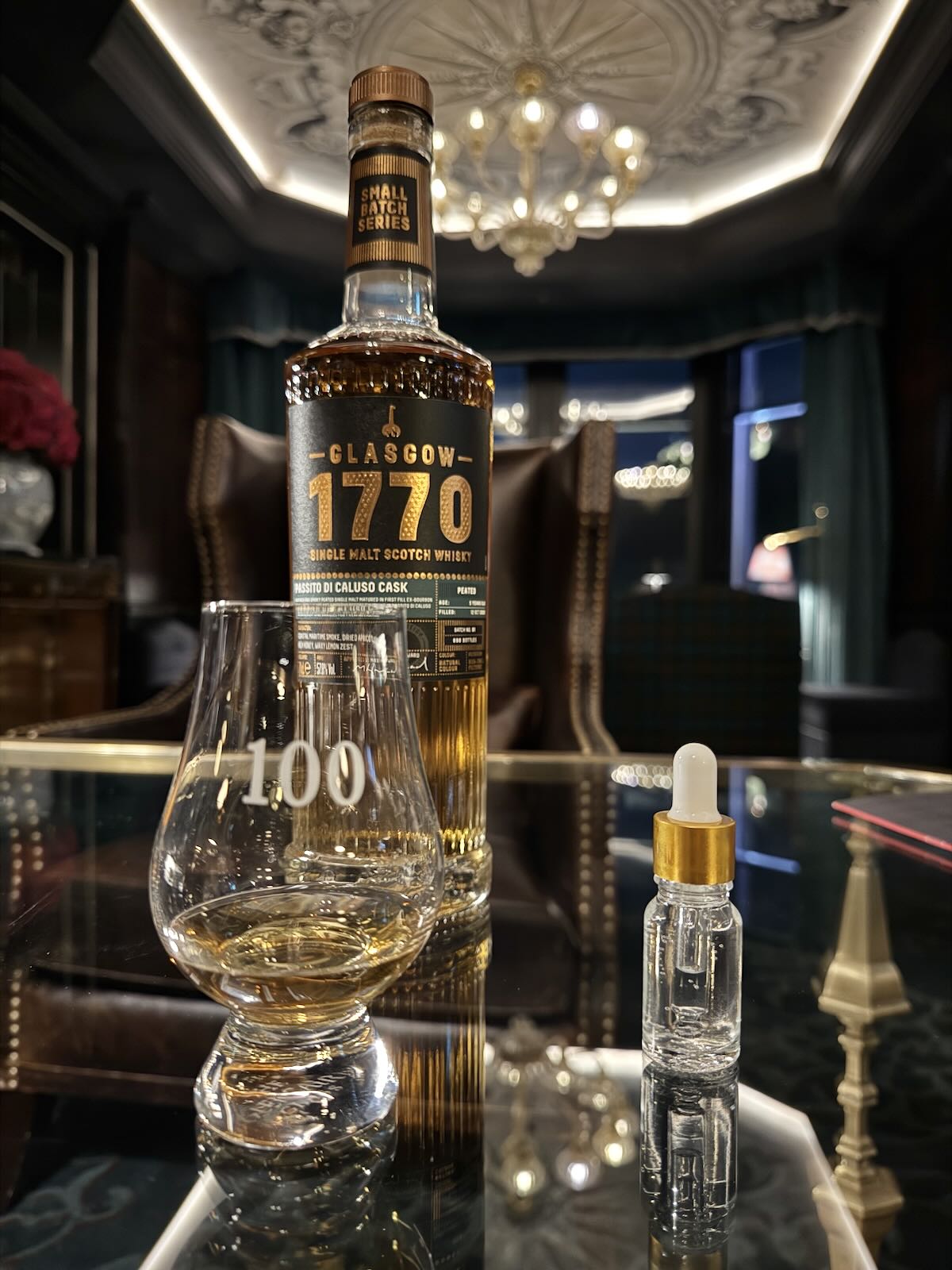
 Adam and I arrived in the late afternoon and had a $100 food-and-beverage credit, thanks to booking via American Express, so we punted and ate dinner inside the hotel. Normally, that feels like a cop out, but I think you’re allowed after flying for umpteen hours and wary of festival crowds. The cocoon vibe was just what we needed, except the interior designer who chose tables with zero legroom should be taken out back for a word. Après dinner, I crossed Scotch tasting off the list; the bartender suggested three options (out of at least a hundred), explaining the differences. I chose the relatively funky one, aged in Passito di Caluso dessert wine casks. The dropper is for adding water to open the Scotch up.
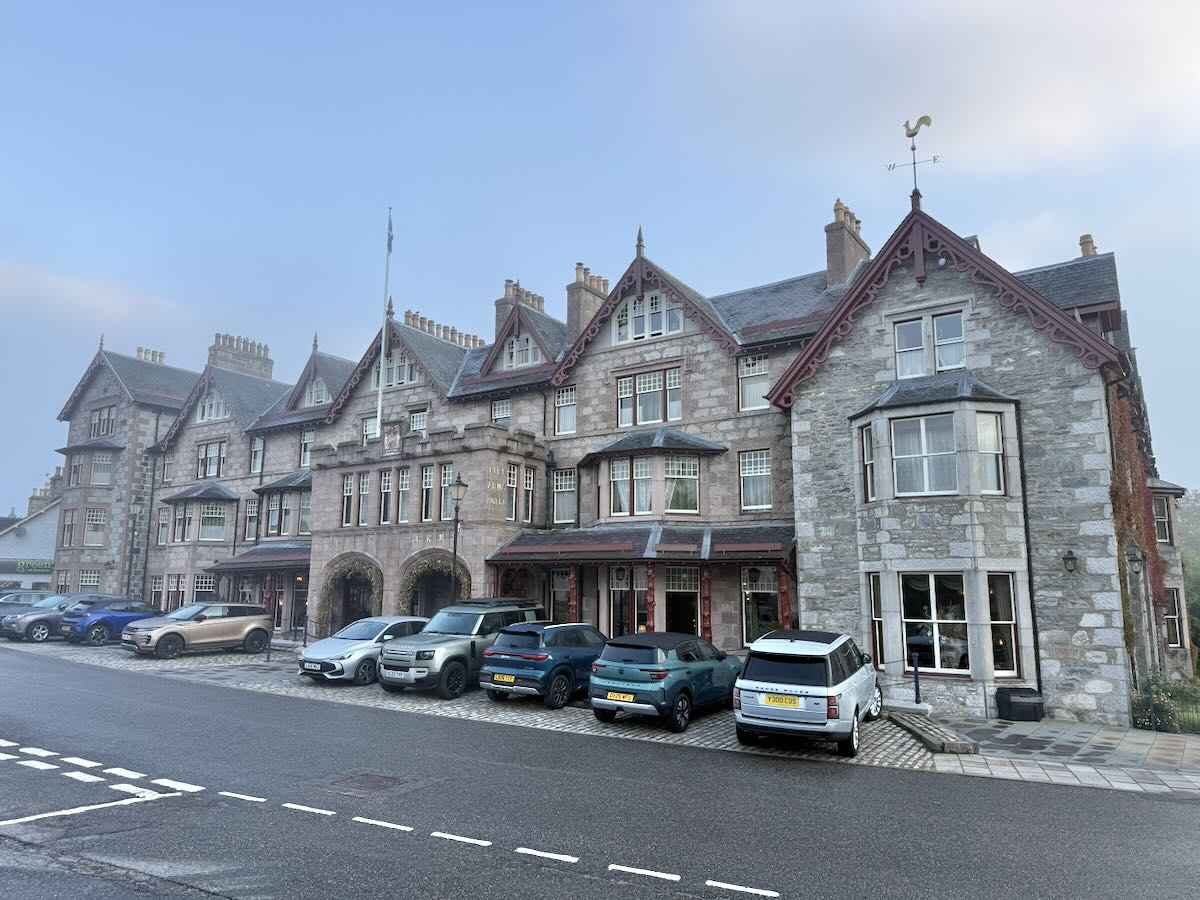
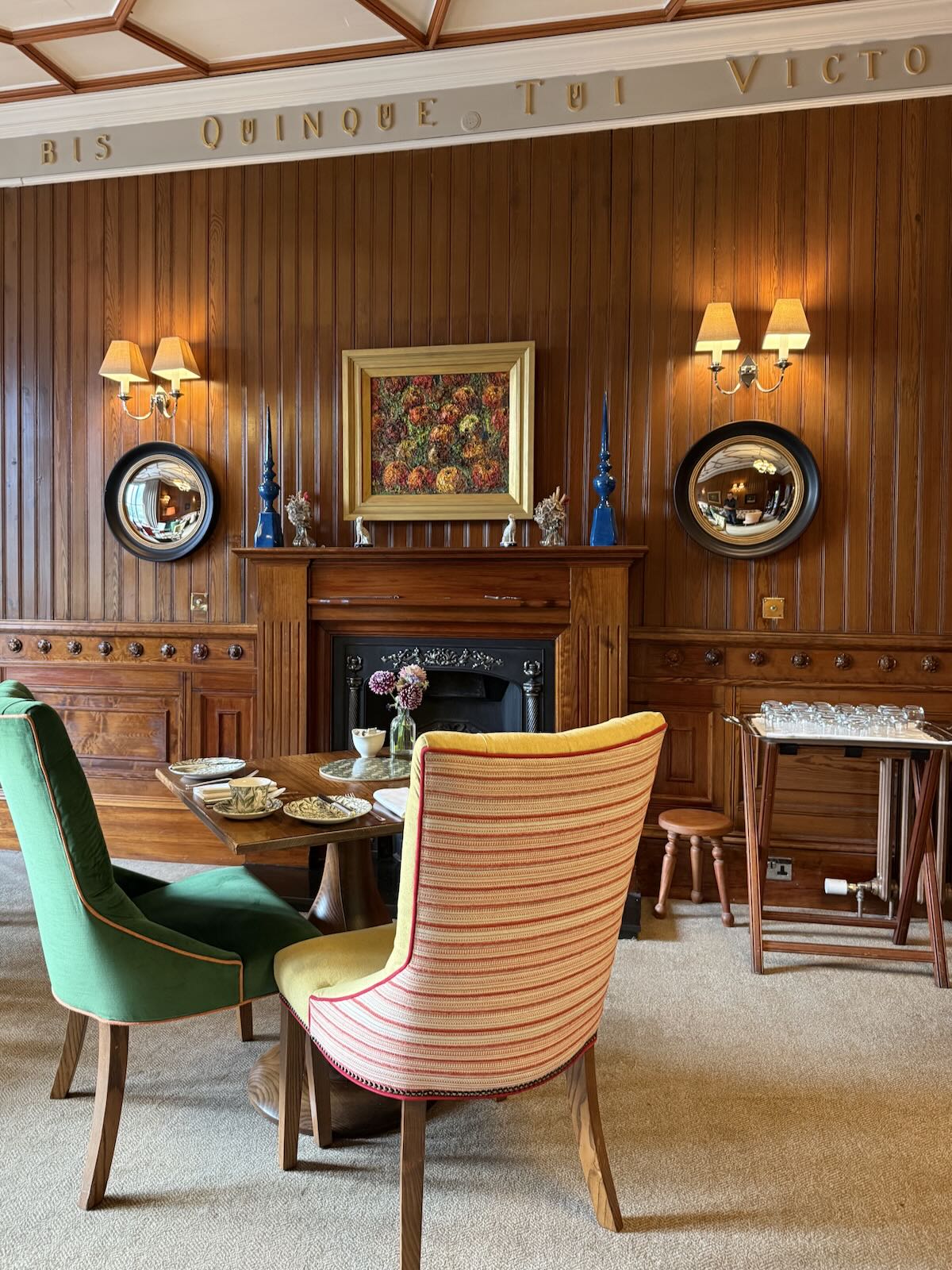
 The four of us drove a couple of hours to the town of Braemar, near Balmoral in the Cairngorns National Park. Our destination was The Fife Arms, a restored 1856 inn that’s part of the Artfarm stable of lifestyle businesses created by Hauser & Wirth art gallery cofounders Iwan and Manuela Wirth. It’s a fabulous feat of world-building, mixing antiques and contemporary art with extraordinary panache.
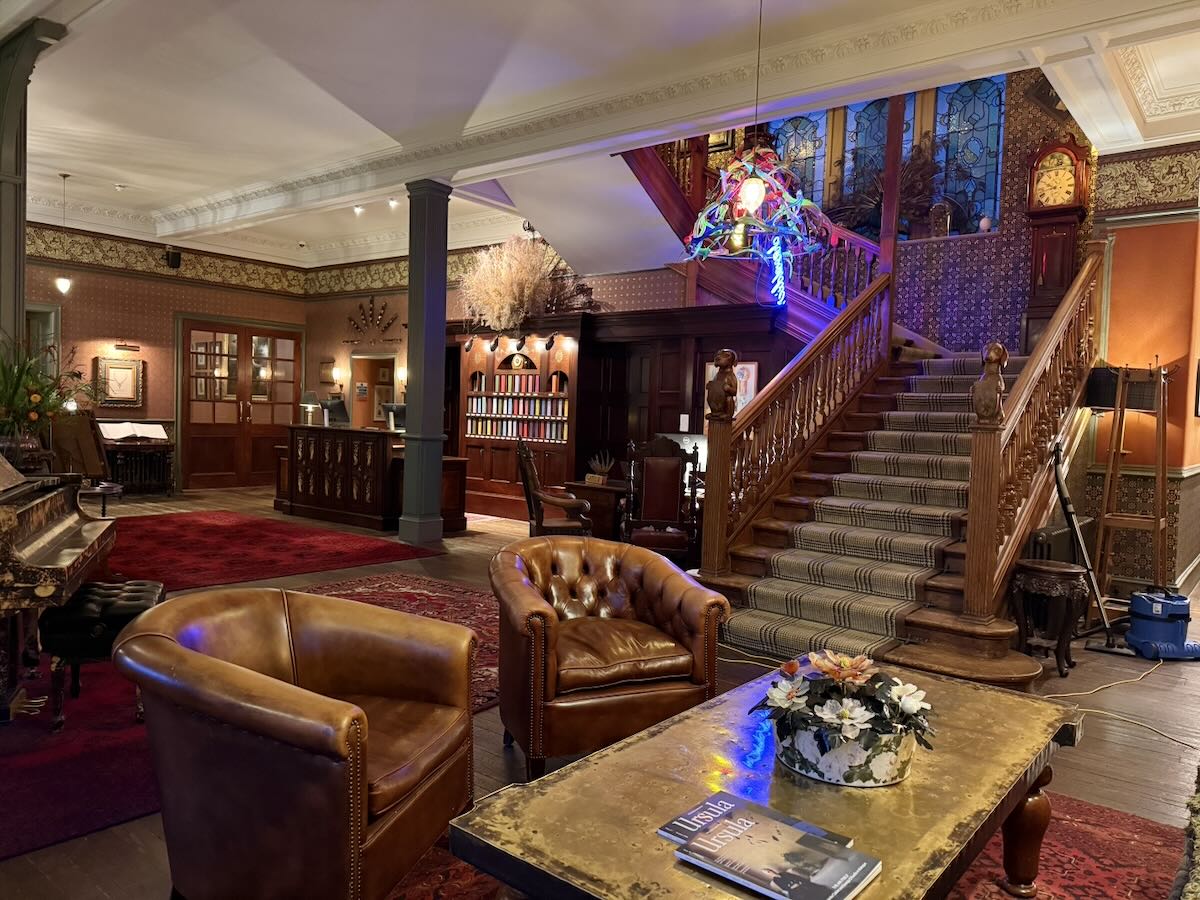
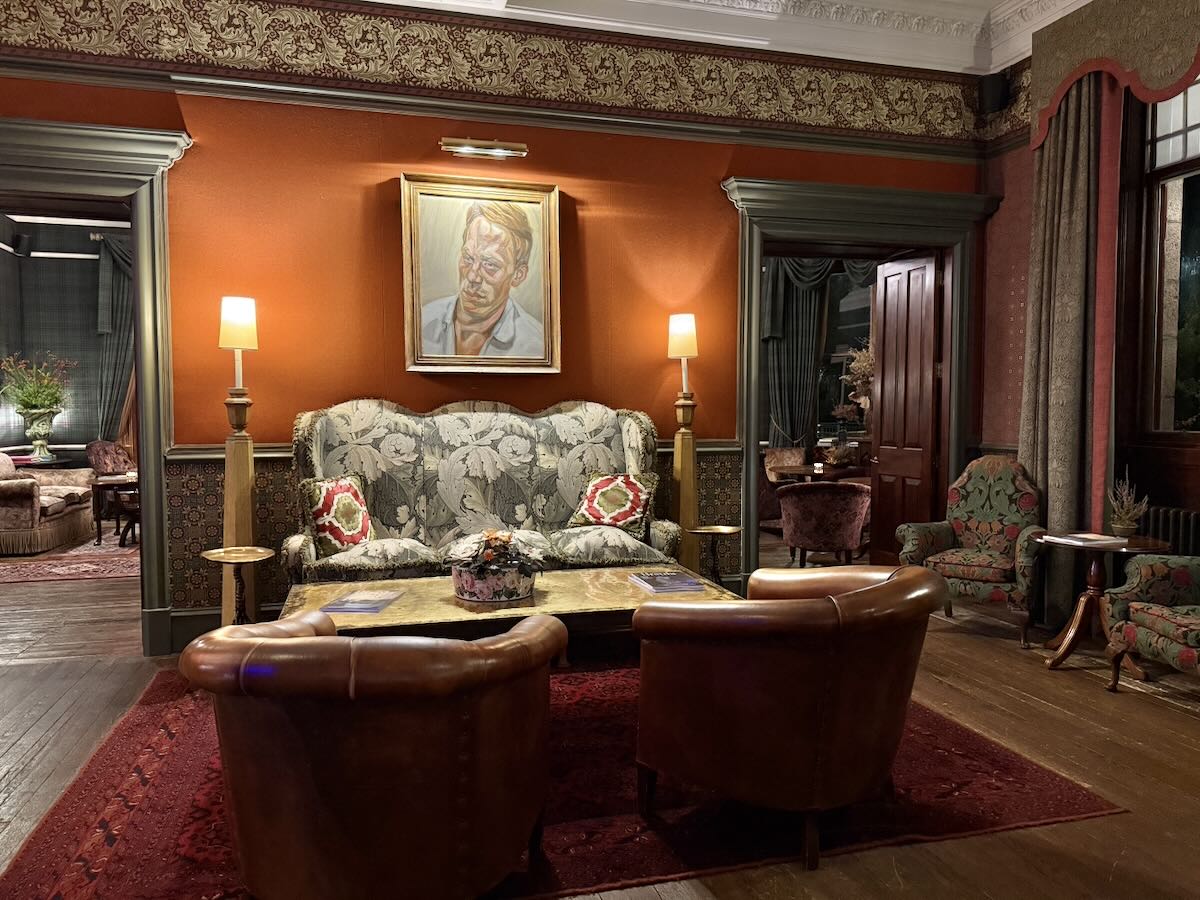
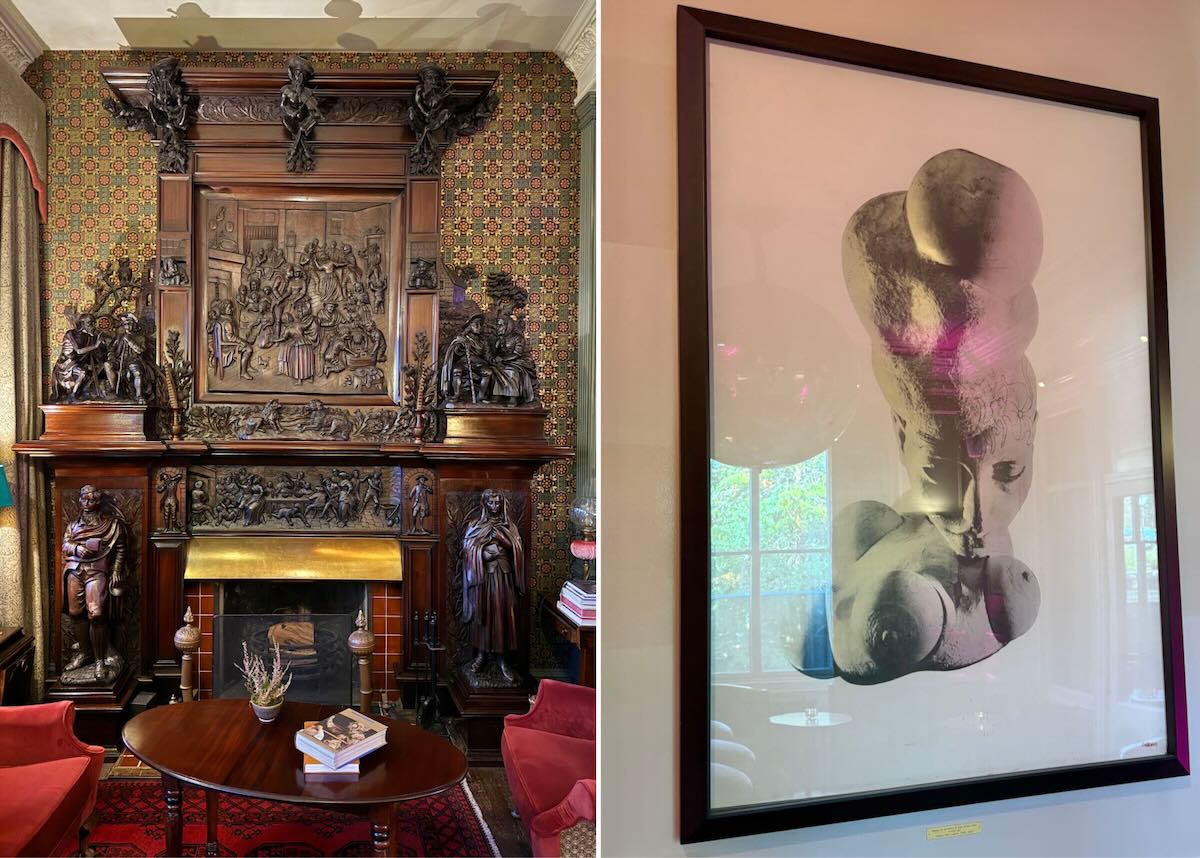
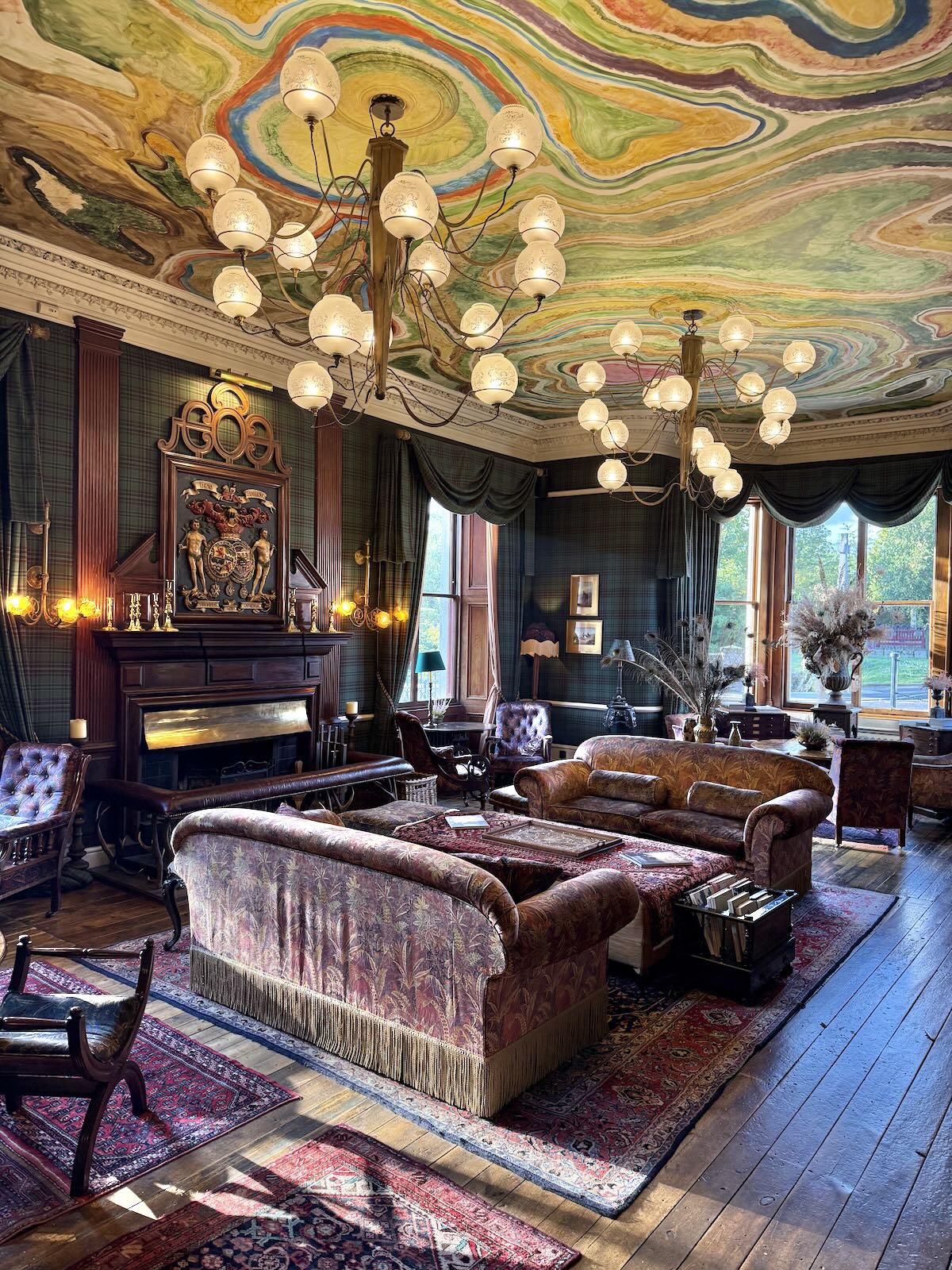 None of it as lurid as it looks in my photos, and while there are pieces that push too far—the multicolored chandelier in the stairwell, the player piano programmed with one song on repeat—they are easily to overlook, given the richness on offer elsewhere. That’s a Lucian Freud in the lobby, and there’s a Picasso in the drawing room (with a site-specific painting by Zhang Enli on the ceiling), an original drawing by Queen Victoria above the guest book, a chimney-piece with ornate carvings inspired by the work of Robert Burns, a sexy Hans Bellmer print in the cocktail bar, and so on, and so forth.
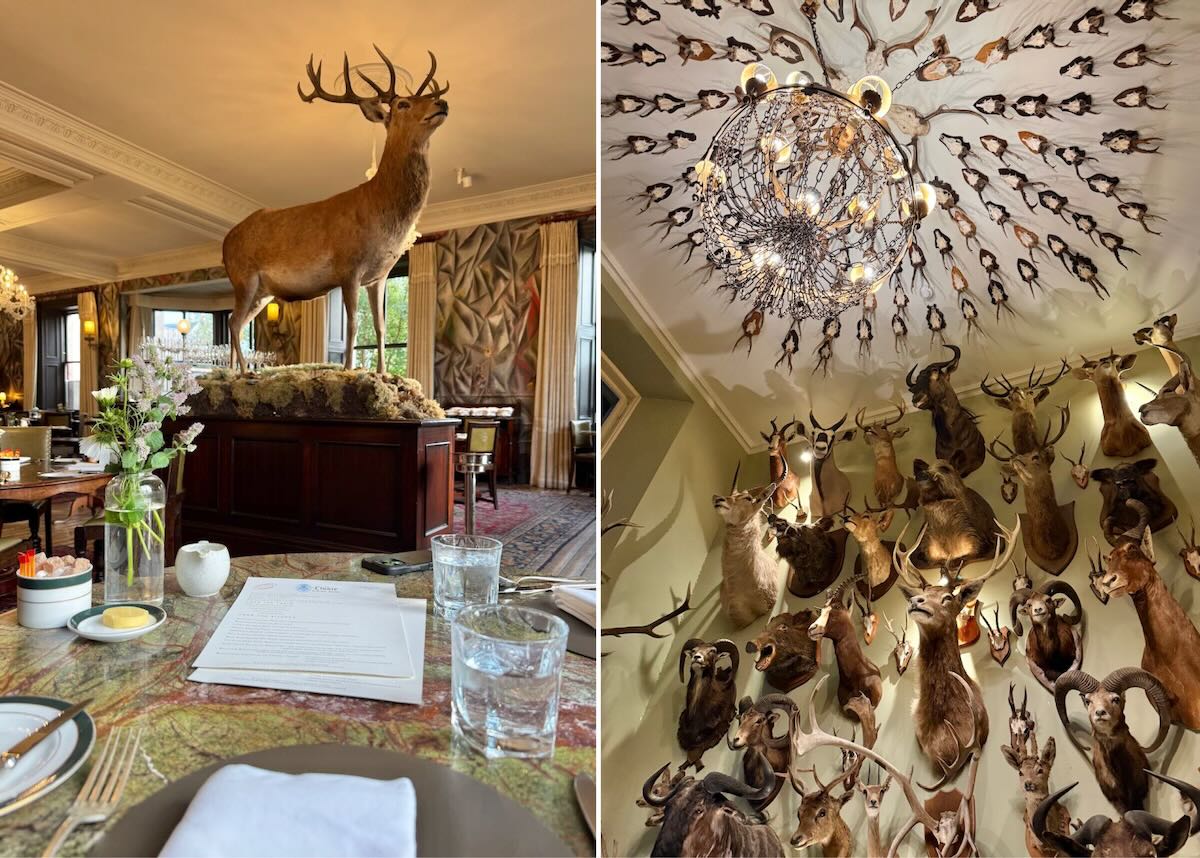
 The hotel also has more taxidermy than I’m comfortable with.
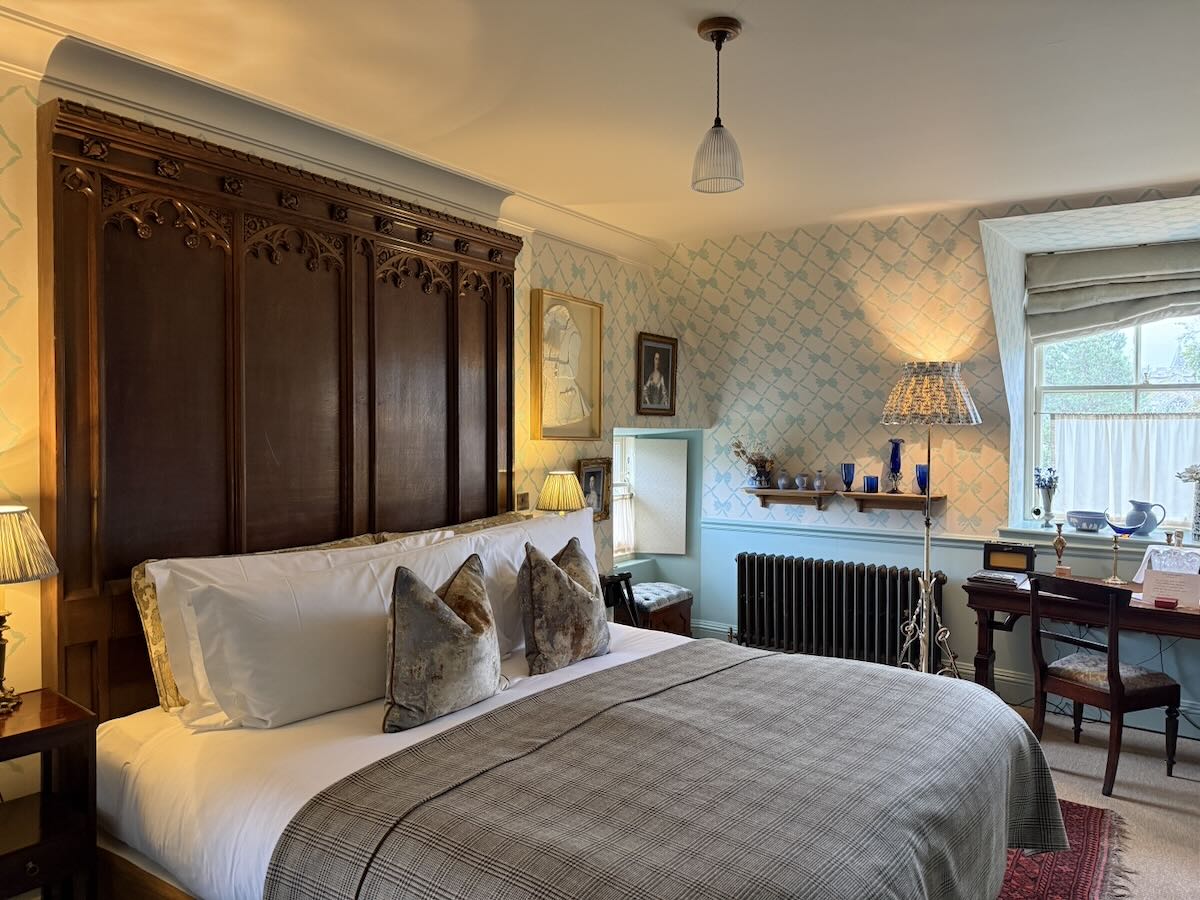
 Thankfully, the decor in our room was toned down, although I could’ve done with fewer knickknacks. (The only item in the entire place that I truly coveted was a tartan tissue-box cover, which I could probably get made on Etsy, and anyway, it wouldn’t work anywhere in my house.) All in all, I’d heartily recommend The Fife Arms for anyone enchanted by style, and I left curious to visit Chesa Marchetta, Artfarm’s 13-room property in the Sils Maria district of the Swiss Alps.
 The first morning, having awakened far too early, I went down to the lobby, where the staffer on duty offered me various preparations of coffee… I think? He had a marvelously thick Scottish accent. It was the only time we encountered that, which was a small disappointment. Appropriately caffeinated, I explored the town, which has picturesque moments but isn’t especially noteworthy.
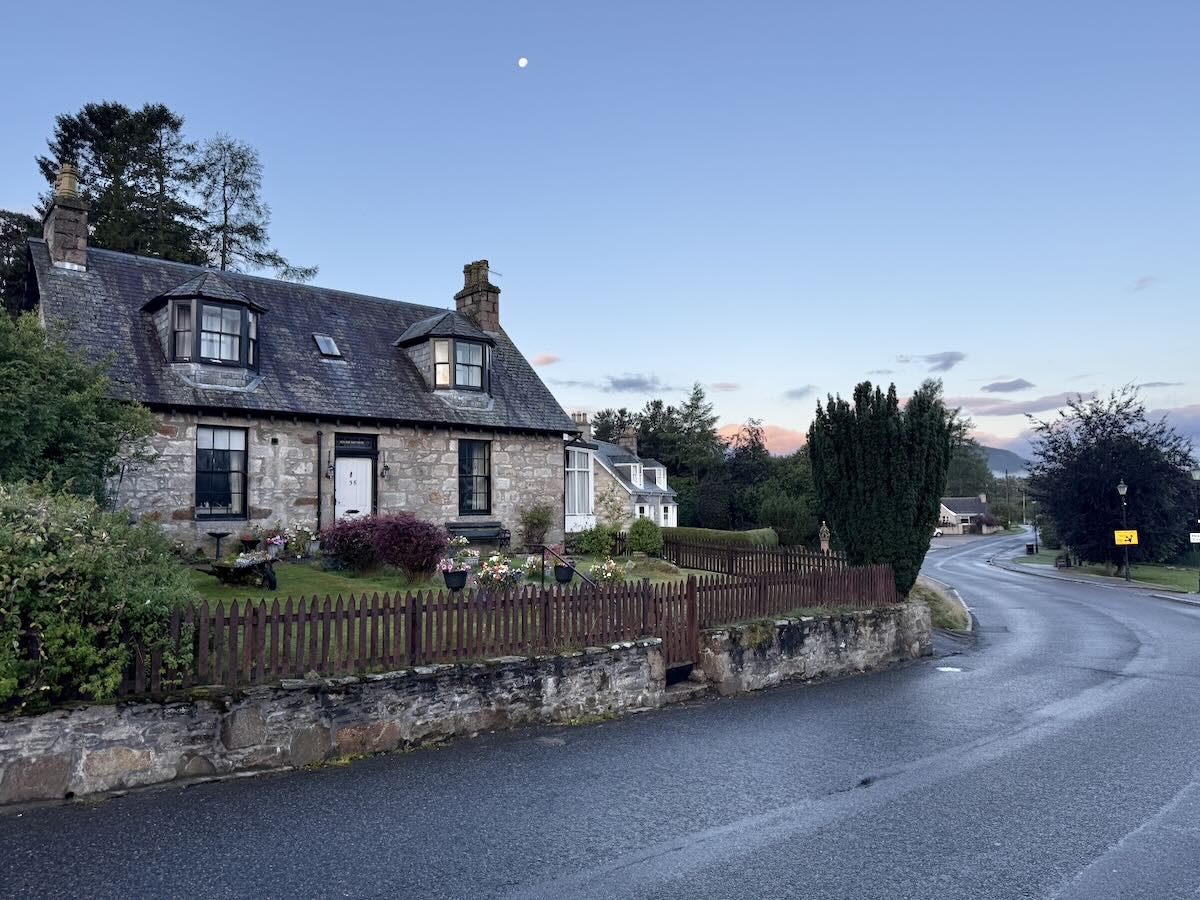
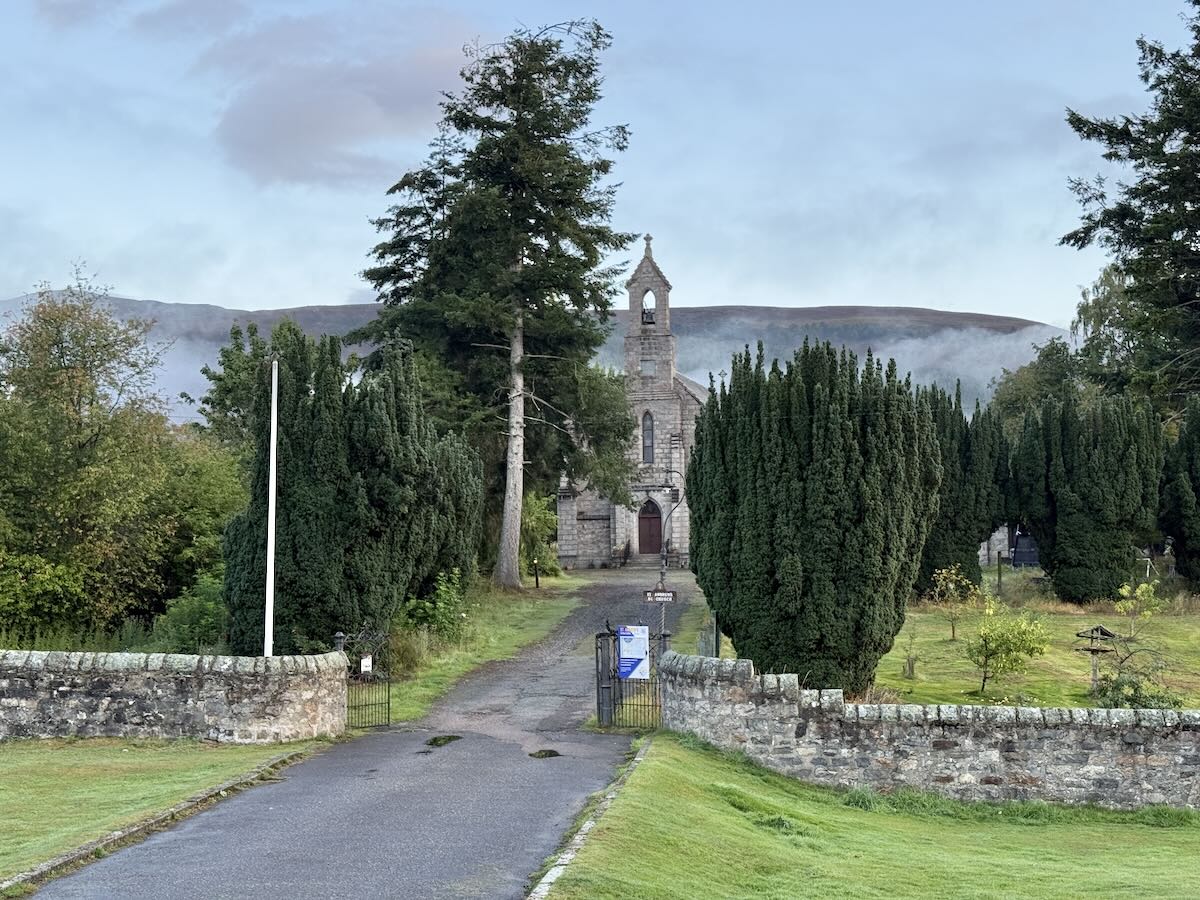
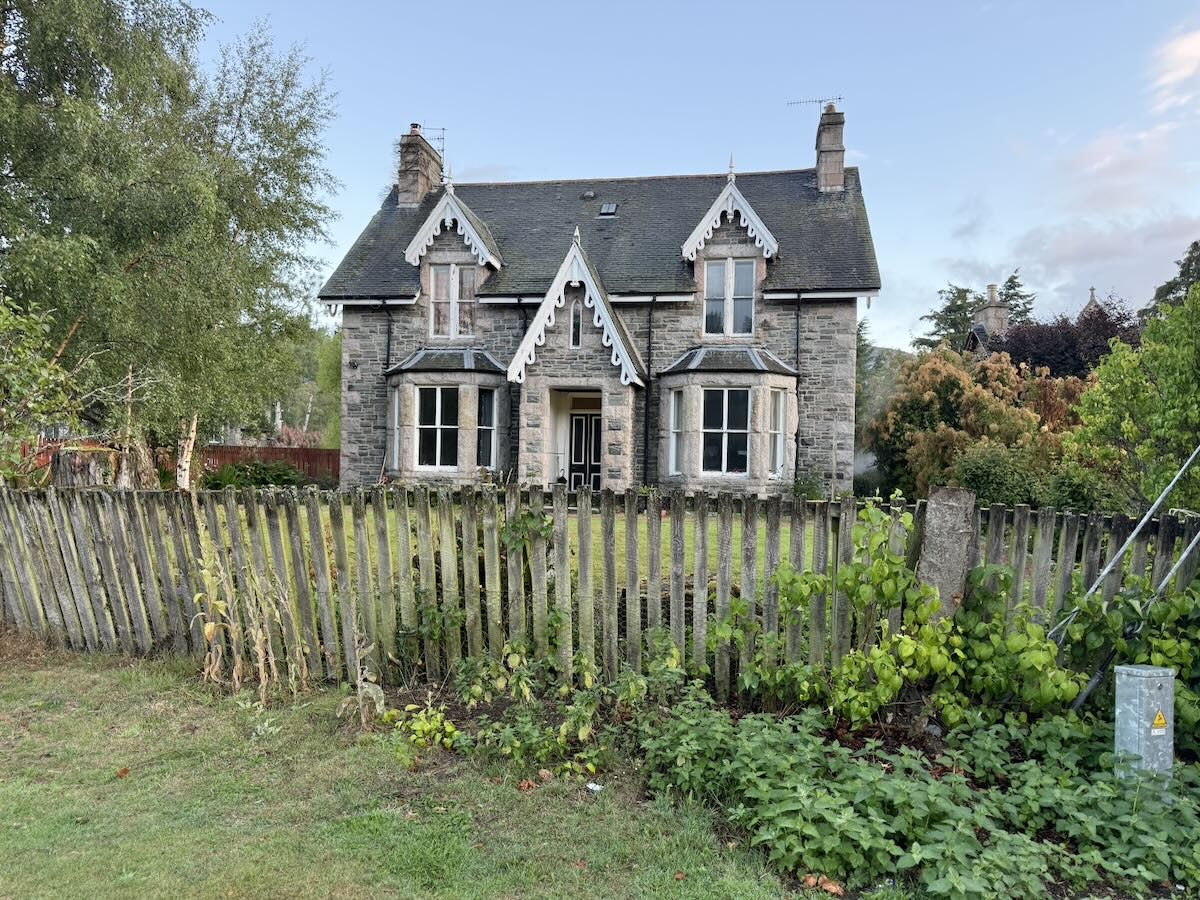
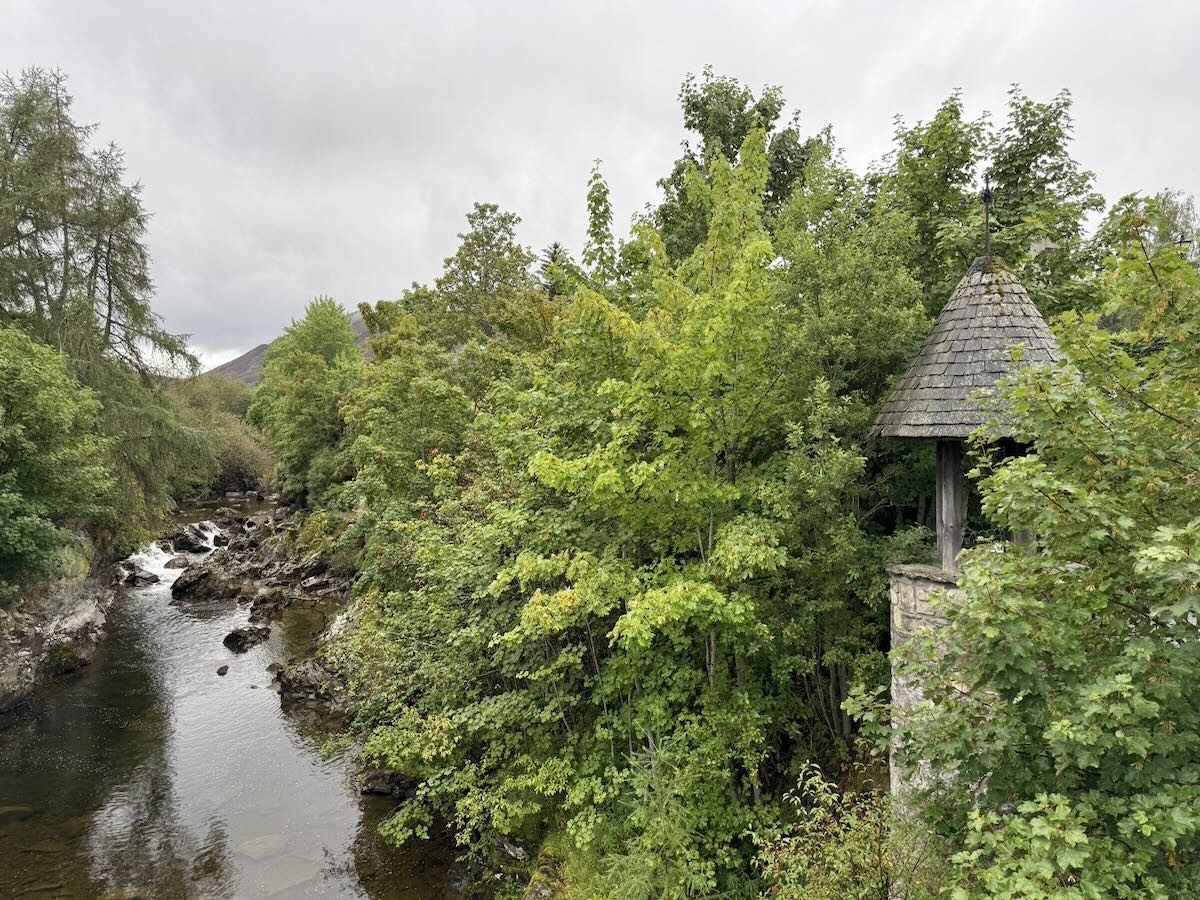 The exception is the venue for the Highland Games, which happen all over the country, but the ones in Braemar are the most prestigious, due to attendance by members of the royal family.
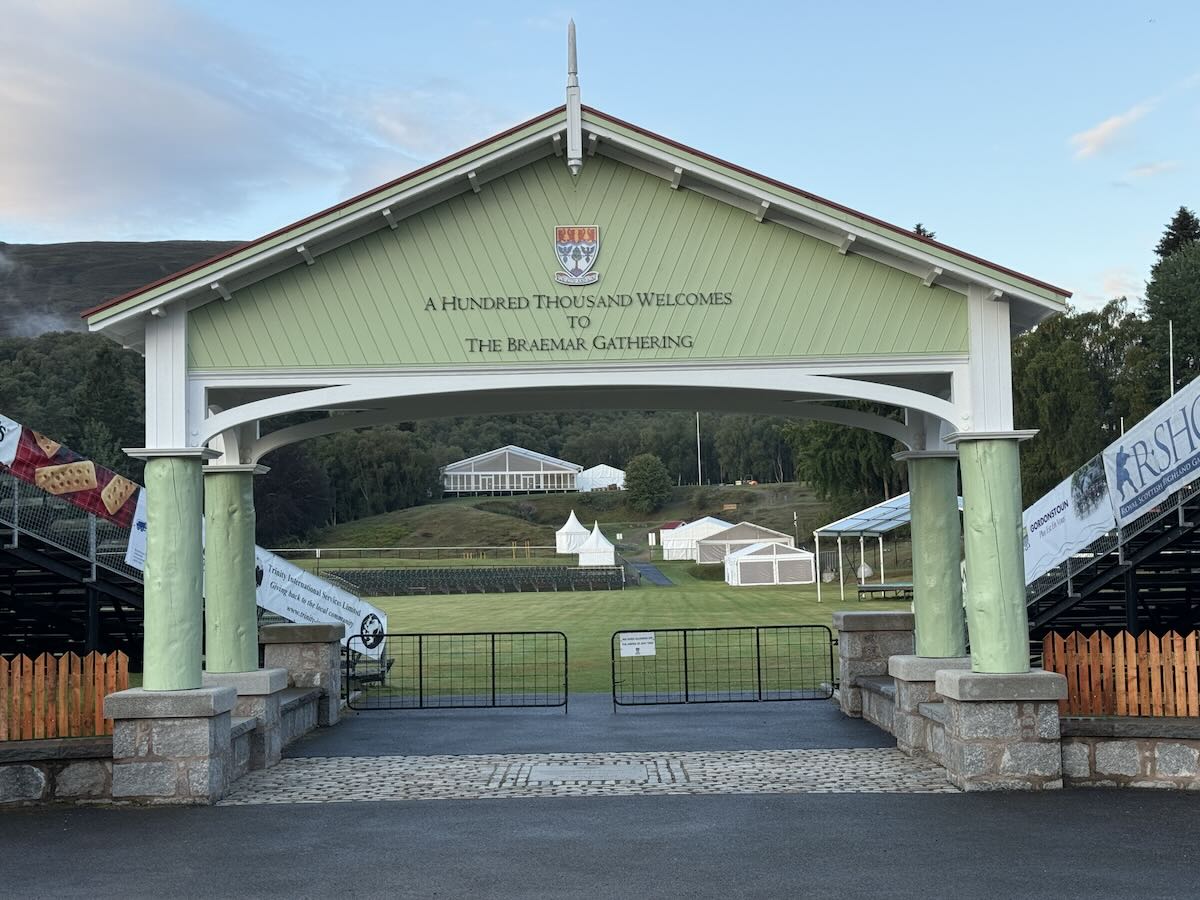 We missed the event by a week, which was OK. There’s music, dancing, and track-and-field events like caber toss, stone put, and hammer throw. But no dog fouling.
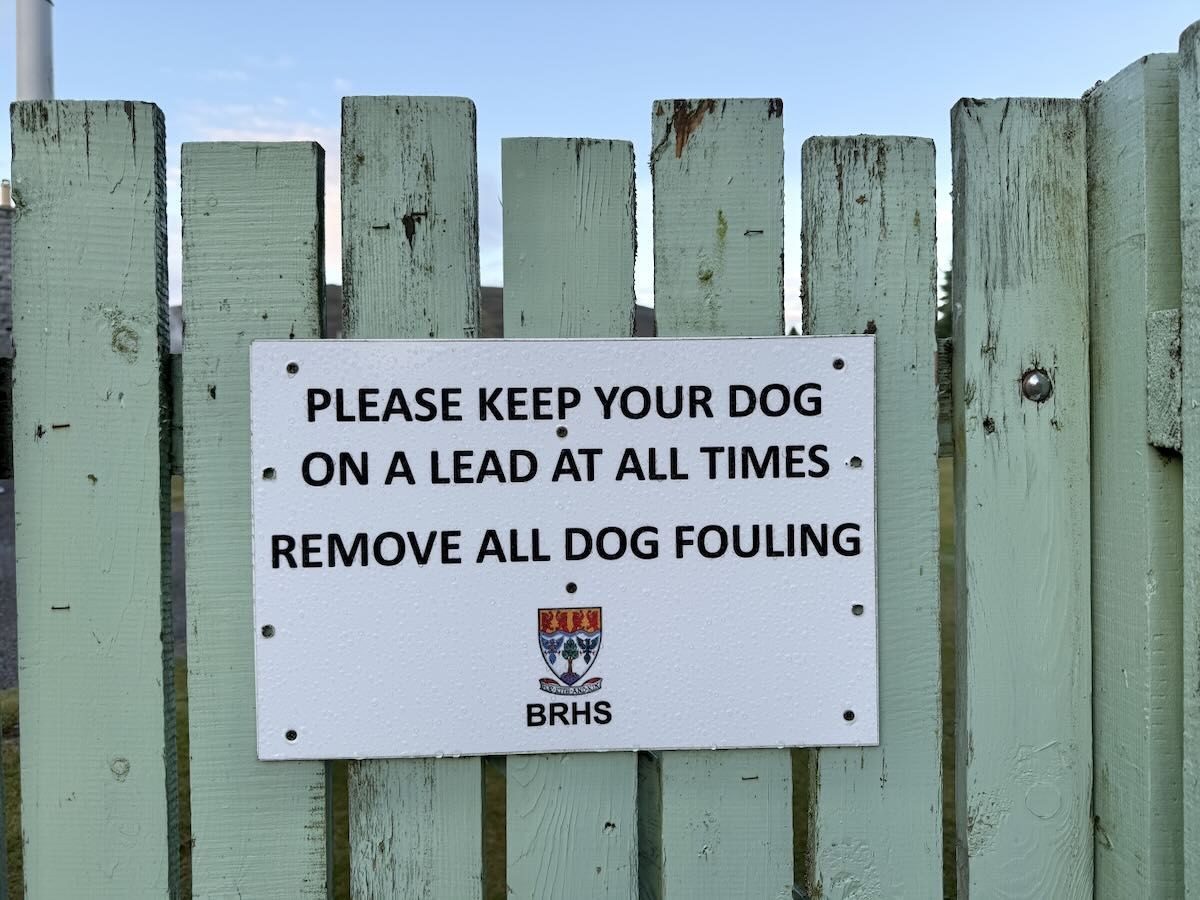 As I already mentioned, The Fife Arms is within Cairngorns National Park, but it feels like it’s really aimed at people who want to drink Champagne somewhere new. Our group managed to remove ourselves from the swaddling for a few hikes. The first one was a restorative walk just outside the village.
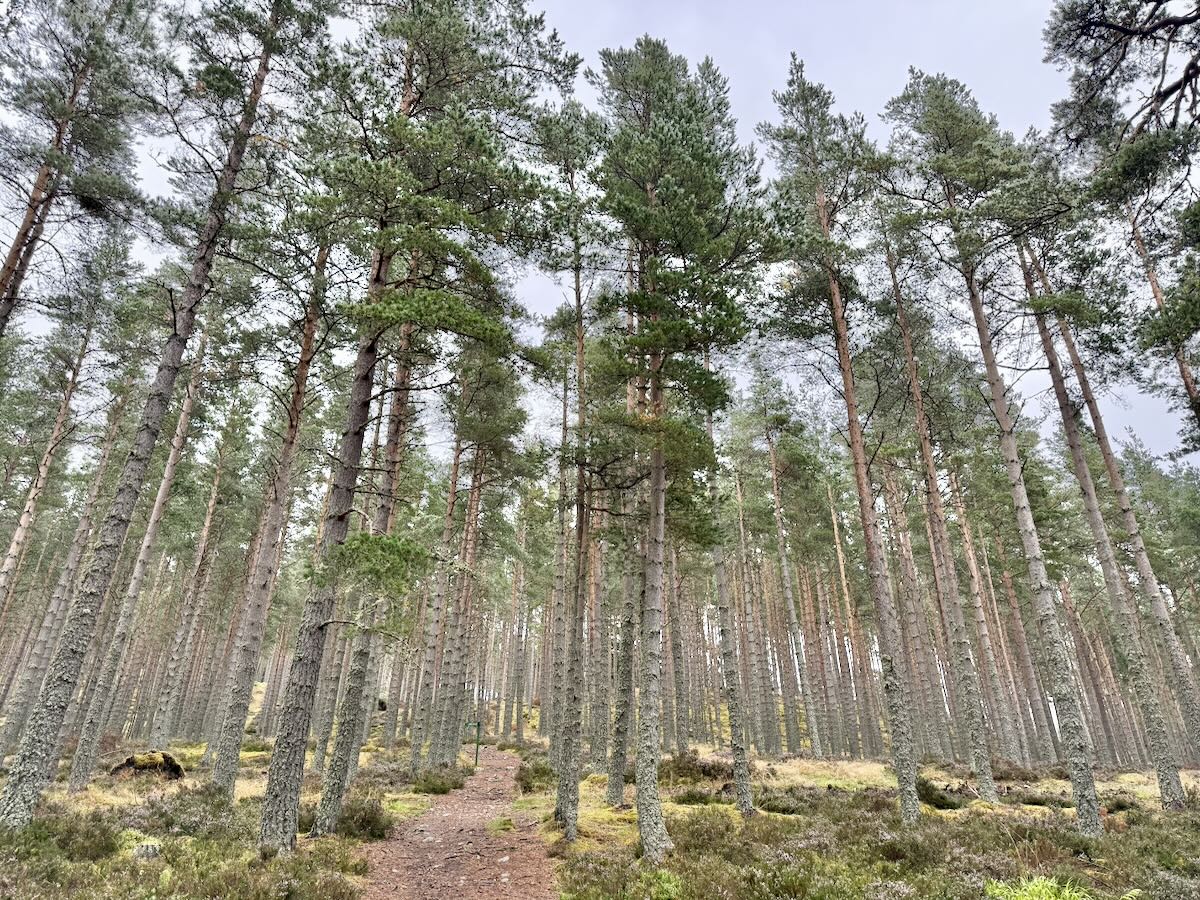
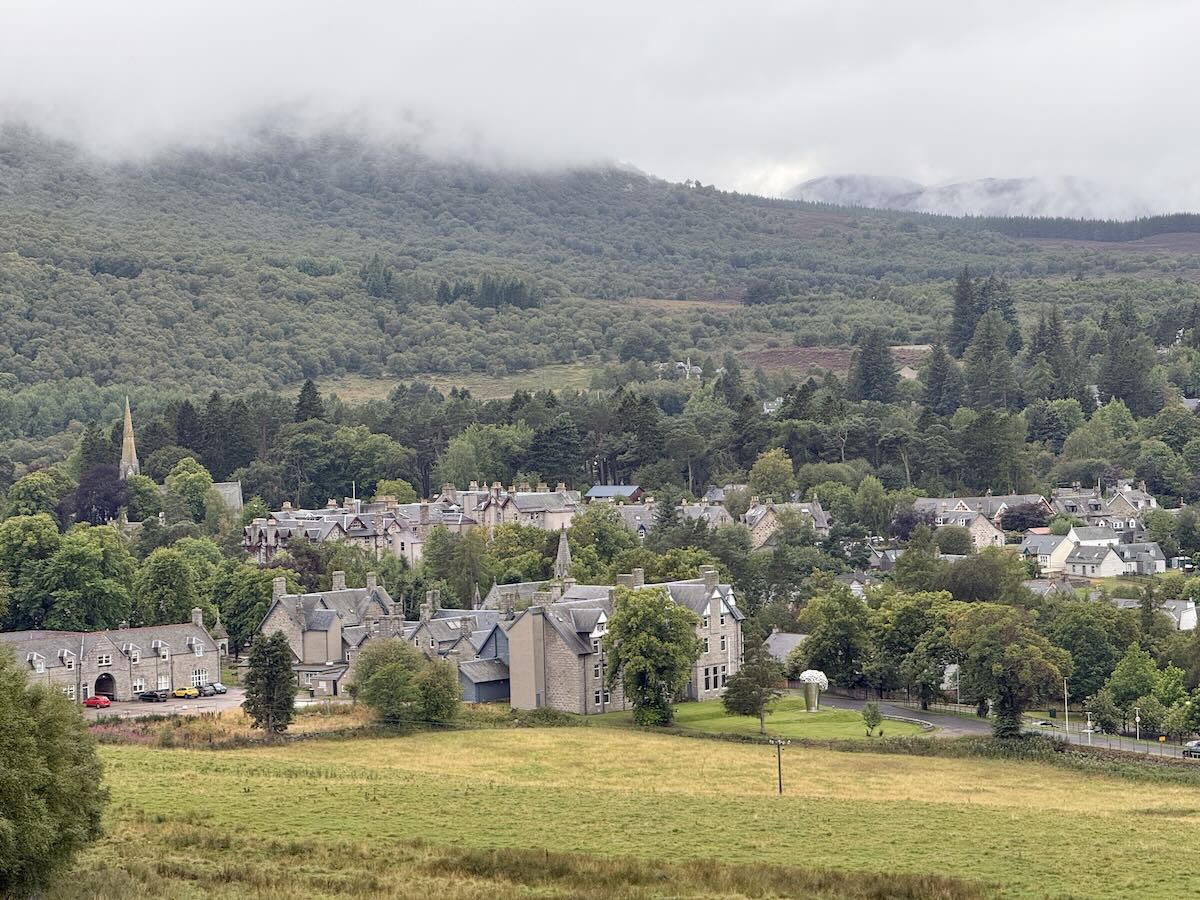
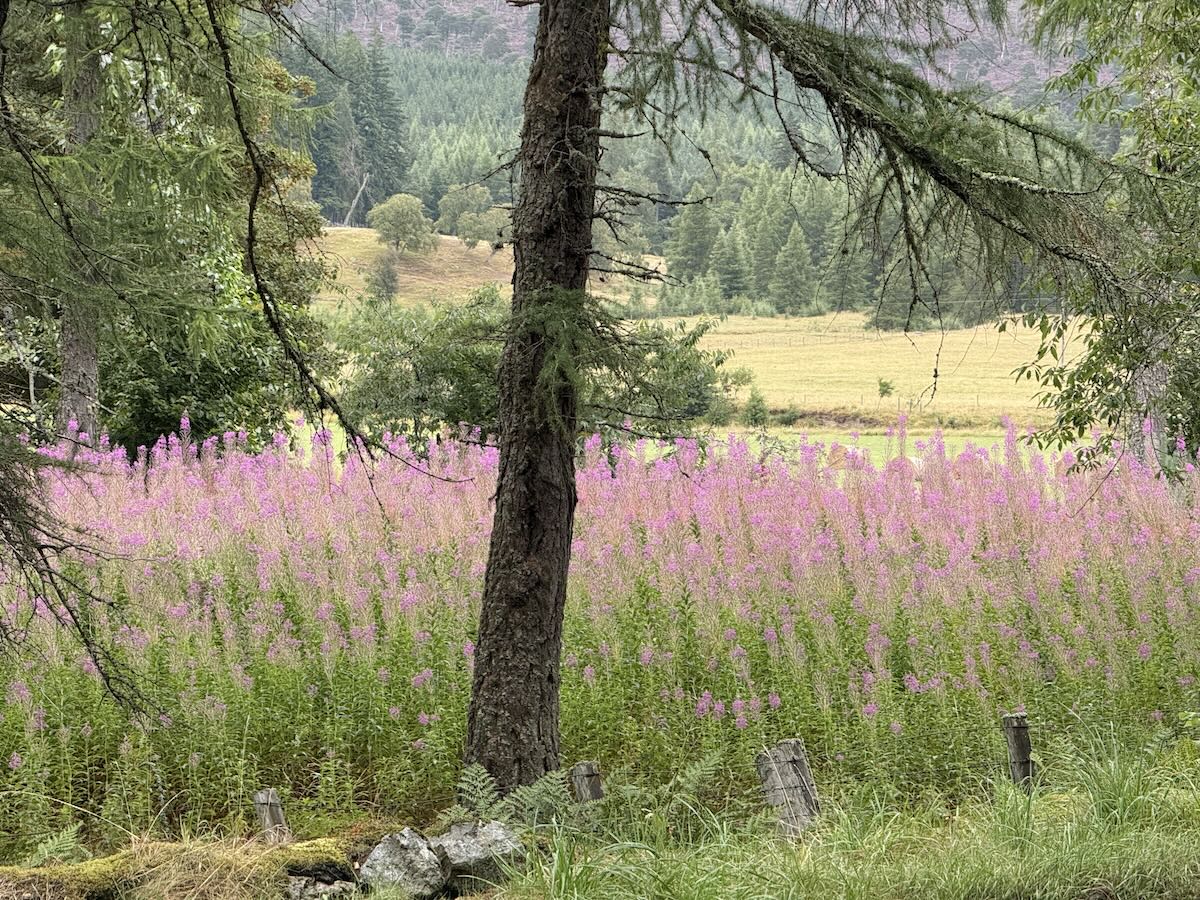
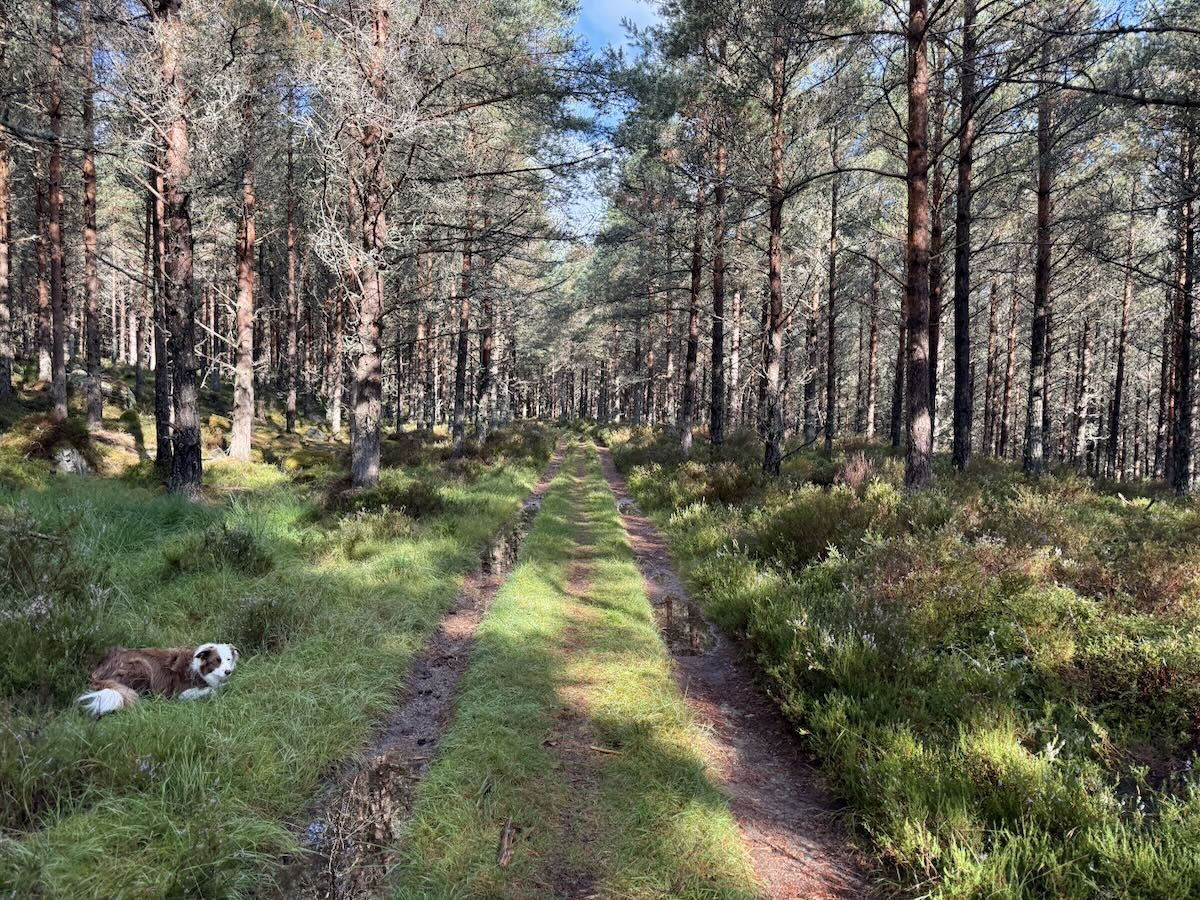
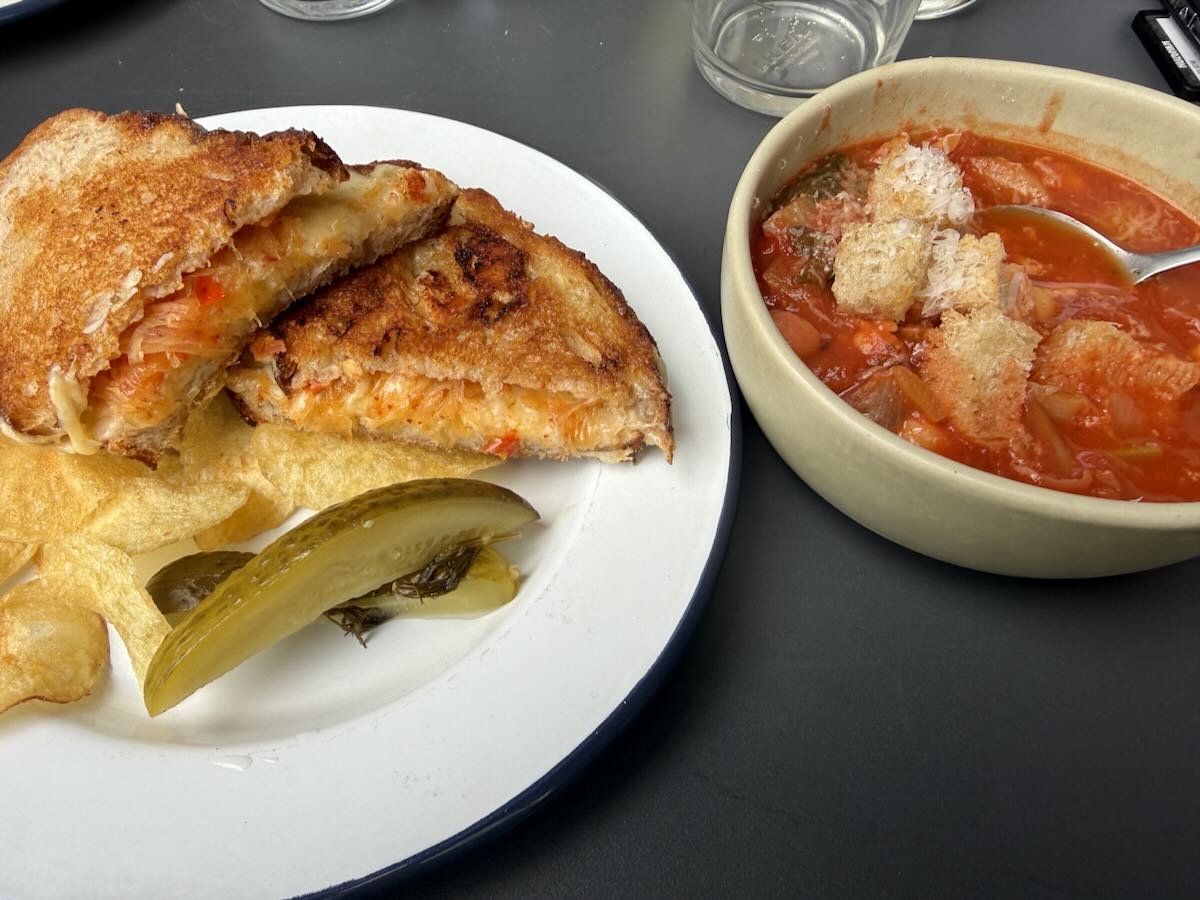
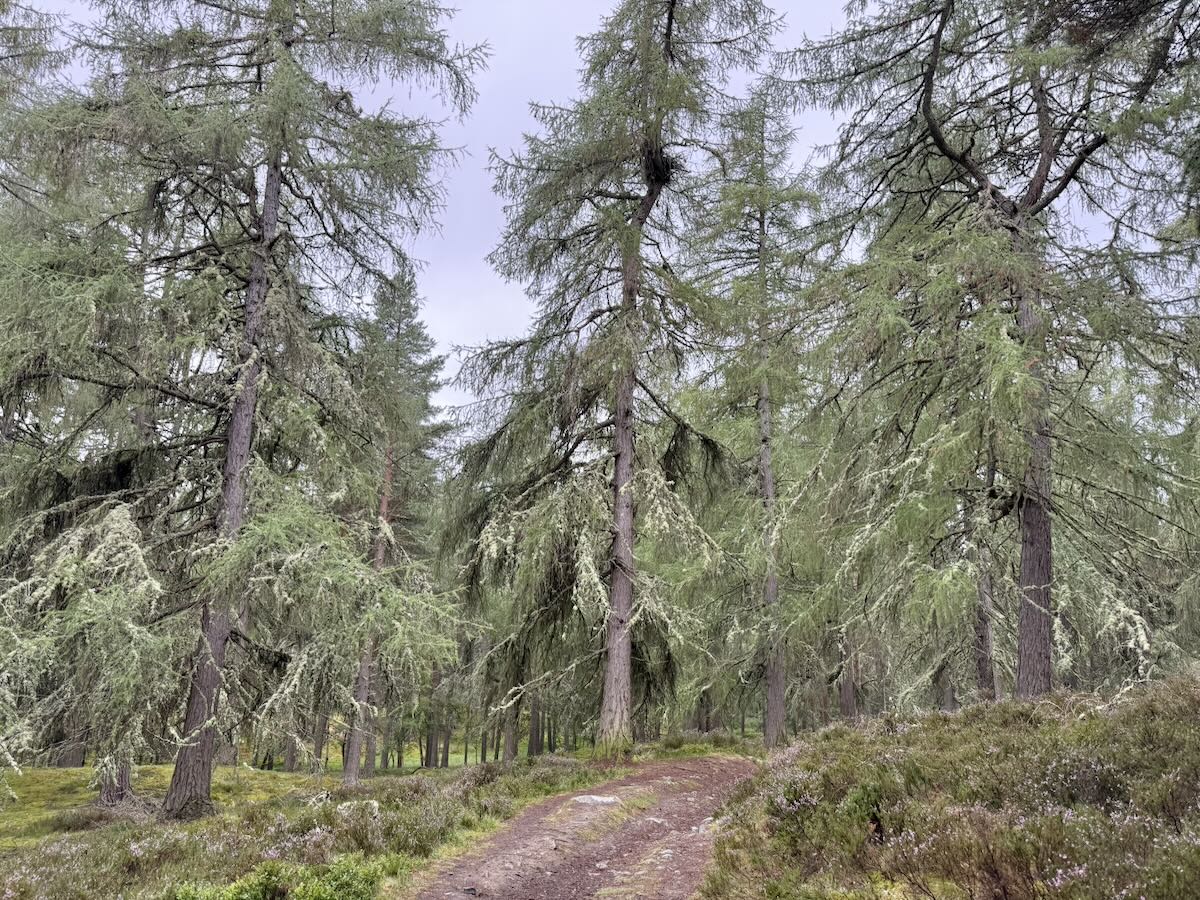 For the second hike, we hired a ghillie—a Gaelic term for a hunting attendant—to show us around the grounds of Balmoral. He was extremely low-key; his Border Collie was not. She spent the whole time depositing a stick on the trail to see whether anyone might be willing to throw it. The scenery was magical, and yet I neglected to take many photos—a mistake I did not make again on the trip. While we didn’t need the help of a guide, he proved instructive on two instances. When we came upon a log cabin cottage given to Queen Elizabeth and Prince Phillip by the people of Finland, he said that King Charles had the outside reclad so it would no longer look like it did during the backdrop for a photo of Jeffrey Epstein and Ghislaine Maxwell. And he directed us to Tàrmachan café for lunch. Grilled cheese with kimchi and a bowl of soup might be the perfect post-hike meal.
 Our third hike was aborted within 10 minutes.
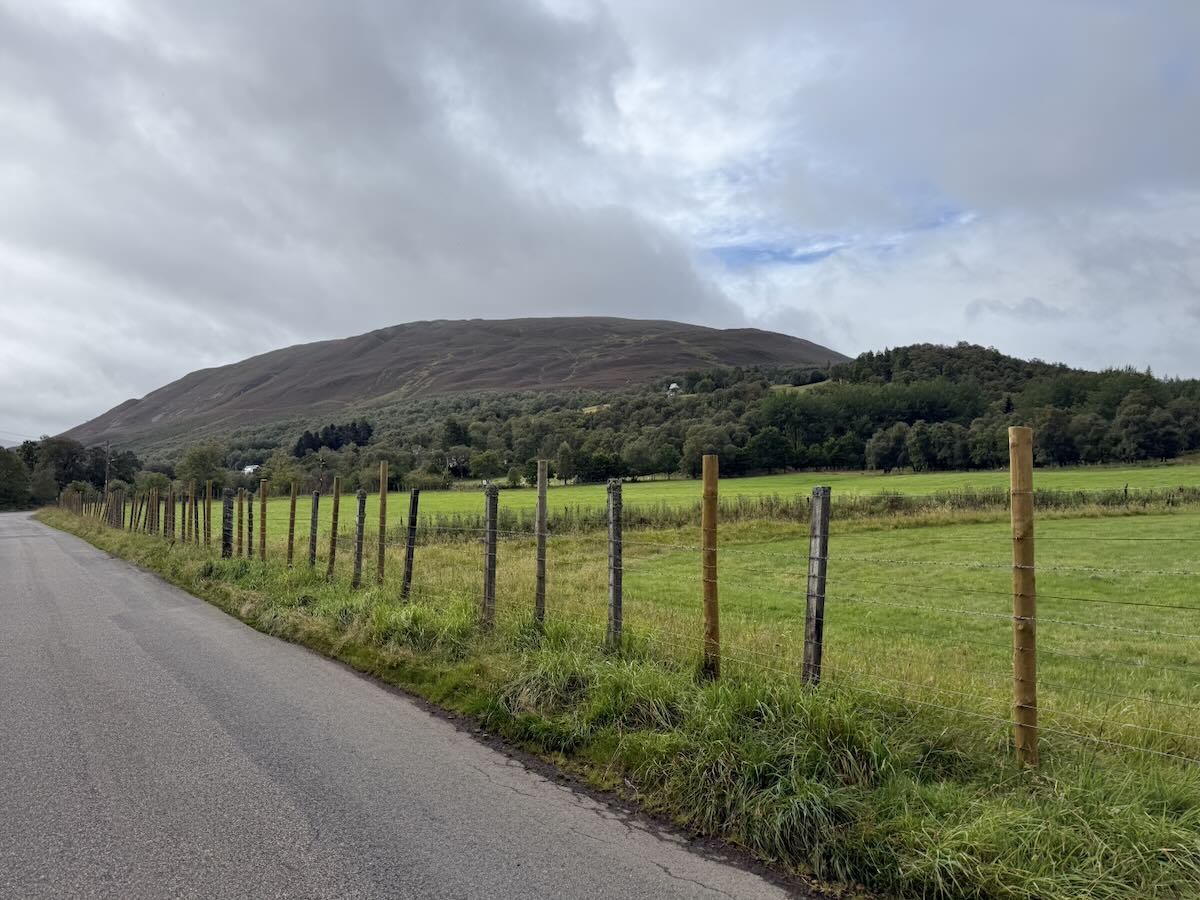
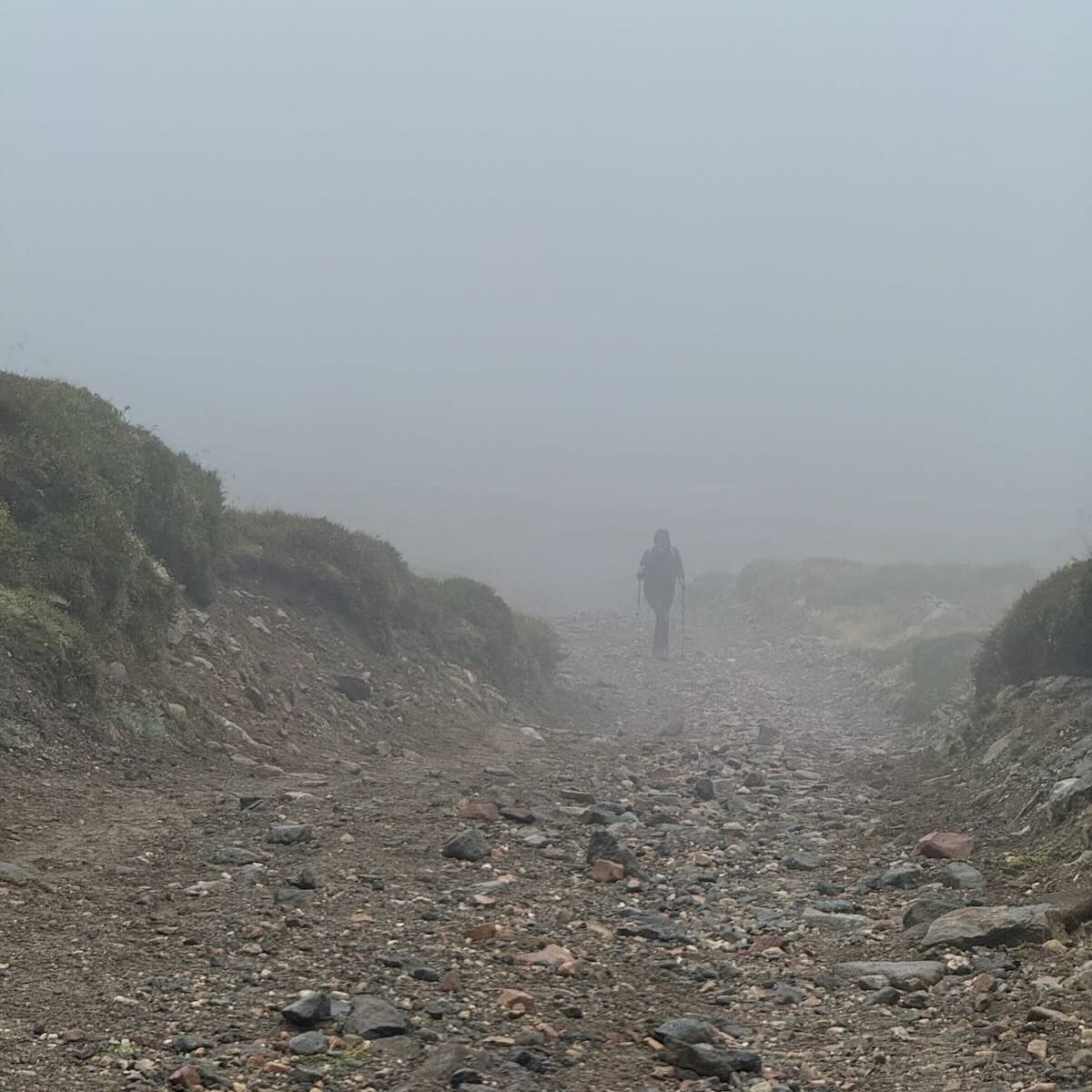 The final hike, after that storm blew through, was a four-seasons-in-one-day endeavor. The trail starts a few minutes’ walk from the inn, then proceeds up and over Morrone, the hill pictured below. In Scotland, there’s a lot of talk about bagging a Munro, i.e., summiting any mountain of at least 3,000 feet. This was merely a Corbett, 2,500 to 3,000 feet tall.
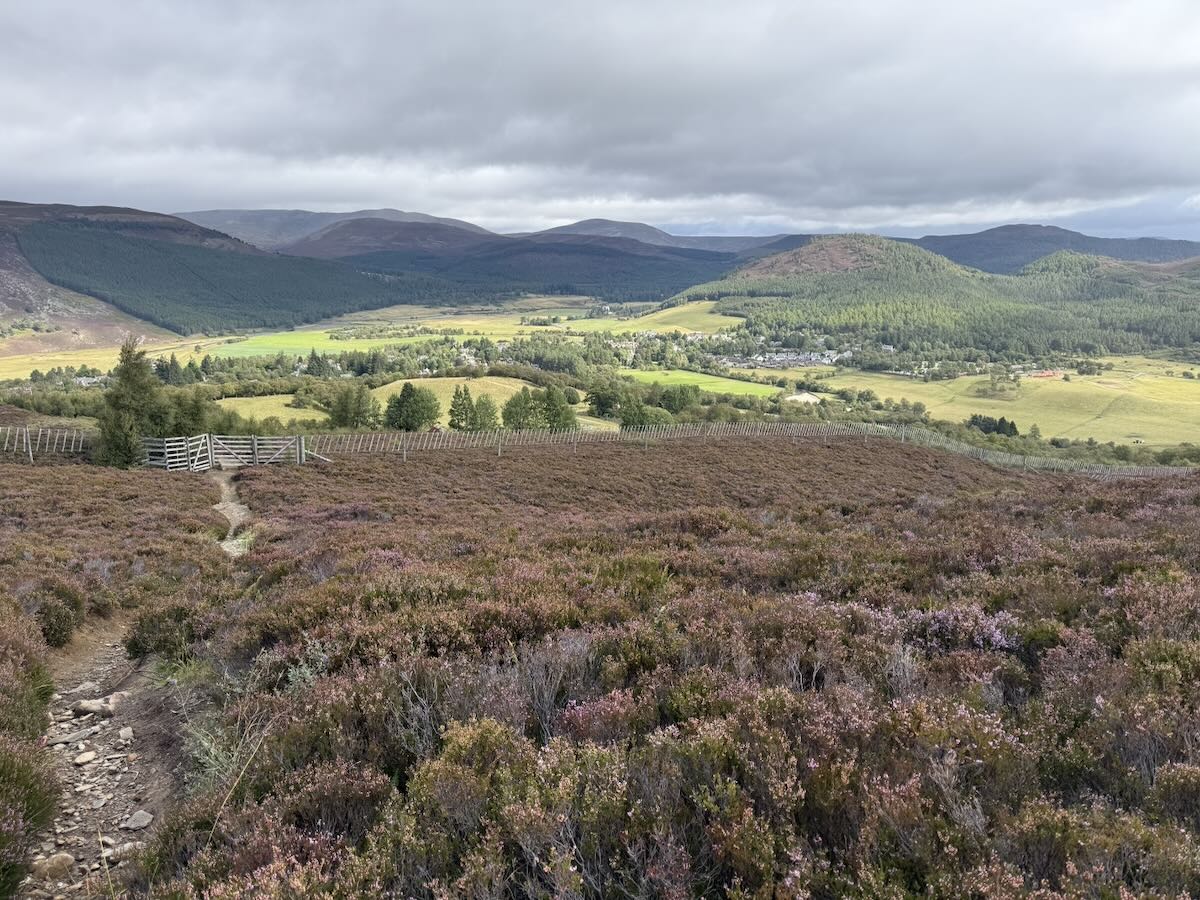 But bagging it was challenging enough, because the wind and rain picked up as we neared the top, lashing us with the kind of the pinprick rain that stings exposed skin. Finding it somewhere between seriously unpleasant and miserable, I distracted myself by writing a limerick to inscribe in the poetry book in the Fife Arms lobby (which I credited to Adam).
There one was a Fife Arms ghillie
Who hillwalked in the rain till he
Shivered and shook
And nearly forsook
The use of his frostbitten willy
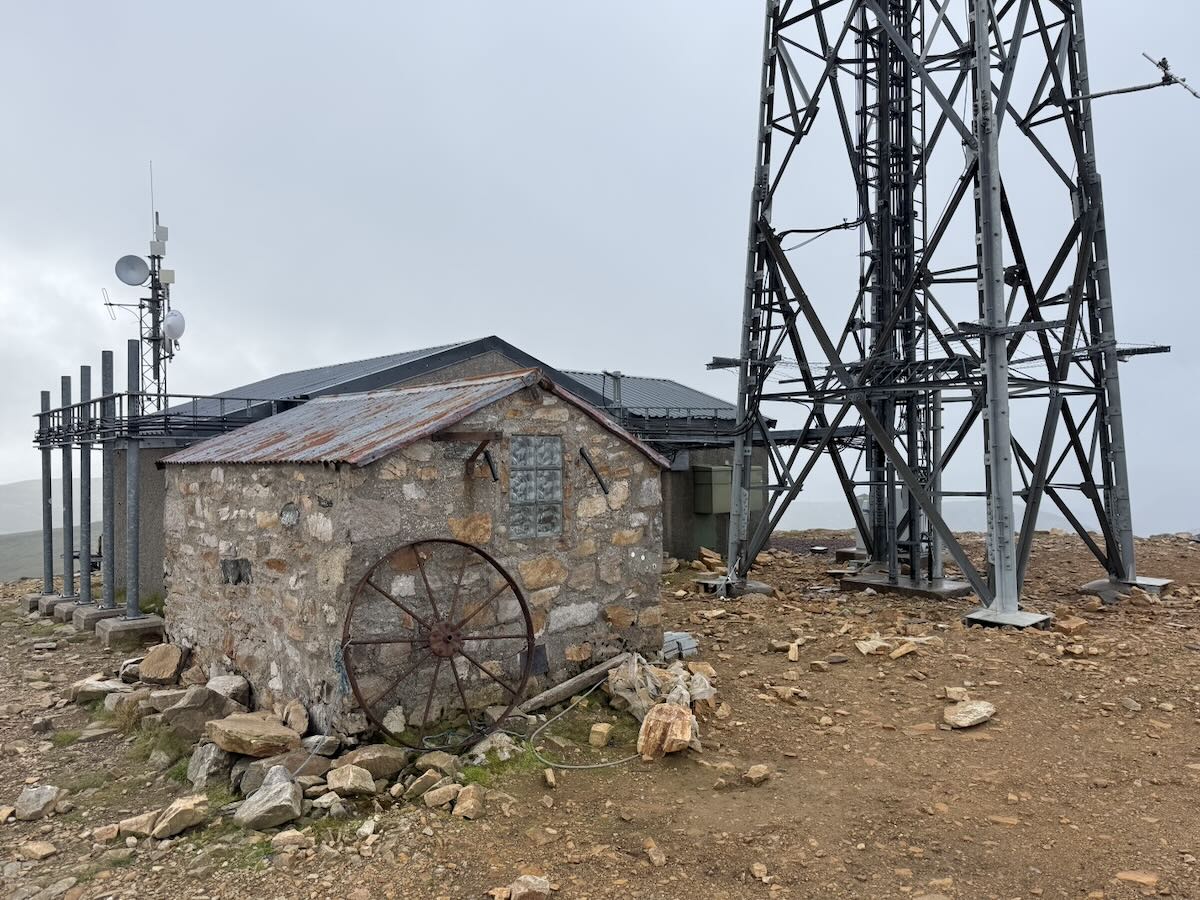
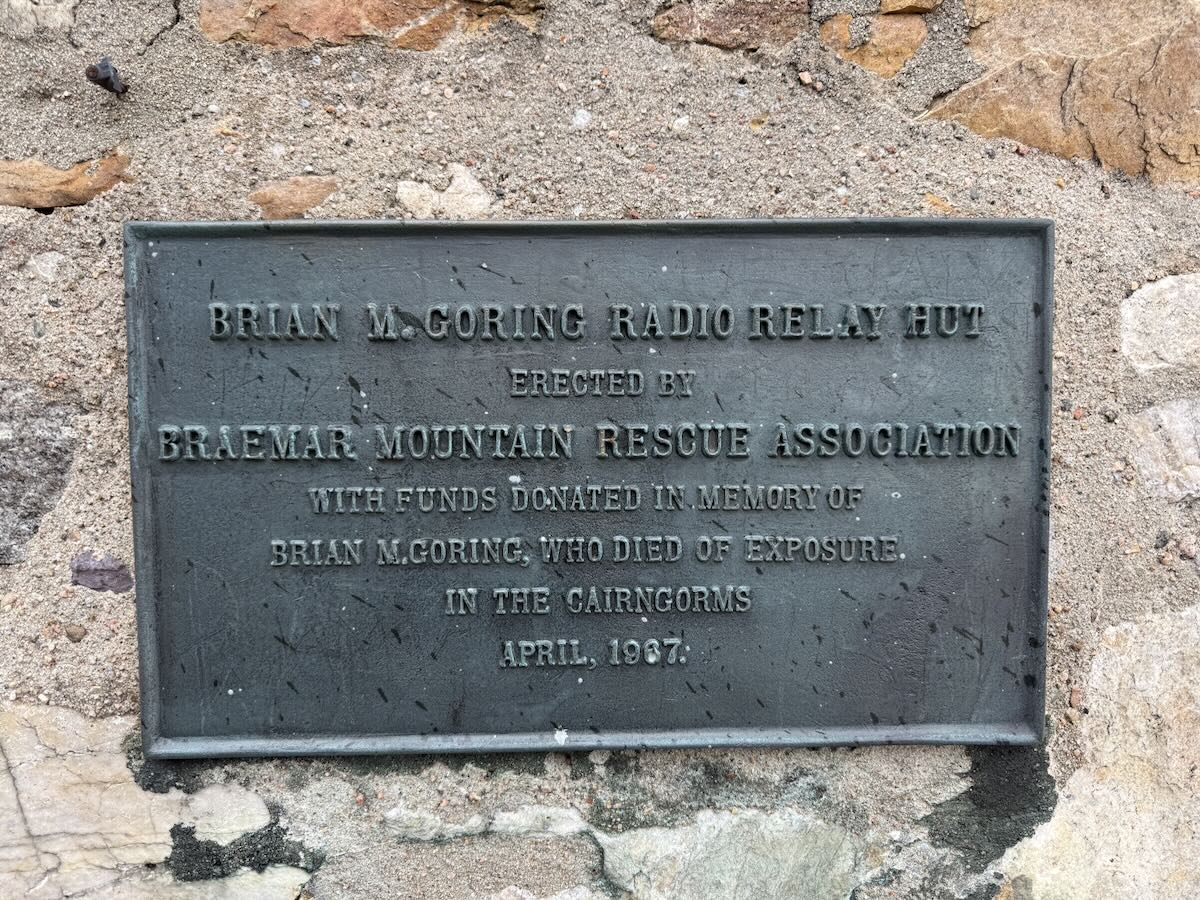
The radio hut at the top was a helpful spot for a break, although the comfort was served cold.
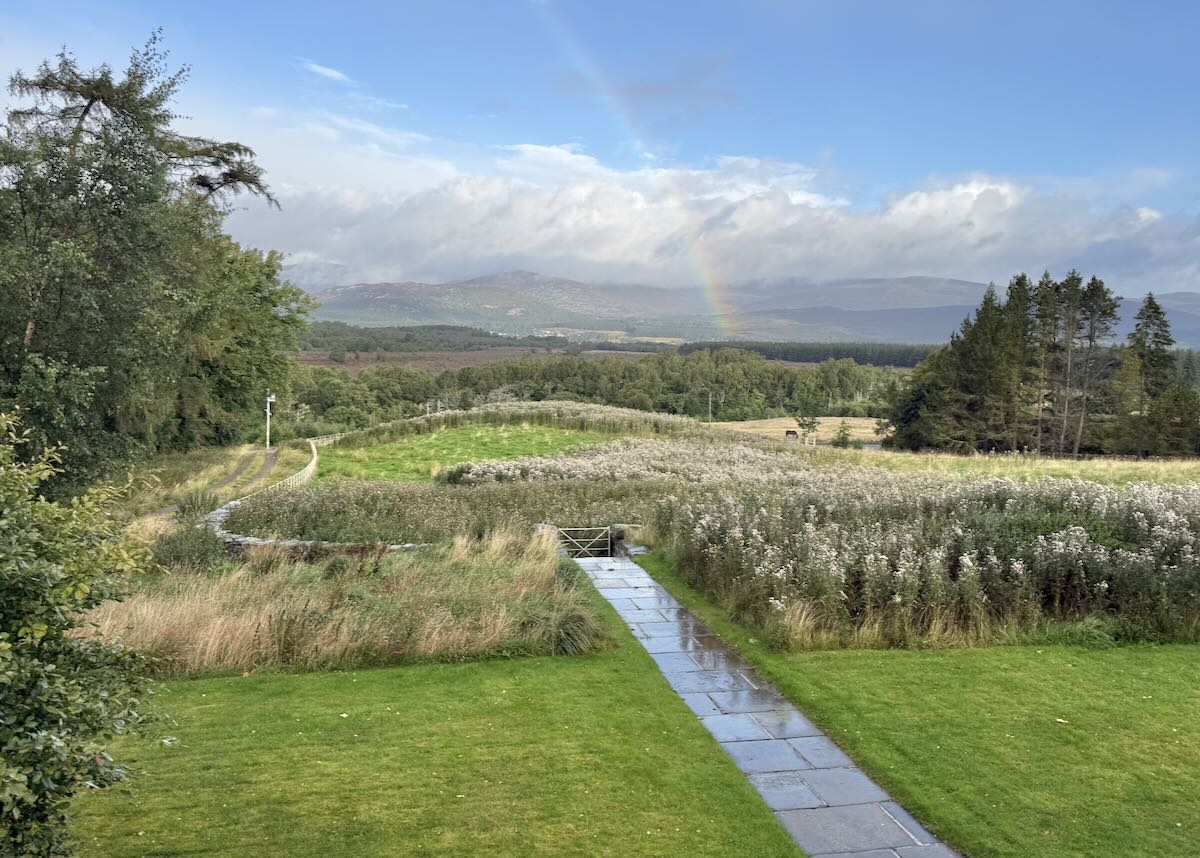
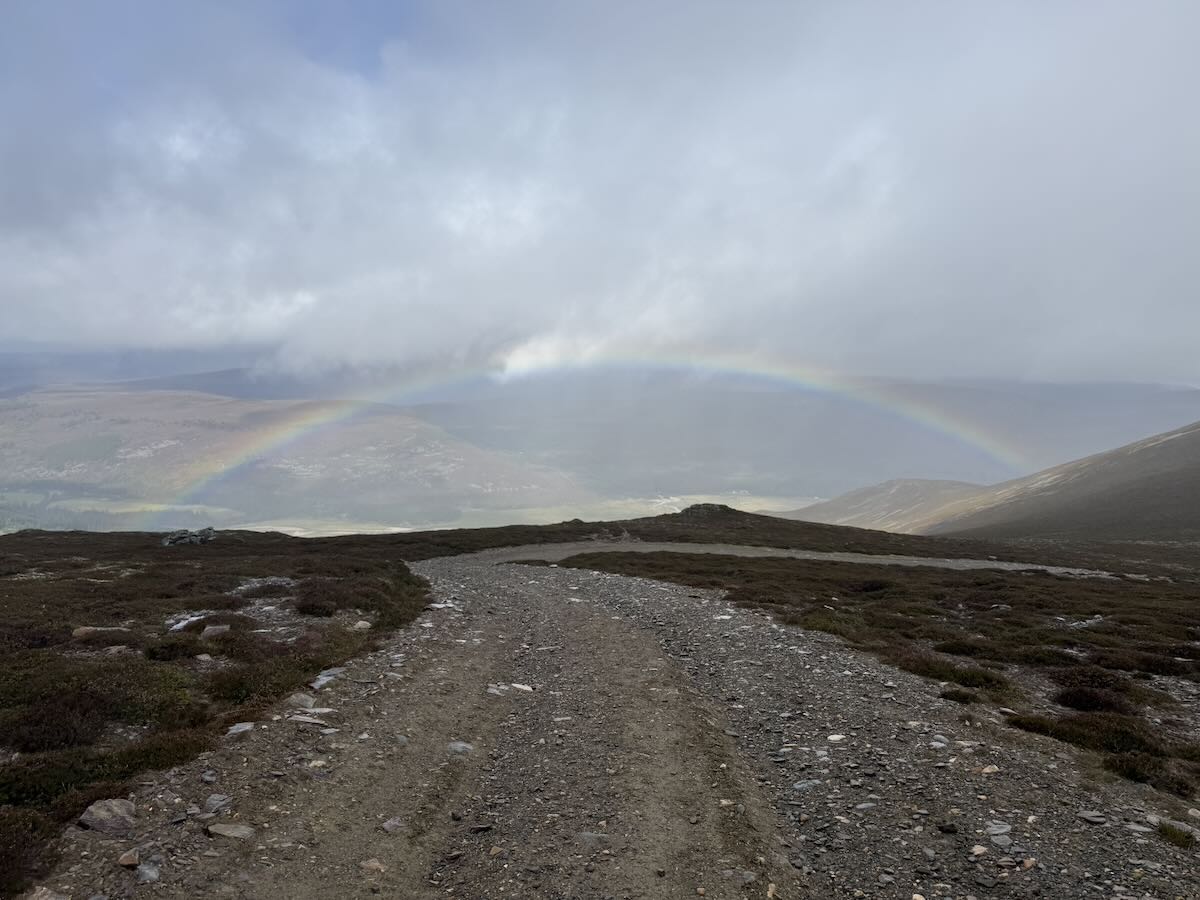
Descending the other side of Morrone began as more of the same, but then the rainbows came out, including one at ground level, and the sky cleared. We dried out, and the walk was once again pleasant…
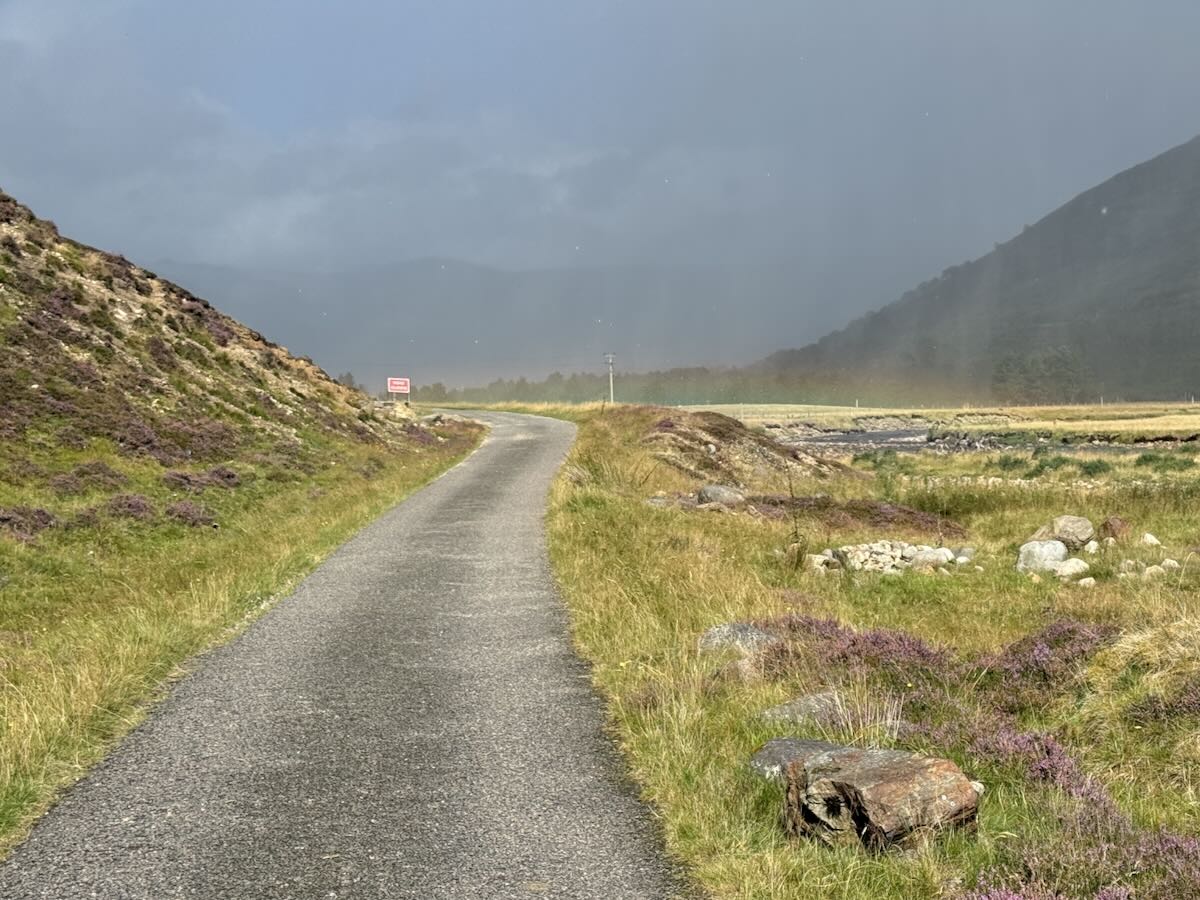
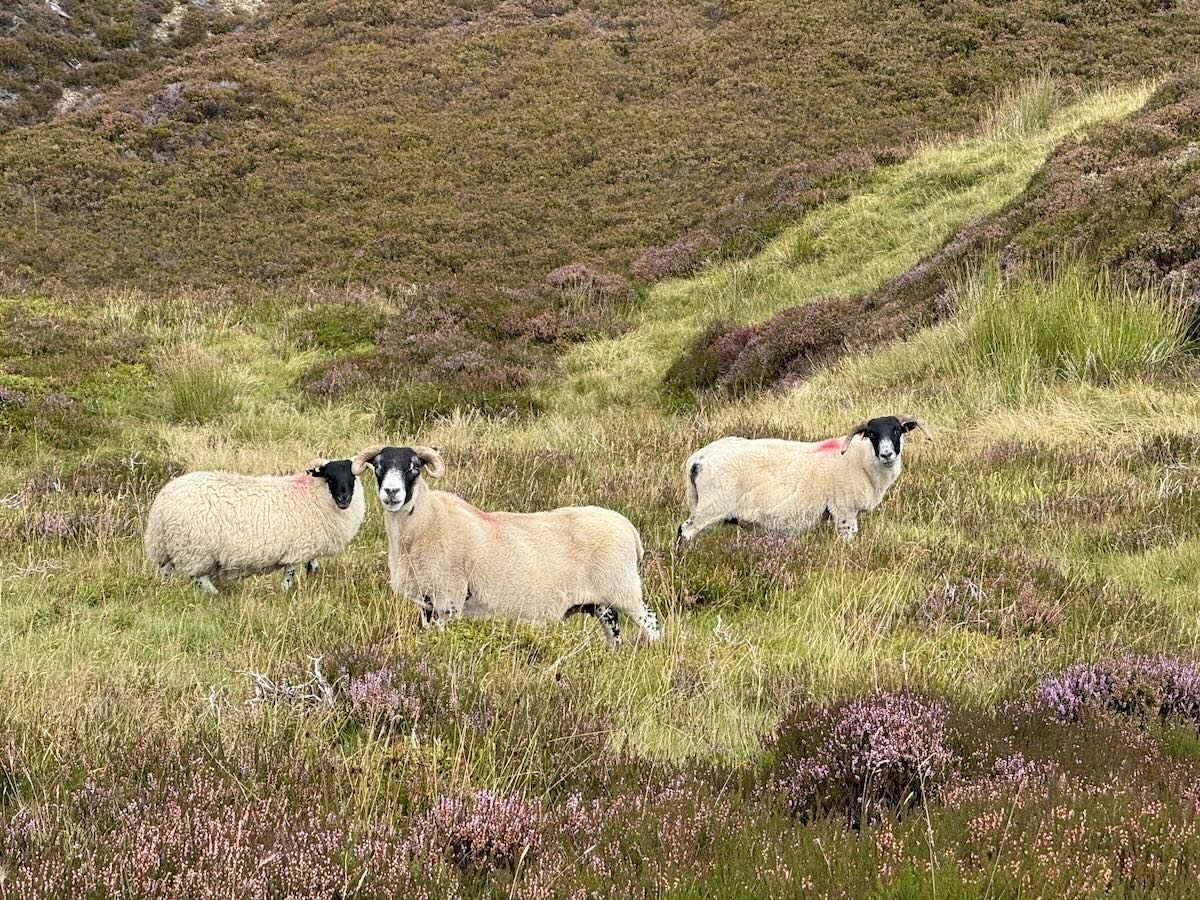 …for about 20 minutes.
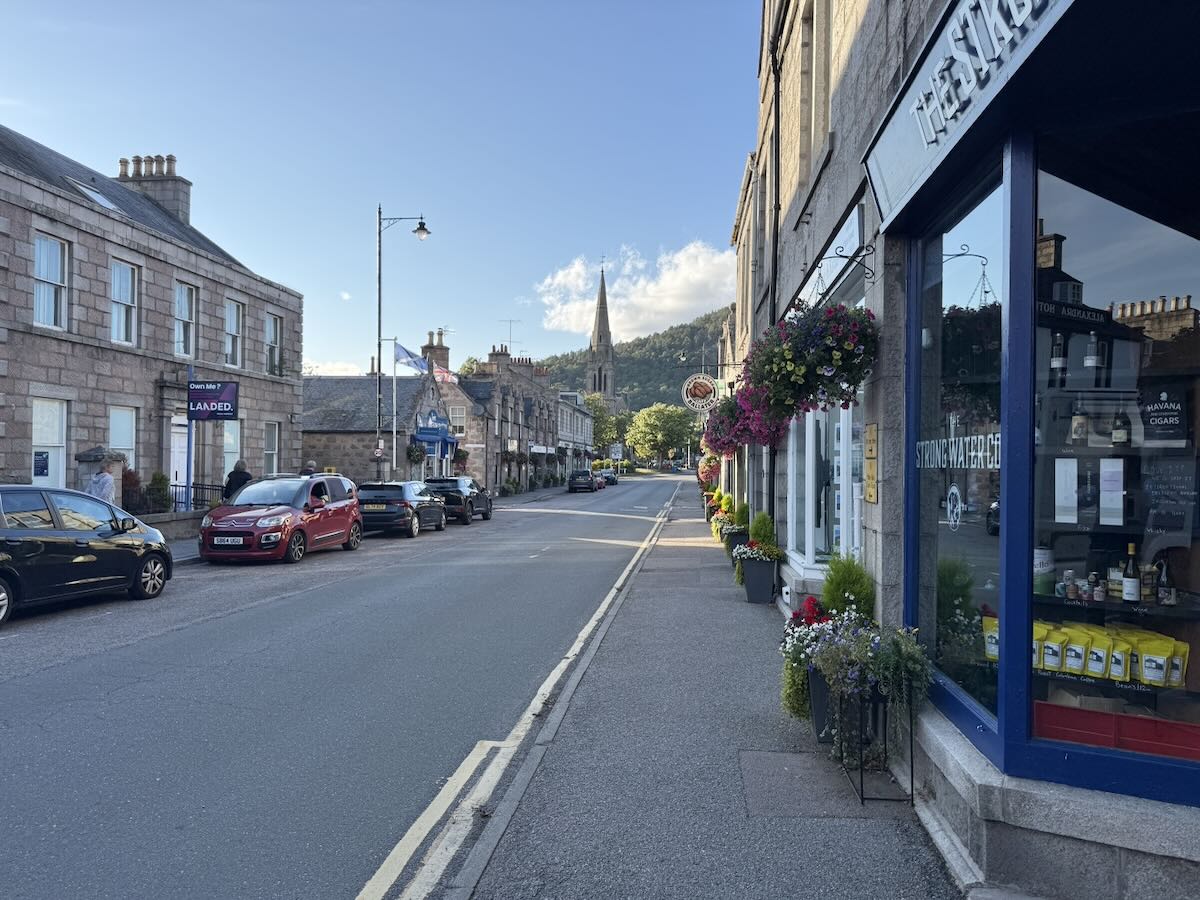
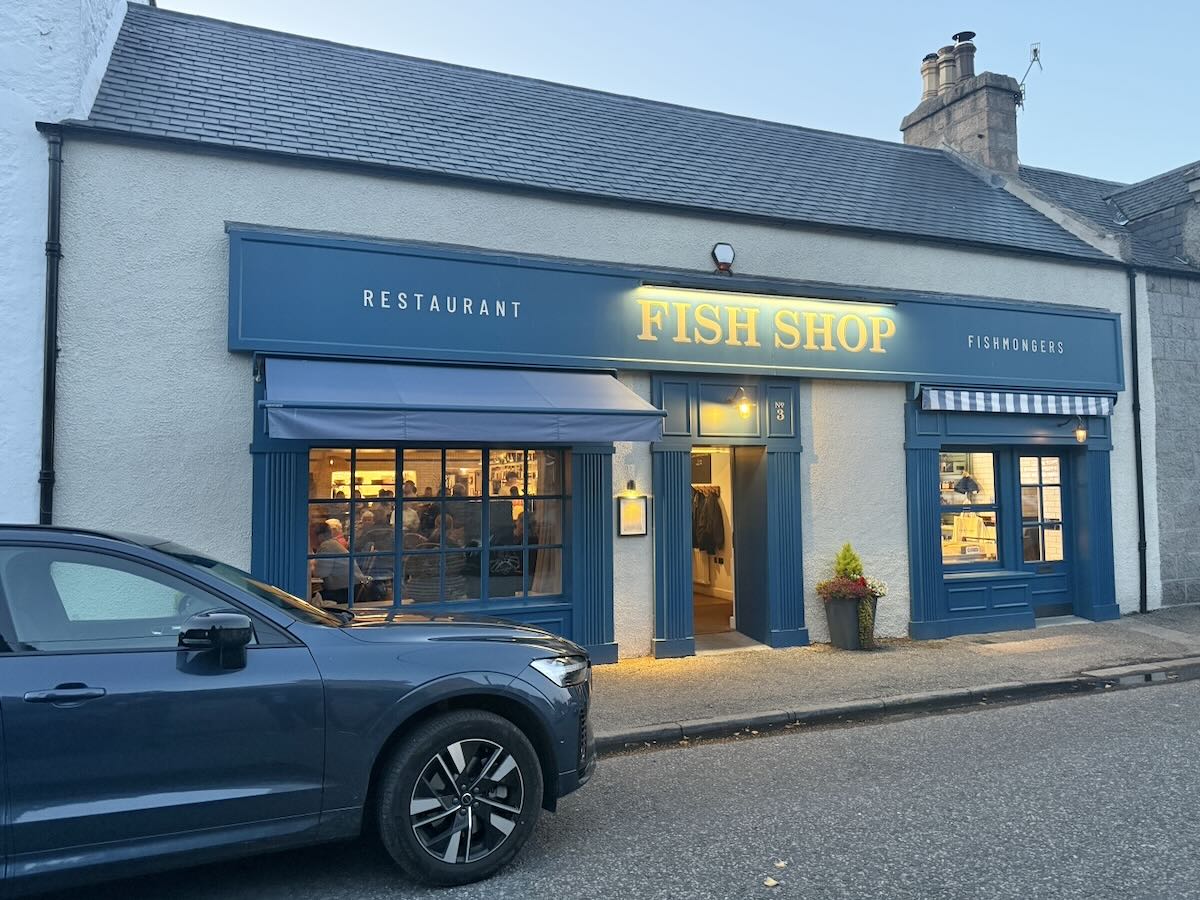
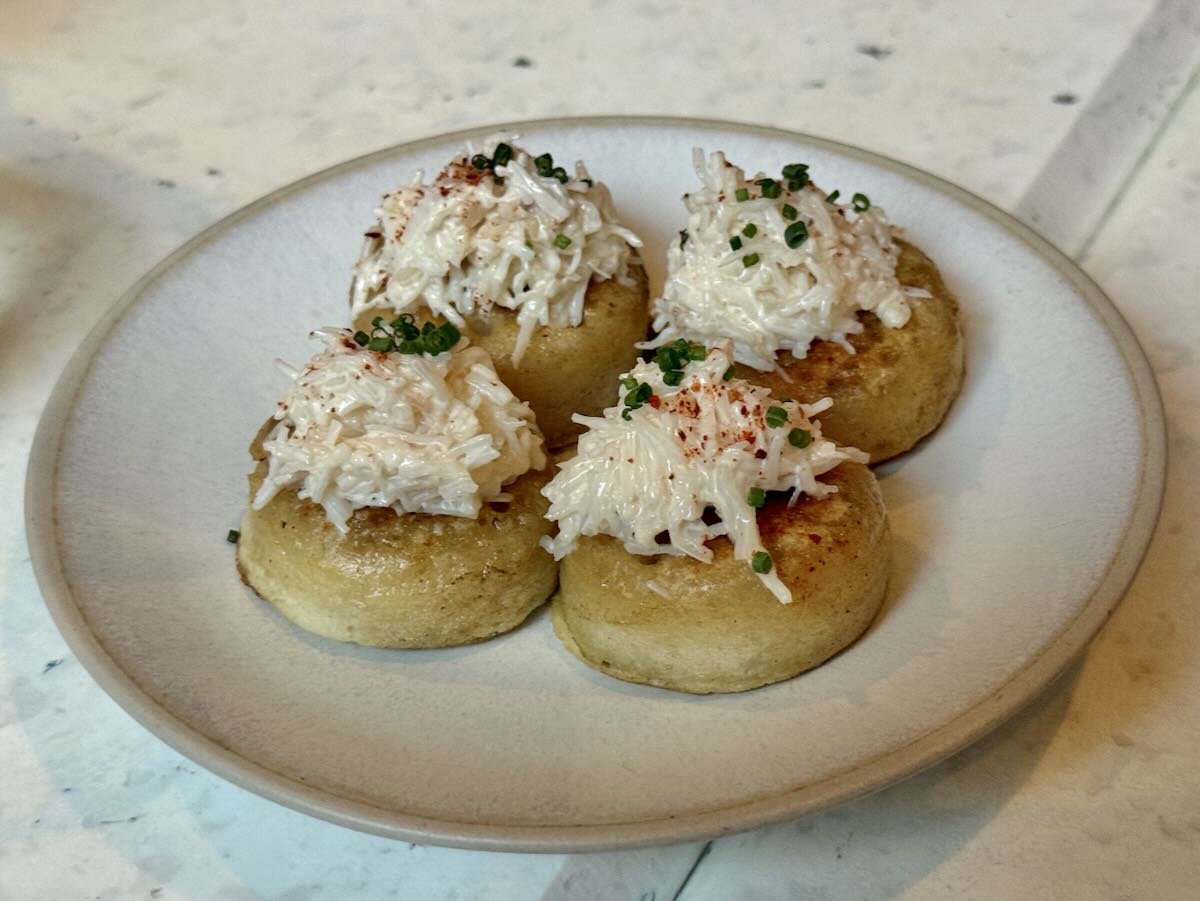
 Artfarm’s holdings also include Fish Shop, a fishmonger and restaurant 25 minutes’ drive away. The town of Ballater has more traditional charm than Braemar, and the restaurant was outstanding. Those are crab crumpets.
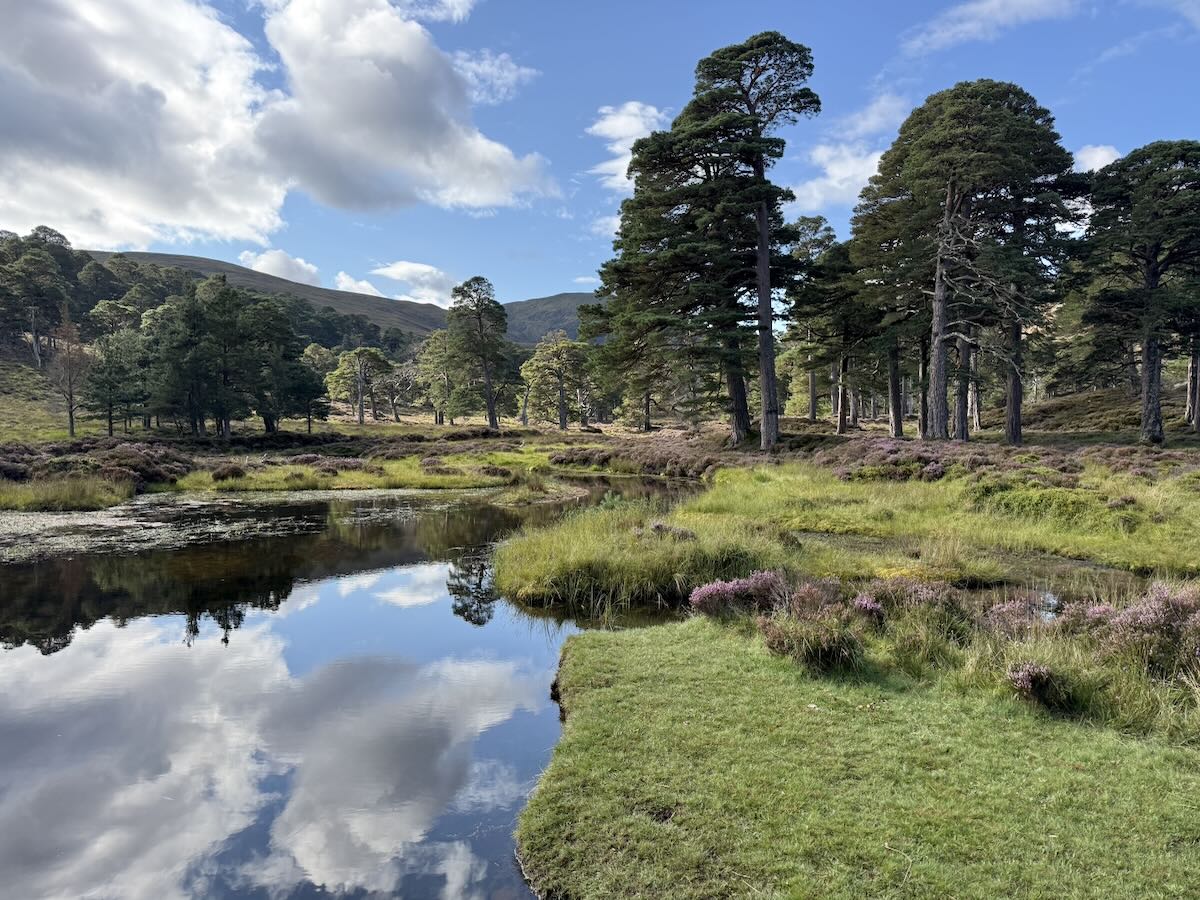
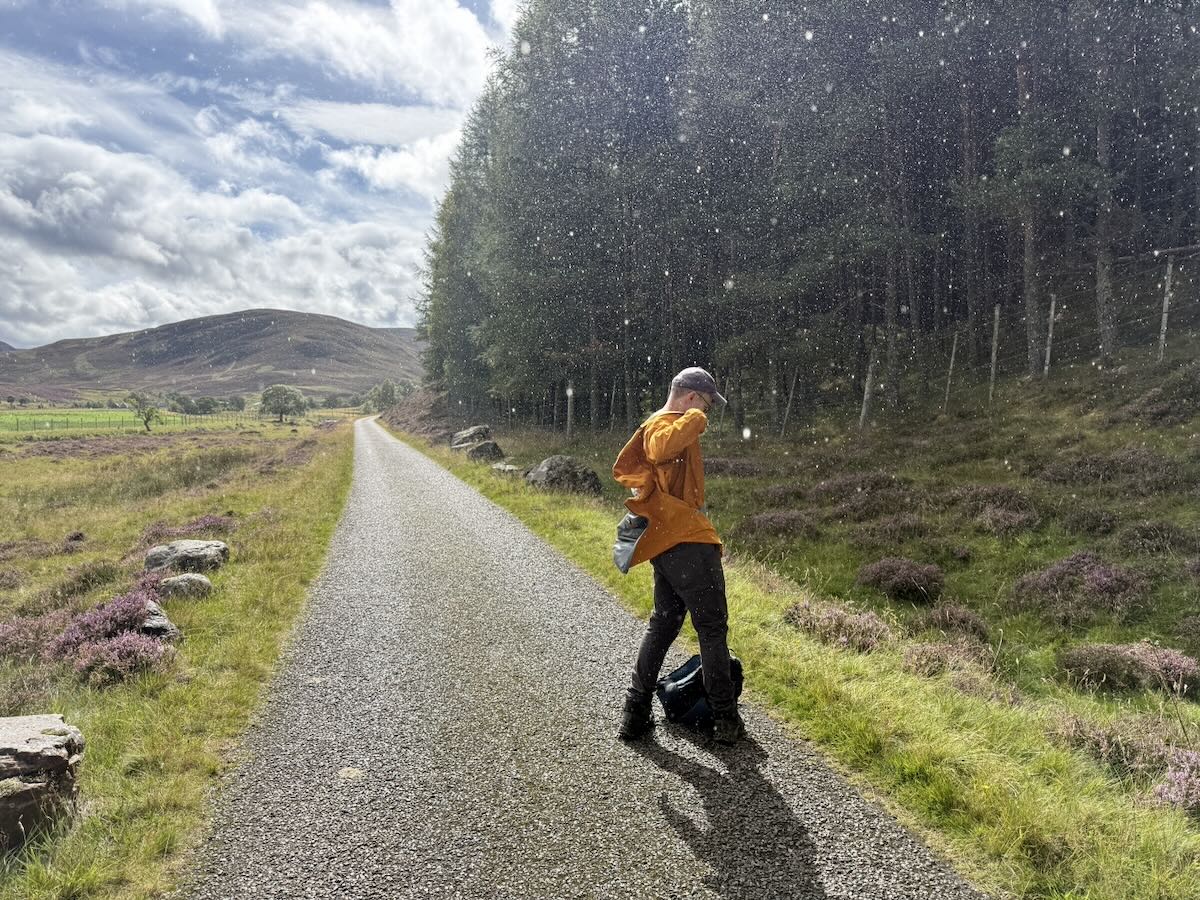
 En route to our next accommodations, we paused for a walk in the woods around Uath Lochans, a collection of four lochs. I ventured off trail to feel of the mossy, bumpy land beneath my feet, and then we all ventured off trail when Adam slavishly followed AllTrails through the heather (blooming during our September visit, and much more striking than a photo can capture).
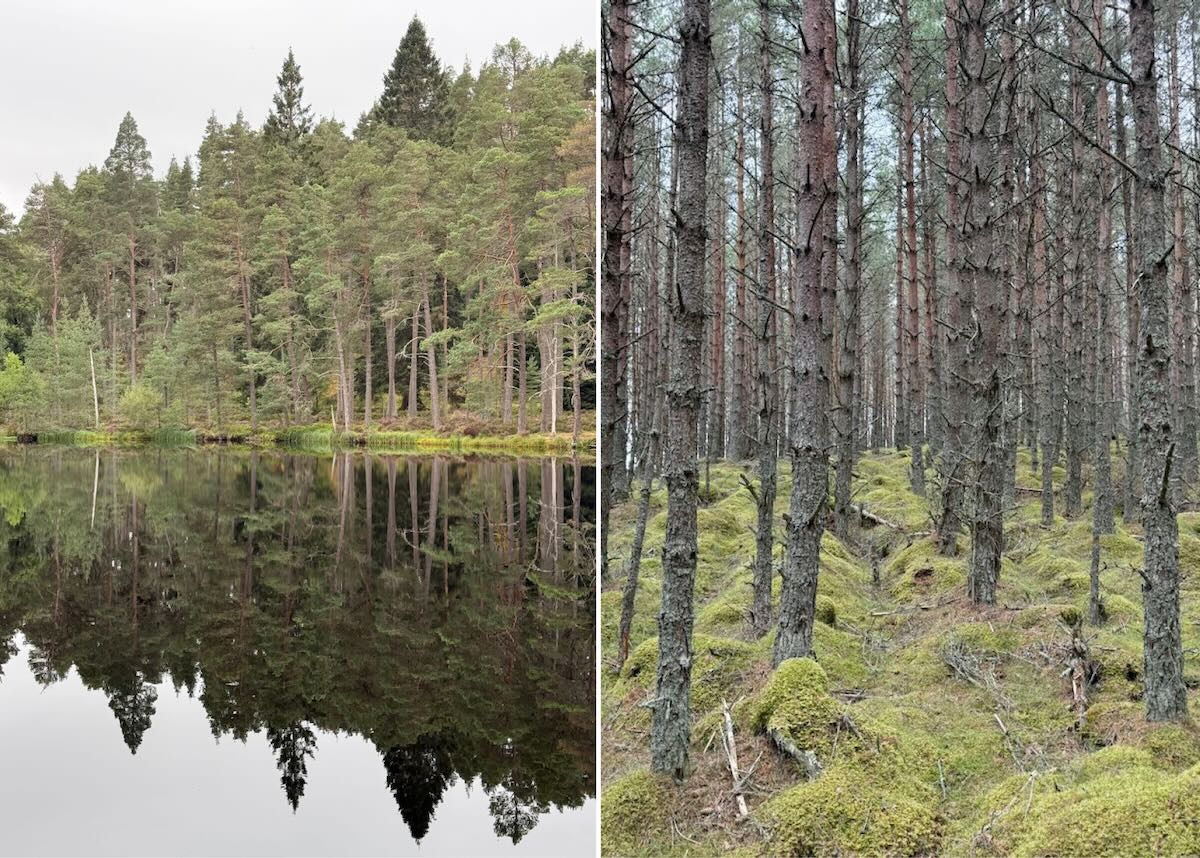
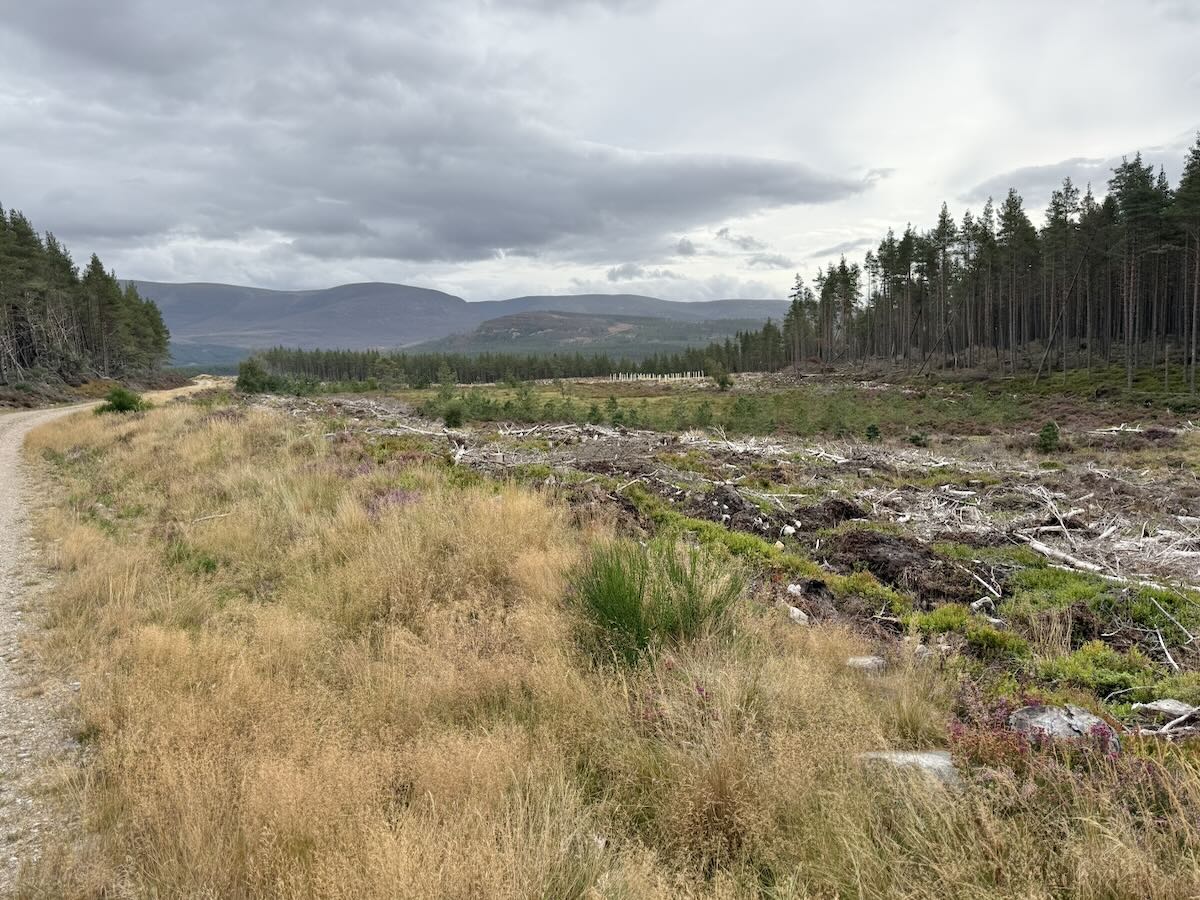
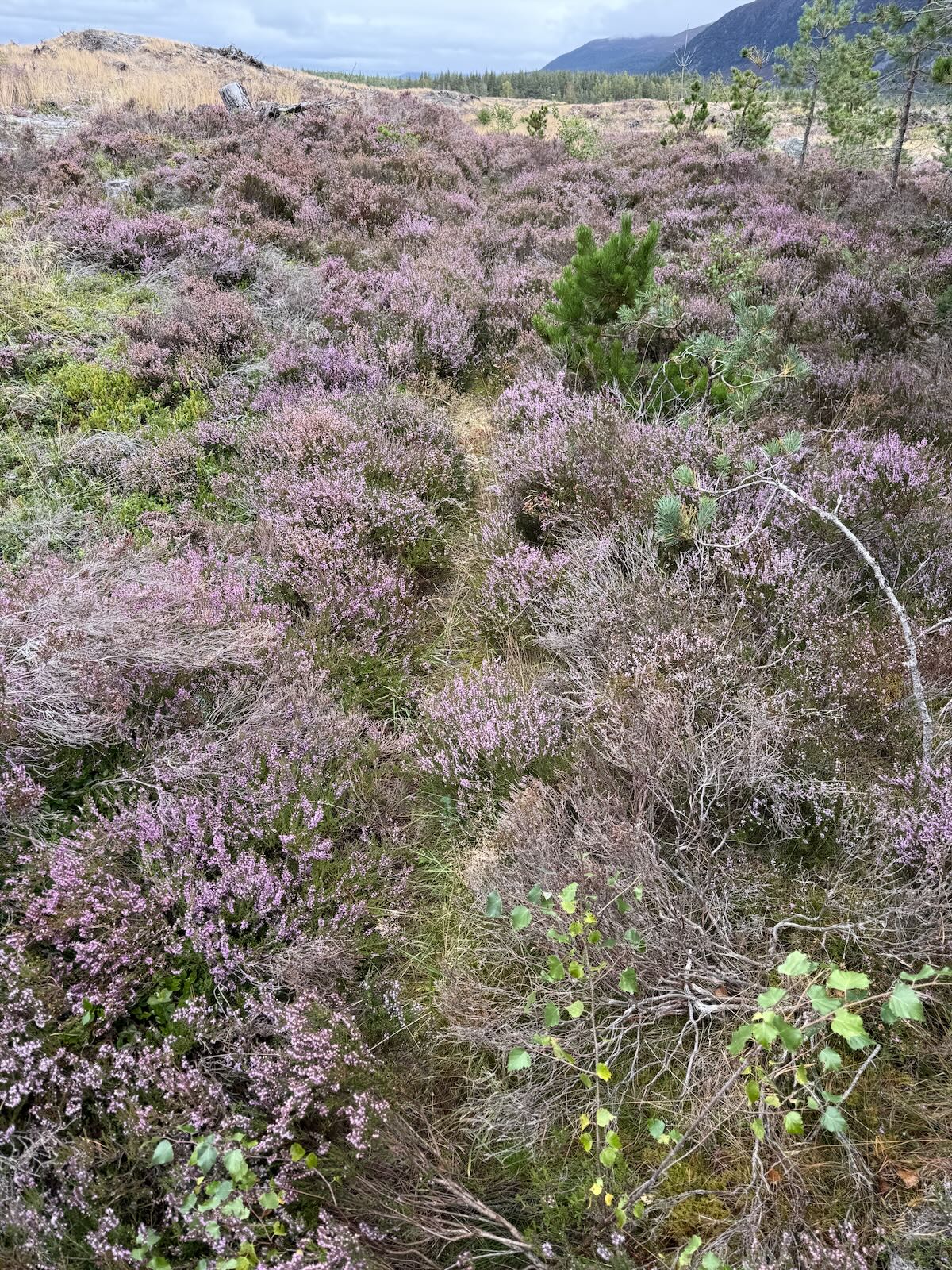 This hike was also when we realized the Scottish Highlands have been affected by deforestation.
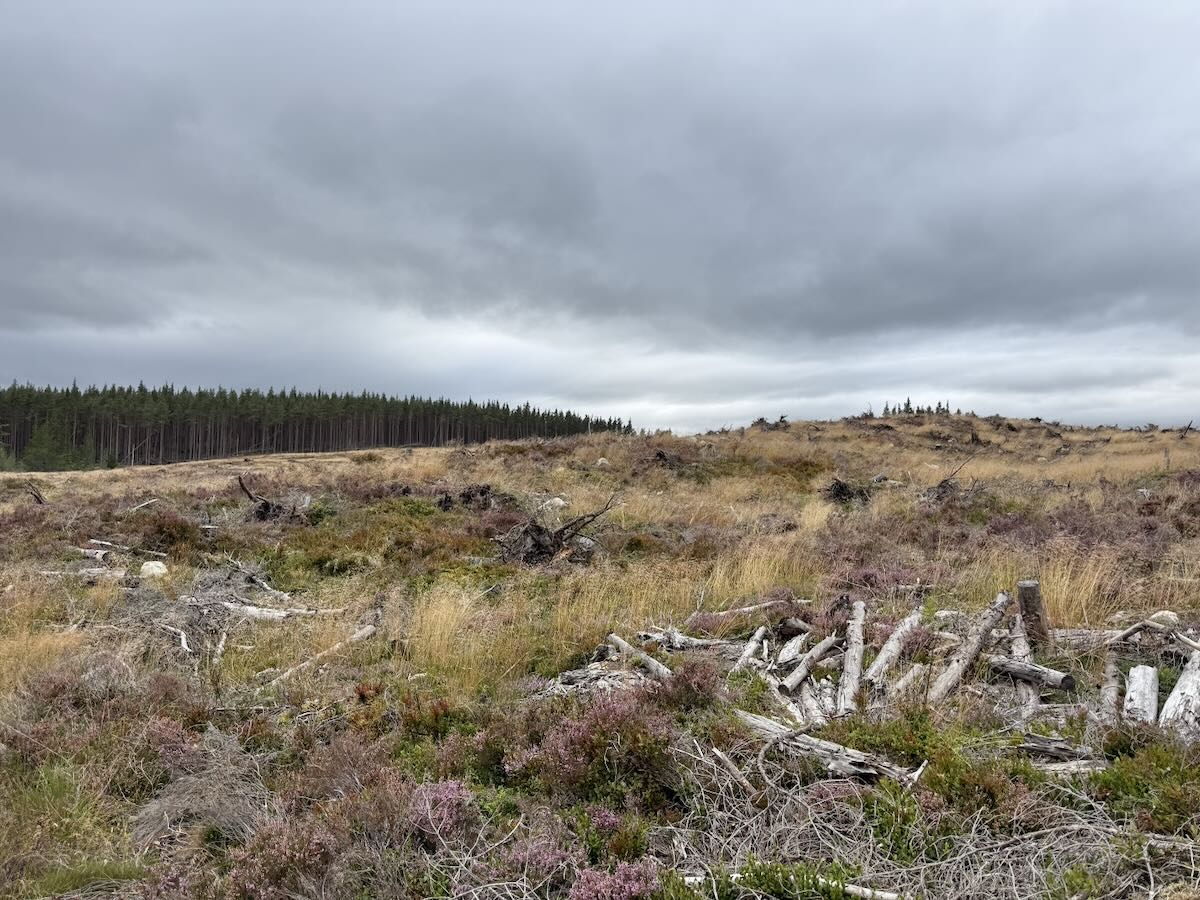 It’s an apt segue to Killiehuntly Farmhouse, my favorite experience of the trip. Danish citizens Anne and Anders Holch Povlsen have used some of the money he made as a retail magnate to buy up land in the Scotland Highlands; the Povlsens are now the U.K.’s largest individual private landowners. They’re trying to “rewild” the land, which primarily involves planting trees and keeping deer from eating the saplings, but also refurbishing old buildings and allowing people to stay in them. (Their organization is called WildLand.) Killiehuntly, near the village of Kingussie, is a stone house with four guest rooms, along with one more—and some self-catering accommodations—in an outbuilding. The hygge-inducing interiors couldn’t be farther from the maximalism of The Fife Arms.
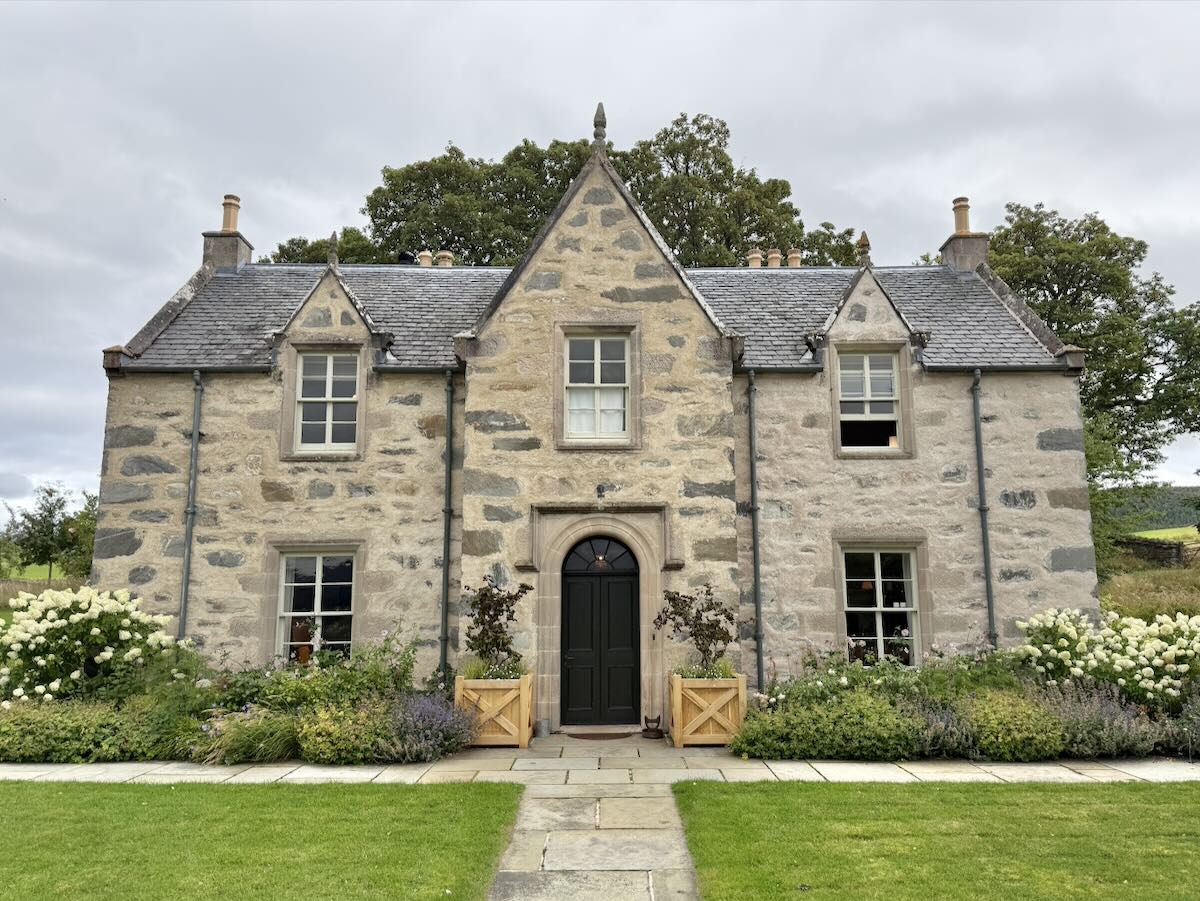
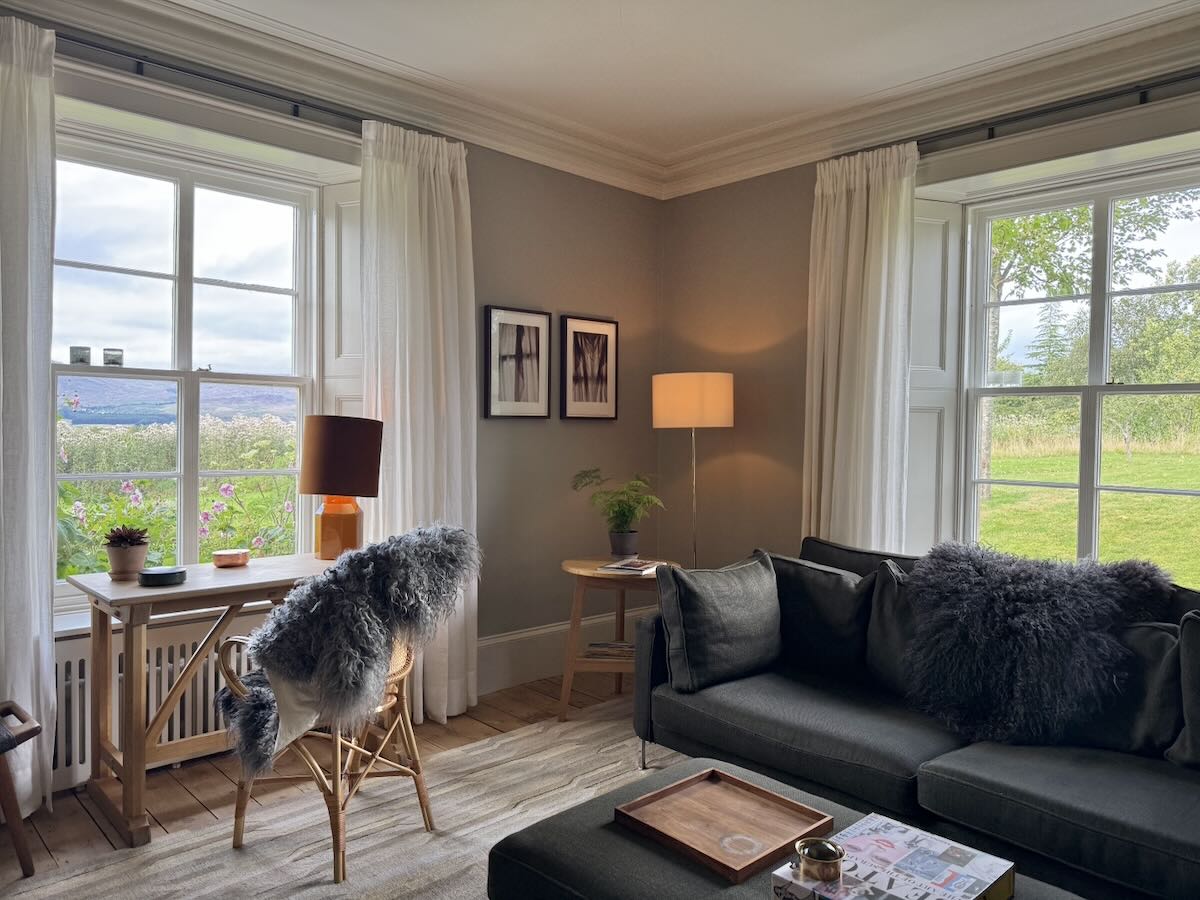
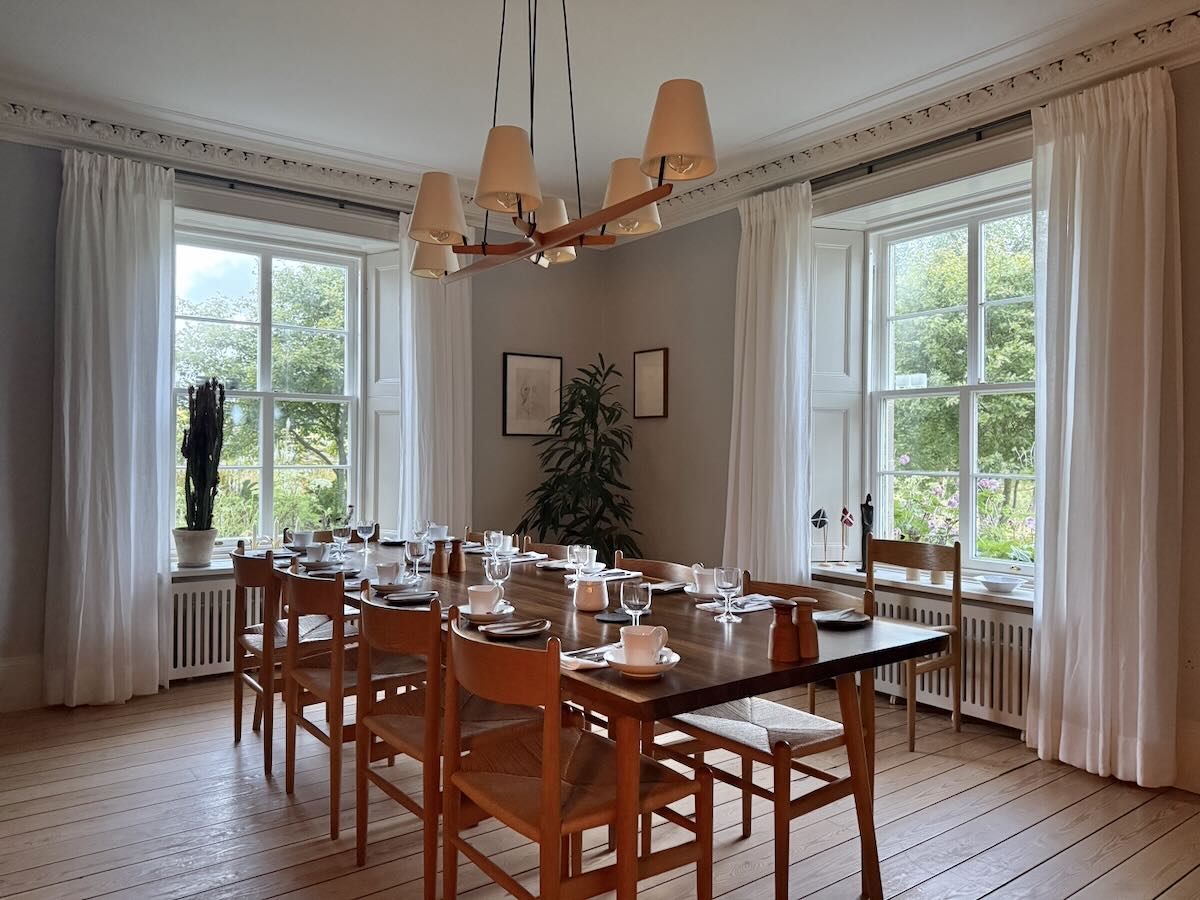
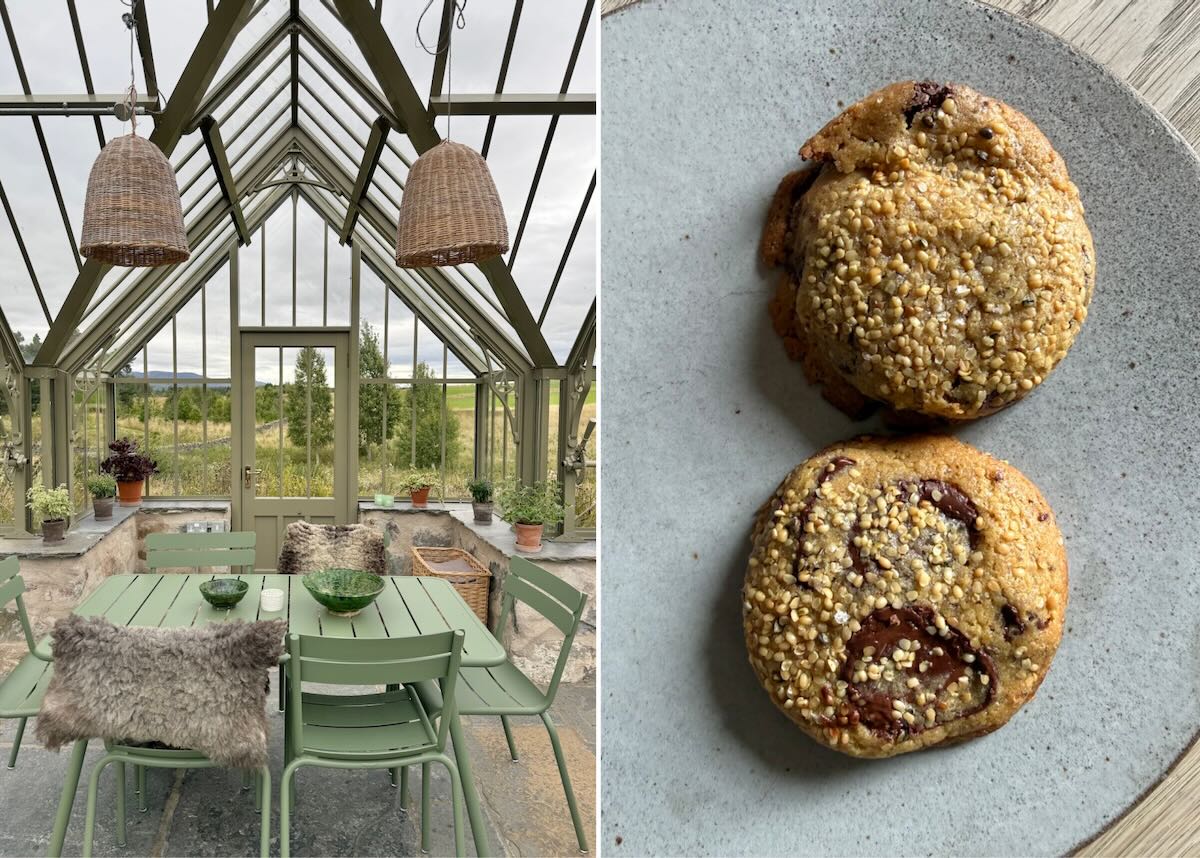
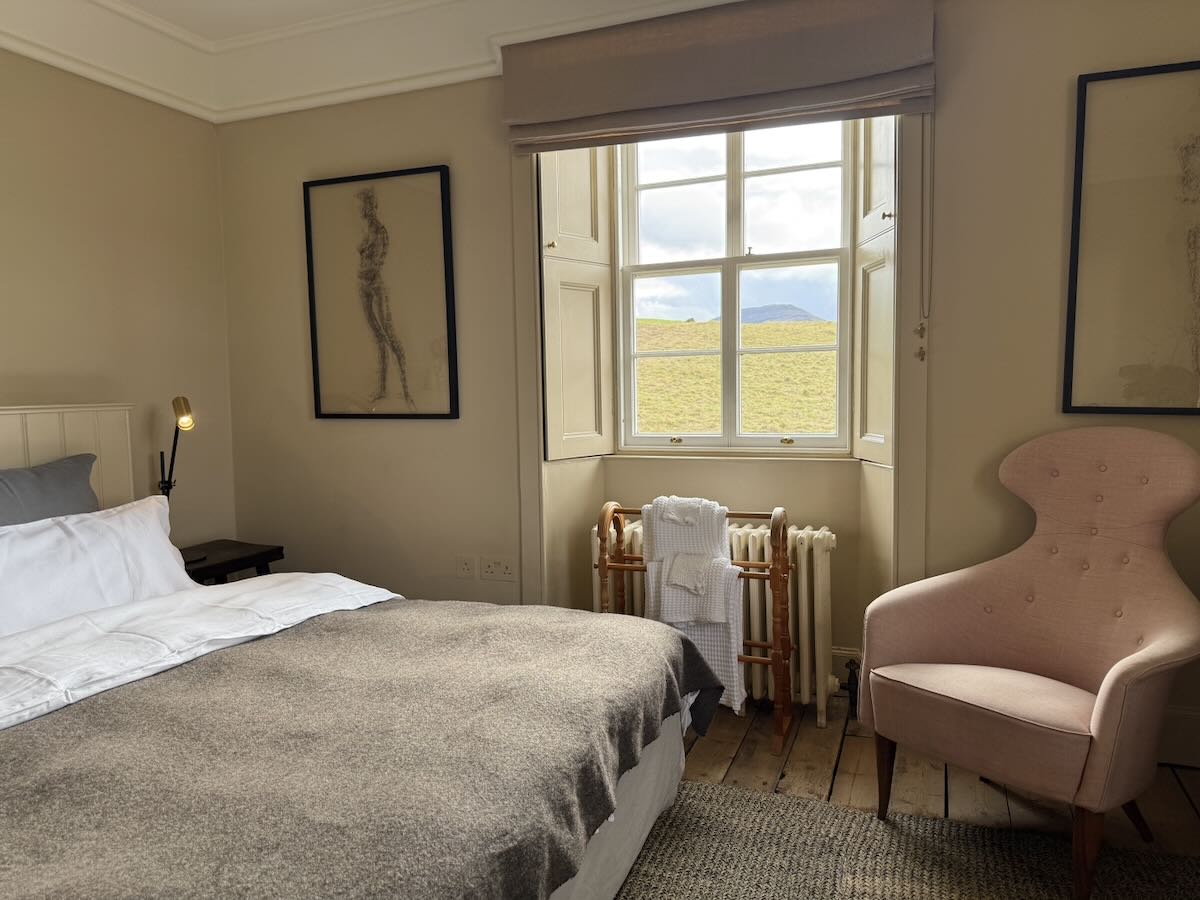 A staffer is on the premises from morning till late at night, and a chef cooks breakfast, dinner, and packed lunches. The house was a lovely place to just hang out: we ensconced ourselves in the various common spaces (living room, den, greenhouse), reading and playing Scrabble, and took advantage of the free laundry machines. One quibble: the in-room materials mention an afternoon sweet; the first day, that meant delicious sesame chocolate chip cookies in the kitchen—and the next day, zilch. I couldn’t bring myself to ask where my treat was.
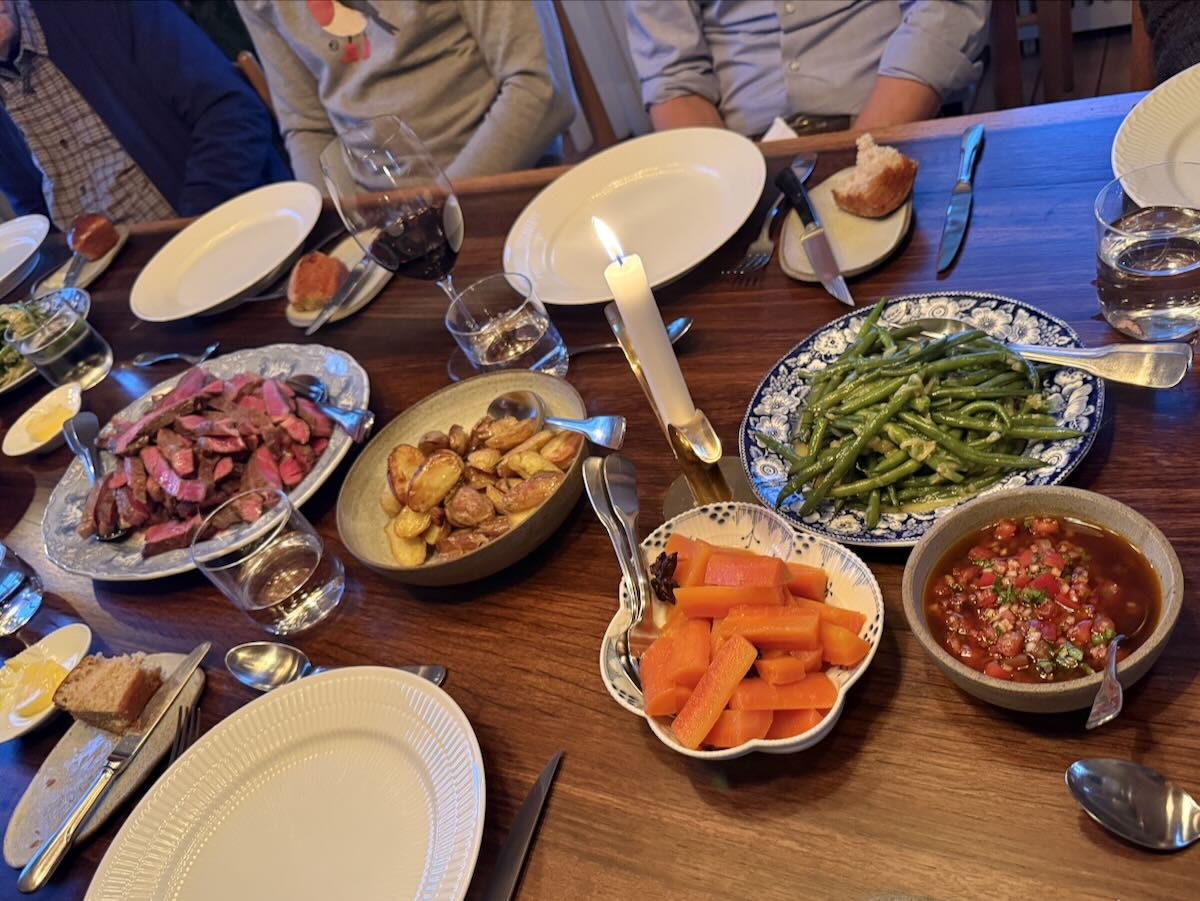
 In the early evening, the guests assemble for drinks and “snackybits,” followed by communal dinner. Chatting with new people was welcome, and we came away with fresh topics to discuss. For instance, one guest insisted that the table make “a toast to the aboriginals”—apropos of nothing, but with such conviction! Also, the food was terrific both nights.
 Killiehuntly is more intimate than a hotel, and far more interesting. It’s the kind of thing I wish existed all across the U.S.—simple but nice accommodations in beautiful places. I tried encouraging Adam to start something similar here, until we concluded that having billions would make it substantially easier to pull off.
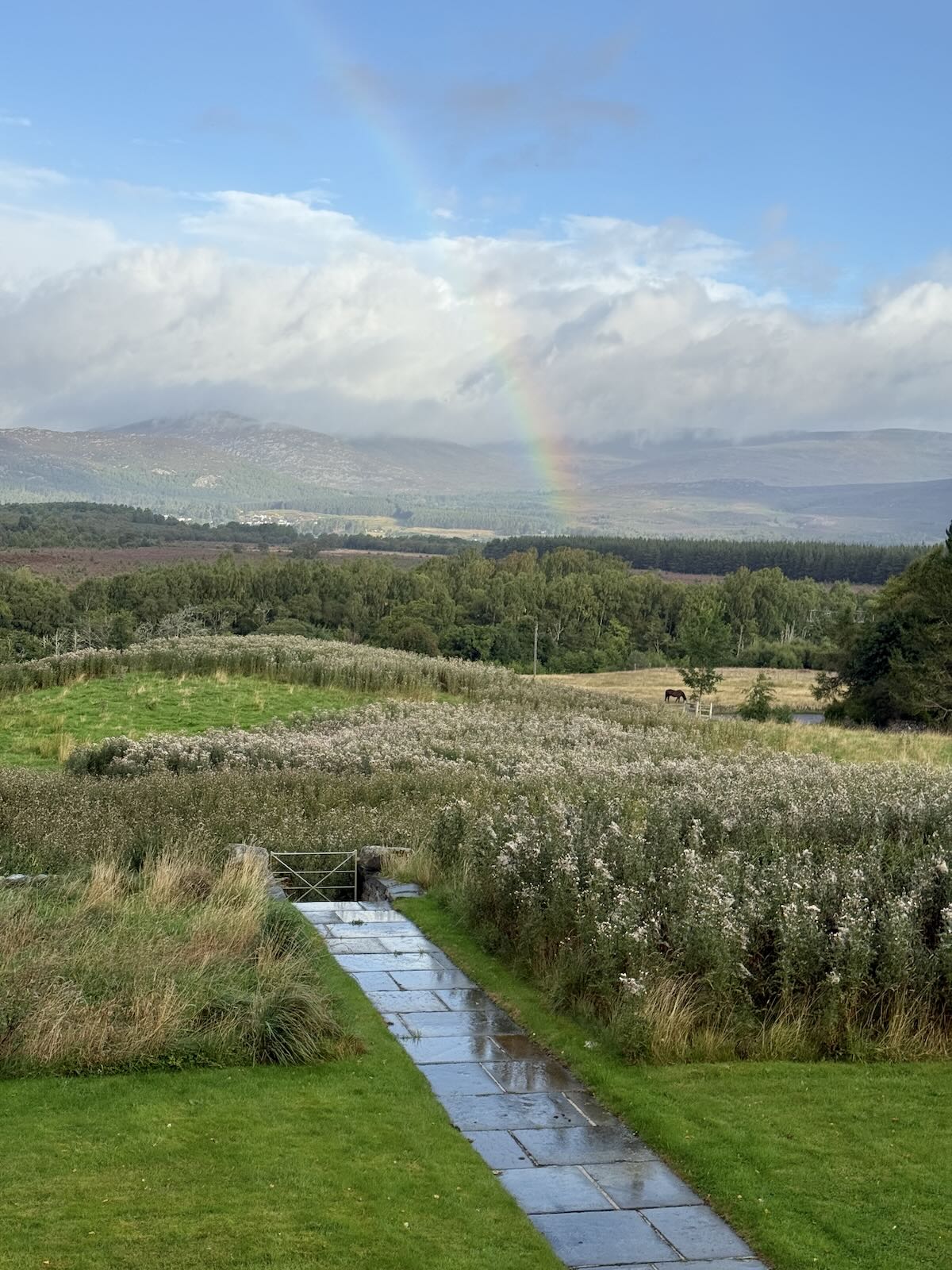 There’s not a lot to do in the area. Adam and I took a walk that was a bit same-ish from start to end, but it was nice to not have to get in the car. The trail was mainly on old logging roads…
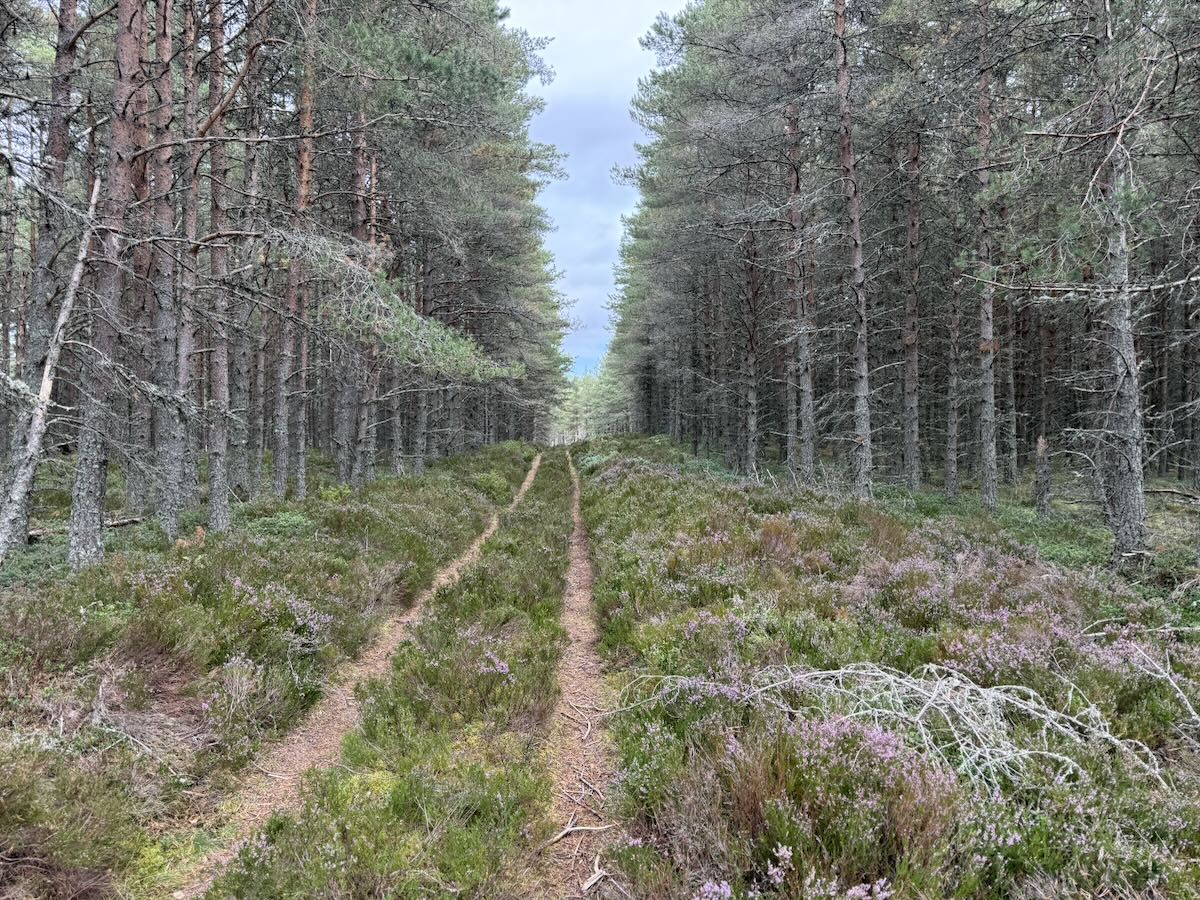 …and occasionally alongside scenes of devastation.
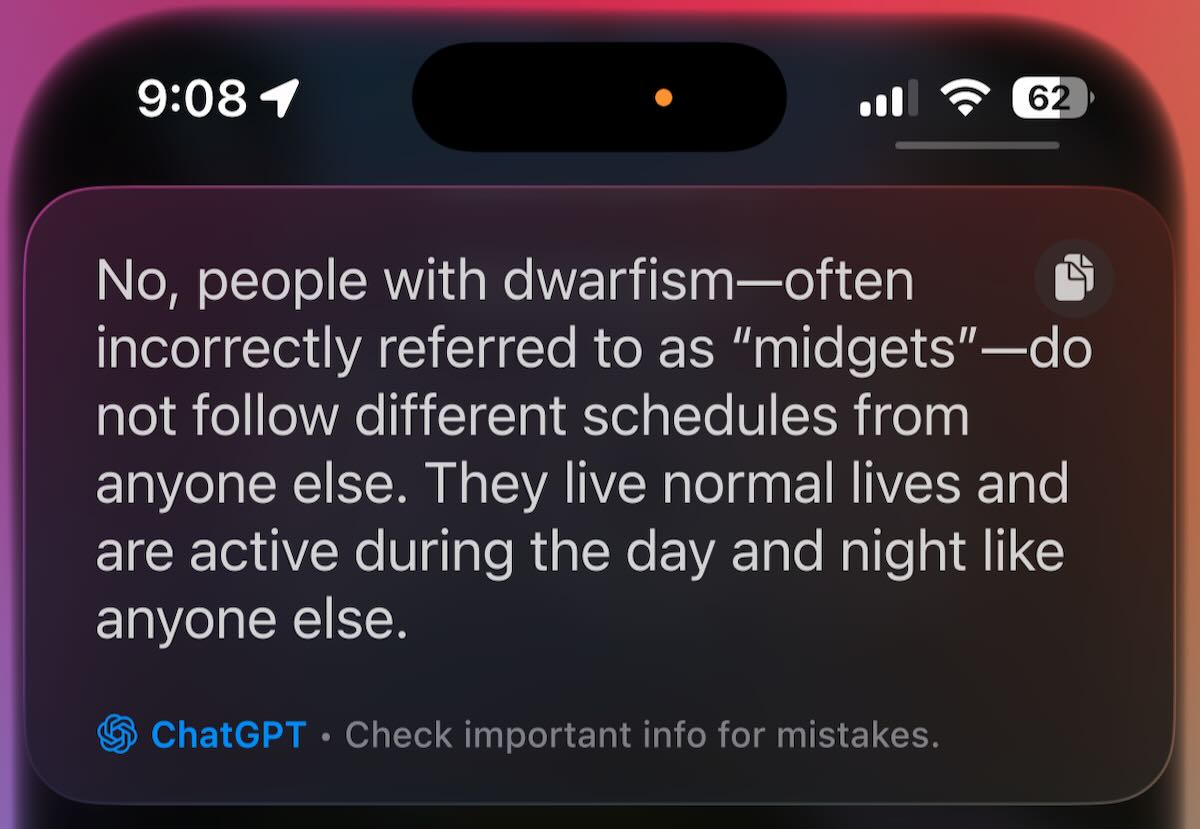
 Before the trip, the four of us were bombarded on Instagram with horrific videos of people fighting off swarms of midges, but we only briefly experienced the insects. At one point, Adam asked ChatGPT for clarification about whether midges come out at night. His permanent record now has a black mark on it.
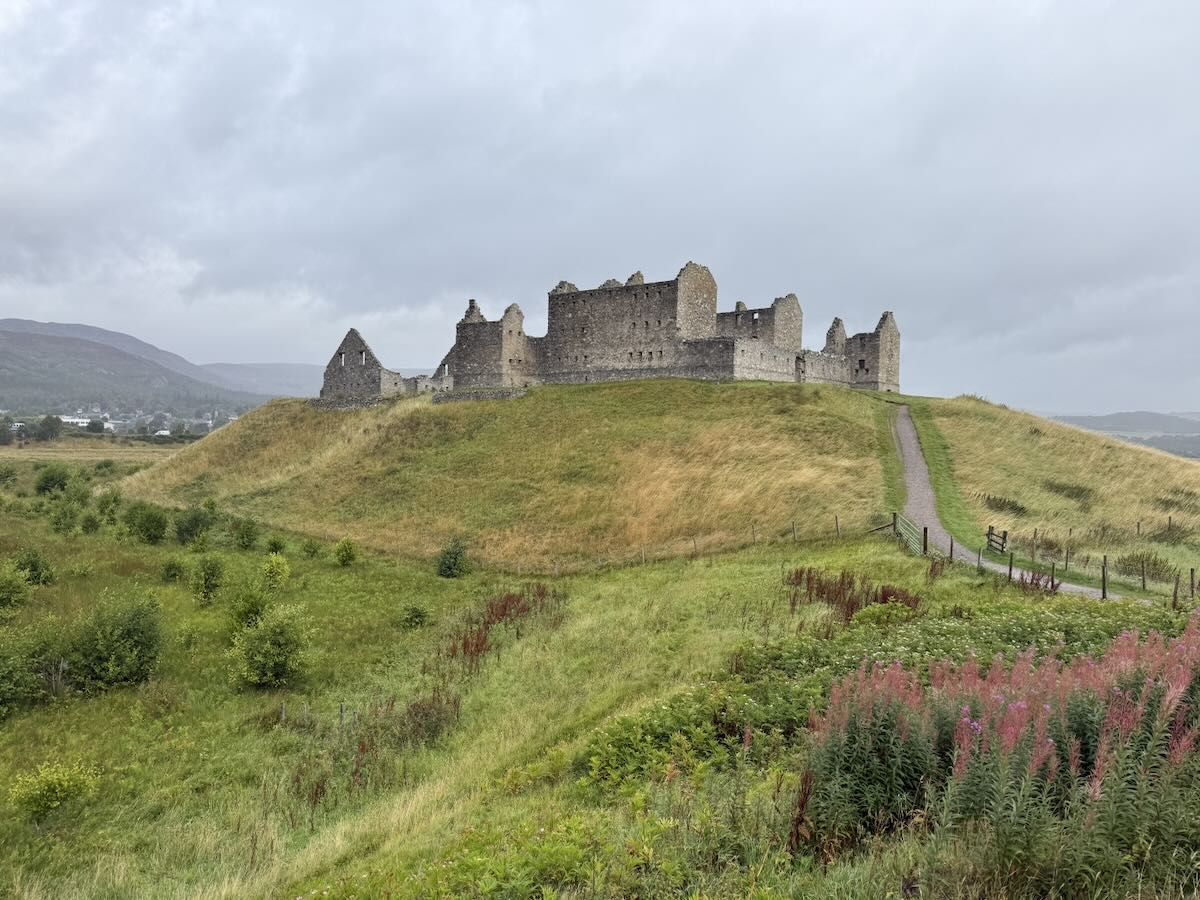
 We consistently make the same trip-planning mistake. On paper, a three-hour drive seems to leave at least a half day, but not if you depart in the late morning and make some stops. That said, the stops were rewarding, including Ruthven Barracks, the ruins of a military fort: “In August 1745, Sergeant Molloy and twelve redcoats successfully repelled an attack by a 200-strong Jacobite force with the loss of just one man ‘shot through the head by foolishly holding his head to high over the parapet.'” Talk about adding insult to injury.
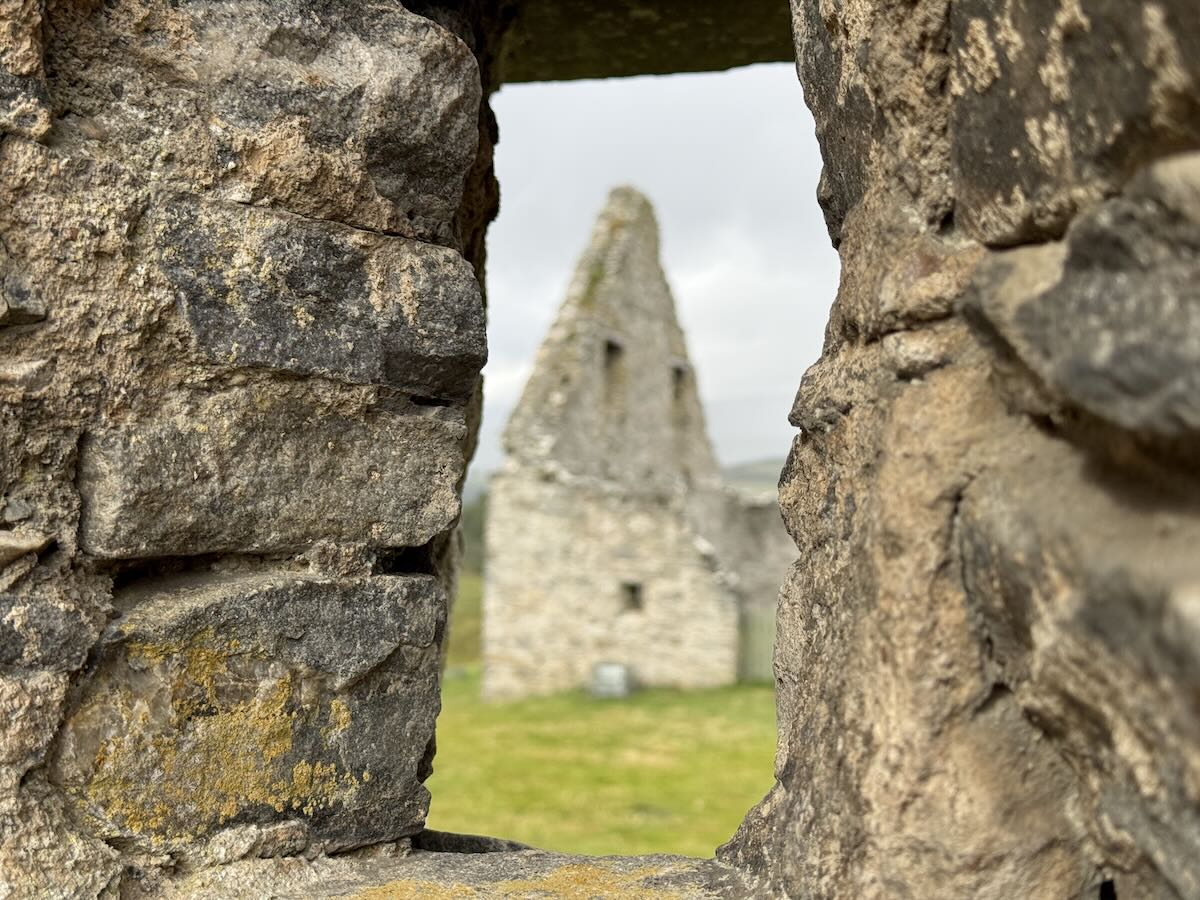 And there are always things that catch one’s eye.
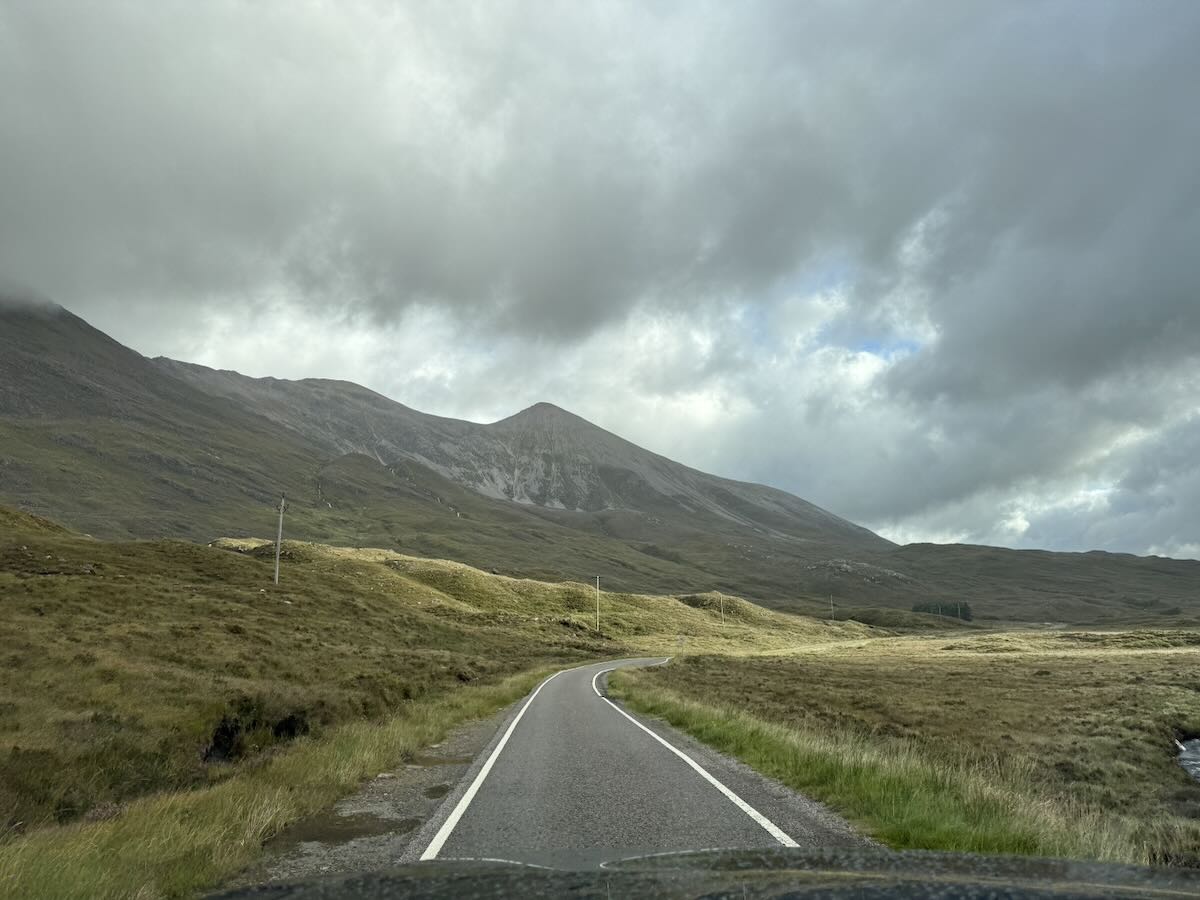
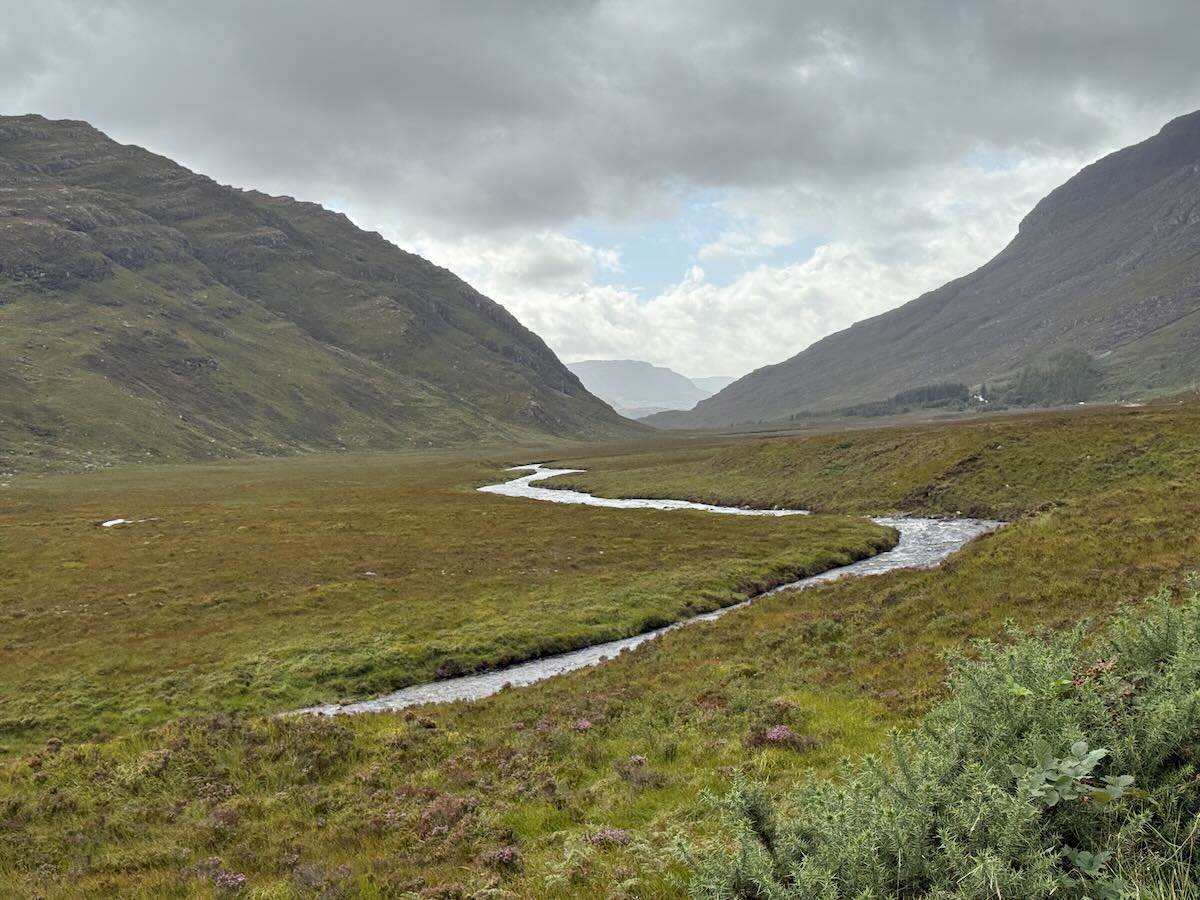
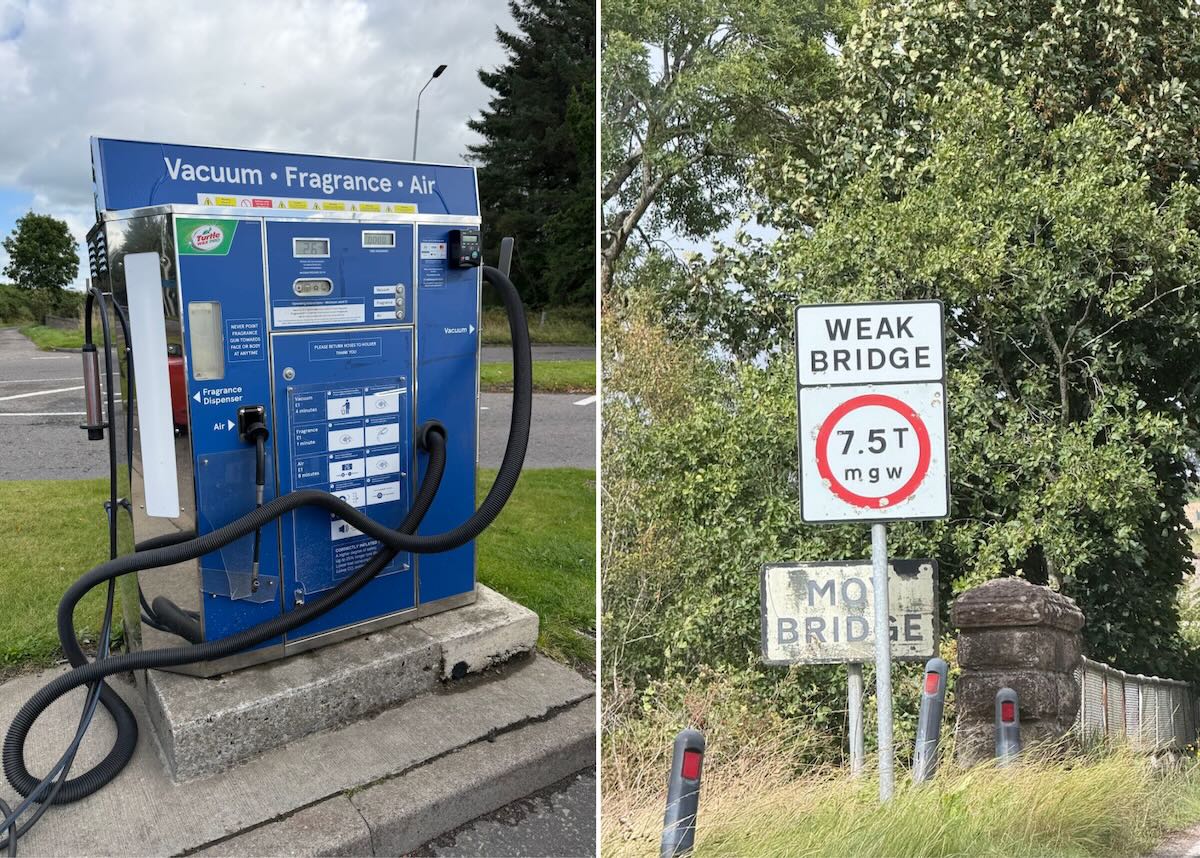 Heading toward the west coast, the landscape turns sparer and more dramatic, and the roads more narrow, often just a single lane with abundant pull-outs to cope with oncoming traffic.
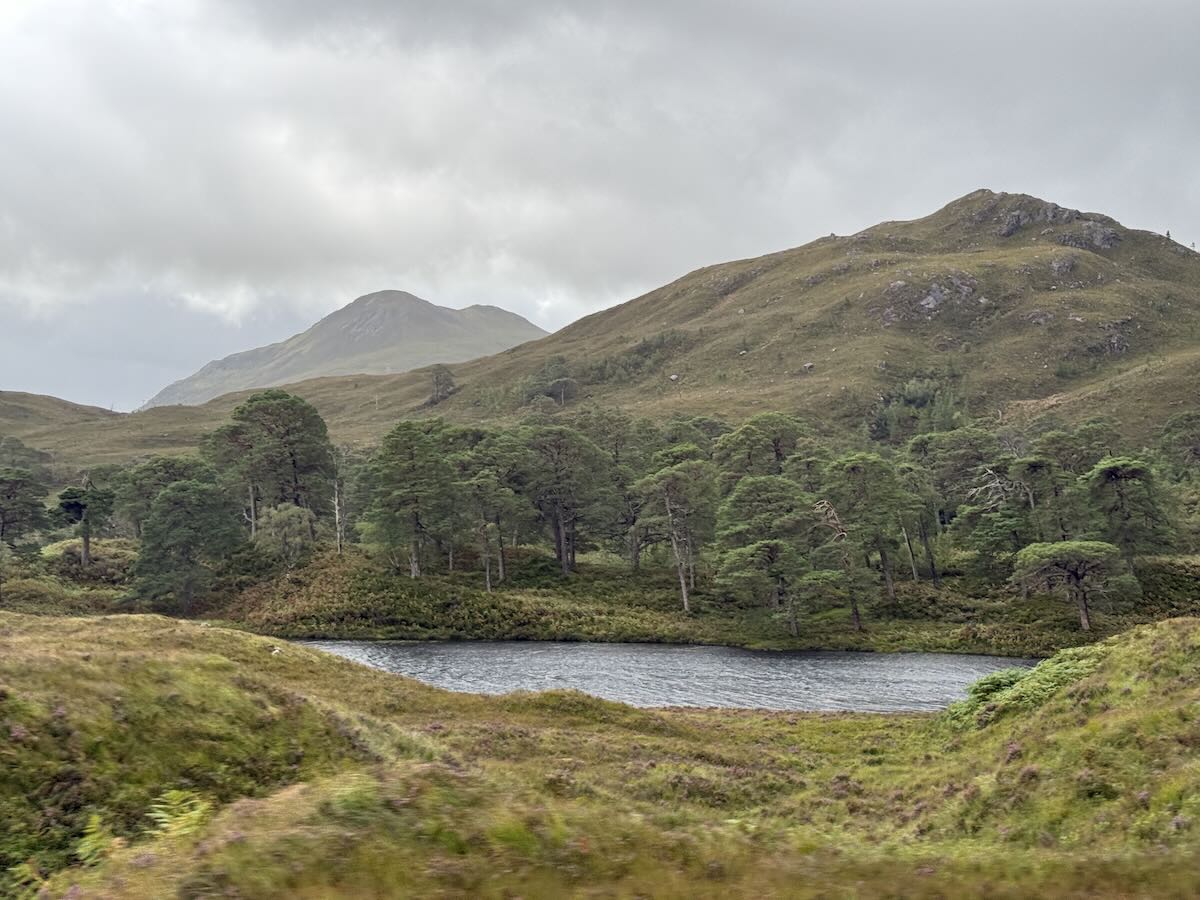
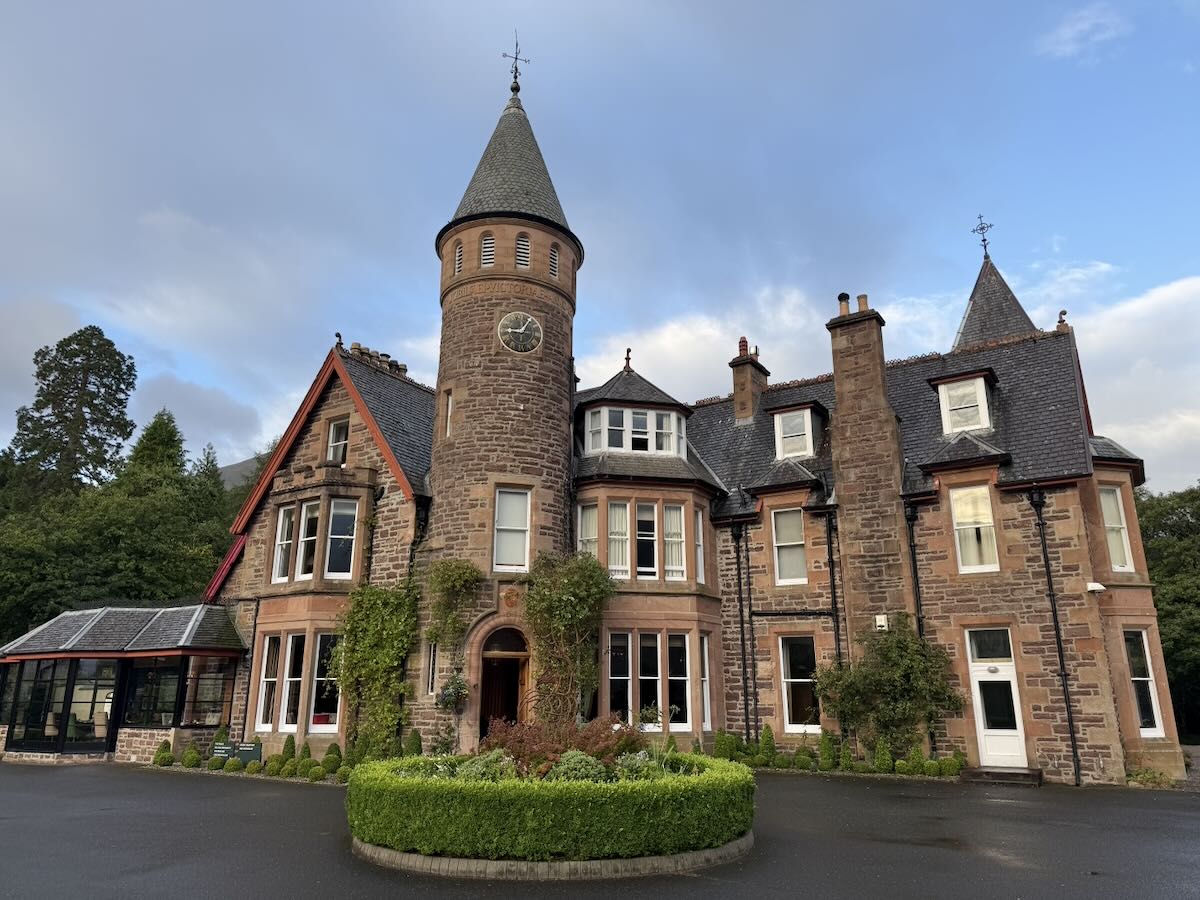
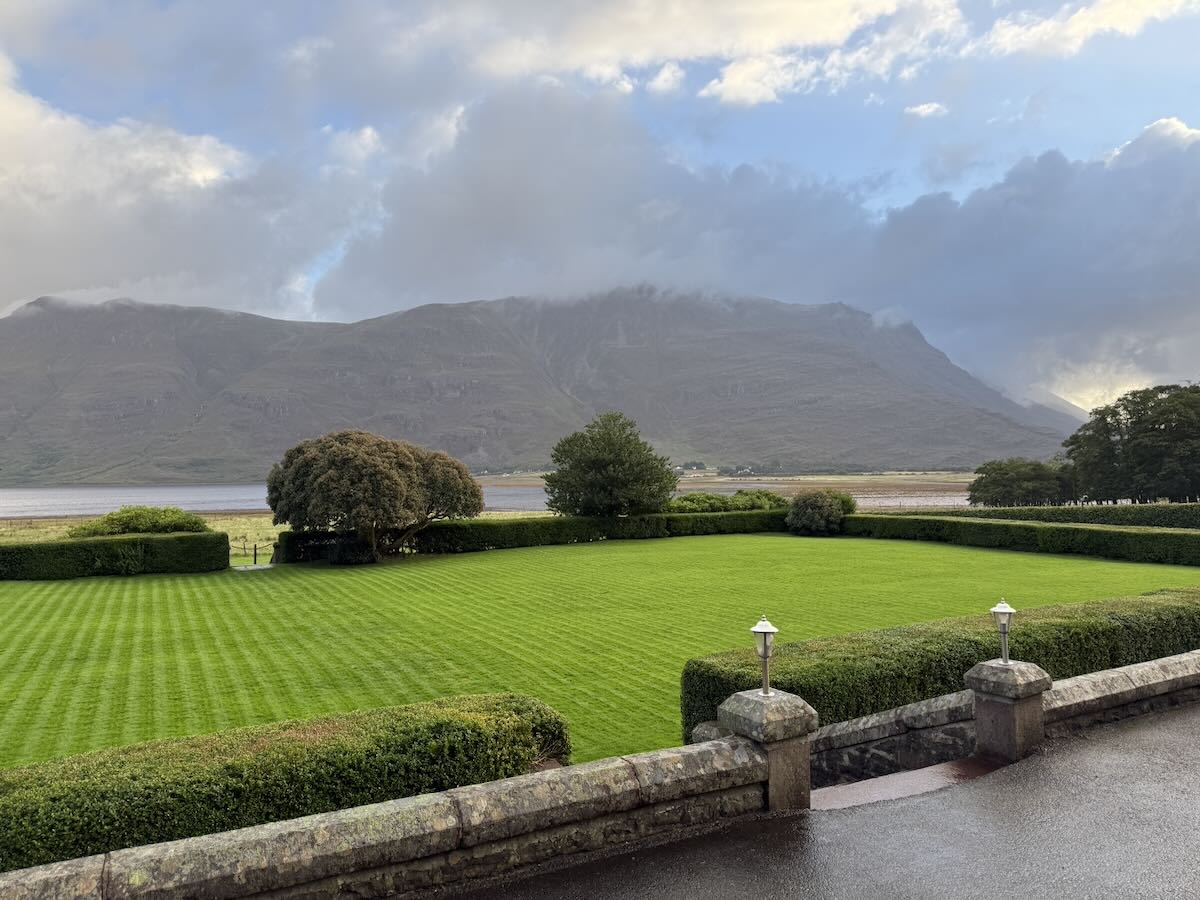
 A hunting lodge completed in 1887, The Torridon has an incredible location on the shore of Upper Loch Torridon. It doesn’t face much competition, which may explain the off-putting interactions we had while booking: unanswered phone calls; restaurant reservations requiring a nonrefundable deposit of £20 per person (for non-guests, we later learned); no guide services on weekends because the guy in charge reportedly wanted a life change. But the building sure is a honey.
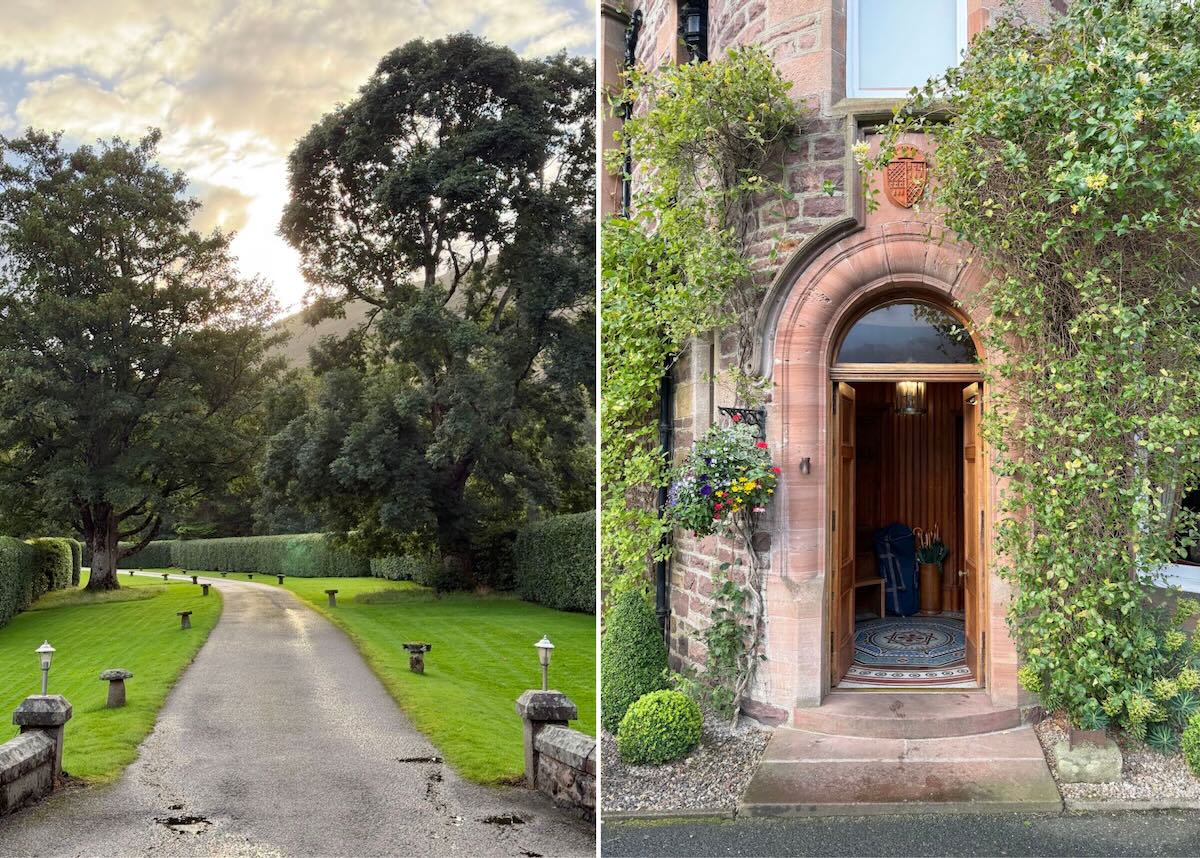
 The interiors try a bit too hard to be zesty, but not so much that it impacts one’s experience. Well, that weird four-seater in the bar—to discourage sleepers, like in a bus station?—might have been a problem, if the bartender had deigned to acknowledge us.
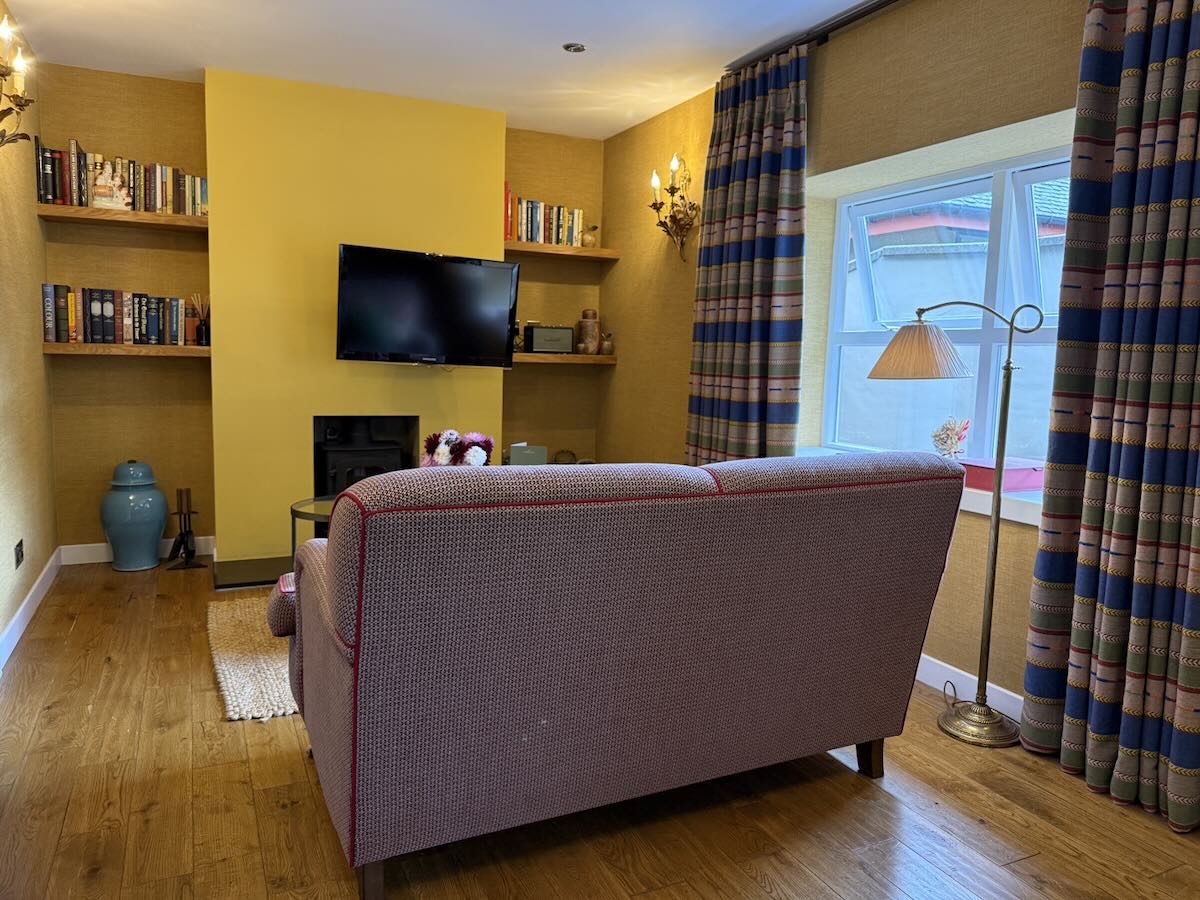
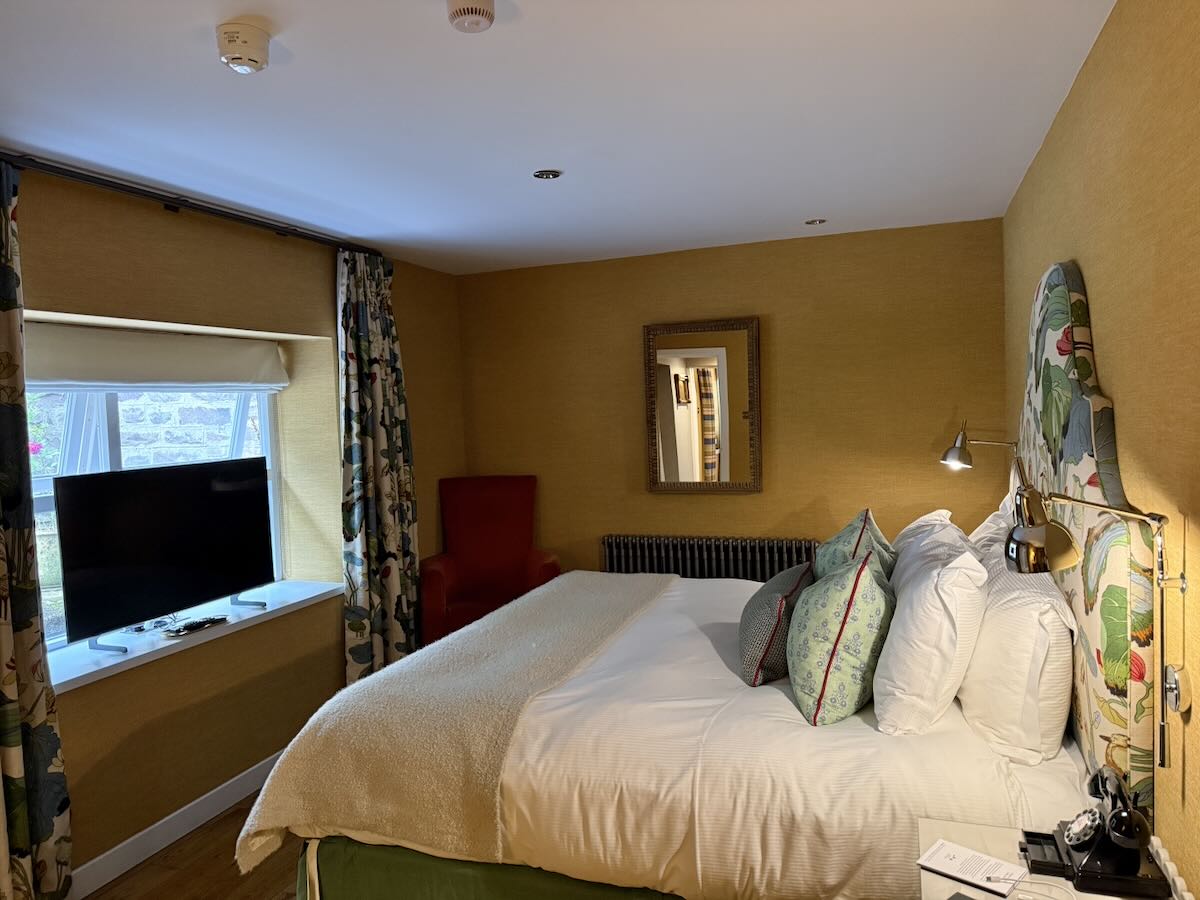
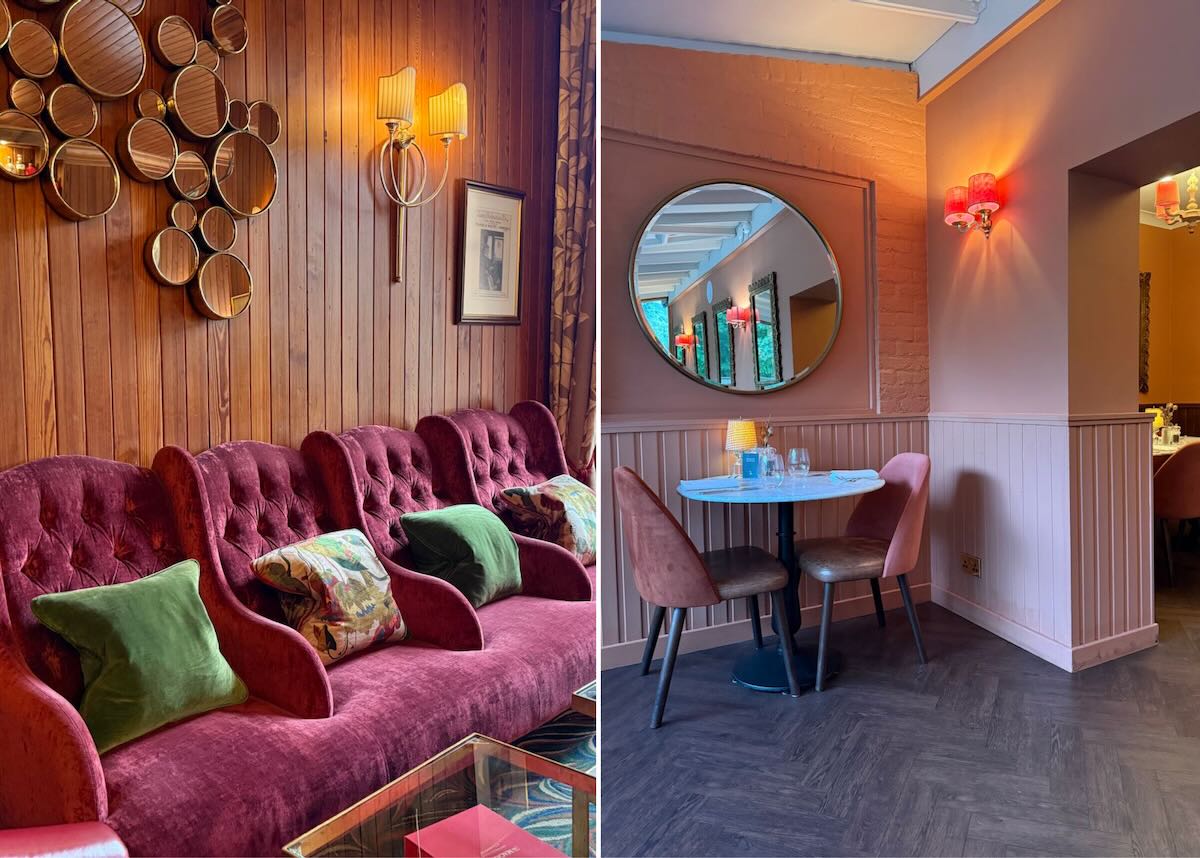 Adam and I splurged for a Master Chestnut Cottage Bedroom, which bit us in the rear. It was two rooms, but both quite small, with low ceilings, and located in a repurposed service annex behind main house. What’s worse, the TV hung off-center or the TV blocking the lone window? While the outdoor tub was swell, we vowed that if we were to return, we’d insist on the main building, where our friends had a lovely room.
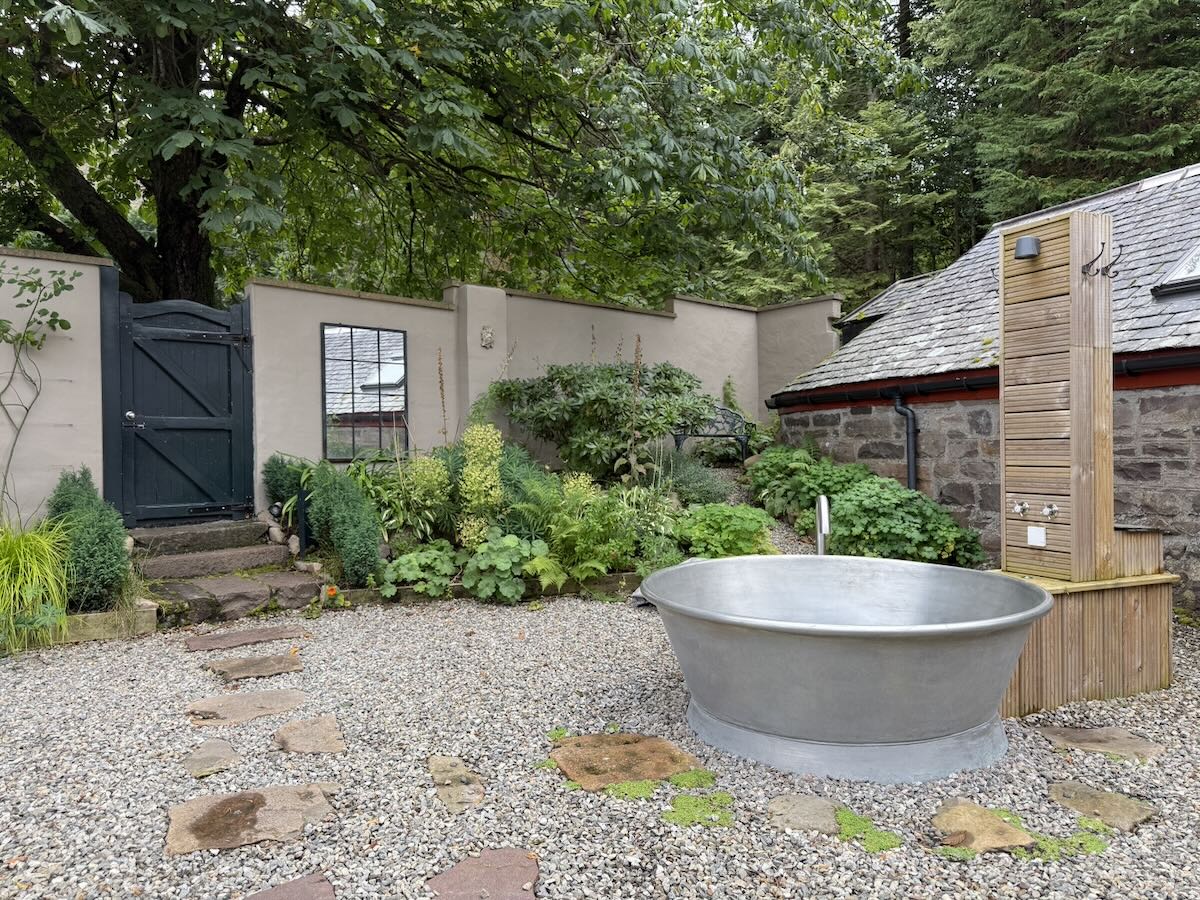 While The Torridon is not the hotel it thinks it is, the setting is spectacular, and we spent an idyllic afternoon playing more Scrabble in a pretty room with a view of the loch and a platter of tea, scones, and clotted cream. We didn’t feel like enduring the £150-per-person, nine-course dinner at the Michelin one-star restaurant, opting instead for two dinners at the more casual establishment, which was fine. Best of all were the kippers with a poached egg at breakfast.
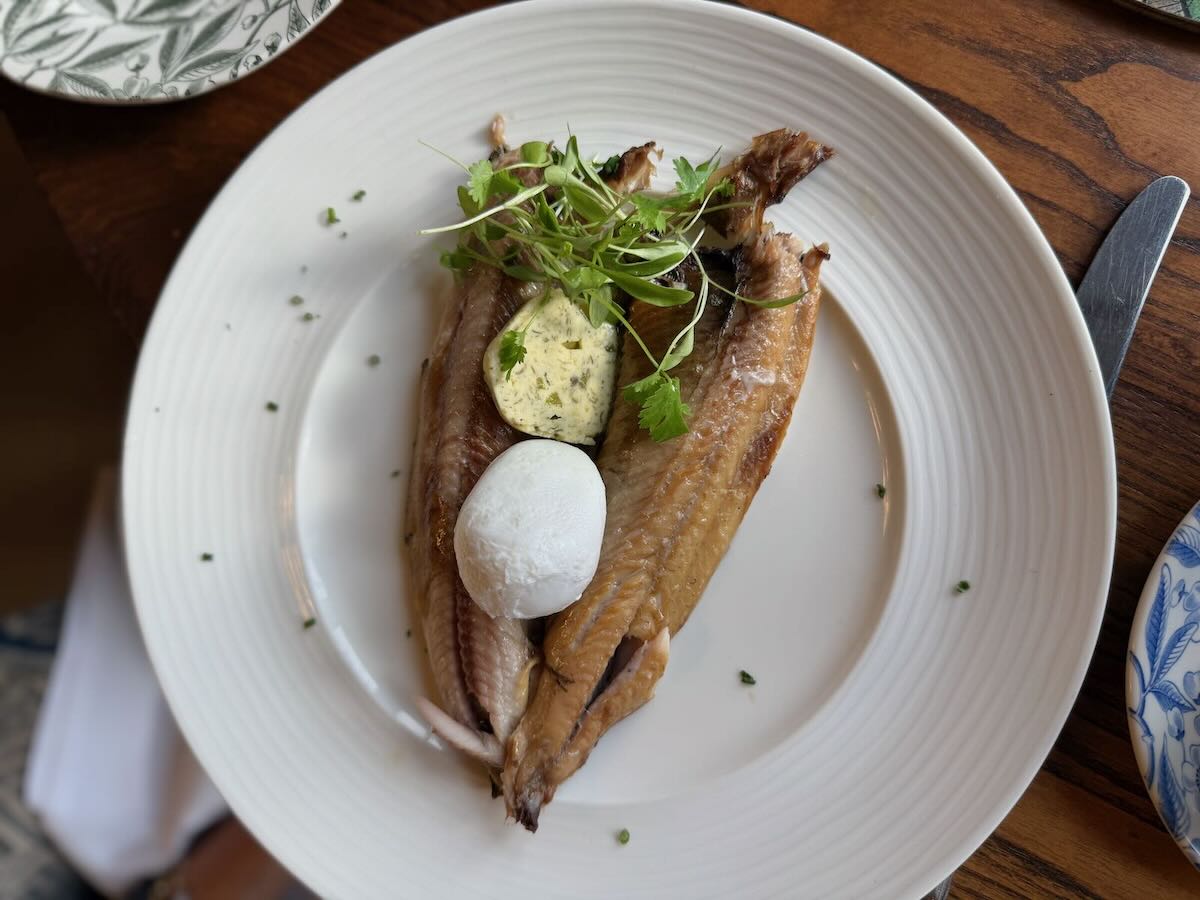 During our one full day at The Torridon, Adam and I hired a guide for a hike. The plan was to attempt to bag a Munro, but the weather looked more worrisome than usual. Instead, he took us on the Mountain Trail in the Beinn Eighe National Nature Reserve. (The link is to the Walk Highlands website, sort of a Scottish AllTrails, which has a helpful button you can click to hear a pronunciation.) It was a fantastic hike, through woodlands, up a ridge, and across land that felt like another planet, or at least somewhere much farther north. (At the top, we added on a spur in order to bag another Corbett, for what that’s worth.) Again with the Border Collie antics.
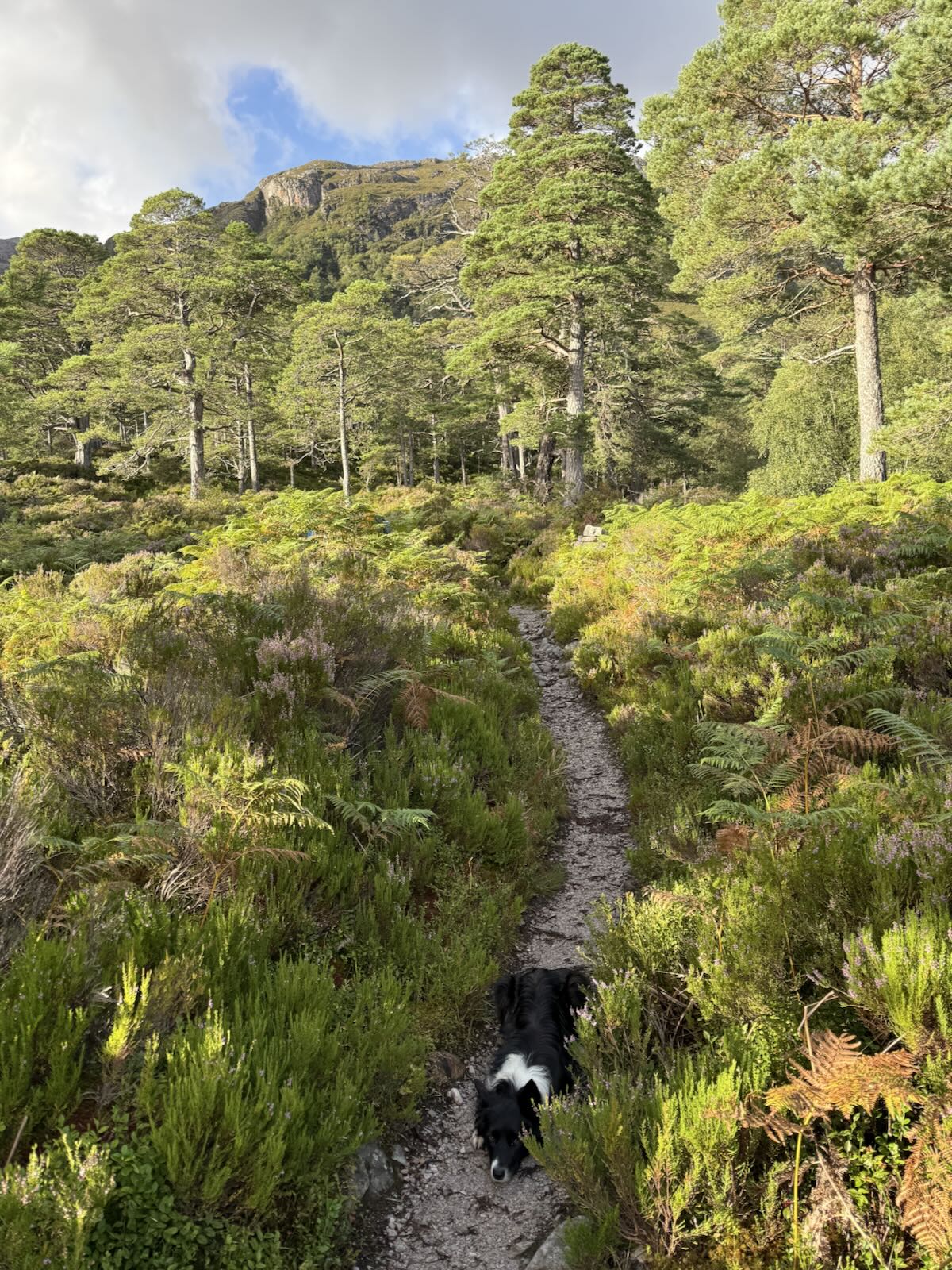
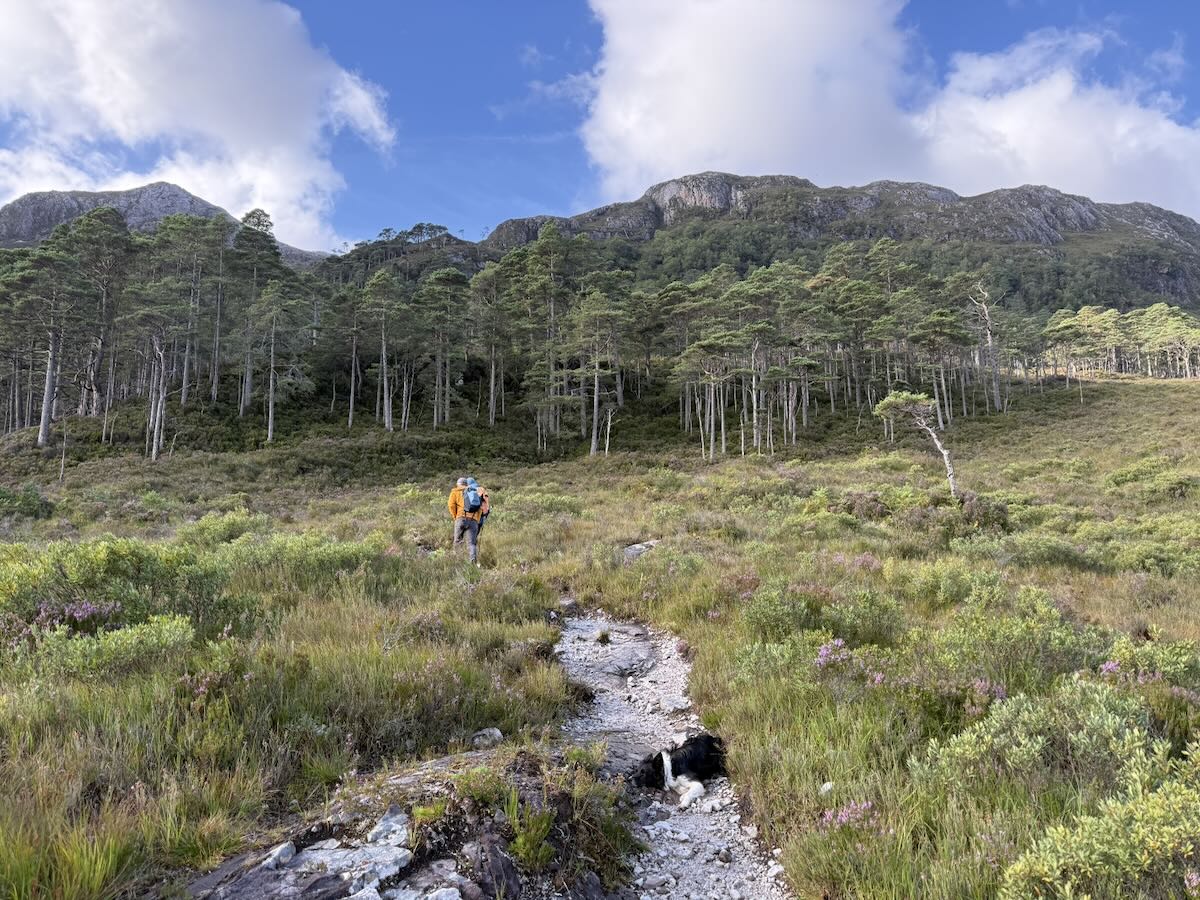
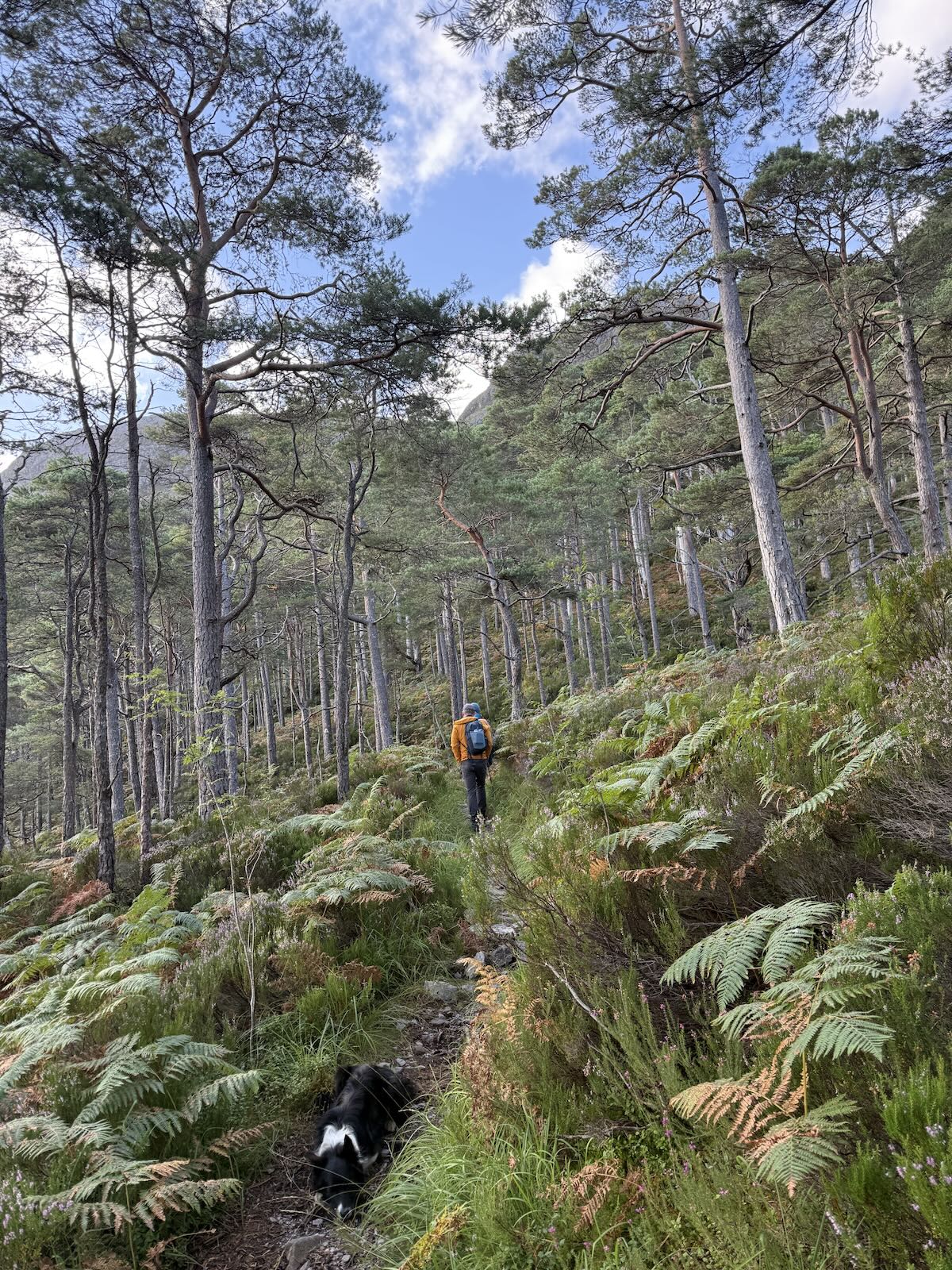
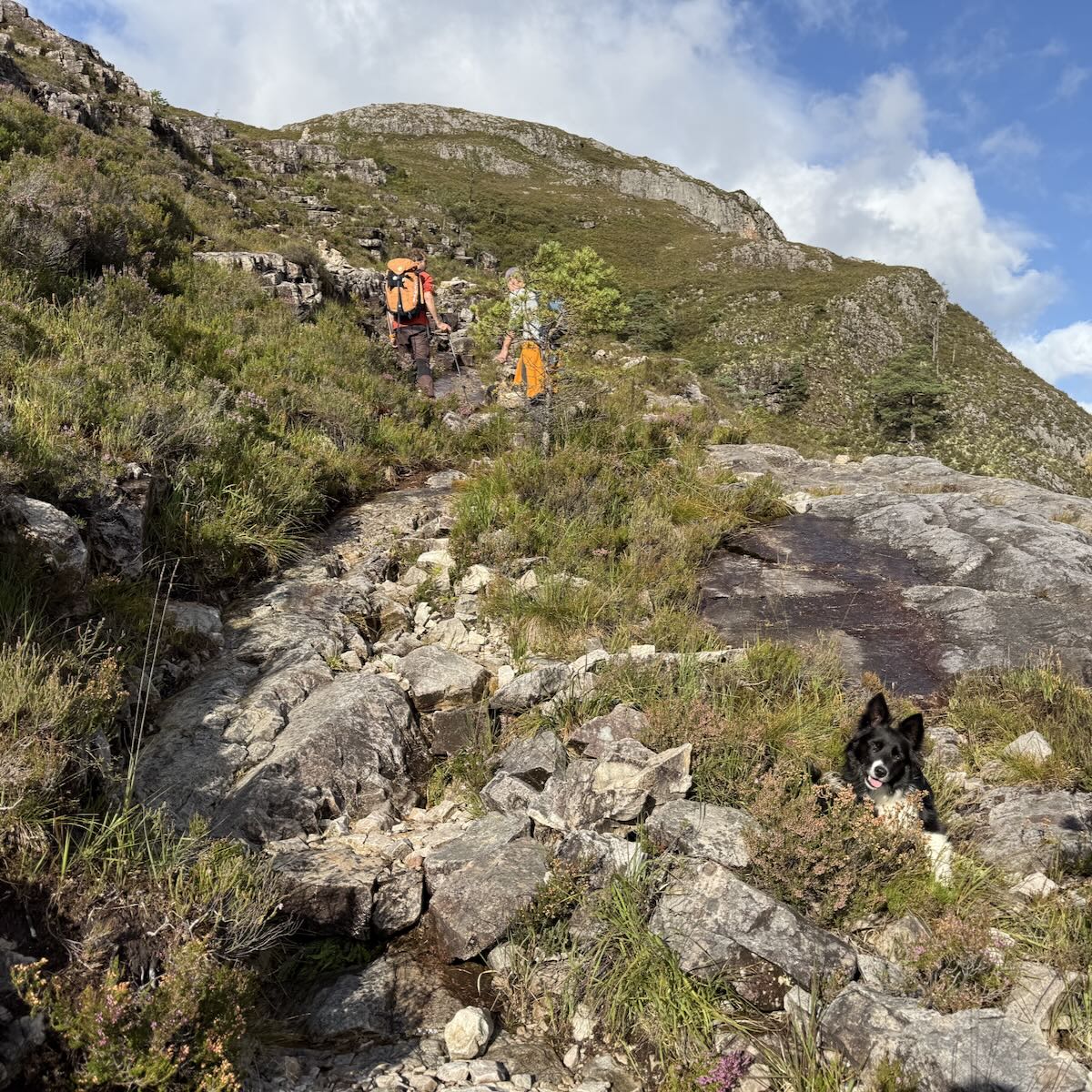
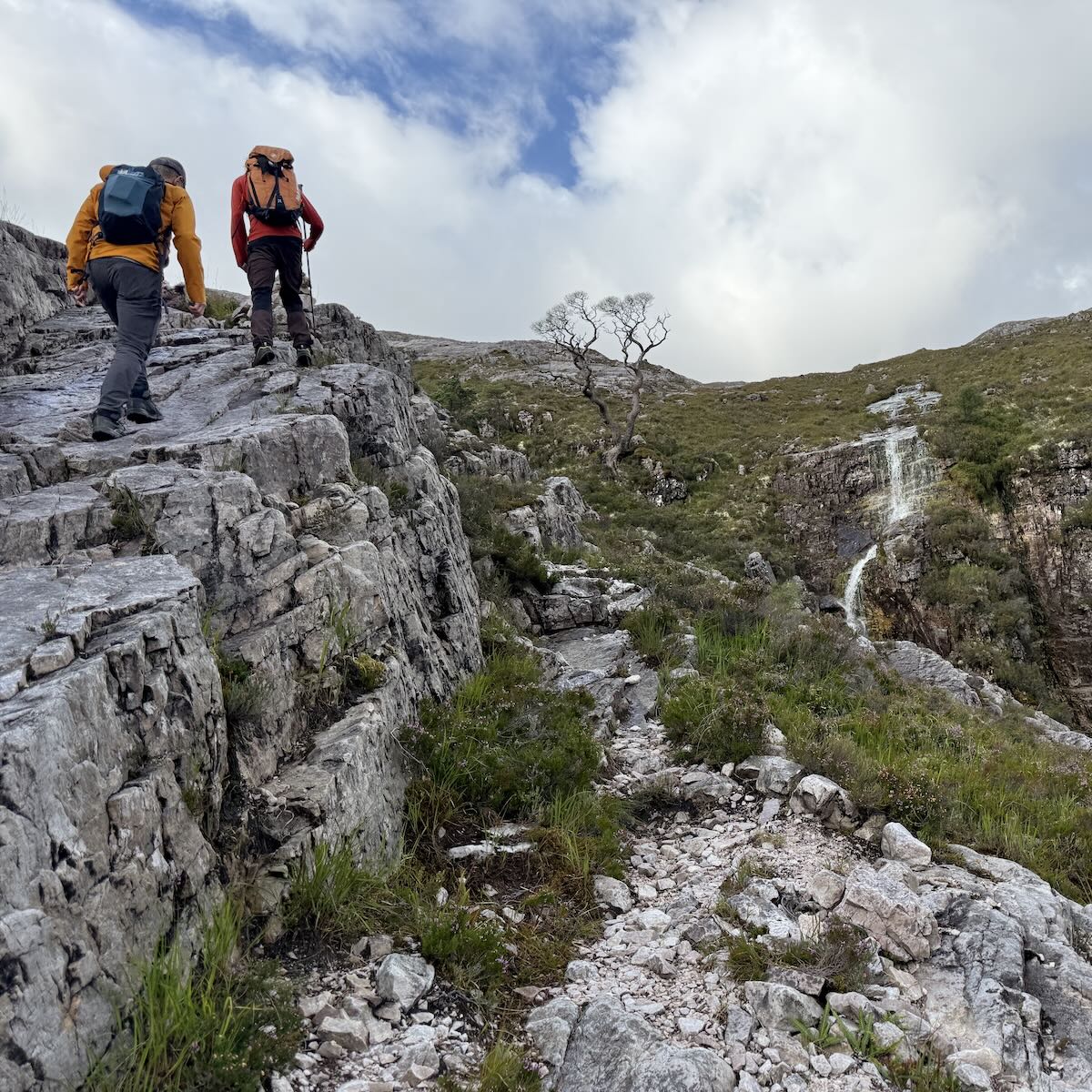
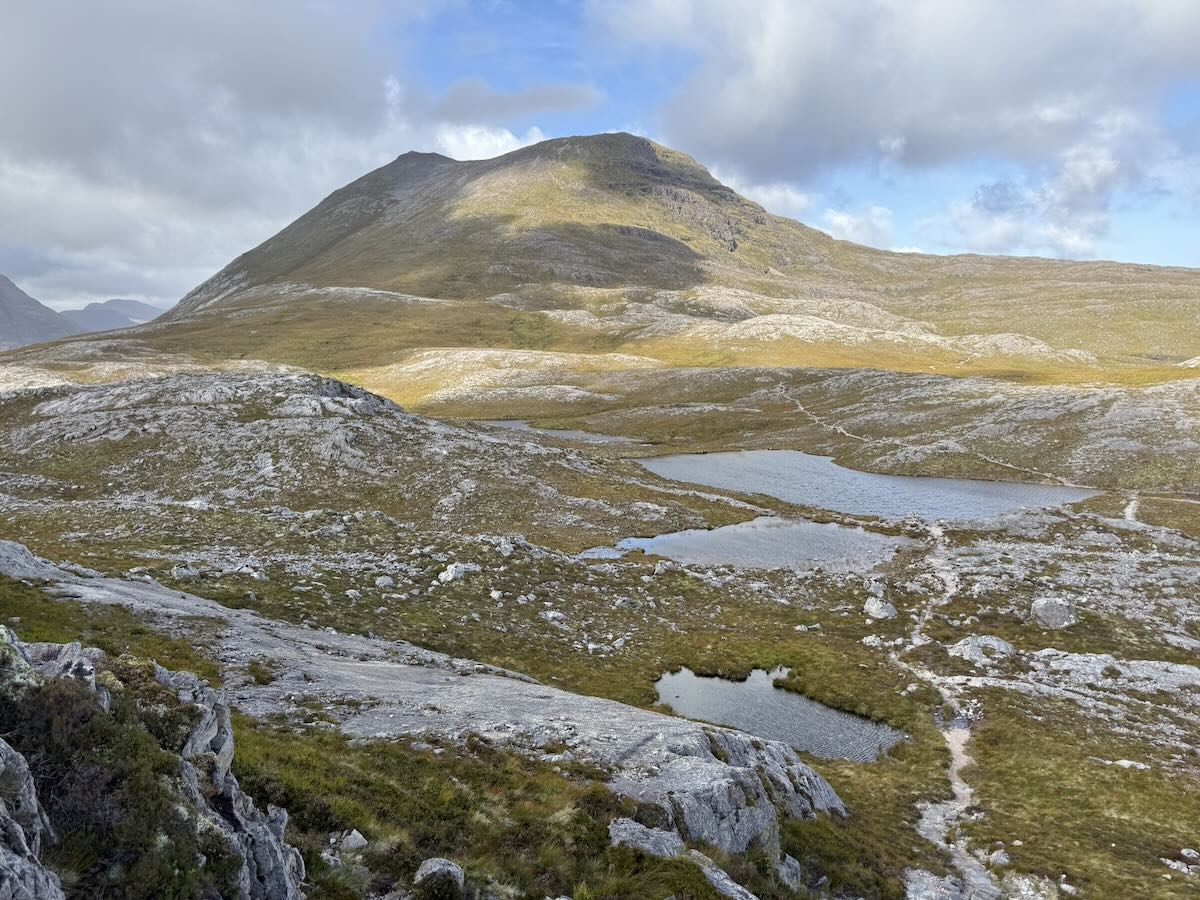
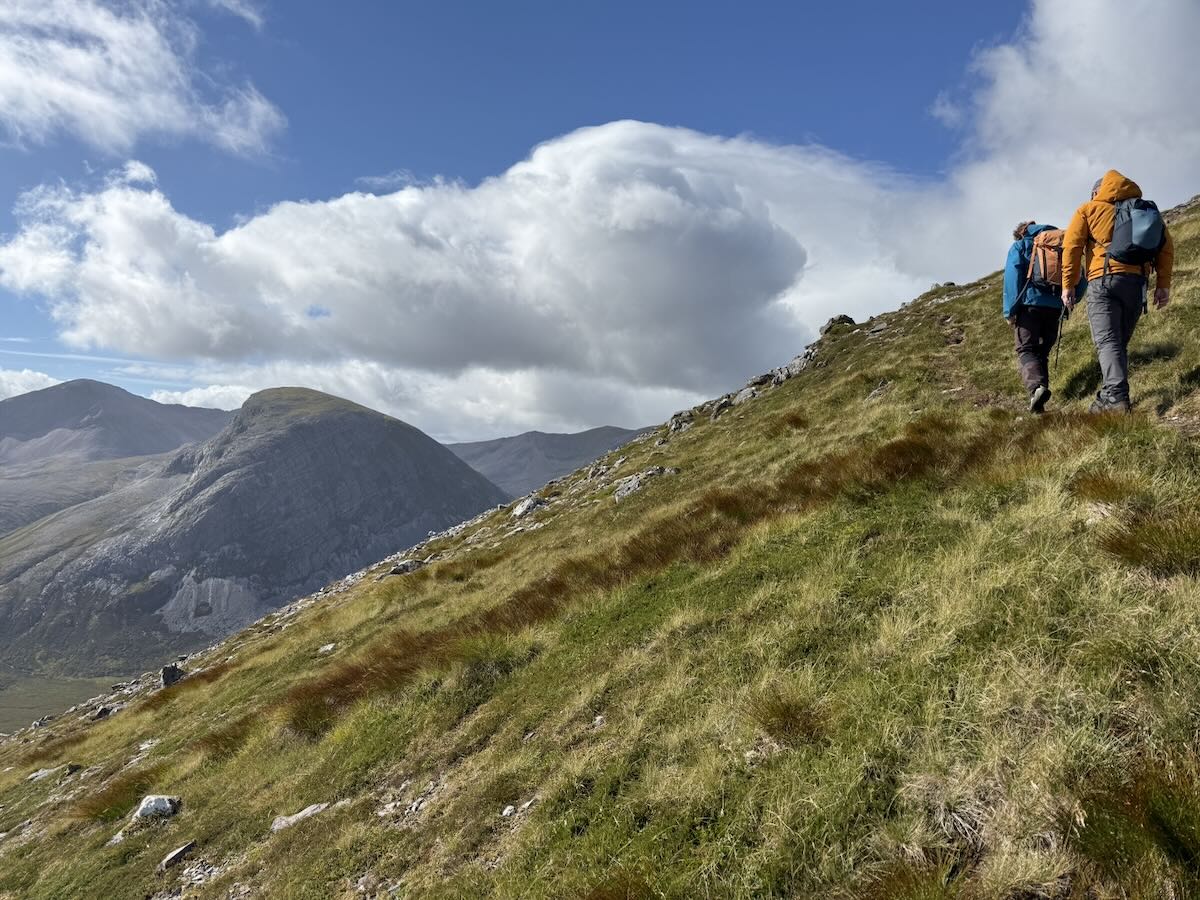
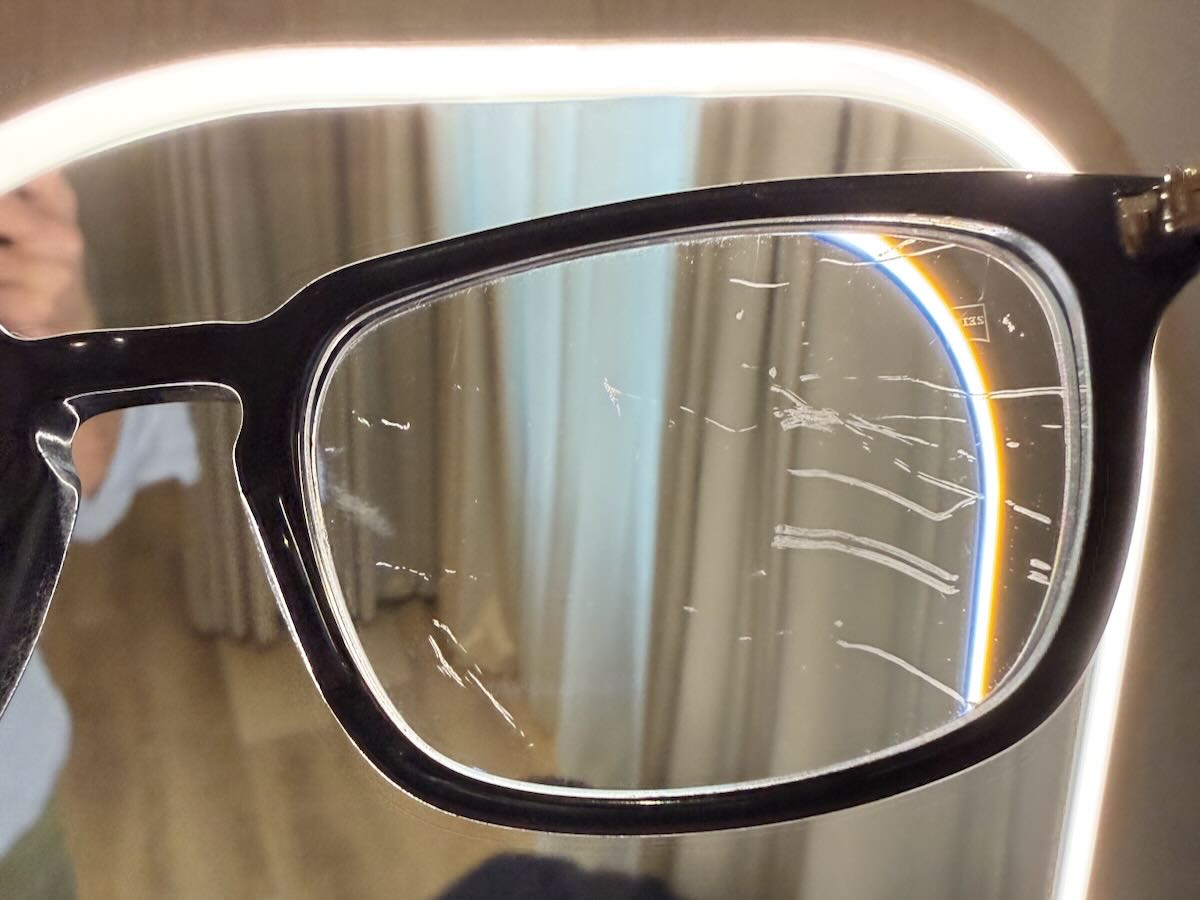
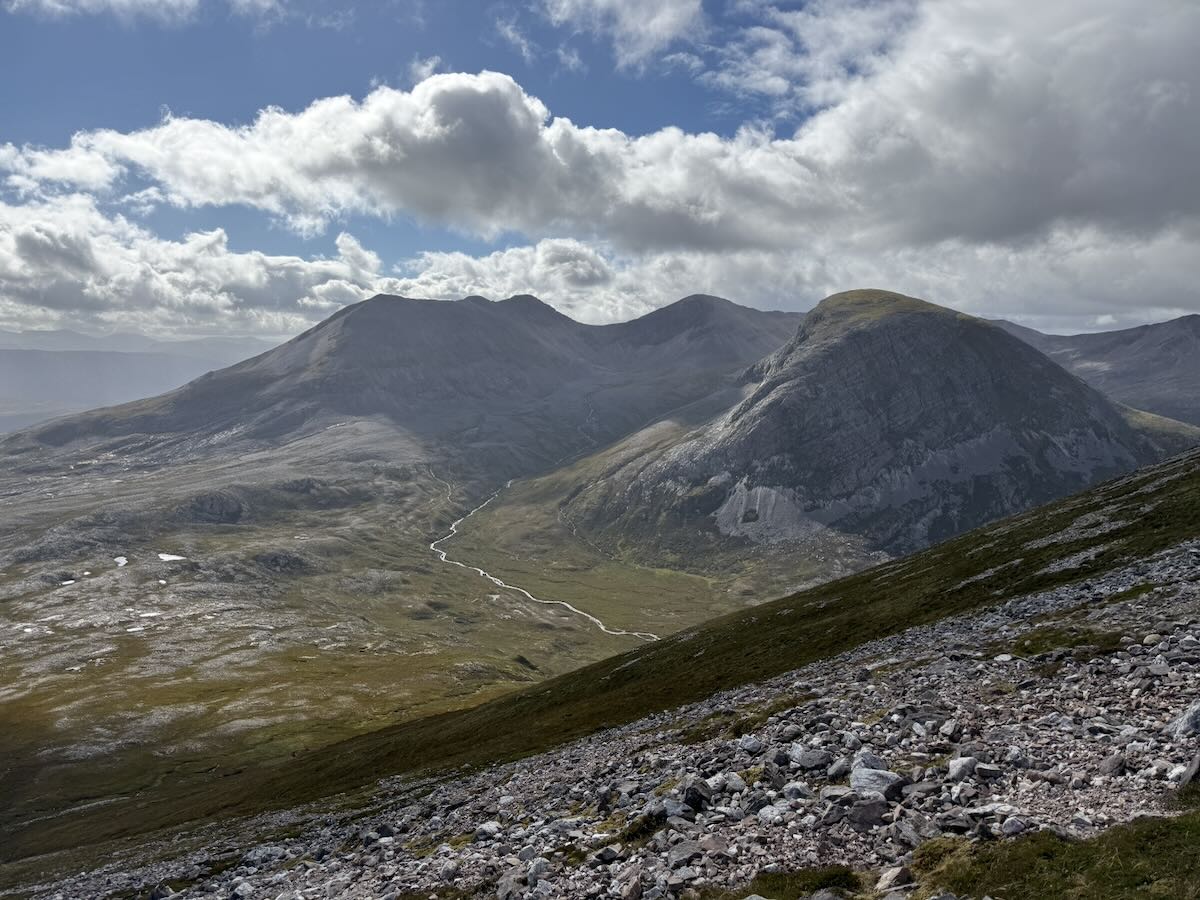 If I was proud about being a good hiker for my age, you know what cometh next: I face-planted into the gravel outside our hotel room. Better my glasses than my teeth.
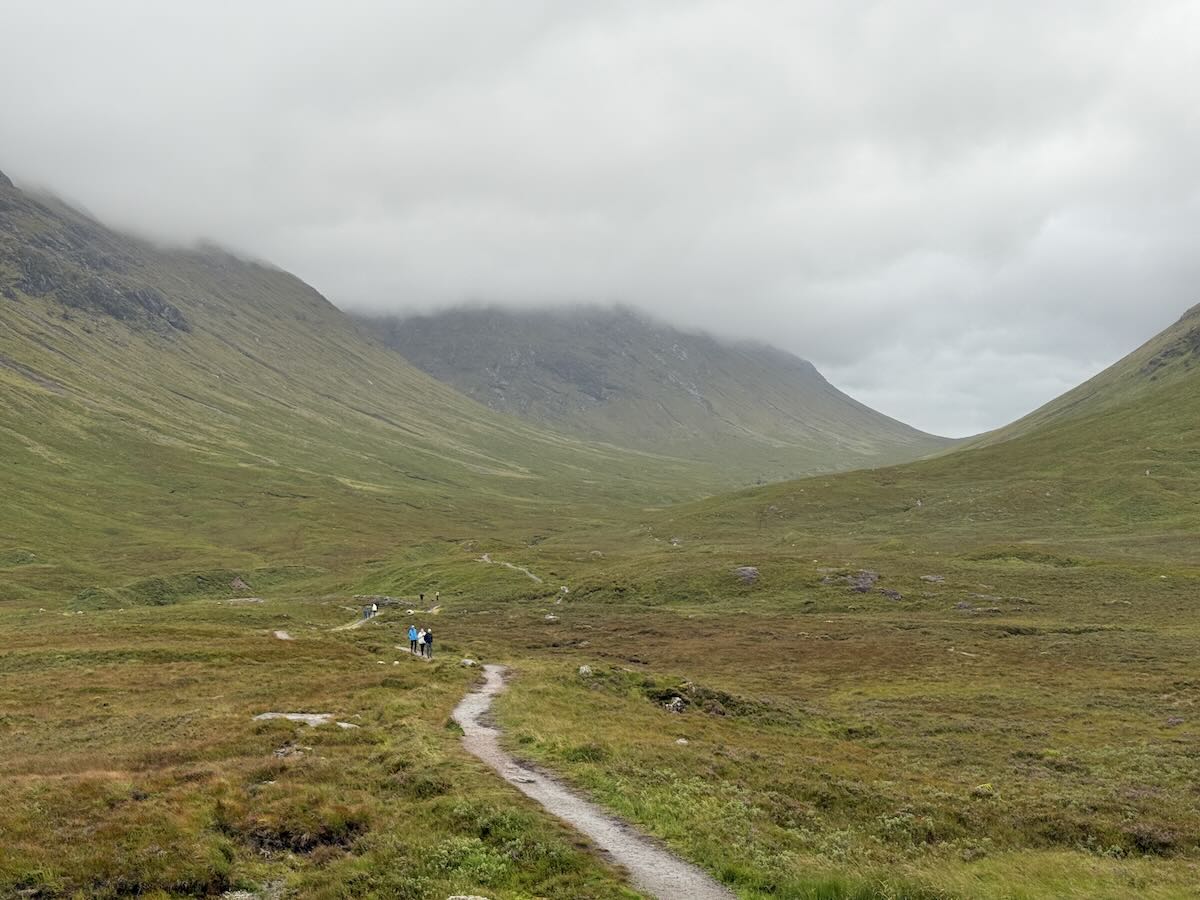
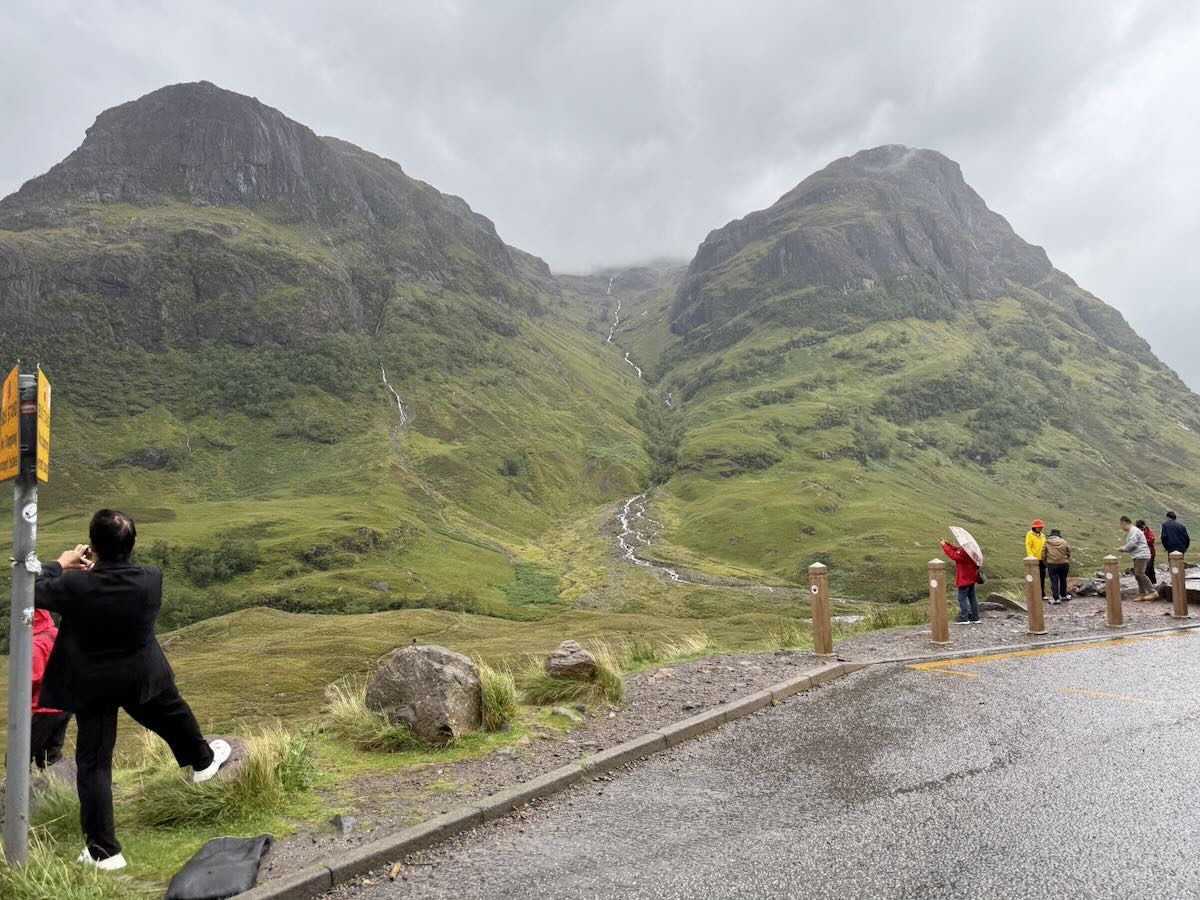
 Our final stop in the Highlands was The Pierhouse Hotel in Port Appin. We drove out of our way to check out the Glencoe valley—it’s gorgeous, although after so much isolation, we found it strange to encounter tourists. And I’ll spare you more deforestation shots.
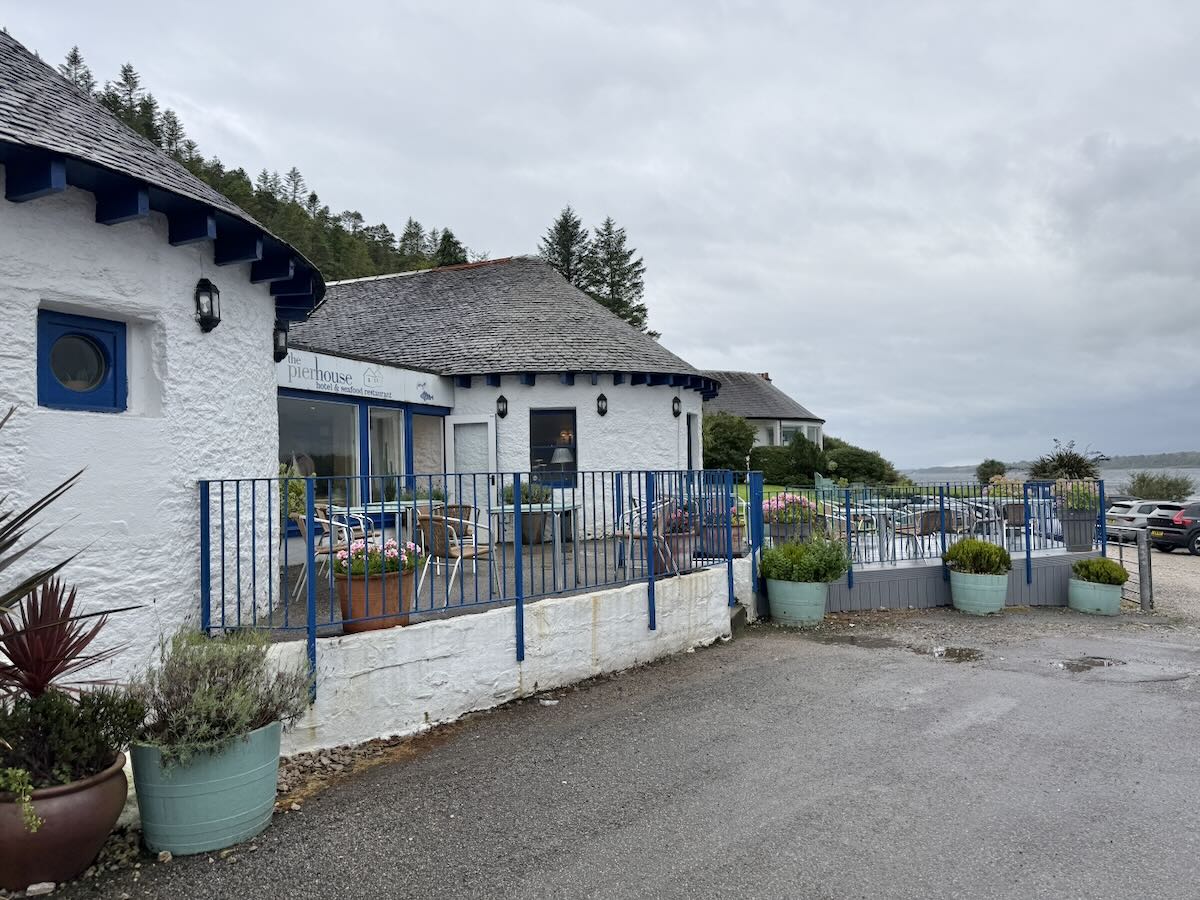
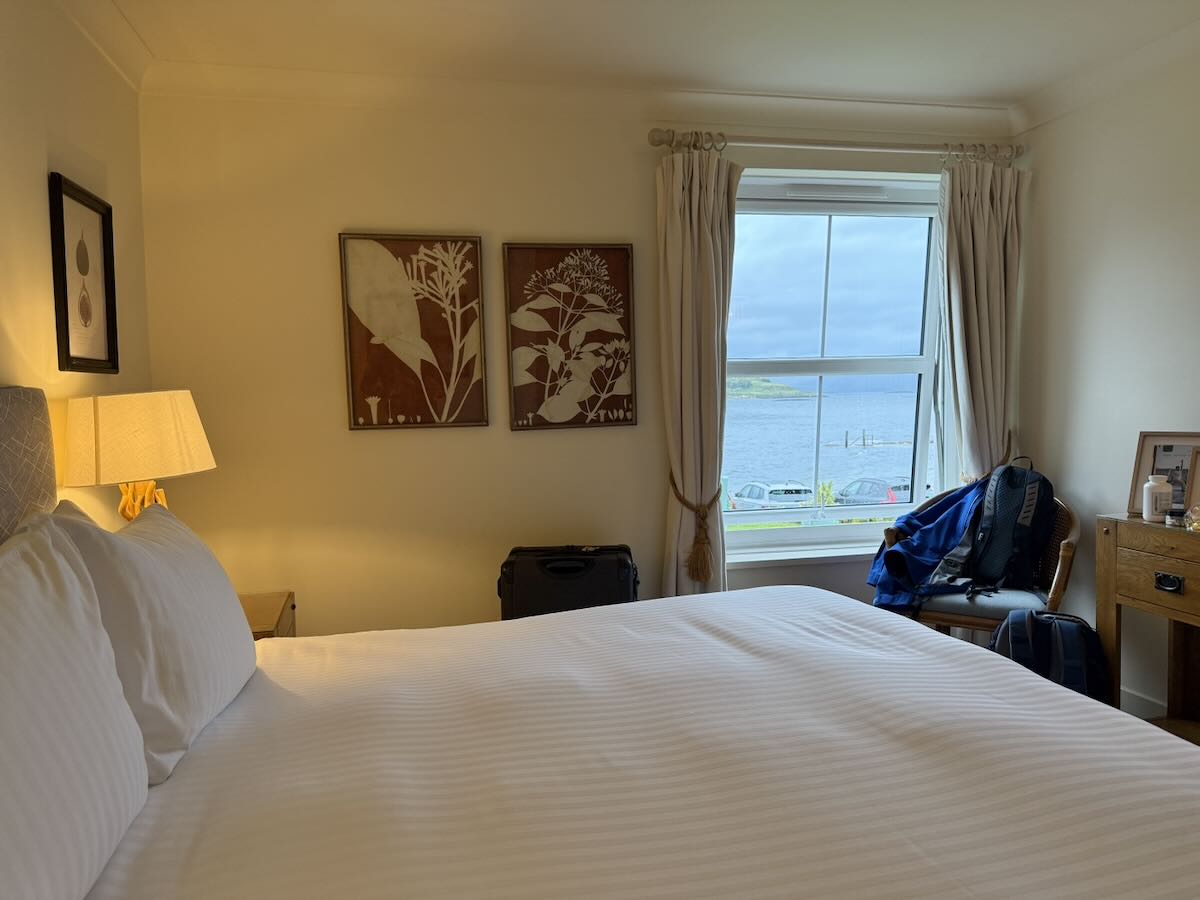
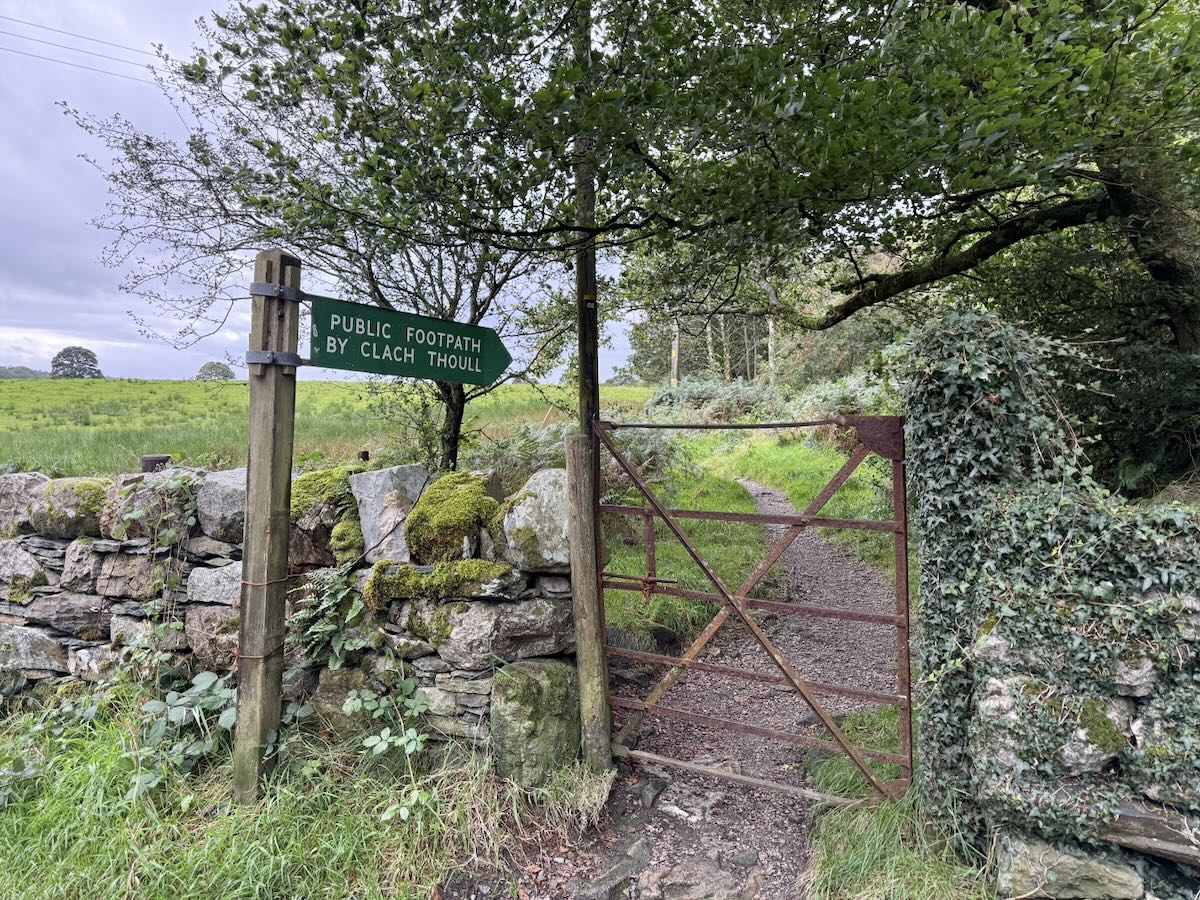
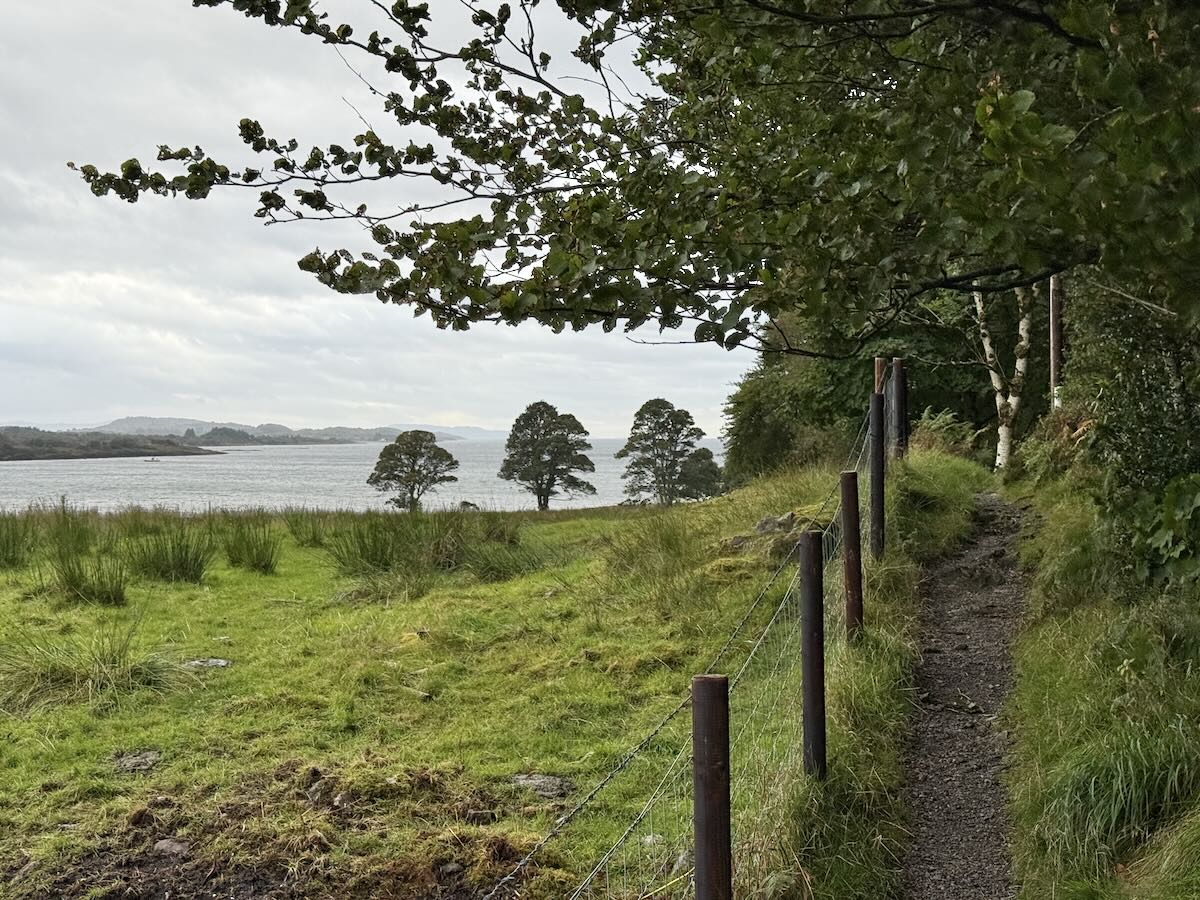
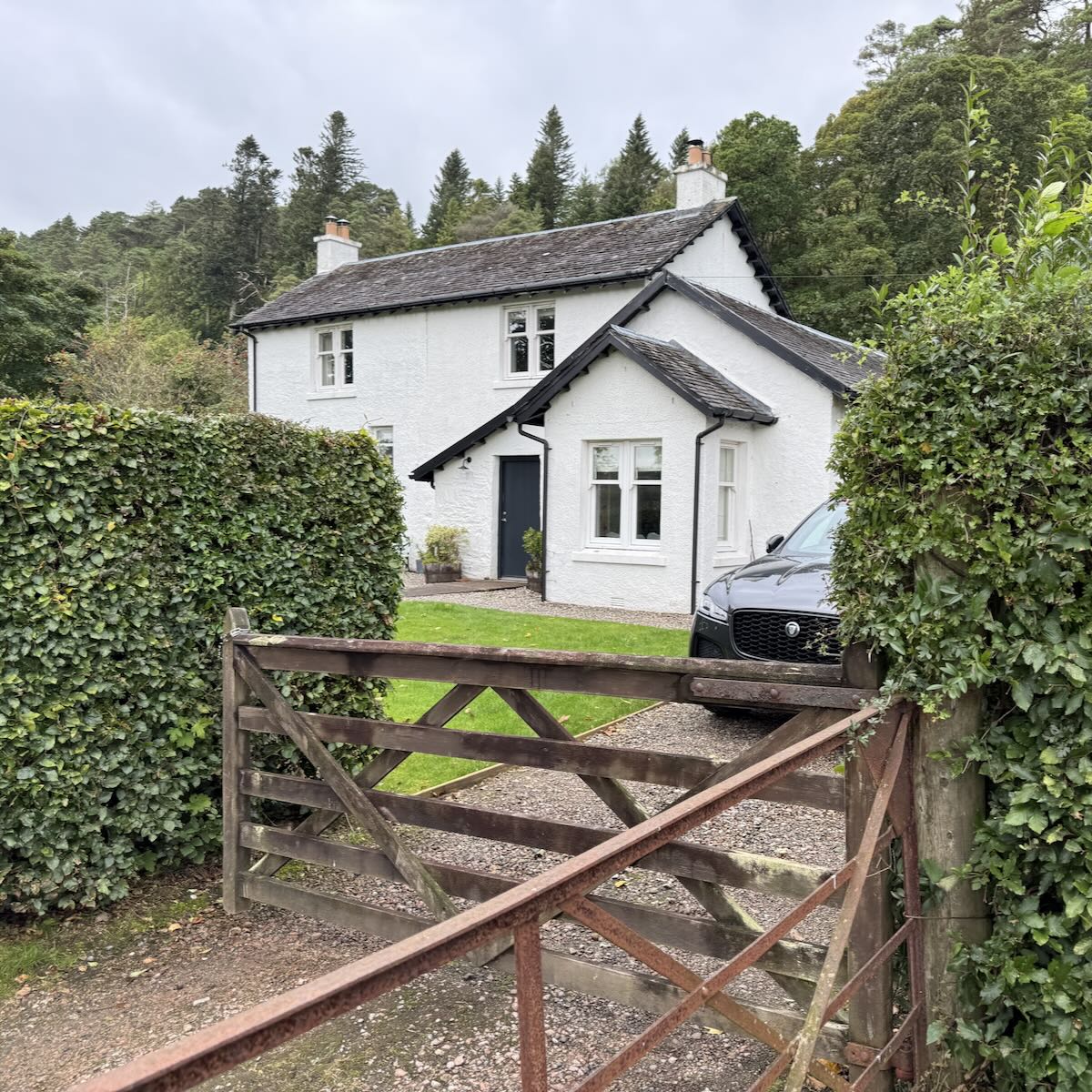
 At half the price of the other hotels, the Pierhouse—chosen to break up the drive back to Edinburgh—was bound to be a letdown, and the Picasso in the stairwell evoked unfavorable comparisons to the Fife Arms. While the others announced that they had no need to ever return to the area, I could quite enjoy renting the nearby Cliff Cottage, which I discovered during a walk around the peninsula (via one of the U.K.’s public footpaths), savoring some soul-enriching solitude within a short walk to the Pierhouse’s excellent restaurant.
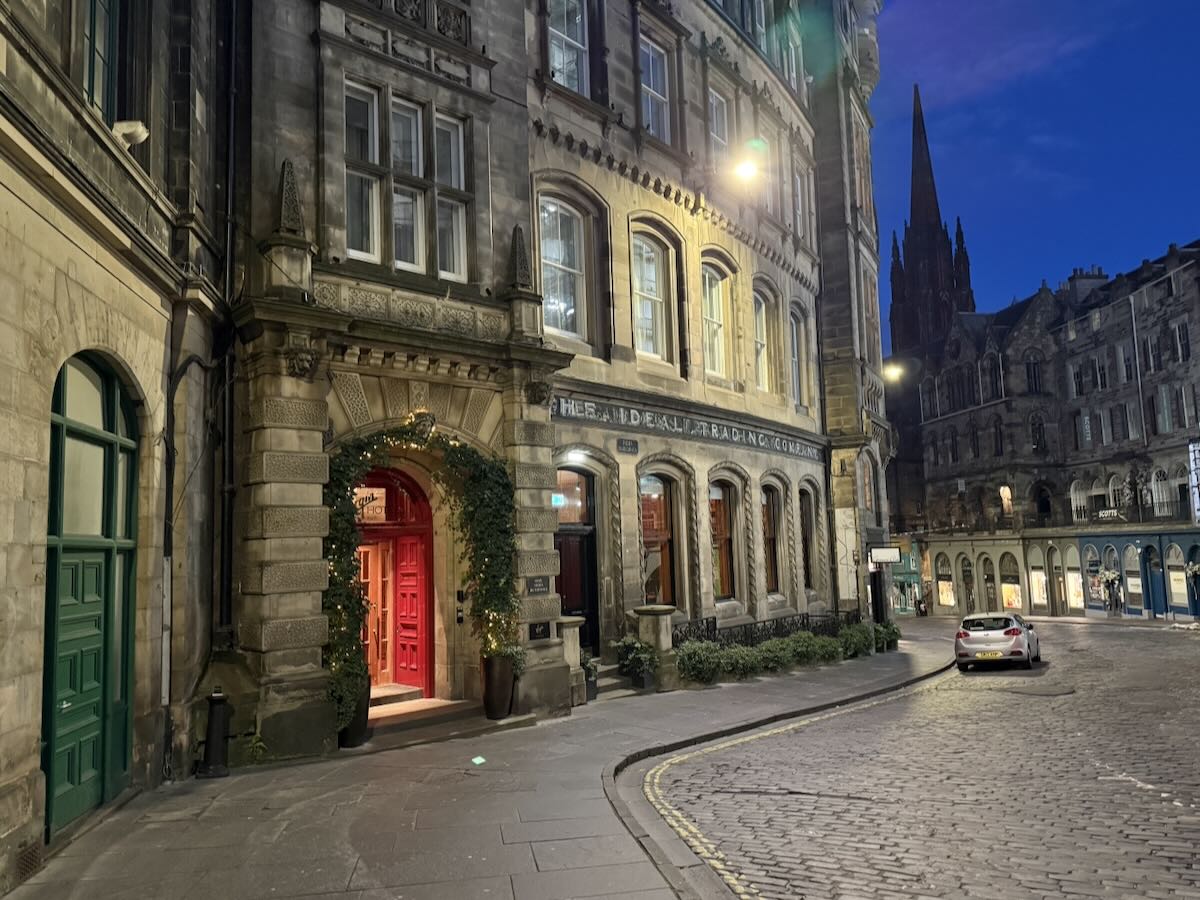
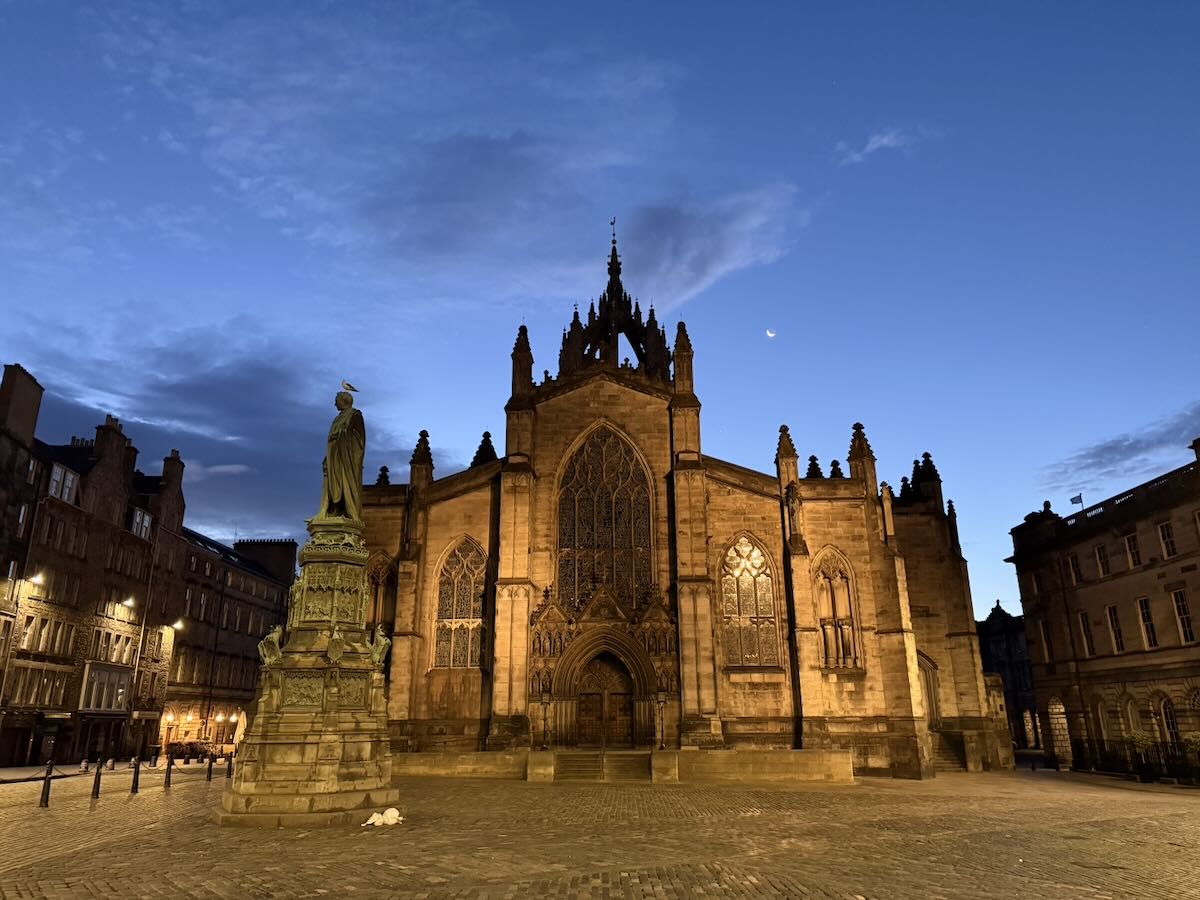
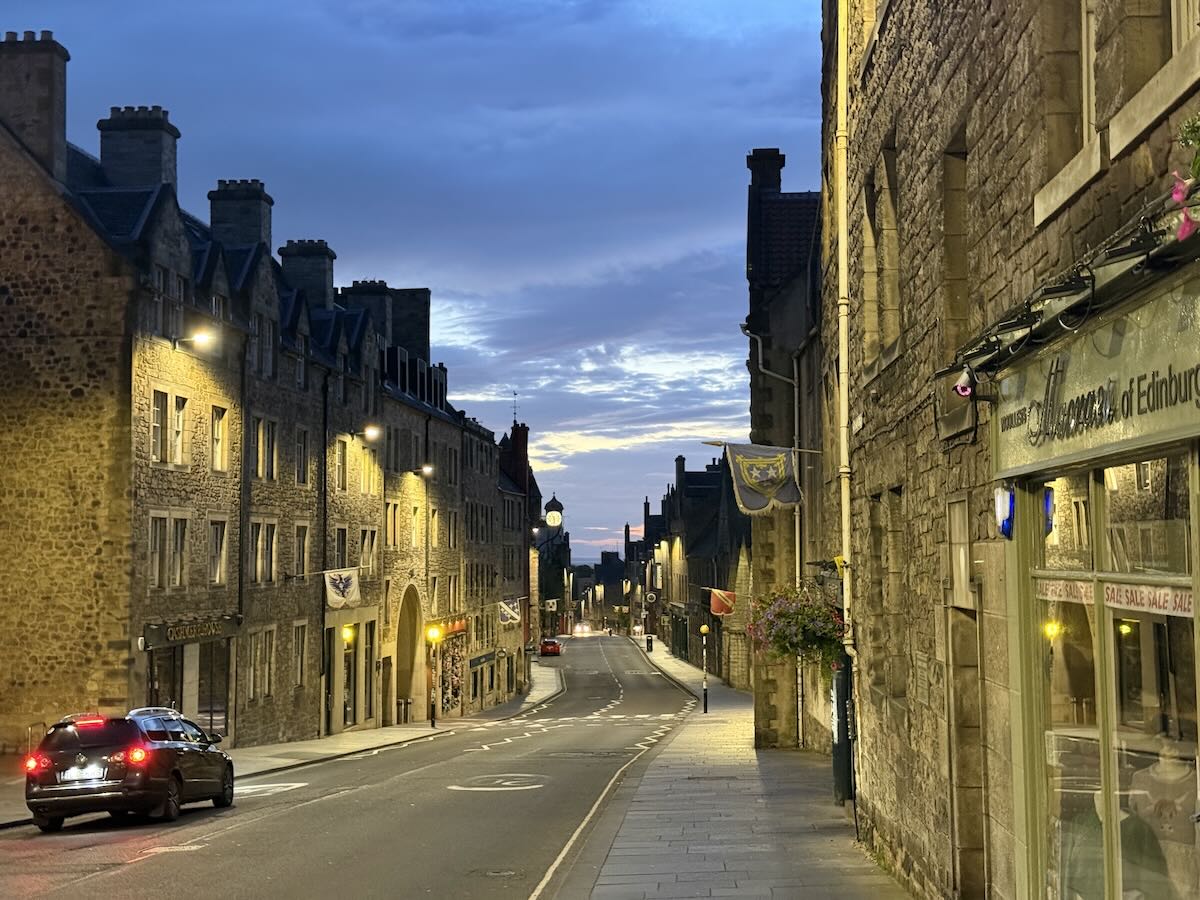
 Finally, we returned to Edinburgh. The Virgin Hotels Edinburgh is just off the Royal Mile, which is touted as a good thing, but despite the stirring architecture, the area is saturated with tourists. (Cue the fudge shop.) The photo below is from a 6 a.m. walk; otherwise, people would be milling about everywhere.
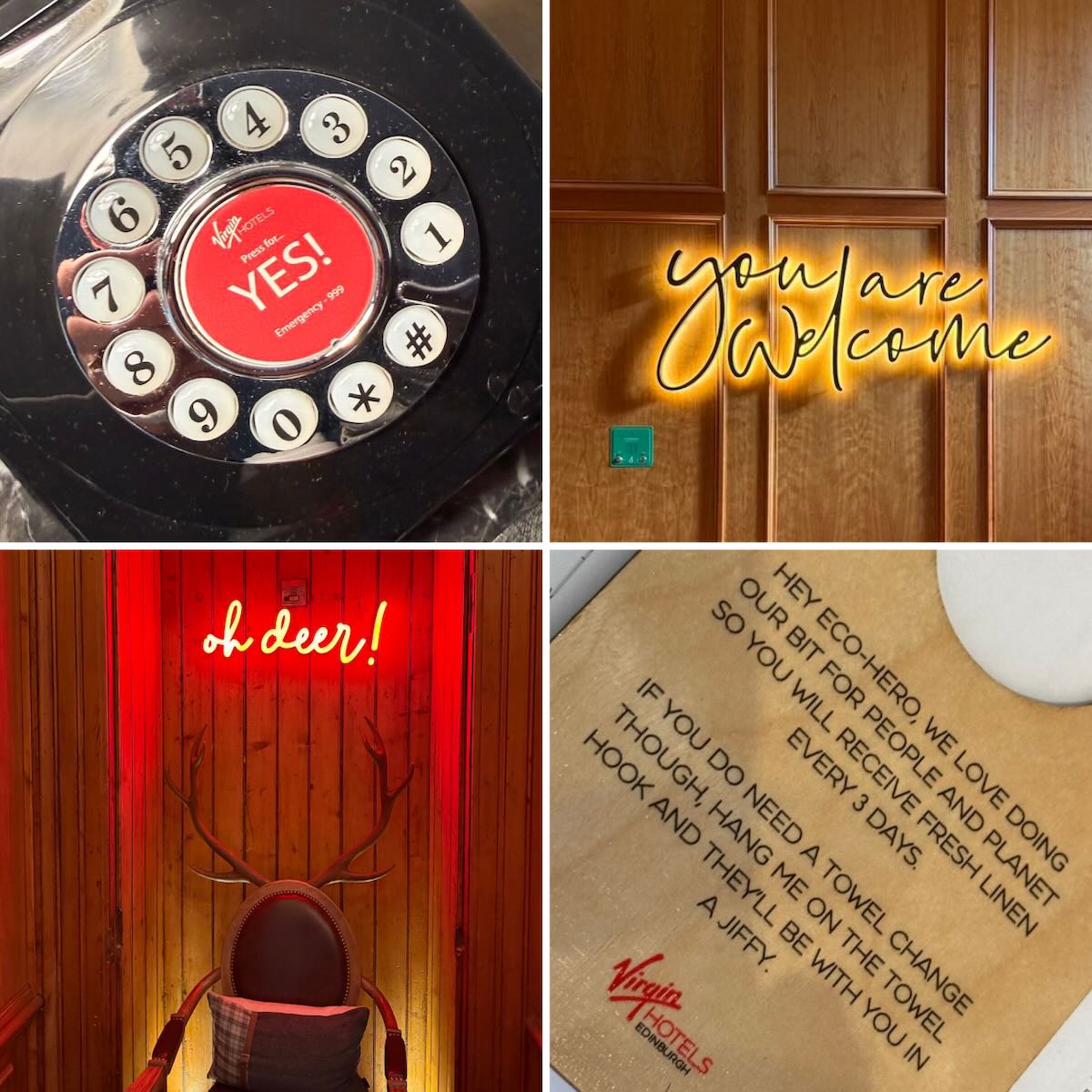
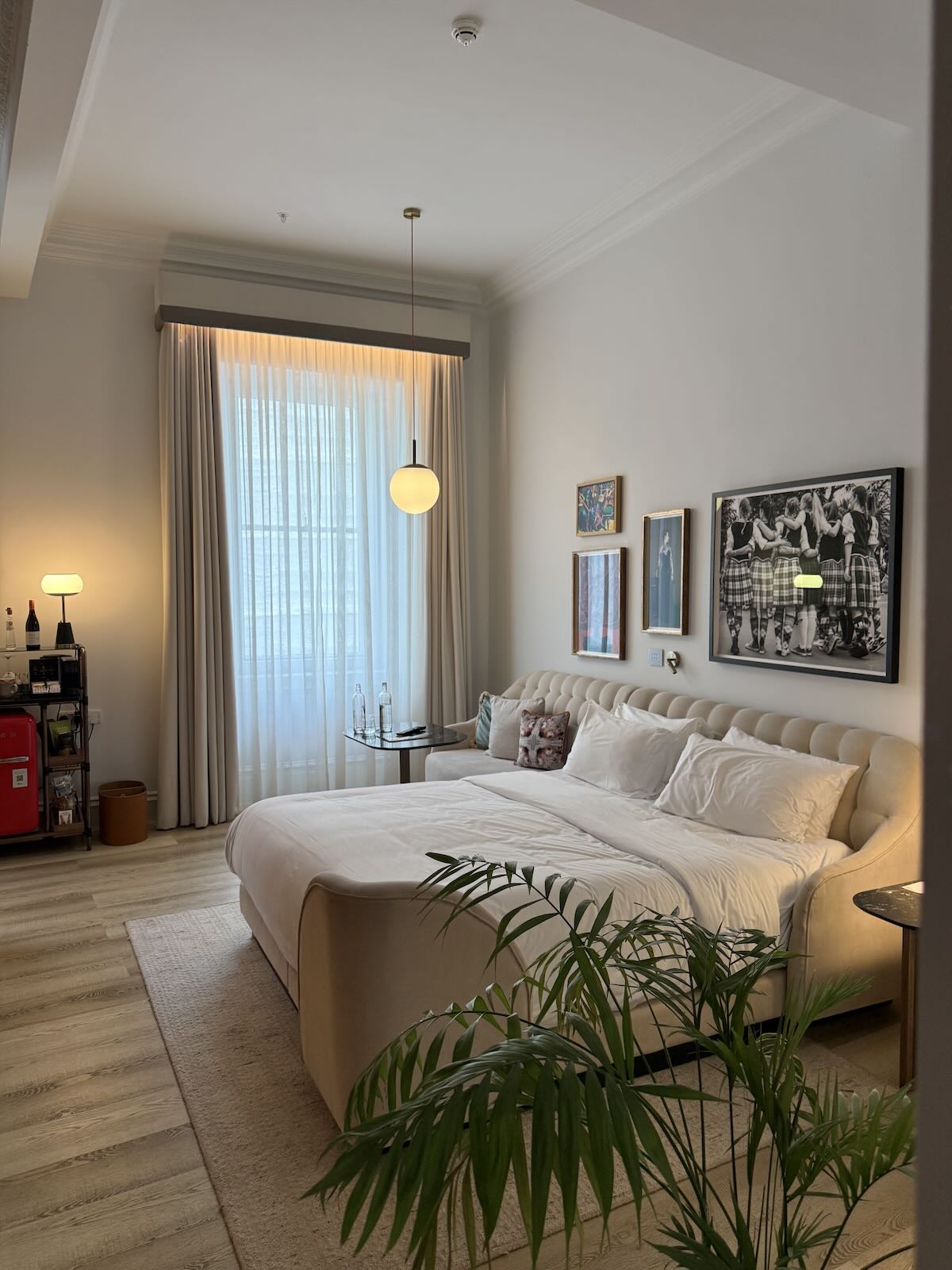 After the Pierhouse, we were happy to be in a real hotel room—with a very high ceiling, no less. The designers got the better of someone, though. Take that bed (please): we thought the one corner was a chair, but it’s just a useless wedge of footboard. And there’s so much chatty, Instagram-bait nonsense; I felt as if we had time-traveled back to the early days of the W brand.
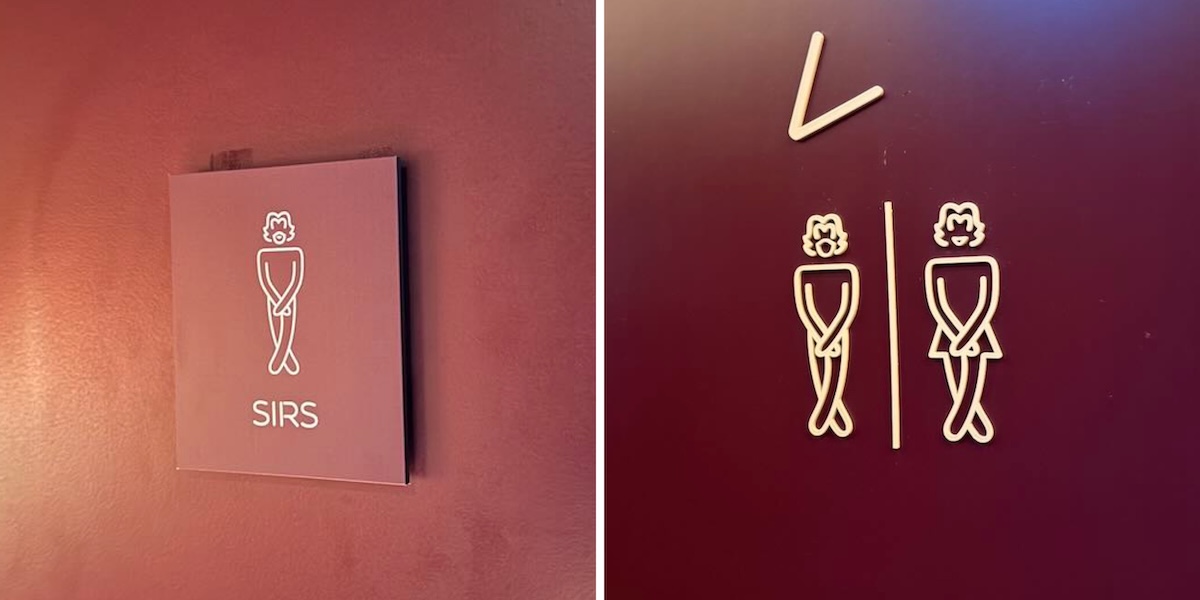
 The men’s room sign with an outline of Virgin founder Richard Branson had me rolling my eyes. Must one’s ego extend to the lavatory? Then I noticed the unisex signage—with both male and female figures having Branson’s trademark coif—which made me laugh. (The vestigial V is a mystery.)
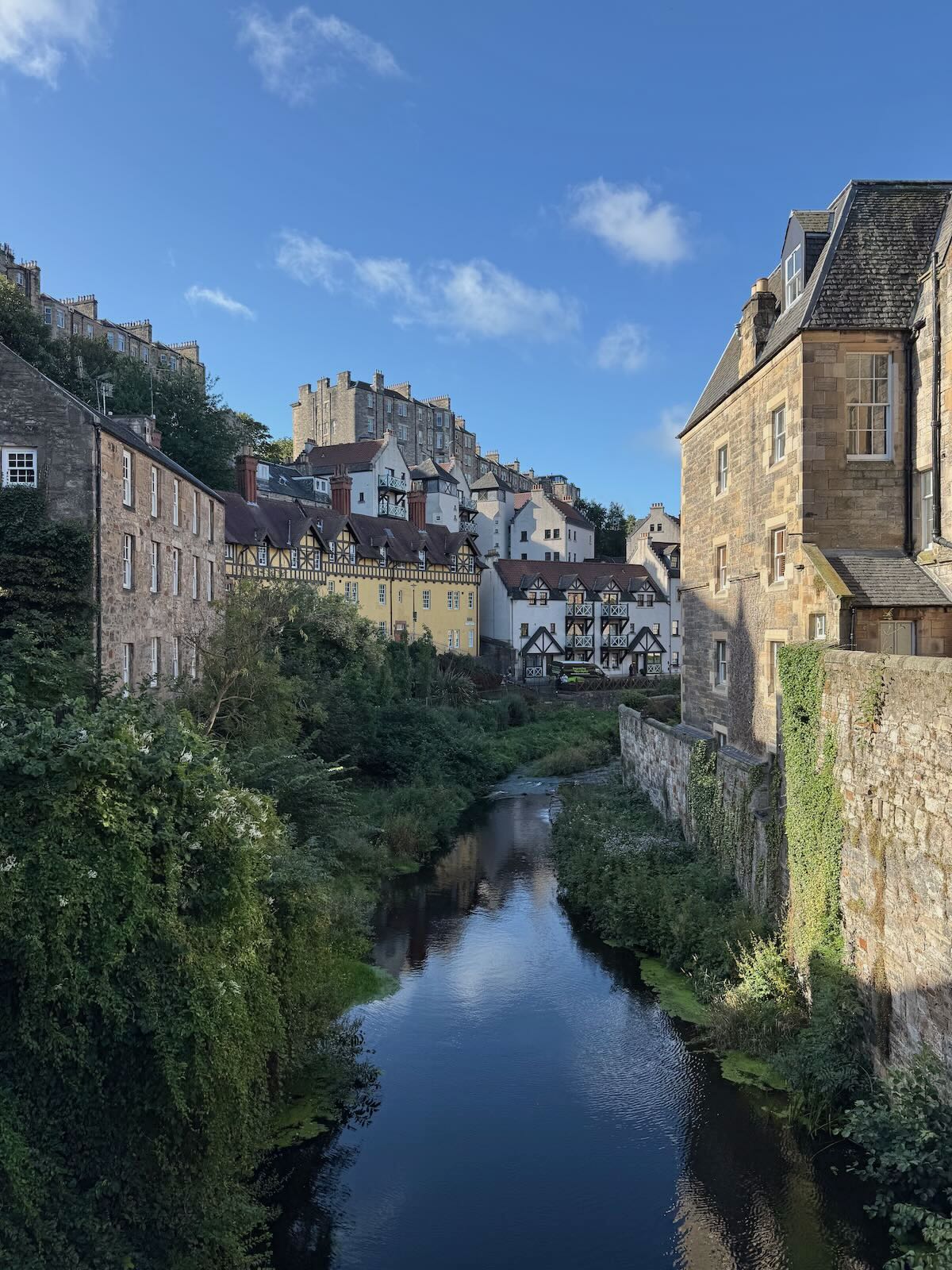
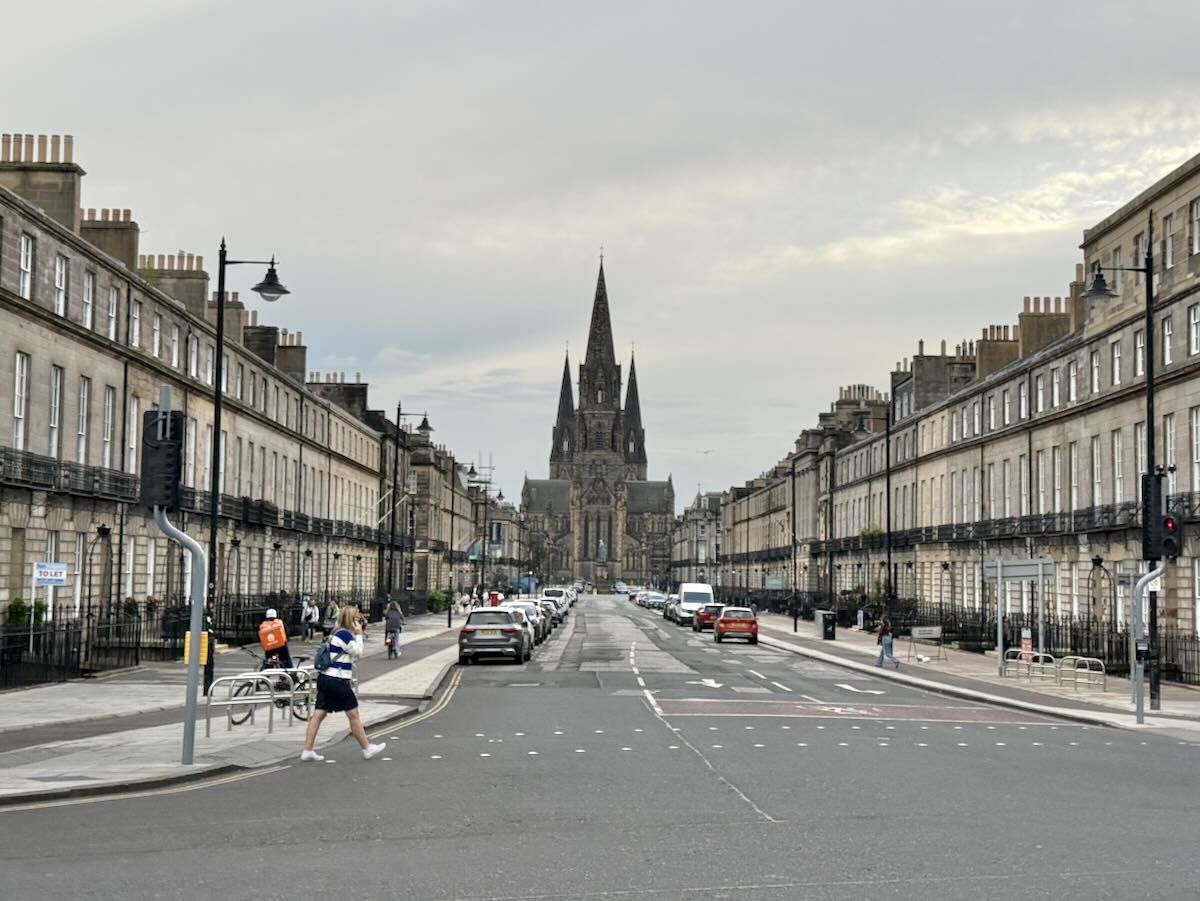
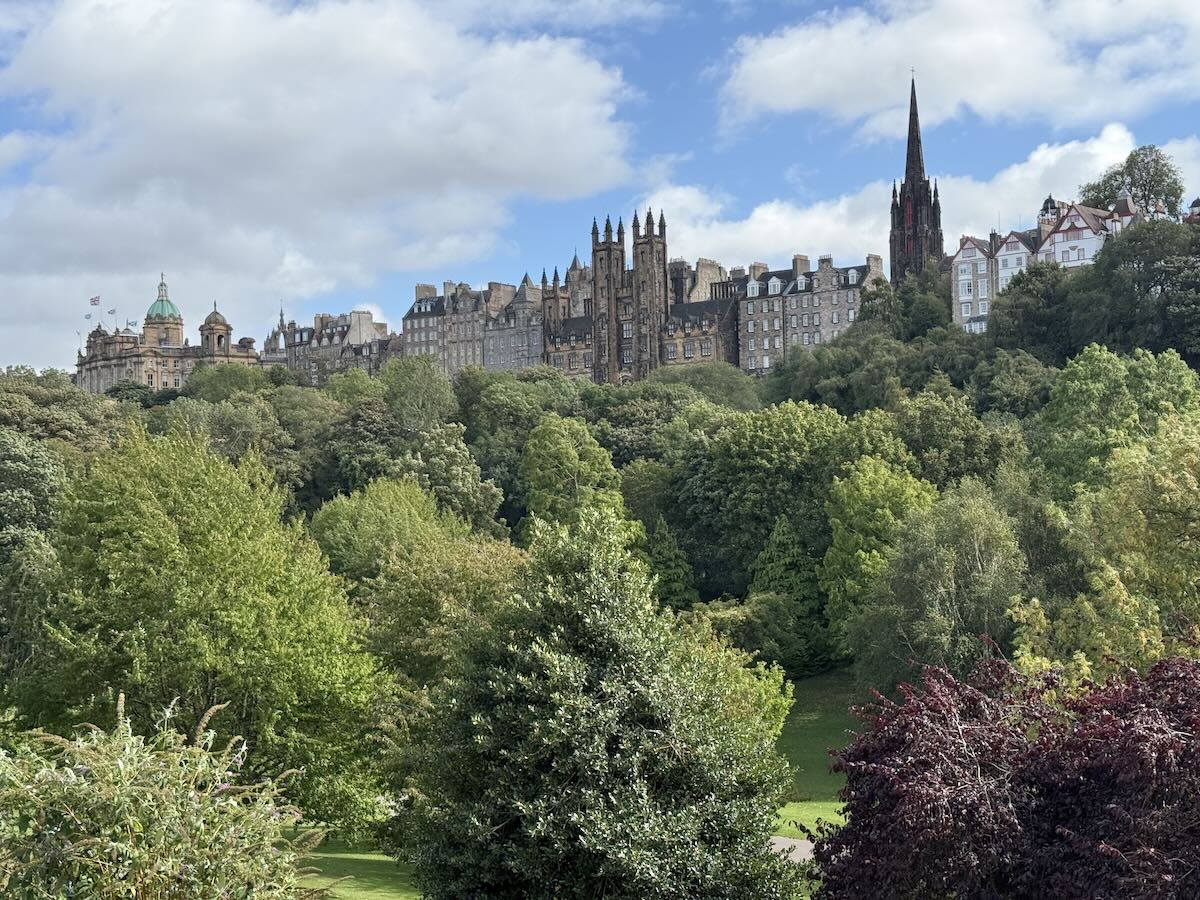
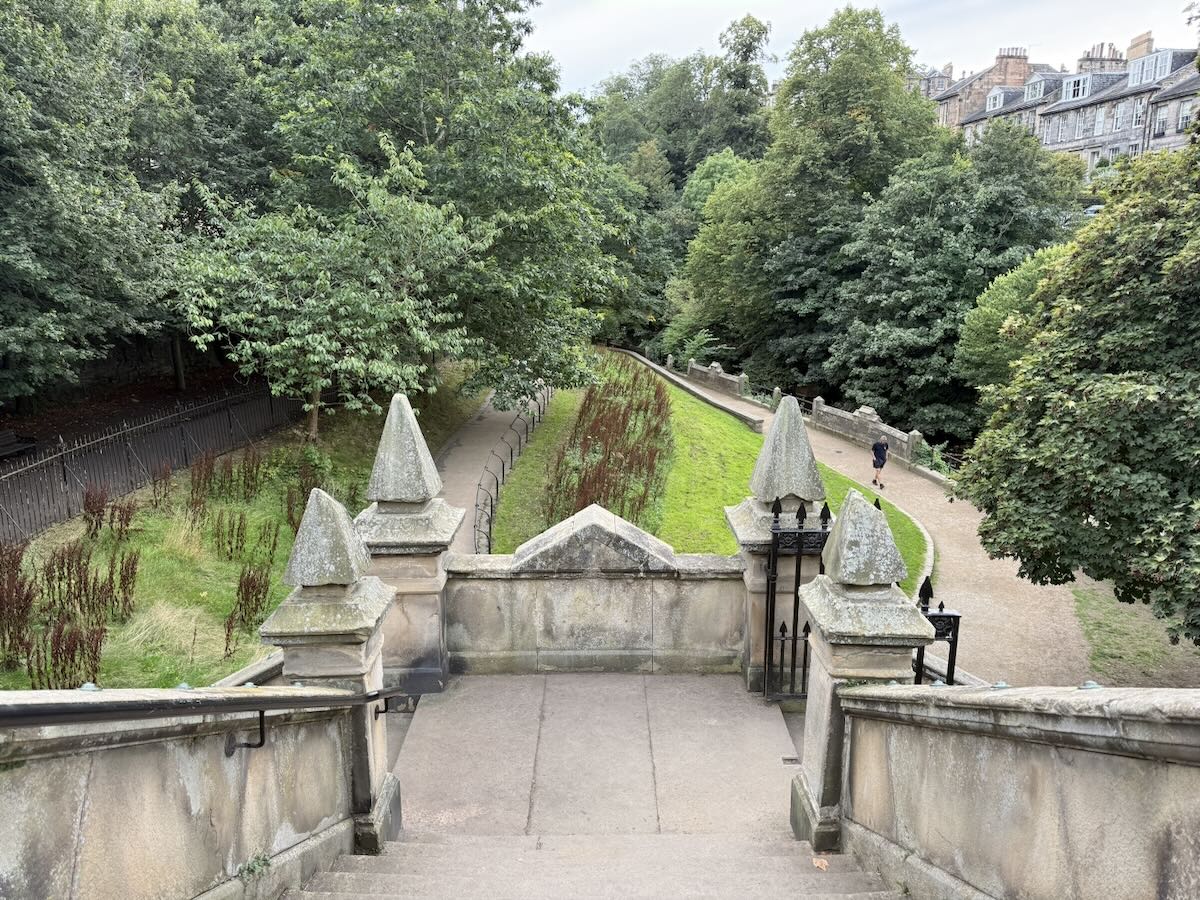
 We had but one full day in Edinburgh, and the city is quite lovely, once you get out of the Royal Mile/Princes Street areas.
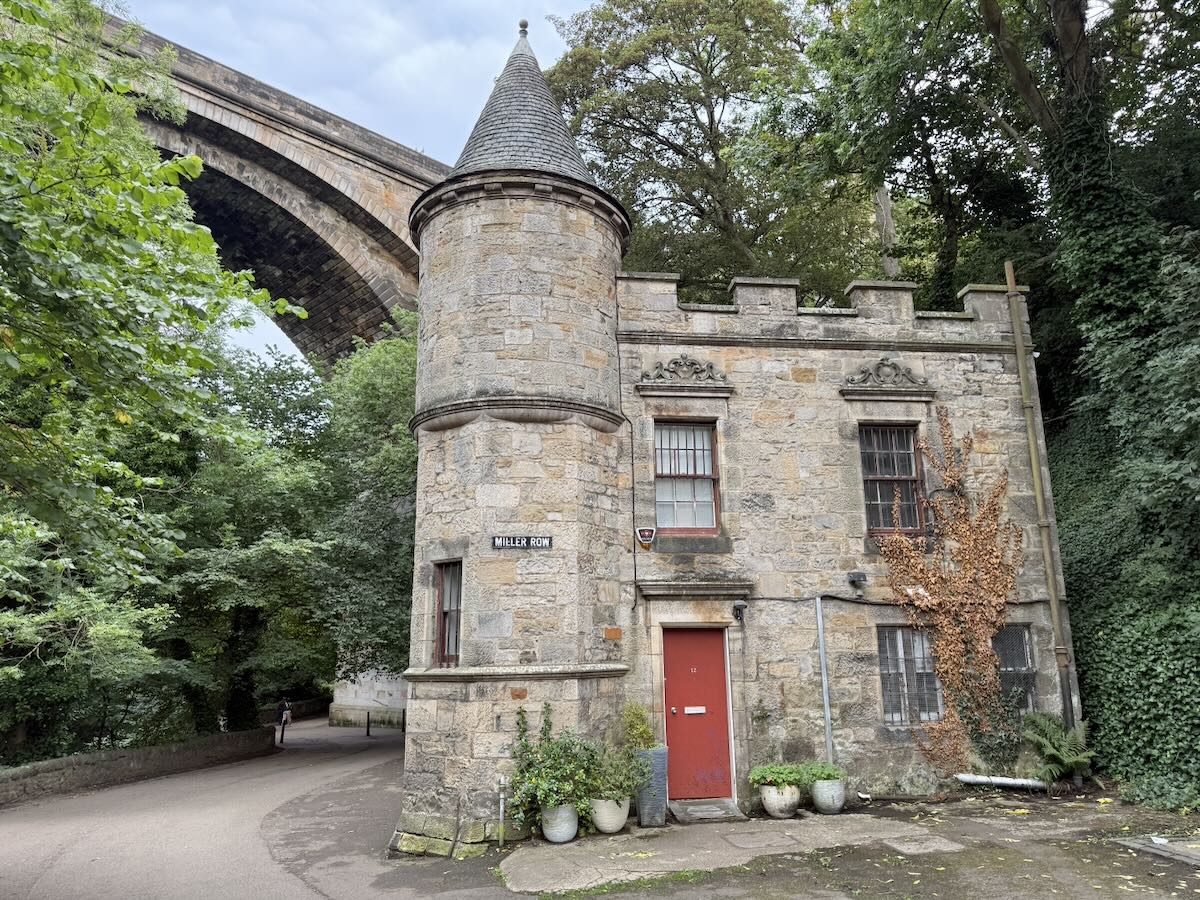
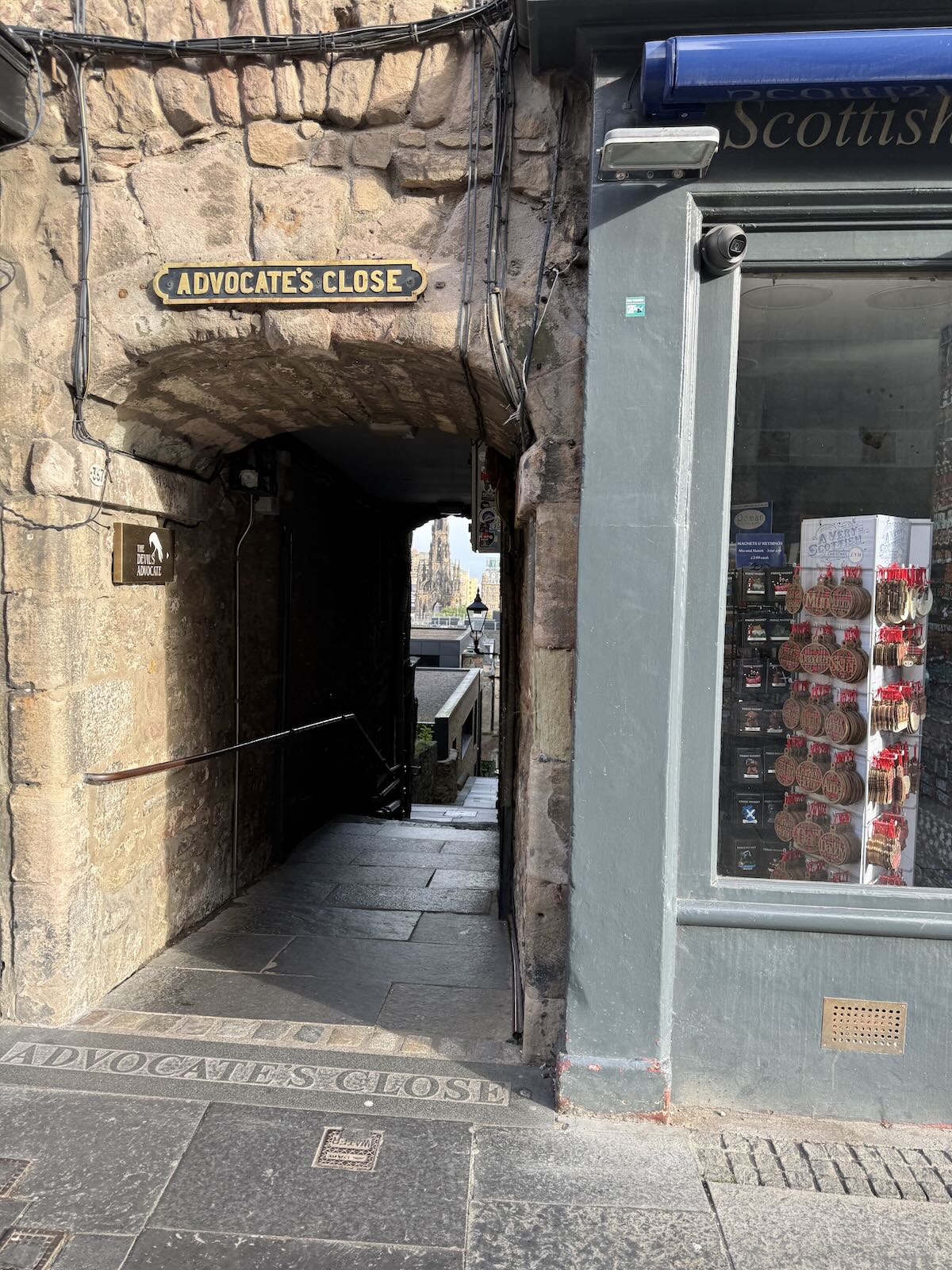
 There is one great thing about the Royal Mile: narrow passageways called closes.
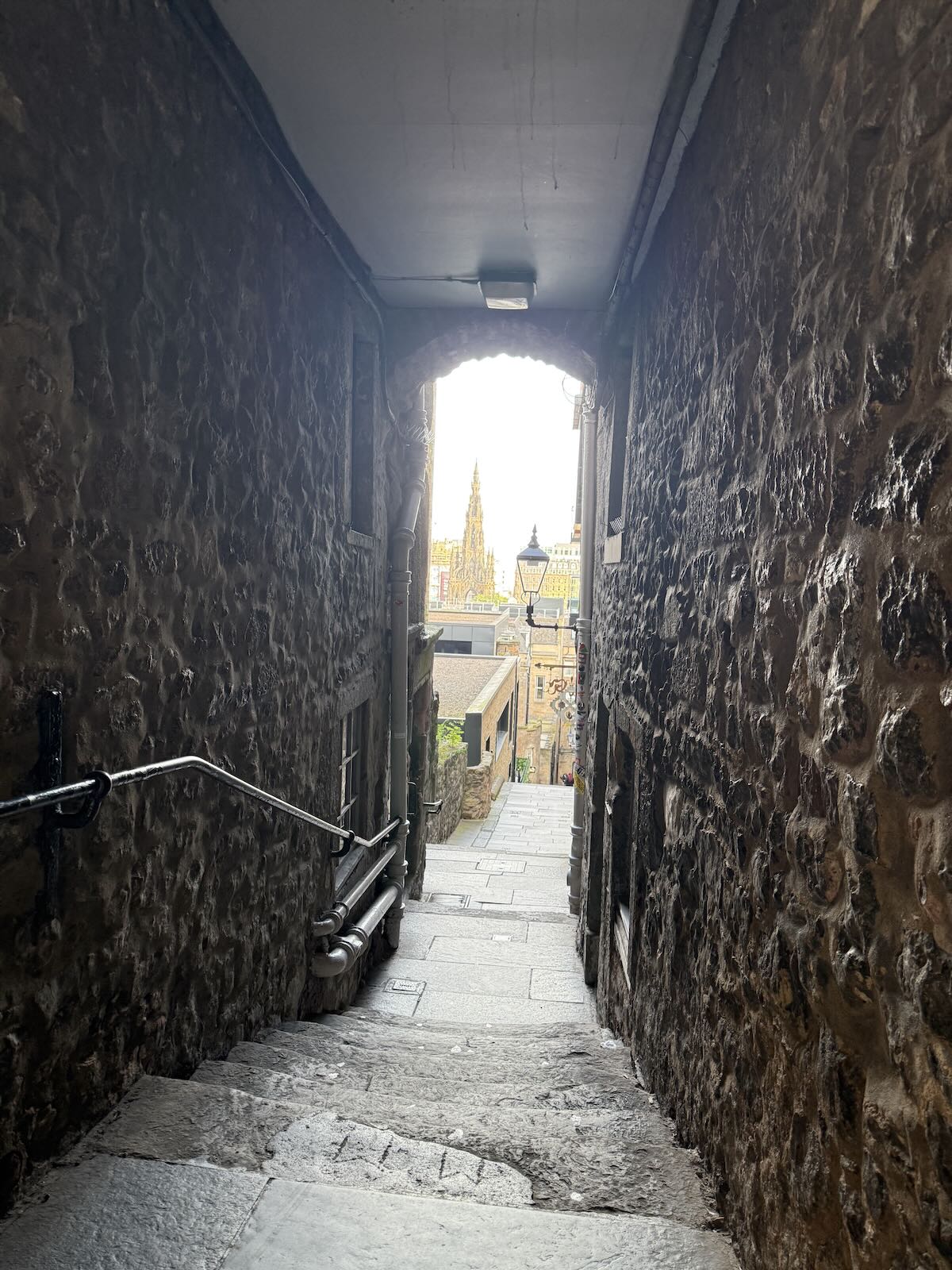
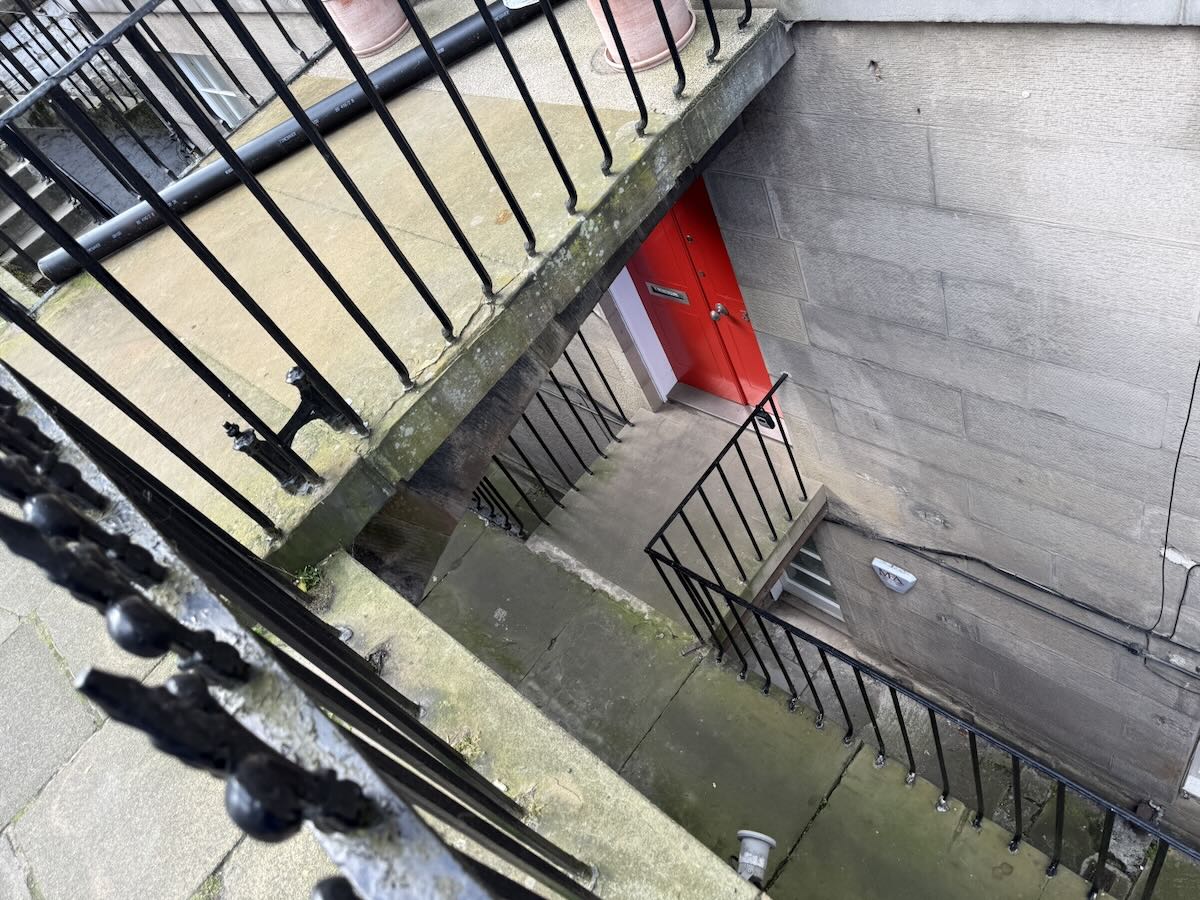
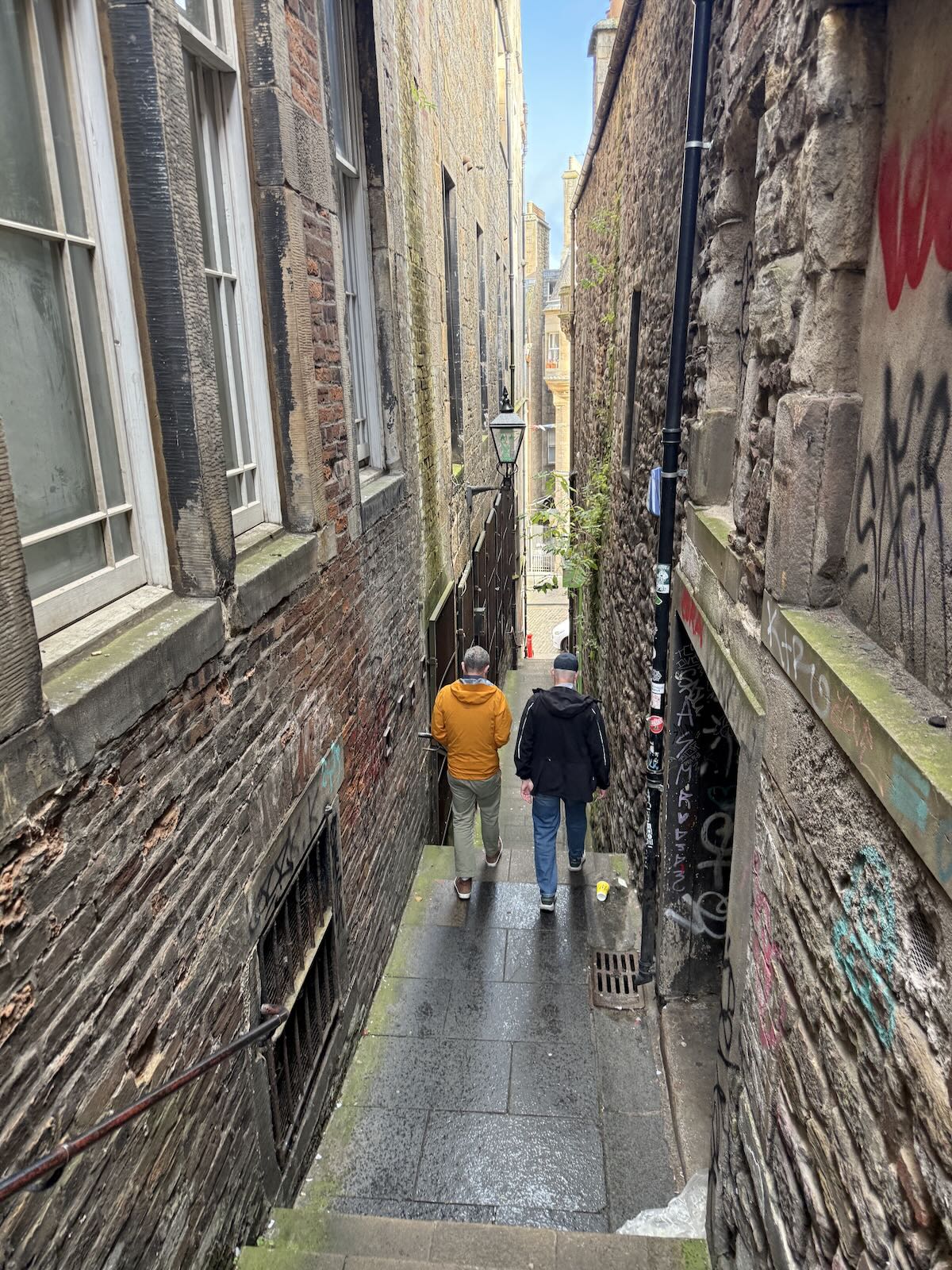 We primarily explored the neighborhoods of Stockbridge and Leith. The four of us have all lived in big cities, but none of us could recall ever seeing apartments two floors below street level.
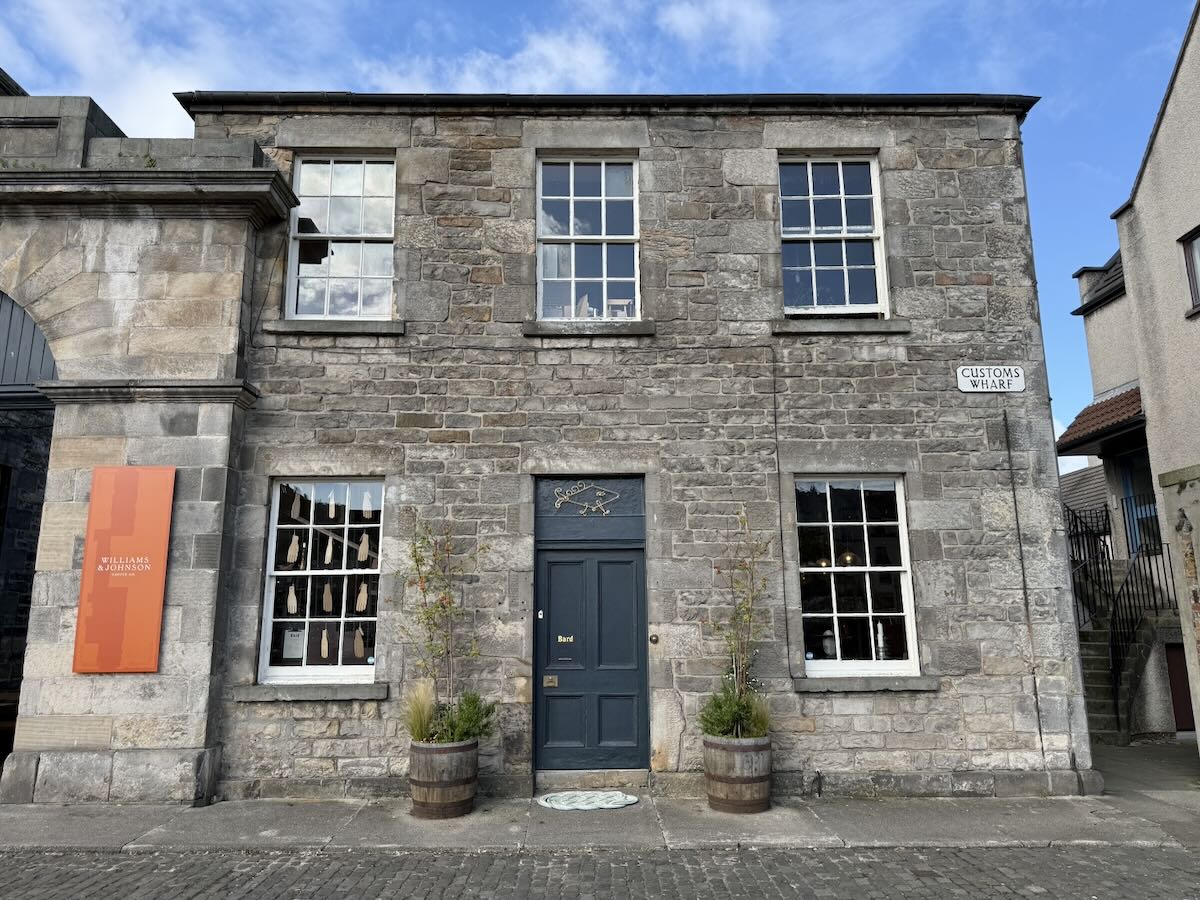
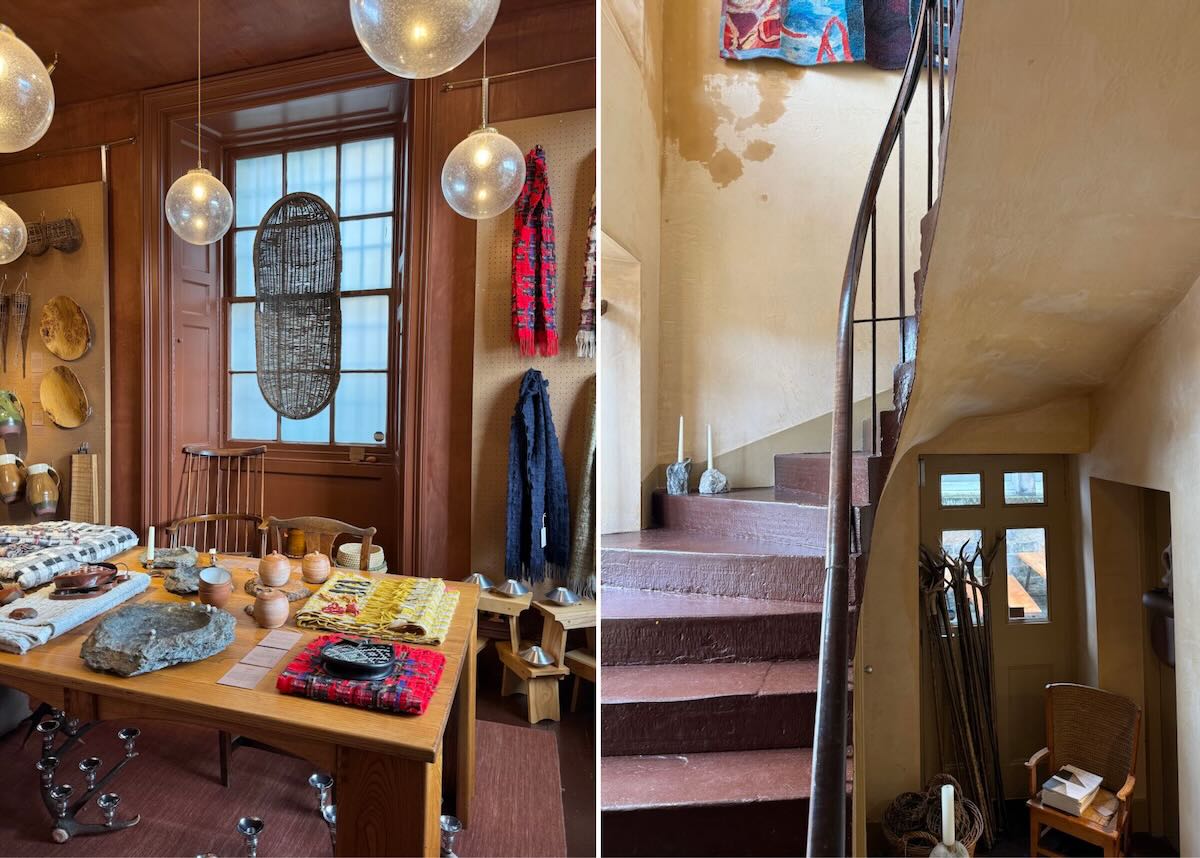
 Bard, specializing in Scottish craft and design, was a highlight. Look at that wafer-thin staircase!
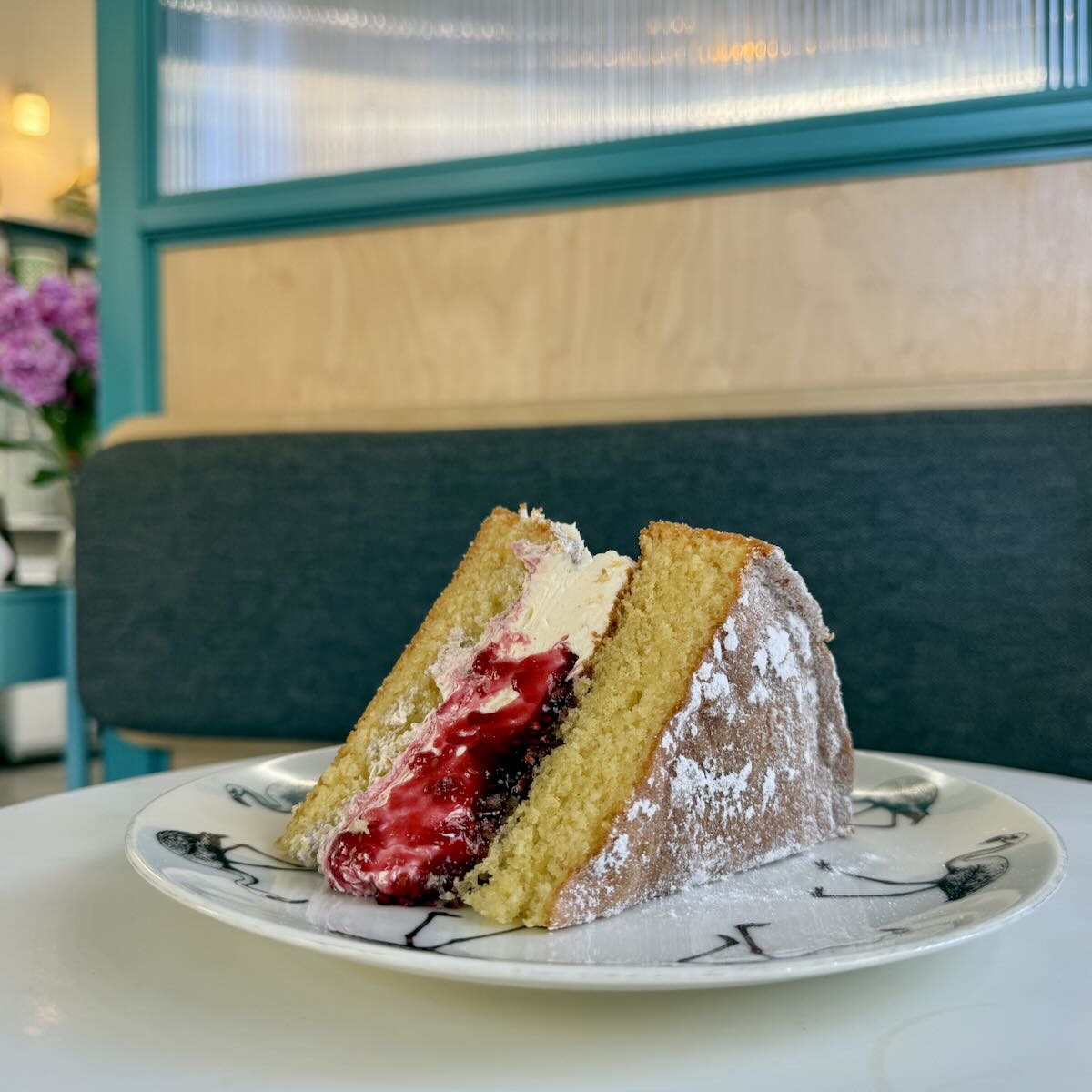
 The Victoria sponge cake at The Pastry Section was perfection.
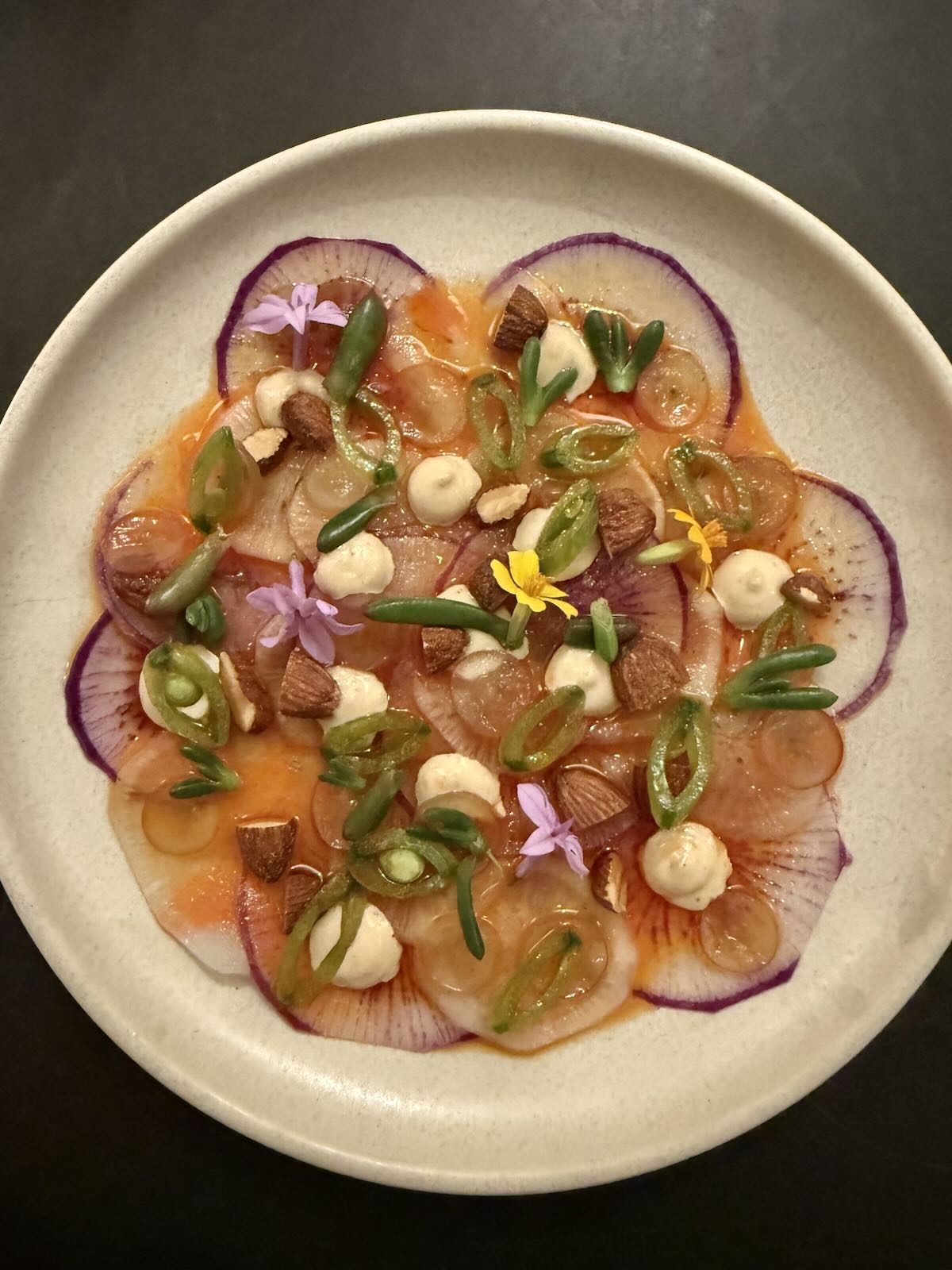
 And the best meal of the entire trip was at The Little Chartroom, which serves a three-course prix-fixe with a trio of choices for each course, rather like Bell’s. That’s radish carpaccio, with smoked paprika, sugar snap peas, grapes, and almonds.
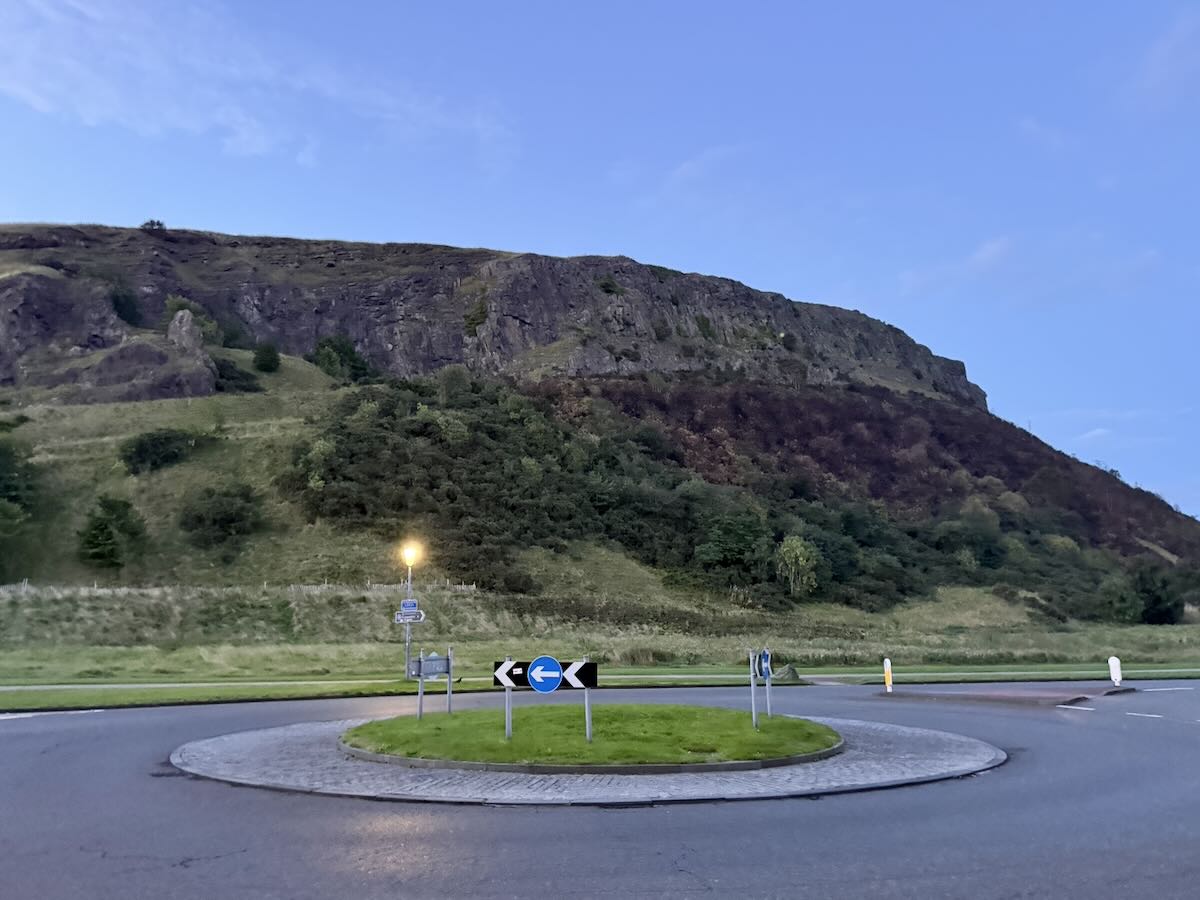
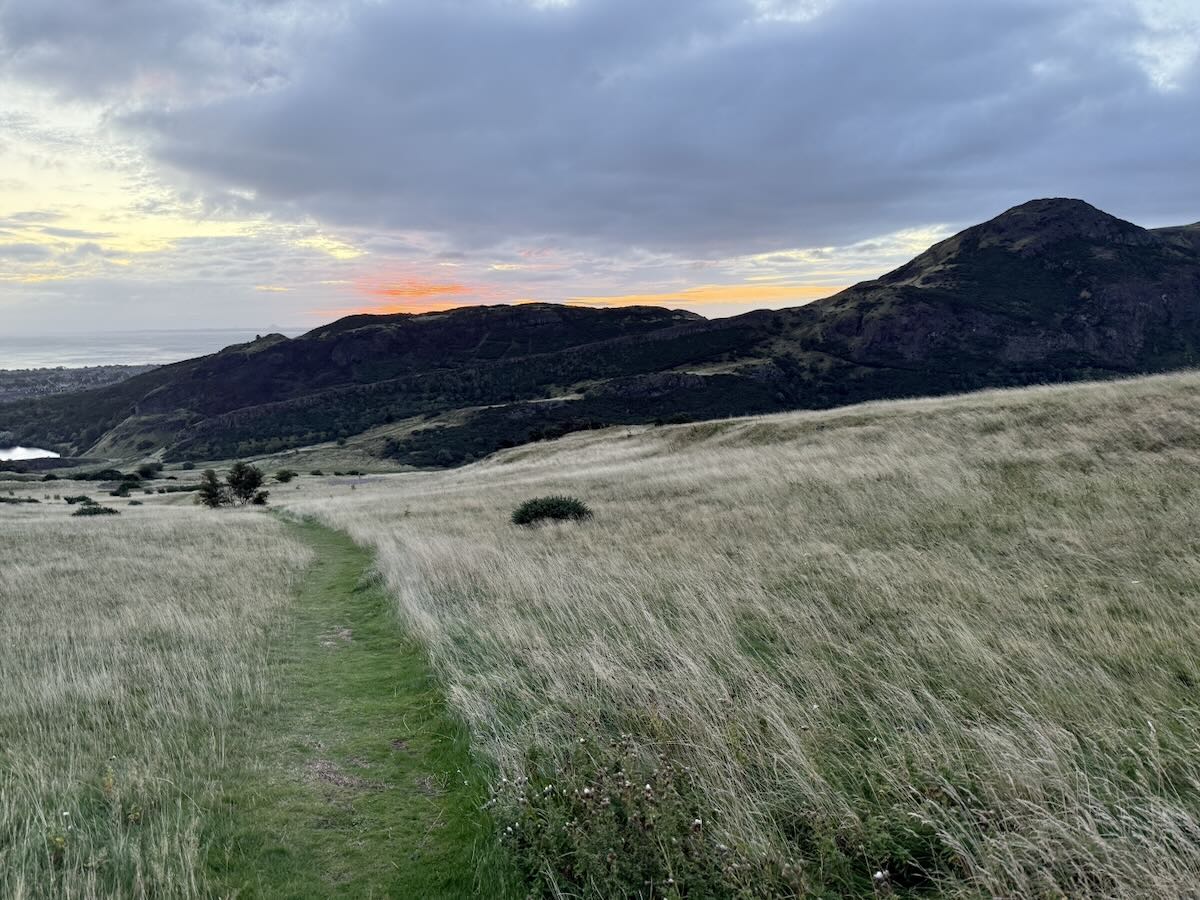
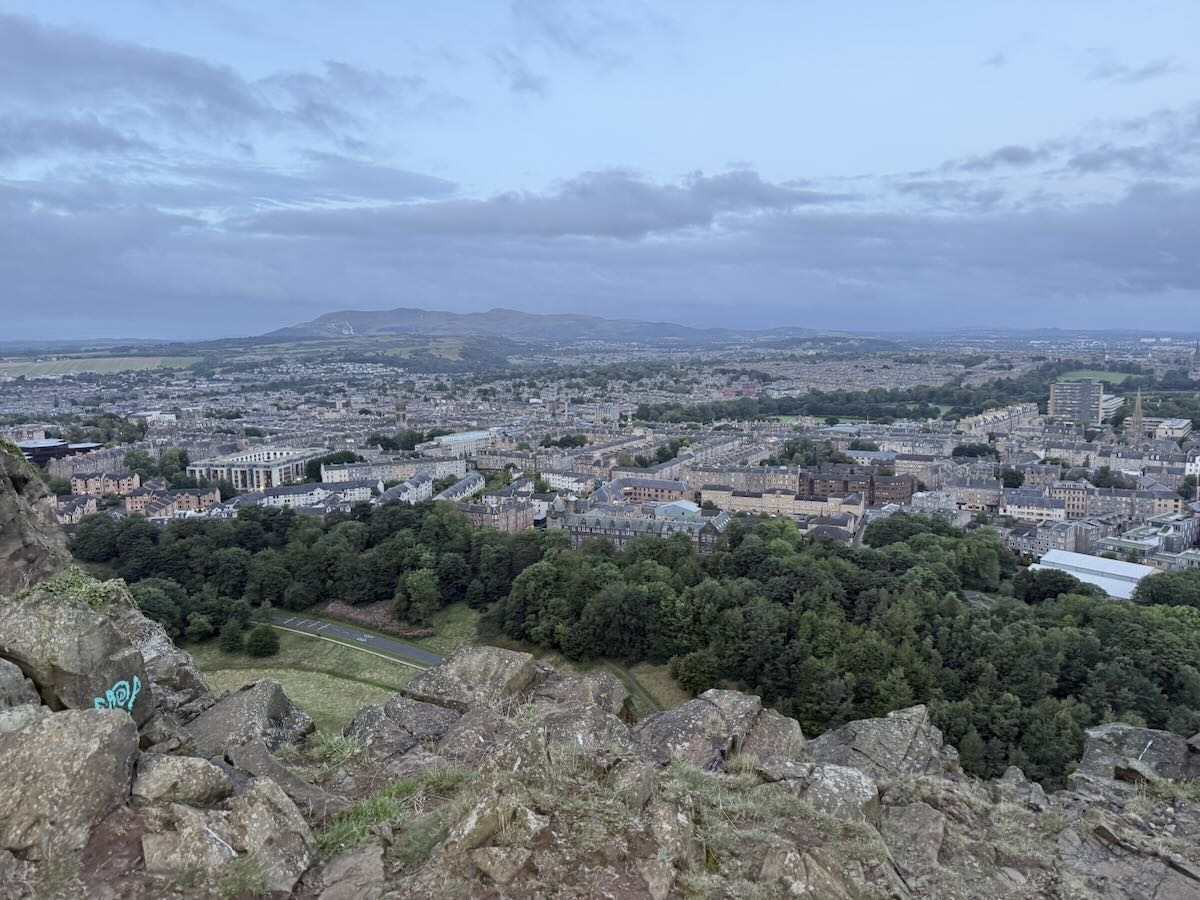
 I can’t blame jet lag for the aforementioned early-morning walk—I simply wanted to see more of Edinburgh than the day allowed. In an world that feels increasingly crowded, I’m convinced that this is the optimal way to experience a city. The cars have yet to invade, the shops are closed, the hordes are still asleep. I walked through town to Hollyrood Park, where I climbed the Salisbury Crags for a broad view of the city.
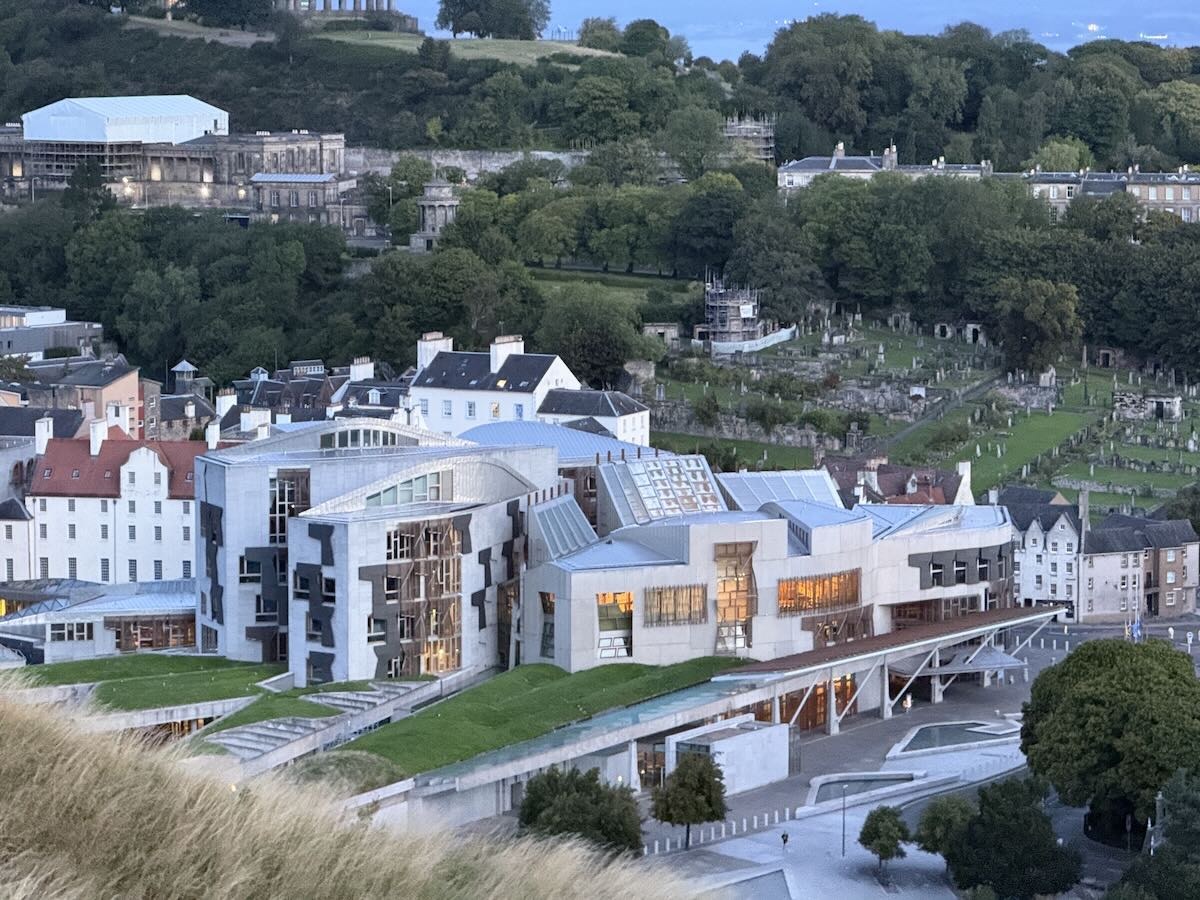
 The Scottish Parliament Building, designed by Spanish architect Enric Miralles, steals the show.
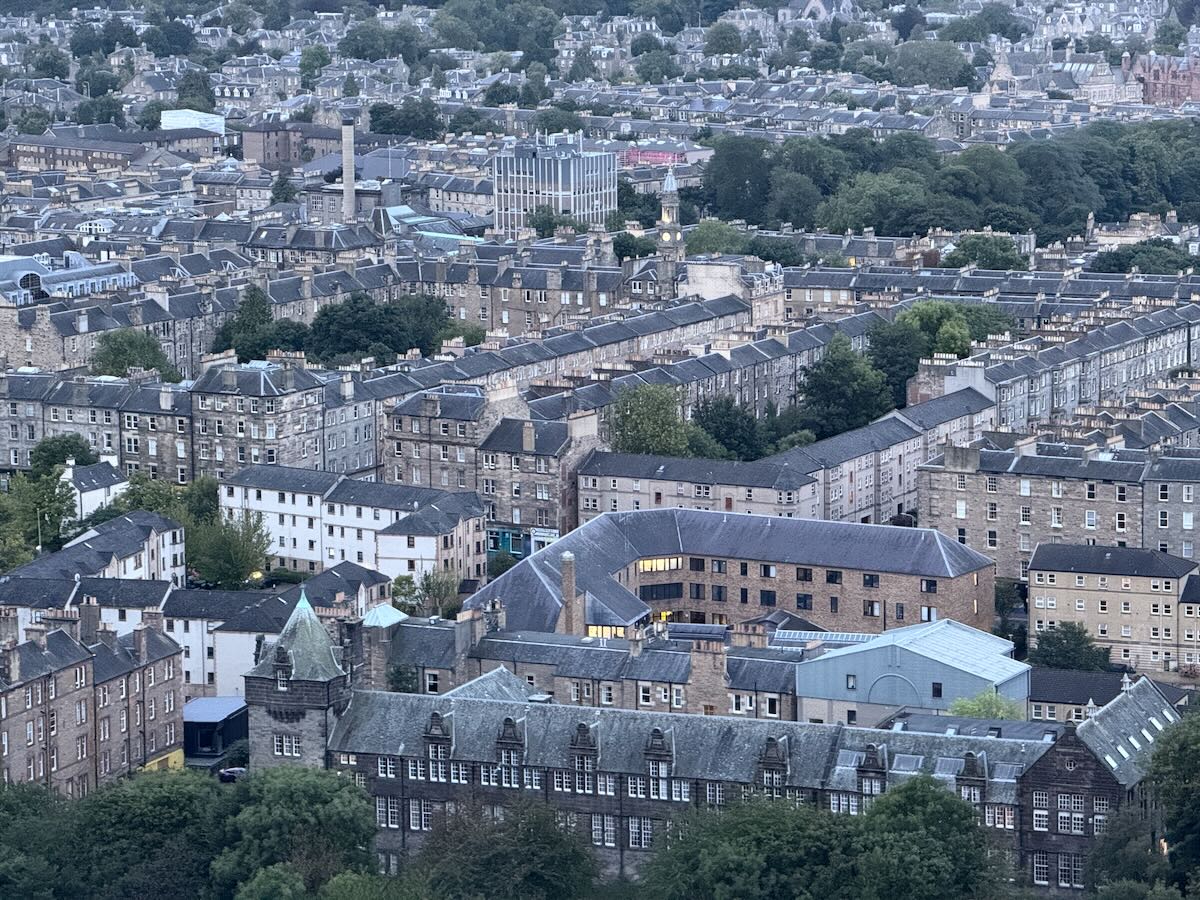
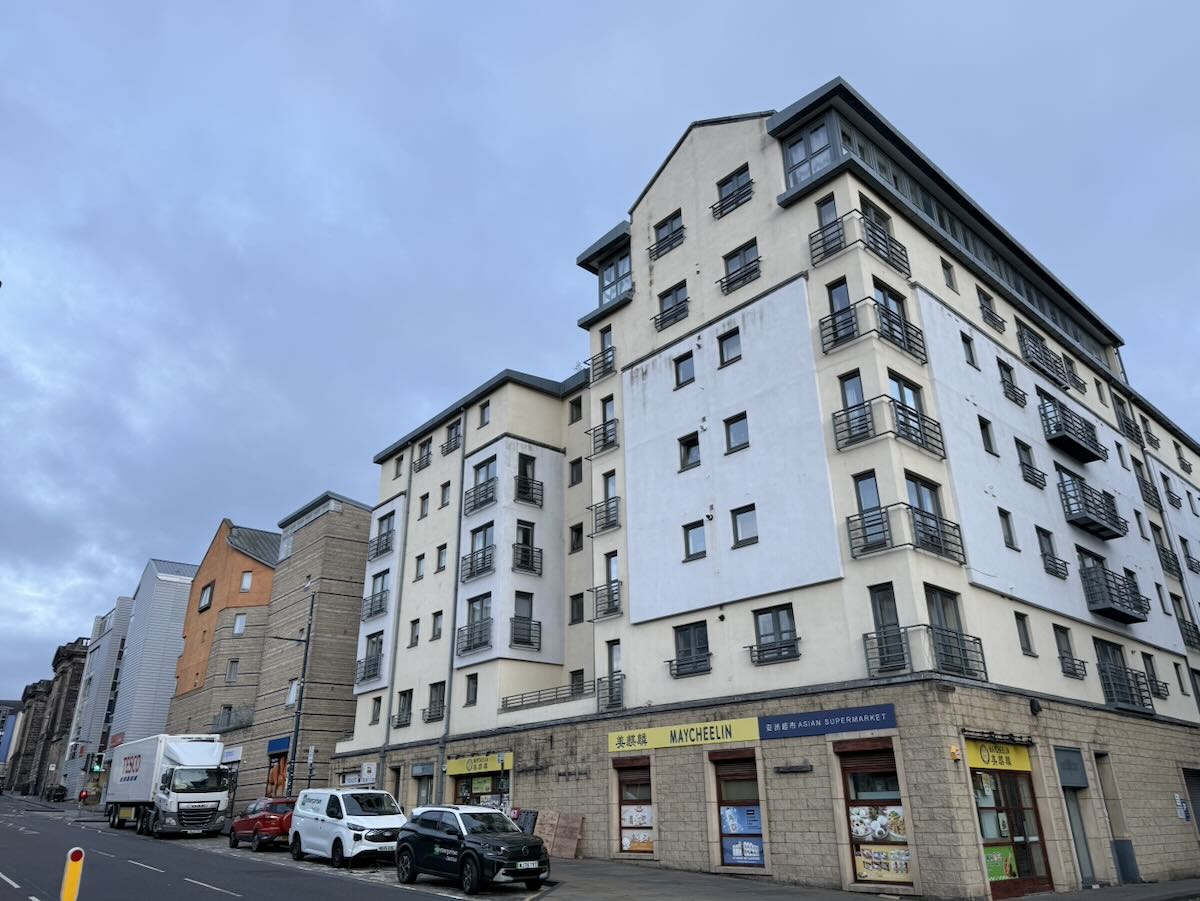
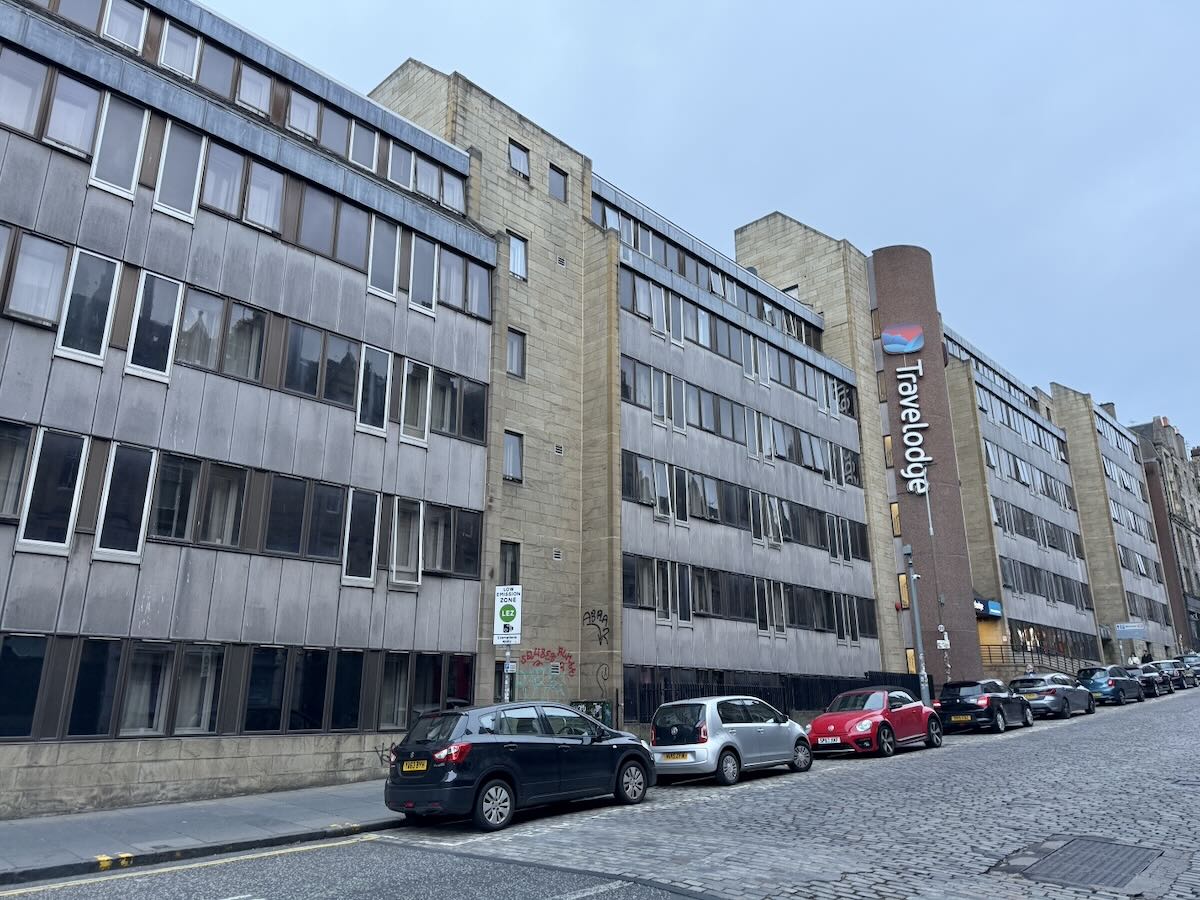
 I took a different route back to the hotel, which was educational. I’m joking about how ugly the buildings are, of course, and yet I do believe there’s something to seeing all aspects of a city, if you really want to take its measure.
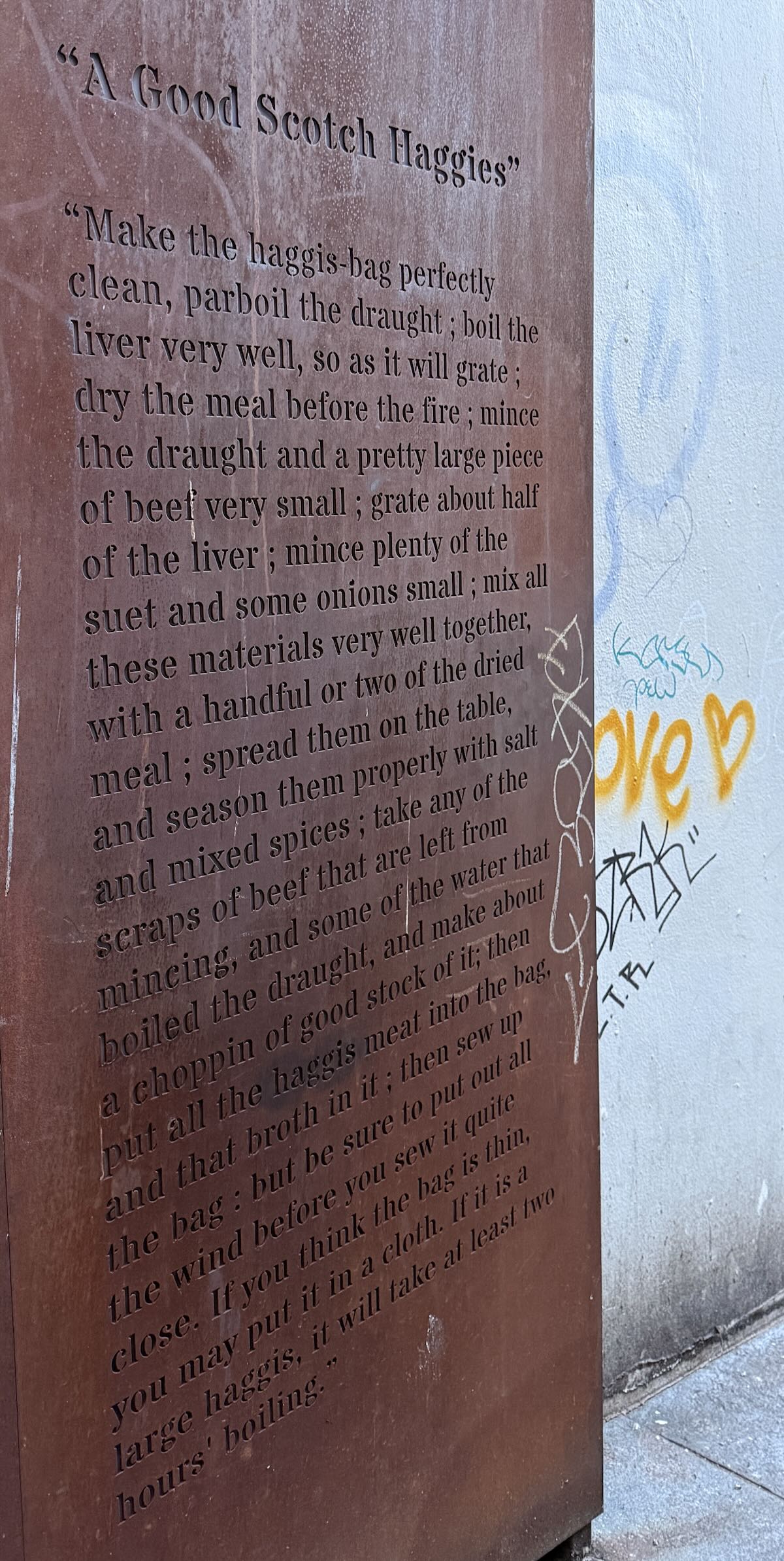
 And, while exploring a close, I came upon a memorial to “Mrs. Susanna MacIver [who] created the first printed recipe for Haggis in Scotland, 1773.” I never got around to trying the Scottish national dish, but now at least I can say I know what it is.
·············
Previous travel coverage:
••• Highlights of Tucson, a.k.a. the Dirty T
••• The Majesty of Angkor Wat
••• From Vietnam With… Ambivalence
••• Singapore: The City That Never Spits
••• Las Vegas: The Original Sim City
↓↓↓ That’s Life in Death Valley
••• The Glorious Isolation of Santa Barbara Island
••• Hiking From Hotel to Hotel in the Dolomites
••• A Ramble Through the English Countryside
••• Notes from Up North: Healdsburg, Mendocino, and San Francisco
••• There’s More to Peru Than Machu Picchu
••• On a Backroads Tour of New Zealand’s South Island
••• Navigating the North Island of New Zealand
••• Don’t Be So Quick to Write Off Phoenix
••• The Most Magical City in the World
••• One and Done in Sedona
••• A Proper Visit to Santa Monica
••• A Quickie in San Francisco
••• Dipping a Toe Into Southern Corsica
••• The Exquisite Luxury of Taking Paris for Granted
••• Santa Rosa Island in One Day
••• Soaking Up History at Castle Hot Springs
••• Driving Through the Heart of Hokkaido
••• Tokyo Is a World Unto Itself
••• Paso Robles, Pinnacles National Park, and Beyond
••• A Review of the Inn at Mattei’s Tavern
••• Another Quickie in L.A.
••• Sitting Pretty at the One & Only Mandarina
••• The Mysteries of Istanbul
••• Palm Springs: Midweek at the Oasis
••• Exploring the Sea Caves of Santa Cruz Island
••• A Summer Swing Through the Northeast
••• Why Is Everyone Going to Portugal?
••• Patagonia Made Easy
••• A Quickie in L.A.
••• From Penthouse to Pavement in Mexico City
••• Do Greek Islands Live Up to the Fantasy?
••• Splendid Isolation at Utah’s Lodge at Blue Sky
••• Three Reasons to Visit Paso Robles Now
 ················
Sign up for the Siteline email newsletter and you’ll never miss a post.









Comment: