

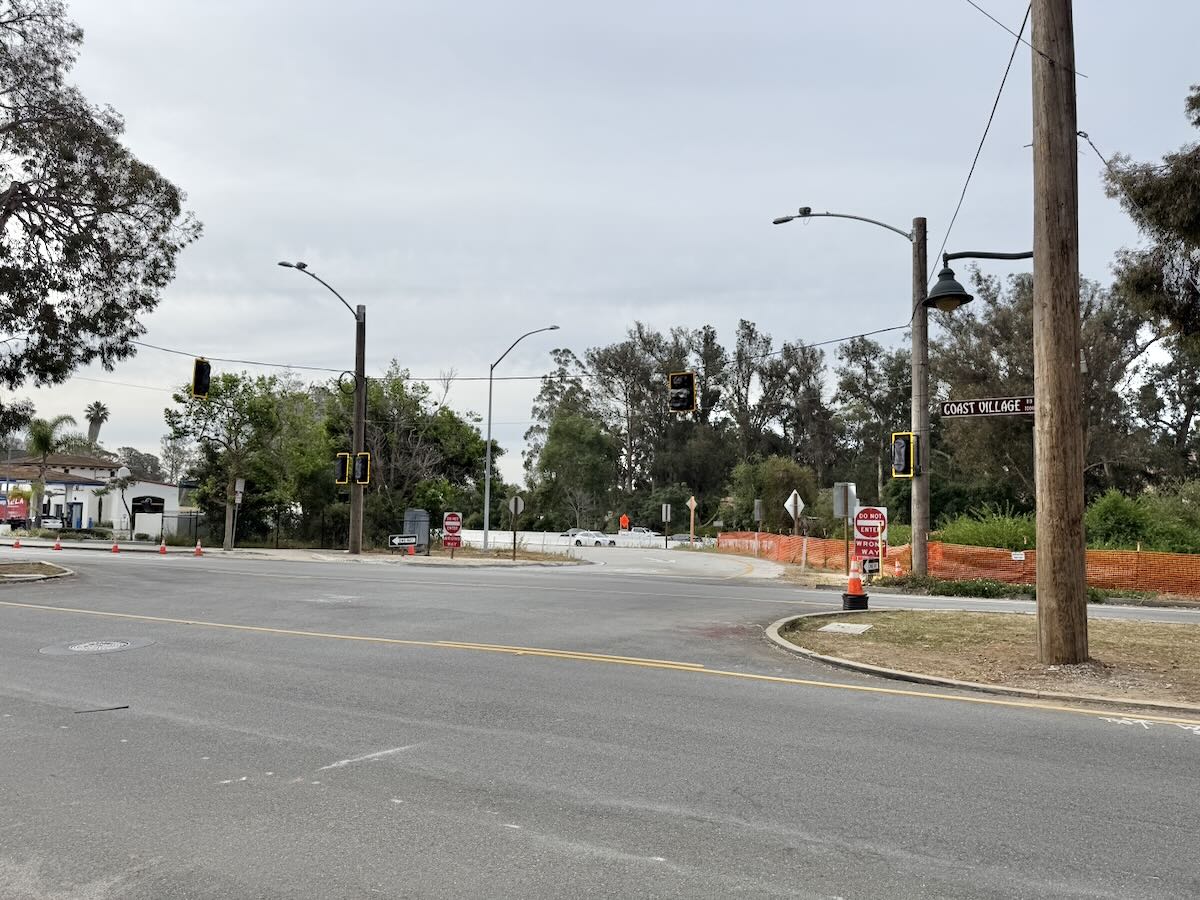
••• Lots of people have been asking about the stoplights newly installed at the intersection of Coast Village Road and Hermosillo Road. They’re temporary, there for the duration of the Cabrillo/Highway 101 interchange reconstruction. The northbound offramp at Cabrillo closes in two weeks, at which point more people will be getting off at Hermosillo.
••• Blue Man Group is at the Granada Theatre on May 5 and 6. I haven’t seen them in decades, and I’m sure it’s satisfying for all ages, but maybe especially for tweens.
••• Beck plays the Santa Barbara Bowl on September 22. The name of the tour (and his new single) is “Ride Lonesome,” which implies a more introspective direction along the lines of his Sea Change album. I may hold out for whenever he decides to play the brilliant Midnite Vultures in its entirety.
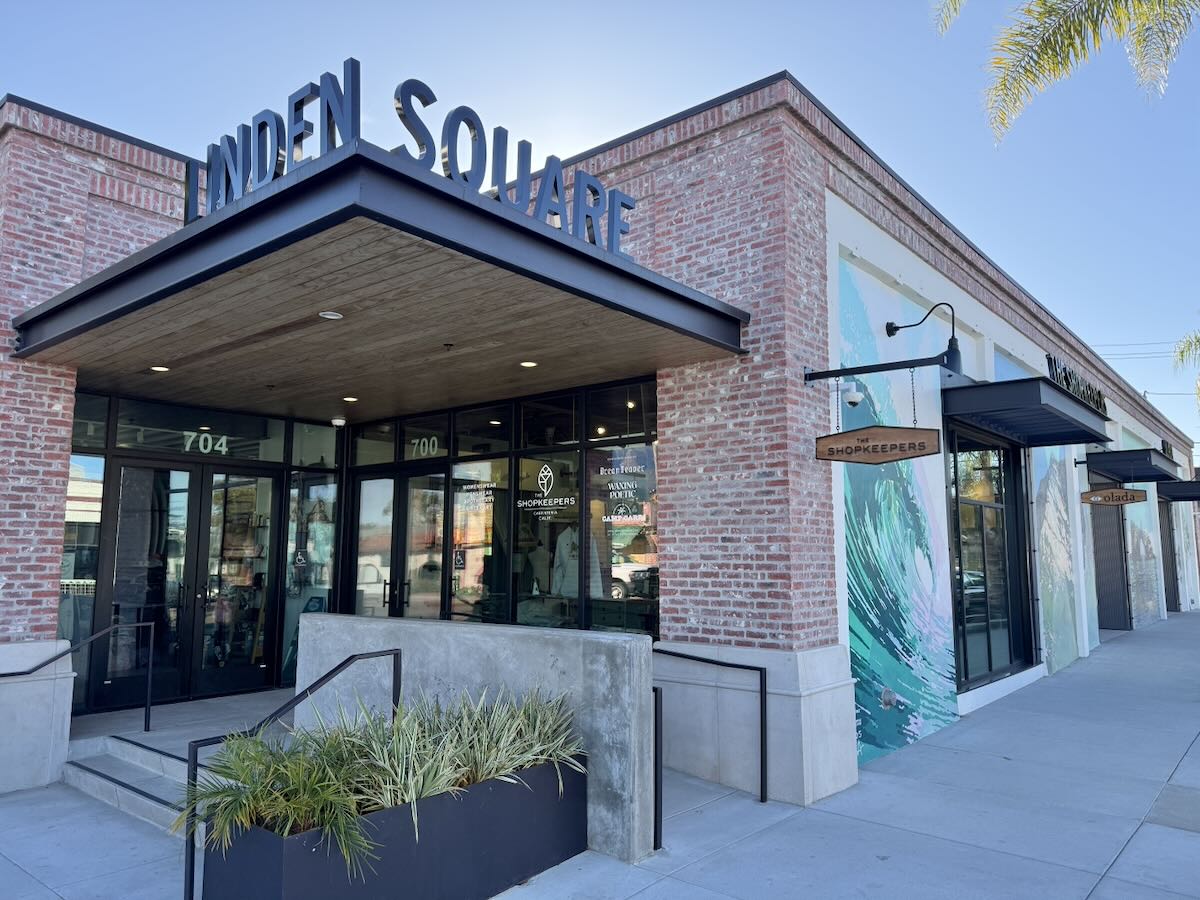
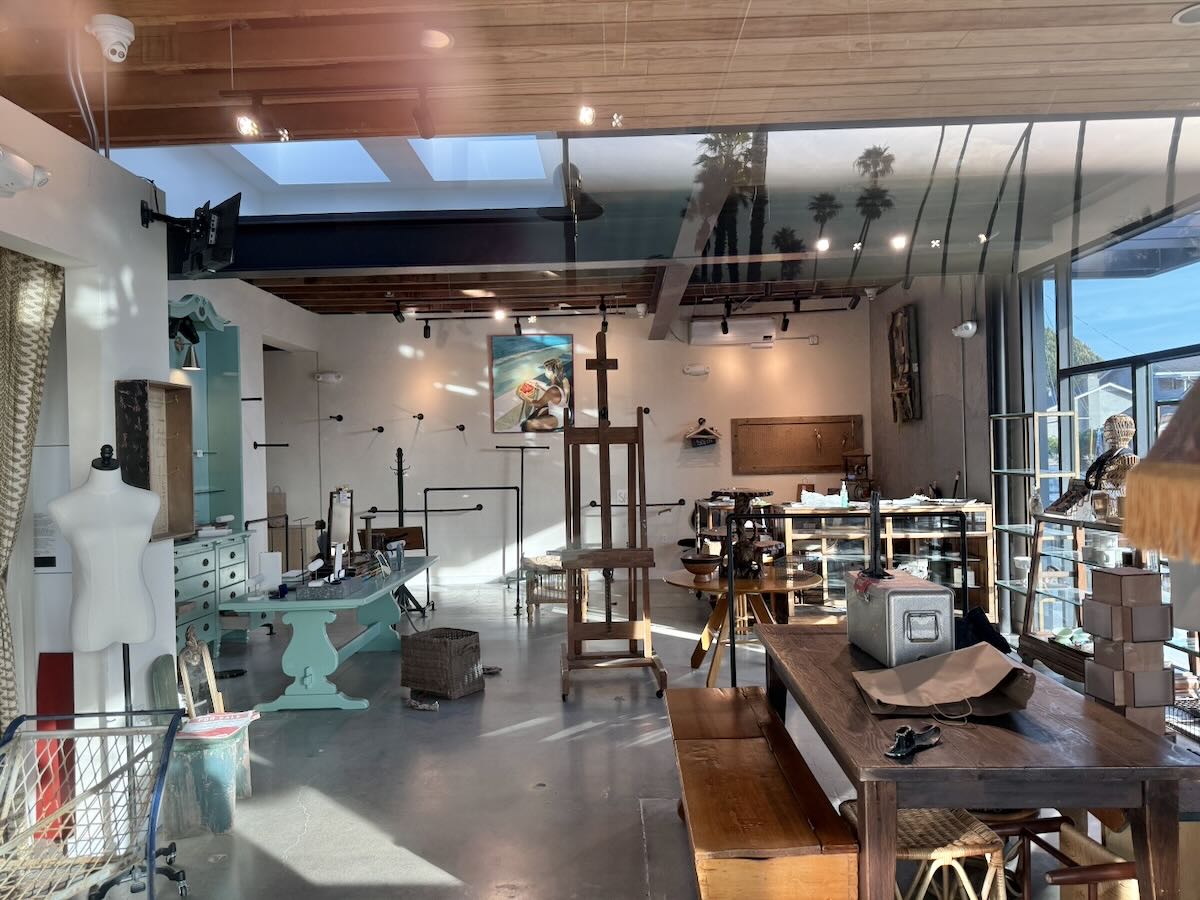
••• The Linden Square outpost of The Shopkeepers appears to have closed, too.
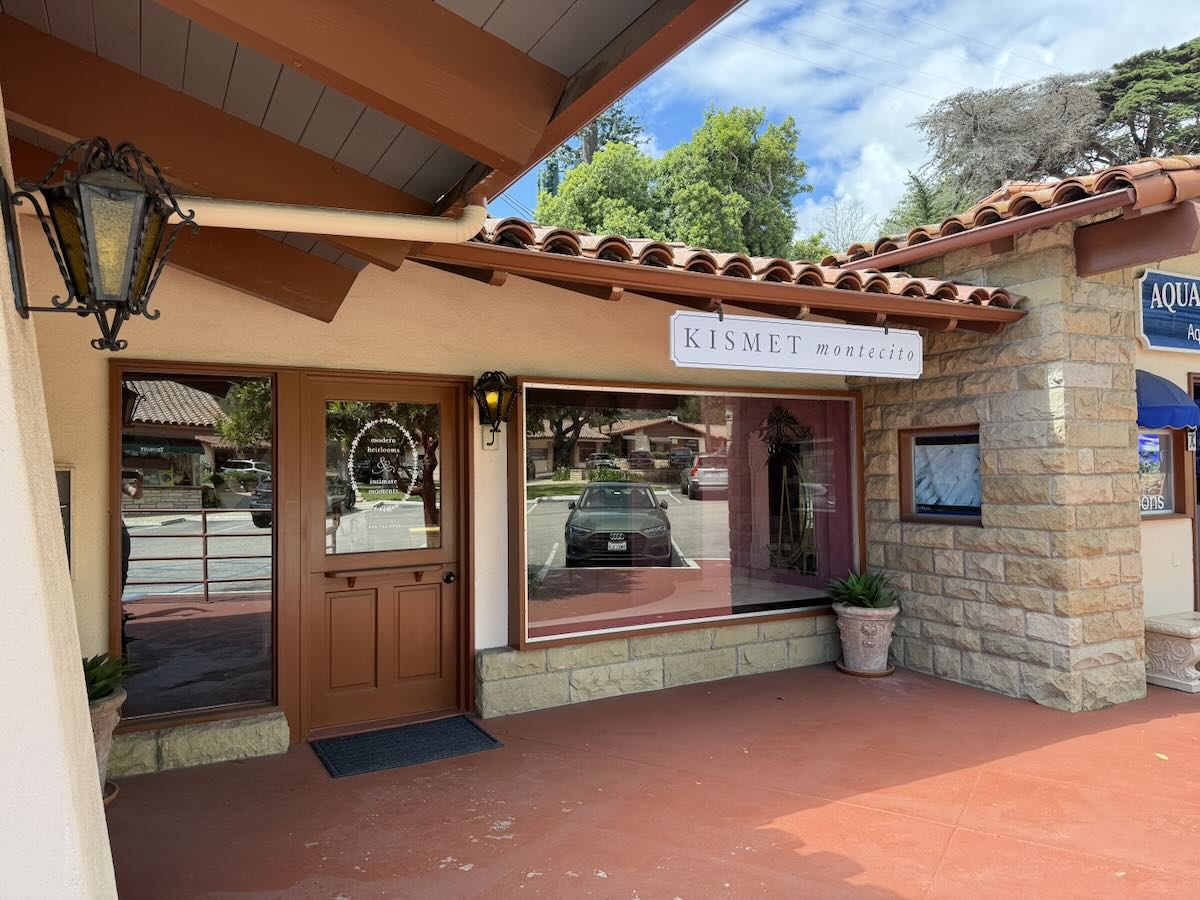
 ••• Kismet’s Upper Village shop has been folded into Kismet Kids in Summerland, and the space will become an outpost of Asher Market.
 ••• The 101 Garden Street hotel project—”250 rooms (130 ‘extended stay’ rooms; 120 ‘select service’ rooms)”—at the edge of the Funk Zone goes back before the Historic Landmarks Commission today with some changes, but the bigger news is that according to the plans, the hotels will be branded as Residence Inn and AC Hotels, both of which are Marriott brands.
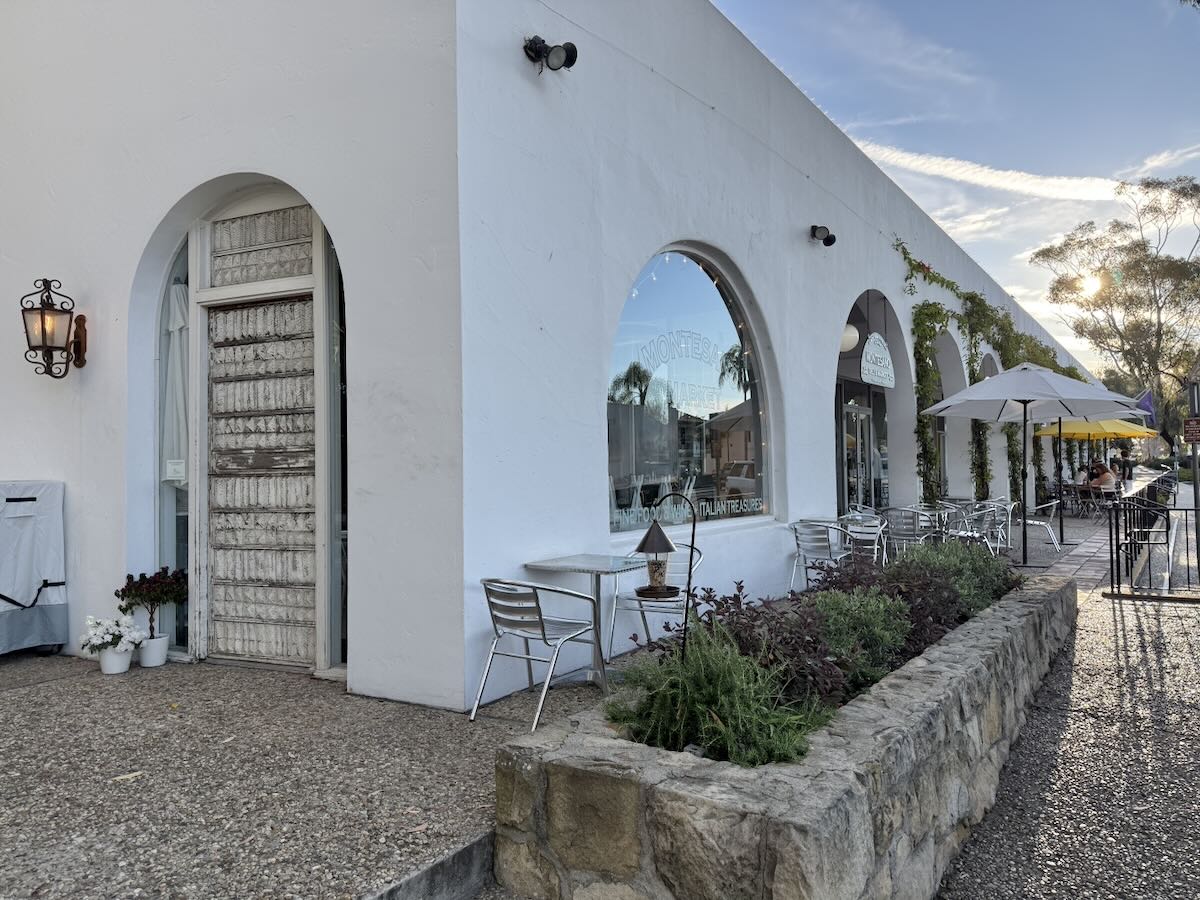
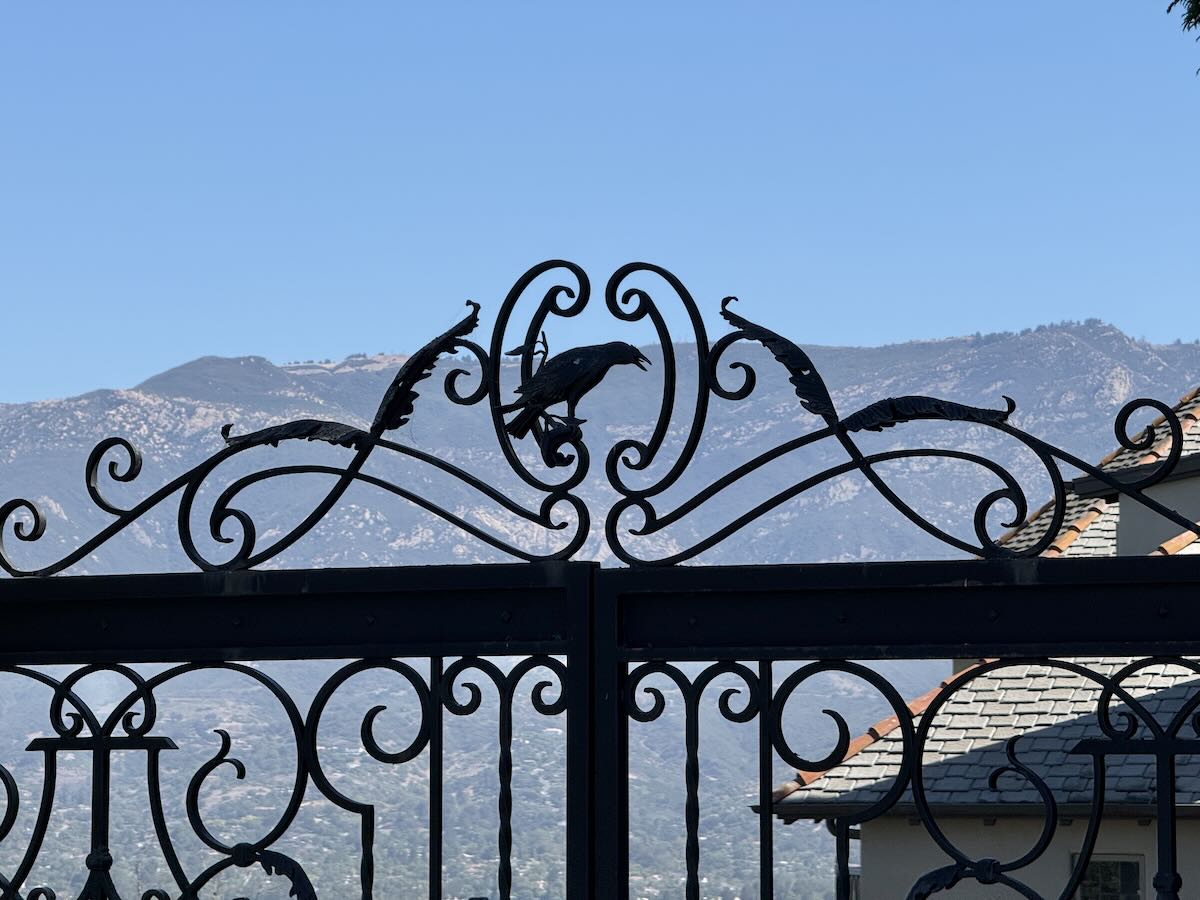
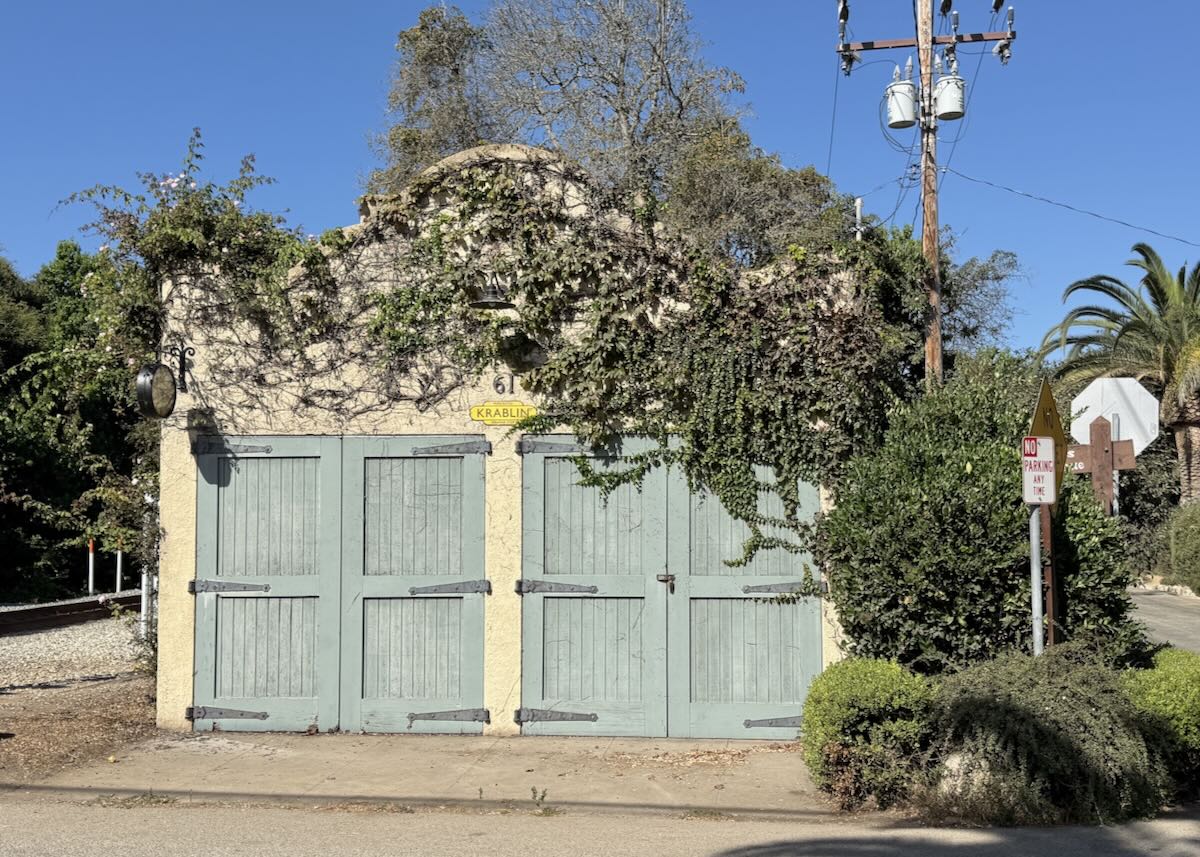
••• No one identified last week’s Where in Santa Barbara…?, so here’s the answer: it’s on the side of Montesano Market & Deli on Coast Village Road.
 ••• Radius Commercial Real Estate’s Q1 report had a bunch of interesting nuggets. First, the EoS Fitness gym coming to the former 24 Hour Fitness space at 820 State Street, will include an entrance on State Street. Second, S&J Fitness—
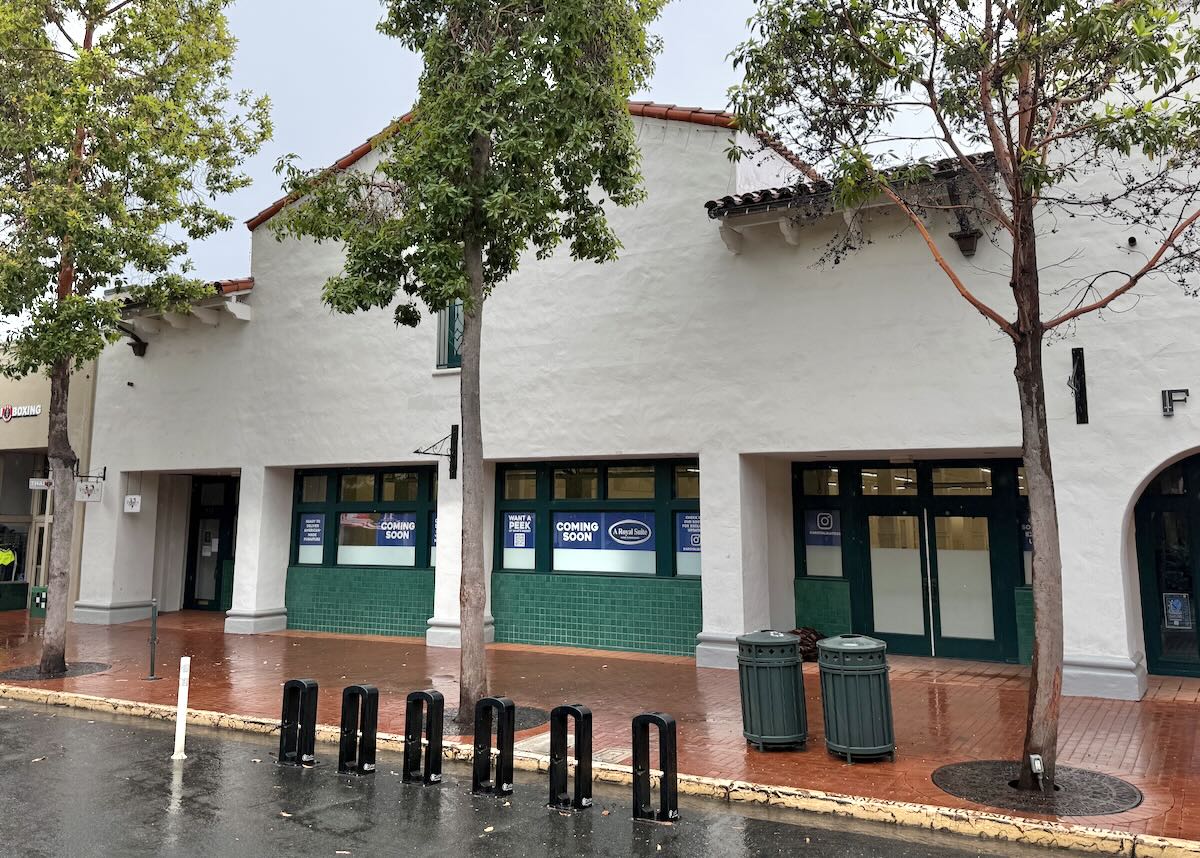
possibly related to S&J Fitness and Kickboxing in Cerritos—is taking The Base‘s space at 116 Anacapa Street in the Funk Zone. (The Base is moving to 122 Gray Avenue on May 1.) [See below.] Third, the 13,700-square-foot former CVS at 1109 State Street (Figueroa/Anapamu) is going to be occupied by A Royal Suite Home Furnishings, a chain that has stores in Santa Clarita and Oxnard. While there’s an argument to be made that any tenant is better than an empty storefront, and big retail spaces face immense challenges these days, I’m not sure this counts as a win for that block, one of the better ones on the promenade (home to La Arcada, the San Marcos Building, the Santa Barbara Museum of Art, Satellite, Dune, and more). State Street needs to be careful about sliding downmarket; it’s hard to go back up. Which leads to the fourth nugget from Radius’s report: “Approximately 12 resale-oriented retailers—variously categorized as vintage, consignment, thrift, or secondhand—now operate along State Street. These tenants typically do not meet traditional ‘high-credit’ standards and often transact on shorter-term leases at lower rental rates, which can impact property valuations under conventional underwriting metrics.” UPDATE 4/23: While a new gym is indeed moving into 116 Anacapa Street, the tenant (S&J Fitness LLC) has nothing to do with S&J Fitness and Kickboxing in Cerritos.
 ················
Sign up for the Siteline email newsletter and you’ll never miss a post.










Sea Change was a very good album and anything in that direction is welcome.
I agree that Sea Change is a fabulous album, but I agree with Erik, funky Beck is the best Beck. That said, I am counting down the days to September 22nd – nothing is better than a Beck show!
State Street is just returning to its original form. Before the Verizon lease deal that changed the landscape of State, it was just a street filled with mostly resale shops and thrift stores. If landlords might worry about their property valuations they might need to look within and see the impact of their own hand on their demise.
The downmarket trend of Santa Barbara has been happening for decades. The city sold its soul to tourism years ago and the results are a steady decline in quality and value. When you appeal to the lowest common denominator, you end up with the lowest common denominators.
Meanwhile, CVR is thriving as retail and restaurants want to be where the money and the vibes live (yes I know CVR is technically under the rule of SB, but is it really?). Regardless of its overlords, the market responded accordingly.
The reality is the demographics of the avg SB resident does not warrant an investment in high end anything. Santa Barbara is a city full of low income immigrants, low income students and multi generational mediocrity. The money is in the peripheral, not downtown and the market has responded to this fact.
The only way out of this mess is to grow the incomes and job base downtown by offering businesses an opportunity to build here. Rising tides lift all boats! But there is nothing more antithetical to the people who run SB than economic growth via business and good old fashioned innovation. Instead, they want to give away more and more while taking in less and less. Your money, your town, their feelings…
The pathway is to foster startups and provide professional entities a foothold. Offer them free rent, offer them tax incentives, anything to start up and build something here. We need a path for the thousands of highly educated and capable graduates that our area produces every year to stay here. To grow a family here. To build a community. To earn a living here. To be able to afford to live here!
But instead of seeding the future, building long term viability, the city panders to tourism and its low skilled low wage service jobs and promotes reduction in services, tax increases and fee adjustments as a path!
So, yes, State St will continue to slide downmarket as 99c stores, funny socks and t-shirts, vintage clothing and cheap beer/ wine are what the market actually supports. The proof, as they say, is in the pudding.
Thanks for this comment. It’s insightful, articulate, and presents a compelling argument. Who doesn’t hate cheap beer?
“Santa Barbara is a city full of low income immigrants, low income students and multi generational mediocrity. ”
This is unkind, inaccurate, and makes you sound incredibly elitist. It undercuts the entire point of your argument. Do you just cast your eyes in judgement every time you’re too lazy to make your own meal or go out and have any form of entertainment?
Also, who do you think is working all those restaurants and retail stores on your precious CVR? (Hint: immigrants, college kids, and locals)
Go touch grass.
Woah. “Santa Barbara is a city full of low income immigrants, low income students and multi generational mediocrity” That’s not just a sentence that’s some sentimentality.
Dude, don’t bite the hands that feed you.
There’s a legitimate grievance about Santa Barbara’s economic policy buried in here, but it’s fatally undermined by bigotry. Calling the city’s problems a result of “low income immigrants” and “multigenerational mediocrity” isn’t market analysis, it’s scapegoating: blaming residents for conditions created by policy failures and capital flight, while framing national origin and working-class status as civic liabilities. The cruel irony is that the author’s own preferred solution, a rising tide that lifts all boats, would benefit precisely the people he just dismissed. You can’t argue for inclusive economic growth in one breath and dehumanize the majority of your neighbors in the next. The real problems here are zoning, over-reliance on tourism, and lack of pathways for young professionals to stay, and those deserve serious conversation, not a demographic witch hunt.
Ugh. This comment sounds like it was prompted by a boomer and written by AI. I agree with some parts of it, and disagree with other parts, but the tone and approach is selfish and entitled.
https://datausa.io/profile/geo/santa-barbara-ca/
According to the 2020 census, the city of SB has a poverty level of 14%. 20% of the population were foreign born. Median incomes are at least 1/3 of that needed to purchase a median home ($107k for $1.57mm mortgage) . 42k people out of 89k are employed. etc. etc. etc.
The data is not very pretty.
We’d all be better served if people spent less time worrying about the use of a particular word and more time trying to reconcile the facts and figures. Being more offended at a label than a cause, is a big reason why our society is failing and the main reason aholes like Trump are in office.
Nobody disputed the data. Poverty is real, housing costs are crushing, and median incomes are a joke relative to what it costs to live here. But look at what you did: you listed “20% foreign-born” alongside poverty and unemployment figures as if it belongs there. That’s the tell. Being foreign-born isn’t a socioeconomic indicator, and dropping it into that list reveals exactly the assumption that got called out in the first place. As for “stop worrying about labels” — that’s not what’s happening here. Bad framing produces bad diagnoses, and bad diagnoses produce bad solutions. If you misidentify who’s causing the problem, you’ll never fix it. And the Trump point is genuinely ironic: the rhetorical move in your original post, treating demographic composition as the explanation for community decline rather than policy failures, is the exact playbook that got him elected. You’re illustrating the problem while complaining about people who point it out.
Amazing. You get upset at someone using the word immigrant to describe a portion of the population, then get upset that the data that shows that 20% of the pop are in fact, immigrants.
Life must make you very upset. All those words being used by random people constantly hurting your feelings. You poor thing.
/
The only one upset here is you.
You seem to have severe comprehension issues and are insistent on relying on straw man arguments, and arguing in bad faith.
Have a great day!
Not even a real name, absolutely nothing to help – I couldn’t even finish this bot’s diatribe. Yuck
“While there’s an argument to be made that any tenant is better than an empty storefront, and big retail spaces face immense challenges these days, I’m not sure this counts as a win for that block, one of the better ones on the promenade ”
National retailers, the only ones really capable of taking on such a large space, don’t want to open on a street closed to traffic, certainly not one in such limbo as ours. So this is what we get. Personal feelings on the promenade may vary, particularly those who love a leisurely bike ride down State without actually conducting meaningful commerce, but that’s how actual businesses are looking at State Street – which is supposed to be our “commercial” core.
Show me 5-10 retailers willing to open on state if the street was open and you’ll change my mind. Unfortunately no one can show that. The street being open wouldn’t change a thing.
Talk to retail brokers, they will tell you. Whether the retailers are right or wrong about it doesn’t matter, that’s predominantly their position. SB is a tough market as it is.
This problem isn’t unique to Santa Barbara, storefront retail is changing and evolving everywhere. We moved back to SB in 2010 and stores were closing down pretty rapidly even before Covid. We also spend time in the Bay Area and stuff is closing there. Coffee shops and restaurants still thriving, everything else not so much. Younger demographic has been shopping online for awhile and Covid taught everyone else how to buy online. You can hate Bezos, but Amazon has taken over in many parts of the country. You can get clothing, groceries, pharmacy items etc and have it all delivered to your door. CVR is thriving because of many restaurants and a few high end shops. State street especially lower state lost some of their party people to the funk zone which has been a pretty big success. And SB has always been a tourist town, I would argue there’s more good jobs now than in the past. When I graduated UCSB long long ago most of my friends left to get jobs in Bay Area, LA or back east. Lots more companies and opportunities now and availability of remote work in some companies has also helped bring more people (and pump up housing prices).
E-commerce killing in person retail is a myth. Is it evolving, yes, but 80-90% of shopping still occurs in a physical store. Beyond that, 40% of online shopping also involves a physical store (item pickups, returns, etc.).
Well something is killing lots of retail-I would assume that those numbers are much higher depending on age demographics. My 30 something kids buy everything online. I don’t know if my grandkids in the Bay Area have ever sat in a shopping cart in a grocery store…
I don’t think it’s a myth. Yes, the data shows that “only” 20% of retail sales are done online, but that’s still a 20% decline in sales for physical stores. How would the average business owner feel about sales dropping 20%?
Also, if you dig into the numbers for specific categories of retail sales, it becomes pretty clear that online sales are contributing to the decline of in-person retail, especially for the kinds of stores you might find on State Street. For example, it is estimated that 40-60% of apparel sales and between 40-50% of home decor/goods sales are made online.
This logic ignores the reality that the 400 block is open to cars, yet it is unquestionably the worst block of state street.
Always has been, even before the closure/covid.
Just saw on nextdoor a post about how busy state st (maybe 600 block) was on Sunday night which was good to see. We still eat at Arigato and Bibi Ji and public market and it’s always bustling with people.
When I was a little kid, “go to lower State” was a slur. It implied you were seedy, a bum, criminal. As long as the adult store squats down there, it will always be slightly that.
Why weren’t those businesses snapping up properties in 2017, 2018 and 2019 when there was article after article about the retail apocalypse and record low vacancies on State?
There’s no shortage of thoughtful perspectives on what State Street should become—and that’s a good thing. We’re clearly still in a period of recovery and reinvention, and none of us can say with certainty what downtown will look like in a year, let alone five. But that’s exactly why moments like this matter.
A Royal Suite Home Furnishings isn’t just another storefront—it’s a family-owned California business choosing to invest in State Street right now. That kind of decision doesn’t happen by accident. It reflects real confidence in the market, in the community, and in the direction things are heading.
So yes, we can debate the bigger picture—and we should. But we can also acknowledge progress when we see it. This is a win. Let’s welcome them, support them if it resonates, and keep building momentum one step at a time.
Thanks VinceGPT
It’s curious to me that you all think Coast Village Road is thriving. Is it because the goods on the street are more expensive? I would say CVR is moderately healthy, but not great as a retail corridor — and certainly never say it’s “thriving”. Is it easier to pop in and grab something? Yes. Is there a strong desire to eat at Local, repeatedly shop Wunderkind or Faherty or buy a knick knack at Heritage Goods? Absolutely not.
Truth is — people thinking CVR is the example of success that State Street should follow is woefully short-sighted.
Ummmmm….CVR is definitely thriving!!! Ask the retailers. There are more tourists willing to spend money (there are many affordable shopping options). Locals have been stopping into shop the strip more frequently then 2 years ago. There are so many small local businesses on CVR. I can’t say the same for State Street. The CVR Association is doing an incredible job with monthly advertising for the shops as well as organizing special events like the art walk. Restaurants are fully booked most of the time. Seems like you haven’t been there in a while. You should check it out again. You might be surprised.
Re: the new stoplight at Hermasillo. The northbound exit at Carillo was already closed on Friday, which resulted in a major backup at the new stoplight of both eastbound and westbound trafiic on CVR during the Friday afternoon rush hour. Commerce on C VR is indeed now thriving [look for an empty storefront; if you find one, it will soon have a new tenant], but it will take a hit when locals start limiting their visits there to avoid the traffic. A simple way to move more cars/hour past that light would be to eliminate the time when all other trafiic is stopped to allow the occasional southbound car on Hermasillo to turn onto CVR. Blocking southbound traffic from Hermasillo at CVR is the most practical solution; cars departing from that block of Hermasillo would exit at the other end, onto Hot Springs Road. Since the 101-Cabrillo interchange is scheduled to be completed in 2028, this “temporary” stoplight will likely be there for one to two years.
I’ve bought many great items from A Royal Suite home furnishings! Looking forward to them being on State street so we don’t have to drive to Oxnard.
Shop keepers closes two stores. Why are all you experts not analyzing this? Could it be that the greed of landlord’s has now reached the Funk Zone at $10/sqft ? If the business owners can’t make any money, then there will be empty building until the end of time.