

••• “The Santa Barbara City Council will not renew its contract with Flock Safety or enter into a contract with another license plate reader platform for now. Council members plan to revisit the issue after reviewing the city’s automated license plate reader policy. Santa Barbara Police Chief Kelly Gordon said the lack of the technology would hinder investigations and recommended that the city switch to Verkada’s license plate reader platform […] where footage stays within the control of a single organization [….] In order to not have any automated license plate reader technology, the city would have to repeal its policy that allows the use of the technology, according to staff. That would be a big change for the city as the technology is also used in its downtown and waterfront parking lots.” Unmentioned in Noozhawk‘s article: the Santa Barbara County Sheriff’s Office is using Flock cameras.
••• “The cases of measles in Santa Barbara and Ventura counties that emerged in the space of a week were only two of many cases resulting from an international airline flight that, for privacy reasons, remains shrouded as to date and origin. In Santa Barbara alone, contact tracers identified more than 150 people who might have been exposed by a single positive case resulting from that flight, said Ann Carlisle, director of Disease Control and Prevention for the county’s Public Health Department.” Perhaps it’s time to rethink respecting the privacy of people who put herd immunity at risk. —Independent
••• “Charter Communications has completed its $34.5 billion acquisition of Cox Communications, launching the Spectrum brand into Southern California markets that were earlier served by Cox.” —Edhat
••• “Isla Vista will establish a memorial for the 14 people over the decades who have died after falling from the cliffs along Del Playa Drive.” Located at Walter Capps Park, it will “include a bench, a kiosk with photos of the cliff fall victims, and educational materials on bluff safety.” It will cost $45,000, but apparently there’s a belief that it “can help save lives.” —Noozhawk
••• “Roughly $3.3 million is needed to help the city of Carpinteria keep its Community Pool up and running [….] The pool first opened in June 1989. Nearly four decades later, parts of it are in critical need of repair or replacement, including the pool deck, pool gutters, mechanical equipment, chemical feed systems and pool heater.” Love that pool and will definitely donate. —Noozhawk
••• An update on the overtime fiasco at the Santa Barbara County Sheriff’s Office included this: “a new labor agreement between the county and the Deputy Sheriff’s Association union […] is expected to help curb costs. The new contract, [management analyst Nicole Parmelee] explained, changes the calculus so that paid sick leave and comp time can no longer count as overtime hours. It also caps individual employees at 1,300 overtime hours per year; limits annual comp-time accrual to 120 hours; requires period cash-outs of comp-time balances; and clarifies when employees can bill for drive time.” 1,300 hours a year is 25 hours each week. —Independent
••• “The federal law that prohibits paving and logging National Forest land is officially on the chopping block, and conservationists warn that the cleaver could strike lands on the Central Coast. […] Another public comment period on the proposed rule change and its environmental impact statement is now open until September 21. Notably, when the Roadless Rule was established, it followed a two-year process generating more than 1.5 million public comments and holding more than 430 public hearings. For its rescission, the USDA is holding zero public hearings and allowing 30 days for public comment.” You can comment here. —Independent
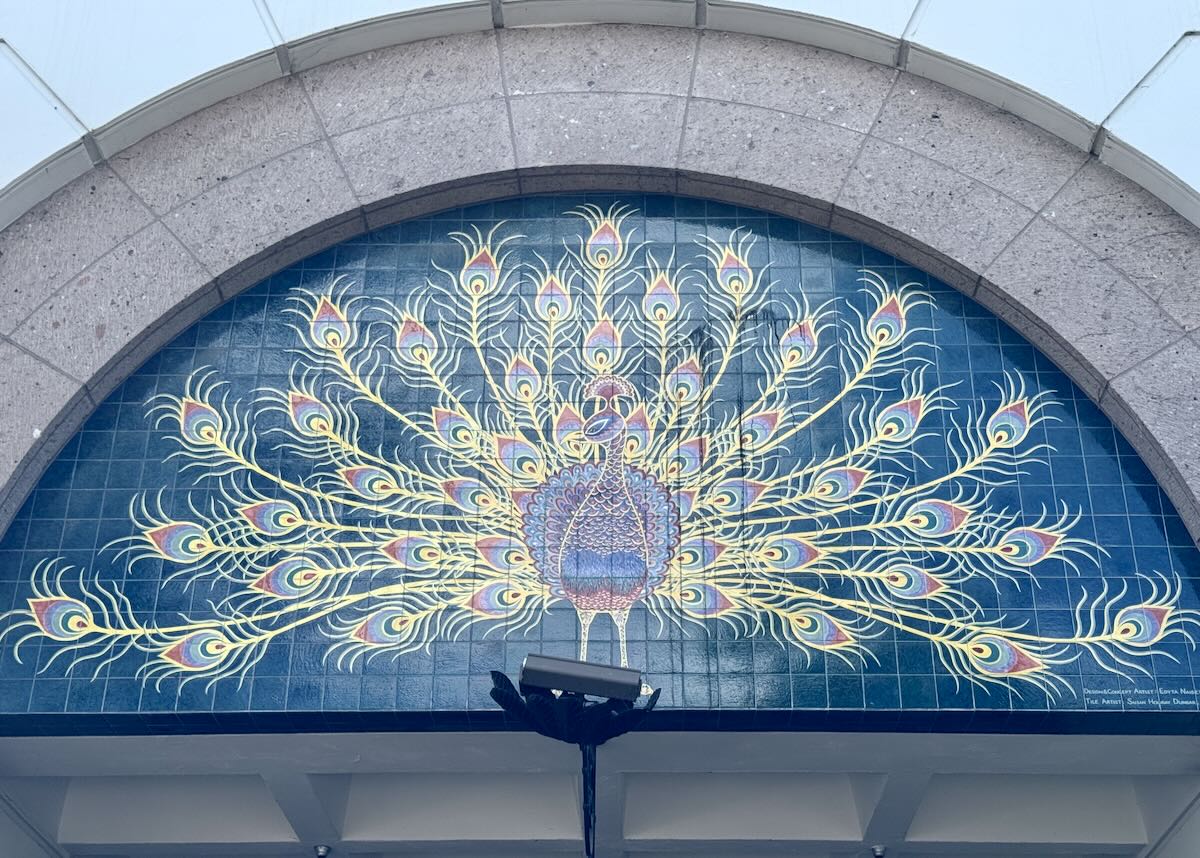
••• From a Noozhawk article about the conversion of the former Macy’s building (701 State Street, at Ortega) into Yardi Systems offices: “As for the three peacock tile murals, Cearnal said they have been in touch with the Museum of Contemporary Art to preserve and ‘somehow’ relocate the murals.”
 ················
Sign up for the Siteline email newsletter and you’ll never miss a post.















Thank you for writing about the Roadless Rule. I easily submitted my comment and it only took a couple clicks. I hope others do the same.
For those who don’t know what to write, feel free to use this:
**Comment in Opposition to the Proposed Rescission of the 2001 Roadless Area Conservation Rule**
I am writing to strongly oppose the U.S. Department of Agriculture’s proposed rescission of the 2001 Roadless Area Conservation Rule and to urge the Forest Service to retain full protections for all 44.7 million acres of inventoried roadless areas, including the Tongass National Forest.
The 2001 Roadless Rule has stood for over two decades as one of the most significant conservation measures in U.S. history, safeguarding intact forest ecosystems, clean drinking water sources, and critical wildlife habitat from the impacts of road construction and industrial logging. These roadless areas provide outsized ecological value relative to their footprint — they store carbon, buffer against the effects of climate change, protect watersheds that supply drinking water to millions of Americans, and preserve some of the last undisturbed habitat for sensitive and at-risk species.
Rescinding this rule and shifting decision-making to local and forest-level officials would fragment national environmental standards and open these lands to piecemeal road-building and logging without the same rigorous, nationally consistent environmental review the 2001 Rule provides. Roads in previously roadless areas bring lasting harm: increased erosion and sedimentation, habitat fragmentation, higher wildfire ignition risk from human access, and irreversible damage to old-growth and mature forest stands that take centuries to recover, if they recover at all.
I am especially concerned about the proposed exclusion of the Tongass National Forest. The Tongass is the largest temperate rainforest in the world and one of the planet’s most significant carbon sinks. Reopening it to road construction and old-growth logging would reverse hard-won protections, threaten salmon-bearing watersheds that Indigenous communities and commercial fisheries depend on, and undermine the region’s growing tourism and recreation economy.
The 2001 Roadless Rule was developed through one of the most extensive public engagement processes in Forest Service history, with the overwhelming majority of the more than 1.6 million public comments received in support of strong roadless protections. I urge the Department to honor that public mandate, withdraw this proposed rescission, and keep the 2001 Roadless Rule fully intact — including its application to the Tongass National Forest.
Thank you for considering this comment.
Thank you. Done!