
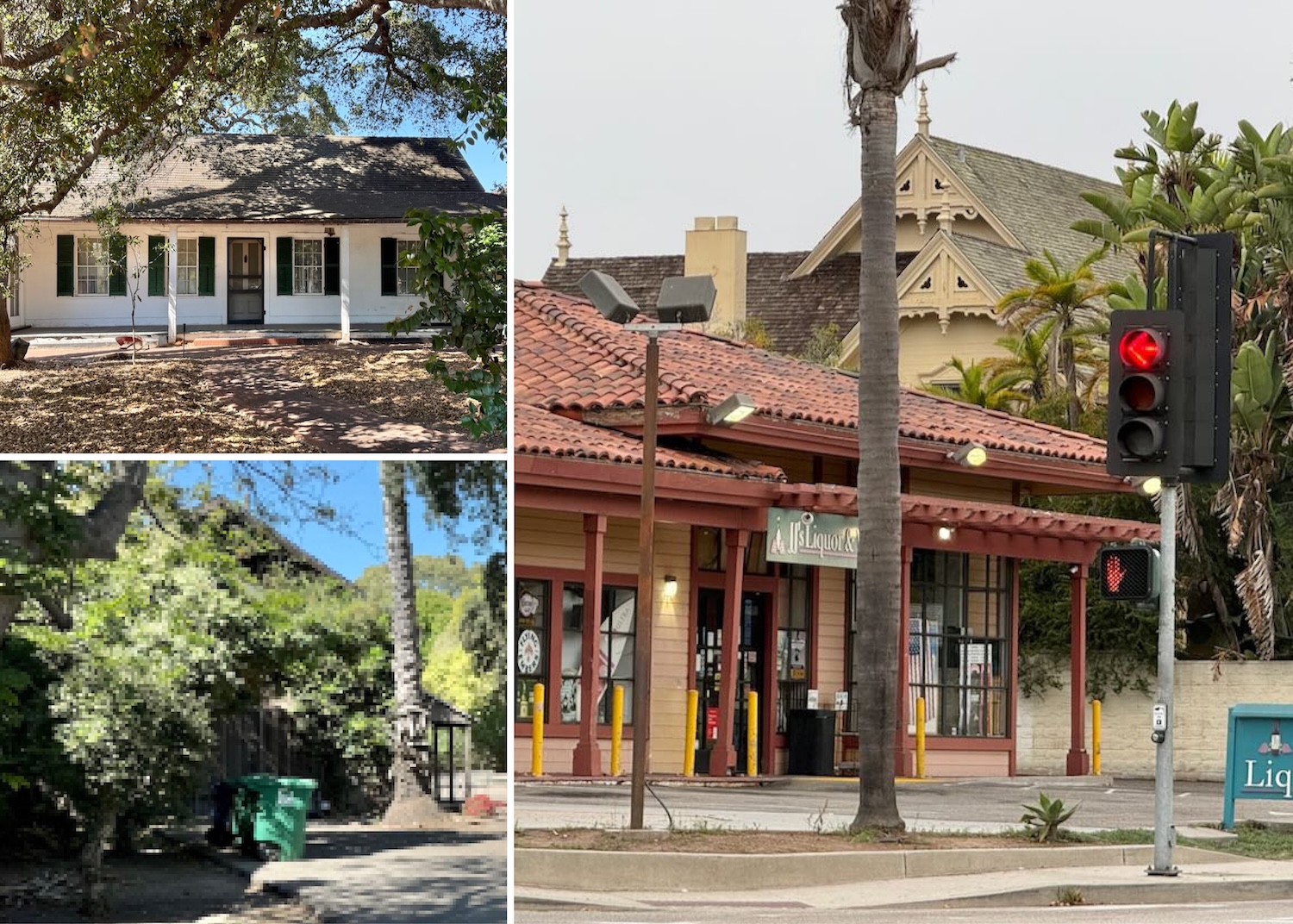
There are some historic buildings near the northwest corner of W. Montecito Street and Castillo Street, adjacent to the liquor store. The one on Castillo is an enormous mansion painted a dull mustard color. If my attempt at research is in any way accurate, it belonged to Judge Fernald and was rescued by a historical society and moved to that location to avoid demolition. There it stands, seemingly vacant. Maybe you can get the lowdown. —L.
The L-shaped lot at 414 W. Montecito Street wraps around 311 Castillo Street (site of JJ’s Liquor Store), and there are three buildings on it—the Fernald House on Castillo Street (above right), and on W. Montecito Street, the Trussell-Winchester Adobe and Carriage House (mostly obscured by trees). Both the land and the structures are owned by the Santa Barbara Historical Museum.
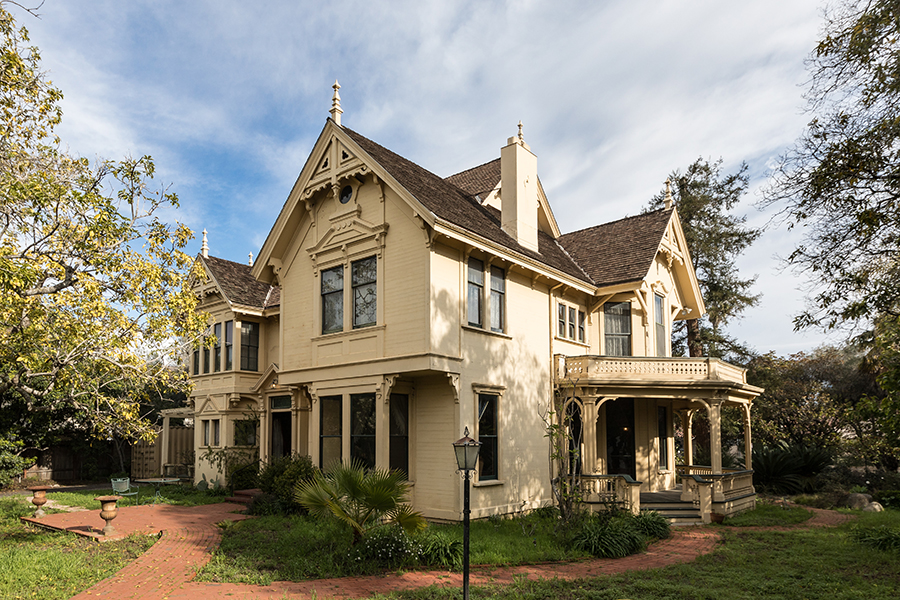
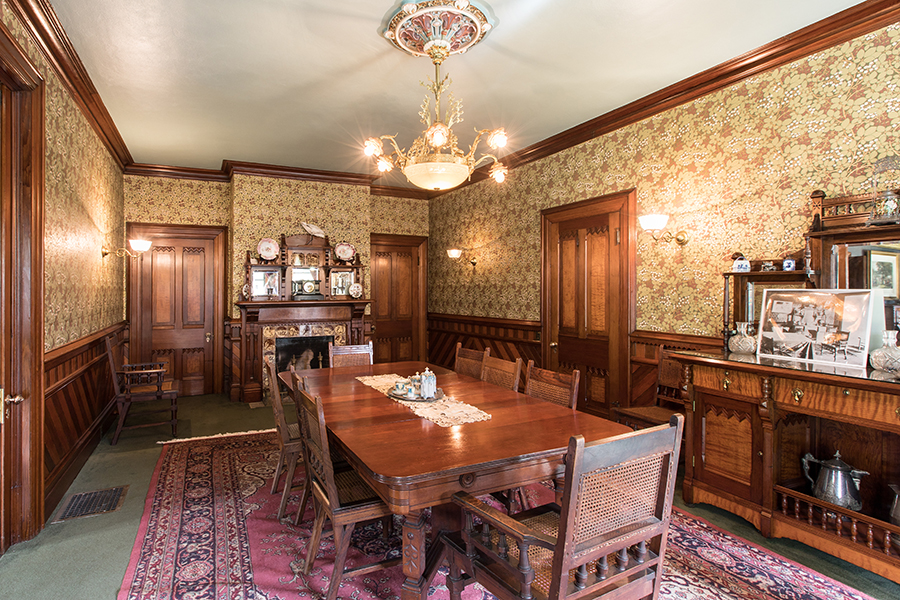
The history of the Fernald House is explained in an article on the museum’s website by historian Michael Redmond. (There are more photos than the ones below, too.) An abridged version:
Born in Maine in 1830, Charles Fernald went to California in 1849 in futile search of gold. He ended up in Santa Barbara, where he became sheriff at the age of twenty-two. He was then elected district attorney, and in addition to his law practice, Fernald served three terms as a county judge and in 1881 was elected mayor. In 1862, he married Hannah Hobbs and began construction of the family home, which was finished in 1864.
The house—a two-story, square structure made of brick with a lean-to kitchen at the rear—was originally at 422 Santa Barbara Street, surrounded by a city block of gardens and with clear views of the ocean. In 1880, as his family grew, Fernald had the house transformed to take on the look familiar to visitors today, with a steeply pitched roof common to homes designed in the Victorian Queen Anne style. By the time the last Fernald daughter, Florence, made the final additions in the 1920s, the house had grown into a 14-room mansion.
After Florence Fernald died in 1958, her will dictated the house be demolished. The Santa Barbara Historical Society launched a campaign to save the house as a landmark and move it to Society property on W. Montecito Street. Workers cut the house into three sections and hoisted it onto trailers. The journey took two days, and some four hundred overhead telephone lines had to be cut to make way for the house.
As for the exterior, a post on the website of Price, Postel & Parma—as Fernald’s firm is now known—says that “the house is still painted an understated ivory in accordance with the Judge’s wishes.”
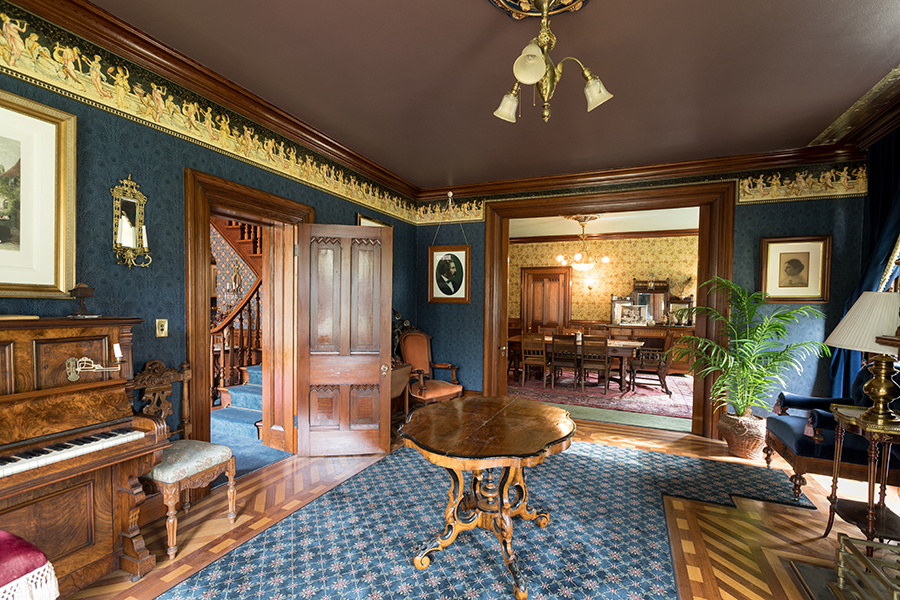
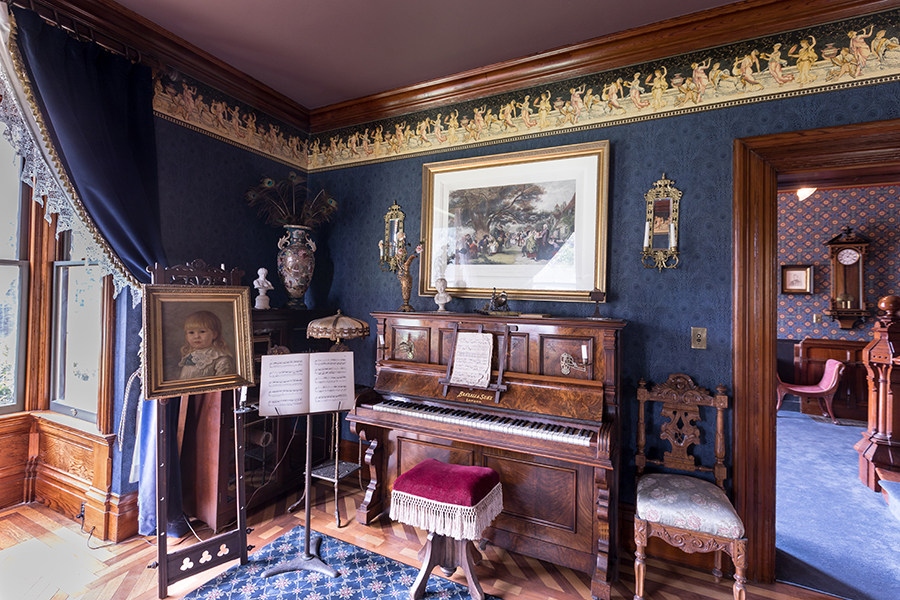
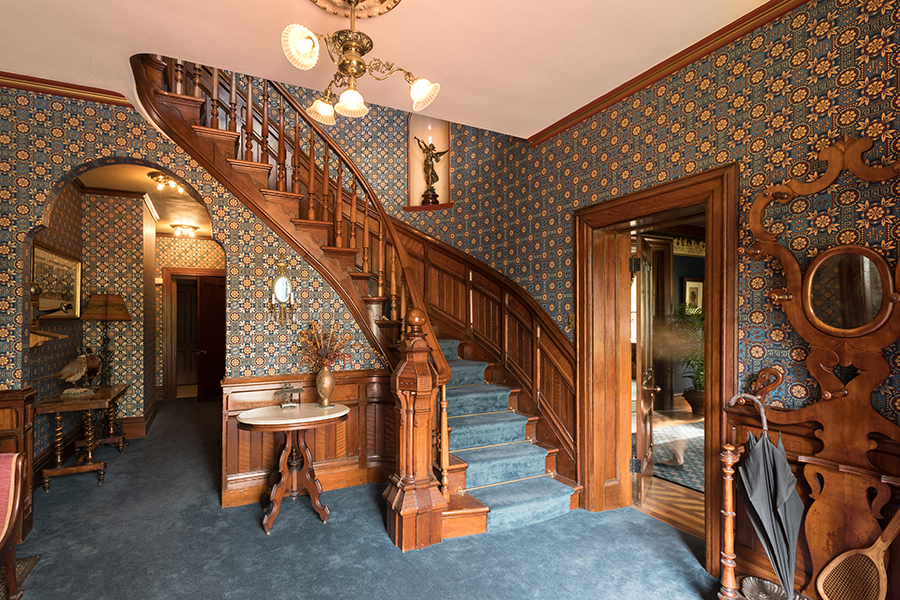
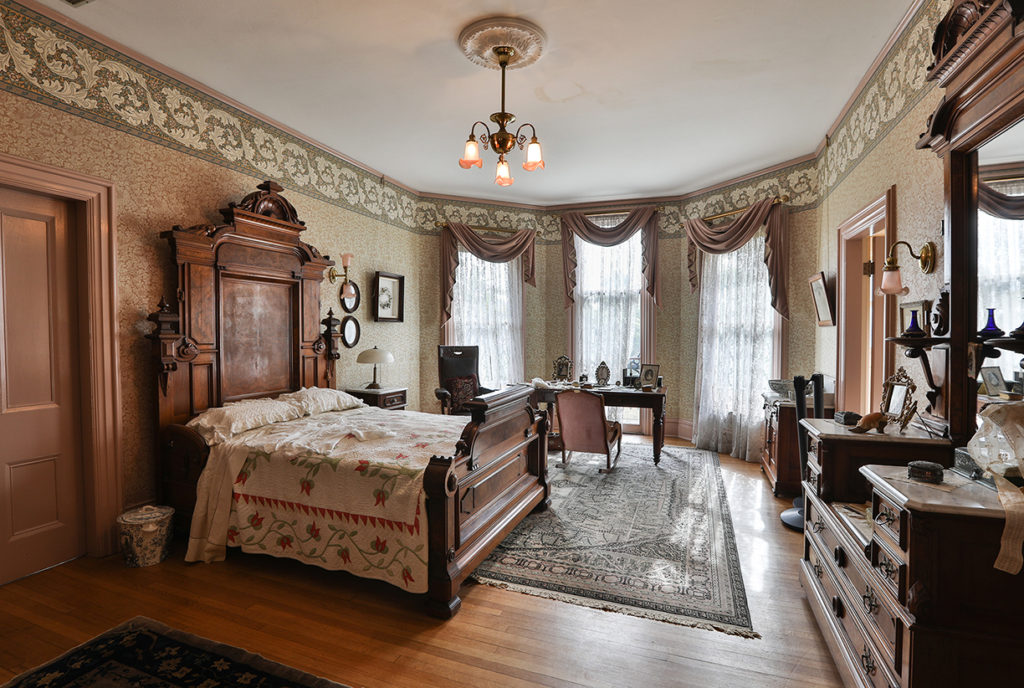
 Redmond also wrote about the Trussell-Winchester Adobe (originally for the Independent), and again, this is abridged:
Horatio Gates Trussell, also from Maine, was a sailor and sea captain who met his wife, Ramona Eayrs-Burke, while in Santa Barbara. (When they married in 1851, Trussell was 42 and Eayrs-Burke was 16.) Her stepfather gave them them land near the present-day corner of West Montecito and Castillo streets, and by the end of 1854, Trussell had completed his hybrid adobe home. Although the primary structure consisted of adobe, Trussell also added a wooden porch and a combined storage and entry room made of wood. The house also had one of the first roofs in Santa Barbara made of wooden shingles instead of tiles. The Trussells lived in the adobe, along with a growing family that eventually included ten children, until 1869, when Trussell built a two-story house nearby.
In 1878, the adobe passed into those of William M. Eddy, a prosperous banker. It is unclear exactly what use Eddy put to his new purchase; in the summer of 1882, he sold it to the Uriah Winchester family. The Winchesters were also from Maine and arrived here in 1869. They added a bedroom, enlarged the main bedroom, and probably added the sun porch to the east side. The family began to sell pieces of the property in the mid-1920s, and by the end of the decade the tract belonged to John and Katherine Hastings, the latter a grandchild of the Winchesters. With Katherine’s death in 1955, the property came into the possession of the Santa Barbara Historical Society, which, in accordance with her wishes have preserved the adobe.
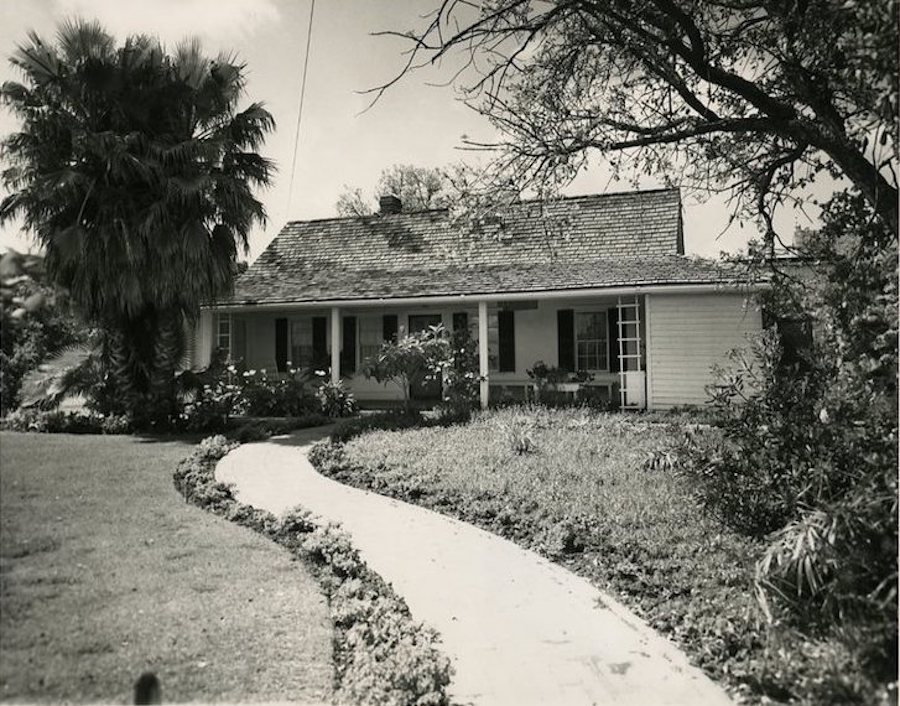 The museum doesn’t have any contemporary images of inside the adobe, but there’s one from 1960 on the Alamy website.
A third article by Redmond, about the history of the Santa Barbara Historical Museum, says that Hastings intended the adobe to become a new headquarters for the Santa Barbara Historical Society, and “various plans were put forward during the course of the 1940s about building a museum facility at W. Montecito, but lack of funding was a major stumbling block.” The search for a permanent location moved elsewhere—eventually to the current location at Santa Barbara and De La Guerra, which opened in 1965, and which is when the Santa Barbara Historical Society became the Santa Barbara Historical Museum.
Items owned by Judge Fernald and Dr. Robert Winchester are included in the museum’s permanent exhibition, The Story of Santa Barbara. And for even more about the history of both houses and the families who lived in them, check out these articles from the Santa Barbara Historical Museum’s journal, Noticias:
• Charles Fernald: Guiding Light of Santa Barbara (Vol. 52, No. 2, 2007)
• From The Earth: Adobes of Santa Barbara (Vol. 48, No. 1, Spring 2002)
The Fernald House and Trussell-Winchester Adobe have been open to visitors in the past, the former more recently than the latter. But according to museum executive director Dacia Harwood, we shouldn’t get our hopes up. They both need work, and they’re currently being used for storage, a priority for the museum at this time. “I don’t see it returning to a historical house museum in a traditional sense,” she said of the Fernald House. “We’re looking at other uses that would preserve the integrity, and we’re committed to sharing it. But I can say that we have zero intentions of ever parting with it.”
If you’ve enjoyed this post, you clearly like Santa Barbara history. Please consider becoming a member of the Santa Barbara Historical Museum and/or making a donation. I think we can all agree that the preservation of so much of Santa Barbara is a big part of what makes it special, but maintenance doesn’t come cheap.
Is there a question you’d like investigated? Email [email protected] or text 917-209-6473.
················
Previous Burning Questions:
••• What’s this scaffold structure on Las Positas Road?
••• Why does street striping take so long to happen?
••• Why do rocket launches look the way they do?
••• How is the San Ysidro Debris Basin designed to work?
••• What’s this building on Helena Avenue?
••• What are those old pilings in Arroyo Burro Creek?
••• What’s this building under construction in Toro Canyon?
••• What’s the story behind the seal of the City of Santa Barbara?
••• Butterfly Beach steps, green power lines, SBAG license plates, and more
••• What’s this pole with a flashing blue light?
••• What are these sculptures on the Riviera?
••• What’s the origin story of this fence on Hot Springs Road?
••• Why is part of this West Beach mosaic covered in concrete?
••• What was the Weeping Willow Inn?
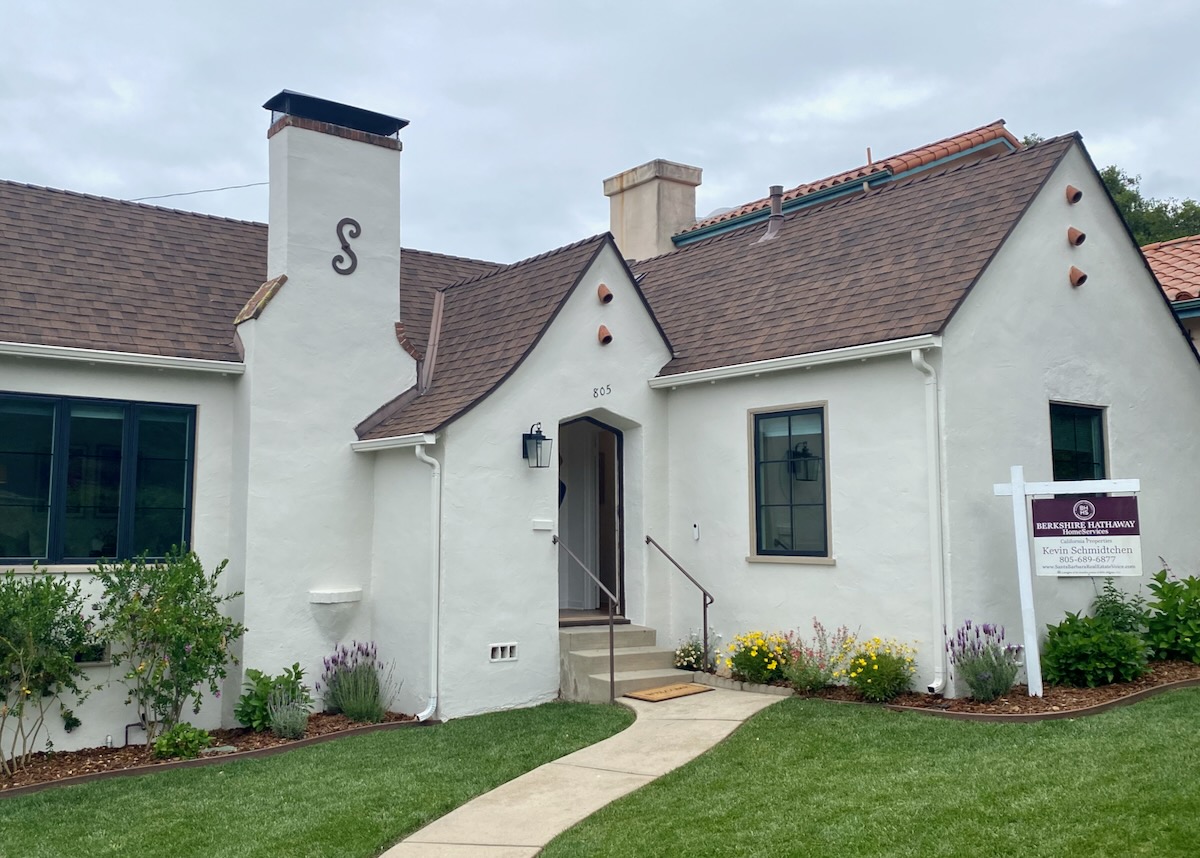
↓↓↓ What does the “S” on certain chimneys stand for?
••• What’s the status of the decommissioning of Rincon Island?
••• What happened to the gas flame on Highway 101?
••• What do we know about the proposed apartment complex at 1 Hot Springs Road?
••• What’s the history of this tower on Ortega Ridge?
••• What’s up with these sculptures on a hillside in Summerland?
••• Is there a master plan for the new walking paths in Montecito?
••• Why are the Thousand Steps still wet?
••• What’s happening with Sola Street?
••• Why is this lot on Milpas Street still vacant?
••• Where else do cruise ships that visit here go?
••• What is this large memorial in Ennisbrook?
••• Who bought the former St. Mary’s seminary—and why?
••• What will happen to the SBPD building when the new building is completed?
••• What’s the story with this house on W. Cota Street?
••• What are those little houses on Santa Barbara Street?
••• What’s the point of this light pole near the freeway?
••• What’s inside Paseo Nuevo’s State Street tower?
••• What’s the point of these markings on Laguna Street?
••• Why is there a giant red shoe off Highway 101?
••• What’s up with the “no e-bike” signs on local trails?
••• Why is Franceschi House in a holding pattern?
••• What’s happening with this derelict house in Summerland?
••• Can you explain how sundowner winds work?
••• Why is there a pressure cooker attached to this utility pole?
••• What’s this concrete ramp thing on East Beach?
••• Why does “USA” get written on the street?
••• What are those poles in the ocean near the Ritz-Carlton Bacara?
••• Are people really allowed to set fires in the middle of Montecito?
••• What’s the story with the half-finished lot next to the Montecito Country Mart?
 ················
Sign up for the Siteline email newsletter and you’ll never miss a post.







Thank you so much for this great information. The SB Historical Museum is one of our community’s treasures. Dacia and the team at the Museum are to be commended for their dedication to preserving and highlighting Santa Barbara’s remarkable history.