
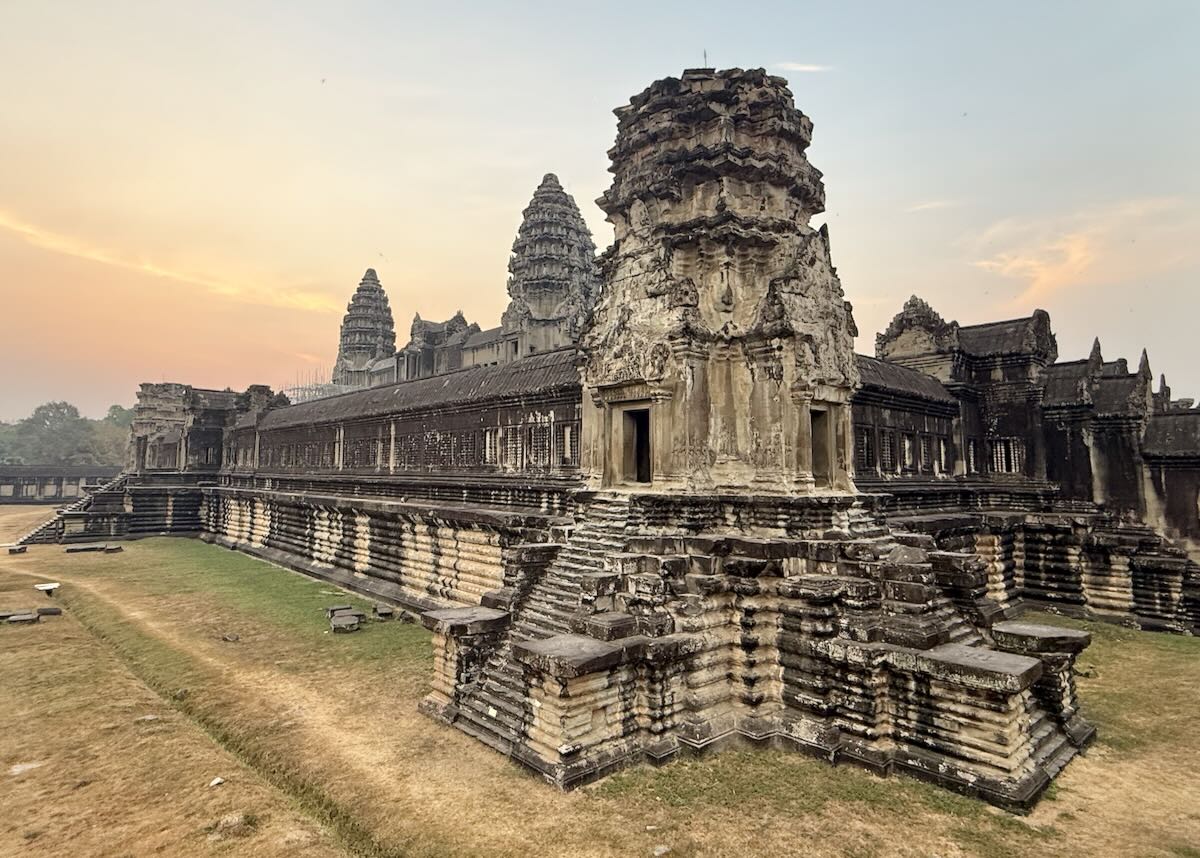
When my husband, Adam, and I decided to go to Southeast Asia, we made Vietnam the focus, with plans to start and end in Singapore. We had a few extra days, so we tagged on Cambodia’s Angkor Wat temple complex as a bit of an afterthought—and it was the best part of the trip.
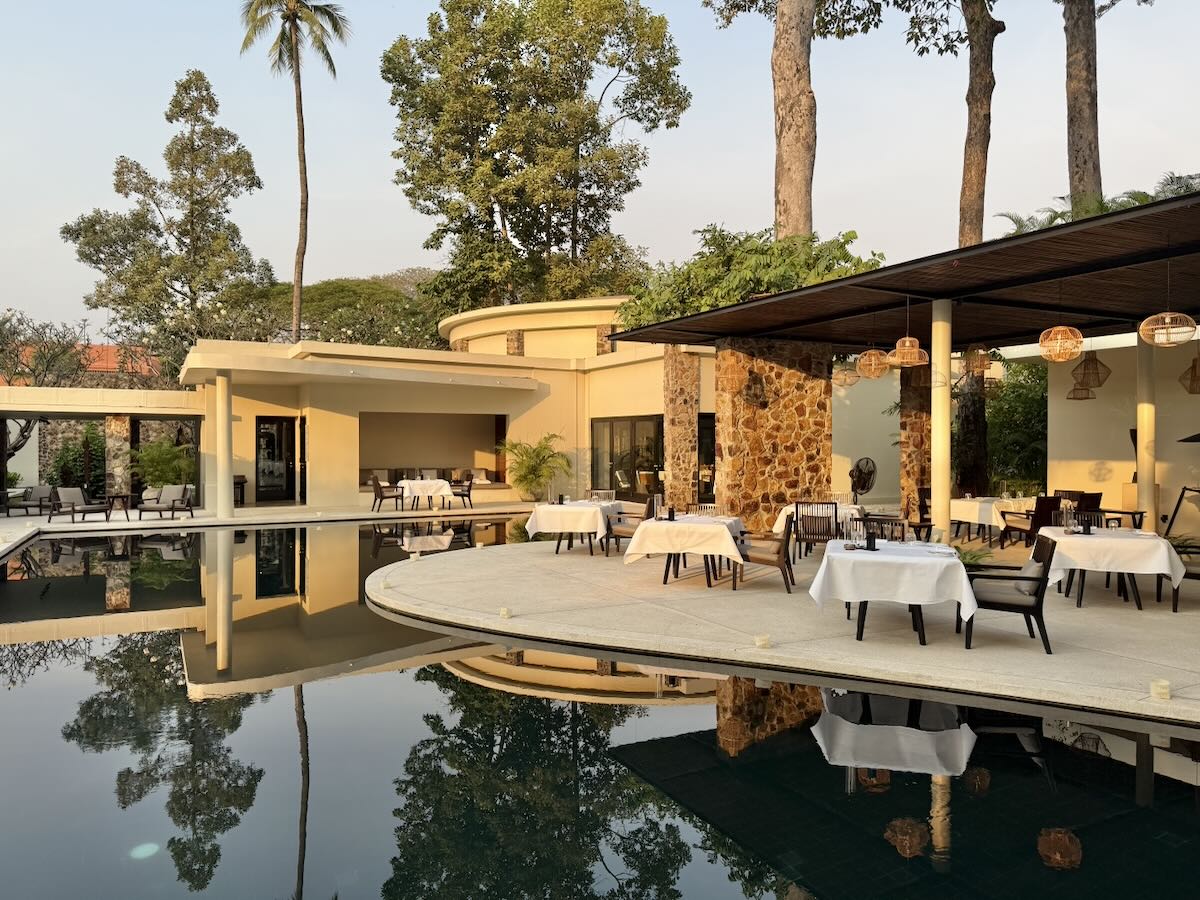
We stayed at Amansara in Siem Reap, built in 1962 as accommodations for guests of King Sihanouk. The guest rooms are along two courtyards, anchored by a wildly fabulous circular dining room.
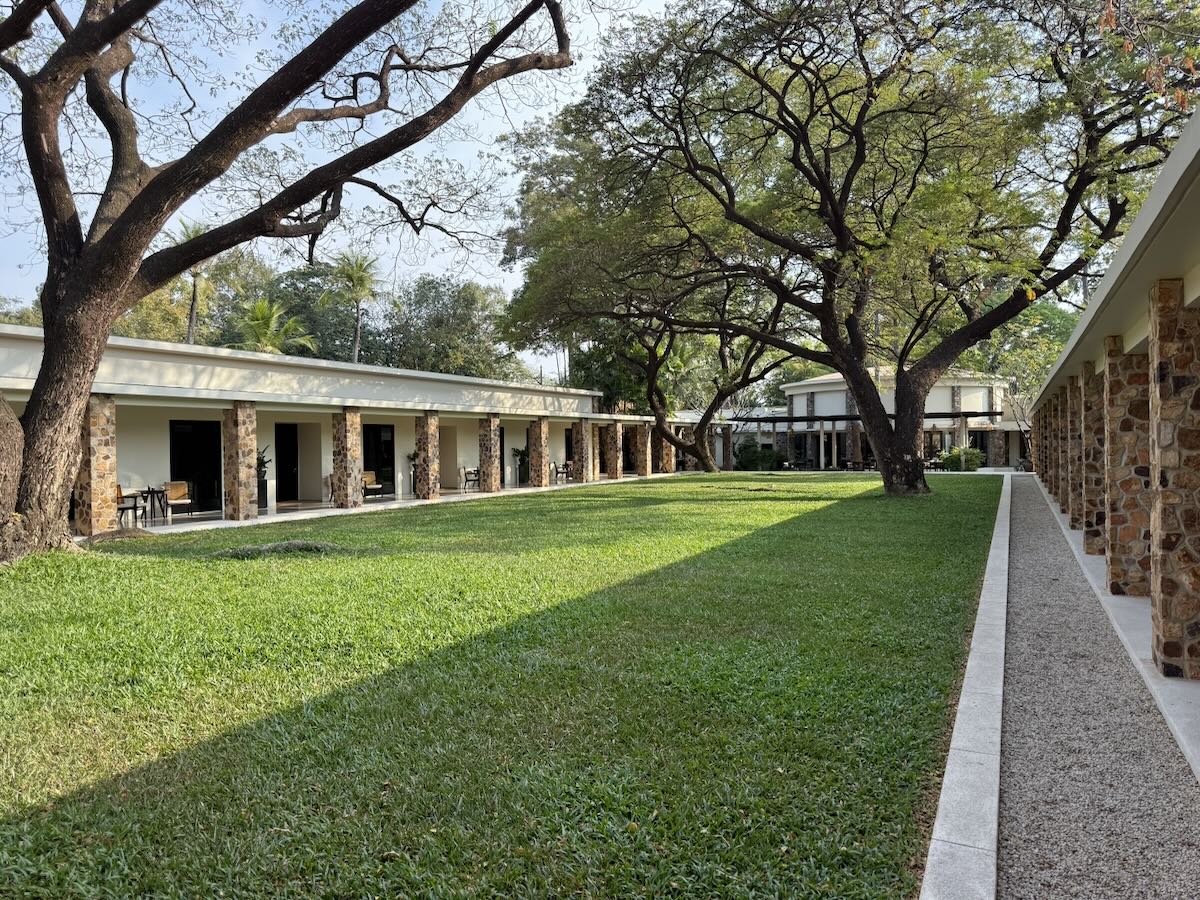
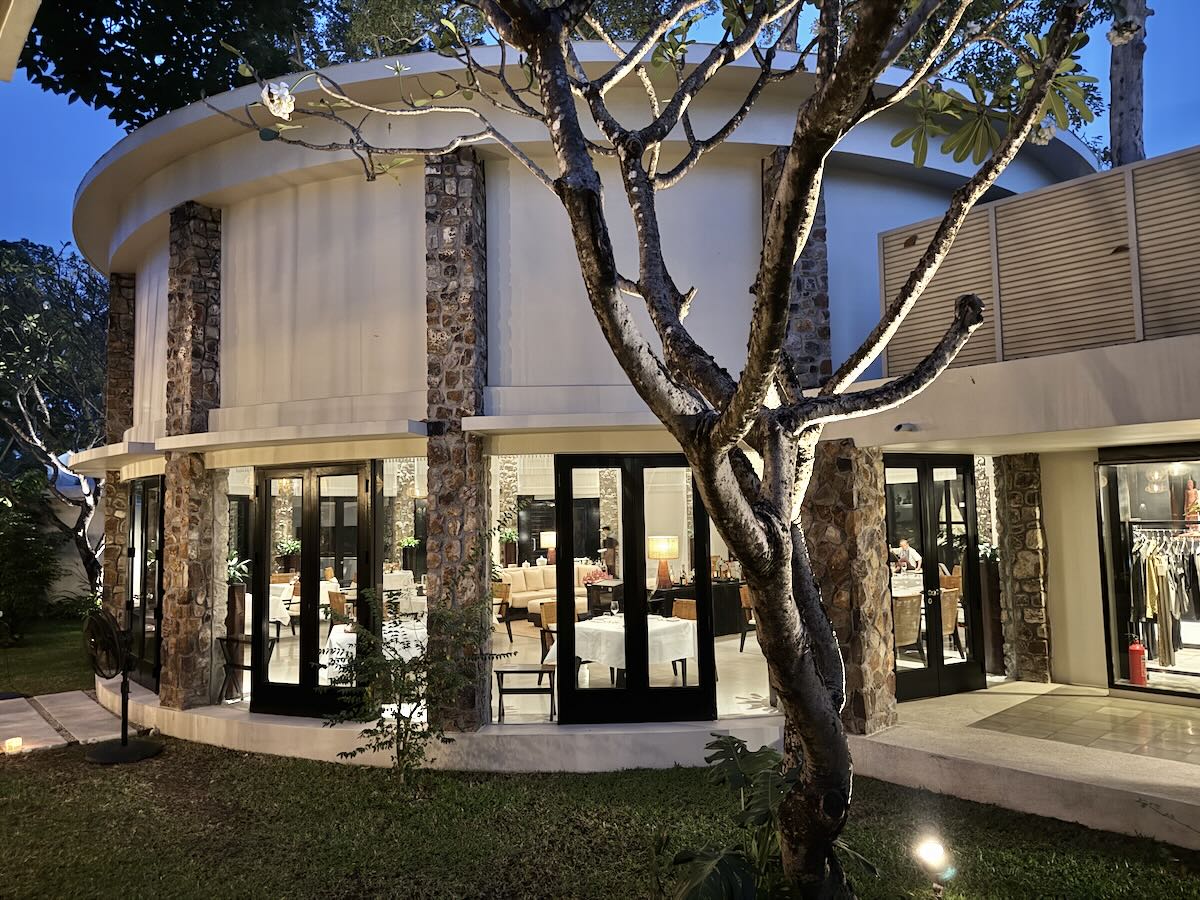
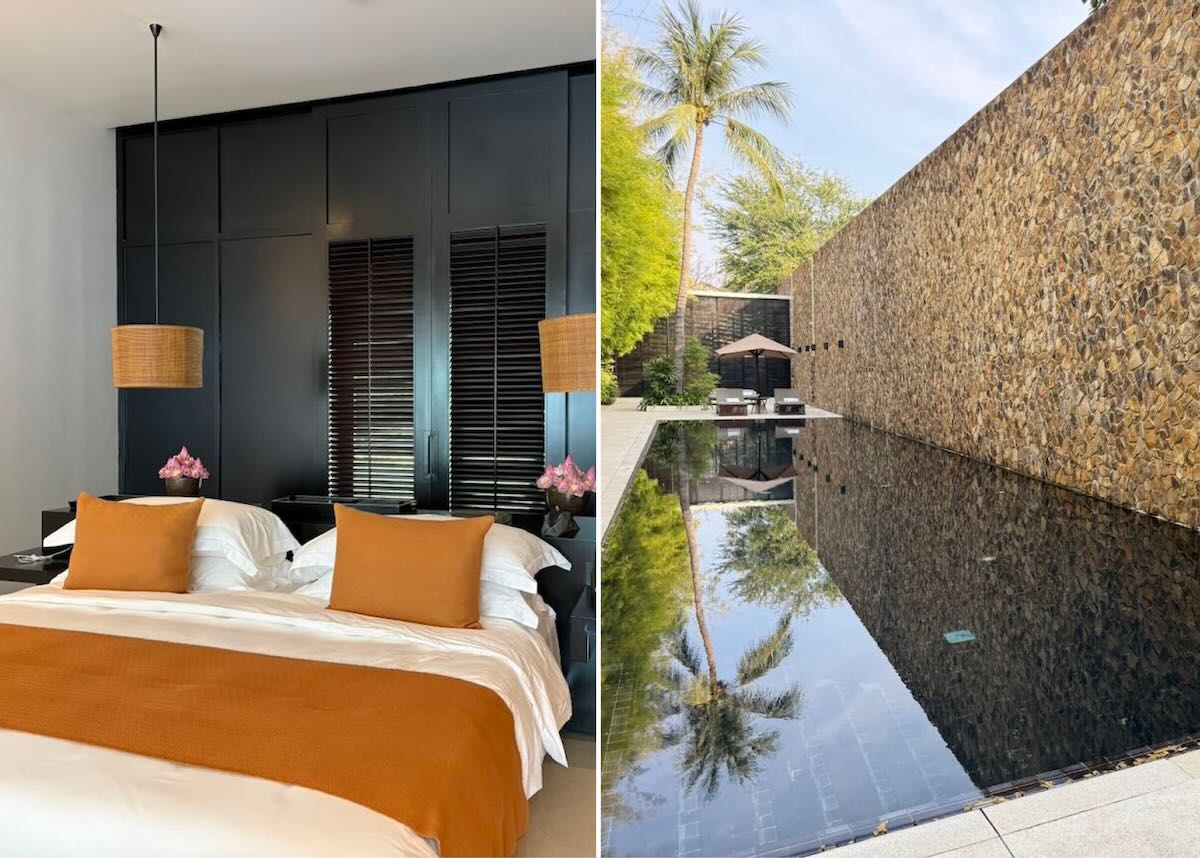
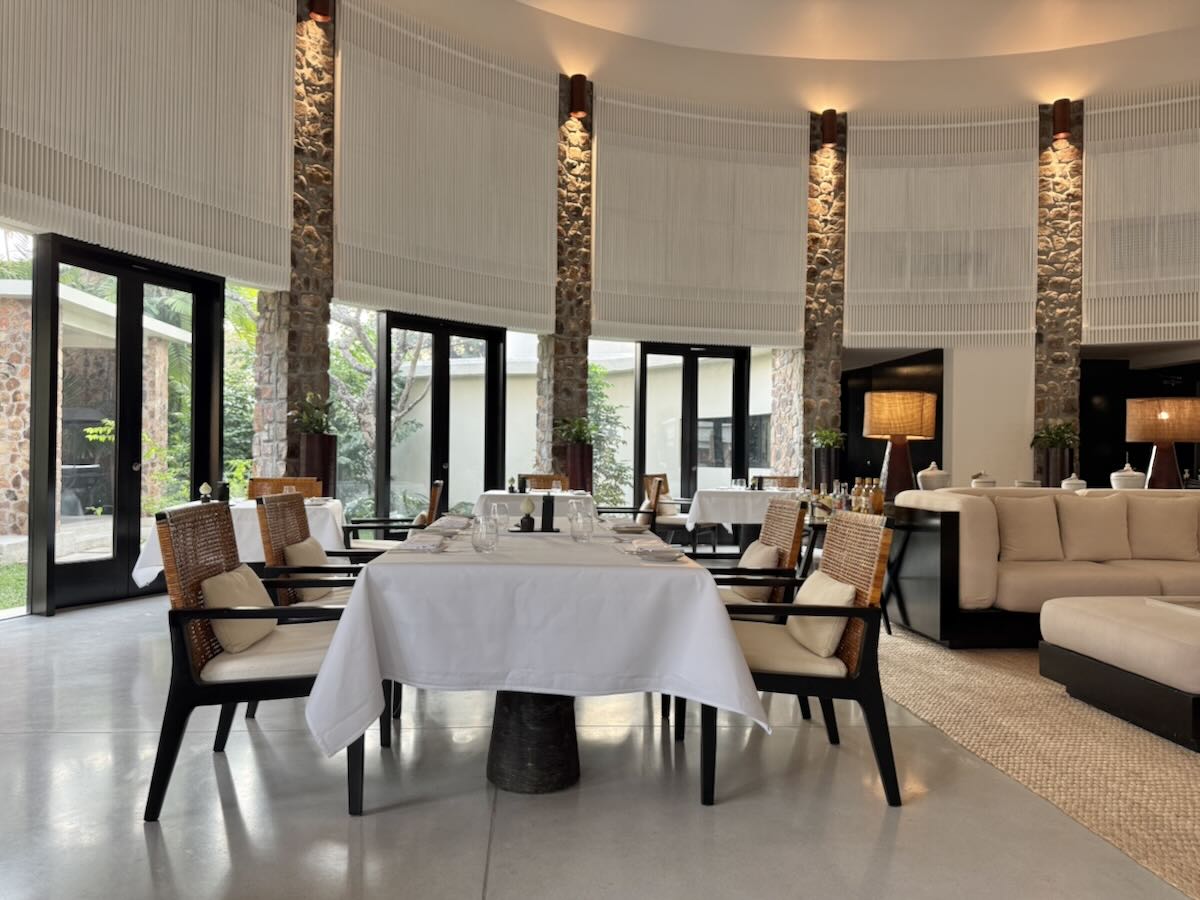 Rooms come with and without a private pool. While ours was without, it was still quite nice (and far larger than it appears below), and the two pools elsewhere on the property sufficed.
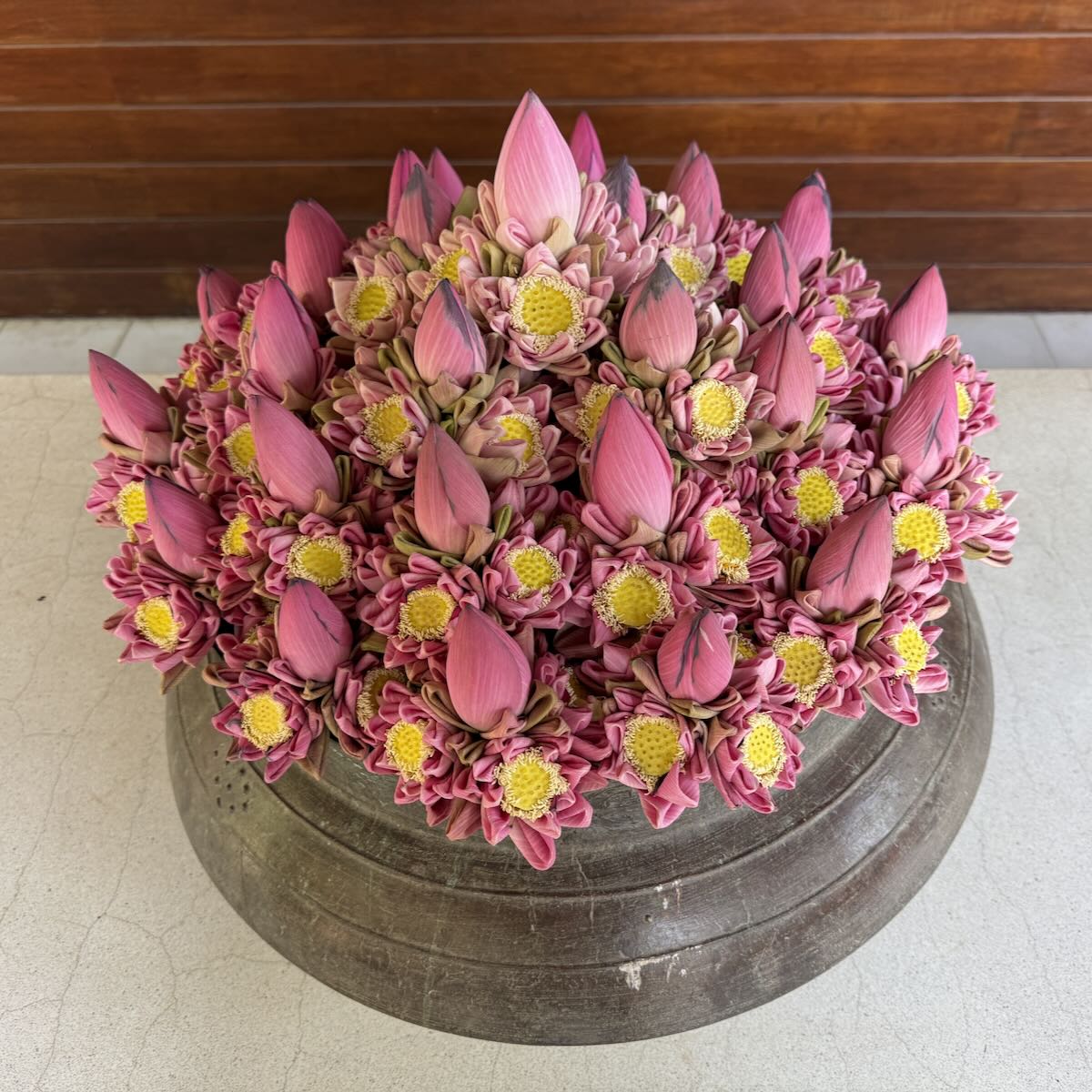
 The service was intense, but not as aggressive as at Amanoi in Vietnam—or maybe we had just grown used to it. If you so much as look at a towel, it’s getting replaced; one day, Adam ate a mini banana from the bunch of 10 in our fruit bowl, and when we came back, all the other bananas had been removed. It became a bit of a game: can you put your napkin in your lap before the server tries to do it? Can you fasten your seatbelt before the driver buckles you in? Regardless of our qualms, having all laundry included is a godsend on a long trip, and we were charmed by the way everyone called us “bong Adam” and “bong Erik.”
 Anyway, I can’t recall a hotel so nice that we spent so little time at. We had two full days and no remnants, and we packed them with temples. One of my two pieces of advice for anyone following in our footsteps is to get the excursions worked out in advance, especially if you’re arriving late in the day. Angkor Wat is one in a sea of temples, and while it’s the tentpole attraction, there’s quite a lot more to see. Amansara assigns guests a guide for the duration of their visit; ours, Ram, was a delight, intelligent without being overbearing. That said, all the history—the names, the years, etc.—can be overwhelming, which is my way of saying that I nodded and smiled and forgot it all on contact. Time and again, a temple was built by a king of one faith before falling into the hands of another, who would then remove (or add) Buddhas, depending. And then they got looted.
That trite summary may make me sound like a philistine, and I may be a philistine, but let me say this: Angkor Wat, broadly speaking, was one of the most amazing travel experiences I have ever had. The ruins are stunning, and also quite moving. Adam and I kept remarking how spiritual it was, and that’s not a word we use lightly.
Ram did a fantastic job of getting us to temples when few other visitors, if any, were around. Case in point: the first one we went to, Banteay Srei. Built in the 10th century, it’s notable for being made out of red sandstone.
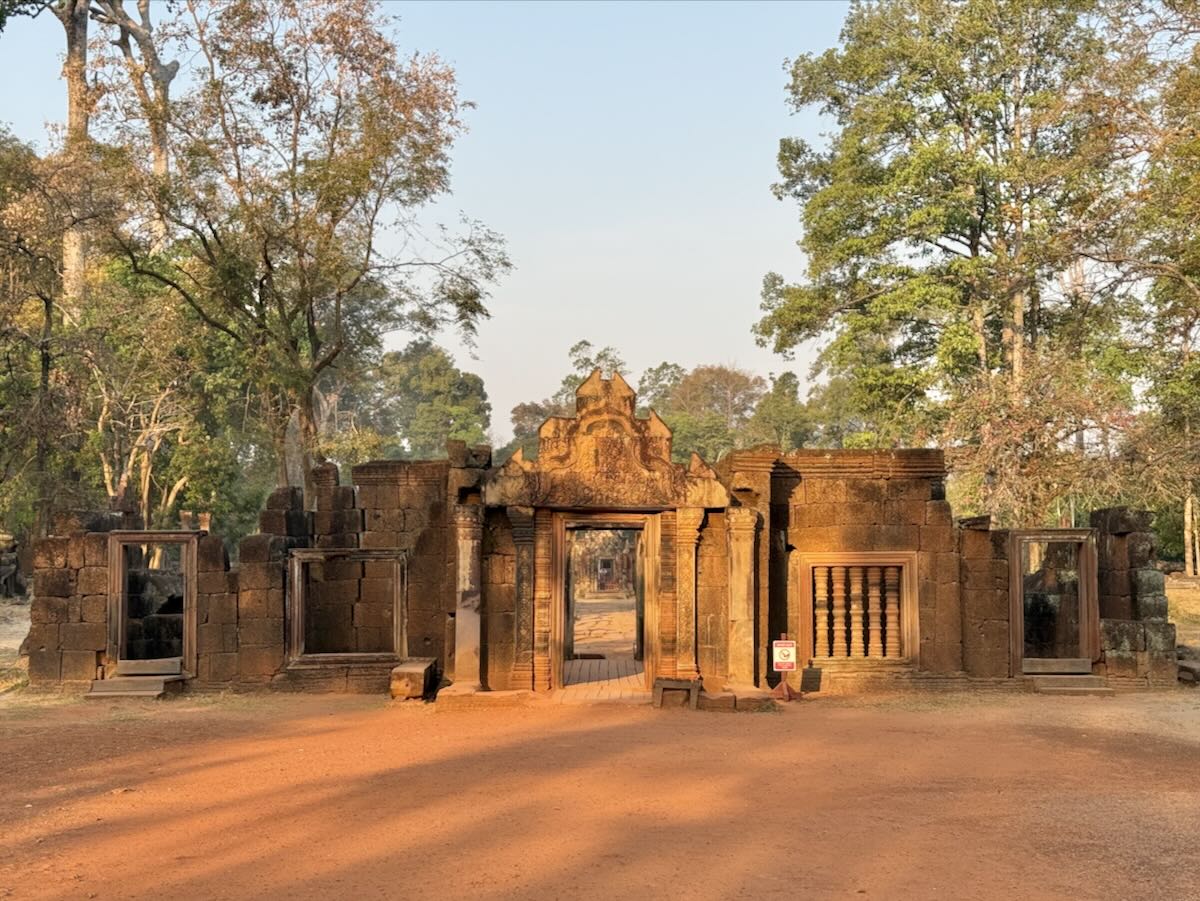
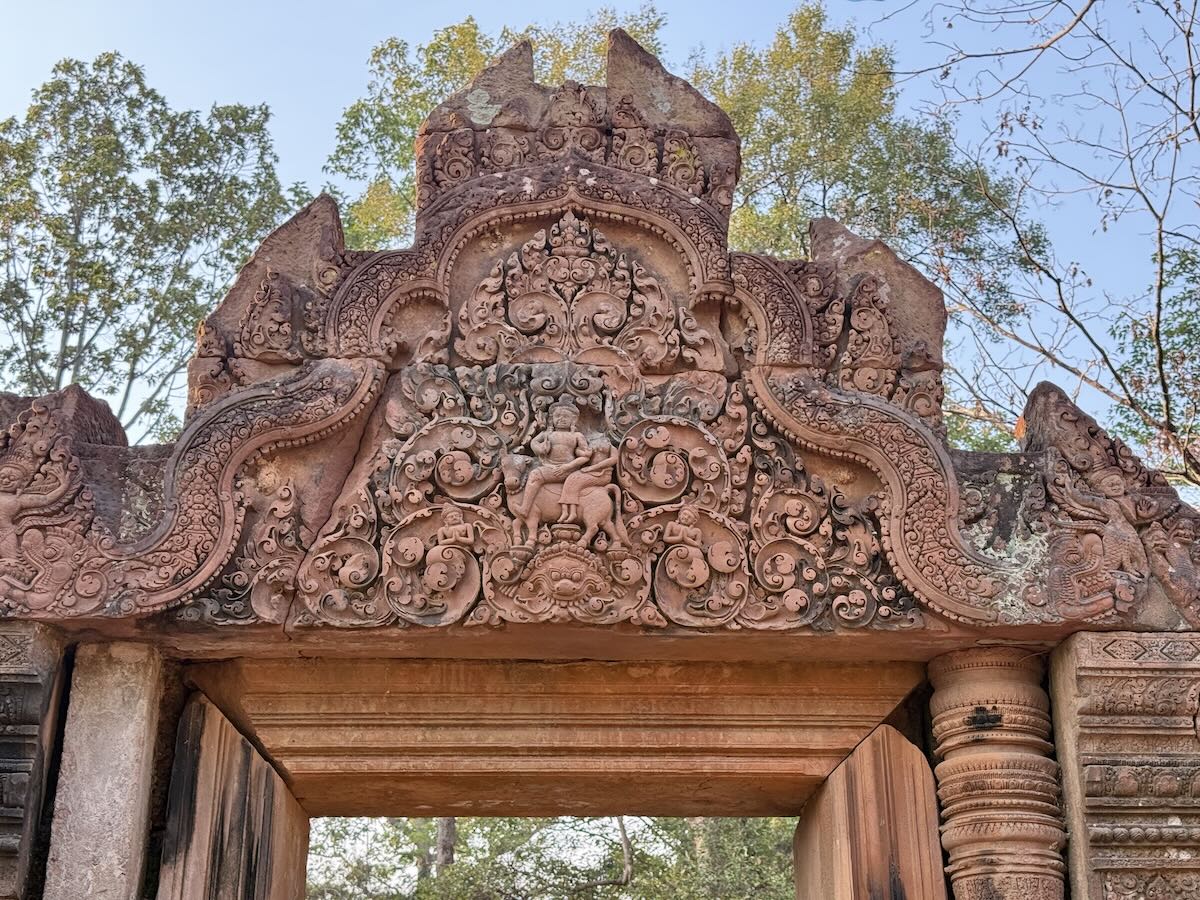
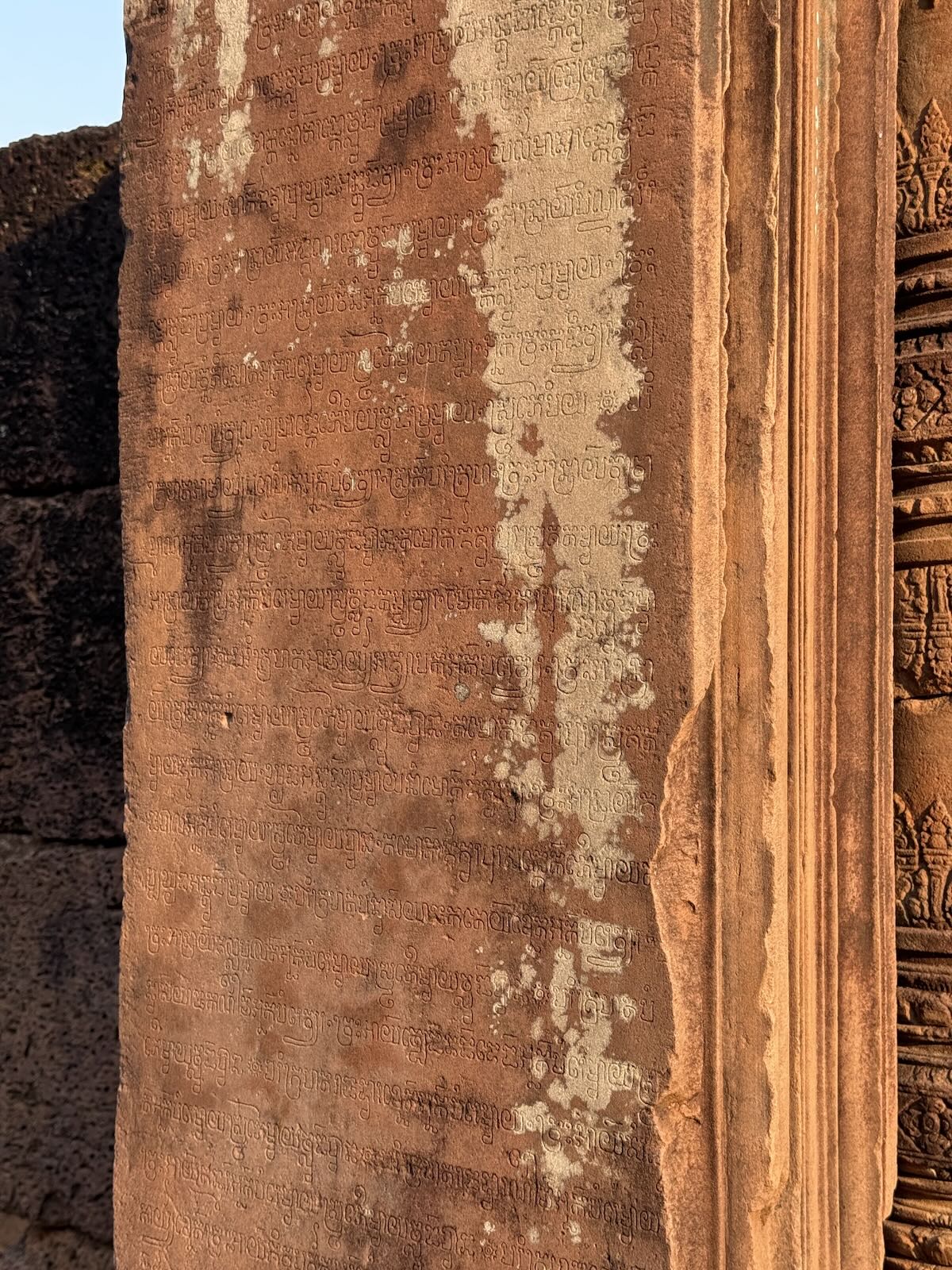
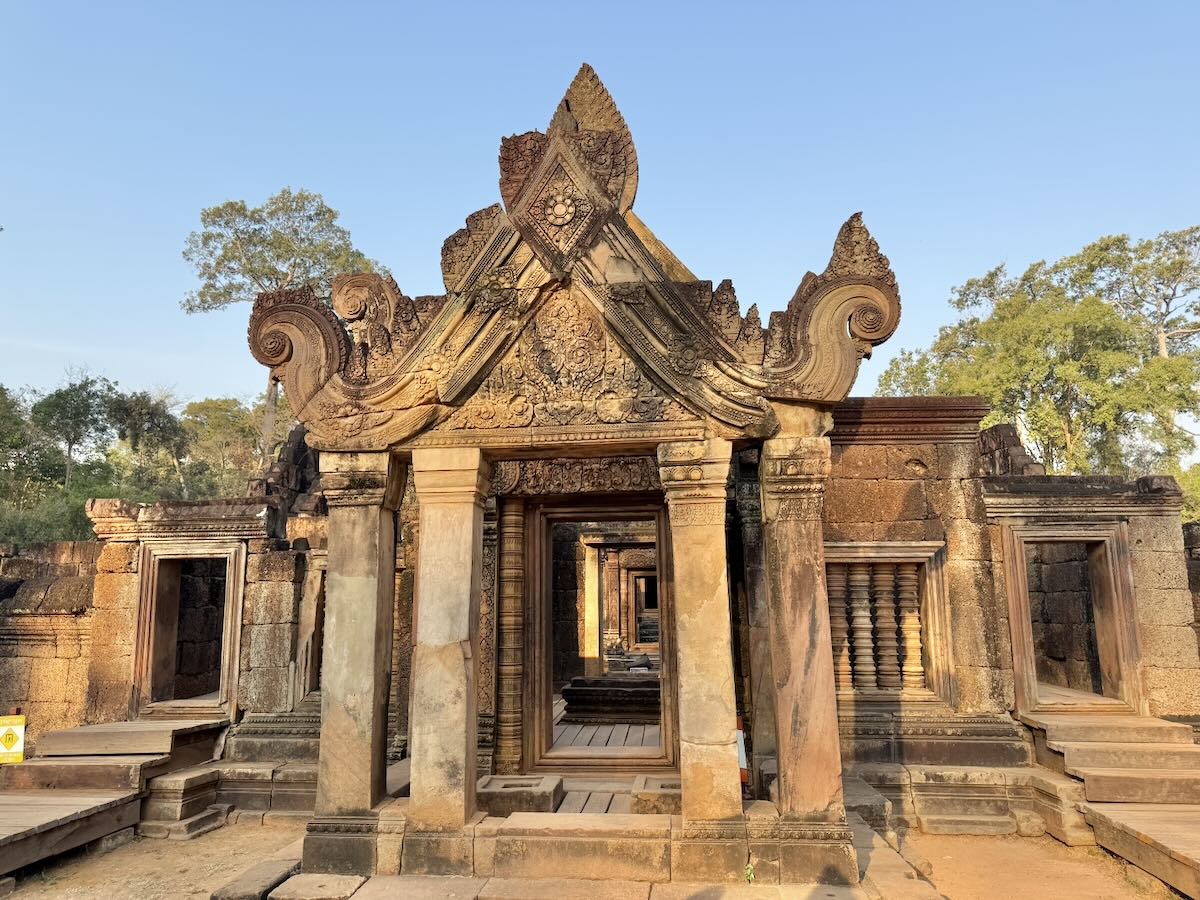
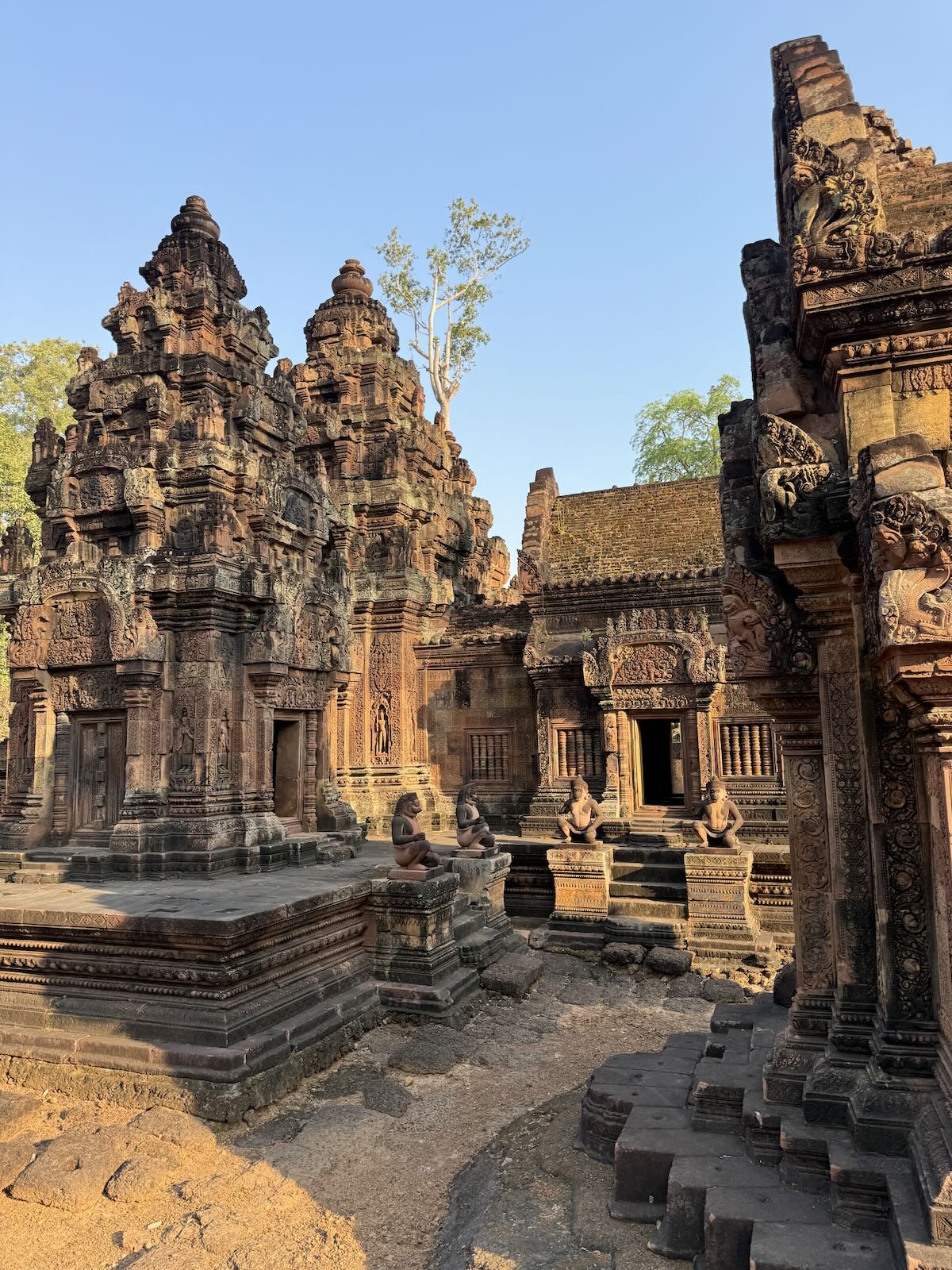
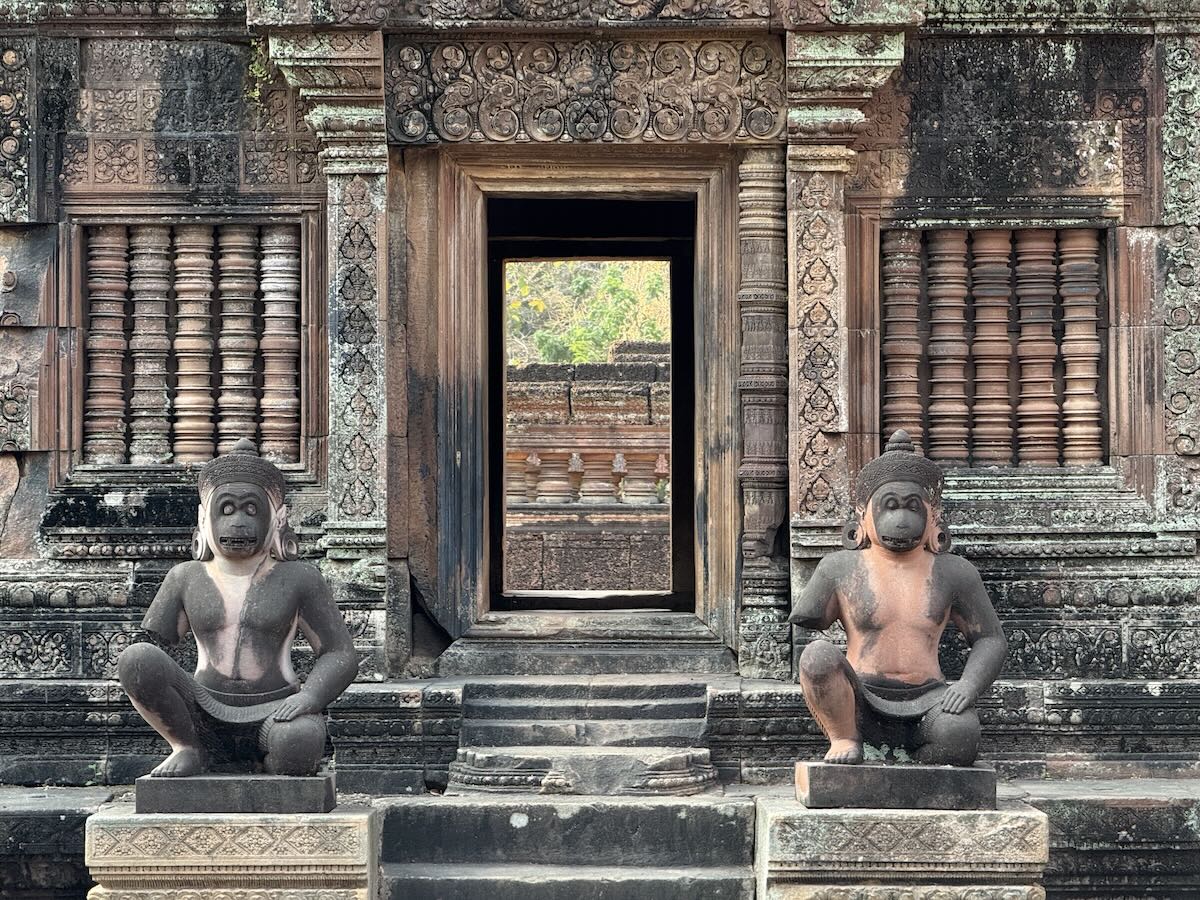 The doorways make for fun photography, but be careful: they’re apparently magnetic.
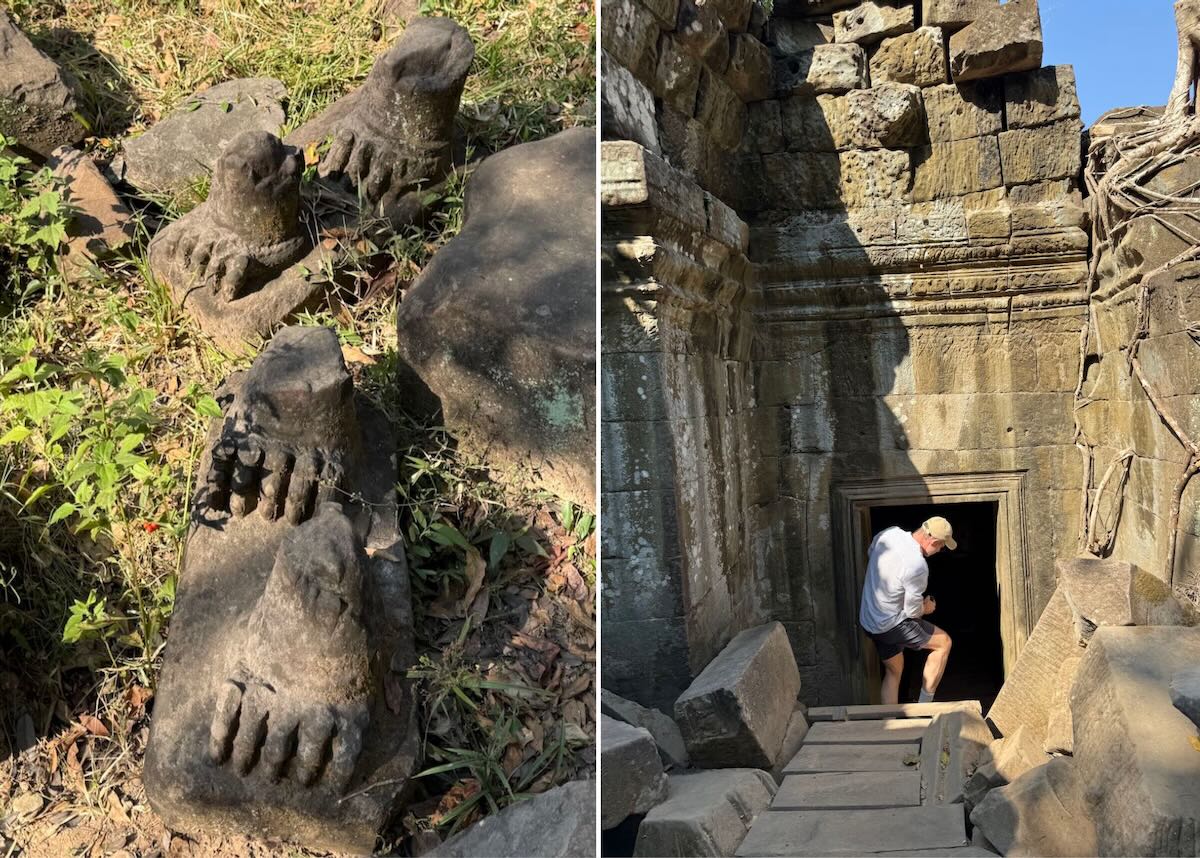
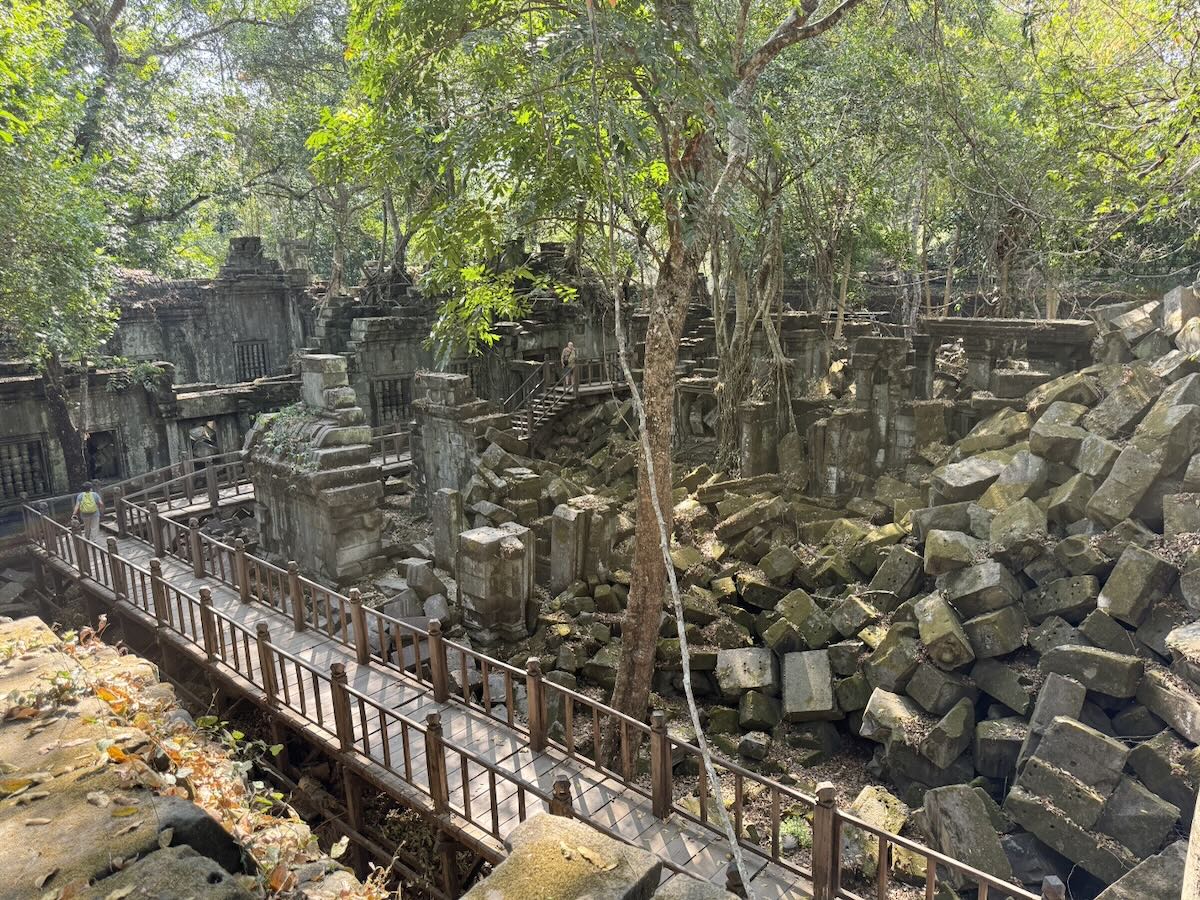
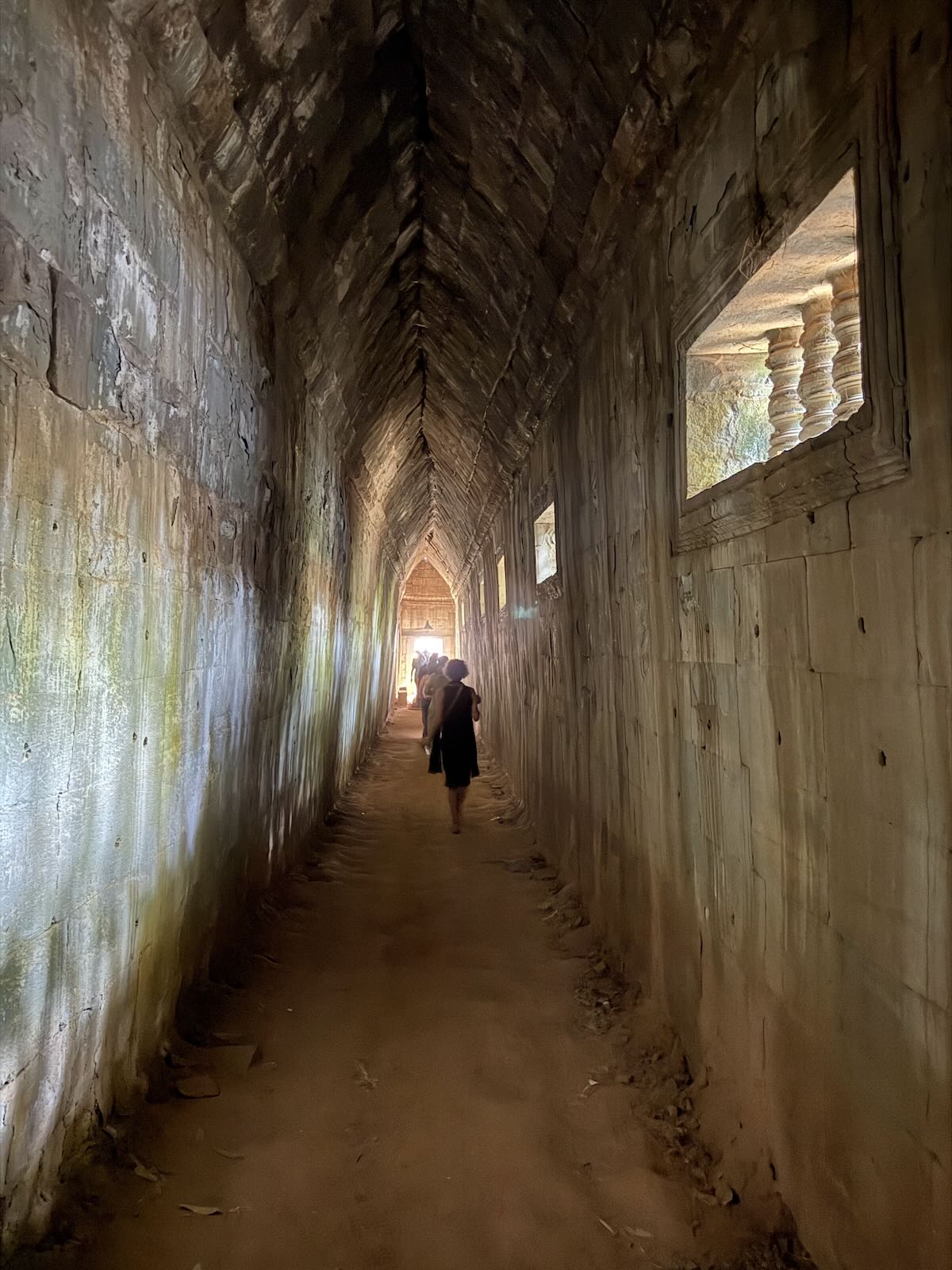
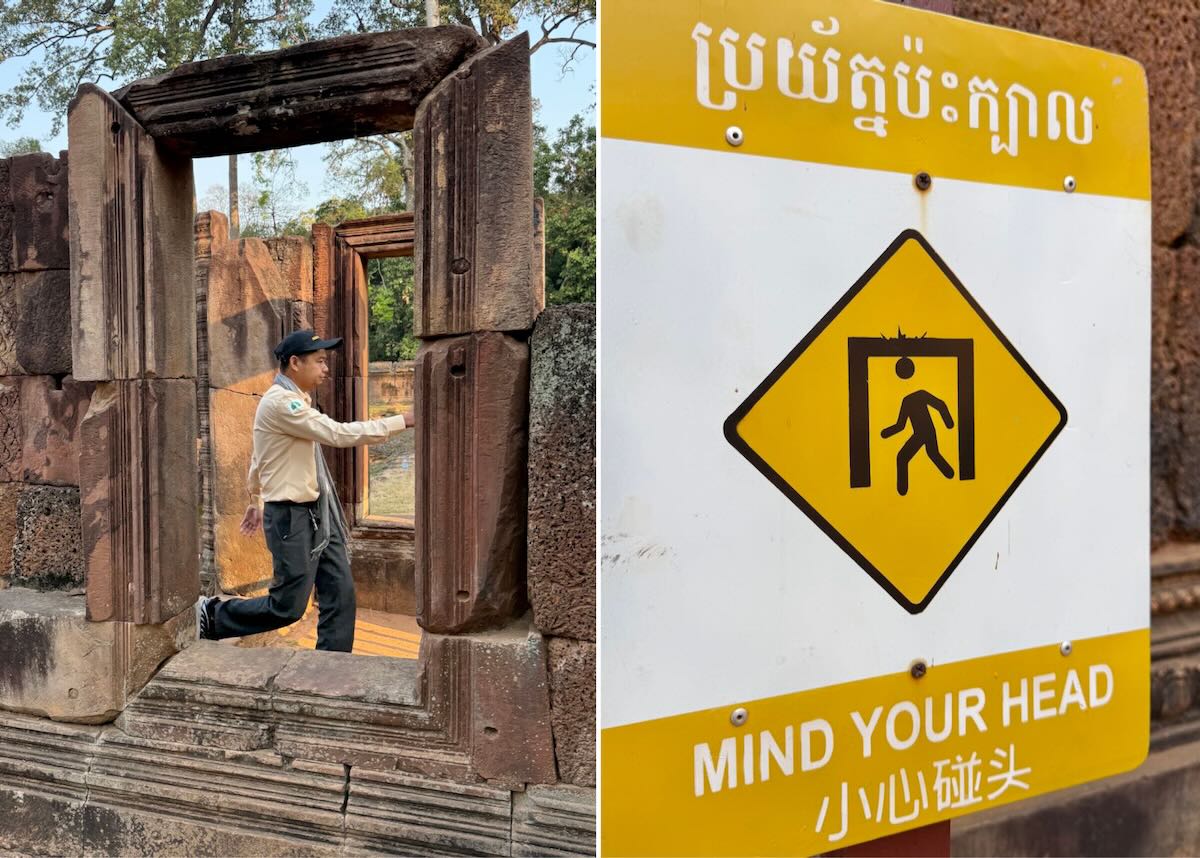 Next up was Beng Mealea. The way the temples are crumbling—many are in the long process of being reassembled—is insanely photogenic. And we hadn’t realized the degree to which we’d be allowed to walk on and in the structures.
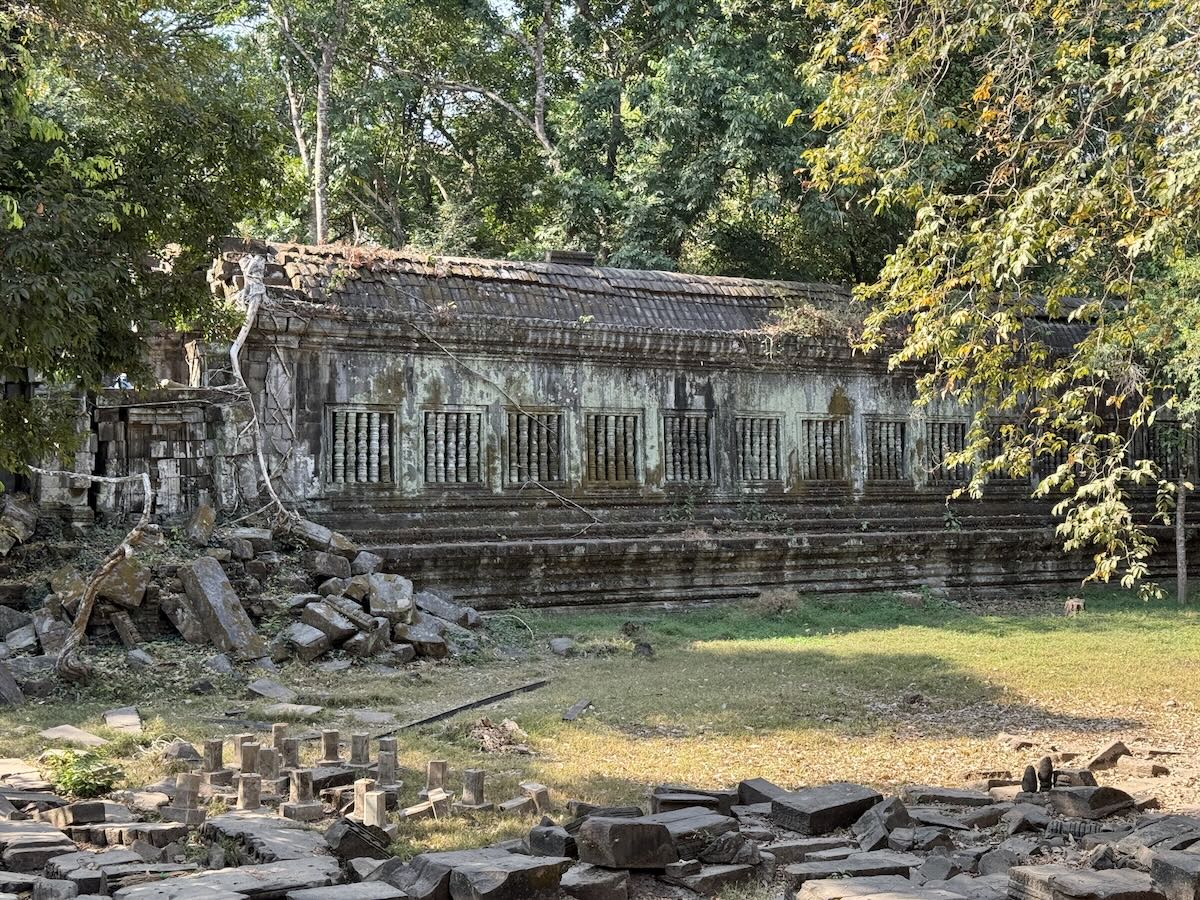
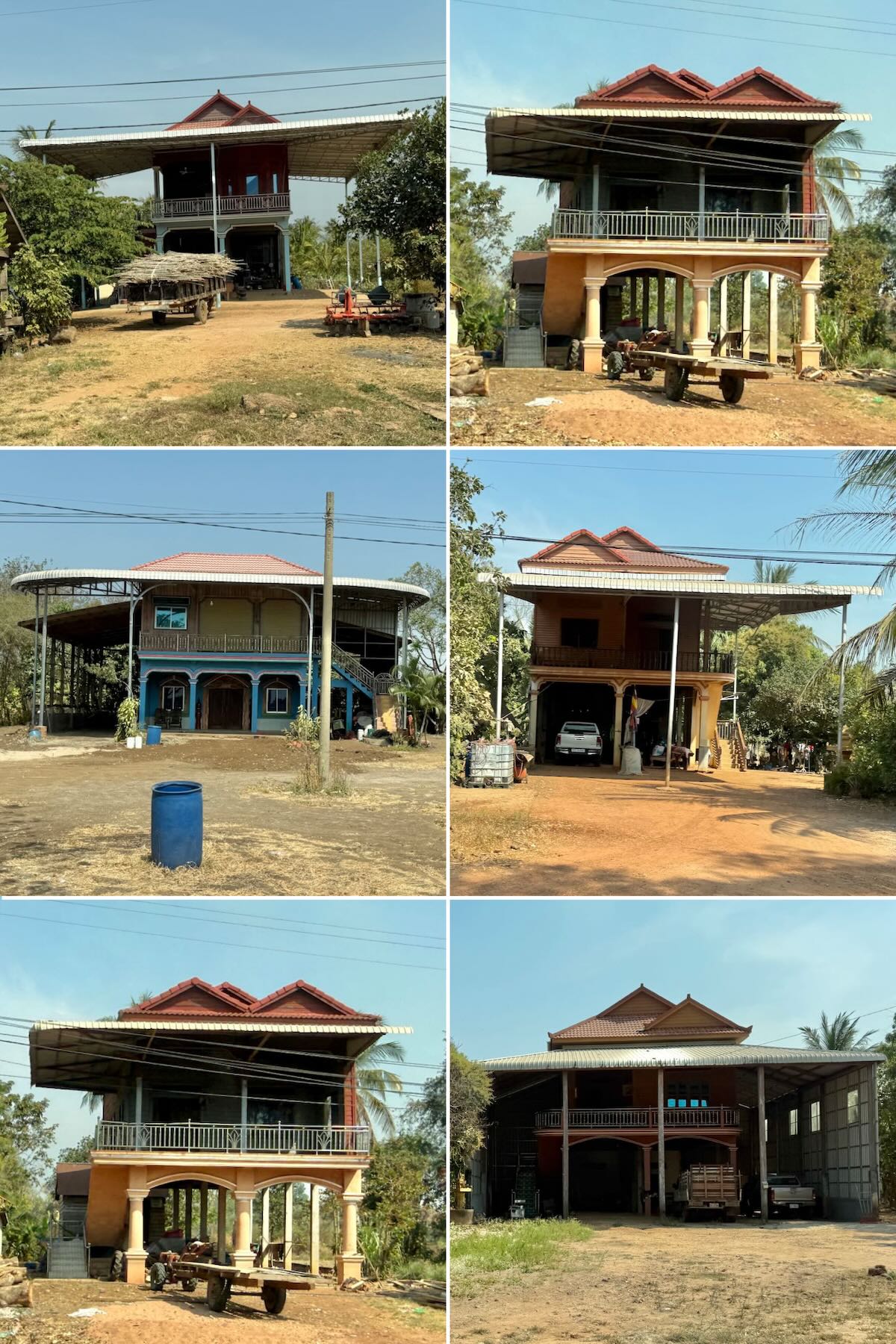
 Our first day involved five hours of driving, in increments of one or two hours. It was a long time in the comfortable van, but we did get some sense of the countryside. Ram explained that Cambodia is 85 percent farmland, producing crops such as cashews, rubber, mangoes, bananas, and cassava. In the vernacular architecture, houses are raised (to get away from evil spirits, said Ram, and also to create a shaded space), with expansive canopies of corrugated metal.
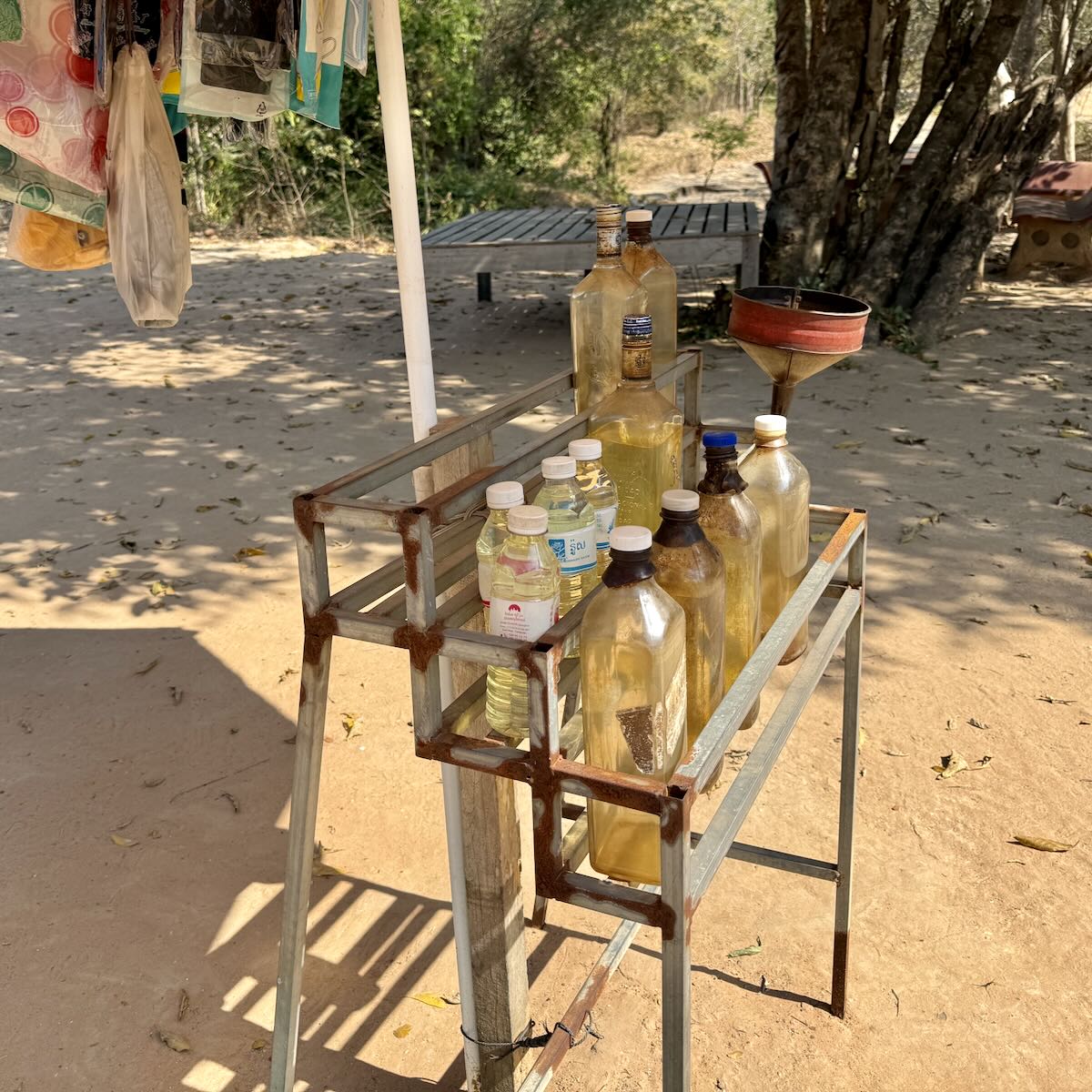
 At one point, we stopped to look at a place where the temple stone was quarried, but I was more intrigued by the way gasoline is sold to motorists.
 My favorite temple was Prasat Pram, a quintet of towers that have become one with trees. A busload of Swiss tourists arrived as we were on our way out—a close call, because overlapping more directly with them would’ve diminished the experience.
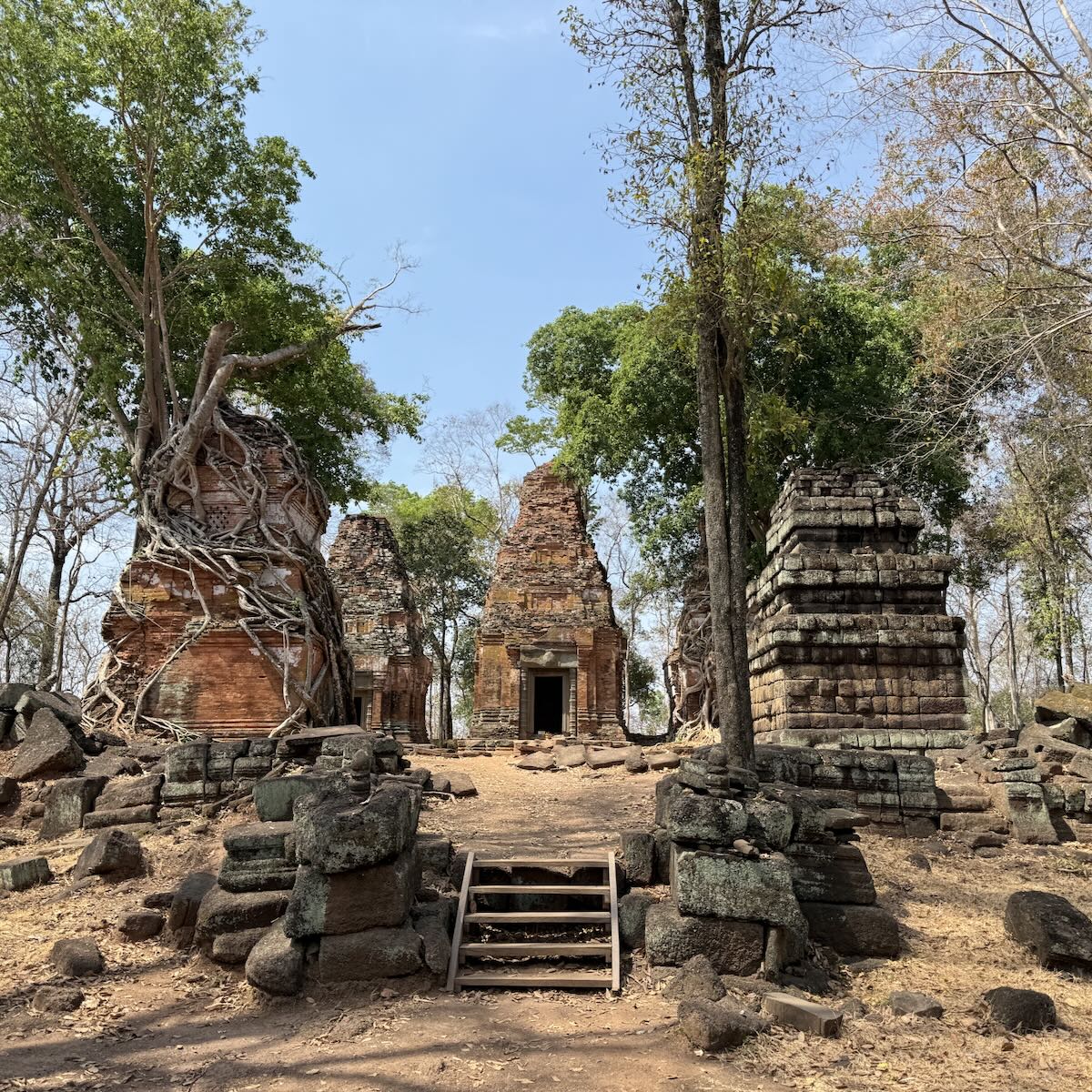
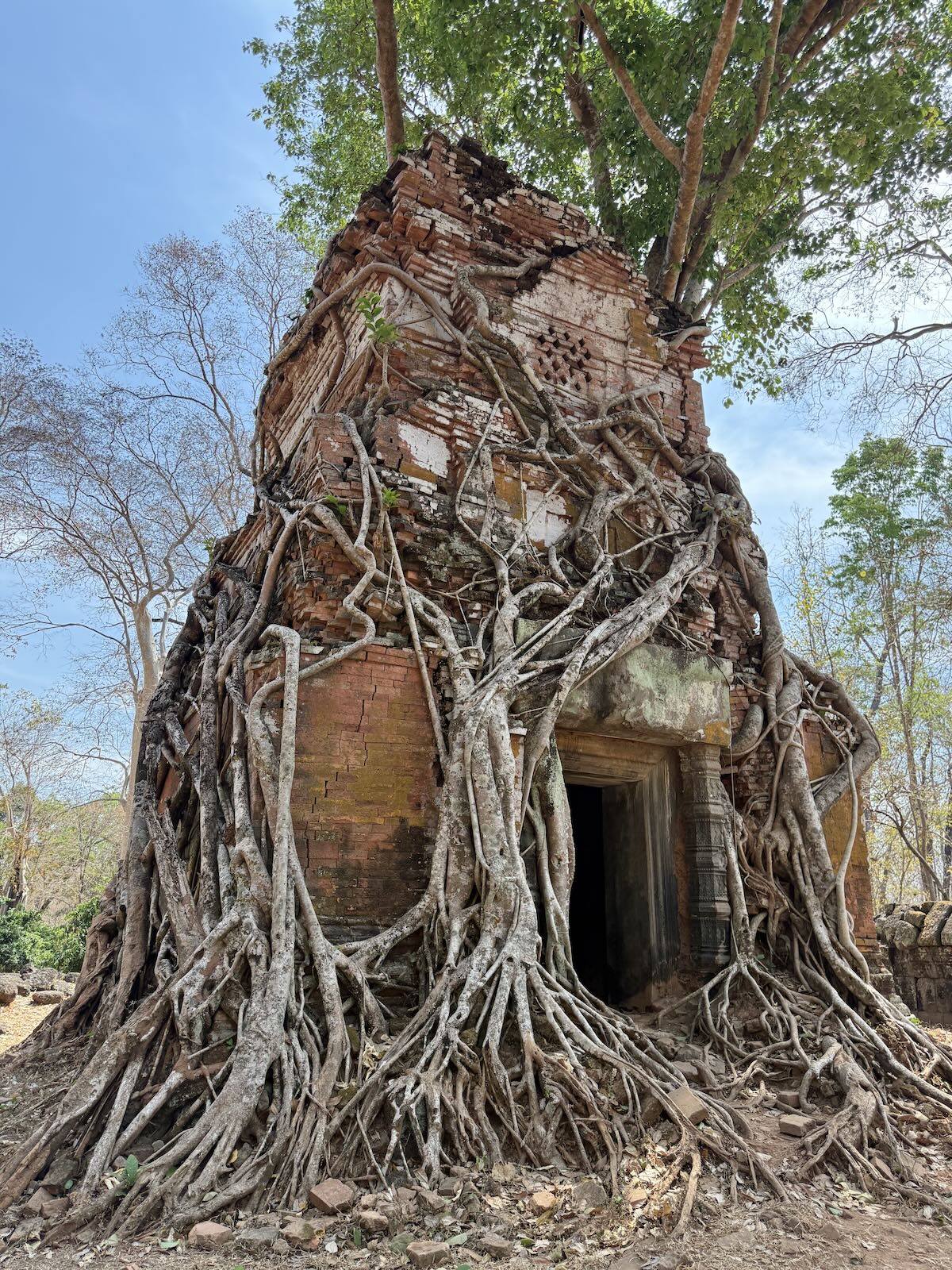
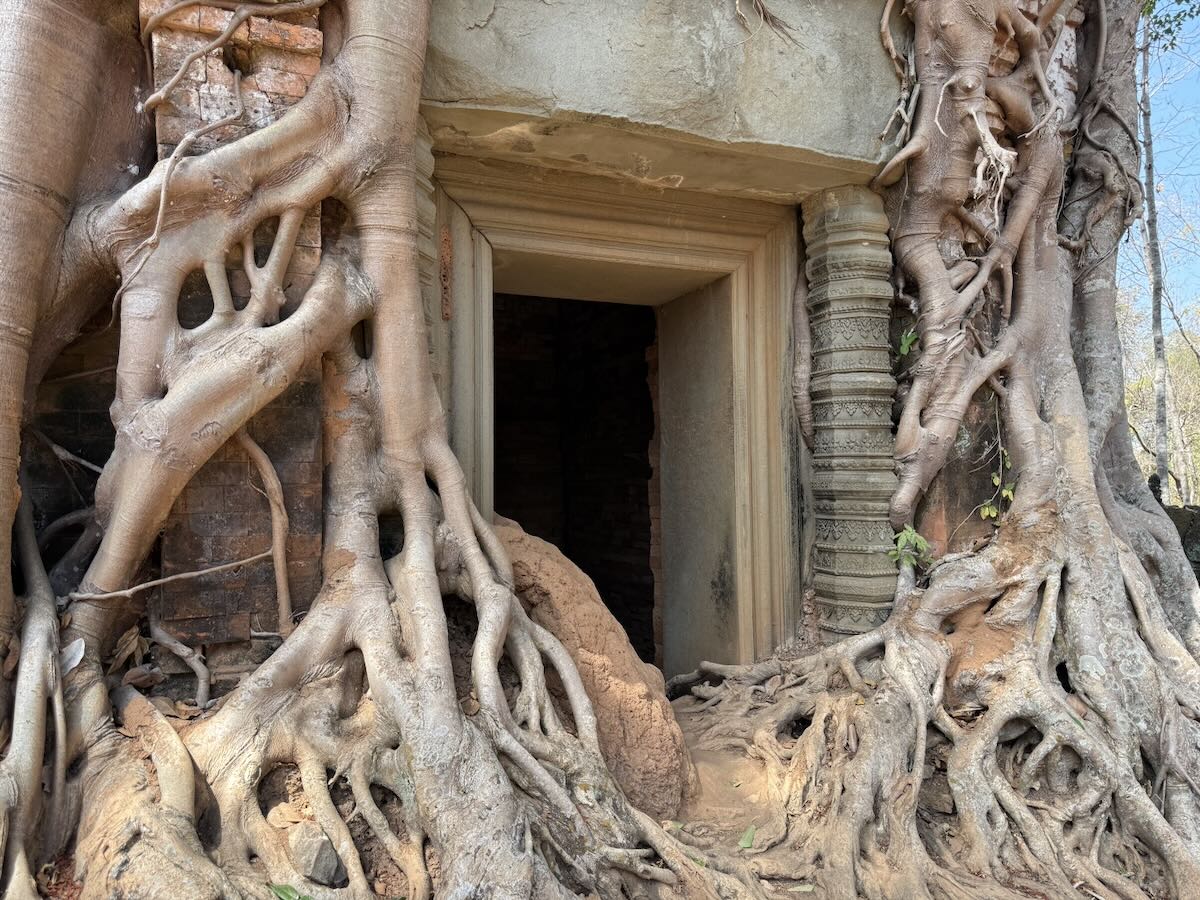
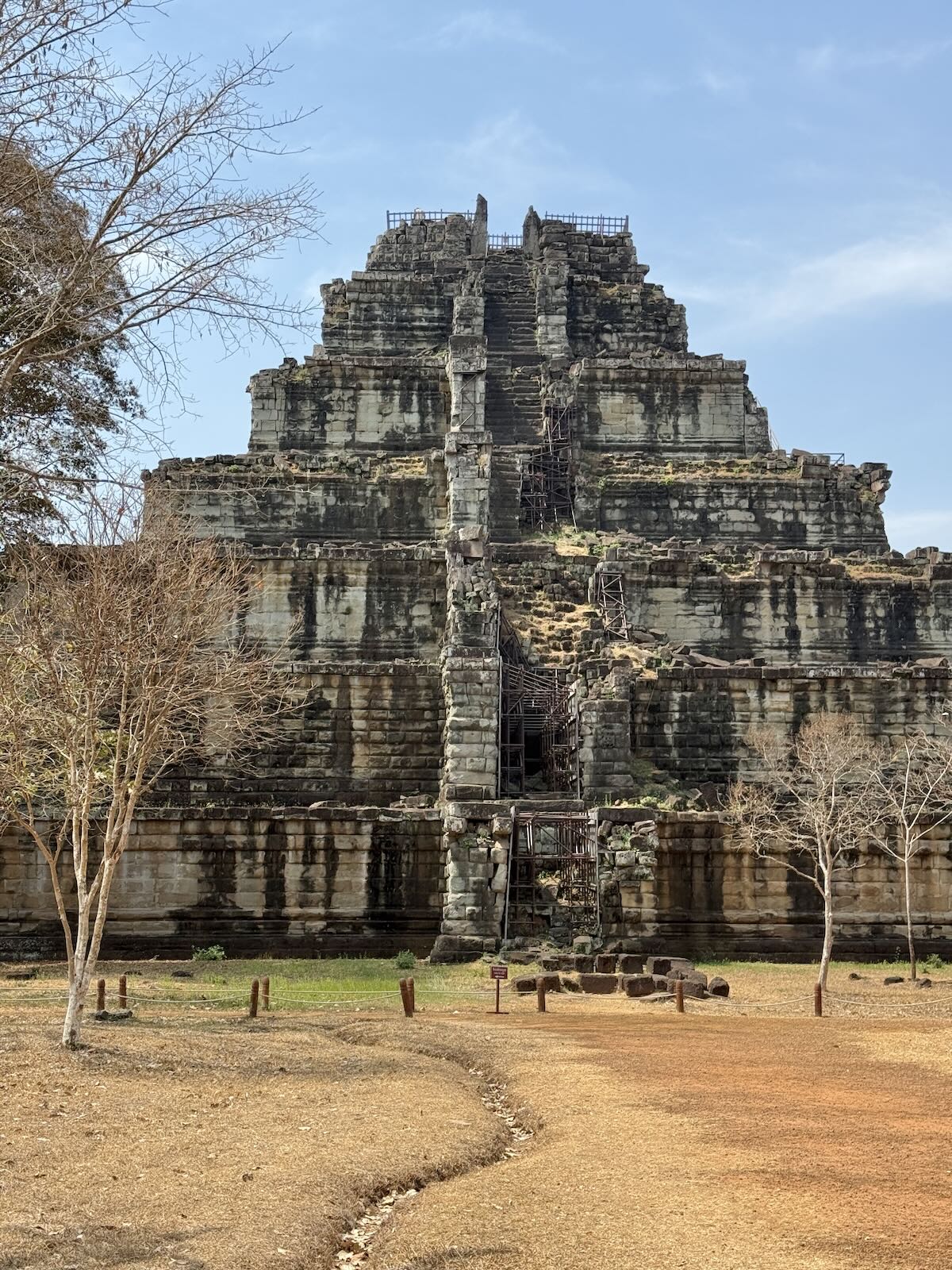
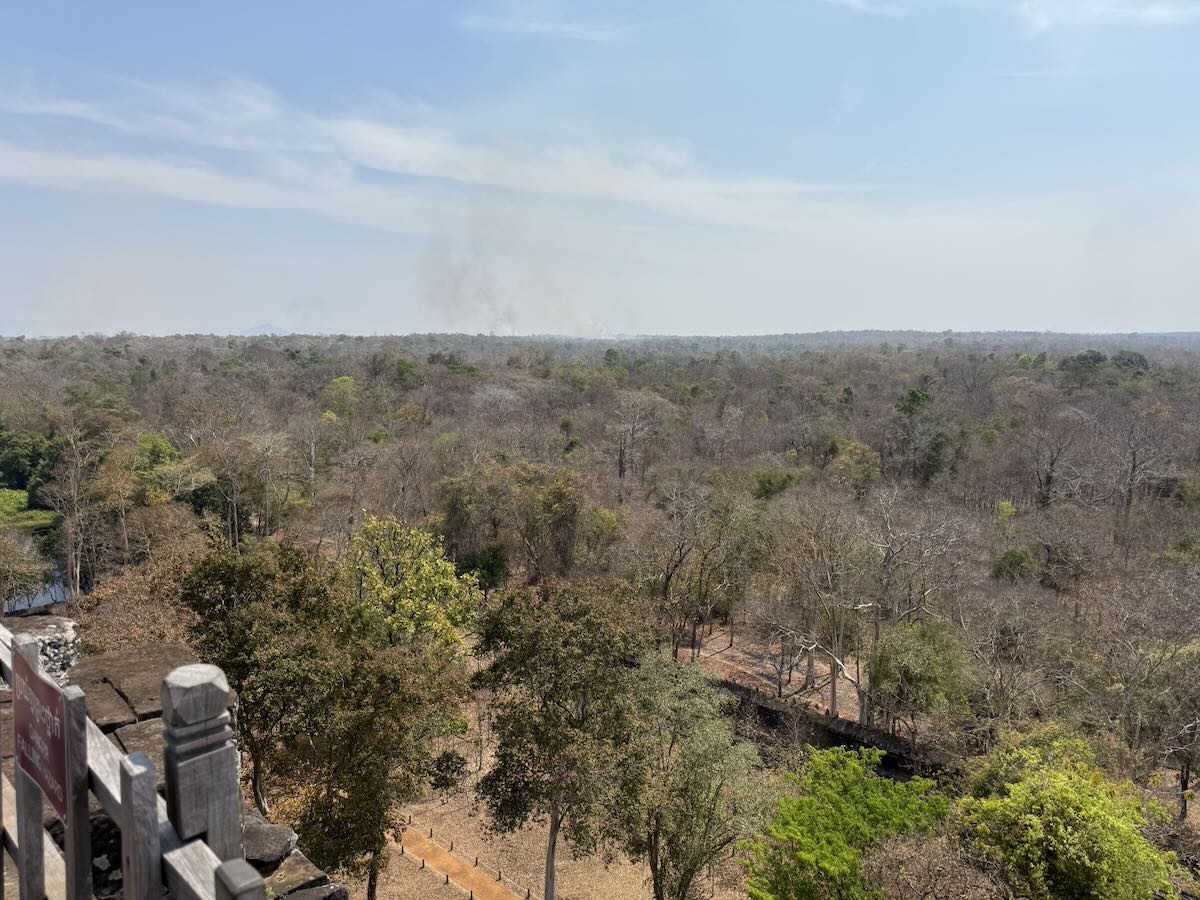
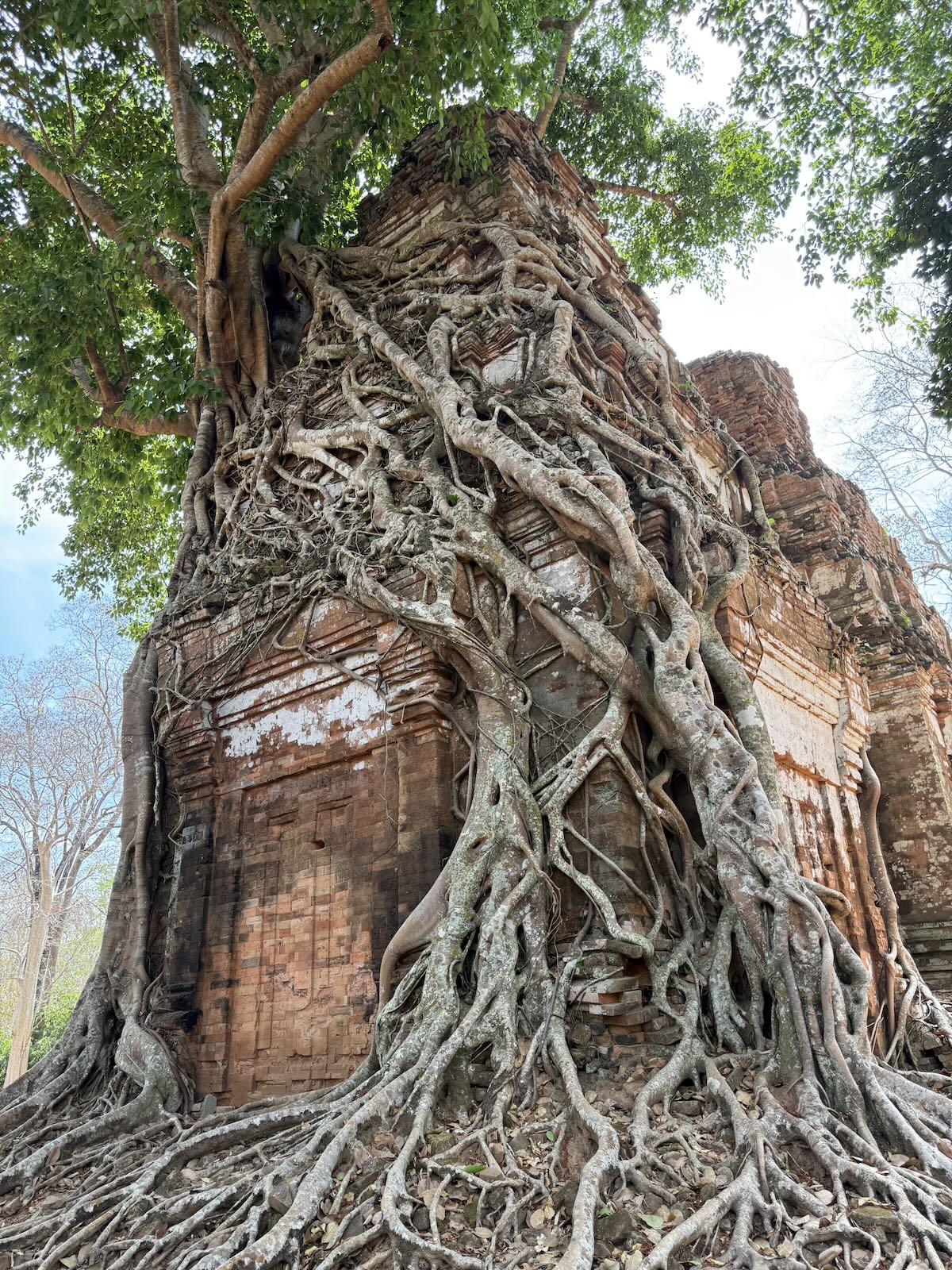 Prasat Pram is part of Koh Ker, where we dutifully climbed the modern stairs attached to the back to admire the view—in southeast Asia, someone is always burning something—and devoured a packed lunch near the souvenir stands.
 After lunch, Ram wanted us to see Prasat Balang Cheung…
…the first of three Linga-Shrines standing along the ring-road. It is a square laterite building standing on a platform and has one doorway and an open roof. In the sanctuary is an impressive lingam standing on yoni. The phallus-symbol is about 2 meters high, has a diameter of nearly 1 meter and a weight of several tons. Together with the yoni it was carved out of the bedrock at this place. The lingam is in a good condition. The yoni is about 1 meter high and looks like an altar. (Wikipedia)
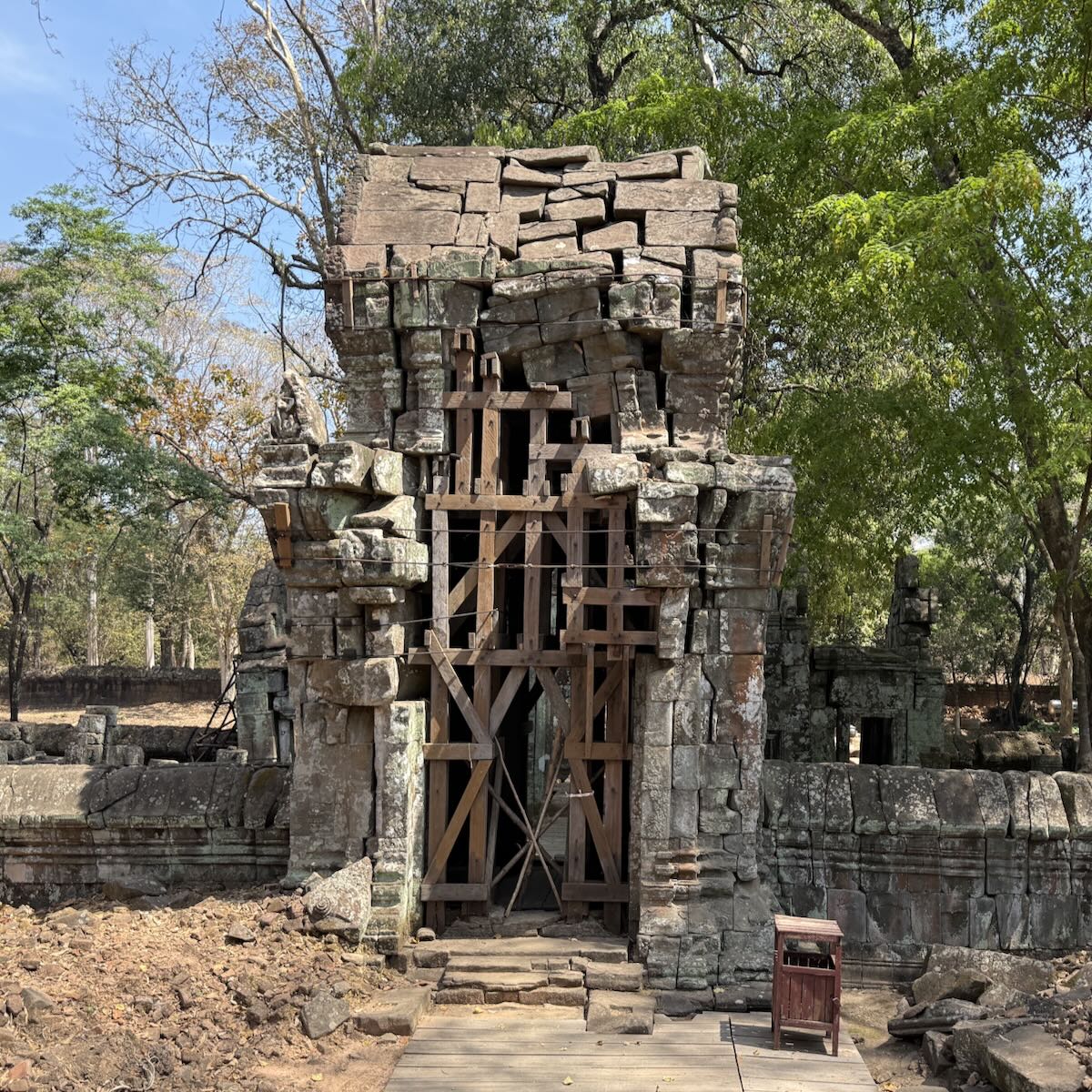
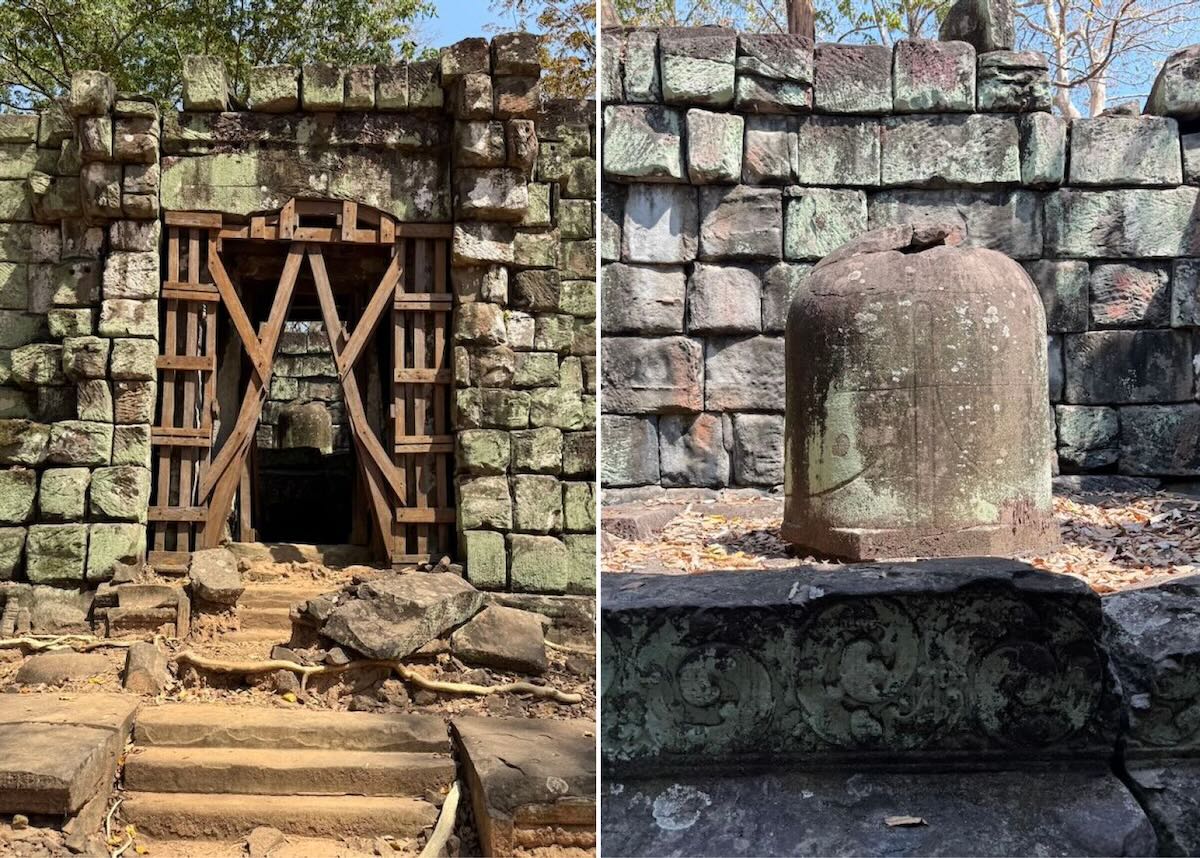 I was fascinated by the intricate way wood is used to hold up structures.
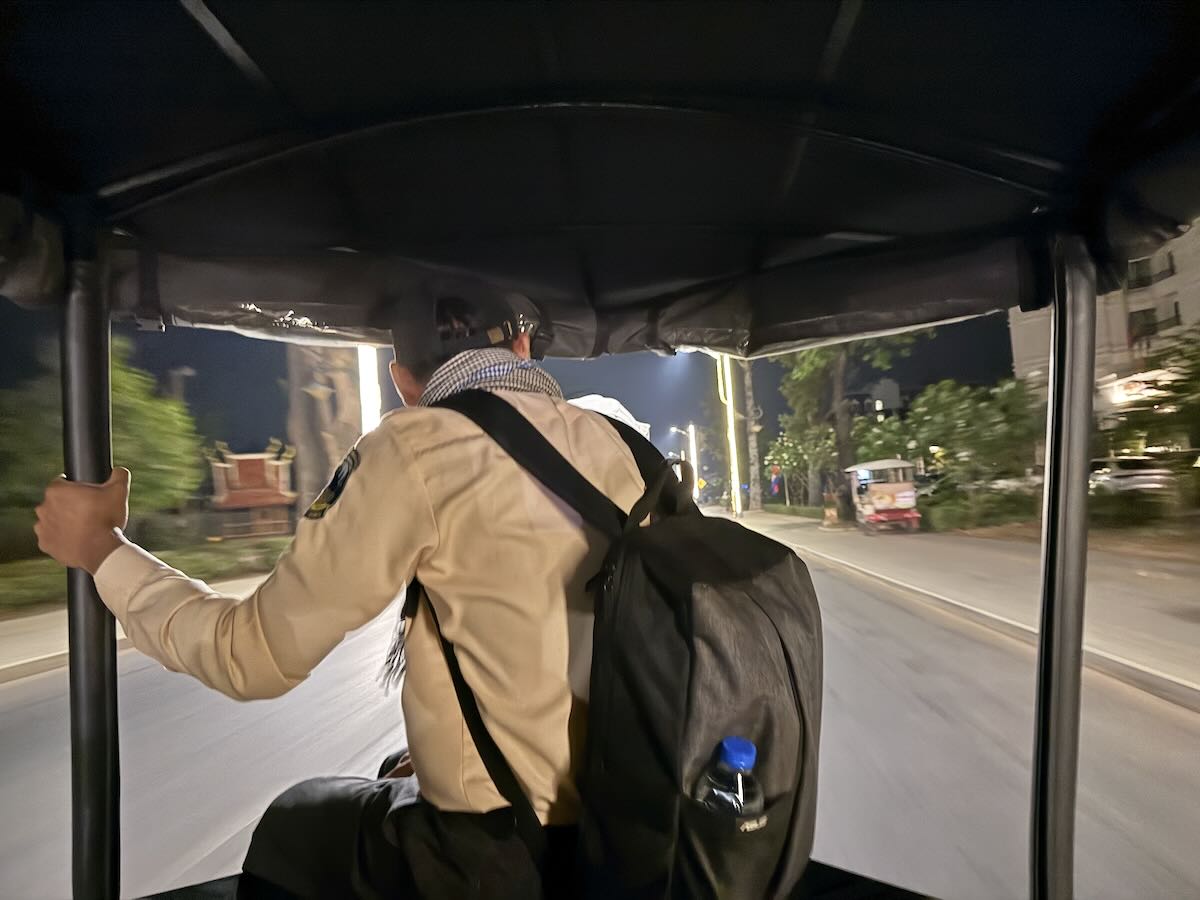
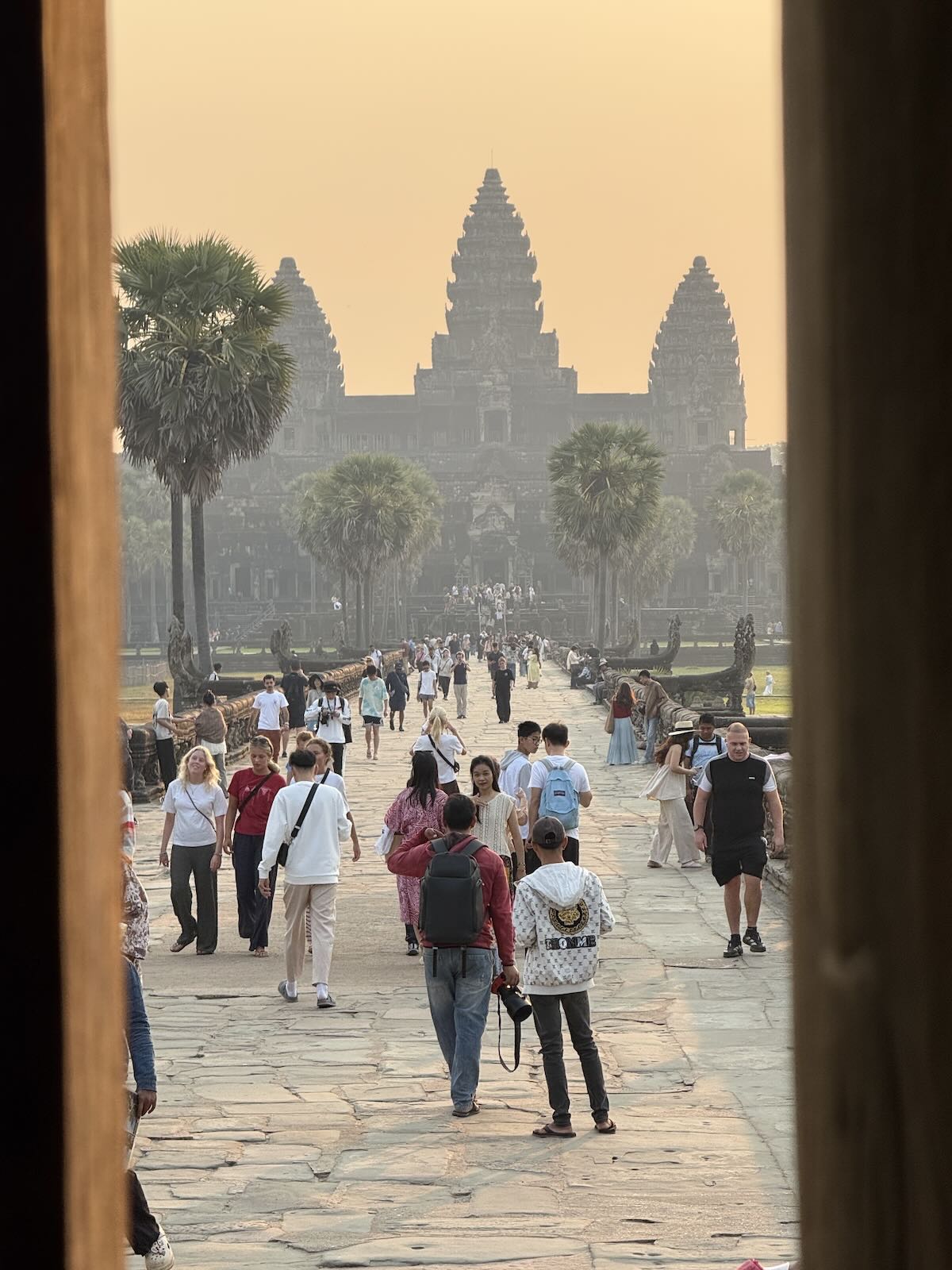
 On day two, we got to ditch the van for an open-air remork (a motorized rickshaw), but we had to be ready to leave the hotel by 5 a.m. in order to see Angkor Wat materialize in the dawn. Because everyone else wants the classic view of the sun coming up behind the temple, we shared a side area with just a handful of people.
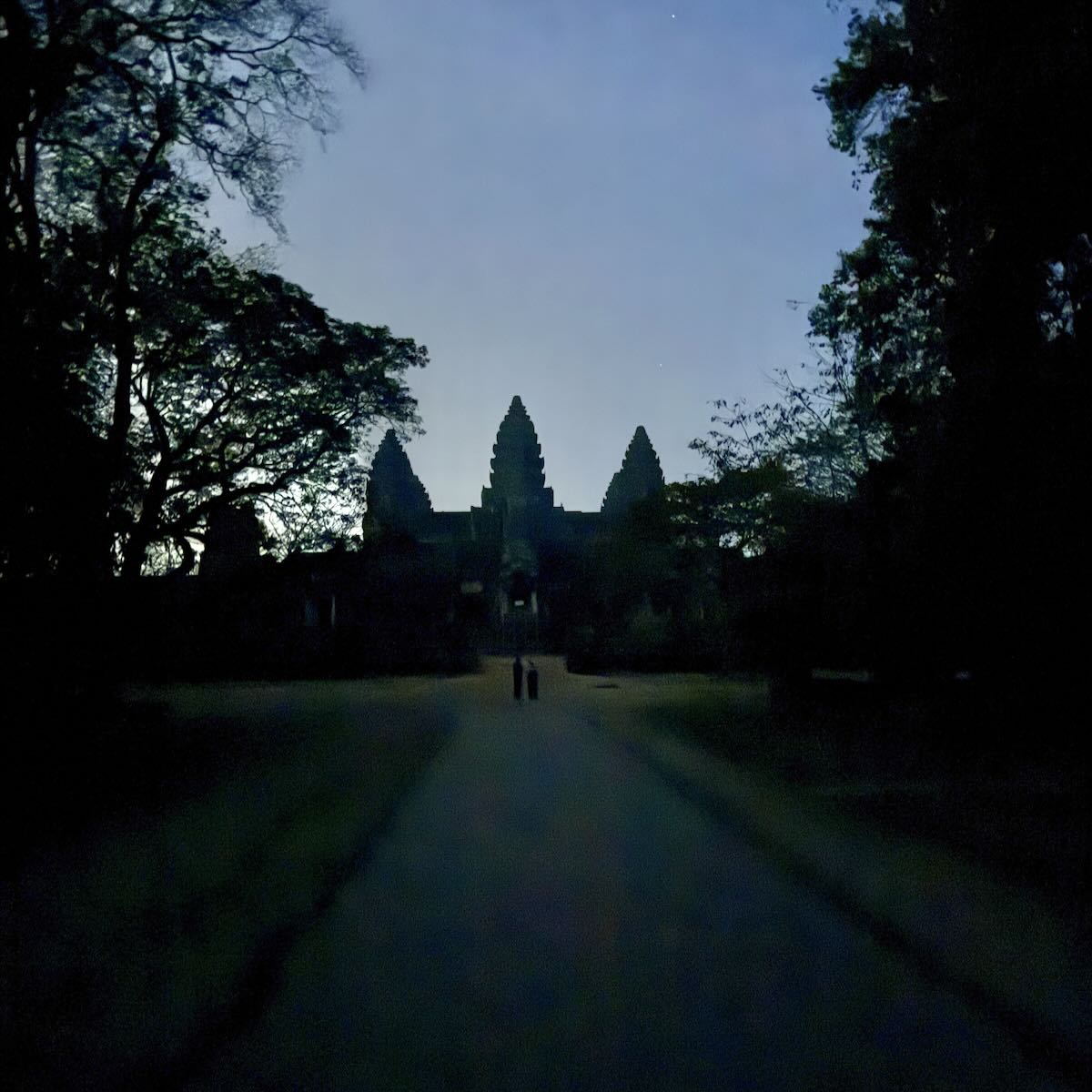
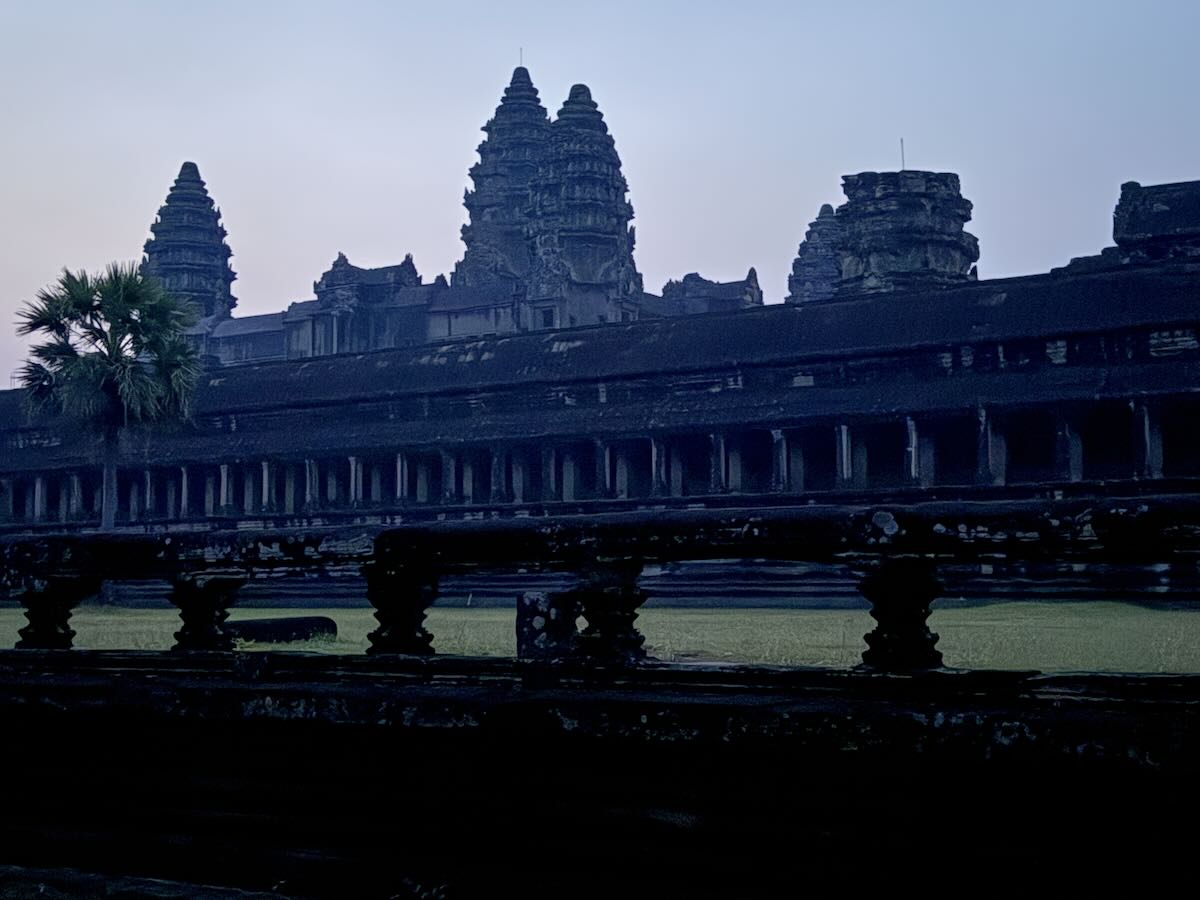 And when the guards said everyone could enter, we got inside before the hordes. I don’t know what to say other than it was so much better than I expected.
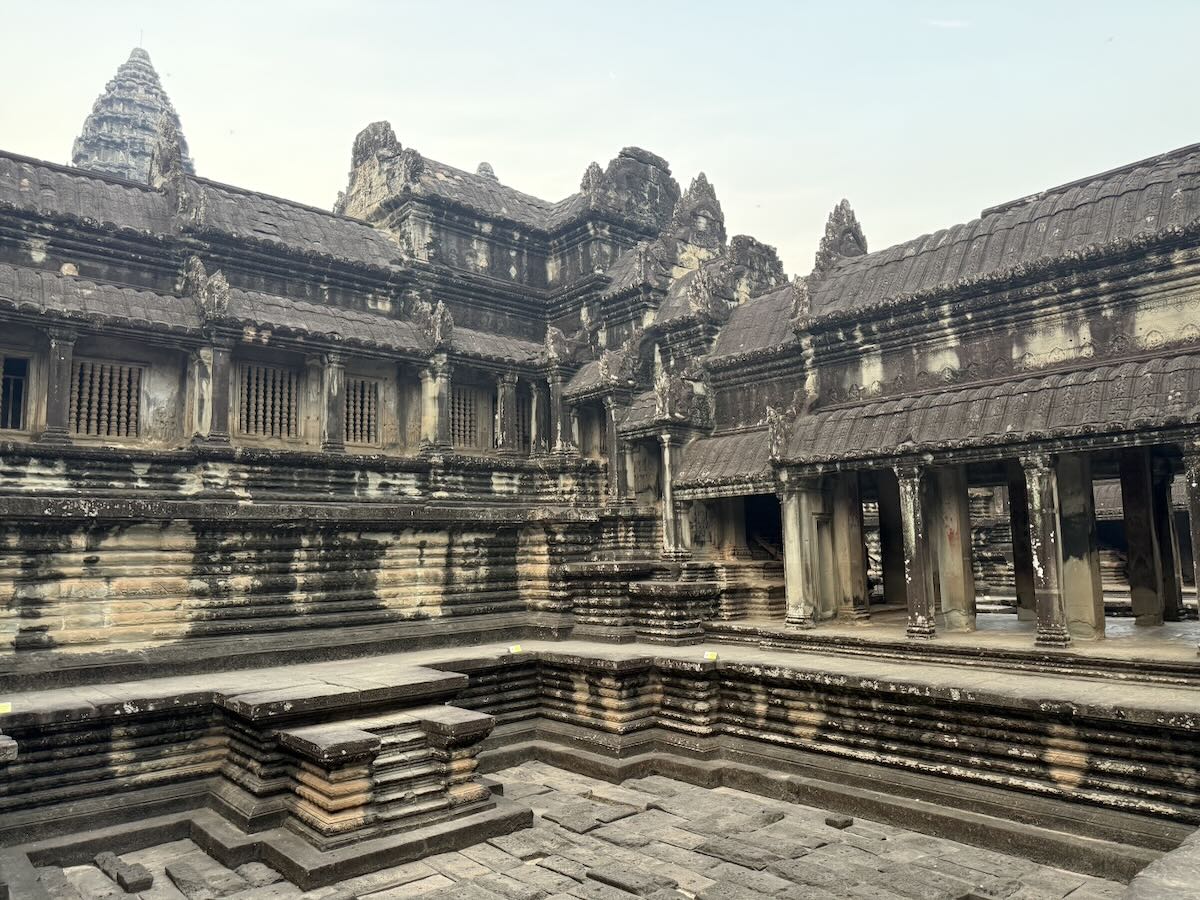
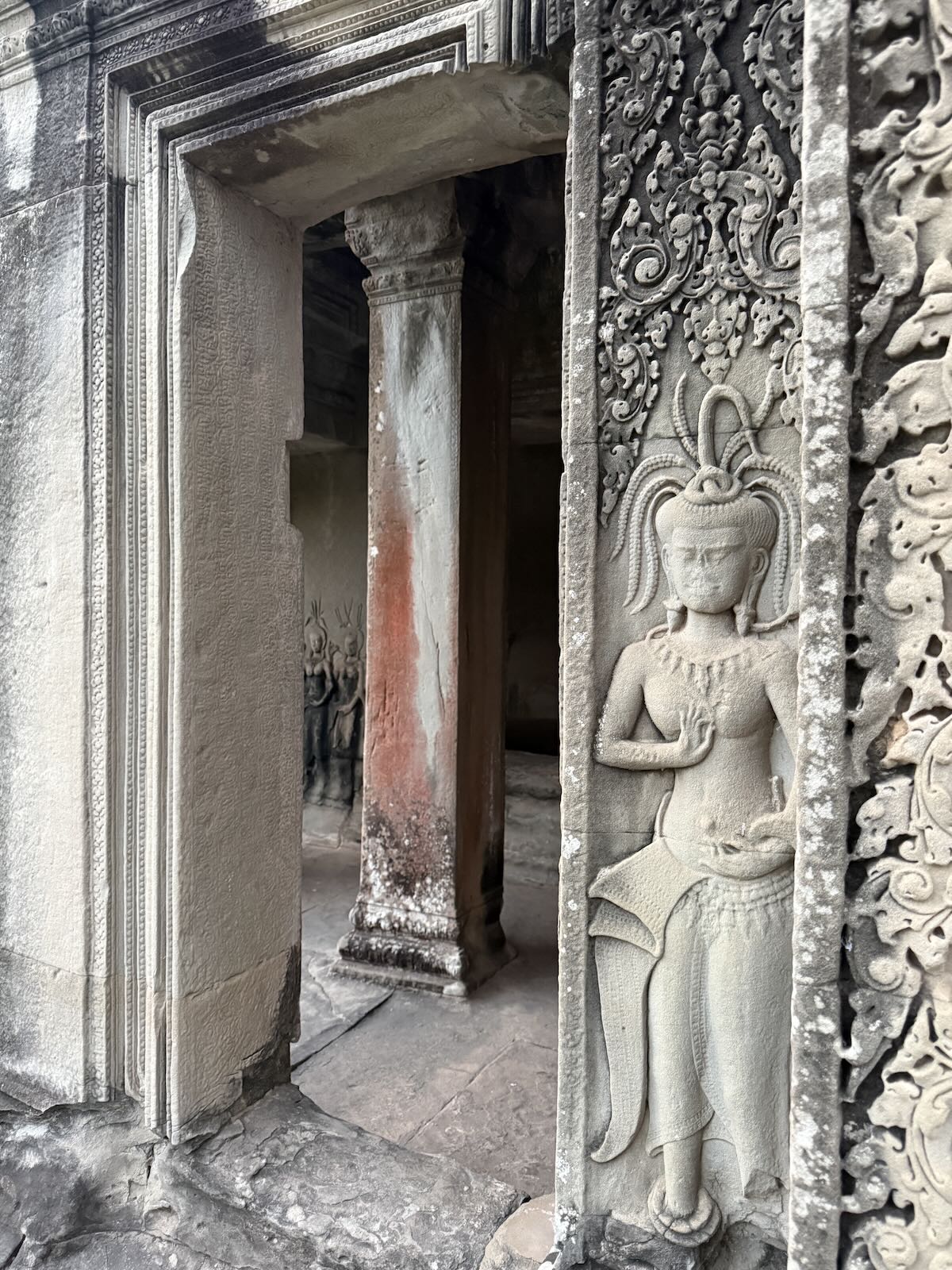
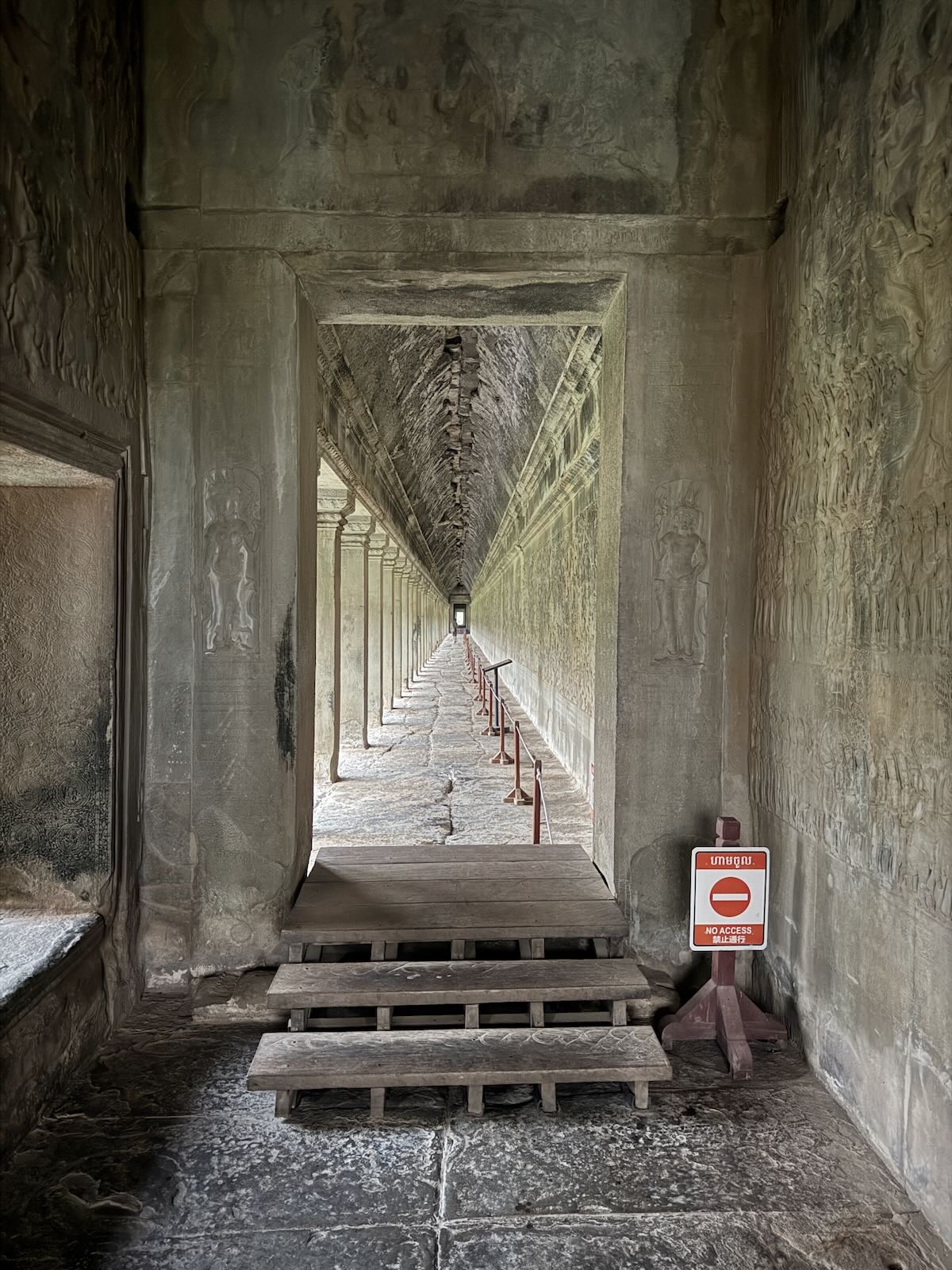
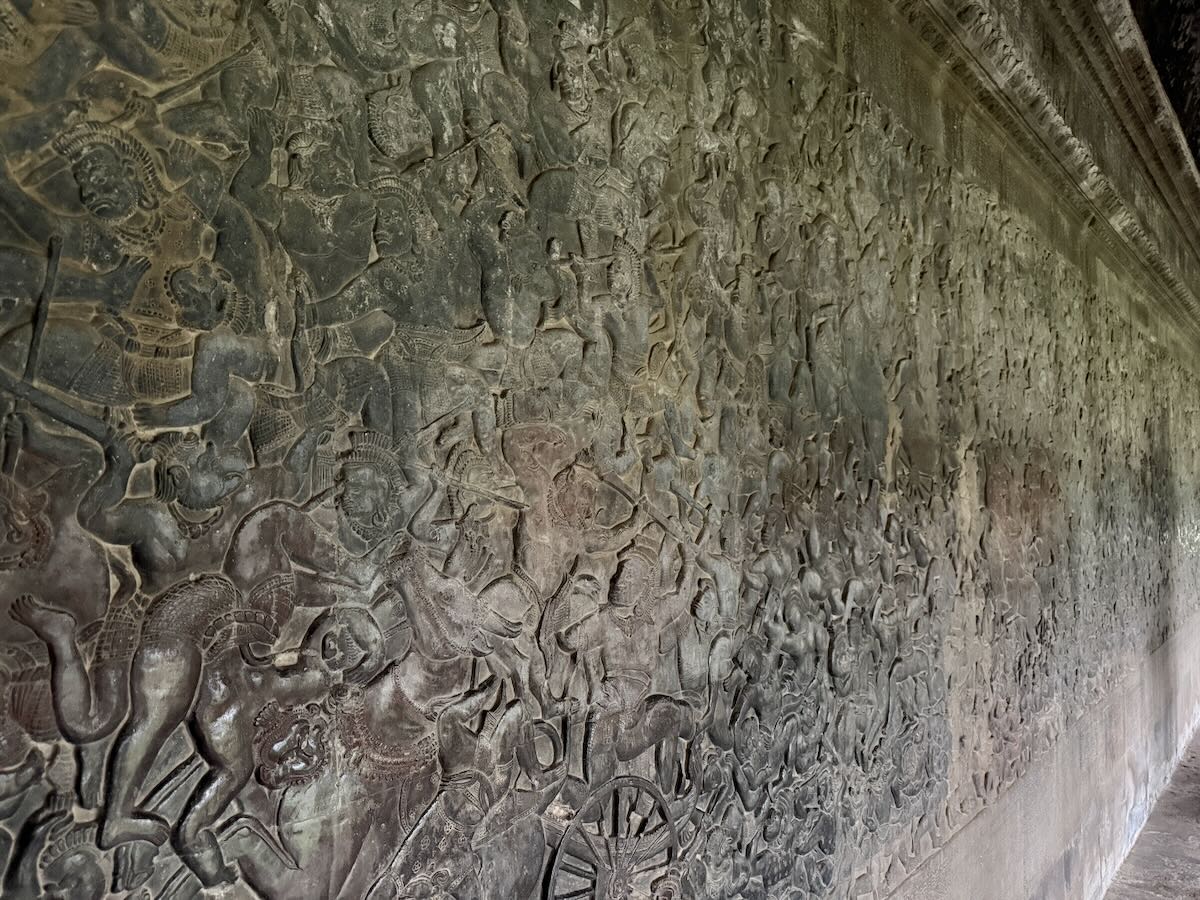 Human beings just can’t help themselves.
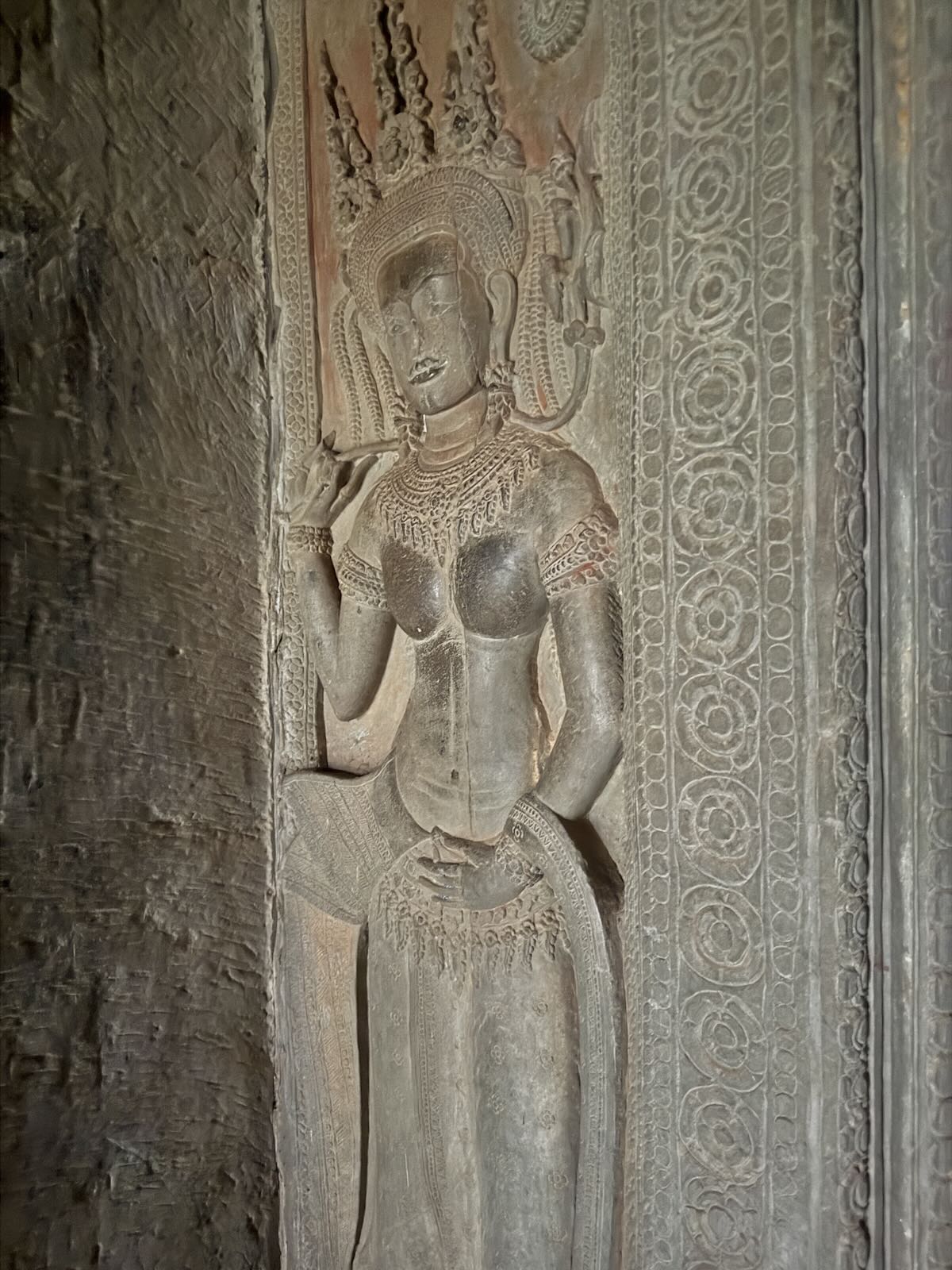 As the light brightened, we went deeper in.
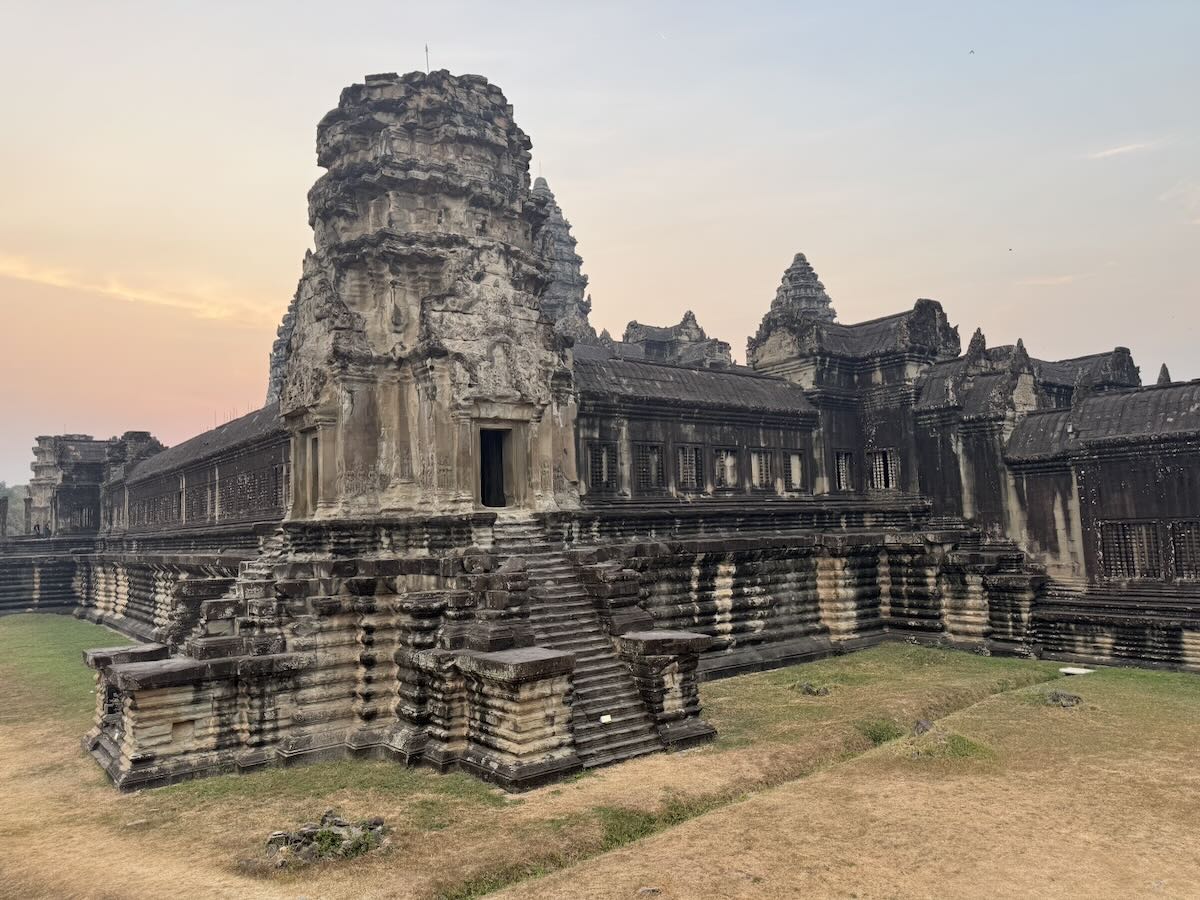
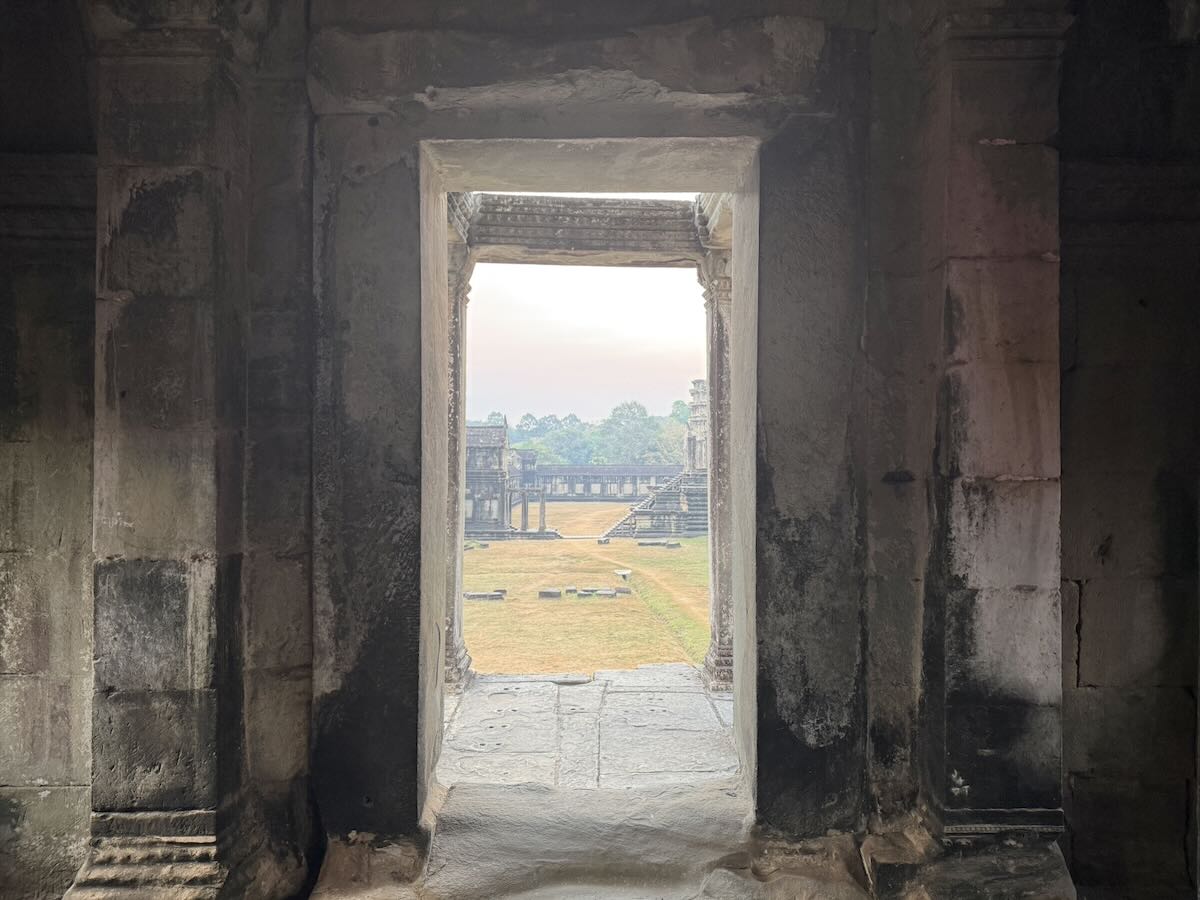
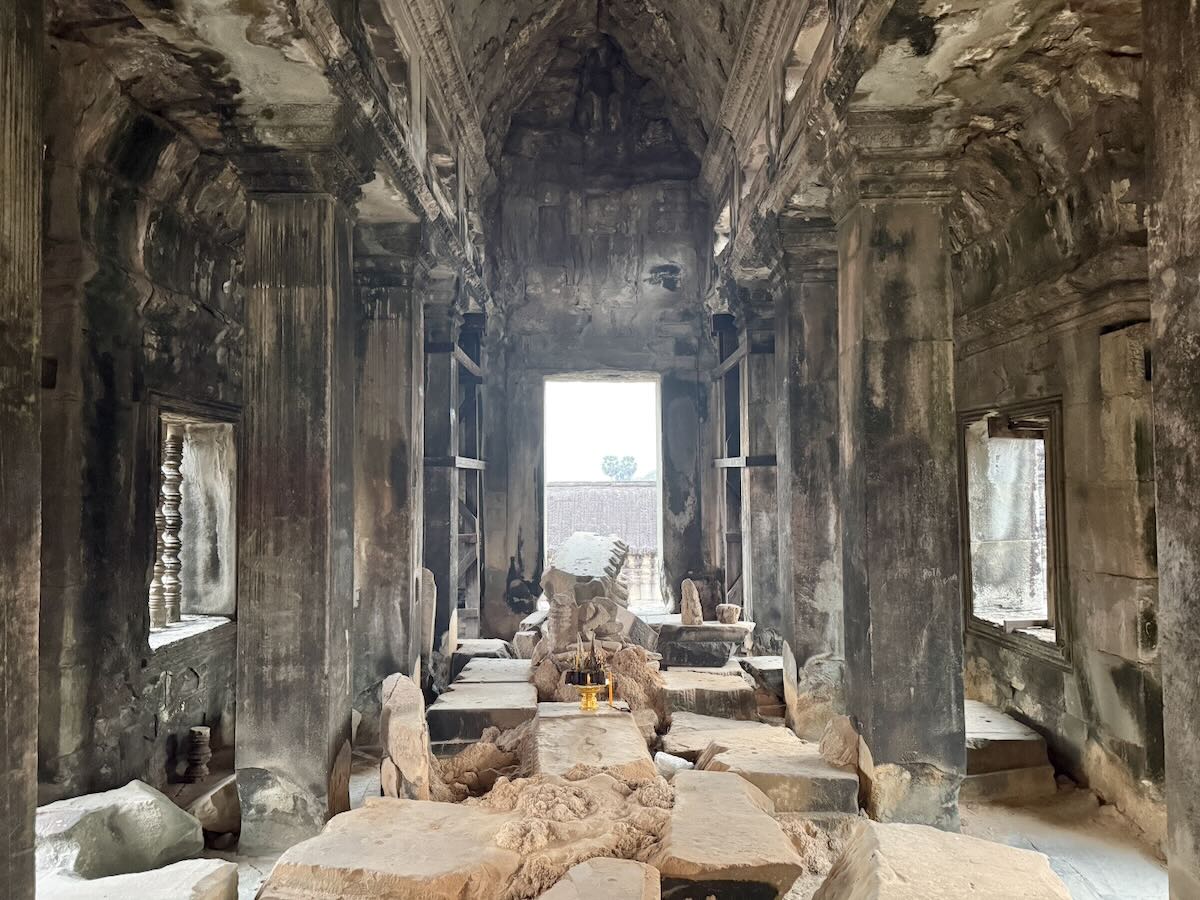 And farther up.
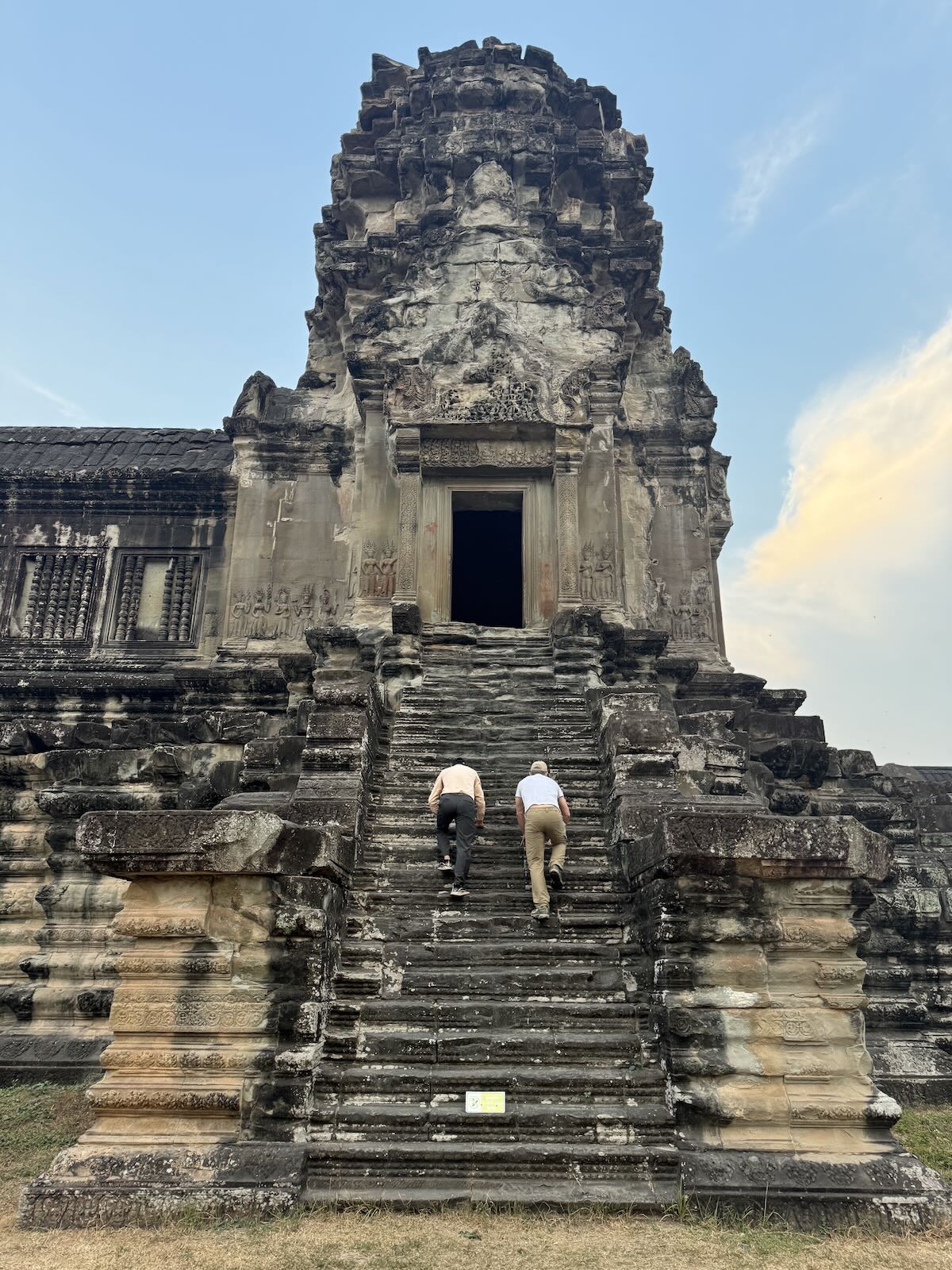
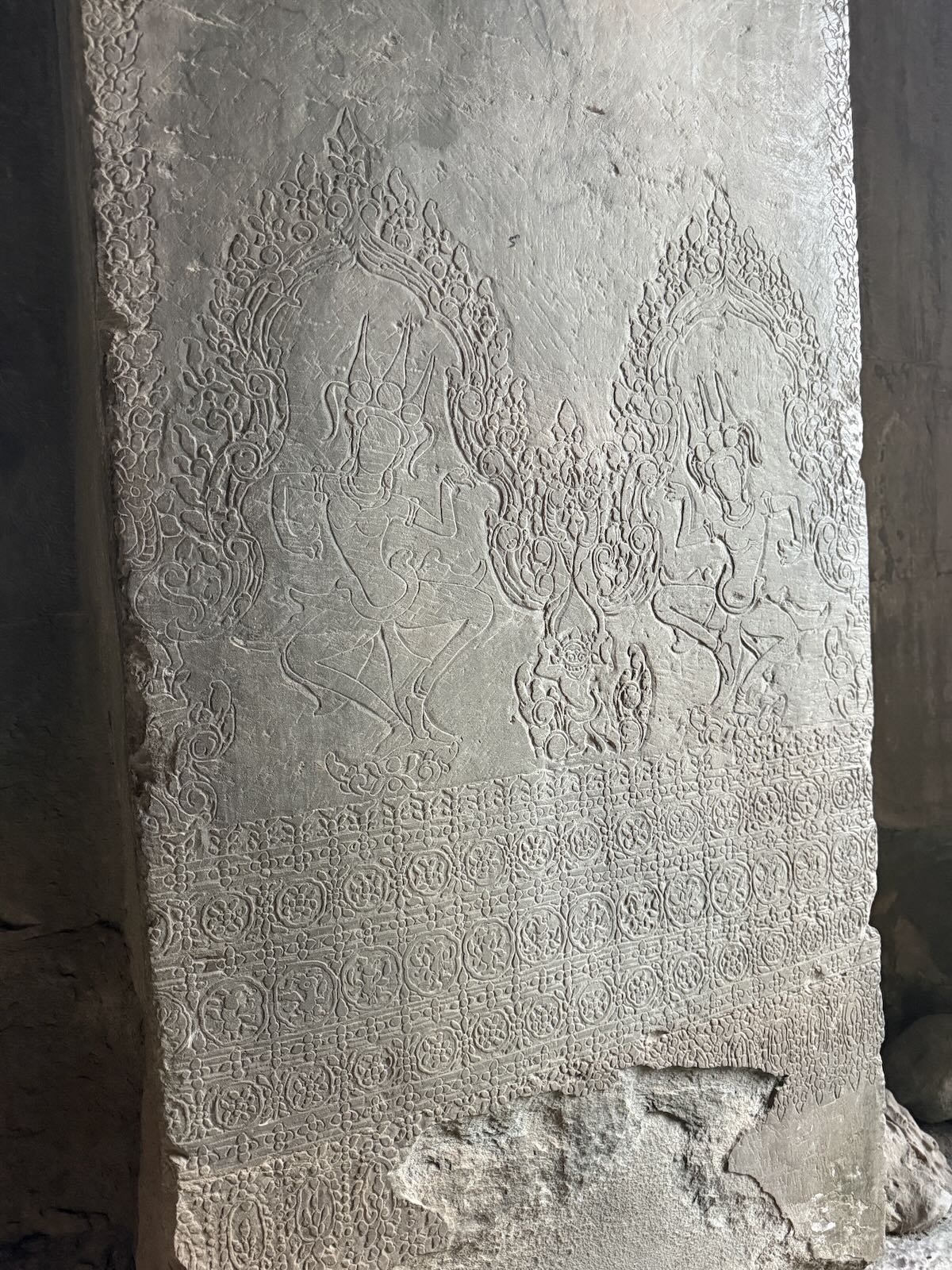
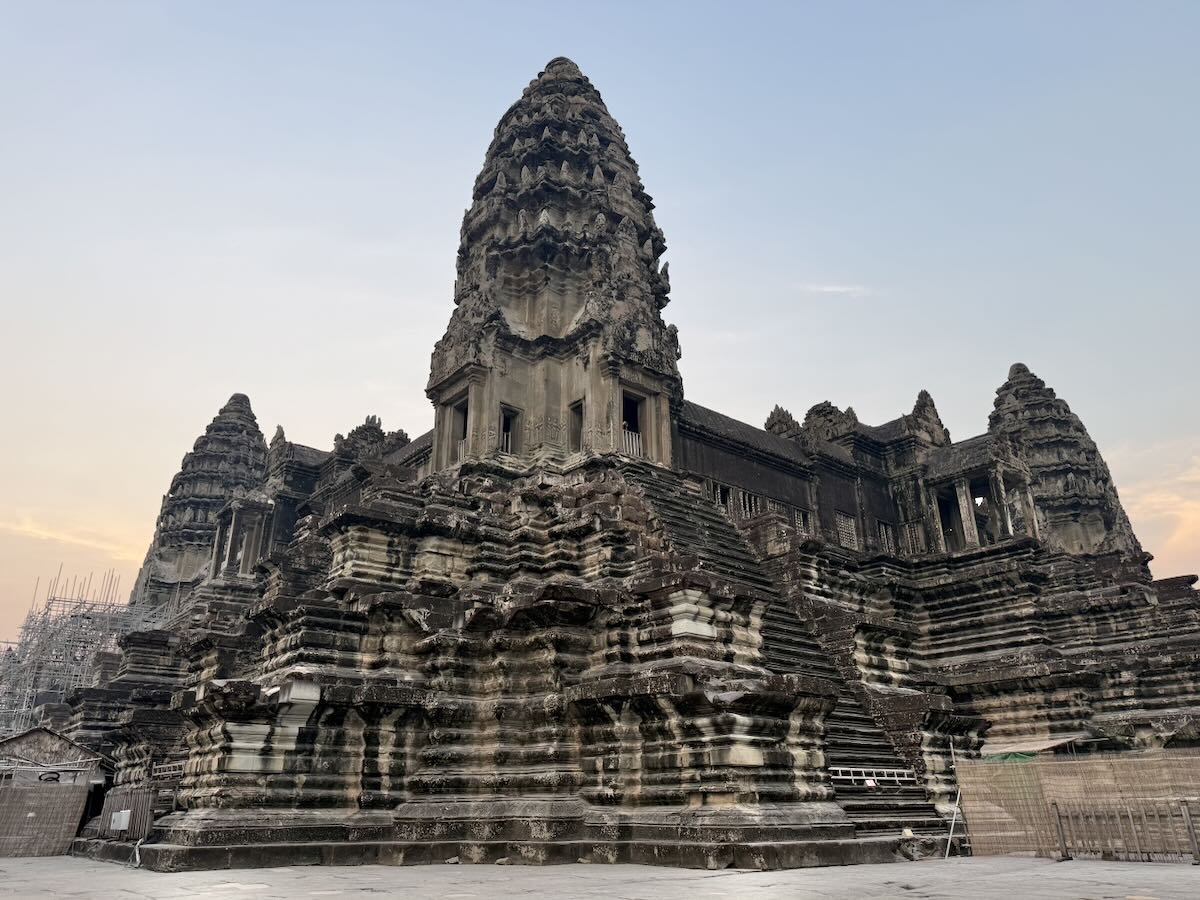
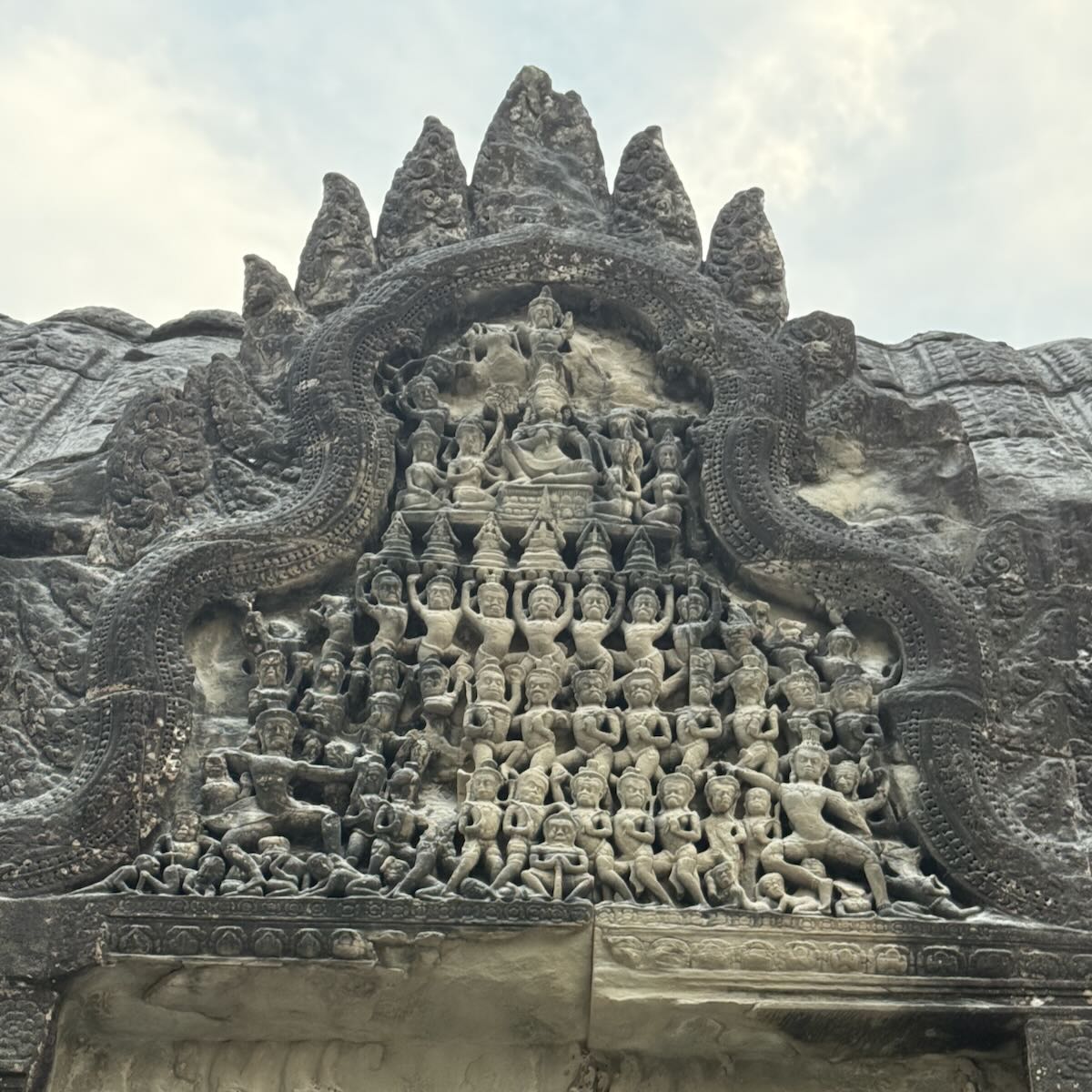 Adam and I went alone to the upper level—well, not alone, but without Ram.
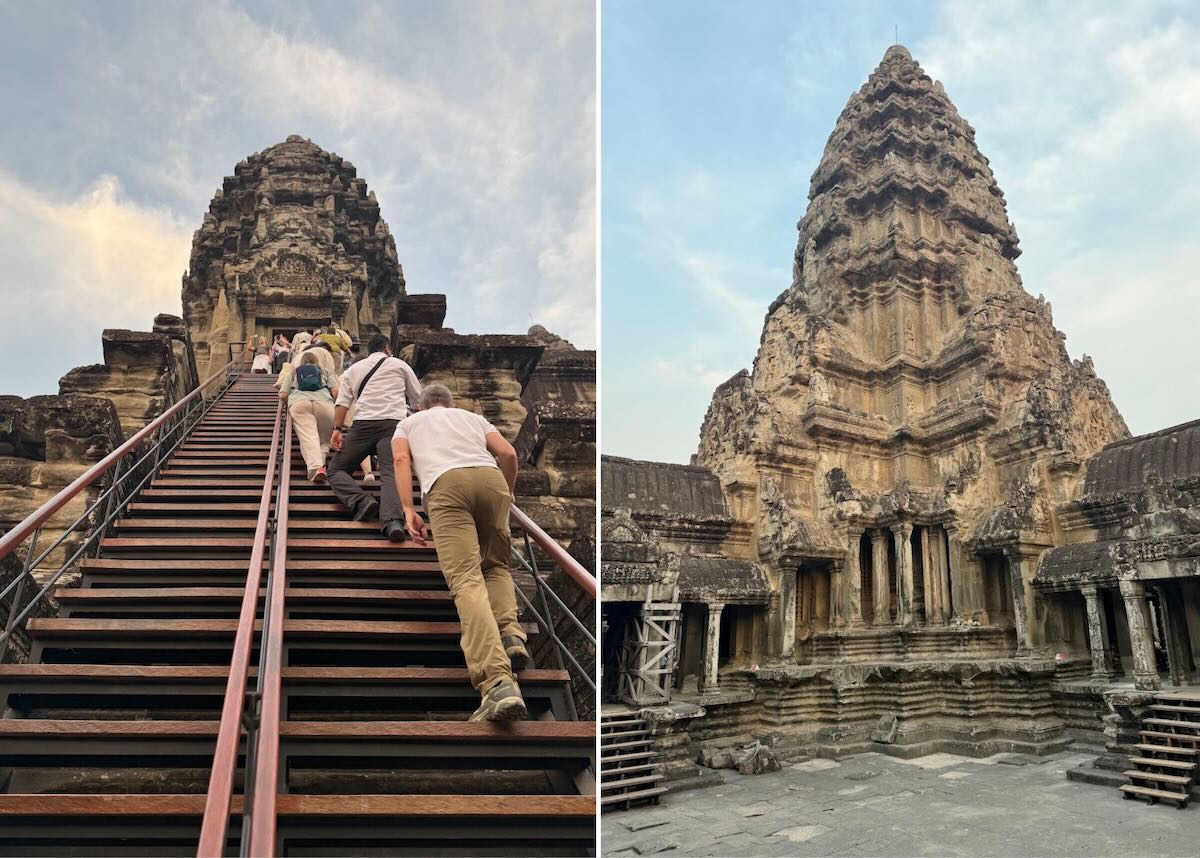
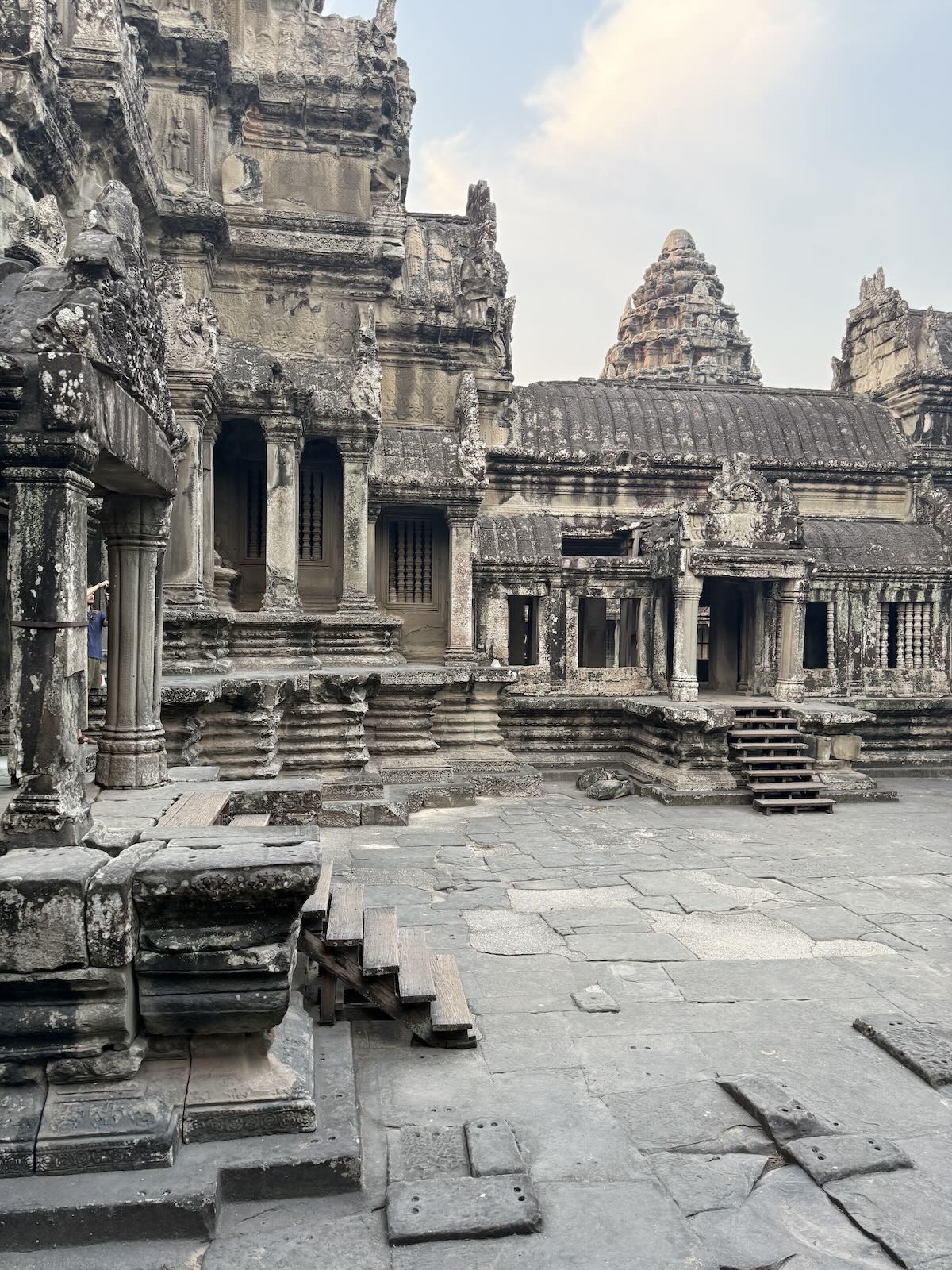
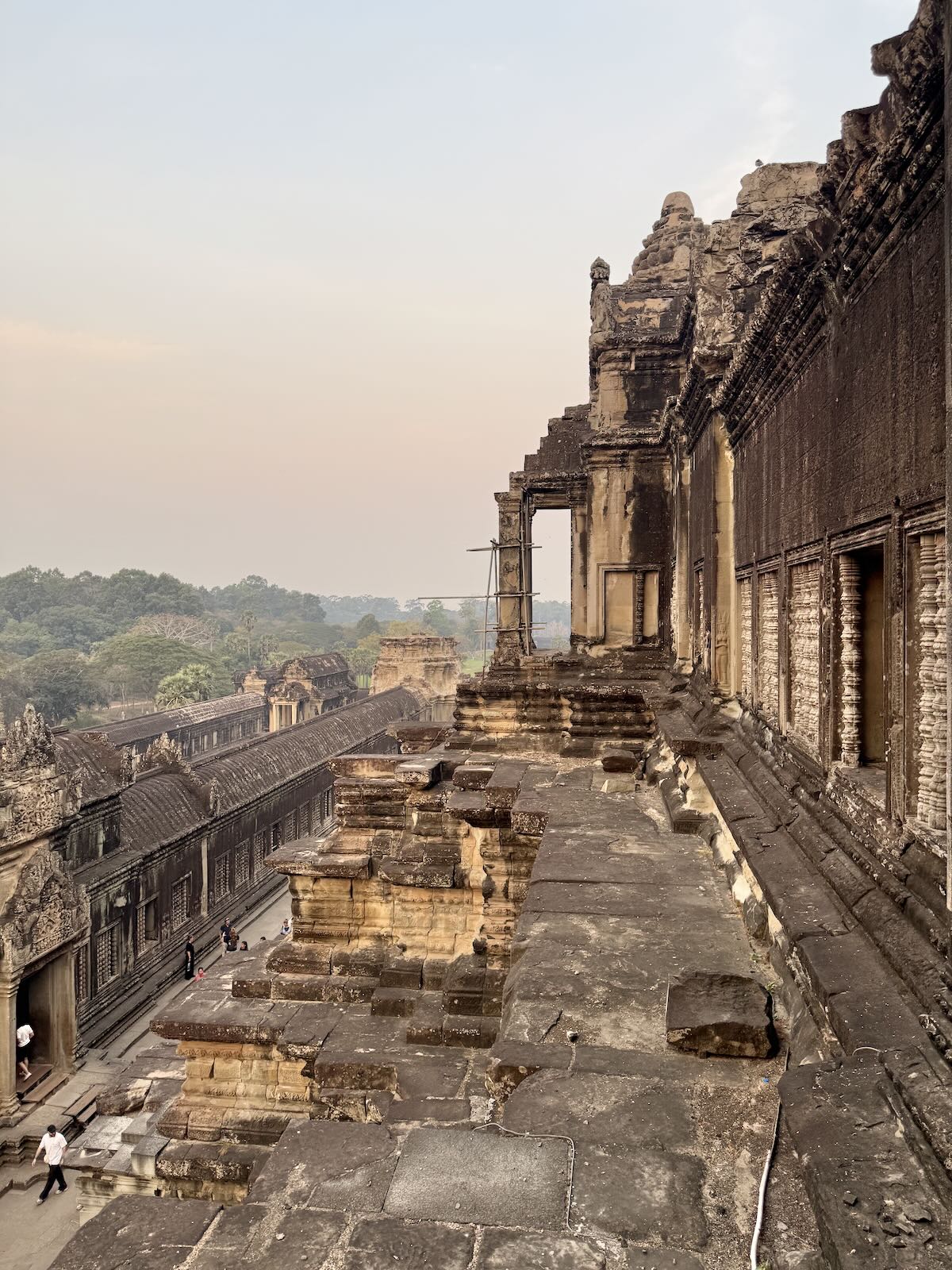 The photos make it look like we had the place to ourselves, which was not the case. (Below: a common scene.) But most of the time, it was easy enough to get away from people.
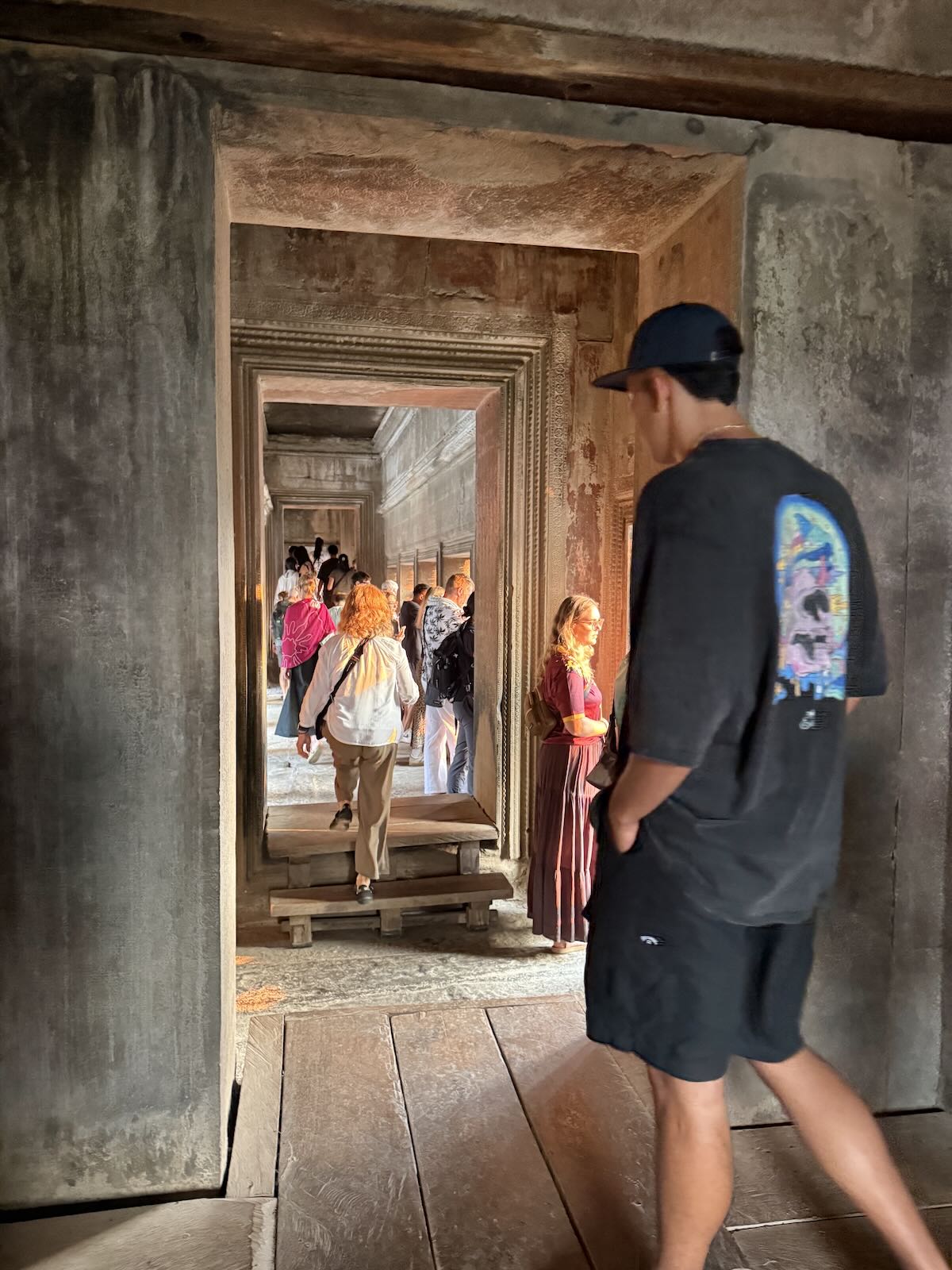 We left by the front entrance, where our driver was waiting—so no need to backtrack. The large hole is from a bullet fired by the Khmer Rouge.
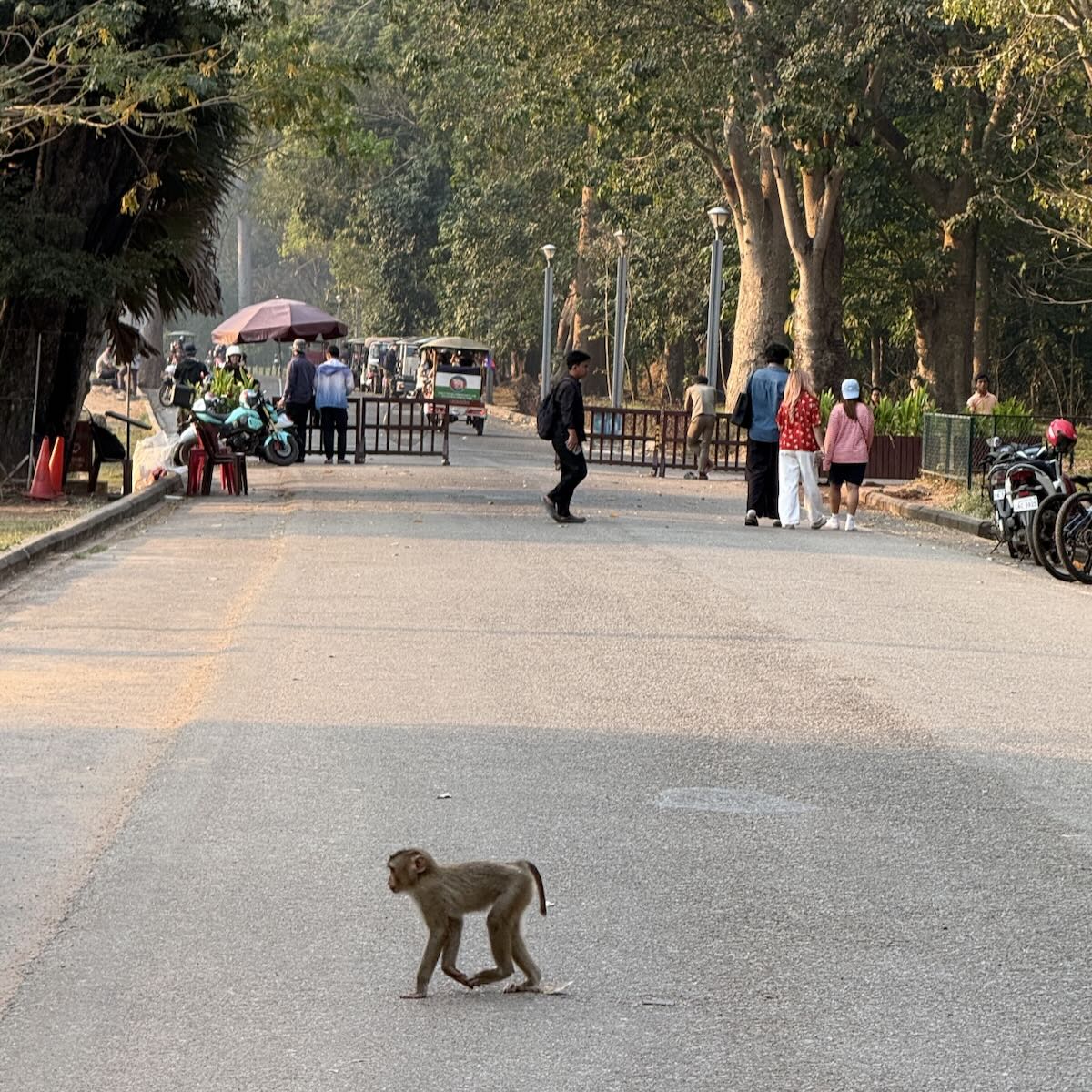
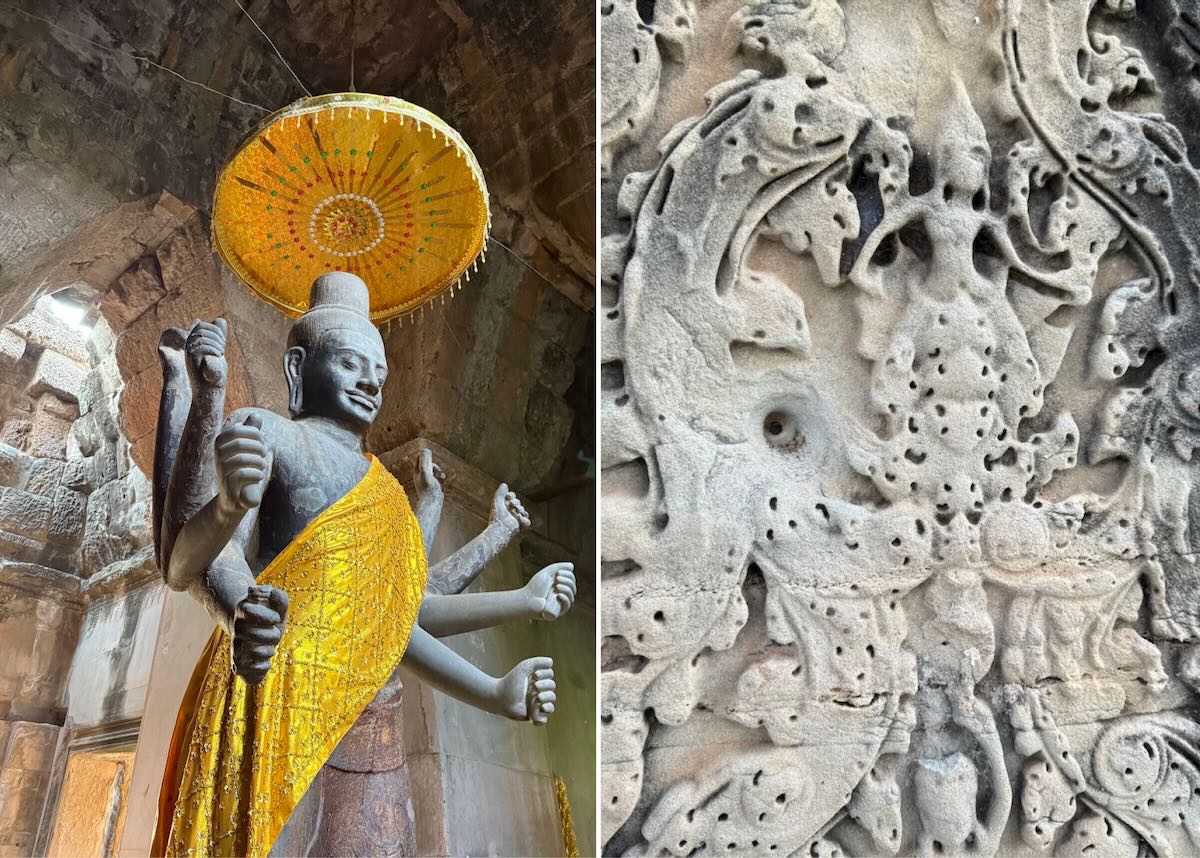 Naturally, we were excited to see monkeys, although they’re apparently rather pesty if you have food (or anything that could be mistaken for it).
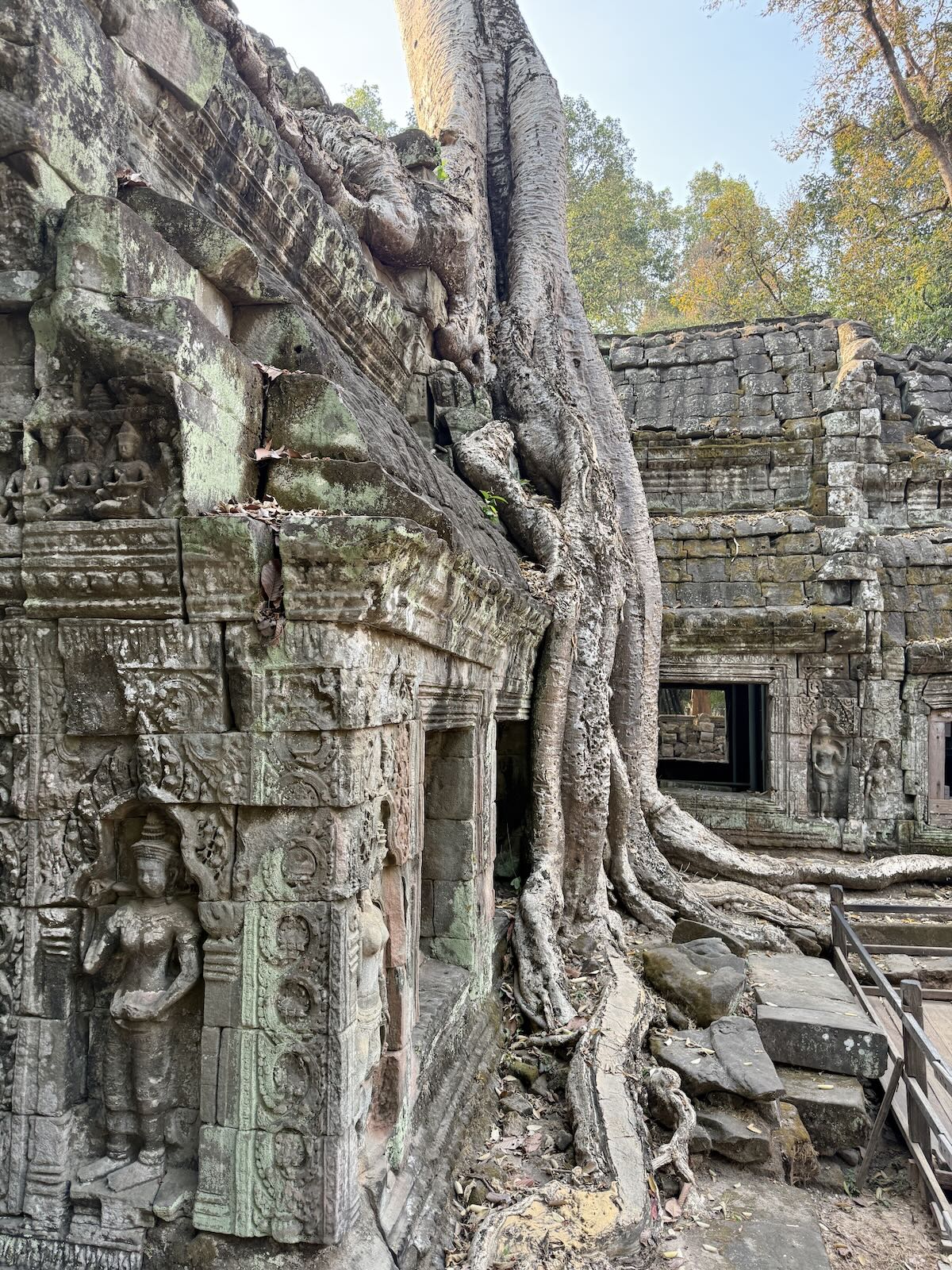
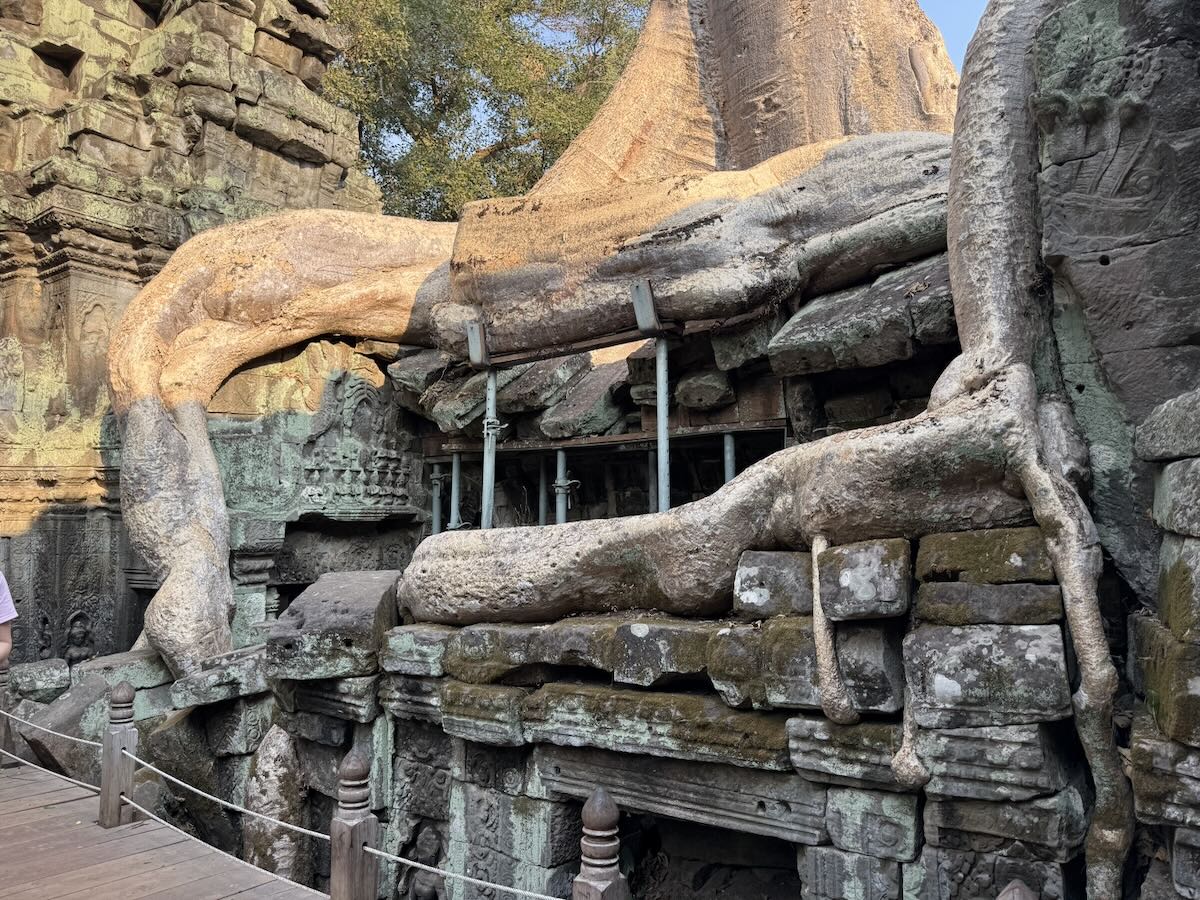
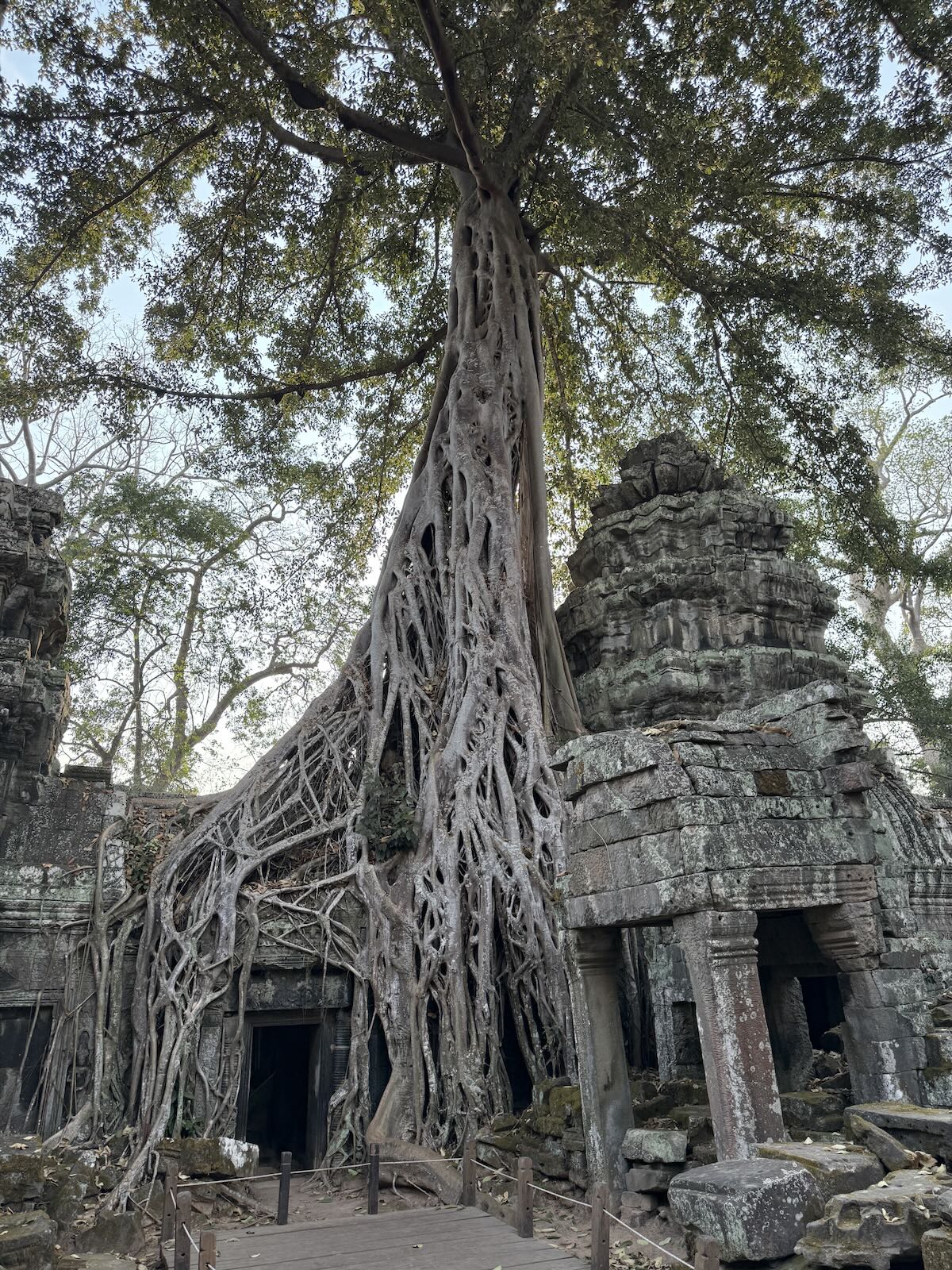
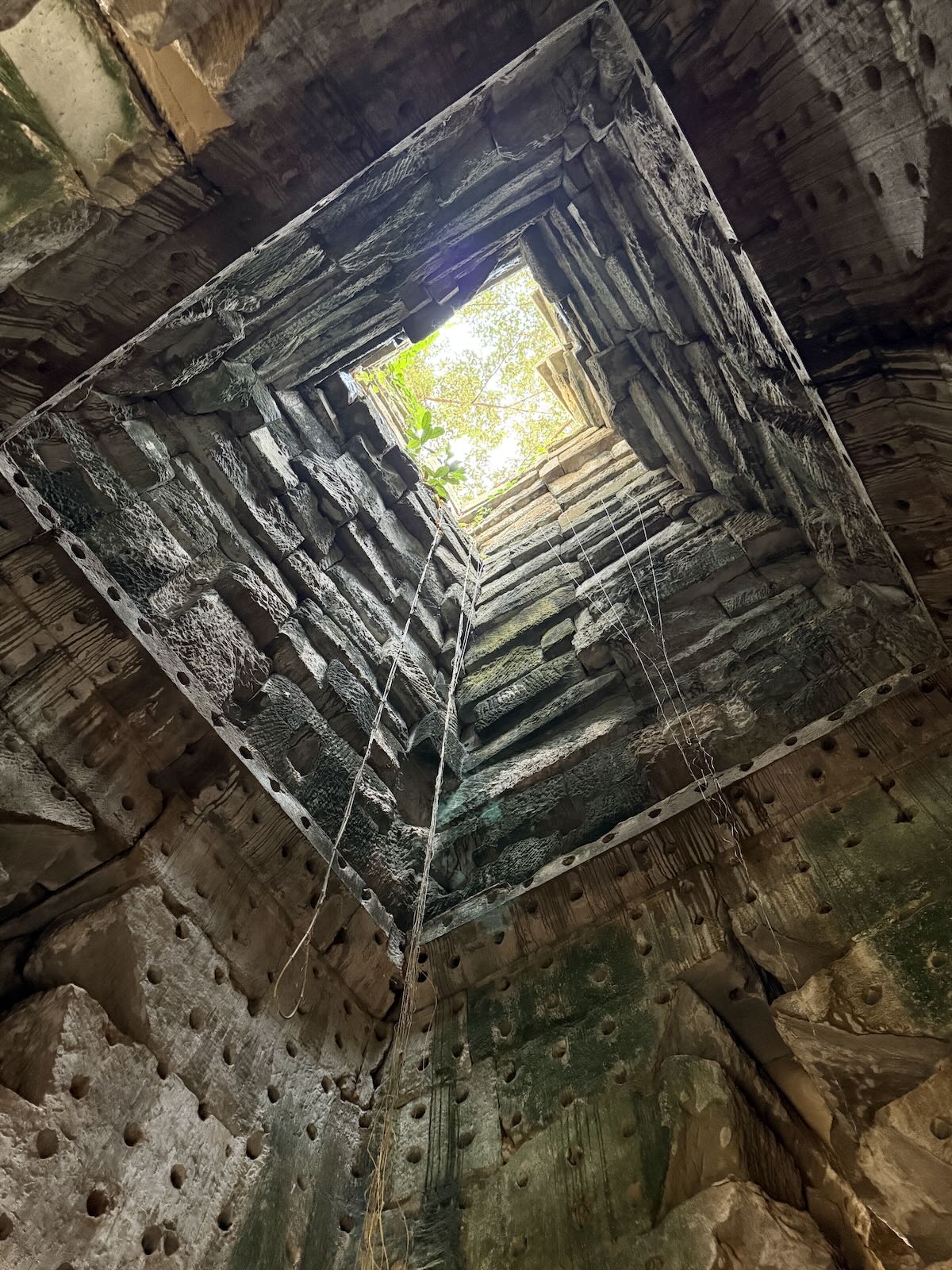
 Ram mentioned several times how the next temple, Ta Prohm, was famous because the 2001 Tomb Raider movie was shot there, and Adam and I didn’t have the heart to tell him that we had never seen it.
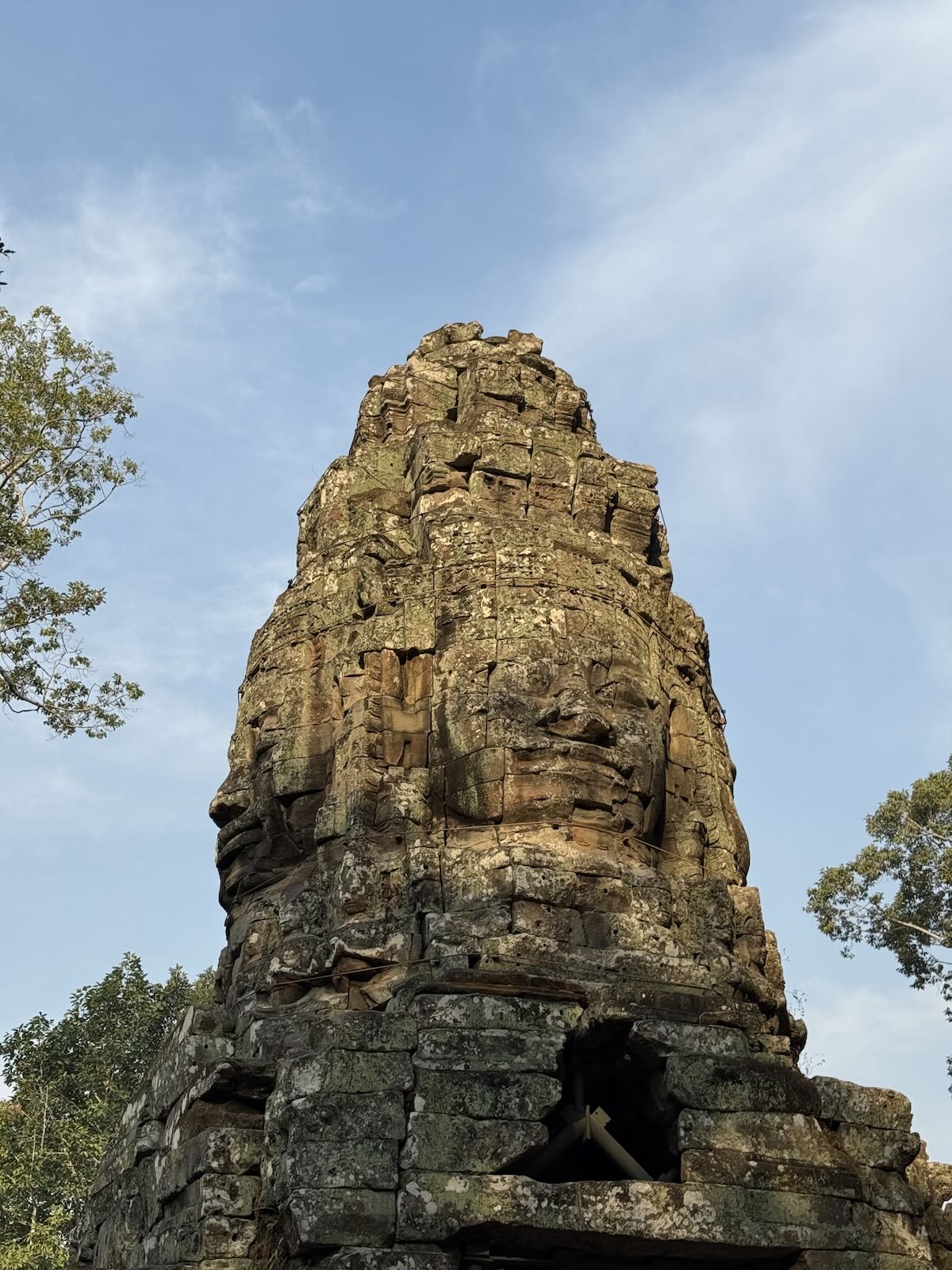
 These were the first giant face towers we saw, but not the best.
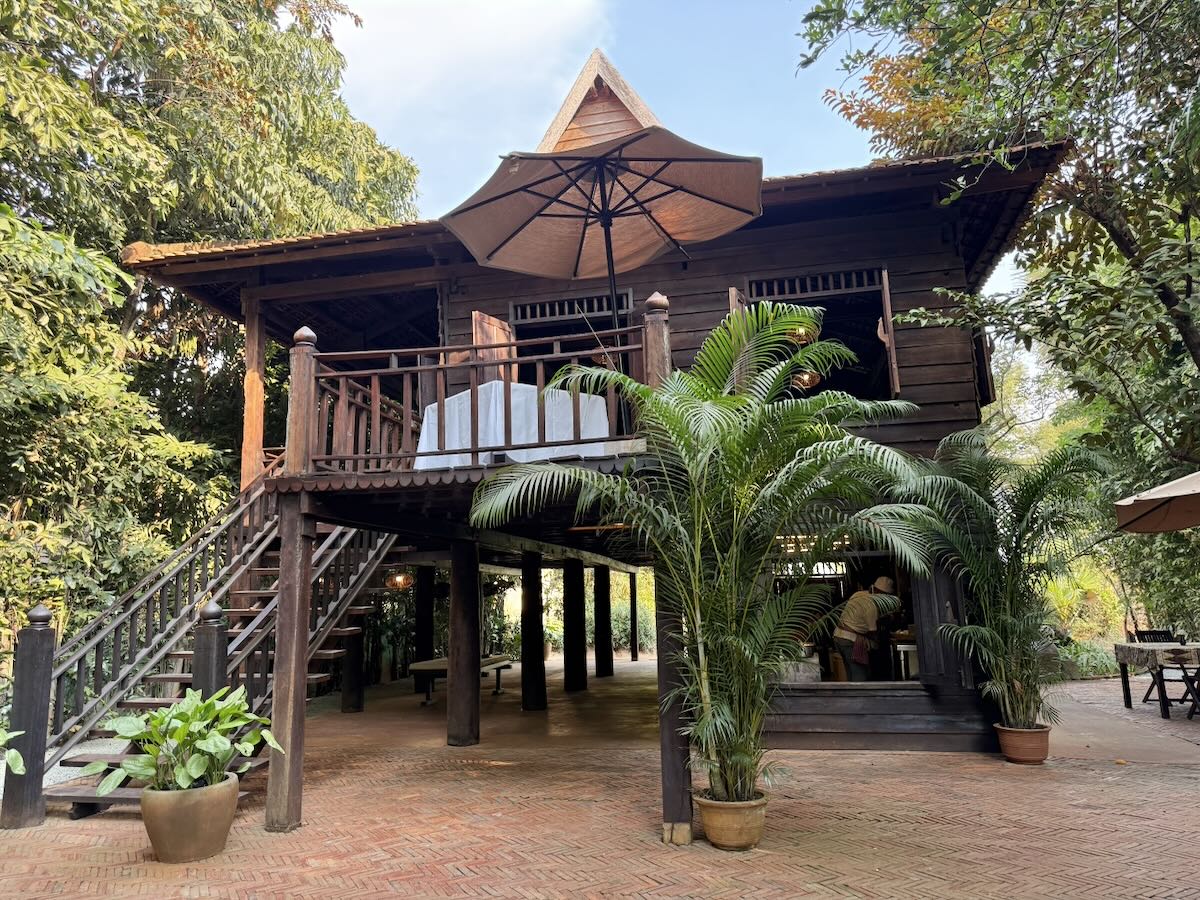
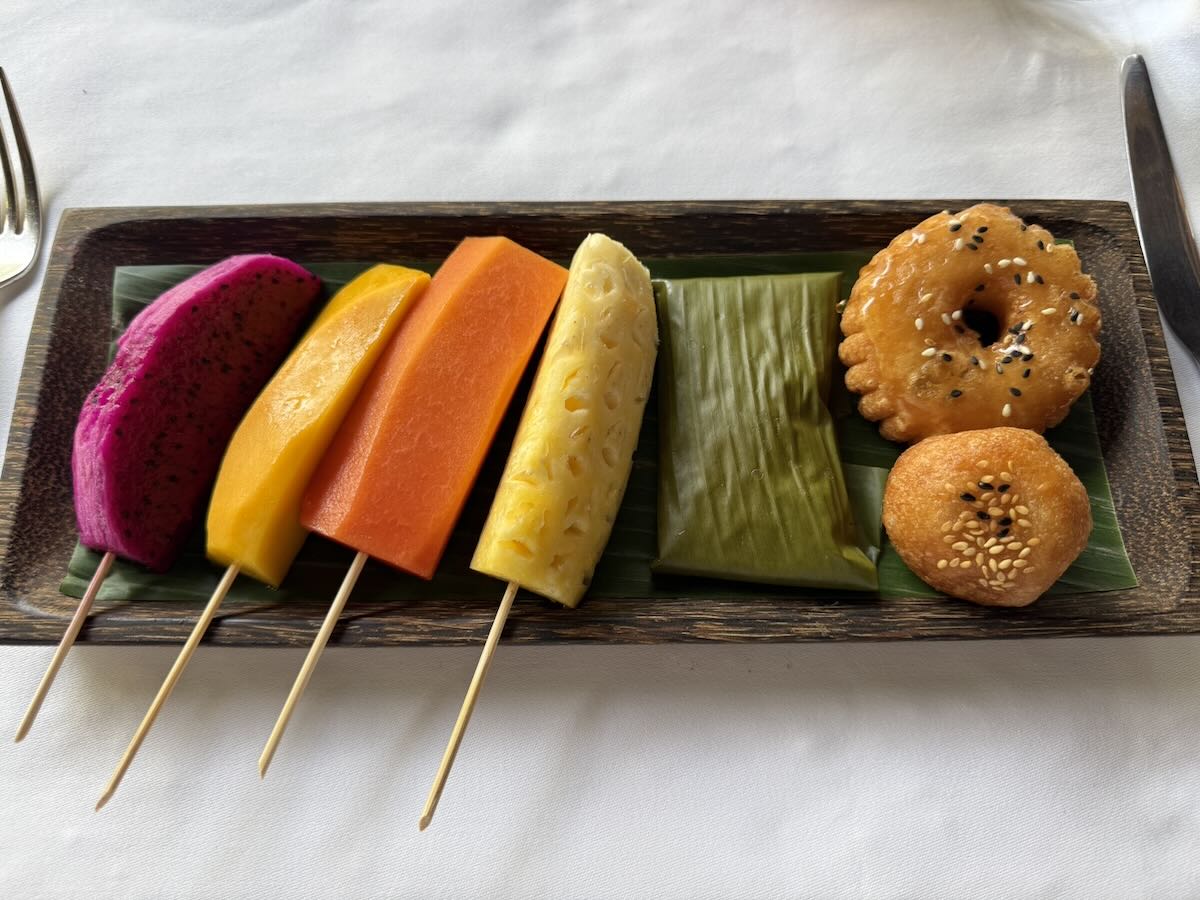
 Friends who had been to Amansara recommended the Khmer breakfast experience, in a traditional house owned by the hotel, and while I can’t possibly defend the $100 per-person price, the break (and coffee!) were just what we needed. And the food was very good, in particular the fresh fruit and doughnut-like pastries. In typical Aman fashion, the server stood behind us and watched as we ate. There are times—such as when I’m engaging with a curry noodle soup—when I would prefer not to feel seen.
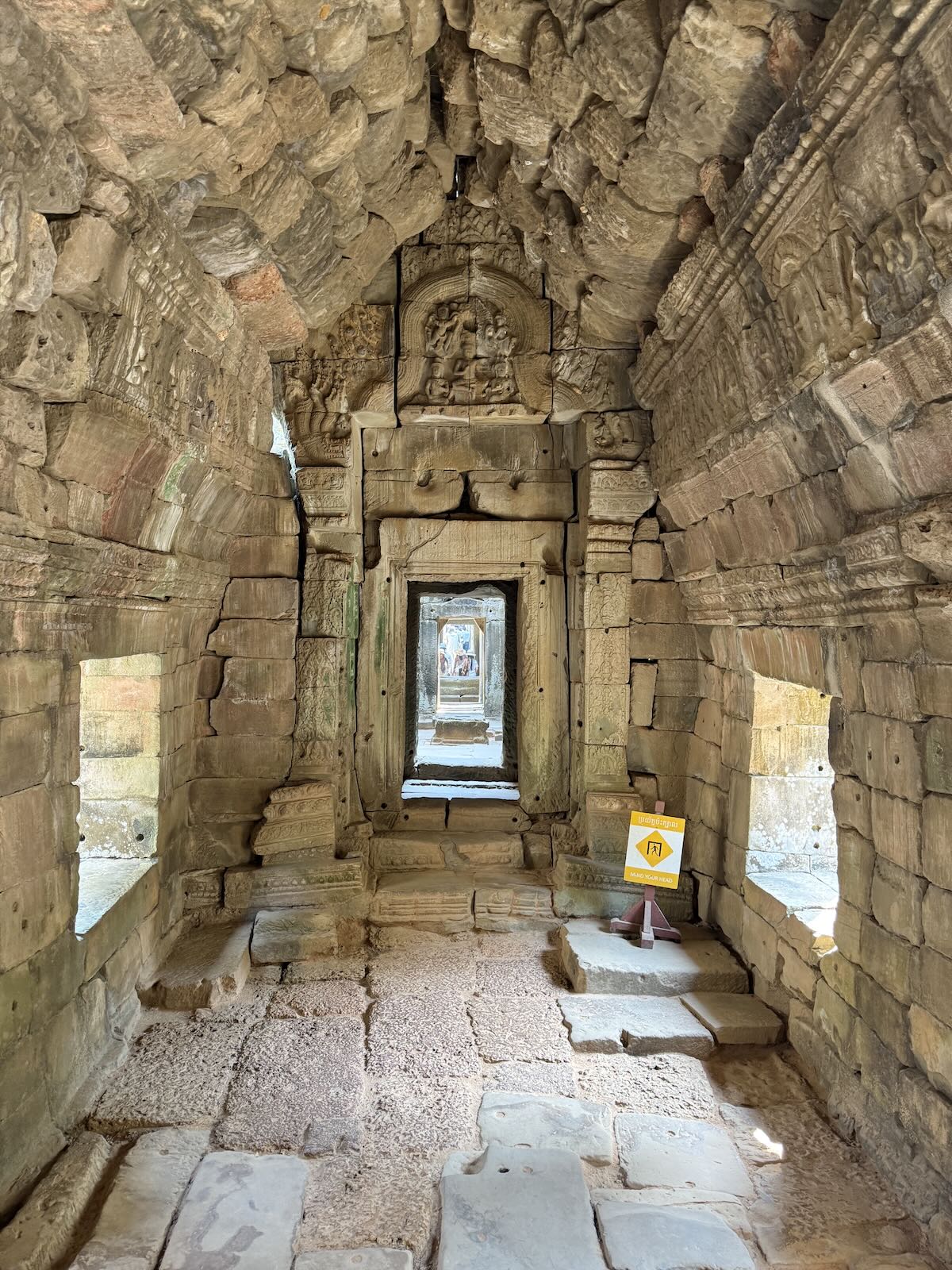
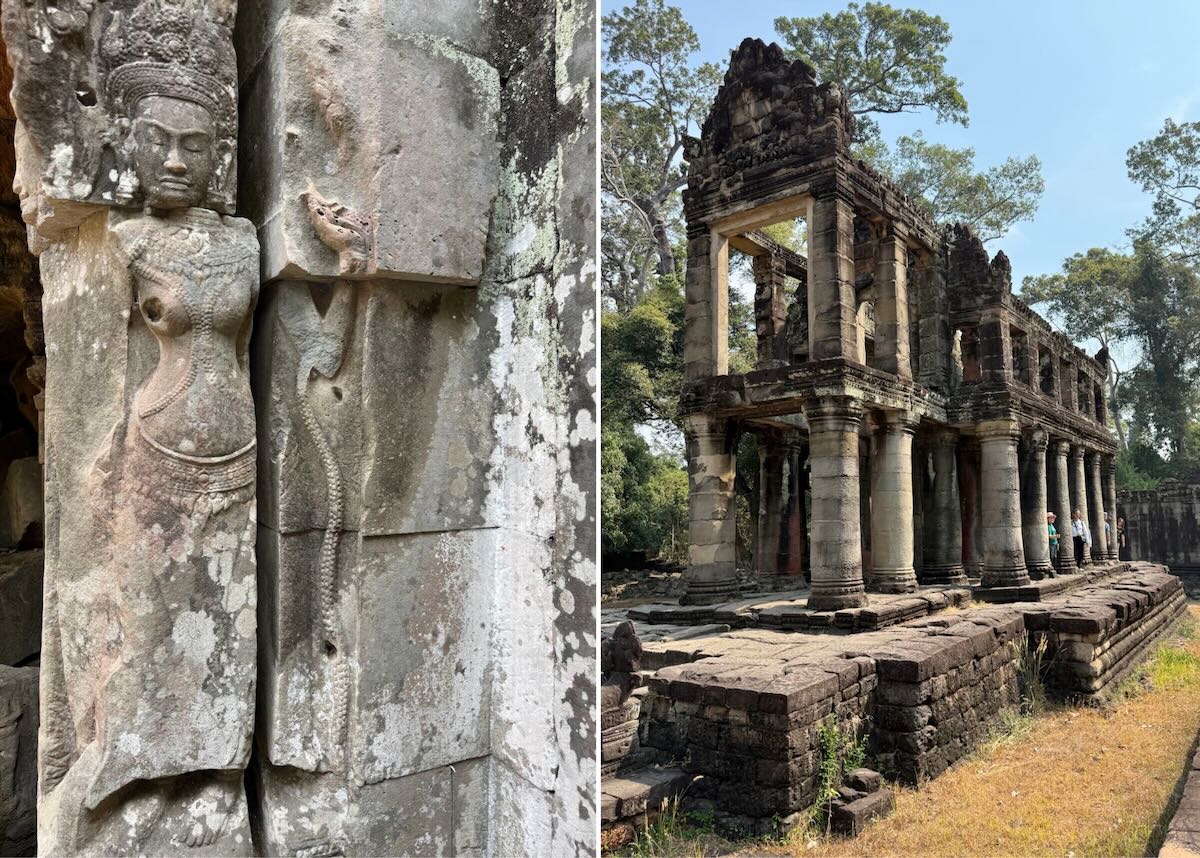
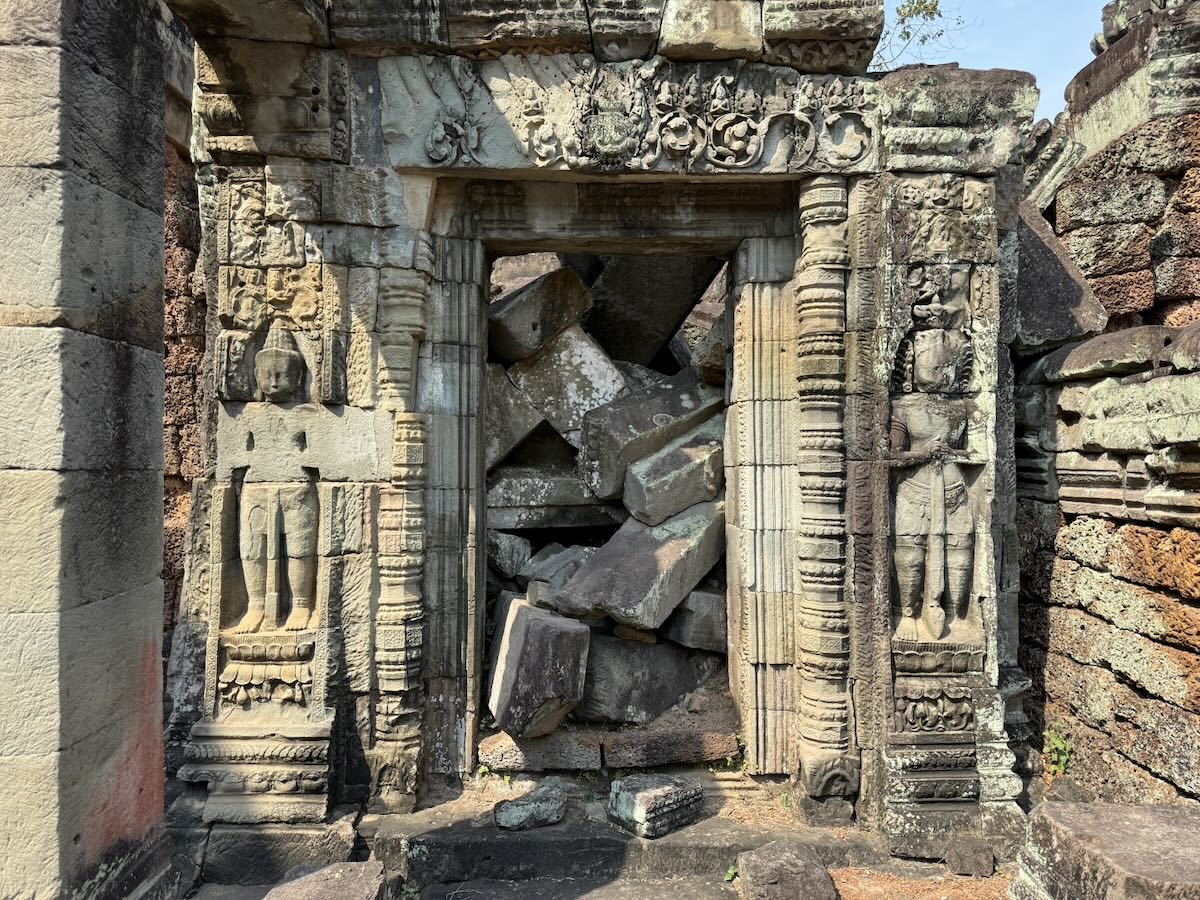
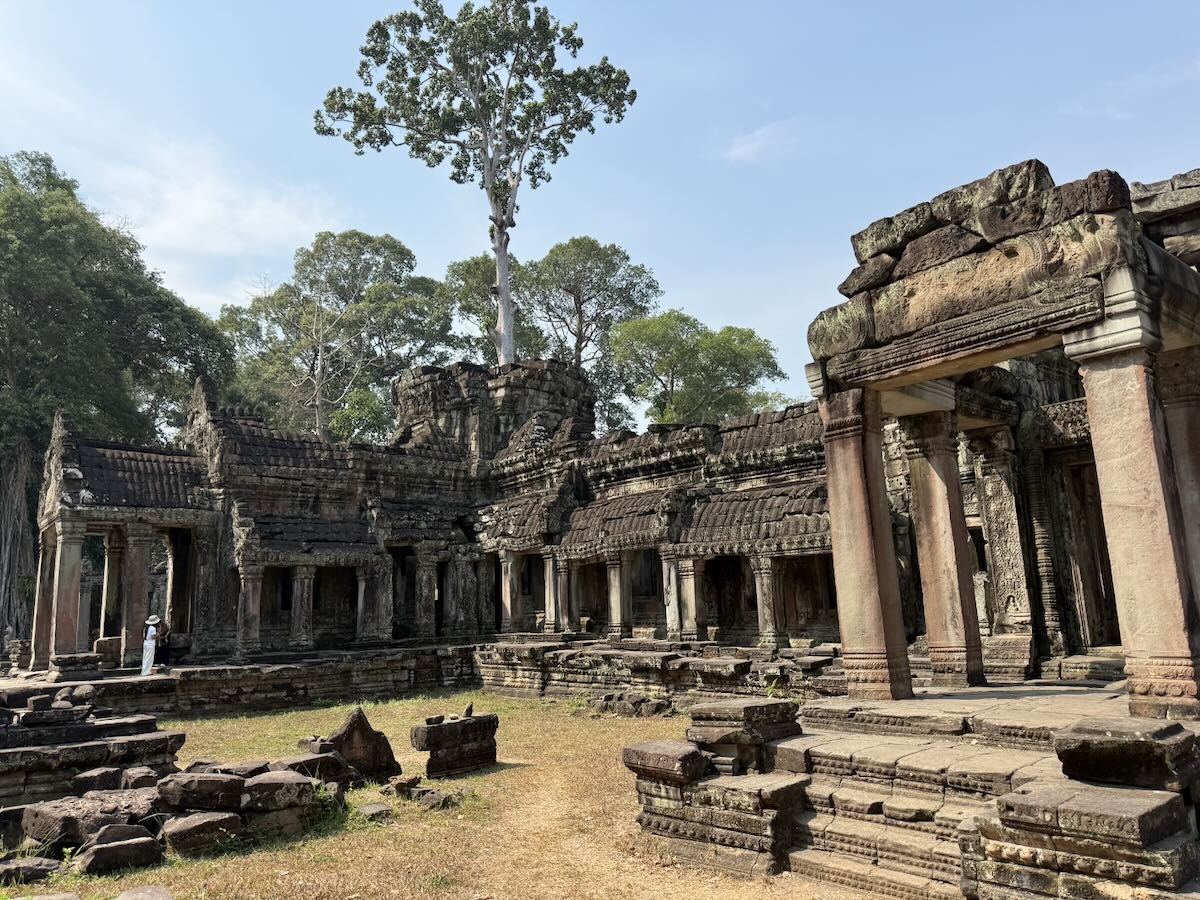
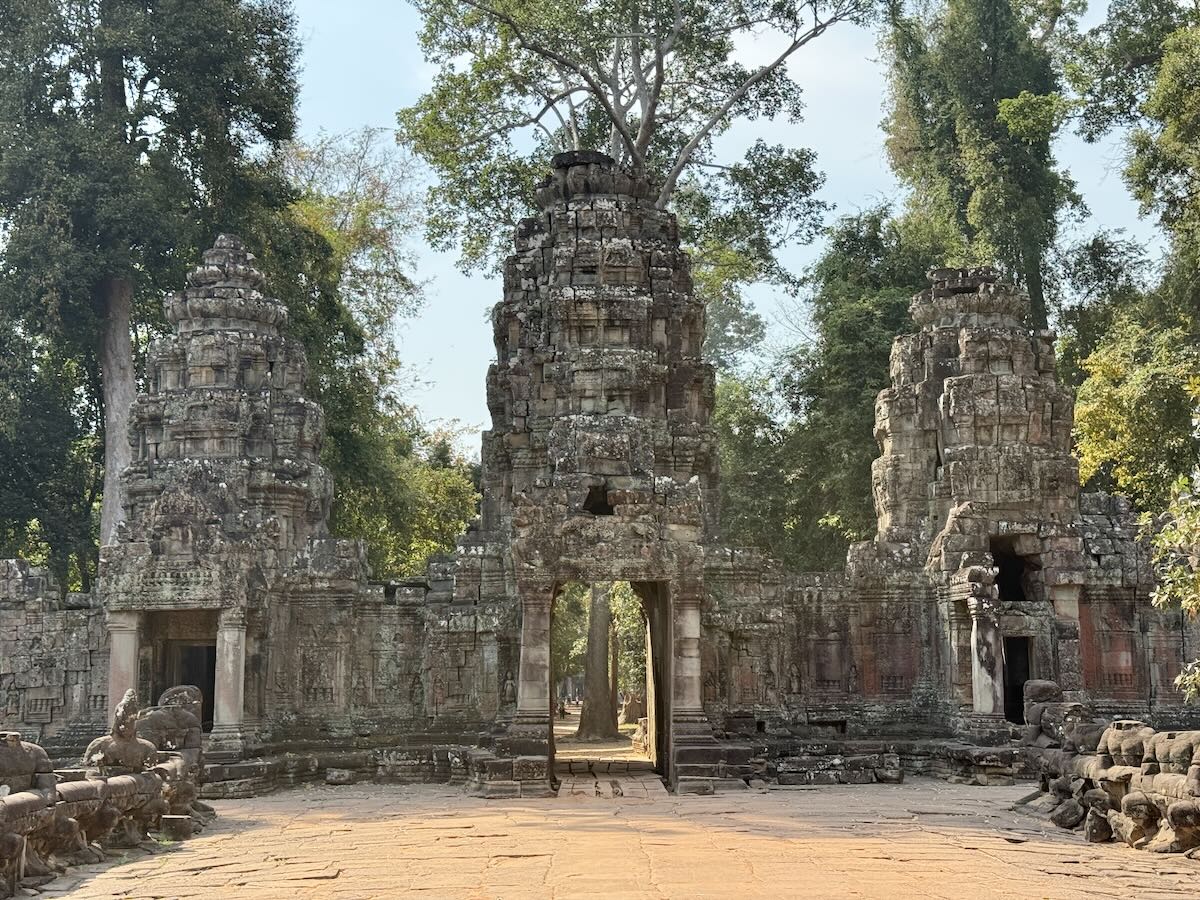
 I imagine that anyone reading this might think that the cavalcade of temples grew tedious, and all I can say is that it did not. This is Preah Khan.
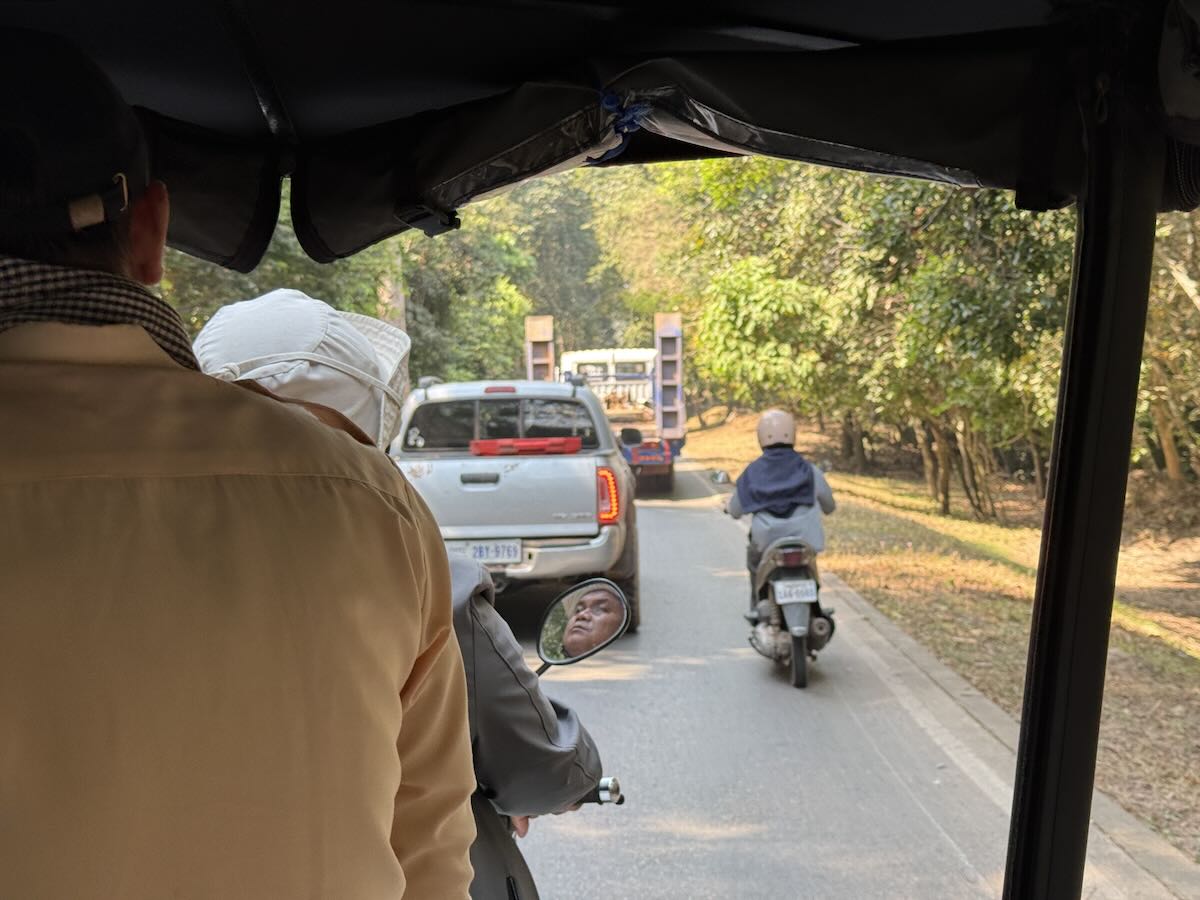
 The remork was much less appealing when we were stuck behind vehicles spewing exhaust.
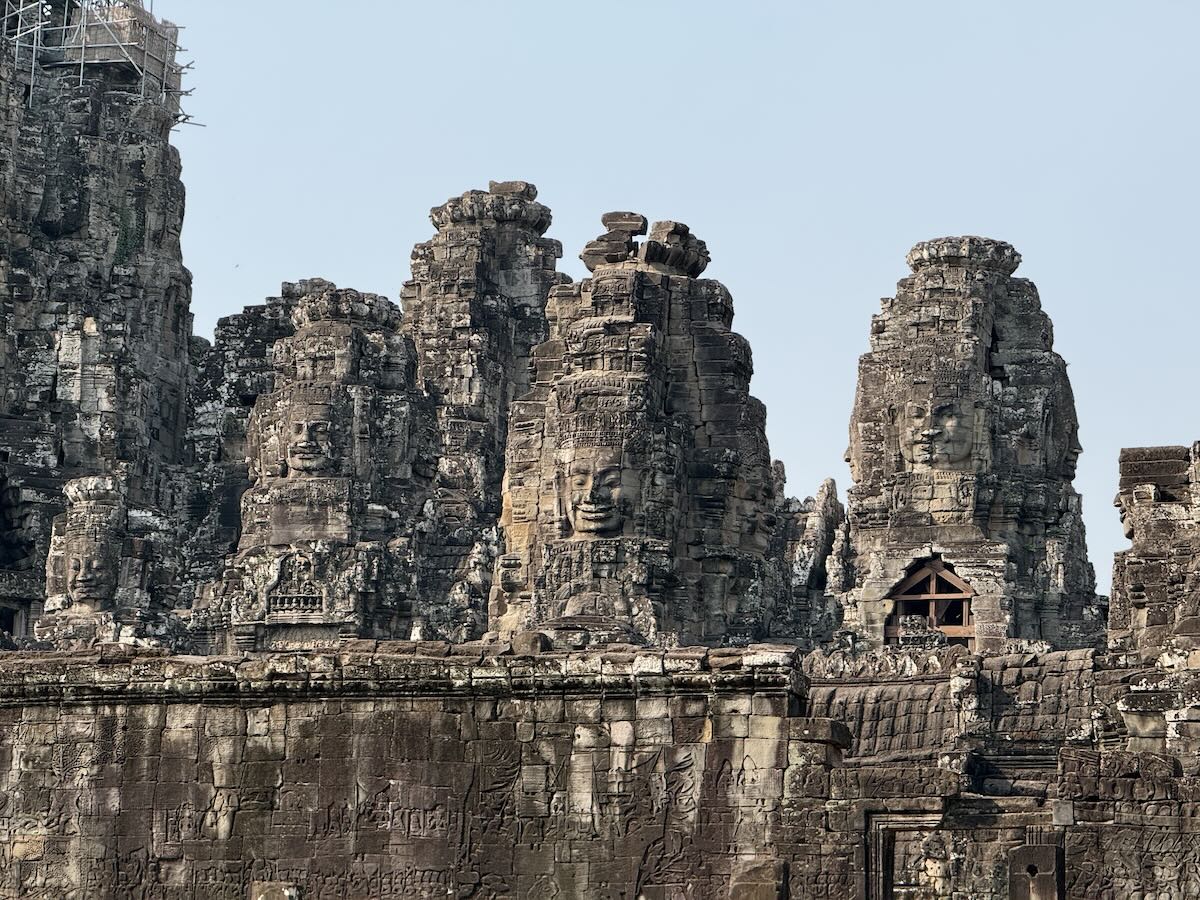
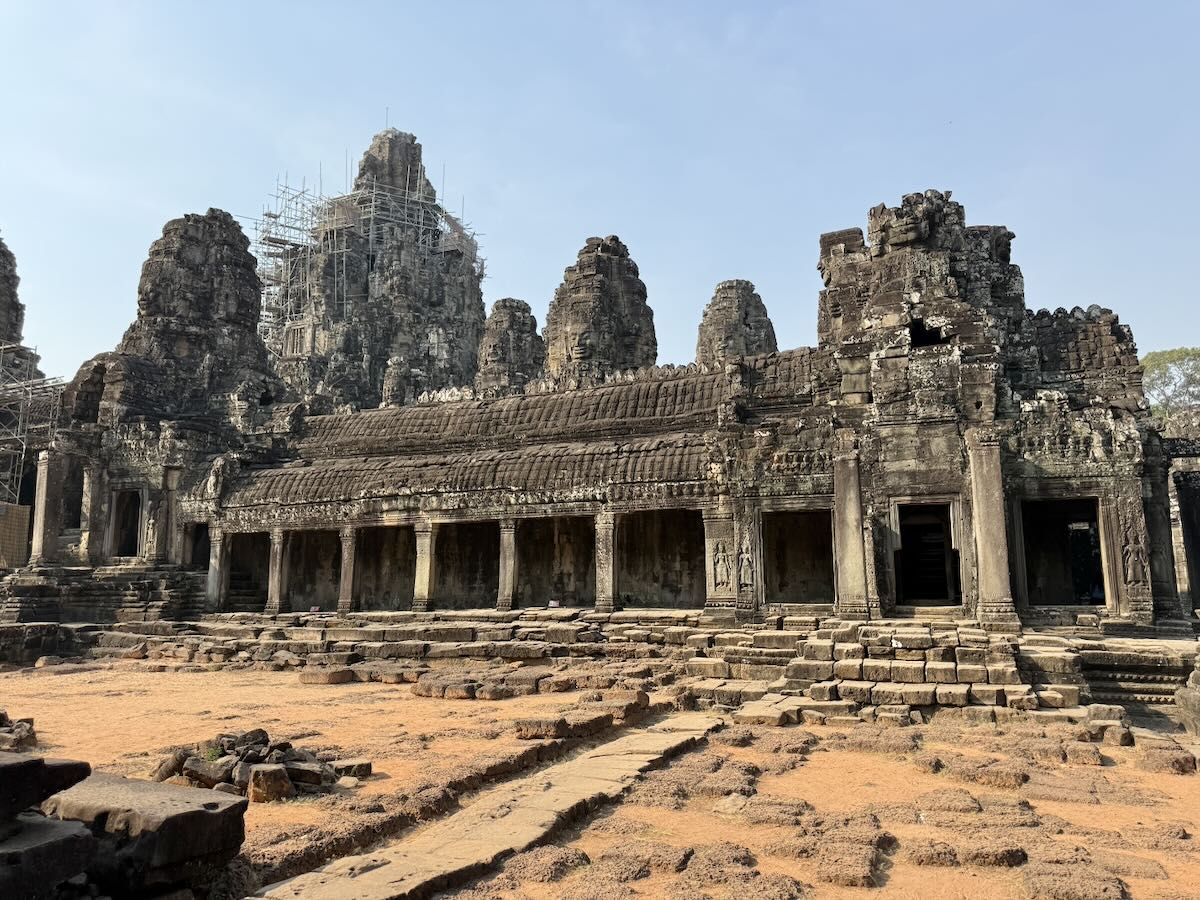
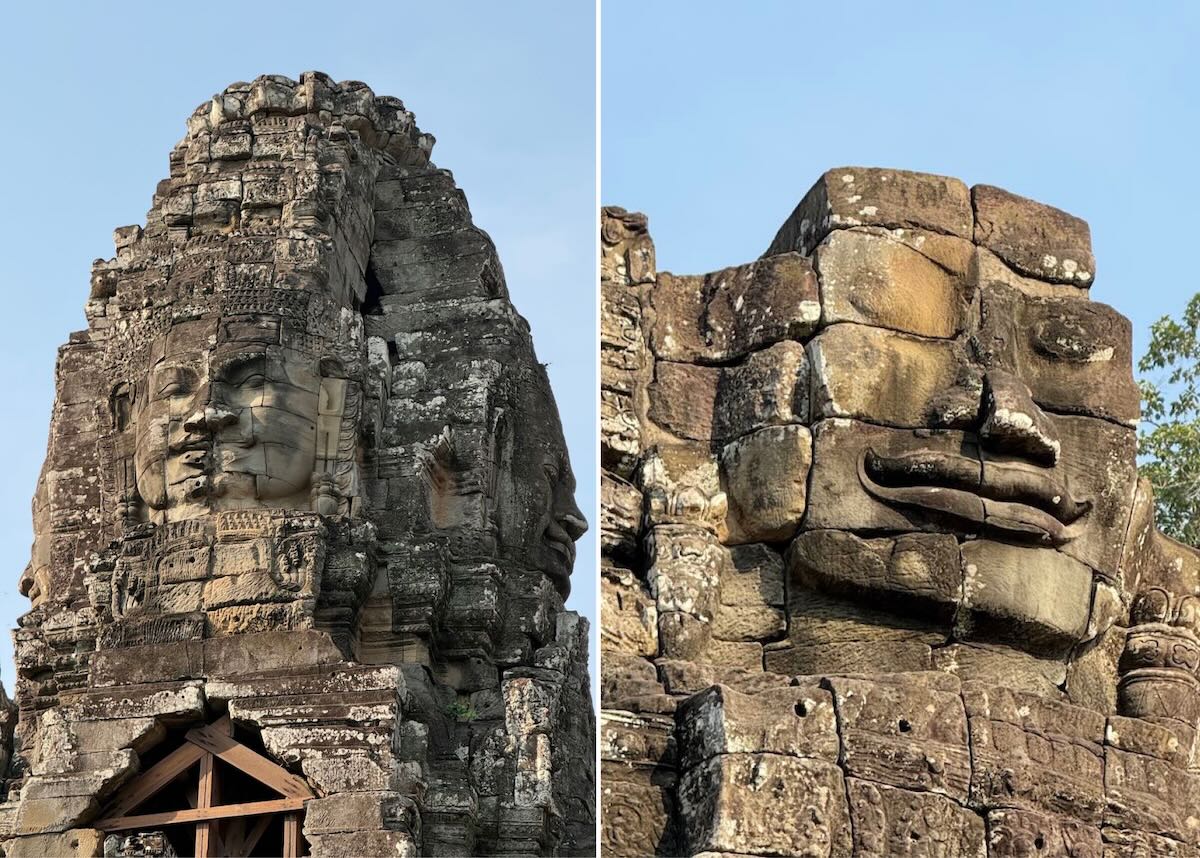
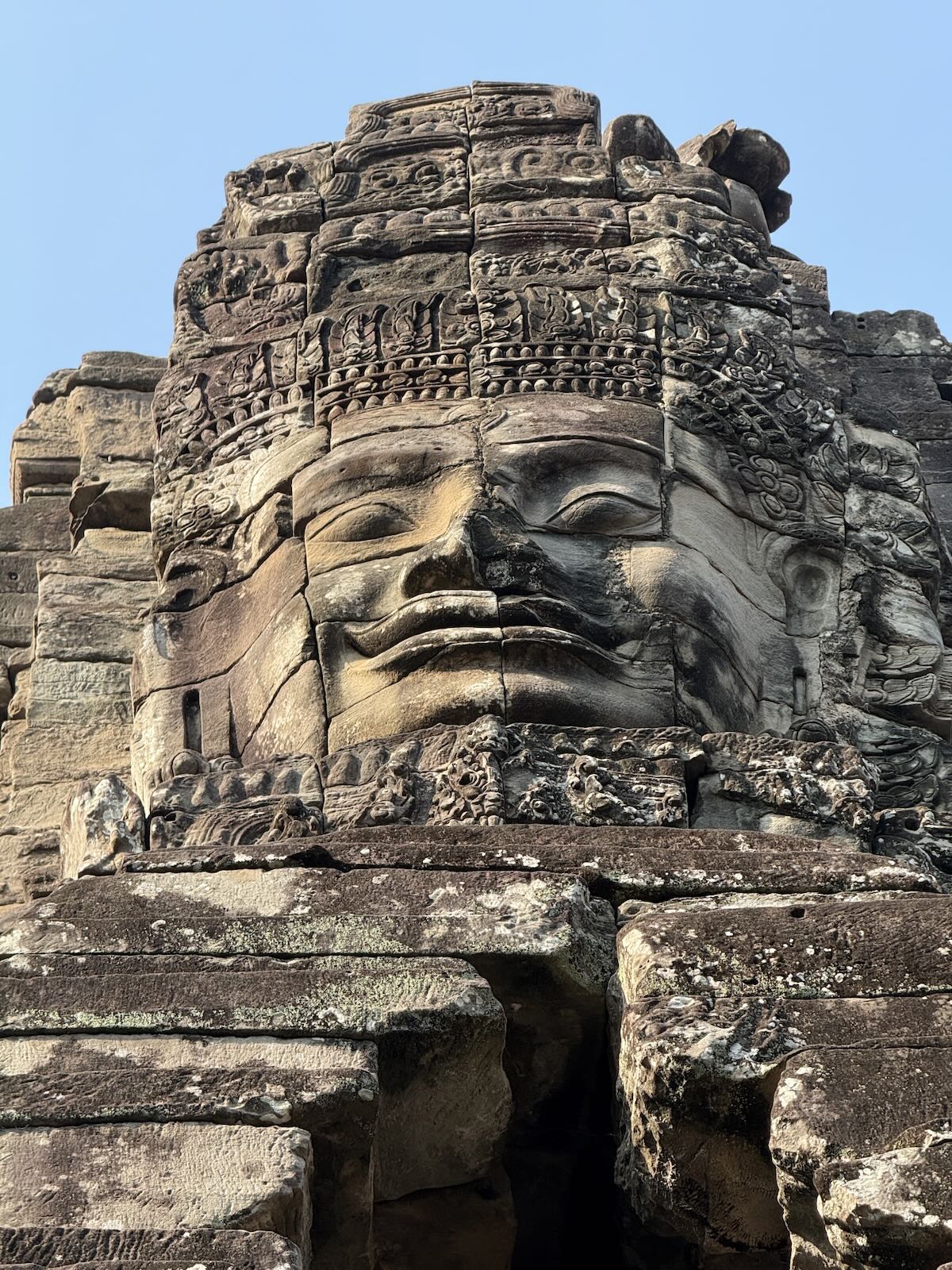
 The next stop was Bayon, a temple at Angkor Thom with jaw-dropping gates.
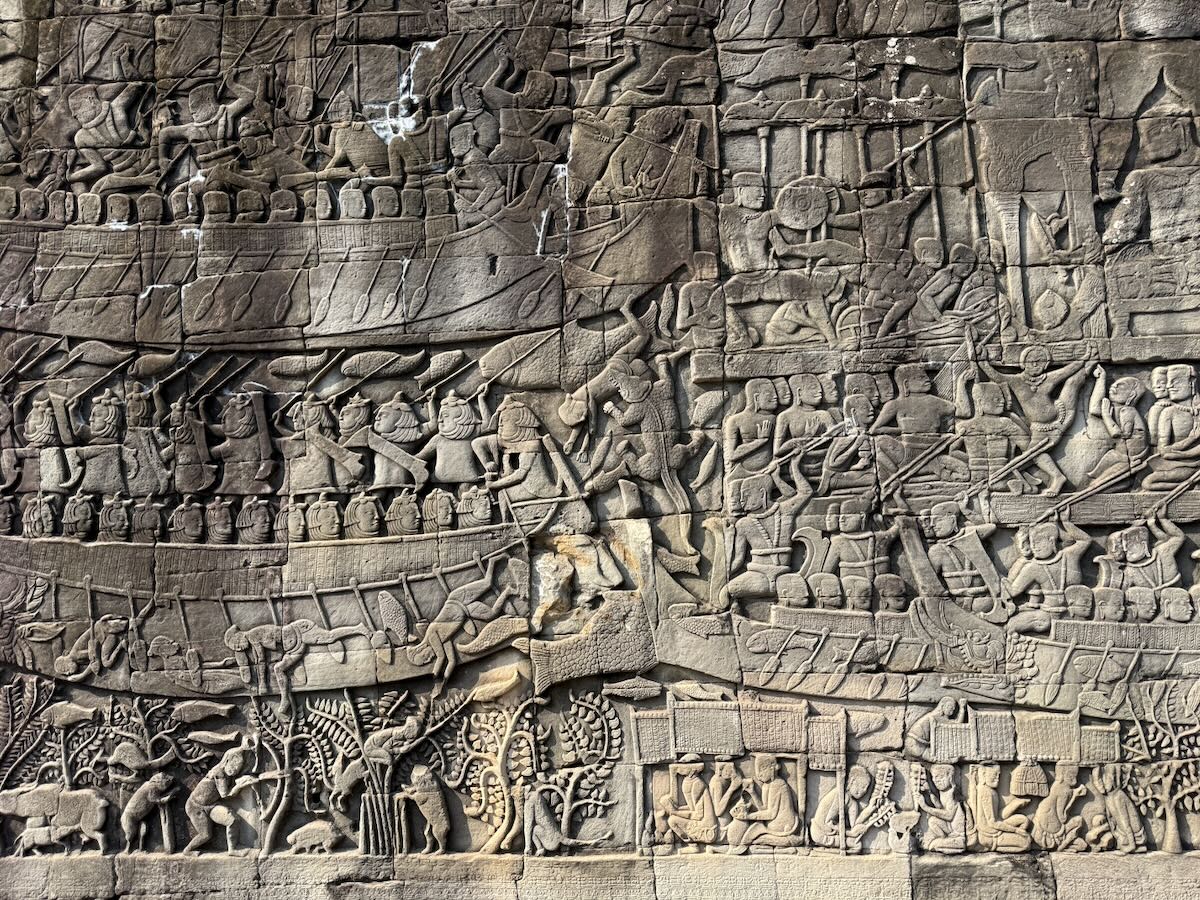
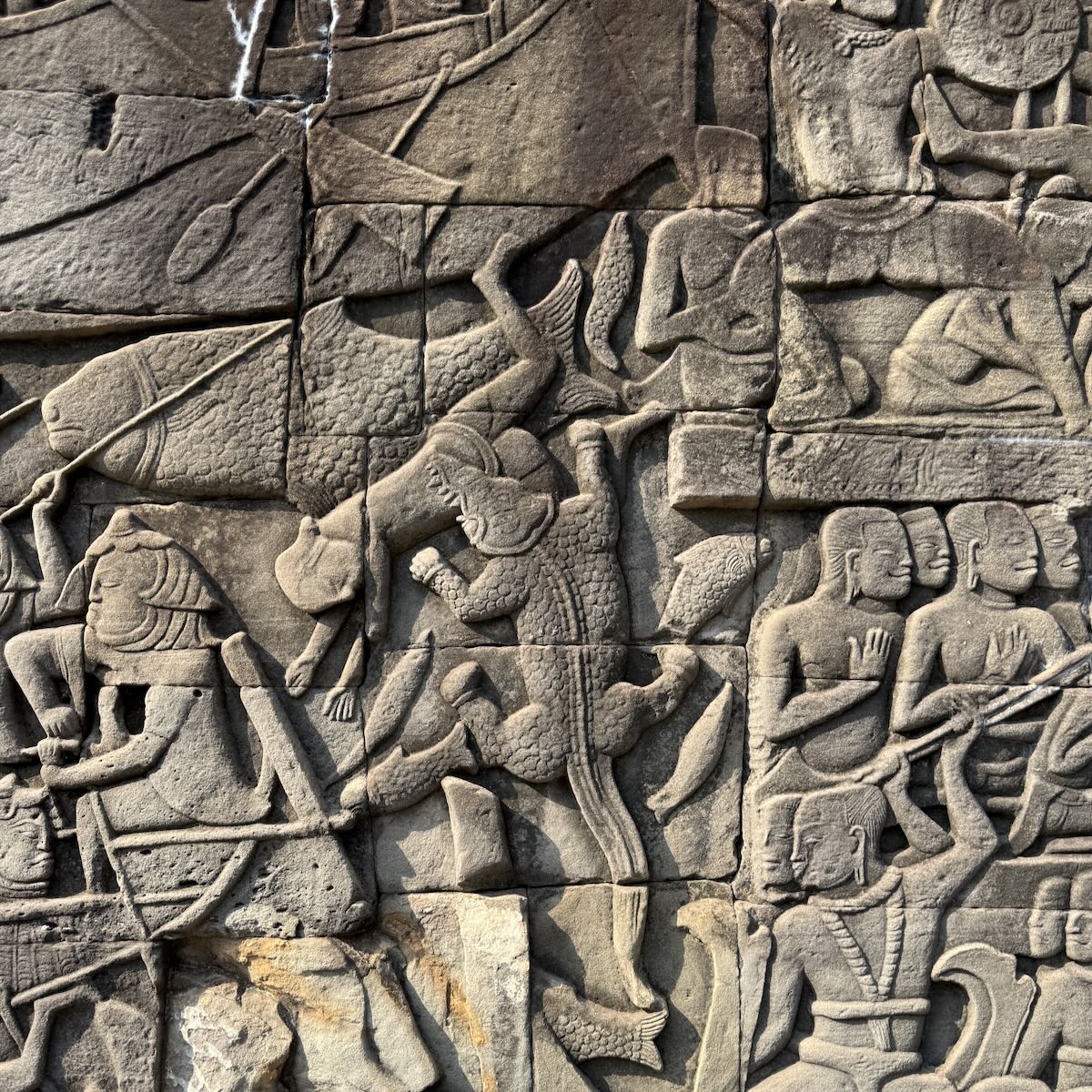
Bayon was most impressive for the face towers and the intricate narrative carving. Note the crocodile chomping on a sailor.
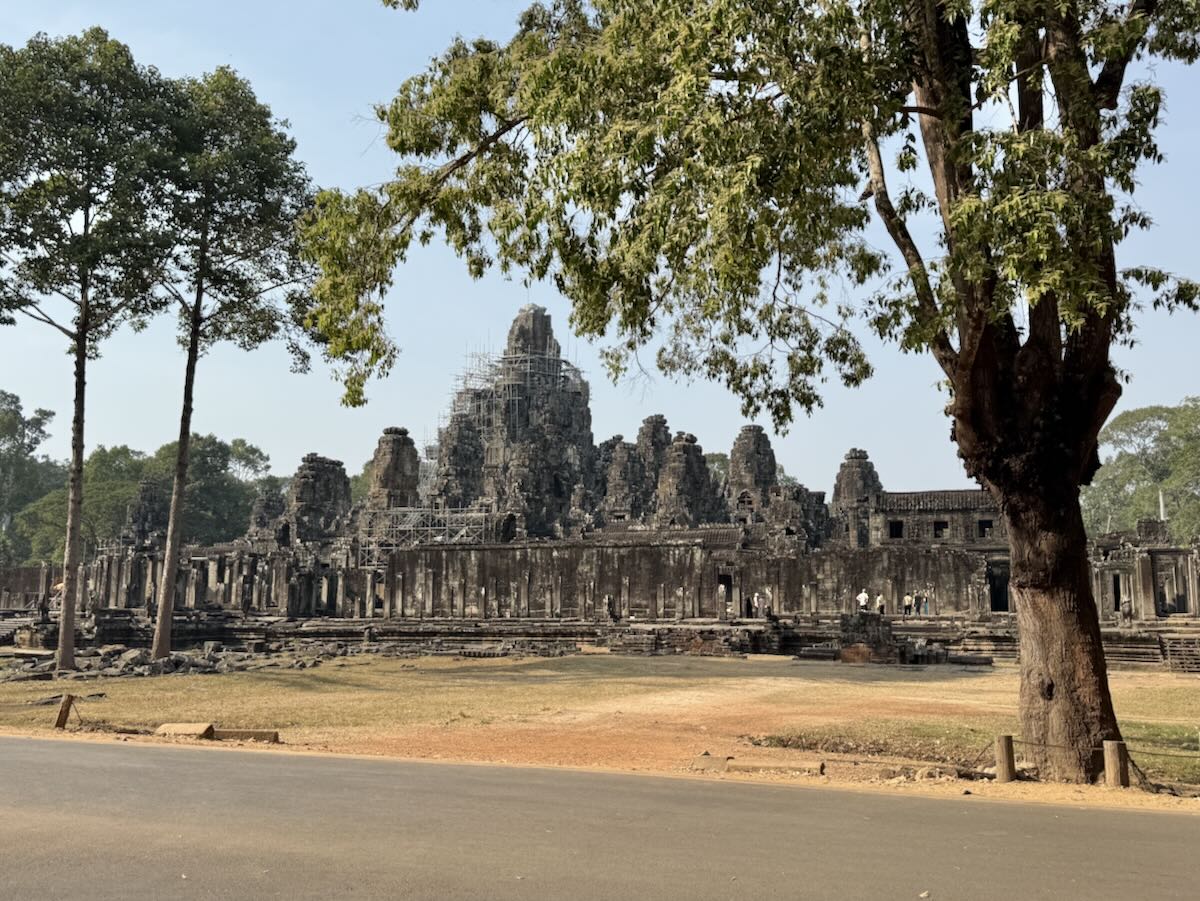
 And this is Angkor Thom, or possibly somewhere inside Angkor Thom—while the experience never stopped being magical, the details blurred. Adam and I climbed most of the way up and had an epiphany: we wished that we had had more time, ideally in the late afternoon when the light mellows, so we could’ve asked the driver to leave us somewhere like this for an hour or two, just to wander on our own.
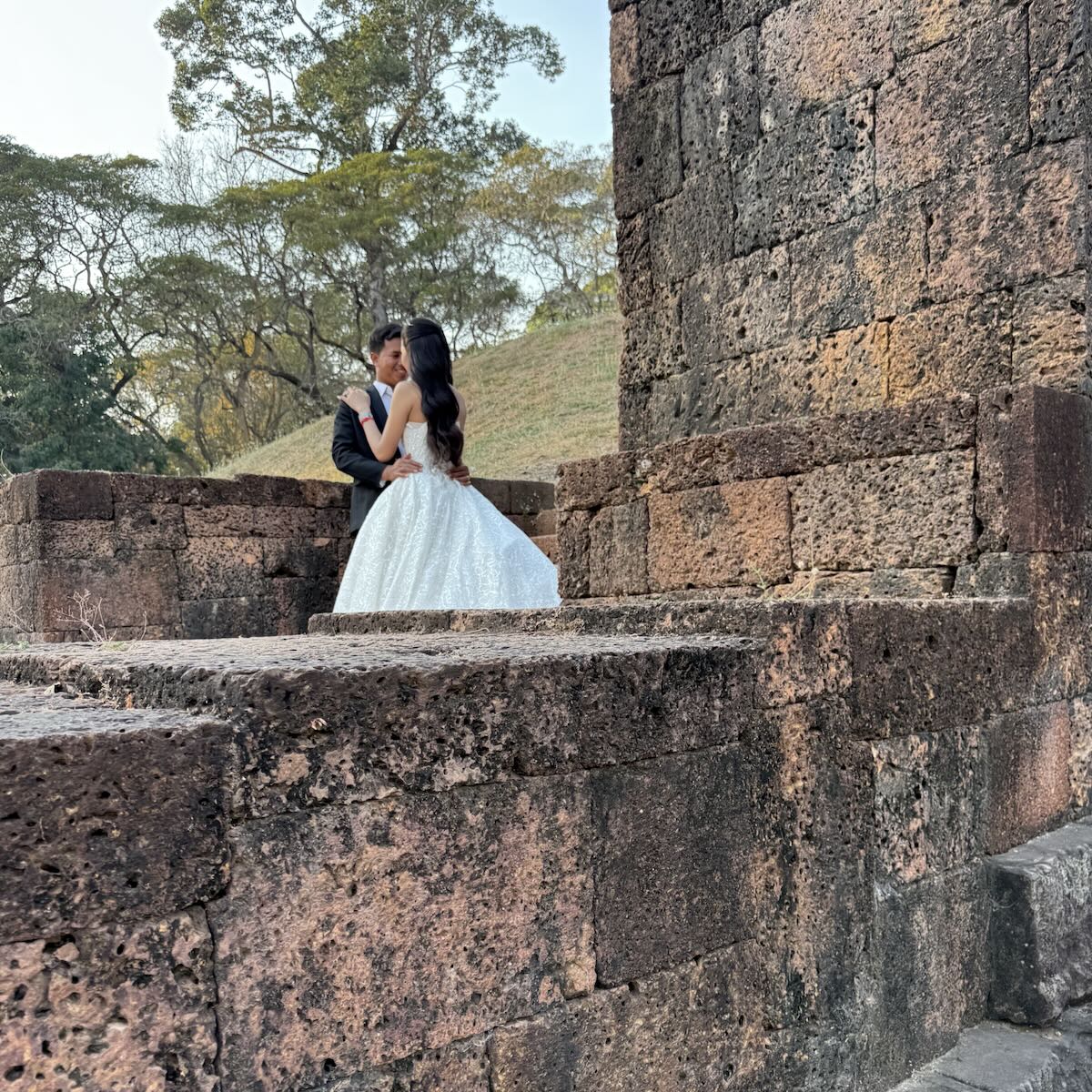
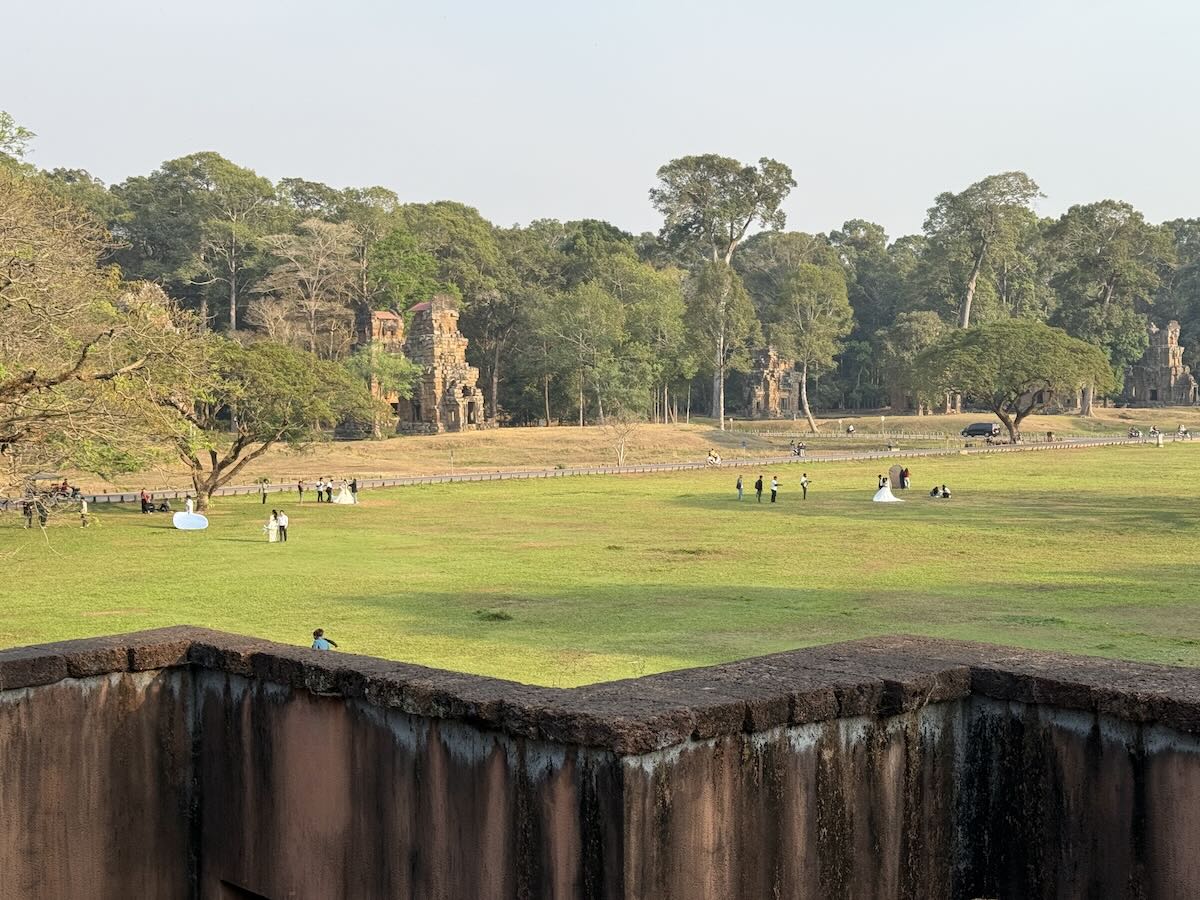
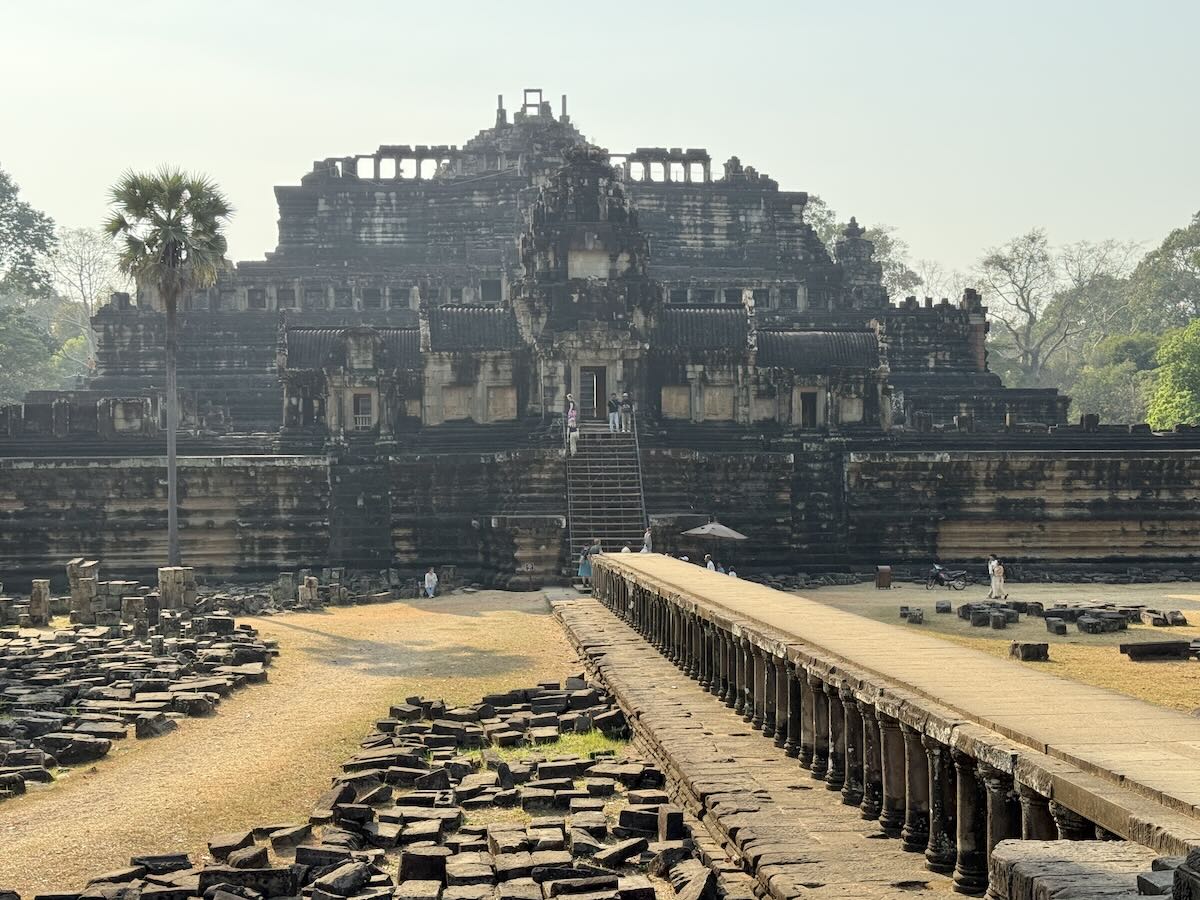 We were in the area at the beginning of the dry (i.e., wedding) season, which is why so many couples were having their photo taken. Here’s hoping no one’s party gets crashed by the world’s most annoying cicadas.
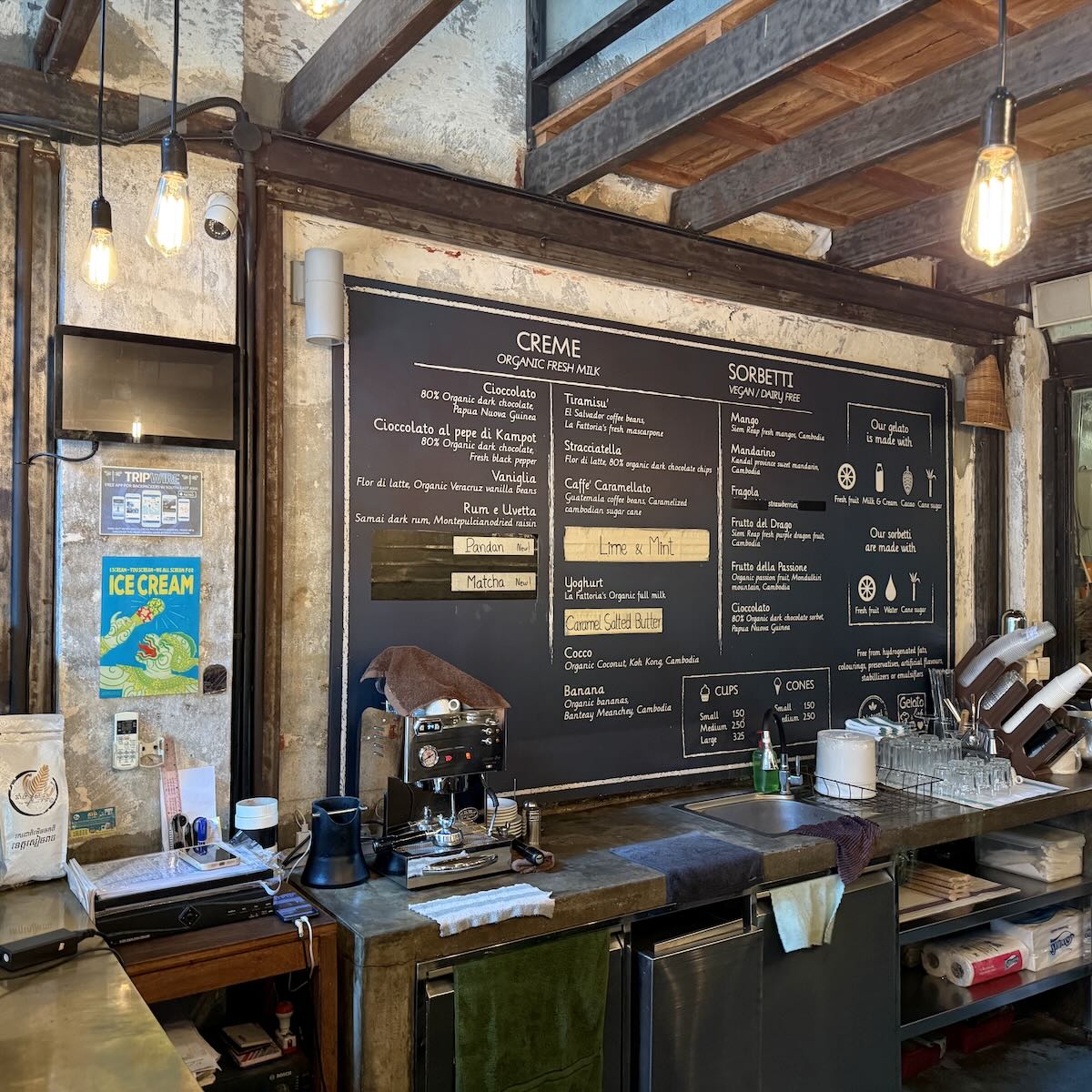
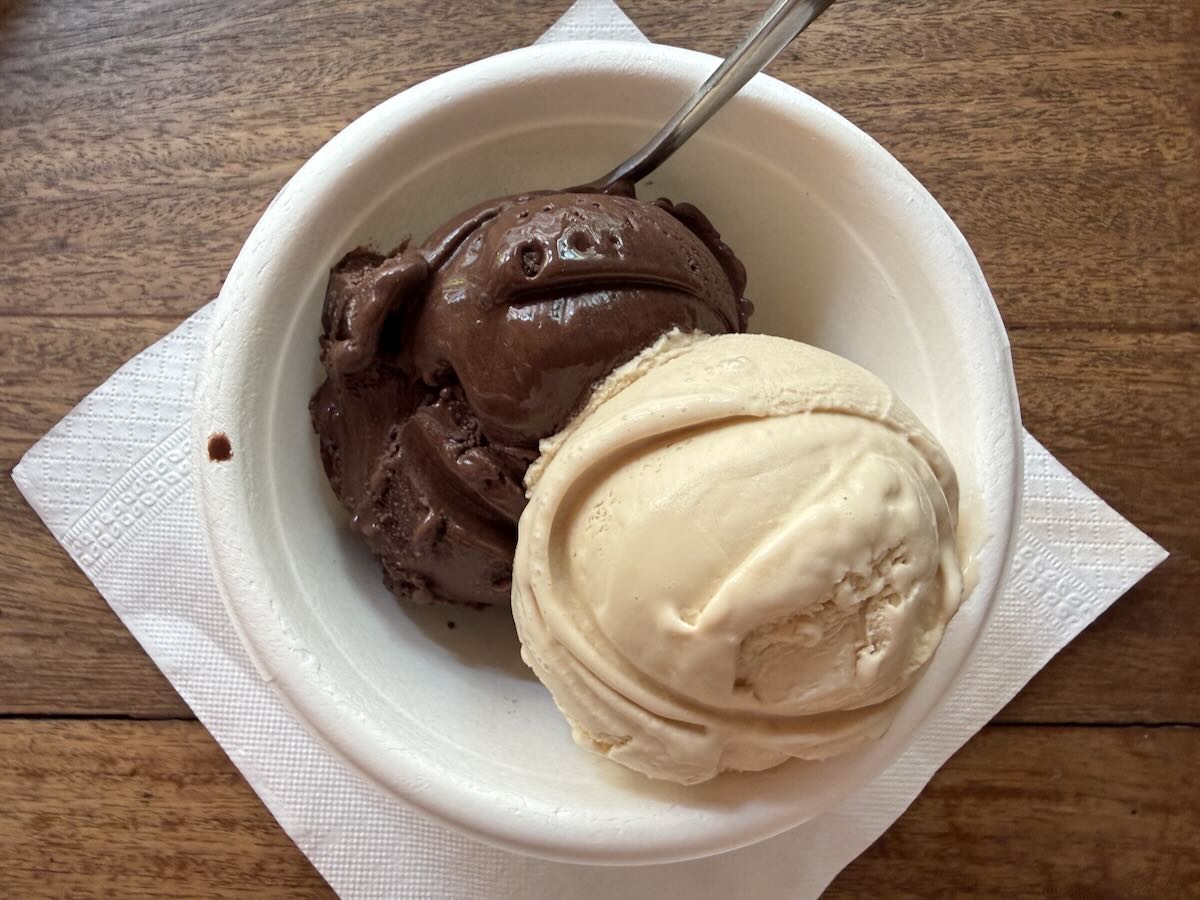
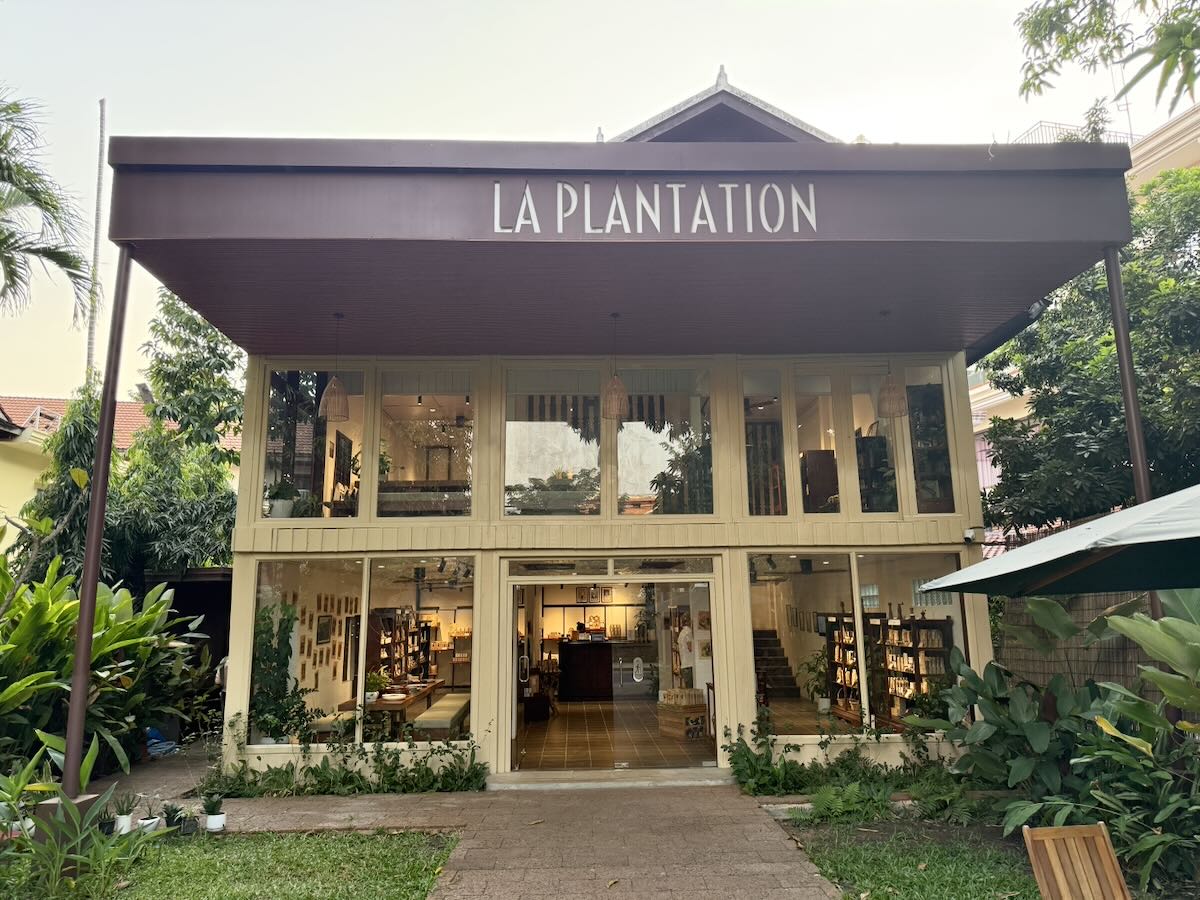
In the middle of the day, during a break from temple-touring, Adam and I went into Siem Reap for a visit to Gelato Lab. At the hotel, we had had a steak dish with a sauce made with kampot pepper, and it was delicious. So we were excited by the prospect of Gelato Lab’s chocolate gelato with kampot pepper. The combination isn’t at all weird. It was so good that we later asked to be taken to the La Plantation shop, where we loaded up on different varieties of kampot pepper to bring home.
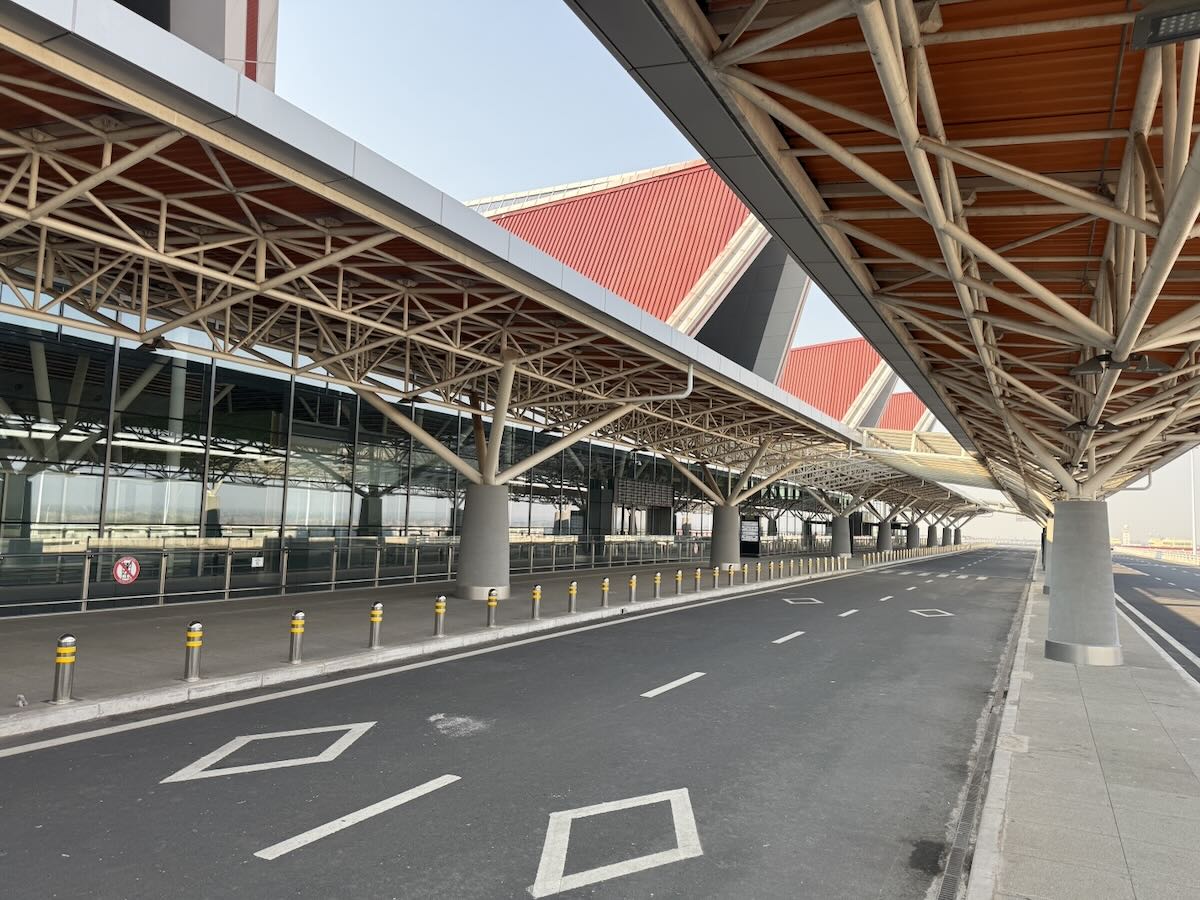
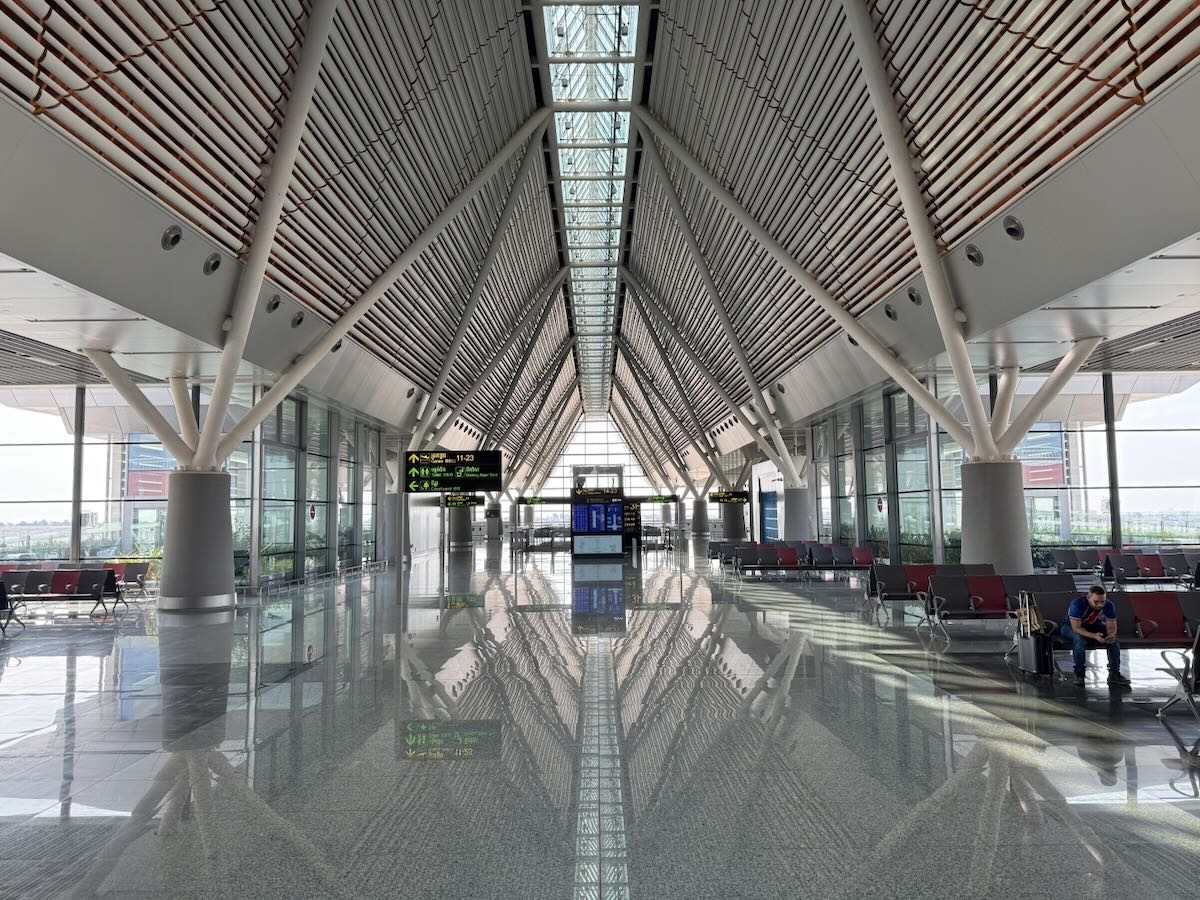
 Alas, that’s all we saw of Siem Reap, besides the extravagant new airport. It was empty both times we were there, but judging from the size, the city is expecting that to change. Go soon.
 ·············
Previous travel coverage:
••• From Vietnam With… Ambivalence
••• Singapore: The City That Never Spits
••• Las Vegas: The Original Sim City
••• That’s Life in Death Valley
••• The Glorious Isolation of Santa Barbara Island
••• Hiking From Hotel to Hotel in the Dolomites
••• A Ramble Through the English Countryside
••• Notes from Up North: Healdsburg, Mendocino, and San Francisco
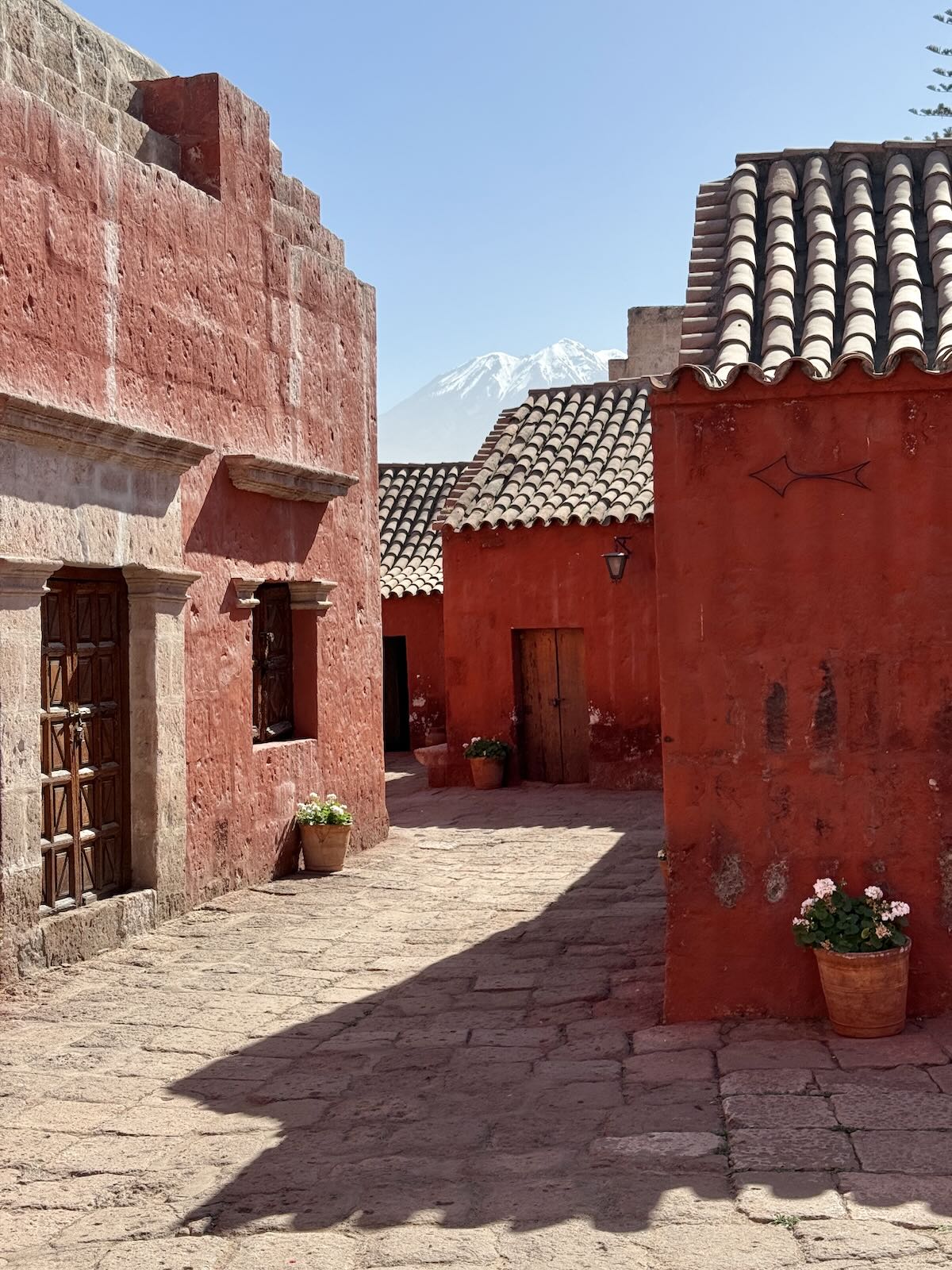
↓↓↓ There’s More to Peru Than Machu Picchu
••• On a Backroads Tour of New Zealand’s South Island
••• Navigating the North Island of New Zealand
••• Don’t Be So Quick to Write Off Phoenix
••• The Most Magical City in the World
••• One and Done in Sedona
••• A Proper Visit to Santa Monica
••• A Quickie in San Francisco
••• Dipping a Toe Into Southern Corsica
••• The Exquisite Luxury of Taking Paris for Granted
••• Santa Rosa Island in One Day
••• Soaking Up History at Castle Hot Springs
••• Driving Through the Heart of Hokkaido
••• Tokyo Is a World Unto Itself
••• Paso Robles, Pinnacles National Park, and Beyond
••• A Review of the Inn at Mattei’s Tavern
••• Another Quickie in L.A.
••• Sitting Pretty at the One & Only Mandarina
••• The Mysteries of Istanbul
••• Palm Springs: Midweek at the Oasis
••• Exploring the Sea Caves of Santa Cruz Island
••• A Summer Swing Through the Northeast
••• Why Is Everyone Going to Portugal?
••• Patagonia Made Easy
••• A Quickie in L.A.
••• From Penthouse to Pavement in Mexico City
••• Do Greek Islands Live Up to the Fantasy?
••• Splendid Isolation at Utah’s Lodge at Blue Sky
••• Three Reasons to Visit Paso Robles Now
 ················
Sign up for the Siteline email newsletter and you’ll never miss a post.










Perfect summary of Angkor. You captured it well. My first visit was over 30 years ago before the disney-esque entrance. On the back of a motorbike with a gun-toting guide and frequent landmine areas. Sad to see it become an insta-destination.