

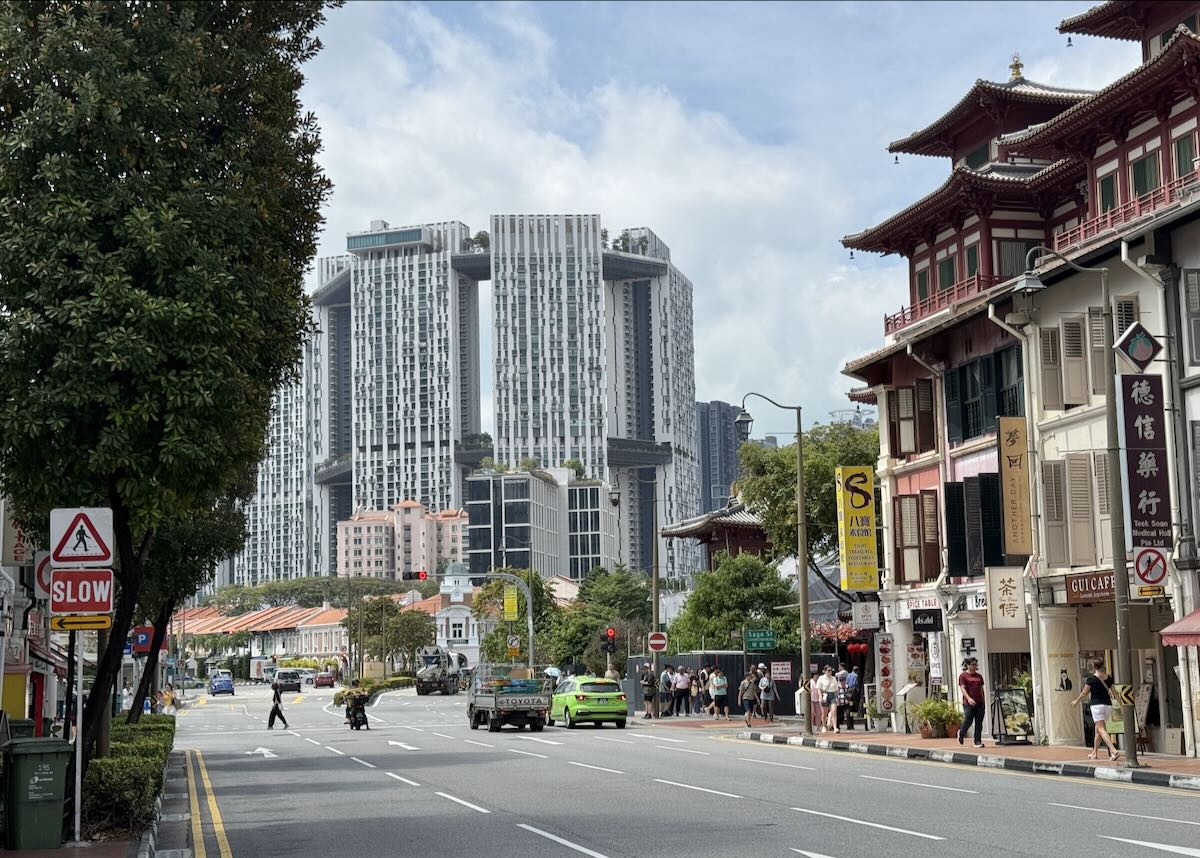
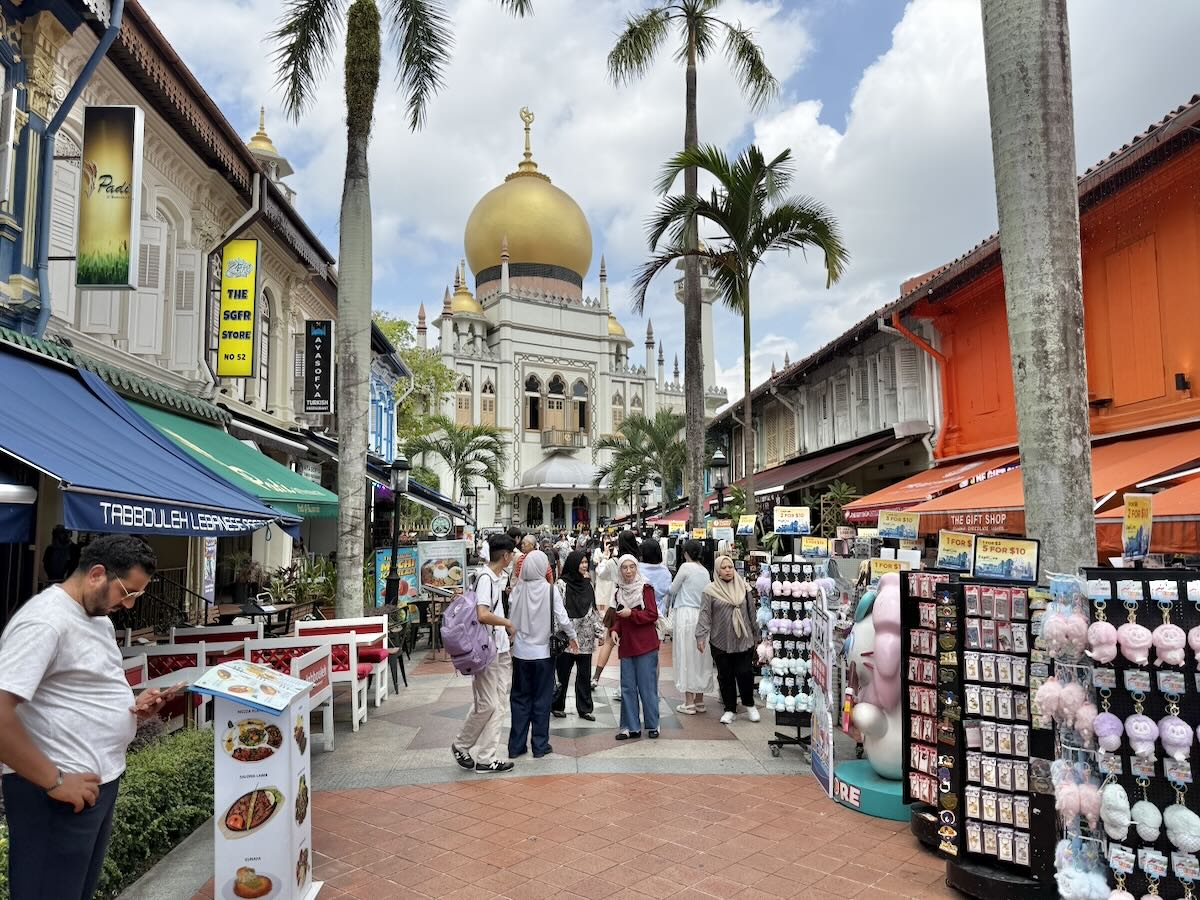
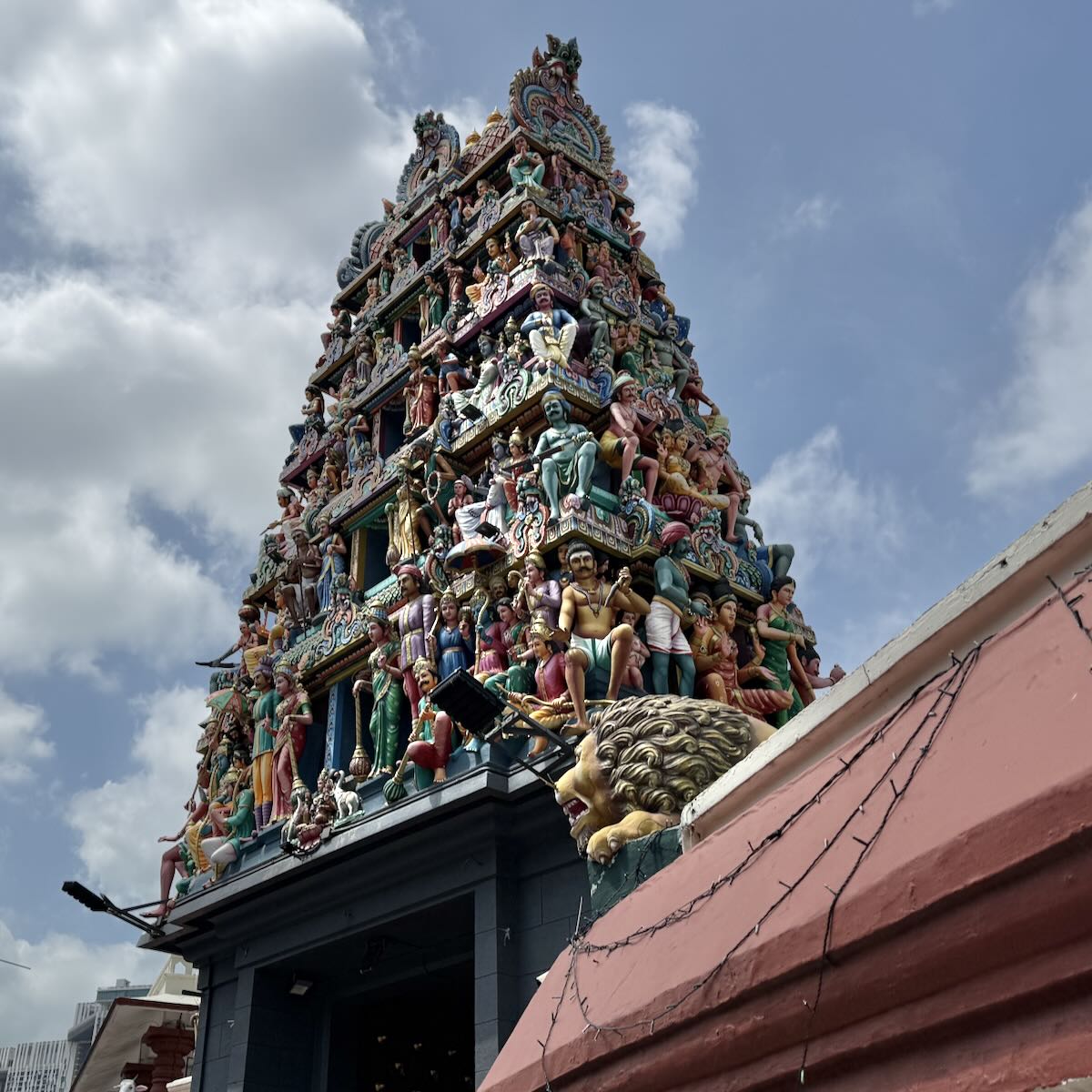
I’m particularly drawn to destinations that feel like nowhere else: Iceland, Venice, and Japan, for example, or even Las Vegas. Singapore belongs on that list. The island city-state off the southern tip of Malaysia is a mix of cultures—primarily Chinese, but also Malay and Indian, all with a Western overlay (everyone speaks English) from its time as a British colony. Walking around, you can be in a modern business district one moment, then Chinatown, then in the shadow of a gorgeous mosque or Hindu temple.
 That the groups coexist peacefully is due in no small part to the government’s firm hand. When I was in college, freshmen had to take a semester-long writing class, not a bad idea on the face of it. The topic, however, was determined by each instructor, and I had the misfortune of being assigned to a PhD student studying ethics in the national politics of Singapore. (The worst way to get people excited about writing? Force them to do it about something they have zero interest in.) It was awful; I had to grind out a half dozen research papers about the country’s organ-donation policy, its efforts to encourage singles to mate, and so on. I don’t remember any of the details, other than when that American teenager got sentenced to being lashed with a cane for stealing road signs, I was not remotely surprised.
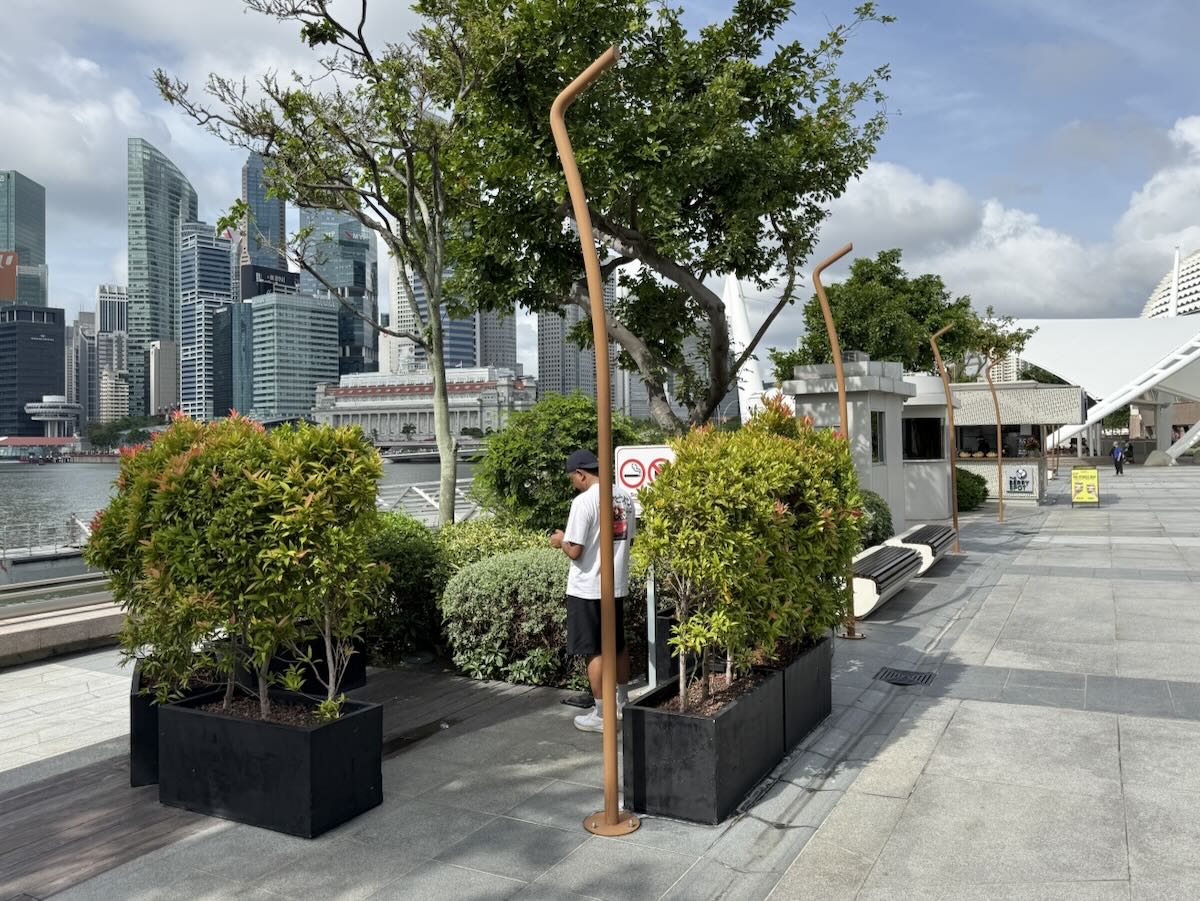
Singapore is the quintessential nanny state, and the micromanagement of citizens’ affairs is visible everywhere.
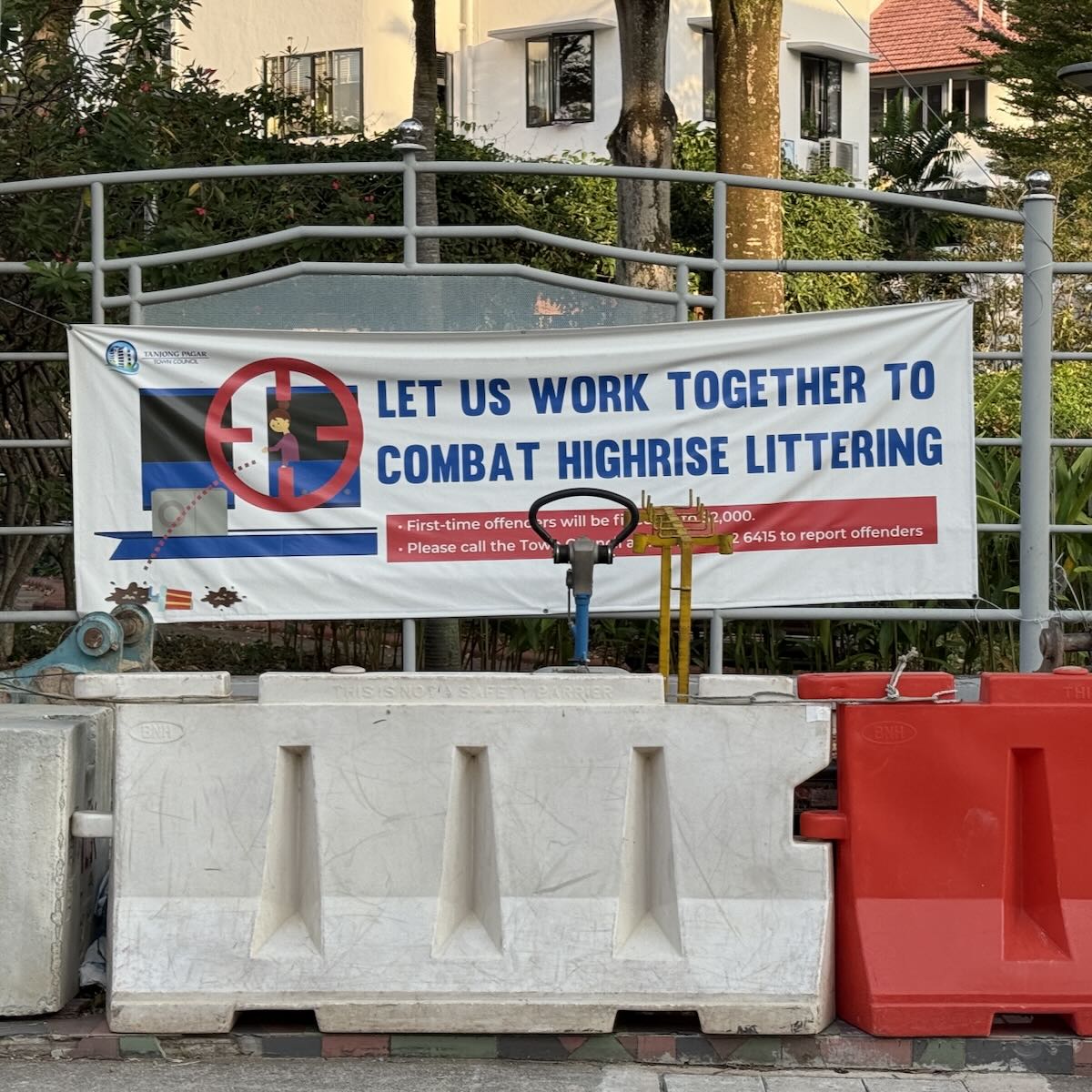
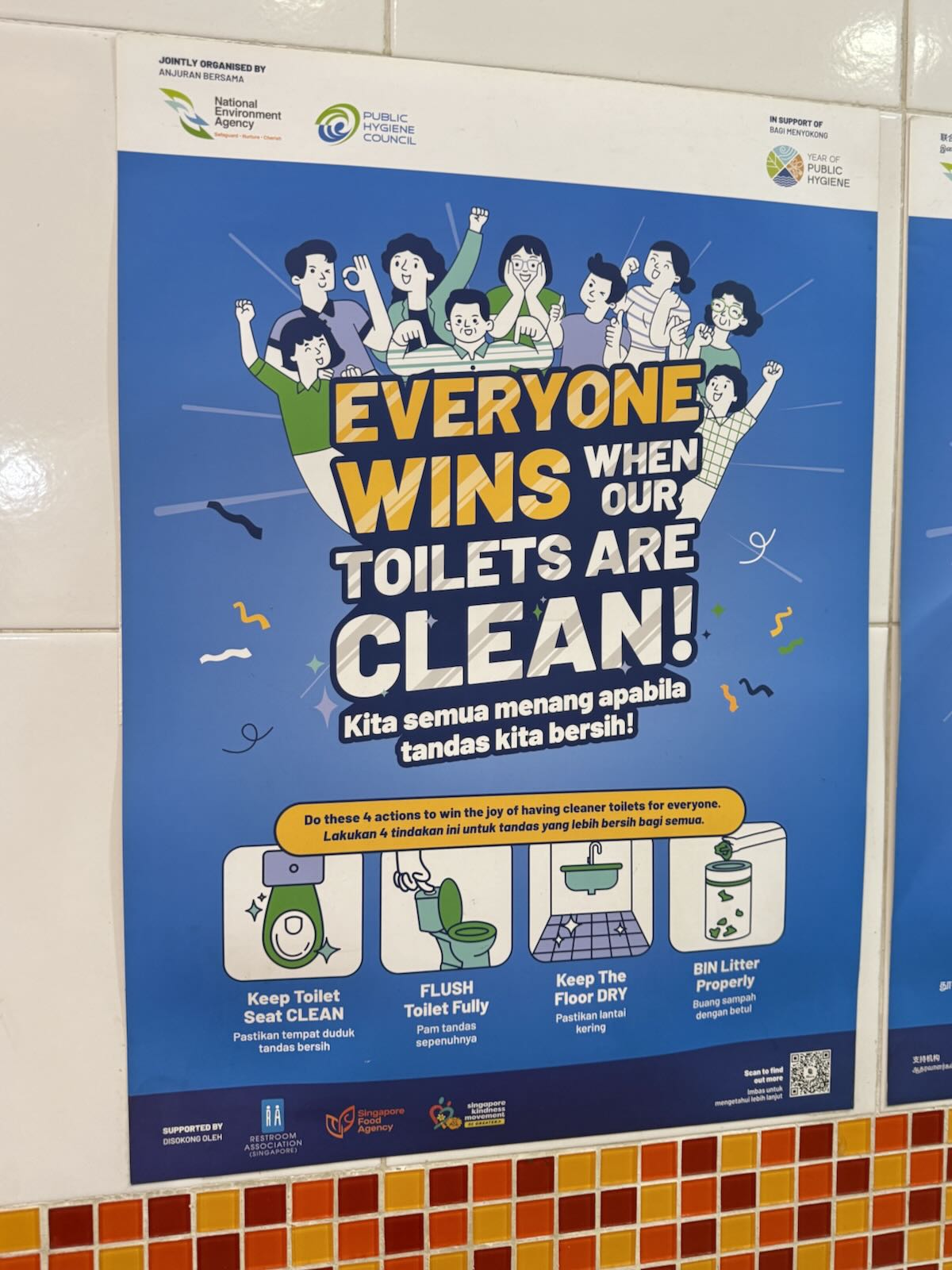
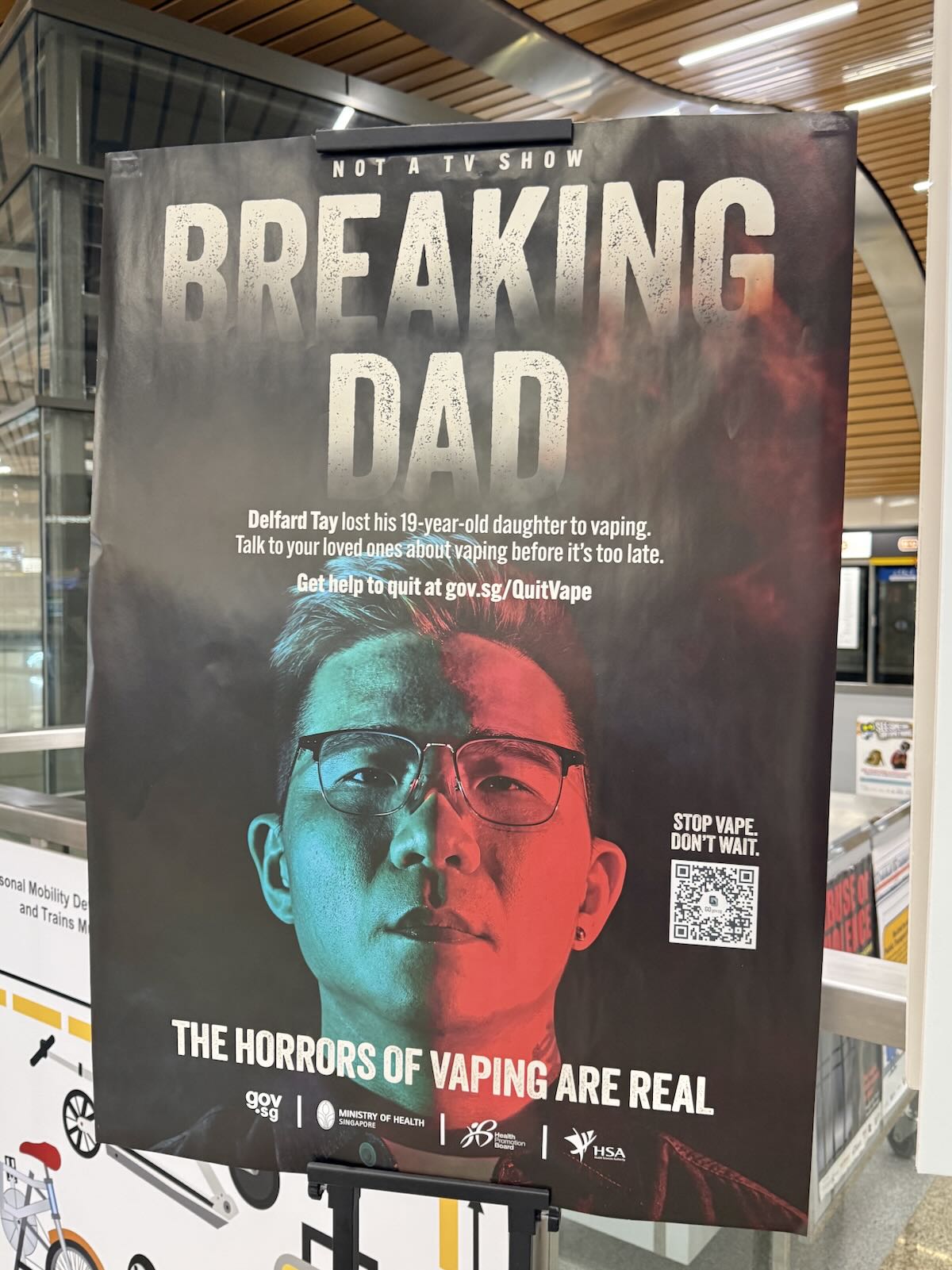
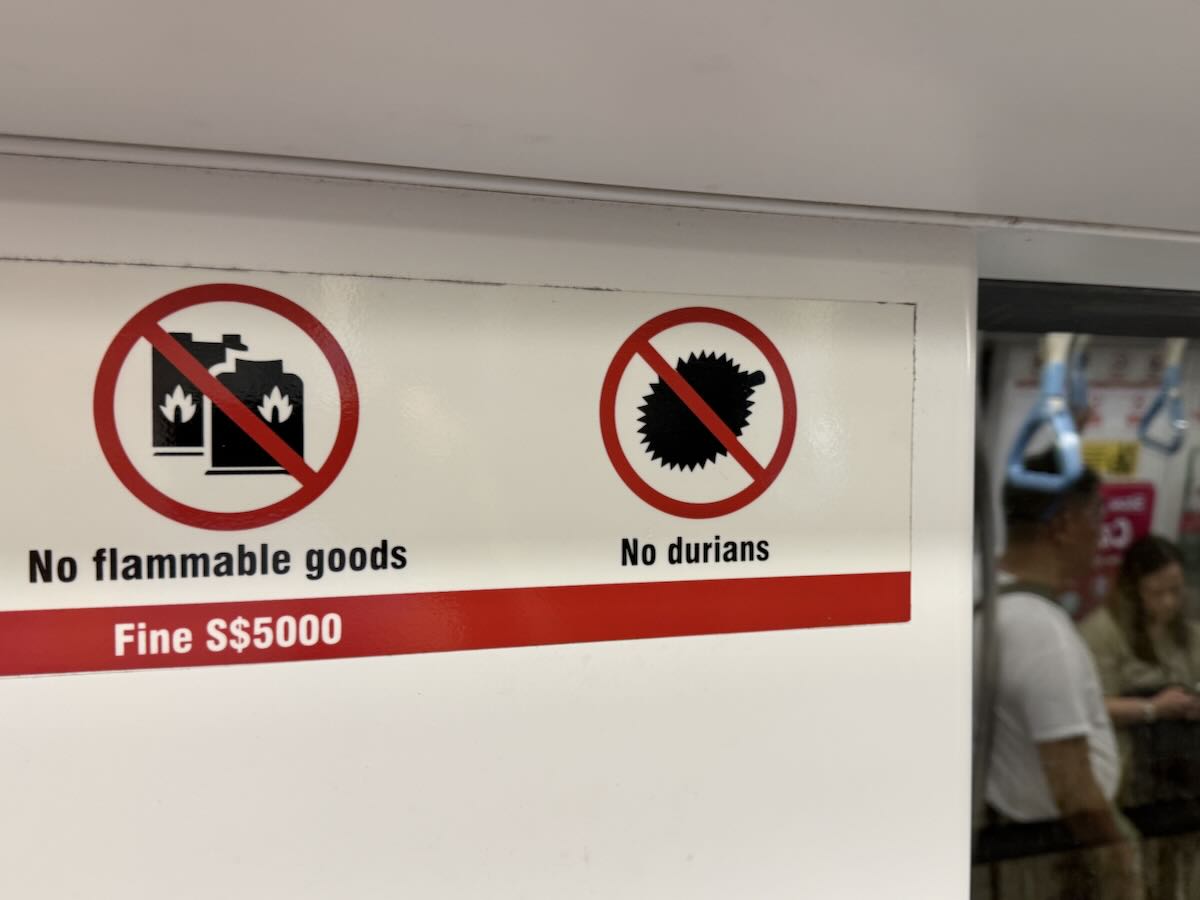
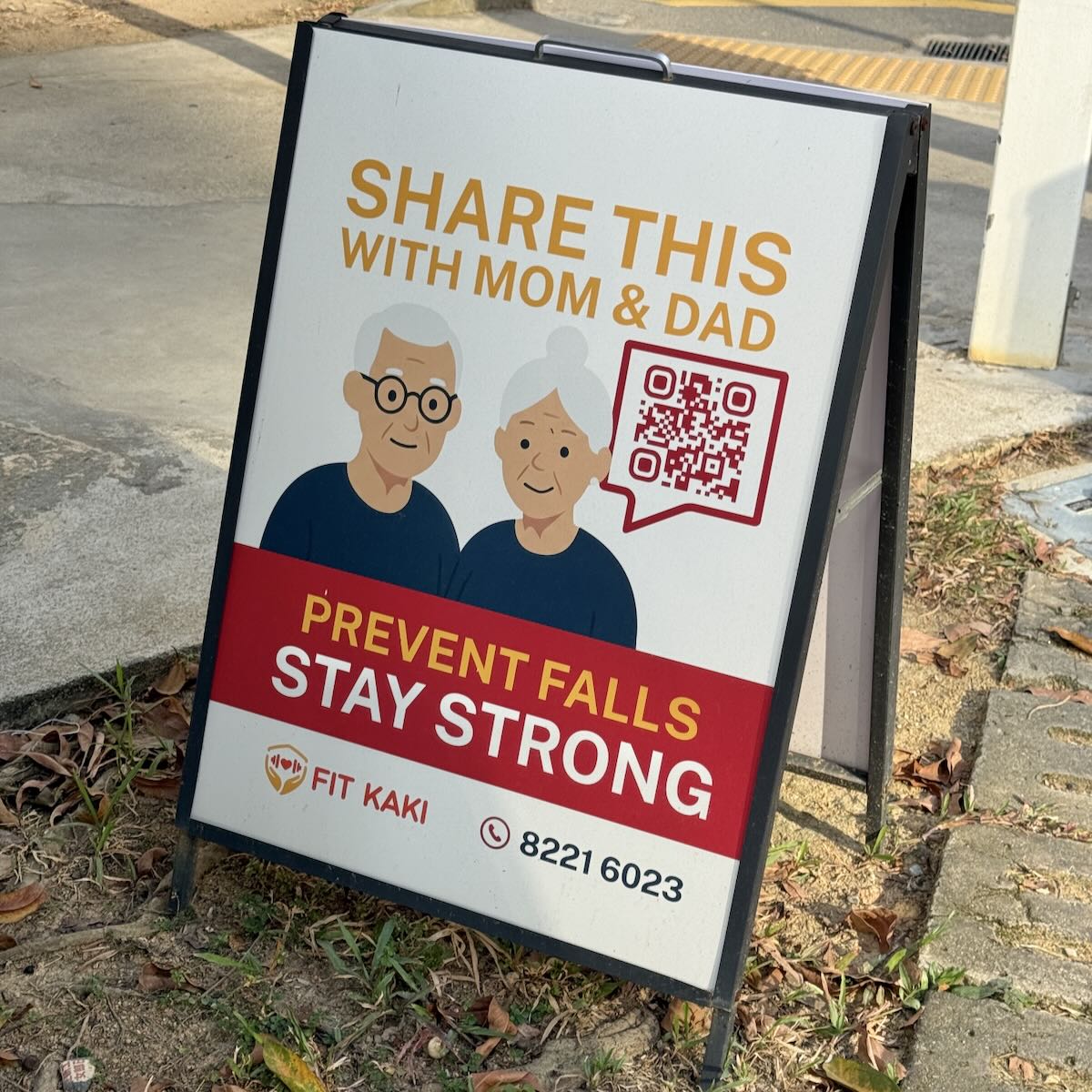 My parents were not amused by that last one. While the warnings tend to be cutesy little nudges, they can turn ominous. Vaping, like so many things—spitting, littering, importing chewing gum, failing to flush a public toilet, feeding pigeons—is illegal in Singapore. Smoking cigarettes is allowed in designated areas only.
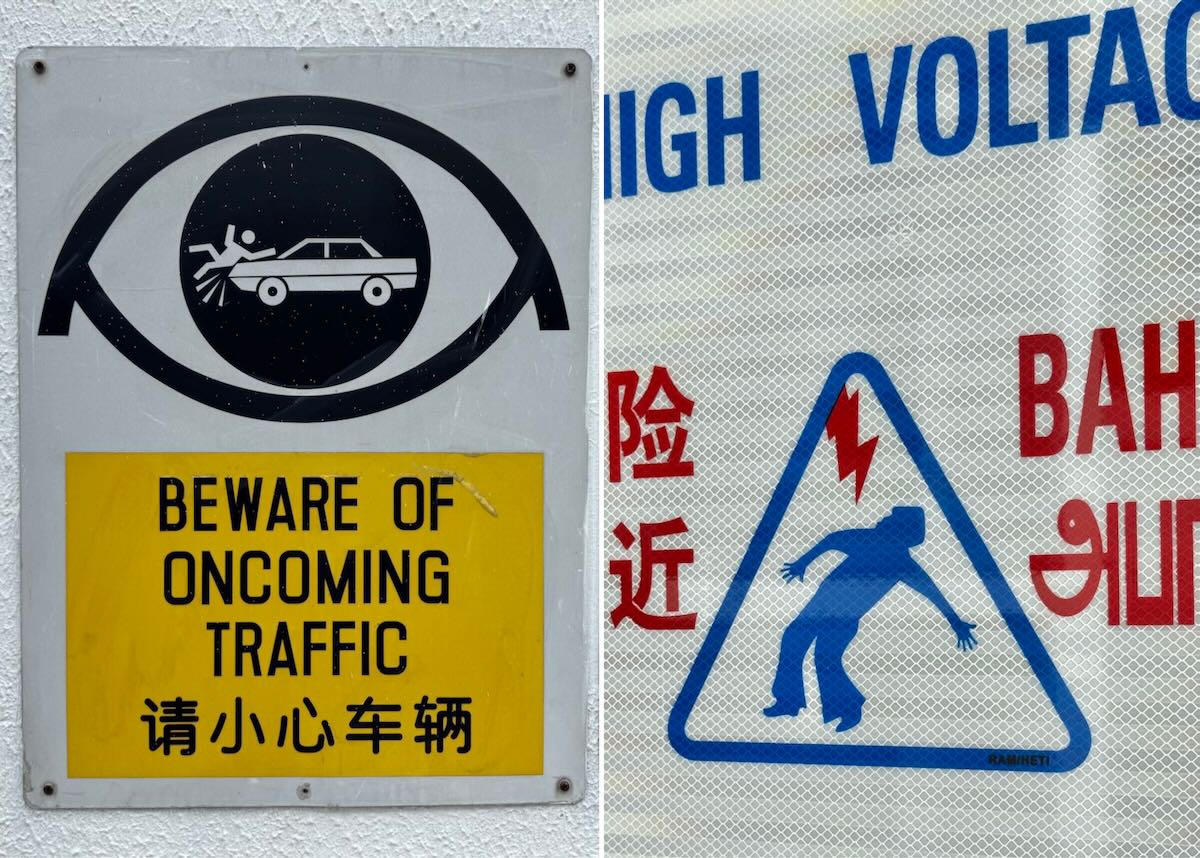
 As you might expect, there are new variations on the stick figure—let’s call him Mr. Bill—who’s frequently in harm’s way. The second one looks like a 1970s version of Frankenstein’s monster.
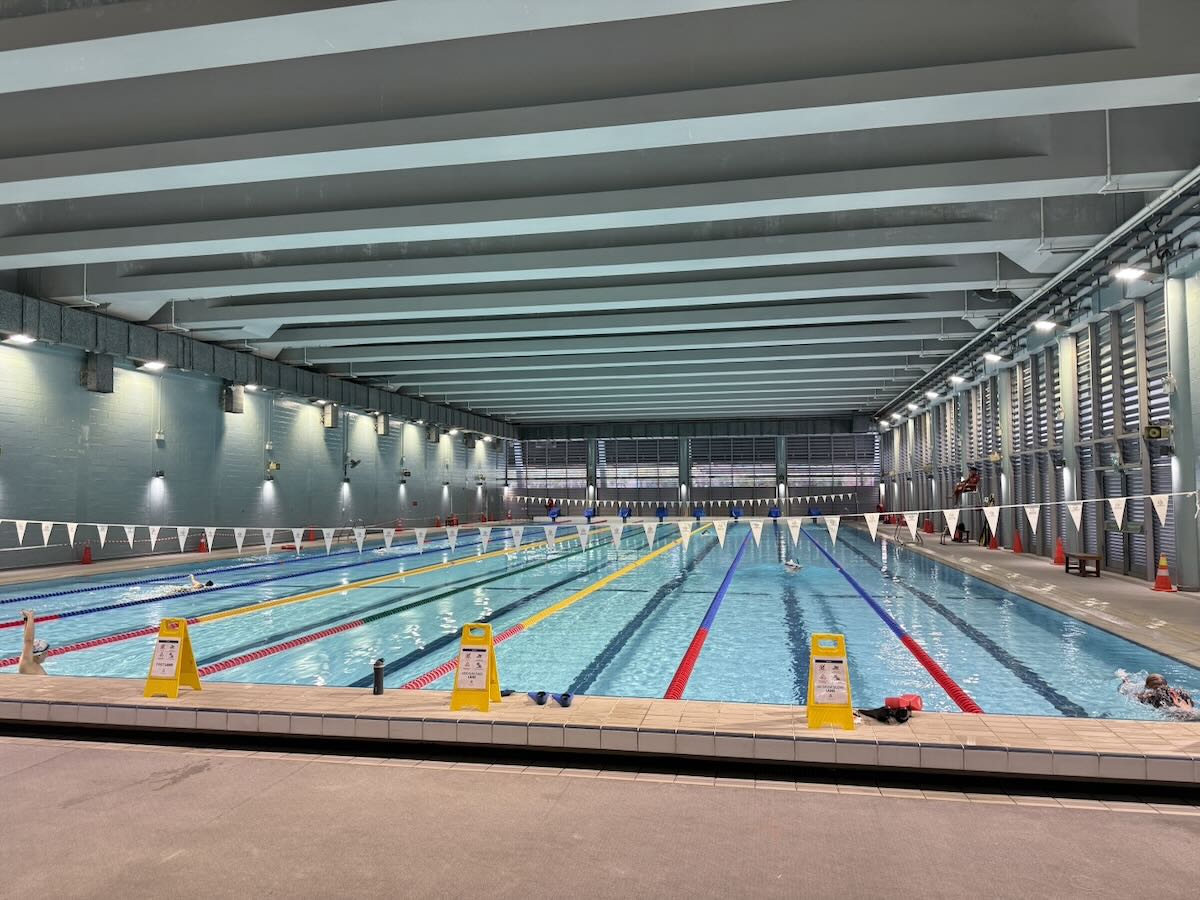
 My husband, Adam, and I traveled from San Francisco, a 17-and-a-half-hour flight, and yet the jet lag going was nonexistent. (Coming home was rough.) I credit that to the restorative swim upon arrival at the OCBC Aquatic Centre, which has a pair of 50-meter indoor pools. (The one shown below is the lesser of the two.) After so much inactivity and canned air, the swim felt amazing. Entry cost all of $2.50.
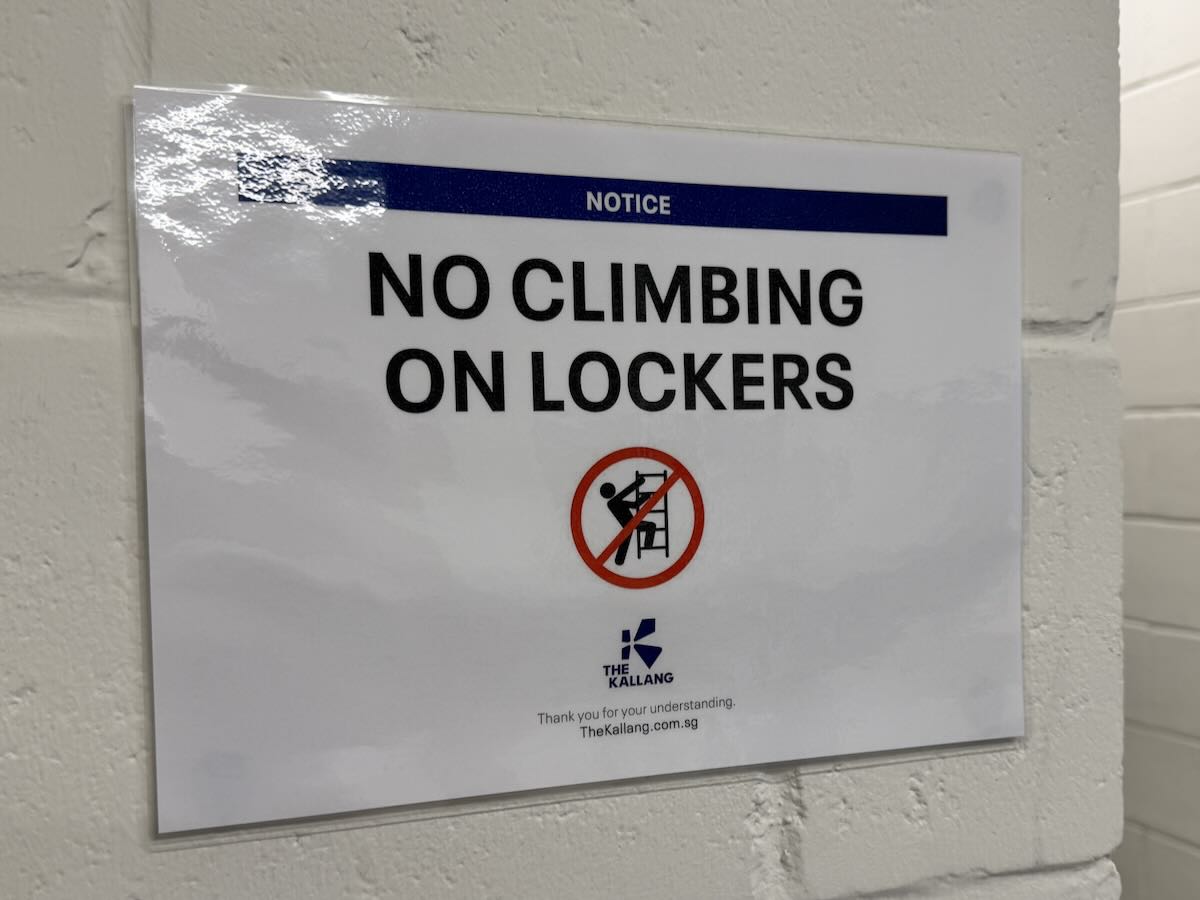
 I don’t know whether this says more about the clients or the management.
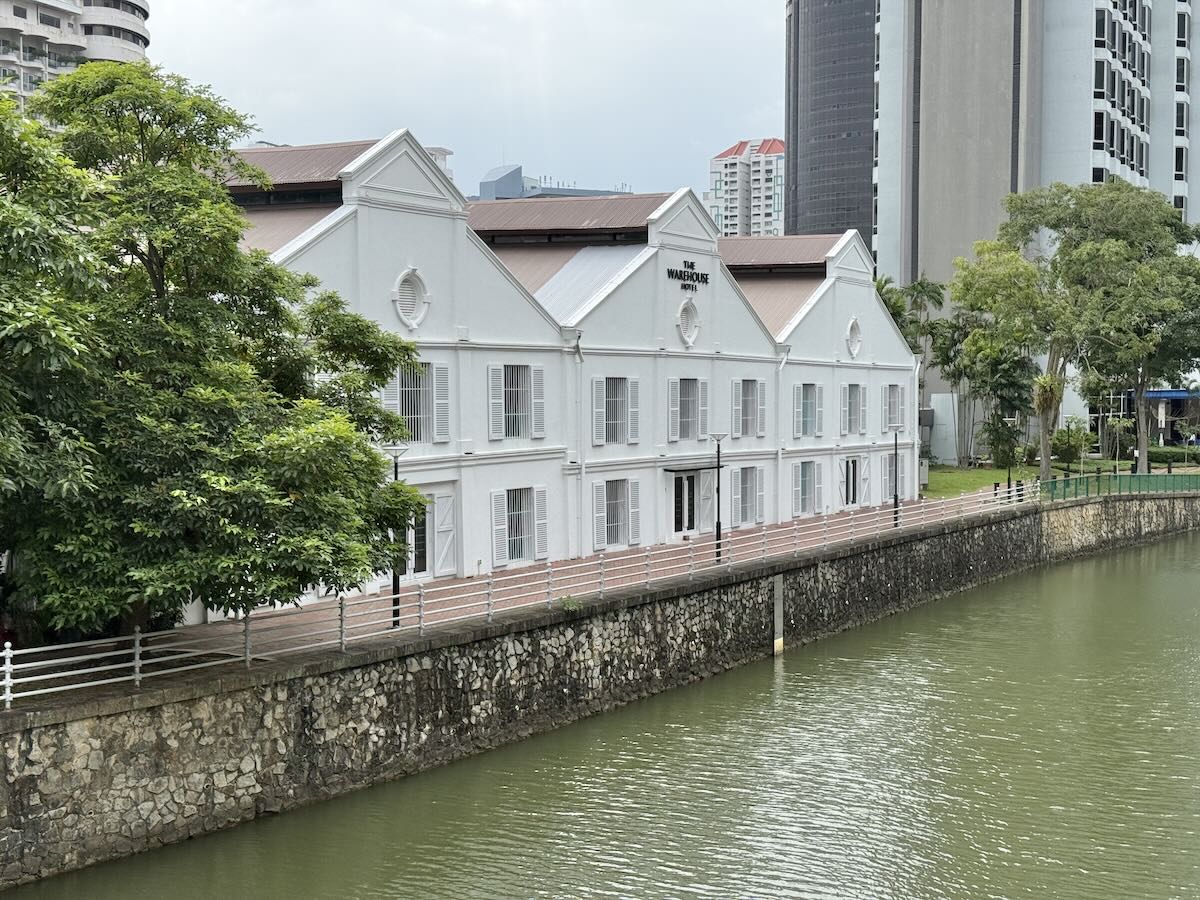
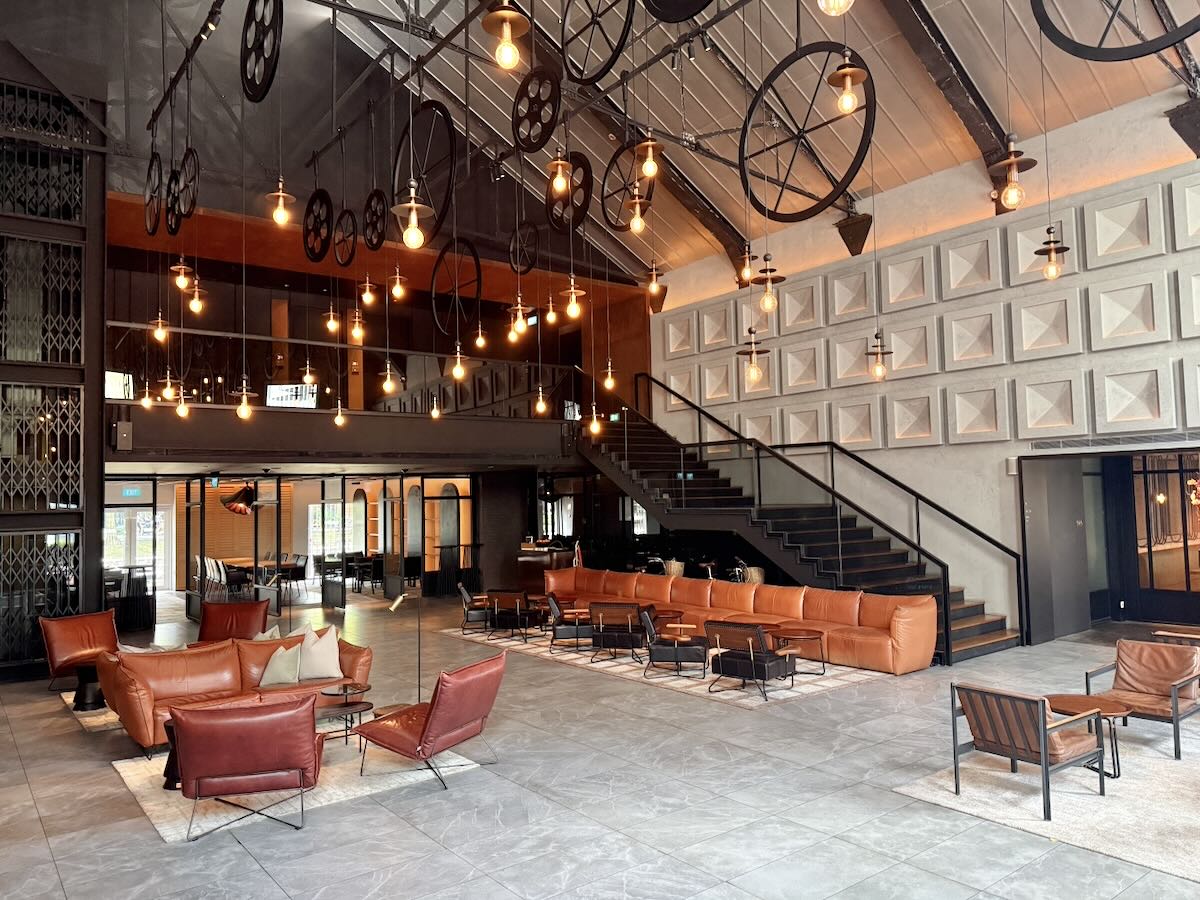
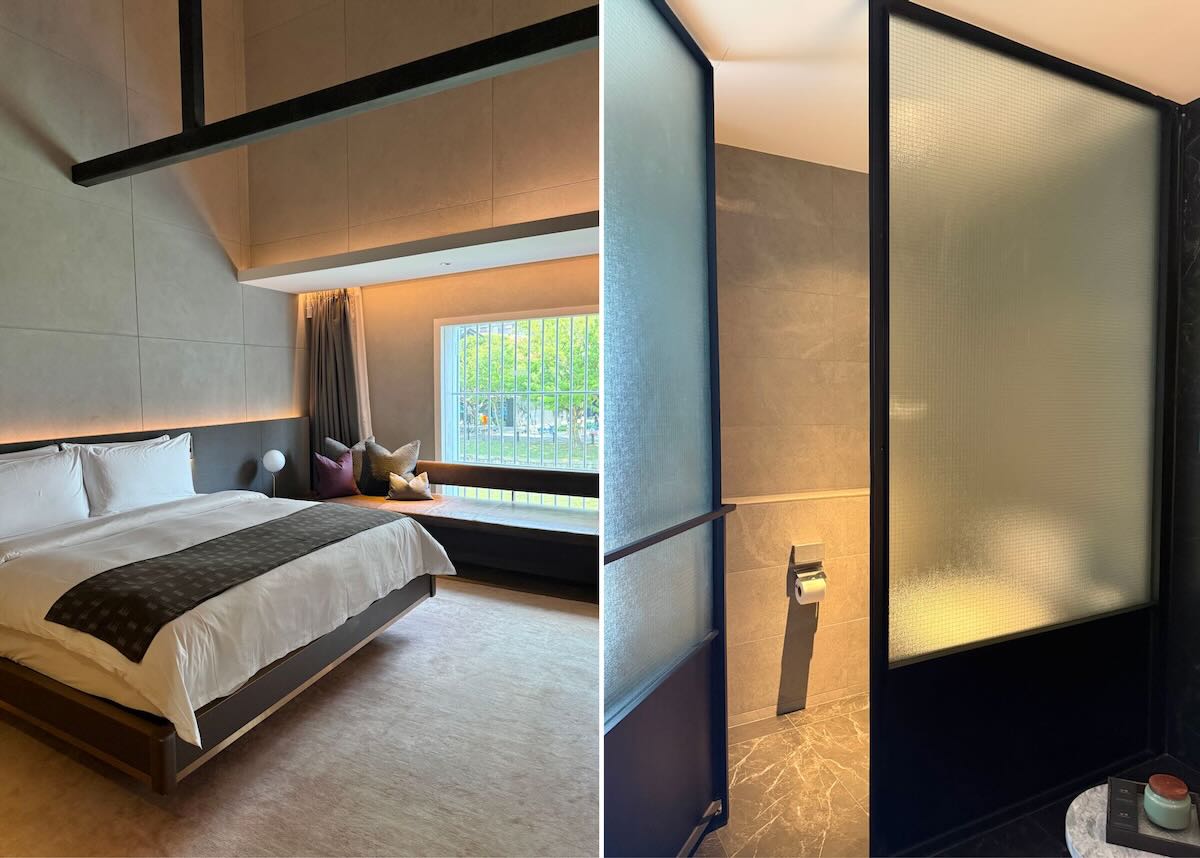
 We spent time in Singapore at both ends of our trip to Southeast Asia. On the initial visit, we stayed at The Warehouse Hotel, converted from an 1895 “godown,” or warehouse, on the Singapore River. Our room was one of the second-floor suites, large and lovely; other rooms are much smaller and may not have windows. I have no complaints, just one question (what were you thinking?!) about the translucent WC.
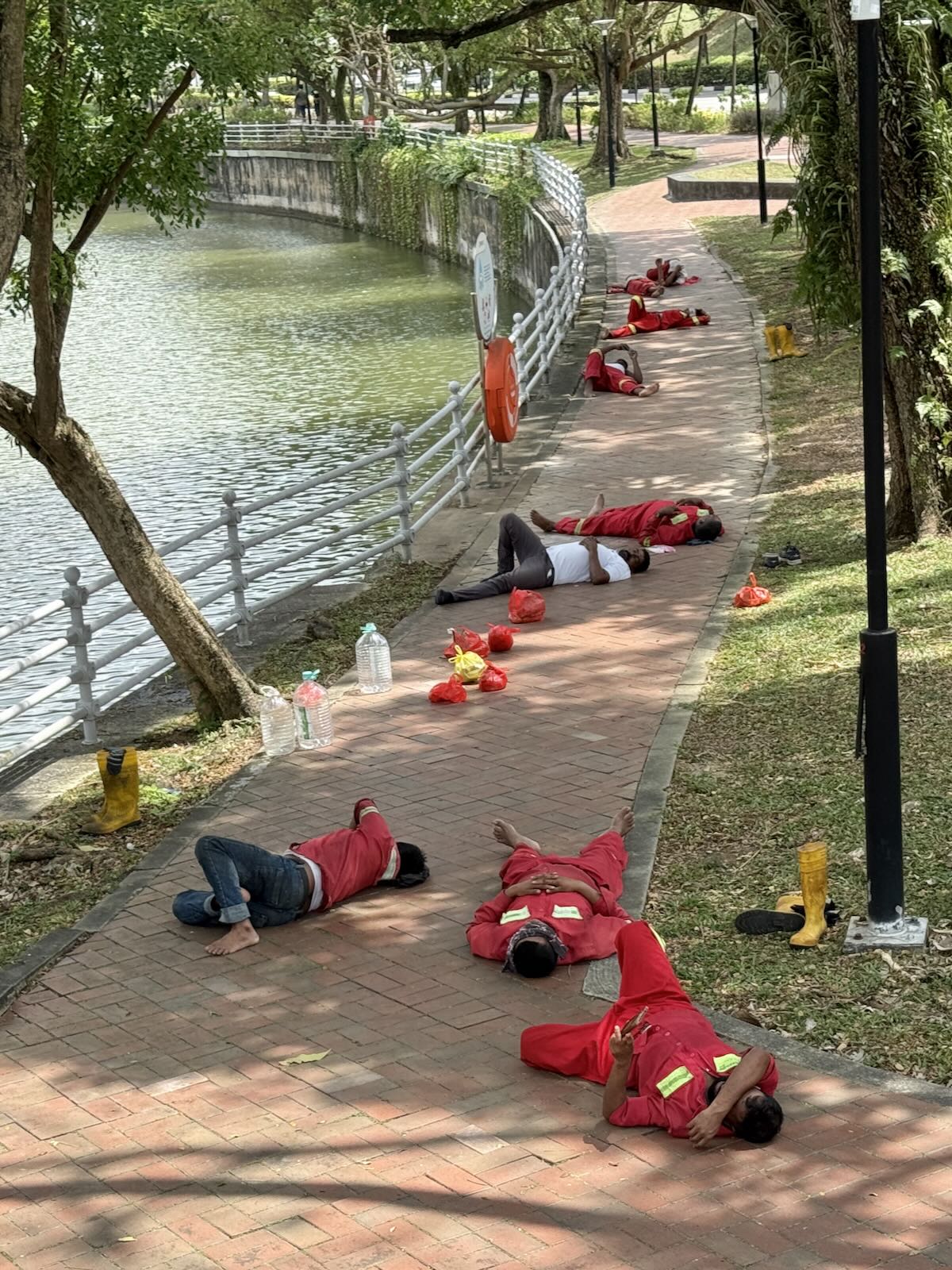
 Singapore is slightly north of the equator, and therefore consistently hot and humid…
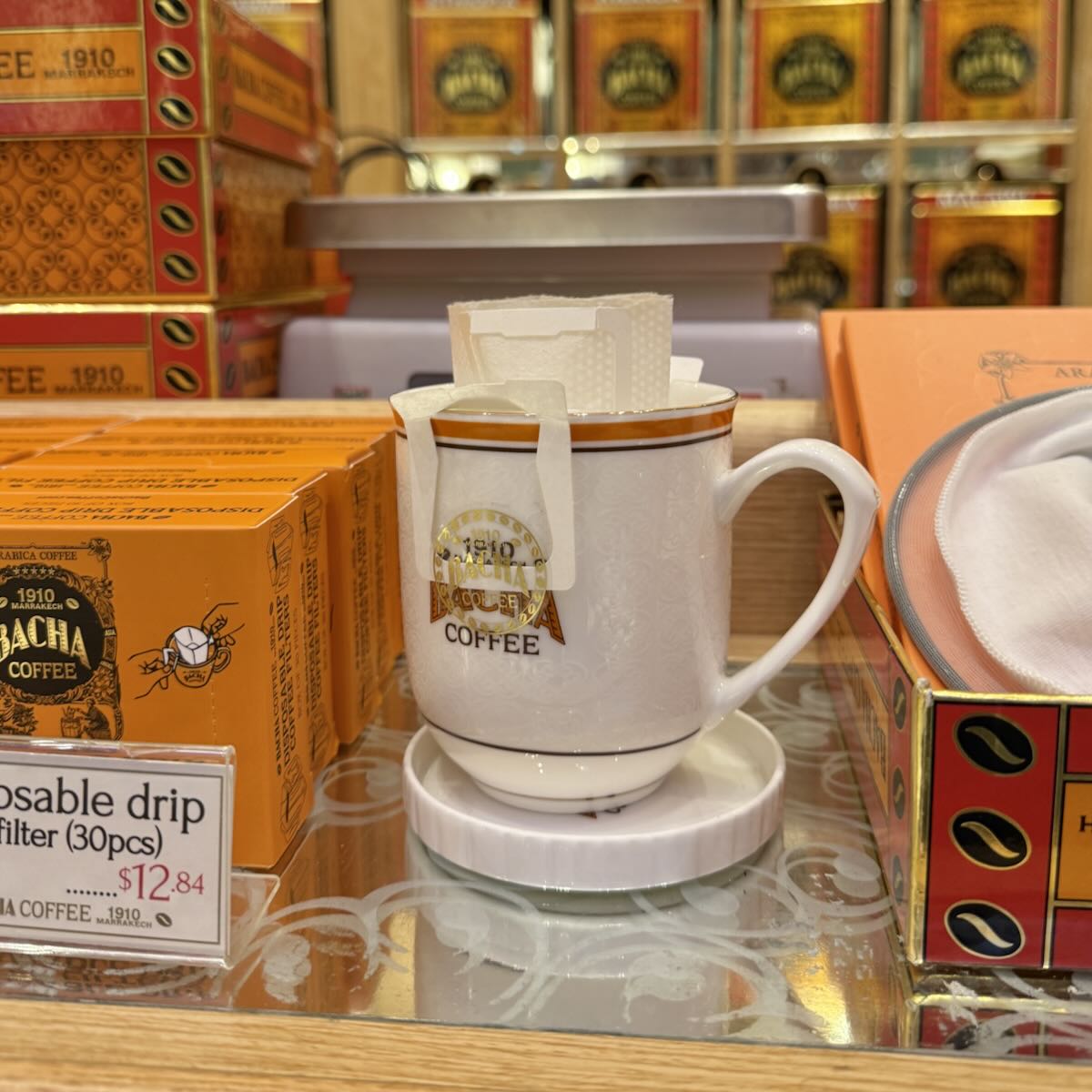
 …so we developed a routine of getting out and about as early as possible. Our first coffee each morning was in the hotel room, which had a brewing method similar to the one shown below. (That’s a Bacha Coffee boutique, the most beautiful airport store I have ever seen.) The coffee was much better than Nespresso or the like, and the process involved no plastic.
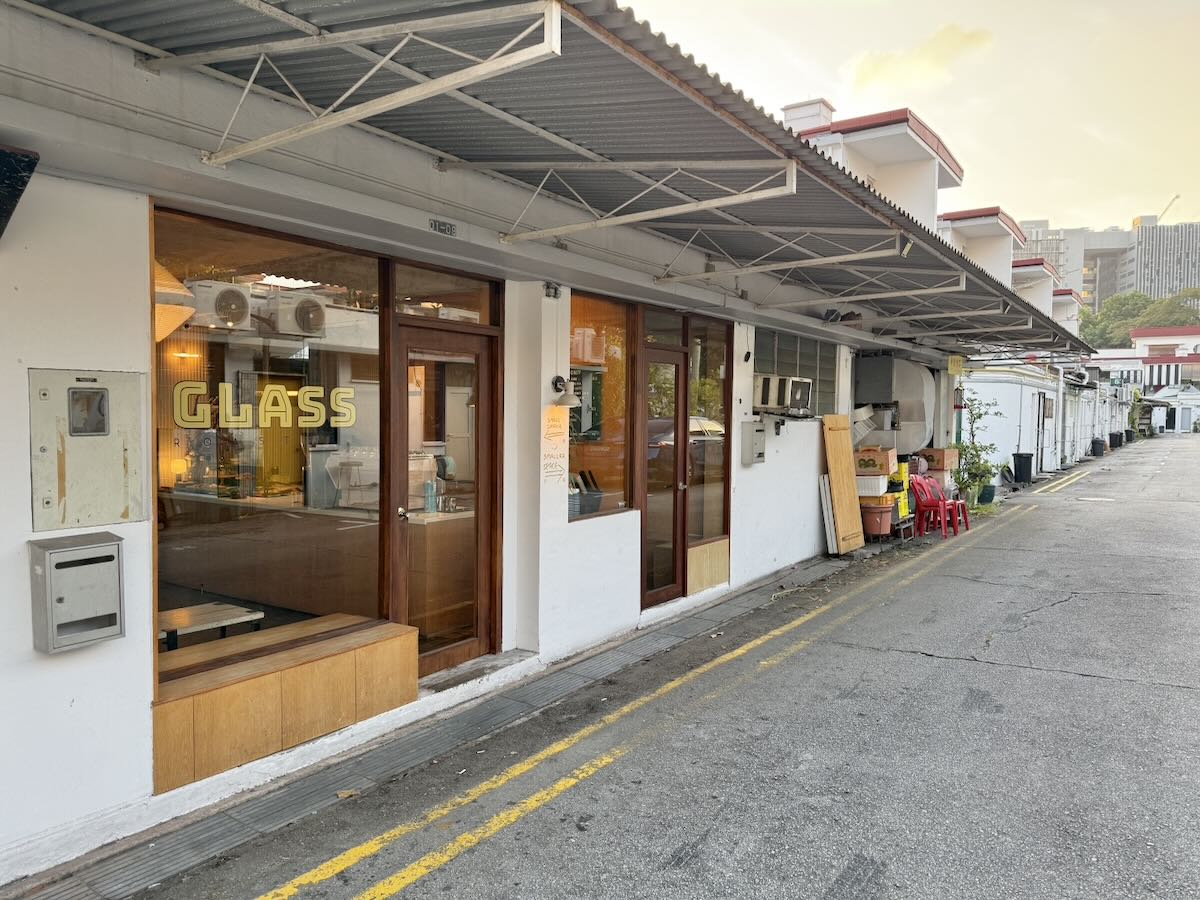
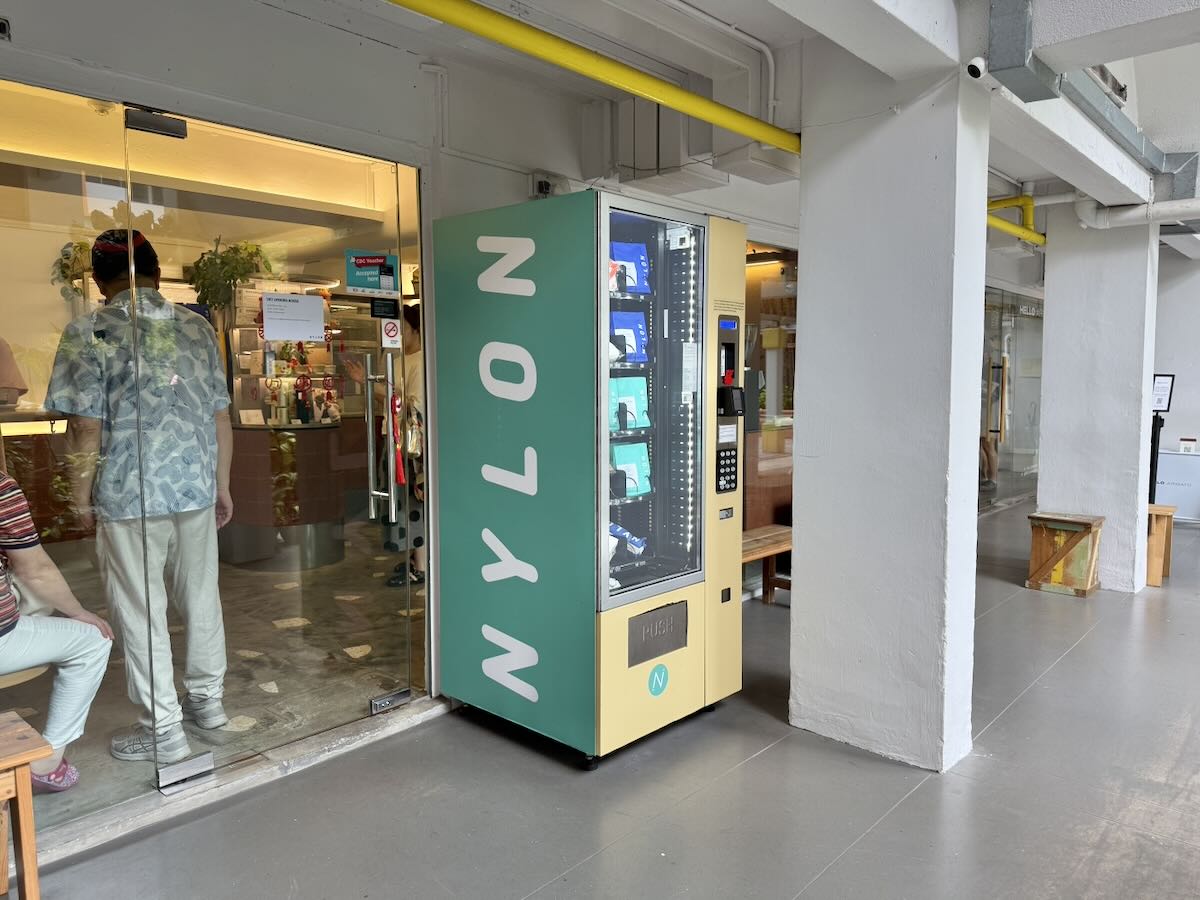
 Our second coffee was at a café—Glass Roasters, Cata Coffee, Nylon Coffee Roasters, Narrative Coffee Stand—near wherever we were headed afterward, often in parts of town more for locals than tourists.
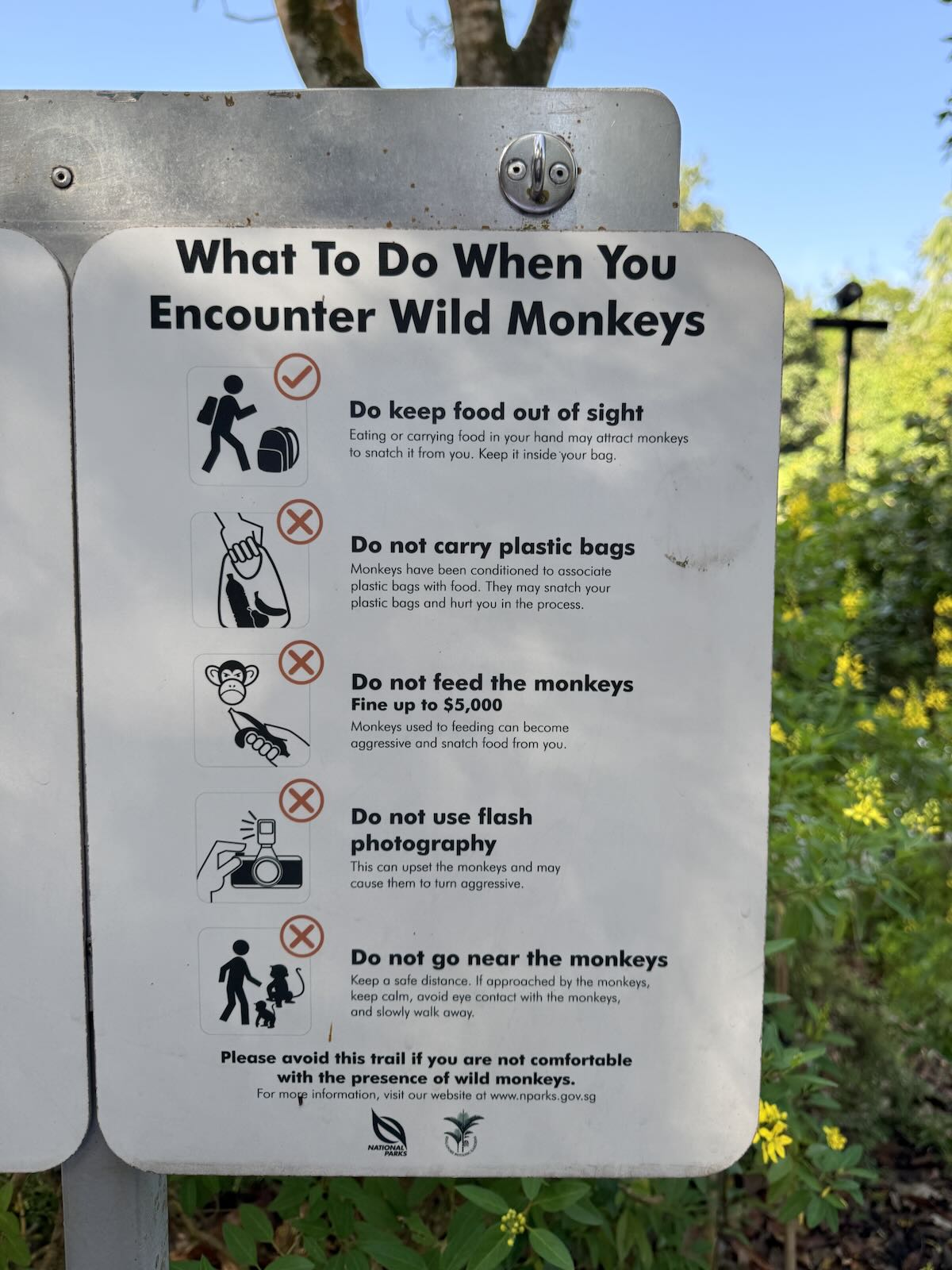
 In any city, there are certain must-see sights, and Singapore’s most famous attraction is the Singapore Botanical Gardens. I was titillated by this sign, but the monkeys didn’t materialize.
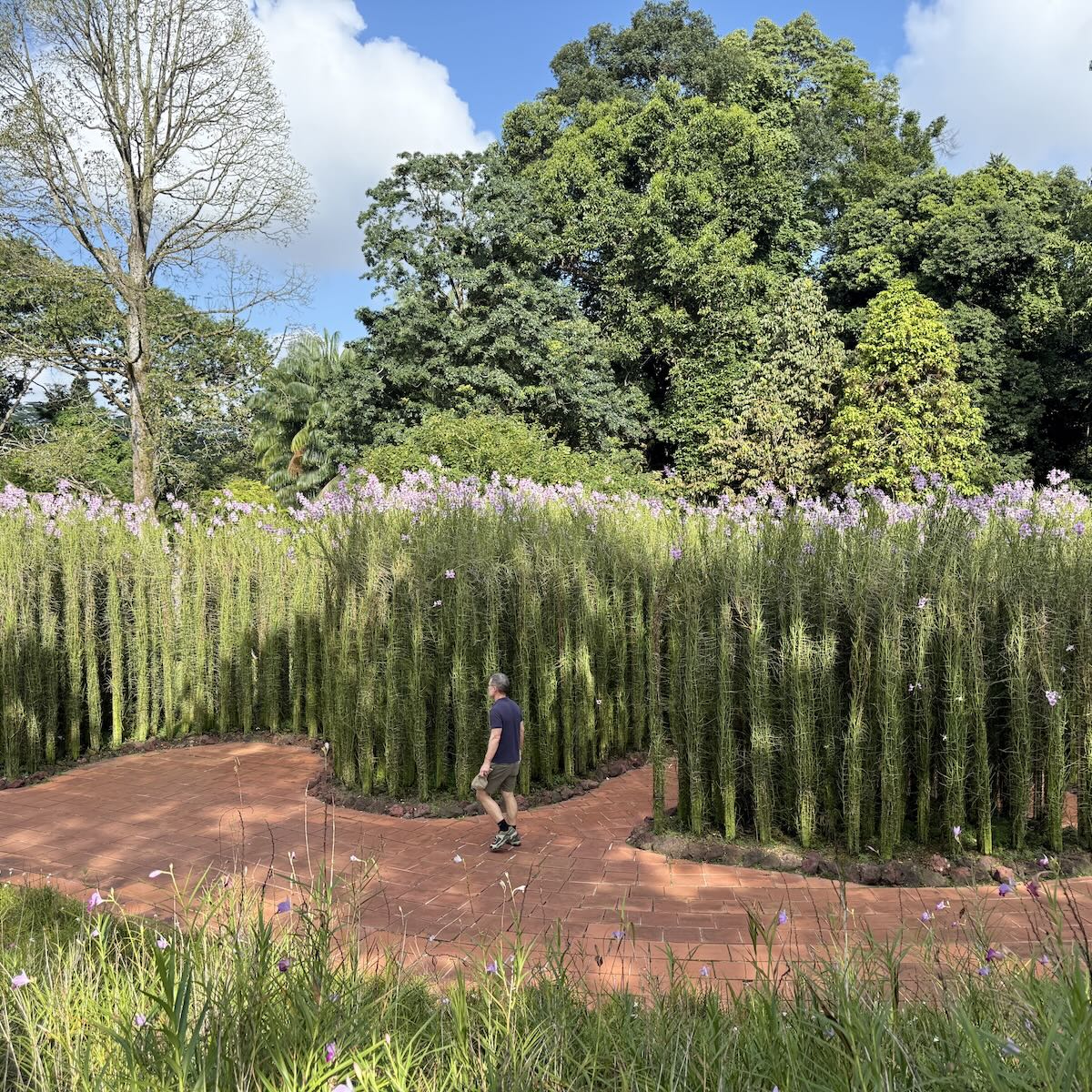
 The garden is huge and impressive and free. The second photo below is of the Golden Shower Arches, Oncidesa Goldiana being one of the first Oncidium hybrids created by the garden.
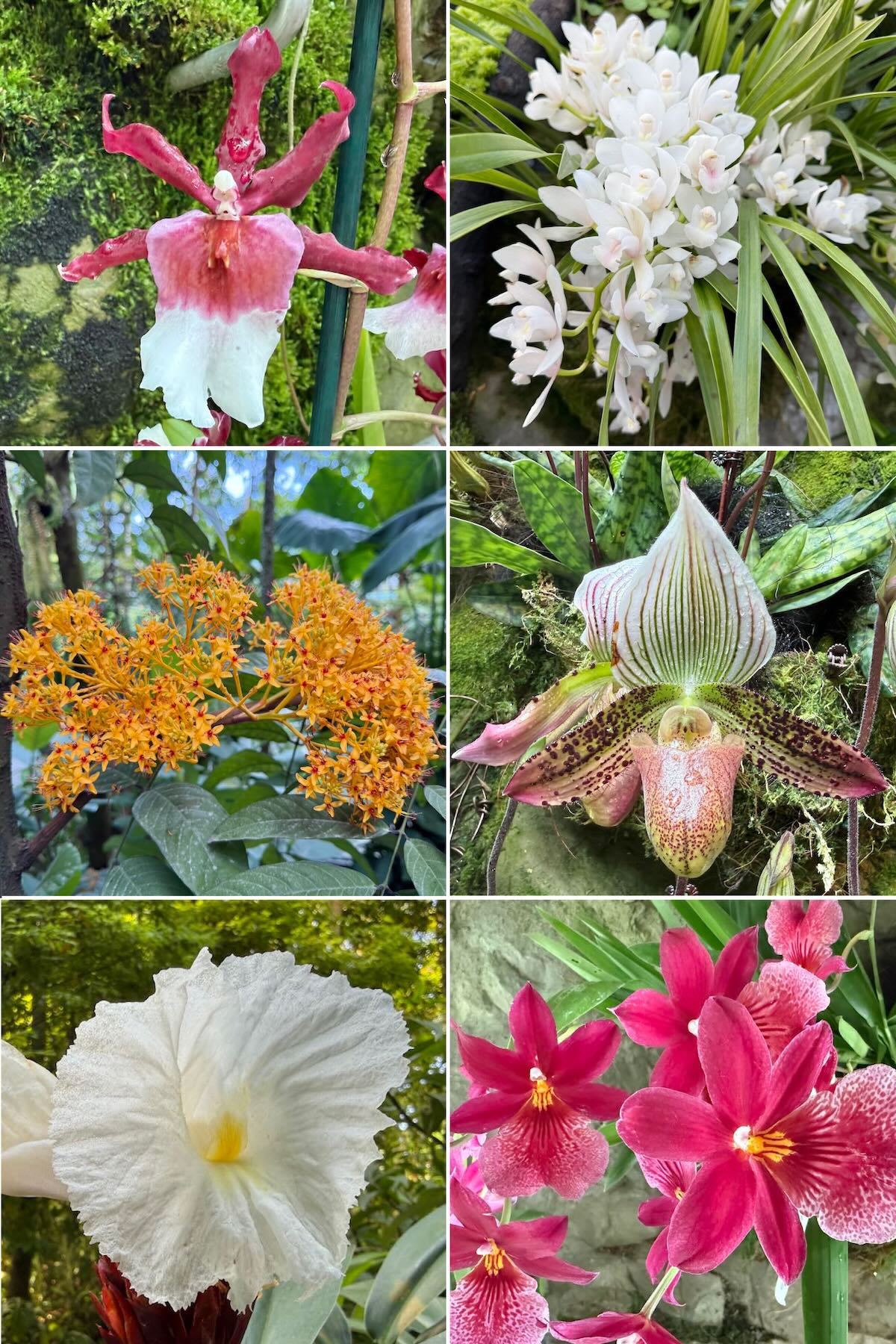
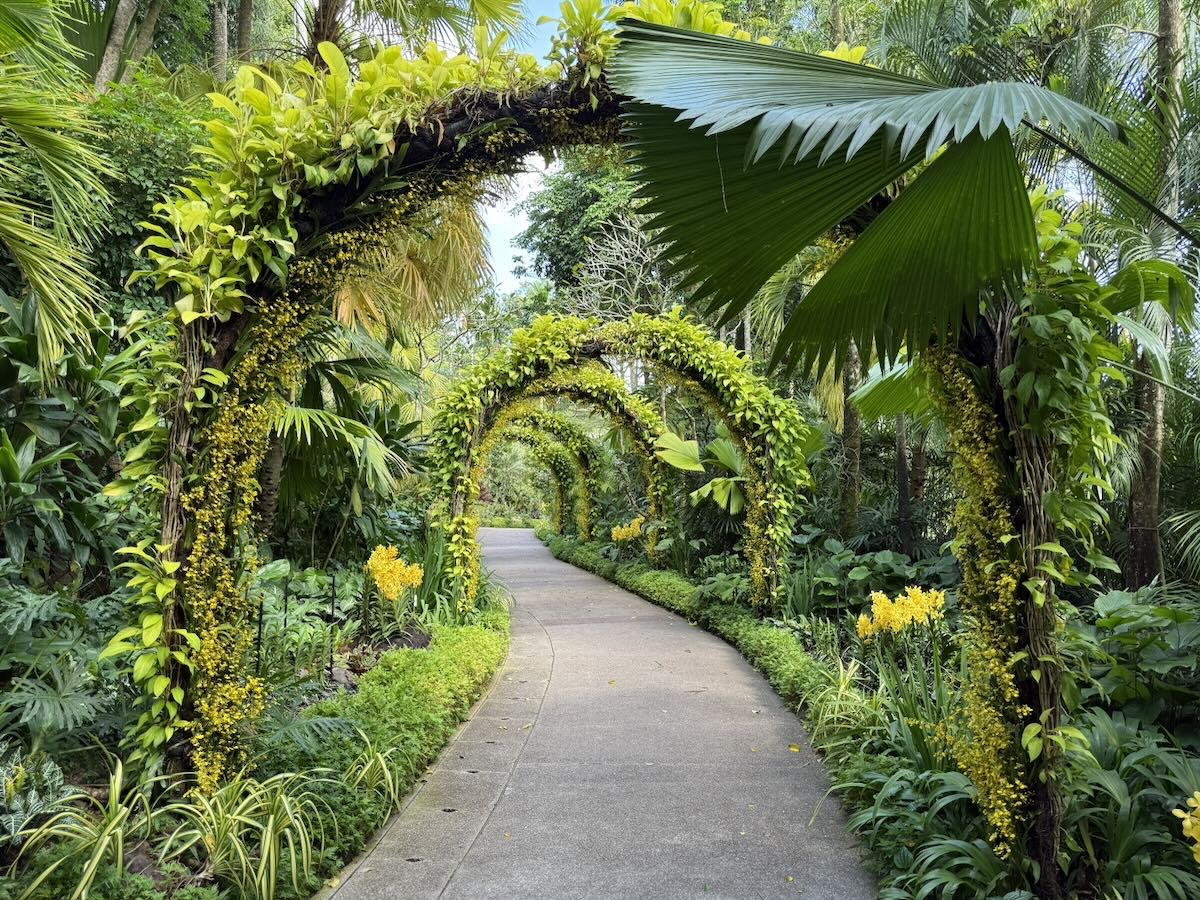 The highlight of the SBG is the National Orchid Garden, which does charge an admission fee and is well worth it—not just for the orchids, which come in more varieties than you ever imagined, but also because of the Sembcorp Cool House that simulates a higher-elevation climate. It’s heaven on a hot day, i.e., every day in this part of the world.
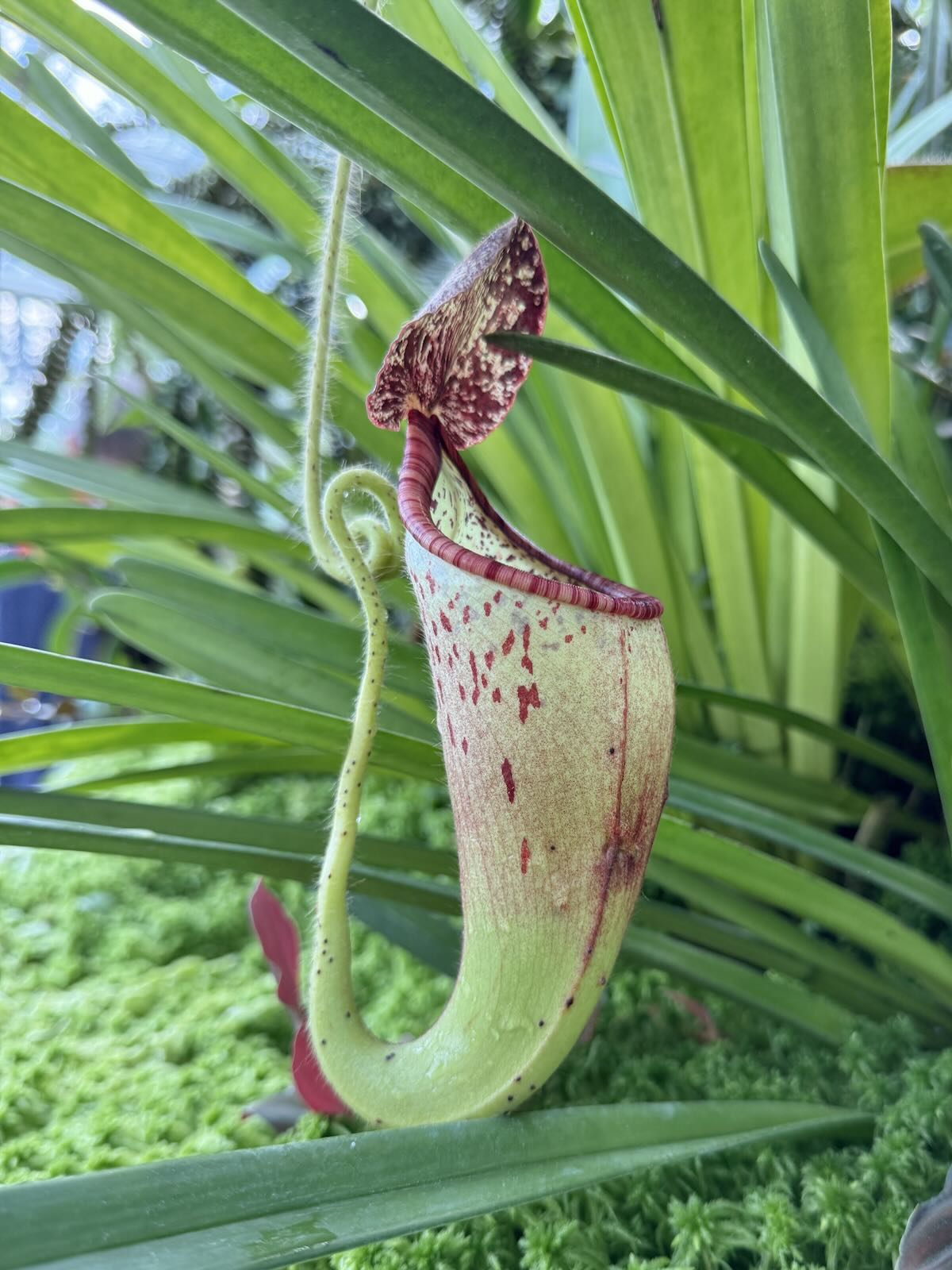
 And you have to admire a pitcher plant.
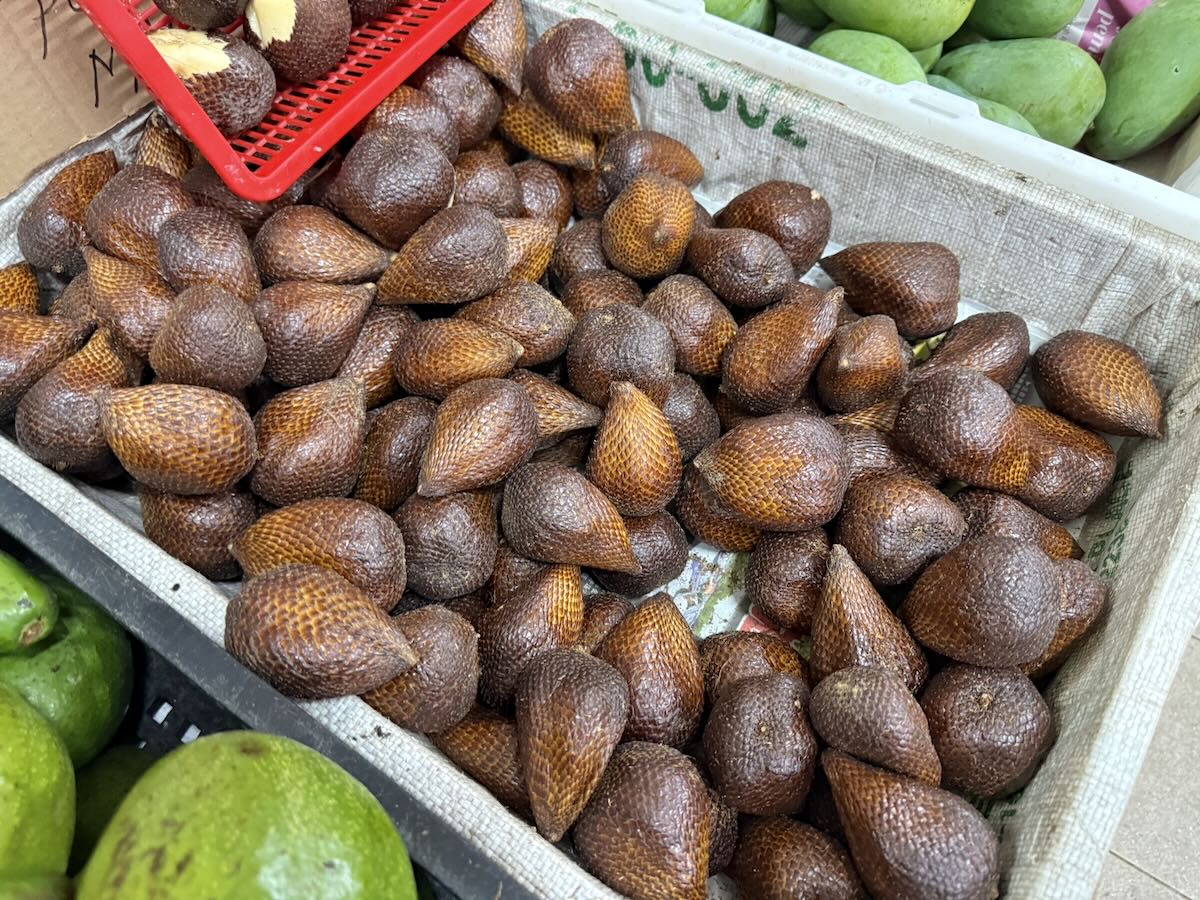
 We also went to a market, as we’re wont to do. Predictably, it was an overwhelming sensory experience. I was surprised to find very little exotic (to me) produce, the exception being the brown fruits that I later learned are salak, or snake fruit, and I regret not buying some. From Wikipedia: “The edible pulp inside, often compared to large peeled garlic cloves in appearance […] typically presents a sweet and acidic taste with a notable astringent edge.”
 You can say this about the government’s authoritarian tendencies: the city works. It’s clean, safe, and altogether orderly, making it a breeze to navigate. I’ve always loved a good metro, and dealing with one in a strange city has never been easier, thanks to Google Maps for route directions and paying by tapping a phone.
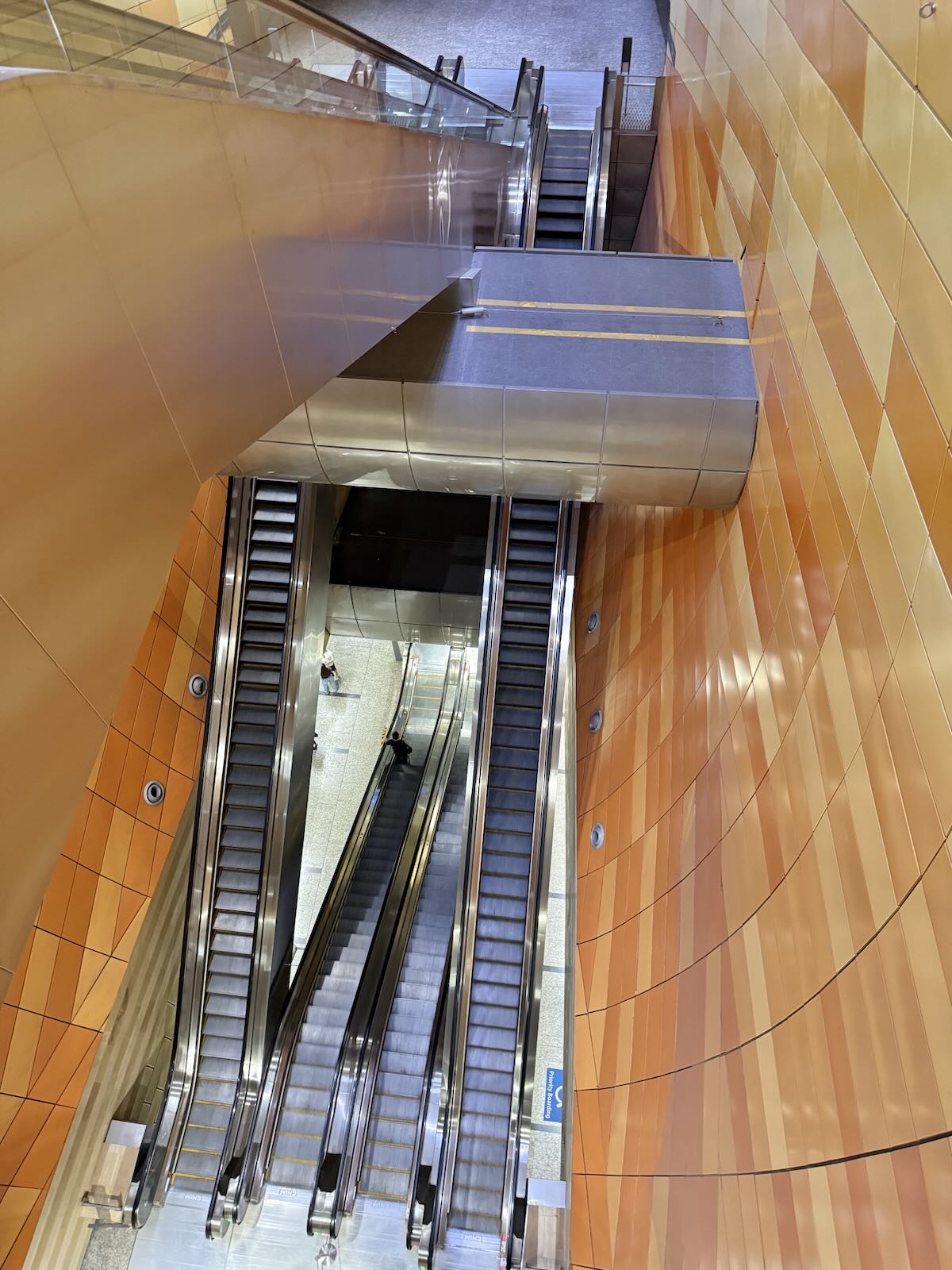
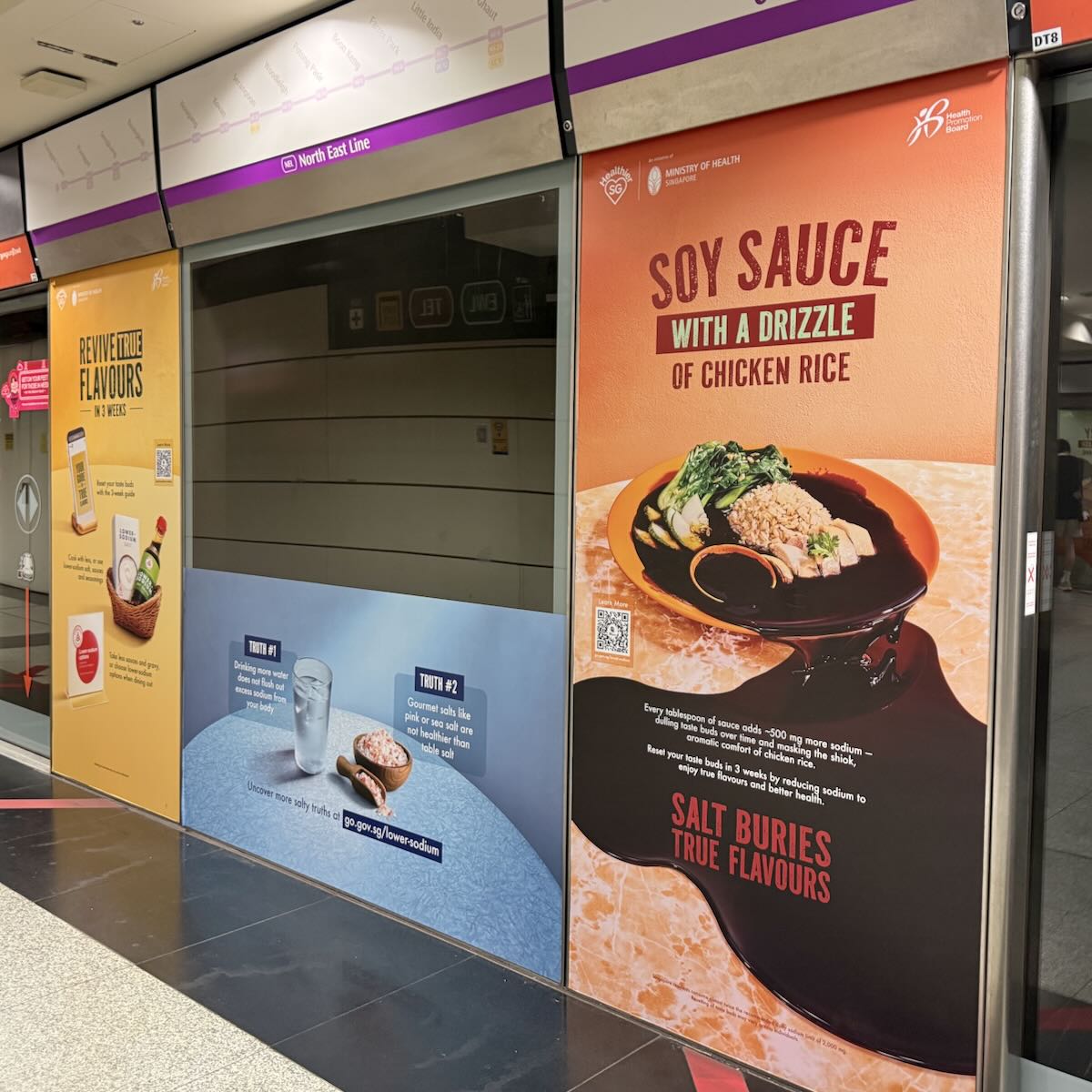
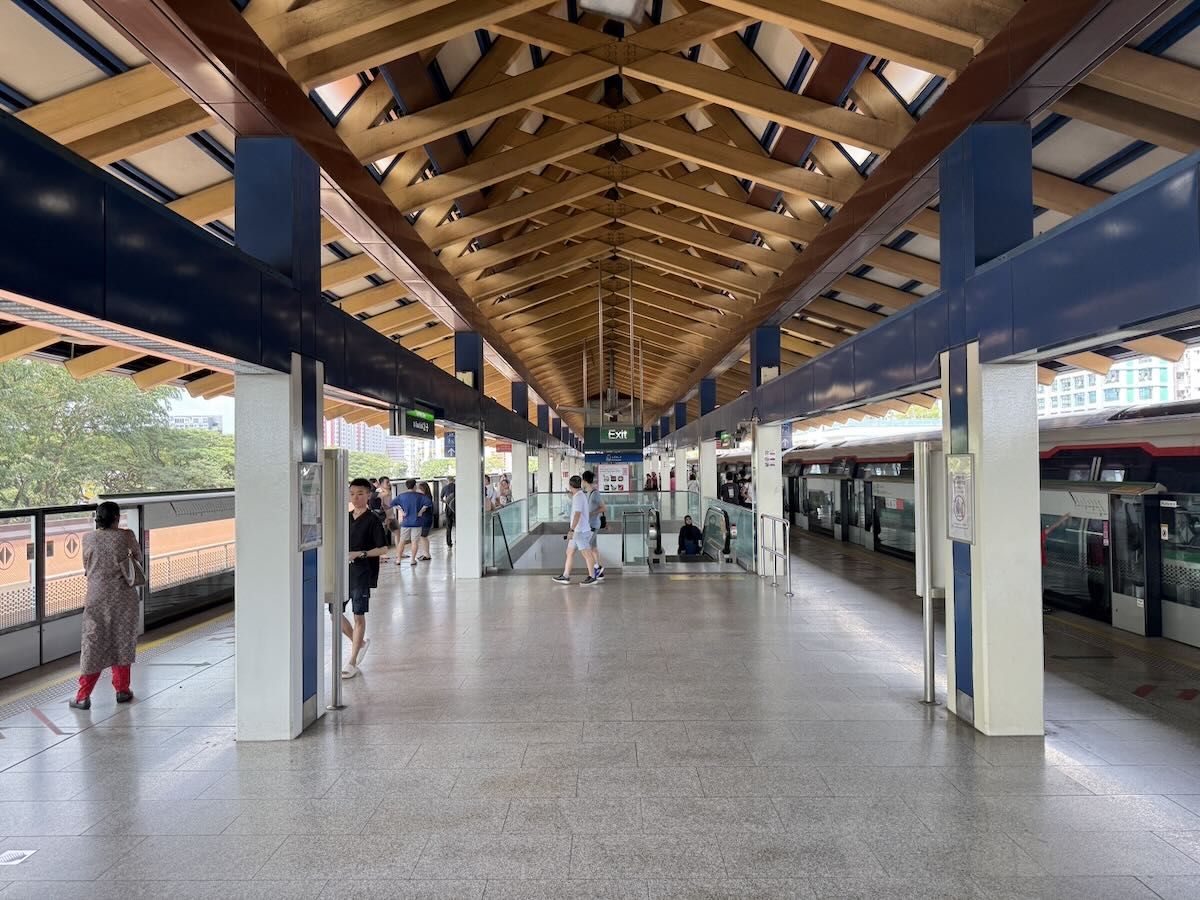 Some of Singapore’s stations feel like they’re in the center of the earth, but it’s never too far for the nanny to follow.

 This display is all about the dangers of salt.
 And the durian ban is as famous as it is welcome.
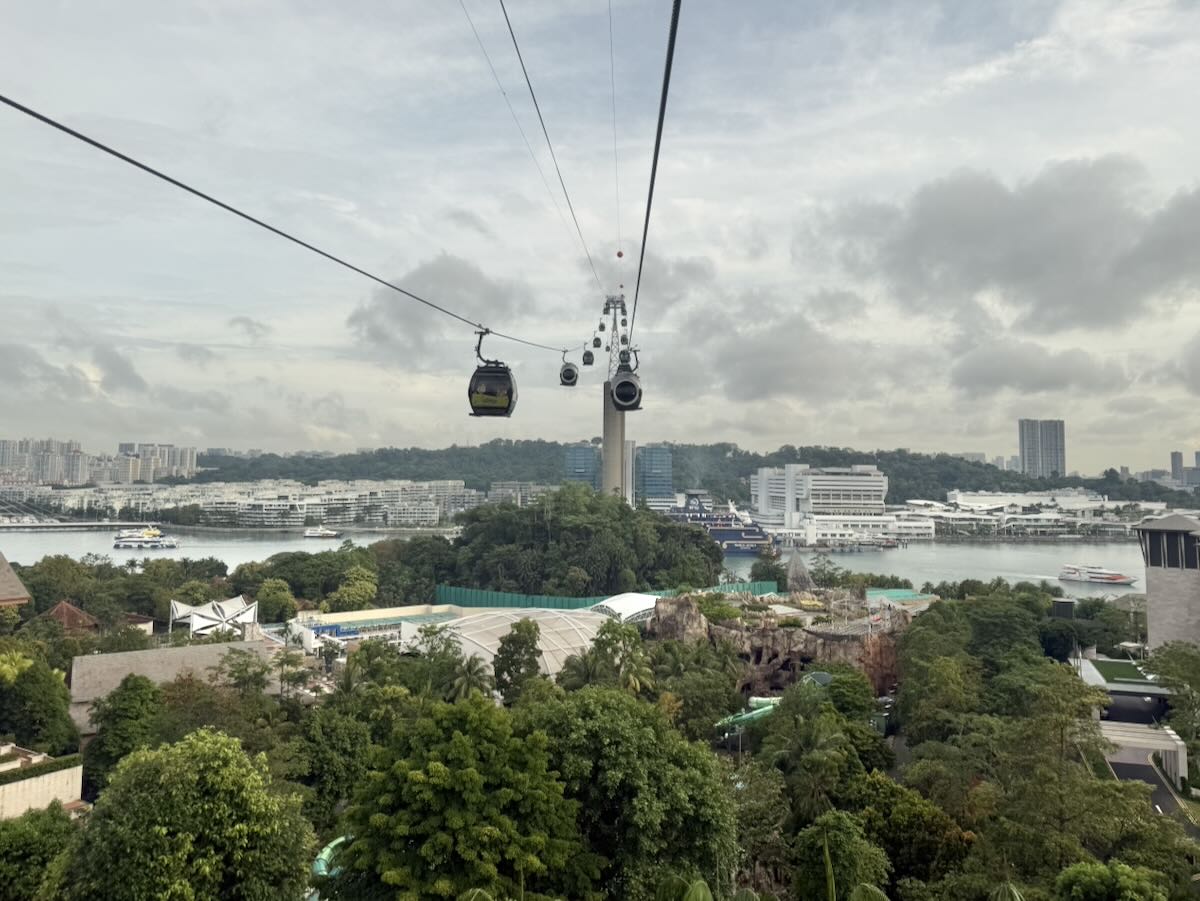
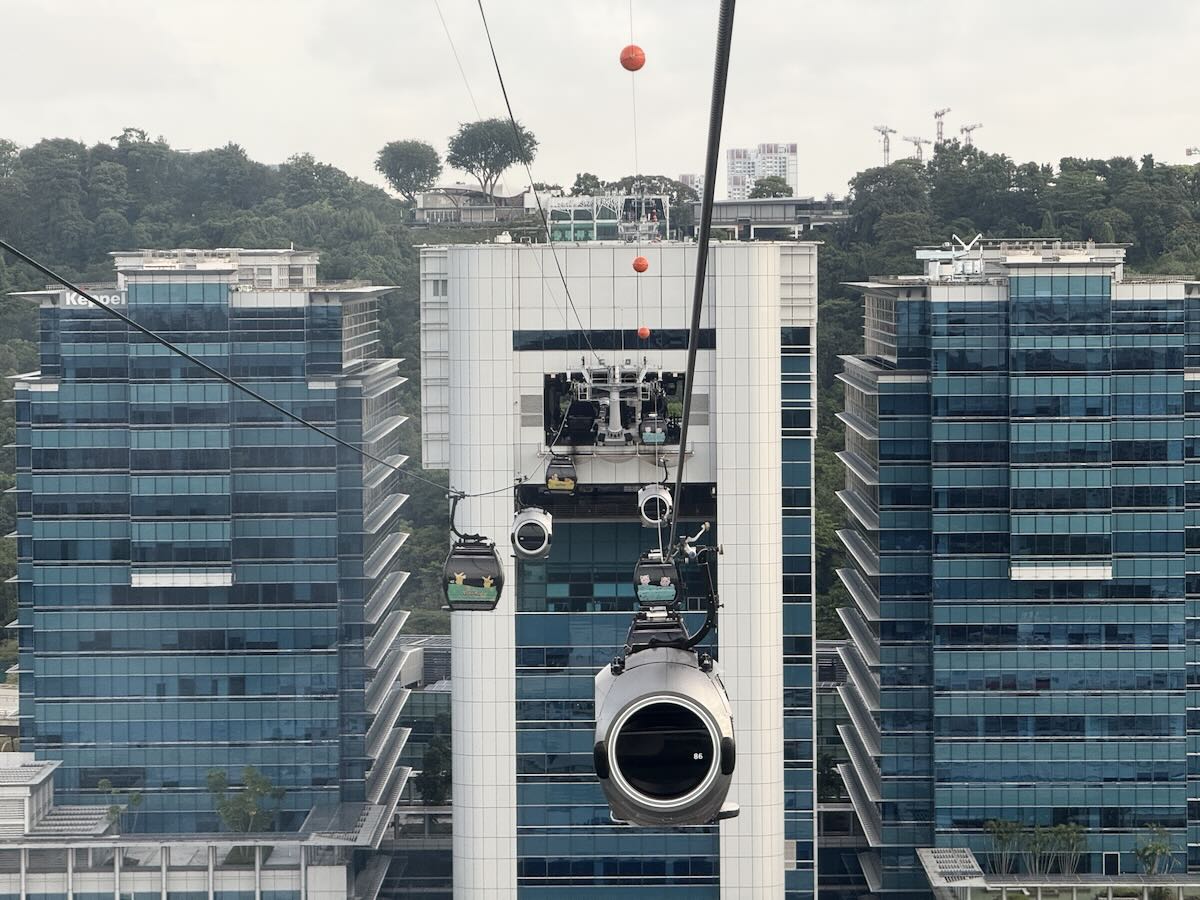
 What’s even better than a subway? The Singapore Cable Car, which links the city to the island of Sentosa. (Finding a route map online was surprisingly hard, so here you go.) The views are the main draw, but I was more turned on by the way cars arrive into the top of a building.
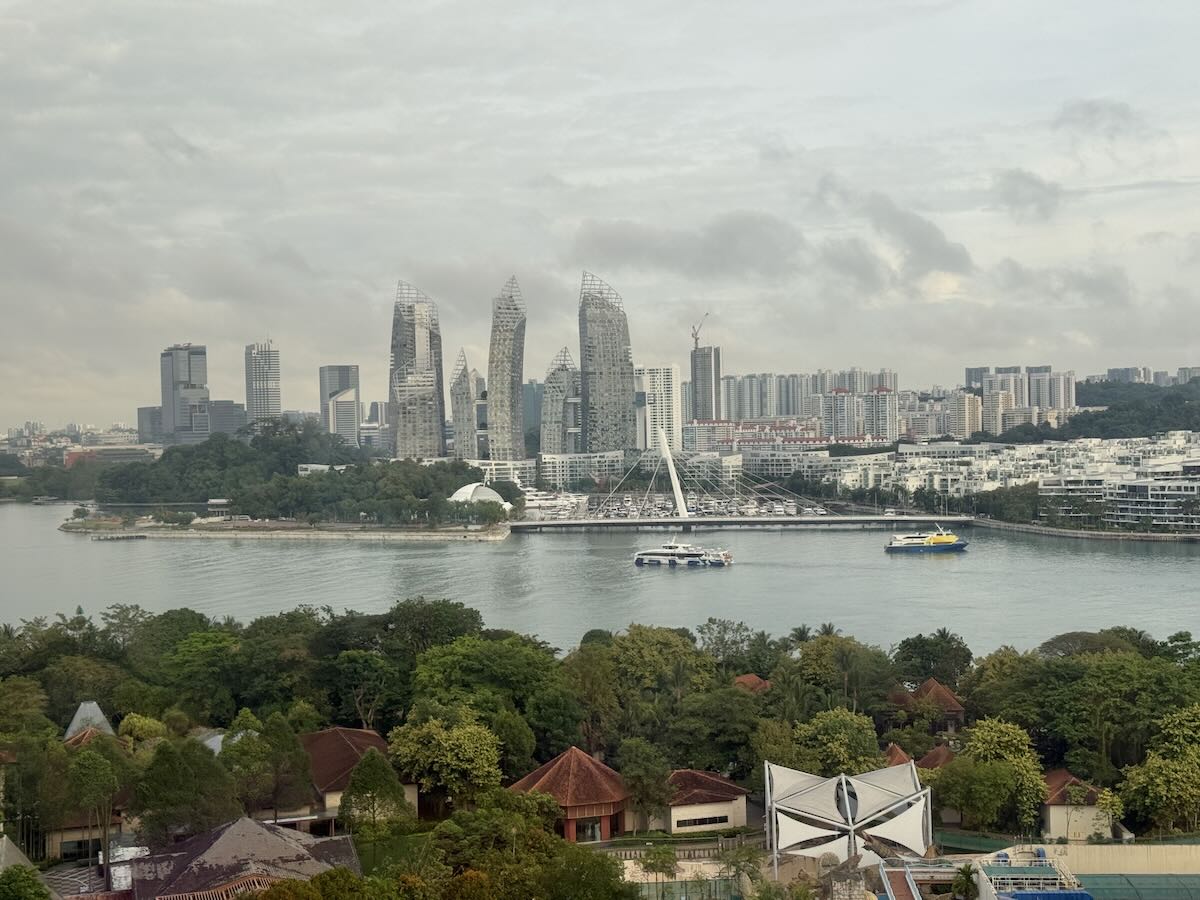
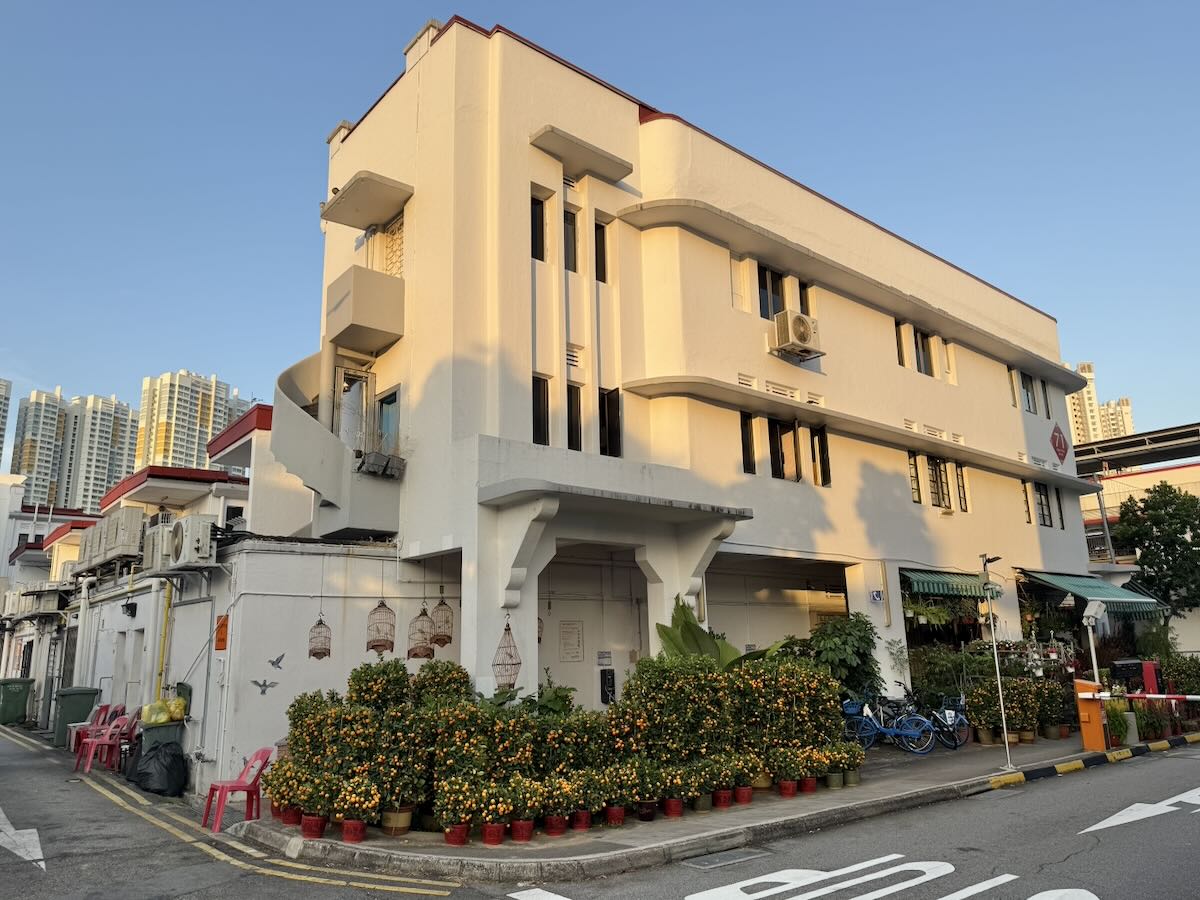
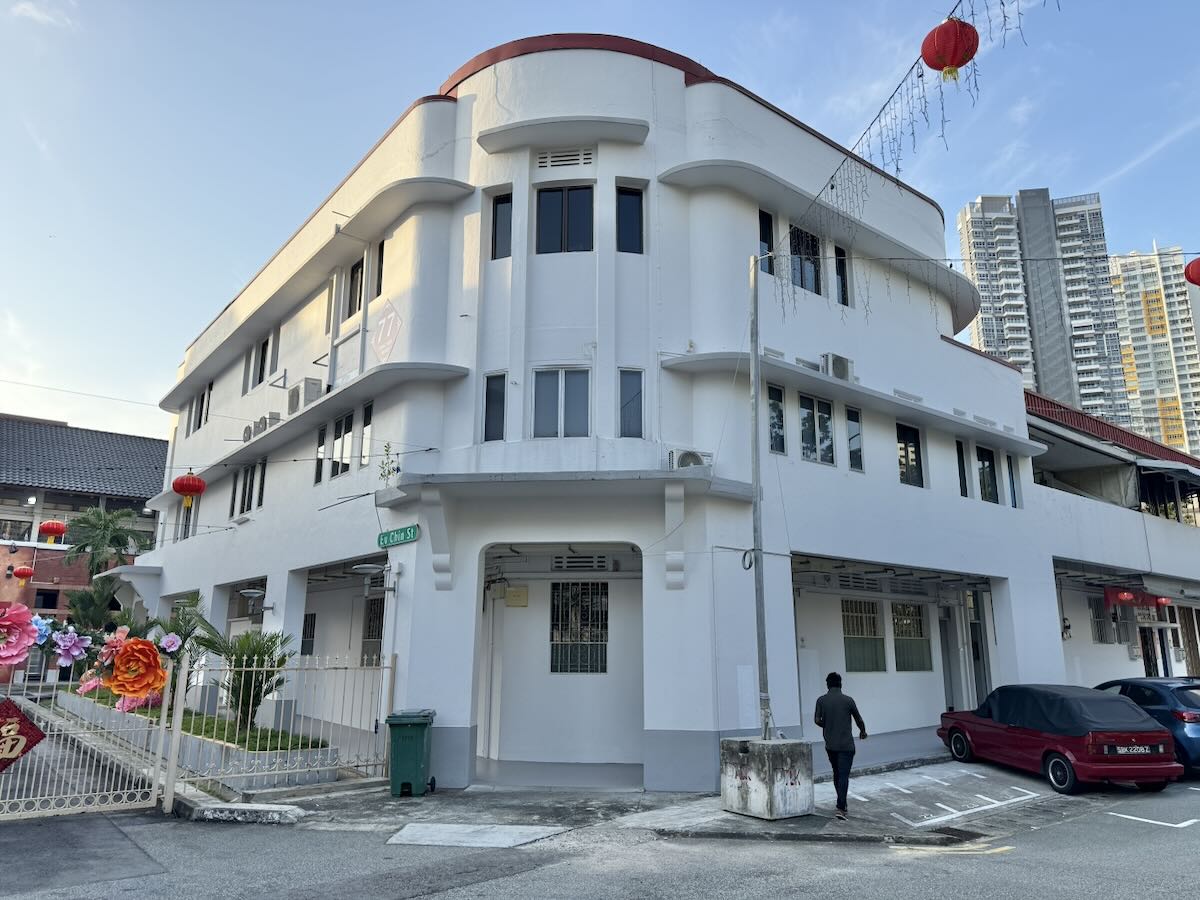
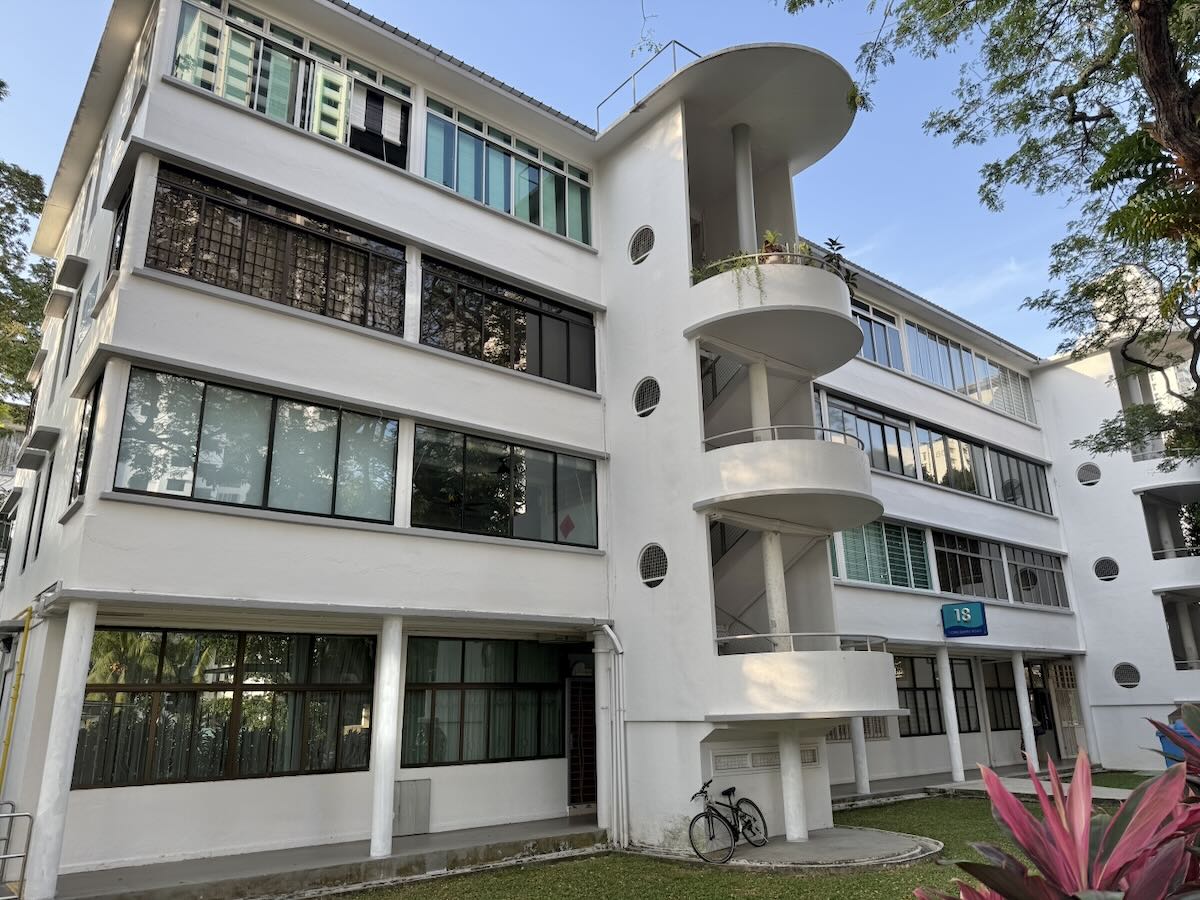
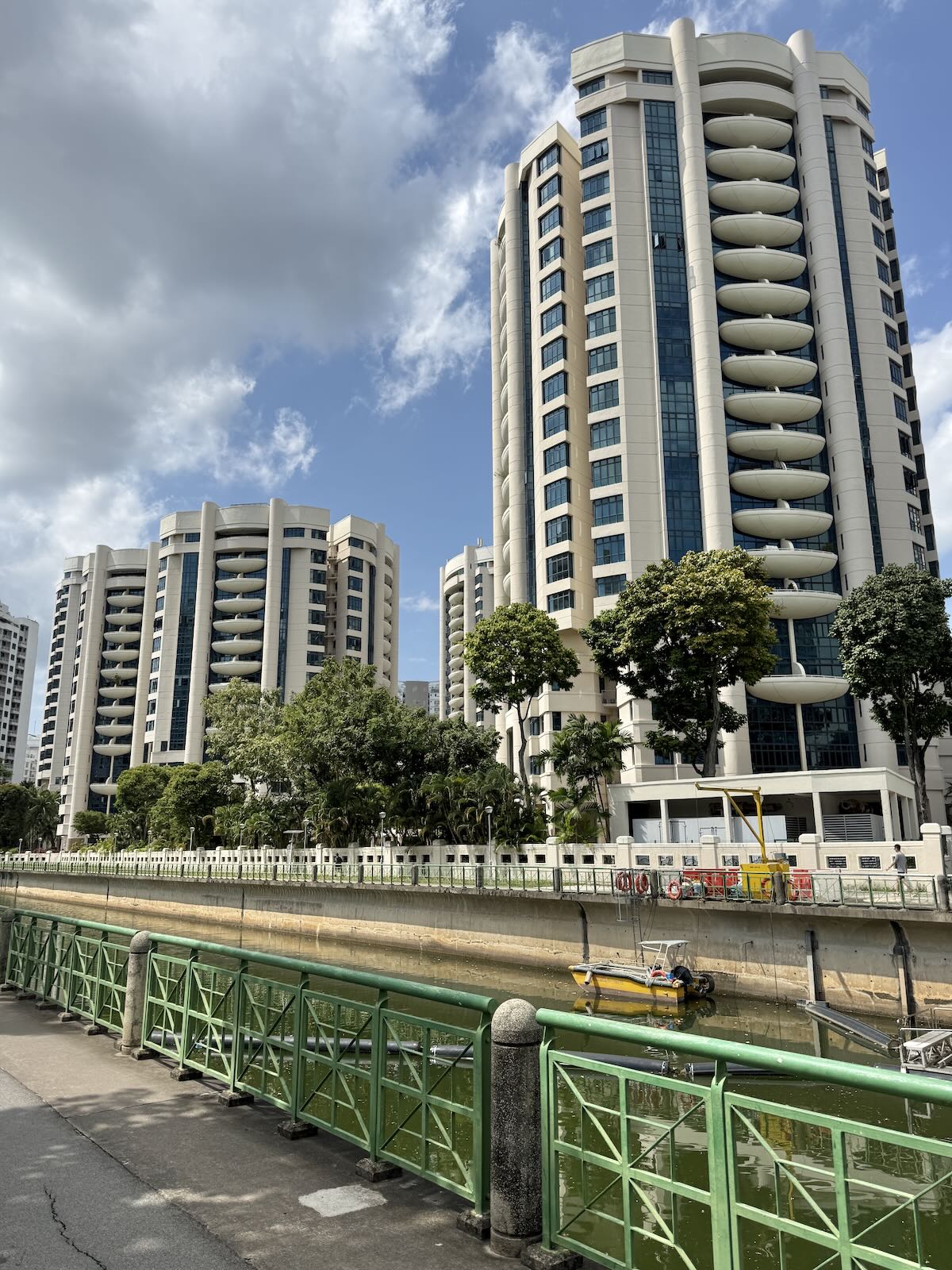
 After too much time in the busy city center, I insisted that we spend a morning in the chill neighborhood of Tiong Bahru, where the white, Art Deco–ish buildings evoke Tel Aviv. I suspect it was cooler a decade ago, but I still quite liked it, deciding that I’d live there if I couldn’t afford one of these riverside condos.
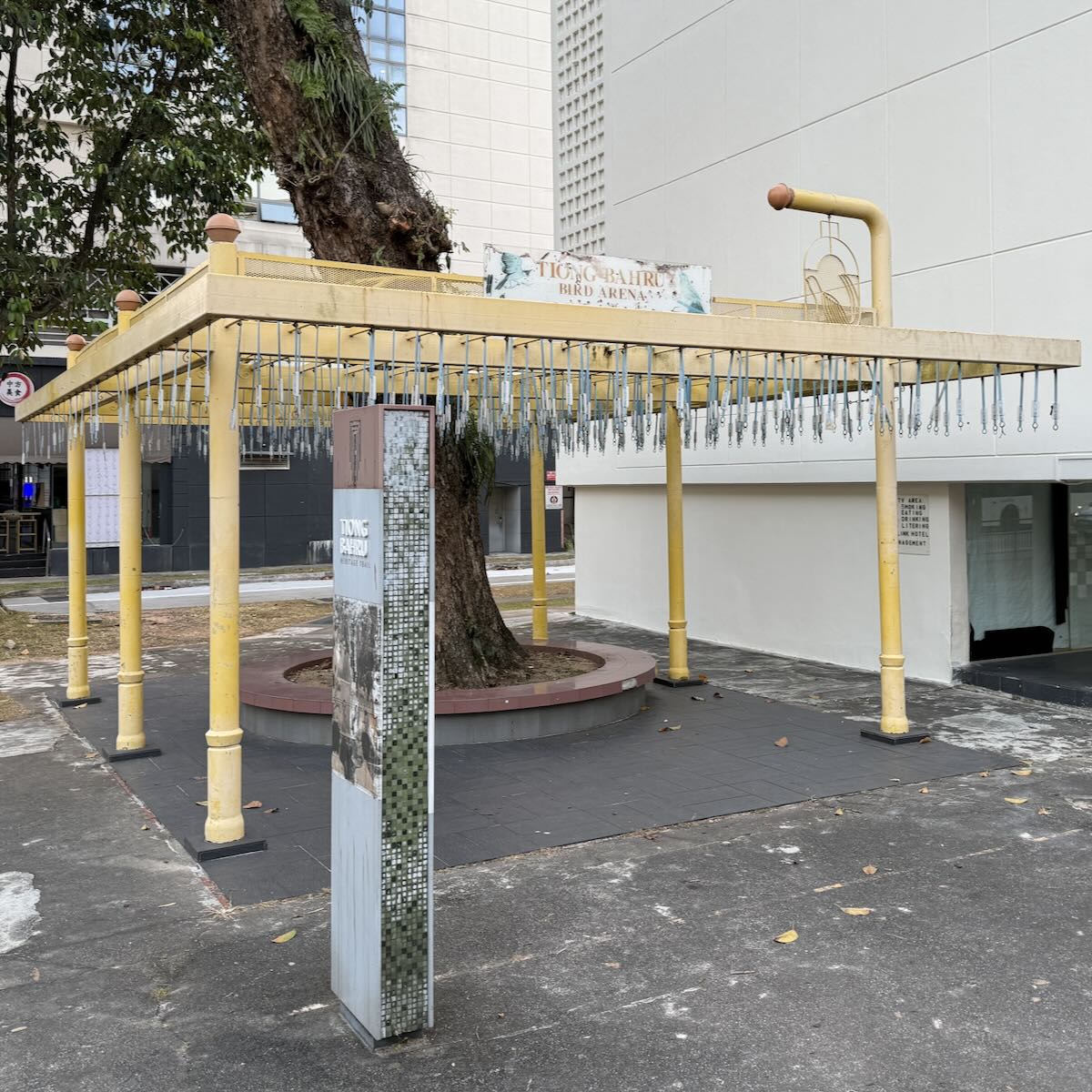
 The contraption below is labeled Tiong Bahru Bird Arena, which was unilluminating. The internet to the rescue: “It has been around for since the sixties, and was once a favourite gathering place for countless bird lovers from all around Singapore, and even from Malaysia and Thailand,” says Remember Singapore. “In the past, hundreds of bird-lovers would gather here on weekend mornings, admiring each others’ prized pets in their nicely decorated cages, chatting and sipping coffee at Ting Heng Kopitiam just beside the bird corner.” Ah, sort of like the classic car owners in Montecito.
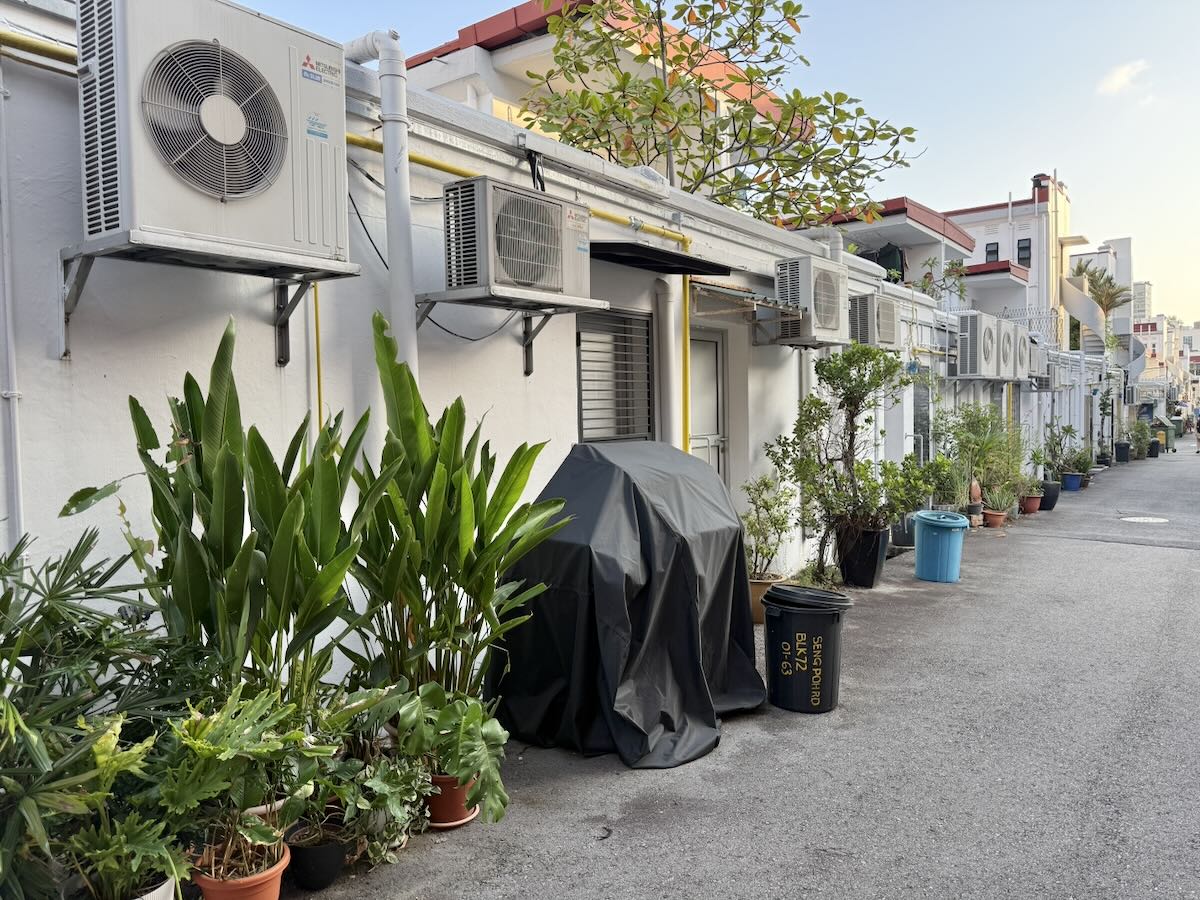
 Seeing how people live is a primary thrill of travel. For instance, this homeowner grills on the street.
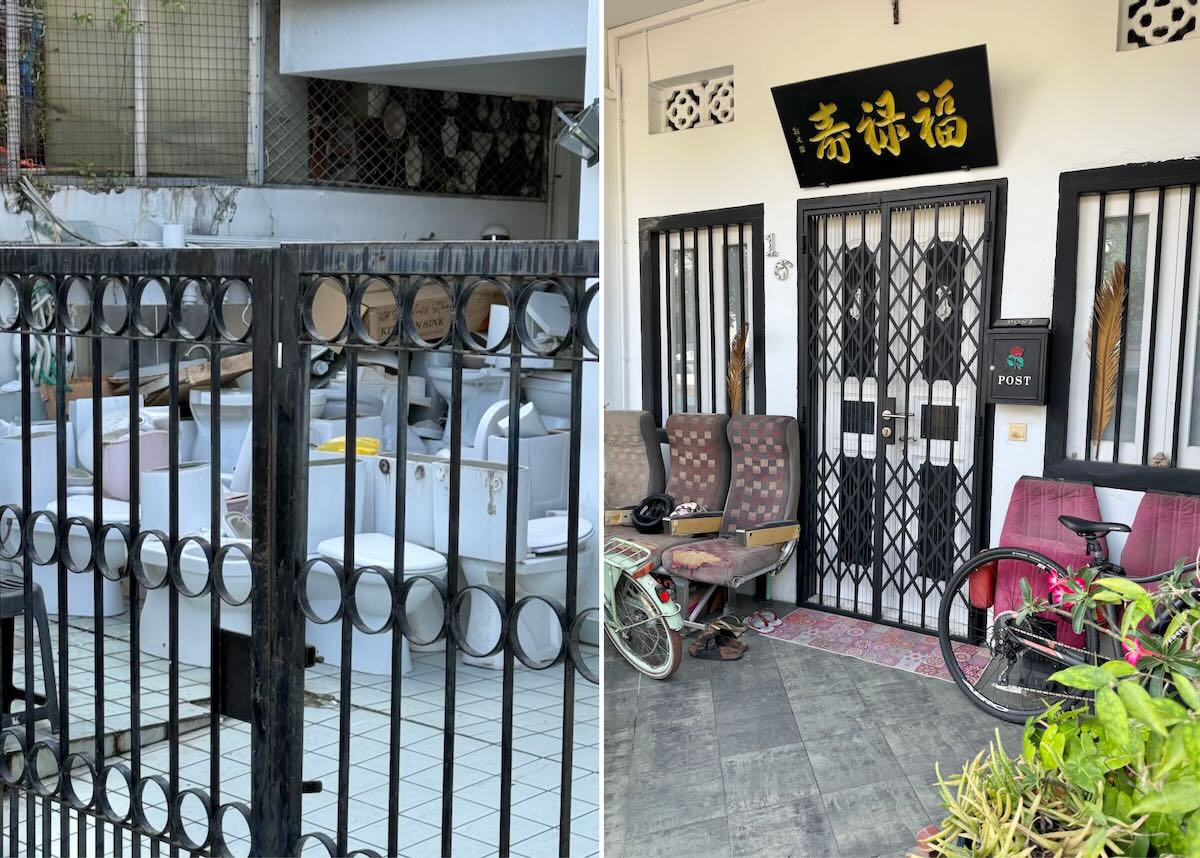
 Elsewhere in the city, we spotted a home with a collection of toilets in the front yard and another with airplane/bus seats outside.
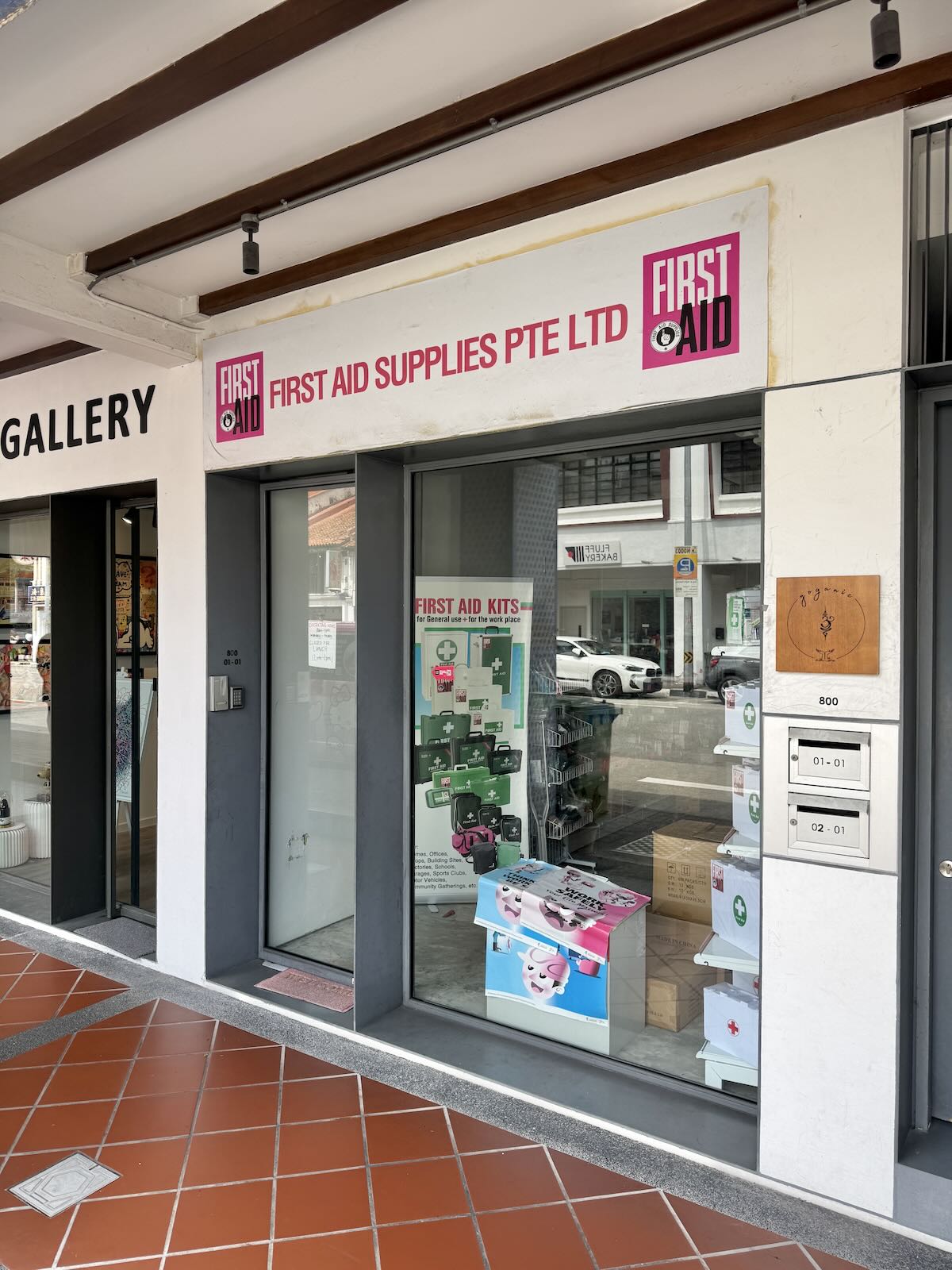
 Singapore has a reputation for being rigid and sterile, at least compared to other big cities in the region, but it’s far from uninteresting. There are so many little shops and restaurants—how they all survive boggles the mind.
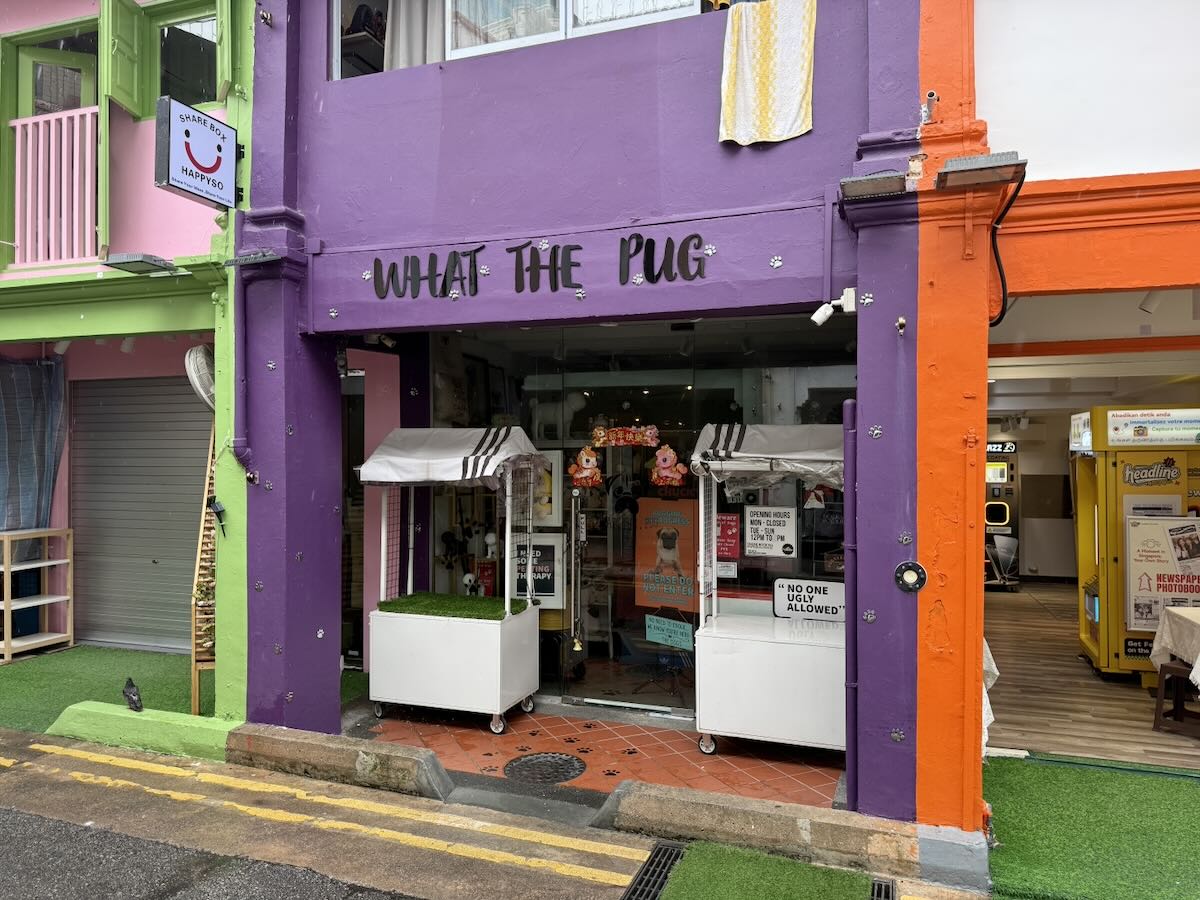
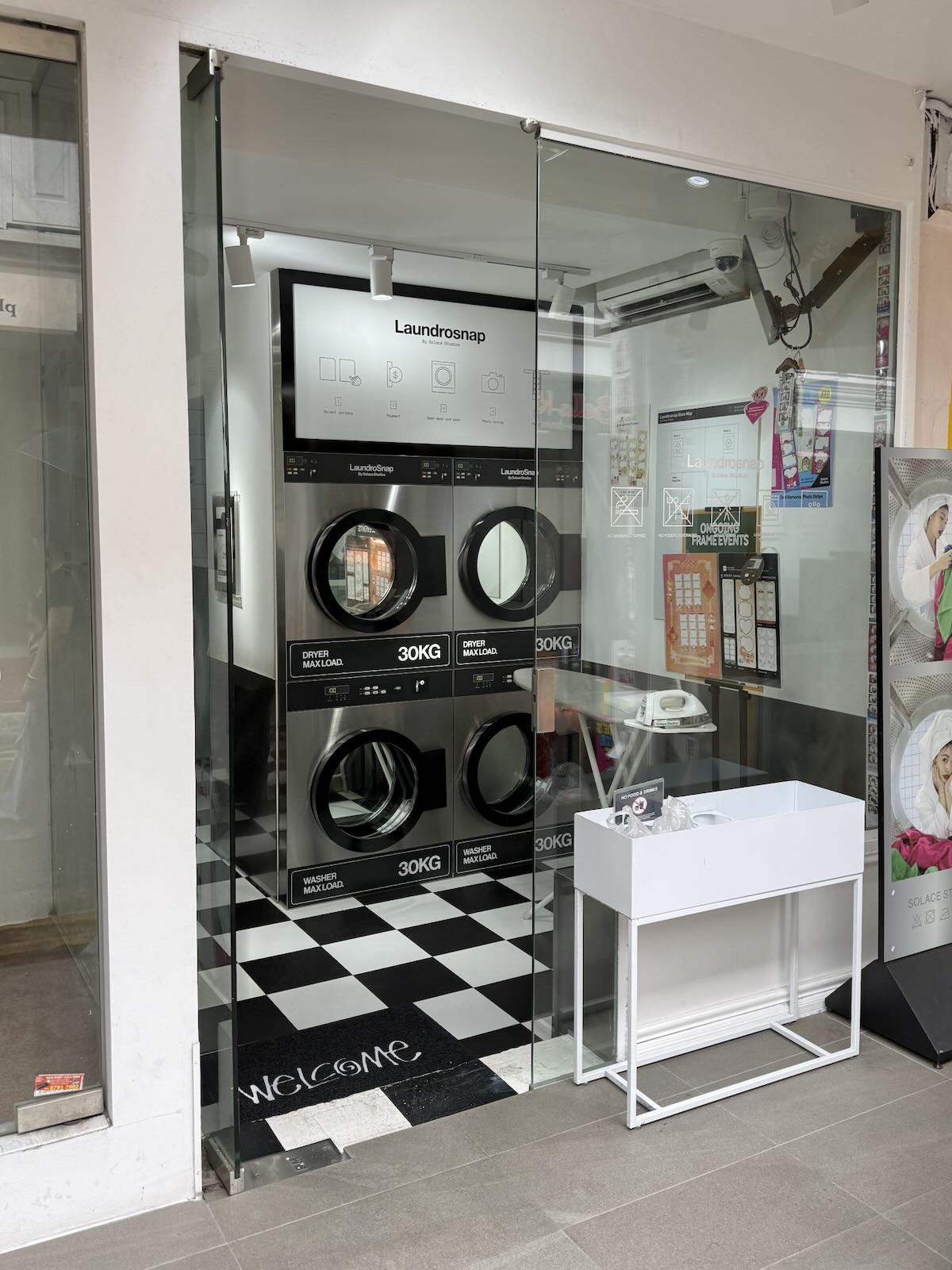
 And a pug café! (Closed during our visit, alas.) It’s on a touristy street called Haji Lane, where the defining characteristic is the number of storefronts where you can pose in a photo booth, a mysterious development in the age of the phone camera. I was tempted by Laudrosnap until I discovered that you’re made to look as if you’re reaching into the machine. I wanted to appear to be inside the drum, obviously.
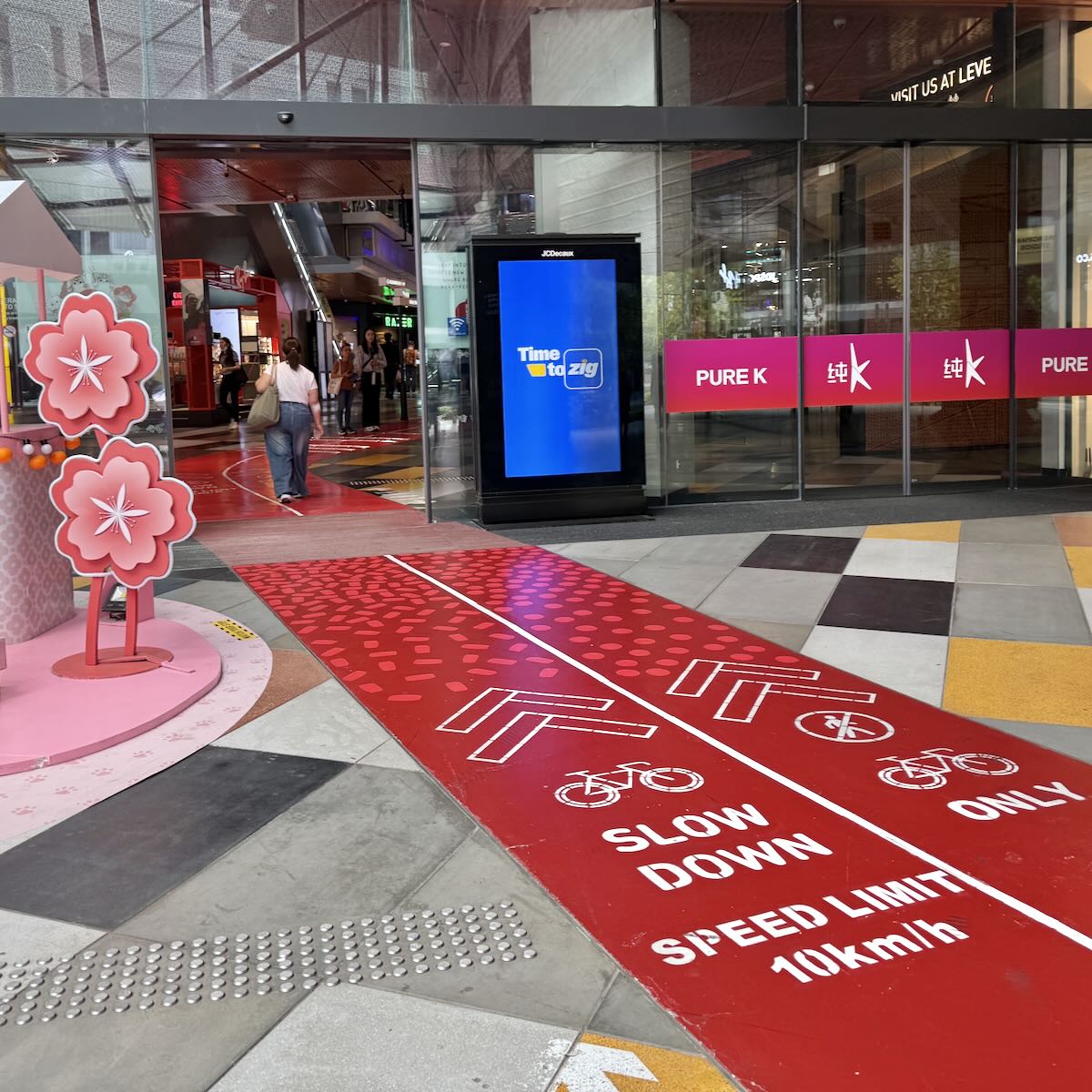
 Something else surprising: a bike lane that leads into a shopping mall.
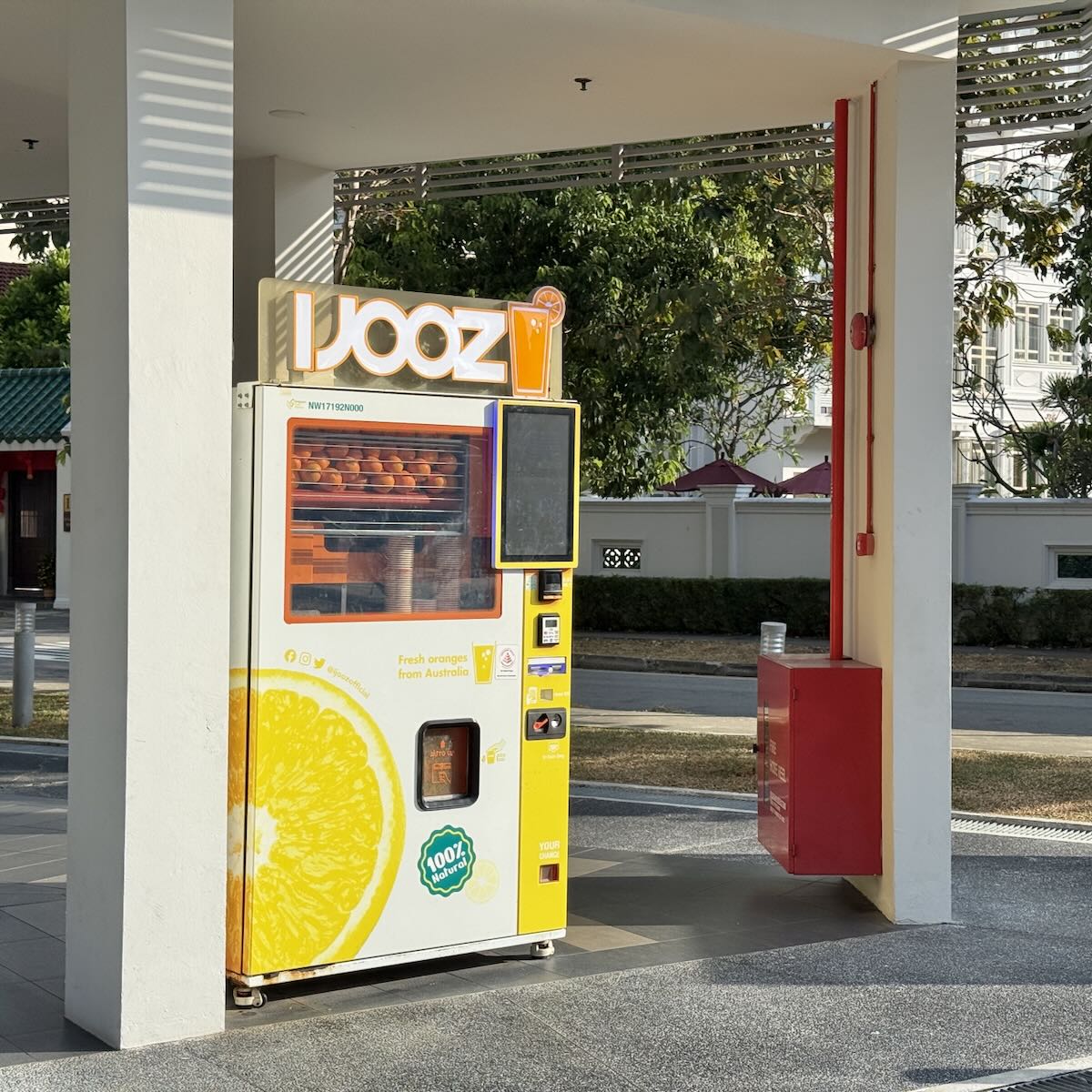
 And IJOOZ machines are everywhere, so you’re never at risk of going without fresh orange juice.
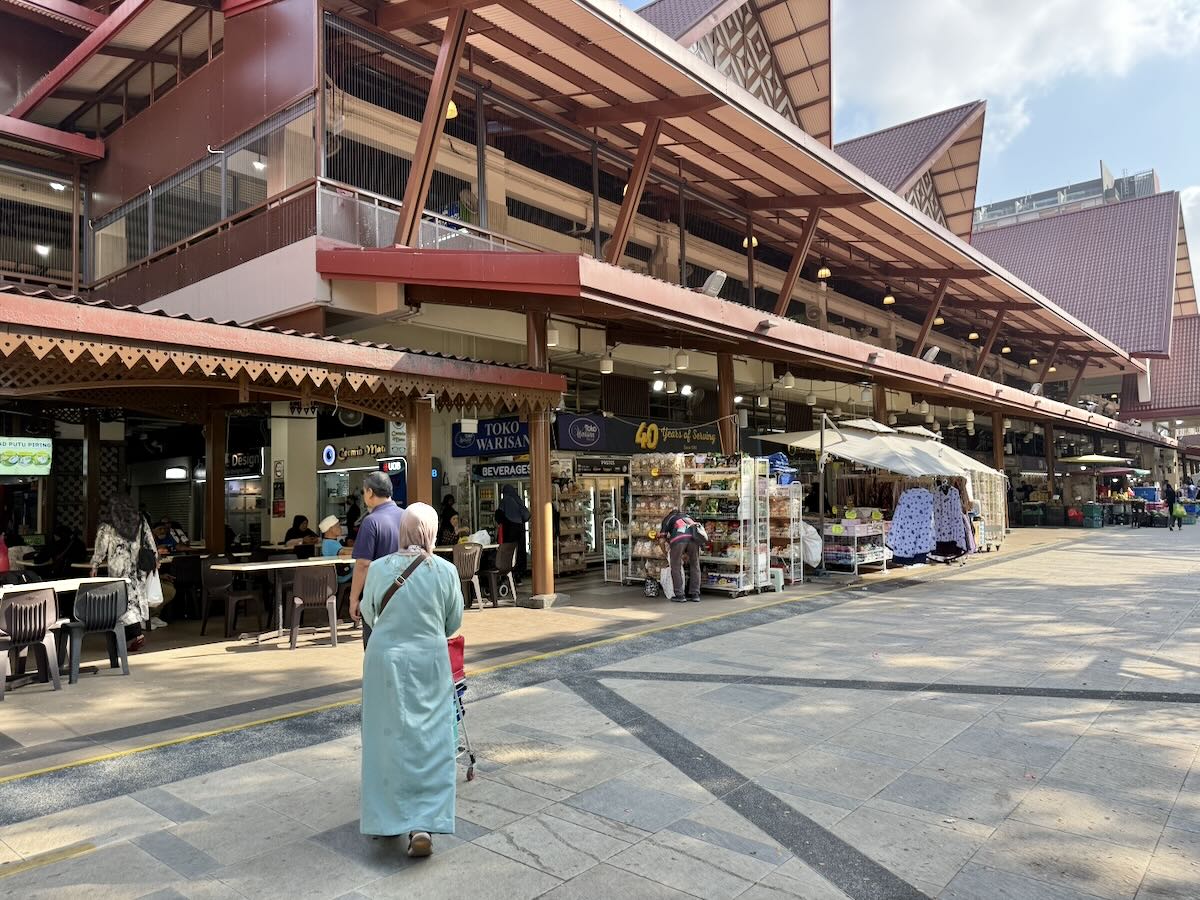
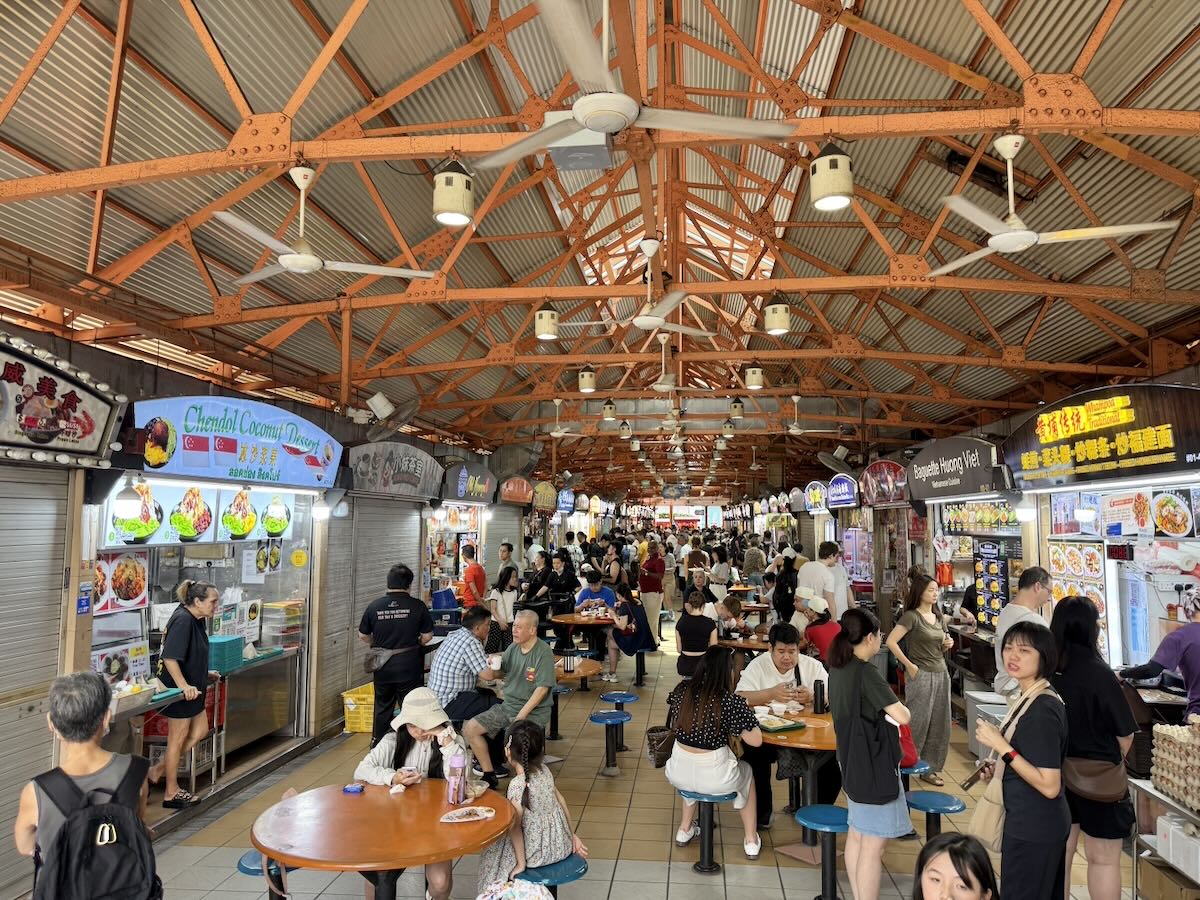
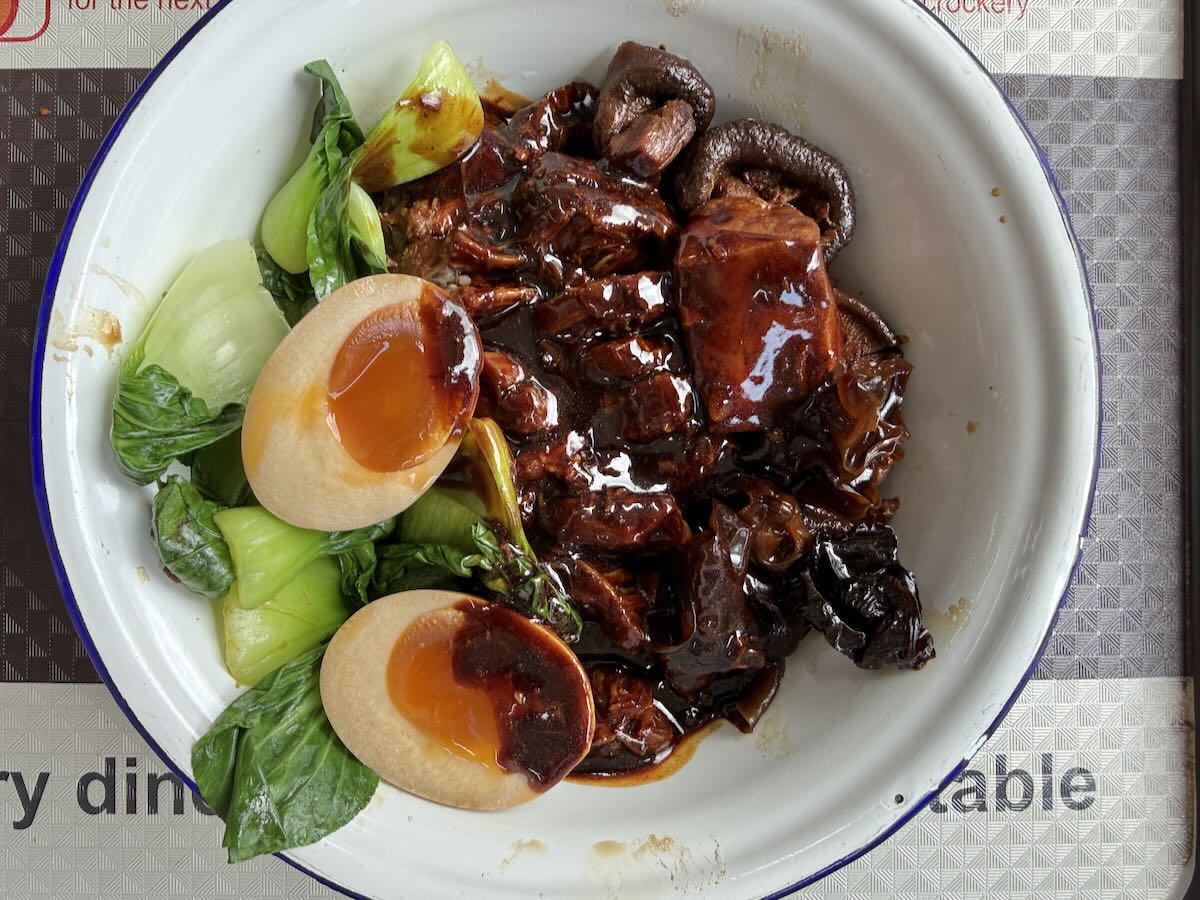
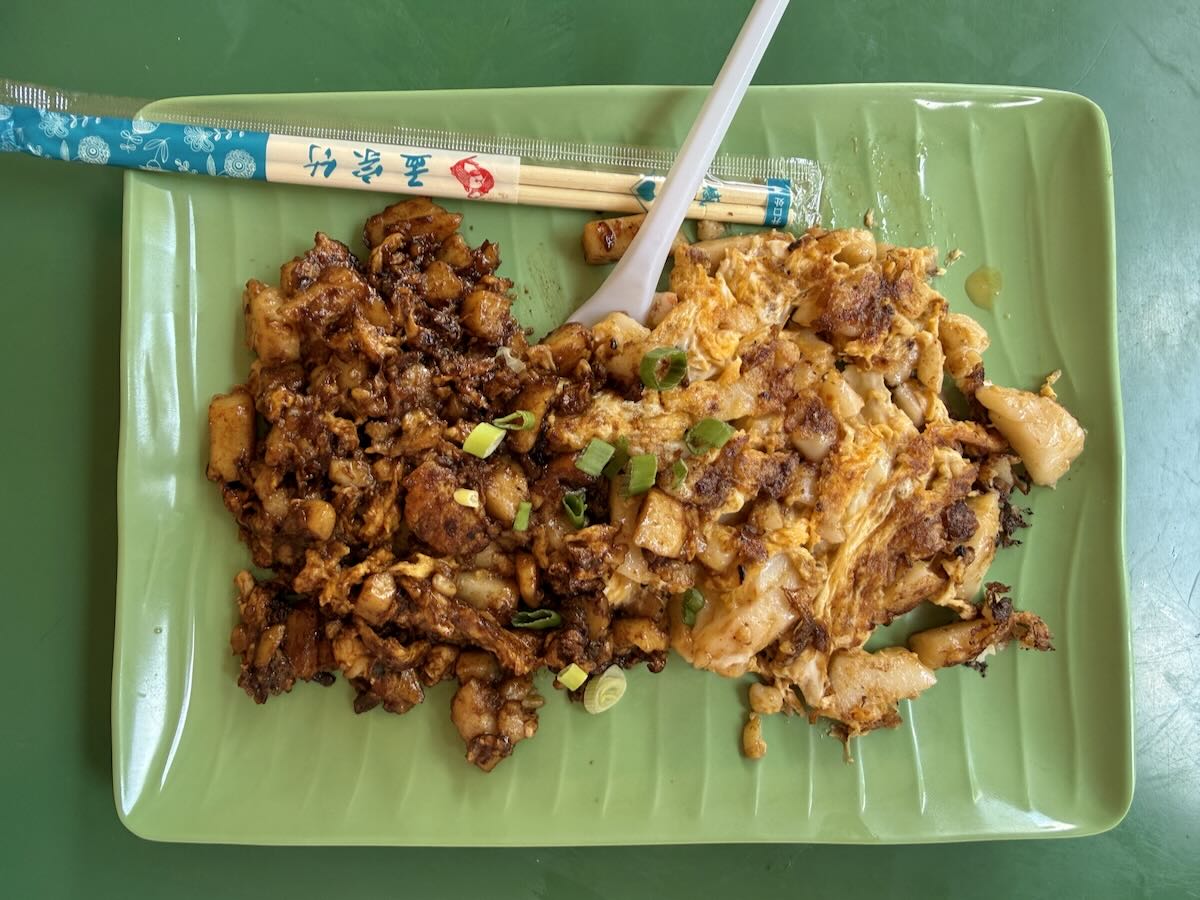
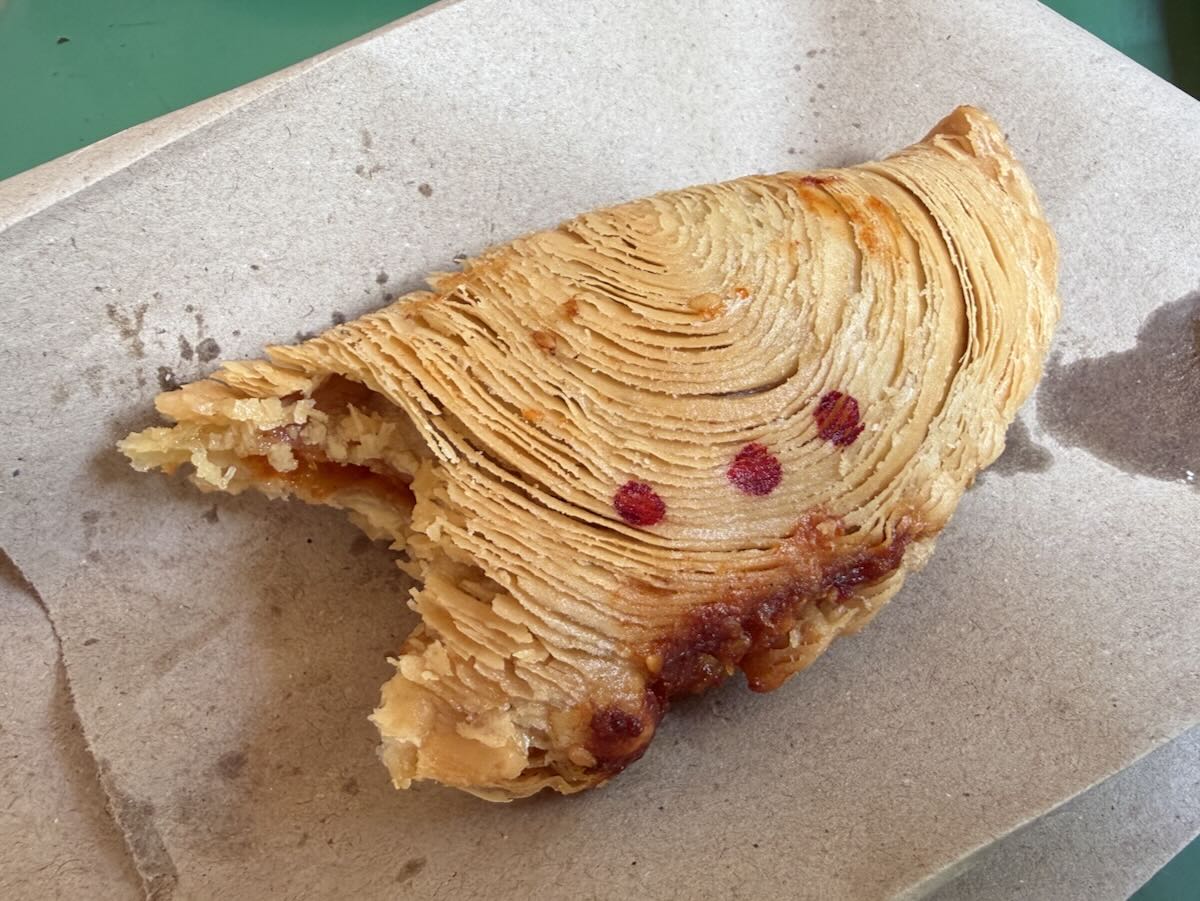
 After a morning of walking, exploring, noticing, etc., we would go for an early lunch. In the 1950s and 60s, the Singapore government cleaned up the street-food situation by creating large open-air pavilions with many restaurant stalls. Hawker centres can be a little intense, particularly when you don’t have any idea which stall to patronize—and even when you do, the line might be long and service slow (and have I mentioned the heat?). All of which is to say it wasn’t my favorite activity. Some of the food was tasty, but street food, even when served in a more formal set-up, tends to be greasy. Don’t ask me what any of these dishes are—I don’t remember and I’m not sure I knew at the time. Napkins, meanwhile, must be BYO, because I never saw one.
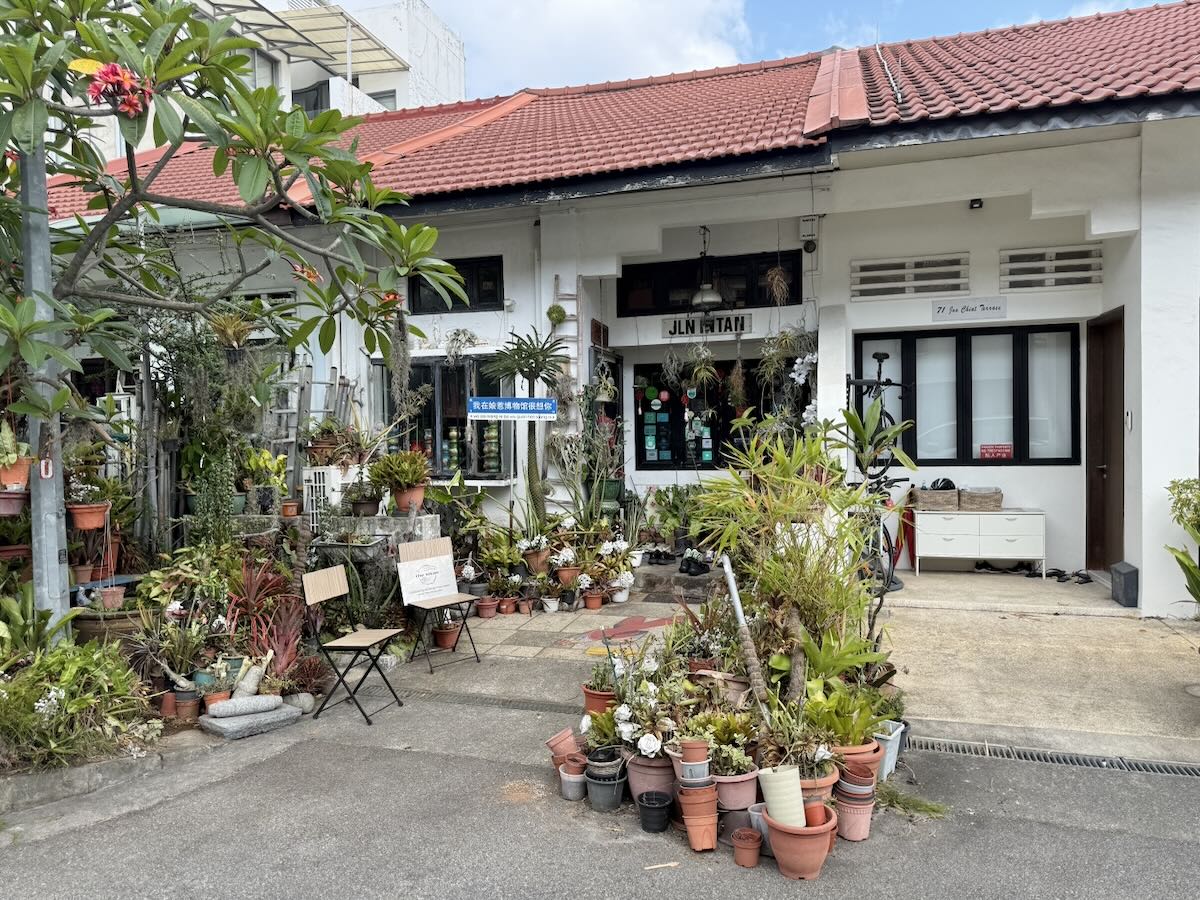
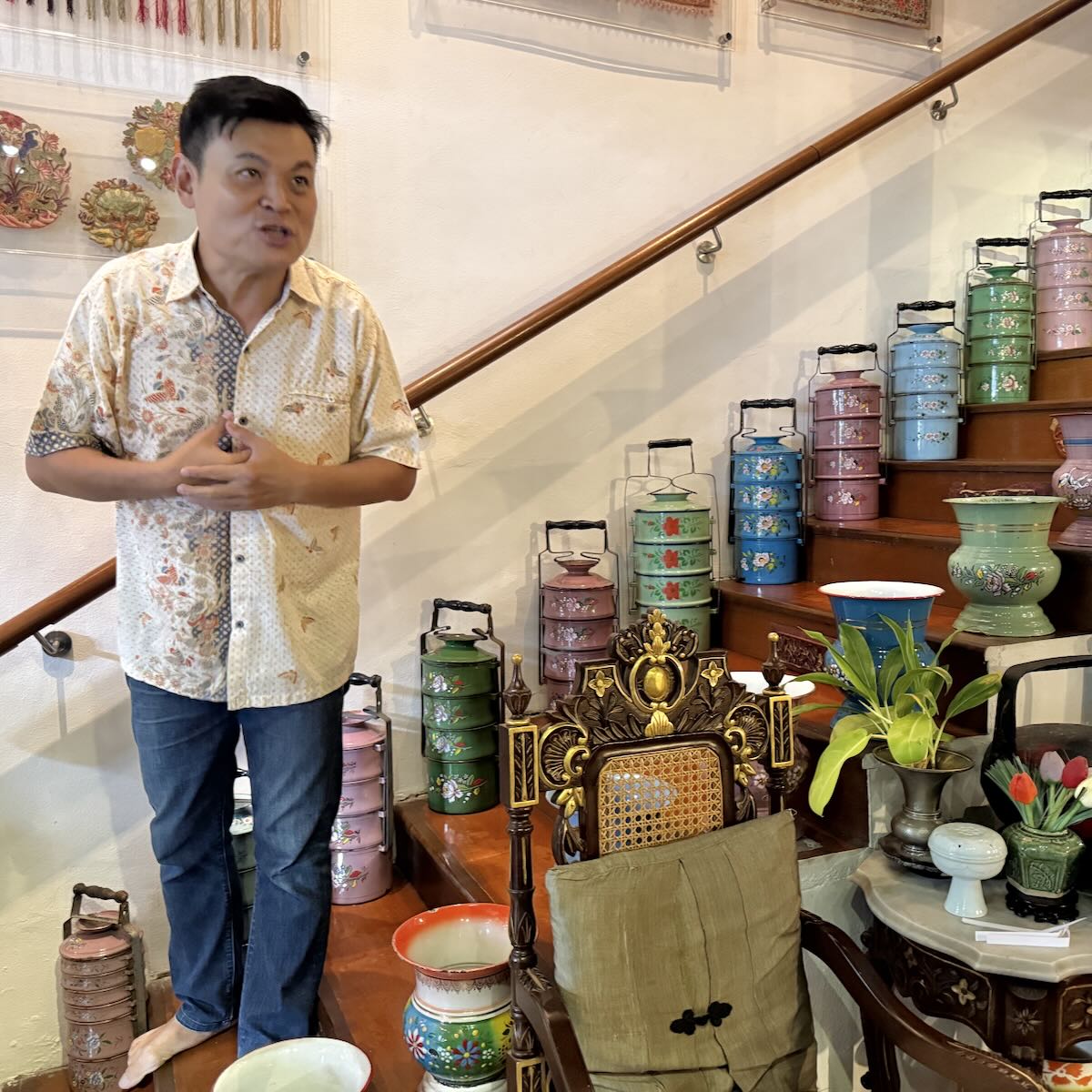
 In the afternoon, we’d rest for a bit, and then reemerge to investigate a museum. At The Intan, founder Alvin Yapp has turned his home into a museum of Peranakan culture. (From Encyclopedia Brittanica: “Peranakan, in Indonesia, Singapore, and Malaysia, [refers to] a native-born person of mixed local and foreign ancestry. […] The Peranakan Chinese, however, form the largest and the most important group, and for this reason many scholars use Peranakan to refer specifically to the Chinese group.”) A visit is just over an hour and totally entertaining, for Yapp is a skilled and engaging host.
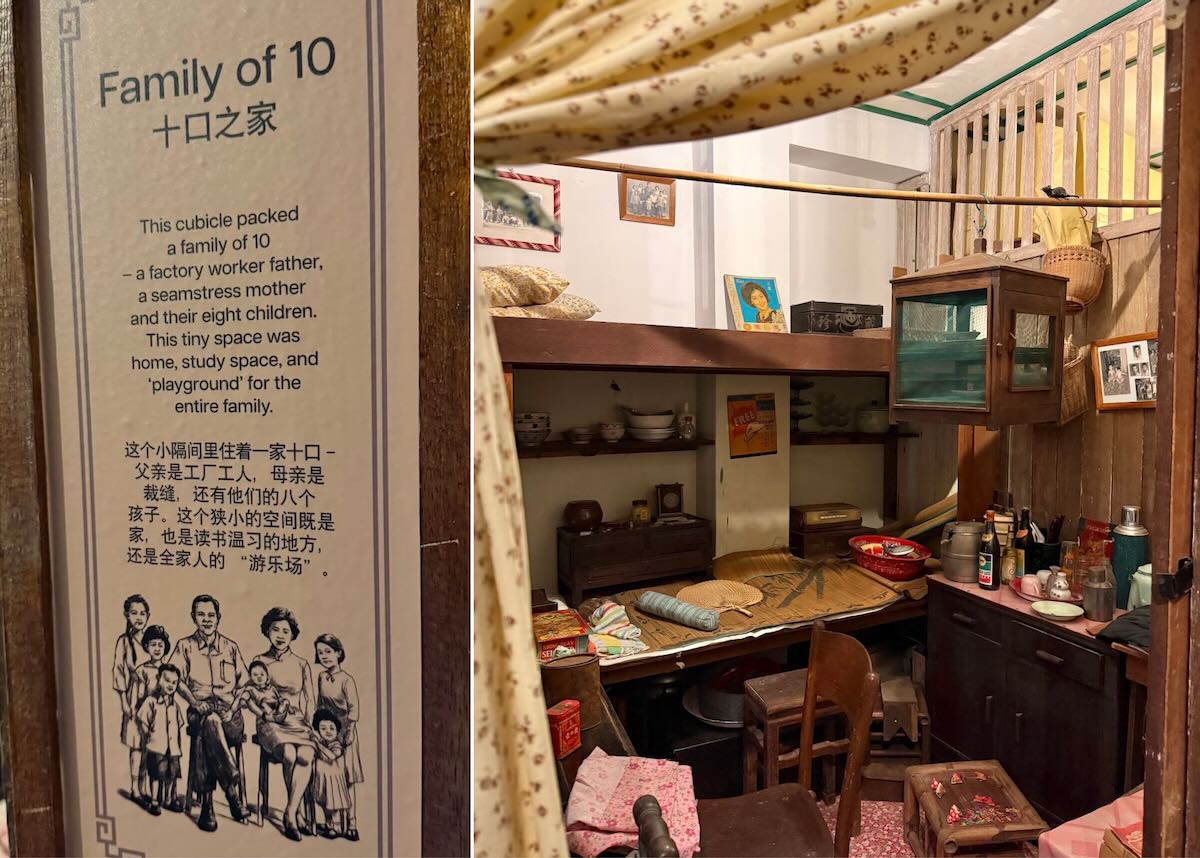
 He recommended the Chinese Heritage Centre, which looks at how Singapore’s Chinatown came to be. It’s kind of like the Tenement Museum in New York City, but more harrowing.
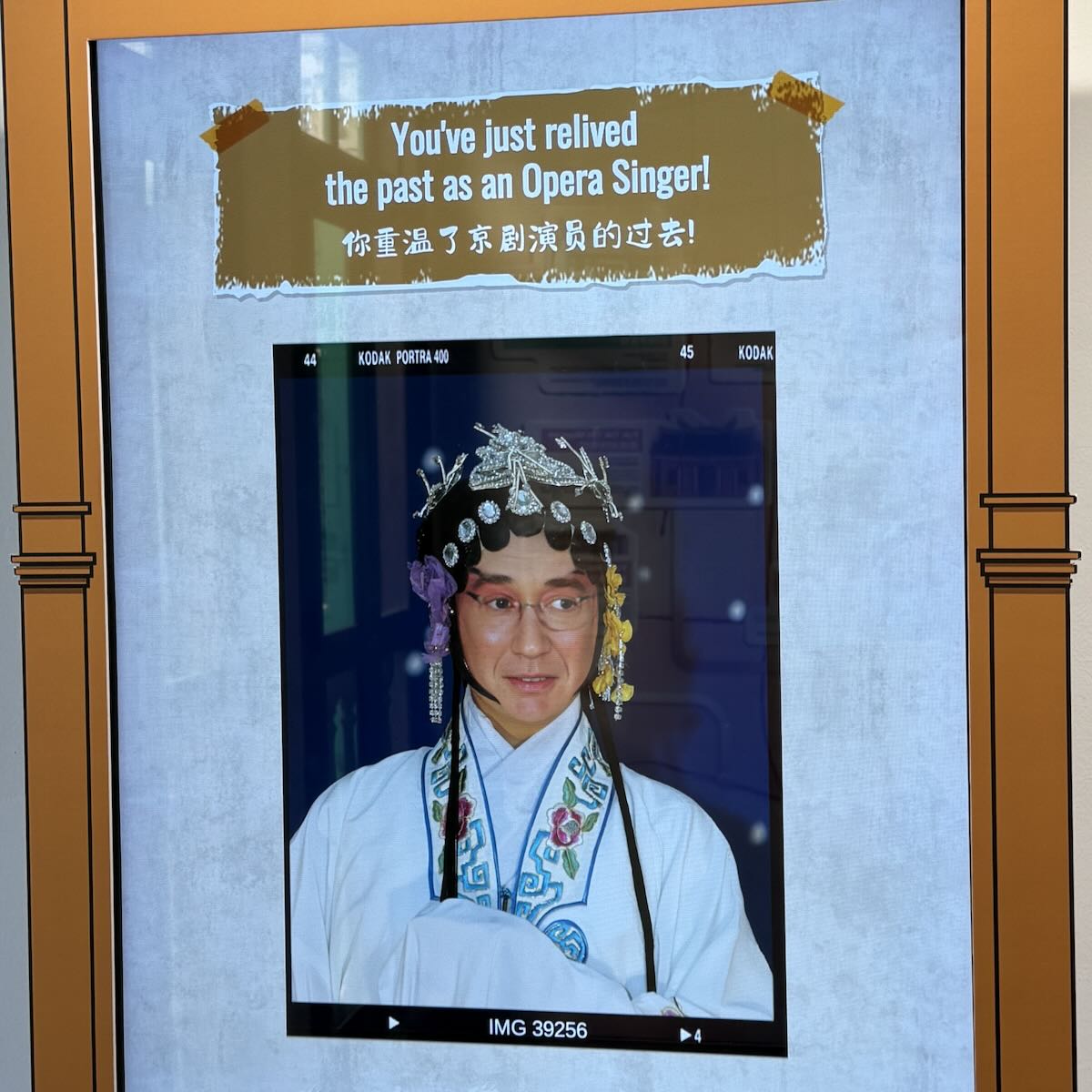
 The museum has a photo booth–like device that transforms visitors into someone from yore. I chose “opera singer” and ended up looking like Fred Armisen in culturally inappropriate drag.
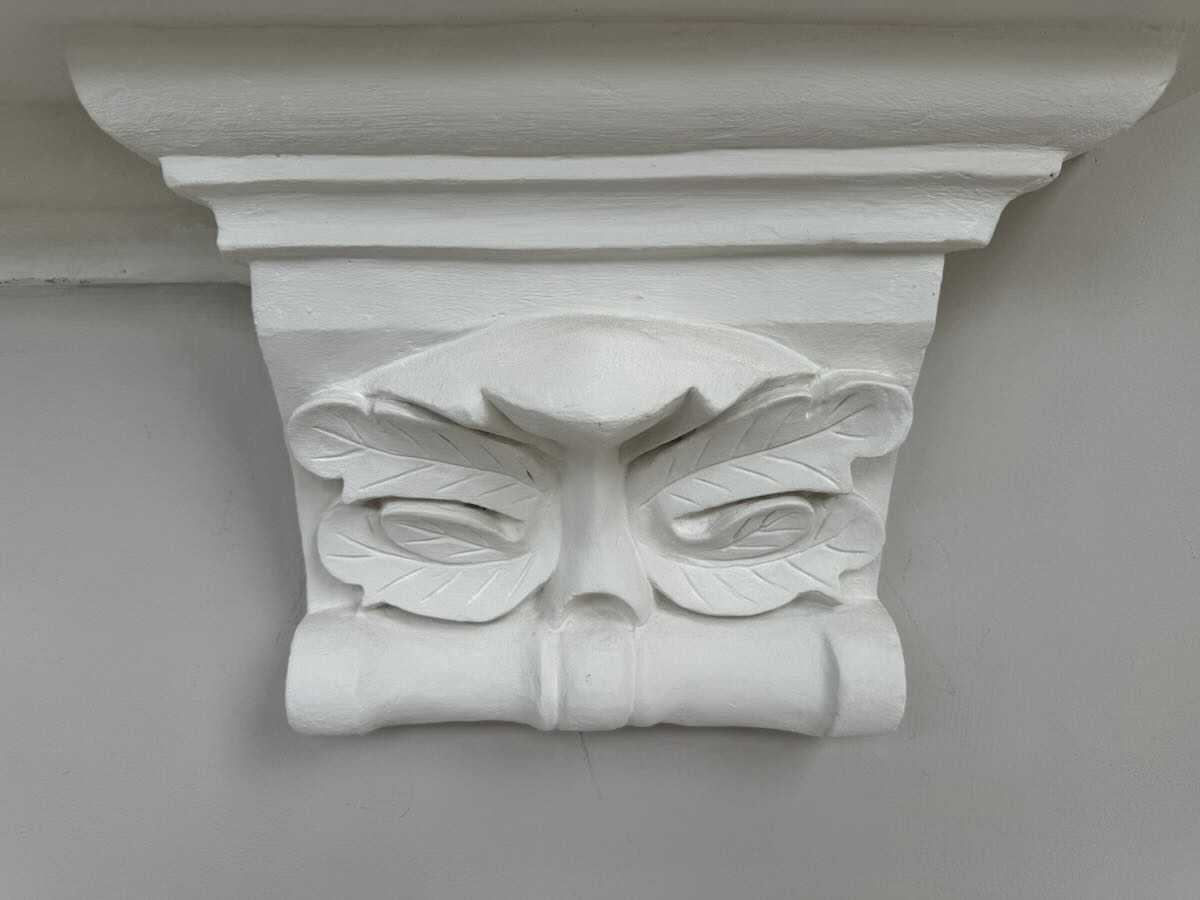
 We skipped the National Gallery Singapore because the main show was of Impressionist works from the Museum of Fine Arts, Boston—fine and admirable, but not why we were in town. I did discover faces on the facade, though.
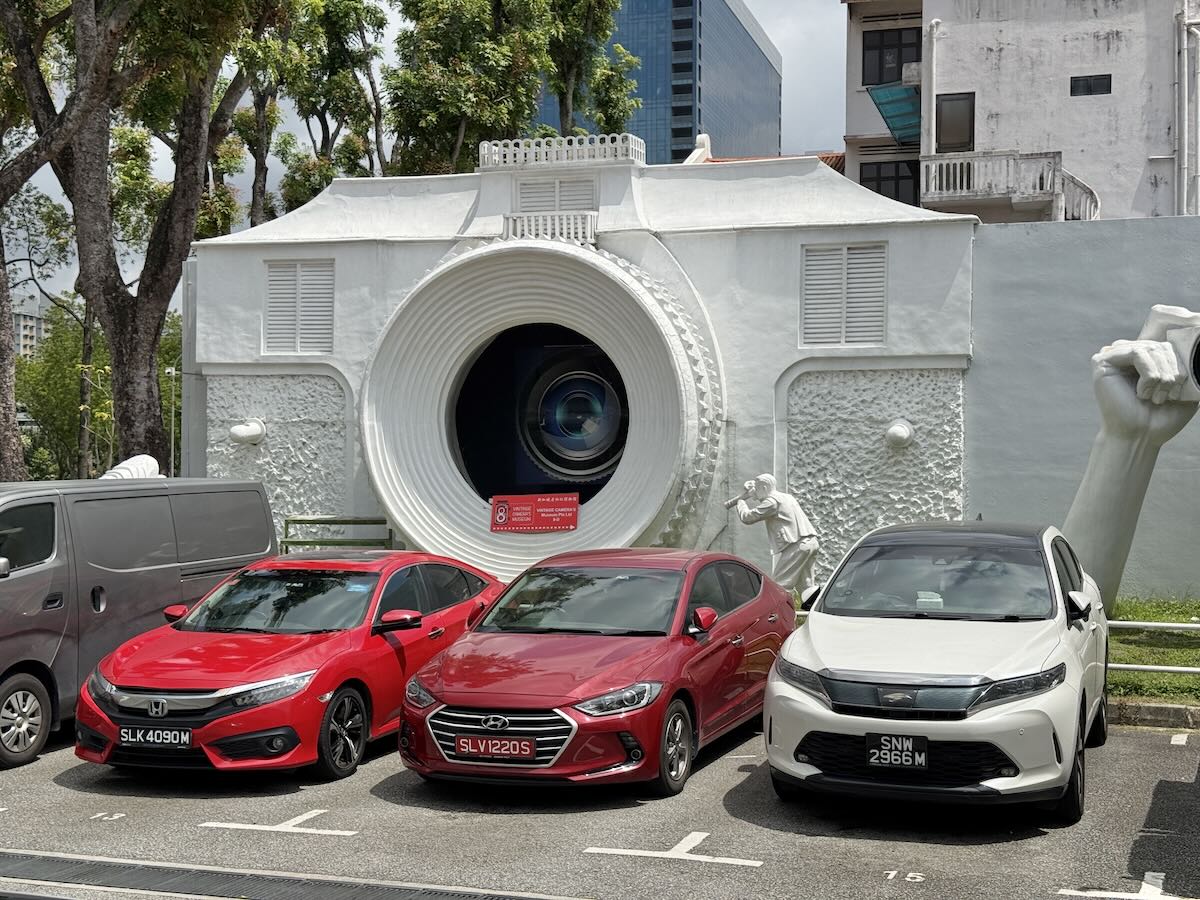
 We also took a pass on the Vintage Camera Museum, where no exhibit could compare with the building.
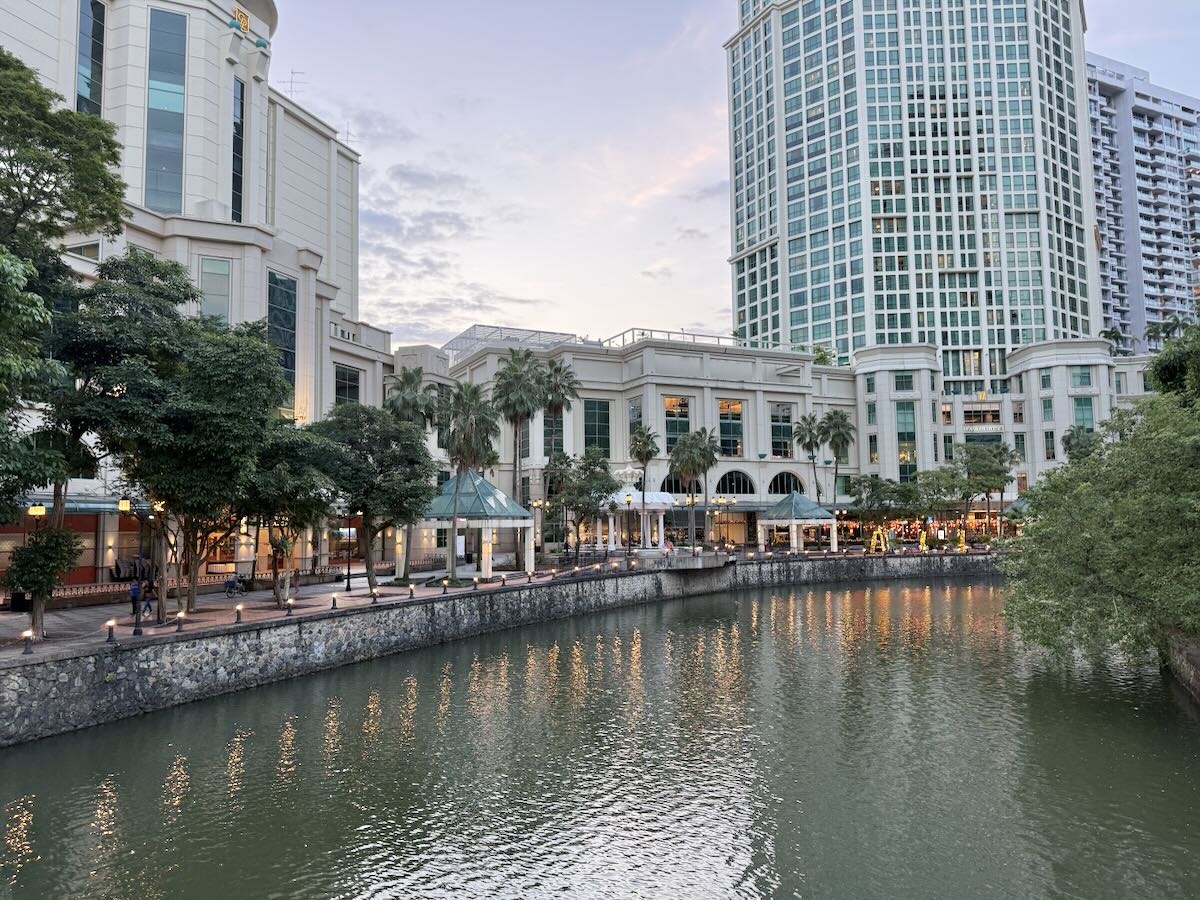
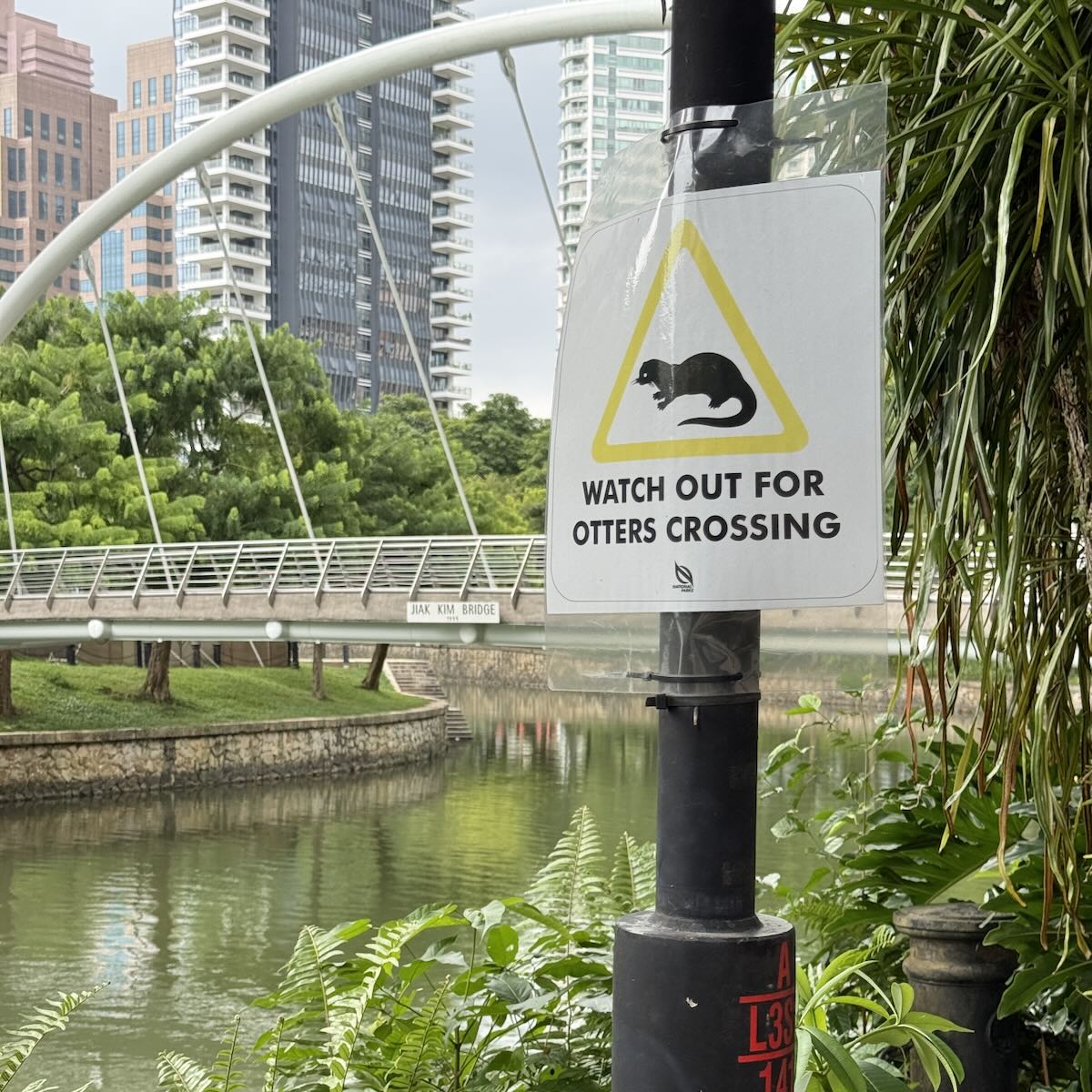
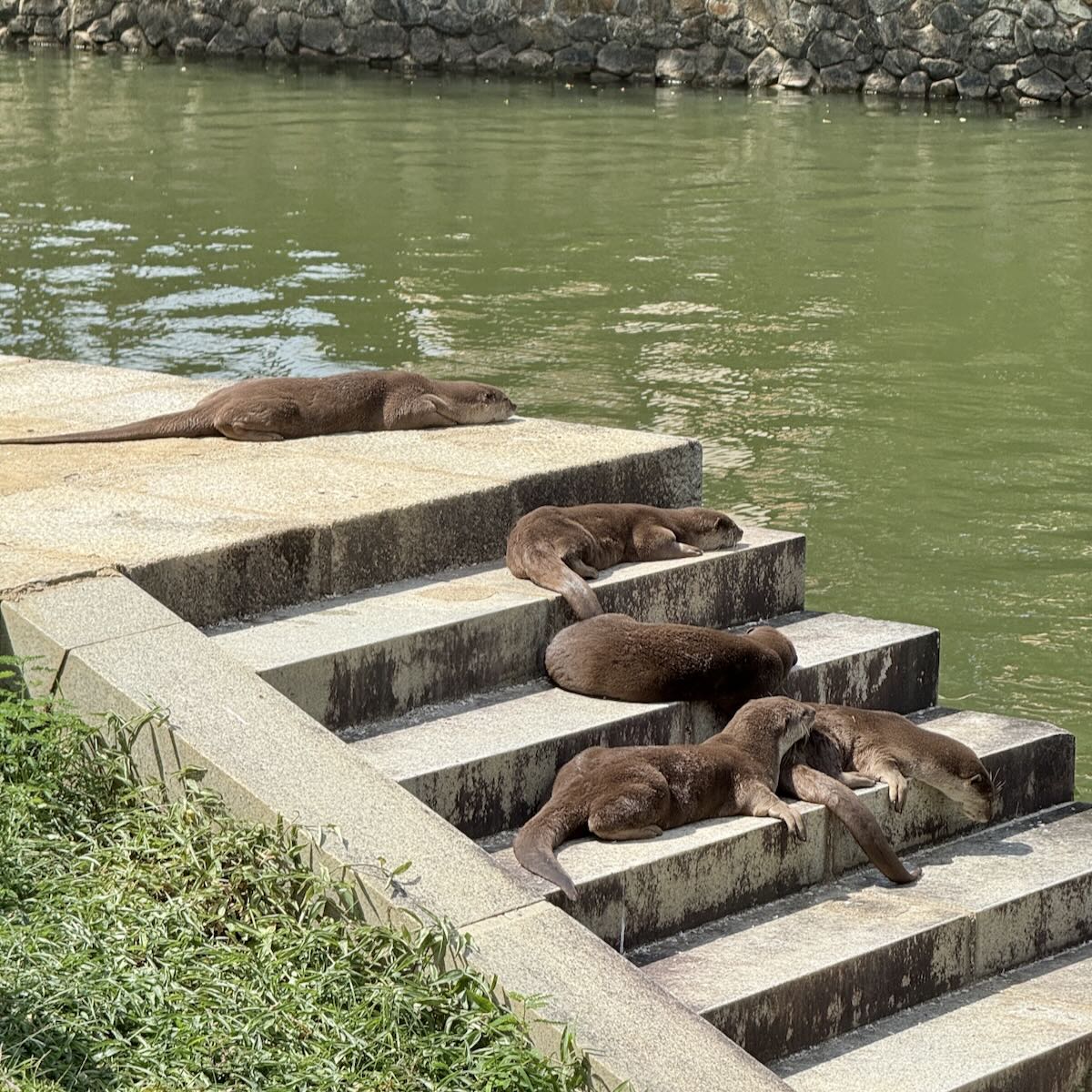
 Late afternoon also brought the possibility of a slow stroll by the river. And we were fortunate enough to see the river otters!
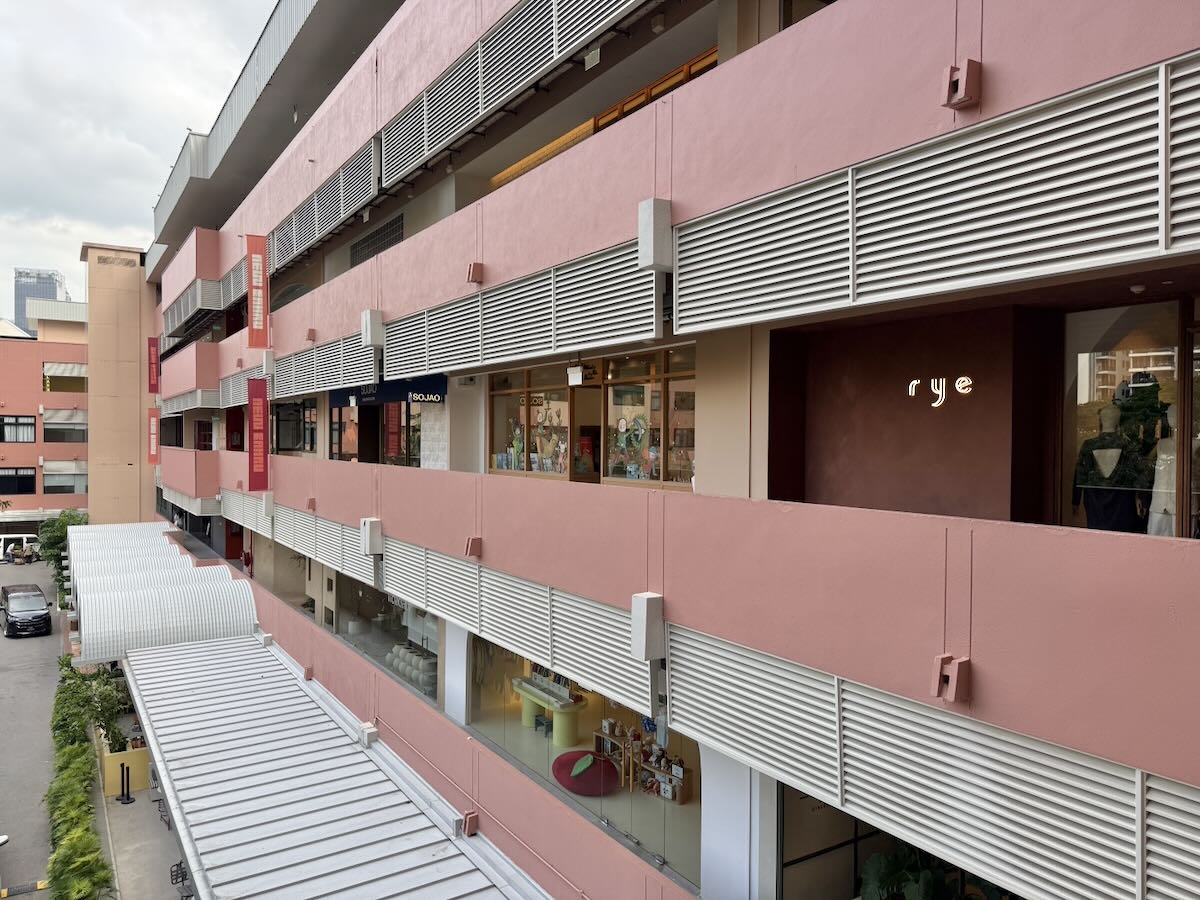
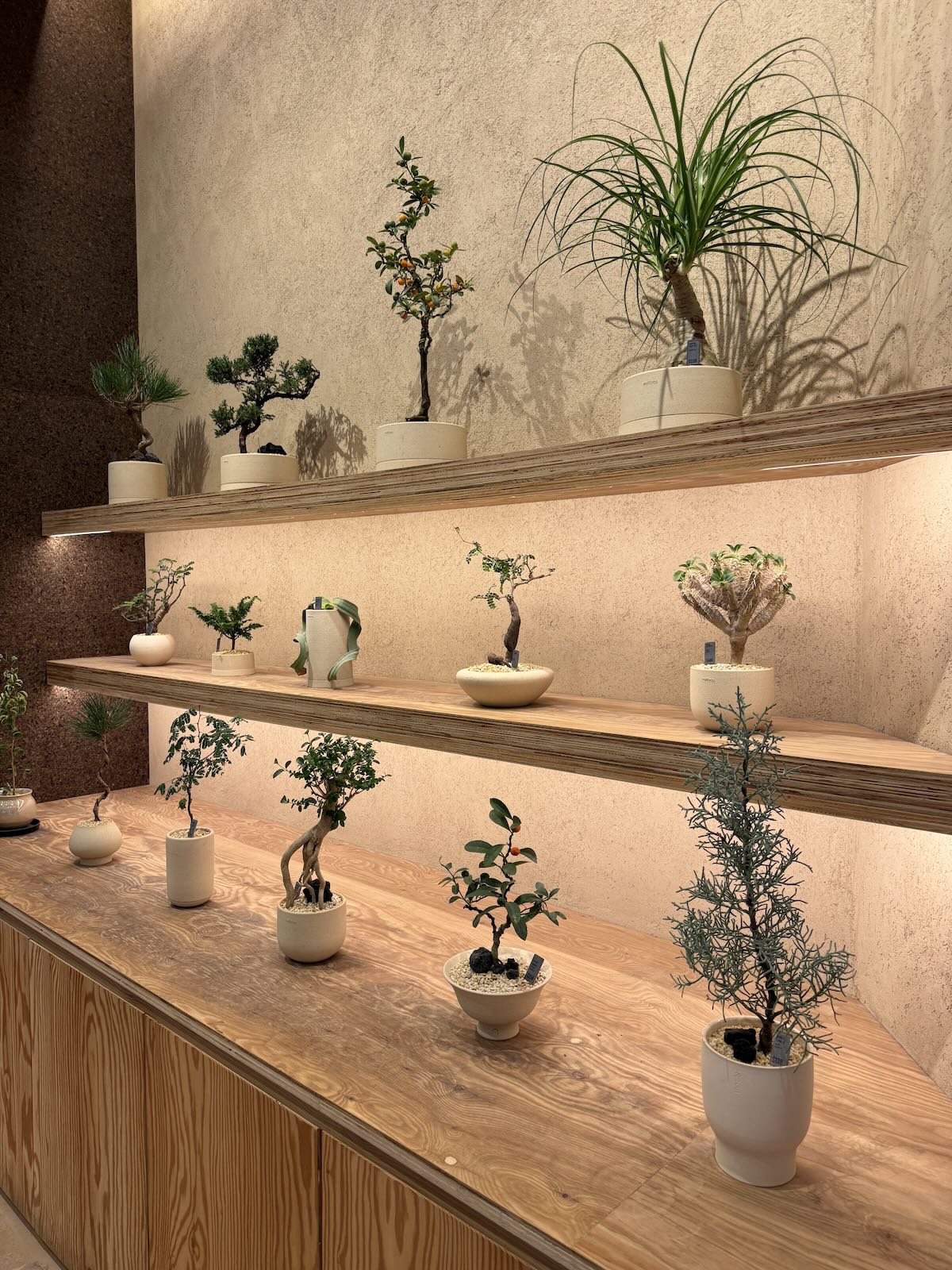
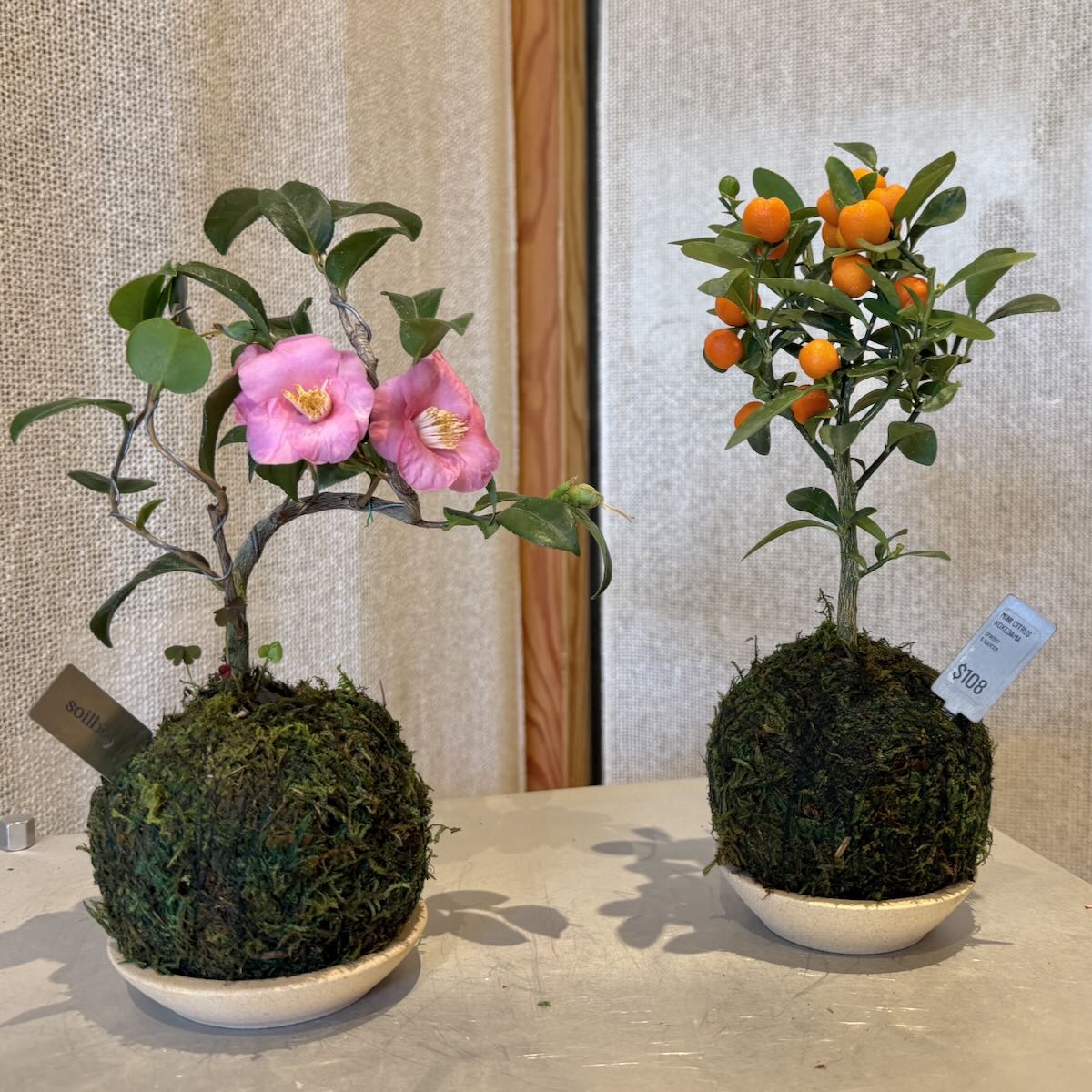
 One evening, we explored the Brooklyn-y New Bahru “creative cluster,” a former high school converted to shops (such as bonsai specialist Soilboy), galleries (where we saw extraordinary cactus watercolors by Lebanese artist Ali Cherri), offices, and restaurants, including Bar Bon Funk, which was the best meal we had in Singapore.
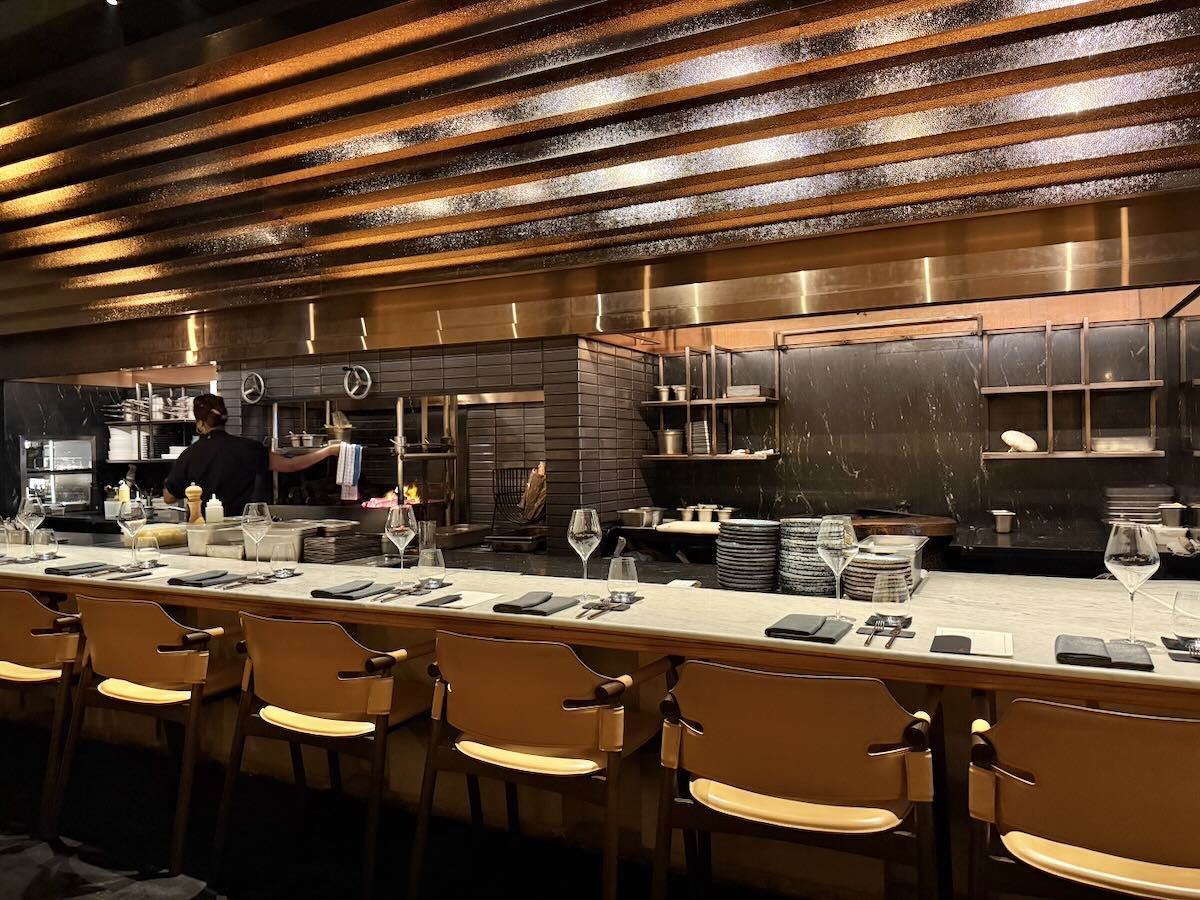
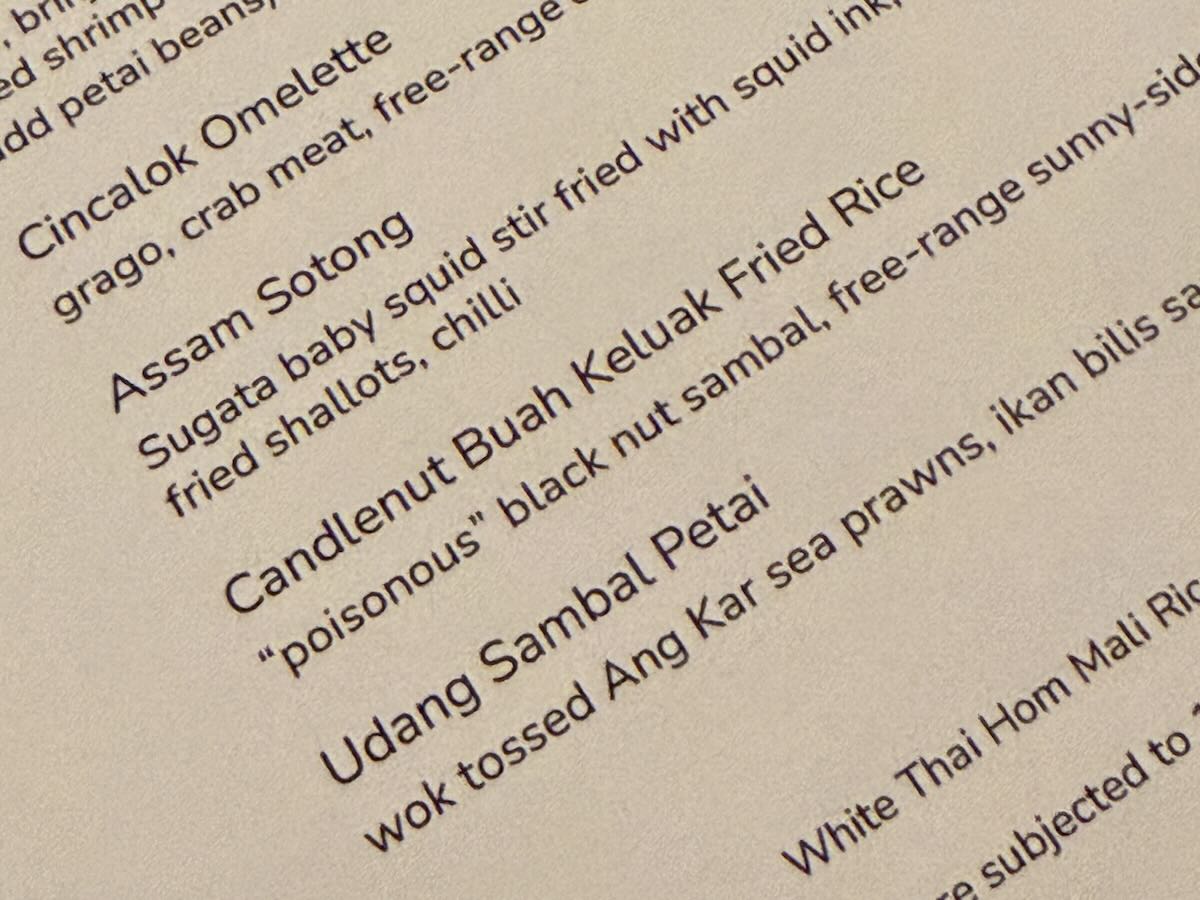
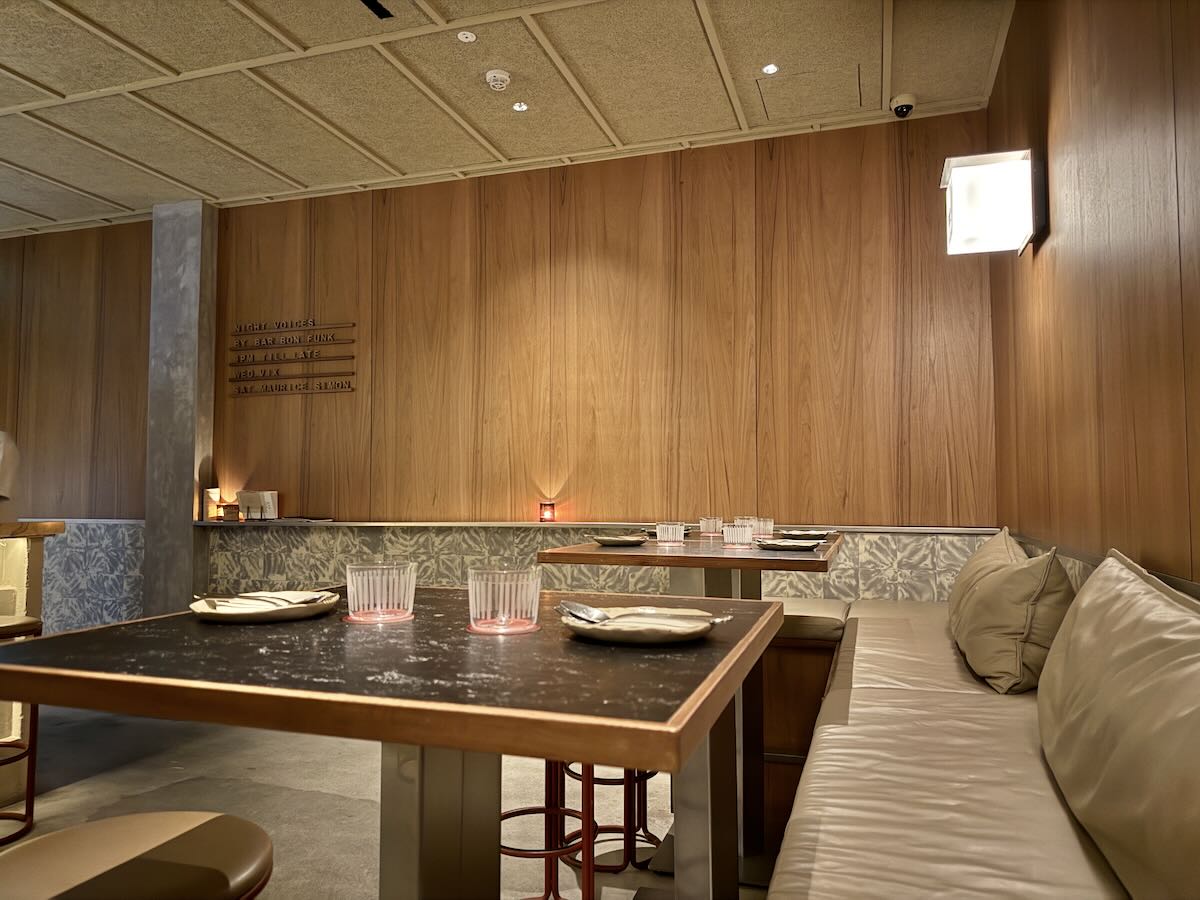 We also had a fine dinner at Lolla (since closed), and I liked Revolver (below) quite a bit, although for some reason I was craving Indian food everywhere we went in Southeast Asia. At Candlenut, nothing on the plate provided as much excitement as the menu.
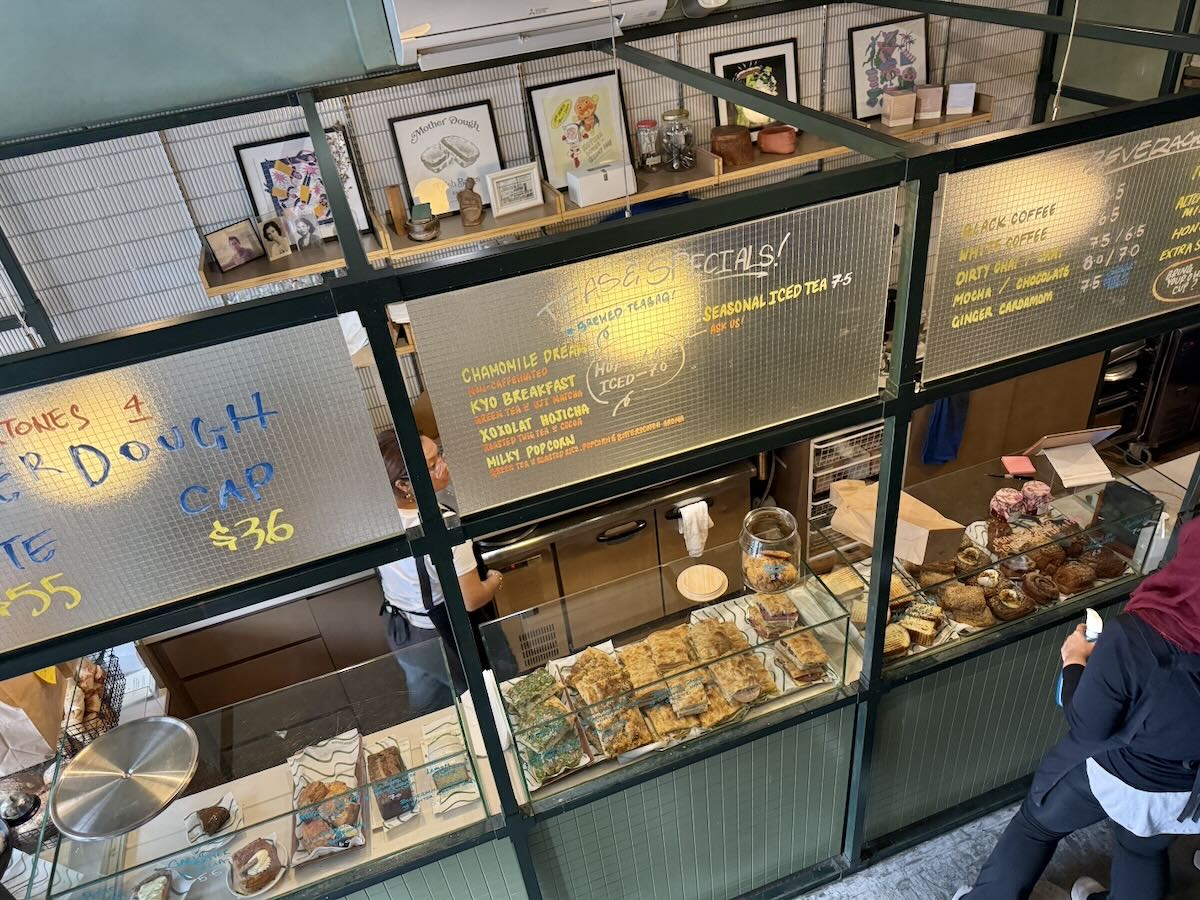
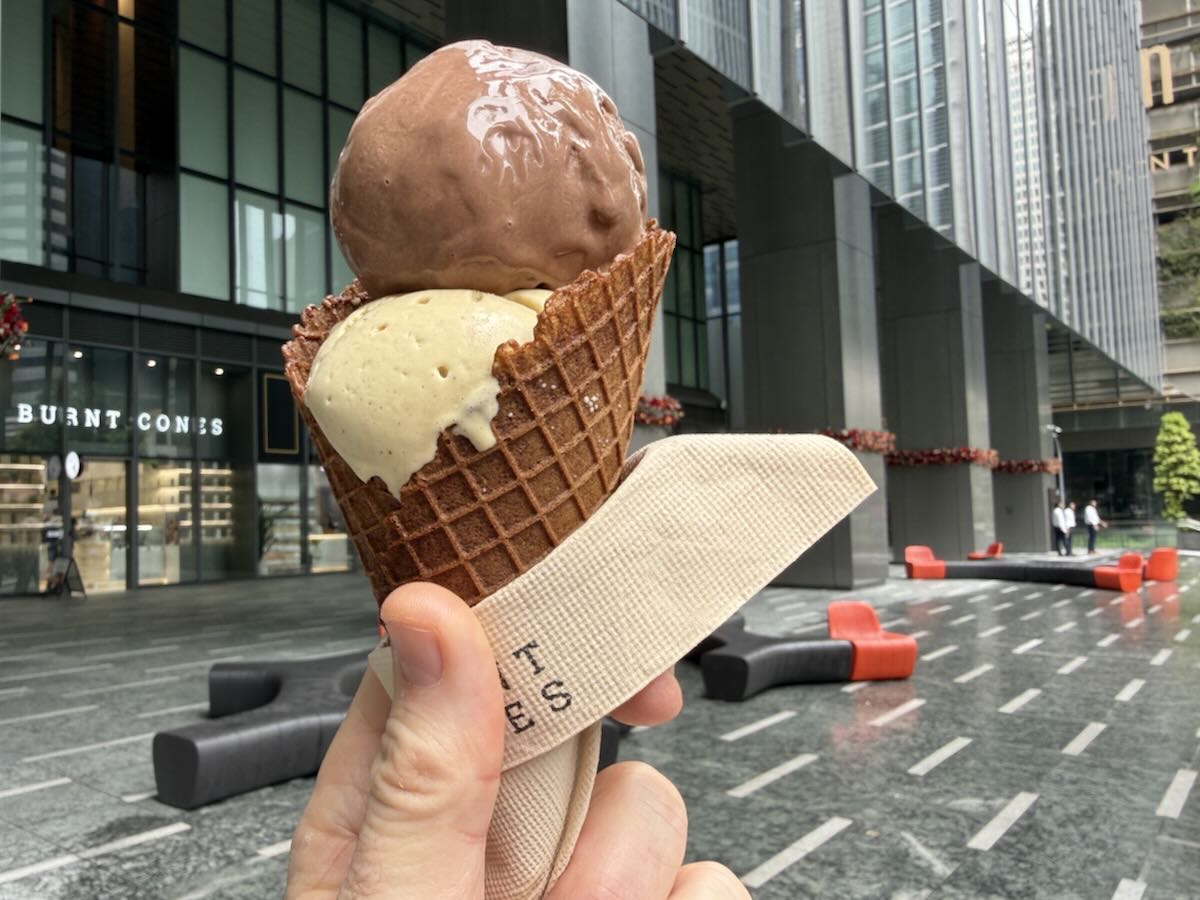
 If I were to return to Singapore, I’d spend more time at Mother Dough Bakery. But Burnt Cones was a bummer. A cone “intentionally caramelized to perfection” sounded like a dream come true; instead, it shattered in my hand soon after I took the photo, leaving me dripping with gelato all over myself and the ground, surely violating at least one local law.
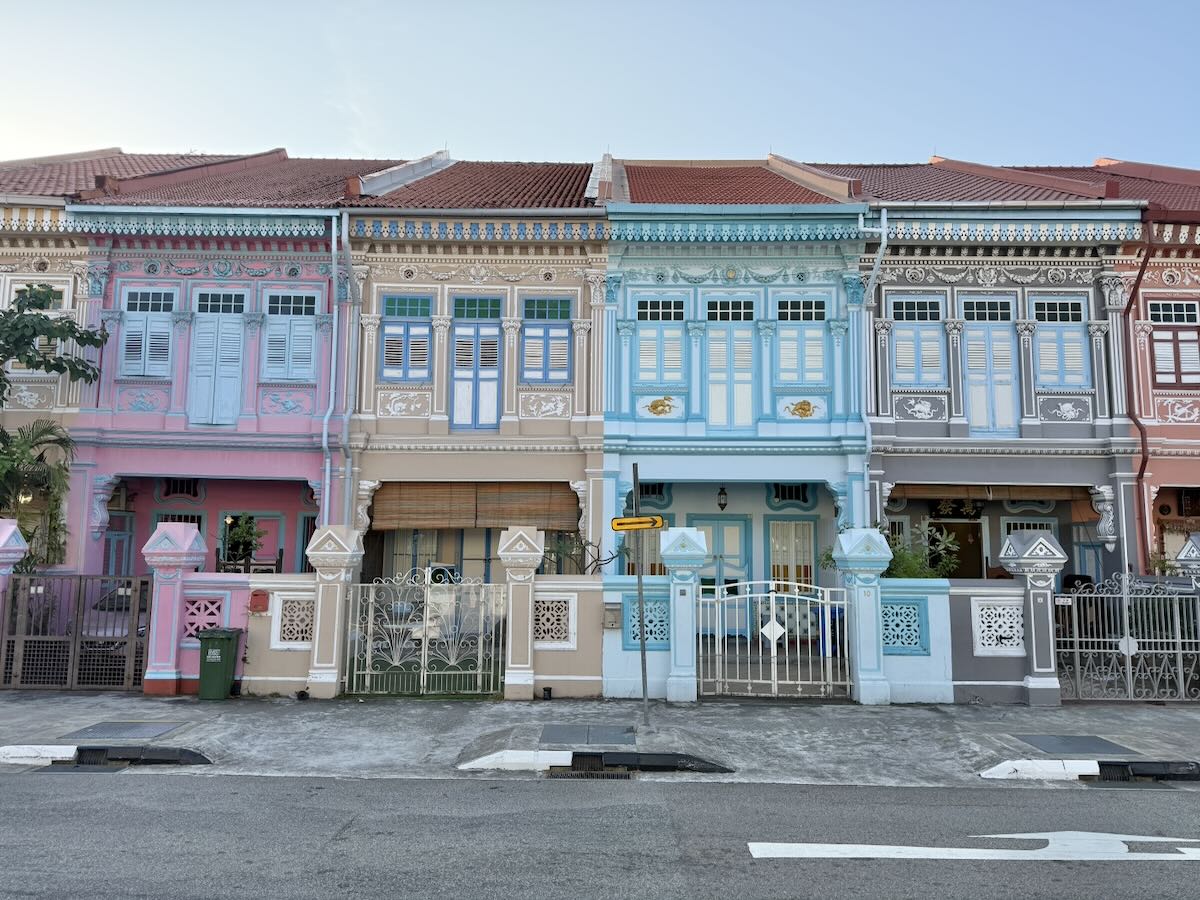
 This post has gone on too long; they all do. I must, however, address the architecture, for it’s an essential part of the Singapore experience. The small, old buildings, including the colorful Peranakan houses, have a unique, irresistible charm.
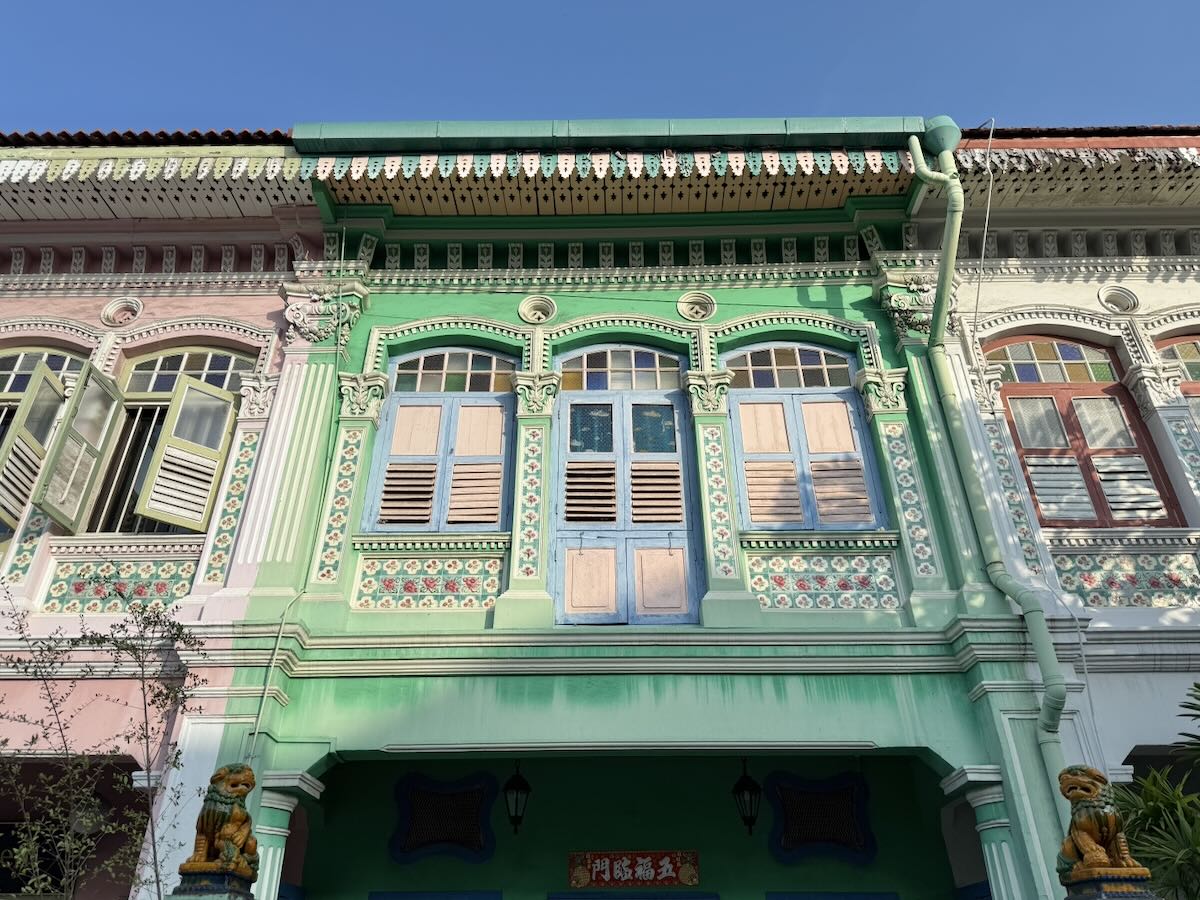
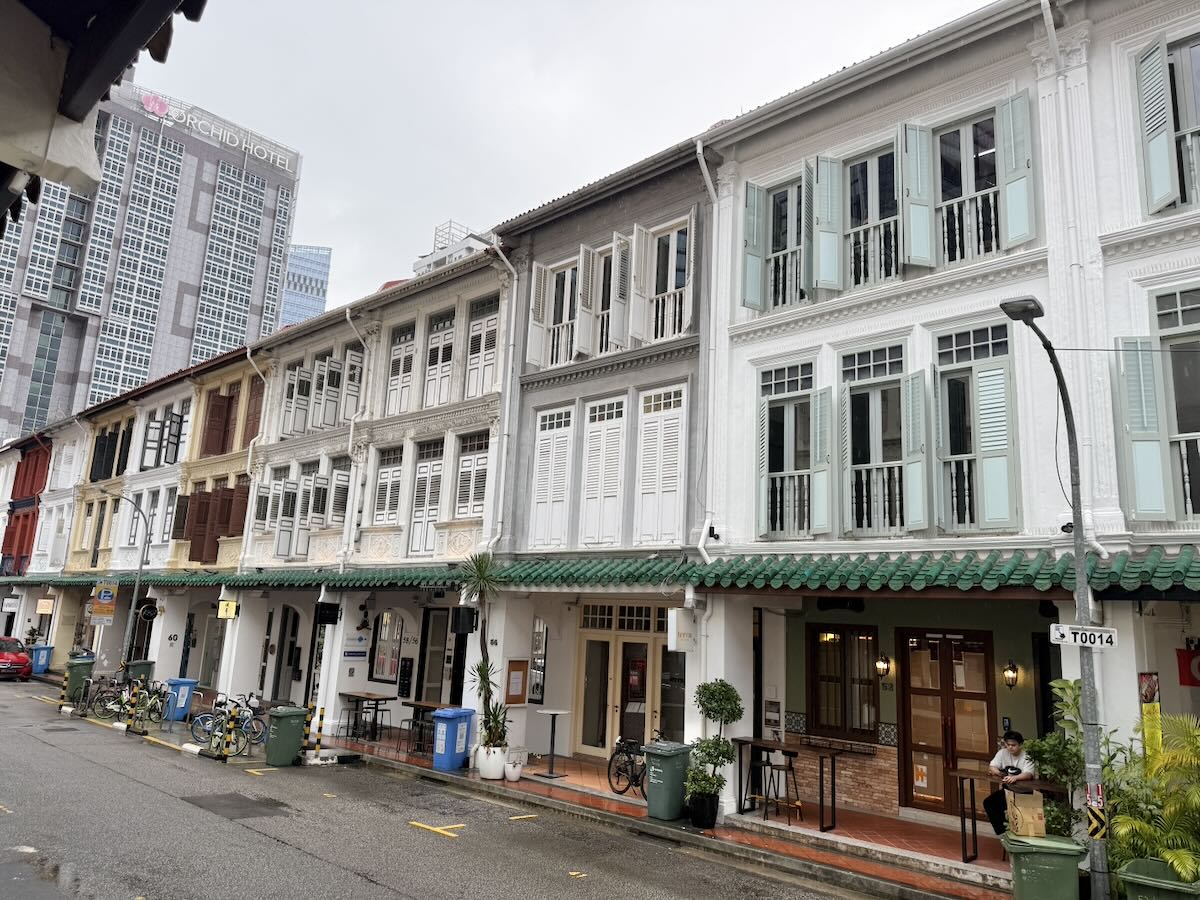
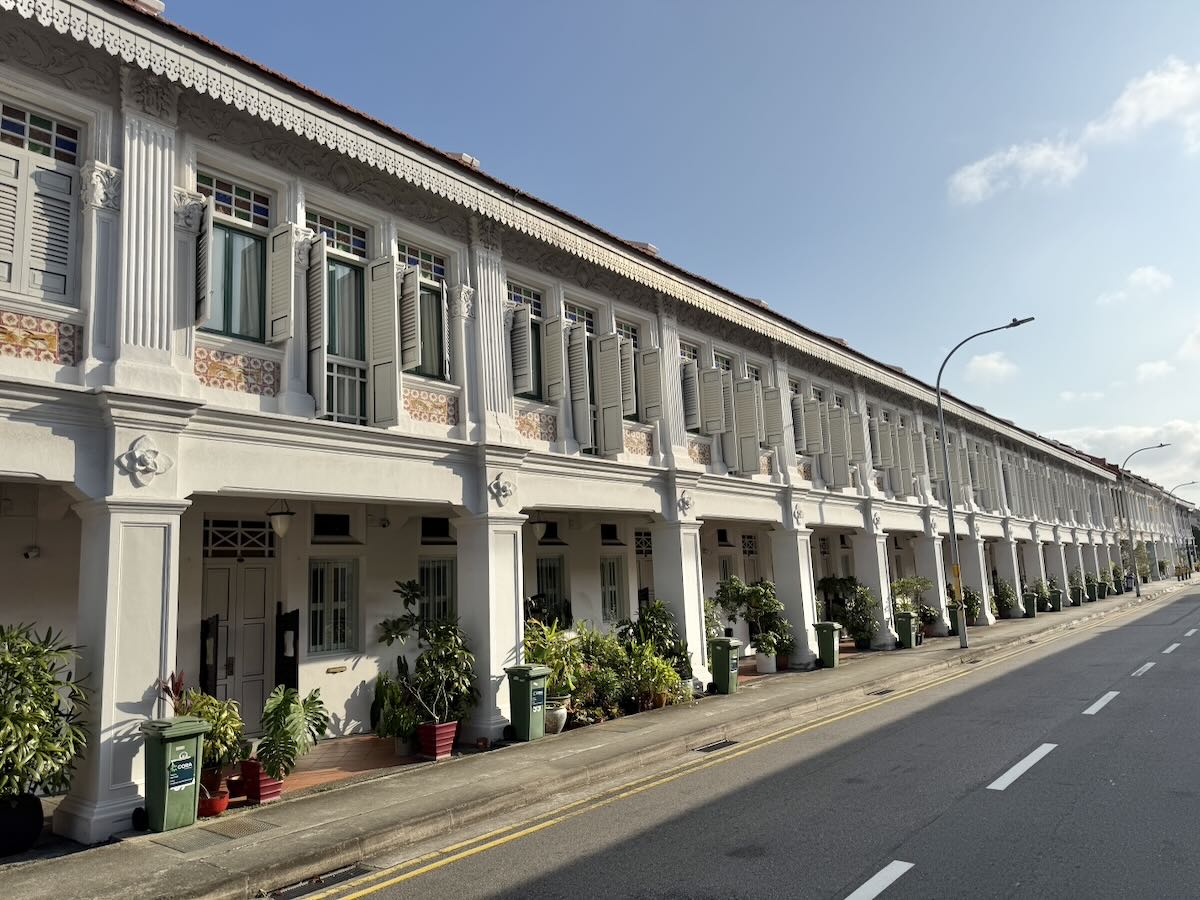 And they bump right up against new buildings.
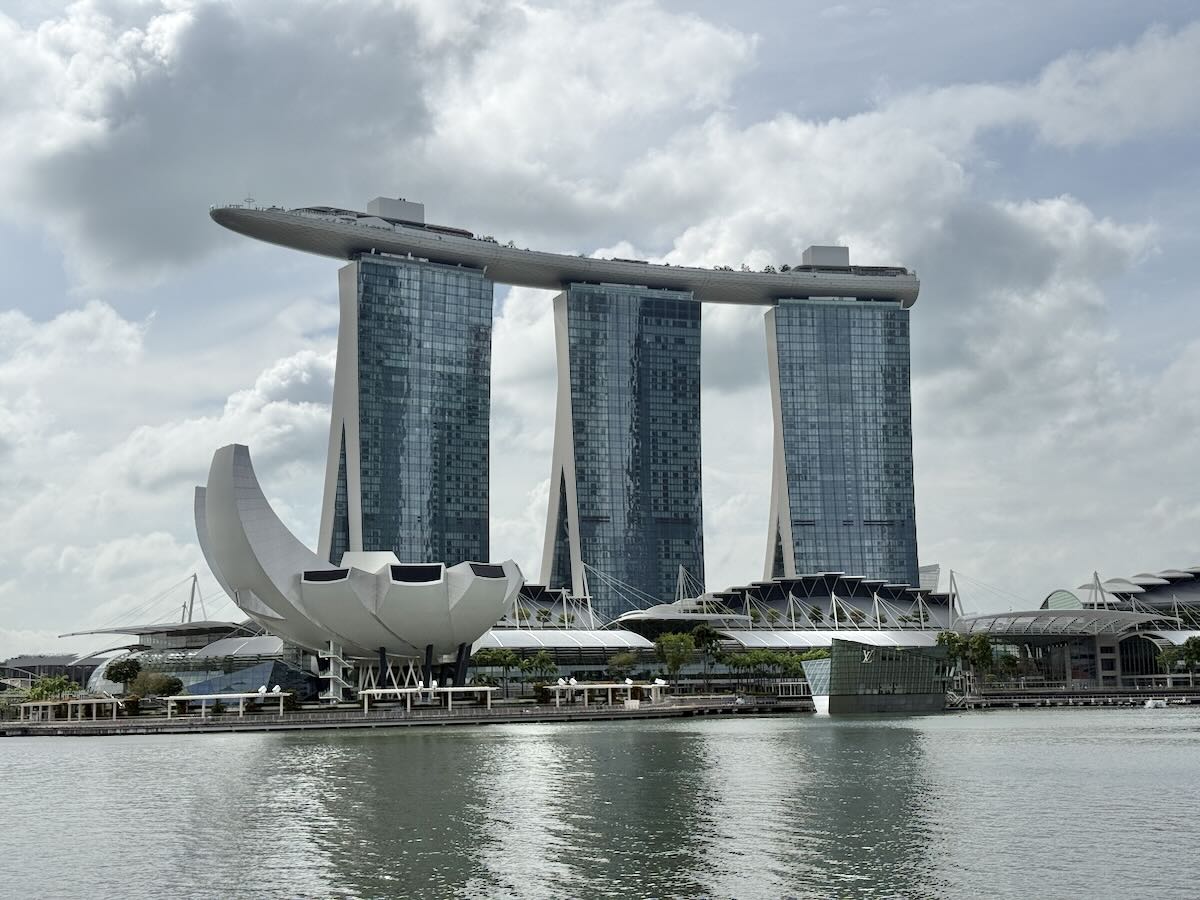
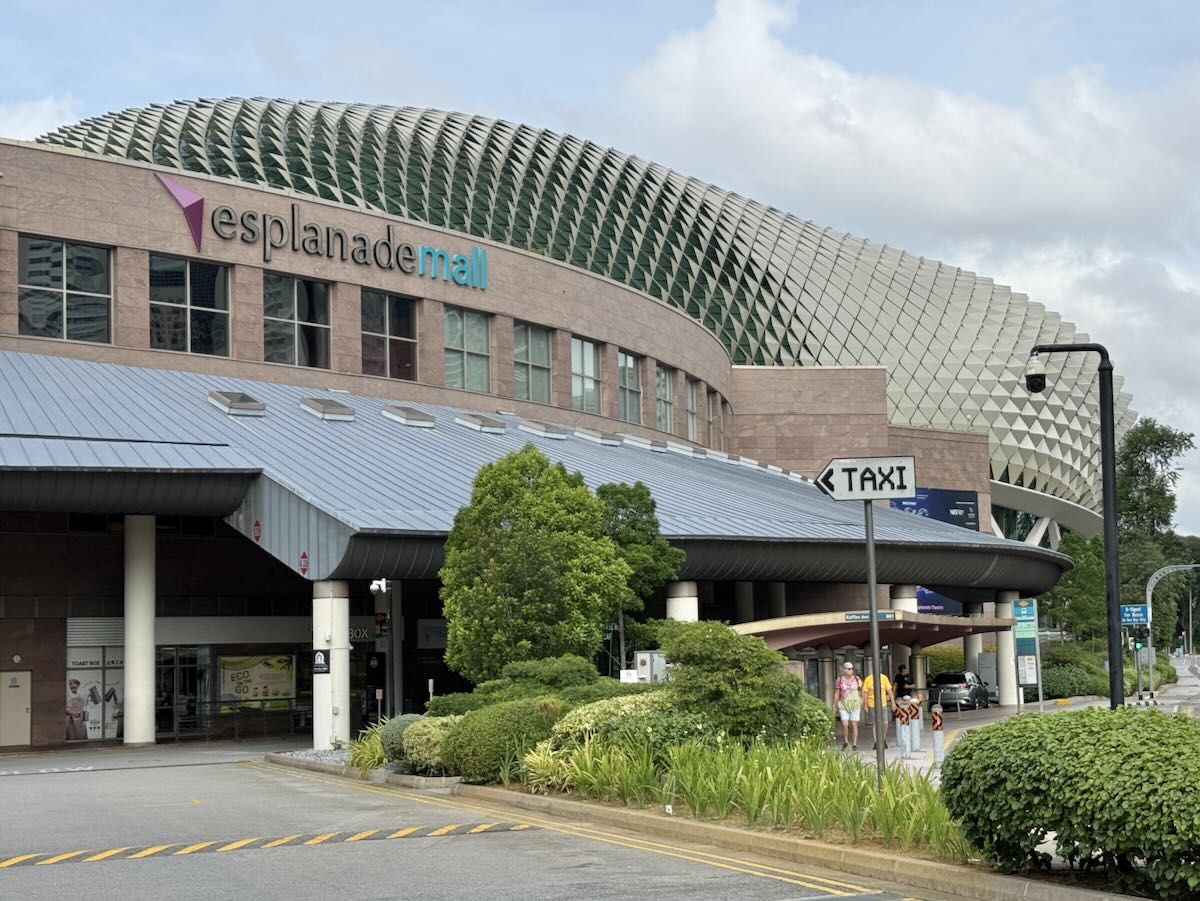
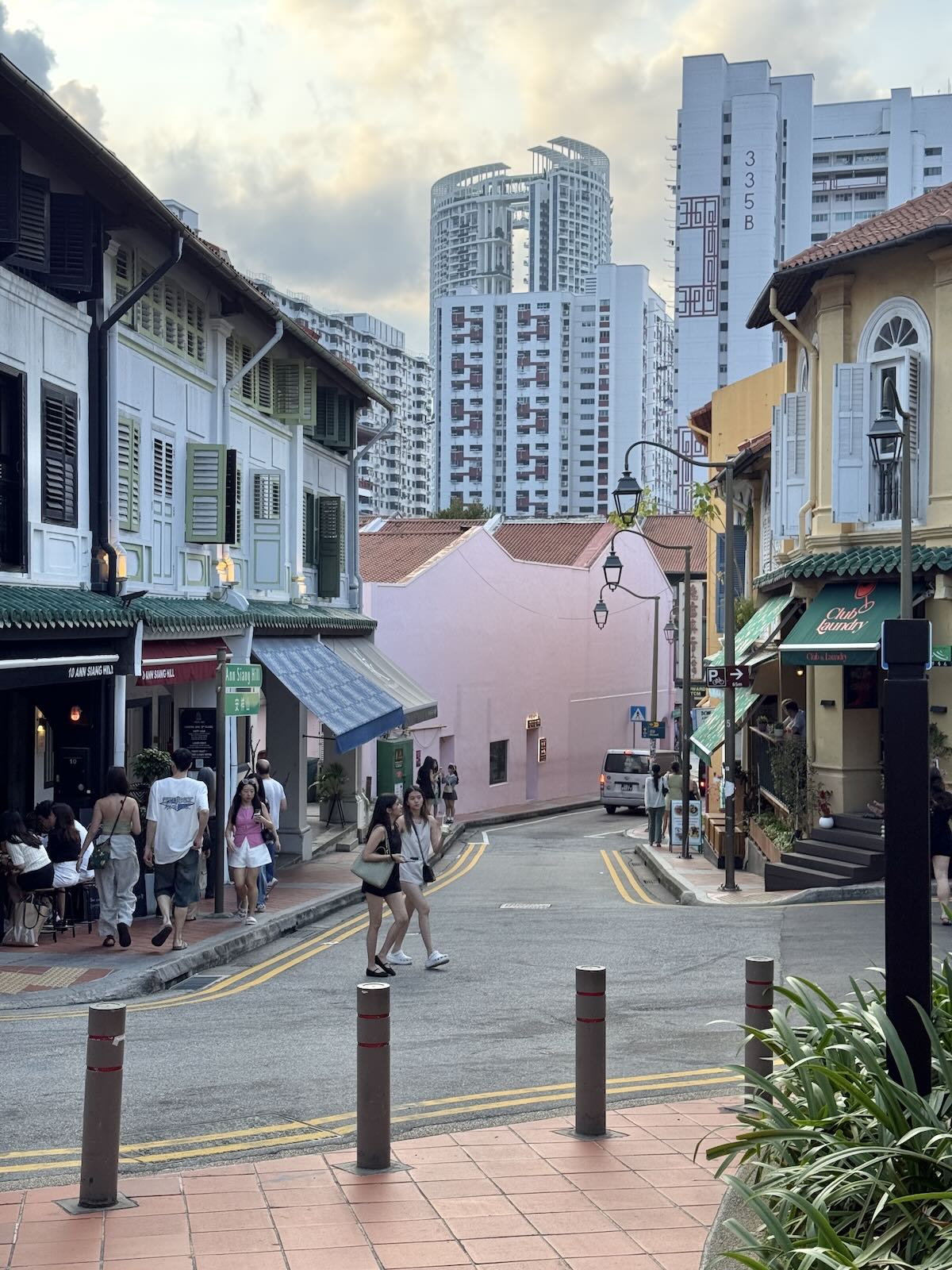 But it was the contemporary architecture that defined Singapore for me. The most well-known examples have to be 1) the Marina Bay Sands hotel, casino, and convention center, which looks like a ship resting on three plinths; 2) the lotus-inspired ArtScience Museum at its feet; and 3) Esplanade–Theatres on the Bay, a.k.a. the Durian, across the way.
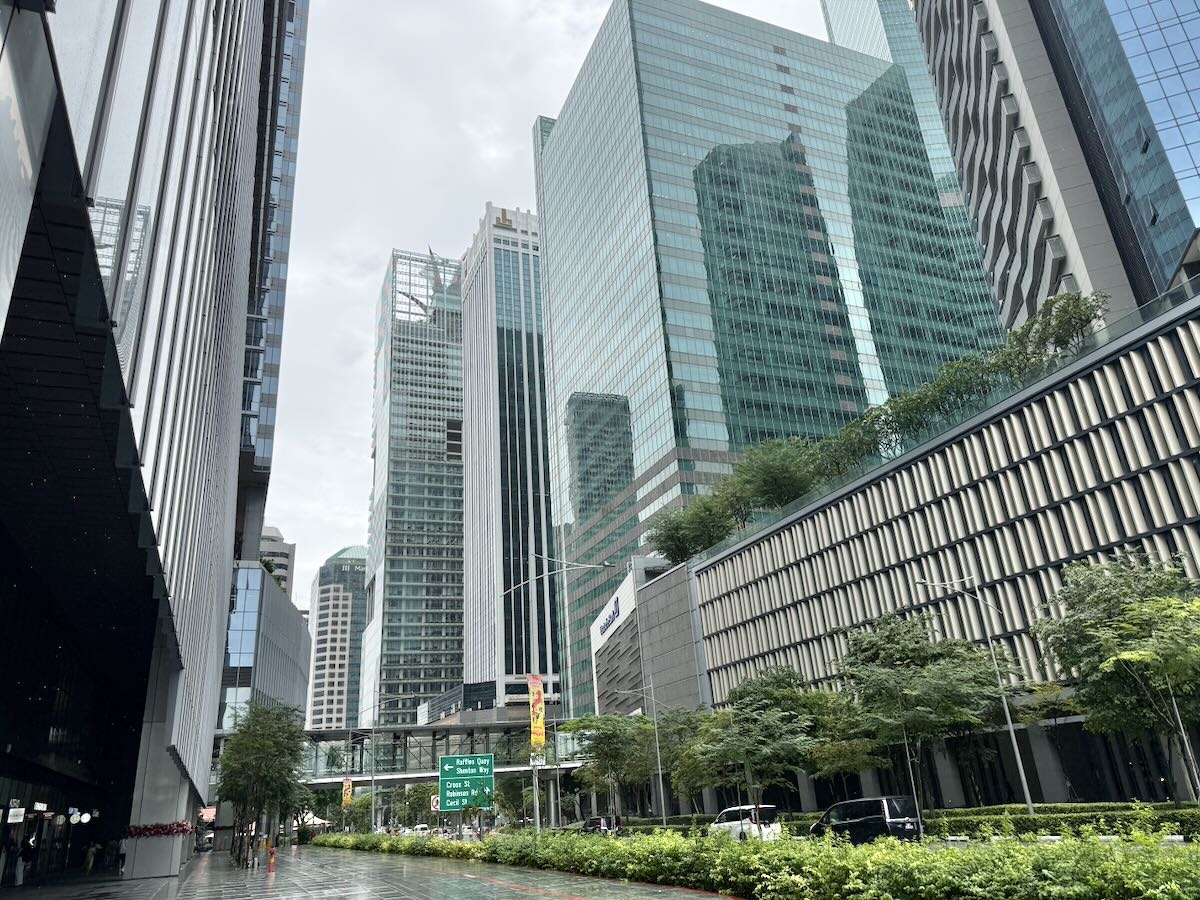
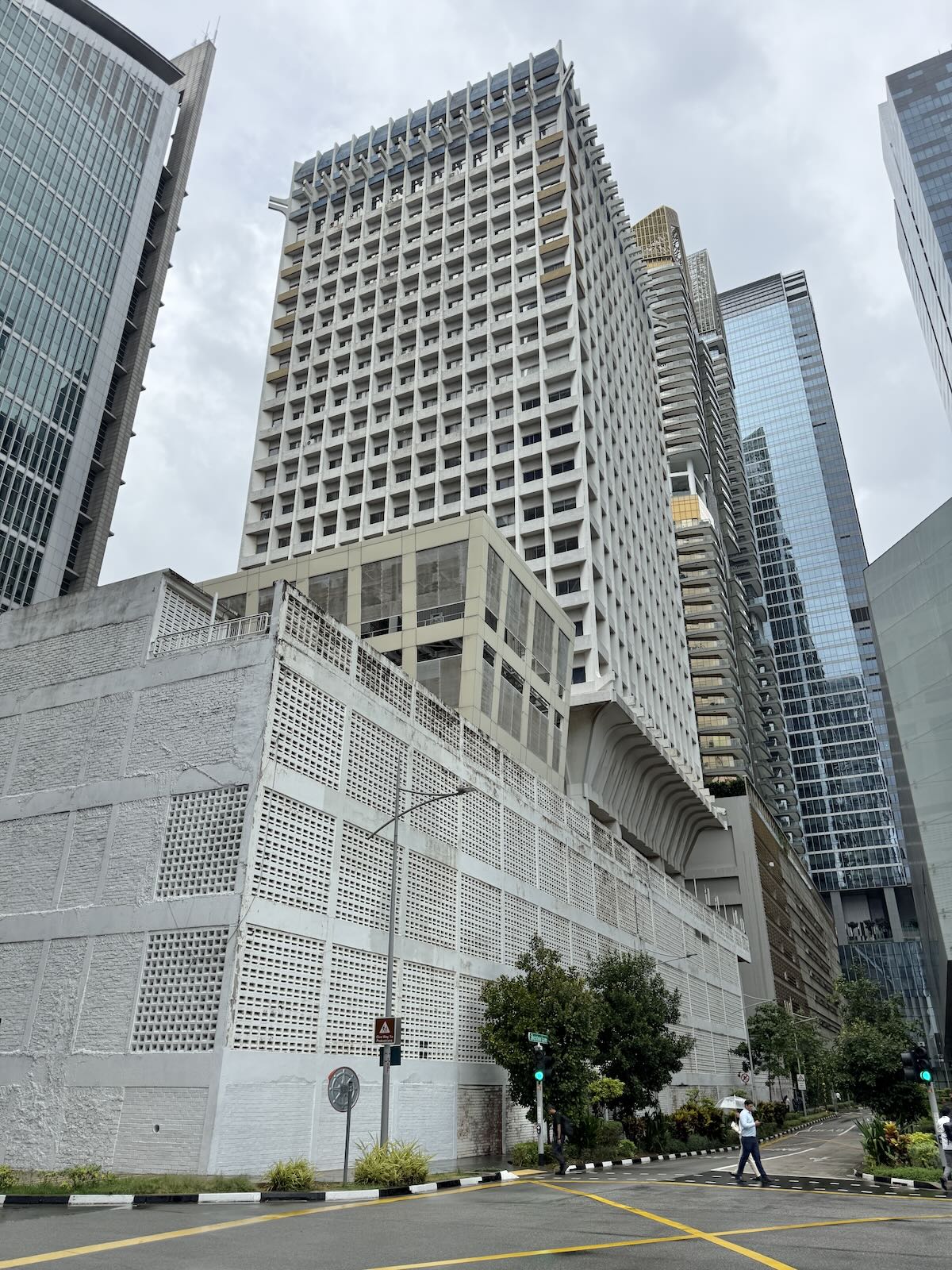
 But there’s so much more! Architects working in Singapore have raided the entire toolbox, employing curves, cut-outs, skybridges, exoskeletons, you name it. I gawked in awe everywhere we went.
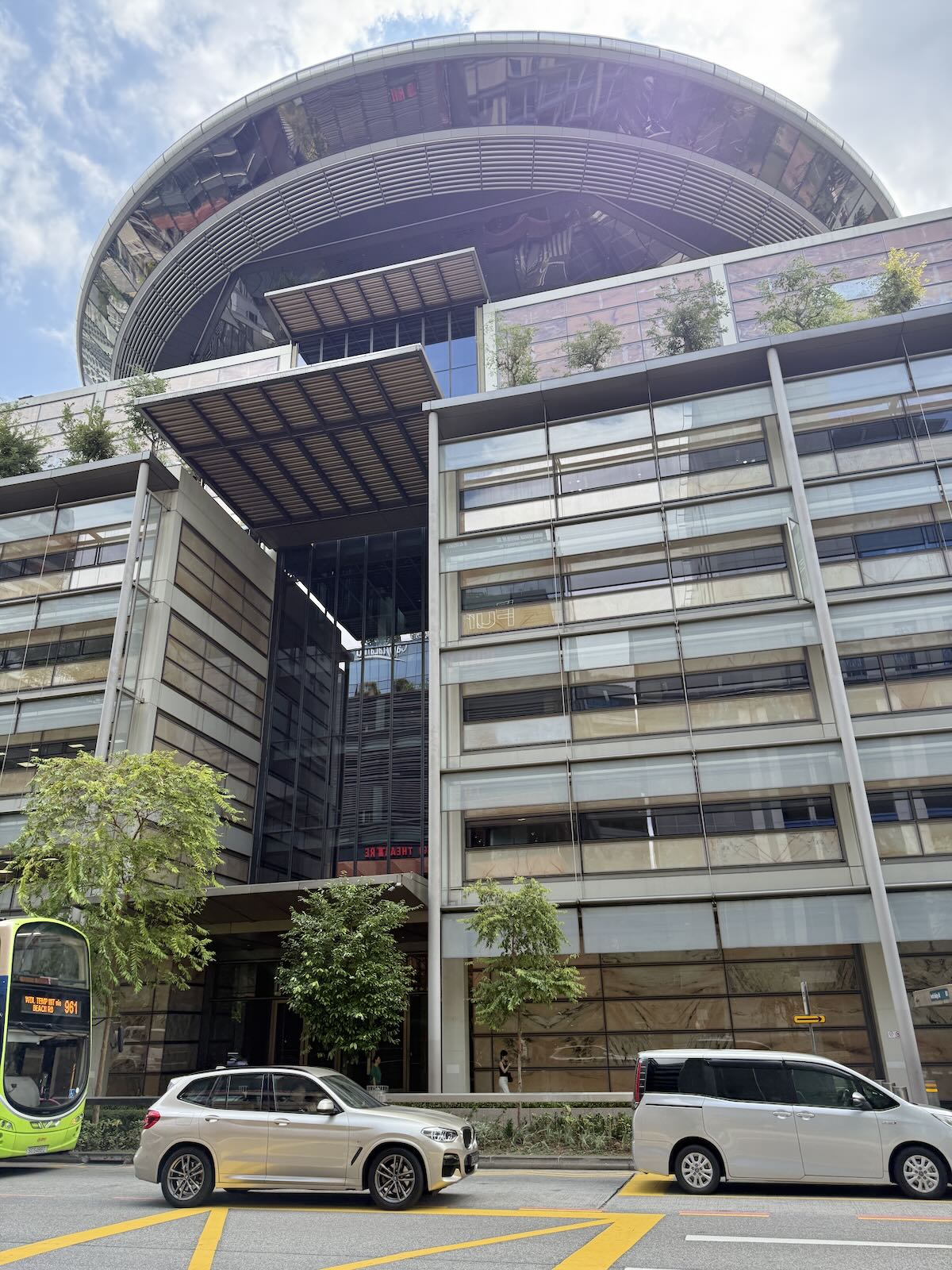
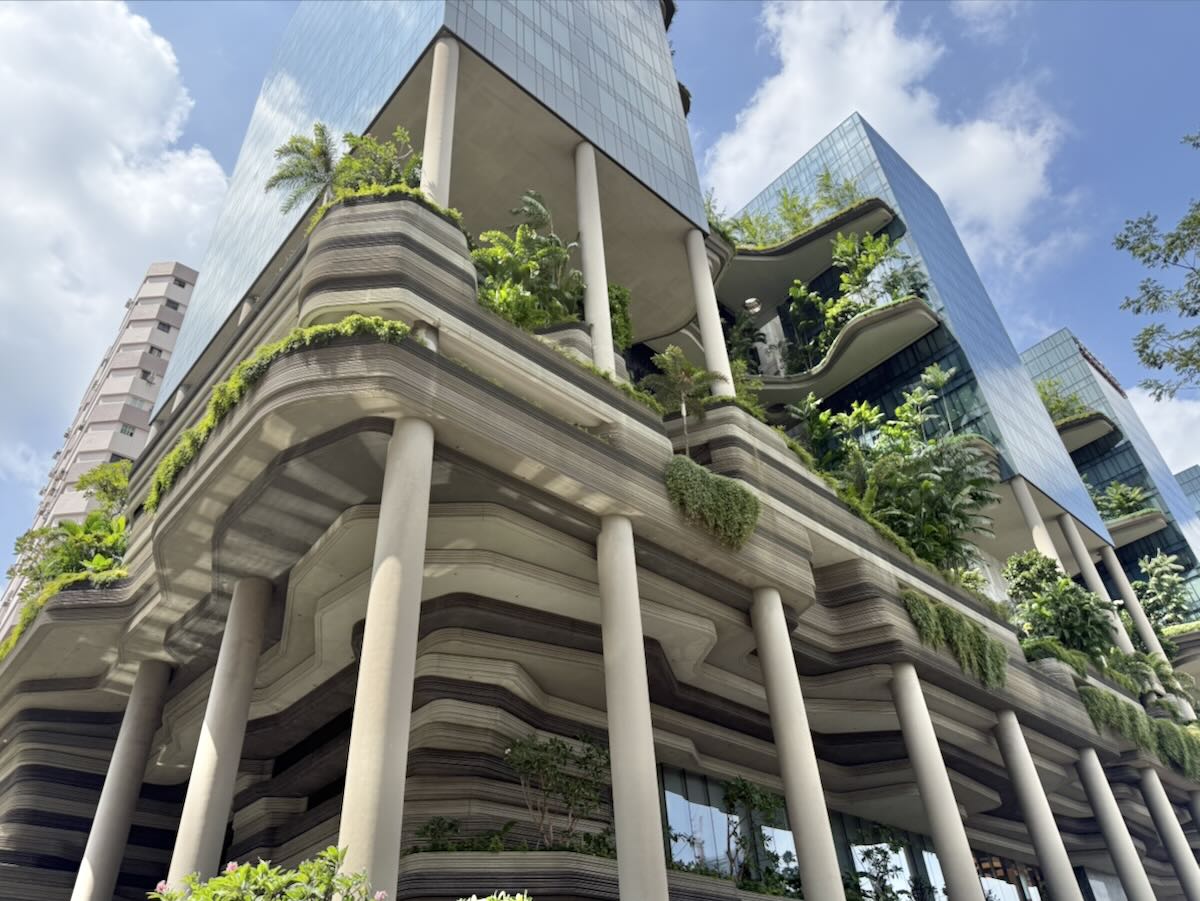
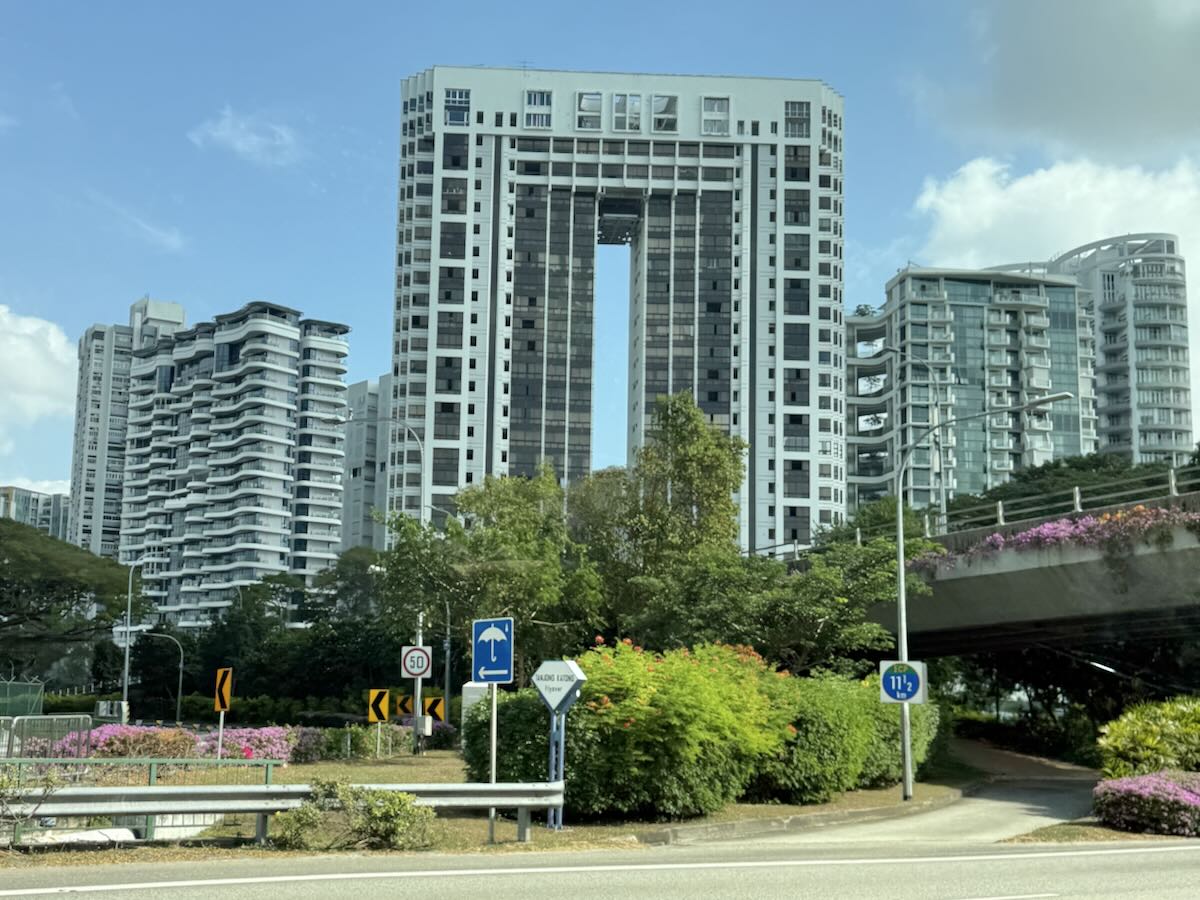
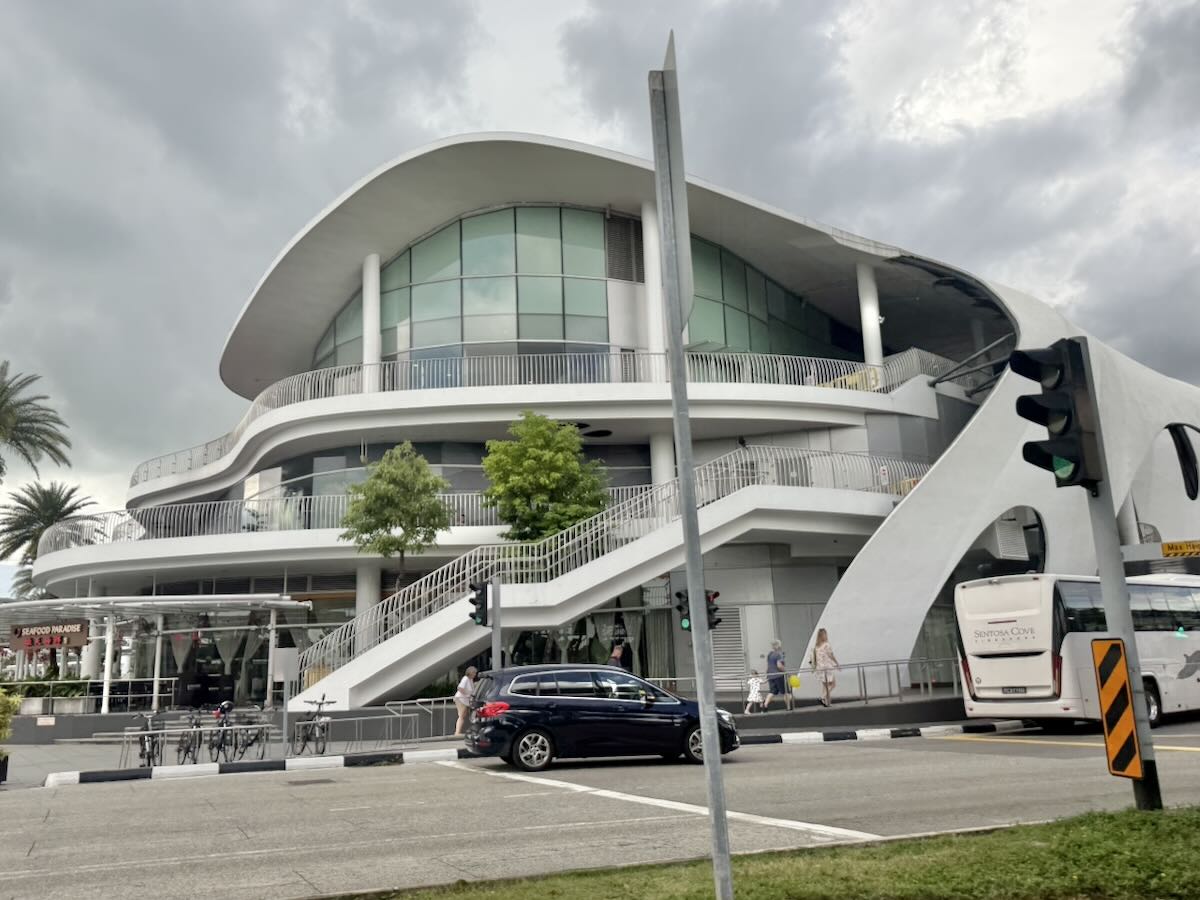
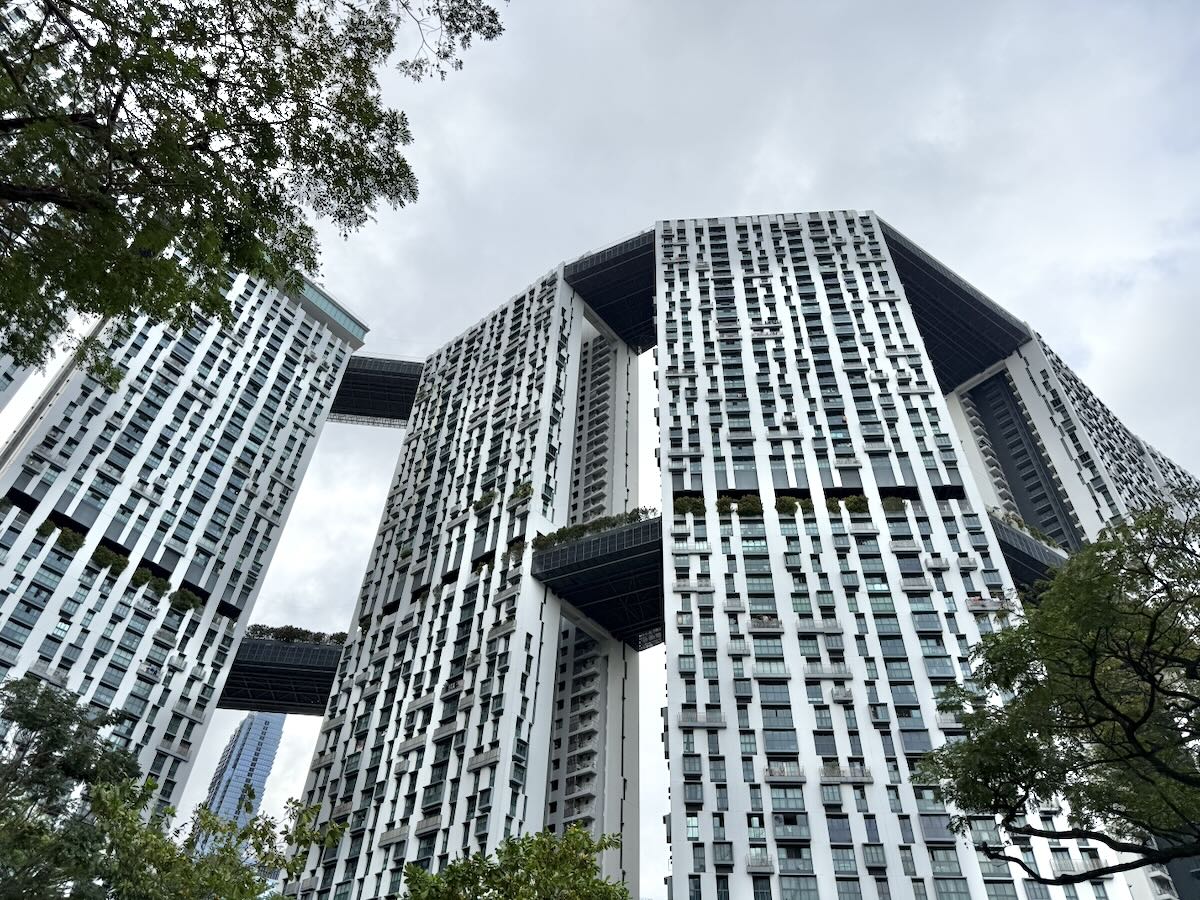
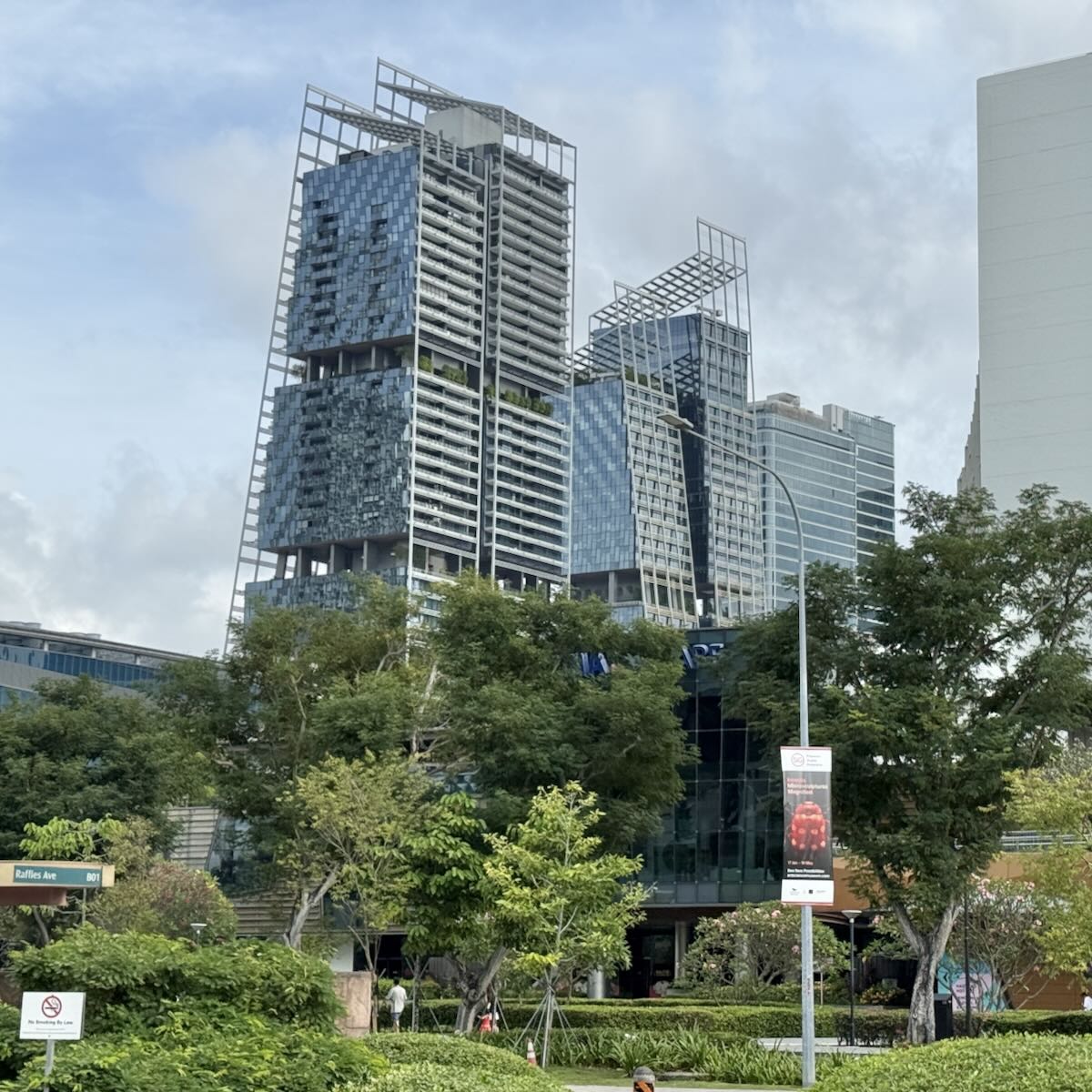
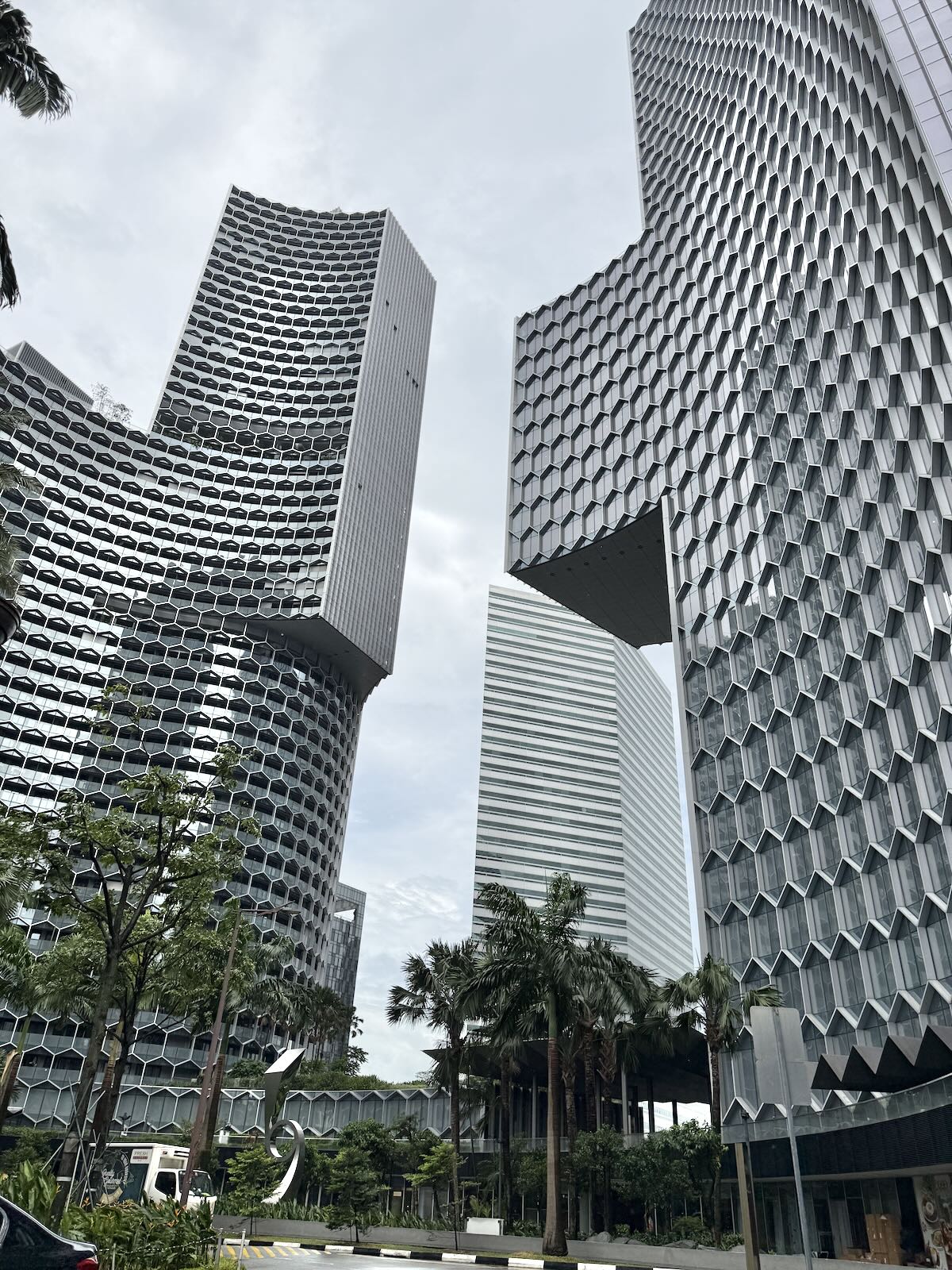
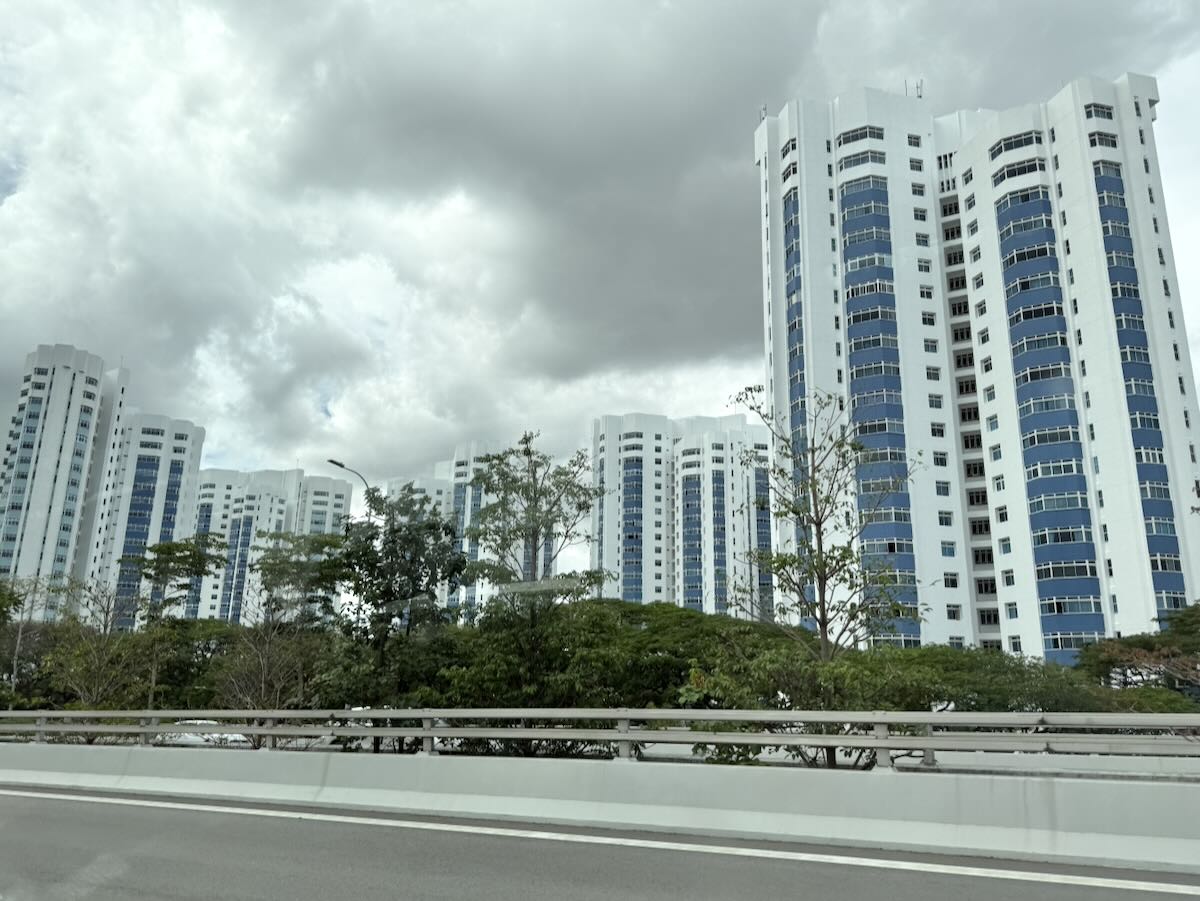
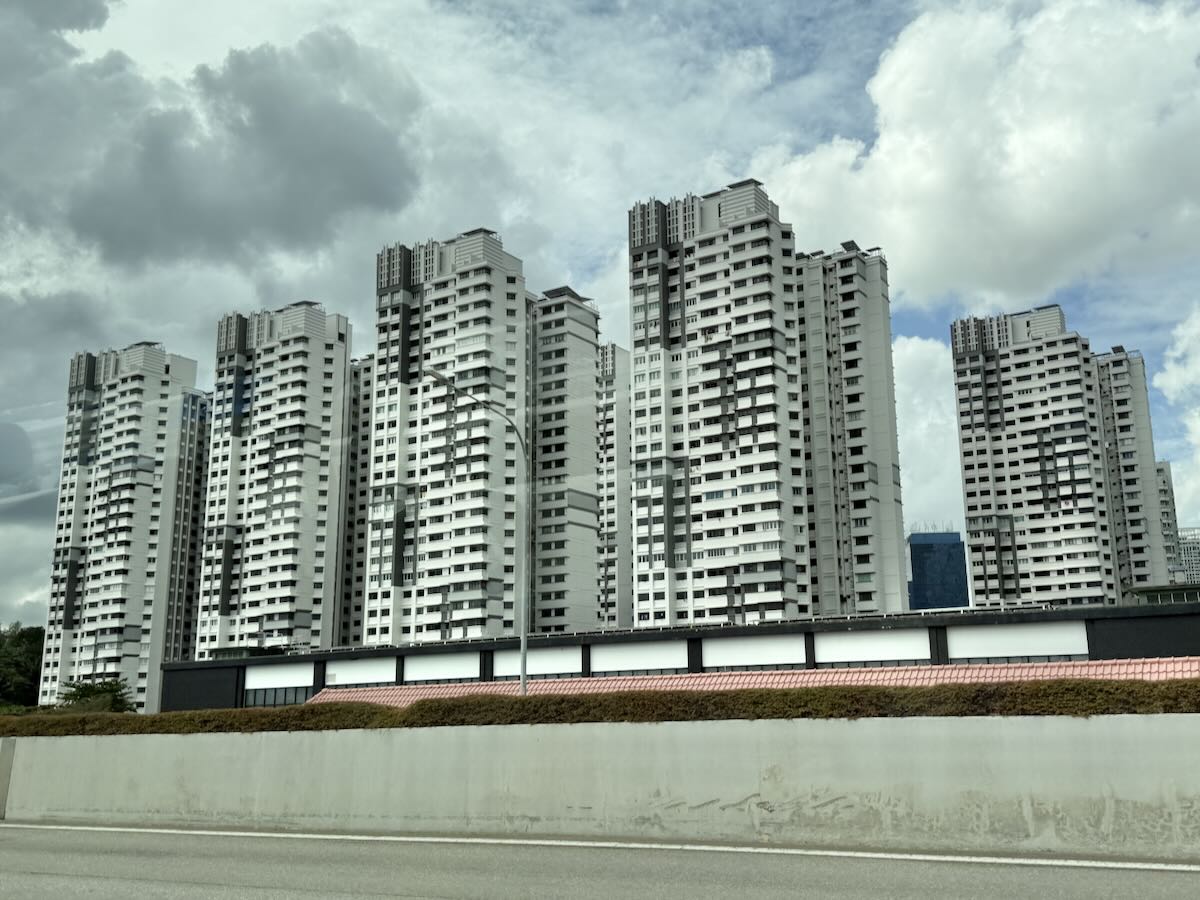
And they love a matched set.
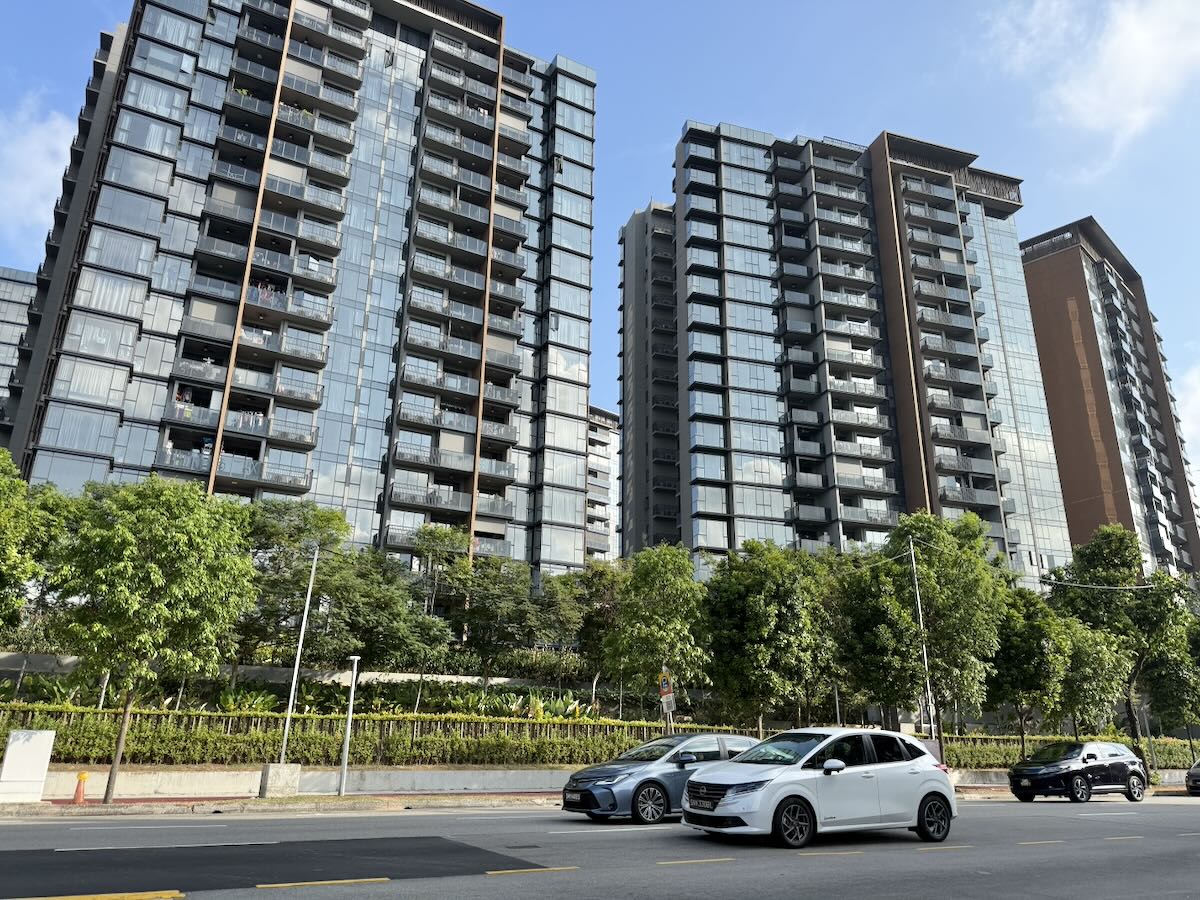
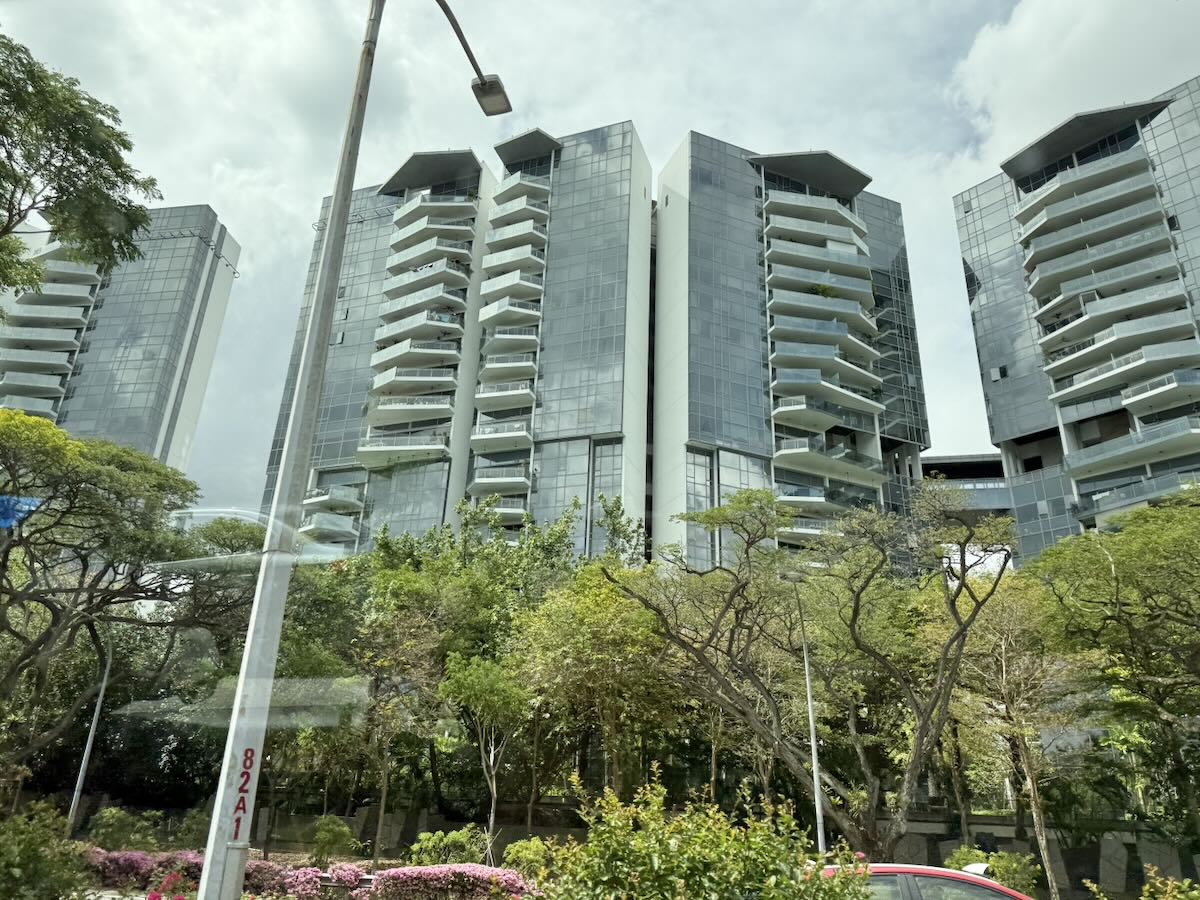
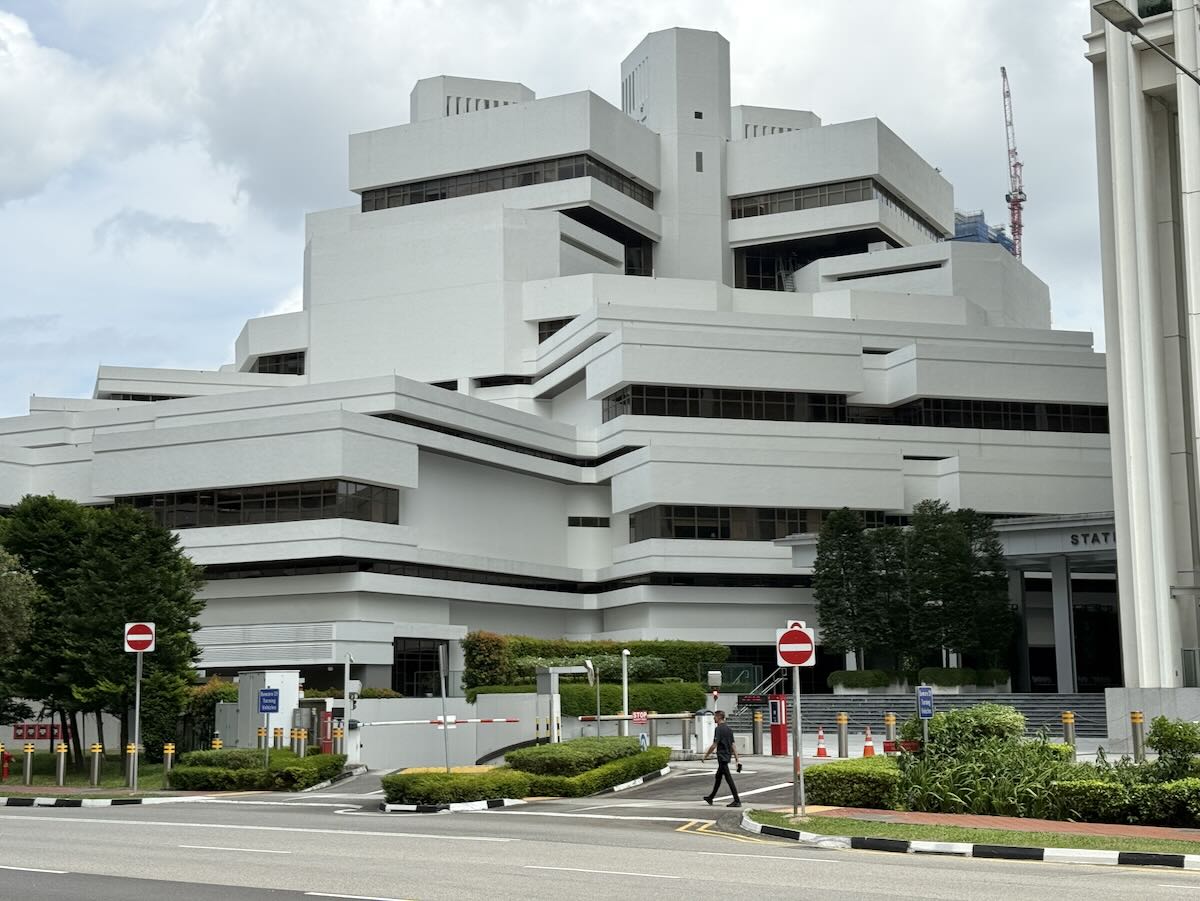
 Brutalism really stood out amid all the glass and steel.
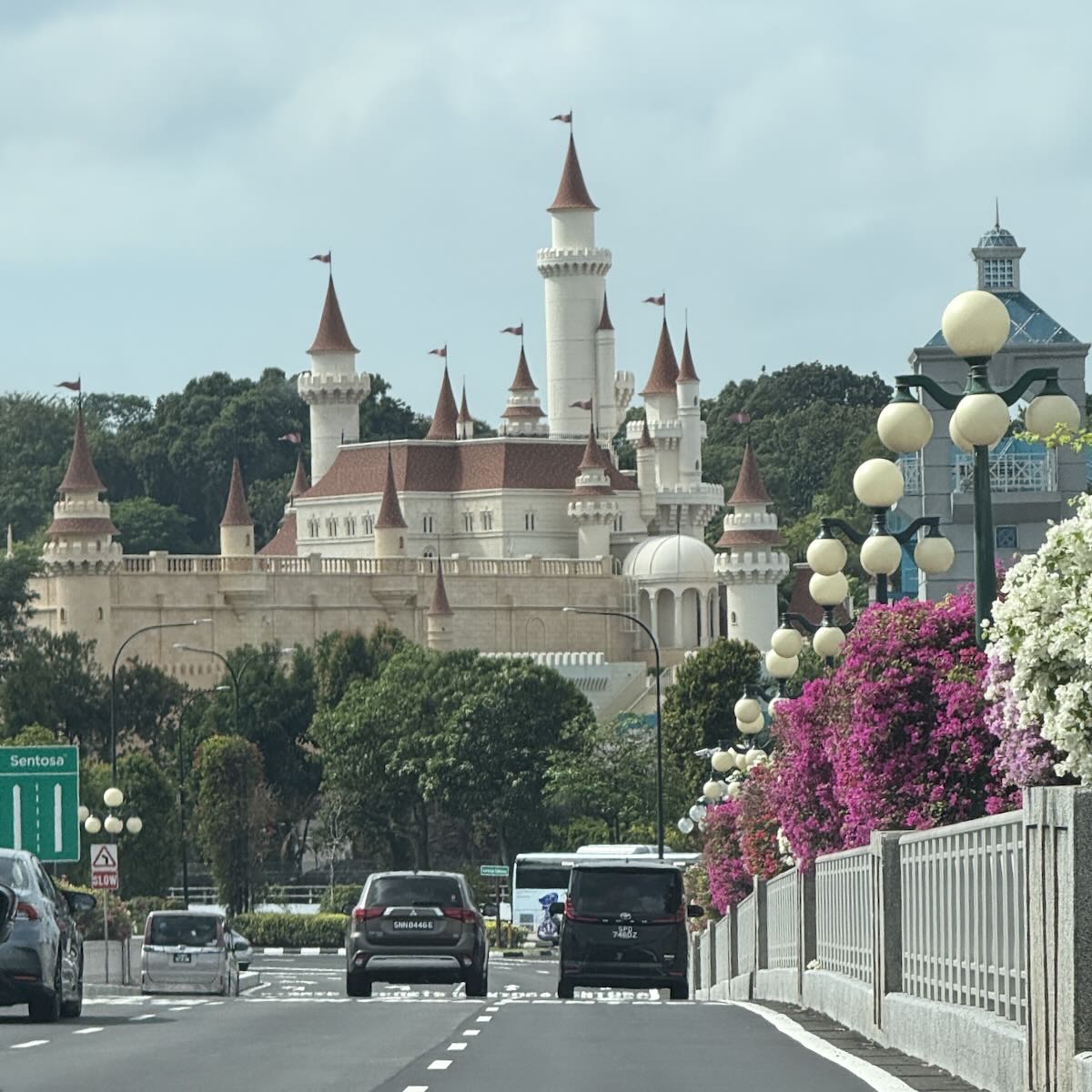
 So you can imagine what a shock we got while entering Sentosa, where we stayed at the end of our trip. The island is a former British military base that has been loaded up with resorts; theme parks (like Universal Studios, below); golf courses; attractions like Madame Tussauds; and other purportedly fun places.
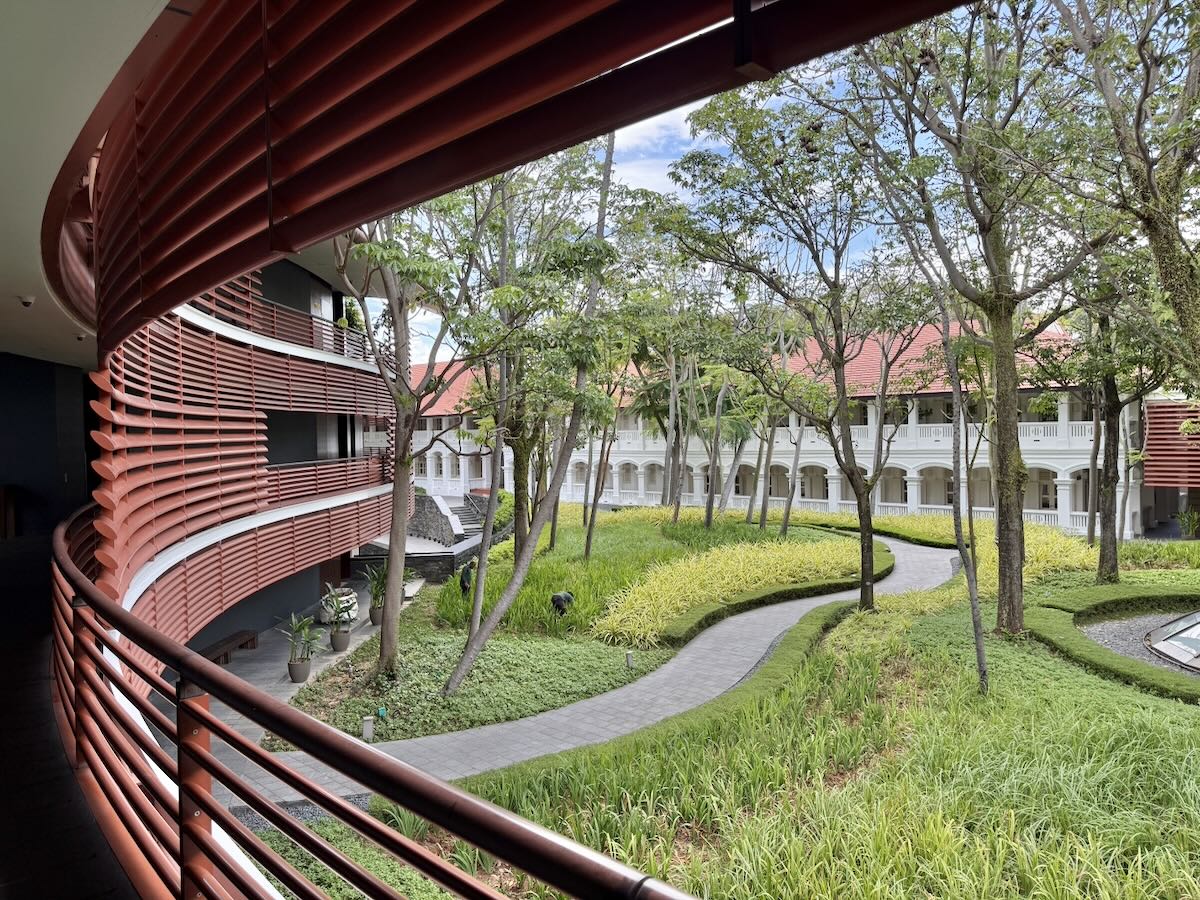
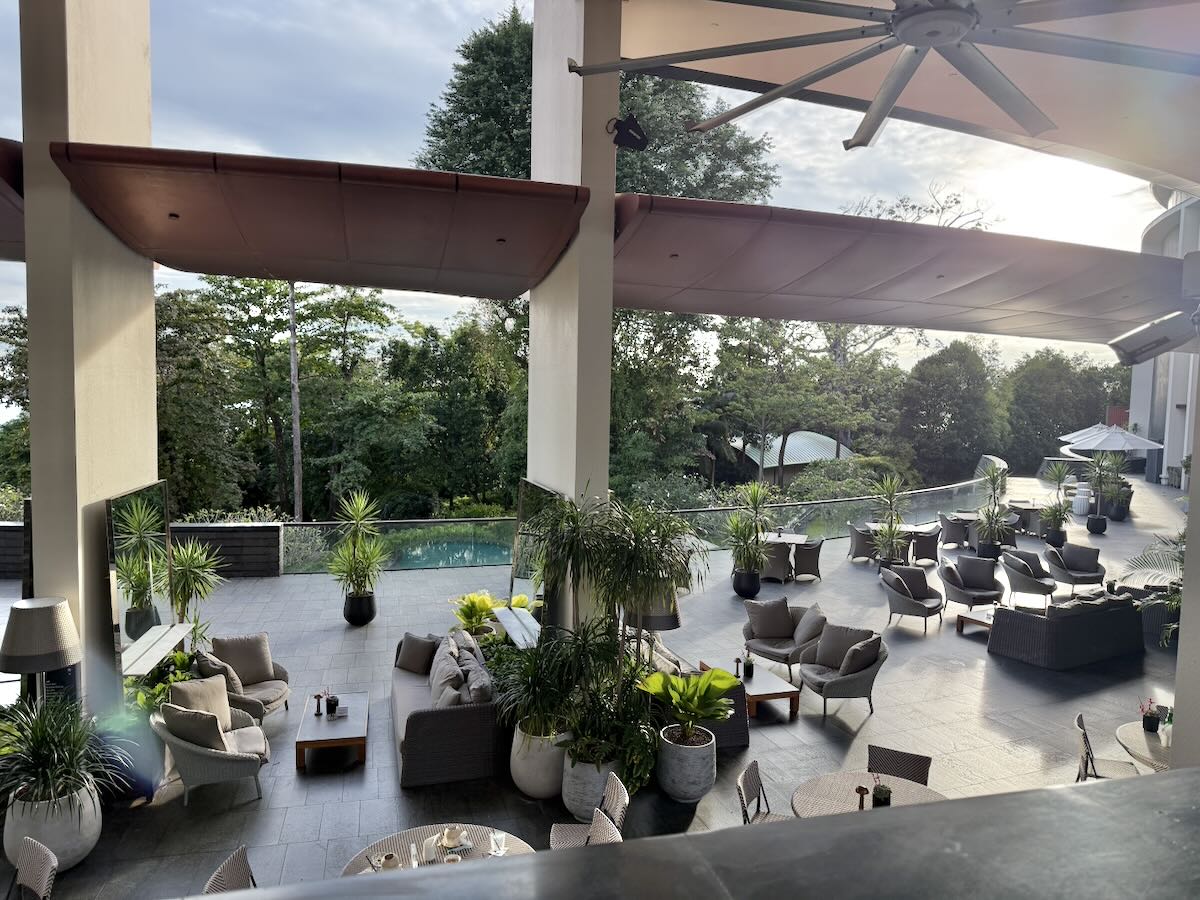
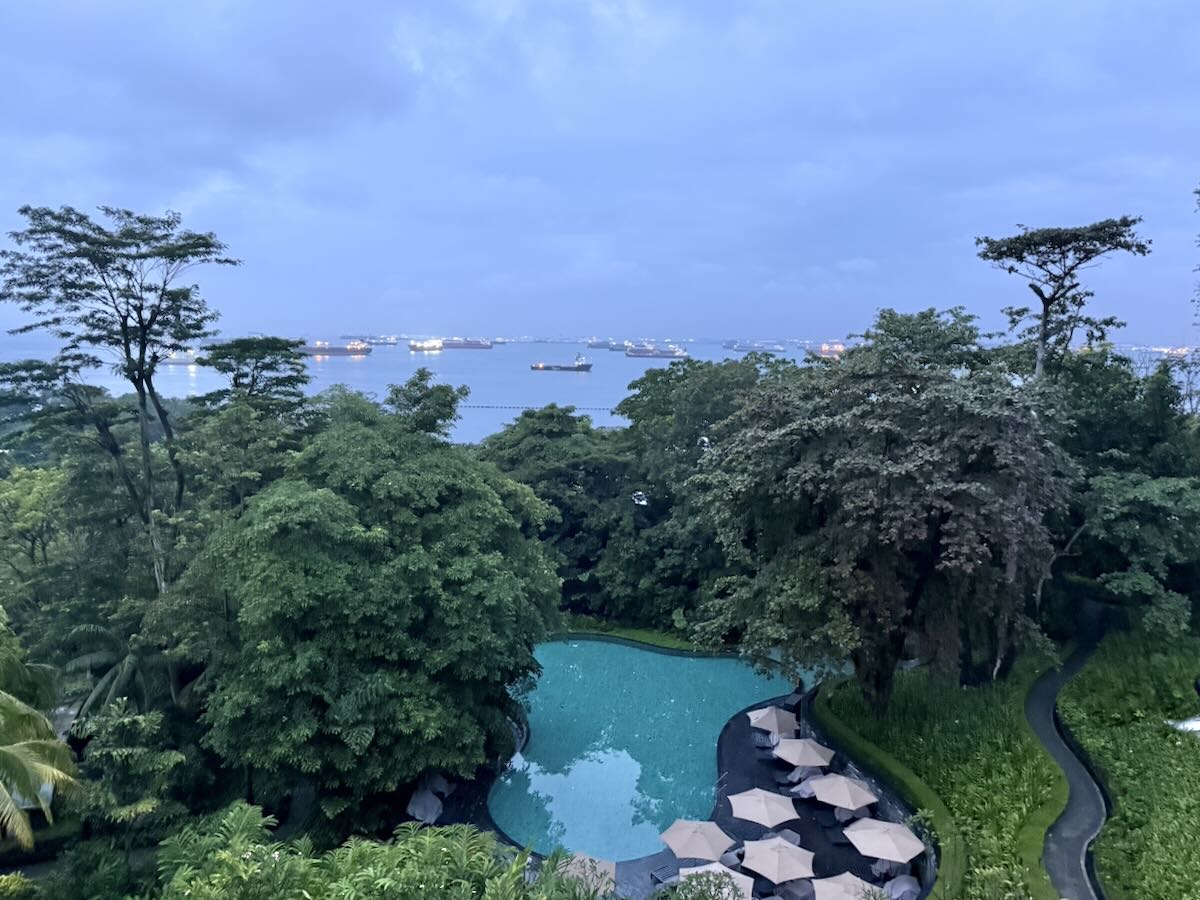
 We had high expectations for our hotel, the Capella Singapore, because we had loved one earlier in the trip. Two old colonial buildings have been joined with new architecture into a figure-eight shape that’s more interesting from the sky. The hotel was pleasant, but not as polished as the other Capella, and there were a lot of children, possibly because of the Lunar New Year holiday or possibly because that’s who goes to Sentosa. I thought we would welcome a quiet, relaxing coda after traveling for nearly three weeks, and I was half right: Adam happily lolled about, while I took the cable car into the city proper, returning in time for a gin and tonic overlooking the pool.
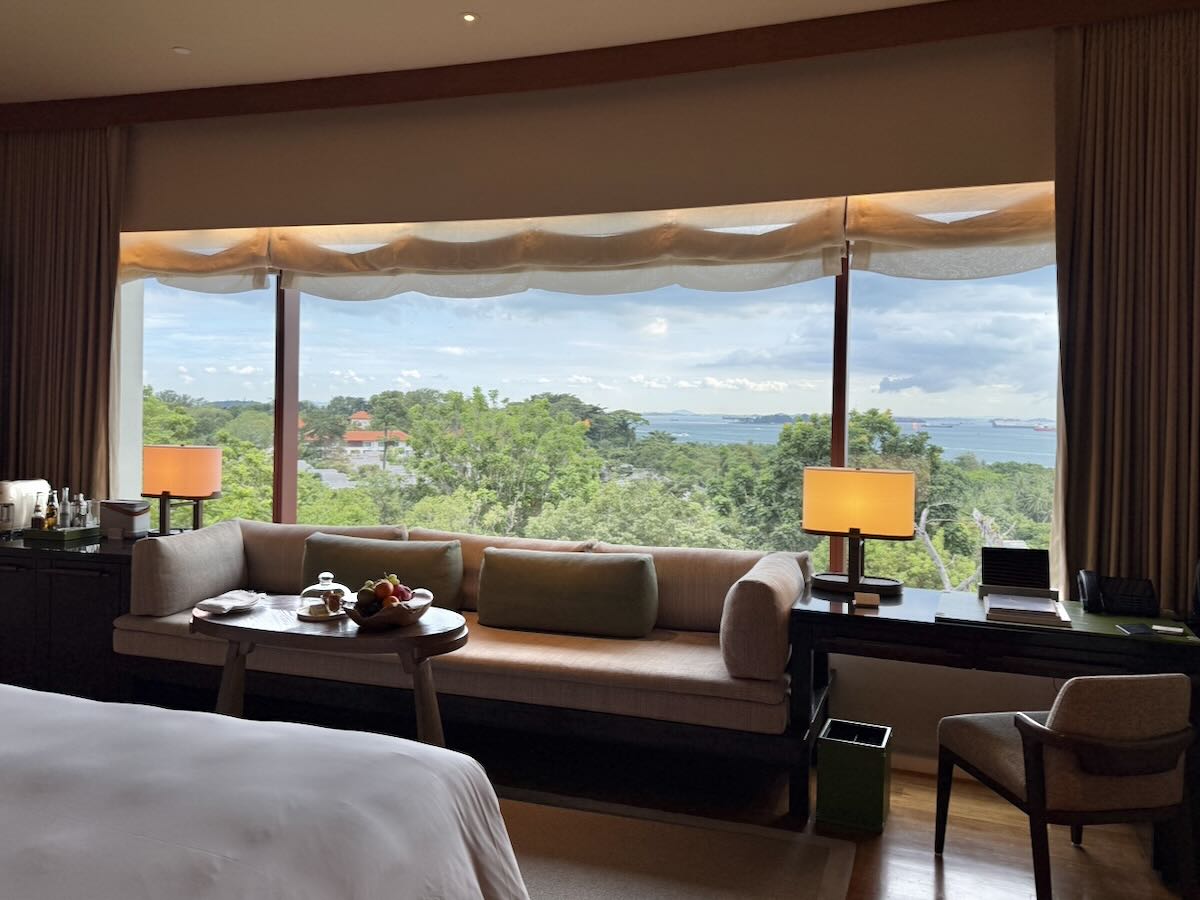
 Two things you might want to know before you go…. First, Singapore’s harbor is extremely busy, and container ships are everywhere, making our oil rigs look like nothing.
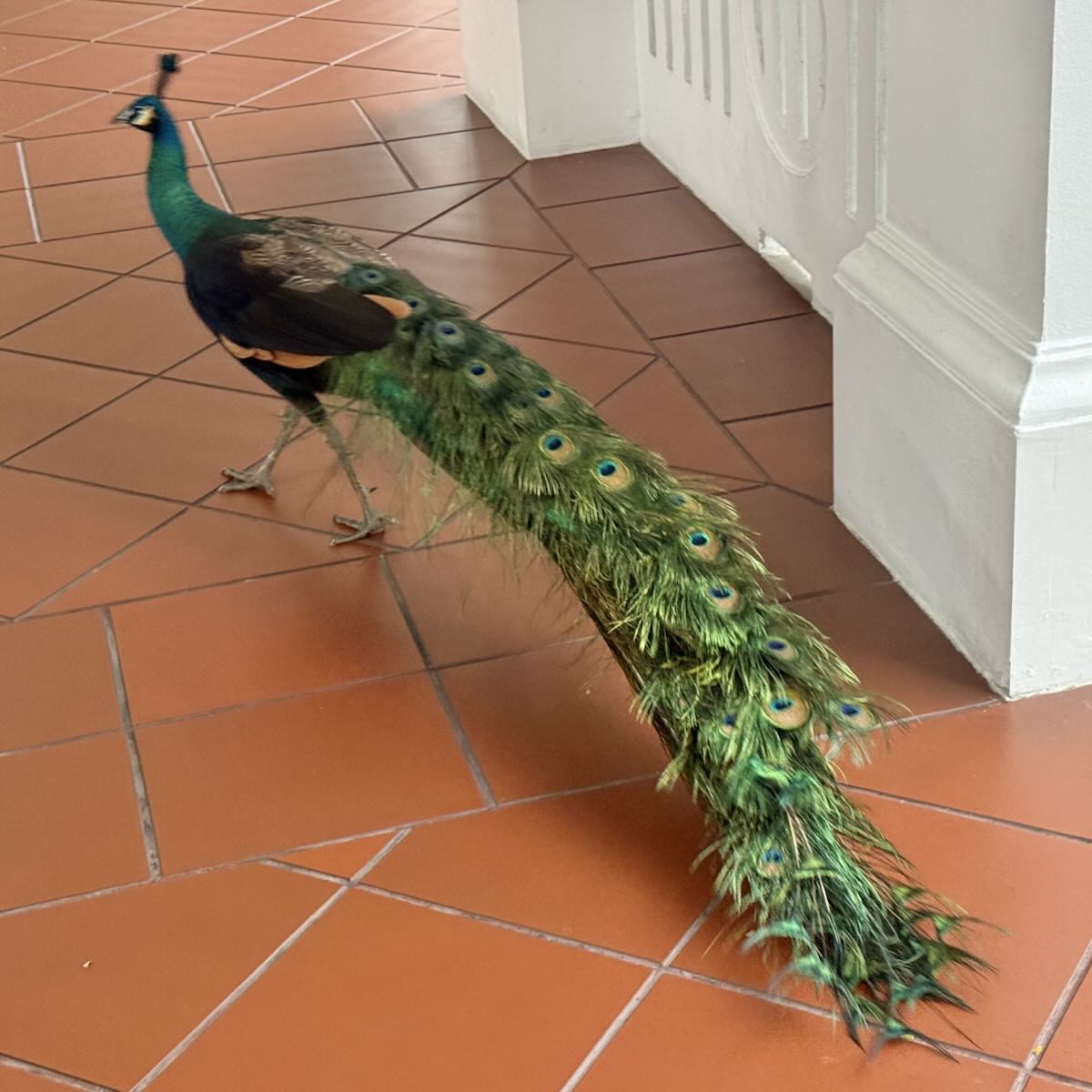
 Second, Sentosa is home to peafowl—absolutely stunning, and a nightmare at dawn. They sound like cats in heat.
 ·············
Previous travel coverage:
••• Las Vegas: The Original Sim City
••• That’s Life in Death Valley
••• The Glorious Isolation of Santa Barbara Island
••• Hiking From Hotel to Hotel in the Dolomites
••• A Ramble Through the English Countryside
••• Notes from Up North: Healdsburg, Mendocino, and San Francisco
••• There’s More to Peru Than Machu Picchu
↓↓↓ On a Backroads Tour of New Zealand’s South Island
••• Navigating the North Island of New Zealand
••• Don’t Be So Quick to Write Off Phoenix
••• The Most Magical City in the World
••• One and Done in Sedona
••• A Proper Visit to Santa Monica
••• A Quickie in San Francisco
••• Dipping a Toe Into Southern Corsica
••• The Exquisite Luxury of Taking Paris for Granted
••• Santa Rosa Island in One Day
••• Soaking Up History at Castle Hot Springs
••• Driving Through the Heart of Hokkaido
••• Tokyo Is a World Unto Itself
••• Paso Robles, Pinnacles National Park, and Beyond
••• A Review of the Inn at Mattei’s Tavern
••• Another Quickie in L.A.
••• Sitting Pretty at the One & Only Mandarina
••• The Mysteries of Istanbul
••• Palm Springs: Midweek at the Oasis
••• Exploring the Sea Caves of Santa Cruz Island
••• A Summer Swing Through the Northeast
••• Why Is Everyone Going to Portugal?
••• Patagonia Made Easy
••• A Quickie in L.A.
••• From Penthouse to Pavement in Mexico City
••• Do Greek Islands Live Up to the Fantasy?
••• Splendid Isolation at Utah’s Lodge at Blue Sky
••• Three Reasons to Visit Paso Robles Now
 ················
Sign up for the Siteline email newsletter and you’ll never miss a post.











I like how the What The Pug cafe has a sign that says “no one ugly allowed”.
Great travelogue. One of your best.
Thank you for reminding me that beautiful pictures do not convey the feel of the climate, hot and humid. Unfortunately, for me, there is no place on earth interesting enough to endure the discomfort and energy-sapping heat of an equatorial climate; that narrows the choices quite a bit, and that’s ok.
Great travelogue! One of the nice things about the nanny vibe in Singapore is that people actually observe rules and restrictions…because there is enforcement and consequences. Sorry you didn’t hit the undergrounds with the non-stop food courts.
Thanks for the lengthy observations and pictures – rest assured it’s ok to write and photograph a lot. Readers can skip what they wish.