

I’ve long wanted to explore the Highway 101 exits above Goleta, because I don’t really know what distinguishes each one, but I was uncertain where to start. On a recent morning, I was just going to pick one at random, when Noozhawk ran a post by Dan McCaslin about “the strand below the Naples bluff.” It seemed like a sign.
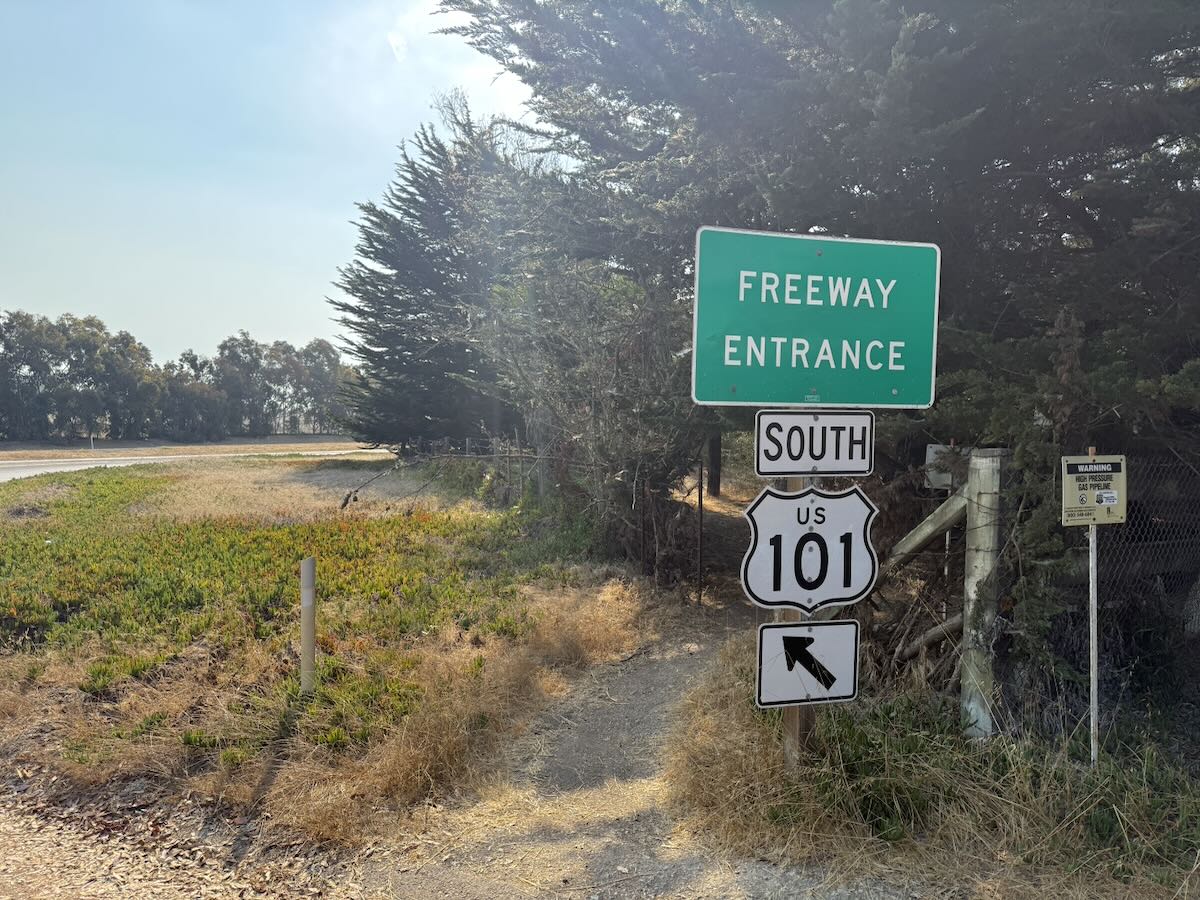
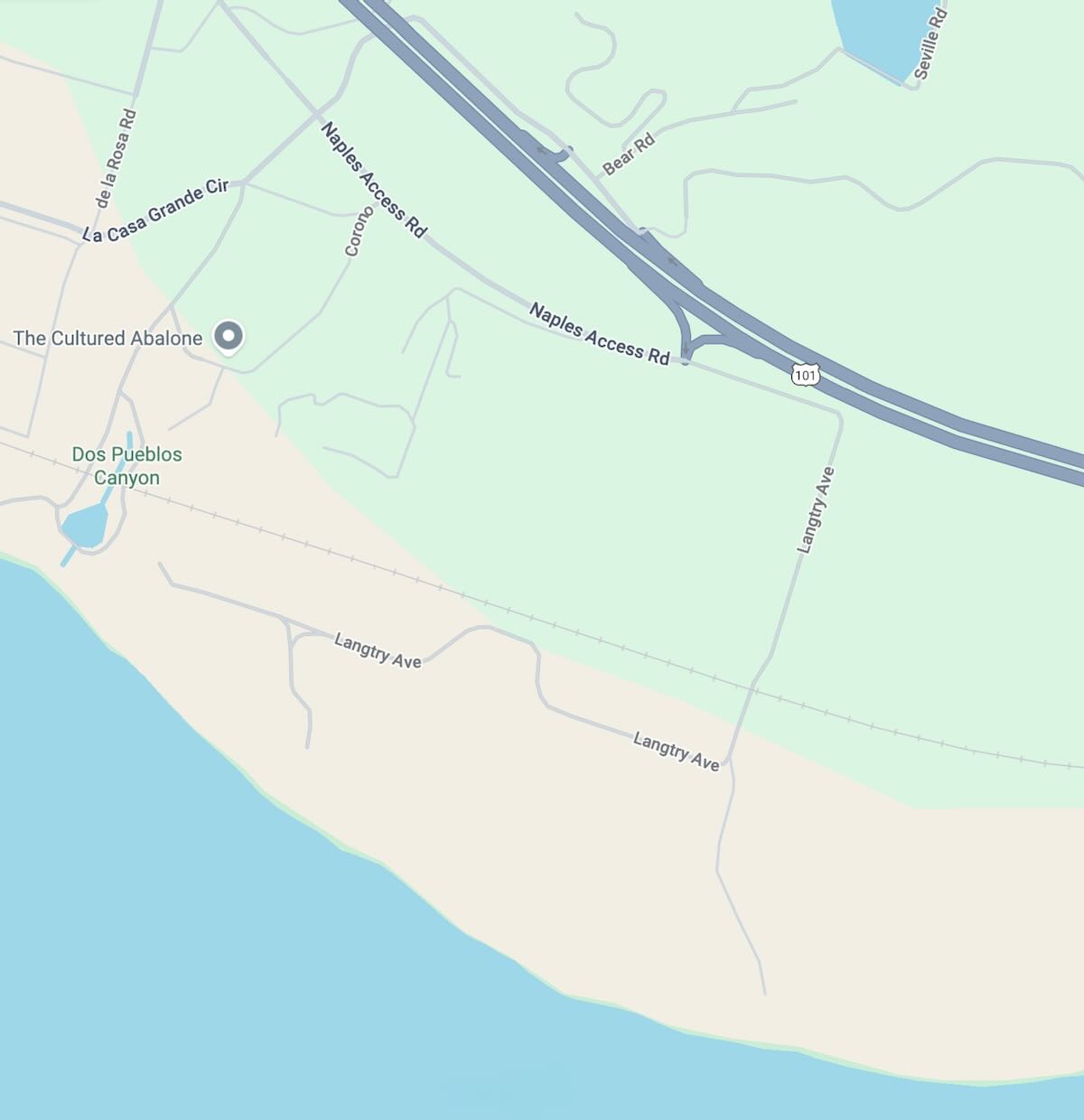 From points south, you take the Dos Pueblos Canyon Road exit to the Naples Access Road, which curves under the freeway; turn left again and “park your vehicle close to the Highway 101 South sign, then look about and locate the small path that leads onto the crumbling pavement of the old coastal Highway 1.”
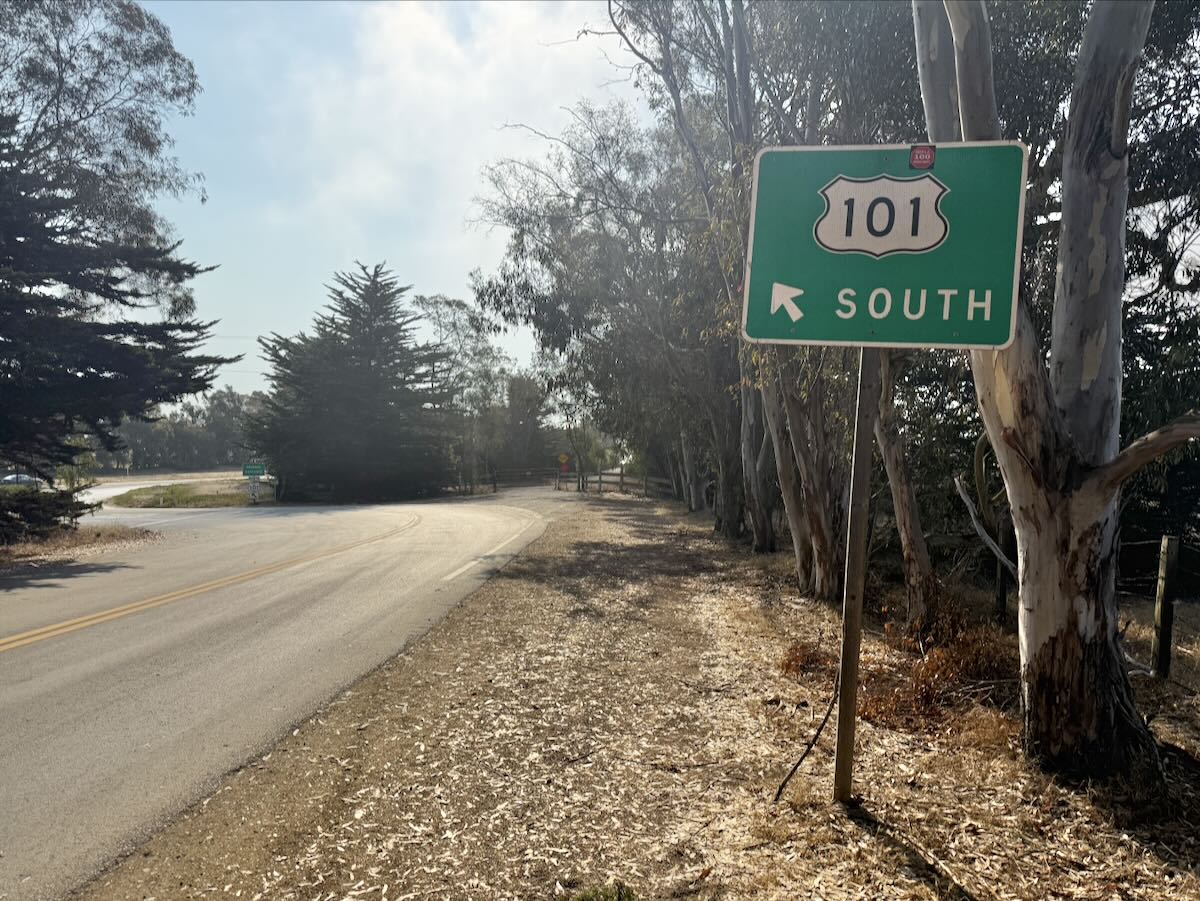
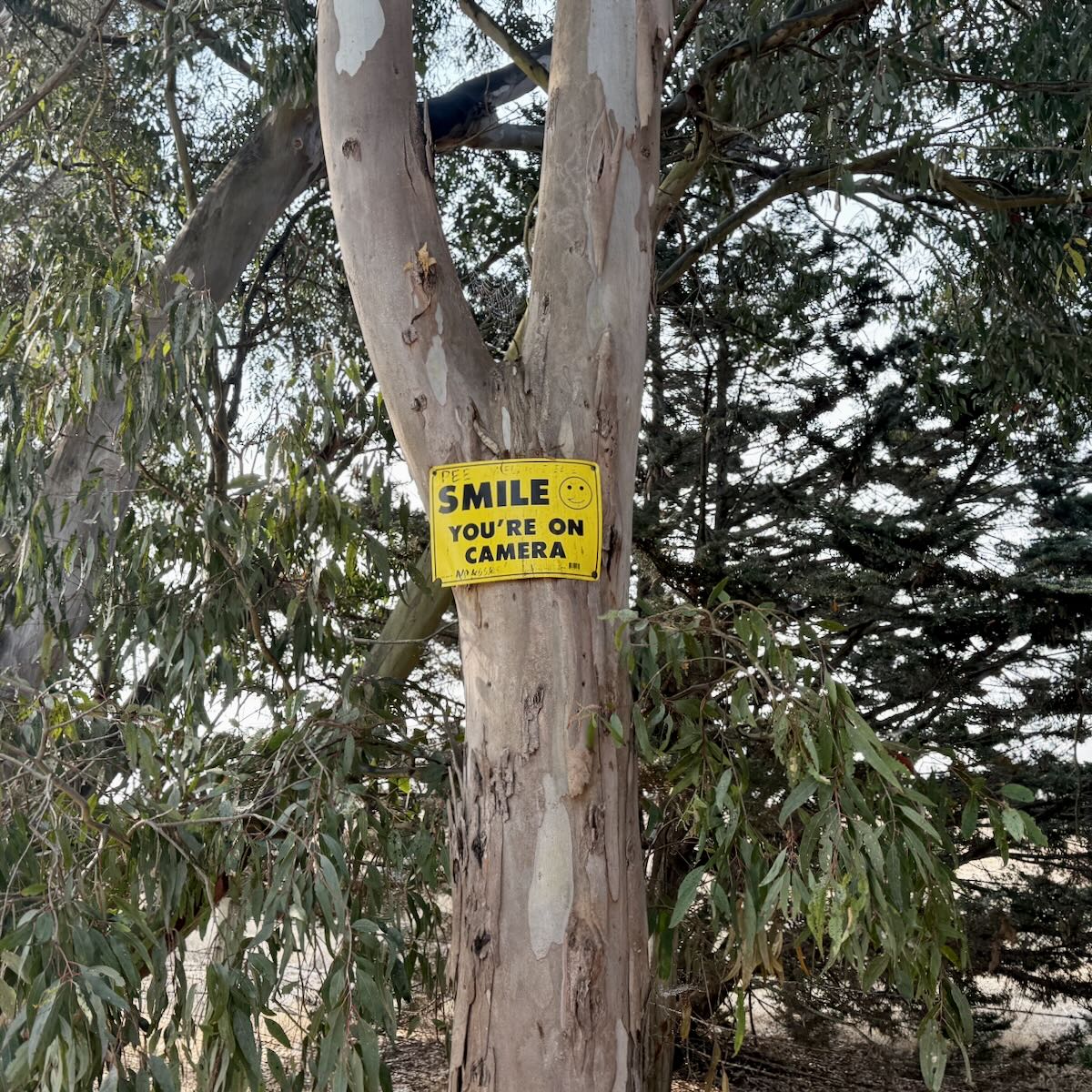
 I parked as directed, and as tends to be the case, had trouble locating the path. Being watched didn’t make me feel smiley about the situation.
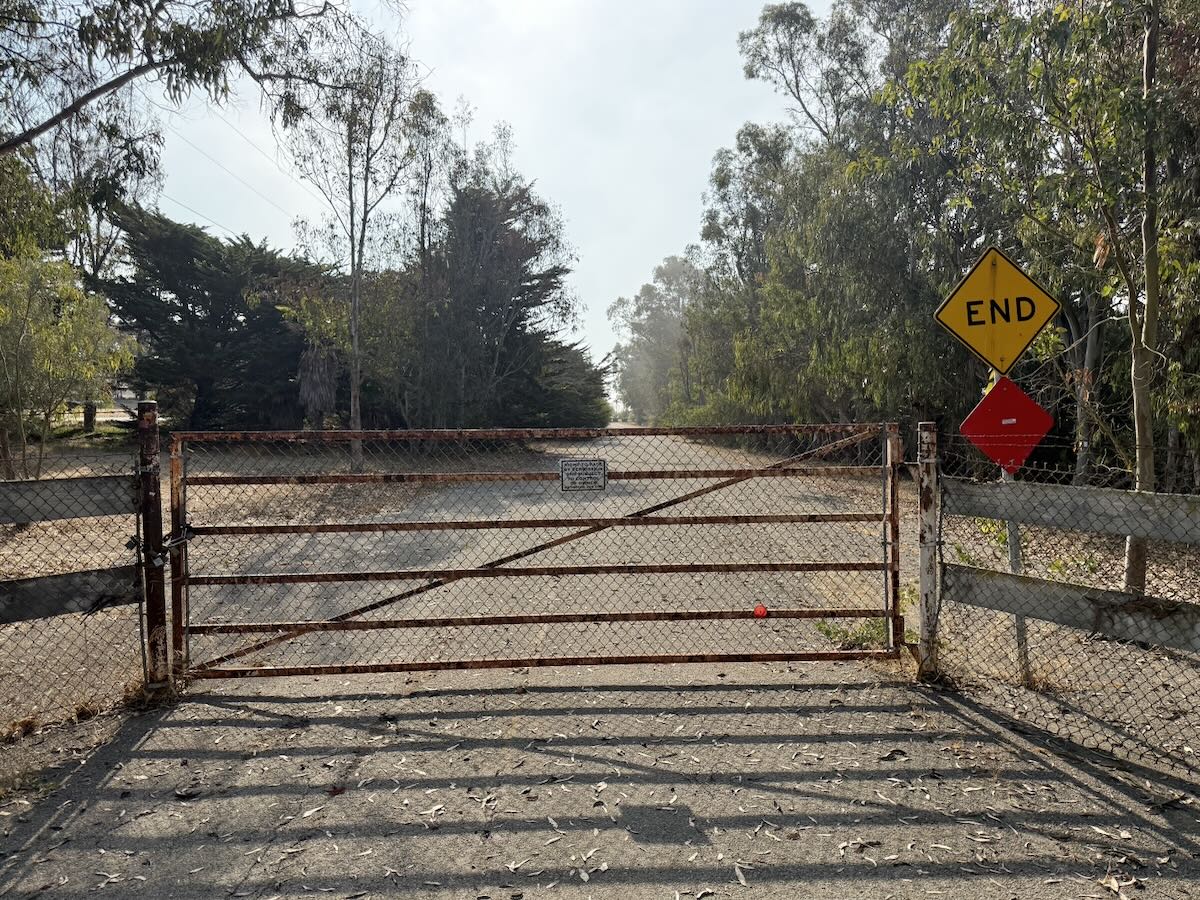
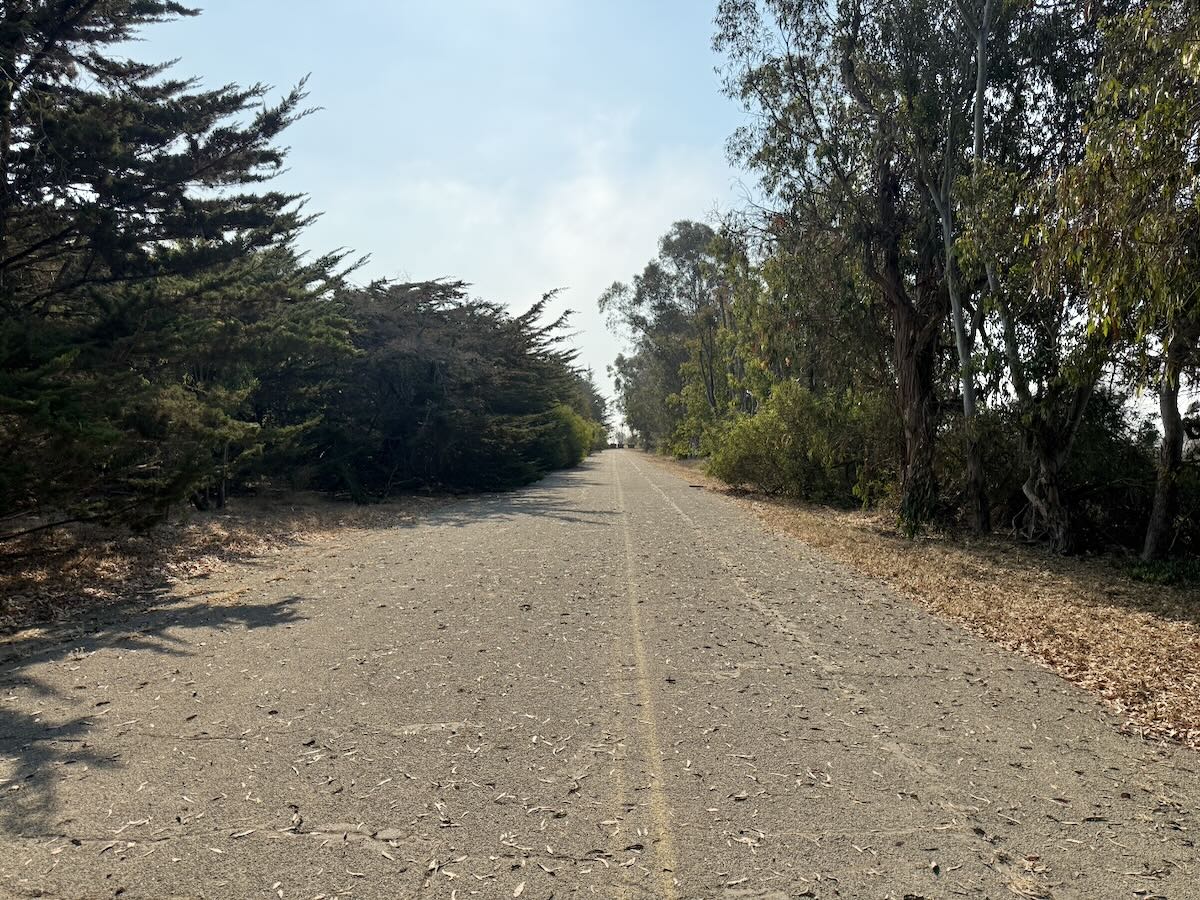
 The path is just beyond the “freeway entrance” sign, and I’ve never felt (or hopefully looked) more like a homeless person than when I was basically walking on the onramp to reach it. The pavement of old Highway 1 wasn’t in as bad shape as I had expected.
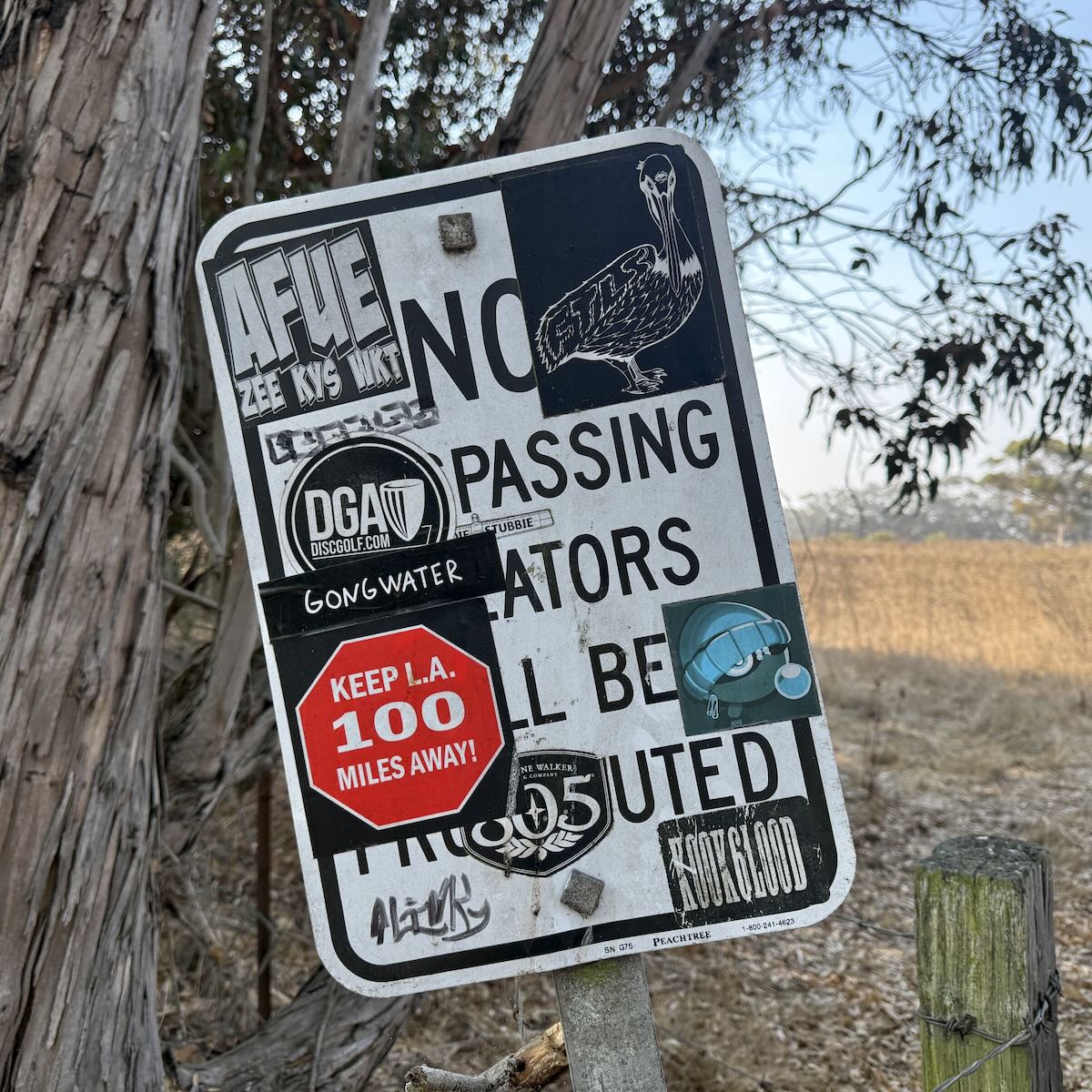
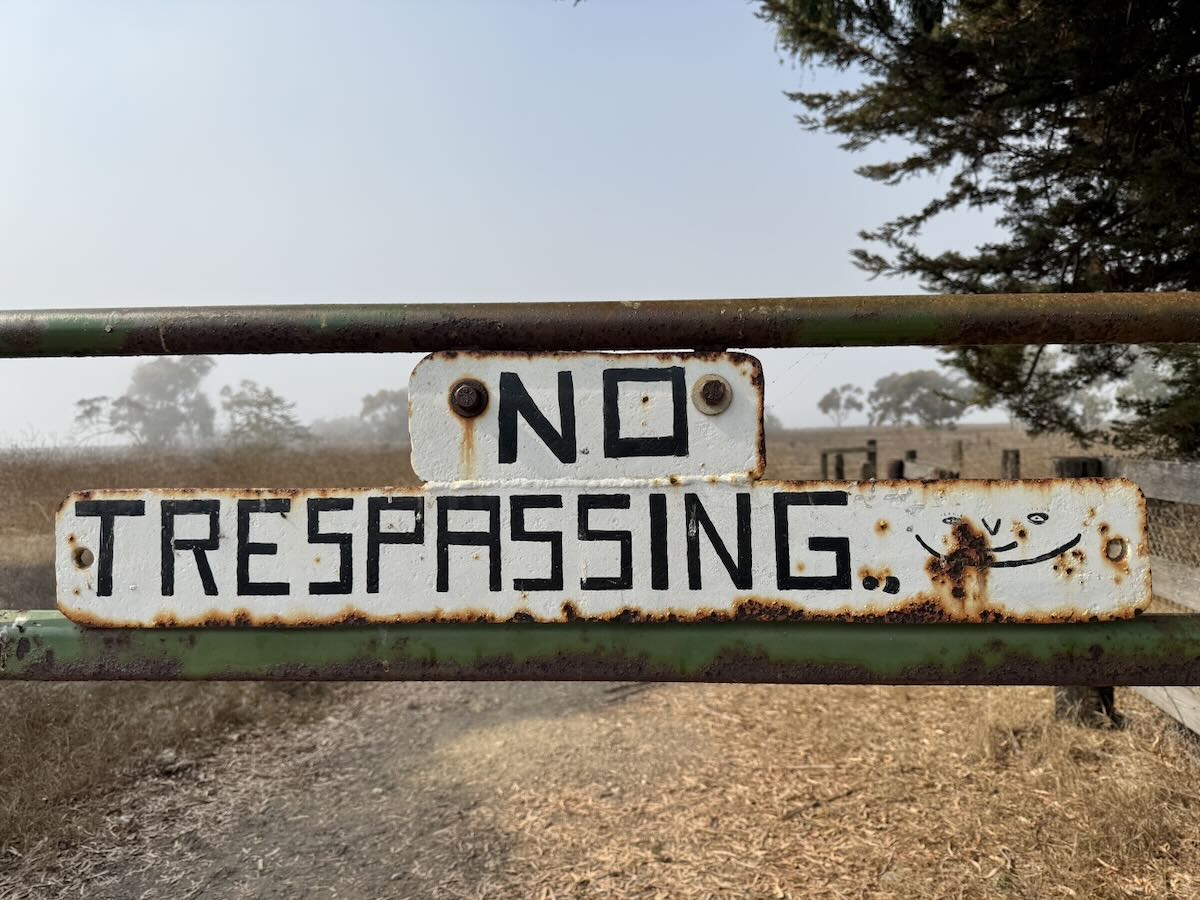
 “No trespassing” signs are all over—at least I assume that’s what this one said—but McCaslin never addresses the legality of this walk. I hoped that it was one of those cases where the landowner wants to be able to protect him- or herself against liability.
 Anyway, the road—named Langtry Avenue, after British actress Lillie Langtry—makes a sharp right toward the ocean. I didn’t set out with the intent of retracing McCaslin’s steps, or certainly of rewriting his article, but it’s a little inevitable, as there aren’t a ton of options in terms of where you walk. I’m not going to rewrite any of Goleta History’s excellent history of the Naples area, however. Author Tom Modugno details the town’s brief life and some of the many doomed efforts to develop the land, and it’s absolutely worth a read, even if it means you forget to come back and finish this post.
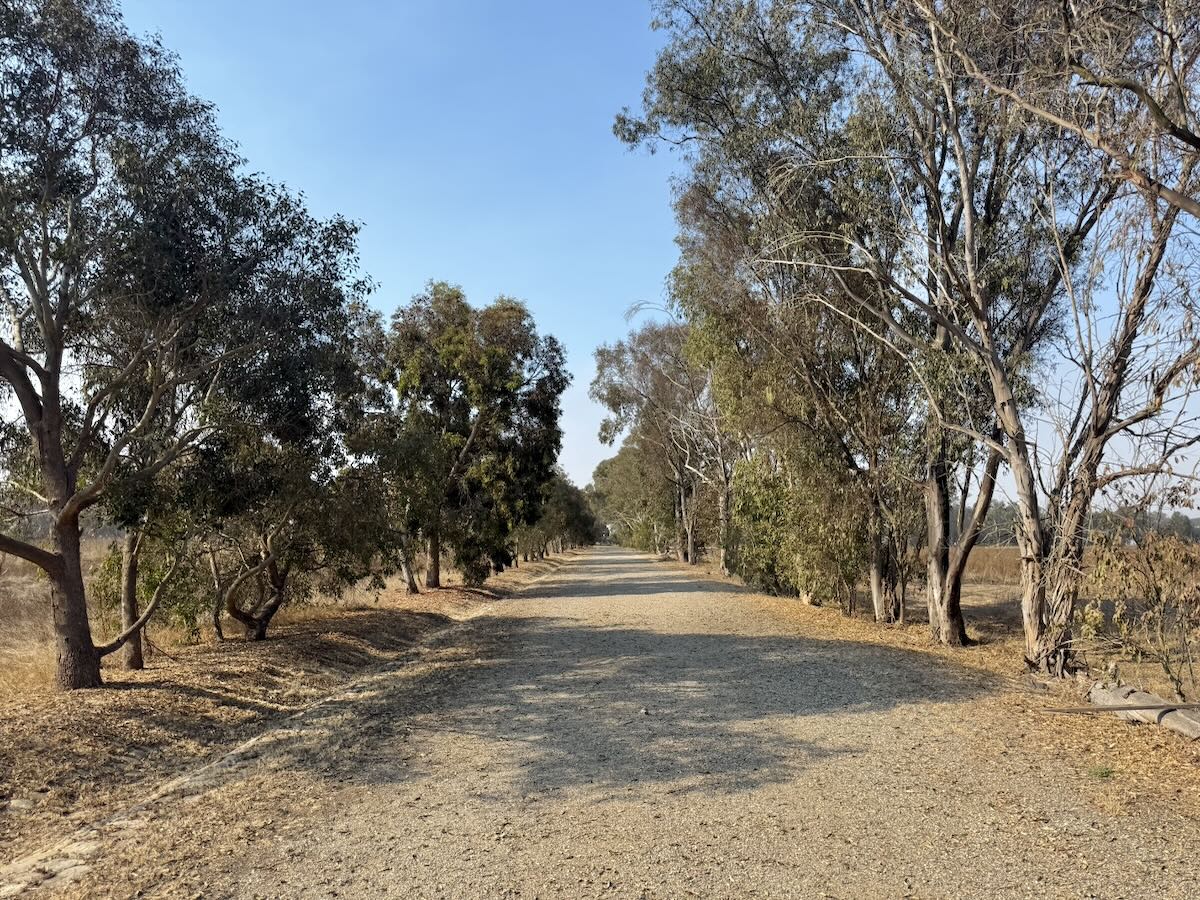
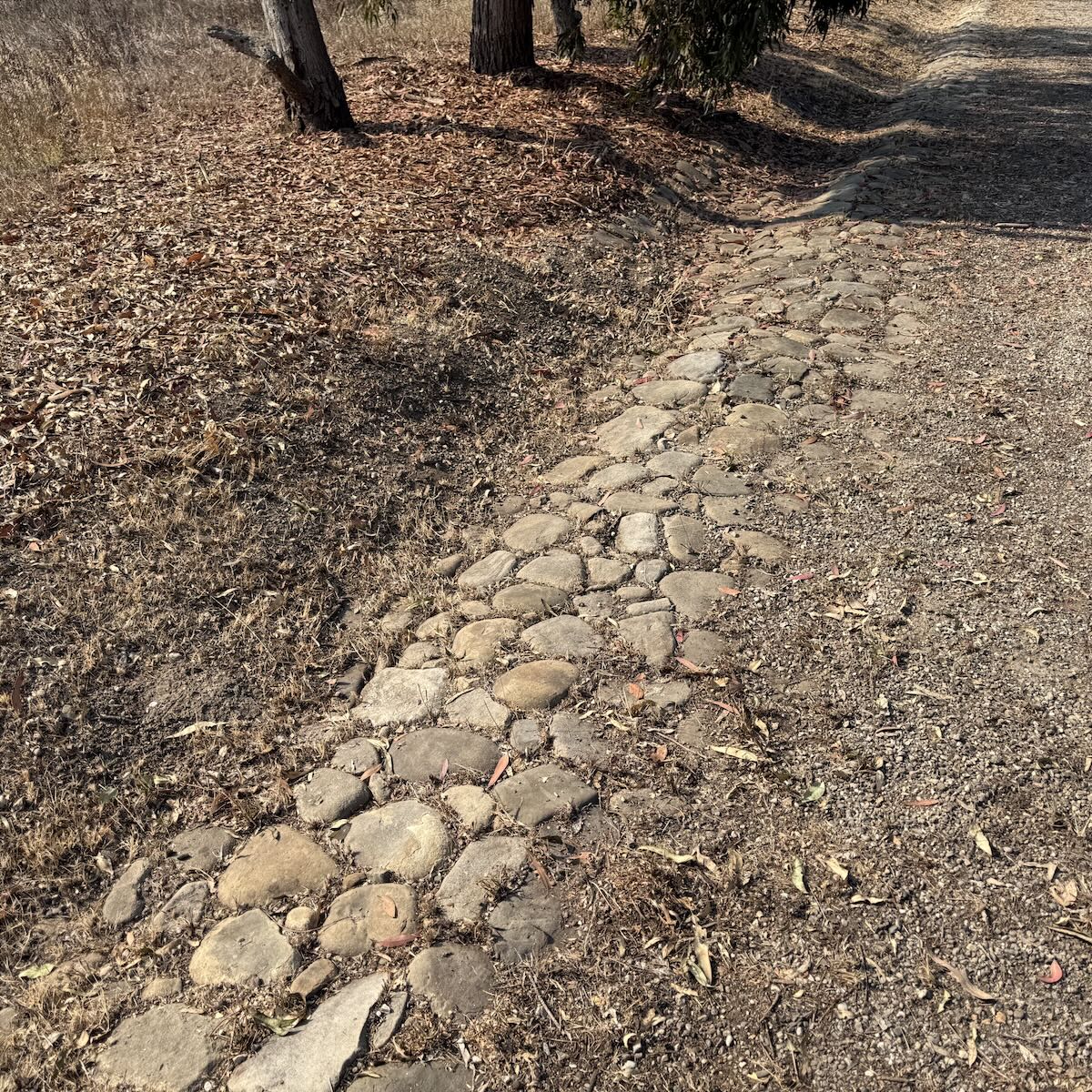 Besides “no trespassing” signs, there are actual gates with space on the side through which you can pass. Someone appears to have bent the barbs on the wire so pedestrians won’t get snagged.
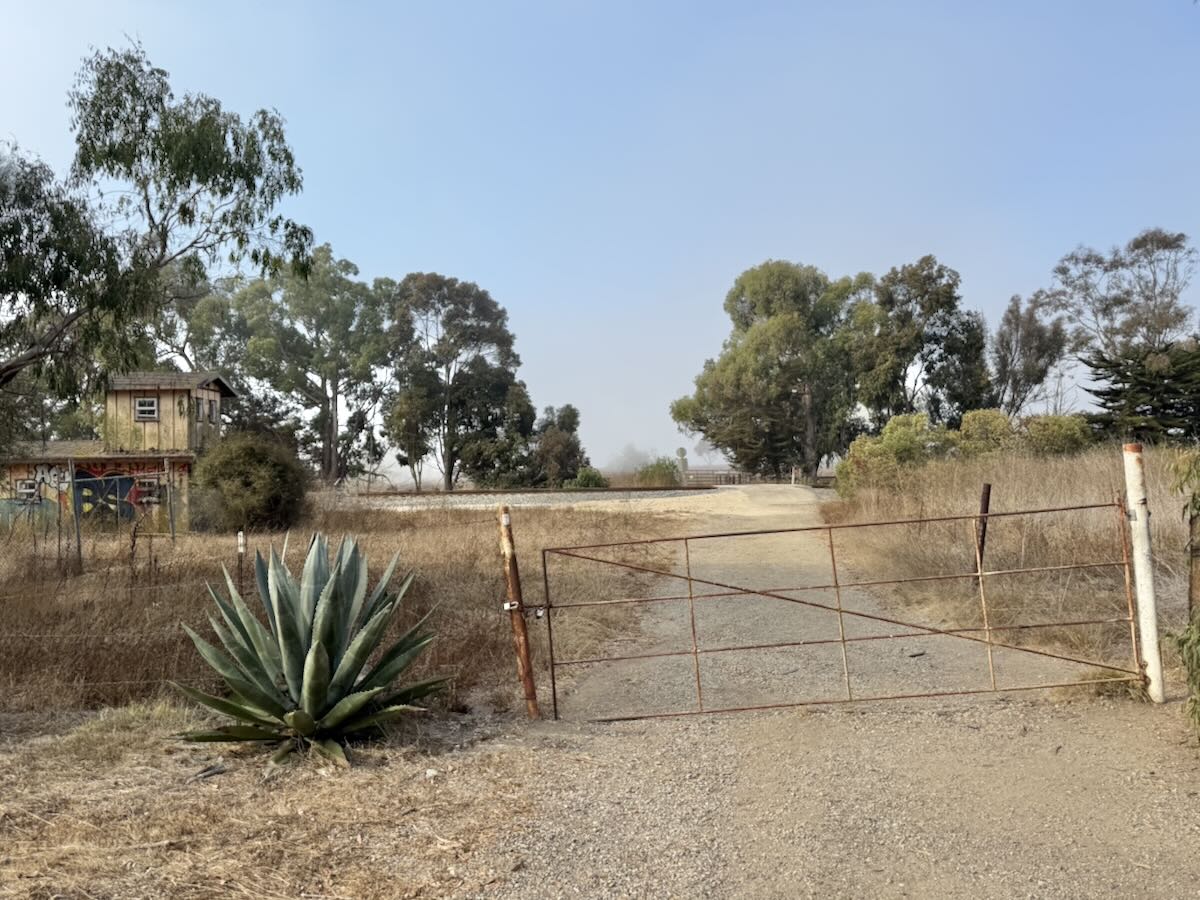
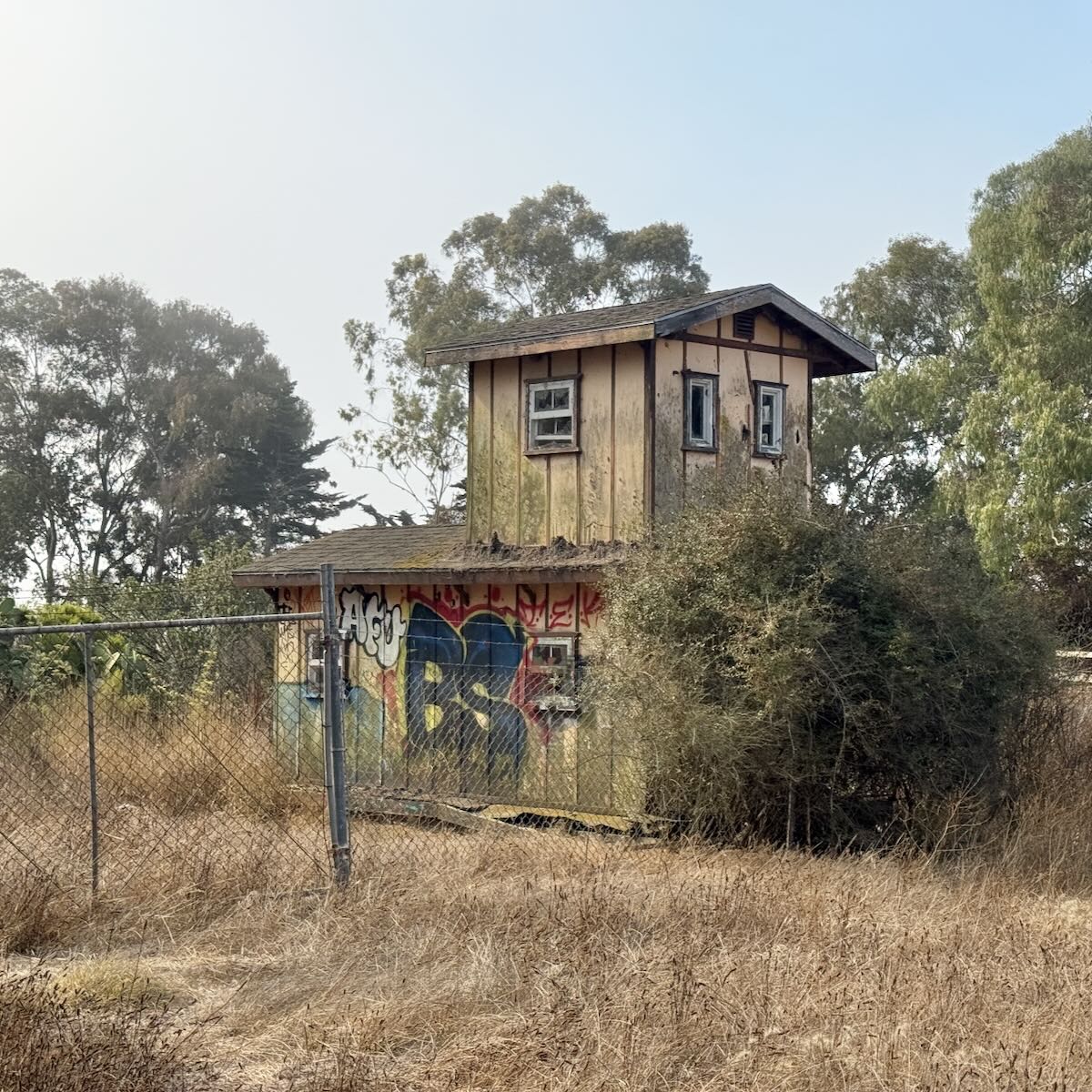
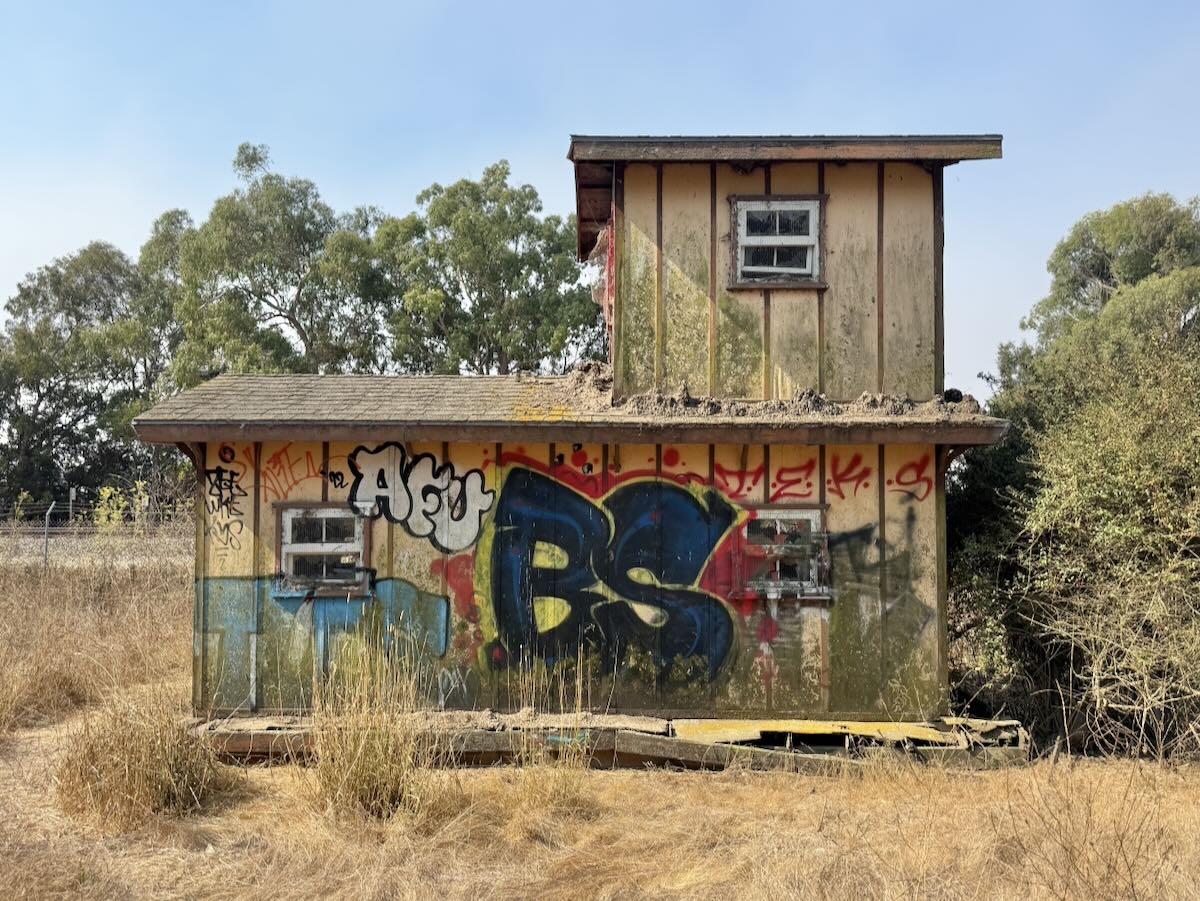
 According to Goleta History, “developers even had a little 3/4 scale Naples train station built along the tracks [in the 1980s] as a fun little attraction for potential investors. This building still exists today and we constantly get people asking if it was really the Naples train station, despite the small size.”
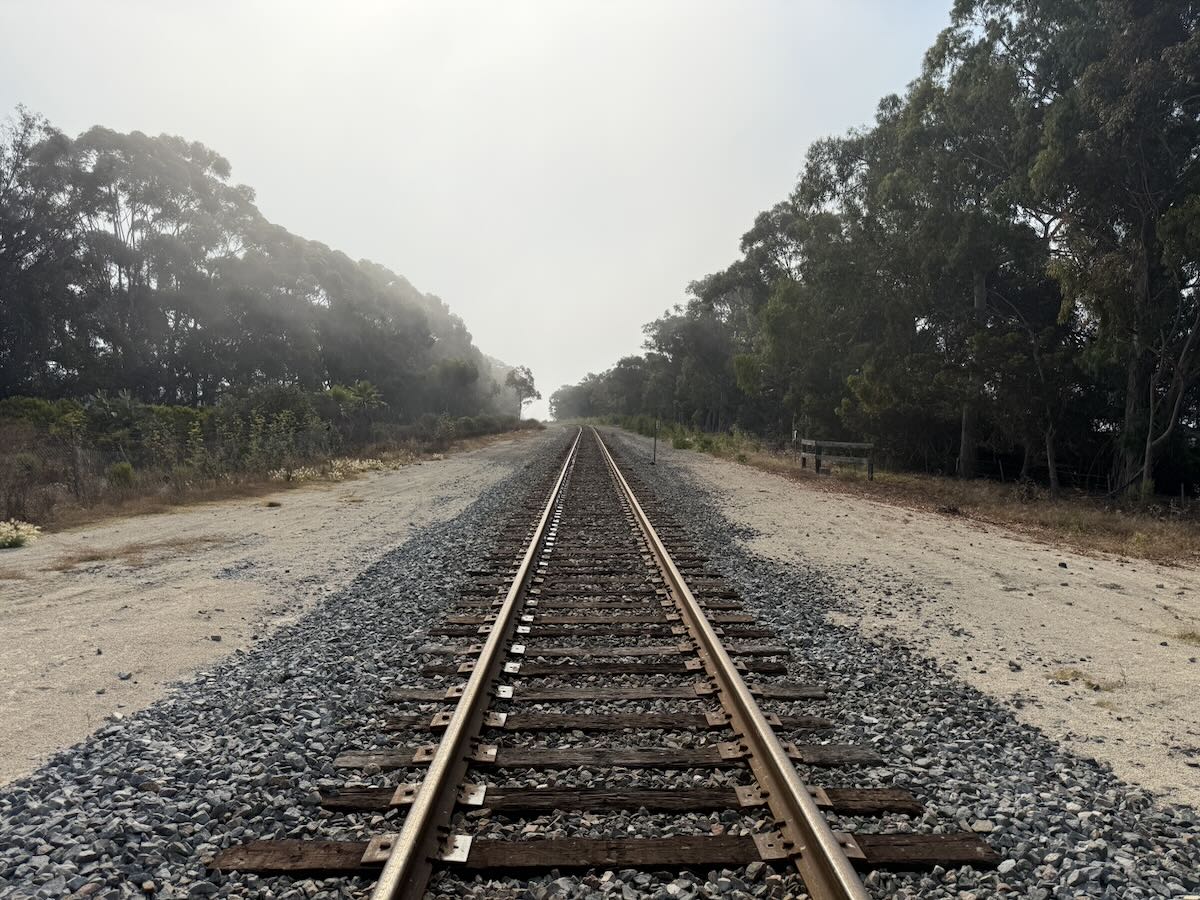
 Unlike so many things, the thrill of crossing train tracks doesn’t diminish with age.
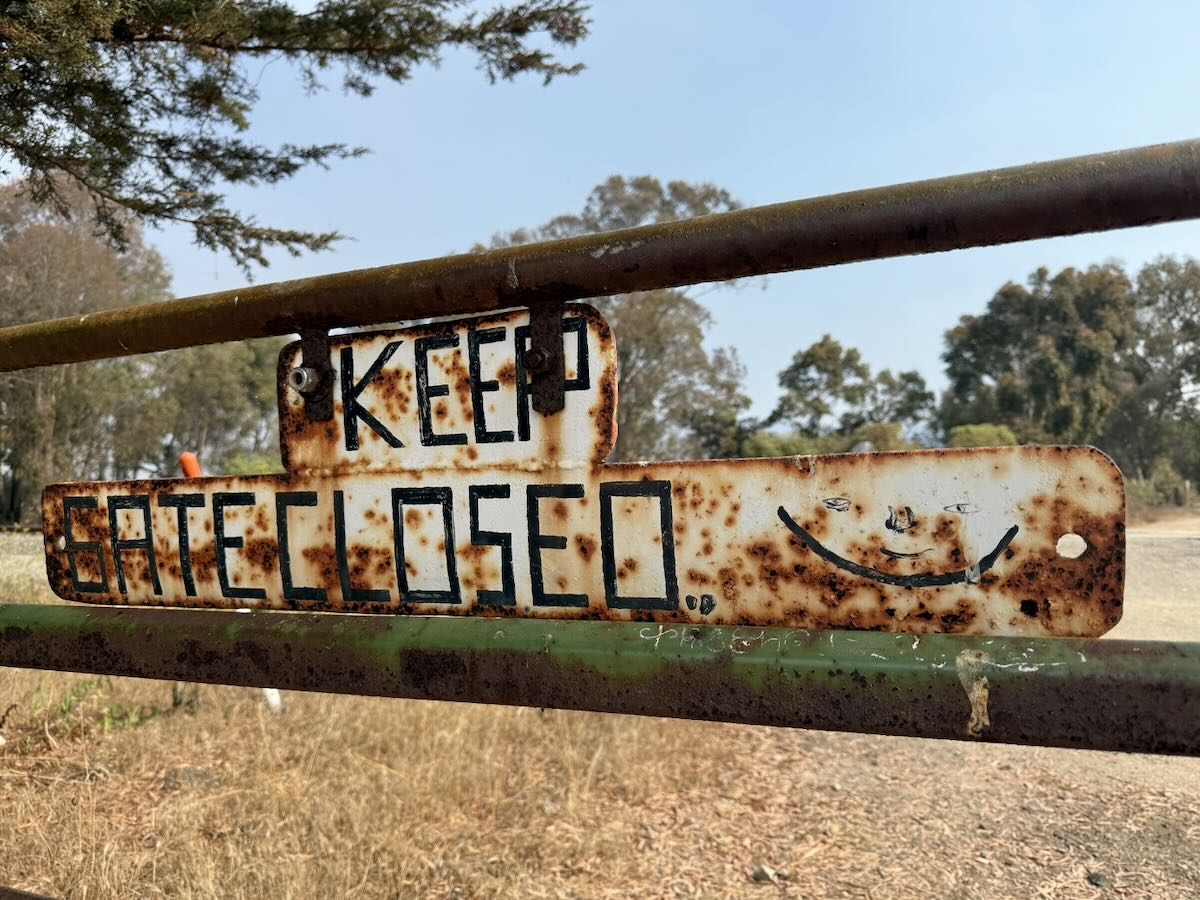
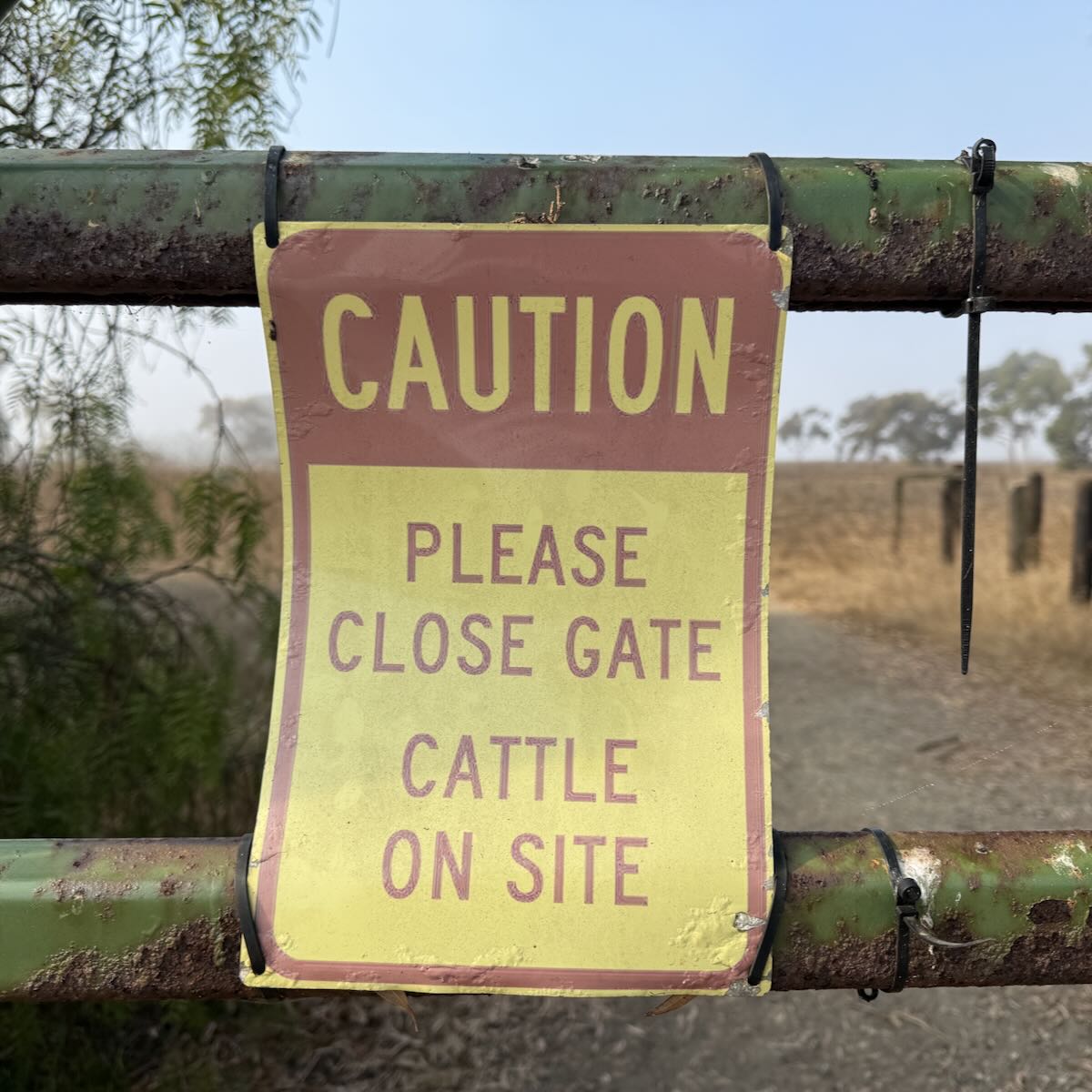
 At the next gate, the “no trespassing” signs have been decorated with smiley faces. I never saw any cattle, though.
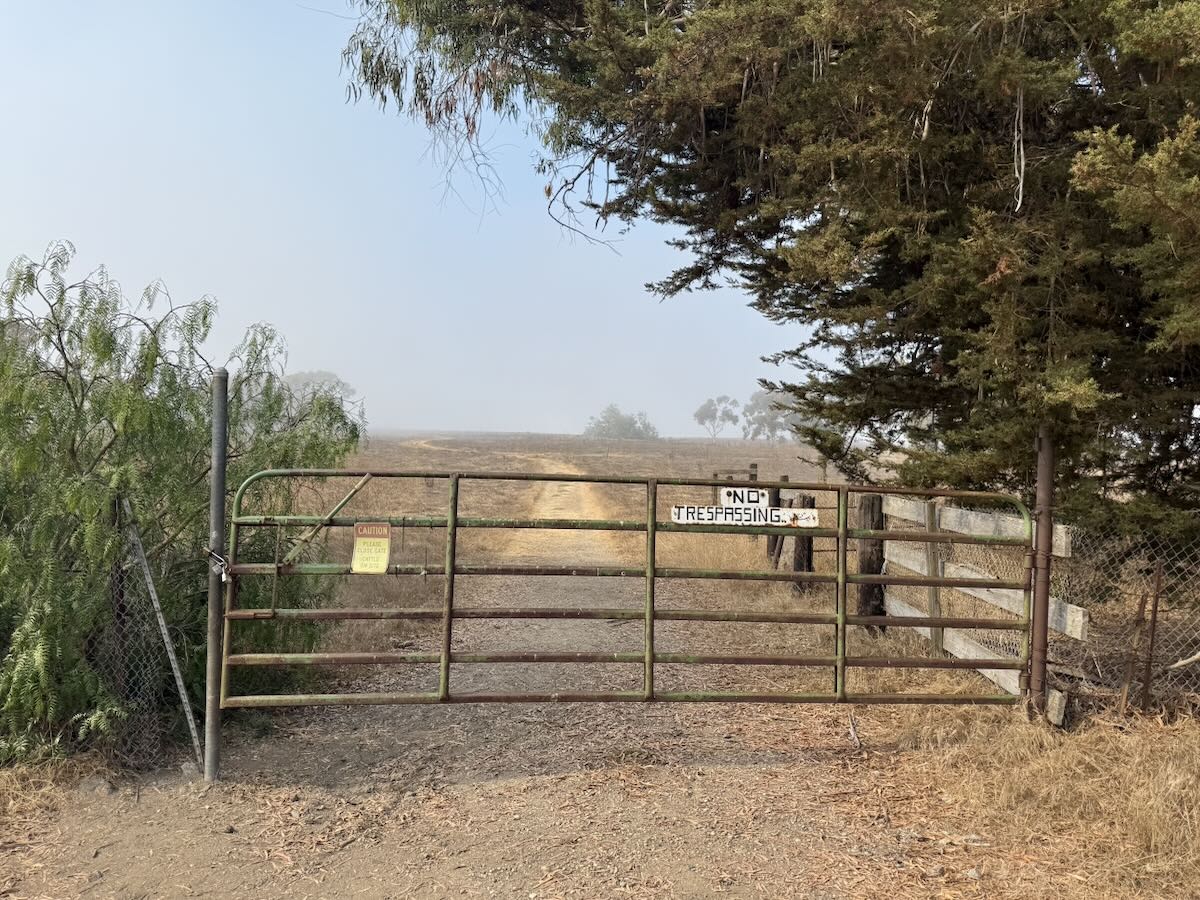
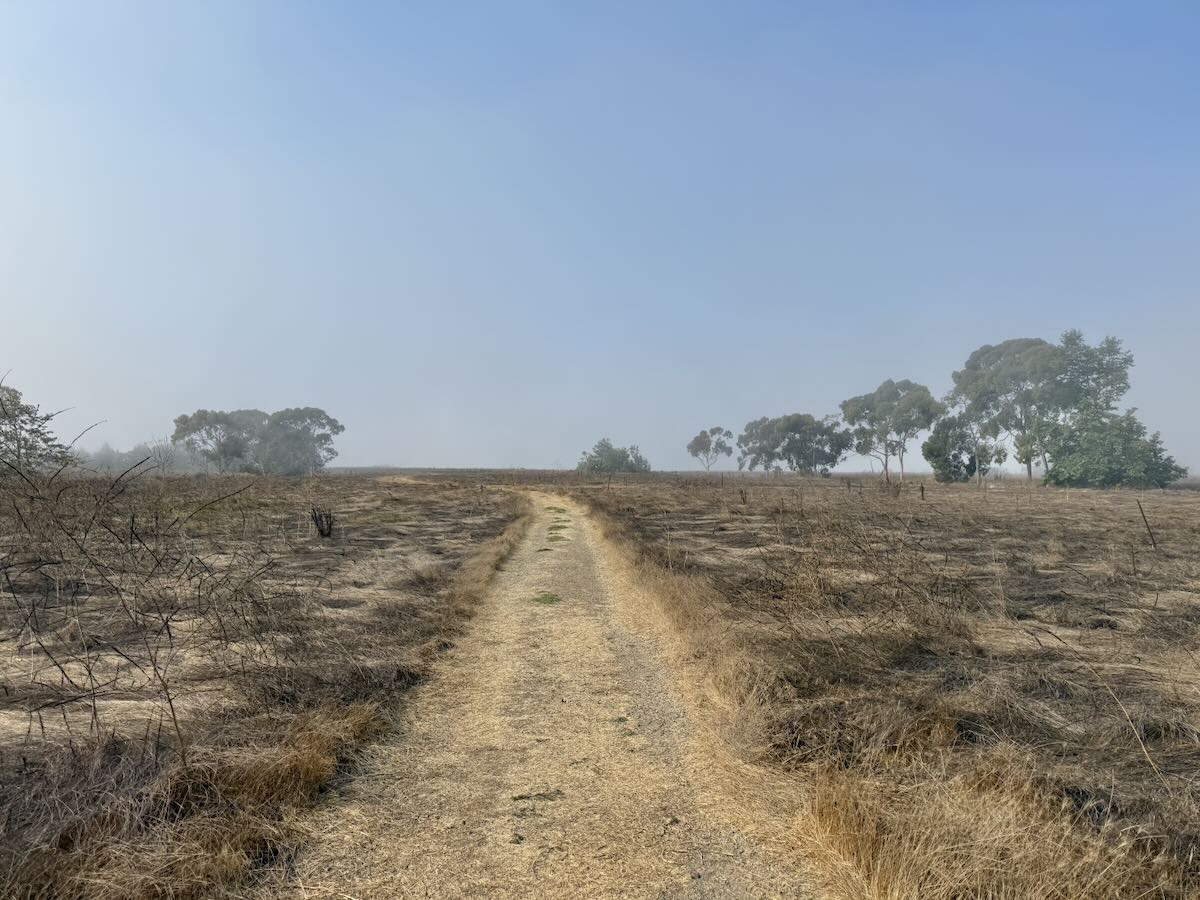
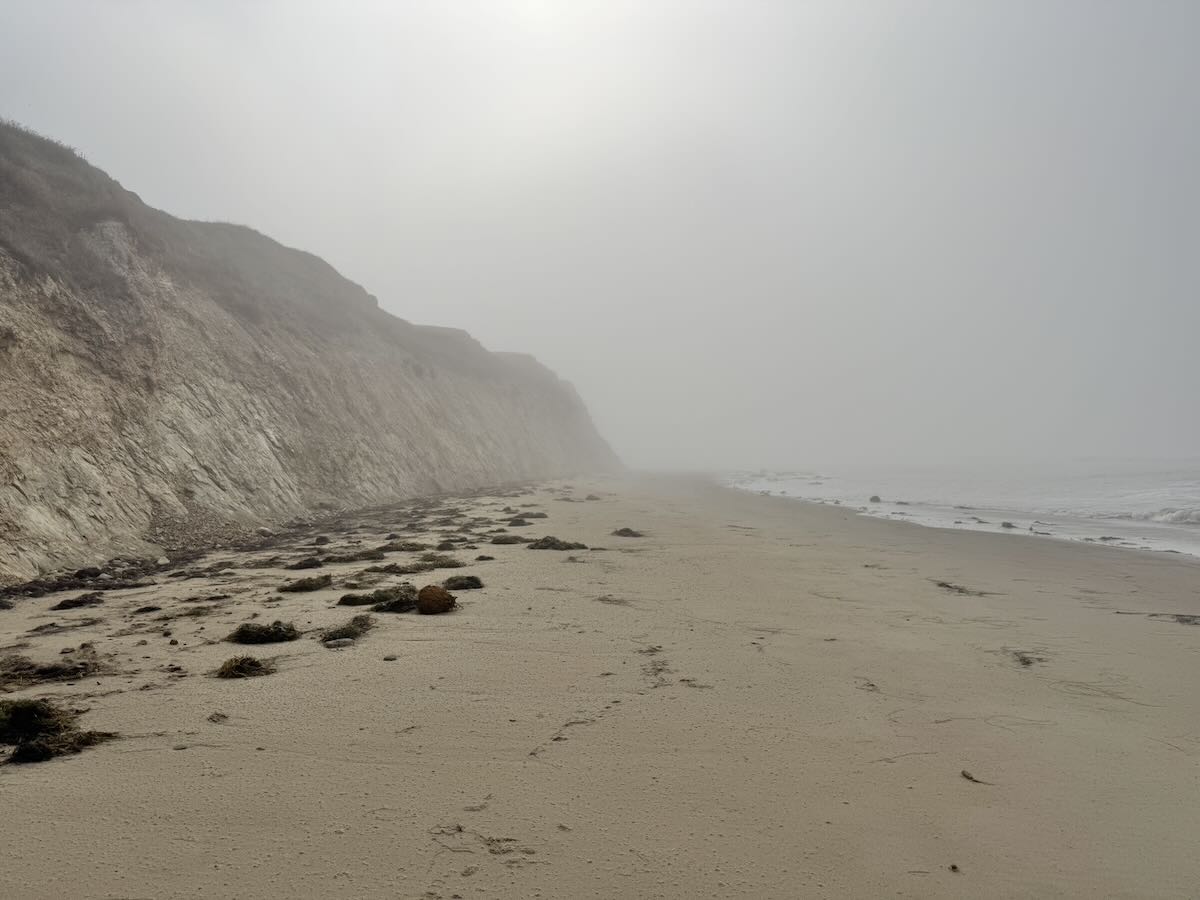
 And then the walk turned eerily beautiful, with low mist gliding over the windswept land and not a soul in sight. I’m accustomed to hiking alone, and rarely encountering other people, but this felt different—lost in time, maybe, or like another continent.
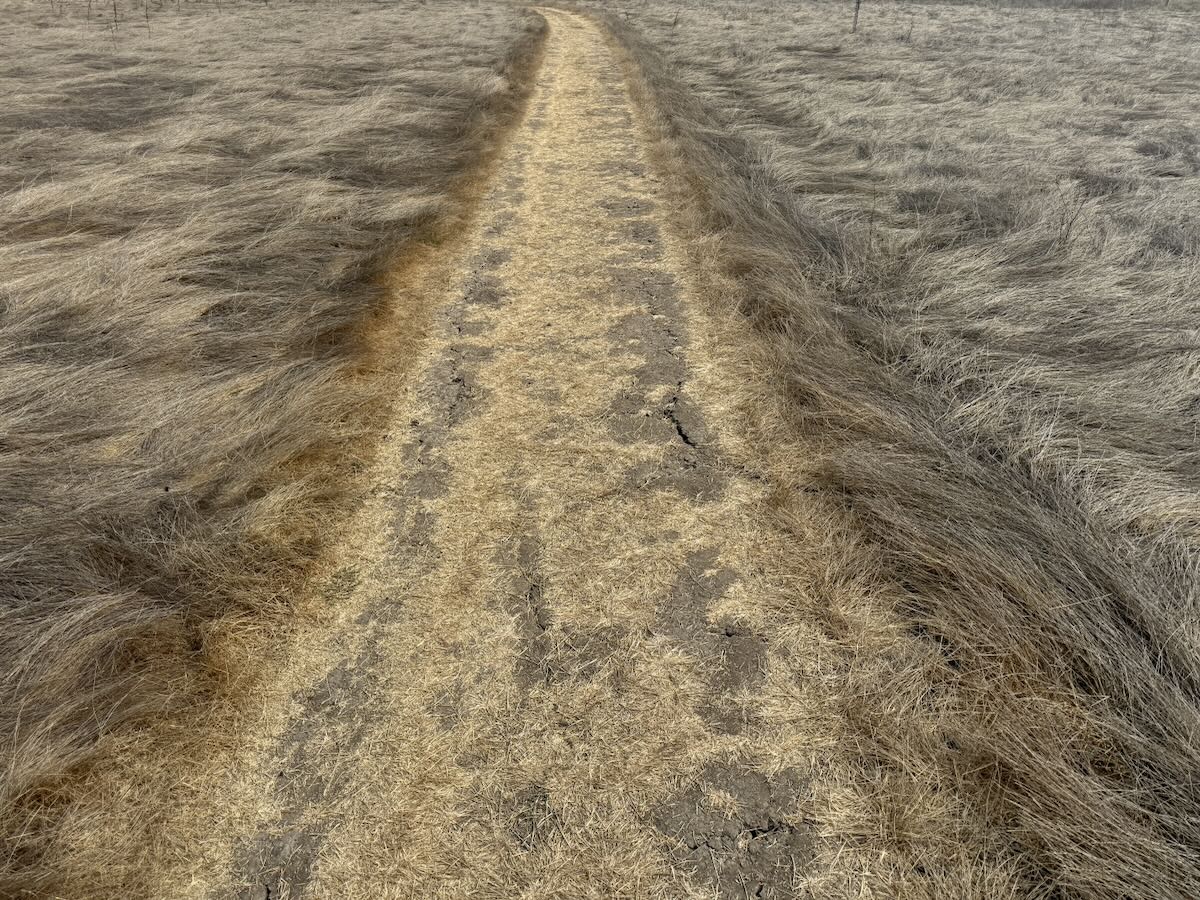
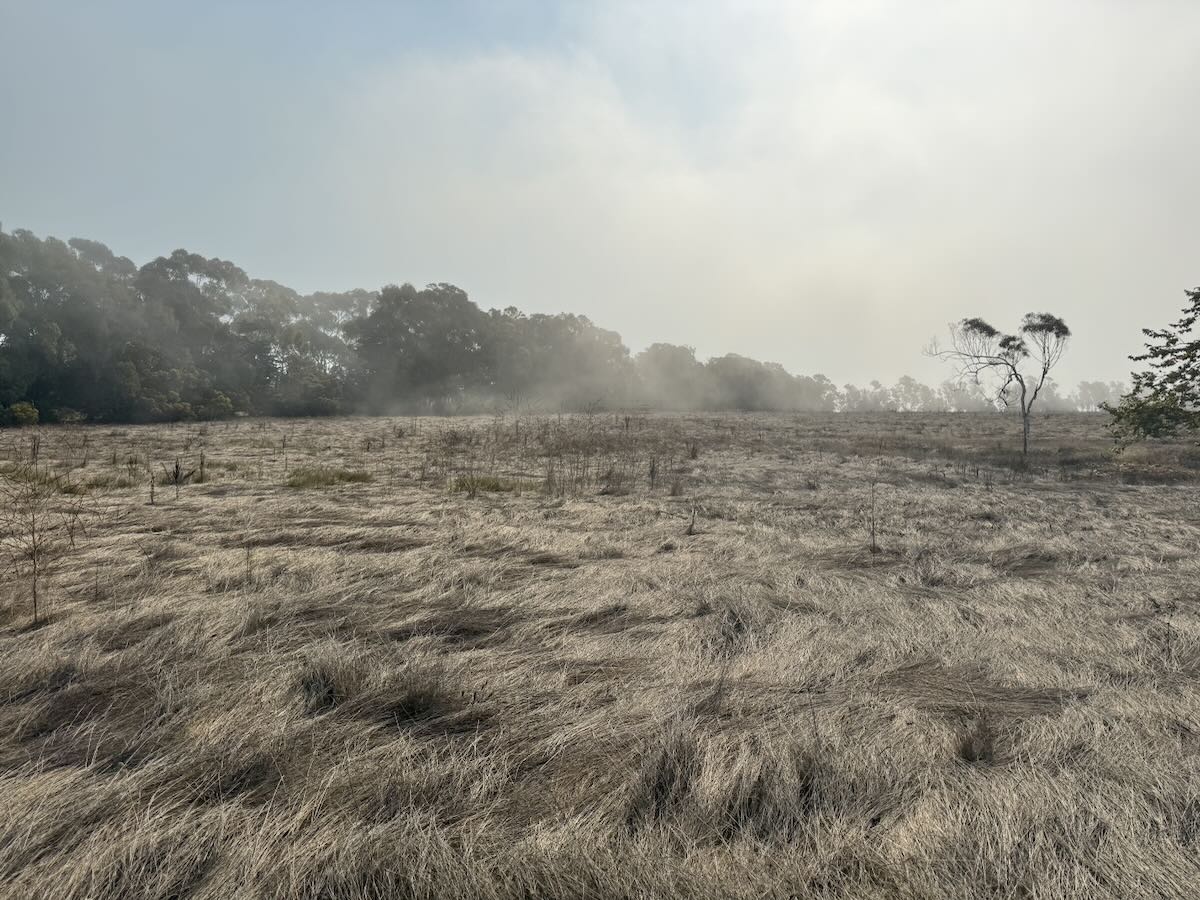 The grass on either side of the path is matted down like long shag carpet.
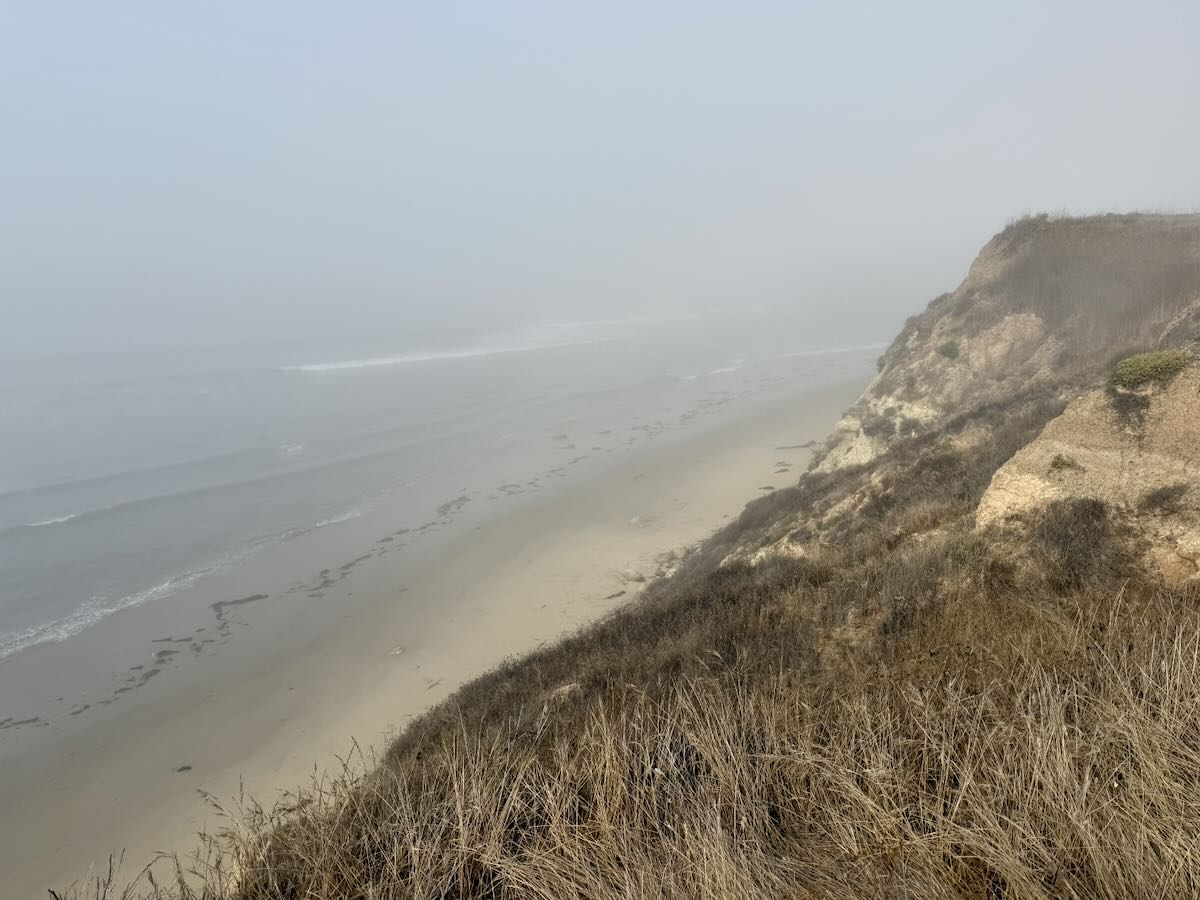
 Eventually, I spotted a path to the left, but I kept going, lured by the sound of the waves. The payoff wasn’t particularly visual—it reminded me of when my husband and I paid some ungodly sum to stay at the Post Ranch Inn in Big Sur for a night, only to find it socked in by fog. The big picture windows in the restaurant might as well have been gray walls.
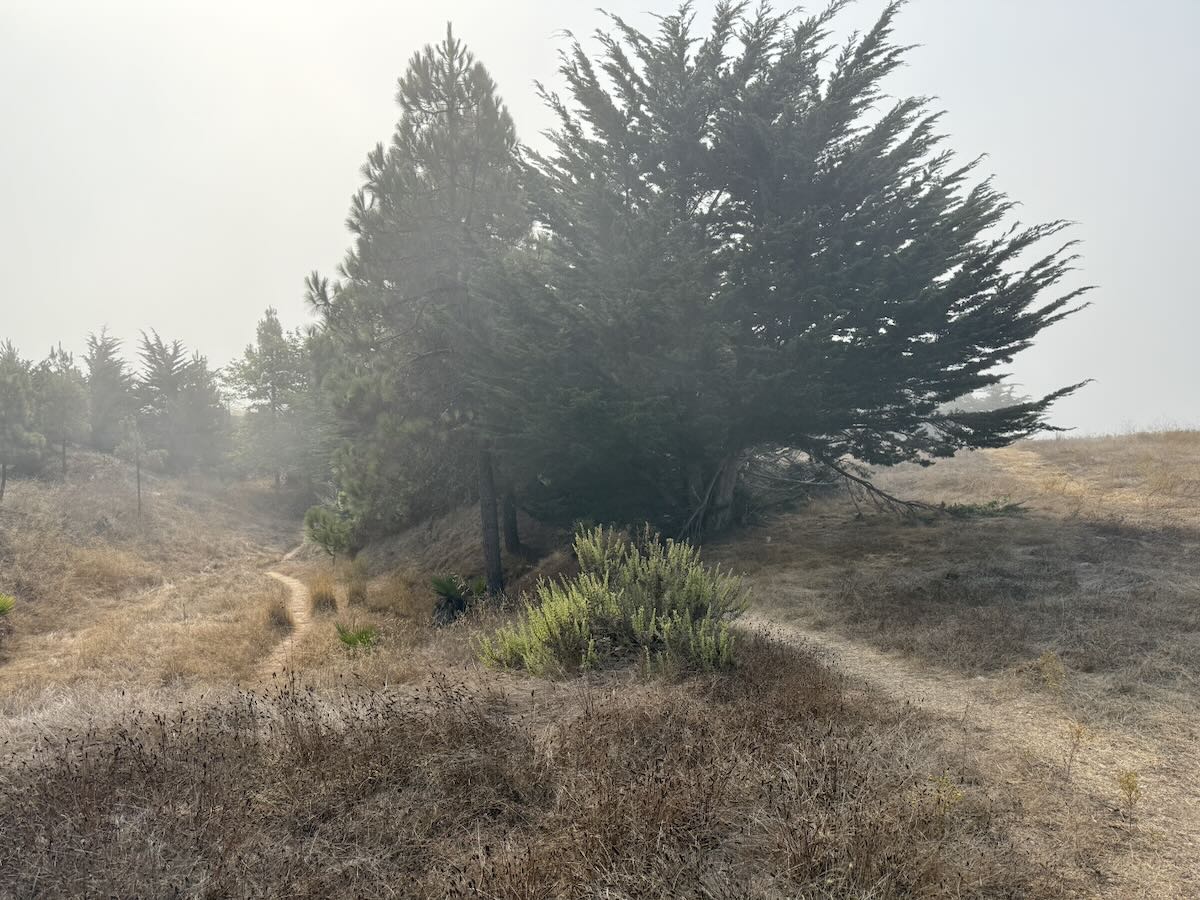
 Another path to the left beckoned. It joins up with the one I mentioned before, leading through the trees, down a narrow ravine, through a gate, under a fallen tree, to the beach.
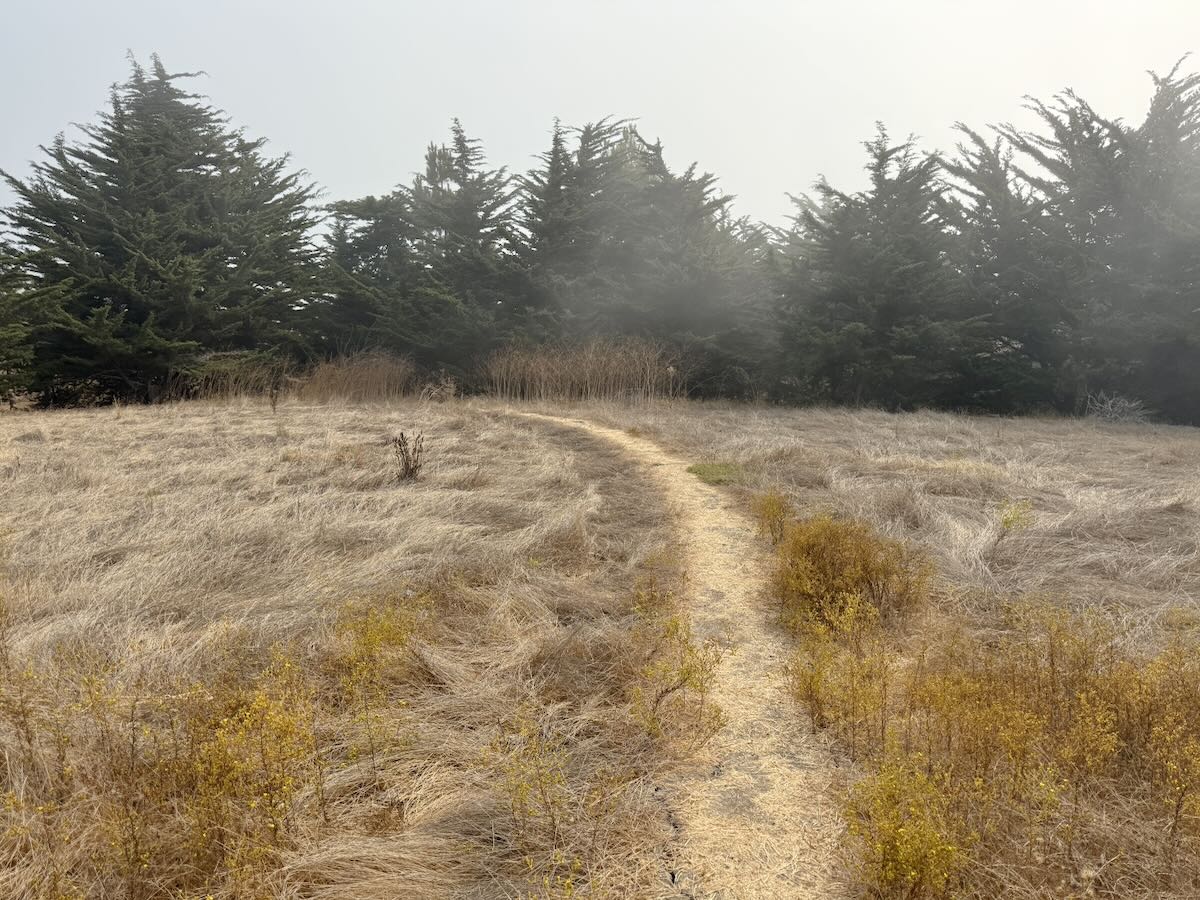
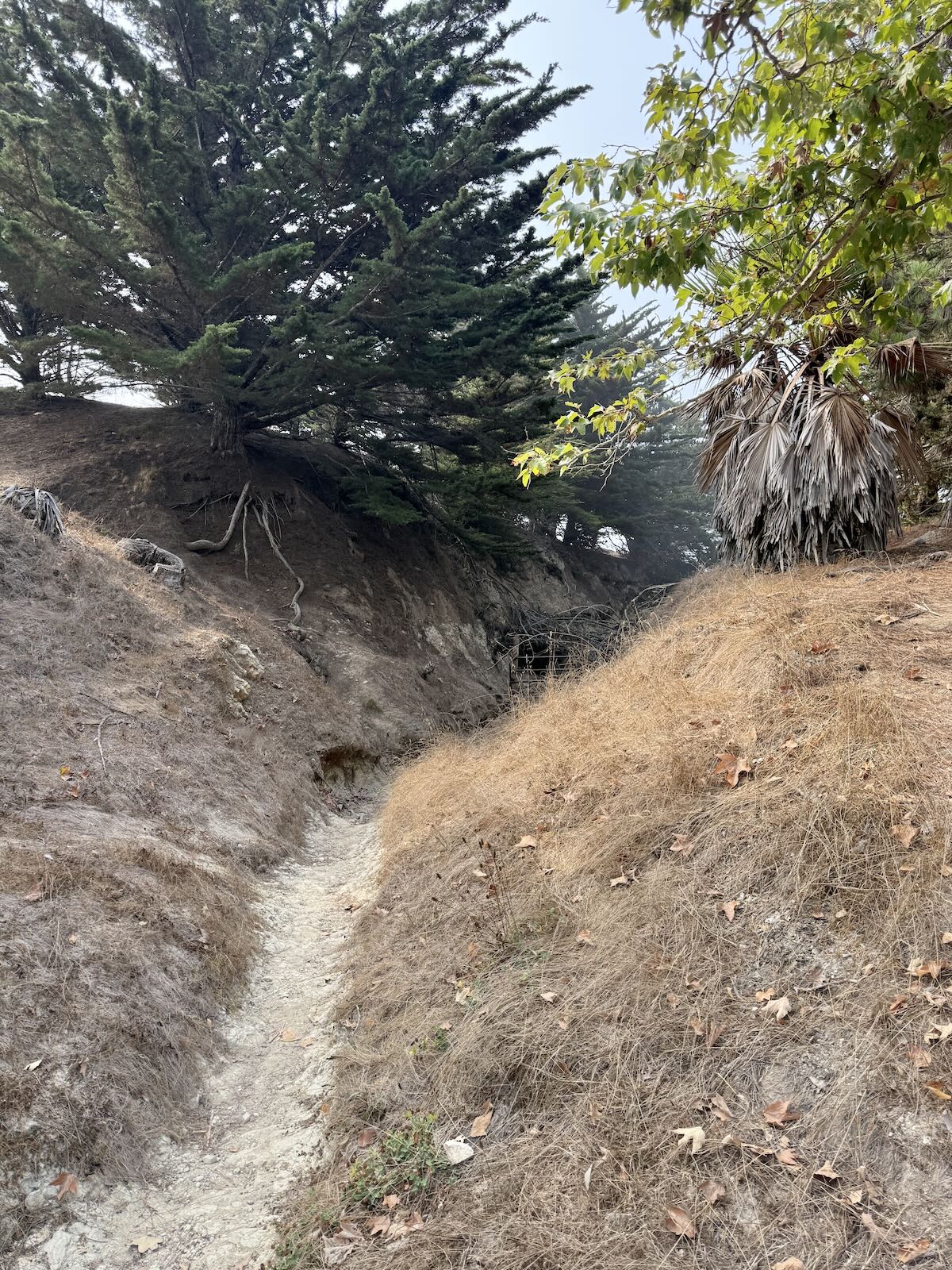
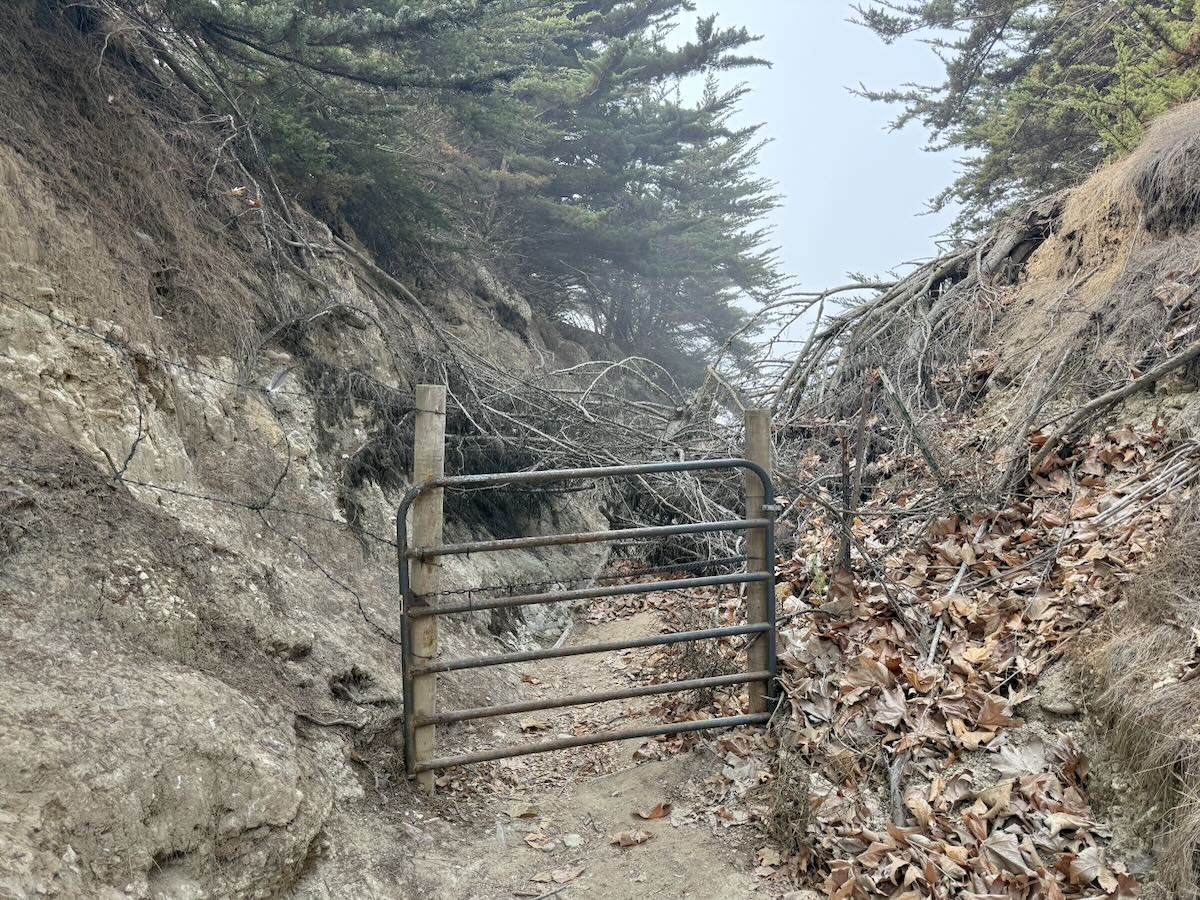
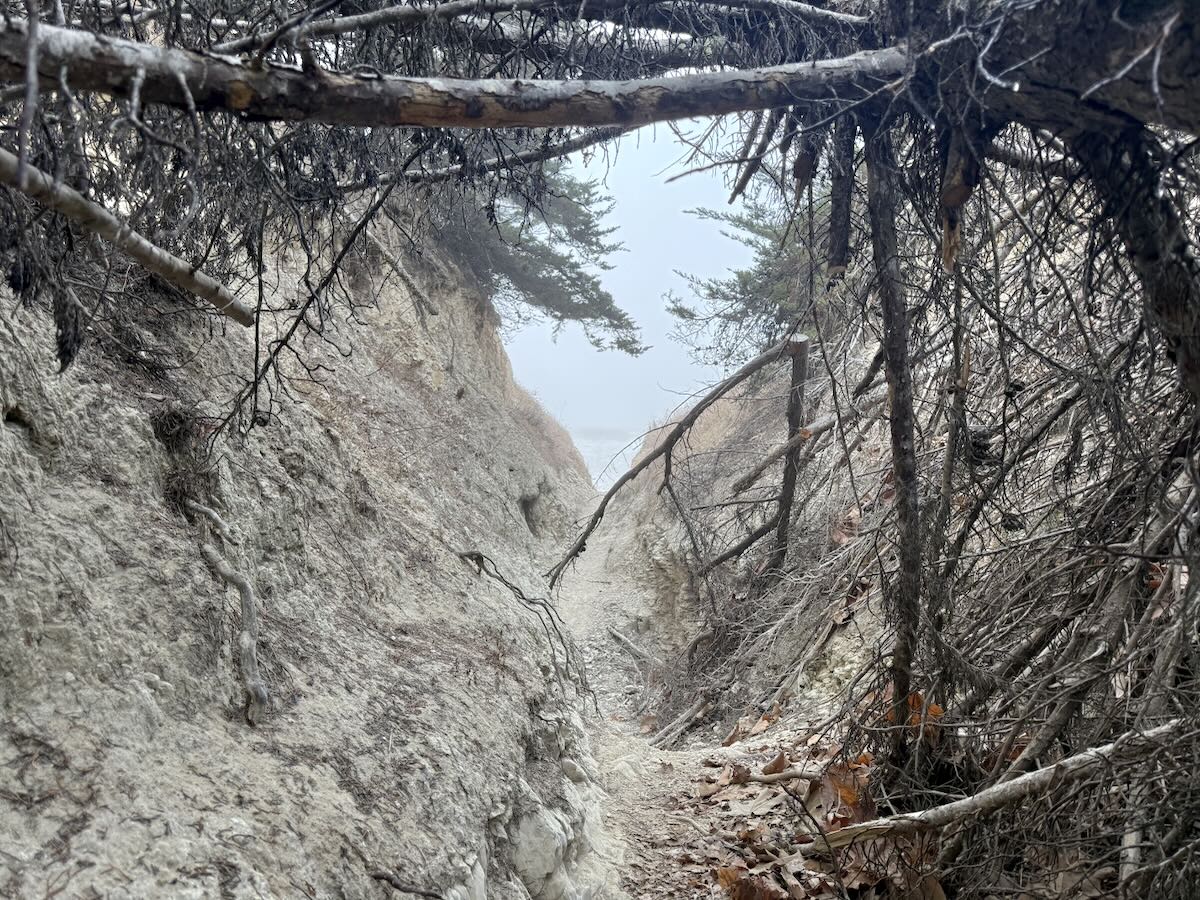
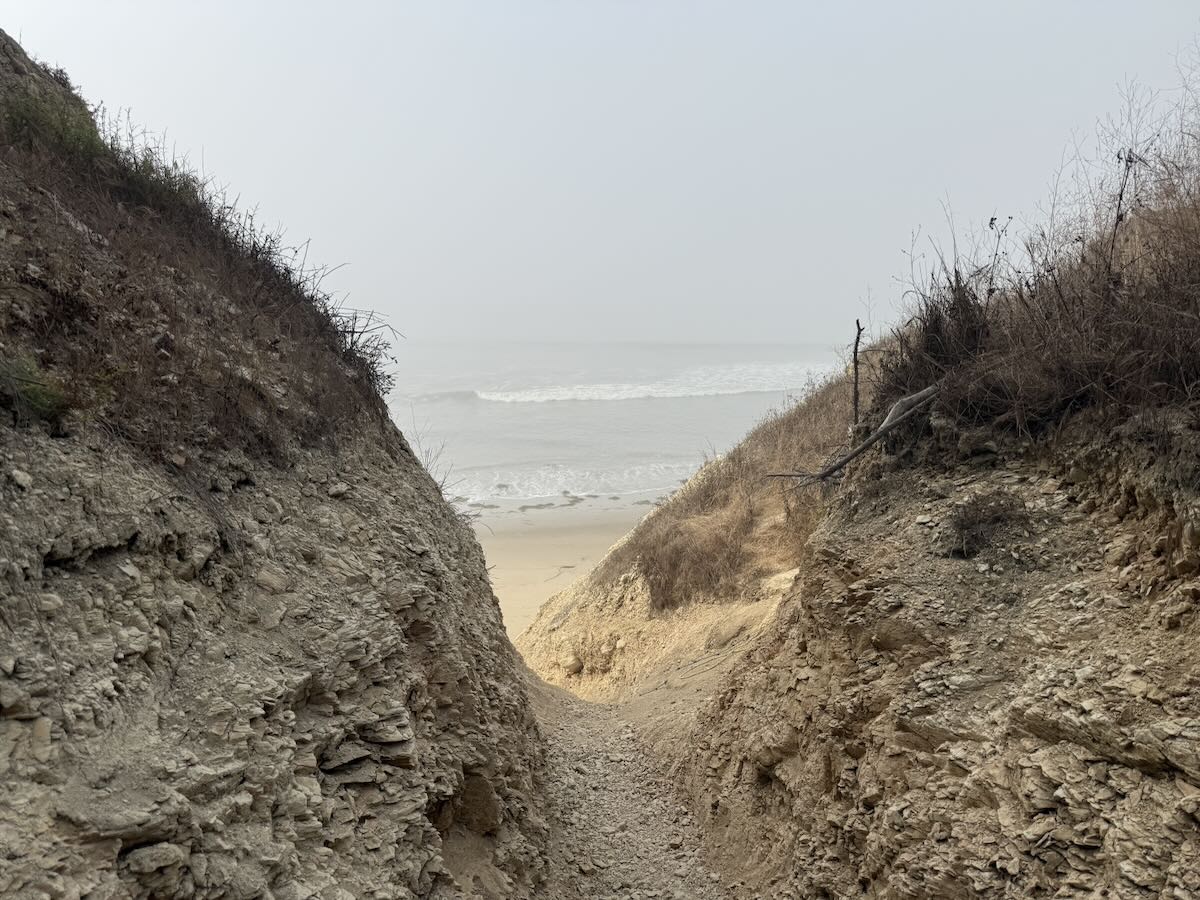 A knotted rope is there to help with the terrain, which is unstable and slippery more than steep. I didn’t find it necessary, but I was glad it was around.
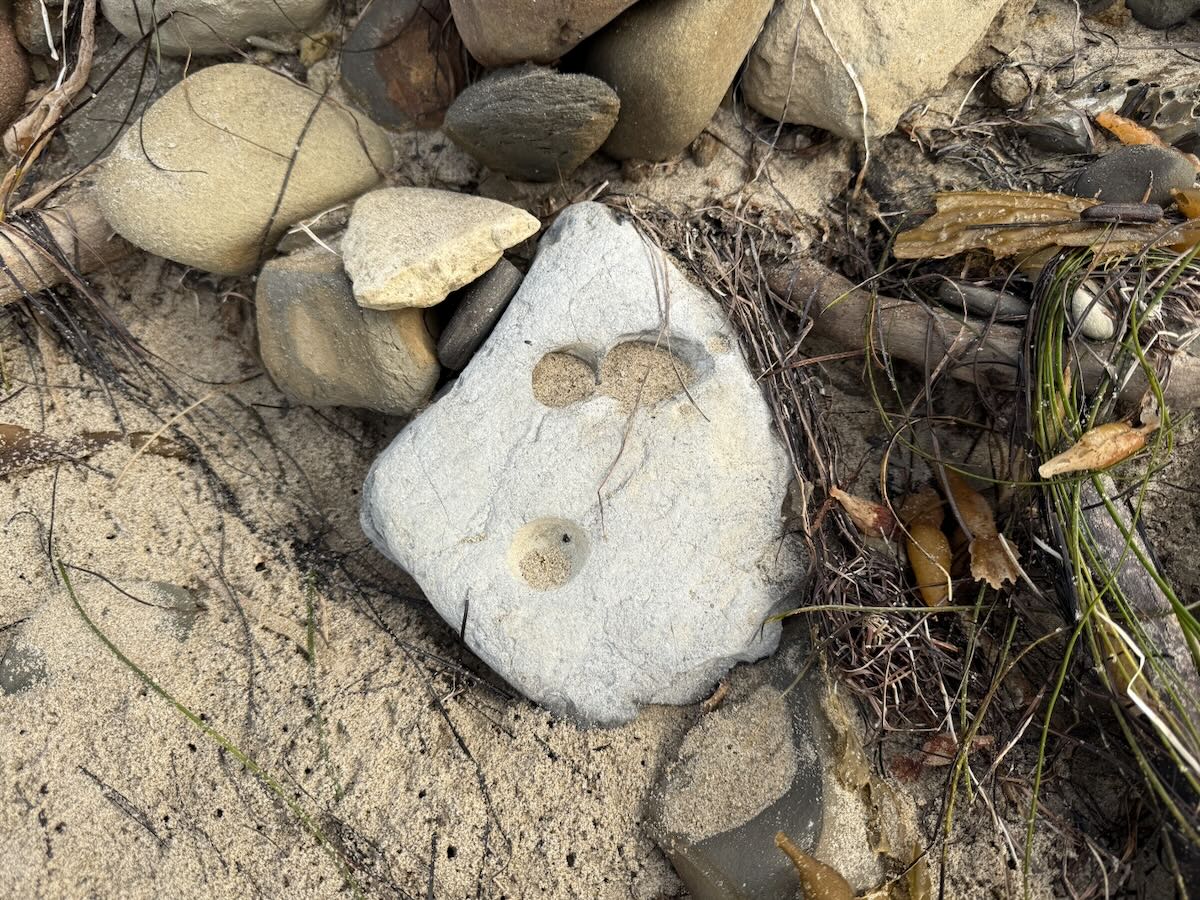
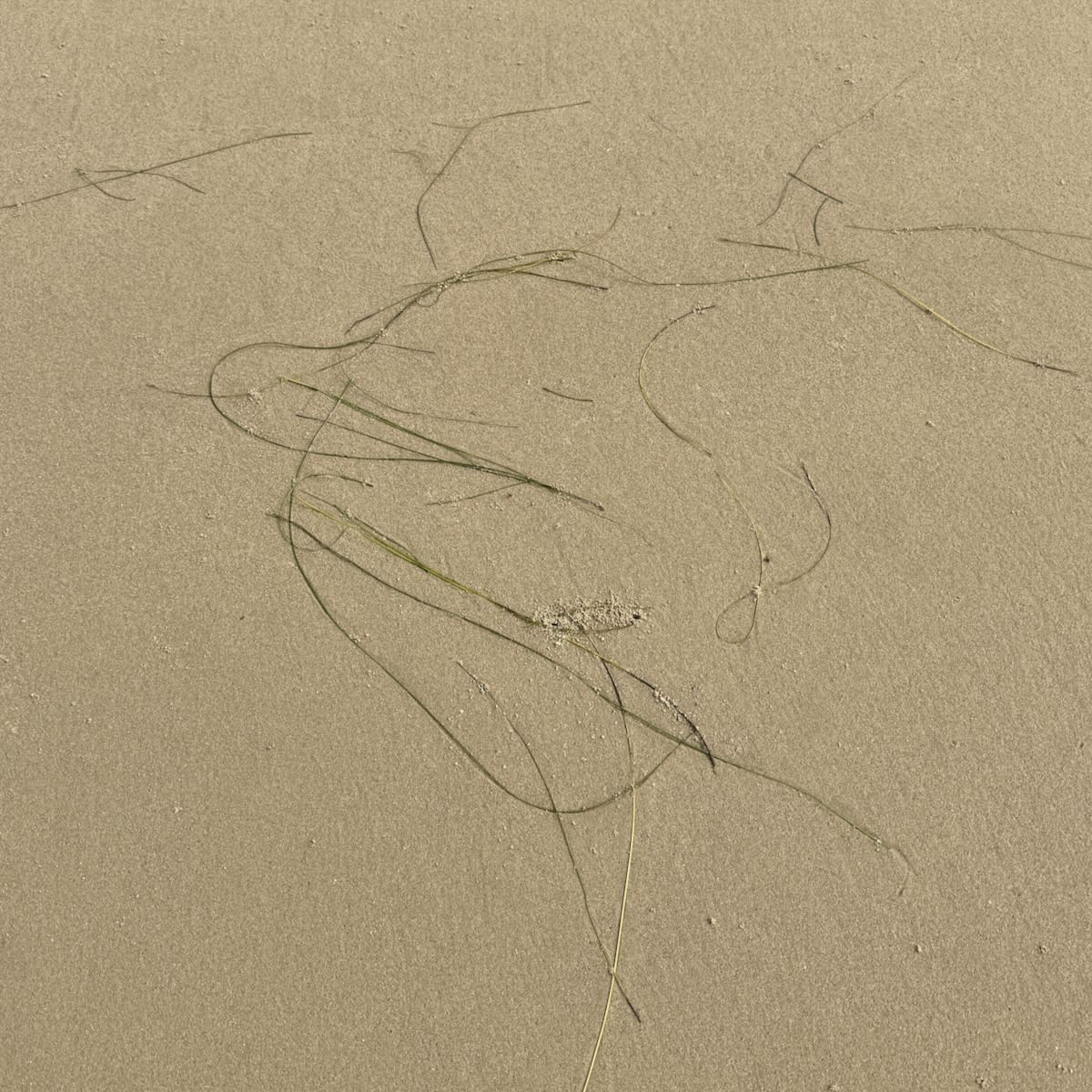
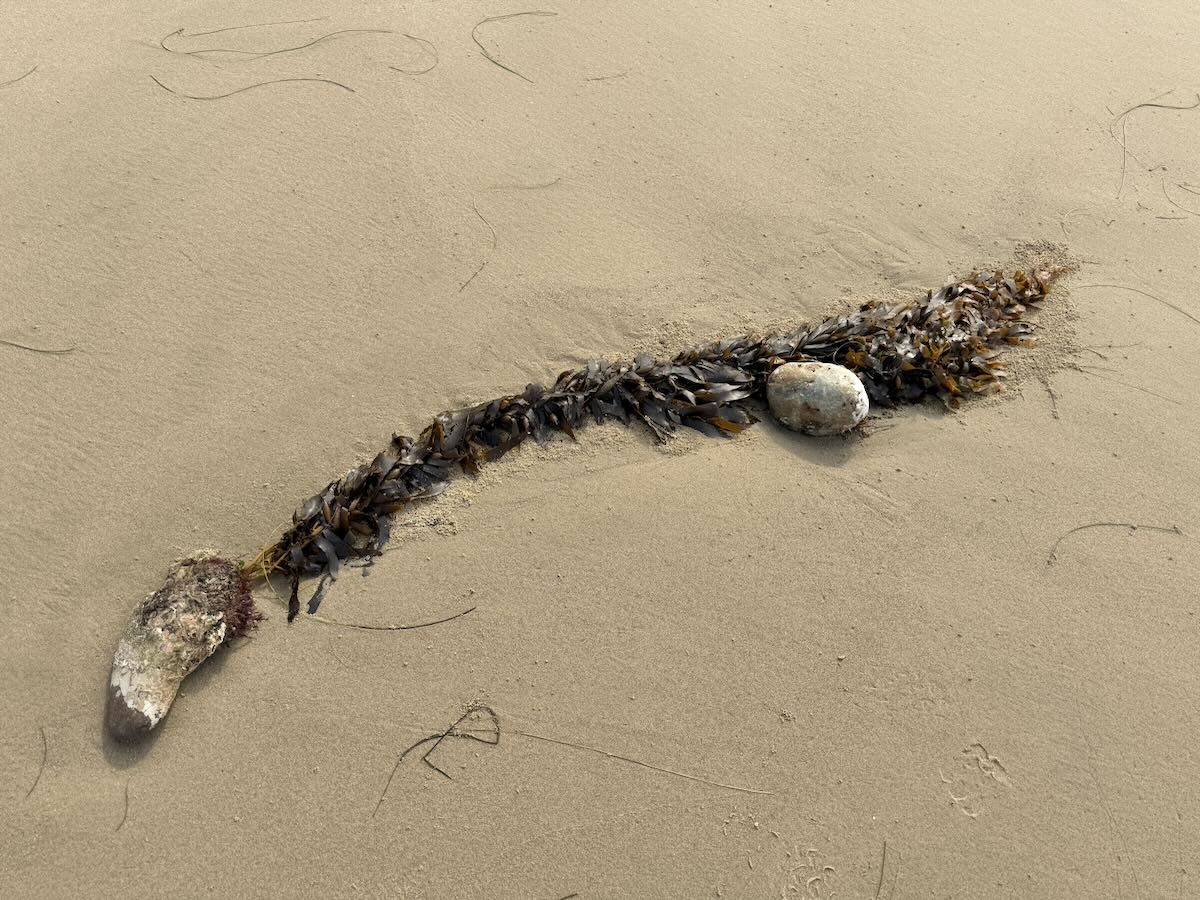
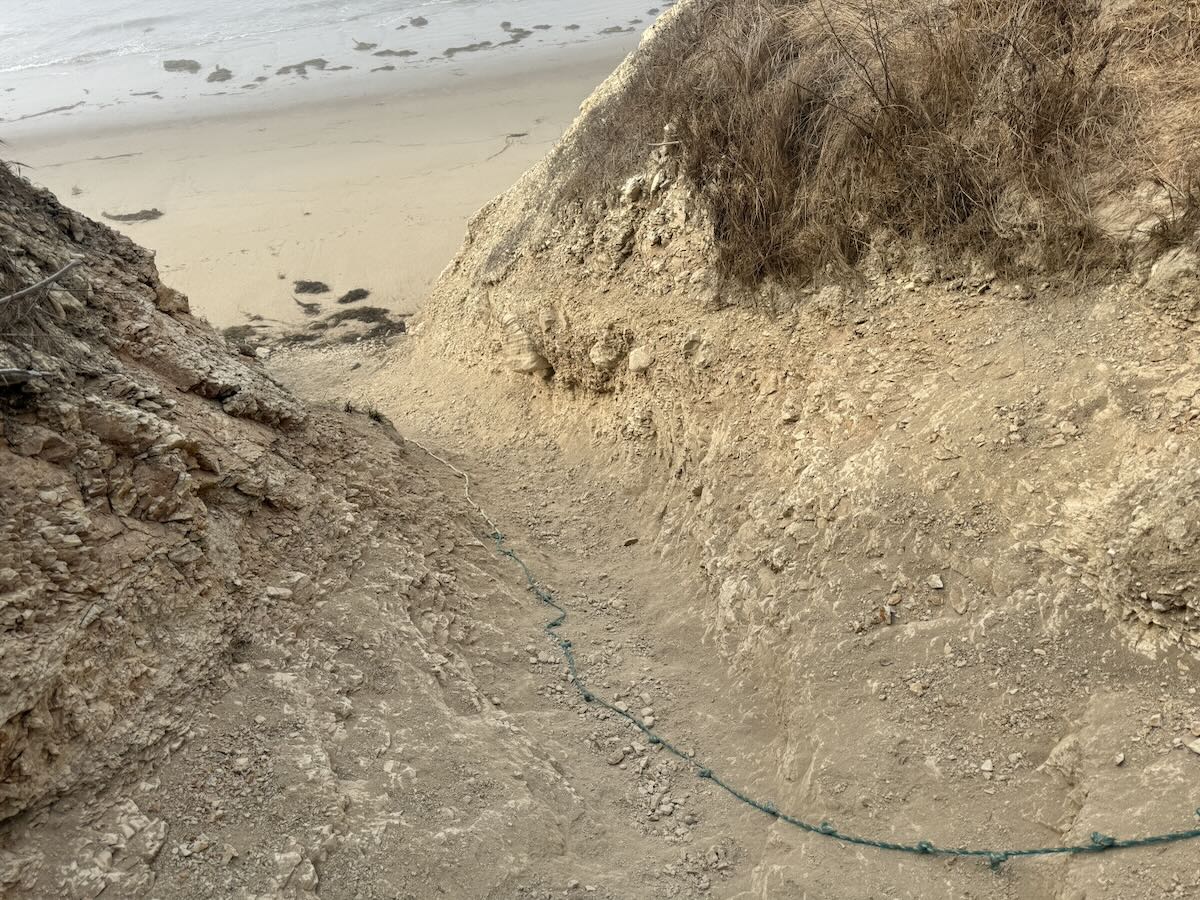 The beach was extremely moody. I strolled a bit through the fog, noticing the kind of things I notice: faces in surprising places; seagrass in artful arrangements (shades of John Edward Heaton’s sandscripts); and artful plant detritus, in this case attached to two rocks (which I wasn’t tempted to take home, due to the smell).
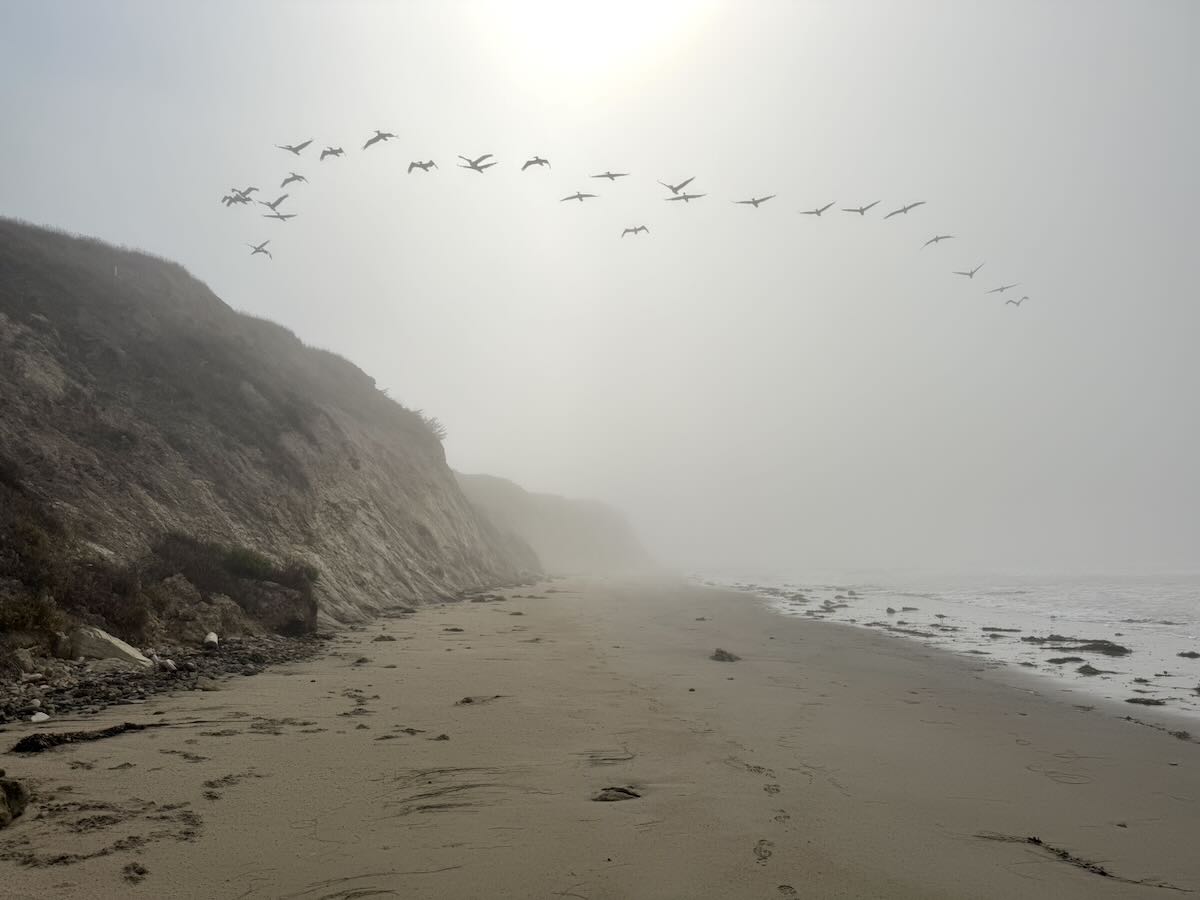
 It was lonely going, in a delicious way. The only sign of life was a formation of pelicans that flew overhead.
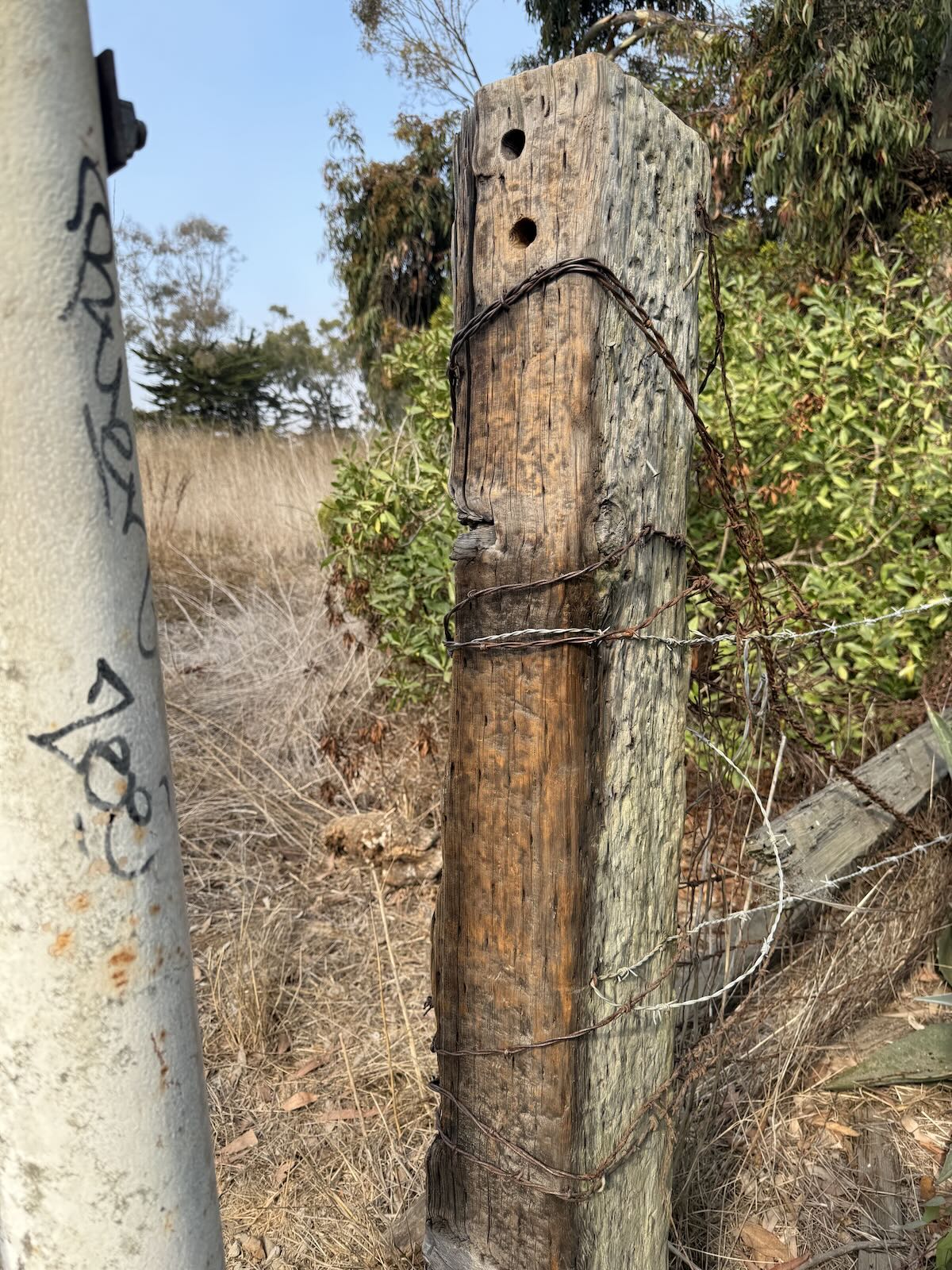
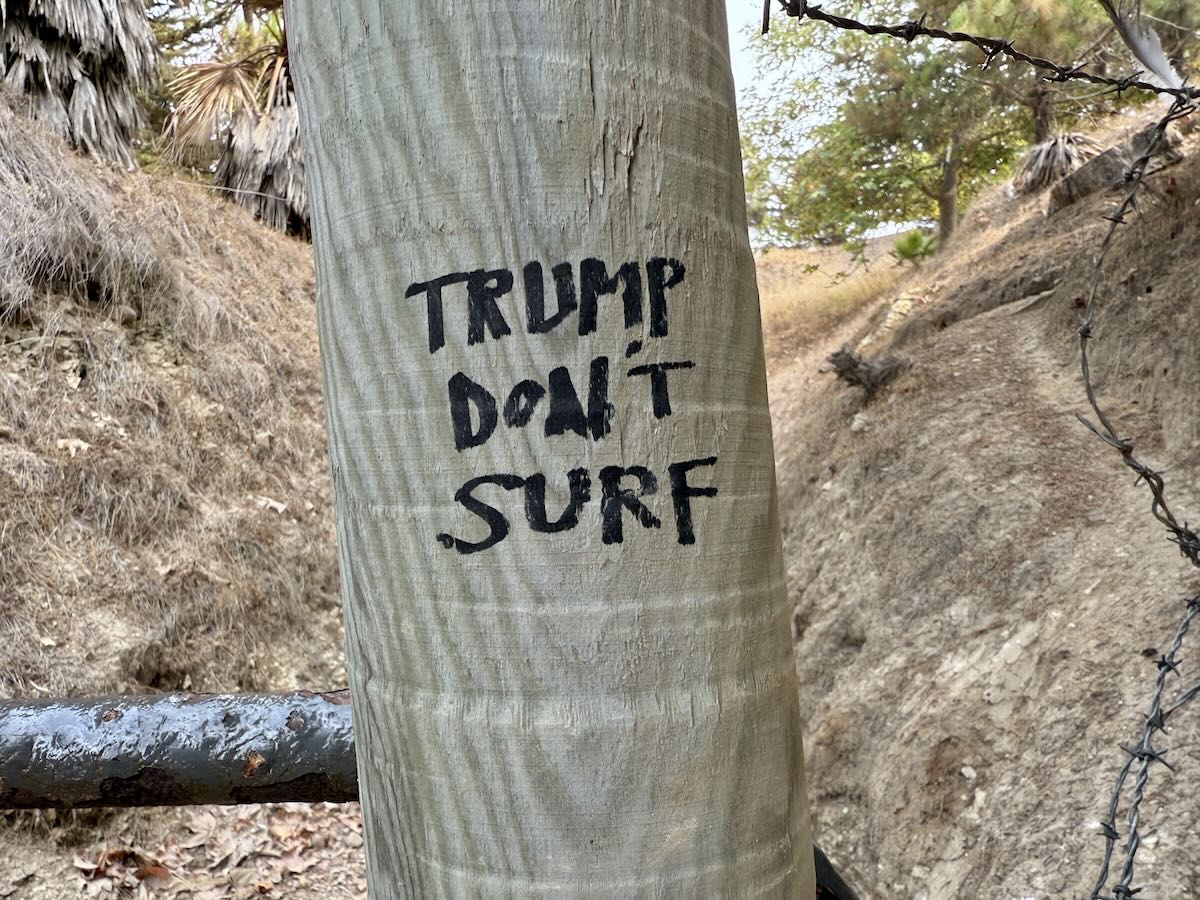
 On the return trip, I was back in the sun soon enough. As always with doing a walk in the opposite direction, you see different things, such as an amusing piece of graffiti on the back of a fencepost (low on the list of reasons to despise the man, though).
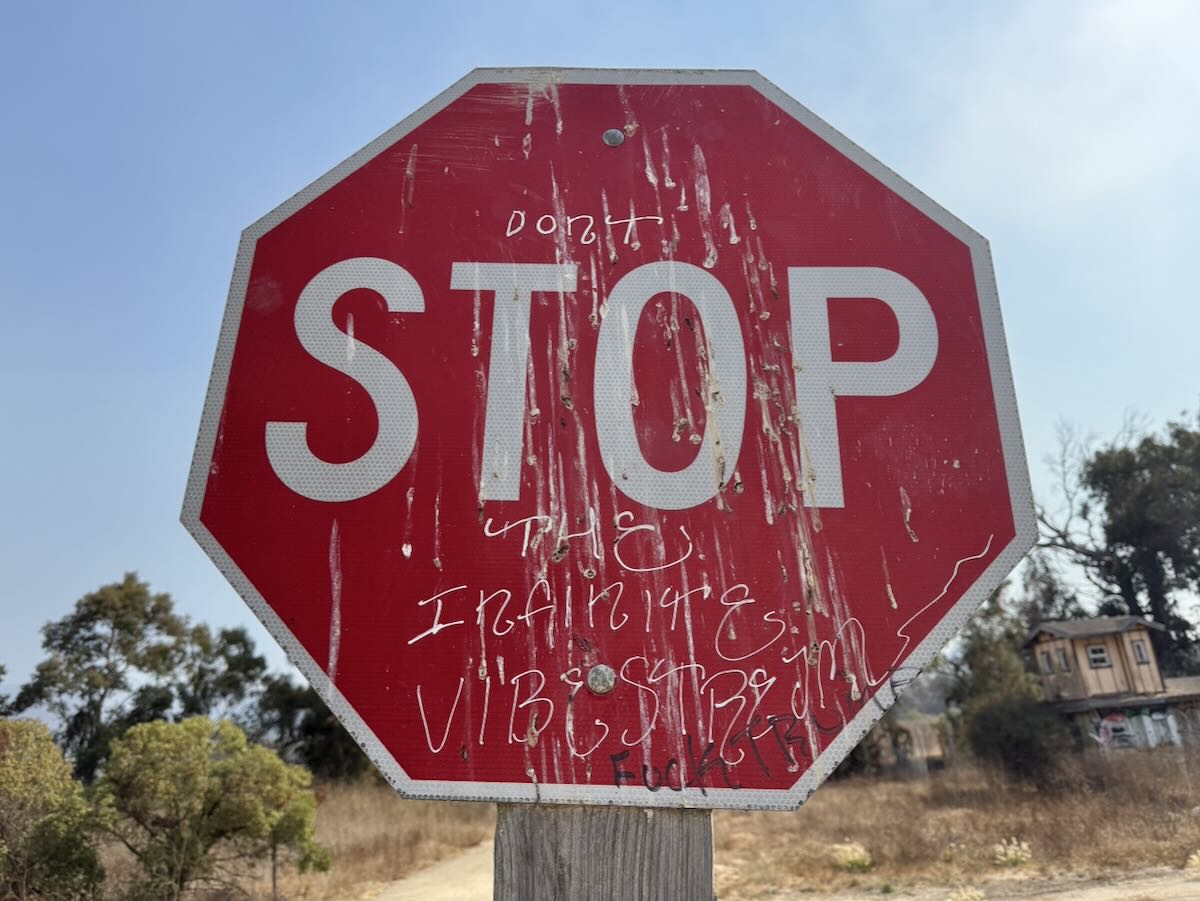
 At least it’s legible. Any guesses what comes before “vibestream”? (Update: “I think it’s the ‘infinite vibestream,'” says Ken, and now I see it.)
 Even the fake train station looked a smidge less creepy. I didn’t peek inside, but I encourage you to.
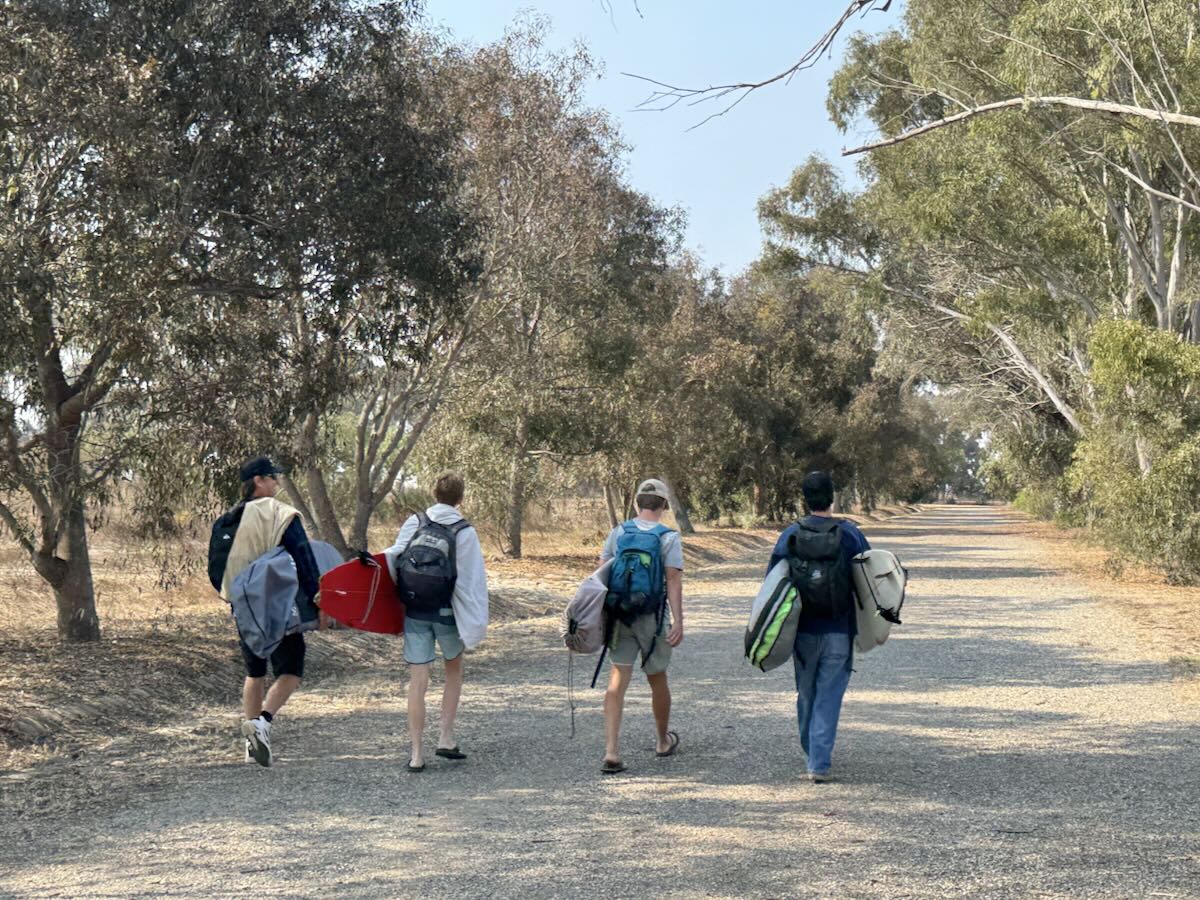
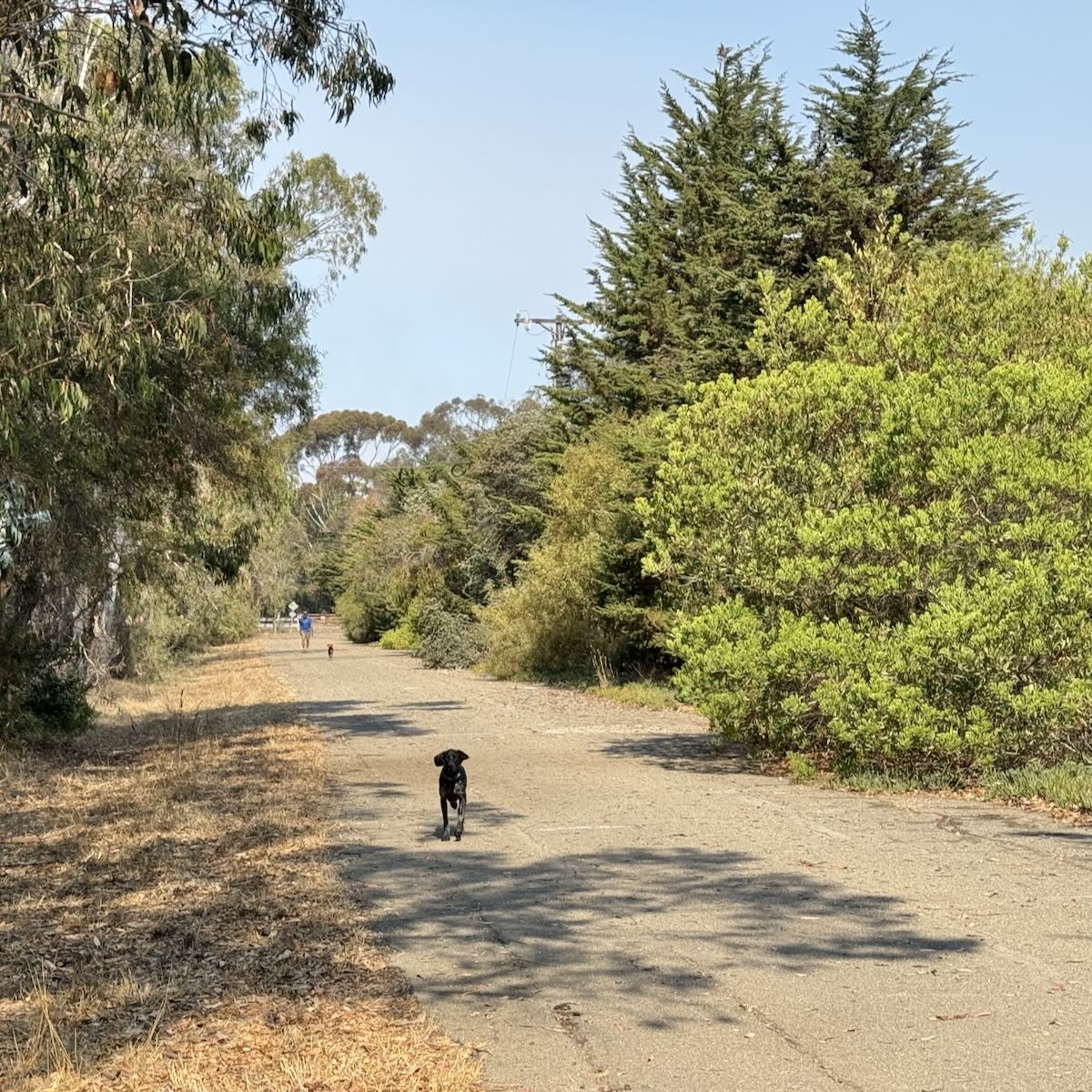
 The whole time I was convinced there was the possibility of being arrested or shot—until a quartet of surfers passed by, followed by a man walking his dogs.
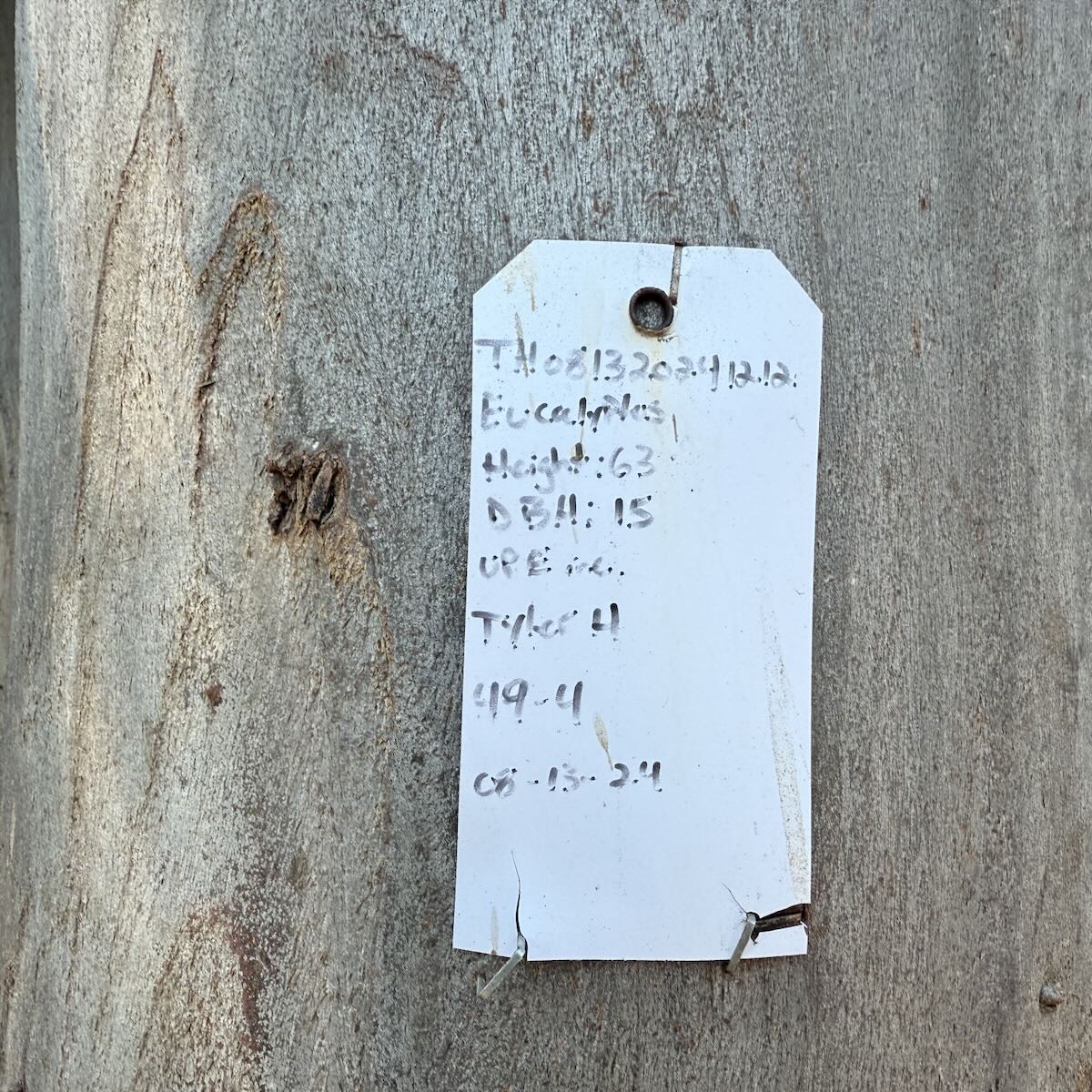
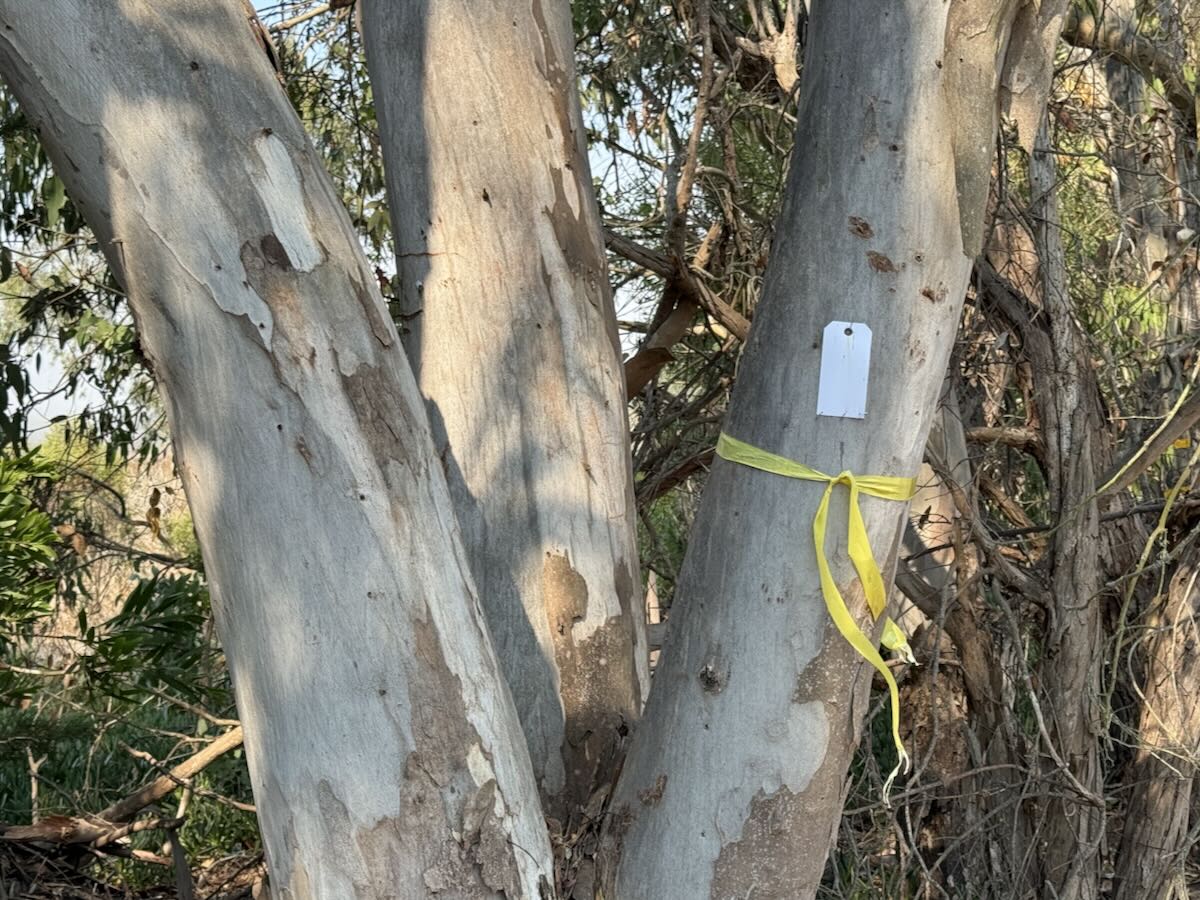
 Just before reaching my car, I spotted signs of a eucalyptus inventory and ended up with 1973’s biggest hit in my head.
 My original goal was to explore all of the streets around the highway off-ramp, but I had a date with a donut—specifically, an old-fashioned one at the new-ish SloDoCo in the Target shopping center in Goleta. Every good walk deserves a reward.
 ················
Sign up for the Siteline email newsletter and you’ll never miss a post.












I think it’s the “infinite vibestream”
What a great article to wake up to. Thank you
What’s the matter with this author and webzine? Just because you can (broadcast to a wide audience), doesn’t mean you should. Some things, like precious holdings, age better without discussion.
Oh please Bill
A mile west of a Ritz Carlton Resort isn’t anything unheard of.
Connect with me and I’ll take you places you have only heard of West of Goleta
(Pictures Naples turning into La Jolla shores during the summer because of this article and starts laughing)
Ain’t happening.
Do you have the same dream every night?
Why did you go and get political? So dumb,
This picture show reminds me of life back East, where, as the Western essayist Ed Abbey put it – “every sign begins with “No” —